Segments - by Component (Hardware, Software, Services), by Application (Industrial, Commercial, Residential, Transportation, Utilities, Others), by Voltage Level (Low Voltage, Medium Voltage, High Voltage), by End-User (Data Centers, EV Charging Infrastructure, Renewable Energy Integration, Telecom, Others)
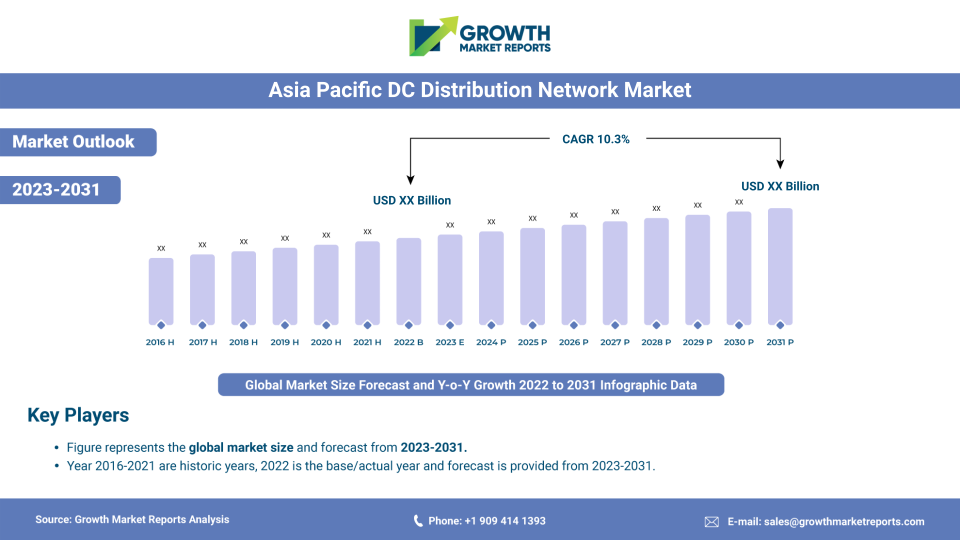
According to our latest research, the DC Distribution Network market size reached USD 6.8 billion globally in 2024, with a compound annual growth rate (CAGR) of 14.2% from 2025 to 2033. The market is projected to attain USD 21.1 billion by 2033, as per the CAGR calculation. This robust growth is primarily driven by the increasing adoption of renewable energy sources, rapid electrification of transportation, and the rising demand for energy-efficient power distribution solutions across industrial, commercial, and residential sectors.
The significant growth trajectory of the DC Distribution Network market is underpinned by the global shift towards sustainable energy solutions and the integration of distributed energy resources. As industries and utilities seek to minimize transmission losses and improve grid reliability, DC distribution networks offer superior efficiency compared to traditional AC systems. The proliferation of renewable energy installations, such as solar photovoltaic (PV) and wind power, which inherently produce DC electricity, further amplifies the demand for DC-based infrastructure. Additionally, the increasing penetration of electric vehicles (EVs) and the need for fast-charging infrastructure are compelling stakeholders to invest in advanced DC networks, thereby accelerating market expansion.
Another major growth factor is the technological advancements in power electronics and digital control systems, which have made DC distribution networks more viable and cost-effective. Innovations in DC-DC converters, solid-state circuit breakers, and intelligent monitoring systems are enabling safer and more flexible power distribution, particularly in data centers, telecom towers, and mission-critical facilities. The convergence of IoT and smart grid technologies is also facilitating real-time monitoring and optimization of DC networks, resulting in reduced operational costs and enhanced system reliability. These advancements are not only attracting investments from traditional utilities but also from new market entrants and technology providers eager to capitalize on emerging opportunities.
Government policies and regulatory frameworks supporting energy efficiency and decarbonization are playing a pivotal role in shaping the DC Distribution Network market. Many countries are introducing incentives for renewable energy integration and mandating the adoption of energy-efficient building codes, which often favor DC-based solutions. Furthermore, the growing emphasis on electrification in transportation and the expansion of EV charging infrastructure is catalyzing the deployment of medium and high-voltage DC networks. As urbanization accelerates and smart city initiatives gain momentum, the demand for resilient and scalable DC distribution systems is expected to surge, especially in emerging economies.
Regionally, Asia Pacific dominates the market, accounting for the largest share in 2024, followed by North America and Europe. The region’s rapid industrialization, urbanization, and aggressive renewable energy targets are key drivers. North America benefits from significant investments in data centers and EV infrastructure, while Europe’s stringent energy efficiency regulations and grid modernization programs are fueling market growth. Meanwhile, Latin America and the Middle East & Africa are witnessing steady adoption, particularly in utility-scale renewable projects and telecom infrastructure upgrades. The diverse regional landscape reflects varying levels of market maturity, regulatory support, and technological adoption across the globe.
The Component segment of the DC Distribution Network market is categorized into hardware, software, and services, each playing a distinct role in driving market growth. Hardware remains the backbone of DC distribution networks, comprising components such as converters, circuit breakers, switches, busbars, and power distribution units. The rising demand for high-efficiency power electronics and advanced protection devices is propelling the hardware segment forward, as industries and utilities prioritize reliability and safety in power distribution. With the increasing deployment of renewable energy sources and the electrification of transportation, hardware innovations are essential for ensuring seamless integration and optimal performance of DC networks.
Software solutions are gaining traction as digitalization transforms the energy sector. Advanced software platforms enable real-time monitoring, predictive maintenance, and automated control of DC distribution networks, enhancing operational efficiency and reducing downtime. The integration of AI, machine learning, and IoT technologies is facilitating data-driven decision-making and proactive fault management, making software an indispensable component in modern DC systems. As smart grid initiatives and distributed energy resources become more prevalent, the demand for sophisticated software tools that can manage complex, multi-node DC networks is expected to rise significantly.
Services, encompassing consulting, installation, maintenance, and technical support, are critical for the successful deployment and long-term reliability of DC distribution networks. As the market matures, there is a growing need for specialized services to address the unique challenges of DC infrastructure, such as system design, interoperability, and compliance with evolving standards. Service providers are increasingly offering end-to-end solutions, from feasibility studies and system integration to lifecycle management and performance optimization. The rising complexity of DC networks, particularly in large-scale industrial and utility applications, underscores the importance of a robust service ecosystem to ensure seamless operation and future scalability.
The interplay between hardware, software, and services is fostering a holistic approach to DC distribution network deployment. Leading market players are focusing on integrated solutions that combine advanced hardware with intelligent software and comprehensive services, delivering greater value to end-users. This trend is particularly evident in mission-critical environments such as data centers, where uptime and energy efficiency are paramount. As customer expectations evolve and technology continues to advance, the ability to offer a complete portfolio of components will be a key differentiator for market leaders in the coming years.
In summary, the Component segment is characterized by rapid innovation, increasing digitalization, and a growing emphasis on integrated solutions. Hardware remains the largest revenue contributor, but software and services are emerging as critical enablers of efficiency, reliability, and customer satisfaction. The ongoing convergence of these components is expected to drive sustained growth and create new opportunities for stakeholders across the DC Distribution Network market.
| Attributes | Details |
| Report Title | DC Distribution Network Market Research Report 2033 |
| By Component | Hardware, Software, Services |
| By Application | Industrial, Commercial, Residential, Transportation, Utilities, Others |
| By Voltage Level | Low Voltage, Medium Voltage, High Voltage |
| By End-User | Data Centers, EV Charging Infrastructure, Renewable Energy Integration, Telecom, Others |
| Regions Covered | North America, Europe, APAC, Latin America, MEA |
| Base Year | 2024 |
| Historic Data | 2018-2023 |
| Forecast Period | 2025-2033 |
| Number of Pages | 266 |
| Number of Tables & Figures | 366 |
| Customization Available | Yes, the report can be customized as per your need. |
The Application segment of the DC Distribution Network market encompasses a diverse range of use cases, including industrial, commercial, residential, transportation, utilities, and others. Industrial applications represent a significant share of the market, driven by the need for reliable and efficient power distribution in manufacturing plants, process industries, and large-scale infrastructure projects. DC networks offer distinct advantages in industrial settings, such as reduced energy losses, improved voltage stability, and seamless integration of renewable energy sources. As industries strive to enhance productivity and minimize operational costs, the adoption of DC distribution solutions is expected to accelerate.
Commercial applications are witnessing robust growth, particularly in office complexes, shopping malls, hospitals, and educational institutions. The proliferation of distributed energy resources, such as rooftop solar panels and energy storage systems, is prompting commercial buildings to transition towards DC-based architectures. DC networks enable direct connection of renewable sources and storage devices, eliminating the need for multiple AC-DC conversions and enhancing overall energy efficiency. Furthermore, the growing adoption of LED lighting, HVAC systems, and electric vehicle charging stations in commercial premises is driving demand for flexible and scalable DC distribution solutions.
Residential applications, while currently representing a smaller share of the market, are poised for significant growth as smart homes and energy-efficient building concepts gain traction. The integration of solar PV panels, battery storage, and DC-powered appliances is simplifying residential energy management and reducing electricity bills for homeowners. As regulatory frameworks evolve to support net metering and decentralized energy generation, residential DC distribution networks are expected to become increasingly prevalent, particularly in regions with high solar potential and supportive government policies.
Transportation is emerging as a key application area, fueled by the rapid electrification of vehicles and the expansion of charging infrastructure. DC distribution networks are essential for high-power EV charging stations, enabling fast and efficient energy transfer to vehicle batteries. In addition, DC systems are being deployed in railways, airports, and maritime ports to support the electrification of auxiliary systems and reduce carbon emissions. As the transportation sector continues to decarbonize, the demand for robust and scalable DC distribution networks is set to rise, creating new growth opportunities for market participants.
Utilities and other applications, such as telecom towers, data centers, and microgrids, are also contributing to the expansion of the DC Distribution Network market. Utilities are leveraging DC networks to enhance grid resilience, integrate distributed energy resources, and support rural electrification initiatives. Meanwhile, data centers and telecom operators are adopting DC architectures to improve energy efficiency, reduce cooling requirements, and ensure uninterrupted power supply. The diverse application landscape underscores the versatility and adaptability of DC distribution networks, positioning them as a cornerstone of the future energy ecosystem.
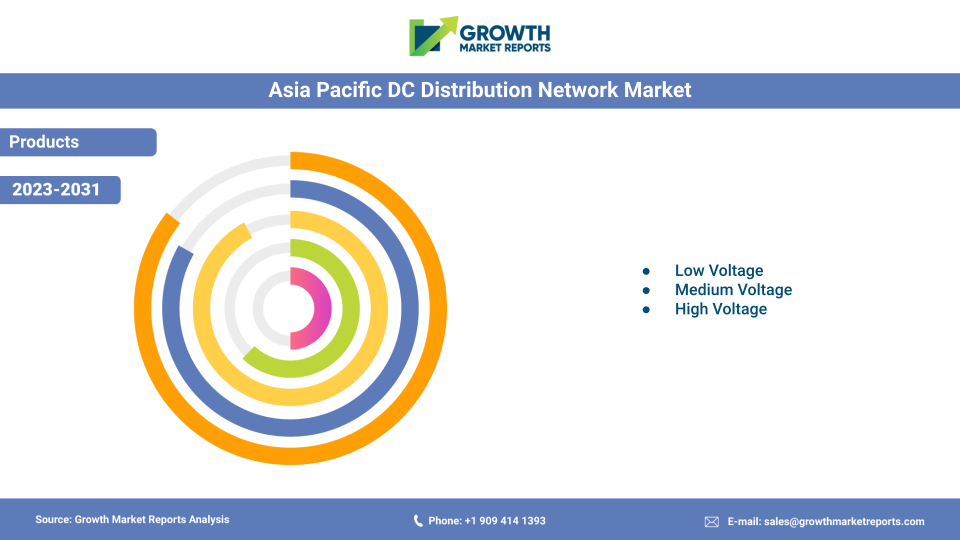
The Voltage Level segment in the DC Distribution Network market is categorized into low voltage, medium voltage, and high voltage, each catering to specific application requirements. Low voltage DC networks, typically operating below 1,500 volts, are widely used in residential, commercial, and light industrial settings. These networks are ideal for integrating rooftop solar panels, battery storage, and DC-powered appliances, offering enhanced energy efficiency and simplified wiring. The rising adoption of smart homes and energy-efficient buildings is driving demand for low voltage DC solutions, particularly in urban areas with high population density and limited grid infrastructure.
Medium voltage DC networks, ranging from 1,500 to 35,000 volts, are gaining traction in industrial, transportation, and data center applications. These networks offer the advantage of reduced transmission losses over longer distances, making them suitable for large-scale manufacturing plants, EV charging stations, and utility-scale renewable energy integration. The ability to deliver stable and reliable power in mission-critical environments is a key factor driving the adoption of medium voltage DC systems. As industries and utilities seek to optimize energy distribution and enhance grid reliability, medium voltage solutions are expected to witness significant growth in the coming years.
High voltage DC (HVDC) networks, operating above 35,000 volts, are primarily deployed in long-distance power transmission and interconnection of regional grids. HVDC technology enables efficient transfer of large amounts of electricity over vast distances with minimal losses, making it indispensable for cross-border power exchange and integration of remote renewable energy sources. The increasing deployment of offshore wind farms, large solar parks, and intercontinental grid projects is fueling demand for high voltage DC infrastructure. Governments and utilities are investing heavily in HVDC projects to enhance grid stability, support energy transition goals, and facilitate the integration of variable renewable energy.
The choice of voltage level is influenced by factors such as application requirements, distance of power transmission, load profile, and regulatory standards. While low voltage networks are favored for localized applications and distributed energy systems, medium and high voltage networks are essential for large-scale industrial, utility, and interconnection projects. Technological advancements in insulation, switching, and protection devices are enabling the safe and efficient operation of DC networks across different voltage levels, expanding their applicability in diverse sectors.
The interplay between low, medium, and high voltage DC networks is shaping the evolution of the DC Distribution Network market. As the energy landscape becomes more decentralized and interconnected, seamless integration of different voltage levels will be crucial for optimizing power flow, enhancing system reliability, and supporting the transition to a sustainable energy future. Market players are focusing on developing interoperable solutions and standardized protocols to facilitate the deployment of multi-voltage DC networks, paving the way for a more resilient and flexible power distribution ecosystem.
The End-User segment of the DC Distribution Network market includes data centers, EV charging infrastructure, renewable energy integration, telecom, and others. Data centers are among the largest consumers of electricity, and their need for reliable, efficient, and scalable power distribution solutions is driving the adoption of DC networks. By minimizing conversion losses and improving power quality, DC distribution systems help data centers reduce operational costs, lower carbon footprint, and enhance uptime. The growing demand for cloud computing, edge data centers, and hyperscale facilities is expected to further accelerate the adoption of DC networks in this segment.
EV charging infrastructure is another rapidly growing end-user category, as the global transition to electric mobility gains momentum. DC fast-charging stations are essential for supporting the widespread adoption of electric vehicles, enabling rapid energy transfer and reducing charging times. The expansion of public and private charging networks, coupled with government incentives and regulatory mandates, is fueling investments in DC distribution infrastructure. As automakers and energy providers collaborate to build a robust EV ecosystem, the demand for reliable and efficient DC networks is set to surge.
Renewable energy integration is a key driver for the DC Distribution Network market, as solar PV and wind power installations inherently generate DC electricity. Direct integration of renewable sources into DC networks eliminates the need for multiple conversion steps, enhancing overall system efficiency and reducing costs. Utilities and independent power producers are leveraging DC distribution solutions to optimize energy flow, support grid stability, and facilitate the integration of distributed energy resources. As the share of renewables in the global energy mix continues to rise, the importance of DC networks in enabling a sustainable energy transition cannot be overstated.
The telecom sector is also emerging as a significant end-user of DC distribution networks, driven by the proliferation of mobile networks, data traffic, and remote communication infrastructure. DC systems are widely used in telecom towers, base stations, and network operation centers to ensure uninterrupted power supply and reduce energy consumption. The deployment of 5G networks and the expansion of rural connectivity initiatives are expected to further drive demand for DC distribution solutions in the telecom sector.
Other end-users, such as commercial buildings, industrial facilities, and microgrids, are increasingly adopting DC distribution networks to enhance energy efficiency, support renewable integration, and enable flexible power management. The diverse end-user landscape highlights the versatility and adaptability of DC networks in addressing the evolving needs of different sectors, positioning them as a critical enabler of the future energy ecosystem.
The DC Distribution Network market presents a plethora of opportunities for stakeholders across the value chain. One of the most promising opportunities lies in the integration of renewable energy sources and energy storage systems into DC networks. As governments and utilities accelerate the transition to clean energy, the demand for efficient and scalable DC infrastructure is expected to soar. Market players can capitalize on this trend by developing innovative solutions that enable seamless integration of solar, wind, and battery storage, enhancing grid stability and supporting decarbonization goals. Additionally, the expansion of EV charging infrastructure and the electrification of transportation present significant growth opportunities, as DC networks are essential for supporting high-power charging and reducing energy losses.
Another major opportunity is the digitalization of DC distribution networks, driven by advancements in IoT, AI, and smart grid technologies. Intelligent monitoring, predictive maintenance, and automated control systems are enabling real-time optimization of power flow, reducing operational costs, and enhancing system reliability. Market participants can leverage these technologies to offer value-added services, such as remote monitoring, data analytics, and performance optimization, creating new revenue streams and strengthening customer relationships. The growing emphasis on energy efficiency, sustainability, and resilience is also opening up opportunities for DC networks in smart cities, microgrids, and off-grid applications, particularly in emerging markets with limited grid infrastructure.
Despite the numerous opportunities, the DC Distribution Network market faces several challenges and threats that could hinder its growth. One of the primary restrainers is the lack of standardized protocols and interoperability between different components and systems. The absence of universally accepted standards can lead to compatibility issues, increased integration costs, and operational inefficiencies, particularly in large-scale and multi-vendor deployments. Additionally, the high initial capital investment required for deploying DC infrastructure, coupled with limited awareness and technical expertise, can pose significant barriers to market adoption. Addressing these challenges will require concerted efforts from industry stakeholders, regulatory bodies, and technology providers to develop standardized solutions, promote knowledge sharing, and foster collaboration across the value chain.
Asia Pacific emerged as the dominant regional market in 2024, accounting for approximately 42% of the global DC Distribution Network market size, translating to roughly USD 2.86 billion. The region’s rapid industrialization, urbanization, and aggressive renewable energy targets are key growth drivers. Countries such as China, India, Japan, and South Korea are investing heavily in renewable energy integration, smart grid development, and EV charging infrastructure, creating a fertile ground for DC distribution network expansion. The presence of leading technology providers, favorable government policies, and a large consumer base further reinforce Asia Pacific’s leadership in the market.
North America holds the second-largest share, with a market size of USD 1.77 billion in 2024, driven by significant investments in data centers, EV infrastructure, and grid modernization initiatives. The United States and Canada are at the forefront of adopting advanced DC distribution solutions, leveraging technological innovation, robust regulatory frameworks, and strong public-private partnerships. The region is expected to witness a steady CAGR of 13.8% through 2033, supported by the growing emphasis on energy efficiency, sustainability, and resilience. The expansion of hyperscale data centers and the electrification of transportation are expected to be key growth catalysts in the coming years.
Europe follows closely, with a market size of USD 1.36 billion in 2024, fueled by stringent energy efficiency regulations, ambitious decarbonization targets, and extensive grid modernization programs. Countries such as Germany, the United Kingdom, France, and the Nordics are leading the adoption of DC distribution networks, particularly in renewable energy integration, commercial buildings, and EV charging infrastructure. The region’s focus on sustainability, coupled with strong government support and a mature technology ecosystem, is expected to drive continued market growth. Meanwhile, Latin America and the Middle East & Africa, with market sizes of USD 0.54 billion and USD 0.27 billion respectively, are witnessing steady adoption, primarily in utility-scale renewable projects, telecom infrastructure, and rural electrification initiatives. The diverse regional landscape highlights varying levels of market maturity, regulatory support, and technological adoption across the globe.
The DC Distribution Network market is characterized by intense competition, rapid technological innovation, and a dynamic landscape of established players and emerging entrants. Leading companies are focusing on developing integrated solutions that combine advanced hardware, intelligent software, and comprehensive services to address the evolving needs of end-users across diverse sectors. Strategic partnerships, mergers and acquisitions, and collaborations with technology providers, utilities, and government agencies are common strategies employed by market leaders to expand their product portfolios, enhance market reach, and strengthen their competitive position.
Innovation is a key differentiator in the market, with companies investing heavily in research and development to introduce next-generation products and solutions. Advances in power electronics, digital control systems, and smart grid technologies are enabling the development of safer, more efficient, and scalable DC distribution networks. Market players are also focusing on sustainability, offering eco-friendly solutions that support renewable energy integration, energy efficiency, and carbon reduction goals. The ability to offer end-to-end solutions, from system design and integration to lifecycle management and performance optimization, is increasingly becoming a critical success factor in the market.
The competitive landscape is further shaped by the entry of new players, particularly technology startups and niche providers specializing in software, IoT, and digital services. These companies are leveraging their agility and expertise to introduce innovative solutions that address specific market needs, such as predictive maintenance, remote monitoring, and data analytics. As customer expectations evolve and technology continues to advance, the market is witnessing a shift towards more collaborative and ecosystem-based approaches, where multiple stakeholders work together to deliver integrated and value-added solutions.
Major companies operating in the DC Distribution Network market include ABB Ltd., Siemens AG, Schneider Electric SE, Eaton Corporation plc, General Electric Company, Delta Electronics, Inc., Emerson Electric Co., Vertiv Holdings Co., Huawei Technologies Co., Ltd., and Nexans S.A. These companies are recognized for their extensive product portfolios, strong R&D capabilities, and global presence. ABB and Siemens are leading providers of integrated DC distribution solutions, offering a wide range of hardware, software, and services for industrial, commercial, and utility applications. Schneider Electric and Eaton are known for their focus on energy efficiency, sustainability, and digitalization, providing innovative solutions for data centers, EV charging, and renewable energy integration.
Delta Electronics and Vertiv specialize in power electronics and critical infrastructure solutions, catering to the unique needs of data centers, telecom, and industrial customers. Emerson Electric and General Electric are leveraging their expertise in automation, control systems, and grid modernization to offer advanced DC distribution solutions for utilities and mission-critical applications. Huawei Technologies and Nexans are expanding their presence in the market through strategic partnerships, product innovation, and a focus on emerging markets. Collectively, these companies are driving the evolution of the DC Distribution Network market, shaping its future trajectory through innovation, collaboration, and customer-centric solutions.
The DC Distribution Network market has been segmented on the basis of
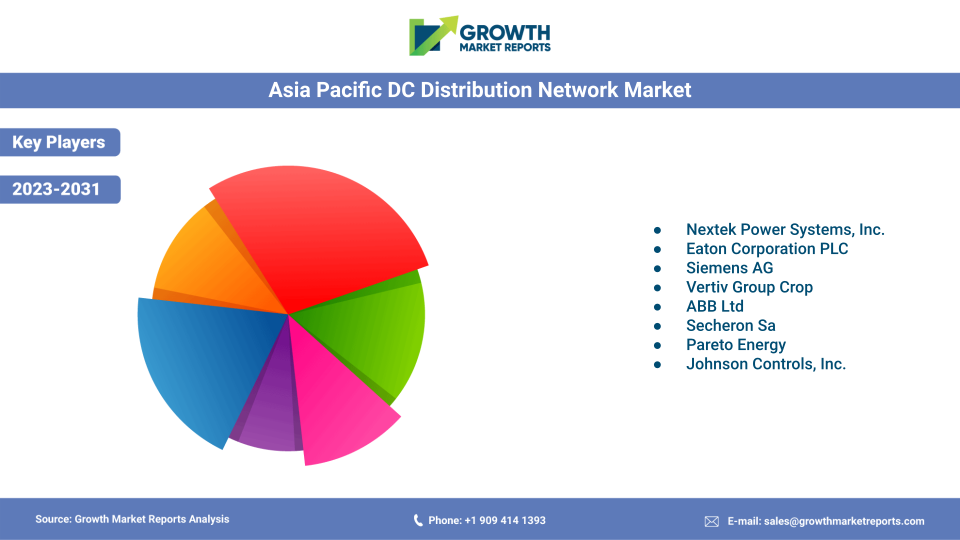
Key players competing in the Asia Pacific DC distribution network market include Nextek Power Systems, Inc., Eaton Corporation PLC, Siemens AG, Vertiv Group Crop, ABB Ltd, Secheron Sa, Pareto Energy, and Johnson Controls, Inc.
Some of these players are using several market strategies such as acquisitions, merger, collaborations, partnerships, capacity expansion, and product launches to enhance their market shares and to generate revenue and rise their production line of the business in the coming years.
Yes, the report offers customization options to meet specific research or business needs.
Digitalization, through IoT, AI, and smart grid technologies, enables real-time monitoring, predictive maintenance, and automated control, improving efficiency and reliability of DC networks.
Opportunities include integration of renewables and storage, digitalization, and smart city initiatives. Challenges involve lack of standardization, high initial investment, and limited technical expertise.
Key companies include ABB Ltd., Siemens AG, Schneider Electric SE, Eaton Corporation plc, General Electric Company, Delta Electronics, Vertiv Group, Emerson Electric, Huawei Technologies, Nexans S.A., and others.
The market is divided into low voltage (below 1,500V), medium voltage (1,500V to 35,000V), and high voltage (above 35,000V) segments, each serving different application requirements.
DC Distribution Networks are used in industrial, commercial, residential, transportation, utilities, data centers, EV charging infrastructure, renewable energy integration, and telecom sectors.
The market is segmented into hardware (such as converters, circuit breakers, switches), software (for monitoring and control), and services (consulting, installation, maintenance, and technical support).
Asia Pacific leads the market with the largest share, followed by North America and Europe. APAC's growth is driven by rapid industrialization, urbanization, and aggressive renewable energy targets.
Key growth drivers include the increasing adoption of renewable energy sources, rapid electrification of transportation, rising demand for energy-efficient power distribution, and advancements in power electronics and digital control systems.
The global DC Distribution Network market reached USD 6.8 billion in 2024 and is projected to grow at a CAGR of 14.2% from 2025 to 2033, reaching USD 21.1 billion by 2033.