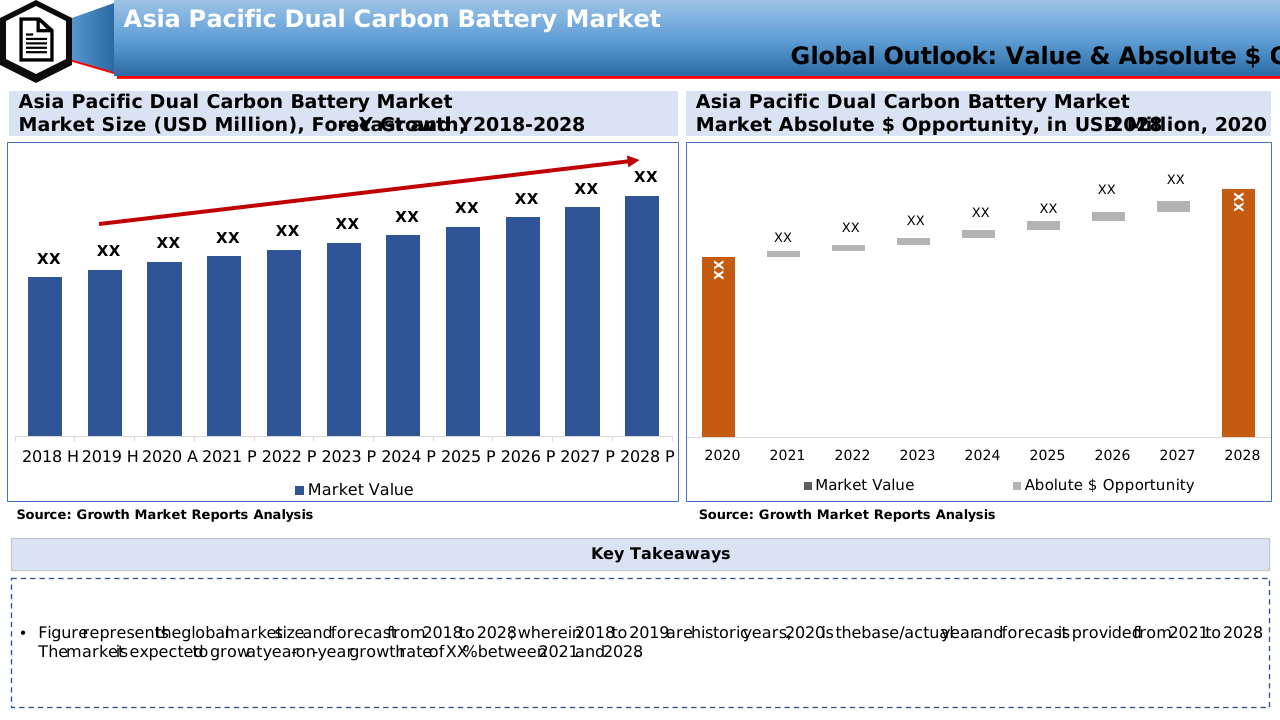
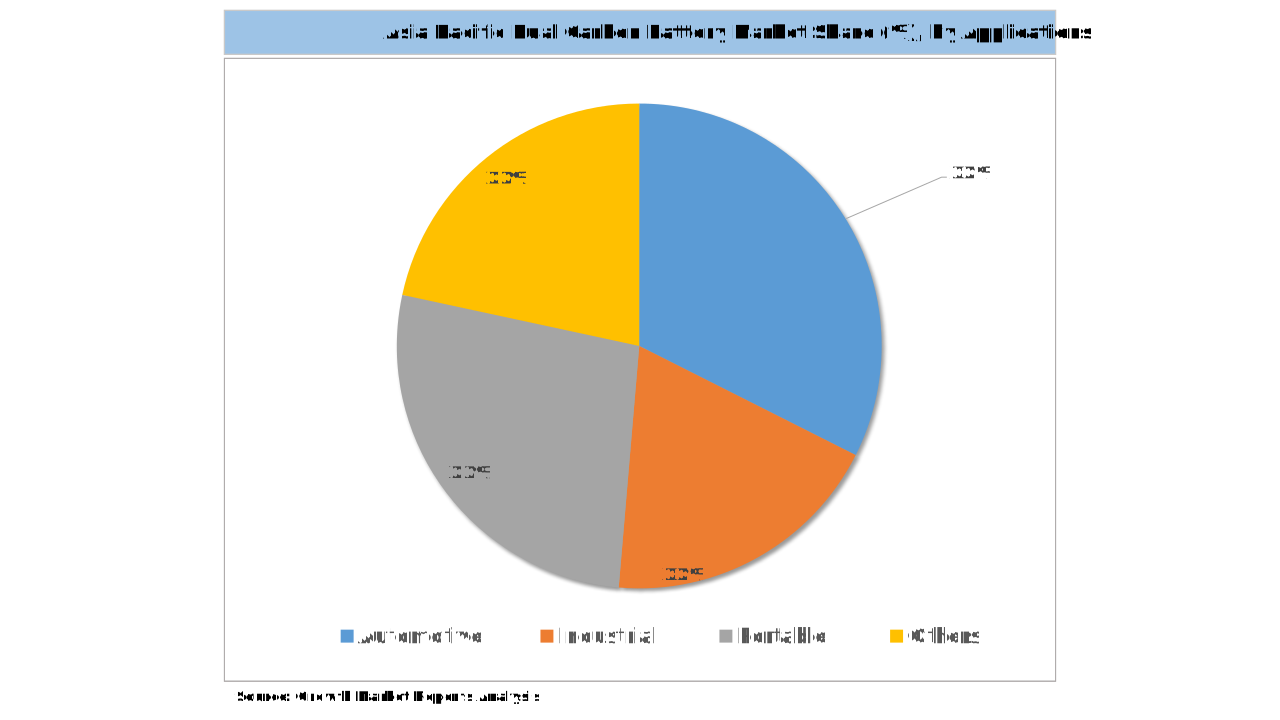
Segments - by Product Type (Pouch Cell, Cylindrical Cell, Prismatic Cell), by Application (Automotive, Consumer Electronics, Industrial, Energy Storage Systems, Others), by End-User (OEMs, Aftermarket)
According to our latest research, the global dual carbon battery market size reached USD 328 million in 2024, reflecting a robust uptrend driven by the increasing demand for sustainable and high-performance energy storage solutions. The market is poised for significant expansion, with a projected CAGR of 18.2% from 2025 to 2033, and is expected to attain a value of USD 1.45 billion by 2033. This remarkable growth trajectory is attributed to the surging adoption of dual carbon batteries across automotive, consumer electronics, and industrial sectors, as well as the pressing need for greener alternatives to conventional lithium-ion batteries. The marketÂ’s momentum is further propelled by ongoing advancements in battery technology and supportive government policies fostering renewable energy integration.
One of the primary growth drivers for the dual carbon battery market is the escalating emphasis on environmental sustainability and the global shift towards decarbonization. Dual carbon batteries, which utilize carbon materials for both the anode and cathode, offer several advantages over traditional chemistries, including faster charging times, improved cycle life, and enhanced safety profiles. Their eco-friendly composition, devoid of heavy metals or rare earth elements, aligns perfectly with the growing regulatory and societal pressure to minimize the environmental impact of energy storage systems. As governments and industries intensify efforts to reduce carbon footprints and transition towards clean energy, the adoption of dual carbon batteries is expected to surge, particularly in sectors such as automotive and stationary energy storage.
Another significant growth factor is the rapid electrification of the automotive sector, particularly with the proliferation of electric vehicles (EVs). Dual carbon batteries are gaining traction as a promising alternative to conventional lithium-ion batteries due to their superior charge-discharge efficiency, longer lifespan, and reduced risk of thermal runaway. Leading automotive OEMs are increasingly investing in research and development to integrate dual carbon battery technology into next-generation EVs, seeking to address consumer concerns related to range anxiety, charging infrastructure, and battery safety. Moreover, the growing consumer demand for high-performance, sustainable vehicles is compelling manufacturers to explore innovative battery solutions, further fueling the expansion of the dual carbon battery market.
Technological advancements and increased investment in research and development are also pivotal to the marketÂ’s growth. Innovations in carbon material synthesis, electrode design, and battery architecture are enhancing the energy density, scalability, and cost-effectiveness of dual carbon batteries. Strategic collaborations between battery manufacturers, research institutions, and end-users are accelerating the commercialization of advanced dual carbon battery products tailored for diverse applications, from grid-scale energy storage to portable consumer electronics. As the industry continues to overcome technical and economic barriers, dual carbon batteries are expected to play an increasingly prominent role in the global energy storage landscape.
As the dual carbon battery market continues to expand, the importance of Battery CO2 Footprint Accounting becomes increasingly relevant. This accounting method is crucial for assessing the environmental impact of battery production and usage, particularly in the context of global efforts to reduce carbon emissions. By accurately measuring the carbon footprint associated with battery manufacturing, transportation, and disposal, stakeholders can make informed decisions to minimize environmental harm. This approach not only supports the industry's sustainability goals but also aligns with regulatory requirements and consumer expectations for greener technologies. As the market evolves, integrating CO2 footprint accounting into the lifecycle assessment of dual carbon batteries will be essential for promoting transparency and fostering trust among consumers and investors alike.
Regionally, the Asia Pacific holds a dominant position in the dual carbon battery market, accounting for the largest revenue share in 2024. This leadership is underpinned by the regionÂ’s thriving automotive and electronics manufacturing sectors, robust government support for clean energy initiatives, and significant investments in battery research and production infrastructure. North America and Europe are also witnessing substantial growth, driven by stringent emission regulations, expanding renewable energy capacity, and the presence of leading technology innovators. Meanwhile, emerging markets in Latin America and the Middle East & Africa are gradually embracing dual carbon batteries as part of their broader efforts to modernize energy infrastructure and promote sustainable development.
The product type segment of the dual carbon battery market is categorized into pouch cell, cylindrical cell, and prismatic cell formats, each catering to specific application requirements and offering distinct technical advantages. Pouch cells, characterized by their flexible, lightweight packaging, are increasingly favored in applications where space and weight are critical considerations, such as portable consumer electronics and certain electric vehicle models. Their versatility in design and ability to accommodate varying capacities make them highly attractive for OEMs seeking customizable battery solutions. However, pouch cells require robust external support to maintain structural integrity, which can impact their adoption in applications demanding high mechanical stability.
Cylindrical cells represent a well-established product type within the dual carbon battery market, known for their standardized dimensions, exceptional durability, and efficient thermal management. These cells are widely utilized in power tools, industrial equipment, and electric vehicles, where reliability and ease of assembly are paramount. The inherent design of cylindrical cells facilitates efficient heat dissipation, reducing the risk of overheating and extending battery life. Moreover, their modular nature allows for straightforward scalability and integration into battery packs of varying sizes, making them a preferred choice for both OEMs and aftermarket suppliers targeting high-volume applications.
Prismatic cells, on the other hand, are gaining traction in sectors where high energy density and compact form factors are essential. These cells are typically deployed in automotive and stationary energy storage systems, where maximizing energy output within limited space is critical. The prismatic design offers superior volumetric efficiency compared to cylindrical counterparts, enabling manufacturers to develop slimmer, high-capacity battery modules. As advancements in manufacturing processes drive down costs and enhance the performance of prismatic dual carbon cells, their adoption is expected to increase across a broad spectrum of applications, from grid-scale storage to next-generation electric vehicles.
The ongoing innovation in cell design and material science is further expanding the application scope of each product type. Manufacturers are investing in the development of hybrid cell architectures that combine the best attributes of pouch, cylindrical, and prismatic formats to deliver optimized performance across diverse use cases. As the dual carbon battery market matures, the ability to offer a comprehensive portfolio of cell types tailored to specific customer requirements will be a key differentiator for leading market players, fostering greater competition and accelerating the adoption of dual carbon battery technology globally.
| Attributes | Details |
| Report Title | Dual Carbon Battery Market Research Report 2033 |
| By Product Type | Pouch Cell, Cylindrical Cell, Prismatic Cell |
| By Application | Automotive, Consumer Electronics, Industrial, Energy Storage Systems, Others |
| By End-User | OEMs, Aftermarket |
| Regions Covered | North America, Europe, APAC, Latin America, MEA |
| Base Year | 2024 |
| Historic Data | 2018-2023 |
| Forecast Period | 2025-2033 |
| Number of Pages | 278 |
| Number of Tables & Figures | 358 |
| Customization Available | Yes, the report can be customized as per your need. |
The application segment of the dual carbon battery market encompasses automotive, consumer electronics, industrial, energy storage systems, and other emerging domains. Among these, the automotive sector is the largest and fastest-growing application area, driven by the global transition to electric mobility and the urgent need for safer, longer-lasting, and more sustainable battery solutions. Dual carbon batteries are particularly well-suited for electric vehicles, offering rapid charging capabilities and enhanced safety compared to traditional lithium-ion chemistries. Leading automakers are actively exploring dual carbon technology to address critical performance challenges and differentiate their offerings in an increasingly competitive EV market.
Consumer electronics represent another significant application segment, with dual carbon batteries being integrated into smartphones, laptops, wearables, and other portable devices. The demand for longer battery life, faster charging, and improved safety is compelling device manufacturers to seek alternatives to conventional battery technologies. Dual carbon batteries, with their high cycle stability and resistance to thermal runaway, are emerging as a preferred choice for next-generation consumer electronics, particularly in premium and high-performance product categories. As user expectations continue to evolve, the adoption of dual carbon batteries in this segment is expected to accelerate, supported by ongoing miniaturization and integration efforts.
The industrial sector is also witnessing growing deployment of dual carbon batteries, particularly in applications requiring high power output, reliability, and long service life. Industrial automation, robotics, material handling equipment, and backup power systems are increasingly leveraging dual carbon technology to enhance operational efficiency and reduce maintenance costs. The robust performance characteristics of dual carbon batteries, including their ability to withstand deep discharge cycles and operate in demanding environments, make them an attractive solution for a wide range of industrial use cases. As industries continue to digitize and automate operations, the role of advanced battery technologies will become even more pronounced.
Energy storage systems (ESS) constitute a rapidly expanding application area for dual carbon batteries, driven by the global push towards renewable energy integration and grid modernization. Dual carbon batteries offer significant advantages for stationary storage applications, such as high round-trip efficiency, long cycle life, and minimal environmental impact. Utilities, independent power producers, and commercial enterprises are increasingly adopting dual carbon ESS to support grid stabilization, peak shaving, and renewable energy smoothing. As the penetration of solar and wind power increases, the demand for reliable, scalable energy storage solutions like dual carbon batteries is expected to surge, unlocking new growth opportunities for market participants.
The end-user segment of the dual carbon battery market is bifurcated into OEMs (original equipment manufacturers) and the aftermarket, each playing a pivotal role in shaping market dynamics. OEMs represent the primary channel for dual carbon battery adoption, particularly in the automotive, industrial, and electronics sectors. These manufacturers are at the forefront of integrating advanced battery technologies into their products, leveraging dual carbon batteries to enhance performance, safety, and sustainability. Strategic collaborations between battery suppliers and OEMs are accelerating the development and commercialization of dual carbon-powered vehicles, devices, and equipment, driving market growth and technology diffusion.
The aftermarket segment, while smaller in comparison, is witnessing steady expansion as dual carbon batteries become available for replacement and retrofitting purposes. Consumers and businesses seeking to upgrade existing devices or equipment with longer-lasting, safer batteries are increasingly turning to dual carbon solutions. The aftermarket channel is particularly significant in regions with established automotive and electronics markets, where demand for high-performance replacement batteries is robust. As awareness of the benefits of dual carbon technology increases, aftermarket sales are expected to contribute an increasingly significant share of overall market revenue.
OEMs are also instrumental in driving innovation and setting industry standards for dual carbon battery technology. By investing in research and development, conducting rigorous testing, and collaborating with material suppliers, OEMs are helping to overcome technical and commercial barriers to adoption. Their ability to influence supply chain dynamics, negotiate favorable pricing, and ensure quality control is critical to the successful scaling of dual carbon battery production and deployment. As competition intensifies, OEMs that can effectively leverage dual carbon technology to differentiate their offerings will be well-positioned to capture a larger share of the growing market.
The interplay between OEMs and aftermarket participants is fostering a dynamic ecosystem that supports continuous innovation, customer education, and market expansion. Battery manufacturers are developing tailored solutions for both segments, addressing the unique requirements of original equipment integration and aftermarket replacement. This dual-channel approach is enabling greater flexibility and responsiveness to evolving market needs, ensuring that dual carbon battery technology reaches a broad spectrum of end-users across diverse industries and geographies.
The dual carbon battery market presents a multitude of opportunities for stakeholders across the value chain. One of the most promising opportunities lies in the ongoing transition towards electric mobility and renewable energy integration. As governments worldwide implement stringent emission regulations and incentivize the adoption of clean energy technologies, the demand for advanced battery solutions like dual carbon batteries is expected to surge. Market participants that can innovate rapidly, scale production efficiently, and offer cost-competitive products will be well-positioned to capitalize on this growing demand. Additionally, the unique environmental benefits of dual carbon batteries, such as the absence of heavy metals and recyclability, provide a compelling value proposition for eco-conscious consumers and industries, further expanding the addressable market.
Another significant opportunity is the potential for technological breakthroughs in carbon material synthesis, electrode engineering, and manufacturing processes. Advances in nanotechnology, material science, and battery architecture are poised to enhance the energy density, lifespan, and safety of dual carbon batteries, unlocking new application areas and driving down costs. Strategic partnerships between research institutions, battery manufacturers, and end-users are accelerating innovation and facilitating the commercialization of next-generation dual carbon battery products. As the technology matures and achieves greater economies of scale, dual carbon batteries are expected to become increasingly competitive with, and in some cases superior to, traditional lithium-ion and other alternative battery chemistries.
Despite these opportunities, the dual carbon battery market faces several restraining factors that could impede its growth trajectory. One of the primary challenges is the relatively high cost of advanced carbon materials and the complexity of scaling up manufacturing processes to meet growing demand. While ongoing research is driving down costs and improving performance, dual carbon batteries currently face stiff competition from established lithium-ion technologies, which benefit from mature supply chains and widespread market acceptance. Additionally, the lack of standardized testing protocols, limited consumer awareness, and the need for further validation of long-term performance in real-world conditions pose hurdles to broader adoption. Addressing these challenges will require sustained investment, industry collaboration, and effective policy support to ensure the successful commercialization and widespread deployment of dual carbon battery technology.
The regional analysis of the dual carbon battery market reveals a diverse landscape shaped by varying levels of technological advancement, regulatory support, and market maturity. In Asia Pacific, the market accounted for the largest share in 2024, contributing approximately USD 145 million to the global revenue. This dominance is attributed to the regionÂ’s strong manufacturing base, particularly in China, Japan, and South Korea, where leading battery producers and automotive OEMs are heavily investing in dual carbon technology. The region is also witnessing rapid adoption of electric vehicles and renewable energy systems, further driving demand for advanced battery solutions. With a projected CAGR of 19.4% through 2033, Asia Pacific is expected to maintain its leadership position, supported by favorable government policies and robust R&D activities.
In North America, the dual carbon battery market is experiencing steady growth, with 2024 revenues estimated at USD 82 million. The regionÂ’s focus on clean energy, stringent emission regulations, and the presence of innovative technology companies are key factors fueling market expansion. The United States, in particular, is witnessing increased investment in electric vehicle infrastructure and grid modernization projects, creating significant opportunities for dual carbon battery deployment. Collaborative efforts between industry stakeholders, research institutions, and government agencies are accelerating the development and commercialization of advanced battery technologies, positioning North America as a key growth market over the forecast period.
Europe is also emerging as a prominent player in the dual carbon battery market, with 2024 revenues reaching USD 64 million. The regionÂ’s ambitious climate goals, supportive regulatory frameworks, and strong automotive industry are driving the adoption of sustainable battery solutions. Countries such as Germany, France, and the United Kingdom are at the forefront of integrating dual carbon batteries into electric vehicles, renewable energy systems, and industrial applications. The European market is expected to grow at a CAGR of 17.6% through 2033, as ongoing investments in research, manufacturing capacity, and cross-border collaborations further strengthen the regionÂ’s competitive position. Meanwhile, Latin America and the Middle East & Africa are gradually expanding their presence in the dual carbon battery market, albeit from a smaller base, as part of broader efforts to modernize energy infrastructure and promote sustainable development.
The dual carbon battery market is characterized by a dynamic and competitive landscape, with a mix of established battery manufacturers, emerging technology startups, and research-driven organizations vying for market share. Leading players are leveraging their expertise in material science, cell design, and large-scale manufacturing to develop high-performance dual carbon battery products tailored for diverse applications. The competitive intensity is further heightened by the entry of new market participants seeking to capitalize on the growing demand for sustainable energy storage solutions. As the market matures, companies are focusing on strategic partnerships, mergers and acquisitions, and investments in research and development to strengthen their competitive positioning and accelerate technology commercialization.
Innovation remains a key differentiator in the dual carbon battery market, with companies investing heavily in the development of advanced carbon materials, electrode architectures, and manufacturing processes. The ability to deliver batteries with superior energy density, rapid charging capabilities, and enhanced safety profiles is critical to capturing market share and meeting the evolving needs of customers across automotive, industrial, and consumer electronics sectors. Intellectual property protection, robust supply chain management, and compliance with stringent quality and safety standards are also essential for sustaining long-term competitiveness in this rapidly evolving market.
Collaboration and ecosystem development are increasingly important strategies for market participants seeking to accelerate the adoption of dual carbon battery technology. Leading companies are forming alliances with automotive OEMs, electronics manufacturers, energy utilities, and research institutions to drive innovation, scale production, and expand market reach. These partnerships are facilitating the integration of dual carbon batteries into a wide range of end-use applications, from electric vehicles and grid-scale energy storage to portable consumer devices. As the market continues to evolve, the ability to forge strong relationships across the value chain will be a key determinant of success.
Some of the major companies operating in the dual carbon battery market include Power Japan Plus, Dual Carbon Energy, Toshiba Corporation, Amperex Technology Limited (ATL), and EnerG2. Power Japan Plus is recognized for its pioneering work in dual carbon battery technology, leveraging proprietary carbon material innovations to deliver high-performance, eco-friendly batteries. Dual Carbon Energy is focused on commercializing next-generation dual carbon batteries for automotive and stationary storage applications, emphasizing scalability and cost-effectiveness. Toshiba Corporation, a global leader in electronics and energy solutions, is actively investing in the development of advanced dual carbon battery products for electric vehicles and renewable energy systems. Amperex Technology Limited (ATL) is renowned for its expertise in battery manufacturing and is exploring dual carbon technology to expand its product portfolio. EnerG2 specializes in advanced carbon materials and is collaborating with battery manufacturers to enhance the performance and sustainability of dual carbon batteries. These companies, along with a growing cohort of innovative startups and research organizations, are shaping the future of the dual carbon battery market through relentless innovation, strategic investment, and a shared commitment to sustainability.
The Dual Carbon Battery market has been segmented on the basis of
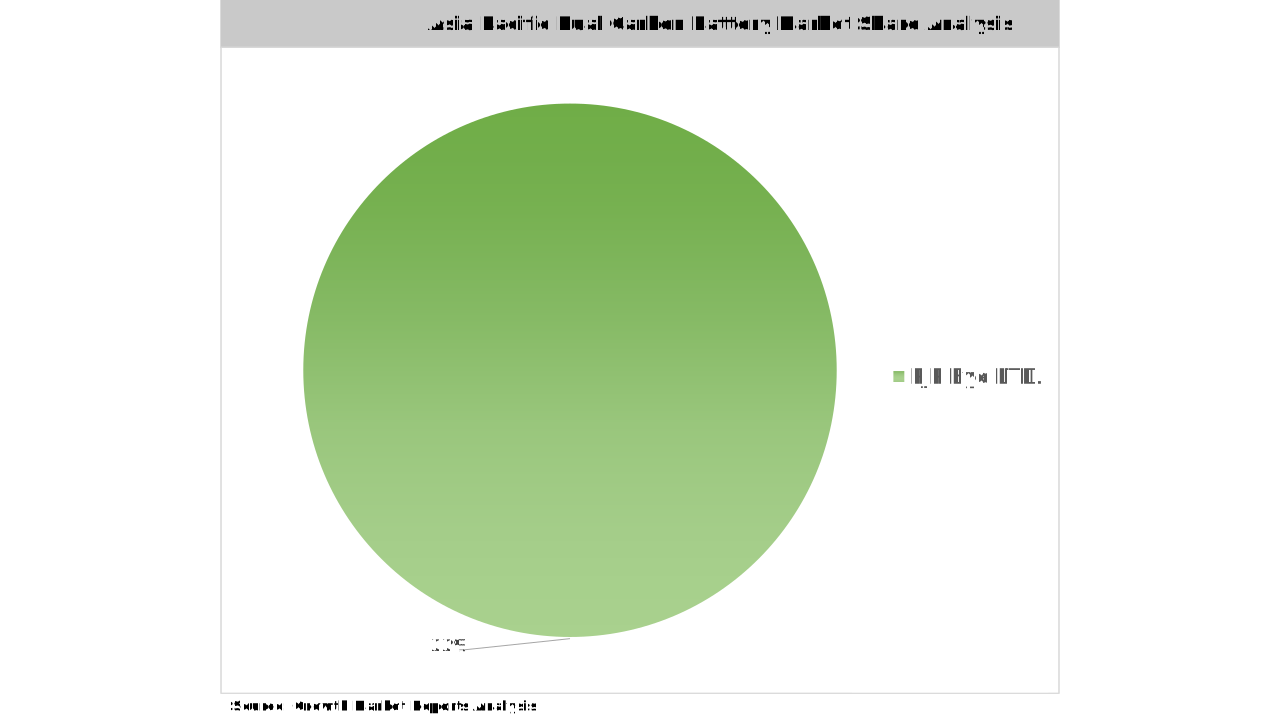
Key players competing in the Asia Pacific dual carbon battery market include PJP Eye LTD.
Opportunities include growing demand for electric mobility and renewable energy integration, technological breakthroughs in carbon material synthesis, and expanding applications in grid storage, industrial automation, and portable electronics.
Yes, dual carbon batteries are increasingly used in consumer electronics like smartphones, laptops, and wearables due to their high cycle stability, fast charging, and improved safety.
Key challenges include high costs of advanced carbon materials, manufacturing scale-up complexities, competition from established lithium-ion batteries, lack of standardized testing, and limited consumer awareness.
Major companies include Power Japan Plus, Dual Carbon Energy, Toshiba Corporation, Amperex Technology Limited (ATL), EnerG2, Panasonic, LG Chem, Samsung SDI, CATL, BYD, and others.
Dual carbon batteries offer rapid charging, longer lifespan, improved safety, and reduced risk of thermal runaway, making them a promising alternative to lithium-ion batteries for electric vehicles.
Asia Pacific leads the market, driven by strong manufacturing and government support, followed by North America and Europe, which are experiencing growth due to clean energy initiatives and stringent emission regulations.
The main product types are pouch cells (flexible and lightweight), cylindrical cells (durable and efficient thermal management), and prismatic cells (high energy density and compact form factor), each catering to specific application needs.
Key sectors driving adoption include automotive (especially electric vehicles), consumer electronics, industrial applications, and stationary energy storage systems due to the need for sustainable, high-performance energy storage solutions.
The global dual carbon battery market is projected to grow at a CAGR of 18.2% from 2025 to 2033, reaching an estimated value of USD 1.45 billion by 2033, up from USD 328 million in 2024.
A dual carbon battery uses carbon materials for both the anode and cathode, offering advantages such as faster charging, improved cycle life, enhanced safety, and eco-friendly composition without heavy metals or rare earth elements, unlike traditional lithium-ion batteries.