Large Power Transformer Market Research Report 2033

Large Power Transformer Market Research Report 2033

Segments - by Power Rating (100-500 MVA, 501-800 MVA, Above 800 MVA), by Cooling Type (Oil-Cooled, Air-Cooled), by Phase (Single Phase, Three Phase), by Application (Utilities, Industrial, Commercial), by End-User (Power Generation, Transmission & Distribution, Industrial, Infrastructure)

https://growthmarketreports.com/Raksha
Author : Raksha Sharma
https://growthmarketreports.com/Vaibhav
Fact-checked by : V. Chandola
https://growthmarketreports.com/Shruti
Editor : Shruti Bhat

Upcoming | Report ID :EP-1190 | 4.3 Rating | 44 Reviews | 286 Pages | Format : Docx PDF

Report Description


Large Power Transformer Market Outlook

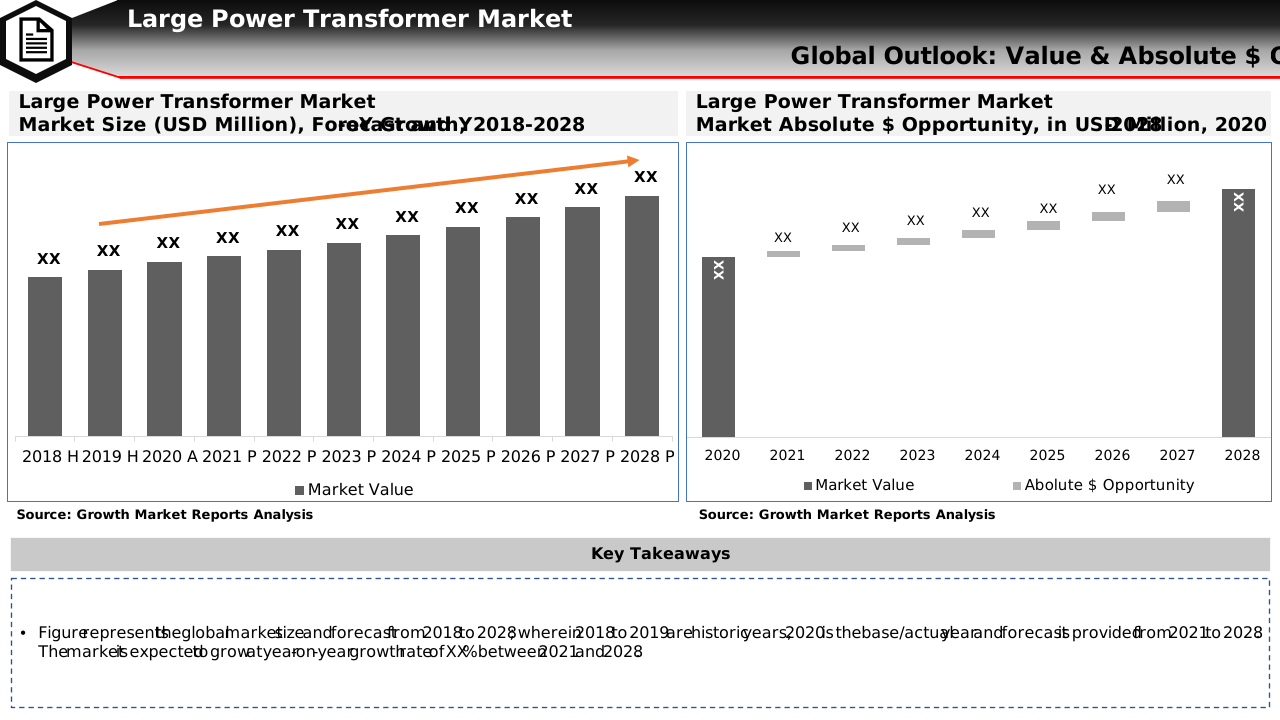
According to our latest research, the global large power transformer market size reached USD 24.8 billion in 2024, driven by significant investments in power infrastructure and grid modernization across both developed and emerging economies. The market is expected to expand at a robust CAGR of 6.1% from 2025 to 2033, reaching an estimated USD 42.2 billion by 2033. This growth is primarily attributed to the rising demand for reliable and efficient electricity transmission, increasing integration of renewable energy sources, and ongoing upgrades to aging power infrastructure worldwide.

One of the key growth factors propelling the large power transformer market is the global surge in electricity consumption, fueled by rapid urbanization, industrialization, and the proliferation of energy-intensive technologies. As countries strive to meet the escalating needs of their populations and industries, utilities and governments are making substantial investments in expanding and modernizing transmission and distribution networks. Large power transformers, with their ability to handle high voltage and current levels, play a critical role in ensuring the efficient and safe transfer of electricity over long distances, thereby minimizing energy losses and enhancing grid reliability. The rising prevalence of smart grids and the integration of digital monitoring systems are further driving the demand for technologically advanced transformer solutions.

Another major driver is the global transition toward renewable energy sources such as wind, solar, and hydroelectric power. The intermittent and decentralized nature of renewables creates new challenges for grid operators, necessitating robust transmission infrastructure capable of managing fluctuating loads and connecting remote generation sites to urban centers. Large power transformers are essential in facilitating this integration by enabling voltage regulation and load balancing across vast distances. Additionally, government mandates for cleaner energy, coupled with ambitious carbon reduction targets, are encouraging utilities to invest in grid upgrades and the replacement of outdated equipment, further fueling market expansion.

The replacement and refurbishment of aging power infrastructure, particularly in North America and Europe, is another significant growth catalyst for the large power transformer market. Many existing transformers in these regions have surpassed their intended operational lifespans, raising concerns about reliability, efficiency, and safety. As a result, utilities are prioritizing the deployment of modern, high-capacity transformers equipped with advanced monitoring, cooling, and protection systems. This trend is also evident in developing economies, where rapid economic growth and urbanization are driving the need for new transmission lines and substations. The increasing adoption of energy-efficient transformer designs, in line with stringent regulatory standards, is further supporting market growth.

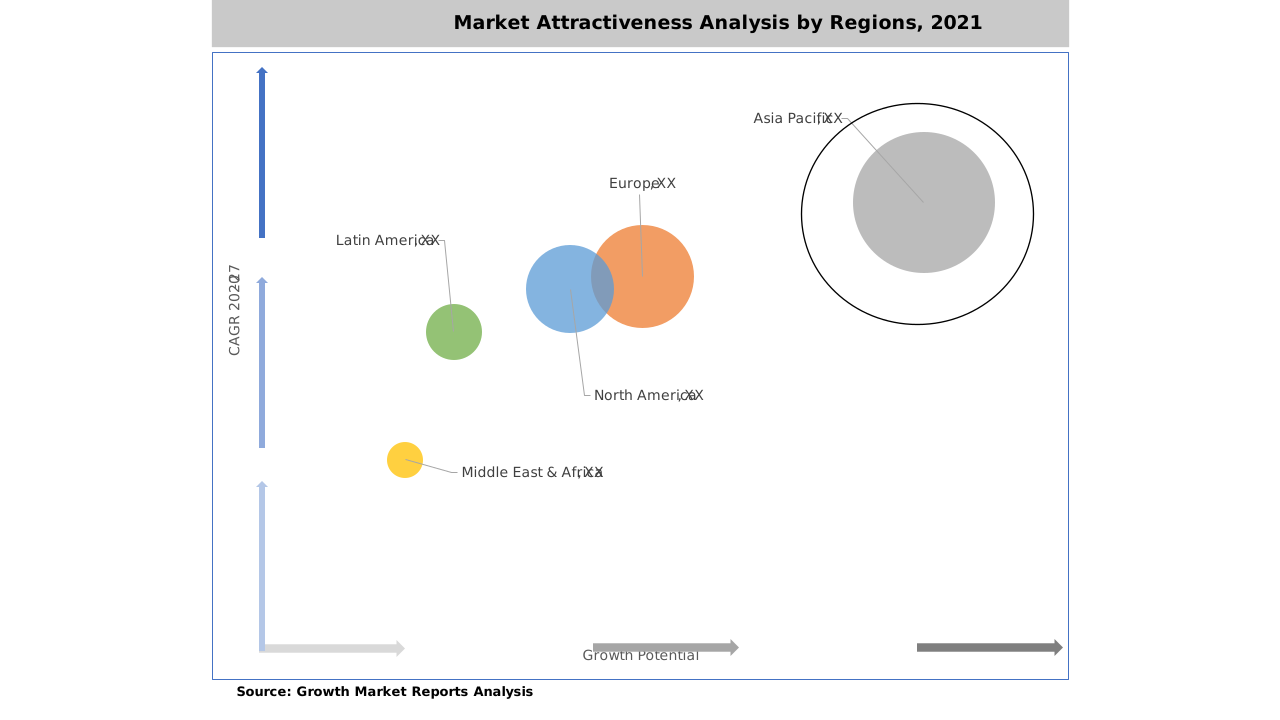
From a regional perspective, Asia Pacific remains the dominant market for large power transformers, accounting for a substantial share of global demand. The region’s leadership is underpinned by massive investments in power generation and transmission infrastructure across China, India, Japan, and Southeast Asian countries. North America and Europe continue to witness steady growth, driven by grid modernization initiatives and the integration of renewable energy. Meanwhile, the Middle East & Africa and Latin America are emerging as high-potential markets, supported by ongoing electrification projects and urban development programs. Each region presents unique opportunities and challenges, shaping the competitive dynamics and technological advancements within the global large power transformer market.

Global Large Power Transformer Industry Outlook

Power Rating Analysis

The large power transformer market is segmented by power rating into 100-500 MVA, 501-800 MVA, and above 800 MVA. The 100-500 MVA segment currently dominates the market, owing to its widespread application in regional transmission networks and industrial facilities. These transformers strike a balance between capacity and cost-effectiveness, making them the preferred choice for utilities seeking to upgrade or expand their infrastructure without incurring excessive capital expenditure. The segment benefits from increased investments in grid expansion projects across Asia Pacific and Africa, where electrification rates are rising rapidly, and new substations are being established to meet growing energy demand.

The 501-800 MVA power rating segment is witnessing notable growth, particularly in regions with extensive high-voltage transmission networks. These transformers are essential for interconnecting large power plants, renewable energy installations, and urban centers, enabling the efficient transfer of bulk electricity over long distances. The growing adoption of ultra-high voltage (UHV) transmission lines in China and India is a key driver for this segment, as these projects require transformers with higher power ratings and advanced insulation technologies. Additionally, the ongoing shift toward decentralized power generation and the integration of distributed energy resources are creating new opportunities for mid-to-high capacity transformers in both developed and emerging markets.

The above 800 MVA segment, although smaller in terms of volume, represents a critical niche within the large power transformer market. These ultra-high-capacity transformers are predominantly deployed in major interconnection points, large-scale power plants, and grid interties that require the handling of massive electricity flows. The segment is characterized by high technological complexity and stringent quality standards, as even minor failures can have far-reaching consequences for grid stability and security. Leading manufacturers are investing in research and development to enhance the efficiency, reliability, and environmental performance of these transformers, leveraging advanced materials and digital monitoring solutions.

The demand dynamics across power rating segments are influenced by regional infrastructure development patterns, regulatory requirements, and the pace of renewable energy integration. In mature markets such as North America and Europe, the focus is on replacing aging transformers with higher-capacity, energy-efficient models that can accommodate future load growth and support smart grid functionalities. In contrast, emerging economies are prioritizing the deployment of medium-capacity transformers to extend grid coverage and improve access to electricity in underserved areas. This diversity in demand is fostering innovation and competition among transformer manufacturers, who are tailoring their product portfolios to address the specific needs of different market segments.

Overall, the power rating segmentation provides valuable insights into the evolving requirements of the global electricity sector. As utilities and industrial users seek to optimize their capital investments and operational efficiency, the choice of transformer capacity is becoming increasingly strategic. The ongoing transition to renewable energy, coupled with the digitization of grid operations, is expected to drive further differentiation and specialization within the large power transformer market, with each power rating segment playing a vital role in supporting the world’s energy transition.

Report Scope

Attributes Details
Report Title Large Power Transformer Market Research Report 2033
By Power Rating 100-500 MVA, 501-800 MVA, Above 800 MVA
By Cooling Type Oil-Cooled, Air-Cooled
By Phase Single Phase, Three Phase
By Application Utilities, Industrial, Commercial
By End-User Power Generation, Transmission & Distribution, Industrial, Infrastructure
Regions Covered North America, Europe, APAC, Latin America, MEA
Base Year 2024
Historic Data 2018-2023
Forecast Period 2025-2033
Number of Pages 286
Number of Tables & Figures 316
Customization Available Yes, the report can be customized as per your need.

Cooling Type Analysis

The large power transformer market is segmented by cooling type into oil-cooled and air-cooled transformers, each offering distinct advantages and applications. Oil-cooled transformers continue to dominate the market, accounting for the majority of new installations and replacements. These transformers utilize mineral or synthetic insulating oils to dissipate heat generated during operation, ensuring reliable performance even under high load conditions. The superior cooling efficiency of oil-cooled systems makes them ideal for large-capacity applications in transmission substations, power plants, and industrial complexes. Additionally, advancements in oil purification and monitoring technologies have enhanced the operational lifespan and safety of these transformers, further supporting their widespread adoption.

Air-cooled transformers, while less prevalent in high-capacity applications, are gaining traction in specific use cases where environmental considerations, space constraints, or fire safety requirements are paramount. These transformers rely on natural or forced air circulation to remove heat, eliminating the need for oil and reducing the risk of leaks or fires. Air-cooled designs are particularly favored in commercial buildings, data centers, and urban substations where environmental regulations are stringent and maintenance access is limited. The growing emphasis on sustainability and the adoption of eco-friendly transformer solutions are driving innovation in air-cooled technologies, with manufacturers developing new materials and cooling techniques to enhance efficiency and reliability.

The choice between oil-cooled and air-cooled transformers is influenced by a range of factors, including installation environment, load profile, regulatory requirements, and total cost of ownership. Oil-cooled transformers offer higher power density and better overload capabilities, making them the preferred option for critical infrastructure and high-voltage transmission networks. However, concerns about oil spills, environmental contamination, and fire hazards have prompted utilities and industrial users to explore alternatives, particularly in urban or environmentally sensitive locations. Air-cooled transformers, despite their lower power ratings, are increasingly being specified for applications where operational safety and environmental compliance are top priorities.

Technological advancements are blurring the lines between traditional cooling methods, with hybrid and advanced cooling systems emerging as viable solutions for large power transformers. Manufacturers are integrating digital sensors, automated cooling controls, and predictive maintenance tools to optimize thermal performance and reduce operational risks. These innovations are enabling utilities to deploy transformers that offer both high capacity and enhanced safety, aligning with evolving regulatory standards and customer expectations. The ongoing shift toward smart grids and digital substations is further accelerating the adoption of intelligent cooling solutions, as utilities seek to maximize asset utilization and minimize downtime.

In summary, the cooling type segmentation underscores the importance of balancing performance, safety, and sustainability in the design and deployment of large power transformers. As the global electricity sector evolves, the demand for flexible, efficient, and environmentally responsible transformer solutions is expected to rise, driving continued innovation and competition across both oil-cooled and air-cooled segments.

Phase Analysis

The large power transformer market is segmented by phase into single phase and three phase transformers, each serving distinct roles within the electricity transmission and distribution ecosystem. Three phase transformers represent the dominant segment, owing to their superior efficiency, load balancing capabilities, and widespread use in high-voltage transmission networks. These transformers are essential for interconnecting power plants, substations, and distribution grids, enabling the seamless transfer of electricity across long distances with minimal losses. The robust design and operational flexibility of three phase transformers make them the preferred choice for utilities and industrial users seeking to optimize grid performance and reliability.

Single phase transformers, while less common in large-scale transmission applications, play a vital role in specific industrial, commercial, and rural electrification projects. These transformers are typically used for step-down or step-up applications in localized networks, providing electricity to residential areas, small businesses, and remote facilities. Single phase designs offer advantages in terms of simplicity, lower initial cost, and ease of installation, making them suitable for projects with limited space or budget constraints. The ongoing expansion of rural electrification programs in emerging economies is supporting steady demand for single phase transformers, particularly in regions where grid infrastructure is still under development.

The choice between single phase and three phase transformers is influenced by factors such as load profile, grid topology, regulatory requirements, and operational efficiency. Three phase transformers offer higher power handling capacity and improved voltage regulation, making them indispensable for large-scale transmission and industrial applications. However, single phase transformers remain relevant in niche markets where load diversity is limited and cost considerations take precedence. Utilities and project developers often deploy a combination of both transformer types to achieve optimal performance and cost-effectiveness across different segments of the grid.

Technological advancements are enhancing the performance and reliability of both single phase and three phase transformers. Manufacturers are incorporating advanced materials, digital monitoring systems, and predictive maintenance tools to extend operational lifespans and reduce downtime. The integration of smart grid technologies is enabling real-time monitoring and control of transformer performance, allowing utilities to proactively address potential issues and optimize asset utilization. These innovations are particularly valuable in regions with aging infrastructure, where the need for reliable and efficient power delivery is paramount.

Overall, the phase segmentation reflects the diverse requirements of the global electricity sector, with each transformer type playing a crucial role in supporting grid expansion, modernization, and resilience. As utilities and industrial users continue to invest in infrastructure upgrades and renewable energy integration, the demand for both single phase and three phase transformers is expected to remain strong, driving sustained growth and innovation within the large power transformer market.

Application Analysis

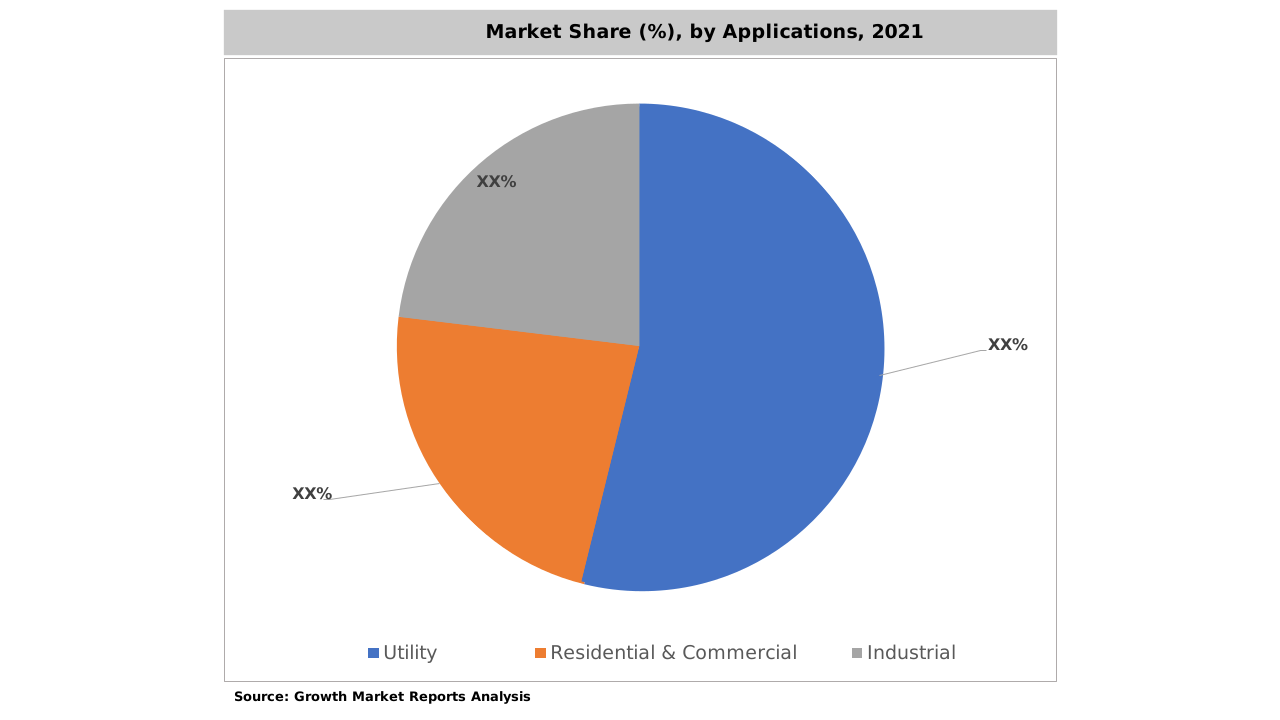
The large power transformer market is segmented by application into utilities, industrial, and commercial sectors, each exhibiting unique demand drivers and operational requirements. The utilities segment accounts for the largest share of the market, driven by ongoing investments in transmission and distribution infrastructure. Utilities rely on large power transformers to ensure the efficient and reliable delivery of electricity from generation sources to end-users, minimizing losses and maintaining grid stability. The increasing integration of renewable energy sources, coupled with the need to replace aging equipment, is prompting utilities to invest in advanced transformer solutions with enhanced monitoring, cooling, and protection capabilities.

The industrial segment represents a significant growth area for the large power transformer market, particularly in regions experiencing rapid industrialization and infrastructure development. Industries such as oil and gas, mining, chemicals, steel, and manufacturing require robust transformer solutions to support high-capacity operations and ensure uninterrupted power supply. The adoption of energy-intensive processes and the expansion of industrial parks are driving demand for transformers with higher power ratings and superior thermal performance. Additionally, the trend toward automation and digitalization in industrial facilities is creating new opportunities for smart transformer solutions equipped with real-time monitoring and predictive maintenance features.

The commercial sector, while smaller in terms of overall market share, is witnessing steady growth as urbanization and infrastructure development accelerate worldwide. Large commercial complexes, data centers, hospitals, and transportation hubs require reliable and efficient power distribution systems to support critical operations and ensure occupant safety. The increasing prevalence of high-rise buildings and mixed-use developments in urban areas is driving demand for compact, energy-efficient transformer solutions that can be integrated into limited spaces without compromising performance. Environmental regulations and green building standards are also influencing the adoption of eco-friendly transformer designs in the commercial sector.

The application segmentation highlights the diverse and evolving needs of end-users in the large power transformer market. Utilities prioritize grid reliability, operational efficiency, and regulatory compliance, while industrial users focus on capacity, durability, and process integration. Commercial customers, on the other hand, seek solutions that offer a balance of performance, safety, and sustainability. Manufacturers are responding to these varied requirements by offering customizable transformer solutions, advanced monitoring technologies, and comprehensive service offerings tailored to each application segment.

As global electricity demand continues to rise and energy systems become increasingly complex, the application landscape for large power transformers is expected to diversify further. The ongoing shift toward renewable energy, digitalization, and electrification of transport and industry will create new opportunities and challenges for transformer manufacturers and end-users alike, driving continued innovation and market expansion.

End-User Analysis

The large power transformer market is segmented by end-user into power generation, transmission & distribution, industrial, and infrastructure sectors. The transmission & distribution segment holds the largest share, as utilities and grid operators invest heavily in expanding and modernizing transmission lines, substations, and distribution networks. Large power transformers are indispensable in these applications, enabling the efficient transfer of electricity from generation sites to consumption centers while minimizing losses and ensuring voltage stability. The integration of renewable energy sources and the adoption of smart grid technologies are further driving demand for advanced transformer solutions in the transmission & distribution sector.

The power generation segment is another key end-user, encompassing conventional power plants, renewable energy installations, and distributed generation systems. Large power transformers are used to step up voltage levels for efficient transmission and to interconnect generation assets with the broader grid. The global shift toward renewable energy, particularly solar and wind, is creating new opportunities for transformer manufacturers, as these projects often require specialized transformer designs capable of handling variable loads and integrating with digital monitoring systems. The replacement of aging transformers in existing power plants is also contributing to steady demand in this segment.

The industrial end-user segment is characterized by high-capacity, mission-critical applications in sectors such as oil and gas, mining, chemicals, and manufacturing. Industrial users require transformers that can withstand harsh operating conditions, provide reliable power supply, and support automation and process control systems. The trend toward digitalization and the adoption of energy management solutions are driving demand for smart transformers equipped with advanced monitoring, diagnostics, and predictive maintenance capabilities. As industrialization accelerates in emerging economies, the need for robust and efficient transformer solutions is expected to grow.

The infrastructure segment, encompassing transportation, commercial buildings, data centers, and public utilities, represents a growing market for large power transformers. The expansion of urban infrastructure, electrification of railways and mass transit systems, and the proliferation of data centers are creating new demand for high-capacity transformer solutions. Environmental considerations, space constraints, and regulatory requirements are influencing the adoption of compact, energy-efficient, and eco-friendly transformer designs in the infrastructure sector. Manufacturers are responding by developing innovative solutions that address the unique challenges of urban and critical infrastructure projects.

The end-user segmentation underscores the broad and dynamic nature of the large power transformer market, with each sector presenting distinct requirements and growth opportunities. As the global energy landscape evolves, transformer manufacturers are increasingly focusing on customization, technological innovation, and value-added services to meet the diverse needs of power generation, transmission & distribution, industrial, and infrastructure customers worldwide.

Opportunities & Threats

The large power transformer market presents a wealth of opportunities driven by the ongoing global transition to renewable energy and the modernization of aging power infrastructure. As countries worldwide set ambitious targets for carbon neutrality and renewable energy integration, the demand for robust and efficient transmission networks is surging. Large power transformers are essential for connecting renewable energy sources such as wind and solar farms to the grid, enabling the seamless transfer of electricity across vast distances. This trend is particularly pronounced in Asia Pacific, North America, and Europe, where governments are investing heavily in grid upgrades and smart grid technologies. Additionally, the rise of digital substations and the integration of real-time monitoring and predictive maintenance tools are creating new opportunities for transformer manufacturers to offer value-added solutions and services, enhancing asset performance and reducing operational risks.

Another significant opportunity lies in the electrification of transportation and the expansion of urban infrastructure. The proliferation of electric vehicles, mass transit systems, and high-speed rail networks is driving demand for high-capacity transformer solutions capable of supporting increased electricity consumption and ensuring grid stability. Urbanization and the development of smart cities are also creating opportunities for compact, energy-efficient transformer designs that can be integrated into limited spaces while meeting stringent environmental and safety standards. Manufacturers that can innovate and adapt their product offerings to address these emerging needs are well-positioned to capture a larger share of the growing market.

Despite these opportunities, the large power transformer market faces several restraining factors, chief among them being the high capital costs and long lead times associated with transformer manufacturing and installation. Large power transformers are complex, custom-engineered products that require significant investment in materials, engineering, and quality assurance. Supply chain disruptions, fluctuations in raw material prices, and regulatory hurdles can further increase costs and delay project timelines. Additionally, the increasing complexity of grid operations and the integration of variable renewable energy sources pose technical challenges related to grid stability, voltage regulation, and asset management. Addressing these challenges will require continued innovation, collaboration, and investment across the value chain.

Regional Outlook

Asia Pacific remains the largest and fastest-growing region in the large power transformer market, accounting for approximately 46% of global revenue in 2024, or about USD 11.4 billion. The region’s dominance is driven by massive investments in power generation, transmission, and distribution infrastructure across China, India, Japan, and Southeast Asia. Rapid urbanization, industrialization, and the integration of renewable energy sources are fueling demand for high-capacity transformers capable of supporting expanding grids and ensuring reliable electricity supply. The Asia Pacific market is projected to grow at a CAGR of 7.1% through 2033, outpacing other regions and solidifying its leadership position.

North America is another significant market, with a 2024 value of approximately USD 5.6 billion, representing around 23% of global demand. The region’s growth is underpinned by ongoing grid modernization initiatives, the replacement of aging transformers, and the integration of renewable energy sources such as wind and solar. Utilities in the United States and Canada are investing in advanced transformer technologies to enhance grid reliability, support the electrification of transportation, and meet evolving regulatory standards. The emphasis on smart grids and digital substations is further driving demand for intelligent transformer solutions equipped with real-time monitoring and predictive maintenance capabilities.

Europe accounts for roughly 19% of the global large power transformer market, or about USD 4.7 billion in 2024. The region’s focus on decarbonization, energy efficiency, and grid resilience is driving investments in transformer upgrades and replacements. Major economies such as Germany, France, and the United Kingdom are prioritizing the integration of renewable energy sources and the deployment of smart grid technologies, creating opportunities for advanced transformer solutions. Meanwhile, the Middle East & Africa and Latin America, with market sizes of USD 1.9 billion and USD 1.2 billion respectively, are emerging as high-potential regions, supported by ongoing electrification projects, urban development, and infrastructure expansion.

Large Power Transformer Market Statistics

Competitor Outlook

The large power transformer market is characterized by intense competition among a mix of global giants and regional players, each vying for market share through technological innovation, strategic partnerships, and value-added services. Leading manufacturers are investing heavily in research and development to enhance transformer efficiency, reliability, and environmental performance, leveraging advanced materials, digital monitoring systems, and predictive maintenance tools. The market is also witnessing increased consolidation, as companies seek to expand their product portfolios, geographic reach, and customer base through mergers, acquisitions, and joint ventures. This dynamic competitive landscape is fostering innovation and driving the adoption of next-generation transformer solutions tailored to the evolving needs of utilities, industrial users, and infrastructure developers.

Product differentiation and customization are key strategies employed by market leaders to address the diverse requirements of end-users across different regions and applications. Companies are offering a range of transformer designs, cooling systems, and monitoring technologies to meet specific performance, safety, and regulatory standards. The emphasis on sustainability and energy efficiency is prompting manufacturers to develop eco-friendly transformer solutions, such as those utilizing biodegradable insulating oils, advanced cooling techniques, and recyclable materials. Additionally, the integration of digital technologies and smart grid solutions is enabling companies to offer comprehensive asset management and service offerings, enhancing customer value and loyalty.

The competitive landscape is also shaped by the emergence of new entrants and regional players, particularly in fast-growing markets such as Asia Pacific and the Middle East. These companies are leveraging local manufacturing capabilities, cost advantages, and market knowledge to capture share in their respective regions. Collaboration with utilities, government agencies, and technology providers is becoming increasingly important, as companies seek to develop innovative solutions that address the unique challenges and opportunities of each market. The ability to adapt to changing customer needs, regulatory environments, and technological advancements will be critical for sustained success in the large power transformer market.

Major companies operating in the global large power transformer market include Siemens Energy AG, ABB Ltd., General Electric Company, Hyundai Electric & Energy Systems Co., Ltd., Toshiba Energy Systems & Solutions Corporation, Bharat Heavy Electricals Limited (BHEL), Mitsubishi Electric Corporation, CG Power and Industrial Solutions Limited, Schneider Electric SE, and SPX Transformer Solutions, Inc. These industry leaders are known for their extensive product portfolios, global presence, and strong focus on innovation and quality. Siemens Energy AG and ABB Ltd. are at the forefront of digital transformer technologies, offering solutions that integrate real-time monitoring, remote diagnostics, and predictive maintenance. General Electric Company and Mitsubishi Electric Corporation are recognized for their high-capacity transformer designs and expertise in grid integration projects. Hyundai Electric & Energy Systems Co., Ltd. and Toshiba Energy Systems & Solutions Corporation are prominent players in the Asia Pacific region, leveraging advanced manufacturing capabilities and strategic partnerships to expand their market presence.

In conclusion, the large power transformer market is poised for sustained growth, driven by the global energy transition, infrastructure modernization, and the adoption of advanced technologies. The competitive landscape is dynamic and evolving, with both established players and new entrants striving to deliver innovative, efficient, and sustainable transformer solutions that meet the diverse needs of customers worldwide. As the market continues to expand, companies that prioritize technological excellence, customer-centricity, and operational agility will be best positioned to capitalize on the emerging opportunities and navigate the challenges ahead.

Key Players

  • ABB Ltd.
  • Siemens AG
  • General Electric Company
  • Toshiba Corporation
  • Mitsubishi Electric Corporation
  • Hyundai Electric & Energy Systems Co., Ltd.
  • Schneider Electric SE
  • CG Power and Industrial Solutions Limited
  • Hitachi Energy Ltd.
  • Bharat Heavy Electricals Limited (BHEL)
  • SPX Transformer Solutions, Inc.
  • SGB-SMIT Group
  • Wilson Transformer Company
  • Hyosung Heavy Industries Corporation
  • Fuji Electric Co., Ltd.
  • Eaton Corporation plc
  • WEG SA
  • TBEA Co., Ltd.
  • JiangSu HuaPeng Transformer Co., Ltd.
  • China XD Group
Large Power Transformer Market Overview

Segments

The Large Power Transformer market has been segmented on the basis of

Power Rating

  • 100-500 MVA
  • 501-800 MVA
  • Above 800 MVA

Cooling Type

  • Oil-Cooled
  • Air-Cooled

Phase

  • Single Phase
  • Three Phase

Application

  • Utilities
  • Industrial
  • Commercial

End-User

  • Power Generation
  • Transmission & Distribution
  • Industrial
  • Infrastructure

Competitive Landscape

Key players competing in the global large power transformer market include Siemens AG; ABB Ltd.; Crompton Greaves Ltd.; Hyundai Heavy Industries Co. Ltd.; Alstom SA; General Electric Co.; Hitachi Ltd.; Bharat Heavy Electricals Ltd.; Schneider Electric SE; Kirloskar Electric Co. Ltd.; CG Power and Industrial Solutions Ltd.; and EMCO Ltd. Some of these players are engaged in several market strategies such as mergers, acquisitions, partnerships, collaborations, capacity expansion, and product launches to enhance their market shares.
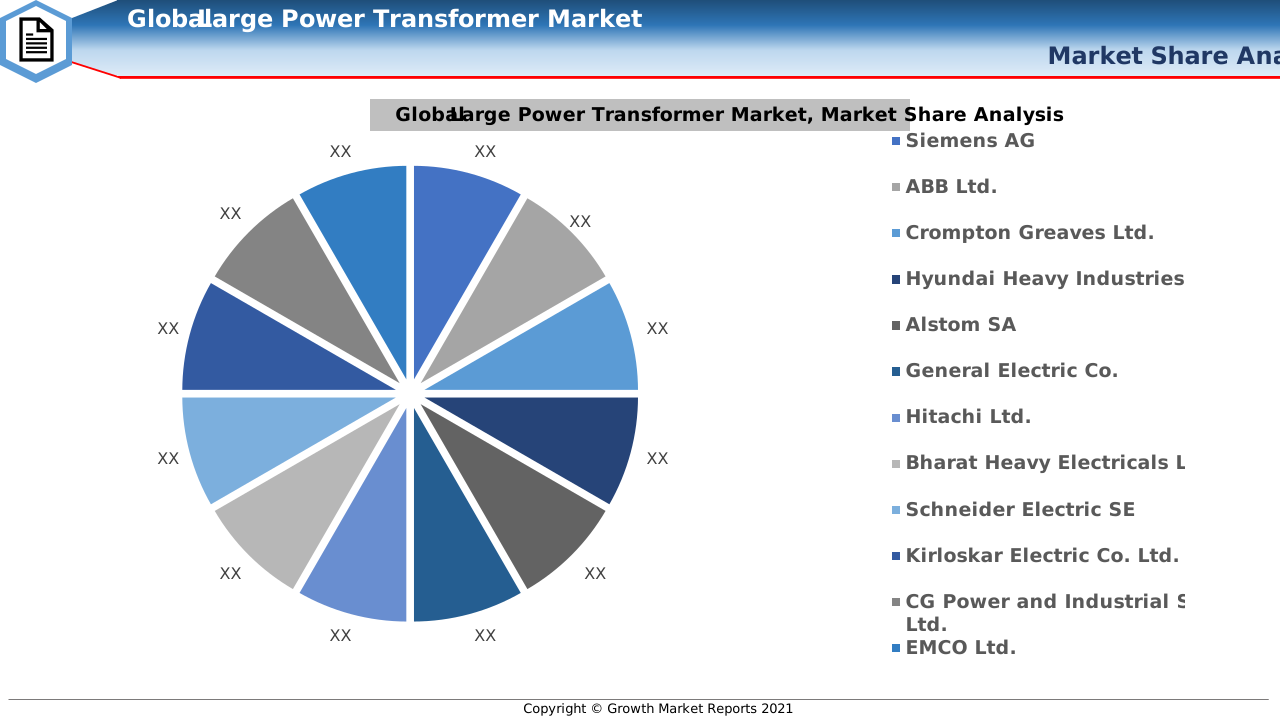
 

Large Power Transformer Market by Key Players

Frequently Asked Questions

Technological advancements such as digital monitoring, predictive maintenance, smart grids, and eco-friendly materials are driving innovation, improving efficiency, and enhancing reliability in large power transformers.

Opportunities include renewable energy integration, grid modernization, and urban infrastructure expansion. Challenges involve high capital costs, long lead times, supply chain disruptions, and technical complexities in grid management.

Large power transformers are used in utilities, industrial, and commercial sectors. Major end-users include power generation, transmission & distribution, industrial facilities, and infrastructure projects.

Key companies include ABB Ltd., Siemens AG, General Electric Company, Toshiba Corporation, Mitsubishi Electric Corporation, Hyundai Electric & Energy Systems, Schneider Electric, CG Power, Hitachi Energy, BHEL, and others.

Large power transformers are crucial for integrating renewable energy sources like wind and solar into the grid, managing fluctuating loads, and connecting remote generation sites to urban centers.

Oil-cooled transformers dominate the market due to their superior cooling efficiency and reliability in high-capacity applications. Air-cooled transformers are preferred in environments with space constraints, fire safety, or strict environmental regulations.

The market is segmented into 100-500 MVA, 501-800 MVA, and above 800 MVA. The 100-500 MVA segment currently dominates due to its widespread use in regional transmission networks and industrial facilities.

Asia Pacific is the dominant region, accounting for about 46% of global revenue in 2024, followed by North America and Europe. The Middle East & Africa and Latin America are emerging as high-potential markets.

Key growth drivers include rising electricity consumption, grid modernization, integration of renewable energy sources, replacement of aging infrastructure, and increased investments in transmission and distribution networks.

The global large power transformer market reached USD 24.8 billion in 2024 and is expected to grow at a CAGR of 6.1% from 2025 to 2033, reaching approximately USD 42.2 billion by 2033.

Table Of Content

Chapter 1 Executive Summary
Chapter 2 Assumptions and Acronyms Used
Chapter 3 Research Methodology
Chapter 4 Large Power Transformer Market Overview
   4.1 Introduction
      4.1.1 Market Taxonomy
      4.1.2 Market Definition
      4.1.3 Macro-Economic Factors Impacting the Market Growth
   4.2 Large Power Transformer Market Dynamics
      4.2.1 Market Drivers
      4.2.2 Market Restraints
      4.2.3 Market Opportunity
   4.3 Large Power Transformer Market - Supply Chain Analysis
      4.3.1 List of Key Suppliers
      4.3.2 List of Key Distributors
      4.3.3 List of Key Consumers
   4.4 Key Forces Shaping the Large Power Transformer Market
      4.4.1 Bargaining Power of Suppliers
      4.4.2 Bargaining Power of Buyers
      4.4.3 Threat of Substitution
      4.4.4 Threat of New Entrants
      4.4.5 Competitive Rivalry
   4.5 Global Large Power Transformer Market Size & Forecast, 2023-2032
      4.5.1 Large Power Transformer Market Size and Y-o-Y Growth
      4.5.2 Large Power Transformer Market Absolute $ Opportunity

Chapter 5 Global Large Power Transformer Market Analysis and Forecast By Power Rating
   5.1 Introduction
      5.1.1 Key Market Trends & Growth Opportunities By Power Rating
      5.1.2 Basis Point Share (BPS) Analysis By Power Rating
      5.1.3 Absolute $ Opportunity Assessment By Power Rating
   5.2 Large Power Transformer Market Size Forecast By Power Rating
      5.2.1 100-500 MVA
      5.2.2 501-800 MVA
      5.2.3 Above 800 MVA
   5.3 Market Attractiveness Analysis By Power Rating

Chapter 6 Global Large Power Transformer Market Analysis and Forecast By Cooling Type
   6.1 Introduction
      6.1.1 Key Market Trends & Growth Opportunities By Cooling Type
      6.1.2 Basis Point Share (BPS) Analysis By Cooling Type
      6.1.3 Absolute $ Opportunity Assessment By Cooling Type
   6.2 Large Power Transformer Market Size Forecast By Cooling Type
      6.2.1 Oil-Cooled
      6.2.2 Air-Cooled
   6.3 Market Attractiveness Analysis By Cooling Type

Chapter 7 Global Large Power Transformer Market Analysis and Forecast By Phase
   7.1 Introduction
      7.1.1 Key Market Trends & Growth Opportunities By Phase
      7.1.2 Basis Point Share (BPS) Analysis By Phase
      7.1.3 Absolute $ Opportunity Assessment By Phase
   7.2 Large Power Transformer Market Size Forecast By Phase
      7.2.1 Single Phase
      7.2.2 Three Phase
   7.3 Market Attractiveness Analysis By Phase

Chapter 8 Global Large Power Transformer Market Analysis and Forecast By Application
   8.1 Introduction
      8.1.1 Key Market Trends & Growth Opportunities By Application
      8.1.2 Basis Point Share (BPS) Analysis By Application
      8.1.3 Absolute $ Opportunity Assessment By Application
   8.2 Large Power Transformer Market Size Forecast By Application
      8.2.1 Utilities
      8.2.2 Industrial
      8.2.3 Commercial
   8.3 Market Attractiveness Analysis By Application

Chapter 9 Global Large Power Transformer Market Analysis and Forecast By End-User
   9.1 Introduction
      9.1.1 Key Market Trends & Growth Opportunities By End-User
      9.1.2 Basis Point Share (BPS) Analysis By End-User
      9.1.3 Absolute $ Opportunity Assessment By End-User
   9.2 Large Power Transformer Market Size Forecast By End-User
      9.2.1 Power Generation
      9.2.2 Transmission & Distribution
      9.2.3 Industrial
      9.2.4 Infrastructure
   9.3 Market Attractiveness Analysis By End-User

Chapter 10 Global Large Power Transformer Market Analysis and Forecast by Region
   10.1 Introduction
      10.1.1 Key Market Trends & Growth Opportunities By Region
      10.1.2 Basis Point Share (BPS) Analysis By Region
      10.1.3 Absolute $ Opportunity Assessment By Region
   10.2 Large Power Transformer Market Size Forecast By Region
      10.2.1 North America
      10.2.2 Europe
      10.2.3 Asia Pacific
      10.2.4 Latin America
      10.2.5 Middle East & Africa (MEA)
   10.3 Market Attractiveness Analysis By Region

Chapter 11 Coronavirus Disease (COVID-19) Impact 
   11.1 Introduction 
   11.2 Current & Future Impact Analysis 
   11.3 Economic Impact Analysis 
   11.4 Government Policies 
   11.5 Investment Scenario

Chapter 12 North America Large Power Transformer Analysis and Forecast
   12.1 Introduction
   12.2 North America Large Power Transformer Market Size Forecast by Country
      12.2.1 U.S.
      12.2.2 Canada
   12.3 Basis Point Share (BPS) Analysis by Country
   12.4 Absolute $ Opportunity Assessment by Country
   12.5 Market Attractiveness Analysis by Country
   12.6 North America Large Power Transformer Market Size Forecast By Power Rating
      12.6.1 100-500 MVA
      12.6.2 501-800 MVA
      12.6.3 Above 800 MVA
   12.7 Basis Point Share (BPS) Analysis By Power Rating 
   12.8 Absolute $ Opportunity Assessment By Power Rating 
   12.9 Market Attractiveness Analysis By Power Rating
   12.10 North America Large Power Transformer Market Size Forecast By Cooling Type
      12.10.1 Oil-Cooled
      12.10.2 Air-Cooled
   12.11 Basis Point Share (BPS) Analysis By Cooling Type 
   12.12 Absolute $ Opportunity Assessment By Cooling Type 
   12.13 Market Attractiveness Analysis By Cooling Type
   12.14 North America Large Power Transformer Market Size Forecast By Phase
      12.14.1 Single Phase
      12.14.2 Three Phase
   12.15 Basis Point Share (BPS) Analysis By Phase 
   12.16 Absolute $ Opportunity Assessment By Phase 
   12.17 Market Attractiveness Analysis By Phase
   12.18 North America Large Power Transformer Market Size Forecast By Application
      12.18.1 Utilities
      12.18.2 Industrial
      12.18.3 Commercial
   12.19 Basis Point Share (BPS) Analysis By Application 
   12.20 Absolute $ Opportunity Assessment By Application 
   12.21 Market Attractiveness Analysis By Application
   12.22 North America Large Power Transformer Market Size Forecast By End-User
      12.22.1 Power Generation
      12.22.2 Transmission & Distribution
      12.22.3 Industrial
      12.22.4 Infrastructure
   12.23 Basis Point Share (BPS) Analysis By End-User 
   12.24 Absolute $ Opportunity Assessment By End-User 
   12.25 Market Attractiveness Analysis By End-User

Chapter 13 Europe Large Power Transformer Analysis and Forecast
   13.1 Introduction
   13.2 Europe Large Power Transformer Market Size Forecast by Country
      13.2.1 Germany
      13.2.2 France
      13.2.3 Italy
      13.2.4 U.K.
      13.2.5 Spain
      13.2.6 Russia
      13.2.7 Rest of Europe
   13.3 Basis Point Share (BPS) Analysis by Country
   13.4 Absolute $ Opportunity Assessment by Country
   13.5 Market Attractiveness Analysis by Country
   13.6 Europe Large Power Transformer Market Size Forecast By Power Rating
      13.6.1 100-500 MVA
      13.6.2 501-800 MVA
      13.6.3 Above 800 MVA
   13.7 Basis Point Share (BPS) Analysis By Power Rating 
   13.8 Absolute $ Opportunity Assessment By Power Rating 
   13.9 Market Attractiveness Analysis By Power Rating
   13.10 Europe Large Power Transformer Market Size Forecast By Cooling Type
      13.10.1 Oil-Cooled
      13.10.2 Air-Cooled
   13.11 Basis Point Share (BPS) Analysis By Cooling Type 
   13.12 Absolute $ Opportunity Assessment By Cooling Type 
   13.13 Market Attractiveness Analysis By Cooling Type
   13.14 Europe Large Power Transformer Market Size Forecast By Phase
      13.14.1 Single Phase
      13.14.2 Three Phase
   13.15 Basis Point Share (BPS) Analysis By Phase 
   13.16 Absolute $ Opportunity Assessment By Phase 
   13.17 Market Attractiveness Analysis By Phase
   13.18 Europe Large Power Transformer Market Size Forecast By Application
      13.18.1 Utilities
      13.18.2 Industrial
      13.18.3 Commercial
   13.19 Basis Point Share (BPS) Analysis By Application 
   13.20 Absolute $ Opportunity Assessment By Application 
   13.21 Market Attractiveness Analysis By Application
   13.22 Europe Large Power Transformer Market Size Forecast By End-User
      13.22.1 Power Generation
      13.22.2 Transmission & Distribution
      13.22.3 Industrial
      13.22.4 Infrastructure
   13.23 Basis Point Share (BPS) Analysis By End-User 
   13.24 Absolute $ Opportunity Assessment By End-User 
   13.25 Market Attractiveness Analysis By End-User

Chapter 14 Asia Pacific Large Power Transformer Analysis and Forecast
   14.1 Introduction
   14.2 Asia Pacific Large Power Transformer Market Size Forecast by Country
      14.2.1 China
      14.2.2 Japan
      14.2.3 South Korea
      14.2.4 India
      14.2.5 Australia
      14.2.6 South East Asia (SEA)
      14.2.7 Rest of Asia Pacific (APAC)
   14.3 Basis Point Share (BPS) Analysis by Country
   14.4 Absolute $ Opportunity Assessment by Country
   14.5 Market Attractiveness Analysis by Country
   14.6 Asia Pacific Large Power Transformer Market Size Forecast By Power Rating
      14.6.1 100-500 MVA
      14.6.2 501-800 MVA
      14.6.3 Above 800 MVA
   14.7 Basis Point Share (BPS) Analysis By Power Rating 
   14.8 Absolute $ Opportunity Assessment By Power Rating 
   14.9 Market Attractiveness Analysis By Power Rating
   14.10 Asia Pacific Large Power Transformer Market Size Forecast By Cooling Type
      14.10.1 Oil-Cooled
      14.10.2 Air-Cooled
   14.11 Basis Point Share (BPS) Analysis By Cooling Type 
   14.12 Absolute $ Opportunity Assessment By Cooling Type 
   14.13 Market Attractiveness Analysis By Cooling Type
   14.14 Asia Pacific Large Power Transformer Market Size Forecast By Phase
      14.14.1 Single Phase
      14.14.2 Three Phase
   14.15 Basis Point Share (BPS) Analysis By Phase 
   14.16 Absolute $ Opportunity Assessment By Phase 
   14.17 Market Attractiveness Analysis By Phase
   14.18 Asia Pacific Large Power Transformer Market Size Forecast By Application
      14.18.1 Utilities
      14.18.2 Industrial
      14.18.3 Commercial
   14.19 Basis Point Share (BPS) Analysis By Application 
   14.20 Absolute $ Opportunity Assessment By Application 
   14.21 Market Attractiveness Analysis By Application
   14.22 Asia Pacific Large Power Transformer Market Size Forecast By End-User
      14.22.1 Power Generation
      14.22.2 Transmission & Distribution
      14.22.3 Industrial
      14.22.4 Infrastructure
   14.23 Basis Point Share (BPS) Analysis By End-User 
   14.24 Absolute $ Opportunity Assessment By End-User 
   14.25 Market Attractiveness Analysis By End-User

Chapter 15 Latin America Large Power Transformer Analysis and Forecast
   15.1 Introduction
   15.2 Latin America Large Power Transformer Market Size Forecast by Country
      15.2.1 Brazil
      15.2.2 Mexico
      15.2.3 Rest of Latin America (LATAM)
   15.3 Basis Point Share (BPS) Analysis by Country
   15.4 Absolute $ Opportunity Assessment by Country
   15.5 Market Attractiveness Analysis by Country
   15.6 Latin America Large Power Transformer Market Size Forecast By Power Rating
      15.6.1 100-500 MVA
      15.6.2 501-800 MVA
      15.6.3 Above 800 MVA
   15.7 Basis Point Share (BPS) Analysis By Power Rating 
   15.8 Absolute $ Opportunity Assessment By Power Rating 
   15.9 Market Attractiveness Analysis By Power Rating
   15.10 Latin America Large Power Transformer Market Size Forecast By Cooling Type
      15.10.1 Oil-Cooled
      15.10.2 Air-Cooled
   15.11 Basis Point Share (BPS) Analysis By Cooling Type 
   15.12 Absolute $ Opportunity Assessment By Cooling Type 
   15.13 Market Attractiveness Analysis By Cooling Type
   15.14 Latin America Large Power Transformer Market Size Forecast By Phase
      15.14.1 Single Phase
      15.14.2 Three Phase
   15.15 Basis Point Share (BPS) Analysis By Phase 
   15.16 Absolute $ Opportunity Assessment By Phase 
   15.17 Market Attractiveness Analysis By Phase
   15.18 Latin America Large Power Transformer Market Size Forecast By Application
      15.18.1 Utilities
      15.18.2 Industrial
      15.18.3 Commercial
   15.19 Basis Point Share (BPS) Analysis By Application 
   15.20 Absolute $ Opportunity Assessment By Application 
   15.21 Market Attractiveness Analysis By Application
   15.22 Latin America Large Power Transformer Market Size Forecast By End-User
      15.22.1 Power Generation
      15.22.2 Transmission & Distribution
      15.22.3 Industrial
      15.22.4 Infrastructure
   15.23 Basis Point Share (BPS) Analysis By End-User 
   15.24 Absolute $ Opportunity Assessment By End-User 
   15.25 Market Attractiveness Analysis By End-User

Chapter 16 Middle East & Africa (MEA) Large Power Transformer Analysis and Forecast
   16.1 Introduction
   16.2 Middle East & Africa (MEA) Large Power Transformer Market Size Forecast by Country
      16.2.1 Saudi Arabia
      16.2.2 South Africa
      16.2.3 UAE
      16.2.4 Rest of Middle East & Africa (MEA)
   16.3 Basis Point Share (BPS) Analysis by Country
   16.4 Absolute $ Opportunity Assessment by Country
   16.5 Market Attractiveness Analysis by Country
   16.6 Middle East & Africa (MEA) Large Power Transformer Market Size Forecast By Power Rating
      16.6.1 100-500 MVA
      16.6.2 501-800 MVA
      16.6.3 Above 800 MVA
   16.7 Basis Point Share (BPS) Analysis By Power Rating 
   16.8 Absolute $ Opportunity Assessment By Power Rating 
   16.9 Market Attractiveness Analysis By Power Rating
   16.10 Middle East & Africa (MEA) Large Power Transformer Market Size Forecast By Cooling Type
      16.10.1 Oil-Cooled
      16.10.2 Air-Cooled
   16.11 Basis Point Share (BPS) Analysis By Cooling Type 
   16.12 Absolute $ Opportunity Assessment By Cooling Type 
   16.13 Market Attractiveness Analysis By Cooling Type
   16.14 Middle East & Africa (MEA) Large Power Transformer Market Size Forecast By Phase
      16.14.1 Single Phase
      16.14.2 Three Phase
   16.15 Basis Point Share (BPS) Analysis By Phase 
   16.16 Absolute $ Opportunity Assessment By Phase 
   16.17 Market Attractiveness Analysis By Phase
   16.18 Middle East & Africa (MEA) Large Power Transformer Market Size Forecast By Application
      16.18.1 Utilities
      16.18.2 Industrial
      16.18.3 Commercial
   16.19 Basis Point Share (BPS) Analysis By Application 
   16.20 Absolute $ Opportunity Assessment By Application 
   16.21 Market Attractiveness Analysis By Application
   16.22 Middle East & Africa (MEA) Large Power Transformer Market Size Forecast By End-User
      16.22.1 Power Generation
      16.22.2 Transmission & Distribution
      16.22.3 Industrial
      16.22.4 Infrastructure
   16.23 Basis Point Share (BPS) Analysis By End-User 
   16.24 Absolute $ Opportunity Assessment By End-User 
   16.25 Market Attractiveness Analysis By End-User

Chapter 17 Competition Landscape 
   17.1 Large Power Transformer Market: Competitive Dashboard
   17.2 Global Large Power Transformer Market: Market Share Analysis, 2023
   17.3 Company Profiles (Details – Overview, Financials, Developments, Strategy) 
      17.3.1 ABB Ltd.
Siemens AG
General Electric Company
Toshiba Corporation
Mitsubishi Electric Corporation
Hyundai Electric & Energy Systems Co., Ltd.
Schneider Electric SE
CG Power and Industrial Solutions Limited
Hitachi Energy Ltd.
Bharat Heavy Electricals Limited (BHEL)
SPX Transformer Solutions, Inc.
SGB-SMIT Group
Wilson Transformer Company
Hyosung Heavy Industries Corporation
Fuji Electric Co., Ltd.
Eaton Corporation plc
WEG SA
TBEA Co., Ltd.
JiangSu HuaPeng Transformer Co., Ltd.
China XD Group

Methodology

Our Clients

Microsoft
sinopec
Nestle SA
FedEx Logistics
Siemens Healthcare
Pfizer
Deloitte
Dassault Aviation