Vinyl Sticker Market Research Report 2033

Vinyl Sticker Market Research Report 2033

Segments - by Product Type (Custom Vinyl Stickers, Decorative Vinyl Stickers, Functional Vinyl Stickers, Others), by Application (Automotive, Consumer Goods, Industrial, Retail, Advertising & Promotion, Others), by Printing Technology (Digital Printing, Screen Printing, Flexography, Others), by Distribution Channel (Online Stores, Supermarkets/Hypermarkets, Specialty Stores, Others), by End-User (Individual, Commercial, Industrial)

https://growthmarketreports.com/Raksha
Author : Raksha Sharma
https://growthmarketreports.com/Vaibhav
Fact-checked by : V. Chandola
https://growthmarketreports.com/Shruti
Editor : Shruti Bhat

Upcoming | Report ID :MC-5453 | 4.6 Rating | 23 Reviews | 260 Pages | Format : Docx PDF

Report Description


Vinyl Sticker Market Outlook

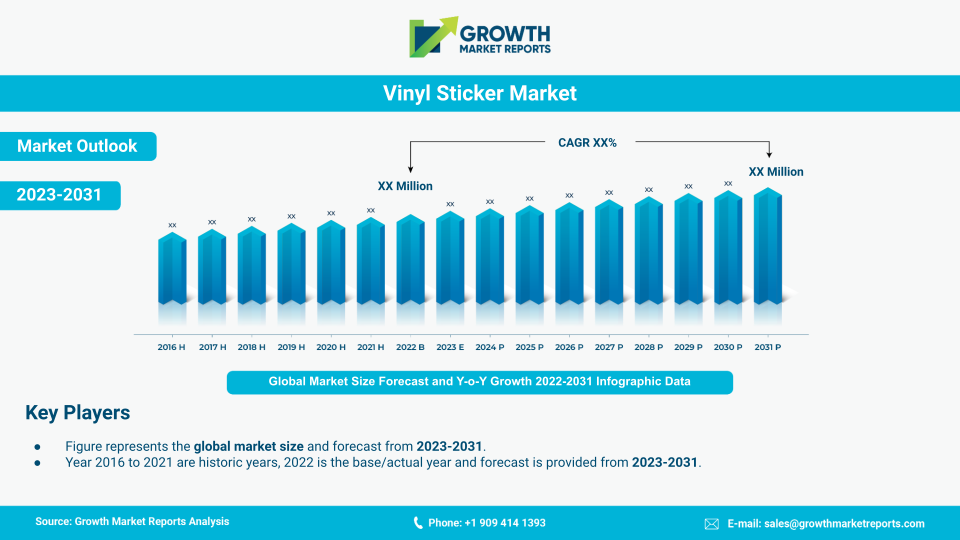
According to our latest research, the global vinyl sticker market size reached USD 4.72 billion in 2024, reflecting robust demand across multiple end-use industries. The market is anticipated to register a steady CAGR of 5.8% during the forecast period, and by 2033, is projected to attain a value of USD 7.91 billion. This growth is driven primarily by the rising adoption of vinyl stickers for branding, decoration, and functional applications in both commercial and personal settings, as well as advancements in printing technologies that have made customization more accessible and affordable.

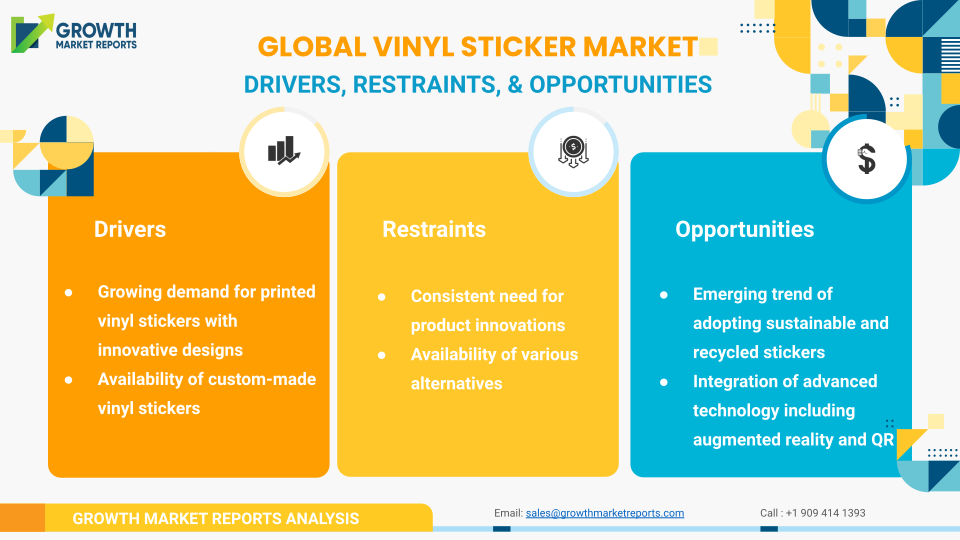
One of the key growth factors for the vinyl sticker market is the increasing focus on personalization and customization, especially among millennial and Gen Z consumers. Businesses are leveraging custom vinyl stickers as a cost-effective tool for brand promotion, packaging, and customer engagement. The proliferation of small businesses and e-commerce platforms has further fueled demand, as entrepreneurs seek unique ways to differentiate their products and enhance brand recall. Additionally, the rise of DIY culture and hobbyist communities has spurred interest in decorative vinyl stickers for personal use, driving consistent market expansion.

Another significant driver is the versatility of vinyl stickers, which find extensive applications across diverse industries such as automotive, consumer goods, retail, and advertising. In the automotive sector, vinyl stickers are used for vehicle wraps, decals, and branding, providing a durable and aesthetic solution for both commercial fleets and personal vehicles. In retail and consumer goods, vinyl stickers serve as effective tools for product labeling, packaging, and promotional campaigns. The ability of vinyl stickers to adhere to various surfaces, withstand environmental factors, and be easily removed or replaced contributes to their widespread adoption and repeat usage.

Technological advancements in printing methods have also played a pivotal role in shaping the vinyl sticker market landscape. Digital printing, screen printing, and flexography have enabled high-quality, vibrant, and durable sticker production at scale. These technologies support short-run and large-scale orders alike, catering to the needs of both individual consumers and large enterprises. Moreover, the shift towards eco-friendly materials and the development of recyclable vinyl have aligned with growing environmental concerns, opening up new market opportunities and attracting environmentally conscious consumers.

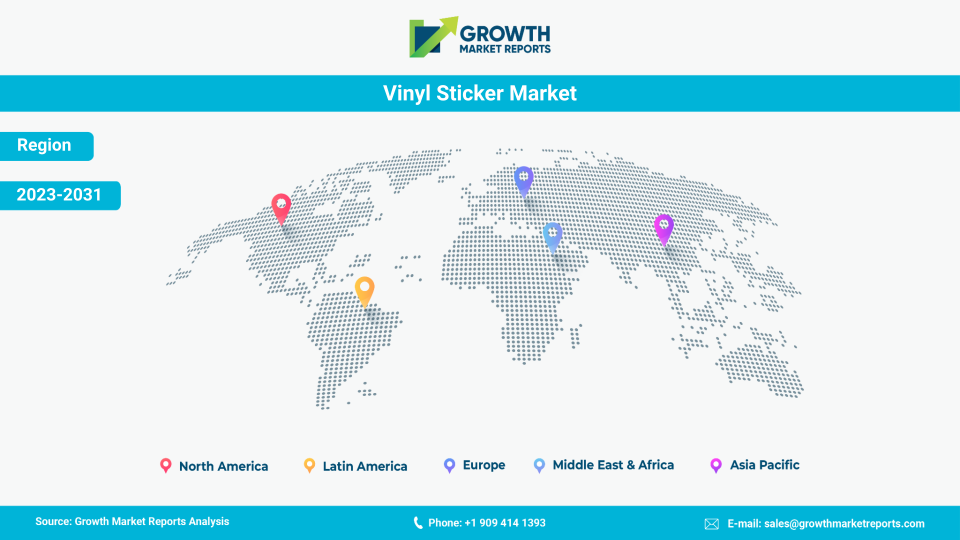
From a regional perspective, Asia Pacific remains the leading market for vinyl stickers, accounting for a significant share of global revenue. This dominance is attributed to the presence of large manufacturing hubs, a burgeoning retail sector, and rapid urbanization in countries such as China, India, and Japan. North America and Europe follow closely, driven by strong demand from automotive, advertising, and consumer goods industries. Meanwhile, emerging markets in Latin America and the Middle East & Africa are witnessing increased adoption of vinyl stickers, supported by expanding retail infrastructure and rising consumer awareness. Regional trends indicate that customization, innovation in printing technology, and sustainability will remain key themes shaping the market's future trajectory.

Global Vinyl Sticker Industry Outlook

Product Type Analysis

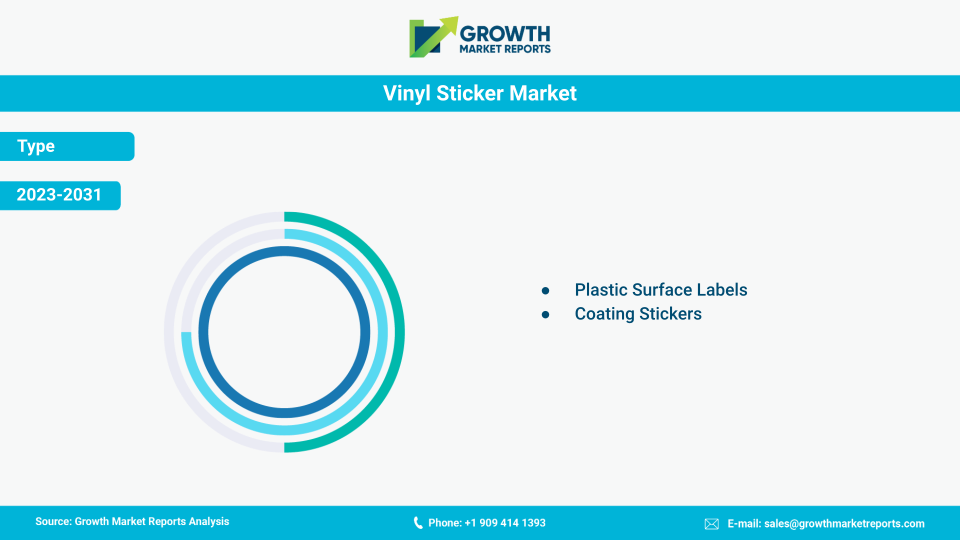
The vinyl sticker market is segmented by product type into custom vinyl stickers, decorative vinyl stickers, functional vinyl stickers, and others. Custom vinyl stickers represent a dominant segment, driven by the rising demand for tailored branding solutions among businesses and individuals. Customization offers a high degree of flexibility in design, size, and application, making these stickers ideal for marketing, packaging, and event promotions. The proliferation of digital printing technology has made it easier for small businesses and individuals to access affordable custom sticker solutions, further fueling this segment's growth. As consumers increasingly seek personalized products, the custom vinyl sticker segment is expected to maintain its leading position throughout the forecast period.

Decorative vinyl stickers are gaining popularity among both individual consumers and commercial establishments, particularly in the home décor, retail, and hospitality sectors. These stickers are used to enhance the visual appeal of spaces, products, and packaging, offering a cost-effective alternative to traditional decorative materials. The trend of home improvement and interior decoration, coupled with the influence of social media platforms, has spurred demand for unique and aesthetically pleasing decorative stickers. Additionally, seasonal and thematic sticker collections are frequently introduced to cater to changing consumer preferences, driving sustained interest in this segment.

Functional vinyl stickers serve practical purposes such as labeling, safety warnings, and instructional signage across industrial, automotive, and consumer goods applications. These stickers are valued for their durability, resistance to environmental factors, and compliance with regulatory standards. In industrial settings, functional vinyl stickers are used for equipment labeling, hazard warnings, and asset tracking, while in the automotive industry, they are employed for vehicle identification and safety instructions. The ongoing emphasis on workplace safety and regulatory compliance is expected to drive steady demand for functional vinyl stickers in the coming years.

The "others" segment encompasses specialized vinyl stickers used for niche applications, including tamper-evident stickers, holographic stickers, and anti-counterfeit labels. These products cater to specific industry requirements such as security, authentication, and brand protection. As concerns over product counterfeiting and tampering grow, especially in pharmaceuticals, electronics, and luxury goods, the demand for advanced vinyl sticker solutions in this category is poised for significant expansion. Manufacturers are investing in innovative materials and printing techniques to enhance the security features of these stickers, thereby addressing evolving market needs.

Report Scope

Attributes Details
Report Title Vinyl Sticker Market Research Report 2033
By Product Type Custom Vinyl Stickers, Decorative Vinyl Stickers, Functional Vinyl Stickers, Others
By Application Automotive, Consumer Goods, Industrial, Retail, Advertising & Promotion, Others
By Printing Technology Digital Printing, Screen Printing, Flexography, Others
By Distribution Channel Online Stores, Supermarkets/Hypermarkets, Specialty Stores, Others
By End-User Individual, Commercial, Industrial
Regions Covered North America, Europe, APAC, Latin America, MEA
Base Year 2024
Historic Data 2018-2023
Forecast Period 2025-2033
Number of Pages 260
Number of Tables & Figures 374
Customization Available Yes, the report can be customized as per your need.

Application Analysis

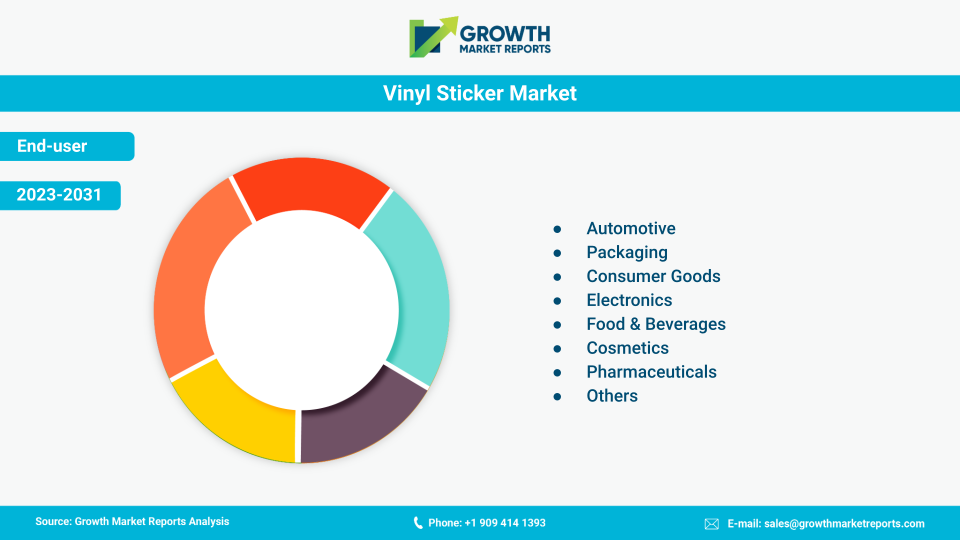
The application landscape of the vinyl sticker market is diverse, encompassing automotive, consumer goods, industrial, retail, advertising & promotion, and other sectors. The automotive segment holds a substantial share, with vinyl stickers being widely used for vehicle wraps, decals, and branding. Automotive OEMs and aftermarket service providers leverage vinyl stickers to enhance vehicle aesthetics, promote brands, and facilitate fleet identification. The durability, weather resistance, and ease of application/removal make vinyl stickers a preferred choice in this sector. Furthermore, the growing trend of vehicle customization, both for personal and commercial vehicles, is expected to drive continued growth in this segment.

In the consumer goods sector, vinyl stickers play a vital role in packaging, product labeling, and promotional campaigns. Brands utilize vinyl stickers to differentiate products, convey information, and engage consumers at the point of sale. The increasing focus on attractive packaging and branding, particularly in the food & beverage, cosmetics, and electronics industries, has led to heightened demand for high-quality, visually appealing vinyl stickers. Additionally, the rise of private labels and boutique brands has contributed to the proliferation of customized sticker solutions tailored to specific product lines and market segments.

The industrial application segment includes the use of vinyl stickers for equipment labeling, safety signage, and inventory management. Industrial-grade vinyl stickers are engineered to withstand harsh environments, including exposure to chemicals, moisture, and extreme temperatures. These stickers are essential for maintaining workplace safety, ensuring regulatory compliance, and streamlining operations in manufacturing, logistics, and warehousing facilities. As industries increasingly adopt automation and digitalization, the need for durable and data-integrated labeling solutions is anticipated to grow, bolstering the demand for industrial vinyl stickers.

Retail and advertising & promotion represent significant application areas for vinyl stickers, driven by the need for impactful in-store displays, window graphics, and promotional materials. Retailers use vinyl stickers to attract customer attention, highlight offers, and create immersive shopping experiences. In the advertising domain, vinyl stickers are deployed for event branding, outdoor campaigns, and guerrilla marketing initiatives due to their cost-effectiveness and versatility. The ability to produce vibrant, eye-catching graphics quickly has made vinyl stickers an indispensable tool for marketers seeking to maximize brand visibility and engagement.

Printing Technology Analysis

The vinyl sticker market is segmented by printing technology into digital printing, screen printing, flexography, and others. Digital printing has emerged as the leading technology, owing to its ability to produce high-resolution, full-color graphics with quick turnaround times. This method is especially suited for custom and short-run orders, allowing businesses and individuals to experiment with unique designs without incurring high setup costs. The flexibility and scalability of digital printing have democratized access to personalized vinyl stickers, making it the go-to choice for small businesses, startups, and creative professionals.

Screen printing remains a popular option for producing large volumes of vinyl stickers, particularly when consistent color reproduction and durability are required. This traditional method is valued for its cost-efficiency in bulk production and its ability to handle a wide range of ink types and substrates. Screen-printed vinyl stickers are commonly used in industrial, automotive, and promotional applications where longevity and resistance to fading are critical. Despite the rise of digital printing, screen printing continues to hold a significant share in the market, especially among established manufacturers with high-volume demands.

Flexography is another key printing technology in the vinyl sticker market, known for its speed, efficiency, and suitability for continuous production runs. Flexographic printing is widely used for producing labels, packaging materials, and functional stickers in the consumer goods and industrial sectors. The technology supports a variety of substrates and ink formulations, enabling the production of durable, high-quality stickers at scale. As the demand for flexible packaging and labeling solutions grows, flexography is expected to remain an integral part of the vinyl sticker production landscape.

The "others" category includes emerging and specialized printing techniques such as gravure, offset, and hybrid printing. These methods cater to specific market needs, such as ultra-high-resolution graphics, security features, and specialty finishes. Manufacturers are increasingly exploring innovative printing technologies to differentiate their offerings, improve sustainability, and meet evolving customer expectations. As the market continues to evolve, the integration of digital and traditional printing methods is likely to yield new opportunities for product innovation and customization.

Distribution Channel Analysis

The distribution landscape for vinyl stickers is segmented into online stores, supermarkets/hypermarkets, specialty stores, and others. Online stores have witnessed exponential growth in recent years, driven by the convenience of digital shopping, a wide variety of product offerings, and the ability to customize orders. E-commerce platforms and dedicated sticker websites cater to both individual consumers and businesses, offering user-friendly design tools, quick delivery, and competitive pricing. The rise of print-on-demand services has further democratized access to custom vinyl stickers, enabling small businesses and hobbyists to create unique products without significant upfront investment.

Supermarkets and hypermarkets represent a traditional yet significant distribution channel, particularly for mass-produced decorative and functional vinyl stickers. These retail outlets offer consumers the convenience of purchasing stickers alongside other household items, making them a popular choice for impulse buys and seasonal promotions. The visibility and accessibility of vinyl stickers in supermarket aisles contribute to steady sales volumes, especially for generic and themed sticker collections targeting children, students, and DIY enthusiasts.

Specialty stores, including craft shops, stationery outlets, and art supply stores, play a crucial role in catering to niche markets and hobbyist communities. These stores offer a curated selection of high-quality, unique, and artist-designed vinyl stickers, often sourced from local or independent creators. The personalized shopping experience and expert guidance provided by specialty retailers appeal to consumers seeking distinctive products for creative projects, home décor, or gifting purposes. As interest in DIY crafts and personalized gifts continues to grow, specialty stores are expected to maintain a loyal customer base.

The "others" segment encompasses alternative distribution channels such as direct sales, pop-up markets, and corporate partnerships. Direct sales through company websites, social media platforms, and trade shows enable manufacturers to build brand loyalty and engage directly with customers. Pop-up markets and events offer opportunities for brands to showcase their latest designs, gather feedback, and drive impulse purchases. Corporate partnerships, particularly in the advertising and promotional sectors, facilitate large-scale sticker campaigns and co-branded initiatives. Together, these channels contribute to a dynamic and multi-faceted distribution ecosystem for vinyl stickers.

End-User Analysis

The vinyl sticker market caters to a broad spectrum of end-users, including individual, commercial, and industrial segments. The individual segment encompasses hobbyists, students, and consumers seeking personalized stickers for home décor, crafts, and personal accessories. The growing popularity of DIY culture, scrapbooking, and customization has led to increased demand for unique, artist-designed vinyl stickers. Social media platforms and online communities play a pivotal role in shaping consumer preferences and driving trends in this segment, as users share creative ideas and showcase their projects.

The commercial end-user segment includes businesses across retail, advertising, hospitality, and service industries that utilize vinyl stickers for branding, packaging, promotions, and customer engagement. Companies leverage custom vinyl stickers to enhance product packaging, create memorable unboxing experiences, and reinforce brand identity. In the retail sector, vinyl stickers are used for in-store displays, window graphics, and seasonal promotions, while in the hospitality industry, they serve as decorative elements and wayfinding signage. The ability to produce high-quality, cost-effective stickers in small or large quantities makes vinyl stickers an attractive solution for commercial applications.

The industrial segment comprises manufacturers, logistics providers, and facility operators who rely on vinyl stickers for equipment labeling, safety signage, and asset tracking. Industrial-grade vinyl stickers are engineered to withstand harsh operating conditions, including exposure to chemicals, abrasion, and extreme temperatures. These stickers play a critical role in ensuring workplace safety, regulatory compliance, and efficient operations. As industries embrace automation and digitalization, the integration of smart labels and data-driven solutions is expected to drive further innovation in industrial vinyl sticker applications.

Each end-user segment presents unique requirements and growth opportunities for vinyl sticker manufacturers and suppliers. By understanding the specific needs and preferences of individual, commercial, and industrial customers, market players can develop targeted product offerings, enhance customer satisfaction, and capture a larger share of the growing vinyl sticker market. The ability to deliver customized, high-quality, and durable sticker solutions will remain a key differentiator in an increasingly competitive landscape.

Opportunities & Threats

The vinyl sticker market presents significant opportunities for innovation and expansion, particularly in the areas of customization, sustainability, and digital integration. The growing demand for personalized products among consumers and businesses alike offers manufacturers the chance to develop advanced design tools, user-friendly online platforms, and print-on-demand services. By leveraging data analytics and artificial intelligence, companies can offer tailored recommendations, streamline order fulfillment, and enhance the overall customer experience. Additionally, the shift towards eco-friendly materials and recyclable vinyl aligns with global sustainability trends, opening up new market segments and attracting environmentally conscious consumers.

Another major opportunity lies in the integration of smart technologies and value-added features into vinyl stickers. The development of interactive stickers with QR codes, NFC chips, and augmented reality capabilities enables brands to engage customers in innovative ways and gather valuable data on product usage and consumer behavior. These advancements are particularly relevant in the retail, advertising, and industrial sectors, where real-time tracking, authentication, and customer engagement are critical. By investing in research and development, market players can differentiate their offerings, create new revenue streams, and strengthen their competitive position in the evolving vinyl sticker market.

Despite the positive outlook, the vinyl sticker market faces certain restraining factors, including environmental concerns related to the use of PVC and non-recyclable materials. Regulatory pressures and increasing consumer awareness of plastic waste are prompting manufacturers to explore alternative substrates and sustainable production methods. However, the transition to eco-friendly materials often involves higher costs and technical challenges, which may impact profit margins and limit adoption among price-sensitive customers. Additionally, intense competition and price wars in the market can erode profitability and hinder long-term growth prospects for smaller players.

Regional Outlook

Regionally, Asia Pacific dominates the global vinyl sticker market, accounting for approximately 38% of total market revenue in 2024, or about USD 1.79 billion. The region's leadership is underpinned by its status as a manufacturing powerhouse, robust retail growth, and the increasing adoption of vinyl stickers in automotive, consumer goods, and advertising sectors. Countries such as China, India, and Japan are at the forefront, benefiting from large consumer bases, expanding urbanization, and a thriving e-commerce ecosystem. The Asia Pacific market is expected to maintain a strong growth trajectory, with a projected CAGR of 6.3% through 2033, outpacing other regions in terms of both volume and value.

North America represents the second-largest market, contributing roughly 27% of global revenue, equivalent to USD 1.27 billion in 2024. The region's growth is driven by high demand from the automotive, retail, and advertising industries, as well as a strong culture of innovation and entrepreneurship. The United States leads the North American market, supported by a large number of small businesses, a mature e-commerce sector, and widespread adoption of digital printing technologies. Canada and Mexico also contribute to regional growth, particularly in the automotive and industrial segments. North America is expected to witness steady growth, with a focus on sustainability and smart sticker solutions.

Europe holds a significant share of the vinyl sticker market, with estimated revenues of USD 1.13 billion in 2024, representing about 24% of the global market. The region is characterized by a strong emphasis on product quality, sustainability, and regulatory compliance. Germany, the United Kingdom, France, and Italy are the primary contributors, driven by robust automotive, consumer goods, and advertising sectors. The European market is witnessing a shift towards eco-friendly materials and innovative printing technologies, in line with the region's stringent environmental standards. Meanwhile, Latin America and the Middle East & Africa collectively account for the remaining 11% of global revenue, or USD 0.53 billion, with growth fueled by expanding retail infrastructure, increasing urbanization, and rising consumer awareness.

Vinyl Sticker Market Statistics

Competitor Outlook

The vinyl sticker market is highly competitive, characterized by the presence of a mix of global, regional, and local players. The competitive landscape is shaped by factors such as product innovation, pricing strategies, distribution networks, and brand reputation. Leading manufacturers are investing heavily in research and development to introduce advanced materials, eco-friendly substrates, and value-added features that cater to evolving customer preferences. The ability to deliver high-quality, customizable, and durable sticker solutions is a key differentiator in the market, as consumers and businesses seek products that align with their unique needs and sustainability goals.

Market players are also focusing on expanding their online presence and leveraging e-commerce platforms to reach a broader customer base. The rise of print-on-demand services and user-friendly design tools has lowered barriers to entry, enabling new entrants and small businesses to compete effectively with established brands. Strategic partnerships, mergers and acquisitions, and collaborations with artists, designers, and influencers are common strategies employed by leading companies to strengthen their market position and enhance their product offerings. Additionally, companies are exploring opportunities in emerging markets, where rising disposable incomes and growing consumer awareness are driving demand for vinyl stickers.

The competitive landscape is further shaped by the adoption of advanced printing technologies, such as digital printing, screen printing, and flexography, which enable manufacturers to offer a wide range of products at competitive prices. Companies are continuously upgrading their production capabilities to improve efficiency, reduce costs, and deliver faster turnaround times. Sustainability initiatives, including the development of recyclable and biodegradable vinyl materials, are gaining traction as manufacturers respond to regulatory pressures and consumer demand for eco-friendly products. The integration of smart technologies, such as QR codes and NFC chips, is also emerging as a key trend, offering new avenues for customer engagement and product differentiation.

Some of the major companies operating in the global vinyl sticker market include 3M Company, Avery Dennison Corporation, CCL Industries Inc., Brady Corporation, Flexcon Company, Inc., and Roland DG Corporation. 3M Company is renowned for its innovative adhesive solutions and high-performance vinyl materials, catering to automotive, industrial, and commercial applications. Avery Dennison Corporation specializes in labeling and packaging solutions, offering a wide range of customizable vinyl stickers for retail, logistics, and promotional uses. CCL Industries Inc. is a global leader in specialty label and packaging solutions, with a strong focus on sustainability and digital printing technologies.

Brady Corporation is known for its durable industrial labeling solutions, serving manufacturing, logistics, and safety applications. Flexcon Company, Inc. offers a diverse portfolio of pressure-sensitive films and adhesives, catering to both decorative and functional sticker markets. Roland DG Corporation is a leading provider of digital printing equipment and software, enabling businesses and individuals to produce high-quality custom vinyl stickers with ease. These companies, along with numerous regional and local players, are driving innovation and shaping the future of the vinyl sticker market through continuous investment in technology, sustainability, and customer-centric solutions.

Key Players

  • 3M
  • Avery Dennison Corporation
  • CCL Industries Inc.
  • LINTEC Corporation
  • Hexis S.A.
  • Orafol Europe GmbH
  • Ritrama S.p.A.
  • Arlon Graphics LLC
  • FLEXcon Company, Inc.
  • Mactac LLC
  • Siser Srl
  • Poli-Tape Group
  • Shanghai Innotek Adhesive Products Co., Ltd.
  • Zhejiang Yonghe Adhesive Products Co., Ltd.
  • LG Hausys
  • Jindal Poly Films Limited
  • DuPont de Nemours, Inc.
  • Henkel AG & Co. KGaA
  • UPM Raflatac
  • Spandex Group
Vinyl Sticker Market Overview

Segments

The Vinyl Sticker market has been segmented on the basis of

Product Type

  • Custom Vinyl Stickers
  • Decorative Vinyl Stickers
  • Functional Vinyl Stickers
  • Others

Application

  • Automotive
  • Consumer Goods
  • Industrial
  • Retail
  • Advertising & Promotion
  • Others

Printing Technology

  • Digital Printing
  • Screen Printing
  • Flexography
  • Others

Distribution Channel

  • Online Stores
  • Supermarkets/Hypermarkets
  • Specialty Stores
  • Others

End-User

  • Individual
  • Commercial
  • Industrial

Competitive Landscape

Key players operating in the global vinyl sticker market include Zap! Creatives; Arlon Graphics, LLC; Stickers International; PrintPrint.ca; Diginate; PrintRunner.com; Custom Signs; Stahls' Inc; Stickers and That Ltd; and The Sticker Shoppe. These companies adopt strategies such as acquisitions, partnerships, collaboration, mergers, R&D investments, and product launches to boost their market share. For instance,

On July 5, 2022, Alomatape was acquired by Arlon Graphics LLC. Alomatape is now known as Arlon Innovations and is expected to be managed by Arlon Graphics LLC. This acquisition in to increase their consumer base.
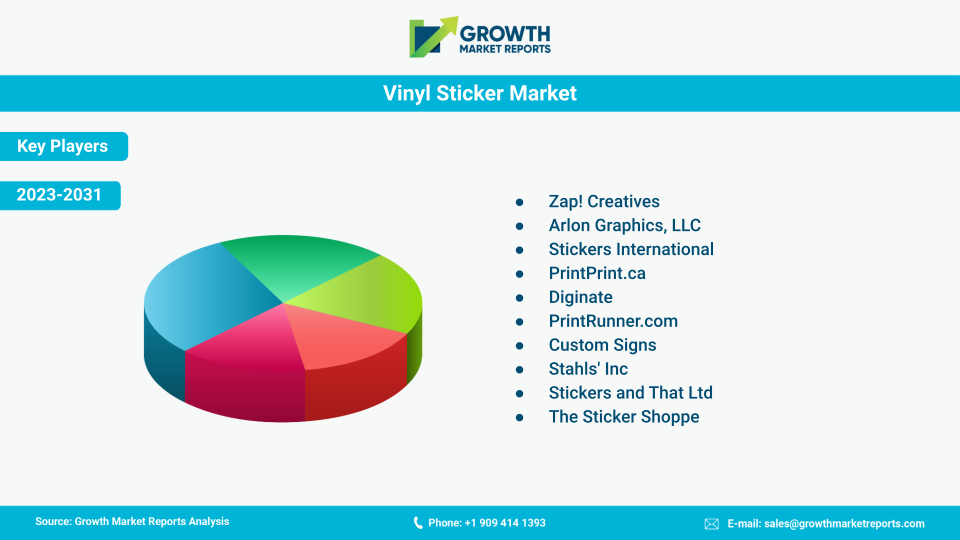

Vinyl Sticker Market Key Players

Frequently Asked Questions

Emerging trends include increased customization, integration of smart technologies (like QR codes and NFC chips), and the adoption of sustainable materials. Opportunities exist in digital integration, print-on-demand services, and eco-friendly product development.

Major companies include 3M Company, Avery Dennison Corporation, CCL Industries Inc., Brady Corporation, Flexcon Company, Inc., and Roland DG Corporation, among others.

Asia Pacific leads the market, followed by North America and Europe. Latin America and the Middle East & Africa are also experiencing growth due to expanding retail infrastructure.

Sustainability is a key trend, with manufacturers developing eco-friendly and recyclable vinyl materials to address environmental concerns and regulatory pressures.

Vinyl stickers are distributed through online stores, supermarkets/hypermarkets, specialty stores (like craft and stationery shops), and direct sales or pop-up markets.

Common printing technologies include digital printing, screen printing, flexography, and specialized methods such as gravure and hybrid printing.

The market offers custom vinyl stickers, decorative vinyl stickers, functional vinyl stickers (for labeling and safety), and specialized stickers like tamper-evident and holographic labels.

Major industries using vinyl stickers include automotive, consumer goods, retail, advertising & promotion, and industrial sectors.

Key growth drivers include rising demand for personalization and customization, advancements in printing technologies, increased use in branding and packaging, and the popularity of DIY culture.

The global vinyl sticker market reached USD 4.72 billion in 2024 and is projected to grow at a CAGR of 5.8%, reaching USD 7.91 billion by 2033.

Table Of Content

Chapter 1 Executive Summary
Chapter 2 Assumptions and Acronyms Used
Chapter 3 Research Methodology
Chapter 4 Vinyl Sticker Market Overview
   4.1 Introduction
      4.1.1 Market Taxonomy
      4.1.2 Market Definition
      4.1.3 Macro-Economic Factors Impacting the Market Growth
   4.2 Vinyl Sticker Market Dynamics
      4.2.1 Market Drivers
      4.2.2 Market Restraints
      4.2.3 Market Opportunity
   4.3 Vinyl Sticker Market - Supply Chain Analysis
      4.3.1 List of Key Suppliers
      4.3.2 List of Key Distributors
      4.3.3 List of Key Consumers
   4.4 Key Forces Shaping the Vinyl Sticker Market
      4.4.1 Bargaining Power of Suppliers
      4.4.2 Bargaining Power of Buyers
      4.4.3 Threat of Substitution
      4.4.4 Threat of New Entrants
      4.4.5 Competitive Rivalry
   4.5 Global Vinyl Sticker Market Size & Forecast, 2023-2032
      4.5.1 Vinyl Sticker Market Size and Y-o-Y Growth
      4.5.2 Vinyl Sticker Market Absolute $ Opportunity

Chapter 5 Global Vinyl Sticker Market Analysis and Forecast By Product Type
   5.1 Introduction
      5.1.1 Key Market Trends & Growth Opportunities By Product Type
      5.1.2 Basis Point Share (BPS) Analysis By Product Type
      5.1.3 Absolute $ Opportunity Assessment By Product Type
   5.2 Vinyl Sticker Market Size Forecast By Product Type
      5.2.1 Custom Vinyl Stickers
      5.2.2 Decorative Vinyl Stickers
      5.2.3 Functional Vinyl Stickers
      5.2.4 Others
   5.3 Market Attractiveness Analysis By Product Type

Chapter 6 Global Vinyl Sticker Market Analysis and Forecast By Application
   6.1 Introduction
      6.1.1 Key Market Trends & Growth Opportunities By Application
      6.1.2 Basis Point Share (BPS) Analysis By Application
      6.1.3 Absolute $ Opportunity Assessment By Application
   6.2 Vinyl Sticker Market Size Forecast By Application
      6.2.1 Automotive
      6.2.2 Consumer Goods
      6.2.3 Industrial
      6.2.4 Retail
      6.2.5 Advertising & Promotion
      6.2.6 Others
   6.3 Market Attractiveness Analysis By Application

Chapter 7 Global Vinyl Sticker Market Analysis and Forecast By Printing Technology
   7.1 Introduction
      7.1.1 Key Market Trends & Growth Opportunities By Printing Technology
      7.1.2 Basis Point Share (BPS) Analysis By Printing Technology
      7.1.3 Absolute $ Opportunity Assessment By Printing Technology
   7.2 Vinyl Sticker Market Size Forecast By Printing Technology
      7.2.1 Digital Printing
      7.2.2 Screen Printing
      7.2.3 Flexography
      7.2.4 Others
   7.3 Market Attractiveness Analysis By Printing Technology

Chapter 8 Global Vinyl Sticker Market Analysis and Forecast By Distribution Channel
   8.1 Introduction
      8.1.1 Key Market Trends & Growth Opportunities By Distribution Channel
      8.1.2 Basis Point Share (BPS) Analysis By Distribution Channel
      8.1.3 Absolute $ Opportunity Assessment By Distribution Channel
   8.2 Vinyl Sticker Market Size Forecast By Distribution Channel
      8.2.1 Online Stores
      8.2.2 Supermarkets/Hypermarkets
      8.2.3 Specialty Stores
      8.2.4 Others
   8.3 Market Attractiveness Analysis By Distribution Channel

Chapter 9 Global Vinyl Sticker Market Analysis and Forecast By End-User
   9.1 Introduction
      9.1.1 Key Market Trends & Growth Opportunities By End-User
      9.1.2 Basis Point Share (BPS) Analysis By End-User
      9.1.3 Absolute $ Opportunity Assessment By End-User
   9.2 Vinyl Sticker Market Size Forecast By End-User
      9.2.1 Individual
      9.2.2 Commercial
      9.2.3 Industrial
   9.3 Market Attractiveness Analysis By End-User

Chapter 10 Global Vinyl Sticker Market Analysis and Forecast by Region
   10.1 Introduction
      10.1.1 Key Market Trends & Growth Opportunities By Region
      10.1.2 Basis Point Share (BPS) Analysis By Region
      10.1.3 Absolute $ Opportunity Assessment By Region
   10.2 Vinyl Sticker Market Size Forecast By Region
      10.2.1 North America
      10.2.2 Europe
      10.2.3 Asia Pacific
      10.2.4 Latin America
      10.2.5 Middle East & Africa (MEA)
   10.3 Market Attractiveness Analysis By Region

Chapter 11 Coronavirus Disease (COVID-19) Impact 
   11.1 Introduction 
   11.2 Current & Future Impact Analysis 
   11.3 Economic Impact Analysis 
   11.4 Government Policies 
   11.5 Investment Scenario

Chapter 12 North America Vinyl Sticker Analysis and Forecast
   12.1 Introduction
   12.2 North America Vinyl Sticker Market Size Forecast by Country
      12.2.1 U.S.
      12.2.2 Canada
   12.3 Basis Point Share (BPS) Analysis by Country
   12.4 Absolute $ Opportunity Assessment by Country
   12.5 Market Attractiveness Analysis by Country
   12.6 North America Vinyl Sticker Market Size Forecast By Product Type
      12.6.1 Custom Vinyl Stickers
      12.6.2 Decorative Vinyl Stickers
      12.6.3 Functional Vinyl Stickers
      12.6.4 Others
   12.7 Basis Point Share (BPS) Analysis By Product Type 
   12.8 Absolute $ Opportunity Assessment By Product Type 
   12.9 Market Attractiveness Analysis By Product Type
   12.10 North America Vinyl Sticker Market Size Forecast By Application
      12.10.1 Automotive
      12.10.2 Consumer Goods
      12.10.3 Industrial
      12.10.4 Retail
      12.10.5 Advertising & Promotion
      12.10.6 Others
   12.11 Basis Point Share (BPS) Analysis By Application 
   12.12 Absolute $ Opportunity Assessment By Application 
   12.13 Market Attractiveness Analysis By Application
   12.14 North America Vinyl Sticker Market Size Forecast By Printing Technology
      12.14.1 Digital Printing
      12.14.2 Screen Printing
      12.14.3 Flexography
      12.14.4 Others
   12.15 Basis Point Share (BPS) Analysis By Printing Technology 
   12.16 Absolute $ Opportunity Assessment By Printing Technology 
   12.17 Market Attractiveness Analysis By Printing Technology
   12.18 North America Vinyl Sticker Market Size Forecast By Distribution Channel
      12.18.1 Online Stores
      12.18.2 Supermarkets/Hypermarkets
      12.18.3 Specialty Stores
      12.18.4 Others
   12.19 Basis Point Share (BPS) Analysis By Distribution Channel 
   12.20 Absolute $ Opportunity Assessment By Distribution Channel 
   12.21 Market Attractiveness Analysis By Distribution Channel
   12.22 North America Vinyl Sticker Market Size Forecast By End-User
      12.22.1 Individual
      12.22.2 Commercial
      12.22.3 Industrial
   12.23 Basis Point Share (BPS) Analysis By End-User 
   12.24 Absolute $ Opportunity Assessment By End-User 
   12.25 Market Attractiveness Analysis By End-User

Chapter 13 Europe Vinyl Sticker Analysis and Forecast
   13.1 Introduction
   13.2 Europe Vinyl Sticker Market Size Forecast by Country
      13.2.1 Germany
      13.2.2 France
      13.2.3 Italy
      13.2.4 U.K.
      13.2.5 Spain
      13.2.6 Russia
      13.2.7 Rest of Europe
   13.3 Basis Point Share (BPS) Analysis by Country
   13.4 Absolute $ Opportunity Assessment by Country
   13.5 Market Attractiveness Analysis by Country
   13.6 Europe Vinyl Sticker Market Size Forecast By Product Type
      13.6.1 Custom Vinyl Stickers
      13.6.2 Decorative Vinyl Stickers
      13.6.3 Functional Vinyl Stickers
      13.6.4 Others
   13.7 Basis Point Share (BPS) Analysis By Product Type 
   13.8 Absolute $ Opportunity Assessment By Product Type 
   13.9 Market Attractiveness Analysis By Product Type
   13.10 Europe Vinyl Sticker Market Size Forecast By Application
      13.10.1 Automotive
      13.10.2 Consumer Goods
      13.10.3 Industrial
      13.10.4 Retail
      13.10.5 Advertising & Promotion
      13.10.6 Others
   13.11 Basis Point Share (BPS) Analysis By Application 
   13.12 Absolute $ Opportunity Assessment By Application 
   13.13 Market Attractiveness Analysis By Application
   13.14 Europe Vinyl Sticker Market Size Forecast By Printing Technology
      13.14.1 Digital Printing
      13.14.2 Screen Printing
      13.14.3 Flexography
      13.14.4 Others
   13.15 Basis Point Share (BPS) Analysis By Printing Technology 
   13.16 Absolute $ Opportunity Assessment By Printing Technology 
   13.17 Market Attractiveness Analysis By Printing Technology
   13.18 Europe Vinyl Sticker Market Size Forecast By Distribution Channel
      13.18.1 Online Stores
      13.18.2 Supermarkets/Hypermarkets
      13.18.3 Specialty Stores
      13.18.4 Others
   13.19 Basis Point Share (BPS) Analysis By Distribution Channel 
   13.20 Absolute $ Opportunity Assessment By Distribution Channel 
   13.21 Market Attractiveness Analysis By Distribution Channel
   13.22 Europe Vinyl Sticker Market Size Forecast By End-User
      13.22.1 Individual
      13.22.2 Commercial
      13.22.3 Industrial
   13.23 Basis Point Share (BPS) Analysis By End-User 
   13.24 Absolute $ Opportunity Assessment By End-User 
   13.25 Market Attractiveness Analysis By End-User

Chapter 14 Asia Pacific Vinyl Sticker Analysis and Forecast
   14.1 Introduction
   14.2 Asia Pacific Vinyl Sticker Market Size Forecast by Country
      14.2.1 China
      14.2.2 Japan
      14.2.3 South Korea
      14.2.4 India
      14.2.5 Australia
      14.2.6 South East Asia (SEA)
      14.2.7 Rest of Asia Pacific (APAC)
   14.3 Basis Point Share (BPS) Analysis by Country
   14.4 Absolute $ Opportunity Assessment by Country
   14.5 Market Attractiveness Analysis by Country
   14.6 Asia Pacific Vinyl Sticker Market Size Forecast By Product Type
      14.6.1 Custom Vinyl Stickers
      14.6.2 Decorative Vinyl Stickers
      14.6.3 Functional Vinyl Stickers
      14.6.4 Others
   14.7 Basis Point Share (BPS) Analysis By Product Type 
   14.8 Absolute $ Opportunity Assessment By Product Type 
   14.9 Market Attractiveness Analysis By Product Type
   14.10 Asia Pacific Vinyl Sticker Market Size Forecast By Application
      14.10.1 Automotive
      14.10.2 Consumer Goods
      14.10.3 Industrial
      14.10.4 Retail
      14.10.5 Advertising & Promotion
      14.10.6 Others
   14.11 Basis Point Share (BPS) Analysis By Application 
   14.12 Absolute $ Opportunity Assessment By Application 
   14.13 Market Attractiveness Analysis By Application
   14.14 Asia Pacific Vinyl Sticker Market Size Forecast By Printing Technology
      14.14.1 Digital Printing
      14.14.2 Screen Printing
      14.14.3 Flexography
      14.14.4 Others
   14.15 Basis Point Share (BPS) Analysis By Printing Technology 
   14.16 Absolute $ Opportunity Assessment By Printing Technology 
   14.17 Market Attractiveness Analysis By Printing Technology
   14.18 Asia Pacific Vinyl Sticker Market Size Forecast By Distribution Channel
      14.18.1 Online Stores
      14.18.2 Supermarkets/Hypermarkets
      14.18.3 Specialty Stores
      14.18.4 Others
   14.19 Basis Point Share (BPS) Analysis By Distribution Channel 
   14.20 Absolute $ Opportunity Assessment By Distribution Channel 
   14.21 Market Attractiveness Analysis By Distribution Channel
   14.22 Asia Pacific Vinyl Sticker Market Size Forecast By End-User
      14.22.1 Individual
      14.22.2 Commercial
      14.22.3 Industrial
   14.23 Basis Point Share (BPS) Analysis By End-User 
   14.24 Absolute $ Opportunity Assessment By End-User 
   14.25 Market Attractiveness Analysis By End-User

Chapter 15 Latin America Vinyl Sticker Analysis and Forecast
   15.1 Introduction
   15.2 Latin America Vinyl Sticker Market Size Forecast by Country
      15.2.1 Brazil
      15.2.2 Mexico
      15.2.3 Rest of Latin America (LATAM)
   15.3 Basis Point Share (BPS) Analysis by Country
   15.4 Absolute $ Opportunity Assessment by Country
   15.5 Market Attractiveness Analysis by Country
   15.6 Latin America Vinyl Sticker Market Size Forecast By Product Type
      15.6.1 Custom Vinyl Stickers
      15.6.2 Decorative Vinyl Stickers
      15.6.3 Functional Vinyl Stickers
      15.6.4 Others
   15.7 Basis Point Share (BPS) Analysis By Product Type 
   15.8 Absolute $ Opportunity Assessment By Product Type 
   15.9 Market Attractiveness Analysis By Product Type
   15.10 Latin America Vinyl Sticker Market Size Forecast By Application
      15.10.1 Automotive
      15.10.2 Consumer Goods
      15.10.3 Industrial
      15.10.4 Retail
      15.10.5 Advertising & Promotion
      15.10.6 Others
   15.11 Basis Point Share (BPS) Analysis By Application 
   15.12 Absolute $ Opportunity Assessment By Application 
   15.13 Market Attractiveness Analysis By Application
   15.14 Latin America Vinyl Sticker Market Size Forecast By Printing Technology
      15.14.1 Digital Printing
      15.14.2 Screen Printing
      15.14.3 Flexography
      15.14.4 Others
   15.15 Basis Point Share (BPS) Analysis By Printing Technology 
   15.16 Absolute $ Opportunity Assessment By Printing Technology 
   15.17 Market Attractiveness Analysis By Printing Technology
   15.18 Latin America Vinyl Sticker Market Size Forecast By Distribution Channel
      15.18.1 Online Stores
      15.18.2 Supermarkets/Hypermarkets
      15.18.3 Specialty Stores
      15.18.4 Others
   15.19 Basis Point Share (BPS) Analysis By Distribution Channel 
   15.20 Absolute $ Opportunity Assessment By Distribution Channel 
   15.21 Market Attractiveness Analysis By Distribution Channel
   15.22 Latin America Vinyl Sticker Market Size Forecast By End-User
      15.22.1 Individual
      15.22.2 Commercial
      15.22.3 Industrial
   15.23 Basis Point Share (BPS) Analysis By End-User 
   15.24 Absolute $ Opportunity Assessment By End-User 
   15.25 Market Attractiveness Analysis By End-User

Chapter 16 Middle East & Africa (MEA) Vinyl Sticker Analysis and Forecast
   16.1 Introduction
   16.2 Middle East & Africa (MEA) Vinyl Sticker Market Size Forecast by Country
      16.2.1 Saudi Arabia
      16.2.2 South Africa
      16.2.3 UAE
      16.2.4 Rest of Middle East & Africa (MEA)
   16.3 Basis Point Share (BPS) Analysis by Country
   16.4 Absolute $ Opportunity Assessment by Country
   16.5 Market Attractiveness Analysis by Country
   16.6 Middle East & Africa (MEA) Vinyl Sticker Market Size Forecast By Product Type
      16.6.1 Custom Vinyl Stickers
      16.6.2 Decorative Vinyl Stickers
      16.6.3 Functional Vinyl Stickers
      16.6.4 Others
   16.7 Basis Point Share (BPS) Analysis By Product Type 
   16.8 Absolute $ Opportunity Assessment By Product Type 
   16.9 Market Attractiveness Analysis By Product Type
   16.10 Middle East & Africa (MEA) Vinyl Sticker Market Size Forecast By Application
      16.10.1 Automotive
      16.10.2 Consumer Goods
      16.10.3 Industrial
      16.10.4 Retail
      16.10.5 Advertising & Promotion
      16.10.6 Others
   16.11 Basis Point Share (BPS) Analysis By Application 
   16.12 Absolute $ Opportunity Assessment By Application 
   16.13 Market Attractiveness Analysis By Application
   16.14 Middle East & Africa (MEA) Vinyl Sticker Market Size Forecast By Printing Technology
      16.14.1 Digital Printing
      16.14.2 Screen Printing
      16.14.3 Flexography
      16.14.4 Others
   16.15 Basis Point Share (BPS) Analysis By Printing Technology 
   16.16 Absolute $ Opportunity Assessment By Printing Technology 
   16.17 Market Attractiveness Analysis By Printing Technology
   16.18 Middle East & Africa (MEA) Vinyl Sticker Market Size Forecast By Distribution Channel
      16.18.1 Online Stores
      16.18.2 Supermarkets/Hypermarkets
      16.18.3 Specialty Stores
      16.18.4 Others
   16.19 Basis Point Share (BPS) Analysis By Distribution Channel 
   16.20 Absolute $ Opportunity Assessment By Distribution Channel 
   16.21 Market Attractiveness Analysis By Distribution Channel
   16.22 Middle East & Africa (MEA) Vinyl Sticker Market Size Forecast By End-User
      16.22.1 Individual
      16.22.2 Commercial
      16.22.3 Industrial
   16.23 Basis Point Share (BPS) Analysis By End-User 
   16.24 Absolute $ Opportunity Assessment By End-User 
   16.25 Market Attractiveness Analysis By End-User

Chapter 17 Competition Landscape 
   17.1 Vinyl Sticker Market: Competitive Dashboard
   17.2 Global Vinyl Sticker Market: Market Share Analysis, 2023
   17.3 Company Profiles (Details – Overview, Financials, Developments, Strategy) 
      17.3.1 3M
Avery Dennison Corporation
CCL Industries Inc.
LINTEC Corporation
Hexis S.A.
Orafol Europe GmbH
Ritrama S.p.A.
Arlon Graphics LLC
FLEXcon Company, Inc.
Mactac LLC
Siser Srl
Poli-Tape Group
Shanghai Innotek Adhesive Products Co., Ltd.
Zhejiang Yonghe Adhesive Products Co., Ltd.
LG Hausys
Jindal Poly Films Limited
DuPont de Nemours, Inc.
Henkel AG & Co. KGaA
UPM Raflatac
Spandex Group

Methodology

Our Clients

General Mills
sinopec
Deloitte
General Electric
Siemens Healthcare
Dassault Aviation
The John Holland Group
Pfizer