Single-phase Recloser Market Research Report 2033

Single-phase Recloser Market Research Report 2033

Segments - by Phase Type (Single-phase, Three-phase), by Control Type (Electronic, Hydraulic, Mechanical), by Voltage Rating (Up to 15 kV, 16–27 kV, Above 27 kV), by Application (Distribution Utilities, Industrial, Commercial, Others), by Installation (Pole-mounted, Substation-mounted)

https://growthmarketreports.com/Raksha
Author : Raksha Sharma
https://growthmarketreports.com/Vaibhav
Fact-checked by : V. Chandola
https://growthmarketreports.com/Shruti
Editor : Shruti Bhat

Upcoming | Report ID :EP-5188 | 4.7 Rating | 72 Reviews | 271 Pages | Format : Docx PDF

Report Description


Single-phase Recloser Market Outlook

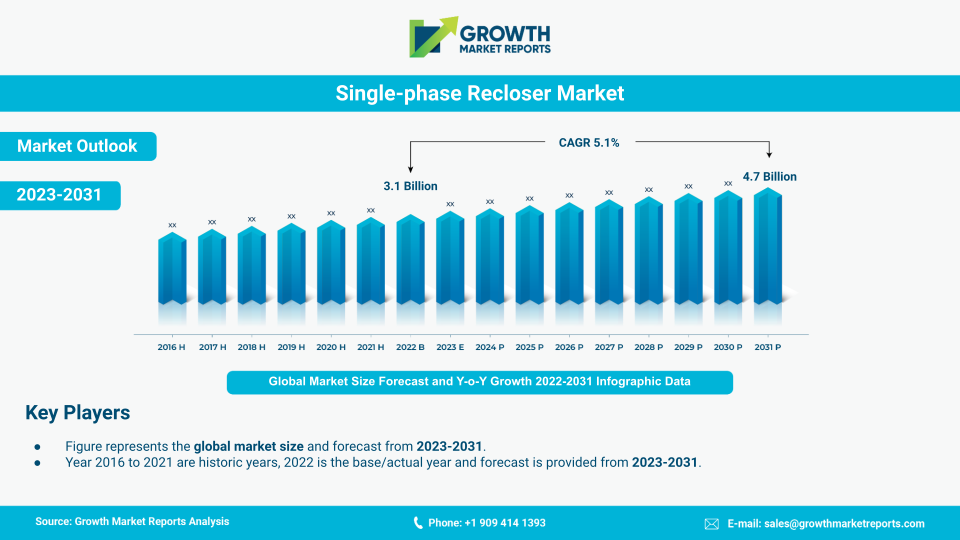
According to our latest research, the global single-phase recloser market size reached USD 1.23 billion in 2024, driven by robust investments in power distribution automation and grid reliability enhancement. The market is expected to expand at a CAGR of 5.8% from 2025 to 2033, reaching a forecasted value of USD 2.06 billion by 2033. Key growth factors include the modernization of aging grid infrastructure, increasing demand for uninterrupted power supply, and the rising adoption of smart grid technologies worldwide.

The growth trajectory of the single-phase recloser market is underpinned by a surge in utility investments aimed at grid modernization and automation. Aging electrical infrastructure in developed economies, combined with rapid urbanization and electrification in emerging markets, has necessitated the deployment of advanced protection and automation devices like single-phase reclosers. These devices play a pivotal role in enhancing grid reliability by automatically isolating faults and restoring power, thereby minimizing outage durations. Moreover, the increasing frequency of extreme weather events has underscored the need for resilient distribution networks, further fueling the demand for reclosers. Government initiatives and regulatory mandates focused on grid modernization and the integration of distributed energy resources have also contributed significantly to market expansion.

Another crucial growth factor for the single-phase recloser market is the ongoing transition towards smart grids and digital substations. Utilities are increasingly adopting intelligent electronic devices (IEDs), including advanced reclosers, to enable real-time monitoring, remote control, and improved fault management. The integration of communication protocols such as SCADA and IoT-based solutions has allowed for predictive maintenance and enhanced operational efficiency. This digital transformation is particularly pronounced in regions with high renewable energy penetration, where grid stability and flexibility are paramount. The convergence of automation, data analytics, and grid intelligence is expected to accelerate the deployment of single-phase reclosers across both urban and rural distribution networks.

The proliferation of distributed energy resources (DERs), such as rooftop solar and wind turbines, has introduced new operational challenges for utilities, necessitating the adoption of advanced protection schemes. Single-phase reclosers, with their ability to quickly detect and clear faults, are increasingly being deployed to manage bidirectional power flows and maintain voltage stability. The growing emphasis on electrification of transportation and the expansion of electric vehicle (EV) charging infrastructure have also contributed to increased load variability, further highlighting the importance of reliable and automated fault management solutions. As utilities strive to balance supply and demand while ensuring power quality, the role of single-phase reclosers in maintaining grid resilience is becoming more critical than ever.

Recloser Control systems have become an integral part of modern power distribution networks, offering utilities the ability to manage and control recloser operations remotely. These systems enhance the functionality of reclosers by integrating advanced communication protocols and real-time data analytics, allowing for precise fault detection and isolation. With the growing emphasis on grid automation and the need for rapid response to power disruptions, Recloser Control solutions are increasingly being adopted to improve grid reliability and operational efficiency. By enabling utilities to monitor and control reclosers from centralized locations, these systems facilitate proactive maintenance and minimize outage durations, ultimately leading to enhanced customer satisfaction and reduced operational costs.

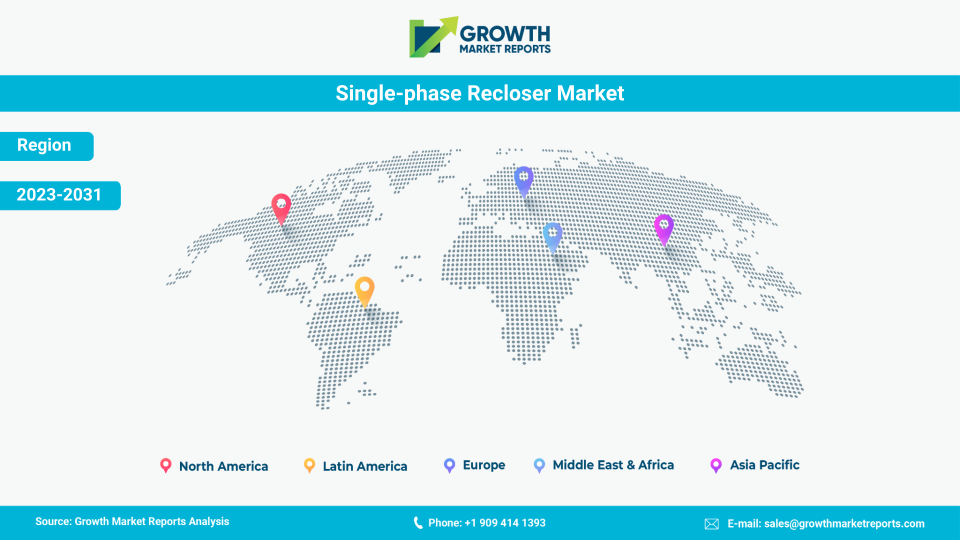
Regionally, Asia Pacific dominates the single-phase recloser market, accounting for the largest share in 2024, followed by North America and Europe. Rapid urbanization, substantial investments in grid expansion, and government-led rural electrification programs are driving demand in Asia Pacific. North AmericaÂ’s market is characterized by ongoing grid modernization efforts and the integration of renewable energy sources, while EuropeÂ’s growth is fueled by stringent regulatory standards for grid reliability and sustainability. Latin America and the Middle East & Africa are also witnessing steady growth, supported by infrastructure development and increasing electrification rates. The diverse regional dynamics underscore the global importance of single-phase reclosers in achieving reliable and efficient power distribution.

Global Single-phase Recloser Industry Outlook

Phase Type Analysis

The phase type segment of the single-phase recloser market is broadly categorized into single-phase and three-phase reclosers. Single-phase reclosers are predominantly used in residential and light commercial distribution networks, where the majority of loads are single-phase. These devices offer cost-effective protection and automation solutions for rural and suburban areas, where single-phase distribution lines are common. The increasing electrification of rural regions, particularly in developing economies, is driving the adoption of single-phase reclosers. Their ability to quickly isolate faults and restore power without manual intervention significantly reduces outage times and enhances customer satisfaction. Furthermore, advancements in microprocessor-based control technologies have improved the performance and reliability of single-phase reclosers, making them a preferred choice for utilities seeking to upgrade legacy infrastructure.

Three-phase reclosers, on the other hand, are primarily deployed in urban and industrial distribution networks, where three-phase power is required to support higher load capacities and more complex applications. These devices provide comprehensive protection for critical infrastructure, including manufacturing plants, commercial complexes, and large-scale renewable energy installations. The integration of three-phase reclosers with advanced communication and control systems enables utilities to implement sophisticated fault management strategies, such as selective tripping and adaptive reclosing. As urbanization accelerates and industrialization expands, the demand for three-phase reclosers is expected to grow, particularly in regions with dense population centers and robust industrial activity.

The choice between single-phase and three-phase reclosers is influenced by several factors, including network topology, load characteristics, and regulatory requirements. Utilities often adopt a hybrid approach, deploying both types of reclosers to optimize protection and automation across diverse distribution networks. The growing emphasis on grid flexibility and resilience has prompted utilities to invest in reclosers with advanced features, such as programmable logic, remote control, and real-time diagnostics. This trend is particularly evident in markets with high renewable energy penetration, where the ability to manage dynamic and bidirectional power flows is essential for maintaining grid stability.

Technological advancements are further blurring the lines between single-phase and three-phase reclosers, with manufacturers offering modular and scalable solutions that can be customized to meet specific application requirements. The integration of digital sensors, communication modules, and predictive analytics is enabling utilities to achieve higher levels of automation and operational efficiency. As the global demand for reliable and resilient power distribution continues to rise, the phase type segment is poised for sustained growth, driven by ongoing investments in grid modernization and the adoption of smart grid technologies.

Report Scope

Attributes Details
Report Title Single-phase Recloser Market Research Report 2033
By Phase Type Single-phase, Three-phase
By Control Type Electronic, Hydraulic, Mechanical
By Voltage Rating Up to 15 kV, 16–27 kV, Above 27 kV
By Application Distribution Utilities, Industrial, Commercial, Others
By Installation Pole-mounted, Substation-mounted
Regions Covered North America, Europe, APAC, Latin America, MEA
Base Year 2024
Historic Data 2018-2023
Forecast Period 2025-2033
Number of Pages 271
Number of Tables & Figures 358
Customization Available Yes, the report can be customized as per your need.

Control Type Analysis

The control type segment of the single-phase recloser market encompasses electronic, hydraulic, and mechanical reclosers, each offering distinct advantages and applications. Electronic reclosers have emerged as the dominant segment, driven by their superior performance, flexibility, and integration capabilities. These devices leverage microprocessor-based control systems to enable precise fault detection, customizable reclosing sequences, and remote monitoring. The adoption of electronic reclosers is particularly pronounced in regions with advanced grid infrastructure and high levels of automation. Their compatibility with SCADA and IoT platforms allows utilities to implement predictive maintenance strategies, reduce operational costs, and enhance grid reliability. Moreover, electronic reclosers support a wide range of communication protocols, facilitating seamless integration with existing grid management systems.

Hydraulic reclosers, while less prevalent than their electronic counterparts, continue to find application in remote and harsh environments where electronic systems may be susceptible to damage or interference. These devices rely on hydraulic mechanisms to perform reclosing operations, offering robust and reliable performance under challenging conditions. Hydraulic reclosers are valued for their simplicity, durability, and low maintenance requirements, making them ideal for use in rural and off-grid distribution networks. However, their limited functionality and lack of remote control capabilities have constrained their adoption in markets where advanced automation and real-time monitoring are priorities.

Mechanical reclosers represent the oldest technology in this segment, utilizing mechanical timers and latches to control reclosing operations. While they offer basic protection and automation functions, mechanical reclosers are increasingly being phased out in favor of electronic and hydraulic alternatives. The shift towards digitalization and smart grid technologies has rendered mechanical reclosers less competitive, as utilities seek to leverage advanced features such as programmable logic, remote diagnostics, and adaptive reclosing. Nevertheless, mechanical reclosers continue to be used in certain legacy systems and cost-sensitive applications where simplicity and low upfront costs are paramount.

The ongoing transition towards digital substations and intelligent grid infrastructure is expected to drive further innovation in the control type segment. Manufacturers are investing in research and development to enhance the performance, reliability, and cybersecurity of electronic reclosers. The integration of artificial intelligence and machine learning algorithms is enabling predictive fault analysis and autonomous decision-making, further improving grid resilience. As utilities prioritize operational efficiency and customer satisfaction, the demand for advanced control technologies in single-phase reclosers is anticipated to grow steadily over the forecast period.

Voltage Rating Analysis

Voltage rating is a critical parameter in the selection and deployment of single-phase reclosers, with the market segmented into up to 15 kV, 16–27 kV, and above 27 kV categories. The up to 15 kV segment accounts for a significant share of the market, driven by widespread use in residential and light commercial distribution networks. These reclosers are well-suited for low-voltage applications, offering cost-effective protection and automation solutions for rural and suburban areas. The increasing electrification of remote regions, particularly in developing economies, is fueling demand for up to 15 kV reclosers. Utilities are prioritizing the deployment of low-voltage reclosers to enhance grid reliability and minimize outage durations in areas with limited infrastructure.

The 16–27 kV segment represents the fastest-growing category, supported by the expansion of medium-voltage distribution networks in urban and industrial areas. These reclosers offer enhanced protection capabilities and are capable of handling higher load currents, making them ideal for commercial complexes, manufacturing facilities, and renewable energy installations. The integration of distributed energy resources and the proliferation of electric vehicle charging stations have increased the complexity of medium-voltage networks, necessitating the adoption of advanced reclosers with real-time monitoring and remote control features. As utilities strive to balance load variability and maintain power quality, the demand for 16–27 kV reclosers is expected to rise significantly.

Reclosers with voltage ratings above 27 kV are primarily deployed in high-voltage distribution networks, where they provide critical protection for large-scale infrastructure and industrial applications. These devices are designed to withstand harsh operating conditions and deliver reliable performance in demanding environments. The adoption of above 27 kV reclosers is driven by the need to support grid expansion, accommodate growing electricity demand, and integrate large-scale renewable energy projects. Utilities are investing in high-voltage reclosers to enhance grid stability, reduce transmission losses, and ensure uninterrupted power supply to critical facilities.

Technological advancements in insulation materials, arc suppression techniques, and digital control systems have improved the performance and reliability of reclosers across all voltage ratings. Manufacturers are developing modular and scalable solutions that can be customized to meet specific application requirements, enabling utilities to optimize protection and automation across diverse distribution networks. As the global demand for reliable and efficient power distribution continues to grow, the voltage rating segment is poised for sustained expansion, driven by ongoing investments in grid modernization and the adoption of smart grid technologies.

Application Analysis

The application segment of the single-phase recloser market is categorized into distribution utilities, industrial, commercial, and others. Distribution utilities represent the largest end-user segment, accounting for a substantial share of the market in 2024. Utilities are increasingly deploying single-phase reclosers to enhance grid reliability, reduce outage durations, and improve customer satisfaction. The integration of renewable energy sources, such as solar and wind, has introduced new operational challenges, necessitating the adoption of advanced protection and automation devices. Single-phase reclosers play a crucial role in managing bidirectional power flows, maintaining voltage stability, and ensuring seamless integration of distributed energy resources.

The industrial segment is witnessing significant growth, driven by the expansion of manufacturing facilities, data centers, and other critical infrastructure. Industrial users require reliable and uninterrupted power supply to support complex operations and minimize downtime. Single-phase reclosers are being deployed to provide rapid fault detection and isolation, enabling industrial facilities to maintain operational continuity and protect sensitive equipment. The increasing adoption of automation and digitalization in industrial processes has further heightened the demand for advanced protection and control solutions.

Commercial applications, including office buildings, shopping malls, and healthcare facilities, also contribute to the growing demand for single-phase reclosers. These establishments require high levels of power quality and reliability to support daily operations and ensure the safety and comfort of occupants. The proliferation of electric vehicle charging infrastructure and the integration of energy storage systems have increased load variability, necessitating the deployment of intelligent reclosers capable of real-time monitoring and adaptive reclosing. As commercial users prioritize energy efficiency and sustainability, the adoption of smart grid technologies and advanced protection devices is expected to rise.

The "others" category encompasses a wide range of applications, including transportation, telecommunications, and public infrastructure. The electrification of transportation networks, expansion of railways, and development of smart cities have created new opportunities for the deployment of single-phase reclosers. These devices are being used to enhance the reliability and resilience of critical infrastructure, support the integration of renewable energy, and enable efficient fault management. As governments and utilities invest in infrastructure development and modernization, the application segment is poised for continued growth over the forecast period.

Installation Analysis

The installation segment of the single-phase recloser market is divided into pole-mounted and substation-mounted installations. Pole-mounted reclosers are the most widely used configuration, particularly in overhead distribution networks. These devices are installed on utility poles and provide rapid fault detection and isolation, minimizing outage durations and improving service reliability. Pole-mounted reclosers are favored for their ease of installation, cost-effectiveness, and suitability for rural and suburban areas with extensive overhead lines. Utilities are increasingly deploying pole-mounted reclosers as part of grid modernization initiatives, leveraging their advanced automation and remote control capabilities to enhance operational efficiency.

Substation-mounted reclosers, while less common than pole-mounted devices, play a critical role in protecting high-value assets and ensuring the reliability of primary distribution networks. These reclosers are installed within substations and provide comprehensive protection for transformers, switchgear, and other critical equipment. Substation-mounted reclosers are typically used in urban and industrial areas, where the complexity and value of the infrastructure warrant advanced protection and control solutions. The integration of digital sensors, communication modules, and predictive analytics has improved the performance and reliability of substation-mounted reclosers, enabling utilities to implement proactive maintenance and fault management strategies.

The choice between pole-mounted and substation-mounted installations is influenced by several factors, including network topology, load characteristics, and regulatory requirements. Utilities often adopt a hybrid approach, deploying both types of reclosers to optimize protection and automation across diverse distribution networks. The growing emphasis on grid flexibility and resilience has prompted utilities to invest in reclosers with advanced features, such as programmable logic, remote control, and real-time diagnostics. This trend is particularly evident in markets with high renewable energy penetration, where the ability to manage dynamic and bidirectional power flows is essential for maintaining grid stability.

Technological advancements in installation techniques, mounting hardware, and communication systems have improved the ease of deployment and operational efficiency of both pole-mounted and substation-mounted reclosers. Manufacturers are developing modular and scalable solutions that can be customized to meet specific application requirements, enabling utilities to optimize protection and automation across diverse distribution networks. As the global demand for reliable and efficient power distribution continues to grow, the installation segment is poised for sustained expansion, driven by ongoing investments in grid modernization and the adoption of smart grid technologies.

Opportunities & Threats

The single-phase recloser market presents a wealth of opportunities, particularly in the context of global grid modernization and the transition to smart grids. The increasing adoption of distributed energy resources, such as rooftop solar and wind turbines, has created new challenges for utilities, necessitating the deployment of advanced protection and automation devices. Single-phase reclosers, with their ability to quickly detect and clear faults, are uniquely positioned to address these challenges and support the integration of renewable energy sources. The proliferation of electric vehicles and the expansion of charging infrastructure have also increased load variability, further highlighting the importance of reliable and automated fault management solutions. As utilities strive to balance supply and demand while ensuring power quality, the role of single-phase reclosers in maintaining grid resilience is becoming more critical than ever.

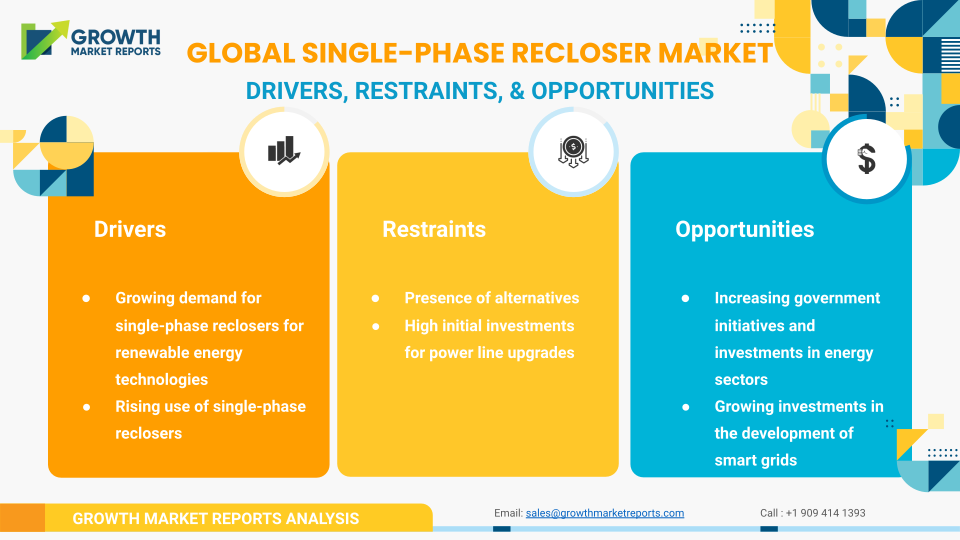
Another significant opportunity lies in the digital transformation of the power distribution sector. The integration of intelligent electronic devices, data analytics, and communication protocols is enabling utilities to achieve higher levels of automation, operational efficiency, and customer satisfaction. Single-phase reclosers equipped with advanced control systems and real-time monitoring capabilities are facilitating predictive maintenance, reducing operational costs, and enhancing grid reliability. The ongoing transition towards digital substations and intelligent grid infrastructure is expected to drive further innovation in the single-phase recloser market, creating new growth opportunities for manufacturers and solution providers.

Despite the positive outlook, the single-phase recloser market faces several restraining factors, most notably the high initial investment required for the deployment of advanced protection and automation devices. Utilities, particularly in developing regions, may be constrained by budget limitations and competing infrastructure priorities. Additionally, the complexity of integrating new technologies with legacy systems can pose technical and operational challenges. Regulatory uncertainties and evolving standards for grid reliability and cybersecurity may also impact market growth. Addressing these challenges will require collaboration between utilities, manufacturers, and policymakers to develop cost-effective solutions and ensure the seamless integration of single-phase reclosers into modern distribution networks.

Regional Outlook

The Asia Pacific region leads the global single-phase recloser market, with a market size of USD 420 million in 2024. This dominance is primarily attributed to rapid urbanization, substantial investments in grid expansion, and government-led rural electrification programs in countries such as China, India, and Southeast Asian nations. The regionÂ’s focus on infrastructure development and the integration of renewable energy sources has driven significant demand for advanced protection and automation devices. The Asia Pacific market is expected to grow at a CAGR of 6.5% over the forecast period, reaching approximately USD 750 million by 2033. Utilities in the region are prioritizing the deployment of single-phase reclosers to enhance grid reliability, reduce outage durations, and support the integration of distributed energy resources.

North America accounts for the second-largest share of the single-phase recloser market, with a market size of USD 340 million in 2024. The region is characterized by ongoing grid modernization efforts, the integration of renewable energy sources, and the proliferation of electric vehicle charging infrastructure. Utilities in the United States and Canada are investing in advanced protection and automation devices to improve operational efficiency, customer satisfaction, and regulatory compliance. The North American market is expected to grow steadily over the forecast period, supported by government initiatives, regulatory mandates, and the increasing adoption of smart grid technologies.

EuropeÂ’s single-phase recloser market, valued at USD 260 million in 2024, is driven by stringent regulatory standards for grid reliability and sustainability, as well as the integration of renewable energy sources. The regionÂ’s focus on energy efficiency, carbon reduction, and digital transformation has fueled demand for advanced protection and automation solutions. Latin America and the Middle East & Africa, with market sizes of USD 120 million and USD 90 million respectively in 2024, are also witnessing steady growth, supported by infrastructure development, increasing electrification rates, and government-led initiatives to improve grid reliability. The diverse regional dynamics underscore the global importance of single-phase reclosers in achieving reliable and efficient power distribution.

Single-phase Recloser Market Statistics

Competitor Outlook

The competitive landscape of the single-phase recloser market is characterized by the presence of several established players, as well as a growing number of regional and niche manufacturers. Leading companies are focusing on product innovation, technological advancements, and strategic partnerships to strengthen their market position and expand their global footprint. The market is highly competitive, with manufacturers investing in research and development to enhance the performance, reliability, and cybersecurity of their recloser offerings. The integration of digital sensors, communication modules, and predictive analytics is enabling companies to differentiate their products and provide value-added solutions to utilities and end-users.

Mergers, acquisitions, and collaborations are common strategies employed by market participants to gain access to new markets, technologies, and customer segments. Companies are also expanding their product portfolios to address the evolving needs of utilities, including the integration of distributed energy resources, electric vehicle charging infrastructure, and smart grid technologies. The increasing emphasis on sustainability, energy efficiency, and regulatory compliance is driving demand for advanced protection and automation devices, prompting manufacturers to invest in green technologies and environmentally friendly solutions.

The market is witnessing the emergence of new entrants and start-ups, particularly in the areas of digitalization, IoT, and data analytics. These companies are leveraging innovative business models and disruptive technologies to challenge established players and capture market share. The growing importance of cybersecurity and data privacy in the power distribution sector is also prompting manufacturers to develop secure and resilient solutions that meet the highest industry standards. As the market continues to evolve, competition is expected to intensify, with companies vying for leadership in product innovation, customer service, and operational excellence.

Some of the major companies operating in the single-phase recloser market include ABB Ltd., Siemens AG, Schneider Electric SE, Eaton Corporation plc, NOJA Power, Tavrida Electric, S&C Electric Company, G&W Electric, and Hubbell Power Systems. ABB Ltd. is renowned for its advanced recloser solutions, featuring digital control systems, remote monitoring, and integration with smart grid platforms. Siemens AG offers a comprehensive portfolio of reclosers designed for diverse voltage ratings and applications, with a strong focus on innovation and sustainability. Schneider Electric SE is a global leader in energy management and automation, providing intelligent recloser solutions that enable utilities to enhance grid reliability and operational efficiency. Eaton Corporation plc specializes in power management solutions, offering a wide range of reclosers with advanced protection and control features.

NOJA Power is recognized for its expertise in medium-voltage reclosers, offering products with integrated communication and control capabilities. Tavrida Electric focuses on modular and scalable recloser solutions, catering to the evolving needs of utilities and industrial users. S&C Electric Company and G&W Electric are prominent players in the North American market, known for their high-performance reclosers and commitment to product innovation. Hubbell Power Systems offers a diverse range of reclosers and automation devices, with a strong emphasis on reliability and customer service. These companies are continuously investing in research and development, strategic partnerships, and market expansion initiatives to maintain their competitive edge and address the growing demand for advanced protection and automation solutions in the single-phase recloser market.

Key Players

  • ABB
  • Eaton
  • Schneider Electric
  • Siemens
  • NOJA Power
  • G&W Electric
  • S&C Electric Company
  • Tavrida Electric
  • Arteche
  • Hubbell Power Systems
  • GE Grid Solutions
  • Entec Electric & Electronic
  • Zhejiang Chint Electrics
  • Hughes Power System
  • BRUSH Group
  • Jin Kwang Electric Industry
  • Pinggao Group
  • Xuji Electric
  • Shenzhen Clou Electronics
  • Shinsung Industrial Electric
Single-phase Recloser Market Overview

Segments

The Single-phase Recloser market has been segmented on the basis of

Phase Type

  • Single-phase
  • Three-phase

Control Type

  • Electronic
  • Hydraulic
  • Mechanical

Voltage Rating

  • Up to 15 kV
  • 16–27 kV
  • Above 27 kV

Application

  • Distribution Utilities
  • Industrial
  • Commercial
  • Others

Installation

  • Pole-mounted
  • Substation-mounted

Competitive Landscape

Players in the single-phase recloser market include Siemens; Hubbell Power Systems; Eaton; GE; OMICRON; Solomon Corporation; Hughes Power System; Inmarsat; S&C Electric Company; ABB; Jin Kwang E&C; G&W Electric; Tavrida Electric; Schneider Electric; NOJA Power; Arteche; BRUSH Group; ENTEC Electric Global Tavrida Electrical Global; and Iljin Electric. These companies engage in strategies such as acquisitions, collaboration, mergers, partnerships, and product launches to boost their market share.

  • In January 2021, ABB, a leader in technology for electrification and automation, completed the delivery of low-voltage digital solutions for the Shanghai Bailonggang Wastewater Treatment Plant project in China to reduce downtime of the establishment.
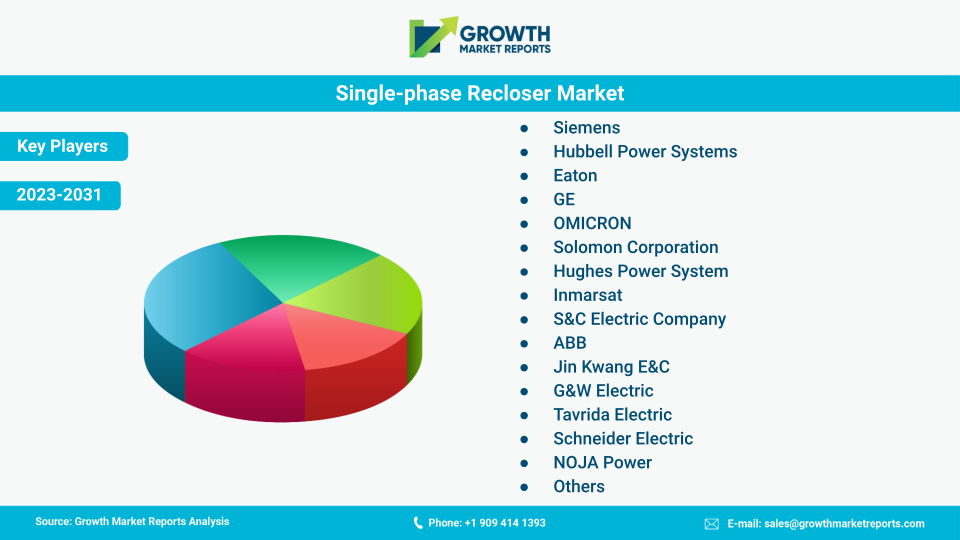

Single Phase Recloser Market Key Players

Frequently Asked Questions

Major trends include the shift towards smart grids, digital substations, and integration of distributed energy resources. Opportunities arise from the need for grid modernization, increased electrification, renewable energy integration, and the adoption of advanced automation and predictive maintenance technologies.

Key companies in the single-phase recloser market include ABB Ltd., Siemens AG, Schneider Electric SE, Eaton Corporation plc, NOJA Power, Tavrida Electric, S&C Electric Company, G&W Electric, and Hubbell Power Systems, among others.

Single-phase reclosers can be installed as pole-mounted or substation-mounted units. Pole-mounted reclosers are prevalent in overhead distribution networks, especially in rural and suburban areas, while substation-mounted reclosers protect critical equipment in urban and industrial substations.

Single-phase reclosers are available in voltage ratings up to 15 kV, 16–27 kV, and above 27 kV. The up to 15 kV segment is common in residential and rural networks, while higher voltage ratings are used in urban, industrial, and high-demand applications.

Single-phase reclosers are used by distribution utilities, industrial facilities, commercial buildings, and in public infrastructure. They enhance grid reliability, manage bidirectional power flows, support renewable energy integration, and ensure rapid fault detection and isolation across various sectors.

Single-phase reclosers are mainly used in residential and light commercial networks, offering cost-effective protection for single-phase loads. Three-phase reclosers are suited for urban and industrial networks with higher load capacities, providing comprehensive protection for critical infrastructure and supporting advanced fault management.

Single-phase reclosers are categorized by control type into electronic, hydraulic, and mechanical. Electronic reclosers are the most widely adopted due to their advanced features, remote monitoring, and integration with SCADA and IoT systems. Hydraulic and mechanical types are used in specific environments or legacy systems.

Asia Pacific dominates the single-phase recloser market, followed by North America and Europe. Growth in Asia Pacific is fueled by rapid urbanization, grid expansion, and rural electrification, while North America and Europe benefit from grid modernization and renewable energy integration.

The global single-phase recloser market reached USD 1.23 billion in 2024 and is projected to grow at a CAGR of 5.8% from 2025 to 2033, reaching USD 2.06 billion by 2033. Growth is driven by investments in grid modernization, automation, and the adoption of smart grid technologies.

A single-phase recloser is an automatic electrical switch used in power distribution networks to detect and isolate faults, then restore power after a brief interruption. It helps minimize outage durations by automatically reclosing after a fault is cleared, improving grid reliability and reducing manual intervention.

Table Of Content

Chapter 1 Executive Summary
Chapter 2 Assumptions and Acronyms Used
Chapter 3 Research Methodology
Chapter 4 Single-phase Recloser Market Overview
   4.1 Introduction
      4.1.1 Market Taxonomy
      4.1.2 Market Definition
      4.1.3 Macro-Economic Factors Impacting the Market Growth
   4.2 Single-phase Recloser Market Dynamics
      4.2.1 Market Drivers
      4.2.2 Market Restraints
      4.2.3 Market Opportunity
   4.3 Single-phase Recloser Market - Supply Chain Analysis
      4.3.1 List of Key Suppliers
      4.3.2 List of Key Distributors
      4.3.3 List of Key Consumers
   4.4 Key Forces Shaping the Single-phase Recloser Market
      4.4.1 Bargaining Power of Suppliers
      4.4.2 Bargaining Power of Buyers
      4.4.3 Threat of Substitution
      4.4.4 Threat of New Entrants
      4.4.5 Competitive Rivalry
   4.5 Global Single-phase Recloser Market Size & Forecast, 2023-2032
      4.5.1 Single-phase Recloser Market Size and Y-o-Y Growth
      4.5.2 Single-phase Recloser Market Absolute $ Opportunity

Chapter 5 Global Single-phase Recloser Market Analysis and Forecast By Phase Type
   5.1 Introduction
      5.1.1 Key Market Trends & Growth Opportunities By Phase Type
      5.1.2 Basis Point Share (BPS) Analysis By Phase Type
      5.1.3 Absolute $ Opportunity Assessment By Phase Type
   5.2 Single-phase Recloser Market Size Forecast By Phase Type
      5.2.1 Single-phase
      5.2.2 Three-phase
   5.3 Market Attractiveness Analysis By Phase Type

Chapter 6 Global Single-phase Recloser Market Analysis and Forecast By Control Type
   6.1 Introduction
      6.1.1 Key Market Trends & Growth Opportunities By Control Type
      6.1.2 Basis Point Share (BPS) Analysis By Control Type
      6.1.3 Absolute $ Opportunity Assessment By Control Type
   6.2 Single-phase Recloser Market Size Forecast By Control Type
      6.2.1 Electronic
      6.2.2 Hydraulic
      6.2.3 Mechanical
   6.3 Market Attractiveness Analysis By Control Type

Chapter 7 Global Single-phase Recloser Market Analysis and Forecast By Voltage Rating
   7.1 Introduction
      7.1.1 Key Market Trends & Growth Opportunities By Voltage Rating
      7.1.2 Basis Point Share (BPS) Analysis By Voltage Rating
      7.1.3 Absolute $ Opportunity Assessment By Voltage Rating
   7.2 Single-phase Recloser Market Size Forecast By Voltage Rating
      7.2.1 Up to 15 kV
      7.2.2 16–27 kV
      7.2.3 Above 27 kV
   7.3 Market Attractiveness Analysis By Voltage Rating

Chapter 8 Global Single-phase Recloser Market Analysis and Forecast By Application
   8.1 Introduction
      8.1.1 Key Market Trends & Growth Opportunities By Application
      8.1.2 Basis Point Share (BPS) Analysis By Application
      8.1.3 Absolute $ Opportunity Assessment By Application
   8.2 Single-phase Recloser Market Size Forecast By Application
      8.2.1 Distribution Utilities
      8.2.2 Industrial
      8.2.3 Commercial
      8.2.4 Others
   8.3 Market Attractiveness Analysis By Application

Chapter 9 Global Single-phase Recloser Market Analysis and Forecast By Installation
   9.1 Introduction
      9.1.1 Key Market Trends & Growth Opportunities By Installation
      9.1.2 Basis Point Share (BPS) Analysis By Installation
      9.1.3 Absolute $ Opportunity Assessment By Installation
   9.2 Single-phase Recloser Market Size Forecast By Installation
      9.2.1 Pole-mounted
      9.2.2 Substation-mounted
   9.3 Market Attractiveness Analysis By Installation

Chapter 10 Global Single-phase Recloser Market Analysis and Forecast by Region
   10.1 Introduction
      10.1.1 Key Market Trends & Growth Opportunities By Region
      10.1.2 Basis Point Share (BPS) Analysis By Region
      10.1.3 Absolute $ Opportunity Assessment By Region
   10.2 Single-phase Recloser Market Size Forecast By Region
      10.2.1 North America
      10.2.2 Europe
      10.2.3 Asia Pacific
      10.2.4 Latin America
      10.2.5 Middle East & Africa (MEA)
   10.3 Market Attractiveness Analysis By Region

Chapter 11 Coronavirus Disease (COVID-19) Impact 
   11.1 Introduction 
   11.2 Current & Future Impact Analysis 
   11.3 Economic Impact Analysis 
   11.4 Government Policies 
   11.5 Investment Scenario

Chapter 12 North America Single-phase Recloser Analysis and Forecast
   12.1 Introduction
   12.2 North America Single-phase Recloser Market Size Forecast by Country
      12.2.1 U.S.
      12.2.2 Canada
   12.3 Basis Point Share (BPS) Analysis by Country
   12.4 Absolute $ Opportunity Assessment by Country
   12.5 Market Attractiveness Analysis by Country
   12.6 North America Single-phase Recloser Market Size Forecast By Phase Type
      12.6.1 Single-phase
      12.6.2 Three-phase
   12.7 Basis Point Share (BPS) Analysis By Phase Type 
   12.8 Absolute $ Opportunity Assessment By Phase Type 
   12.9 Market Attractiveness Analysis By Phase Type
   12.10 North America Single-phase Recloser Market Size Forecast By Control Type
      12.10.1 Electronic
      12.10.2 Hydraulic
      12.10.3 Mechanical
   12.11 Basis Point Share (BPS) Analysis By Control Type 
   12.12 Absolute $ Opportunity Assessment By Control Type 
   12.13 Market Attractiveness Analysis By Control Type
   12.14 North America Single-phase Recloser Market Size Forecast By Voltage Rating
      12.14.1 Up to 15 kV
      12.14.2 16–27 kV
      12.14.3 Above 27 kV
   12.15 Basis Point Share (BPS) Analysis By Voltage Rating 
   12.16 Absolute $ Opportunity Assessment By Voltage Rating 
   12.17 Market Attractiveness Analysis By Voltage Rating
   12.18 North America Single-phase Recloser Market Size Forecast By Application
      12.18.1 Distribution Utilities
      12.18.2 Industrial
      12.18.3 Commercial
      12.18.4 Others
   12.19 Basis Point Share (BPS) Analysis By Application 
   12.20 Absolute $ Opportunity Assessment By Application 
   12.21 Market Attractiveness Analysis By Application
   12.22 North America Single-phase Recloser Market Size Forecast By Installation
      12.22.1 Pole-mounted
      12.22.2 Substation-mounted
   12.23 Basis Point Share (BPS) Analysis By Installation 
   12.24 Absolute $ Opportunity Assessment By Installation 
   12.25 Market Attractiveness Analysis By Installation

Chapter 13 Europe Single-phase Recloser Analysis and Forecast
   13.1 Introduction
   13.2 Europe Single-phase Recloser Market Size Forecast by Country
      13.2.1 Germany
      13.2.2 France
      13.2.3 Italy
      13.2.4 U.K.
      13.2.5 Spain
      13.2.6 Russia
      13.2.7 Rest of Europe
   13.3 Basis Point Share (BPS) Analysis by Country
   13.4 Absolute $ Opportunity Assessment by Country
   13.5 Market Attractiveness Analysis by Country
   13.6 Europe Single-phase Recloser Market Size Forecast By Phase Type
      13.6.1 Single-phase
      13.6.2 Three-phase
   13.7 Basis Point Share (BPS) Analysis By Phase Type 
   13.8 Absolute $ Opportunity Assessment By Phase Type 
   13.9 Market Attractiveness Analysis By Phase Type
   13.10 Europe Single-phase Recloser Market Size Forecast By Control Type
      13.10.1 Electronic
      13.10.2 Hydraulic
      13.10.3 Mechanical
   13.11 Basis Point Share (BPS) Analysis By Control Type 
   13.12 Absolute $ Opportunity Assessment By Control Type 
   13.13 Market Attractiveness Analysis By Control Type
   13.14 Europe Single-phase Recloser Market Size Forecast By Voltage Rating
      13.14.1 Up to 15 kV
      13.14.2 16–27 kV
      13.14.3 Above 27 kV
   13.15 Basis Point Share (BPS) Analysis By Voltage Rating 
   13.16 Absolute $ Opportunity Assessment By Voltage Rating 
   13.17 Market Attractiveness Analysis By Voltage Rating
   13.18 Europe Single-phase Recloser Market Size Forecast By Application
      13.18.1 Distribution Utilities
      13.18.2 Industrial
      13.18.3 Commercial
      13.18.4 Others
   13.19 Basis Point Share (BPS) Analysis By Application 
   13.20 Absolute $ Opportunity Assessment By Application 
   13.21 Market Attractiveness Analysis By Application
   13.22 Europe Single-phase Recloser Market Size Forecast By Installation
      13.22.1 Pole-mounted
      13.22.2 Substation-mounted
   13.23 Basis Point Share (BPS) Analysis By Installation 
   13.24 Absolute $ Opportunity Assessment By Installation 
   13.25 Market Attractiveness Analysis By Installation

Chapter 14 Asia Pacific Single-phase Recloser Analysis and Forecast
   14.1 Introduction
   14.2 Asia Pacific Single-phase Recloser Market Size Forecast by Country
      14.2.1 China
      14.2.2 Japan
      14.2.3 South Korea
      14.2.4 India
      14.2.5 Australia
      14.2.6 South East Asia (SEA)
      14.2.7 Rest of Asia Pacific (APAC)
   14.3 Basis Point Share (BPS) Analysis by Country
   14.4 Absolute $ Opportunity Assessment by Country
   14.5 Market Attractiveness Analysis by Country
   14.6 Asia Pacific Single-phase Recloser Market Size Forecast By Phase Type
      14.6.1 Single-phase
      14.6.2 Three-phase
   14.7 Basis Point Share (BPS) Analysis By Phase Type 
   14.8 Absolute $ Opportunity Assessment By Phase Type 
   14.9 Market Attractiveness Analysis By Phase Type
   14.10 Asia Pacific Single-phase Recloser Market Size Forecast By Control Type
      14.10.1 Electronic
      14.10.2 Hydraulic
      14.10.3 Mechanical
   14.11 Basis Point Share (BPS) Analysis By Control Type 
   14.12 Absolute $ Opportunity Assessment By Control Type 
   14.13 Market Attractiveness Analysis By Control Type
   14.14 Asia Pacific Single-phase Recloser Market Size Forecast By Voltage Rating
      14.14.1 Up to 15 kV
      14.14.2 16–27 kV
      14.14.3 Above 27 kV
   14.15 Basis Point Share (BPS) Analysis By Voltage Rating 
   14.16 Absolute $ Opportunity Assessment By Voltage Rating 
   14.17 Market Attractiveness Analysis By Voltage Rating
   14.18 Asia Pacific Single-phase Recloser Market Size Forecast By Application
      14.18.1 Distribution Utilities
      14.18.2 Industrial
      14.18.3 Commercial
      14.18.4 Others
   14.19 Basis Point Share (BPS) Analysis By Application 
   14.20 Absolute $ Opportunity Assessment By Application 
   14.21 Market Attractiveness Analysis By Application
   14.22 Asia Pacific Single-phase Recloser Market Size Forecast By Installation
      14.22.1 Pole-mounted
      14.22.2 Substation-mounted
   14.23 Basis Point Share (BPS) Analysis By Installation 
   14.24 Absolute $ Opportunity Assessment By Installation 
   14.25 Market Attractiveness Analysis By Installation

Chapter 15 Latin America Single-phase Recloser Analysis and Forecast
   15.1 Introduction
   15.2 Latin America Single-phase Recloser Market Size Forecast by Country
      15.2.1 Brazil
      15.2.2 Mexico
      15.2.3 Rest of Latin America (LATAM)
   15.3 Basis Point Share (BPS) Analysis by Country
   15.4 Absolute $ Opportunity Assessment by Country
   15.5 Market Attractiveness Analysis by Country
   15.6 Latin America Single-phase Recloser Market Size Forecast By Phase Type
      15.6.1 Single-phase
      15.6.2 Three-phase
   15.7 Basis Point Share (BPS) Analysis By Phase Type 
   15.8 Absolute $ Opportunity Assessment By Phase Type 
   15.9 Market Attractiveness Analysis By Phase Type
   15.10 Latin America Single-phase Recloser Market Size Forecast By Control Type
      15.10.1 Electronic
      15.10.2 Hydraulic
      15.10.3 Mechanical
   15.11 Basis Point Share (BPS) Analysis By Control Type 
   15.12 Absolute $ Opportunity Assessment By Control Type 
   15.13 Market Attractiveness Analysis By Control Type
   15.14 Latin America Single-phase Recloser Market Size Forecast By Voltage Rating
      15.14.1 Up to 15 kV
      15.14.2 16–27 kV
      15.14.3 Above 27 kV
   15.15 Basis Point Share (BPS) Analysis By Voltage Rating 
   15.16 Absolute $ Opportunity Assessment By Voltage Rating 
   15.17 Market Attractiveness Analysis By Voltage Rating
   15.18 Latin America Single-phase Recloser Market Size Forecast By Application
      15.18.1 Distribution Utilities
      15.18.2 Industrial
      15.18.3 Commercial
      15.18.4 Others
   15.19 Basis Point Share (BPS) Analysis By Application 
   15.20 Absolute $ Opportunity Assessment By Application 
   15.21 Market Attractiveness Analysis By Application
   15.22 Latin America Single-phase Recloser Market Size Forecast By Installation
      15.22.1 Pole-mounted
      15.22.2 Substation-mounted
   15.23 Basis Point Share (BPS) Analysis By Installation 
   15.24 Absolute $ Opportunity Assessment By Installation 
   15.25 Market Attractiveness Analysis By Installation

Chapter 16 Middle East & Africa (MEA) Single-phase Recloser Analysis and Forecast
   16.1 Introduction
   16.2 Middle East & Africa (MEA) Single-phase Recloser Market Size Forecast by Country
      16.2.1 Saudi Arabia
      16.2.2 South Africa
      16.2.3 UAE
      16.2.4 Rest of Middle East & Africa (MEA)
   16.3 Basis Point Share (BPS) Analysis by Country
   16.4 Absolute $ Opportunity Assessment by Country
   16.5 Market Attractiveness Analysis by Country
   16.6 Middle East & Africa (MEA) Single-phase Recloser Market Size Forecast By Phase Type
      16.6.1 Single-phase
      16.6.2 Three-phase
   16.7 Basis Point Share (BPS) Analysis By Phase Type 
   16.8 Absolute $ Opportunity Assessment By Phase Type 
   16.9 Market Attractiveness Analysis By Phase Type
   16.10 Middle East & Africa (MEA) Single-phase Recloser Market Size Forecast By Control Type
      16.10.1 Electronic
      16.10.2 Hydraulic
      16.10.3 Mechanical
   16.11 Basis Point Share (BPS) Analysis By Control Type 
   16.12 Absolute $ Opportunity Assessment By Control Type 
   16.13 Market Attractiveness Analysis By Control Type
   16.14 Middle East & Africa (MEA) Single-phase Recloser Market Size Forecast By Voltage Rating
      16.14.1 Up to 15 kV
      16.14.2 16–27 kV
      16.14.3 Above 27 kV
   16.15 Basis Point Share (BPS) Analysis By Voltage Rating 
   16.16 Absolute $ Opportunity Assessment By Voltage Rating 
   16.17 Market Attractiveness Analysis By Voltage Rating
   16.18 Middle East & Africa (MEA) Single-phase Recloser Market Size Forecast By Application
      16.18.1 Distribution Utilities
      16.18.2 Industrial
      16.18.3 Commercial
      16.18.4 Others
   16.19 Basis Point Share (BPS) Analysis By Application 
   16.20 Absolute $ Opportunity Assessment By Application 
   16.21 Market Attractiveness Analysis By Application
   16.22 Middle East & Africa (MEA) Single-phase Recloser Market Size Forecast By Installation
      16.22.1 Pole-mounted
      16.22.2 Substation-mounted
   16.23 Basis Point Share (BPS) Analysis By Installation 
   16.24 Absolute $ Opportunity Assessment By Installation 
   16.25 Market Attractiveness Analysis By Installation

Chapter 17 Competition Landscape 
   17.1 Single-phase Recloser Market: Competitive Dashboard
   17.2 Global Single-phase Recloser Market: Market Share Analysis, 2023
   17.3 Company Profiles (Details – Overview, Financials, Developments, Strategy) 
      17.3.1 ABB
Eaton
Schneider Electric
Siemens
NOJA Power
G&W Electric
S&C Electric Company
Tavrida Electric
Arteche
Hubbell Power Systems
GE Grid Solutions
Entec Electric & Electronic
Zhejiang Chint Electrics
Hughes Power System
BRUSH Group
Jin Kwang Electric Industry
Pinggao Group
Xuji Electric
Shenzhen Clou Electronics
Shinsung Industrial Electric

Methodology

Our Clients

Microsoft
Dassault Aviation
FedEx Logistics
General Electric
General Mills
sinopec
Honda Motor Co. Ltd.
The John Holland Group