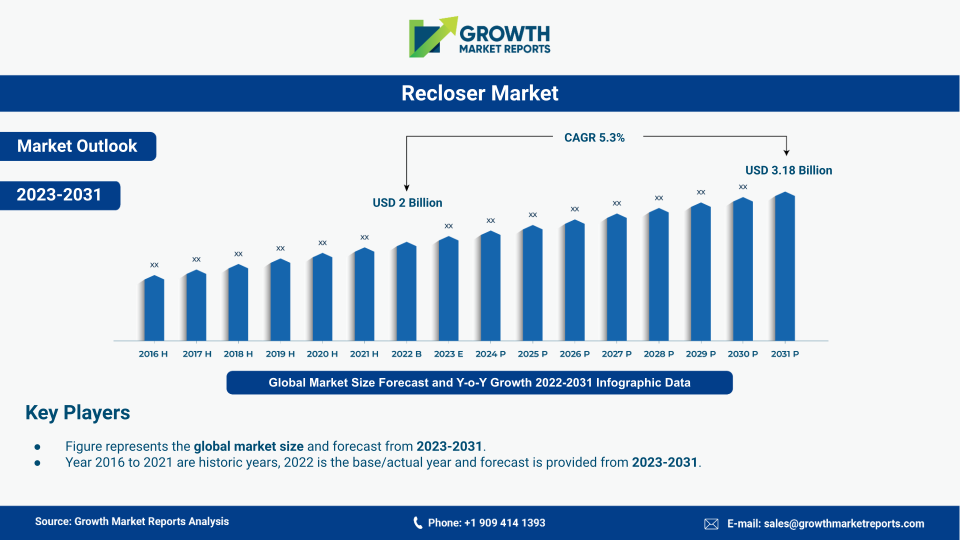
The global recloser market size was valued at USD 2 Billion in 2022 and is expected to surpass USD 3.18 Billion by 2031, expanding at a CAGR of 5.3% during the forecast period, 2023–2031. The market growth is attributed to the increasing energy needs and the growth of transmission & distribution networks across the globe.
Recloser or Automatic Circuit Reclosers is an electric equipment, which is a high-quality precision automatic switchgear device. A recloser is equipped with smart sensors and electronics that help in protecting the power grid.
It automatically isolates the error and restores power. When a short circuit occurs, a recloser opens or cuts off the power supply. After some time, the recloser automatically closes and turns the power back on.
However, if the problem continues, the recloser reopens automatically closes the circuit. The recloser works according to the program originally set up. If the problem persists for the third time, it automatically disconnects the circuit from the electrical system. The number of cuts and the switching time can be changed by users. The recloser operates for at least 3 times, and the power supply is locked at the fourth time. Users can adjust the closing time.
Recloser provides real-time data about the voltage (V), power (A, W, VAR), and frequency (f). Real-time data enables fault analysis, improving mid-voltage (MV) grid operation, system diagnostics, and enhancing MV grid operation efficiency. Reclosers uses fuse switchboard and load breaker to identify the problematic area and restore the power in the problem-free area. Reclosers are used in overhead distribution lines, protection, communication & distribution transformer stations integrating control, measurement, opening circuit, and fault detection.
COVID-19 Impact on Recloser Market
The COVID-19 pandemic has negatively affected the three phase recloser market. Market players changed their business techniques to maintain their presence in the market during the pandemic. The development of the market has influenced the ongoing patterns, challenges, locale insightful development, and mergers & acquisitions.
Recloser Market Dynamics
The global recloser market research report presents a complete overview by providing detailed information about the current market trends, existing drivers, growth opportunities and potentials, and emerging challenges. The global recloser market report has up-to-date insights about market dynamics and market scenarios that can shape the overall market performance and output during the forecast period, 2023 to 2031.
Key Trends
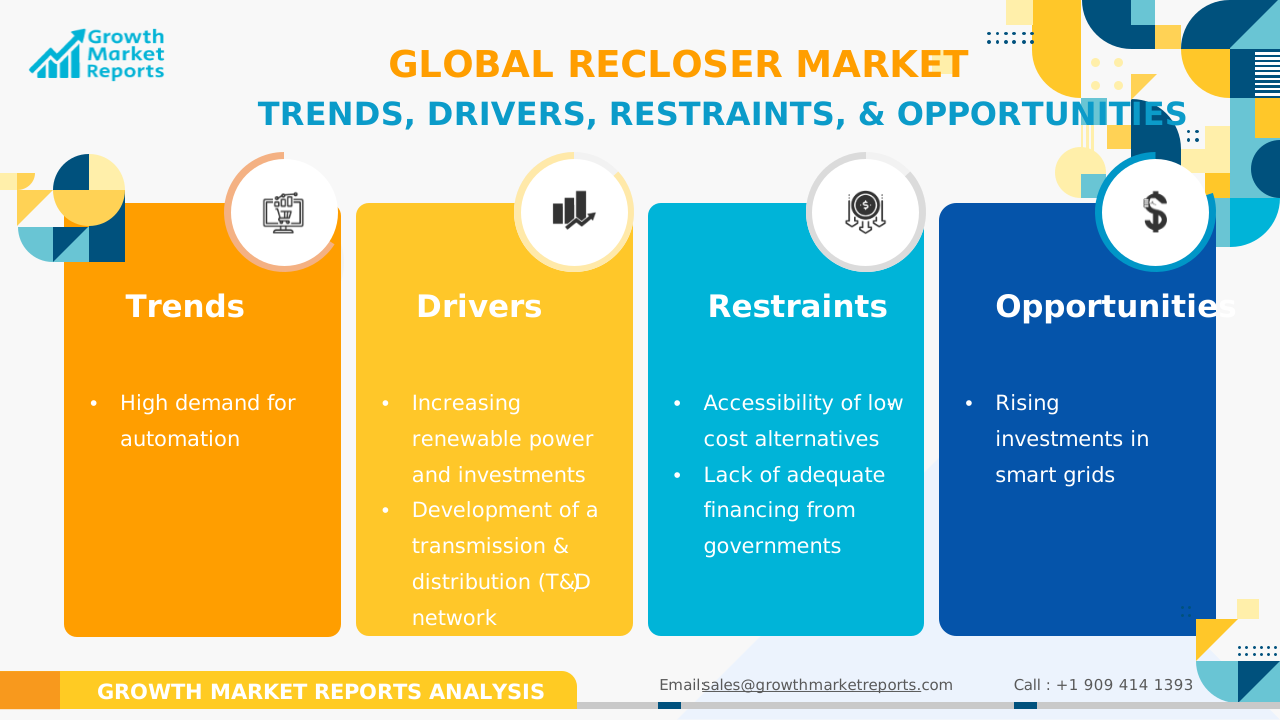
High demand for automation
High demand for automation of power supply is one of the major market trends. Growing use of electrical equipment and devices is raising the demand for reclosers across the globe. Reclosers aid in the protection of the electrical circuit. Rising investments in modernization and automation of power supply with the help of digital substations are key trends in the global market.
Major Drivers
Increasing renewable power and investments
Renewable technologies have accounted for around 70% of power sector investments supported by public finance institutions in recent years. More than 60% of these investments are in renewable power from private sectors. Supporting government policies and funds, especially in Europe and the US, are expected to boost the global market during the forecast period. The growth of renewable energy has a significant opportunity for the recloser market players.
Development of a transmission & distribution (T&D) network to boost the market
Surging power consumption has led to the rapid construction of T&D networks to serve the increasing demand for continuous power supply. In December 2017, Sterlite power has received a contract for an 1800 Km power transmission project worth USD 800 million in Brazil. In Europe, the increasing investment in the T&D sector is expected to contribute positively to the market revenue. In 2017 the European energy industry, as part of its national policy, is projected to invest USD 295 billion in T&D structure in 2021-2030. Rising T&D networks across the globe spur the global market.
Existing Restraints
Accessibility of low-cost alternatives
India and China are the fastest-growing markets for automatic reclosers. These countries have multiple manufacturers who have started producing low-cost alternatives to reclosers. The availability of low-cost alternatives such as PVB for reclosers is anticipated to hamper the growth of the market.
Lack of adequate financing from governments
Financing renewable energy continues to face multiple challenges, such as high capital costs, lack of adequate financing from governments, and short tenure of loans. Increasing the existing grids and installing newer ones for better T&D power are major expenditures in various countries. Line upgrades and modernization are essential to the installation of reclosers and involve high capital expenditure. However, the lack of adequate government financing, especially in developing countries, is expected to hinder the market growth in the coming years.
Emerging Opportunities
Rising investments in smart grids
Rising investments in all parts of the energy sector, mainly the renewables energy sub-sector, is expected to propel the market in recent years. Smart grid monitors manage the electricity transmission from the generation source to end-users. It reduces the cost significantly and enables energy security while maximizing the stability, resilience, and reliability of the power system.
Several government bodies across the globe have introduced performance-based revenue regulations. These performance-based revenue regulations have a financial incentive structure that may be one-sided or two-sided. The one-sided incentive structure includes a penalty and the two-sided one includes a bonus for extra contribution and the work of distributors.
Scope of Recloser Market Report
The report on the global recloser market includes an assessment of the market trends, market segments, and regional markets. Overview and dynamics have also been included in the report.
|
Attributes
|
Details
|
|
Report Title
|
Recloser Market - Global Industry Analysis, Growth, Share, Size, Trends, and Forecast
|
|
Base Year
|
2022
|
|
Historic Data
|
2016–2021
|
|
Forecast Period
|
2023–2031
|
|
Segmentation
|
Control (Hydraulic, Programmable Resettable, Electric, and Resettable Electronic), Interruption (Oil and Vacuum), Phase (Single-Phase, Three-Phase, and Triple Single), Voltage (High Voltage, Medium Voltage, and Low Voltage), and Voltage Rating (Up to 15 kV, 16-27 kV, and 27-38 kV).
|
|
Regional Scope
|
Asia Pacific, North America, Latin America, Europe, and Middle East & Africa
|
|
Report Coverage
|
Company Share, Market Analysis and Size, Competitive Landscape, Growth Factors, and Trends, and Revenue Forecast
|
|
Key Players Covered in the Report
|
NOjA Power; Arteche; GE; BRUSH Group; Eaton; OMICRON; Solomon Corporation; Siemens; ABB; Hughes Power System; Inmarsat; ENTEC Electric Global; S&C Electric Company; Tavrida Electrical Global; Schneider Electric; G&W Electric Co.; Iljin Electric; and CPS.
|
Recloser Market Segment Insights
Electric segment to expand at a significant growth rate
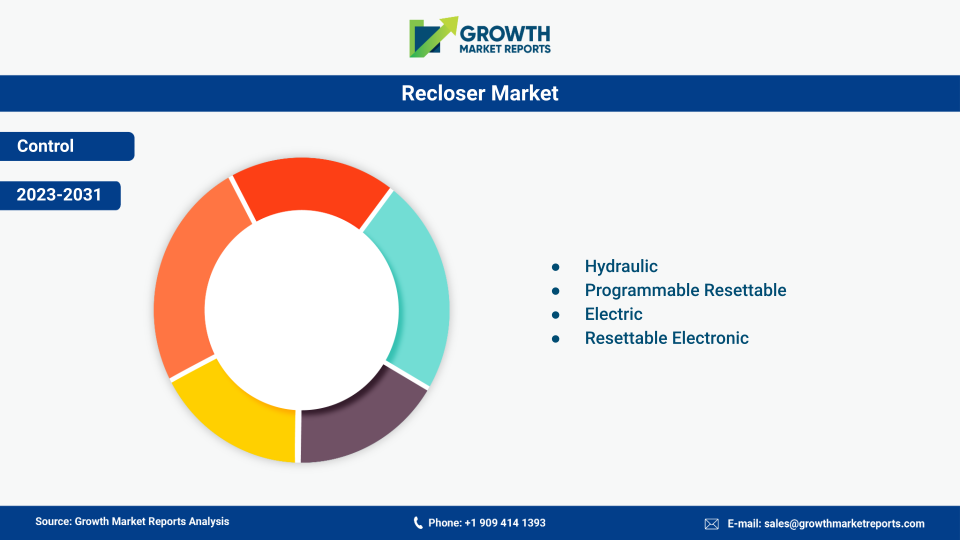
Based on control, the global recloser market is divided into hydraulic, programmable resettable, electric, and resettable electronic. The electric segment is expected to expand at a significant growth rate during the projected period, due to its operational features such as reliability, accuracy in operation, and feasibility. The electric segment is driven by its essential features related to the advanced protection of the electrical circuit.
The hydraulic segment is anticipated to register significant growth in the coming years. The hydraulic recloser is used in the single-phase and three-phase reclosers by identifying the overcurrent through trip coils. Continuous electricity supply needs to strengthen and secure the distribution network is anticipated to stimulate the hydraulic recloser market. The ability to provide self-contained overcurrent protection while maintaining the minimum service requirement is expected to drive the recloser market.
Vacuum segment to register a considerable CAGR
On the basis of interruption, the global market is segregated into oil and vacuum. The vacuum segment is projected to register a considerable CAGR during the forecast period, due to its advantageous features such as improved reliability, environment-friendly nature, cost-efficiency, easily recyclable technology, and arc quenching property. To provide the reliable solution the distribution requirements of electrical utilities coupled with easy recyclability and eco-friendly technology is expected to expand the vacuum during the forecast period.
The oil segment is anticipated to account for a major market share in the coming years, owing to the compact design, ease of handling, and applicability for both cut-off & isolation. Oil-based reclosure systems offer high security and versatility which boost the growth of the segment. Oil-interrupting reclosers are used in feeders and power stations, which require regular maintenance. A decrease in the customization capabilities, oil properties differing with temperature changes, and non-programmable features are expected to drive the demand for oil reclosers during the forecast period.
Single-phase segment to hold a significant market share
Based on phase, the global recloser market is divided into single-phase, three-phase, and triple single. The single-phase segment is expected to hold a significant share of the market in the coming years, due to its beneficial features such as improved mechanical protection, space savings, and quick & easy installation. In 2021, the single-phase recloser market was valued at more than USD 750 million. The recloser has applications, such as three-phase outputs or taps to protect single-phase lines.
Moreover, single-phase reclosers have applications in educational premises, communication, expansion of offices, data centers, and public departments. The three-phase segment is anticipated to account for a significant market share in the coming years, due to the development in the transmission and distribution sector in the power industry. High demand for three-phase reclosers is raising investments in grid transmission and distribution, which leads to the rapid growth of the segment.
Low voltage segment to boost the market
On the basis of voltage, the global market is segmented into high voltage, medium voltage, and low voltage. The low voltage segment is projected to hold a large market share in the global market, due to the wide application of low voltage reclosers in substations and fault isolation & feeders for overcurrent protection. A common rule is that below 600 volts is considered as low voltage. Electrical use divided into supply and control for understanding the usage.
High voltage segment holds the CAGR market share during the forecast period, due to the transmission & distribution networks. 80 to 90 % electric lines are temporary in high-voltage such as lightning, wires, and birds. If the power is shut off before damage it occurs to the electric line. Substantial demand for residential applications in the distribution network is expected to boost the market during the forecast period.
Up to 15 kV segment is to hold a largest market growth
Based on voltage rating, the global recloser market is segregated into up to 15 kV, 16-27 kV, and 27-38 kV. Up to 15 kV segment is estimated to hold a largest market share during the forecast period. The rising demand for safe substation equipment, including automatic circuit reclosers, is boosting the global market. The Up to 15 kV segment is expected to expand at a high growth rate, due to increasing residential power distribution capacity to cater to the rising demand for electricity in residential areas.
North America to dominate the market
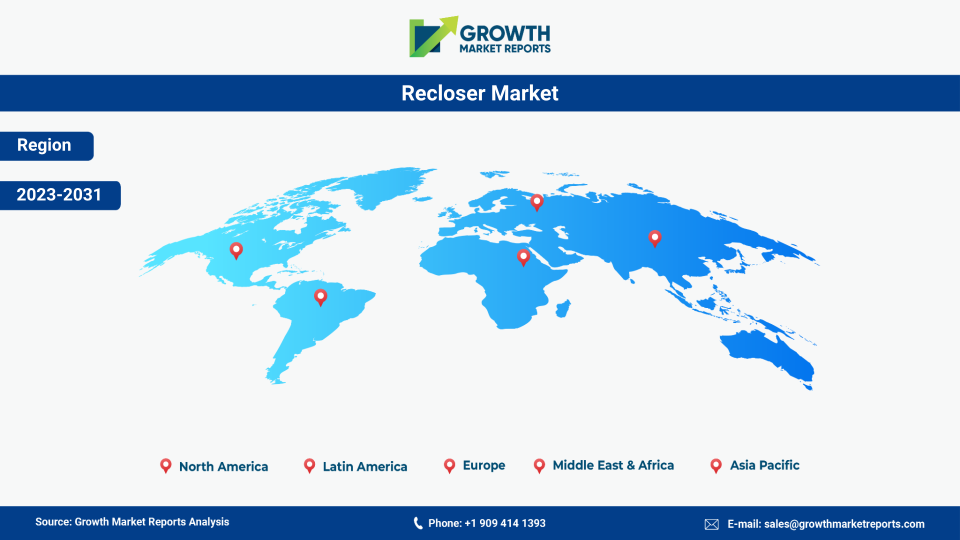
In terms of regions, the global recloser market is classified as Asia Pacific, North America, Latin America, Europe, and Middle East & Africa. North America is projected to be the largest market for reclosers during the forecast period. High demand for smart and electrical grids in North America is driving the market in the region. According to an article, published by the US Department of energy, capital expenditures for electricity distribution in the US and Canada are expected to exceed $40 billion by 2021.
Rebuilding existing systems, deployment of automation technologies, and installing new infrastructure to meet the growing residential demand for reclosers are expected to drive the market in the region. Reclosers and disconnectors are employed to protect the overhead distribution line against various overcurrent and faults. Several companies in North America are investing in distribution automation systems and smart grid projects. This is expected to drive the market in the region.
Asia-pacific is expected to dominate the market during the projected period, due to the increasing investments and infrastructure in the region. The rising rate of industrialization, the growth of transmission & distribution networks, and growing renewable power generation are the main factors that are expected to propel the market in Asia-pacific.
Segments
The global recloser market has been segmented on the basis of
Control
- Hydraulic
- Programmable Resettable
- Electric
- Resettable Electronic
Interruption
Phase
- Single-Phase
- Three-Phase
- Triple Single
Voltage
- High Voltage
- Medium Voltage
- Low Voltage
Voltage Rating
- Up to 15 kV
- 16-27 kV
- 27-38 kV
Regions
- Asia Pacific
- North America
- Latin America
- Europe
- Middle East & Africa
Key Players
- NOJA Power
- Arteche
- GE
- BRUSH Group
- Eaton
- OMICRON
- Solomon Corporation
- Siemens
- ABB
- Hughes Power System
- Inmarsat
- ENTEC Electric Global
- S&C Electric Company
- Tavrida Electrical Global
- Schneider Electric
- G&W Electric Co.
- Iljin Electric.
- CPS
Competitive Landscape
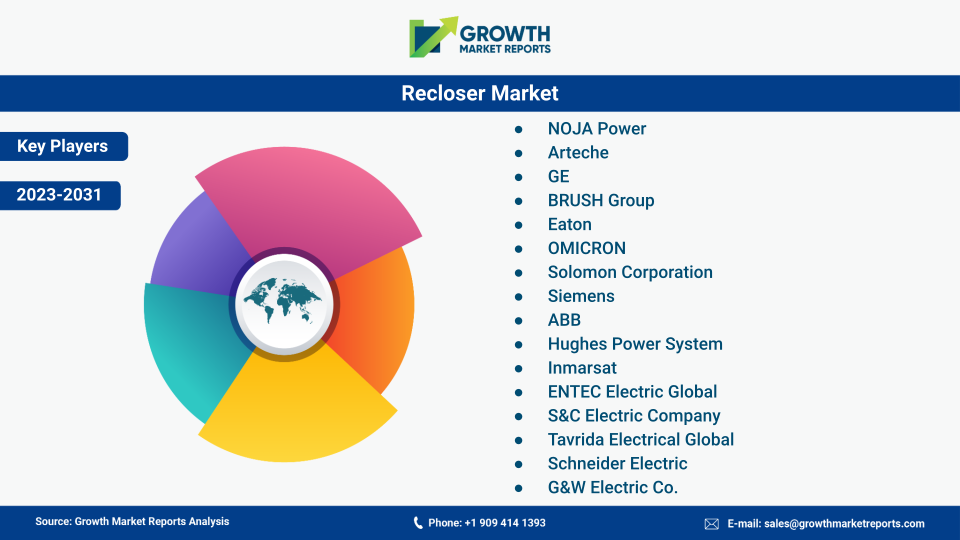
Key players competing in the global recloser market are NOjA Power; Arteche; GE; BRUSH Group; Eaton; OMICRON; Solomon Corporation; Siemens; ABB; Hughes Power System; Inmarsat; ENTEC Electric Global; S&C Electric Company; Tavrida Electrical Global; Schneider Electric; G&W Electric Co.; Iljin Electric; and CPS.
Some of these companies have adopted a series of business development strategies, including mergers and acquisitions, partnerships and collaboration, product launches, and expansion of production capacity to expand their consumer base and enhance their market share.
-
In April 2021, Inmarsat launched a whitepaper that emphasizes the importance of satellite monitored reclosers for remote locations. The BGAN M2M service operated on L-band network of Inmarsat is an ideal solution for recloser control and monitoring. It provides up to 99.9% uptime in any continental location away from the poles in adverse weather conditions.
-
In April 2021, OMICRON hosted a live virtual 6th annual recloser & distribution automation workshop for reclosers and recloser controls & utilities manufacturers. It facilitated the manufacturers to share their experiences regarding testing, distribution automation, and knowledge in reclosers.
-
In July 2021, CPS Energy launched a 4-year Accelerated Recloser Deployment Program, where the company is expected to install 144 recloser devices throughout San Antonio, Texas. The program is expected to help the company to sectionalize its circuits for better control & focus, enhance reliability & resilience, and test faults in grids.
-
In October 2020, S&C Electric Company and Western Power Distribution (WPD) collaborated to complete the installation of the first S&C TripSaver II Cutout-Mounted Recloser in the UK. The installation is anticipated to resolve the temporary faults in power circuits quickly in the country.











 Request For Customization
 Enquiry Before Buying
 Speak With Analyst





