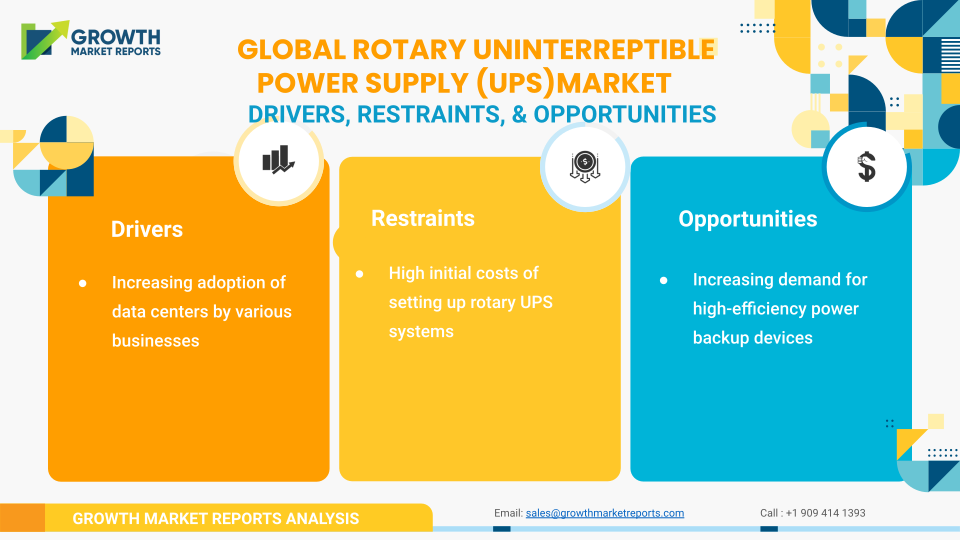
Rotary Uninterruptible Power Supply (UPS) Market Research Report 2033

Rotary Uninterruptible Power Supply (UPS) Market Research Report 2033

Segments - by Product Type (Diesel Rotary UPS, Hybrid Rotary UPS, Static Rotary UPS), by Power Rating (Up to 500 kVA, 501–1, 000 kVA, Above 1, 000 kVA), by Application (Data Centers, Industrial, Healthcare, Telecommunications, Commercial, Others), by End-User (Utilities, Oil & Gas, Manufacturing, IT & Telecom, Others)

https://growthmarketreports.com/Raksha
Author : Raksha Sharma
https://growthmarketreports.com/Vaibhav
Fact-checked by : V. Chandola
https://growthmarketreports.com/Shruti
Editor : Shruti Bhat

Upcoming | Report ID :EP-5948 | 4.1 Rating | 88 Reviews | 267 Pages | Format : Docx PDF

Report Description


Rotary Uninterruptible Power Supply (UPS) Market Outlook

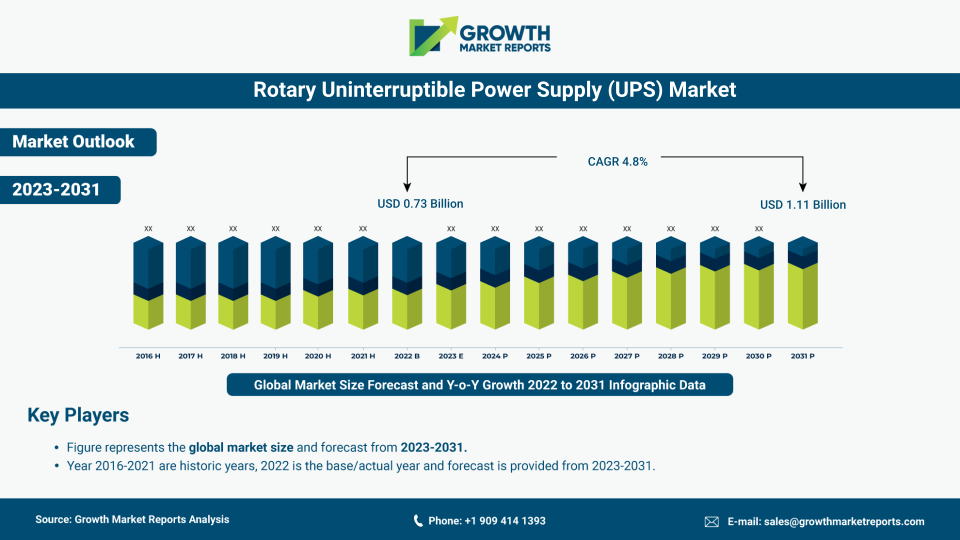
According to our latest research, the global Rotary Uninterruptible Power Supply (UPS) market size reached USD 1.82 billion in 2024, demonstrating robust expansion driven by heightened demand for reliable power backup solutions across critical infrastructure sectors. The market is anticipated to advance at a CAGR of 6.4% during the forecast period, propelling the total market value to approximately USD 3.17 billion by 2033. This growth trajectory is primarily fueled by the increasing frequency of power outages, the expansion of data centers, and the rising need for uninterrupted operations in industries such as healthcare, telecommunications, and manufacturing. As per our latest research, these factors collectively reinforce the market’s resilience and underscore the critical role of rotary UPS systems in global power management strategies.

A key growth factor for the Rotary Uninterruptible Power Supply (UPS) market is the escalating demand for high-efficiency, large-scale power backup solutions in mission-critical environments. Data centers, which form the backbone of the digital economy, are expanding rapidly worldwide, necessitating advanced UPS systems capable of delivering seamless power continuity. Rotary UPS systems, known for their robust performance, low total cost of ownership, and minimal maintenance requirements, are increasingly preferred over conventional static UPS systems in large-scale installations. Furthermore, the proliferation of cloud computing, artificial intelligence, and IoT-driven applications has placed unprecedented pressure on data infrastructure, thereby amplifying the need for reliable rotary UPS solutions to prevent costly downtimes and data losses.

Another significant driver is the rapid industrialization witnessed in emerging economies, particularly in Asia Pacific and Latin America. As manufacturing plants, oil and gas facilities, and utility providers upgrade their operations to meet global standards, the adoption of rotary UPS systems is accelerating. These industries operate in environments where power quality and availability are paramount, and rotary UPS systems offer a compelling value proposition due to their high resilience to voltage fluctuations and ability to handle substantial load variations. In addition, the healthcare sector’s growing reliance on sophisticated medical equipment and digital records management further stimulates demand, as uninterrupted power is essential to ensure patient safety and regulatory compliance.

Technological advancements and product innovation are also playing a pivotal role in shaping the rotary UPS market landscape. Manufacturers are investing in hybrid rotary UPS solutions that combine the advantages of both rotary and static technologies, resulting in improved energy efficiency, smaller footprints, and enhanced scalability. The integration of advanced monitoring and predictive maintenance features, enabled by IoT and AI, is further enhancing the operational reliability of these systems. Moreover, the increasing emphasis on sustainability and energy efficiency is prompting end-users to opt for rotary UPS systems with lower carbon footprints, aligning with global green initiatives and regulatory mandates.

From a regional perspective, Asia Pacific continues to dominate the Rotary Uninterruptible Power Supply (UPS) market due to rapid urbanization, extensive industrialization, and significant investments in digital infrastructure. North America and Europe also represent substantial market shares, driven by stringent regulatory standards, the modernization of aging power infrastructure, and the high concentration of data centers. Meanwhile, the Middle East & Africa and Latin America are emerging as lucrative markets, supported by government initiatives to improve energy reliability and expand healthcare and telecommunications networks. This diverse regional landscape underscores the global relevance of rotary UPS solutions and highlights the opportunities for market participants to capitalize on evolving power management needs across various geographies.

Global Rotary Uninterruptible Power Supply (UPS) Industry Outlook

Product Type Analysis

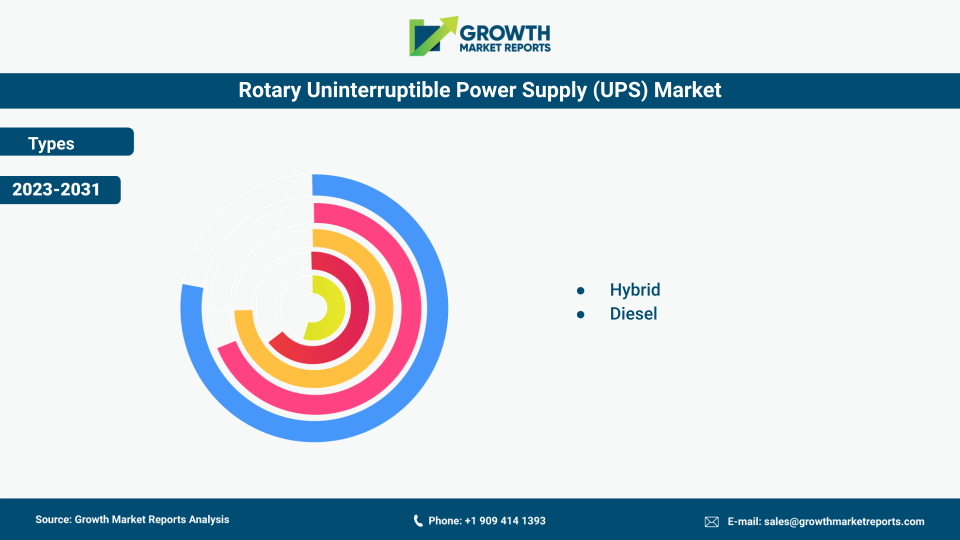
The Rotary Uninterruptible Power Supply (UPS) market is segmented by product type into Diesel Rotary UPS, Hybrid Rotary UPS, and Static Rotary UPS. Diesel Rotary UPS systems have traditionally dominated the market, owing to their proven reliability and capability to deliver high power outputs in demanding environments. These systems are widely deployed in large-scale industrial facilities, data centers, and utility operations where uninterrupted power is essential. Diesel rotary UPS units are favored for their robust construction, long operational life, and ability to handle significant load transitions without performance degradation. However, concerns about emissions and fuel costs are prompting end-users to seek alternative solutions, thereby influencing the competitive dynamics within this segment.

Hybrid Rotary UPS solutions are rapidly gaining traction as technological advancements enable the integration of rotary and static components, offering the best of both worlds. These systems are designed to optimize energy efficiency, reduce operational costs, and provide enhanced flexibility for diverse applications. Hybrid rotary UPS units are particularly attractive in environments where space constraints and energy consumption are critical considerations, such as urban data centers and commercial complexes. The adoption of hybrid systems is further supported by regulatory pressures to minimize environmental impact, as these units typically exhibit lower emissions and improved fuel efficiency compared to traditional diesel-based systems.

Static Rotary UPS systems, while representing a smaller share of the market, are experiencing steady growth due to their suitability for applications requiring precise voltage regulation and minimal mechanical wear. These systems are often selected for healthcare facilities, laboratories, and high-tech manufacturing plants where sensitive equipment must be protected from even minor power fluctuations. Static rotary UPS units offer the advantage of faster response times and reduced maintenance requirements, making them an appealing choice for end-users seeking long-term reliability and lower total cost of ownership.

The competitive landscape within the product type segment is characterized by continuous innovation, with manufacturers striving to enhance system efficiency, reduce operational noise, and improve remote monitoring capabilities. The growing emphasis on digitalization and predictive maintenance is leading to the integration of advanced sensors and AI-driven analytics, enabling proactive identification of potential issues and minimizing unplanned downtimes. As end-user requirements evolve and environmental regulations become more stringent, the product type segment is expected to witness further diversification, with hybrid and static rotary UPS solutions capturing an increasing share of the market.

Overall, the product type segment of the Rotary Uninterruptible Power Supply (UPS) market is poised for dynamic growth, driven by the need for reliable, efficient, and environmentally sustainable power backup solutions. Manufacturers that can effectively address the diverse needs of end-users through innovative product offerings and value-added services are well-positioned to capitalize on the expanding market opportunities in the years ahead.

Report Scope

Attributes Details
Report Title Rotary Uninterruptible Power Supply (UPS) Market Research Report 2033
By Product Type Diesel Rotary UPS, Hybrid Rotary UPS, Static Rotary UPS
By Power Rating Up to 500 kVA, 501–1, 000 kVA, Above 1, 000 kVA
By Application Data Centers, Industrial, Healthcare, Telecommunications, Commercial, Others
By End-User Utilities, Oil & Gas, Manufacturing, IT & Telecom, Others
Regions Covered North America, Europe, APAC, Latin America, MEA
Base Year 2024
Historic Data 2018-2023
Forecast Period 2025-2033
Number of Pages 267
Number of Tables & Figures 303
Customization Available Yes, the report can be customized as per your need.

Power Rating Analysis

The Rotary Uninterruptible Power Supply (UPS) market is further segmented by power rating into Up to 500 kVA, 501–1,000 kVA, and Above 1,000 kVA categories. The Up to 500 kVA segment caters primarily to small and medium-sized enterprises (SMEs) and commercial establishments that require reliable backup power for critical operations without the need for large-scale infrastructure investments. These systems are widely deployed in office buildings, retail centers, and smaller healthcare facilities, where load requirements are moderate but power continuity is essential. The demand for UPS systems in this category is expected to grow steadily as SMEs increasingly adopt digital technologies and seek to minimize operational disruptions caused by power outages.

The 501–1,000 kVA segment addresses the needs of mid-sized data centers, industrial plants, and telecommunications hubs that require higher power capacities to support mission-critical applications. This segment is witnessing significant growth, driven by the expansion of cloud computing, the proliferation of 5G networks, and the ongoing digital transformation of industrial operations. Rotary UPS systems in this power range are valued for their ability to deliver stable, high-quality power with rapid response times, ensuring uninterrupted service delivery and safeguarding sensitive equipment from power anomalies.

The Above 1,000 kVA segment represents the largest and fastest-growing category within the power rating segmentation, fueled by the increasing scale and complexity of modern data centers, utility operations, and large-scale manufacturing facilities. Organizations operating in these environments require UPS systems capable of handling substantial loads and providing extended runtime during power interruptions. Rotary UPS units with power ratings above 1,000 kVA are engineered for maximum reliability, scalability, and efficiency, making them the preferred choice for hyperscale data centers, critical infrastructure projects, and energy-intensive industries.

Advancements in power electronics, battery technology, and system architecture are enabling manufacturers to develop rotary UPS solutions that offer higher power densities, improved energy efficiency, and enhanced modularity. These innovations are particularly relevant in the Above 1,000 kVA segment, where end-users demand flexible, scalable solutions that can adapt to evolving operational requirements. The integration of smart grid technologies and renewable energy sources is further shaping the development of high-capacity rotary UPS systems, supporting the transition to more sustainable and resilient power infrastructures.

In summary, the power rating segment of the Rotary Uninterruptible Power Supply (UPS) market is characterized by diverse application requirements and rapid technological evolution. As digitalization accelerates across industries and the demand for uninterrupted power supply continues to rise, the market is expected to witness sustained growth across all power rating categories, with the Above 1,000 kVA segment leading the way in terms of market share and innovation.

Application Analysis

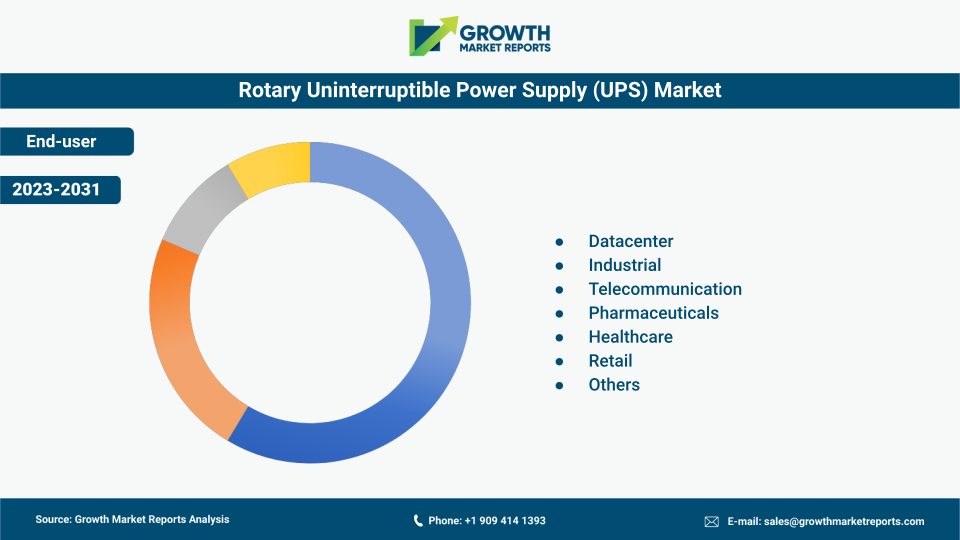
The Rotary Uninterruptible Power Supply (UPS) market serves a wide range of applications, including Data Centers, Industrial, Healthcare, Telecommunications, Commercial, and Others. Data centers represent the largest application segment, accounting for a significant share of global market revenue. The exponential growth of cloud computing, big data analytics, and digital services has led to a surge in data center construction worldwide, driving the demand for high-capacity rotary UPS systems. These facilities require uninterrupted power to ensure data integrity, service availability, and regulatory compliance, making rotary UPS solutions indispensable for mission-critical operations.

Industrial applications, encompassing manufacturing plants, oil and gas facilities, and utility operations, constitute another major segment of the rotary UPS market. These environments are characterized by high power demands, complex load profiles, and stringent safety requirements. Rotary UPS systems are valued for their ability to deliver stable, high-quality power under challenging conditions, protecting sensitive equipment and processes from power disturbances. The ongoing trend towards automation, digitalization, and Industry 4.0 is further fueling demand for advanced UPS solutions in the industrial sector.

The healthcare segment is witnessing robust growth as hospitals, clinics, and research laboratories increasingly rely on electronic medical devices, digital records, and telemedicine platforms. Power interruptions in healthcare settings can have life-threatening consequences, underscoring the critical importance of reliable UPS systems. Rotary UPS solutions are preferred in healthcare applications due to their rapid response times, high reliability, and ability to support essential medical equipment during extended outages. The growing adoption of advanced diagnostic and treatment technologies is expected to drive further investment in rotary UPS infrastructure within the healthcare sector.

Telecommunications is another key application area, with rotary UPS systems playing a vital role in ensuring network reliability and service continuity. The rollout of 5G networks, the expansion of broadband infrastructure, and the increasing reliance on digital communication platforms are driving demand for robust power backup solutions. Rotary UPS units are deployed in central offices, base stations, and network operations centers to safeguard critical telecom infrastructure from power disruptions and voltage fluctuations.

Commercial applications, including office buildings, retail centers, and educational institutions, also contribute to the growth of the rotary UPS market. As businesses and organizations become more dependent on digital technologies and electronic systems, the need for reliable power backup solutions is becoming increasingly apparent. Rotary UPS systems offer a cost-effective and scalable solution for commercial end-users seeking to minimize downtime and protect valuable assets. Overall, the application segment of the Rotary Uninterruptible Power Supply (UPS) market reflects the diverse and evolving power management needs of modern economies, with data centers, industrial, and healthcare applications leading the way in terms of market adoption and growth potential.

End-User Analysis

The Rotary Uninterruptible Power Supply (UPS) market is segmented by end-user into Utilities, Oil & Gas, Manufacturing, IT & Telecom, and Others. Utilities represent a significant end-user segment, as power generation, transmission, and distribution companies require reliable backup systems to maintain grid stability and ensure uninterrupted service delivery. Rotary UPS systems are deployed in substations, control centers, and critical infrastructure nodes to provide rapid response during power disturbances and prevent cascading failures across the grid. The modernization of aging power infrastructure and the integration of renewable energy sources are further driving investment in advanced UPS solutions within the utilities sector.

The oil & gas industry is another major end-user of rotary UPS systems, given the sector’s reliance on continuous operations and the high costs associated with unplanned downtime. Rotary UPS units are used to protect drilling rigs, refineries, and pipeline operations from power interruptions, voltage sags, and transient disturbances. The adoption of digital technologies and remote monitoring solutions is enhancing the efficiency and reliability of rotary UPS installations in the oil & gas sector, supporting operational resilience in challenging environments.

Manufacturing end-users, including automotive, electronics, pharmaceuticals, and food processing industries, are increasingly investing in rotary UPS systems to safeguard production lines, automation equipment, and quality control systems. The shift towards smart manufacturing and the implementation of Industry 4.0 initiatives are driving demand for advanced UPS solutions capable of supporting complex, data-driven operations. Rotary UPS systems offer high reliability, scalability, and energy efficiency, making them an attractive choice for manufacturers seeking to minimize production losses and maintain competitive advantage.

The IT & Telecom segment is experiencing substantial growth as digital transformation accelerates across industries and societies. Rotary UPS systems are essential for supporting data centers, network infrastructure, and communication hubs, ensuring uninterrupted access to digital services and information. The rapid adoption of cloud computing, 5G networks, and IoT applications is fueling demand for high-capacity, scalable UPS solutions in the IT & Telecom sector. End-users in this segment prioritize systems that offer rapid response, high reliability, and advanced monitoring capabilities to support mission-critical operations.

The Others segment encompasses a diverse range of end-users, including government agencies, educational institutions, transportation networks, and commercial enterprises. These organizations are increasingly recognizing the value of rotary UPS systems in maintaining operational continuity, protecting sensitive data, and ensuring the safety of personnel and assets. As digitalization continues to reshape the global economy, the end-user segment of the Rotary Uninterruptible Power Supply (UPS) market is expected to witness sustained growth, with utilities, oil & gas, manufacturing, and IT & Telecom leading the way in terms of market adoption and investment.

Opportunities & Threats

The Rotary Uninterruptible Power Supply (UPS) market presents significant opportunities driven by the ongoing digital transformation of industries, the proliferation of data centers, and the expansion of critical infrastructure projects worldwide. The increasing adoption of cloud computing, artificial intelligence, and IoT technologies is generating substantial demand for reliable power backup solutions, particularly in data-intensive sectors such as finance, healthcare, and telecommunications. Market participants can capitalize on these opportunities by developing innovative rotary UPS solutions that offer enhanced energy efficiency, scalability, and remote monitoring capabilities. The growing emphasis on sustainability and environmental stewardship is also creating opportunities for manufacturers to introduce eco-friendly, low-emission rotary UPS systems that align with global green initiatives and regulatory mandates.

Emerging markets in Asia Pacific, Latin America, and the Middle East & Africa offer untapped growth potential for the rotary UPS market, as governments and private sector organizations invest in upgrading power infrastructure, expanding digital connectivity, and improving energy reliability. Strategic partnerships, mergers and acquisitions, and investments in research and development can enable market players to strengthen their presence in these high-growth regions and capture new revenue streams. Additionally, the integration of renewable energy sources and smart grid technologies presents opportunities for the development of hybrid rotary UPS solutions that support the transition to more sustainable and resilient power systems.

Despite the positive outlook, the Rotary Uninterruptible Power Supply (UPS) market faces several threats and restraining factors. The high initial capital investment required for rotary UPS installations can be a significant barrier for small and medium-sized enterprises, particularly in developing economies. Furthermore, the increasing availability of alternative UPS technologies, such as advanced static and modular UPS systems, poses competitive challenges for rotary UPS manufacturers. Regulatory pressures related to emissions, noise, and energy efficiency may also impact market growth, necessitating continuous innovation and adaptation by market participants to comply with evolving standards and customer expectations.

Regional Outlook

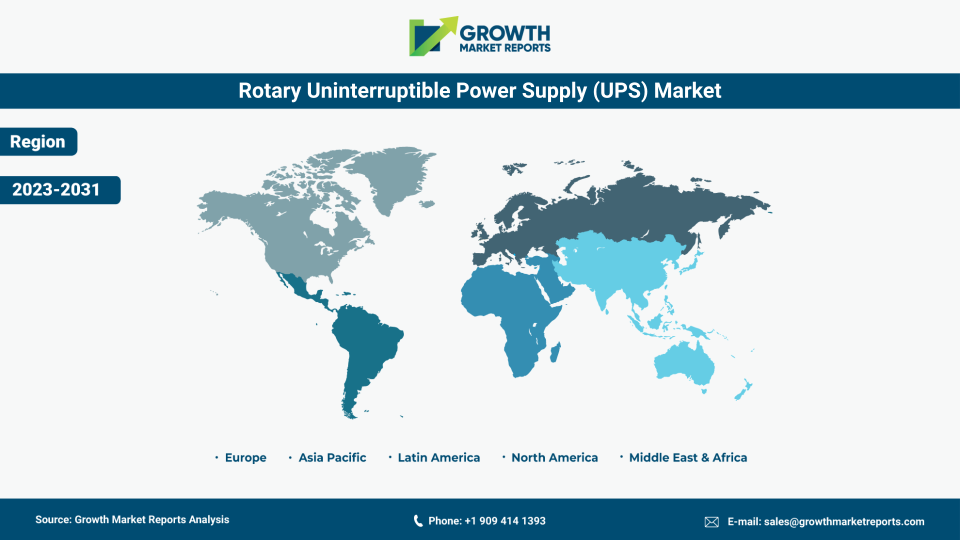
Asia Pacific leads the global Rotary Uninterruptible Power Supply (UPS) market, accounting for approximately USD 610 million in revenue in 2024. The region’s dominance is underpinned by rapid urbanization, extensive industrialization, and significant investments in digital infrastructure across countries such as China, India, Japan, and South Korea. The proliferation of data centers, expansion of telecommunications networks, and modernization of healthcare and manufacturing sectors are key drivers of market growth in Asia Pacific. The region is projected to maintain a strong CAGR of 7.1% through 2033, supported by government initiatives to enhance energy reliability and promote sustainable development.

North America represents the second-largest regional market, with an estimated value of USD 540 million in 2024. The United States and Canada are at the forefront of technological innovation, digital transformation, and regulatory compliance, driving demand for advanced rotary UPS solutions. The region’s mature data center industry, stringent power quality standards, and high concentration of critical infrastructure projects contribute to sustained market growth. North American end-users prioritize systems that offer high reliability, energy efficiency, and advanced monitoring capabilities, creating opportunities for manufacturers to introduce cutting-edge rotary UPS solutions tailored to local requirements.

Europe holds a substantial share of the Rotary Uninterruptible Power Supply (UPS) market, with a market size of approximately USD 420 million in 2024. The region’s focus on sustainability, energy efficiency, and regulatory compliance is driving the adoption of eco-friendly rotary UPS systems in data centers, healthcare facilities, and industrial operations. Germany, the United Kingdom, and France are leading markets within Europe, supported by robust investments in digital infrastructure and renewable energy integration. Meanwhile, the Middle East & Africa and Latin America are emerging as promising markets, collectively accounting for around USD 250 million in 2024. These regions are benefiting from government-led initiatives to improve energy reliability, expand telecommunications networks, and enhance healthcare and industrial capabilities, creating new growth opportunities for rotary UPS providers.

Rotary Uninterruptible Power Supply (UPS) Market Statistics

Competitor Outlook

The competitive landscape of the Rotary Uninterruptible Power Supply (UPS) market is characterized by the presence of several global and regional players, each vying for market share through product innovation, strategic partnerships, and geographic expansion. Leading manufacturers are investing heavily in research and development to introduce next-generation rotary UPS solutions that offer enhanced energy efficiency, reduced emissions, and advanced monitoring capabilities. The integration of digital technologies, such as IoT and AI-driven analytics, is enabling market participants to differentiate their offerings and deliver value-added services, such as predictive maintenance and remote diagnostics, to end-users.

Market competition is further intensified by the entry of new players and the growing availability of alternative UPS technologies. Established companies are responding by expanding their product portfolios, enhancing after-sales support, and forming alliances with system integrators, distributors, and technology partners. The trend towards hybrid rotary UPS solutions, which combine the strengths of rotary and static technologies, is reshaping the competitive dynamics of the market, as manufacturers seek to address evolving customer requirements for scalability, flexibility, and sustainability.

Mergers and acquisitions are also playing a significant role in shaping the competitive landscape, enabling companies to strengthen their market positions, access new technologies, and expand their geographic reach. Strategic collaborations with energy service providers, data center operators, and industrial customers are facilitating the development of customized rotary UPS solutions tailored to specific application needs. As the market continues to evolve, companies that can effectively leverage digitalization, sustainability, and customer-centric innovation are expected to outperform their competitors and capture a larger share of the growing market.

Some of the major companies operating in the Rotary Uninterruptible Power Supply (UPS) market include Piller Power Systems, Hitec Power Protection, Euro-Diesel (KINOLT), Master Power Technologies, and Riello UPS. Piller Power Systems is renowned for its high-capacity rotary UPS solutions, serving data centers, industrial facilities, and critical infrastructure projects worldwide. Hitec Power Protection specializes in diesel and hybrid rotary UPS systems, with a strong focus on energy efficiency and environmental sustainability. Euro-Diesel (KINOLT) is recognized for its innovative rotary UPS technologies and comprehensive service offerings, catering to a diverse range of end-users across multiple regions.

Master Power Technologies and Riello UPS are also prominent players, offering a broad portfolio of rotary and static UPS solutions designed to meet the evolving needs of data centers, healthcare facilities, and industrial operations. These companies are distinguished by their commitment to product quality, technical expertise, and customer support, enabling them to maintain strong relationships with key clients and partners. As the market continues to grow and evolve, leading manufacturers are expected to intensify their focus on innovation, sustainability, and digital transformation to sustain their competitive advantage and capture new growth opportunities in the global rotary UPS market.

Key Players

  • Piller Power Systems
  • Hitzinger GmbH
  • Euro-Diesel (KINOLT)
  • HIMOINSA
  • Active Power
  • Emerson Network Power (Vertiv)
  • ABB Ltd.
  • Riello UPS
  • GE Grid Solutions
  • Caterpillar Inc.
  • Kohler Power Systems
  • Cummins Inc.
  • MTU Onsite Energy (Rolls-Royce Power Systems)
  • Socomec Group
  • Mitsubishi Electric Corporation
  • Toshiba Corporation
  • Eaton Corporation
  • Delta Electronics
  • Schneider Electric
  • AEG Power Solutions
Rotary Uninterruptible Power Supply (UPS) Market Overview

Segments

The Rotary Uninterruptible Power Supply (UPS) market has been segmented on the basis of

Product Type

  • Diesel Rotary UPS
  • Hybrid Rotary UPS
  • Static Rotary UPS

Power Rating

  • Up to 500 kVA
  • 501–1
  • 000 kVA
  • Above 1
  • 000 kVA

Application

  • Data Centers
  • Industrial
  • Healthcare
  • Telecommunications
  • Commercial
  • Others

End-User

  • Utilities
  • Oil & Gas
  • Manufacturing
  • IT & Telecom
  • Others

Competitive Landscape

Key players competing in the global rotary uninterruptible power supply (UPS) market are Langley Holdings plc; Rolls-Royce plc; POWERTHRU; Power Systems & Controls, Inc.; Thycon; VYCON; INDUSTRIAL ELECTRIC MFG; Hitzinger Electric Power GmbH.; ABB; and HITEC Power Protection B.V.

These companies adopted several development strategies, including mergers, acquisitions, partnerships, collaborations, product launches, and production expansion, to cater to potential consumers worldwide.

  • On June 19, 2023, Langley Holdings plc deployed its latest UPS technology to 3 Sun, the largest solar panel maker in Italy. The vertical rotary system provides power protection of 5MW critical load, made with UB-V UPS technology.

  • On July 14, 2021, HITEC Power Protection B.V.entered into a strategic partnership with Poer Partners Singapore for a territorial data center expansion project with the help of its Power PRO 3600 unit.
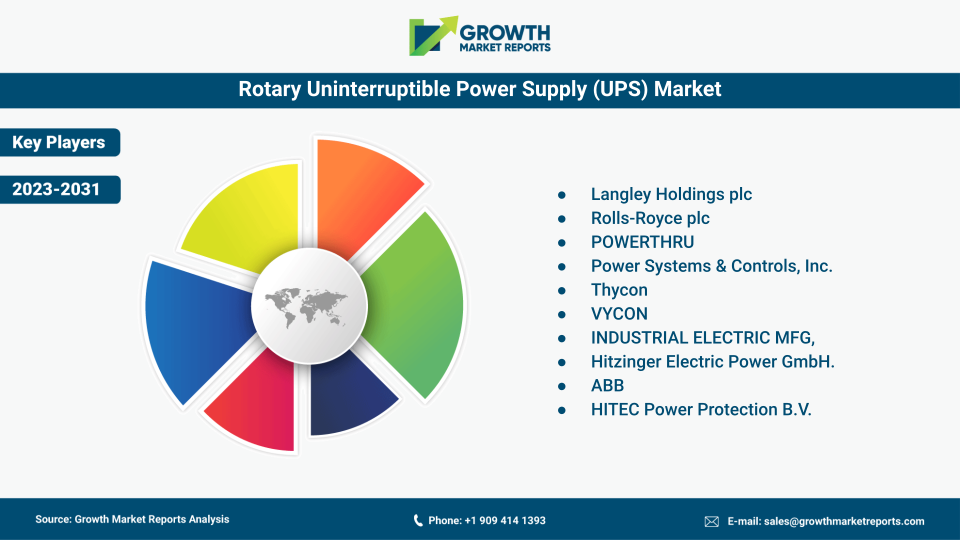

    Rotary Uninterreptible Power Supply (UPS) Market Keyplayers

Frequently Asked Questions

Yes, the Rotary Uninterruptible Power Supply (UPS) Market Research Report 2033 can be customized according to specific requirements, including tailored segmentation, regional analysis, and application-focused insights.

Rotary UPS systems are widely used in data centers, industrial plants, healthcare facilities, telecommunications networks, commercial buildings, and utilities. They are essential for ensuring power continuity, protecting sensitive equipment, and minimizing downtime in mission-critical applications.

Key players in the rotary UPS market include Piller Power Systems, Hitec Power Protection, Euro-Diesel (KINOLT), Master Power Technologies, Riello UPS, Emerson Network Power (Vertiv), ABB Ltd., Caterpillar Inc., Cummins Inc., and Schneider Electric, among others.

Major challenges include high initial capital investment, competition from advanced static and modular UPS technologies, and regulatory pressures related to emissions, noise, and energy efficiency. Manufacturers must continuously innovate to address these issues and comply with evolving standards.

Technological advancements such as the integration of IoT, AI-driven analytics, hybrid rotary-static systems, and advanced monitoring features are enhancing the efficiency, reliability, and scalability of rotary UPS solutions. These innovations also support predictive maintenance and align with sustainability goals.

Asia Pacific leads the rotary UPS market, followed by North America and Europe. Asia Pacific's dominance is driven by rapid urbanization, industrialization, and investments in digital infrastructure. North America and Europe are also significant markets due to stringent regulatory standards and modernization of power infrastructure.

The main product types in the rotary UPS market are Diesel Rotary UPS, Hybrid Rotary UPS, and Static Rotary UPS. Diesel rotary UPS systems are known for their reliability and high power output, hybrid systems combine rotary and static technologies for improved efficiency, and static rotary UPS units are preferred for applications needing precise voltage regulation and minimal mechanical wear.

Key industries fueling the demand for rotary UPS systems include data centers, healthcare, telecommunications, manufacturing, utilities, and oil & gas. These sectors require reliable, high-capacity power backup solutions to ensure uninterrupted operations and protect sensitive equipment.

The global Rotary Uninterruptible Power Supply (UPS) market is expected to grow from USD 1.82 billion in 2024 to approximately USD 3.17 billion by 2033, registering a CAGR of 6.4% during the forecast period.

A Rotary Uninterruptible Power Supply (UPS) uses rotating machinery to provide backup power and voltage regulation during outages or disturbances. Unlike static UPS systems, which rely on batteries and electronic components, rotary UPS units offer higher efficiency, robust performance, and are better suited for large-scale, mission-critical environments due to their ability to handle significant load variations and longer operational life.

Table Of Content

Chapter 1 Executive Summary
Chapter 2 Assumptions and Acronyms Used
Chapter 3 Research Methodology
Chapter 4 Rotary Uninterruptible Power Supply (UPS) Market Overview
   4.1 Introduction
      4.1.1 Market Taxonomy
      4.1.2 Market Definition
      4.1.3 Macro-Economic Factors Impacting the Market Growth
   4.2 Rotary Uninterruptible Power Supply (UPS) Market Dynamics
      4.2.1 Market Drivers
      4.2.2 Market Restraints
      4.2.3 Market Opportunity
   4.3 Rotary Uninterruptible Power Supply (UPS) Market - Supply Chain Analysis
      4.3.1 List of Key Suppliers
      4.3.2 List of Key Distributors
      4.3.3 List of Key Consumers
   4.4 Key Forces Shaping the Rotary Uninterruptible Power Supply (UPS) Market
      4.4.1 Bargaining Power of Suppliers
      4.4.2 Bargaining Power of Buyers
      4.4.3 Threat of Substitution
      4.4.4 Threat of New Entrants
      4.4.5 Competitive Rivalry
   4.5 Global Rotary Uninterruptible Power Supply (UPS) Market Size & Forecast, 2023-2032
      4.5.1 Rotary Uninterruptible Power Supply (UPS) Market Size and Y-o-Y Growth
      4.5.2 Rotary Uninterruptible Power Supply (UPS) Market Absolute $ Opportunity

Chapter 5 Global Rotary Uninterruptible Power Supply (UPS) Market Analysis and Forecast By Product Type
   5.1 Introduction
      5.1.1 Key Market Trends & Growth Opportunities By Product Type
      5.1.2 Basis Point Share (BPS) Analysis By Product Type
      5.1.3 Absolute $ Opportunity Assessment By Product Type
   5.2 Rotary Uninterruptible Power Supply (UPS) Market Size Forecast By Product Type
      5.2.1 Diesel Rotary UPS
      5.2.2 Hybrid Rotary UPS
      5.2.3 Static Rotary UPS
   5.3 Market Attractiveness Analysis By Product Type

Chapter 6 Global Rotary Uninterruptible Power Supply (UPS) Market Analysis and Forecast By Power Rating
   6.1 Introduction
      6.1.1 Key Market Trends & Growth Opportunities By Power Rating
      6.1.2 Basis Point Share (BPS) Analysis By Power Rating
      6.1.3 Absolute $ Opportunity Assessment By Power Rating
   6.2 Rotary Uninterruptible Power Supply (UPS) Market Size Forecast By Power Rating
      6.2.1 Up to 500 kVA
      6.2.2 501–1
      6.2.3 000 kVA
      6.2.4 Above 1
      6.2.5 000 kVA
   6.3 Market Attractiveness Analysis By Power Rating

Chapter 7 Global Rotary Uninterruptible Power Supply (UPS) Market Analysis and Forecast By Application
   7.1 Introduction
      7.1.1 Key Market Trends & Growth Opportunities By Application
      7.1.2 Basis Point Share (BPS) Analysis By Application
      7.1.3 Absolute $ Opportunity Assessment By Application
   7.2 Rotary Uninterruptible Power Supply (UPS) Market Size Forecast By Application
      7.2.1 Data Centers
      7.2.2 Industrial
      7.2.3 Healthcare
      7.2.4 Telecommunications
      7.2.5 Commercial
      7.2.6 Others
   7.3 Market Attractiveness Analysis By Application

Chapter 8 Global Rotary Uninterruptible Power Supply (UPS) Market Analysis and Forecast By End-User
   8.1 Introduction
      8.1.1 Key Market Trends & Growth Opportunities By End-User
      8.1.2 Basis Point Share (BPS) Analysis By End-User
      8.1.3 Absolute $ Opportunity Assessment By End-User
   8.2 Rotary Uninterruptible Power Supply (UPS) Market Size Forecast By End-User
      8.2.1 Utilities
      8.2.2 Oil & Gas
      8.2.3 Manufacturing
      8.2.4 IT & Telecom
      8.2.5 Others
   8.3 Market Attractiveness Analysis By End-User

Chapter 9 Global Rotary Uninterruptible Power Supply (UPS) Market Analysis and Forecast by Region
   9.1 Introduction
      9.1.1 Key Market Trends & Growth Opportunities By Region
      9.1.2 Basis Point Share (BPS) Analysis By Region
      9.1.3 Absolute $ Opportunity Assessment By Region
   9.2 Rotary Uninterruptible Power Supply (UPS) Market Size Forecast By Region
      9.2.1 North America
      9.2.2 Europe
      9.2.3 Asia Pacific
      9.2.4 Latin America
      9.2.5 Middle East & Africa (MEA)
   9.3 Market Attractiveness Analysis By Region

Chapter 10 Coronavirus Disease (COVID-19) Impact 
   10.1 Introduction 
   10.2 Current & Future Impact Analysis 
   10.3 Economic Impact Analysis 
   10.4 Government Policies 
   10.5 Investment Scenario

Chapter 11 North America Rotary Uninterruptible Power Supply (UPS) Analysis and Forecast
   11.1 Introduction
   11.2 North America Rotary Uninterruptible Power Supply (UPS) Market Size Forecast by Country
      11.2.1 U.S.
      11.2.2 Canada
   11.3 Basis Point Share (BPS) Analysis by Country
   11.4 Absolute $ Opportunity Assessment by Country
   11.5 Market Attractiveness Analysis by Country
   11.6 North America Rotary Uninterruptible Power Supply (UPS) Market Size Forecast By Product Type
      11.6.1 Diesel Rotary UPS
      11.6.2 Hybrid Rotary UPS
      11.6.3 Static Rotary UPS
   11.7 Basis Point Share (BPS) Analysis By Product Type 
   11.8 Absolute $ Opportunity Assessment By Product Type 
   11.9 Market Attractiveness Analysis By Product Type
   11.10 North America Rotary Uninterruptible Power Supply (UPS) Market Size Forecast By Power Rating
      11.10.1 Up to 500 kVA
      11.10.2 501–1
      11.10.3 000 kVA
      11.10.4 Above 1
      11.10.5 000 kVA
   11.11 Basis Point Share (BPS) Analysis By Power Rating 
   11.12 Absolute $ Opportunity Assessment By Power Rating 
   11.13 Market Attractiveness Analysis By Power Rating
   11.14 North America Rotary Uninterruptible Power Supply (UPS) Market Size Forecast By Application
      11.14.1 Data Centers
      11.14.2 Industrial
      11.14.3 Healthcare
      11.14.4 Telecommunications
      11.14.5 Commercial
      11.14.6 Others
   11.15 Basis Point Share (BPS) Analysis By Application 
   11.16 Absolute $ Opportunity Assessment By Application 
   11.17 Market Attractiveness Analysis By Application
   11.18 North America Rotary Uninterruptible Power Supply (UPS) Market Size Forecast By End-User
      11.18.1 Utilities
      11.18.2 Oil & Gas
      11.18.3 Manufacturing
      11.18.4 IT & Telecom
      11.18.5 Others
   11.19 Basis Point Share (BPS) Analysis By End-User 
   11.20 Absolute $ Opportunity Assessment By End-User 
   11.21 Market Attractiveness Analysis By End-User

Chapter 12 Europe Rotary Uninterruptible Power Supply (UPS) Analysis and Forecast
   12.1 Introduction
   12.2 Europe Rotary Uninterruptible Power Supply (UPS) Market Size Forecast by Country
      12.2.1 Germany
      12.2.2 France
      12.2.3 Italy
      12.2.4 U.K.
      12.2.5 Spain
      12.2.6 Russia
      12.2.7 Rest of Europe
   12.3 Basis Point Share (BPS) Analysis by Country
   12.4 Absolute $ Opportunity Assessment by Country
   12.5 Market Attractiveness Analysis by Country
   12.6 Europe Rotary Uninterruptible Power Supply (UPS) Market Size Forecast By Product Type
      12.6.1 Diesel Rotary UPS
      12.6.2 Hybrid Rotary UPS
      12.6.3 Static Rotary UPS
   12.7 Basis Point Share (BPS) Analysis By Product Type 
   12.8 Absolute $ Opportunity Assessment By Product Type 
   12.9 Market Attractiveness Analysis By Product Type
   12.10 Europe Rotary Uninterruptible Power Supply (UPS) Market Size Forecast By Power Rating
      12.10.1 Up to 500 kVA
      12.10.2 501–1
      12.10.3 000 kVA
      12.10.4 Above 1
      12.10.5 000 kVA
   12.11 Basis Point Share (BPS) Analysis By Power Rating 
   12.12 Absolute $ Opportunity Assessment By Power Rating 
   12.13 Market Attractiveness Analysis By Power Rating
   12.14 Europe Rotary Uninterruptible Power Supply (UPS) Market Size Forecast By Application
      12.14.1 Data Centers
      12.14.2 Industrial
      12.14.3 Healthcare
      12.14.4 Telecommunications
      12.14.5 Commercial
      12.14.6 Others
   12.15 Basis Point Share (BPS) Analysis By Application 
   12.16 Absolute $ Opportunity Assessment By Application 
   12.17 Market Attractiveness Analysis By Application
   12.18 Europe Rotary Uninterruptible Power Supply (UPS) Market Size Forecast By End-User
      12.18.1 Utilities
      12.18.2 Oil & Gas
      12.18.3 Manufacturing
      12.18.4 IT & Telecom
      12.18.5 Others
   12.19 Basis Point Share (BPS) Analysis By End-User 
   12.20 Absolute $ Opportunity Assessment By End-User 
   12.21 Market Attractiveness Analysis By End-User

Chapter 13 Asia Pacific Rotary Uninterruptible Power Supply (UPS) Analysis and Forecast
   13.1 Introduction
   13.2 Asia Pacific Rotary Uninterruptible Power Supply (UPS) Market Size Forecast by Country
      13.2.1 China
      13.2.2 Japan
      13.2.3 South Korea
      13.2.4 India
      13.2.5 Australia
      13.2.6 South East Asia (SEA)
      13.2.7 Rest of Asia Pacific (APAC)
   13.3 Basis Point Share (BPS) Analysis by Country
   13.4 Absolute $ Opportunity Assessment by Country
   13.5 Market Attractiveness Analysis by Country
   13.6 Asia Pacific Rotary Uninterruptible Power Supply (UPS) Market Size Forecast By Product Type
      13.6.1 Diesel Rotary UPS
      13.6.2 Hybrid Rotary UPS
      13.6.3 Static Rotary UPS
   13.7 Basis Point Share (BPS) Analysis By Product Type 
   13.8 Absolute $ Opportunity Assessment By Product Type 
   13.9 Market Attractiveness Analysis By Product Type
   13.10 Asia Pacific Rotary Uninterruptible Power Supply (UPS) Market Size Forecast By Power Rating
      13.10.1 Up to 500 kVA
      13.10.2 501–1
      13.10.3 000 kVA
      13.10.4 Above 1
      13.10.5 000 kVA
   13.11 Basis Point Share (BPS) Analysis By Power Rating 
   13.12 Absolute $ Opportunity Assessment By Power Rating 
   13.13 Market Attractiveness Analysis By Power Rating
   13.14 Asia Pacific Rotary Uninterruptible Power Supply (UPS) Market Size Forecast By Application
      13.14.1 Data Centers
      13.14.2 Industrial
      13.14.3 Healthcare
      13.14.4 Telecommunications
      13.14.5 Commercial
      13.14.6 Others
   13.15 Basis Point Share (BPS) Analysis By Application 
   13.16 Absolute $ Opportunity Assessment By Application 
   13.17 Market Attractiveness Analysis By Application
   13.18 Asia Pacific Rotary Uninterruptible Power Supply (UPS) Market Size Forecast By End-User
      13.18.1 Utilities
      13.18.2 Oil & Gas
      13.18.3 Manufacturing
      13.18.4 IT & Telecom
      13.18.5 Others
   13.19 Basis Point Share (BPS) Analysis By End-User 
   13.20 Absolute $ Opportunity Assessment By End-User 
   13.21 Market Attractiveness Analysis By End-User

Chapter 14 Latin America Rotary Uninterruptible Power Supply (UPS) Analysis and Forecast
   14.1 Introduction
   14.2 Latin America Rotary Uninterruptible Power Supply (UPS) Market Size Forecast by Country
      14.2.1 Brazil
      14.2.2 Mexico
      14.2.3 Rest of Latin America (LATAM)
   14.3 Basis Point Share (BPS) Analysis by Country
   14.4 Absolute $ Opportunity Assessment by Country
   14.5 Market Attractiveness Analysis by Country
   14.6 Latin America Rotary Uninterruptible Power Supply (UPS) Market Size Forecast By Product Type
      14.6.1 Diesel Rotary UPS
      14.6.2 Hybrid Rotary UPS
      14.6.3 Static Rotary UPS
   14.7 Basis Point Share (BPS) Analysis By Product Type 
   14.8 Absolute $ Opportunity Assessment By Product Type 
   14.9 Market Attractiveness Analysis By Product Type
   14.10 Latin America Rotary Uninterruptible Power Supply (UPS) Market Size Forecast By Power Rating
      14.10.1 Up to 500 kVA
      14.10.2 501–1
      14.10.3 000 kVA
      14.10.4 Above 1
      14.10.5 000 kVA
   14.11 Basis Point Share (BPS) Analysis By Power Rating 
   14.12 Absolute $ Opportunity Assessment By Power Rating 
   14.13 Market Attractiveness Analysis By Power Rating
   14.14 Latin America Rotary Uninterruptible Power Supply (UPS) Market Size Forecast By Application
      14.14.1 Data Centers
      14.14.2 Industrial
      14.14.3 Healthcare
      14.14.4 Telecommunications
      14.14.5 Commercial
      14.14.6 Others
   14.15 Basis Point Share (BPS) Analysis By Application 
   14.16 Absolute $ Opportunity Assessment By Application 
   14.17 Market Attractiveness Analysis By Application
   14.18 Latin America Rotary Uninterruptible Power Supply (UPS) Market Size Forecast By End-User
      14.18.1 Utilities
      14.18.2 Oil & Gas
      14.18.3 Manufacturing
      14.18.4 IT & Telecom
      14.18.5 Others
   14.19 Basis Point Share (BPS) Analysis By End-User 
   14.20 Absolute $ Opportunity Assessment By End-User 
   14.21 Market Attractiveness Analysis By End-User

Chapter 15 Middle East & Africa (MEA) Rotary Uninterruptible Power Supply (UPS) Analysis and Forecast
   15.1 Introduction
   15.2 Middle East & Africa (MEA) Rotary Uninterruptible Power Supply (UPS) Market Size Forecast by Country
      15.2.1 Saudi Arabia
      15.2.2 South Africa
      15.2.3 UAE
      15.2.4 Rest of Middle East & Africa (MEA)
   15.3 Basis Point Share (BPS) Analysis by Country
   15.4 Absolute $ Opportunity Assessment by Country
   15.5 Market Attractiveness Analysis by Country
   15.6 Middle East & Africa (MEA) Rotary Uninterruptible Power Supply (UPS) Market Size Forecast By Product Type
      15.6.1 Diesel Rotary UPS
      15.6.2 Hybrid Rotary UPS
      15.6.3 Static Rotary UPS
   15.7 Basis Point Share (BPS) Analysis By Product Type 
   15.8 Absolute $ Opportunity Assessment By Product Type 
   15.9 Market Attractiveness Analysis By Product Type
   15.10 Middle East & Africa (MEA) Rotary Uninterruptible Power Supply (UPS) Market Size Forecast By Power Rating
      15.10.1 Up to 500 kVA
      15.10.2 501–1
      15.10.3 000 kVA
      15.10.4 Above 1
      15.10.5 000 kVA
   15.11 Basis Point Share (BPS) Analysis By Power Rating 
   15.12 Absolute $ Opportunity Assessment By Power Rating 
   15.13 Market Attractiveness Analysis By Power Rating
   15.14 Middle East & Africa (MEA) Rotary Uninterruptible Power Supply (UPS) Market Size Forecast By Application
      15.14.1 Data Centers
      15.14.2 Industrial
      15.14.3 Healthcare
      15.14.4 Telecommunications
      15.14.5 Commercial
      15.14.6 Others
   15.15 Basis Point Share (BPS) Analysis By Application 
   15.16 Absolute $ Opportunity Assessment By Application 
   15.17 Market Attractiveness Analysis By Application
   15.18 Middle East & Africa (MEA) Rotary Uninterruptible Power Supply (UPS) Market Size Forecast By End-User
      15.18.1 Utilities
      15.18.2 Oil & Gas
      15.18.3 Manufacturing
      15.18.4 IT & Telecom
      15.18.5 Others
   15.19 Basis Point Share (BPS) Analysis By End-User 
   15.20 Absolute $ Opportunity Assessment By End-User 
   15.21 Market Attractiveness Analysis By End-User

Chapter 16 Competition Landscape 
   16.1 Rotary Uninterruptible Power Supply (UPS) Market: Competitive Dashboard
   16.2 Global Rotary Uninterruptible Power Supply (UPS) Market: Market Share Analysis, 2023
   16.3 Company Profiles (Details – Overview, Financials, Developments, Strategy) 
      16.3.1 Piller Power Systems
Hitzinger GmbH
Euro-Diesel (KINOLT)
HIMOINSA
Active Power
Emerson Network Power (Vertiv)
ABB Ltd.
Riello UPS
GE Grid Solutions
Caterpillar Inc.
Kohler Power Systems
Cummins Inc.
MTU Onsite Energy (Rolls-Royce Power Systems)
Socomec Group
Mitsubishi Electric Corporation
Toshiba Corporation
Eaton Corporation
Delta Electronics
Schneider Electric
AEG Power Solutions

Methodology

Our Clients

General Mills
FedEx Logistics
Honda Motor Co. Ltd.
Nestle SA
Deloitte
Microsoft
Dassault Aviation
sinopec