Uninterruptible Power Supply (UPS) Market Research Report 2033

Uninterruptible Power Supply (UPS) Market Research Report 2033

Segments - by Type (Offline/Standby, Line-Interactive, Online/Double Conversion), by Capacity (Up to 50 kVA, 51-200 kVA, Above 200 kVA), by Application (Data Centers, Industrial, Commercial, Residential, Healthcare, Others), by End-User (IT & Telecommunications, BFSI, Healthcare, Manufacturing, Energy & Utilities, Others)

https://growthmarketreports.com/Raksha
Author : Raksha Sharma
https://growthmarketreports.com/Vaibhav
Fact-checked by : V. Chandola
https://growthmarketreports.com/Shruti
Editor : Shruti Bhat

Upcoming | Report ID :EP-3006 | 4.8 Rating | 46 Reviews | 279 Pages | Format : Docx PDF

Report Description


Uninterruptible Power Supply (UPS) Market Outlook

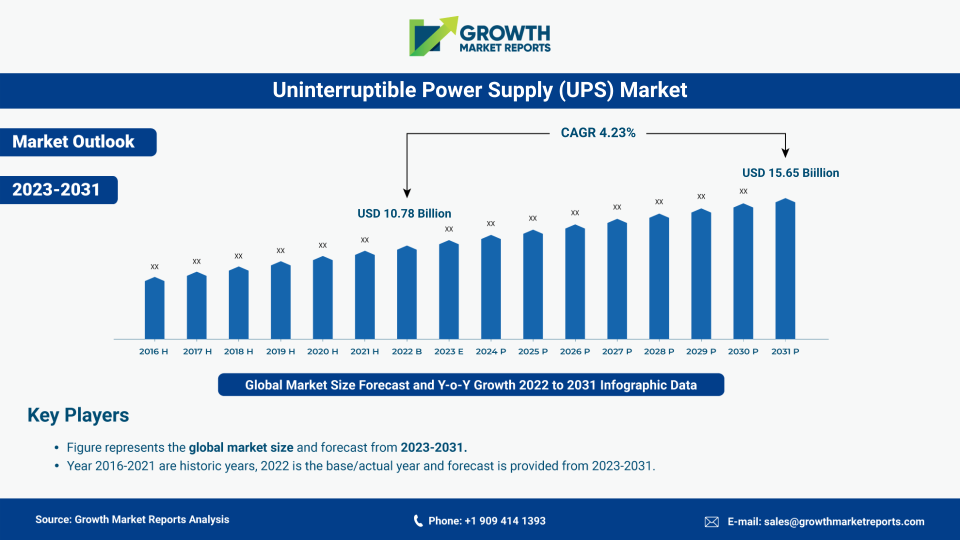
According to our latest research, the global Uninterruptible Power Supply (UPS) market size reached USD 11.8 billion in 2024, reflecting the robust demand for reliable power solutions across diverse sectors. The market is projected to expand at a CAGR of 6.1% from 2025 to 2033, resulting in a forecasted market size of approximately USD 20.1 billion by 2033. This sustained growth is primarily attributed to the rising frequency of power outages, the proliferation of data centers, and the increasing digitalization of critical infrastructure globally.

The growth of the Uninterruptible Power Supply (UPS) market is significantly propelled by the escalating need for uninterrupted power in mission-critical applications. As businesses and organizations become more reliant on digital operations, the cost of downtime due to power interruptions has soared. Industries such as IT & telecommunications, healthcare, and BFSI are particularly sensitive to power disruptions, as even a brief outage can result in data loss, operational delays, and financial setbacks. Furthermore, the emergence of edge computing and the expansion of cloud-based services are heightening the demand for reliable backup power, thereby accelerating the adoption of advanced UPS systems. The ongoing modernization of electrical infrastructure in both developed and developing economies is also fostering market growth, as organizations seek to enhance their resilience against power quality issues and grid instability.

Another key driver fueling the UPS market is the rapid expansion of data centers worldwide. The exponential growth of digital data, driven by the proliferation of IoT devices, streaming services, and enterprise cloud adoption, has necessitated the establishment of hyperscale and edge data centers. These facilities require highly reliable and scalable power protection solutions to ensure continuous operation and data integrity. The integration of UPS systems with energy management solutions and the adoption of modular UPS architectures are gaining traction, enabling data centers to optimize efficiency and scalability. Additionally, the increasing emphasis on energy efficiency and sustainability is prompting manufacturers to innovate and deliver UPS systems with improved power conversion rates, reduced carbon footprints, and intelligent monitoring capabilities.

The global transition toward Industry 4.0 and the digital transformation of manufacturing and industrial sectors are also contributing to the robust growth of the UPS market. Automated production lines, robotics, and connected machinery demand stable and clean power to function optimally. Any disruption in power supply can lead to production losses, equipment damage, and safety risks. As a result, industrial end-users are investing heavily in advanced UPS systems to safeguard their operations. The adoption of UPS solutions is further supported by regulatory mandates and standards that emphasize business continuity, equipment protection, and workplace safety. The convergence of UPS technology with smart grids and renewable energy sources is creating new opportunities for market expansion, as organizations seek to integrate backup power with sustainable energy strategies.

The concept of Data Center Grid-Interactive UPS is gaining traction as data centers strive to enhance energy efficiency and sustainability. These systems are designed to interact seamlessly with the grid, allowing data centers to manage power more effectively by balancing load demands and integrating renewable energy sources. By adopting grid-interactive UPS solutions, data centers can not only ensure reliable power backup but also participate in demand response programs, contributing to grid stability. This approach aligns with the growing emphasis on reducing carbon footprints and optimizing energy consumption, making it a compelling choice for modern data center operations.

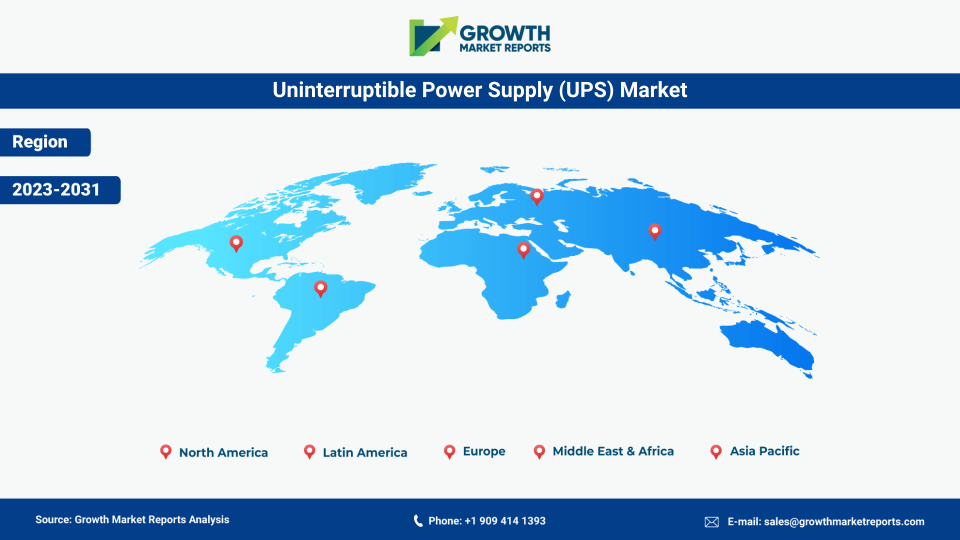
From a regional perspective, Asia Pacific continues to dominate the global UPS market, accounting for the largest share in 2024. This dominance is underpinned by the rapid urbanization, industrialization, and digitalization occurring across key economies such as China, India, and Southeast Asian countries. The region's expanding IT infrastructure, increasing investments in data centers, and growing awareness of power quality issues are driving the demand for UPS systems. North America and Europe also represent significant markets, characterized by mature technology adoption, stringent regulatory standards, and a strong focus on energy efficiency. Meanwhile, the Middle East & Africa and Latin America are witnessing steady growth, fueled by infrastructure development and rising investments in commercial and industrial sectors.

Global Uninterruptible Power Supply (UPS) Industry Outlook

Type Analysis

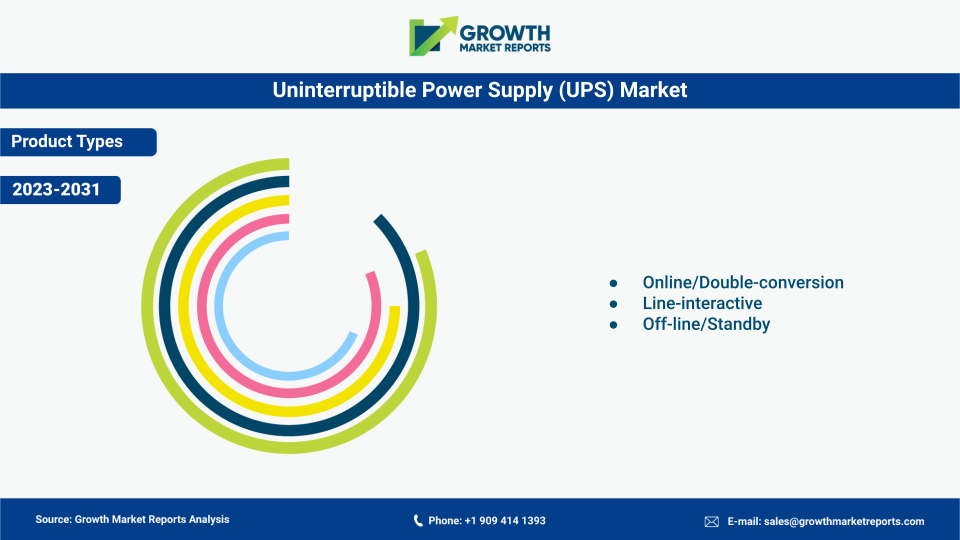
The Uninterruptible Power Supply (UPS) market is segmented by type into Offline/Standby, Line-Interactive, and Online/Double Conversion systems. Offline/Standby UPS systems are widely adopted in residential and small office applications due to their cost-effectiveness and simplicity. These systems provide basic protection against power outages and voltage fluctuations, making them suitable for protecting personal computers, home entertainment systems, and small electronic devices. Despite their affordability, the limited protection capabilities of Offline/Standby UPS solutions restrict their usage in mission-critical environments where higher reliability and performance are required. Nevertheless, the segment continues to witness steady demand in emerging markets and among cost-conscious consumers, contributing to the overall growth of the UPS market.

Line-Interactive UPS systems represent a significant share of the market, particularly in small to medium-sized businesses and commercial applications. These systems offer enhanced protection by regulating voltage fluctuations and providing automatic voltage regulation (AVR) during minor power disturbances. Line-Interactive UPS solutions are preferred for their balance of performance, efficiency, and cost, making them ideal for protecting network equipment, servers, and point-of-sale systems. The increasing adoption of digital technologies and the growing need for reliable power in retail, education, and healthcare sectors are driving the demand for Line-Interactive UPS systems. Manufacturers are continuously innovating to improve the efficiency and scalability of these solutions, incorporating features such as intelligent monitoring, modular design, and energy-saving modes.

Online/Double Conversion UPS systems are the preferred choice for mission-critical applications that require the highest level of power protection and reliability. These systems provide continuous power conditioning by converting incoming AC power to DC and then back to AC, ensuring a consistent and clean power supply regardless of fluctuations or disturbances in the grid. Online/Double Conversion UPS solutions are extensively used in data centers, industrial automation, healthcare facilities, and financial institutions, where downtime or power quality issues can have severe consequences. The segment is witnessing robust growth due to the increasing deployment of hyperscale and edge data centers, the rising complexity of IT infrastructure, and the growing emphasis on business continuity. Technological advancements, such as the integration of lithium-ion batteries and scalable architectures, are further enhancing the performance and efficiency of Online UPS systems.

In the context of industrial operations, Industrial UPS Rentals for Warehouses have emerged as a flexible and cost-effective solution to address power reliability challenges. Warehouses, which are critical nodes in supply chain operations, require uninterrupted power to maintain inventory management systems, automated sorting equipment, and climate control systems. Renting UPS systems allows warehouse operators to access the latest technology without the upfront capital investment, enabling them to scale power protection according to their operational needs. This rental model is particularly advantageous for businesses facing fluctuating demand or those undergoing temporary expansions.

The competitive landscape within each UPS type segment is characterized by continuous innovation and product differentiation. Leading manufacturers are investing in research and development to deliver UPS systems with advanced features such as remote monitoring, predictive maintenance, and seamless integration with energy management platforms. The shift toward smart and connected UPS solutions is enabling end-users to optimize power usage, reduce operational costs, and enhance system reliability. As organizations increasingly prioritize sustainability, there is a growing demand for UPS systems with high energy efficiency, low total cost of ownership, and eco-friendly components. The evolving regulatory landscape and industry standards are also shaping product development and market strategies across all UPS type segments.

Report Scope

Attributes Details
Report Title Uninterruptible Power Supply (UPS) Market Research Report 2033
By Type Offline/Standby, Line-Interactive, Online/Double Conversion
By Capacity Up to 50 kVA, 51-200 kVA, Above 200 kVA
By Application Data Centers, Industrial, Commercial, Residential, Healthcare, Others
By End-User IT & Telecommunications, BFSI, Healthcare, Manufacturing, Energy & Utilities, Others
Regions Covered North America, Europe, APAC, Latin America, MEA
Base Year 2024
Historic Data 2018-2023
Forecast Period 2025-2033
Number of Pages 279
Number of Tables & Figures 341
Customization Available Yes, the report can be customized as per your need.

Capacity Analysis

The UPS market is segmented by capacity into Up to 50 kVA, 51-200 kVA, and Above 200 kVA. The Up to 50 kVA segment caters primarily to small businesses, residential users, and small-scale commercial establishments. These systems are designed to protect sensitive electronic equipment, personal computers, and communication devices from power outages and voltage fluctuations. The segment's growth is driven by the increasing penetration of digital devices, the rising awareness of power quality issues, and the growing trend of remote work and home offices. Manufacturers are focusing on delivering compact, user-friendly, and cost-effective UPS solutions that cater to the specific needs of this segment, including plug-and-play installation, silent operation, and minimal maintenance requirements.

The 51-200 kVA segment plays a crucial role in supporting the power protection needs of medium-sized enterprises, commercial buildings, and institutional facilities. These UPS systems offer higher capacity and scalability, making them suitable for protecting servers, network equipment, medical devices, and industrial automation systems. The segment is experiencing significant growth due to the increasing adoption of digital technologies in sectors such as education, healthcare, and retail. Organizations are investing in mid-range UPS solutions to ensure business continuity, safeguard critical data, and comply with regulatory requirements. The integration of advanced features such as modular design, intelligent battery management, and remote monitoring is enhancing the value proposition of UPS systems in this capacity range.

The Above 200 kVA segment encompasses high-capacity UPS systems designed for large-scale data centers, industrial plants, and critical infrastructure. These systems are engineered to deliver reliable backup power for high-density computing environments, manufacturing processes, and large-scale commercial operations. The growing demand for hyperscale data centers, the expansion of industrial automation, and the increasing reliance on critical infrastructure are driving the adoption of high-capacity UPS solutions. Manufacturers are focusing on delivering scalable, energy-efficient, and redundant UPS architectures that can support the evolving needs of large enterprises. The integration of lithium-ion batteries, advanced power electronics, and intelligent control systems is enabling organizations to achieve higher efficiency, lower total cost of ownership, and enhanced operational resilience.

The adoption of Modular Uninterruptible Power Supply systems is revolutionizing how businesses approach power protection. These systems offer unparalleled flexibility and scalability, allowing organizations to tailor their power backup solutions to specific needs and expand capacity as required. Modular UPS systems are particularly beneficial for environments experiencing rapid growth or technological change, such as data centers and large enterprises. By enabling incremental upgrades, these systems reduce the need for over-provisioning and help optimize capital expenditure. Additionally, the modular design facilitates easier maintenance and enhances system reliability, making it an attractive option for businesses prioritizing operational resilience.

Capacity selection is a critical consideration for end-users, as it directly impacts the performance, reliability, and cost-effectiveness of UPS systems. Organizations are increasingly adopting a modular approach to UPS deployment, allowing them to scale capacity as their power protection needs evolve. The trend toward virtualization, cloud computing, and edge deployments is influencing demand patterns across different capacity segments, with a growing emphasis on flexibility, scalability, and energy efficiency. The competitive landscape in each capacity segment is shaped by technological innovation, product differentiation, and the ability to address specific customer requirements. Manufacturers are leveraging advanced analytics, predictive maintenance, and remote management capabilities to enhance the value proposition of their UPS solutions across all capacity ranges.

Application Analysis

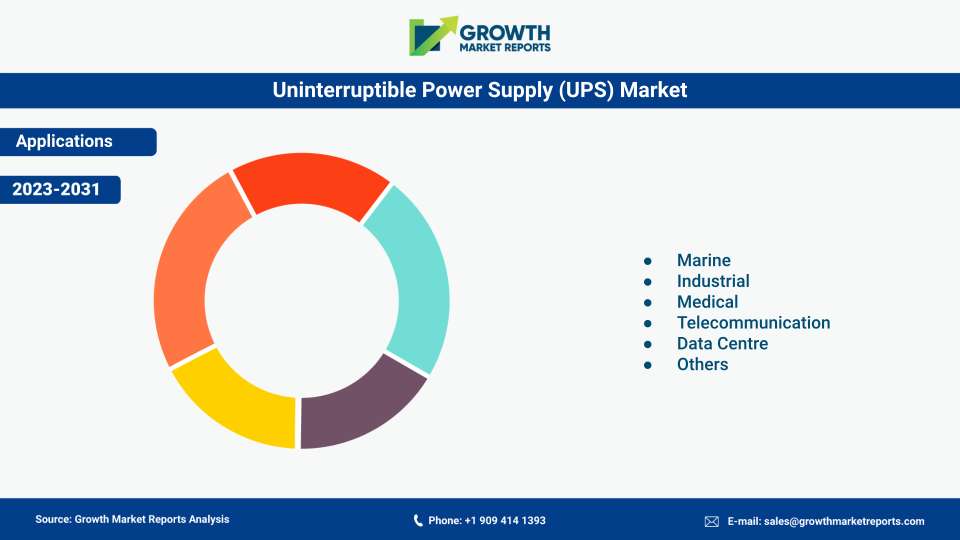
The application landscape of the UPS market is diverse, encompassing Data Centers, Industrial, Commercial, Residential, Healthcare, and Others. Data centers represent the largest and fastest-growing application segment, driven by the exponential growth of digital data, cloud computing, and enterprise IT infrastructure. UPS systems are essential for ensuring uninterrupted power supply, data integrity, and operational continuity in these mission-critical environments. The increasing deployment of hyperscale and edge data centers, coupled with the rising adoption of colocation services, is fueling the demand for scalable, efficient, and intelligent UPS solutions. Manufacturers are responding by offering modular UPS architectures, advanced battery technologies, and integrated energy management platforms that cater to the specific needs of data center operators.

The industrial segment is another major contributor to the UPS market, encompassing a wide range of manufacturing, process automation, and critical infrastructure applications. Industrial facilities rely on UPS systems to protect sensitive equipment, control systems, and production lines from power disturbances that can cause equipment damage, production losses, and safety hazards. The ongoing digital transformation of the industrial sector, characterized by the adoption of Industry 4.0 technologies, robotics, and IoT-enabled devices, is increasing the complexity and criticality of power protection requirements. Manufacturers are developing rugged, high-capacity, and customizable UPS solutions that can withstand harsh operating environments and provide reliable backup power for extended durations.

Commercial and residential applications collectively represent a significant share of the UPS market, driven by the increasing penetration of digital devices, smart home technologies, and connected appliances. In commercial settings, UPS systems are used to safeguard point-of-sale systems, servers, communication networks, and security systems from power interruptions. The growing adoption of cloud-based services, digital payment systems, and remote work solutions is heightening the importance of reliable power protection in commercial environments. In the residential segment, the rising awareness of power quality issues, coupled with the increasing reliance on home offices and smart devices, is driving demand for compact and user-friendly UPS solutions.

The healthcare segment is witnessing robust growth, as hospitals, clinics, and diagnostic centers require uninterrupted power supply to ensure patient safety, data integrity, and operational continuity. UPS systems are used to protect critical medical equipment, electronic health records, and life-support systems from power outages and voltage fluctuations. The increasing adoption of telemedicine, electronic health records, and digital imaging technologies is further elevating the importance of reliable power protection in healthcare settings. Manufacturers are developing specialized UPS solutions that comply with stringent regulatory standards, offer advanced monitoring capabilities, and provide seamless integration with hospital information systems.

End-User Analysis

The Uninterruptible Power Supply (UPS) market serves a diverse array of end-users, including IT & Telecommunications, BFSI, Healthcare, Manufacturing, Energy & Utilities, and Others. The IT & Telecommunications sector is the largest end-user segment, accounting for a substantial share of the global market. The sectorÂ’s reliance on continuous data processing, cloud services, and communication networks makes it highly vulnerable to power disruptions. As a result, organizations in this sector are investing heavily in advanced UPS systems to ensure business continuity, data security, and network reliability. The proliferation of 5G networks, edge computing, and IoT devices is further intensifying the demand for scalable and intelligent UPS solutions in the IT & Telecommunications sector.

The BFSI (Banking, Financial Services, and Insurance) sector is another major end-user of UPS systems, driven by the need to protect critical financial data, transaction processing systems, and customer service platforms from power interruptions. The increasing digitization of financial services, the adoption of online banking, and the growing regulatory emphasis on data security and business continuity are fueling the demand for reliable power protection solutions in the BFSI sector. Manufacturers are offering UPS systems with advanced security features, real-time monitoring, and seamless integration with data centers and branch offices to meet the specific needs of financial institutions.

The healthcare sector is characterized by stringent requirements for power quality, reliability, and regulatory compliance. Hospitals, clinics, and diagnostic centers rely on UPS systems to ensure the continuous operation of life-support systems, diagnostic equipment, and electronic health records. The increasing adoption of digital health technologies, telemedicine, and electronic medical records is elevating the importance of UPS systems in healthcare settings. Manufacturers are developing specialized solutions that offer high reliability, advanced monitoring, and compliance with healthcare standards, ensuring patient safety and operational continuity.

Manufacturing and energy & utilities are also significant end-user segments, driven by the need to protect critical infrastructure, automation systems, and control networks from power disturbances. The ongoing digital transformation of these sectors, characterized by the adoption of smart manufacturing, renewable energy integration, and grid modernization, is increasing the complexity and criticality of power protection requirements. Manufacturers are responding by offering scalable, rugged, and energy-efficient UPS solutions that cater to the unique needs of industrial and utility operators. The ability to integrate UPS systems with smart grids, energy storage, and renewable energy sources is creating new opportunities for market expansion in these end-user segments.

Opportunities & Threats

The Uninterruptible Power Supply (UPS) market presents numerous opportunities for growth and innovation. One of the most significant opportunities lies in the integration of UPS systems with renewable energy sources and smart grid technologies. As organizations and governments worldwide prioritize sustainability and energy efficiency, the demand for UPS solutions that can seamlessly integrate with solar, wind, and energy storage systems is increasing. Manufacturers are investing in research and development to deliver UPS systems with advanced energy management capabilities, intelligent load balancing, and real-time monitoring. The growing adoption of edge computing, IoT devices, and digital transformation initiatives across various sectors is also creating new opportunities for UPS vendors to deliver scalable, modular, and connected solutions that address the evolving needs of modern enterprises.

Another key opportunity in the UPS market is the development of innovative battery technologies and energy storage solutions. The shift toward lithium-ion batteries, supercapacitors, and other advanced energy storage technologies is enabling manufacturers to deliver UPS systems with higher efficiency, longer lifespan, and reduced maintenance requirements. The increasing emphasis on energy efficiency, total cost of ownership, and environmental sustainability is driving demand for UPS solutions that offer superior performance, lower operating costs, and minimal environmental impact. The adoption of predictive maintenance, remote monitoring, and cloud-based management platforms is further enhancing the value proposition of UPS systems, enabling organizations to optimize performance, reduce downtime, and improve operational resilience.

Despite the numerous opportunities, the UPS market faces several challenges and threats that could hinder its growth. One of the primary restraining factors is the high initial cost of advanced UPS systems, particularly for small and medium-sized enterprises. The total cost of ownership, including maintenance, battery replacement, and energy consumption, can be a significant barrier for budget-constrained organizations. Additionally, the rapid pace of technological change and the increasing complexity of power protection requirements are placing pressure on manufacturers to continuously innovate and deliver solutions that meet evolving customer needs. The competitive landscape is characterized by intense price competition, margin pressures, and the need for differentiation, which can impact profitability and market dynamics.

Regional Outlook

The Asia Pacific region dominates the global Uninterruptible Power Supply (UPS) market, accounting for the largest share of approximately USD 4.5 billion in 2024. The region's leadership is driven by rapid urbanization, industrialization, and digitalization across key economies such as China, India, Japan, and South Korea. The proliferation of data centers, the expansion of IT infrastructure, and the growing awareness of power quality issues are fueling the demand for UPS systems in the region. The increasing adoption of digital technologies, the rise of smart cities, and government initiatives to modernize electrical infrastructure are further supporting market growth in Asia Pacific. The region is expected to maintain a strong growth trajectory, with a projected CAGR of 7.2% from 2025 to 2033, outpacing other regions.

North America represents a mature and technologically advanced UPS market, with a market size of approximately USD 3.1 billion in 2024. The region is characterized by high adoption rates of advanced UPS systems, stringent regulatory standards, and a strong focus on energy efficiency and sustainability. The presence of leading data center operators, technology companies, and financial institutions is driving demand for reliable and scalable UPS solutions. The increasing emphasis on digital transformation, cloud computing, and edge deployments is creating new opportunities for UPS vendors in North America. The region is also witnessing growing investments in renewable energy integration and smart grid technologies, which are influencing the development and deployment of next-generation UPS systems.

Europe holds a significant share of the global UPS market, with a market size of approximately USD 2.7 billion in 2024. The region is characterized by a strong regulatory framework, high levels of technology adoption, and a focus on energy efficiency and sustainability. The increasing deployment of data centers, the expansion of industrial automation, and the growing adoption of digital technologies are driving demand for UPS systems in Europe. The region is also witnessing increased investments in renewable energy integration, smart grids, and energy storage solutions, which are shaping the future of the UPS market. The Middle East & Africa and Latin America are emerging markets, with a combined market size of approximately USD 1.5 billion in 2024. These regions are experiencing steady growth, driven by infrastructure development, urbanization, and rising investments in commercial and industrial sectors.

Uninterruptible Power Supply (UPS) Market Statistics

Competitor Outlook

The global Uninterruptible Power Supply (UPS) market is highly competitive, with a diverse array of international and regional players vying for market share. The competitive landscape is characterized by continuous innovation, product differentiation, and a strong emphasis on energy efficiency, reliability, and scalability. Leading manufacturers are investing heavily in research and development to deliver UPS systems with advanced features such as intelligent monitoring, predictive maintenance, and seamless integration with energy management platforms. The shift toward smart and connected UPS solutions is enabling vendors to offer enhanced value propositions, including remote management, data analytics, and proactive maintenance services. The ability to deliver tailored solutions that address specific customer requirements, industry standards, and regulatory mandates is a key differentiator in the market.

Strategic partnerships, mergers and acquisitions, and geographic expansion are common strategies employed by leading UPS vendors to strengthen their market position and expand their customer base. Companies are focusing on building strong distribution networks, enhancing after-sales support, and offering comprehensive service portfolios to differentiate themselves in a highly competitive market. The increasing emphasis on sustainability and energy efficiency is prompting manufacturers to develop eco-friendly UPS solutions that comply with global environmental standards and reduce total cost of ownership for end-users. The integration of advanced battery technologies, modular architectures, and intelligent control systems is enabling vendors to deliver UPS solutions that meet the evolving needs of data centers, industrial facilities, and commercial enterprises.

The competitive landscape is also influenced by the rapid pace of technological change and the increasing complexity of power protection requirements. Manufacturers are leveraging digital technologies, IoT, and cloud-based platforms to enhance the performance, reliability, and manageability of their UPS systems. The ability to offer scalable, modular, and connected solutions is becoming increasingly important as organizations seek to optimize their power protection strategies and support digital transformation initiatives. Price competition remains intense, particularly in emerging markets, where cost considerations are a significant factor in purchasing decisions. Vendors are responding by offering flexible pricing models, financing options, and value-added services to attract and retain customers.

Major players in the global UPS market include Schneider Electric, Eaton Corporation, ABB Ltd., Vertiv Holdings Co., Legrand, Toshiba Corporation, Mitsubishi Electric Corporation, Huawei Technologies Co., Ltd., Fuji Electric Co., Ltd., and Socomec Group. Schneider Electric is a global leader in energy management and automation, offering a comprehensive portfolio of UPS solutions for data centers, industrial, and commercial applications. Eaton Corporation is renowned for its innovative UPS systems, advanced battery technologies, and intelligent power management solutions. ABB Ltd. and Vertiv Holdings Co. are prominent players in the data center and industrial segments, delivering high-capacity, scalable, and energy-efficient UPS systems. Legrand, Toshiba, and Mitsubishi Electric are recognized for their strong presence in commercial and residential UPS markets, while Huawei Technologies and Fuji Electric are expanding their footprint in emerging markets with advanced, cost-effective solutions.

These leading companies are continuously innovating to address the evolving needs of their customers, enhance the reliability and efficiency of their UPS systems, and comply with global regulatory standards. The focus on sustainability, digitalization, and customer-centric solutions is shaping the future of the UPS market, as vendors strive to deliver value-added services, reduce total cost of ownership, and support the digital transformation of critical infrastructure worldwide. As the market continues to evolve, the ability to anticipate customer needs, leverage emerging technologies, and deliver differentiated solutions will be key to sustaining competitive advantage in the global Uninterruptible Power Supply (UPS) market.

Key Players

  • Eaton Corporation
  • Schneider Electric (APC)
  • Vertiv Holdings Co.
  • ABB Ltd.
  • Legrand S.A.
  • CyberPower Systems
  • Toshiba Corporation
  • Delta Electronics, Inc.
  • Socomec Group
  • Riello UPS
  • Emerson Electric Co.
  • Fuji Electric Co., Ltd.
  • AEG Power Solutions
  • Huawei Technologies Co., Ltd.
  • Mitsubishi Electric Corporation
  • Tripp Lite
  • General Electric Company
  • Borri S.p.A.
  • Gamatronic Electronic Industries Ltd.
  • Kehua Data Co., Ltd.
Uninterruptible Power Supply (UPS) Market Overview

Segments

The Uninterruptible Power Supply (UPS) market has been segmented on the basis of

Type

  • Offline/Standby
  • Line-Interactive
  • Online/Double Conversion

Capacity

  • Up to 50 kVA
  • 51-200 kVA
  • Above 200 kVA

Application

  • Data Centers
  • Industrial
  • Commercial
  • Residential
  • Healthcare
  • Others

End-User

  • IT & Telecommunications
  • BFSI
  • Healthcare
  • Manufacturing
  • Energy & Utilities
  • Others

Competitive Landscape

Major players in the UPS market include Schneider Electric (France), Eaton Corporation (Ireland), Emerson Electric (US), ABB (Switzerland), Socomec (France), Toshiba Corporation (Japan), Xiamen Kehua Hengsheng Co. Ltd. (China), KStar Corporation (China), East Group (China), and Beijing Dynamic Power Co. Ltd. (China)

Some of these players are using several market strategies such as acquisitions, merger, collaborations, partnerships, capacity expansion, and product launches to enhance their market shares and to generate revenue and raise their production line of the business in the coming years.
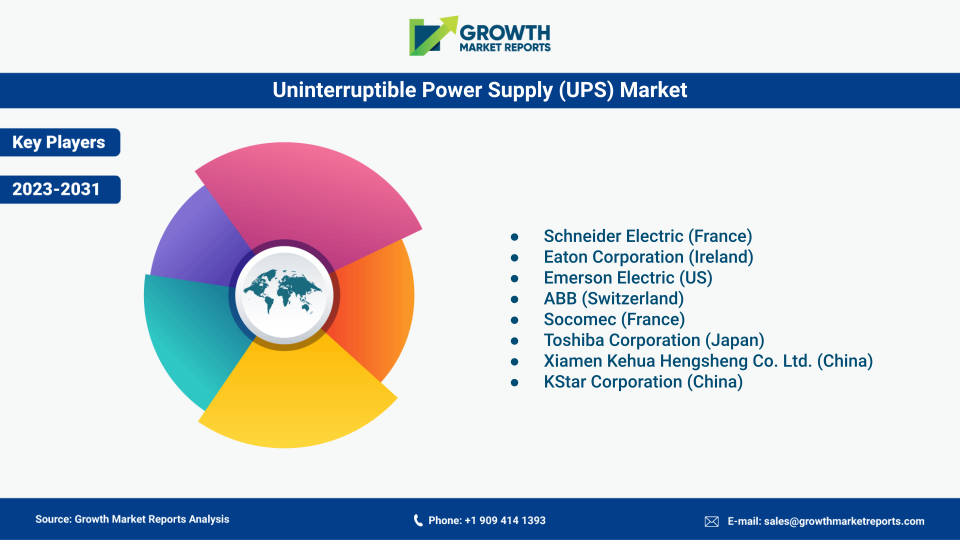

Uninterruptible Power Supply (UPS) Market key players

Frequently Asked Questions

The UPS market research report offers customization options to cater to specific client needs, including tailored segment analysis, regional breakdowns, and application-specific insights.

Technological advancements such as intelligent monitoring, modular designs, lithium-ion batteries, and integration with energy management platforms are enhancing UPS efficiency, scalability, and sustainability.

Major players include Schneider Electric, Eaton Corporation, ABB Ltd., Vertiv Holdings Co., Legrand, Toshiba Corporation, Mitsubishi Electric Corporation, Huawei Technologies, Fuji Electric, and Socomec Group.

Opportunities include integration with renewable energy and smart grids, development of advanced battery technologies, and adoption of predictive maintenance. Challenges include high initial costs, total cost of ownership, and intense price competition.

Primary end-users include IT & Telecommunications, BFSI, Healthcare, Manufacturing, and Energy & Utilities, with IT & Telecommunications being the largest segment due to its reliance on continuous data processing and network reliability.

The market is segmented into Up to 50 kVA (for small businesses and residential), 51-200 kVA (for medium enterprises and commercial buildings), and Above 200 kVA (for large data centers and industrial plants).

The main types are Offline/Standby (for residential and small offices), Line-Interactive (for small to medium businesses and commercial use), and Online/Double Conversion (for mission-critical applications like data centers and healthcare).

Asia Pacific dominates the UPS market due to rapid urbanization, industrialization, and digitalization in countries like China, India, and Southeast Asia. North America and Europe are also significant markets, characterized by advanced technology adoption and stringent regulatory standards.

Key drivers include the rising frequency of power outages, proliferation of data centers, increasing digitalization of critical infrastructure, and the need for uninterrupted power in mission-critical applications such as IT, healthcare, and BFSI sectors.

The global Uninterruptible Power Supply (UPS) market reached USD 11.8 billion in 2024 and is projected to grow at a CAGR of 6.1% from 2025 to 2033, reaching approximately USD 20.1 billion by 2033.

Table Of Content

Chapter 1 Executive Summary
Chapter 2 Assumptions and Acronyms Used
Chapter 3 Research Methodology
Chapter 4 Uninterruptible Power Supply (UPS) Market Overview
   4.1 Introduction
      4.1.1 Market Taxonomy
      4.1.2 Market Definition
      4.1.3 Macro-Economic Factors Impacting the Market Growth
   4.2 Uninterruptible Power Supply (UPS) Market Dynamics
      4.2.1 Market Drivers
      4.2.2 Market Restraints
      4.2.3 Market Opportunity
   4.3 Uninterruptible Power Supply (UPS) Market - Supply Chain Analysis
      4.3.1 List of Key Suppliers
      4.3.2 List of Key Distributors
      4.3.3 List of Key Consumers
   4.4 Key Forces Shaping the Uninterruptible Power Supply (UPS) Market
      4.4.1 Bargaining Power of Suppliers
      4.4.2 Bargaining Power of Buyers
      4.4.3 Threat of Substitution
      4.4.4 Threat of New Entrants
      4.4.5 Competitive Rivalry
   4.5 Global Uninterruptible Power Supply (UPS) Market Size & Forecast, 2023-2032
      4.5.1 Uninterruptible Power Supply (UPS) Market Size and Y-o-Y Growth
      4.5.2 Uninterruptible Power Supply (UPS) Market Absolute $ Opportunity

Chapter 5 Global Uninterruptible Power Supply (UPS) Market Analysis and Forecast By Type
   5.1 Introduction
      5.1.1 Key Market Trends & Growth Opportunities By Type
      5.1.2 Basis Point Share (BPS) Analysis By Type
      5.1.3 Absolute $ Opportunity Assessment By Type
   5.2 Uninterruptible Power Supply (UPS) Market Size Forecast By Type
      5.2.1 Offline/Standby
      5.2.2 Line-Interactive
      5.2.3 Online/Double Conversion
   5.3 Market Attractiveness Analysis By Type

Chapter 6 Global Uninterruptible Power Supply (UPS) Market Analysis and Forecast By Capacity
   6.1 Introduction
      6.1.1 Key Market Trends & Growth Opportunities By Capacity
      6.1.2 Basis Point Share (BPS) Analysis By Capacity
      6.1.3 Absolute $ Opportunity Assessment By Capacity
   6.2 Uninterruptible Power Supply (UPS) Market Size Forecast By Capacity
      6.2.1 Up to 50 kVA
      6.2.2 51-200 kVA
      6.2.3 Above 200 kVA
   6.3 Market Attractiveness Analysis By Capacity

Chapter 7 Global Uninterruptible Power Supply (UPS) Market Analysis and Forecast By Application
   7.1 Introduction
      7.1.1 Key Market Trends & Growth Opportunities By Application
      7.1.2 Basis Point Share (BPS) Analysis By Application
      7.1.3 Absolute $ Opportunity Assessment By Application
   7.2 Uninterruptible Power Supply (UPS) Market Size Forecast By Application
      7.2.1 Data Centers
      7.2.2 Industrial
      7.2.3 Commercial
      7.2.4 Residential
      7.2.5 Healthcare
      7.2.6 Others
   7.3 Market Attractiveness Analysis By Application

Chapter 8 Global Uninterruptible Power Supply (UPS) Market Analysis and Forecast By End-User
   8.1 Introduction
      8.1.1 Key Market Trends & Growth Opportunities By End-User
      8.1.2 Basis Point Share (BPS) Analysis By End-User
      8.1.3 Absolute $ Opportunity Assessment By End-User
   8.2 Uninterruptible Power Supply (UPS) Market Size Forecast By End-User
      8.2.1 IT & Telecommunications
      8.2.2 BFSI
      8.2.3 Healthcare
      8.2.4 Manufacturing
      8.2.5 Energy & Utilities
      8.2.6 Others
   8.3 Market Attractiveness Analysis By End-User

Chapter 9 Global Uninterruptible Power Supply (UPS) Market Analysis and Forecast by Region
   9.1 Introduction
      9.1.1 Key Market Trends & Growth Opportunities By Region
      9.1.2 Basis Point Share (BPS) Analysis By Region
      9.1.3 Absolute $ Opportunity Assessment By Region
   9.2 Uninterruptible Power Supply (UPS) Market Size Forecast By Region
      9.2.1 North America
      9.2.2 Europe
      9.2.3 Asia Pacific
      9.2.4 Latin America
      9.2.5 Middle East & Africa (MEA)
   9.3 Market Attractiveness Analysis By Region

Chapter 10 Coronavirus Disease (COVID-19) Impact 
   10.1 Introduction 
   10.2 Current & Future Impact Analysis 
   10.3 Economic Impact Analysis 
   10.4 Government Policies 
   10.5 Investment Scenario

Chapter 11 North America Uninterruptible Power Supply (UPS) Analysis and Forecast
   11.1 Introduction
   11.2 North America Uninterruptible Power Supply (UPS) Market Size Forecast by Country
      11.2.1 U.S.
      11.2.2 Canada
   11.3 Basis Point Share (BPS) Analysis by Country
   11.4 Absolute $ Opportunity Assessment by Country
   11.5 Market Attractiveness Analysis by Country
   11.6 North America Uninterruptible Power Supply (UPS) Market Size Forecast By Type
      11.6.1 Offline/Standby
      11.6.2 Line-Interactive
      11.6.3 Online/Double Conversion
   11.7 Basis Point Share (BPS) Analysis By Type 
   11.8 Absolute $ Opportunity Assessment By Type 
   11.9 Market Attractiveness Analysis By Type
   11.10 North America Uninterruptible Power Supply (UPS) Market Size Forecast By Capacity
      11.10.1 Up to 50 kVA
      11.10.2 51-200 kVA
      11.10.3 Above 200 kVA
   11.11 Basis Point Share (BPS) Analysis By Capacity 
   11.12 Absolute $ Opportunity Assessment By Capacity 
   11.13 Market Attractiveness Analysis By Capacity
   11.14 North America Uninterruptible Power Supply (UPS) Market Size Forecast By Application
      11.14.1 Data Centers
      11.14.2 Industrial
      11.14.3 Commercial
      11.14.4 Residential
      11.14.5 Healthcare
      11.14.6 Others
   11.15 Basis Point Share (BPS) Analysis By Application 
   11.16 Absolute $ Opportunity Assessment By Application 
   11.17 Market Attractiveness Analysis By Application
   11.18 North America Uninterruptible Power Supply (UPS) Market Size Forecast By End-User
      11.18.1 IT & Telecommunications
      11.18.2 BFSI
      11.18.3 Healthcare
      11.18.4 Manufacturing
      11.18.5 Energy & Utilities
      11.18.6 Others
   11.19 Basis Point Share (BPS) Analysis By End-User 
   11.20 Absolute $ Opportunity Assessment By End-User 
   11.21 Market Attractiveness Analysis By End-User

Chapter 12 Europe Uninterruptible Power Supply (UPS) Analysis and Forecast
   12.1 Introduction
   12.2 Europe Uninterruptible Power Supply (UPS) Market Size Forecast by Country
      12.2.1 Germany
      12.2.2 France
      12.2.3 Italy
      12.2.4 U.K.
      12.2.5 Spain
      12.2.6 Russia
      12.2.7 Rest of Europe
   12.3 Basis Point Share (BPS) Analysis by Country
   12.4 Absolute $ Opportunity Assessment by Country
   12.5 Market Attractiveness Analysis by Country
   12.6 Europe Uninterruptible Power Supply (UPS) Market Size Forecast By Type
      12.6.1 Offline/Standby
      12.6.2 Line-Interactive
      12.6.3 Online/Double Conversion
   12.7 Basis Point Share (BPS) Analysis By Type 
   12.8 Absolute $ Opportunity Assessment By Type 
   12.9 Market Attractiveness Analysis By Type
   12.10 Europe Uninterruptible Power Supply (UPS) Market Size Forecast By Capacity
      12.10.1 Up to 50 kVA
      12.10.2 51-200 kVA
      12.10.3 Above 200 kVA
   12.11 Basis Point Share (BPS) Analysis By Capacity 
   12.12 Absolute $ Opportunity Assessment By Capacity 
   12.13 Market Attractiveness Analysis By Capacity
   12.14 Europe Uninterruptible Power Supply (UPS) Market Size Forecast By Application
      12.14.1 Data Centers
      12.14.2 Industrial
      12.14.3 Commercial
      12.14.4 Residential
      12.14.5 Healthcare
      12.14.6 Others
   12.15 Basis Point Share (BPS) Analysis By Application 
   12.16 Absolute $ Opportunity Assessment By Application 
   12.17 Market Attractiveness Analysis By Application
   12.18 Europe Uninterruptible Power Supply (UPS) Market Size Forecast By End-User
      12.18.1 IT & Telecommunications
      12.18.2 BFSI
      12.18.3 Healthcare
      12.18.4 Manufacturing
      12.18.5 Energy & Utilities
      12.18.6 Others
   12.19 Basis Point Share (BPS) Analysis By End-User 
   12.20 Absolute $ Opportunity Assessment By End-User 
   12.21 Market Attractiveness Analysis By End-User

Chapter 13 Asia Pacific Uninterruptible Power Supply (UPS) Analysis and Forecast
   13.1 Introduction
   13.2 Asia Pacific Uninterruptible Power Supply (UPS) Market Size Forecast by Country
      13.2.1 China
      13.2.2 Japan
      13.2.3 South Korea
      13.2.4 India
      13.2.5 Australia
      13.2.6 South East Asia (SEA)
      13.2.7 Rest of Asia Pacific (APAC)
   13.3 Basis Point Share (BPS) Analysis by Country
   13.4 Absolute $ Opportunity Assessment by Country
   13.5 Market Attractiveness Analysis by Country
   13.6 Asia Pacific Uninterruptible Power Supply (UPS) Market Size Forecast By Type
      13.6.1 Offline/Standby
      13.6.2 Line-Interactive
      13.6.3 Online/Double Conversion
   13.7 Basis Point Share (BPS) Analysis By Type 
   13.8 Absolute $ Opportunity Assessment By Type 
   13.9 Market Attractiveness Analysis By Type
   13.10 Asia Pacific Uninterruptible Power Supply (UPS) Market Size Forecast By Capacity
      13.10.1 Up to 50 kVA
      13.10.2 51-200 kVA
      13.10.3 Above 200 kVA
   13.11 Basis Point Share (BPS) Analysis By Capacity 
   13.12 Absolute $ Opportunity Assessment By Capacity 
   13.13 Market Attractiveness Analysis By Capacity
   13.14 Asia Pacific Uninterruptible Power Supply (UPS) Market Size Forecast By Application
      13.14.1 Data Centers
      13.14.2 Industrial
      13.14.3 Commercial
      13.14.4 Residential
      13.14.5 Healthcare
      13.14.6 Others
   13.15 Basis Point Share (BPS) Analysis By Application 
   13.16 Absolute $ Opportunity Assessment By Application 
   13.17 Market Attractiveness Analysis By Application
   13.18 Asia Pacific Uninterruptible Power Supply (UPS) Market Size Forecast By End-User
      13.18.1 IT & Telecommunications
      13.18.2 BFSI
      13.18.3 Healthcare
      13.18.4 Manufacturing
      13.18.5 Energy & Utilities
      13.18.6 Others
   13.19 Basis Point Share (BPS) Analysis By End-User 
   13.20 Absolute $ Opportunity Assessment By End-User 
   13.21 Market Attractiveness Analysis By End-User

Chapter 14 Latin America Uninterruptible Power Supply (UPS) Analysis and Forecast
   14.1 Introduction
   14.2 Latin America Uninterruptible Power Supply (UPS) Market Size Forecast by Country
      14.2.1 Brazil
      14.2.2 Mexico
      14.2.3 Rest of Latin America (LATAM)
   14.3 Basis Point Share (BPS) Analysis by Country
   14.4 Absolute $ Opportunity Assessment by Country
   14.5 Market Attractiveness Analysis by Country
   14.6 Latin America Uninterruptible Power Supply (UPS) Market Size Forecast By Type
      14.6.1 Offline/Standby
      14.6.2 Line-Interactive
      14.6.3 Online/Double Conversion
   14.7 Basis Point Share (BPS) Analysis By Type 
   14.8 Absolute $ Opportunity Assessment By Type 
   14.9 Market Attractiveness Analysis By Type
   14.10 Latin America Uninterruptible Power Supply (UPS) Market Size Forecast By Capacity
      14.10.1 Up to 50 kVA
      14.10.2 51-200 kVA
      14.10.3 Above 200 kVA
   14.11 Basis Point Share (BPS) Analysis By Capacity 
   14.12 Absolute $ Opportunity Assessment By Capacity 
   14.13 Market Attractiveness Analysis By Capacity
   14.14 Latin America Uninterruptible Power Supply (UPS) Market Size Forecast By Application
      14.14.1 Data Centers
      14.14.2 Industrial
      14.14.3 Commercial
      14.14.4 Residential
      14.14.5 Healthcare
      14.14.6 Others
   14.15 Basis Point Share (BPS) Analysis By Application 
   14.16 Absolute $ Opportunity Assessment By Application 
   14.17 Market Attractiveness Analysis By Application
   14.18 Latin America Uninterruptible Power Supply (UPS) Market Size Forecast By End-User
      14.18.1 IT & Telecommunications
      14.18.2 BFSI
      14.18.3 Healthcare
      14.18.4 Manufacturing
      14.18.5 Energy & Utilities
      14.18.6 Others
   14.19 Basis Point Share (BPS) Analysis By End-User 
   14.20 Absolute $ Opportunity Assessment By End-User 
   14.21 Market Attractiveness Analysis By End-User

Chapter 15 Middle East & Africa (MEA) Uninterruptible Power Supply (UPS) Analysis and Forecast
   15.1 Introduction
   15.2 Middle East & Africa (MEA) Uninterruptible Power Supply (UPS) Market Size Forecast by Country
      15.2.1 Saudi Arabia
      15.2.2 South Africa
      15.2.3 UAE
      15.2.4 Rest of Middle East & Africa (MEA)
   15.3 Basis Point Share (BPS) Analysis by Country
   15.4 Absolute $ Opportunity Assessment by Country
   15.5 Market Attractiveness Analysis by Country
   15.6 Middle East & Africa (MEA) Uninterruptible Power Supply (UPS) Market Size Forecast By Type
      15.6.1 Offline/Standby
      15.6.2 Line-Interactive
      15.6.3 Online/Double Conversion
   15.7 Basis Point Share (BPS) Analysis By Type 
   15.8 Absolute $ Opportunity Assessment By Type 
   15.9 Market Attractiveness Analysis By Type
   15.10 Middle East & Africa (MEA) Uninterruptible Power Supply (UPS) Market Size Forecast By Capacity
      15.10.1 Up to 50 kVA
      15.10.2 51-200 kVA
      15.10.3 Above 200 kVA
   15.11 Basis Point Share (BPS) Analysis By Capacity 
   15.12 Absolute $ Opportunity Assessment By Capacity 
   15.13 Market Attractiveness Analysis By Capacity
   15.14 Middle East & Africa (MEA) Uninterruptible Power Supply (UPS) Market Size Forecast By Application
      15.14.1 Data Centers
      15.14.2 Industrial
      15.14.3 Commercial
      15.14.4 Residential
      15.14.5 Healthcare
      15.14.6 Others
   15.15 Basis Point Share (BPS) Analysis By Application 
   15.16 Absolute $ Opportunity Assessment By Application 
   15.17 Market Attractiveness Analysis By Application
   15.18 Middle East & Africa (MEA) Uninterruptible Power Supply (UPS) Market Size Forecast By End-User
      15.18.1 IT & Telecommunications
      15.18.2 BFSI
      15.18.3 Healthcare
      15.18.4 Manufacturing
      15.18.5 Energy & Utilities
      15.18.6 Others
   15.19 Basis Point Share (BPS) Analysis By End-User 
   15.20 Absolute $ Opportunity Assessment By End-User 
   15.21 Market Attractiveness Analysis By End-User

Chapter 16 Competition Landscape 
   16.1 Uninterruptible Power Supply (UPS) Market: Competitive Dashboard
   16.2 Global Uninterruptible Power Supply (UPS) Market: Market Share Analysis, 2023
   16.3 Company Profiles (Details – Overview, Financials, Developments, Strategy) 
      16.3.1 Eaton Corporation
Schneider Electric (APC)
Vertiv Holdings Co.
ABB Ltd.
Legrand S.A.
CyberPower Systems
Toshiba Corporation
Delta Electronics, Inc.
Socomec Group
Riello UPS
Emerson Electric Co.
Fuji Electric Co., Ltd.
AEG Power Solutions
Huawei Technologies Co., Ltd.
Mitsubishi Electric Corporation
Tripp Lite
General Electric Company
Borri S.p.A.
Gamatronic Electronic Industries Ltd.
Kehua Data Co., Ltd.

Methodology

Our Clients

FedEx Logistics
Honda Motor Co. Ltd.
Deloitte
Dassault Aviation
Siemens Healthcare
General Electric
General Mills
sinopec