Segments - by Product Type (Corrugated Boxes, Cartons, Paper Bags, Wrapping Paper, Others), by Material Type (Kraft Paper, Coated Unbleached Kraft Paperboard, Recycled Paper, Others), by End-Use Industry (Food & Beverage, Personal Care & Cosmetics, Healthcare, Electronics, E-commerce, Others), by Packaging Type (Primary Packaging, Secondary Packaging, Tertiary Packaging)
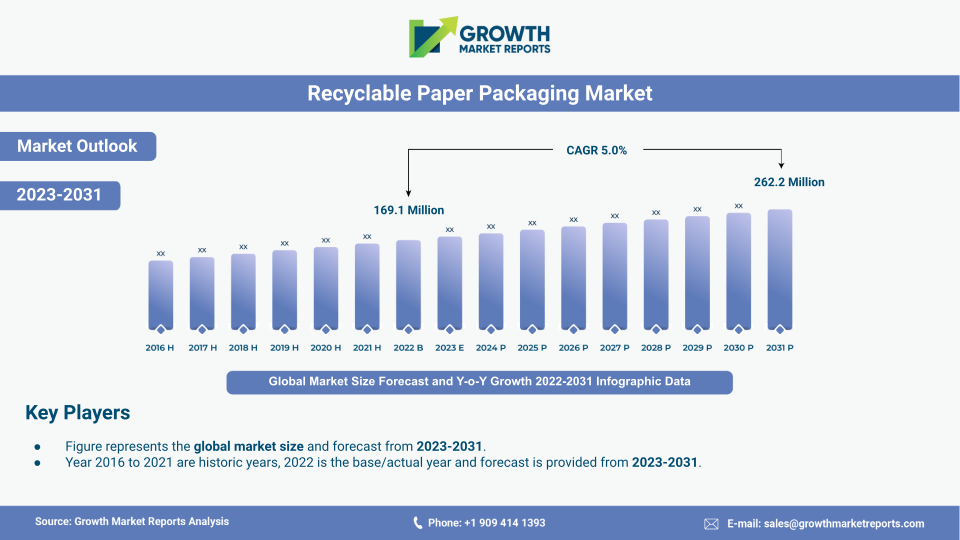
As per our latest research, the recyclable paper packaging market size reached USD 88.4 billion in 2024 globally, demonstrating robust momentum driven by sustainability initiatives and consumer demand for eco-friendly packaging solutions. The market is expected to expand at a strong CAGR of 5.7% during the forecast period, reaching a projected value of USD 145.2 billion by 2033. This impressive growth is underpinned by increasing regulatory pressures to reduce single-use plastics, heightened environmental awareness among consumers, and the ongoing innovation in recyclable packaging materials and technologies.
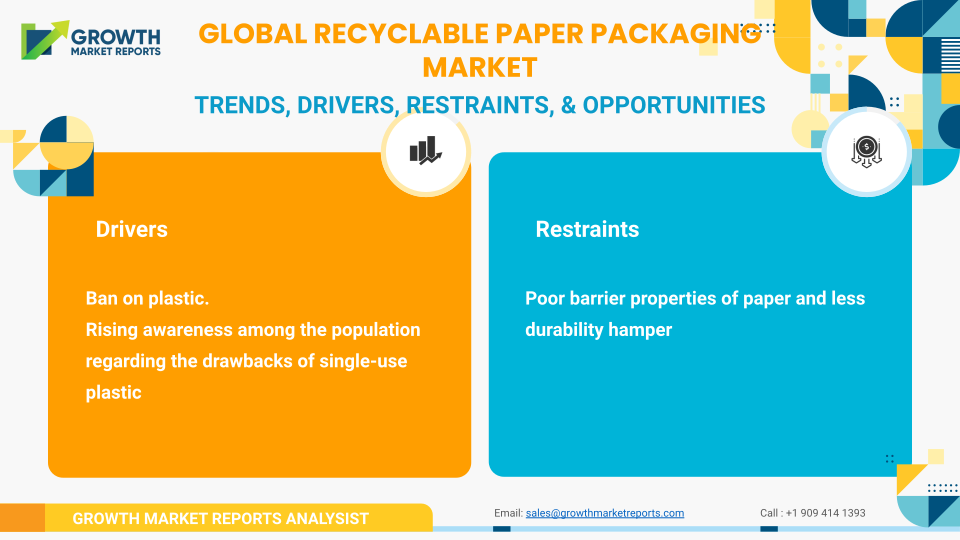
A significant growth factor for the recyclable paper packaging market is the intensifying global focus on environmental sustainability. Governments and environmental agencies worldwide are implementing stringent regulations to curb plastic waste, which has led to a surge in demand for alternative packaging solutions such as recyclable paper. Major economies, particularly in Europe and North America, have introduced bans or taxes on single-use plastics, pushing industries to transition towards paper-based packaging. In addition, multinational brands are pledging to achieve ambitious sustainability targets, further accelerating the adoption of recyclable paper packaging across various sectors. The growing awareness among consumers about the ecological impact of their purchasing decisions is also fueling the shift from conventional to recyclable packaging, making it a central trend in the packaging industry.
Technological advancements and innovation in paper packaging materials have played a crucial role in market expansion. The development of high-strength, water-resistant, and visually appealing paper packaging solutions has significantly broadened the application scope in sectors such as food & beverage, electronics, and personal care. Manufacturers are investing heavily in research and development to enhance the durability, functionality, and printability of paper packaging, thereby overcoming traditional limitations. Furthermore, the integration of smart packaging technologies, such as QR codes and anti-counterfeit features, is adding value to recyclable paper packaging, making it not only sustainable but also functional and interactive. These innovations are expected to further propel the market growth over the coming years.
The rise of e-commerce and digital retailing has emerged as another pivotal growth driver for the recyclable paper packaging market. With the exponential increase in online shopping, there is a corresponding surge in demand for protective, lightweight, and sustainable packaging materials. E-commerce companies are increasingly adopting recyclable paper-based solutions to enhance their green credentials and meet the expectations of environmentally conscious consumers. This trend is particularly prominent in regions such as Asia Pacific and North America, where e-commerce penetration is high. The scalability and versatility of paper packaging make it an ideal choice for e-commerce logistics, ranging from corrugated boxes to wrapping papers and mailers.
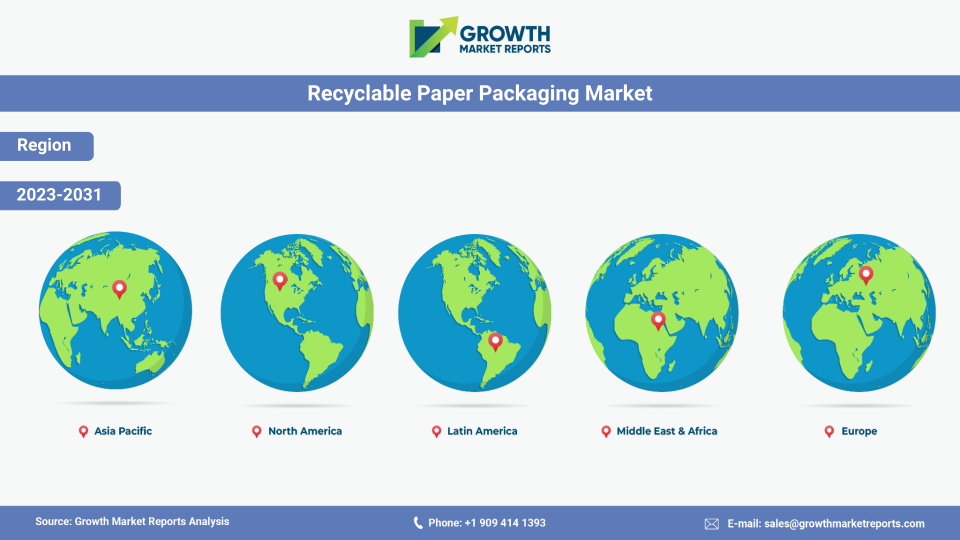
From a regional perspective, Asia Pacific stands out as the fastest-growing market for recyclable paper packaging, owing to rapid industrialization, urbanization, and a burgeoning middle-class population. China, India, and Southeast Asian countries are witnessing substantial investments in sustainable packaging infrastructure, supported by proactive government policies and rising consumer awareness. Europe, on the other hand, continues to lead in terms of market share, driven by advanced recycling systems and strict environmental regulations. North America is also a significant market, characterized by innovation and a strong presence of key industry players. Collectively, these regions are shaping the global trajectory of the recyclable paper packaging market, with emerging economies expected to contribute significantly to future growth.
The recyclable paper packaging market is segmented by product type into corrugated boxes, cartons, paper bags, wrapping paper, and others. Among these, corrugated boxes represent the largest segment, accounting for a significant share of the market due to their widespread use in shipping, logistics, and e-commerce. Corrugated boxes offer excellent strength, durability, and recyclability, making them the preferred choice for transporting goods across various industries. The surge in online retailing has further amplified the demand for corrugated boxes, as they provide the necessary protection for products during transit while aligning with sustainability goals. Innovations in box design, such as easy-to-assemble structures and custom printing, are enhancing their appeal to both businesses and consumers.
Cartons, another prominent product type, are extensively used in the food & beverage and personal care industries. The recyclability and versatility of paperboard cartons make them suitable for packaging liquids, dry goods, and consumer products. The shift towards lightweight and eco-friendly packaging in the food industry has led to increased adoption of recyclable cartons, particularly for dairy, juices, and ready-to-eat meals. Manufacturers are focusing on improving the barrier properties of cartons to extend shelf life and preserve product quality without compromising recyclability. The integration of renewable coatings and inks is also gaining traction, further supporting the market growth for recyclable cartons.
Paper bags are witnessing rising demand in retail, grocery, and food service sectors as a sustainable alternative to plastic bags. The implementation of bans on single-use plastic bags in several countries has significantly boosted the adoption of recyclable paper bags. These bags are not only biodegradable but also customizable in terms of size, shape, and design, making them ideal for branding and promotional purposes. Retailers and foodservice providers are increasingly opting for paper bags to enhance their environmental profile and cater to the preferences of eco-conscious consumers. The development of stronger and moisture-resistant paper bags is further expanding their usability across diverse applications.
Wrapping paper, traditionally used for gift packaging and retail, is also gaining momentum as a recyclable packaging option. The growing trend of sustainable gifting and premium packaging is driving the demand for recyclable wrapping paper, which is often made from recycled fibers and printed with eco-friendly inks. Businesses are leveraging attractive and sustainable wrapping paper to differentiate their products and appeal to environmentally aware customers. The segment also includes specialty papers used for wrapping fragile items, food products, and luxury goods, where recyclability and aesthetics are equally important. As consumer expectations for sustainable packaging continue to rise, the market for recyclable wrapping paper is expected to witness steady growth.
Other product types, such as molded fiber packaging and specialty papers, are emerging as niche segments within the recyclable paper packaging market. Molded fiber packaging, commonly used for protective packaging of electronics, eggs, and beverages, is gaining traction due to its compostability and recyclability. Specialty papers, including greaseproof and water-resistant variants, are being developed to meet the specific needs of industries such as foodservice and healthcare. These innovative products are expanding the application scope of recyclable paper packaging and contributing to the overall market growth.
| Attributes | Details |
| Report Title | Recyclable Paper Packaging Market Research Report 2033 |
| By Product Type | Corrugated Boxes, Cartons, Paper Bags, Wrapping Paper, Others |
| By Material Type | Kraft Paper, Coated Unbleached Kraft Paperboard, Recycled Paper, Others |
| By End-Use Industry | Food & Beverage, Personal Care & Cosmetics, Healthcare, Electronics, E-commerce, Others |
| By Packaging Type | Primary Packaging, Secondary Packaging, Tertiary Packaging |
| Regions Covered | North America, Europe, APAC, Latin America, MEA |
| Base Year | 2024 |
| Historic Data | 2018-2023 |
| Forecast Period | 2025-2033 |
| Number of Pages | 294 |
| Number of Tables & Figures | 366 |
| Customization Available | Yes, the report can be customized as per your need. |
The recyclable paper packaging market is categorized by material type into kraft paper, coated unbleached kraft paperboard, recycled paper, and others. Kraft paper is the most widely used material, prized for its strength, durability, and recyclability. It is commonly utilized in the production of corrugated boxes, paper bags, and wrapping paper. The high tear resistance and printability of kraft paper make it suitable for a wide range of packaging applications. Manufacturers are increasingly sourcing kraft paper from sustainably managed forests and incorporating recycled content to enhance the environmental credentials of their products. The demand for unbleached, natural-looking kraft paper is also on the rise, driven by the popularity of rustic and eco-friendly packaging designs.
Coated unbleached kraft paperboard is another important material type, offering a balance between strength and visual appeal. This material is often used in the production of cartons and folding boxes for food, beverages, and personal care products. The coating provides a smooth surface for high-quality printing while maintaining the recyclability of the packaging. Innovations in coating technologies, such as the use of water-based and biodegradable coatings, are enabling manufacturers to meet both performance and sustainability requirements. The versatility of coated unbleached kraft paperboard is driving its adoption in premium packaging applications where aesthetics and functionality are critical.
Recycled paper is a cornerstone of the recyclable paper packaging market, reflecting the industry's commitment to circular economy principles. The use of recycled fibers reduces the demand for virgin pulp, conserves natural resources, and minimizes environmental impact. Recycled paper is commonly used in the production of corrugated boxes, cartons, and wrapping paper. Advances in recycling technologies have improved the quality and strength of recycled paper, making it a viable alternative to virgin materials for a wide range of packaging applications. Brands and consumers alike are increasingly seeking packaging made from high-recycled-content paper, further boosting demand in this segment.
Other material types, such as specialty papers and hybrid materials, are emerging to address specific packaging challenges. Specialty papers may include water-resistant, greaseproof, or anti-microbial papers tailored for foodservice, healthcare, and industrial applications. Hybrid materials, which combine paper with bio-based or compostable coatings, are being developed to enhance barrier properties without compromising recyclability. These innovations are expanding the functionality and application scope of recyclable paper packaging, enabling it to compete with conventional plastic and composite materials in demanding environments.
Overall, the choice of material is a critical factor influencing the performance, sustainability, and marketability of recyclable paper packaging. Manufacturers are prioritizing the use of renewable, recycled, and responsibly sourced materials to align with evolving regulatory standards and consumer expectations. The ongoing research and development in material science are expected to yield new solutions that balance strength, durability, aesthetics, and recyclability, further propelling market growth.
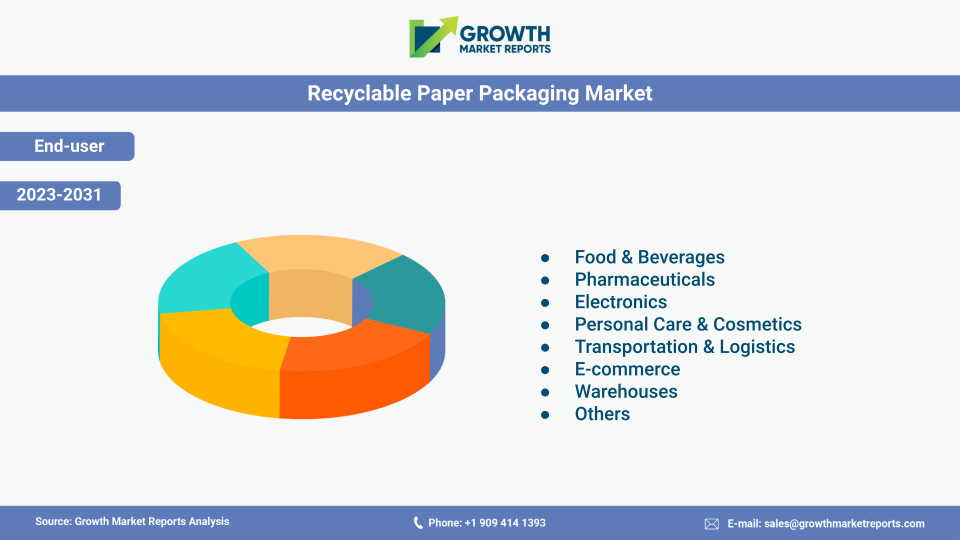
The recyclable paper packaging market serves a diverse range of end-use industries, including food & beverage, personal care & cosmetics, healthcare, electronics, e-commerce, and others. The food & beverage industry is the largest consumer of recyclable paper packaging, utilizing it for products such as cartons, trays, wrappers, and takeaway containers. The growing preference for sustainable packaging among food manufacturers and retailers has led to the widespread adoption of paper-based solutions. Stringent food safety regulations and the need for packaging that preserves freshness and extends shelf life are driving innovation in this segment. The shift towards ready-to-eat meals, on-the-go snacks, and online food delivery is further boosting the demand for recyclable paper packaging in the food & beverage sector.
The personal care & cosmetics industry is increasingly embracing recyclable paper packaging to cater to environmentally conscious consumers. Brands are leveraging eco-friendly packaging as a key differentiator, using paper-based cartons, sleeves, and wraps for products such as skincare, haircare, and cosmetics. The premiumization trend in personal care is driving demand for high-quality, visually appealing paper packaging that aligns with brand values and enhances the consumer experience. Innovations in printing, embossing, and finishing techniques are enabling brands to create distinctive and sustainable packaging designs. Regulatory pressures to reduce plastic waste in the cosmetics industry are also contributing to the growth of recyclable paper packaging in this segment.
In the healthcare industry, recyclable paper packaging is gaining traction for the packaging of pharmaceuticals, medical devices, and over-the-counter products. The need for tamper-evident, sterile, and easy-to-handle packaging solutions is driving the adoption of paper-based materials. Healthcare providers and pharmaceutical companies are increasingly prioritizing sustainability in their packaging choices, in line with global efforts to reduce environmental impact. The development of specialized paper packaging with enhanced barrier properties and anti-microbial coatings is addressing the unique requirements of the healthcare sector. The growing demand for single-use medical packaging, driven by hygiene concerns, is also supporting market growth.
The electronics industry is another key end-user of recyclable paper packaging, particularly for protective packaging and transit solutions. The rise of e-commerce and direct-to-consumer sales in electronics has heightened the need for durable, shock-absorbent, and sustainable packaging materials. Paper-based solutions, such as molded fiber trays and corrugated inserts, are being adopted to safeguard electronic devices during shipping while minimizing environmental impact. Electronics brands are also using recyclable paper packaging to enhance their green image and comply with regulations related to electronic waste and packaging sustainability.
E-commerce is a rapidly growing end-use segment, driving demand for a wide variety of recyclable paper packaging products, including mailers, boxes, and wrapping papers. Online retailers are under increasing pressure to adopt sustainable packaging practices to meet consumer expectations and regulatory requirements. The scalability, versatility, and printability of paper packaging make it well-suited for e-commerce logistics. The trend towards personalized and branded packaging in e-commerce is further boosting demand for customizable paper-based solutions. Other end-use industries, such as industrial goods, automotive, and household products, are also contributing to the growth of the recyclable paper packaging market.
The recyclable paper packaging market is segmented by packaging type into primary packaging, secondary packaging, and tertiary packaging. Primary packaging refers to the packaging that comes in direct contact with the product, such as cartons for food and beverage, personal care, and pharmaceuticals. The focus on food safety, product protection, and shelf appeal is driving innovation in primary paper packaging. Manufacturers are developing advanced paper materials with improved barrier properties to ensure product freshness and safety, particularly in the food and healthcare sectors. The demand for visually appealing and informative primary packaging is also prompting brands to invest in high-quality printing and finishing techniques on paper-based materials.
Secondary packaging plays a crucial role in grouping primary packages for transportation, storage, and display. This includes corrugated boxes, trays, and sleeves used in retail, logistics, and e-commerce. The surge in online shopping and home deliveries has significantly increased the demand for secondary paper packaging solutions, which offer protection, stackability, and easy handling. The recyclability and strength of corrugated boxes make them the preferred choice for secondary packaging across industries. Retailers and logistics providers are also seeking innovative secondary packaging designs that optimize space, reduce material usage, and enhance sustainability.
Tertiary packaging, also known as transit or bulk packaging, is used for the transportation and handling of large quantities of products. This includes pallets, large corrugated containers, and protective wrapping papers. The emphasis on supply chain efficiency and environmental responsibility is driving the adoption of recyclable paper-based tertiary packaging solutions. Manufacturers are developing lightweight yet durable materials that reduce transportation costs and environmental footprint. The growing focus on circular supply chains and closed-loop recycling systems is further supporting the use of paper-based tertiary packaging in logistics and distribution.
The choice of packaging type is influenced by factors such as product characteristics, distribution channels, and regulatory requirements. Brands and manufacturers are increasingly adopting a holistic approach to packaging design, considering the entire lifecycle from production to disposal. The integration of smart packaging features, such as tracking codes and tamper-evident seals, is enhancing the functionality and security of paper-based packaging across all types. The trend towards minimalistic and sustainable packaging design is also shaping the development of primary, secondary, and tertiary paper packaging solutions.
Overall, the segmentation by packaging type highlights the versatility and adaptability of recyclable paper packaging in meeting the diverse needs of modern supply chains. The ongoing innovation in materials, design, and functionality is expected to drive further growth and adoption of paper-based packaging solutions across industries.
The recyclable paper packaging market presents numerous opportunities for growth and innovation. One of the most significant opportunities lies in the development of advanced materials and coatings that enhance the performance and functionality of paper packaging without compromising recyclability. Research and development efforts are focused on creating water-resistant, greaseproof, and antimicrobial paper materials to expand the application scope in food, healthcare, and industrial sectors. The integration of digital technologies, such as smart packaging and interactive labels, offers additional value-added opportunities for brands to engage consumers and improve supply chain visibility. The increasing adoption of circular economy principles and closed-loop recycling systems is also opening new avenues for sustainable packaging solutions.
Another major opportunity is the expansion of recyclable paper packaging in emerging markets, particularly in Asia Pacific and Latin America. Rapid urbanization, rising disposable incomes, and growing environmental awareness are driving demand for sustainable packaging in these regions. Governments and industry associations are promoting the adoption of eco-friendly packaging through incentives, regulations, and public awareness campaigns. Companies that invest in local production capacities, supply chain optimization, and consumer education are well-positioned to capture market share in these high-growth regions. The trend towards premium and personalized packaging in e-commerce and retail also presents lucrative opportunities for innovation and differentiation in recyclable paper packaging.
Despite the positive outlook, the recyclable paper packaging market faces certain restrainers, most notably the competition from alternative sustainable packaging materials such as bioplastics, reusable packaging, and compostable solutions. While paper packaging offers excellent recyclability and biodegradability, it may face challenges in applications requiring high barrier properties, moisture resistance, or extended shelf life. The volatility in raw material prices, particularly for pulp and recycled fibers, can also impact production costs and profit margins. Additionally, the lack of standardized recycling infrastructure in some regions may limit the effective recovery and recycling of paper packaging, posing a challenge to market growth.
The regional analysis of the recyclable paper packaging market reveals distinct trends and growth dynamics across key geographies. Asia Pacific is the fastest-growing region, accounting for approximately 34% of the global market in 2024, with a market value of USD 30.1 billion. The region is projected to grow at a CAGR of 7.2% during the forecast period, driven by rapid industrialization, urbanization, and the expansion of e-commerce. China, India, and Southeast Asian countries are leading the adoption of recyclable paper packaging, supported by government initiatives, rising environmental awareness, and investments in recycling infrastructure. The increasing preference for sustainable packaging among consumers and businesses is expected to sustain robust growth in Asia Pacific.
Europe holds the largest share of the recyclable paper packaging market, with a market size of USD 32.4 billion in 2024, representing approximately 37% of the global market. The region's leadership is attributed to stringent environmental regulations, advanced recycling systems, and a strong culture of sustainability. European Union directives on packaging waste and circular economy principles are driving the adoption of recyclable paper packaging across industries. Key markets such as Germany, France, and the United Kingdom are at the forefront of innovation in sustainable packaging materials and design. The presence of established industry players and supportive government policies further reinforce Europe's dominance in the market.
North America is another significant region, with a market value of USD 18.2 billion in 2024, accounting for about 20.6% of the global market. The region is characterized by high levels of innovation, strong consumer demand for eco-friendly products, and a well-developed recycling infrastructure. The United States and Canada are witnessing increased adoption of recyclable paper packaging in food & beverage, e-commerce, and personal care industries. The focus on reducing plastic waste and achieving corporate sustainability targets is driving investments in new materials and technologies. Latin America and the Middle East & Africa collectively account for the remaining market share, with growth driven by rising environmental awareness and regulatory support for sustainable packaging.
The competitive landscape of the recyclable paper packaging market is characterized by the presence of both global giants and regional players, each striving to gain a larger market share through product innovation, strategic partnerships, and sustainability initiatives. Leading companies are investing heavily in research and development to introduce advanced materials, coatings, and packaging designs that meet the evolving needs of end-users. The competition is further intensified by the entry of new players, particularly in emerging markets, who are leveraging local expertise and cost advantages to capture niche segments. Mergers, acquisitions, and collaborations are common strategies adopted by market leaders to expand their product portfolios and geographical reach.
Innovation is a key differentiator in the recyclable paper packaging market, with companies focusing on developing high-performance, visually appealing, and customizable packaging solutions. The integration of smart packaging technologies, such as RFID tags and QR codes, is enabling brands to enhance supply chain visibility and consumer engagement. Sustainability remains at the core of competitive strategies, with companies emphasizing the use of renewable, recycled, and responsibly sourced materials. Transparency in sourcing and production processes is increasingly important, as consumers and regulators demand greater accountability from packaging suppliers.
The market is also witnessing a trend towards vertical integration, with major players acquiring or partnering with raw material suppliers, recycling companies, and technology providers to strengthen their value chains. This approach enables companies to ensure a consistent supply of high-quality materials, optimize production processes, and reduce costs. The focus on circular economy principles is driving investments in closed-loop recycling systems, where used packaging is collected, recycled, and reintroduced into the production cycle. Companies that can demonstrate a commitment to circularity and resource efficiency are likely to gain a competitive edge in the market.
Some of the major companies operating in the recyclable paper packaging market include International Paper Company, WestRock Company, Smurfit Kappa Group, Mondi Group, DS Smith Plc, Packaging Corporation of America, and Nippon Paper Industries Co., Ltd. These companies have a strong global presence, extensive product portfolios, and a track record of innovation in sustainable packaging solutions. International Paper Company and WestRock are leaders in the North American market, known for their advanced corrugated packaging and recycling capabilities. Smurfit Kappa and DS Smith are prominent players in Europe, focusing on circular economy initiatives and the development of high-performance paper packaging. Mondi Group operates across multiple regions, offering a wide range of recyclable paper and flexible packaging solutions.
Other notable players include Stora Enso Oyj, Georgia-Pacific LLC, Oji Holdings Corporation, and Pratt Industries. These companies are actively investing in new technologies, expanding their production capacities, and entering strategic partnerships to strengthen their market positions. The focus on sustainability, innovation, and customer-centric solutions is expected to drive continued competition and growth in the recyclable paper packaging market. As the industry evolves, companies that can adapt to changing market dynamics, regulatory requirements, and consumer preferences will be best positioned to succeed in the global marketplace.
The Recyclable Paper Packaging market has been segmented on the basis of
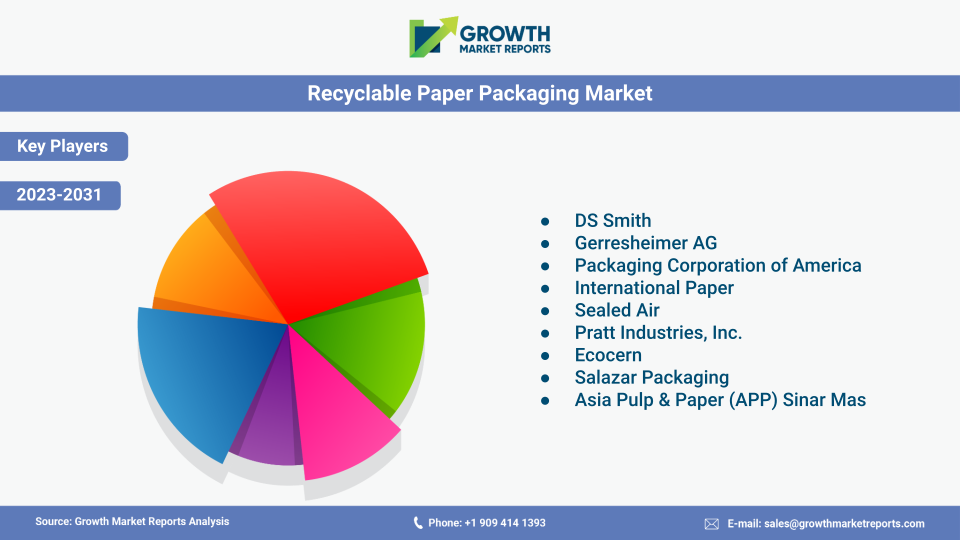
Key players competing in the global recyclable paper packaging market are DS Smith; Gerresheimer AG; Packaging Corporation of America; International Paper; Sealed Air; Pratt Industries, Inc.; Ecocern; Salazar Packaging; and Asia Pulp & Paper (APP) Sinar Mas.
These companies adopted development strategies including mergers, acquisitions, partnerships, collaboration, product launches, and production expansion to expand their consumer base worldwide. For instance,
On January 26, 2021, Nestle announced that its popular Smarties brand is now using recyclable paper packaging for its confectionery products worldwide. This represents a transition of 90% of the Smarties range, as 10% was previously already packed in recyclable paper packaging.
Innovation is focused on developing high-strength, water-resistant, and visually appealing paper packaging, integrating smart technologies like QR codes and RFID, and enhancing recyclability and sustainability through new materials and coatings.
Major companies include International Paper Company, WestRock Company, Smurfit Kappa Group, Mondi Group, DS Smith Plc, Stora Enso Oyj, Oji Holdings Corporation, Packaging Corporation of America, Georgia-Pacific LLC, and Pratt Industries Inc.
Opportunities include developing advanced materials, expanding in emerging markets, and integrating smart packaging technologies. Challenges involve competition from alternative sustainable materials, raw material price volatility, and uneven recycling infrastructure.
Europe holds the largest market share due to strict environmental regulations and advanced recycling systems. Asia Pacific is the fastest-growing region, while North America is notable for innovation and high consumer demand for sustainable packaging.
The market is segmented into primary packaging (direct contact with products), secondary packaging (grouping and transport), and tertiary packaging (bulk transit and logistics). Corrugated boxes are widely used for secondary and tertiary packaging.
Major end-use industries include food & beverage, personal care & cosmetics, healthcare, electronics, and e-commerce. The food & beverage sector is the largest consumer, followed by personal care and e-commerce.
Common materials include kraft paper, coated unbleached kraft paperboard, recycled paper, and specialty papers such as water-resistant or greaseproof variants. Kraft paper is especially popular for its strength and recyclability.
Corrugated boxes are the largest segment due to their widespread use in shipping, logistics, and e-commerce. Other significant product types include cartons, paper bags, wrapping paper, and molded fiber packaging.
Key growth drivers include increasing regulations against single-use plastics, rising environmental awareness, technological innovations in paper packaging, and the surge in e-commerce requiring sustainable packaging solutions.
The global recyclable paper packaging market reached USD 88.4 billion in 2024 and is projected to grow at a CAGR of 5.7%, reaching USD 145.2 billion by 2033. Growth is driven by sustainability initiatives, regulatory pressures, and consumer demand for eco-friendly packaging.