Segments - by Material Type (Polycarbonate, ABS, Polystyrene, Polyester, Others), by Product Type (Junction Boxes, Control Boxes, Terminal Boxes, Others), by Application (Electronics & Electrical, Industrial, Automotive, Telecommunications, Healthcare, Others), by Mounting Type (Wall-Mounted, DIN Rail-Mounted, Handheld, Others), by Distribution Channel (Direct, Distributors, Online)
This report is updated with the latest market data and insights as of June 2026. Base year: 2025 | Forecast period: 2026-2034
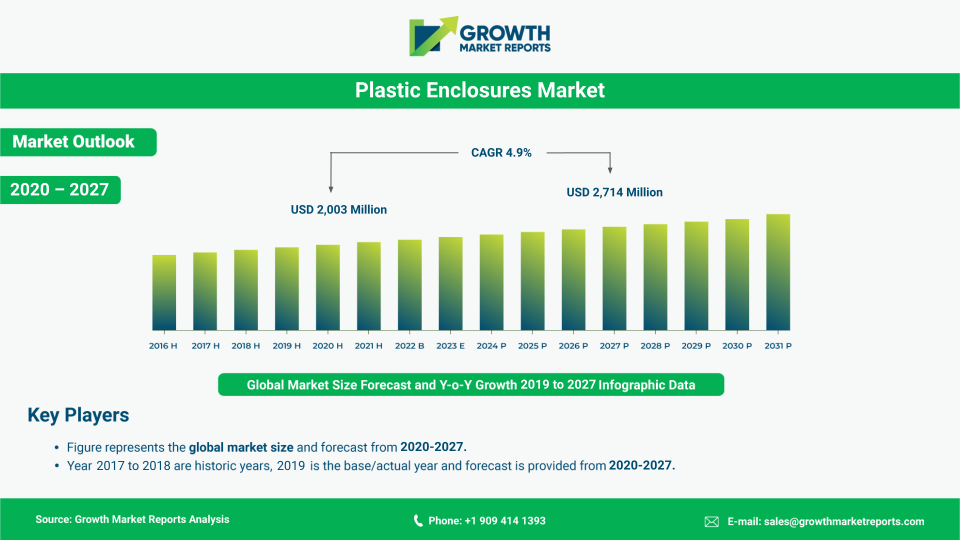
As per our latest research, the global plastic enclosures market size reached USD 7.5 billion in 2025, reflecting robust demand across key industries. The market is projected to expand at a CAGR of 5.2% from 2026 to 2034, with the total value anticipated to reach USD 11.9 billion by 2034. This growth is primarily driven by increasing adoption of plastic enclosures in electronics, industrial automation, and telecommunications, owing to their lightweight construction, corrosion resistance, and cost-effectiveness compared to traditional metal alternatives. The market's expansion is further fueled by rapid technological advancements and the ongoing trend toward miniaturization and modularity in electrical and electronic systems. The growing footprint of plastic electronics enclosures across consumer and industrial device categories underscores how broadly the material-type shift is reshaping demand.
The growth trajectory of the plastic enclosures market is underpinned by several key factors, the most prominent being the surging demand from the electronics and electrical sectors. As electronic devices become increasingly compact and sophisticated, there is a heightened need for enclosures that offer reliable protection against dust, moisture, and electromagnetic interference. Plastic enclosures, particularly those made from advanced polymers such as polycarbonate and ABS, provide excellent insulation and mechanical strength while offering design flexibility. The proliferation of Internet of Things (IoT) devices, smart home systems, and industrial automation equipment has further amplified the need for robust and versatile enclosure solutions. Manufacturers are responding by developing enclosures with enhanced ingress protection (IP) ratings and improved thermal management, catering to the evolving requirements of modern electronics.
Another significant growth driver is the ongoing industrial automation and digitization wave sweeping across manufacturing, automotive, and process industries. Plastic enclosures are increasingly being adopted in control systems, junction boxes, and terminal boxes, where they safeguard sensitive electronic components from harsh operating environments. Their non-conductive nature, chemical resistance, and ease of customization make them ideal for a wide array of industrial applications. Moreover, the automotive sector is witnessing a surge in the use of plastic enclosures for housing electronic control units, sensors, and connectors, particularly with the rise of electric vehicles and advanced driver-assistance systems (ADAS). The healthcare sector also contributes to market expansion, leveraging plastic enclosures for medical devices, diagnostic equipment, and patient monitoring systems due to their compliance with stringent hygiene and safety standards. The broader trend of plastics-driven automation is accelerating adoption timelines across these verticals.
The global shift toward sustainable and recyclable materials is also shaping the plastic enclosures market. Manufacturers are increasingly focusing on the development of eco-friendly enclosures made from recycled plastics and bio-based polymers. This aligns with the growing regulatory emphasis on environmental sustainability and the circular economy, especially in regions such as Europe and North America. Additionally, advancements in plastic molding technologies, such as injection molding and 3D printing, are enabling the production of highly customized and complex enclosure designs at lower costs and shorter lead times. These technological innovations are expected to open new avenues for market players, allowing them to cater to niche applications and offer value-added solutions to end-users.
In the realm of electronic and industrial applications, the demand for enclosures that offer superior protection against environmental factors is ever-increasing. One such solution that has gained prominence is the IP67 Enclosure. These enclosures are specifically designed to provide complete protection against dust ingress and can withstand immersion in water up to a certain depth, making them ideal for outdoor and industrial environments. The IP67 rating ensures that sensitive electronic components housed within are safeguarded from harsh conditions, thereby enhancing their longevity and reliability. As industries continue to push the boundaries of technology, the need for robust and resilient enclosures of this class becomes even more critical, especially in sectors such as telecommunications, automotive, and industrial automation, where equipment is often exposed to challenging conditions.
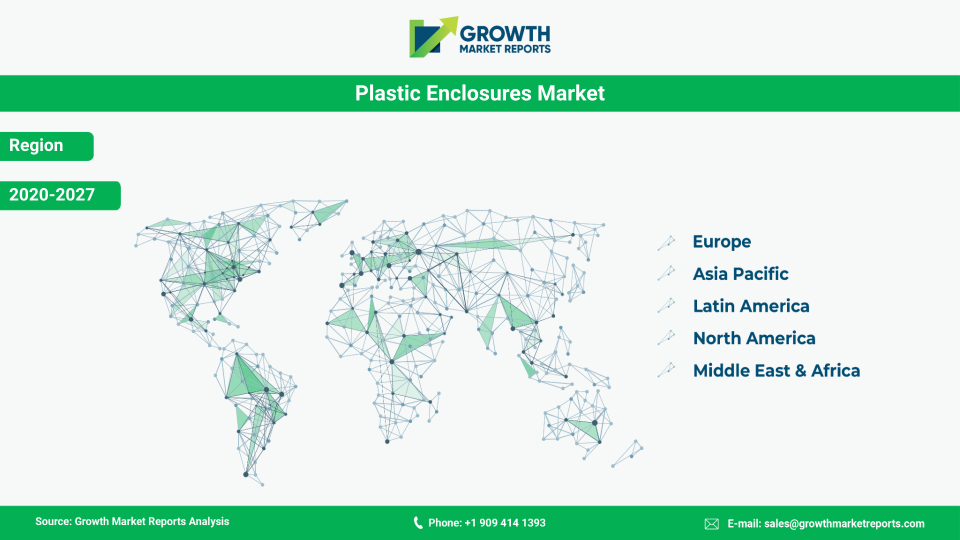
From a regional perspective, Asia Pacific continues to dominate the global plastic enclosures market, accounting for the largest revenue share in 2025, driven by rapid industrialization, expanding electronics manufacturing, and robust infrastructure development in countries such as China, Japan, South Korea, and India. North America and Europe follow closely, benefiting from strong demand in the automotive, healthcare, and telecommunications sectors. The Middle East & Africa and Latin America are also witnessing steady growth, supported by increasing investments in industrial and telecommunications infrastructure. Regional market dynamics are influenced by factors such as regulatory frameworks, technological adoption rates, and the presence of major manufacturing hubs, which collectively shape the competitive landscape and growth prospects of the plastic enclosures market.
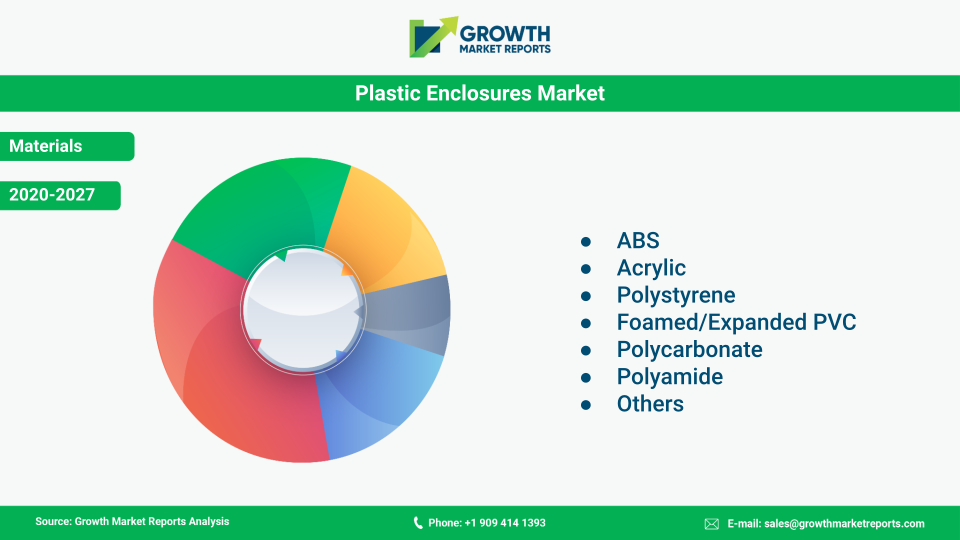
The plastic enclosures market is segmented by material type into polycarbonate, ABS, polystyrene, polyester, and others. Polycarbonate enclosures hold the largest share at approximately 32.5% of the 2025 market, highly favored for their exceptional impact resistance, thermal stability, and optical clarity. These properties make them ideal for demanding applications in industrial automation, telecommunications, and outdoor installations. Their superior mechanical properties and resistance to UV radiation and harsh chemicals enable them to withstand extreme environmental conditions, ensuring prolonged service life and reliability. As a result, polycarbonate enclosures are increasingly chosen for use in control panels, distribution boards, and field-mounted equipment, where robust protection is paramount. The growing demand for high-performance enclosures in smart grid and renewable energy installations further fuels the adoption of polycarbonate materials through the 2026-2034 forecast period.
ABS (Acrylonitrile Butadiene Styrene) enclosures represent the second-largest segment at around 28.0% of the 2025 market, valued for their cost-effectiveness, ease of fabrication, and good electrical insulation properties. ABS enclosures are widely used for indoor applications, such as junction boxes, terminal boxes, and consumer electronics housings, where mechanical stress and exposure to harsh environments are limited. Their lightweight nature and versatility in molding complex shapes make them a preferred choice for customized enclosure solutions, particularly in the electronics and healthcare sectors. The ability to incorporate flame-retardant additives and achieve compliance with safety standards further enhances the appeal of ABS enclosures, especially for applications where fire safety is a critical consideration.
Polystyrene enclosures, though less robust than polycarbonate and ABS, offer excellent dimensional stability, low moisture absorption, and high dielectric strength, accounting for approximately 11.5% of the 2025 market. These properties make them suitable for low-cost, non-critical applications such as battery housings, small electronic devices, and indoor sensor enclosures. Polystyrene is often selected for its ease of processing and ability to deliver precise, intricate designs at scale, which is advantageous for mass-produced consumer electronics. However, its limited resistance to impact and UV exposure restricts its use in outdoor or industrial environments, positioning it as a niche material within the broader plastic enclosures market.
Polyester enclosures are gaining traction, holding roughly 18.5% of the 2025 market, due to their superior chemical resistance, mechanical strength, and thermal stability. They are particularly well-suited for use in corrosive industrial environments, such as chemical processing plants, wastewater treatment facilities, and oil and gas installations. Polyester enclosures can withstand exposure to acids, alkalis, and solvents, making them ideal for protecting sensitive electronic and electrical components in harsh conditions. The trend toward increased automation and remote monitoring in industrial sectors is expected to drive further adoption of polyester enclosures through 2034, as end-users seek durable, maintenance-free solutions that ensure operational continuity. The parallel rise of robotics environmental enclosures in automated factory settings is also elevating demand for chemically resistant polyester variants.
The "Others" category, representing approximately 9.5% of 2025 revenues, includes a range of specialty plastics and composite materials, such as polyamide, polypropylene, and glass-reinforced plastics, which are selected for specific performance attributes required in niche applications. These materials offer unique combinations of strength, flexibility, and resistance to environmental stressors, allowing manufacturers to tailor enclosure properties to meet the precise needs of end-users. The ongoing development of advanced polymers and hybrid materials is likely to broaden the scope of the plastic enclosures market, enabling the creation of next-generation enclosures with enhanced functionality, sustainability, and aesthetic appeal by the end of the forecast period.
| Attributes | Details |
| Report Title | Global Plastic Enclosures Market Research Report 2034 |
| By Material Type | Polycarbonate, ABS, Polystyrene, Polyester, Others |
| By Product Type | Junction Boxes, Control Boxes, Terminal Boxes, Others |
| By Application | Electronics & Electrical, Industrial, Automotive, Telecommunications, Healthcare, Others |
| By Mounting Type | Wall-Mounted, DIN Rail-Mounted, Handheld, Others |
| By Distribution Channel | Direct, Distributors, Online |
| Regions Covered | North America, Europe, APAC, Latin America, MEA |
| Base Year | 2025 |
| Historic Data | 2019-2024 |
| Forecast Period | 2026-2034 |
| Number of Pages | 290 |
| Number of Tables & Figures | 397 |
| Customization Available | Yes, the report can be customized as per your need. |
Within the plastic enclosures market, product type segmentation encompasses junction boxes, control boxes, terminal boxes, and others. Junction boxes constitute a significant share of the market, serving as essential components for housing electrical connections and ensuring safety and reliability in wiring systems. These enclosures are extensively used in residential, commercial, and industrial settings, where they provide secure and accessible points for electrical distribution and maintenance. The increasing adoption of smart building technologies and energy management systems is driving demand for advanced junction boxes with integrated features such as cable management, modularity, and enhanced ingress protection across the 2026-2034 forecast period.
Control boxes represent another critical product category, designed to house control panels, relays, switches, and automation equipment. These enclosures are indispensable in industrial automation, process control, and manufacturing environments, where they protect sensitive electronics from dust, moisture, vibration, and electromagnetic interference. The trend toward Industry 4.0 and the integration of IoT devices in industrial settings is fueling the need for highly customizable and robust control boxes. Manufacturers are responding by offering enclosures with modular designs, flexible mounting options, and enhanced thermal management capabilities, enabling seamless integration with advanced automation systems. Notably, the growing use of stainless steel and plastic hybrid enclosures in robotics is influencing how control box designers approach material selection and structural performance.
The versatility of plastic enclosures extends to various mounting solutions, with the DIN Rail Enclosure being a notable example. These enclosures are engineered for easy installation on standard DIN rails, a feature that is particularly beneficial in industrial automation and control systems. The modular design of DIN Rail Enclosures allows for efficient space utilization and quick assembly, making them a preferred choice for housing control equipment, relays, and circuit breakers. Their adaptability and ease of integration into existing systems make them indispensable in environments where space is at a premium and rapid reconfiguration is often required. As industries advance towards more automated and interconnected systems through 2034, the demand for DIN Rail Enclosures is expected to rise consistently.
Terminal boxes play a vital role in facilitating secure and organized connections between multiple electrical circuits, wires, or cables. They are widely used in power distribution, telecommunications, and instrumentation applications, where reliable connectivity and ease of maintenance are essential. Plastic terminal boxes offer advantages such as corrosion resistance, electrical insulation, and lightweight construction, making them suitable for both indoor and outdoor installations. The ongoing expansion of telecommunications networks and the deployment of renewable energy systems are expected to drive sustained demand for terminal boxes, particularly in emerging markets and remote locations through the forecast horizon.
The "Others" segment includes a diverse range of enclosure products, such as sensor housings, battery enclosures, and instrument cases, which cater to specialized requirements in sectors like healthcare, automotive, and consumer electronics. These enclosures are often designed for specific form factors, environmental conditions, or regulatory standards, necessitating advanced materials and precision manufacturing techniques. The growing trend toward product miniaturization and the need for aesthetically appealing, user-friendly designs are prompting manufacturers to innovate and diversify their product offerings within this segment. As the market evolves through 2034, the ability to deliver tailored enclosure solutions that address unique application challenges will become a key differentiator for market players.
The plastic enclosures market serves a wide array of applications, with electronics and electrical, industrial, automotive, telecommunications, healthcare, and others constituting the primary segments. Electronics and electrical applications account for the largest market share in 2025, driven by the proliferation of consumer electronics, IoT devices, and smart home systems. Plastic enclosures are indispensable for protecting sensitive electronic components from environmental hazards, electromagnetic interference, and accidental damage, ensuring device longevity and safety. The trend toward miniaturization and wireless connectivity in electronic devices is further accelerating demand for compact, lightweight, and aesthetically pleasing enclosures.
In the industrial sector, plastic enclosures are widely used in automation systems, process control equipment, and instrumentation panels, where they provide robust protection against dust, moisture, chemicals, and mechanical impact. The rise of Industry 4.0 and the increasing adoption of advanced manufacturing technologies are driving demand for enclosures that offer modularity, scalability, and compatibility with smart sensors and actuators. Manufacturers are focusing on developing enclosures with enhanced ingress protection ratings, integrated cable management features, and flexible mounting options to meet the diverse needs of industrial end-users across the 2026-2034 forecast window.
The automotive industry represents a rapidly growing application segment, fueled by the electrification of vehicles, the integration of advanced driver-assistance systems (ADAS), and the increasing use of electronic control units (ECUs). Plastic enclosures are used to house a wide range of automotive electronics, sensors, and connectors, providing protection against vibration, temperature fluctuations, and exposure to automotive fluids. The shift toward electric and hybrid vehicles is expected to further boost demand for lightweight, durable, and thermally stable enclosures that can accommodate high-voltage components and battery management systems through the forecast period ending 2034.
Telecommunications is another key application area, with plastic enclosures being used in network infrastructure, base stations, distribution boxes, and fiber optic equipment. The rapid expansion of 5G networks, broadband connectivity, and data centers is driving the need for enclosures that offer superior electromagnetic shielding, weather resistance, and ease of installation. Plastic enclosures are increasingly preferred over metal alternatives for their non-conductive properties, reduced weight, and lower installation costs, making them ideal for outdoor and rooftop deployments in both mature and emerging markets.
In the healthcare sector, plastic enclosures are used in medical devices, diagnostic equipment, and patient monitoring systems, where they must meet stringent hygiene, safety, and regulatory standards. The demand for portable, user-friendly, and aesthetically appealing medical devices is driving innovation in enclosure design and materials. Manufacturers are leveraging advanced polymers and antimicrobial coatings to enhance the performance and safety of healthcare enclosures, catering to the growing need for reliable and compliant solutions in hospitals, clinics, and home healthcare settings through 2034.
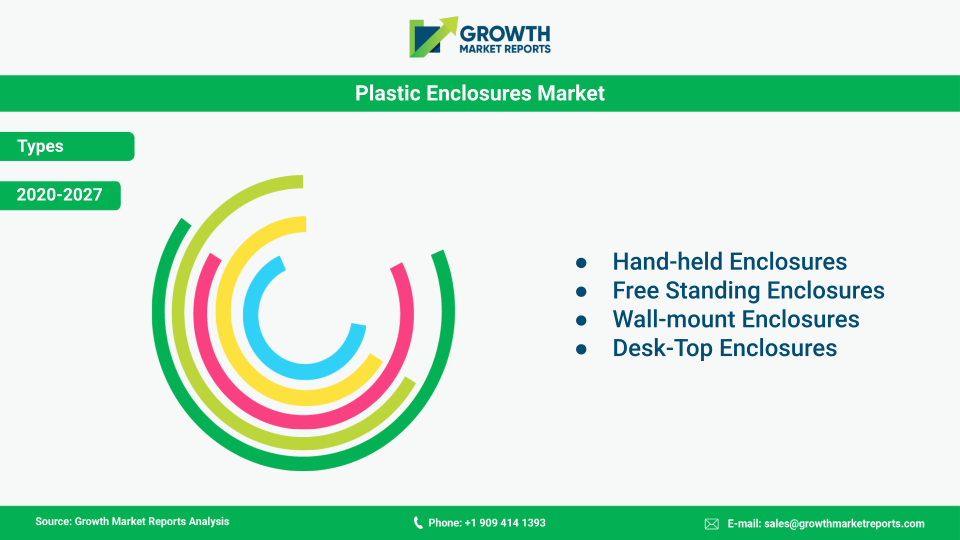
The mounting type segment of the plastic enclosures market includes wall-mounted, DIN rail-mounted, handheld, and others. Wall-mounted enclosures dominate the market, owing to their widespread use in electrical distribution boards, control panels, and telecommunications infrastructure. These enclosures offer secure and accessible mounting solutions for a variety of applications, providing protection against environmental hazards and unauthorized access. The increasing adoption of smart building technologies and the expansion of industrial automation are driving demand for wall-mounted enclosures with enhanced ingress protection, modularity, and integrated cable management features throughout the 2026-2034 forecast period.
DIN rail-mounted enclosures are gaining popularity, particularly in industrial automation, process control, and electrical distribution systems. These enclosures are designed to be easily mounted on standard DIN rails, facilitating quick installation and maintenance of control equipment, relays, and circuit breakers. The modular nature of DIN rail-mounted enclosures allows for flexible configuration and expansion, making them ideal for applications that require frequent reconfiguration or upgrades. The trend toward digitalization and the integration of smart sensors and actuators in industrial settings are expected to drive sustained demand for DIN rail-mounted enclosure solutions through 2034.
Handheld enclosures represent a niche but growing segment, catering to portable electronic devices, test and measurement instruments, and remote control units. These enclosures are designed for ergonomic comfort, lightweight construction, and ease of use, making them suitable for field applications, medical devices, and consumer electronics. The increasing demand for mobile and wearable technologies is prompting manufacturers to develop handheld enclosures with advanced features such as shock resistance, water resistance, and customizable form factors, enabling seamless integration with the latest electronic innovations.
The "Others" category includes a variety of mounting solutions, such as pole-mounted, rack-mounted, and flush-mounted enclosures, which address specific application requirements in sectors like utilities, transportation, and public infrastructure. These specialized enclosures are designed to withstand challenging environmental conditions, including exposure to UV radiation, extreme temperatures, and mechanical stress. The growing emphasis on smart city initiatives and the deployment of intelligent transportation systems are expected to create new opportunities for innovative mounting solutions within the plastic enclosures market through the end of the forecast period.
The distribution channel segment of the plastic enclosures market is categorized into direct sales, distributors, and online channels. Direct sales remain a significant channel, particularly for large-scale industrial and OEM customers who require customized enclosure solutions and value-added services. Manufacturers often establish long-term partnerships with key clients, offering technical support, design consultation, and after-sales services to ensure customer satisfaction and loyalty. The ability to deliver tailored solutions and respond quickly to changing customer requirements gives direct sales channels a competitive edge in the market through 2034.
Distributors play a crucial role in extending the market reach of plastic enclosure manufacturers, especially in regions with fragmented demand or limited direct presence. Distributors offer a wide range of standard and off-the-shelf enclosure products, catering to the needs of small and medium-sized enterprises, system integrators, and contractors. They provide value-added services such as inventory management, logistics support, and technical assistance, enabling manufacturers to efficiently serve diverse customer segments and geographic markets. The growing complexity of supply chains and the increasing demand for rapid product availability are expected to drive continued reliance on distributor networks throughout the 2026-2034 period.
Online channels are emerging as a dynamic and rapidly growing distribution segment, driven by the increasing adoption of e-commerce platforms and digital procurement solutions. Online sales channels offer customers the convenience of browsing, comparing, and purchasing enclosure products from a wide selection of brands and suppliers. The ability to access detailed product specifications, customer reviews, and real-time inventory information enhances the buying experience and supports informed decision-making. Manufacturers are increasingly investing in digital marketing, online catalogs, and e-commerce integration to capture the growing share of online sales and expand their customer base across all regions.
The evolving landscape of distribution channels is prompting market players to adopt omnichannel strategies, combining direct, distributor, and online sales approaches to maximize market penetration and customer engagement. The integration of digital technologies, such as customer relationship management (CRM) systems, data analytics, and automated order processing, is enabling manufacturers and distributors to streamline operations, improve customer service, and respond more effectively to market trends and customer preferences as the market moves through the 2026-2034 forecast period.
The plastic enclosures market is poised for significant growth opportunities driven by rapid technological advancements and the evolving needs of end-user industries. The increasing adoption of IoT, smart automation, and connected devices across sectors such as manufacturing, healthcare, and telecommunications is creating a robust demand for advanced enclosure solutions. Manufacturers can capitalize on this trend by developing enclosures with integrated features such as wireless connectivity, enhanced electromagnetic shielding, and real-time monitoring capabilities. The shift toward sustainable and recyclable materials presents another avenue for growth, as regulatory pressures and consumer preferences drive demand for eco-friendly enclosure solutions. Companies that invest in research and development to create innovative, high-performance, and environmentally responsible products will be well-positioned to capture emerging market opportunities and differentiate themselves from competitors through 2034.
Another significant opportunity lies in the customization and modularization of plastic enclosures to address the diverse and evolving requirements of end-users. The ability to offer tailored solutions, such as enclosures with specific dimensions, mounting options, or integrated components, enables manufacturers to cater to niche applications and provide value-added services. Advancements in manufacturing technologies, such as 3D printing and precision injection molding, are making it easier and more cost-effective to produce customized and small-batch enclosures. By leveraging these capabilities, market players can expand their product portfolios, enter new application segments, and enhance customer satisfaction. Additionally, the expansion of distribution networks, particularly through online and digital channels, offers opportunities to reach a broader customer base and streamline the sales process throughout the forecast horizon.
Despite the promising growth prospects, the plastic enclosures market faces several threats and restraining factors. One of the primary challenges is the volatility in raw material prices, particularly for high-performance polymers such as polycarbonate and ABS. Fluctuations in oil prices and supply chain disruptions can impact production costs and profit margins, making it difficult for manufacturers to maintain competitive pricing through 2034. Additionally, the increasing stringency of environmental regulations regarding plastic waste and recycling poses compliance challenges and may require significant investments in sustainable materials and manufacturing processes. The presence of alternative materials, such as metal and composite enclosures, also intensifies competition and requires market players to continuously innovate and differentiate their offerings to maintain market share.
Asia Pacific leads the global plastic enclosures market, accounting for approximately 43.5% of the 2025 market value, equivalent to roughly USD 3.3 billion. The region's dominance is attributed to rapid industrialization, expanding electronics manufacturing, and robust infrastructure development in countries such as China, Japan, South Korea, and India. The flourishing automotive and telecommunications sectors, coupled with government initiatives to promote smart manufacturing and digitalization, are driving demand for advanced enclosure solutions. The Asia Pacific market is expected to maintain a strong growth trajectory, with a projected CAGR of 6.1% during the 2026-2034 forecast period, outpacing other regions and reinforcing its position as the primary growth engine for the global market.
North America holds the second-largest share of the plastic enclosures market, representing approximately 24.0% of 2025 revenues, or around USD 1.8 billion. The region benefits from strong demand in sectors such as automotive, healthcare, and telecommunications, supported by a mature manufacturing base and high levels of technological adoption. The ongoing shift toward electric vehicles, smart healthcare devices, and advanced telecommunications infrastructure is fueling the need for high-performance plastic enclosures. Regulatory emphasis on environmental sustainability and the adoption of eco-friendly materials are influencing market trends, prompting manufacturers to invest in green technologies and recycling initiatives to meet evolving customer and regulatory requirements through 2034.
Europe represents a mature and highly regulated market, accounting for approximately 21.5% of 2025 revenues, or roughly USD 1.6 billion. The region's focus on sustainability, energy efficiency, and safety standards drives demand for innovative enclosure solutions in sectors such as industrial automation, renewable energy, and building automation. The presence of leading enclosure manufacturers and a strong emphasis on research and development contribute to the region's competitive edge. Meanwhile, Latin America and the Middle East & Africa are emerging as attractive markets, together representing the remaining approximately 11.0% of 2025 revenues, driven by infrastructure investments and the expansion of telecommunications and industrial sectors. These regions offer significant growth potential, particularly as governments and private sector players invest in modernization and digital transformation initiatives through the 2026-2034 forecast window.
The competitive landscape of the global plastic enclosures market is characterized by the presence of several established players, along with a growing number of regional and niche manufacturers. The market is moderately fragmented, with key players competing on factors such as product quality, innovation, customization capabilities, pricing, and customer service. Leading companies are investing heavily in research and development to introduce advanced enclosure solutions with improved performance characteristics, enhanced durability, and compliance with international standards. Strategic collaborations, mergers and acquisitions, and expansion into emerging markets are common strategies employed by market leaders to strengthen their market position and broaden their product portfolios across the 2026-2034 forecast horizon.
Innovation remains a key differentiator in the plastic enclosures market, with manufacturers focusing on the development of smart enclosures, integrated electronic components, and environmentally sustainable materials. The adoption of digital manufacturing technologies, such as 3D printing and automated assembly, is enabling companies to offer highly customized and cost-effective solutions tailored to specific customer needs. Additionally, the integration of digital platforms and e-commerce capabilities is transforming the sales and distribution landscape, allowing companies to reach a wider audience and streamline the procurement process.
The competitive environment is also shaped by the growing emphasis on environmental sustainability and regulatory compliance. Companies are increasingly adopting circular economy principles, investing in recycling programs, and developing enclosures made from recycled or bio-based plastics. Compliance with international standards, such as RoHS, REACH, and UL, is essential for market access and customer trust, particularly in highly regulated regions such as Europe and North America. Leading players are leveraging their expertise in materials science, engineering, and regulatory affairs to maintain a competitive edge and capitalize on emerging market opportunities through 2034.
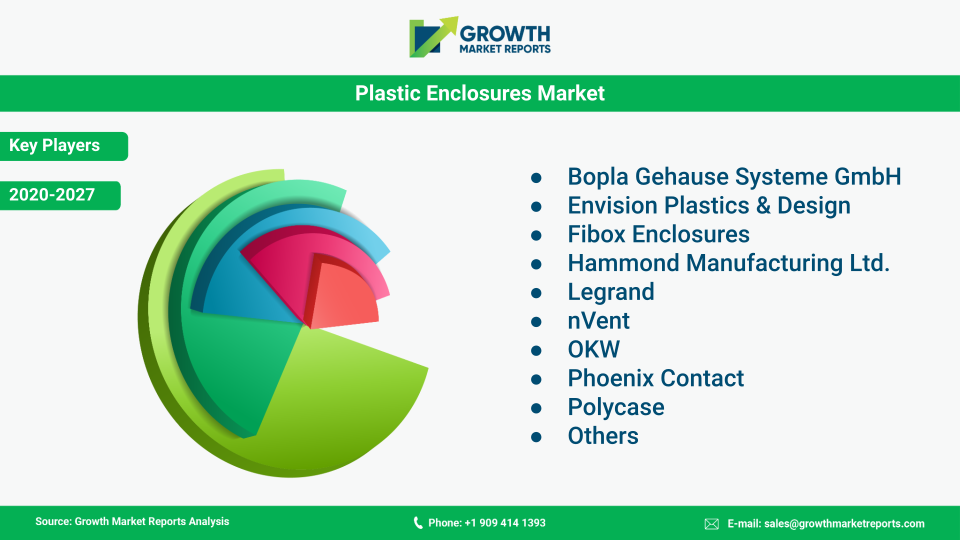
Major companies operating in the global plastic enclosures market include Schneider Electric, Hammond Manufacturing, ABB Ltd., Legrand, Fibox Oy Ab, Rittal GmbH & Co. KG, OKW Enclosures, Bopla Gehäuse Systeme GmbH, Bud Industries, and Phoenix Contact. Schneider Electric is recognized for its comprehensive range of enclosure solutions for industrial automation, energy management, and building applications. Hammond Manufacturing offers a diverse portfolio of standard and customized enclosures, serving industries such as electronics, telecommunications, and healthcare. ABB Ltd. and Legrand are global leaders with strong presence in electrical distribution and industrial automation, offering innovative enclosure products that meet stringent safety and performance standards.
Fibox Oy Ab, Rittal GmbH & Co. KG, and OKW Enclosures are known for their expertise in high-performance plastic enclosures, catering to demanding applications in harsh environments. Bopla Gehäuse Systeme GmbH and Bud Industries are prominent players in the design and manufacturing of electronic enclosures, focusing on customization and rapid prototyping capabilities. Phoenix Contact is a leading provider of industrial automation and connectivity solutions, offering a wide range of enclosure products for control, monitoring, and communication systems. Additional notable players include Siemens AG, Takachi Electronics Enclosure Co., Ltd., Polycase, ROLEC Enclosures, Eldon Enclosures, Ensto Group, TE Connectivity, and Saginaw Control & Engineering. These companies are continuously expanding their product offerings, investing in R&D, and leveraging digital technologies to maintain competitiveness and address the evolving needs of global customers through 2034.
The Global Plastic Enclosures market has been segmented on the basis of
Yes, the report offers full customization of company profiles. If you require profiles of companies not included in the standard report, such as regional manufacturers, niche enclosure specialists, or newly emerging players, the research team can incorporate them upon request. Customization can also include deeper financial benchmarking, product portfolio comparisons, recent strategy assessments, and market share estimates for specific companies relevant to your competitive intelligence or due diligence needs.
Yes, the report provides comprehensive material-specific analysis covering polycarbonate, ABS, polystyrene, polyester, and other specialty plastic materials. For each material type, the report includes historical market size from 2019 to 2024, 2025 base-year estimates, and forecasts through 2034. It also covers material-specific performance attributes, application suitability, pricing trends, regulatory considerations, key supplier landscape, and emerging material innovations such as bio-based polymers and glass-reinforced composites that are reshaping the competitive dynamics of the market.
Based on the 2025 base market size of USD 7.5 billion and a projected CAGR of 5.2%, the global plastic enclosures market is estimated to reach approximately USD 8.3 billion by 2027. Asia Pacific will continue to account for the largest share at that point, supported by ongoing electronics manufacturing expansion and industrial automation investments, while North America and Europe will also contribute meaningfully driven by automotive electrification and telecommunications infrastructure modernization.
Beyond the core market sizing and forecasting, the report offers patent landscape analysis, supply chain and raw material cost analysis, pricing trend analysis by material type, regulatory and standards compliance overview (UL, IEC, RoHS, REACH), technology benchmarking across injection molding and 3D printing methods, competitive benchmarking matrix for leading players, import and export trade flow data, end-user investment trend analysis, and a detailed opportunity and risk assessment framework covering all five regions across the 2026-2034 forecast window.
Key growth drivers include the rapid proliferation of IoT and connected devices requiring reliable enclosure protection, expansion of 5G telecommunications infrastructure, growth in electric vehicles and automotive electronics, rising industrial automation investments globally, and increasing healthcare device adoption. Additional drivers include ongoing material innovations enabling lighter and more durable enclosures, favorable cost and weight advantages of plastics over metals, growing regulatory focus on sustainability spurring bio-based and recycled plastic enclosure development, and expanding smart city and renewable energy deployments worldwide through the 2026-2034 forecast period.
The primary verticals driving plastic enclosures market growth in 2025 and beyond are electronics and electrical, industrial automation, automotive, telecommunications, and healthcare. The electronics and electrical segment leads in volume demand, powered by IoT proliferation and smart home adoption. Industrial automation growth tied to Industry 4.0 investments, the electrification of vehicles and ADAS integration in automotive, 5G rollout in telecommunications, and expanding portable medical device usage in healthcare collectively form the core demand pillars for the forecast period through 2034.
Company profiles in this report are selected based on several criteria including annual revenue and market share within the plastic enclosures segment, geographic presence and global reach, breadth and depth of product portfolio across material types and applications, innovation track record including patents and new product launches, strategic activities such as mergers, acquisitions, and partnerships, and overall influence on market pricing and industry standards. Only companies that genuinely manufacture or distribute plastic enclosure products are included.
The COVID-19 pandemic created notable headwinds for the plastic enclosures market during 2019-2020. Supply chain disruptions, factory shutdowns, and reduced capital expenditure in key end-user industries such as automotive and industrial automation led to a temporary slowdown in demand. However, sectors such as healthcare and telecommunications experienced accelerated enclosure procurement to support rapid deployment of medical devices, remote monitoring equipment, and digital infrastructure. The market demonstrated resilience and recovered strongly from 2021 onward, driven by post-pandemic industrial restarts, accelerated digitalization, and pent-up infrastructure investment.
The base year for this report is 2025, with the market size estimated at USD 7.5 billion. The historical analysis covers 2019 to 2024, and the forecast period spans 2026 to 2034, giving a comprehensive decade-long view of market dynamics, growth drivers, and competitive trends across all key segments and regions.
The global plastic enclosures market is served by a strong set of established manufacturers. Key players include Schneider Electric, Hammond Manufacturing, ABB Ltd., Legrand, Rittal GmbH & Co. KG, Phoenix Contact, Fibox Oy Ab, OKW Enclosures, Bopla Gehäuse Systeme GmbH, Bud Industries, Siemens AG, Takachi Electronics Enclosure Co., Ltd., Polycase, ROLEC Enclosures, Eldon Enclosures, Ensto Group, TE Connectivity, and Saginaw Control & Engineering. These companies compete on product quality, customization, compliance with international standards, and digital distribution capabilities.