Segments - by Product Type (High Shrinkage PET Film, Low Shrinkage PET Film), by Thickness (Up to 15 Microns, 15-30 Microns, Above 30 Microns), by Application (Labels, Packaging, Tamper-Evident Bands, Sleeves, Others), by End-Use Industry (Food & Beverage, Pharmaceuticals, Personal Care, Industrial, Others), by Distribution Channel (Direct Sales, Distributors/Wholesalers, Online Retail)
According to our latest research, the PET Shrink Film market size reached USD 1.72 billion globally in 2024, demonstrating robust expansion driven by increasing demand for sustainable and high-performance packaging solutions. The market is set to grow at a CAGR of 6.3% from 2025 to 2033, with the forecasted market size expected to reach USD 2.98 billion by 2033. This growth is primarily attributed to the rising adoption of PET shrink films in food and beverage, pharmaceuticals, and personal care sectors, where product safety, shelf appeal, and regulatory compliance are paramount.
One of the primary growth factors for the PET Shrink Film market is the increasing consumer preference for sustainable and recyclable packaging materials. PET shrink films, known for their clarity, strength, and recyclability, are rapidly replacing traditional polyvinyl chloride (PVC) films, which are less eco-friendly and face stricter regulatory scrutiny. The food and beverage industry, in particular, is driving this shift, as brands seek packaging that not only preserves product freshness but also aligns with circular economy principles. Additionally, PET shrink films offer superior printability and visual appeal, making them an ideal choice for brands looking to enhance shelf presence and consumer engagement.
Technological advancements in film manufacturing processes have also played a crucial role in market expansion. Innovations such as multi-layer co-extrusion and advanced resin formulations have enabled the production of PET shrink films with enhanced mechanical properties, such as higher shrinkage rates and improved puncture resistance. These advancements have broadened the application scope of PET shrink films, enabling their use in tamper-evident bands, sleeves, and complex packaging geometries. Moreover, the ability to engineer films with specific thicknesses and shrinkage characteristics allows manufacturers to cater to diverse application requirements across end-use industries.
The growing emphasis on product security and anti-counterfeiting measures is another significant driver for the PET shrink film market. With rising concerns about product tampering and counterfeiting, particularly in the pharmaceutical and personal care sectors, companies are increasingly adopting tamper-evident PET shrink bands and sleeves. These solutions provide a visible indication of package integrity, enhancing consumer trust and regulatory compliance. Furthermore, the versatility of PET shrink films in accommodating intricate shapes and providing 360-degree branding opportunities adds to their widespread adoption in premium product packaging.
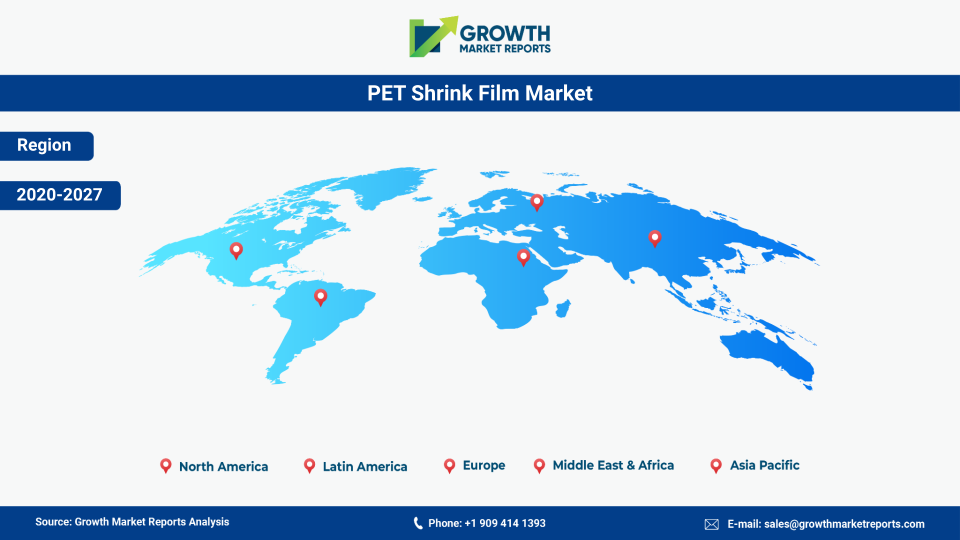
From a regional perspective, Asia Pacific continues to dominate the global PET shrink film market, accounting for the largest share in 2024. This dominance is fueled by strong growth in manufacturing, rapid urbanization, and increasing investments in the food and beverage and pharmaceutical sectors across China, India, and Southeast Asia. North America and Europe also represent significant markets, driven by stringent regulatory standards and a mature, innovation-driven packaging industry. Meanwhile, emerging regions such as Latin America and the Middle East & Africa are witnessing accelerated adoption rates, supported by expanding retail infrastructure and growing consumer awareness of packaged goods.
Thermoforming Films are increasingly becoming a pivotal component in the packaging industry, particularly within the context of PET shrink films. These films provide a versatile solution for creating durable and visually appealing packaging that meets the demands of various sectors such as food and beverage, pharmaceuticals, and personal care. The adaptability of thermoforming films allows for the production of custom shapes and sizes, which is crucial for brands aiming to differentiate their products on crowded retail shelves. As consumer preferences shift towards more sustainable packaging options, thermoforming films, known for their recyclability and efficiency, are gaining traction as a preferred choice among manufacturers. The integration of these films into packaging solutions not only enhances product protection but also aligns with the growing emphasis on sustainability and eco-friendly practices in the industry.
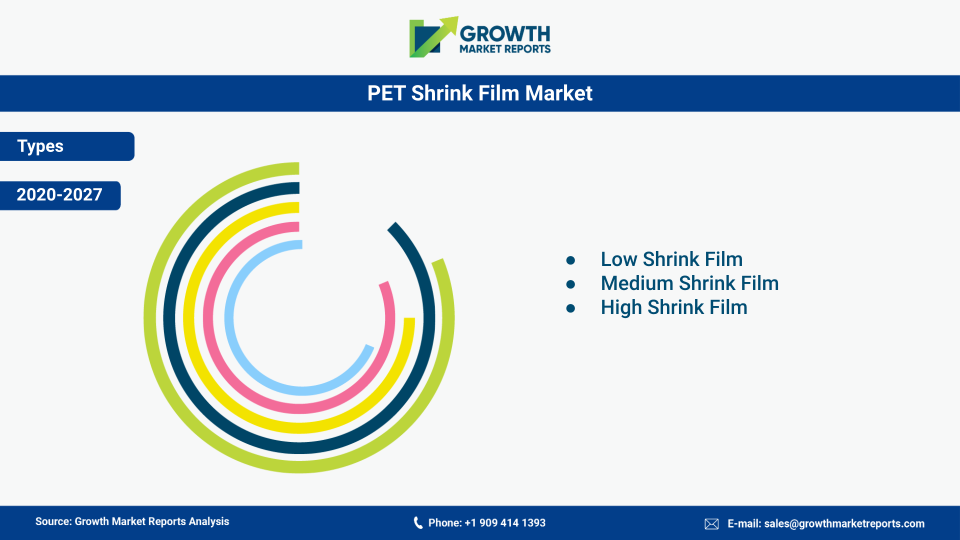
The PET shrink film market is segmented by product type into High Shrinkage PET Film and Low Shrinkage PET Film. High shrinkage PET films, characterized by their ability to conform tightly to complex container shapes, are increasingly favored in applications such as full-body sleeves and tamper-evident bands. Their superior shrinkage properties, often exceeding 70%, allow for seamless branding and protection, making them the preferred choice for premium beverages, cosmetics, and pharmaceutical packaging. The growing trend towards visually striking and secure packaging has significantly boosted demand for high shrinkage PET films, especially in regions with advanced retail and consumer goods sectors.
Low shrinkage PET films, on the other hand, are primarily used for applications where moderate shrinkage is sufficient and where dimensional stability is critical. These films are commonly found in labeling and multi-pack applications, where they provide a snug fit without excessive distortion. The stability of low shrinkage PET films makes them ideal for automated packaging lines, ensuring consistent performance and reducing material waste. As manufacturers seek to optimize packaging efficiency and minimize operational costs, demand for low shrinkage PET films is expected to remain strong, particularly in the food and beverage industry.
The choice between high and low shrinkage PET films often depends on the specific requirements of end-use applications. For instance, products requiring intricate graphics or full-body coverage typically opt for high shrinkage films, while those focused on cost-effectiveness and operational simplicity may prefer low shrinkage variants. Advances in resin technology and film processing have enabled manufacturers to fine-tune shrinkage characteristics, offering customized solutions that cater to the diverse needs of brands and converters.
Market players are increasingly investing in research and development to enhance the performance attributes of both high and low shrinkage PET films. Efforts are underway to improve clarity, printability, and environmental sustainability, with a focus on reducing the carbon footprint of film production. As sustainability becomes a key purchasing criterion for end-users, the development of bio-based and recyclable PET shrink films is expected to gain traction, further expanding the product portfolio available in the market.
| Attributes | Details |
| Report Title | PET Shrink Film Market Research Report 2033 |
| By Product Type | High Shrinkage PET Film, Low Shrinkage PET Film |
| By Thickness | Up to 15 Microns, 15-30 Microns, Above 30 Microns |
| By Application | Labels, Packaging, Tamper-Evident Bands, Sleeves, Others |
| By End-Use Industry | Food & Beverage, Pharmaceuticals, Personal Care, Industrial, Others |
| By Distribution Channel | Direct Sales, Distributors/Wholesalers, Online Retail |
| Regions Covered | North America, Europe, APAC, Latin America, MEA |
| Base Year | 2024 |
| Historic Data | 2018-2023 |
| Forecast Period | 2025-2033 |
| Number of Pages | 269 |
| Number of Tables & Figures | 259 |
| Customization Available | Yes, the report can be customized as per your need. |
The PET shrink film market is categorized by thickness into Up to 15 Microns, 15-30 Microns, and Above 30 Microns. Films up to 15 microns are typically used for lightweight labeling and tamper-evident applications, where flexibility and cost-effectiveness are prioritized. These ultra-thin films offer significant material savings and are favored in high-volume, price-sensitive segments such as bottled water and mass-market beverages. However, their lower mechanical strength limits their use in applications requiring robust protection or complex container shapes.
Stretch Hood Film is emerging as a significant innovation in the realm of packaging solutions, complementing the capabilities of PET shrink films. This type of film is particularly advantageous for securing palletized goods, offering superior load stability and protection during transportation and storage. The unique stretchability and elasticity of stretch hood films allow them to conform to various load shapes and sizes, providing a snug fit that minimizes the risk of damage. In industries such as food and beverage, pharmaceuticals, and personal care, where maintaining product integrity is crucial, stretch hood films offer an added layer of security. Furthermore, these films contribute to operational efficiency by reducing the need for additional packaging materials, thus supporting cost-effective and sustainable packaging strategies. As the demand for reliable and efficient packaging solutions continues to rise, stretch hood films are poised to play a critical role in meeting the evolving needs of the market.
The 15-30 micron thickness segment represents the largest share of the PET shrink film market, as it strikes an optimal balance between strength, shrinkage performance, and cost. Films in this range are widely used for full-body sleeves, multi-pack wraps, and premium labeling applications. Their enhanced durability and printability make them suitable for products that require both visual appeal and protection against external factors such as moisture and abrasion. As brands continue to invest in distinctive packaging to differentiate their products, demand for 15-30 micron PET shrink films is expected to witness steady growth.
Above 30 micron PET shrink films cater to specialized applications that demand superior mechanical strength and puncture resistance. These thicker films are commonly used for industrial packaging, heavy-duty tamper-evident bands, and products that are subject to rough handling during transportation and distribution. While they represent a smaller share of the overall market, the premium pricing and specialized nature of these films contribute to higher margins for manufacturers. Additionally, advancements in material science are enabling the development of high-performance thick films with enhanced sustainability profiles, catering to the evolving needs of industrial end-users.
Thickness selection is a critical consideration for converters and brand owners, as it directly impacts material usage, cost, and functional performance. The trend towards lightweighting and sustainability is pushing manufacturers to innovate thinner yet stronger PET shrink films, reducing environmental impact without compromising on quality. As regulatory pressures on plastic usage intensify, the ability to offer thinner, recyclable PET shrink films will become a key differentiator in the market.
The application landscape for PET shrink films is diverse, encompassing Labels, Packaging, Tamper-Evident Bands, Sleeves, and Others. Labels represent a significant application segment, driven by the need for high-quality graphics, product differentiation, and regulatory compliance. PET shrink labels are favored for their clarity and ability to conform to complex container shapes, enabling 360-degree branding and information display. The beverage industry, in particular, is a major consumer of shrink labels, leveraging their visual impact to enhance brand recognition and consumer appeal.
Packaging applications of PET shrink films are expanding rapidly, supported by the growing demand for multipack wraps, protective overwraps, and specialty packaging solutions. The versatility of PET shrink films allows them to be used for both primary and secondary packaging, providing product protection, tamper evidence, and shelf appeal. As e-commerce and modern retail formats gain traction globally, the need for secure and attractive packaging has become more pronounced, further boosting the adoption of PET shrink films in this segment.
Tamper-evident bands and sleeves are critical applications in the pharmaceutical and personal care sectors, where product integrity and consumer safety are paramount. PET shrink films provide a reliable and cost-effective solution for tamper-proofing containers, offering visible evidence of interference. The increasing incidence of product counterfeiting and regulatory mandates for tamper-evident packaging are driving sustained demand for PET shrink films in these high-value segments. Additionally, the ability to print authentication features and unique identifiers on shrink bands enhances their utility in anti-counterfeiting strategies.
Other emerging applications for PET shrink films include promotional wraps, security seals, and specialty packaging for electronics and industrial goods. The adaptability of PET shrink films to different printing technologies and container geometries makes them a preferred choice for brands seeking innovative packaging solutions. As consumer preferences evolve and new use cases emerge, the application scope of PET shrink films is expected to broaden, creating new growth opportunities for market participants.
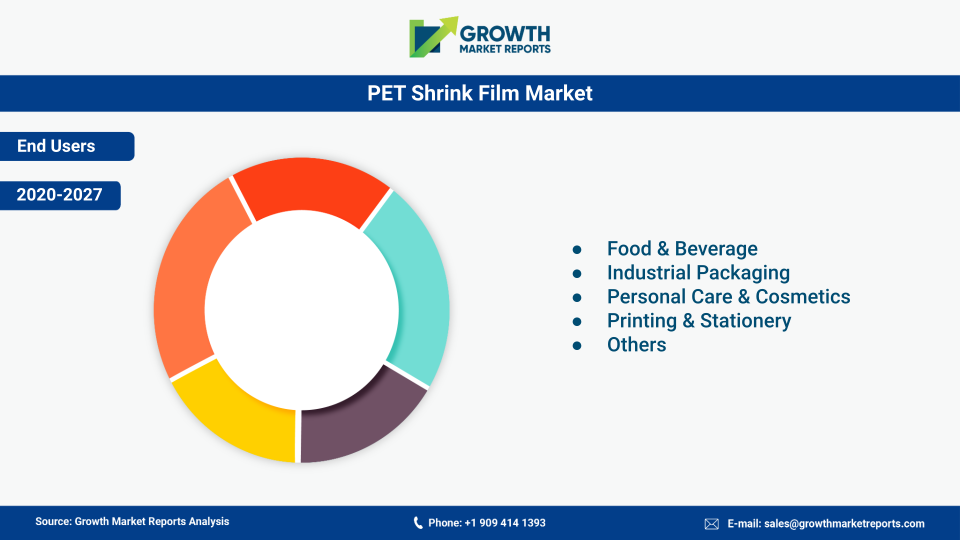
The end-use industry segmentation of the PET shrink film market includes Food & Beverage, Pharmaceuticals, Personal Care, Industrial, and Others. The food and beverage sector remains the largest consumer of PET shrink films, accounting for a substantial share of global demand in 2024. The need for attractive, tamper-evident, and durable packaging solutions in beverages, dairy, and processed foods is driving the widespread adoption of PET shrink films. The ability to provide high-quality graphics, moisture resistance, and extended shelf life makes PET shrink films indispensable in this industry.
Pharmaceuticals represent a rapidly growing end-use segment, fueled by stringent regulatory requirements for product safety, traceability, and anti-counterfeiting. PET shrink films are extensively used for tamper-evident bands and sleeves on pharmaceutical containers, ensuring compliance with global safety standards and enhancing consumer trust. The rising incidence of counterfeit drugs and the growing emphasis on patient safety are expected to sustain robust demand for PET shrink films in this sector.
The personal care industry is another key driver of PET shrink film market growth, with brands leveraging the films' clarity, printability, and ability to conform to unique container shapes. Premium cosmetics, skincare, and hygiene products increasingly feature PET shrink sleeves and labels to enhance shelf presence and communicate brand values. The trend towards premiumization and product differentiation is expected to further boost the adoption of PET shrink films in the personal care segment.
Industrial and other end-use sectors, including electronics, automotive, and specialty chemicals, are also adopting PET shrink films for protective packaging, security seals, and component labeling. These industries value the durability, chemical resistance, and customization options offered by PET shrink films. As industrial supply chains become more complex and product security concerns rise, the demand for high-performance shrink films in these sectors is anticipated to grow steadily over the forecast period.
The PET shrink film market is distributed through Direct Sales, Distributors/Wholesalers, and Online Retail. Direct sales remain the dominant channel, particularly for large-scale converters and multinational brands seeking customized solutions and bulk procurement. Direct engagement with manufacturers allows for tailored product specifications, technical support, and long-term supply agreements, ensuring consistency and reliability in packaging operations. As the market matures, direct sales are expected to maintain their prominence, especially among established players with complex packaging needs.
Distributors and wholesalers play a critical role in catering to small and medium-sized enterprises (SMEs) and regional converters. By offering a wide range of PET shrink film products, technical expertise, and flexible order quantities, distributors bridge the gap between manufacturers and end-users. The growing fragmentation of the packaging industry and the proliferation of SMEs are expected to sustain the importance of this channel, particularly in emerging markets where direct manufacturer access may be limited.
Online retail is an emerging distribution channel, gaining traction with the rise of digital procurement platforms and e-commerce. While currently representing a smaller share of the market, online sales are growing rapidly, driven by the convenience of product comparison, quick ordering, and access to a broader supplier base. The COVID-19 pandemic accelerated the adoption of online channels for industrial and packaging materials, a trend that is likely to persist as digitalization continues to reshape procurement practices in the packaging industry.
Manufacturers are increasingly leveraging omnichannel strategies to reach a wider customer base and enhance service levels. By integrating direct, distributor, and online channels, market players can offer flexible solutions, improve lead times, and respond more effectively to evolving customer needs. The ongoing digital transformation of the packaging supply chain is expected to further enhance the efficiency and reach of PET shrink film distribution.
The PET shrink film market presents numerous opportunities for growth and innovation. One of the most significant opportunities lies in the development and commercialization of sustainable and recyclable PET shrink films. As environmental regulations tighten and consumer demand for eco-friendly packaging rises, manufacturers that invest in bio-based resins, closed-loop recycling, and lightweighting technologies stand to gain a competitive edge. Collaborations with brand owners and retailers to develop circular packaging solutions can unlock new revenue streams and strengthen market positioning. Additionally, the integration of smart packaging technologies, such as QR codes and RFID tags, into PET shrink films offers opportunities for enhancing product traceability, consumer engagement, and anti-counterfeiting measures.
Emerging markets represent another major opportunity for PET shrink film manufacturers. Rapid urbanization, expanding middle-class populations, and the proliferation of modern retail formats in Asia Pacific, Latin America, and Africa are driving increased demand for packaged goods and, by extension, PET shrink films. Strategic investments in local manufacturing facilities, distribution networks, and marketing initiatives can help companies tap into these high-growth regions. Furthermore, the diversification of end-use applications, including electronics, automotive, and industrial packaging, provides additional avenues for market expansion beyond traditional consumer goods sectors.
Despite the positive outlook, the PET shrink film market faces certain restraints and threats. Volatility in raw material prices, particularly for PET resin, poses a significant challenge for manufacturers, impacting profitability and pricing strategies. Fluctuations in crude oil prices and supply chain disruptions can lead to cost uncertainties, making it difficult for market players to maintain stable margins. Additionally, increasing competition from alternative packaging materials, such as biodegradable films and paper-based solutions, may limit growth prospects for PET shrink films, especially in regions with stringent environmental regulations. Market participants must therefore invest in continuous innovation and cost management to mitigate these risks and sustain long-term growth.
The Asia Pacific region leads the global PET shrink film market, accounting for approximately 47% of the total market value in 2024, equivalent to USD 0.81 billion. The region's dominance is underpinned by the rapid expansion of the food and beverage, pharmaceutical, and personal care industries in key economies such as China, India, and Japan. Favorable government policies, growing consumer awareness, and significant investments in packaging infrastructure are driving sustained demand for PET shrink films in this region. The Asia Pacific market is expected to maintain a strong growth trajectory, with a projected CAGR of 7.2% through 2033, outpacing other regions.
North America and Europe together represent a combined market value of approximately USD 0.65 billion in 2024, driven by mature packaging industries, high consumer expectations, and stringent regulatory standards. In North America, the United States remains the primary market, with robust demand from the beverage, pharmaceutical, and personal care sectors. Europe, led by Germany, France, and the United Kingdom, is characterized by a strong emphasis on sustainability and innovation, with brands increasingly adopting recyclable and eco-friendly PET shrink films. Both regions are expected to witness steady growth, supported by ongoing investments in research and development and the adoption of advanced packaging technologies.
Latin America and the Middle East & Africa collectively account for the remaining USD 0.26 billion of the global PET shrink film market in 2024. These regions are experiencing accelerated growth, fueled by rising disposable incomes, urbanization, and the expansion of modern retail channels. Brazil, Mexico, South Africa, and the Gulf Cooperation Council (GCC) countries are key growth markets, with increasing investments in food processing, pharmaceuticals, and personal care driving demand for PET shrink films. While market penetration remains lower compared to Asia Pacific, North America, and Europe, the high growth potential and untapped opportunities in these regions make them attractive targets for market expansion.
The global PET shrink film market is characterized by intense competition, with a mix of multinational corporations and regional players vying for market share. Leading companies are focused on expanding their product portfolios, enhancing sustainability credentials, and investing in technological innovation to differentiate themselves in a crowded marketplace. Strategic partnerships, mergers and acquisitions, and capacity expansions are common strategies employed by market leaders to strengthen their position and capitalize on emerging opportunities. The competitive landscape is further shaped by the entry of new players, particularly in high-growth regions such as Asia Pacific and Latin America, who bring fresh perspectives and innovative solutions to the market.
Product innovation and sustainability have emerged as key battlegrounds in the PET shrink film market. Companies are investing heavily in research and development to create thinner, stronger, and more environmentally friendly films that meet evolving regulatory and consumer demands. The development of recyclable, bio-based, and low-carbon PET shrink films is gaining momentum, with several players launching new products that cater to the growing demand for sustainable packaging. Additionally, advancements in printing and finishing technologies are enabling the production of visually striking and functional shrink films that enhance brand value and consumer engagement.
Customer-centricity and supply chain agility are also critical differentiators in the competitive landscape. Leading PET shrink film manufacturers are leveraging digital technologies to improve order fulfillment, reduce lead times, and offer customized solutions tailored to the specific needs of brand owners and converters. The ability to provide comprehensive technical support, rapid prototyping, and value-added services is increasingly important in winning and retaining key customers. As the market evolves, companies that can balance innovation, operational efficiency, and customer engagement are likely to emerge as long-term winners.
Major companies operating in the PET shrink film market include Klöckner Pentaplast Group, CCL Industries Inc., Fuji Seal International, Polifilm Group, Bonset America Corporation, UPM Raflatac, Allen Plastic Industries, and Taghleef Industries. Klöckner Pentaplast Group is renowned for its wide range of sustainable shrink film solutions and global manufacturing footprint. CCL Industries Inc. is a market leader in label and packaging innovation, with a strong focus on recyclable and high-performance PET shrink films. Fuji Seal International specializes in advanced shrink sleeve technologies and has a significant presence in Asia and North America. Polifilm Group and Bonset America Corporation are known for their high-quality, customizable PET shrink films catering to diverse end-use industries. UPM Raflatac, Allen Plastic Industries, and Taghleef Industries are also prominent players, each contributing unique strengths in product development, customer service, and regional market coverage.
These leading companies are continuously investing in capacity expansion, new product development, and sustainability initiatives to stay ahead of the competition. Strategic collaborations with brand owners, converters, and technology providers are enabling them to co-create innovative solutions that address emerging market needs. As the PET shrink film market continues to evolve, the ability to anticipate trends, respond rapidly to customer demands, and deliver sustainable value will be critical to sustaining competitive advantage and driving long-term growth.
The PET Shrink Film market has been segmented on the basis of
Additional company profiles can be provided on request.
Yes, the report covers volume details of products.
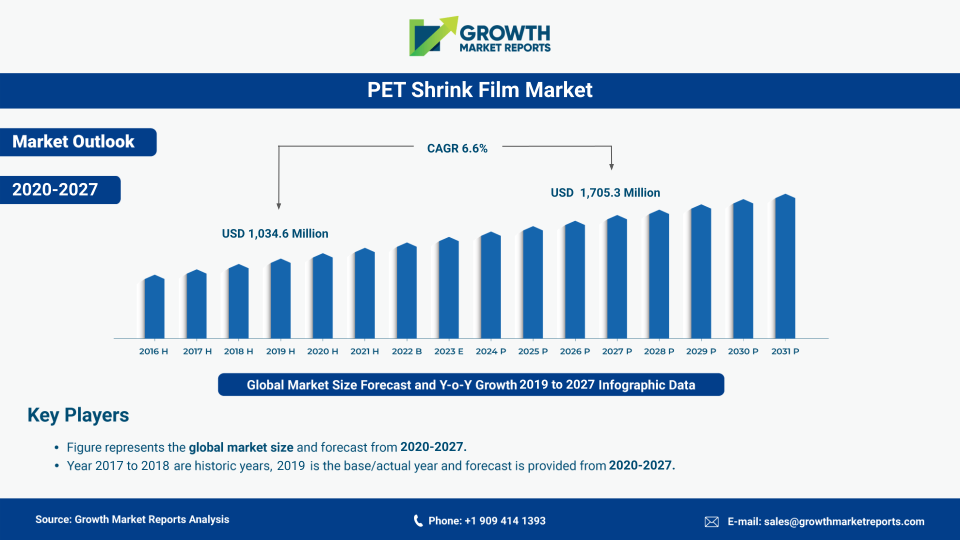
According to this Growth Market Reports report, the market from PET Shrink Film is likely to register a CAGR of approximately 6.6% during forecast period 2020-2027, with an anticipated valuation of US$ 1699.7million by the end of the 2027.
In addition to market size (in US$ Million)and Company Market Share (in % for base year 2019), other data such as Pricing analysis for year 2017 to 2027 (estimated pricing analysis) is provided, is available in final report.
Increasing application of PET films in the food and beverages and cosmetics industries, rising adoption of processed food, and growing disposable income are key factors driving the PET shrink film market growth.
Food & beverages are the key end-user that are driving the PET Shrink Film Market.
Factors such as competitive strength and market positioning are key areas considered while selecting top companies to be profiled.
The market is expected to decline between 2019 and 2020 owing to the slight impact of COVID-19 pandemic on the PET shrink film market. The ongoing research of PET Shrink Film for COVID-19 string is expected to decrease the production PET Shrink Film product.
The base year considered for the global PET Shrink Film Market report is 2019. The complete analysis period is 2017 to 2027, wherein, 2017 & 2018 are the historic years and the forecast is provided from 2021 to 2027.
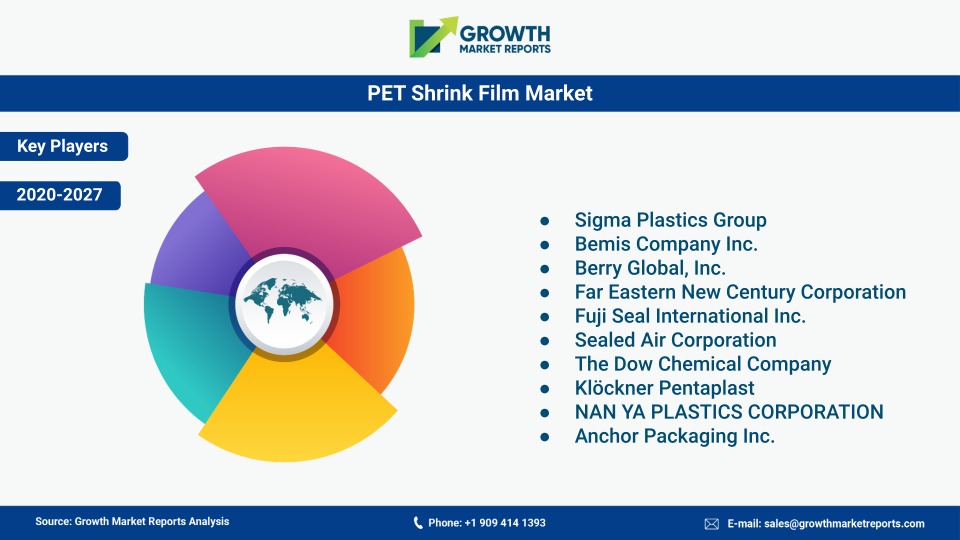
Major Manufactures include, Sigma Plastics Group, Bemis Company Inc., Berry Global, Inc. Far Eastern New Century Corporation, Fuji Seal International Inc., Sealed Air Corporation, The Dow Chemical Company, and Klöckner Pentaplast.