Segments - by Technology (Active Packaging, Intelligent Packaging, Modified Atmosphere Packaging), by Component (Sensors, Indicators, Data Carriers, Others), by Application (Food & Beverages, Pharmaceuticals, Personal Care, Electronics, Others), by Material (Plastic, Paper, Metal, Glass, Others), by End-User (Food Industry, Healthcare, Cosmetics, Logistics, Others)
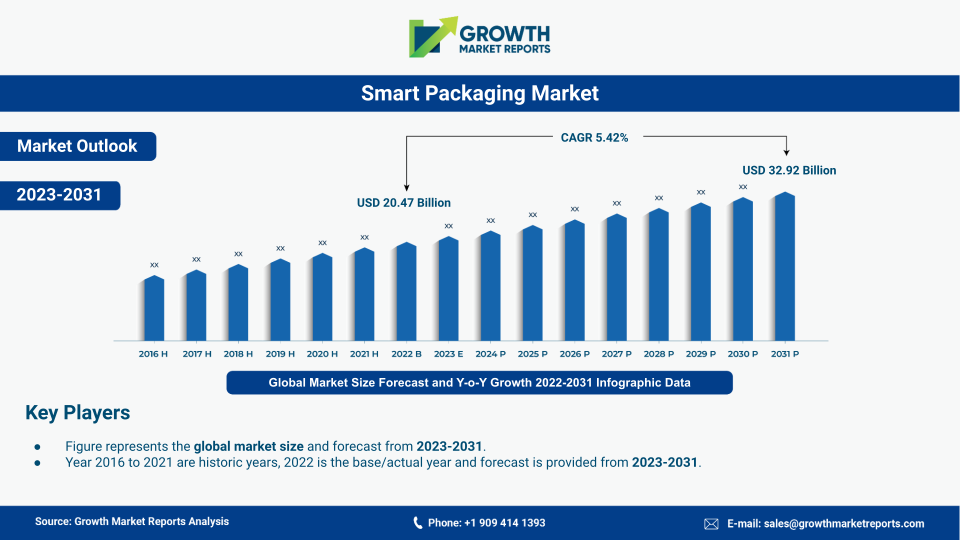
According to our latest research, the global smart packaging market size reached USD 38.2 billion in 2024, demonstrating robust momentum driven by technological advancements and increasing demand for enhanced product safety and shelf-life. The market is projected to grow at a CAGR of 9.7% from 2025 to 2033, resulting in a forecasted market size of USD 87.4 billion by 2033. This significant growth is primarily fueled by the rising adoption of smart packaging solutions across diverse industries, including food and beverages, healthcare, and logistics, as companies seek to improve product traceability, reduce waste, and enhance consumer engagement.
One of the primary growth factors for the smart packaging market is the increasing demand for food safety and quality assurance. With consumers becoming more health-conscious and regulatory bodies imposing stringent standards on food storage and transportation, manufacturers are turning to smart packaging technologies such as active and intelligent packaging. These solutions enable real-time monitoring of product conditions, including temperature, humidity, and freshness, thereby minimizing spoilage and ensuring the delivery of safe and high-quality food products. The integration of sensors and indicators into packaging not only extends shelf life but also provides valuable data throughout the supply chain, further propelling market expansion.
Another significant driver is the rapid advancement in sensor and data carrier technologies, which has made smart packaging more accessible and cost-effective. Innovations in RFID tags, NFC chips, and printed electronics have enabled seamless tracking and authentication of products, reducing the risk of counterfeiting and enhancing supply chain transparency. These technological breakthroughs have also facilitated the adoption of smart packaging in pharmaceuticals, where maintaining product integrity and traceability is critical. As a result, pharmaceutical companies are increasingly leveraging smart packaging to comply with regulatory requirements and improve patient safety, contributing to the overall growth of the market.
Sustainability trends are also shaping the smart packaging market, as both consumers and manufacturers seek eco-friendly packaging solutions. Companies are investing in biodegradable materials and energy-efficient production processes to reduce their environmental footprint. Smart packaging technologies, such as modified atmosphere packaging, not only help preserve product quality but also minimize food waste, aligning with global sustainability goals. Additionally, the use of recyclable sensors and indicators is gaining traction, further driving market growth as organizations strive to meet environmental regulations and cater to the preferences of environmentally conscious consumers.
From a regional perspective, Asia Pacific stands out as the fastest-growing market for smart packaging, driven by rapid industrialization, a burgeoning middle class, and increasing investments in food safety and healthcare infrastructure. North America and Europe, on the other hand, continue to lead in terms of technological adoption and regulatory support, with well-established players and a strong focus on innovation. Emerging markets in Latin America and the Middle East & Africa are also witnessing increased adoption of smart packaging solutions, fueled by rising consumer awareness and the need for efficient supply chain management. This dynamic regional landscape underscores the global potential of the smart packaging market over the forecast period.
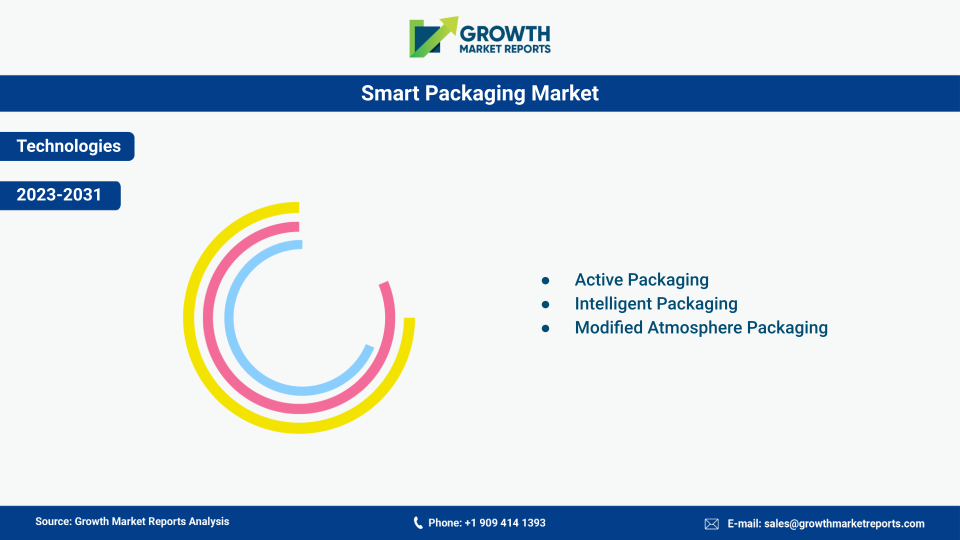
The technology segment of the smart packaging market is categorized into active packaging, intelligent packaging, and modified atmosphere packaging. Active packaging technologies are designed to interact with the internal environment of the package, thereby extending shelf life and preserving product quality. These solutions often incorporate moisture absorbers, oxygen scavengers, and antimicrobial agents, making them particularly valuable in the food and beverage industry. As consumer demand for fresh and minimally processed foods grows, active packaging is gaining significant traction, supported by increasing investments in research and development to enhance its efficacy and cost-effectiveness.
Intelligent packaging, on the other hand, integrates advanced sensors and indicators to monitor and communicate information about the condition of the packaged product. This technology is widely used in pharmaceuticals and perishable goods, where real-time monitoring of temperature, humidity, and freshness is crucial. The adoption of intelligent packaging is further driven by the proliferation of Internet of Things (IoT) technologies, enabling seamless connectivity and data sharing across the supply chain. As a result, companies can improve inventory management, reduce waste, and enhance consumer trust by providing transparent and reliable product information.
Modified atmosphere packaging (MAP) is another critical technology segment, particularly in the food industry. MAP involves altering the composition of gases within the packaging to slow down the deterioration process and extend the shelf life of perishable products. This technology is especially beneficial for fresh produce, meat, and dairy products, where maintaining optimal storage conditions is essential. The growing demand for convenience foods and ready-to-eat meals has further accelerated the adoption of modified atmosphere packaging, as manufacturers seek to deliver high-quality products with extended shelf life to meet changing consumer preferences.
The convergence of these technologies is creating new opportunities for innovation in the smart packaging market. Companies are increasingly developing hybrid solutions that combine the benefits of active, intelligent, and modified atmosphere packaging to address specific industry needs. For example, integrating sensors into MAP systems allows for real-time monitoring of gas levels, ensuring optimal storage conditions and reducing the risk of spoilage. This trend towards integrated solutions is expected to drive further growth in the technology segment, as manufacturers seek to differentiate their offerings and deliver greater value to consumers.
| Attributes | Details |
| Report Title | Smart Packaging Market Research Report 2033 |
| By Technology | Active Packaging, Intelligent Packaging, Modified Atmosphere Packaging |
| By Component | Sensors, Indicators, Data Carriers, Others |
| By Application | Food & Beverages, Pharmaceuticals, Personal Care, Electronics, Others |
| By Material | Plastic, Paper, Metal, Glass, Others |
| By End-User | Food Industry, Healthcare, Cosmetics, Logistics, Others |
| Regions Covered | North America, Europe, APAC, Latin America, MEA |
| Base Year | 2024 |
| Historic Data | 2018-2023 |
| Forecast Period | 2025-2033 |
| Number of Pages | 274 |
| Number of Tables & Figures | 342 |
| Customization Available | Yes, the report can be customized as per your need. |
The component segment of the smart packaging market includes sensors, indicators, data carriers, and other supporting elements. Sensors play a pivotal role in smart packaging, enabling real-time monitoring of various environmental parameters such as temperature, humidity, and pressure. These sensors are particularly important in the food and pharmaceutical industries, where maintaining specific storage conditions is critical to product safety and efficacy. Advances in sensor technology, including miniaturization and cost reduction, have facilitated their widespread adoption, making smart packaging solutions more accessible to a broader range of applications.
Indicators are another essential component, providing visual cues about the condition of the packaged product. Time-temperature indicators, freshness indicators, and gas indicators are commonly used to inform consumers and supply chain stakeholders about product quality and safety. The growing demand for transparent and reliable information has led to increased adoption of these indicators, particularly in the food and beverage sector. By enabling consumers to make informed decisions about product consumption, indicators enhance brand trust and drive repeat purchases.
Data carriers, such as RFID tags, QR codes, and NFC chips, are integral to the traceability and authentication of products throughout the supply chain. These components enable seamless tracking of products from production to consumption, reducing the risk of counterfeiting and ensuring regulatory compliance. The integration of data carriers with cloud-based platforms and mobile applications has further enhanced their functionality, allowing for real-time data sharing and analytics. As supply chains become increasingly complex and globalized, the demand for robust data carrier solutions is expected to grow, driving innovation in this segment.
Other components, including printed electronics and biodegradable materials, are also gaining prominence in the smart packaging market. Printed electronics enable the integration of sensors and indicators directly into packaging materials, reducing costs and improving scalability. Biodegradable components align with the growing emphasis on sustainability, offering eco-friendly alternatives to traditional packaging materials. The combination of these advanced components is enabling the development of next-generation smart packaging solutions that address the evolving needs of consumers and industries alike.
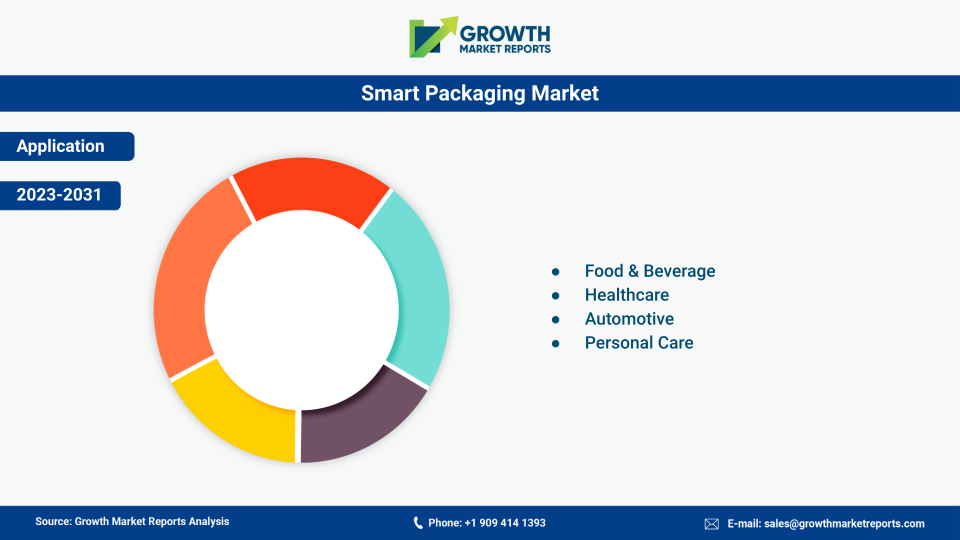
The application segment of the smart packaging market is diverse, encompassing food and beverages, pharmaceuticals, personal care, electronics, and other sectors. The food and beverage industry is the largest application segment, accounting for a significant share of the market. Smart packaging solutions in this sector are primarily used to enhance food safety, extend shelf life, and provide real-time information about product freshness. The increasing demand for convenience foods, coupled with stringent food safety regulations, is driving the adoption of smart packaging technologies such as active and intelligent packaging in this sector.
The pharmaceutical industry is another major application area for smart packaging, where maintaining product integrity and ensuring traceability are paramount. Smart packaging solutions, including temperature-sensitive indicators and RFID-enabled tracking systems, help pharmaceutical companies comply with regulatory requirements and improve patient safety. The growing prevalence of counterfeit drugs and the need for secure supply chains have further accelerated the adoption of smart packaging in this sector, as companies seek to protect their brands and ensure the delivery of safe and effective medications.
Personal care and cosmetics represent a rapidly growing application segment for smart packaging, driven by increasing consumer demand for premium and innovative products. Smart packaging solutions in this sector are used to enhance product appeal, provide usage instructions, and ensure product authenticity. The integration of NFC chips and QR codes enables personalized consumer experiences and facilitates brand engagement, helping companies differentiate their offerings in a highly competitive market. As consumers become more discerning and seek unique product experiences, the adoption of smart packaging in personal care and cosmetics is expected to rise.
Electronics and other sectors, such as logistics and retail, are also leveraging smart packaging solutions to improve supply chain efficiency and product traceability. In the electronics industry, smart packaging is used to monitor environmental conditions during transportation and storage, ensuring the safe delivery of sensitive components. In logistics, smart packaging enables real-time tracking of shipments, reducing the risk of loss or damage and improving overall supply chain visibility. The versatility of smart packaging technologies across diverse applications underscores their growing importance in the global market.
The material segment of the smart packaging market includes plastic, paper, metal, glass, and other materials. Plastic remains the most widely used material in smart packaging due to its versatility, lightweight nature, and cost-effectiveness. Plastic materials can be easily integrated with sensors, indicators, and data carriers, making them ideal for a wide range of applications. However, concerns about environmental sustainability are driving innovation in biodegradable and recyclable plastic materials, as companies seek to reduce their environmental footprint and comply with regulatory requirements.
Paper-based smart packaging is gaining traction as an eco-friendly alternative to traditional plastic packaging. Advances in paper engineering and printed electronics have enabled the integration of sensors and indicators into paper materials, offering sustainable solutions without compromising functionality. Paper-based smart packaging is particularly popular in the food and beverage sector, where it aligns with consumer preferences for natural and recyclable materials. The growing emphasis on sustainability and circular economy principles is expected to drive further adoption of paper-based smart packaging in the coming years.
Metal and glass materials are also used in smart packaging, particularly in applications that require high barrier properties and durability. Metal packaging, such as aluminum cans and foils, is commonly used in the food and beverage industry to protect products from light, oxygen, and moisture. Glass packaging is preferred for premium products, such as cosmetics and pharmaceuticals, due to its inertness and ability to preserve product quality. The integration of smart components into metal and glass packaging is more challenging compared to plastic and paper, but ongoing research and development efforts are addressing these limitations.
Other materials, including biodegradable polymers and composites, are emerging as viable options for smart packaging. These materials offer unique properties, such as enhanced biodegradability and compatibility with advanced sensor technologies. The development of new materials is enabling the creation of next-generation smart packaging solutions that combine functionality, sustainability, and cost-effectiveness. As consumer preferences and regulatory requirements continue to evolve, the material segment of the smart packaging market is expected to witness significant innovation and growth.
The end-user segment of the smart packaging market encompasses the food industry, healthcare, cosmetics, logistics, and other sectors. The food industry is the largest end-user, accounting for a substantial share of the market. Smart packaging solutions are widely used in this sector to enhance food safety, extend shelf life, and provide real-time information about product quality. The increasing demand for convenience foods and ready-to-eat meals, coupled with stringent food safety regulations, is driving the adoption of smart packaging technologies in the food industry.
Healthcare is another major end-user of smart packaging, where maintaining product integrity and ensuring traceability are critical. Smart packaging solutions, such as temperature-sensitive indicators and RFID-enabled tracking systems, help healthcare providers comply with regulatory requirements and improve patient safety. The growing prevalence of counterfeit drugs and the need for secure supply chains have further accelerated the adoption of smart packaging in the healthcare sector, as organizations seek to protect their brands and ensure the delivery of safe and effective medications.
The cosmetics industry is experiencing rapid growth in the adoption of smart packaging, driven by increasing consumer demand for premium and innovative products. Smart packaging solutions in this sector are used to enhance product appeal, provide usage instructions, and ensure product authenticity. The integration of NFC chips and QR codes enables personalized consumer experiences and facilitates brand engagement, helping companies differentiate their offerings in a highly competitive market. As consumers become more discerning and seek unique product experiences, the adoption of smart packaging in cosmetics is expected to rise.
Logistics and other sectors, such as electronics and retail, are also leveraging smart packaging solutions to improve supply chain efficiency and product traceability. In logistics, smart packaging enables real-time tracking of shipments, reducing the risk of loss or damage and improving overall supply chain visibility. The versatility of smart packaging technologies across diverse end-user industries underscores their growing importance in the global market.
The smart packaging market presents significant opportunities for innovation and growth, particularly as industries increasingly prioritize product safety, sustainability, and consumer engagement. One of the key opportunities lies in the integration of advanced sensor technologies and IoT connectivity, which enable real-time monitoring and data analytics throughout the supply chain. Companies that invest in developing scalable and cost-effective smart packaging solutions can capitalize on the growing demand for enhanced product traceability and transparency. Additionally, the trend towards personalized and interactive packaging presents new avenues for brand differentiation and consumer engagement, particularly in the food, beverage, and cosmetics sectors.
Another major opportunity is the shift towards sustainable packaging solutions, driven by increasing consumer awareness and regulatory pressure to reduce environmental impact. The development of biodegradable materials, recyclable components, and energy-efficient production processes can help companies meet sustainability goals while maintaining product functionality and safety. Collaboration between packaging manufacturers, technology providers, and end-user industries is essential to drive innovation and accelerate the adoption of sustainable smart packaging solutions. As governments around the world implement stricter regulations on packaging waste and carbon emissions, companies that proactively embrace sustainability are likely to gain a competitive edge in the market.
Despite the promising growth prospects, the smart packaging market faces several challenges and restraining factors. One of the primary restraints is the high initial cost of implementing smart packaging technologies, particularly for small and medium-sized enterprises. The integration of sensors, indicators, and data carriers into packaging materials requires significant investment in research, development, and production capabilities. Additionally, concerns about data security and privacy, especially in applications involving sensitive consumer information, may hinder widespread adoption. Addressing these challenges will require ongoing innovation, collaboration, and investment in cost-effective and secure smart packaging solutions.
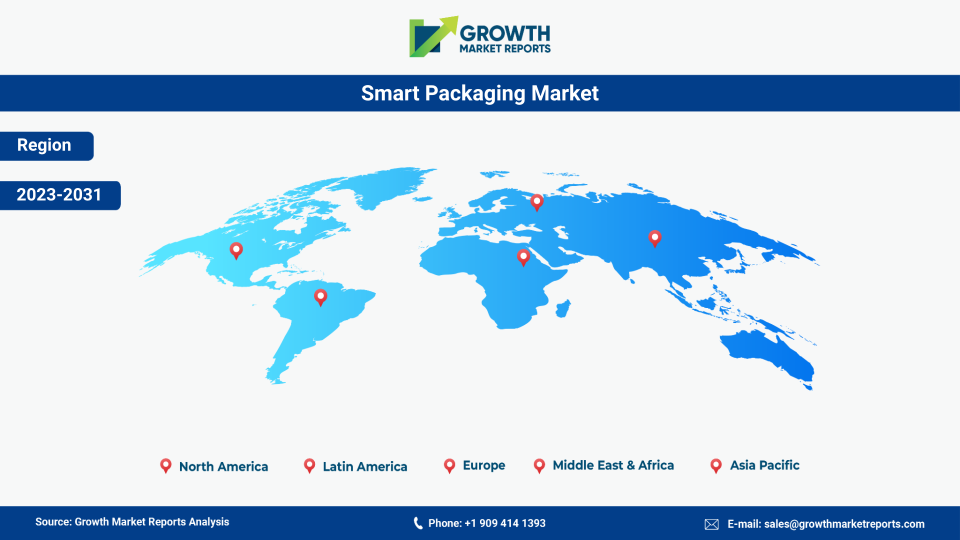
The regional landscape of the smart packaging market reveals distinct trends and growth patterns across major geographies. Asia Pacific is emerging as the fastest-growing market for smart packaging, with a market size of USD 11.7 billion in 2024. The region is expected to witness a CAGR of 11.2% through 2033, driven by rapid urbanization, a burgeoning middle class, and increasing investments in food safety and healthcare infrastructure. Countries such as China, India, and Japan are leading the adoption of smart packaging solutions, supported by government initiatives to improve food safety standards and supply chain efficiency.
North America remains a key market for smart packaging, accounting for USD 10.5 billion of the global market in 2024. The region is characterized by high technological adoption, a strong regulatory framework, and the presence of leading industry players. The United States and Canada are at the forefront of innovation in smart packaging, with companies investing heavily in research and development to deliver advanced solutions for food, pharmaceuticals, and logistics. The focus on sustainability and consumer engagement is also driving the adoption of smart packaging technologies in the region.
Europe holds a significant share of the global smart packaging market, with a market size of USD 9.6 billion in 2024. The region is known for its stringent regulatory standards on food safety and packaging waste, which have accelerated the adoption of smart packaging solutions. Countries such as Germany, France, and the United Kingdom are leading the market, supported by a strong focus on sustainability and innovation. The European market is also witnessing increased collaboration between packaging manufacturers, technology providers, and end-user industries to develop integrated and sustainable smart packaging solutions. Meanwhile, Latin America and the Middle East & Africa are gradually emerging as promising markets, driven by rising consumer awareness and the need for efficient supply chain management, although their combined market size remains below USD 6.4 billion in 2024.
The competitive landscape of the smart packaging market is characterized by intense rivalry among leading players, continuous innovation, and strategic collaborations. Major companies are investing heavily in research and development to introduce advanced smart packaging solutions that cater to the evolving needs of various industries. The focus is on enhancing product functionality, improving sustainability, and delivering greater value to consumers. Companies are also leveraging partnerships and acquisitions to expand their product portfolios, enter new markets, and strengthen their competitive positions. The increasing demand for customized and integrated smart packaging solutions is driving competition, as players seek to differentiate their offerings and capture a larger share of the market.
Innovation is at the core of the competitive strategy in the smart packaging market. Leading companies are developing next-generation solutions that combine active, intelligent, and modified atmosphere packaging technologies to address specific industry challenges. The integration of IoT connectivity, cloud-based analytics, and advanced sensor technologies is enabling companies to deliver real-time monitoring, enhanced traceability, and improved supply chain efficiency. Sustainability is also a key focus area, with companies investing in biodegradable materials, recyclable components, and energy-efficient production processes to meet regulatory requirements and consumer preferences.
Collaboration and strategic partnerships are playing a crucial role in driving growth and innovation in the smart packaging market. Packaging manufacturers are partnering with technology providers, material suppliers, and end-user industries to develop integrated solutions that deliver greater value and address complex industry needs. These collaborations enable companies to leverage complementary strengths, accelerate product development, and expand their market reach. The growing emphasis on open innovation and ecosystem partnerships is expected to drive further growth and competitiveness in the smart packaging market.
Some of the major companies operating in the global smart packaging market include Amcor plc, Avery Dennison Corporation, Sealed Air Corporation, 3M Company, BASF SE, Smartrac N.V., Stora Enso Oyj, and Tetra Pak International S.A. Amcor plc is a leading player known for its innovative packaging solutions and strong focus on sustainability. Avery Dennison Corporation specializes in RFID-enabled smart packaging and has a robust portfolio of data carrier solutions. Sealed Air Corporation is renowned for its active and modified atmosphere packaging technologies, catering to the food and healthcare industries. 3M Company and BASF SE are leveraging their expertise in materials science to develop advanced smart packaging components. Smartrac N.V. and Stora Enso Oyj are at the forefront of RFID and printed electronics technologies, while Tetra Pak International S.A. is a leader in sustainable and intelligent packaging for the food and beverage sector. These companies are continuously investing in innovation, sustainability, and strategic partnerships to maintain their leadership positions and drive growth in the global smart packaging market.
The Smart Packaging market has been segmented on the basis of
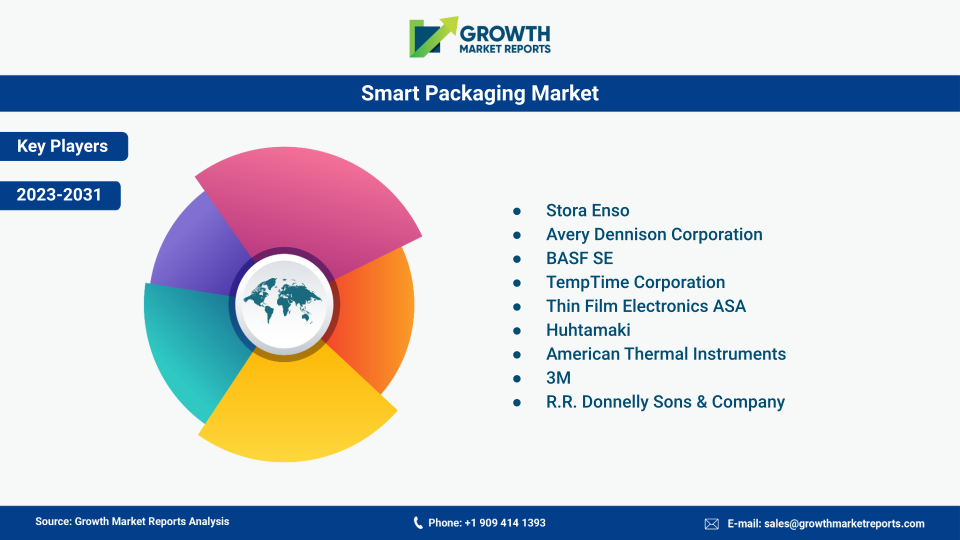
Major players of the global smart packaging market are Stora Enso, Avery Dennison Corporation, BASF SE, TempTime Corporation, Thin Film Electronics ASA, Huhtamaki, American Thermal Instruments, 3M, and R.R. Donnelly Sons & Company.
In the food industry, smart packaging extends shelf life, ensures food safety, and provides real-time freshness information. In pharmaceuticals, it helps maintain product integrity, ensures traceability, and combats counterfeiting through temperature-sensitive indicators and RFID-enabled tracking.
Major companies in the smart packaging market include Amcor plc, Avery Dennison Corporation, Sealed Air Corporation, 3M Company, BASF SE, Smartrac N.V., Stora Enso Oyj, Tetra Pak International S.A., Mondi Group, and others.
Opportunities include the integration of IoT and advanced sensors for real-time data, development of sustainable materials, and personalized packaging for consumer engagement. Challenges involve high initial costs, especially for SMEs, and concerns over data security and privacy.
Smart packaging components include sensors (for monitoring temperature, humidity, etc.), indicators (such as freshness and time-temperature indicators), data carriers (RFID tags, QR codes, NFC chips), and other elements like printed electronics and biodegradable materials.
Asia Pacific is the fastest-growing region, driven by rapid industrialization and investments in food safety and healthcare. North America and Europe lead in technological adoption and regulatory support, while Latin America and the Middle East & Africa are emerging markets with increasing adoption.
Smart packaging supports sustainability by reducing food waste, enabling the use of biodegradable and recyclable materials, and promoting energy-efficient production processes. Technologies like modified atmosphere packaging help preserve product quality, while recyclable sensors and indicators align with environmental regulations.
The main types of smart packaging technologies are active packaging (which interacts with the product environment), intelligent packaging (which monitors and communicates product conditions), and modified atmosphere packaging (MAP), which alters internal gas composition to extend shelf life.
Key industries adopting smart packaging include food and beverages, healthcare (pharmaceuticals), logistics, personal care, cosmetics, and electronics. These sectors use smart packaging to improve product safety, traceability, and consumer engagement.
The global smart packaging market reached USD 38.2 billion in 2024 and is expected to grow at a CAGR of 9.7% from 2025 to 2033, reaching a forecasted size of USD 87.4 billion by 2033.
Smart packaging refers to packaging systems that incorporate advanced technologies such as sensors, indicators, and data carriers (like RFID and NFC) to monitor, track, and communicate information about the condition and status of packaged products. It enables real-time monitoring of factors like temperature, humidity, and freshness, enhancing product safety, shelf life, and traceability.