Paper Packaging Market Research Report 2033

Paper Packaging Market Research Report 2033

Segments - by Product Type (Corrugated Boxes, Boxboard, Paper Bags & Sacks, Cartons, Others), by Material Type (Kraft Paper, Recycled Paper, Virgin Paper, Others), by Application (Food & Beverages, Healthcare, Personal Care & Cosmetics, Electronics, Consumer Goods, Others), by End-User (Retail, Industrial, Institutional, Others)

https://growthmarketreports.com/Raksha
Author : Raksha Sharma
https://growthmarketreports.com/Vaibhav
Fact-checked by : V. Chandola
https://growthmarketreports.com/Shruti
Editor : Shruti Bhat

Upcoming | Report ID :MC-1193 | 4.4 Rating | 51 Reviews | 297 Pages | Format : Docx PDF

Report Description


Paper Packaging Market Outlook

According to our latest research, the global paper packaging market size reached USD 384.7 billion in 2024, demonstrating robust expansion fueled by sustainability trends and regulatory shifts. The market is expected to grow at a CAGR of 5.2% from 2025 to 2033, reaching a forecasted value of USD 610.2 billion by 2033. This growth trajectory is underpinned by increasing consumer demand for eco-friendly packaging, stringent environmental regulations, and the rapid expansion of e-commerce, which collectively drive the adoption of paper-based packaging solutions across diverse industries.

The primary growth factor for the paper packaging market is the global shift toward sustainable and biodegradable packaging alternatives. With mounting concerns over plastic pollution, both consumers and regulatory authorities are pushing for reduced plastic usage and the adoption of renewable materials. Paper packaging, being recyclable, compostable, and derived from renewable resources, fits seamlessly into this paradigm. As major fast-moving consumer goods (FMCG) brands and retailers commit to ambitious sustainability goals, the demand for paper-based packaging in sectors such as food and beverages, personal care, and electronics is surging. The market is also buoyed by technological advancements in paper manufacturing, which have resulted in improved barrier properties, printability, and structural integrity, making paper packaging a viable alternative to traditional plastics in a broader range of applications.

Another significant driver is the explosive growth of global e-commerce and online retailing. The proliferation of digital shopping platforms has necessitated robust, lightweight, and cost-effective packaging solutions that ensure product safety during transit while minimizing environmental impact. Corrugated boxes, boxboard, and paper bags are increasingly preferred by e-commerce giants due to their strength, recyclability, and customization potential. Additionally, the COVID-19 pandemic accelerated the adoption of online shopping and home delivery, further amplifying the demand for paper packaging solutions. The rapid urbanization in emerging economies, coupled with rising disposable incomes, is also propelling the consumption of packaged goods, thereby fueling the need for innovative paper packaging formats tailored to evolving consumer lifestyles.

Government regulations and policy frameworks play a pivotal role in shaping the paper packaging market. Many countries have implemented bans or taxes on single-use plastics, mandating a shift toward sustainable alternatives. These regulatory measures, combined with growing corporate responsibility initiatives, have led to significant investments in paper packaging R&D and manufacturing capacity expansion. The industry is also witnessing increased collaboration between stakeholders across the value chain, from pulp and paper producers to packaging converters and end-users, to develop next-generation solutions that address both performance and sustainability requirements. As a result, the market is experiencing a surge in innovation, with companies introducing lightweight, water-resistant, and multi-functional paper packaging formats that cater to diverse industry needs.

From a regional perspective, the Asia Pacific region dominates the global paper packaging market, accounting for the largest share in 2024, driven by rapid industrialization, urbanization, and the expansion of retail and e-commerce sectors in countries such as China, India, and Southeast Asian economies. North America and Europe follow closely, benefiting from mature retail infrastructures, strong sustainability mandates, and high consumer awareness regarding environmental issues. Latin America and the Middle East & Africa are witnessing steady growth, supported by rising investments in packaging manufacturing and increasing demand for packaged consumer goods. The regional landscape is highly dynamic, with local regulatory environments, consumer preferences, and economic conditions influencing market development and competitive strategies.

Global Paper Packaging Industry Outlook

Product Type Analysis

The paper packaging market is segmented by product type into corrugated boxes, boxboard, paper bags & sacks, cartons, and others, each playing a distinct role in meeting the diverse packaging needs of industries worldwide. Corrugated boxes represent the largest segment, owing to their exceptional durability, versatility, and widespread adoption in shipping, logistics, and e-commerce. These boxes are engineered to provide superior protection for goods during transit and are easily customizable in terms of size, strength, and printability. The surge in online retail and global trade has significantly boosted the demand for corrugated packaging, with manufacturers focusing on lightweight designs and enhanced structural integrity to optimize supply chain efficiency and reduce costs.

Boxboard, encompassing folding cartons and solid bleached board, is another critical product type, primarily used in packaging for food, beverages, pharmaceuticals, and personal care products. The appeal of boxboard lies in its smooth surface, which offers excellent printability for branding and product information, as well as its ability to be easily shaped into various forms. Innovations in coating and barrier technologies have expanded the application scope of boxboard, enabling it to replace plastic packaging in moisture-sensitive and perishable goods. As consumer preferences shift toward visually appealing and sustainable packaging, the boxboard segment is expected to witness steady growth, particularly in premium product categories.

Paper bags and sacks are gaining traction as sustainable alternatives to plastic bags in retail, grocery, and foodservice applications. Their biodegradability, recyclability, and ease of customization make them highly attractive to retailers and consumers alike. The imposition of plastic bag bans in several regions has accelerated the adoption of paper bags, with manufacturers investing in high-strength, water-resistant, and reusable variants to cater to evolving market demands. Paper sacks, commonly used for bulk packaging of agricultural, construction, and chemical products, are also benefiting from advancements in multi-ply construction and barrier coatings, which enhance product protection and extend shelf life.

Cartons, including liquid cartons and gable-top cartons, play a vital role in the packaging of beverages, dairy products, and liquid foods. These cartons offer superior protection against contamination and spoilage, while also providing ample surface area for branding and consumer information. The adoption of renewable and recyclable carton materials, such as those certified by the Forest Stewardship Council (FSC), is gaining momentum as brands strive to meet sustainability targets. The “others” category covers specialty paper packaging products, such as wrapping paper, molded fiber packaging, and paper tubes, which cater to niche applications in electronics, cosmetics, and luxury goods packaging. The continuous diversification of product types is a testament to the market’s adaptability and innovation in addressing the evolving needs of end-users.

Report Scope

Attributes Details
Report Title Paper Packaging Market Research Report 2033
By Product Type Corrugated Boxes, Boxboard, Paper Bags & Sacks, Cartons, Others
By Material Type Kraft Paper, Recycled Paper, Virgin Paper, Others
By Application Food & Beverages, Healthcare, Personal Care & Cosmetics, Electronics, Consumer Goods, Others
By End-User Retail, Industrial, Institutional, Others
Regions Covered North America, Europe, APAC, Latin America, MEA
Base Year 2024
Historic Data 2018-2023
Forecast Period 2025-2033
Number of Pages 297
Number of Tables & Figures 337
Customization Available Yes, the report can be customized as per your need.

Material Type Analysis

The paper packaging market is further segmented by material type, including kraft paper, recycled paper, virgin paper, and others. Kraft paper is renowned for its high tensile strength, durability, and resistance to tearing, making it the material of choice for heavy-duty packaging such as corrugated boxes, industrial sacks, and shopping bags. The natural brown color of kraft paper also resonates with eco-conscious consumers, reinforcing brand messaging around sustainability. Manufacturers are increasingly leveraging unbleached and semi-bleached kraft paper to reduce chemical usage and environmental impact, while also exploring innovative coatings to enhance moisture and grease resistance for food packaging applications.

Recycled paper has emerged as a cornerstone of the sustainable packaging movement, driven by regulatory mandates, corporate sustainability goals, and consumer preference for eco-friendly products. The use of recycled fibers in packaging not only conserves natural resources but also reduces energy consumption and greenhouse gas emissions associated with virgin paper production. Technological advancements in de-inking, fiber recovery, and paper processing have significantly improved the quality and performance of recycled paper, enabling its use in a wider range of packaging formats, including folding cartons, paper bags, and molded fiber products. As circular economy principles gain traction, the demand for recycled paper in packaging is expected to witness robust growth across all regions.

Virgin paper, produced from fresh wood pulp, continues to play a crucial role in applications where high purity, strength, and print quality are paramount. This material is particularly favored in food contact packaging, pharmaceuticals, and luxury goods, where contamination risks must be minimized, and visual appeal is a key differentiator. While the environmental impact of virgin paper production is a concern, sustainable forestry practices and third-party certifications are helping to address these issues and maintain consumer trust. The balance between virgin and recycled paper usage is shaped by end-user requirements, regulatory standards, and evolving consumer expectations around sustainability and product safety.

The “others” category encompasses specialty papers such as coated paper, greaseproof paper, and barrier papers, which are engineered to meet specific performance requirements in food, cosmetics, and electronics packaging. These materials are often designed to provide additional functionalities, such as moisture resistance, oil repellency, or enhanced printability, thereby expanding the application scope of paper packaging. The ongoing development of bio-based coatings and additives is further enhancing the environmental credentials of specialty papers, enabling their adoption in high-growth segments such as ready-to-eat foods, personal care, and premium consumer goods.

Application Analysis

The application landscape of the paper packaging market is broad, encompassing food & beverages, healthcare, personal care & cosmetics, electronics, consumer goods, and others. The food & beverages sector represents the largest application segment, accounting for a significant share of global demand. Paper packaging is widely used for cartons, trays, wraps, and bags, offering a sustainable and cost-effective solution for the safe storage, transport, and display of food products. The growing trend toward convenience foods, ready-to-eat meals, and on-the-go consumption is driving innovation in paper packaging formats, with manufacturers developing microwaveable, ovenable, and moisture-resistant solutions tailored to modern consumer lifestyles.

In the healthcare industry, paper packaging is valued for its sterility, tamper-evidence, and compliance with stringent regulatory standards. Pharmaceutical companies and medical device manufacturers rely on paper-based blister packs, cartons, and pouches to ensure product safety and integrity throughout the supply chain. The increasing focus on patient safety, anti-counterfeiting measures, and sustainable packaging solutions is prompting investment in advanced paper materials with enhanced barrier properties and traceability features. As healthcare spending rises globally, particularly in emerging markets, the demand for high-quality, compliant paper packaging is expected to grow steadily.

Personal care and cosmetics represent a dynamic application segment, characterized by rapid product innovation and changing consumer preferences. Brands are leveraging paper packaging to differentiate their products, communicate sustainability credentials, and enhance the consumer experience. Folding cartons, tubes, and sleeves are commonly used for skincare, haircare, and beauty products, with a focus on premium finishes, tactile effects, and eco-friendly materials. The shift toward natural and organic cosmetics is further driving the adoption of recyclable and biodegradable paper packaging, as consumers seek holistic sustainability in both product and packaging choices.

Electronics and consumer goods are increasingly adopting paper-based packaging as companies seek to minimize environmental impact and comply with regulatory requirements. Paper packaging offers robust protection against physical damage, static electricity, and contamination, making it suitable for the safe transport and display of electronic devices, appliances, and accessories. The rise of e-commerce and direct-to-consumer sales channels is amplifying the need for lightweight, protective, and customizable packaging solutions that enhance brand visibility and reduce logistics costs. The “others” category includes applications in industrial goods, automotive parts, and specialty products, where paper packaging is tailored to meet unique performance and regulatory requirements.

End-User Analysis

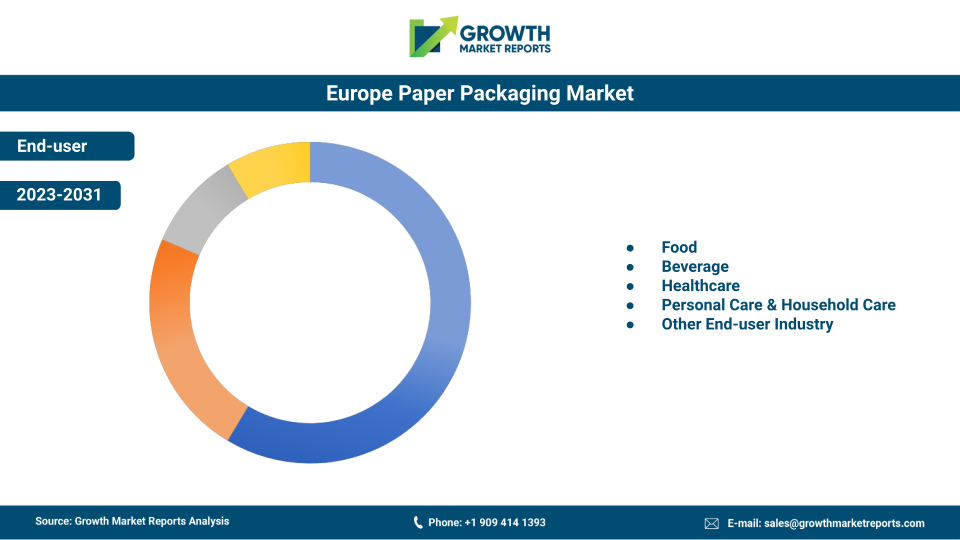
The paper packaging market serves a diverse array of end-users, including retail, industrial, institutional, and others. The retail sector is the largest end-user, driven by the proliferation of supermarkets, hypermarkets, convenience stores, and e-commerce platforms. Retailers are increasingly adopting paper packaging for shopping bags, product wraps, and point-of-sale displays to enhance brand image, comply with environmental regulations, and meet consumer demand for sustainable alternatives. The shift toward reusable and recyclable packaging formats is particularly pronounced in developed markets, where consumers are highly attuned to sustainability issues.

Industrial end-users rely on paper packaging for the safe and efficient transport of raw materials, components, and finished goods across the supply chain. Corrugated boxes, heavy-duty sacks, and protective wraps are commonly used in sectors such as automotive, chemicals, agriculture, and construction. The emphasis on cost optimization, waste reduction, and compliance with environmental standards is driving the adoption of innovative paper packaging solutions that offer enhanced strength, stackability, and recyclability. Industrial users are also exploring opportunities to incorporate recycled content and bio-based materials into their packaging portfolios, in line with corporate sustainability objectives.

Institutional end-users, including educational institutions, healthcare facilities, government agencies, and hospitality providers, are increasingly turning to paper packaging for a range of applications, from foodservice disposables to document storage and janitorial supplies. The focus on hygiene, convenience, and environmental responsibility is shaping purchasing decisions, with institutions seeking packaging solutions that minimize waste, facilitate recycling, and support green procurement policies. The growing adoption of compostable and biodegradable paper packaging in institutional settings is expected to drive incremental market growth over the forecast period.

The “others” end-user category encompasses specialty markets such as events, exhibitions, and promotional campaigns, where paper packaging is used for branded merchandise, gift wrapping, and temporary displays. The versatility, printability, and sustainability of paper packaging make it a preferred choice for short-term and seasonal applications, enabling brands to engage consumers and reinforce environmental messaging. The continuous expansion of end-user segments underscores the adaptability of paper packaging in addressing evolving market needs and regulatory requirements.

Opportunities & Threats

The paper packaging market presents substantial opportunities for growth and innovation, particularly in the context of the global sustainability agenda. The increasing adoption of circular economy principles, coupled with regulatory mandates to reduce plastic waste, is creating a favorable environment for the development and commercialization of advanced paper packaging solutions. Companies that invest in research and development to enhance the performance, functionality, and recyclability of paper packaging are well-positioned to capture market share and drive long-term value creation. The rise of digital printing, smart packaging technologies, and bio-based coatings offers additional avenues for differentiation and customer engagement, enabling brands to deliver personalized, interactive, and environmentally responsible packaging experiences.

Emerging markets represent a significant growth opportunity for the paper packaging market, as rising disposable incomes, urbanization, and the expansion of organized retail drive demand for packaged goods. The increasing penetration of e-commerce platforms in Asia Pacific, Latin America, and Africa is fueling the need for robust, lightweight, and cost-effective packaging solutions that ensure product safety and minimize environmental impact. Strategic partnerships, capacity expansions, and localization initiatives are critical for companies seeking to capitalize on these high-growth markets and build resilient supply chains. The ongoing shift toward renewable energy, water conservation, and sustainable forestry practices in paper manufacturing further enhances the market’s attractiveness to environmentally conscious investors and stakeholders.

Despite these opportunities, the paper packaging market faces several restraining factors, including volatility in raw material prices, supply chain disruptions, and competition from alternative packaging materials such as bioplastics and reusable containers. The reliance on wood pulp and other natural resources exposes manufacturers to fluctuations in commodity prices and supply constraints, particularly in regions affected by deforestation, climate change, and regulatory restrictions. Additionally, the energy-intensive nature of paper production and concerns over water usage and emissions may pose challenges to the industry’s sustainability credentials. Companies must navigate these risks by investing in resource-efficient technologies, diversifying raw material sources, and adopting transparent supply chain practices to maintain competitiveness and stakeholder trust.

Regional Outlook

The Asia Pacific region leads the paper packaging market, accounting for approximately 42% of the global market value in 2024, which translates to around USD 161.6 billion. This dominance is attributed to rapid industrialization, urbanization, and the expansion of the retail and e-commerce sectors in China, India, Japan, and Southeast Asia. The region’s large population base, rising disposable incomes, and increasing environmental awareness are driving demand for sustainable packaging solutions. Governments in Asia Pacific are also implementing stringent regulations to curb plastic waste, further accelerating the adoption of paper packaging across various industries. The market in this region is expected to grow at a CAGR of 6.1% through 2033, outpacing the global average and reinforcing its position as the primary growth engine for the industry.

North America is the second-largest regional market, with a market size of approximately USD 104.3 billion in 2024. The region benefits from a mature retail infrastructure, high consumer awareness of sustainability issues, and strong regulatory frameworks supporting recycling and waste reduction. The United States and Canada are at the forefront of innovation in paper packaging, with companies investing in advanced manufacturing technologies, smart packaging solutions, and bio-based materials. The steady growth of e-commerce, coupled with the increasing adoption of sustainable packaging by major brands, is expected to drive continued expansion in North America over the forecast period.

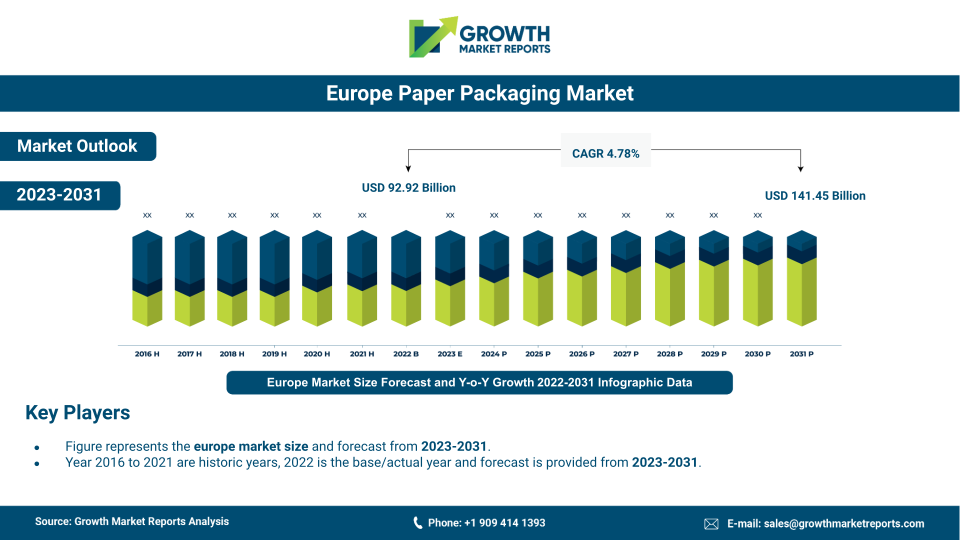
Europe follows closely, with a market value of about USD 86.7 billion in 2024. The region is characterized by stringent environmental regulations, ambitious recycling targets, and a well-established recycling infrastructure. European consumers and businesses are highly attuned to sustainability, driving demand for recyclable, compostable, and responsibly sourced paper packaging. The European Union’s Circular Economy Action Plan and Single-Use Plastics Directive are key policy drivers shaping market development and innovation. Latin America and the Middle East & Africa, with market sizes of USD 20.5 billion and USD 11.6 billion respectively, are experiencing steady growth, supported by rising investments in packaging manufacturing, increasing demand for packaged consumer goods, and evolving regulatory landscapes. These regions offer significant untapped potential for market participants seeking to expand their global footprint.

Paper Packaging Market Statistics

Competitor Outlook

The paper packaging market is characterized by intense competition, with a mix of global giants, regional players, and niche specialists vying for market share. The competitive landscape is shaped by factors such as product innovation, sustainability initiatives, pricing strategies, and customer relationships. Leading companies are investing heavily in research and development to enhance the performance, functionality, and environmental credentials of their paper packaging solutions. Strategic collaborations, mergers and acquisitions, and capacity expansions are common strategies employed to strengthen market position, diversify product portfolios, and access new customer segments. The ability to offer customized, value-added solutions that address specific industry needs and regulatory requirements is a key differentiator in this dynamic market.

Sustainability is a central theme in the competitive strategies of major players, with companies prioritizing the use of recycled content, renewable materials, and eco-friendly coatings in their product offerings. Many market leaders have set ambitious targets for reducing greenhouse gas emissions, water usage, and waste generation across their operations. Transparency, traceability, and third-party certifications are increasingly important for building trust with customers, regulators, and investors. The adoption of digital technologies, such as smart packaging, digital printing, and supply chain analytics, is also gaining traction as companies seek to enhance operational efficiency, improve product traceability, and deliver personalized packaging experiences.

Regional players and emerging market specialists are leveraging their local knowledge, agility, and cost competitiveness to capture market share and respond quickly to changing customer needs. These companies are often at the forefront of innovation in packaging design, materials sourcing, and supply chain management, enabling them to offer tailored solutions for specific applications and end-user segments. The growing emphasis on localization, sustainability, and customer-centricity is driving increased collaboration between global and regional players, fostering a more integrated and resilient industry ecosystem.

Notable companies operating in the paper packaging market include International Paper Company, WestRock Company, Smurfit Kappa Group, Mondi Group, DS Smith Plc, Packaging Corporation of America, Stora Enso Oyj, Oji Holdings Corporation, Nippon Paper Industries Co., Ltd., and Georgia-Pacific LLC. International Paper Company is a global leader in fiber-based packaging, with a strong focus on sustainability and innovation. WestRock Company is renowned for its comprehensive portfolio of corrugated packaging, consumer packaging, and specialty solutions, serving a diverse range of industries worldwide. Smurfit Kappa Group is a pioneer in sustainable packaging, offering innovative paper-based solutions and leveraging its extensive recycling network to support circular economy initiatives.

Mondi Group is recognized for its commitment to responsible sourcing, advanced paper technologies, and customized packaging solutions that address the unique needs of food, beverage, and industrial customers. DS Smith Plc specializes in sustainable packaging, recycling, and supply chain optimization, with a strong presence in Europe and expanding operations in North America and Asia. Packaging Corporation of America, Stora Enso Oyj, Oji Holdings Corporation, Nippon Paper Industries, and Georgia-Pacific are also key players, each bringing unique strengths in product development, manufacturing excellence, and market reach. Collectively, these companies are driving the evolution of the paper packaging industry, setting new benchmarks for innovation, sustainability, and customer value.

Key Players

  • International Paper Company
  • WestRock Company
  • Smurfit Kappa Group
  • Mondi Group
  • DS Smith Plc
  • Oji Holdings Corporation
  • Packaging Corporation of America
  • Stora Enso Oyj
  • Nippon Paper Industries Co., Ltd.
  • Georgia-Pacific LLC
  • Sappi Limited
  • Nine Dragons Paper Holdings Limited
  • Rengo Co., Ltd.
  • Sonoco Products Company
  • Pratt Industries, Inc.
  • Mayr-Melnhof Karton AG
  • Cascades Inc.
  • Lee & Man Paper Manufacturing Ltd.
  • Klabin S.A.
  • Huhtamaki Oyj
Paper Packaging Market Overview

Segments

The Paper Packaging market has been segmented on the basis of

Product Type

  • Corrugated Boxes
  • Boxboard
  • Paper Bags & Sacks
  • Cartons
  • Others

Material Type

  • Kraft Paper
  • Recycled Paper
  • Virgin Paper
  • Others

Application

  • Food & Beverages
  • Healthcare
  • Personal Care & Cosmetics
  • Electronics
  • Consumer Goods
  • Others

End-User

  • Retail
  • Industrial
  • Institutional
  • Others

Competitive Landscape

Key players competing in the market include Hamburger Containerboard GmbH (Prinzhom Group), WestRock, DS Smith PLC, Smurfit Kappa Group, and Mondi Group. Some of these players are using several market strategies such as mergers, acquisitions, partnerships, collaborations, capacity expansion, and product launches to increase their market shares.

WestRock demonstrated its dynamic right-sizing solutions BoxSizer and Box on Demand Compack Midi in March 2020. Multiple pre-loaded box footprints coming at random may be right-sized, lowering labor costs, increasing shipping yield, and improving customer satisfaction.
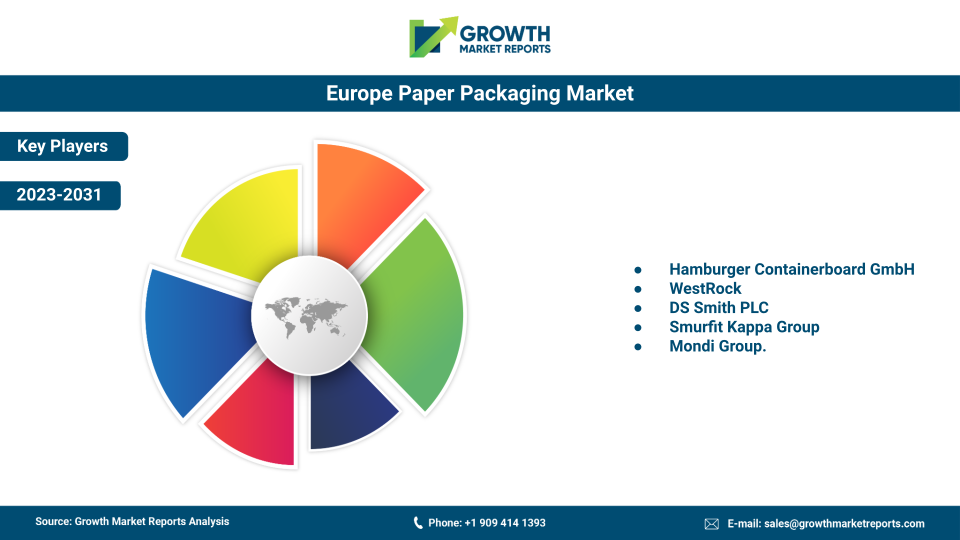

Europe Paper Packaging Market Key Players

Frequently Asked Questions

Yes, the Paper Packaging Market Research Report 2033 offers customization options to meet specific client requirements.

Opportunities include growth in emerging markets, adoption of circular economy principles, and innovation in sustainable packaging. Challenges include raw material price volatility, supply chain disruptions, and competition from bioplastics and reusable containers.

Key players include International Paper Company, WestRock Company, Smurfit Kappa Group, Mondi Group, DS Smith Plc, Oji Holdings Corporation, Packaging Corporation of America, Stora Enso Oyj, Nippon Paper Industries, and Georgia-Pacific LLC.

Many governments have imposed bans or taxes on single-use plastics, incentivizing the shift to paper packaging. Regulatory frameworks are also driving investments in R&D and sustainable manufacturing practices.

Major applications are in food & beverages, healthcare, personal care & cosmetics, electronics, and consumer goods. The food & beverages sector is the largest, while healthcare and cosmetics are rapidly growing segments.

Material types include kraft paper (noted for strength and durability), recycled paper (favored for sustainability), virgin paper (used for high-purity applications), and specialty papers like coated and barrier papers.

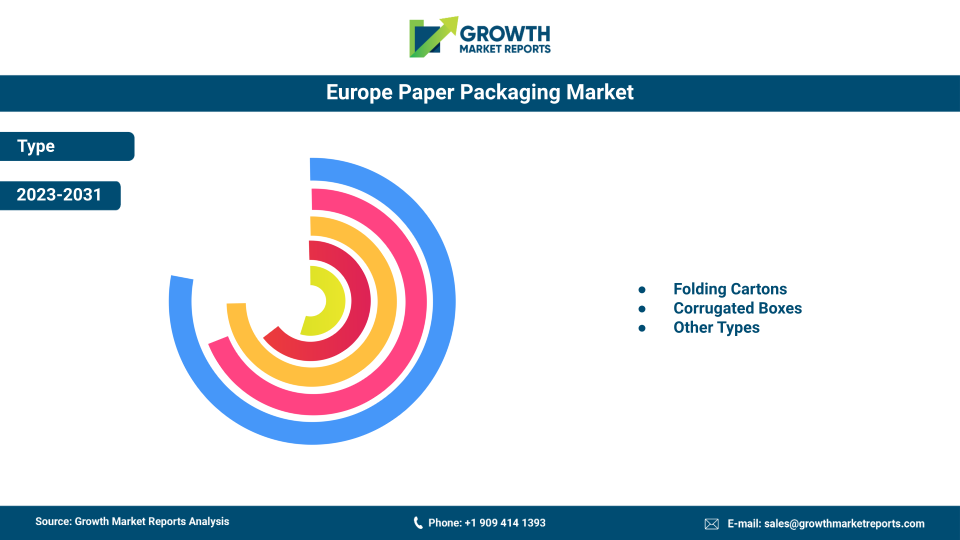
The main product types are corrugated boxes, boxboard (including folding cartons), paper bags & sacks, cartons (such as liquid and gable-top cartons), and specialty products like molded fiber packaging and paper tubes.

Asia Pacific leads the market, accounting for about 42% of global value in 2024, driven by industrialization, urbanization, and e-commerce growth in countries like China and India. North America and Europe follow due to mature retail sectors and strong sustainability mandates.

Key growth drivers include rising consumer demand for eco-friendly packaging, strict environmental regulations, the rapid expansion of e-commerce, and technological advancements in paper manufacturing.

The global paper packaging market reached USD 384.7 billion in 2024 and is projected to grow at a CAGR of 5.2% from 2025 to 2033, reaching USD 610.2 billion by 2033.

Table Of Content

Chapter 1 Executive Summary
Chapter 2 Assumptions and Acronyms Used
Chapter 3 Research Methodology
Chapter 4 Paper Packaging Market Overview
   4.1 Introduction
      4.1.1 Market Taxonomy
      4.1.2 Market Definition
      4.1.3 Macro-Economic Factors Impacting the Market Growth
   4.2 Paper Packaging Market Dynamics
      4.2.1 Market Drivers
      4.2.2 Market Restraints
      4.2.3 Market Opportunity
   4.3 Paper Packaging Market - Supply Chain Analysis
      4.3.1 List of Key Suppliers
      4.3.2 List of Key Distributors
      4.3.3 List of Key Consumers
   4.4 Key Forces Shaping the Paper Packaging Market
      4.4.1 Bargaining Power of Suppliers
      4.4.2 Bargaining Power of Buyers
      4.4.3 Threat of Substitution
      4.4.4 Threat of New Entrants
      4.4.5 Competitive Rivalry
   4.5 Global Paper Packaging Market Size & Forecast, 2023-2032
      4.5.1 Paper Packaging Market Size and Y-o-Y Growth
      4.5.2 Paper Packaging Market Absolute $ Opportunity

Chapter 5 Global Paper Packaging Market Analysis and Forecast By Product Type
   5.1 Introduction
      5.1.1 Key Market Trends & Growth Opportunities By Product Type
      5.1.2 Basis Point Share (BPS) Analysis By Product Type
      5.1.3 Absolute $ Opportunity Assessment By Product Type
   5.2 Paper Packaging Market Size Forecast By Product Type
      5.2.1 Corrugated Boxes
      5.2.2 Boxboard
      5.2.3 Paper Bags & Sacks
      5.2.4 Cartons
      5.2.5 Others
   5.3 Market Attractiveness Analysis By Product Type

Chapter 6 Global Paper Packaging Market Analysis and Forecast By Material Type
   6.1 Introduction
      6.1.1 Key Market Trends & Growth Opportunities By Material Type
      6.1.2 Basis Point Share (BPS) Analysis By Material Type
      6.1.3 Absolute $ Opportunity Assessment By Material Type
   6.2 Paper Packaging Market Size Forecast By Material Type
      6.2.1 Kraft Paper
      6.2.2 Recycled Paper
      6.2.3 Virgin Paper
      6.2.4 Others
   6.3 Market Attractiveness Analysis By Material Type

Chapter 7 Global Paper Packaging Market Analysis and Forecast By Application
   7.1 Introduction
      7.1.1 Key Market Trends & Growth Opportunities By Application
      7.1.2 Basis Point Share (BPS) Analysis By Application
      7.1.3 Absolute $ Opportunity Assessment By Application
   7.2 Paper Packaging Market Size Forecast By Application
      7.2.1 Food & Beverages
      7.2.2 Healthcare
      7.2.3 Personal Care & Cosmetics
      7.2.4 Electronics
      7.2.5 Consumer Goods
      7.2.6 Others
   7.3 Market Attractiveness Analysis By Application

Chapter 8 Global Paper Packaging Market Analysis and Forecast By End-User
   8.1 Introduction
      8.1.1 Key Market Trends & Growth Opportunities By End-User
      8.1.2 Basis Point Share (BPS) Analysis By End-User
      8.1.3 Absolute $ Opportunity Assessment By End-User
   8.2 Paper Packaging Market Size Forecast By End-User
      8.2.1 Retail
      8.2.2 Industrial
      8.2.3 Institutional
      8.2.4 Others
   8.3 Market Attractiveness Analysis By End-User

Chapter 9 Global Paper Packaging Market Analysis and Forecast by Region
   9.1 Introduction
      9.1.1 Key Market Trends & Growth Opportunities By Region
      9.1.2 Basis Point Share (BPS) Analysis By Region
      9.1.3 Absolute $ Opportunity Assessment By Region
   9.2 Paper Packaging Market Size Forecast By Region
      9.2.1 North America
      9.2.2 Europe
      9.2.3 Asia Pacific
      9.2.4 Latin America
      9.2.5 Middle East & Africa (MEA)
   9.3 Market Attractiveness Analysis By Region

Chapter 10 Coronavirus Disease (COVID-19) Impact 
   10.1 Introduction 
   10.2 Current & Future Impact Analysis 
   10.3 Economic Impact Analysis 
   10.4 Government Policies 
   10.5 Investment Scenario

Chapter 11 North America Paper Packaging Analysis and Forecast
   11.1 Introduction
   11.2 North America Paper Packaging Market Size Forecast by Country
      11.2.1 U.S.
      11.2.2 Canada
   11.3 Basis Point Share (BPS) Analysis by Country
   11.4 Absolute $ Opportunity Assessment by Country
   11.5 Market Attractiveness Analysis by Country
   11.6 North America Paper Packaging Market Size Forecast By Product Type
      11.6.1 Corrugated Boxes
      11.6.2 Boxboard
      11.6.3 Paper Bags & Sacks
      11.6.4 Cartons
      11.6.5 Others
   11.7 Basis Point Share (BPS) Analysis By Product Type 
   11.8 Absolute $ Opportunity Assessment By Product Type 
   11.9 Market Attractiveness Analysis By Product Type
   11.10 North America Paper Packaging Market Size Forecast By Material Type
      11.10.1 Kraft Paper
      11.10.2 Recycled Paper
      11.10.3 Virgin Paper
      11.10.4 Others
   11.11 Basis Point Share (BPS) Analysis By Material Type 
   11.12 Absolute $ Opportunity Assessment By Material Type 
   11.13 Market Attractiveness Analysis By Material Type
   11.14 North America Paper Packaging Market Size Forecast By Application
      11.14.1 Food & Beverages
      11.14.2 Healthcare
      11.14.3 Personal Care & Cosmetics
      11.14.4 Electronics
      11.14.5 Consumer Goods
      11.14.6 Others
   11.15 Basis Point Share (BPS) Analysis By Application 
   11.16 Absolute $ Opportunity Assessment By Application 
   11.17 Market Attractiveness Analysis By Application
   11.18 North America Paper Packaging Market Size Forecast By End-User
      11.18.1 Retail
      11.18.2 Industrial
      11.18.3 Institutional
      11.18.4 Others
   11.19 Basis Point Share (BPS) Analysis By End-User 
   11.20 Absolute $ Opportunity Assessment By End-User 
   11.21 Market Attractiveness Analysis By End-User

Chapter 12 Europe Paper Packaging Analysis and Forecast
   12.1 Introduction
   12.2 Europe Paper Packaging Market Size Forecast by Country
      12.2.1 Germany
      12.2.2 France
      12.2.3 Italy
      12.2.4 U.K.
      12.2.5 Spain
      12.2.6 Russia
      12.2.7 Rest of Europe
   12.3 Basis Point Share (BPS) Analysis by Country
   12.4 Absolute $ Opportunity Assessment by Country
   12.5 Market Attractiveness Analysis by Country
   12.6 Europe Paper Packaging Market Size Forecast By Product Type
      12.6.1 Corrugated Boxes
      12.6.2 Boxboard
      12.6.3 Paper Bags & Sacks
      12.6.4 Cartons
      12.6.5 Others
   12.7 Basis Point Share (BPS) Analysis By Product Type 
   12.8 Absolute $ Opportunity Assessment By Product Type 
   12.9 Market Attractiveness Analysis By Product Type
   12.10 Europe Paper Packaging Market Size Forecast By Material Type
      12.10.1 Kraft Paper
      12.10.2 Recycled Paper
      12.10.3 Virgin Paper
      12.10.4 Others
   12.11 Basis Point Share (BPS) Analysis By Material Type 
   12.12 Absolute $ Opportunity Assessment By Material Type 
   12.13 Market Attractiveness Analysis By Material Type
   12.14 Europe Paper Packaging Market Size Forecast By Application
      12.14.1 Food & Beverages
      12.14.2 Healthcare
      12.14.3 Personal Care & Cosmetics
      12.14.4 Electronics
      12.14.5 Consumer Goods
      12.14.6 Others
   12.15 Basis Point Share (BPS) Analysis By Application 
   12.16 Absolute $ Opportunity Assessment By Application 
   12.17 Market Attractiveness Analysis By Application
   12.18 Europe Paper Packaging Market Size Forecast By End-User
      12.18.1 Retail
      12.18.2 Industrial
      12.18.3 Institutional
      12.18.4 Others
   12.19 Basis Point Share (BPS) Analysis By End-User 
   12.20 Absolute $ Opportunity Assessment By End-User 
   12.21 Market Attractiveness Analysis By End-User

Chapter 13 Asia Pacific Paper Packaging Analysis and Forecast
   13.1 Introduction
   13.2 Asia Pacific Paper Packaging Market Size Forecast by Country
      13.2.1 China
      13.2.2 Japan
      13.2.3 South Korea
      13.2.4 India
      13.2.5 Australia
      13.2.6 South East Asia (SEA)
      13.2.7 Rest of Asia Pacific (APAC)
   13.3 Basis Point Share (BPS) Analysis by Country
   13.4 Absolute $ Opportunity Assessment by Country
   13.5 Market Attractiveness Analysis by Country
   13.6 Asia Pacific Paper Packaging Market Size Forecast By Product Type
      13.6.1 Corrugated Boxes
      13.6.2 Boxboard
      13.6.3 Paper Bags & Sacks
      13.6.4 Cartons
      13.6.5 Others
   13.7 Basis Point Share (BPS) Analysis By Product Type 
   13.8 Absolute $ Opportunity Assessment By Product Type 
   13.9 Market Attractiveness Analysis By Product Type
   13.10 Asia Pacific Paper Packaging Market Size Forecast By Material Type
      13.10.1 Kraft Paper
      13.10.2 Recycled Paper
      13.10.3 Virgin Paper
      13.10.4 Others
   13.11 Basis Point Share (BPS) Analysis By Material Type 
   13.12 Absolute $ Opportunity Assessment By Material Type 
   13.13 Market Attractiveness Analysis By Material Type
   13.14 Asia Pacific Paper Packaging Market Size Forecast By Application
      13.14.1 Food & Beverages
      13.14.2 Healthcare
      13.14.3 Personal Care & Cosmetics
      13.14.4 Electronics
      13.14.5 Consumer Goods
      13.14.6 Others
   13.15 Basis Point Share (BPS) Analysis By Application 
   13.16 Absolute $ Opportunity Assessment By Application 
   13.17 Market Attractiveness Analysis By Application
   13.18 Asia Pacific Paper Packaging Market Size Forecast By End-User
      13.18.1 Retail
      13.18.2 Industrial
      13.18.3 Institutional
      13.18.4 Others
   13.19 Basis Point Share (BPS) Analysis By End-User 
   13.20 Absolute $ Opportunity Assessment By End-User 
   13.21 Market Attractiveness Analysis By End-User

Chapter 14 Latin America Paper Packaging Analysis and Forecast
   14.1 Introduction
   14.2 Latin America Paper Packaging Market Size Forecast by Country
      14.2.1 Brazil
      14.2.2 Mexico
      14.2.3 Rest of Latin America (LATAM)
   14.3 Basis Point Share (BPS) Analysis by Country
   14.4 Absolute $ Opportunity Assessment by Country
   14.5 Market Attractiveness Analysis by Country
   14.6 Latin America Paper Packaging Market Size Forecast By Product Type
      14.6.1 Corrugated Boxes
      14.6.2 Boxboard
      14.6.3 Paper Bags & Sacks
      14.6.4 Cartons
      14.6.5 Others
   14.7 Basis Point Share (BPS) Analysis By Product Type 
   14.8 Absolute $ Opportunity Assessment By Product Type 
   14.9 Market Attractiveness Analysis By Product Type
   14.10 Latin America Paper Packaging Market Size Forecast By Material Type
      14.10.1 Kraft Paper
      14.10.2 Recycled Paper
      14.10.3 Virgin Paper
      14.10.4 Others
   14.11 Basis Point Share (BPS) Analysis By Material Type 
   14.12 Absolute $ Opportunity Assessment By Material Type 
   14.13 Market Attractiveness Analysis By Material Type
   14.14 Latin America Paper Packaging Market Size Forecast By Application
      14.14.1 Food & Beverages
      14.14.2 Healthcare
      14.14.3 Personal Care & Cosmetics
      14.14.4 Electronics
      14.14.5 Consumer Goods
      14.14.6 Others
   14.15 Basis Point Share (BPS) Analysis By Application 
   14.16 Absolute $ Opportunity Assessment By Application 
   14.17 Market Attractiveness Analysis By Application
   14.18 Latin America Paper Packaging Market Size Forecast By End-User
      14.18.1 Retail
      14.18.2 Industrial
      14.18.3 Institutional
      14.18.4 Others
   14.19 Basis Point Share (BPS) Analysis By End-User 
   14.20 Absolute $ Opportunity Assessment By End-User 
   14.21 Market Attractiveness Analysis By End-User

Chapter 15 Middle East & Africa (MEA) Paper Packaging Analysis and Forecast
   15.1 Introduction
   15.2 Middle East & Africa (MEA) Paper Packaging Market Size Forecast by Country
      15.2.1 Saudi Arabia
      15.2.2 South Africa
      15.2.3 UAE
      15.2.4 Rest of Middle East & Africa (MEA)
   15.3 Basis Point Share (BPS) Analysis by Country
   15.4 Absolute $ Opportunity Assessment by Country
   15.5 Market Attractiveness Analysis by Country
   15.6 Middle East & Africa (MEA) Paper Packaging Market Size Forecast By Product Type
      15.6.1 Corrugated Boxes
      15.6.2 Boxboard
      15.6.3 Paper Bags & Sacks
      15.6.4 Cartons
      15.6.5 Others
   15.7 Basis Point Share (BPS) Analysis By Product Type 
   15.8 Absolute $ Opportunity Assessment By Product Type 
   15.9 Market Attractiveness Analysis By Product Type
   15.10 Middle East & Africa (MEA) Paper Packaging Market Size Forecast By Material Type
      15.10.1 Kraft Paper
      15.10.2 Recycled Paper
      15.10.3 Virgin Paper
      15.10.4 Others
   15.11 Basis Point Share (BPS) Analysis By Material Type 
   15.12 Absolute $ Opportunity Assessment By Material Type 
   15.13 Market Attractiveness Analysis By Material Type
   15.14 Middle East & Africa (MEA) Paper Packaging Market Size Forecast By Application
      15.14.1 Food & Beverages
      15.14.2 Healthcare
      15.14.3 Personal Care & Cosmetics
      15.14.4 Electronics
      15.14.5 Consumer Goods
      15.14.6 Others
   15.15 Basis Point Share (BPS) Analysis By Application 
   15.16 Absolute $ Opportunity Assessment By Application 
   15.17 Market Attractiveness Analysis By Application
   15.18 Middle East & Africa (MEA) Paper Packaging Market Size Forecast By End-User
      15.18.1 Retail
      15.18.2 Industrial
      15.18.3 Institutional
      15.18.4 Others
   15.19 Basis Point Share (BPS) Analysis By End-User 
   15.20 Absolute $ Opportunity Assessment By End-User 
   15.21 Market Attractiveness Analysis By End-User

Chapter 16 Competition Landscape 
   16.1 Paper Packaging Market: Competitive Dashboard
   16.2 Global Paper Packaging Market: Market Share Analysis, 2023
   16.3 Company Profiles (Details – Overview, Financials, Developments, Strategy) 
      16.3.1 International Paper Company
WestRock Company
Smurfit Kappa Group
Mondi Group
DS Smith Plc
Oji Holdings Corporation
Packaging Corporation of America
Stora Enso Oyj
Nippon Paper Industries Co., Ltd.
Georgia-Pacific LLC
Sappi Limited
Nine Dragons Paper Holdings Limited
Rengo Co., Ltd.
Sonoco Products Company
Pratt Industries, Inc.
Mayr-Melnhof Karton AG
Cascades Inc.
Lee & Man Paper Manufacturing Ltd.
Klabin S.A.
Huhtamaki Oyj

Methodology

Our Clients

Dassault Aviation
The John Holland Group
Honda Motor Co. Ltd.
sinopec
Microsoft
General Electric
General Mills
Pfizer