Powered Wheelchairs Tire Market Research Report 2033

Powered Wheelchairs Tire Market Research Report 2033

Segments - by Product Type (Solid Tires, Pneumatic Tires, Foam-Filled Tires, Others), by Wheelchair Type (Rear-Wheel Drive, Front-Wheel Drive, Mid-Wheel Drive, Others), by Material (Rubber, Polyurethane, Composite Materials, Others), by Distribution Channel (Online Stores, Medical Supply Stores, Specialty Stores, Others), by End-User (Hospitals, Homecare, Rehabilitation Centers, Others)

https://growthmarketreports.com/raksha
Author : Raksha Sharma
https://growthmarketreports.com/Vaibhav
Fact-checked by : V. Chandola
https://growthmarketreports.com/Shruti
Editor : Shruti Bhat

Upcoming | Report ID :HC-5624 | 4.7 Rating | 56 Reviews | 290 Pages | Format : Docx PDF

Report Description


Powered Wheelchairs Tire Market Outlook

According to our latest research, the global powered wheelchairs tire market size reached USD 1.45 billion in 2024. The market is experiencing robust growth, propelled by technological advancements and increasing demand for mobility solutions among the aging population. The market is projected to expand at a CAGR of 6.2% from 2025 to 2033, reaching a forecasted value of USD 2.49 billion by 2033. This growth is attributed to the rising prevalence of disabilities, the surge in healthcare investments, and the growing emphasis on enhancing the quality of life for individuals with mobility challenges. As per our latest research, the powered wheelchairs tire market is set to witness significant evolution, driven by both product innovation and expanding accessibility across various regions.

One of the primary growth factors in the powered wheelchairs tire market is the rapid increase in the global geriatric population. The elderly demographic is more prone to mobility impairments, necessitating reliable and durable mobility aids such as powered wheelchairs. As life expectancy continues to rise worldwide, so does the demand for advanced assistive devices. This demographic shift has led to a surge in the adoption of powered wheelchairs, directly influencing the need for high-quality tires that offer comfort, stability, and longevity. Manufacturers are responding by investing in research and development to create tires that cater specifically to the needs of elderly users, focusing on features such as puncture resistance, enhanced grip, and low maintenance requirements. This trend is expected to persist, fueling the long-term growth of the powered wheelchairs tire market.

Technological innovations in tire design and materials are also playing a significant role in market expansion. The integration of advanced materials such as polyurethane and composite compounds has resulted in tires that are not only lighter but also more durable and energy-efficient. These advancements are particularly important for powered wheelchair users who require a balance between maneuverability and comfort. Tire manufacturers are leveraging cutting-edge manufacturing processes to produce tires that minimize rolling resistance and maximize traction, even on uneven surfaces. Furthermore, the adoption of foam-filled and solid tires is gaining momentum as they offer superior puncture protection, making them ideal for users who navigate both indoor and outdoor environments. These product innovations are reshaping user expectations and setting new standards in the powered wheelchairs tire market.

Another crucial factor driving market growth is the increasing focus on healthcare infrastructure and rehabilitation services across both developed and developing regions. Governments and private organizations are investing heavily in accessible healthcare facilities and homecare solutions, which has led to a corresponding uptick in the demand for powered wheelchairs and their components, including tires. The proliferation of online and specialty medical supply stores has further facilitated the availability of a wide range of powered wheelchair tires, making it easier for end-users to access products tailored to their specific requirements. This enhanced distribution network, coupled with growing awareness about mobility aids, is expected to sustain the upward trajectory of the powered wheelchairs tire market in the coming years.

Standing wheelchairs are an innovative solution in the realm of mobility aids, designed to provide users with the ability to transition from a seated to a standing position. This feature is particularly beneficial for individuals who require frequent posture changes to improve circulation and reduce the risk of pressure sores. The integration of standing functionality in wheelchairs not only enhances user independence but also promotes better health outcomes by facilitating weight-bearing exercises. As the demand for versatile and multifunctional mobility devices grows, standing wheelchairs are becoming increasingly popular among users seeking comprehensive mobility solutions. Manufacturers are responding by incorporating advanced materials and ergonomic designs to ensure safety and comfort during transitions, thereby expanding the market for standing wheelchairs.

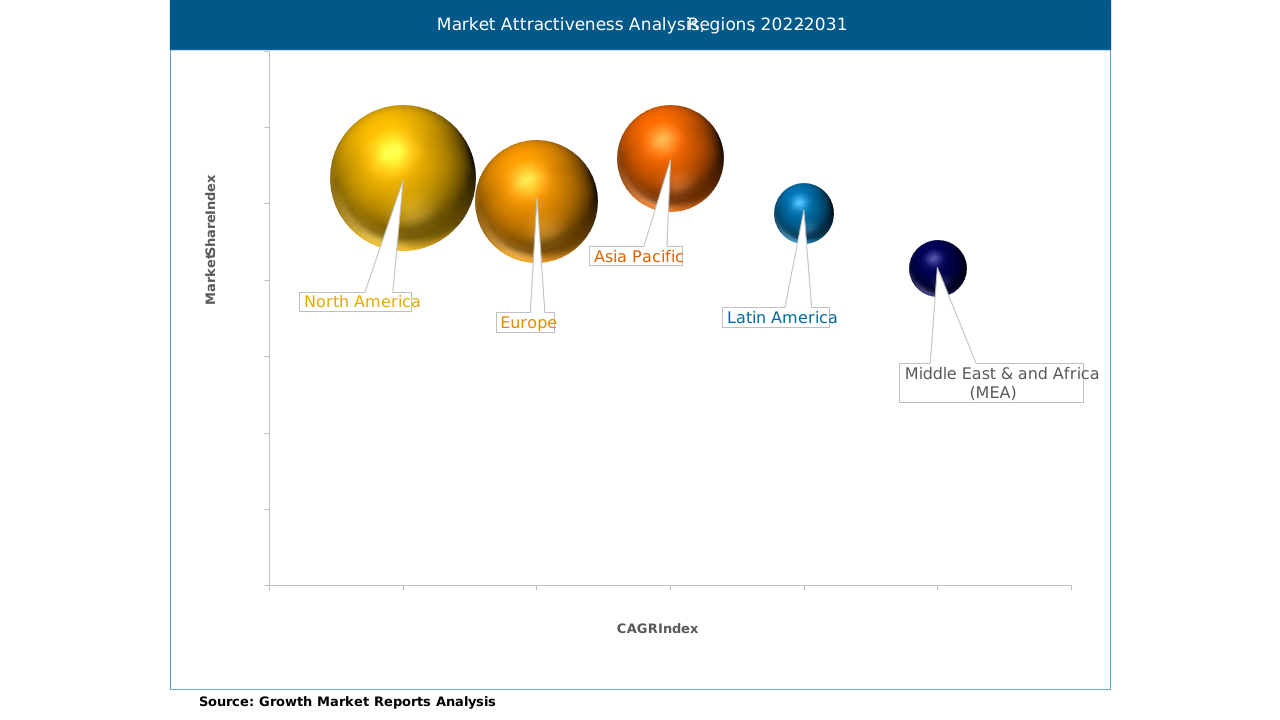
Regionally, North America currently dominates the powered wheelchairs tire market, accounting for a significant share owing to its advanced healthcare system, high disposable income, and heightened awareness regarding mobility solutions. Europe follows closely, benefiting from robust government initiatives and a rapidly aging population. Meanwhile, the Asia Pacific region is emerging as a high-growth market, driven by improving healthcare infrastructure and increasing investments in assistive technologies. The Latin America and Middle East & Africa regions are also witnessing steady growth, albeit at a slower pace, as awareness and accessibility continue to improve. This regional diversification is expected to create new opportunities for market participants, fostering innovation and competition across the global powered wheelchairs tire market.

Global Powered Wheelchairs Tire Industry Outlook

Product Type Analysis

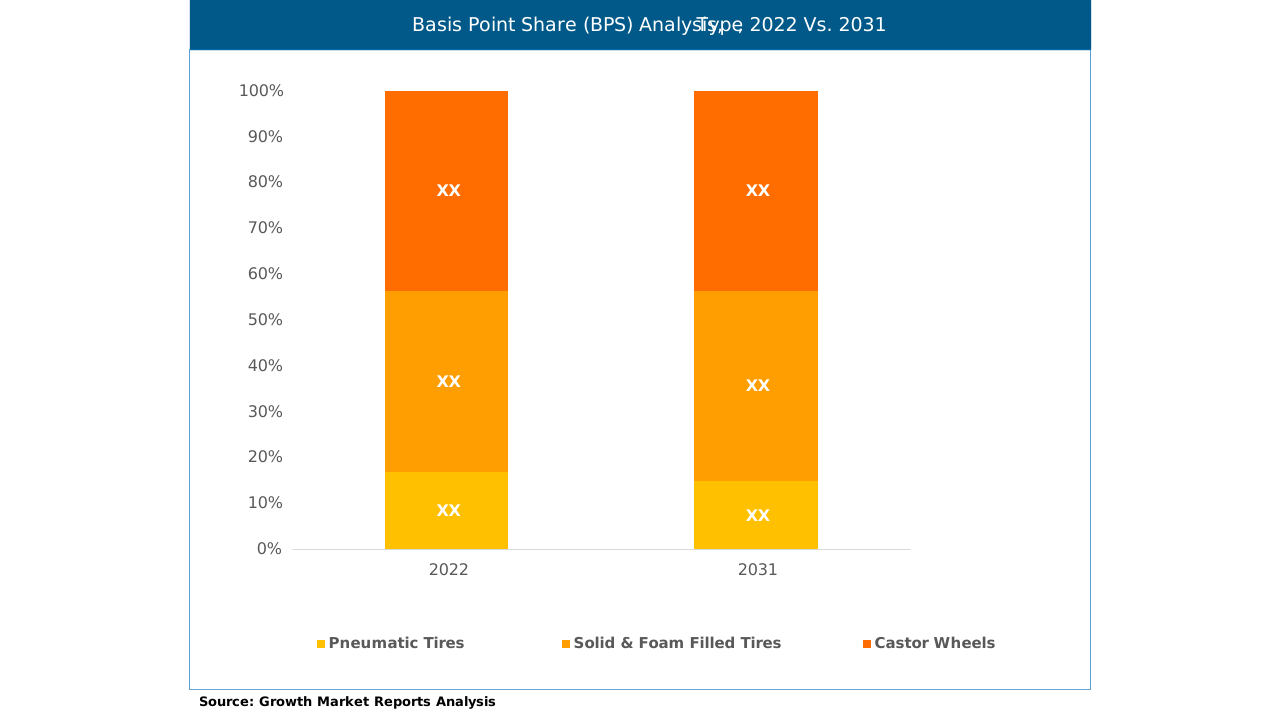
The powered wheelchairs tire market is segmented by product type into solid tires, pneumatic tires, foam-filled tires, and others. Solid tires are gaining substantial traction in the market due to their exceptional durability and maintenance-free characteristics. These tires are particularly favored for indoor use and in institutional settings like hospitals and rehabilitation centers, where the risk of punctures must be minimized. Solid tires offer a smooth ride on flat surfaces and are highly resistant to wear and tear, making them a cost-effective choice for high-frequency users. Manufacturers are continuously innovating in this segment, introducing solid tires with improved shock absorption and enhanced grip to further increase user comfort and safety. This focus on product enhancement is expected to maintain the dominance of solid tires in the powered wheelchairs tire market.

Pneumatic tires, on the other hand, are preferred by users who require maximum comfort and flexibility, especially when navigating uneven or outdoor terrains. These tires are filled with air, providing a cushioned ride that absorbs shocks and vibrations effectively. While pneumatic tires excel in providing a smooth ride, they are susceptible to punctures and require regular maintenance, which can be a drawback for some users. However, advancements in tire technology, such as the development of puncture-resistant linings and self-sealing tubes, are addressing some of these concerns. The pneumatic tire segment continues to attract users who prioritize ride quality over maintenance considerations, ensuring its relevance in the market.

Foam-filled tires represent a hybrid solution, combining the comfort of pneumatic tires with the durability of solid tires. These tires are filled with a special foam material that mimics the shock-absorbing properties of air while eliminating the risk of flats. Foam-filled tires are particularly popular among users who require a balance between outdoor performance and low maintenance. The segment is witnessing steady growth as more users become aware of the benefits of foam-filled tires, and manufacturers are responding by expanding their product offerings to cater to a broader range of wheelchair models and user preferences. This versatility is positioning foam-filled tires as a key growth segment within the powered wheelchairs tire market.

The "others" category includes specialty tires designed for specific applications, such as all-terrain tires and tires with enhanced traction for challenging environments. These niche products cater to users with unique mobility needs, such as those who frequently traverse rough terrain or require specialized support due to medical conditions. The demand for customized and application-specific tires is growing, driven by the increasing diversity of powered wheelchair users and the expanding range of environments in which these devices are used. As the market continues to evolve, the product type segment is expected to witness ongoing innovation, with manufacturers focusing on developing tires that offer superior performance, safety, and user satisfaction.

Report Scope

Attributes Details
Report Title Powered Wheelchairs Tire Market Research Report 2033
By Product Type Solid Tires, Pneumatic Tires, Foam-Filled Tires, Others
By Wheelchair Type Rear-Wheel Drive, Front-Wheel Drive, Mid-Wheel Drive, Others
By Material Rubber, Polyurethane, Composite Materials, Others
By Distribution Channel Online Stores, Medical Supply Stores, Specialty Stores, Others
By End-User Hospitals, Homecare, Rehabilitation Centers, Others
Regions Covered North America, Europe, APAC, Latin America, MEA
Base Year 2024
Historic Data 2018-2023
Forecast Period 2025-2033
Number of Pages 290
Number of Tables & Figures 368
Customization Available Yes, the report can be customized as per your need.

Wheelchair Type Analysis

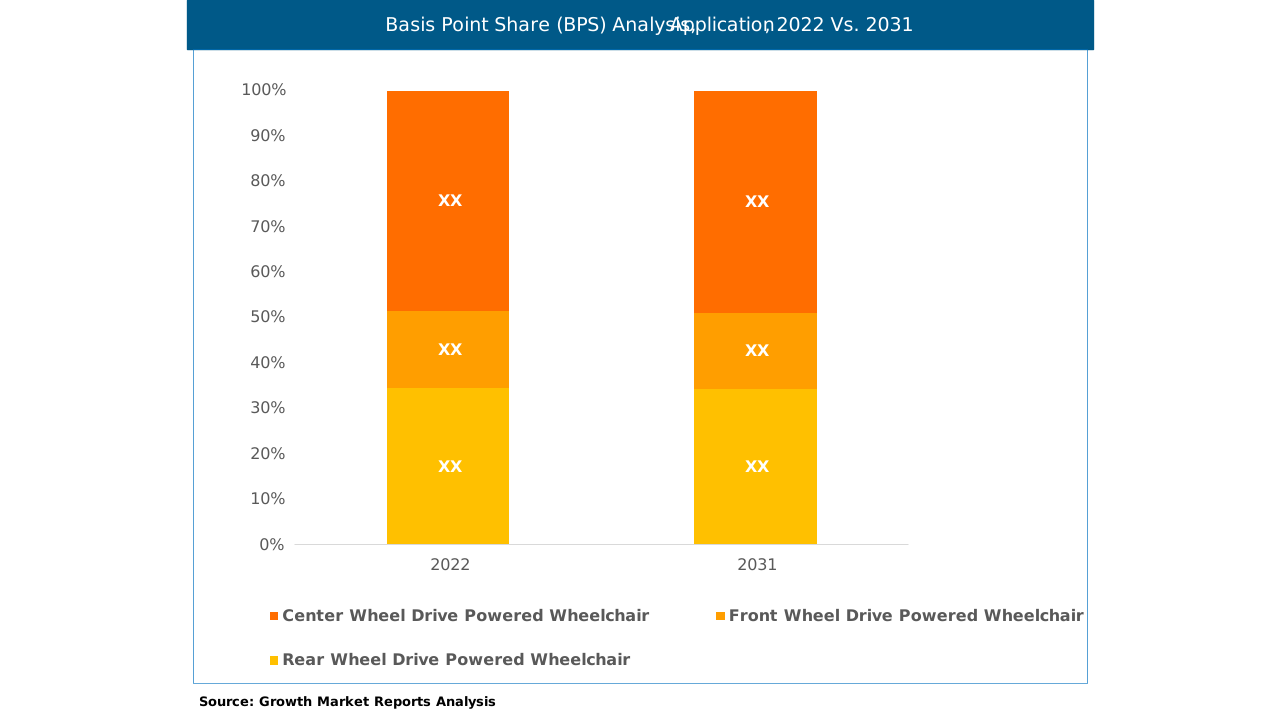
The powered wheelchairs tire market is further segmented by wheelchair type, including rear-wheel drive, front-wheel drive, mid-wheel drive, and others. Rear-wheel drive wheelchairs have traditionally been the most popular configuration, offering robust performance and superior stability, especially at higher speeds. The tires used in rear-wheel drive wheelchairs are designed to provide maximum traction and durability, ensuring reliable operation across various surfaces. Manufacturers are continuously refining tire designs for rear-wheel drive models, focusing on enhancing grip, reducing rolling resistance, and improving wear characteristics. This segment remains a mainstay in the market, particularly among users who prioritize straightforward control and long-distance travel.

Front-wheel drive powered wheelchairs are gaining popularity due to their enhanced maneuverability and ability to navigate tight spaces. The tires in this segment are engineered to provide optimal performance in both indoor and outdoor environments, with a focus on stability and ease of turning. Front-wheel drive models are particularly well-suited for users who require frequent navigation through confined areas, such as homes or crowded public spaces. Tire manufacturers are addressing the unique demands of this segment by developing products that offer a balance between traction, comfort, and durability. As user preferences continue to shift towards more versatile mobility solutions, the front-wheel drive segment is expected to see sustained growth.

Mid-wheel drive powered wheelchairs represent another significant segment, known for their exceptional turning radius and superior maneuverability. These wheelchairs are particularly favored by users who require maximum control and agility, especially in indoor environments. The tires used in mid-wheel drive models are designed to support smooth and stable movement, even during sharp turns and pivots. Manufacturers are investing in advanced tire materials and tread patterns to enhance the performance of mid-wheel drive wheelchairs, ensuring that users experience minimal slippage and optimal comfort. The growing adoption of mid-wheel drive models in both residential and healthcare settings is contributing to the expansion of this segment within the powered wheelchairs tire market.

The "others" category in this segment includes specialized wheelchair types, such as all-terrain and standing wheelchairs, which require unique tire solutions to accommodate specific user needs. These wheelchairs often operate in challenging environments where conventional tires may not suffice, necessitating the development of customized tire products with enhanced durability, traction, and support. The increasing demand for tailored mobility solutions is driving innovation in this segment, with manufacturers focusing on creating tires that can withstand extreme conditions while delivering superior performance. As the powered wheelchairs tire market continues to diversify, the wheelchair type segment is expected to witness ongoing evolution, with a growing emphasis on user-centric design and functionality.

Material Analysis

Material selection plays a pivotal role in the performance and durability of powered wheelchair tires. The market is segmented by material into rubber, polyurethane, composite materials, and others. Rubber remains the most widely used material due to its excellent grip, flexibility, and cost-effectiveness. Rubber tires are favored for their ability to provide a smooth ride and absorb shocks, making them suitable for a wide range of indoor and outdoor applications. Manufacturers are continually enhancing rubber formulations to improve wear resistance and extend tire lifespan, ensuring that rubber remains a dominant material in the powered wheelchairs tire market.

Polyurethane tires have gained significant traction in recent years, owing to their superior durability and resistance to wear and tear. These tires are particularly popular among users who require long-lasting performance and minimal maintenance. Polyurethane tires offer excellent puncture resistance and are less prone to flat spots, making them ideal for high-usage environments such as hospitals and rehabilitation centers. The material's lightweight nature also contributes to improved energy efficiency, allowing powered wheelchairs to operate more effectively over longer distances. As awareness of the benefits of polyurethane tires grows, this segment is expected to witness continued expansion.

Composite materials are emerging as a key trend in the powered wheelchairs tire market, driven by the need for lightweight yet robust tire solutions. Composite tires are engineered using advanced materials that combine the strengths of rubber, plastics, and other compounds to deliver enhanced performance characteristics. These tires offer a unique combination of strength, flexibility, and resistance to environmental factors such as moisture and temperature fluctuations. Manufacturers are investing in research and development to further optimize composite materials, aiming to produce tires that offer superior comfort, longevity, and safety. The adoption of composite materials is expected to accelerate as users seek higher-performing and more reliable mobility solutions.

The "others" category in the material segment includes specialty compounds and innovative materials designed to address specific user requirements. These may include eco-friendly materials, advanced polymers, and proprietary blends that offer unique performance benefits. As the powered wheelchairs tire market continues to evolve, the demand for customized and application-specific materials is expected to rise. Manufacturers are responding by expanding their material portfolios and collaborating with research institutions to develop next-generation tire solutions. This focus on material innovation is set to drive the long-term growth and competitiveness of the powered wheelchairs tire market.

Distribution Channel Analysis

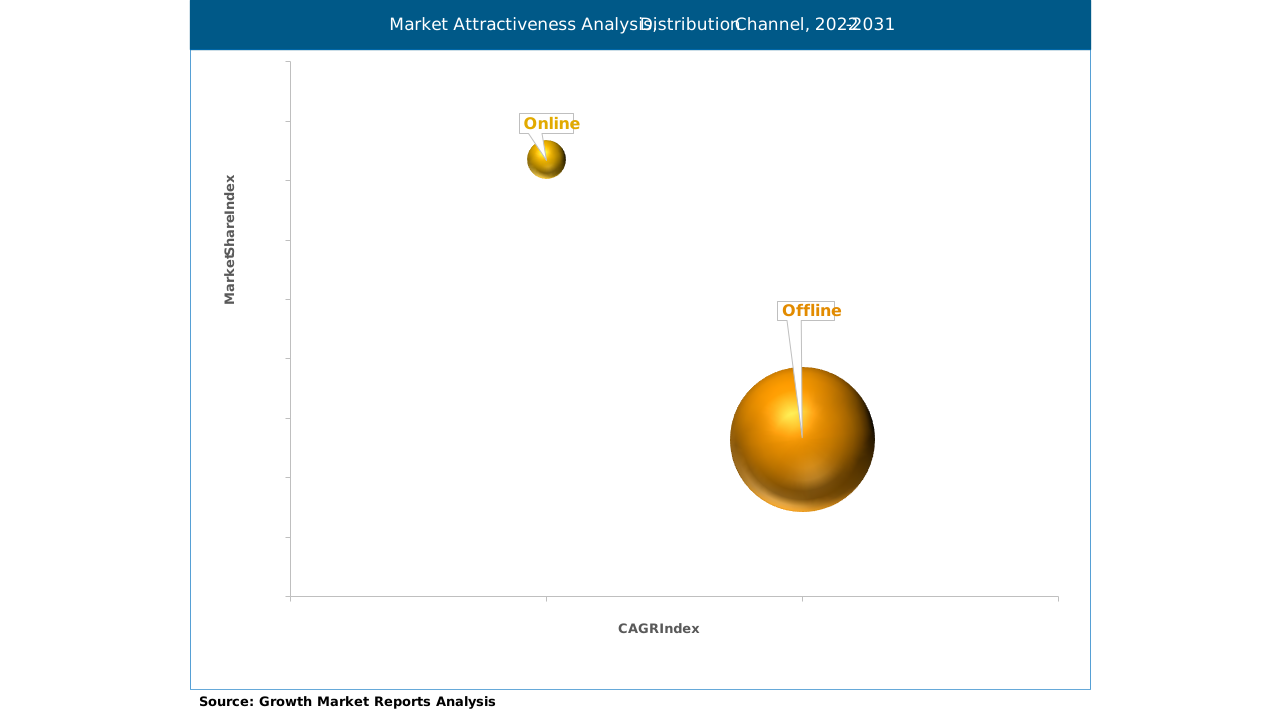
Distribution channels play a critical role in ensuring the accessibility and availability of powered wheelchair tires to end-users. The market is segmented into online stores, medical supply stores, specialty stores, and others. Online stores have witnessed rapid growth in recent years, driven by the increasing preference for convenient and hassle-free shopping experiences. E-commerce platforms offer a wide range of powered wheelchair tires, enabling users to compare products, read reviews, and make informed purchasing decisions from the comfort of their homes. The proliferation of online stores has also facilitated greater market reach for manufacturers, allowing them to tap into previously underserved regions and demographics. This trend is expected to continue, with online sales accounting for a growing share of the powered wheelchairs tire market.

Medical supply stores remain a vital distribution channel, particularly for users who require expert guidance and personalized service. These stores offer a curated selection of powered wheelchair tires and often employ knowledgeable staff who can assist customers in selecting the most suitable products based on their specific needs. Medical supply stores also play a key role in providing after-sales support, including installation and maintenance services. Their presence in hospitals, rehabilitation centers, and other healthcare facilities ensures that users have ready access to high-quality tires and related accessories. As the market evolves, medical supply stores are expected to maintain their importance as a trusted source of mobility solutions.

Specialty stores cater to niche segments of the powered wheelchairs tire market, offering products tailored to specific user requirements and applications. These stores often carry a diverse range of tire options, including specialty and custom-made products designed for unique environments or medical conditions. Specialty stores are particularly valuable for users who require advanced or unconventional tire solutions, such as all-terrain or heavy-duty tires. By offering expert advice and personalized service, specialty stores help users navigate the complexities of tire selection and ensure optimal performance and safety. The continued growth of this distribution channel is indicative of the increasing demand for customized mobility solutions in the powered wheelchairs tire market.

The "others" category in the distribution channel segment includes direct sales, institutional procurement, and emerging channels such as subscription services. Direct sales allow manufacturers to engage directly with customers, providing tailored solutions and building long-term relationships. Institutional procurement is common in large healthcare facilities and organizations that require bulk purchases of powered wheelchair tires. Emerging channels, such as subscription-based models, are gaining traction as users seek convenient and cost-effective ways to maintain their mobility equipment. As the market continues to evolve, the distribution channel segment is expected to witness ongoing innovation, with a focus on enhancing accessibility, convenience, and customer satisfaction.

End-User Analysis

The powered wheelchairs tire market is segmented by end-user into hospitals, homecare, rehabilitation centers, and others. Hospitals represent a significant end-user segment, driven by the high volume of powered wheelchair usage in medical facilities. Hospitals require durable, low-maintenance tires that can withstand frequent use and provide reliable performance across various surfaces. The focus on patient safety and comfort has led hospitals to prioritize high-quality tire solutions, prompting manufacturers to develop products that meet stringent healthcare standards. As healthcare infrastructure continues to expand globally, the demand from hospitals is expected to remain robust, supporting the growth of the powered wheelchairs tire market.

Homecare is another major end-user segment, reflecting the growing trend towards personalized and community-based care for individuals with mobility challenges. Powered wheelchairs are increasingly being used in home settings, where users require tires that offer a balance between comfort, durability, and ease of maintenance. The rise of homecare services and the increasing preference for aging in place have fueled demand for powered wheelchair tires that can perform reliably in both indoor and outdoor environments. Manufacturers are responding by developing versatile tire solutions that cater to the unique needs of homecare users, including lightweight and puncture-resistant options.

Rehabilitation centers play a crucial role in the powered wheelchairs tire market, as they cater to individuals recovering from injuries, surgeries, or medical conditions that impact mobility. These centers require specialized tire solutions that can support intensive usage and provide optimal comfort during rehabilitation exercises. The focus on patient outcomes and the need for customizable mobility aids have driven demand for a diverse range of tire options in rehabilitation settings. Manufacturers are collaborating with healthcare professionals to develop tires that enhance user experience and facilitate faster recovery, positioning rehabilitation centers as a key growth segment within the market.

The "others" category in the end-user segment includes long-term care facilities, nursing homes, and community organizations that provide mobility solutions to diverse populations. These institutions require a mix of standard and specialized tire products to accommodate the varying needs of their residents and clients. The increasing emphasis on inclusive and accessible environments is driving demand for powered wheelchair tires that can perform reliably across different settings and user profiles. As the powered wheelchairs tire market continues to expand, the end-user segment is expected to witness ongoing diversification, with manufacturers focusing on developing solutions that address the evolving needs of a broadening user base.

Opportunities & Threats

The powered wheelchairs tire market presents numerous opportunities for growth and innovation, primarily driven by the increasing global focus on accessibility and inclusion. As governments and organizations worldwide implement policies and initiatives aimed at improving the quality of life for individuals with disabilities, the demand for advanced mobility solutions is set to rise. This creates a fertile environment for manufacturers to introduce new and improved tire technologies that address the specific needs of different user groups. Opportunities also exist in the development of eco-friendly and sustainable tire materials, as environmental concerns become increasingly important to consumers and regulatory bodies. By leveraging these trends, companies can differentiate themselves in the market and capitalize on the growing demand for high-performance, sustainable mobility solutions.

Another significant opportunity lies in the expansion of distribution channels and the adoption of digital technologies to enhance customer engagement. The proliferation of e-commerce platforms and the increasing use of data analytics are enabling manufacturers to better understand user preferences and tailor their product offerings accordingly. By investing in digital marketing, customer relationship management, and after-sales support, companies can build stronger relationships with end-users and drive brand loyalty. Additionally, partnerships with healthcare providers, insurance companies, and community organizations can help manufacturers expand their reach and tap into new customer segments. As the powered wheelchairs tire market continues to evolve, companies that embrace innovation and customer-centric strategies are well-positioned to achieve sustained growth.

Despite the numerous opportunities, the powered wheelchairs tire market faces several restraining factors, with price sensitivity and reimbursement challenges being among the most significant. Many users, particularly in developing regions, may find the cost of high-quality powered wheelchair tires prohibitive, limiting market penetration. Additionally, reimbursement policies for mobility aids and related components vary widely across regions, creating uncertainty for both manufacturers and end-users. The lack of standardized regulations and the complexity of navigating reimbursement processes can hinder market growth and restrict access to advanced tire solutions. To overcome these challenges, industry stakeholders must work collaboratively to advocate for more inclusive and supportive policies, while also exploring cost-effective manufacturing and distribution strategies.

Regional Outlook

North America remains the largest regional market for powered wheelchairs tires, with a market size of USD 520 million in 2024. The regionÂ’s dominance is attributed to its advanced healthcare infrastructure, high levels of healthcare spending, and a large aging population with a high prevalence of mobility impairments. The United States, in particular, accounts for the majority of regional demand, supported by robust government initiatives and widespread insurance coverage for mobility aids. The North American market is expected to grow at a CAGR of 5.8% through 2033, reaching approximately USD 900 million by the end of the forecast period. Ongoing investments in healthcare technology and the growing adoption of digital health solutions are expected to further drive market growth in this region.

Europe follows as the second-largest market, with a market size of USD 380 million in 2024. The region benefits from a well-established healthcare system, comprehensive social welfare programs, and a rapidly aging population. Countries such as Germany, the United Kingdom, and France are leading contributors to market growth, driven by strong government support for accessibility and inclusion. The European market is characterized by a high degree of product innovation, with manufacturers focusing on developing advanced tire solutions that meet the specific needs of different user groups. The market is expected to reach USD 650 million by 2033, reflecting a steady CAGR of 6.1% over the forecast period.

The Asia Pacific region is emerging as a high-growth market for powered wheelchairs tires, with a current market size of USD 320 million in 2024. The regionÂ’s growth is driven by improving healthcare infrastructure, rising disposable incomes, and increasing awareness of mobility solutions. Countries such as China, Japan, and India are witnessing rapid adoption of powered wheelchairs and related components, supported by government initiatives and expanding healthcare access. The Asia Pacific market is projected to grow at a CAGR of 7.4%, reaching USD 620 million by 2033. Latin America and the Middle East & Africa are also experiencing steady growth, albeit from a smaller base, with market sizes of USD 130 million and USD 100 million respectively in 2024. These regions are expected to benefit from ongoing improvements in healthcare infrastructure and increasing investments in assistive technologies.

Powered Wheelchairs Tire Market Statistics

Competitor Outlook

The global powered wheelchairs tire market is highly competitive, characterized by the presence of numerous international and regional players. The competitive landscape is defined by continuous innovation, with companies investing heavily in research and development to introduce new products that offer enhanced performance, durability, and user comfort. Product differentiation is a key strategy, with manufacturers focusing on developing tires that cater to the unique needs of different user segments and environments. The market is also witnessing increased collaboration between tire manufacturers, wheelchair producers, and healthcare providers, aimed at delivering integrated mobility solutions that improve user outcomes and satisfaction.

Leading companies in the powered wheelchairs tire market are leveraging advanced manufacturing technologies and materials to gain a competitive edge. The adoption of automation and digitalization in production processes has enabled manufacturers to improve efficiency, reduce costs, and accelerate product development cycles. Companies are also expanding their global footprint through strategic partnerships, mergers and acquisitions, and the establishment of new distribution networks. These efforts are aimed at capturing a larger share of the growing market and meeting the evolving needs of a diverse customer base. The competitive intensity in the market is expected to remain high, driven by the ongoing entry of new players and the increasing demand for advanced mobility solutions.

In addition to product innovation, companies are focusing on enhancing customer experience through improved after-sales support, warranty programs, and educational initiatives. The provision of comprehensive maintenance and repair services is becoming increasingly important, as users seek reliable and hassle-free mobility solutions. Manufacturers are also investing in digital platforms and mobile applications to provide users with easy access to product information, troubleshooting guides, and customer support. These initiatives are helping companies build stronger relationships with end-users and differentiate themselves in a crowded marketplace.

Some of the major companies operating in the global powered wheelchairs tire market include Sunrise Medical, Invacare Corporation, Permobil AB, Pride Mobility Products Corp., Ottobock SE & Co. KGaA, Kenda Rubber Industrial Co. Ltd., Schwalbe Tires, and Solid Tire Inc.. Sunrise Medical is renowned for its comprehensive range of mobility solutions and continuous investment in product innovation. Invacare Corporation is a global leader in medical equipment, offering a diverse portfolio of powered wheelchair tires designed for various applications. Permobil AB is recognized for its focus on user-centric design and advanced tire technologies that enhance mobility and comfort.

Pride Mobility Products Corp. stands out for its extensive distribution network and commitment to quality, while Ottobock SE & Co. KGaA is known for its emphasis on research and development and the integration of cutting-edge materials in tire manufacturing. Kenda Rubber Industrial Co. Ltd. and Schwalbe Tires are leading suppliers of high-performance tires, catering to both standard and specialized wheelchair models. Solid Tire Inc. specializes in the production of durable, maintenance-free tires, with a strong presence in institutional and healthcare markets. These companies are continuously striving to expand their product offerings, improve manufacturing processes, and strengthen their market position through strategic partnerships and acquisitions.

The competitive outlook for the powered wheelchairs tire market is shaped by the relentless pursuit of innovation, the expansion of distribution channels, and the growing emphasis on customer satisfaction. As the market continues to evolve, companies that prioritize quality, reliability, and user experience are expected to emerge as leaders in the global powered wheelchairs tire market. The ongoing collaboration between industry stakeholders, including manufacturers, healthcare providers, and regulatory bodies, will play a crucial role in shaping the future of the market and driving sustainable growth.

Key Players

  • Sunrise Medical
  • Invacare Corporation
  • Permobil AB
  • Pride Mobility Products Corp.
  • Ottobock SE & Co. KGaA
  • Drive DeVilbiss Healthcare
  • Hoveround Corporation
  • Karma Medical Products Co., Ltd.
  • MEYRA GmbH
  • GF Health Products, Inc.
  • Quantum Rehab
  • Handicare Group AB
  • Nissin Medical Industries Co., Ltd.
  • Merits Health Products Co., Ltd.
  • Magic Mobility
  • Levo AG
  • Kymco Healthcare UK Ltd.
  • Whill Inc.
  • Amysystems
  • Triride Srl
Powered Wheelchairs Tire Market Overview

Segments

The Powered Wheelchairs Tire market has been segmented on the basis of

Product Type

  • Solid Tires
  • Pneumatic Tires
  • Foam-Filled Tires
  • Others

Wheelchair Type

  • Rear-Wheel Drive
  • Front-Wheel Drive
  • Mid-Wheel Drive
  • Others

Material

  • Rubber
  • Polyurethane
  • Composite Materials
  • Others

Distribution Channel

  • Online Stores
  • Medical Supply Stores
  • Specialty Stores
  • Others

End-User

  • Hospitals
  • Homecare
  • Rehabilitation Centers
  • Others

Competitive Landscape

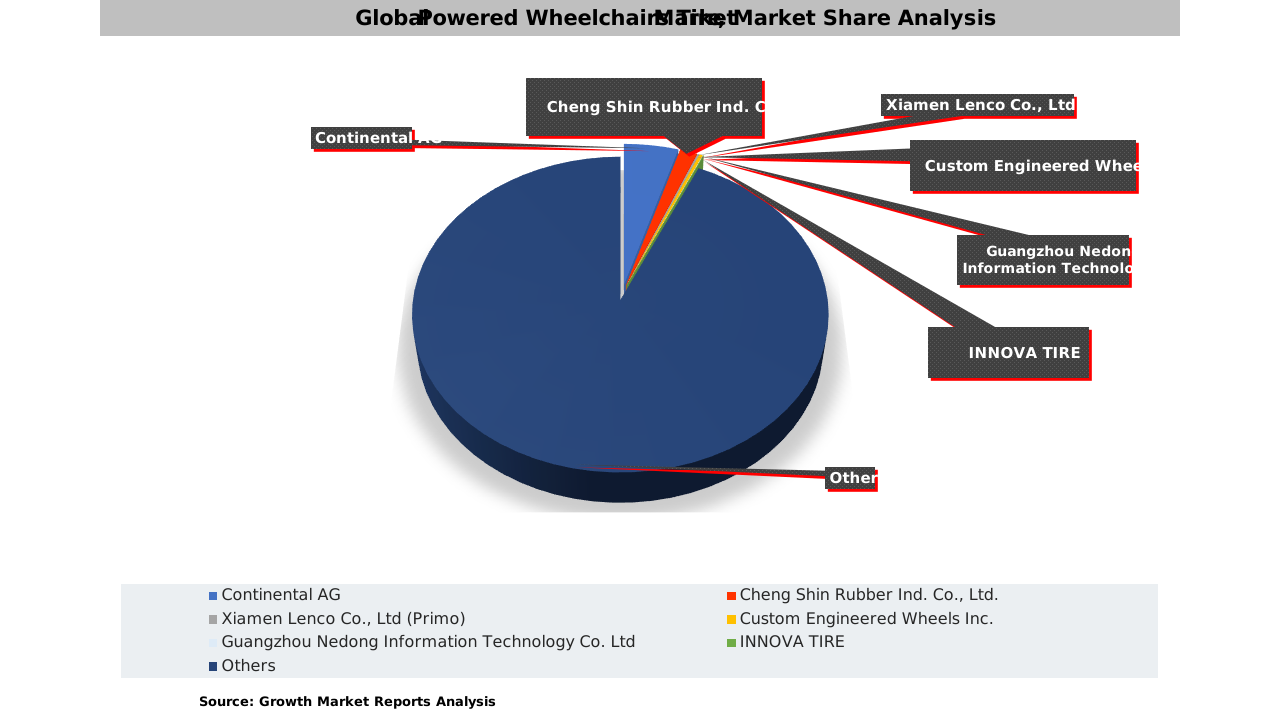
  • Key players operating in the market are Xiamen Lenco Co., Ltd (Primo), Continental AG, Custom Engineered Wheels Inc., Guangzhou Nedong Information Technology Co. Ltd, INNOVA TIRE, and Cheng Shin Rubber Ind. Co., Ltd. These companies are considered as key manufacturers of Powered Wheelchairs Tire based on their revenue, research development (R&D) activities, product offerings, regional presence, and supply chain management system.

  • The players are adopting key strategies such as acquisition, collaborations, and geographical expansion where potential opportunity for the Powered Wheelchairs Tire market.

Powered Wheelchairs Tire Market Key Players

Frequently Asked Questions

The base year considered for the global Powered Wheelchairs Tire market report is 2022. The complete analysis period is 2016 to 2031, wherein, 2016 to 2021 are the historic years, and the forecast is provided from 2023 to 2031.

In addition to market size (in US$ Million), Company Market Share (in % for base year 2021), Technology Landscape, Pricing Analysis are available in the report.

Major players include Xiamen Lenco Co., Ltd (Primo), Continental AG, Custom Engineered Wheels Inc., Guangzhou Nedong Information Technology Co. Ltd, INNOVA TIRE, and Cheng Shin Rubber Ind. Co., Ltd.

Factors such as the Healthcare Spending, Demographic, and Global Economic Conditions are analyzed in the final report.

End-uses of Powered Wheelchairs Tire include Hospital & Rehabilitation Centers, Sport Industry, Tourism & Leisure Industry, and Others.

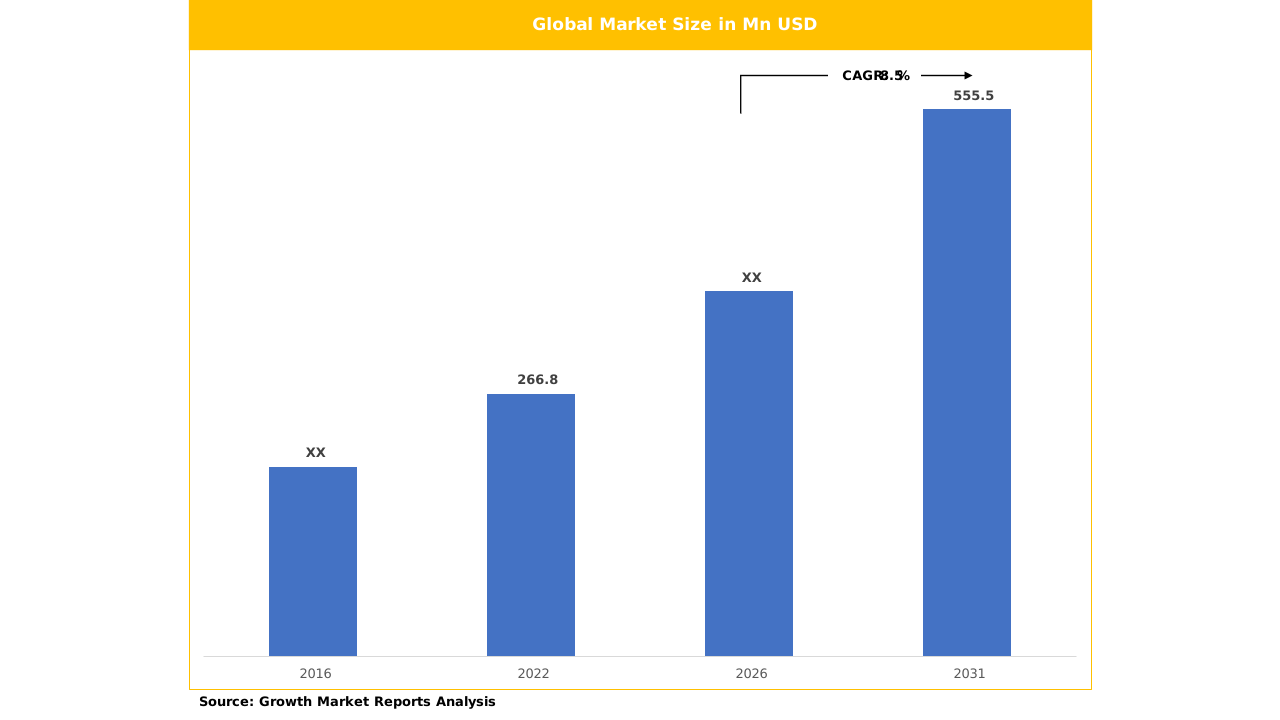
According to this UMR report, The Global Powered Wheelchairs Tire Market was valued at USD 266.8 Million in 2022 and is expected to reach USD 555.5 Million in 2031, expanding at a CAGR of 8.5% during the forecast period.

The Powered Wheelchairs Tire market is projected to expand at a rapid pace globally, owing to Rising Aging Population, Increasing Disability Rates, Expansion of Healthcare Infrastructure, and Government Initiative.

Factors such as competitive strength and market positioning are key areas considered while selecting top companies to be profiled.

Additional company profiles are provided on request For a discussion related to above findings, click Speak to Analyst

Table Of Content

Chapter 1 Executive Summary
Chapter 2 Assumptions and Acronyms Used
Chapter 3 Research Methodology
Chapter 4 Powered Wheelchairs Tire Market Overview
   4.1 Introduction
      4.1.1 Market Taxonomy
      4.1.2 Market Definition
      4.1.3 Macro-Economic Factors Impacting the Market Growth
   4.2 Powered Wheelchairs Tire Market Dynamics
      4.2.1 Market Drivers
      4.2.2 Market Restraints
      4.2.3 Market Opportunity
   4.3 Powered Wheelchairs Tire Market - Supply Chain Analysis
      4.3.1 List of Key Suppliers
      4.3.2 List of Key Distributors
      4.3.3 List of Key Consumers
   4.4 Key Forces Shaping the Powered Wheelchairs Tire Market
      4.4.1 Bargaining Power of Suppliers
      4.4.2 Bargaining Power of Buyers
      4.4.3 Threat of Substitution
      4.4.4 Threat of New Entrants
      4.4.5 Competitive Rivalry
   4.5 Global Powered Wheelchairs Tire Market Size & Forecast, 2023-2032
      4.5.1 Powered Wheelchairs Tire Market Size and Y-o-Y Growth
      4.5.2 Powered Wheelchairs Tire Market Absolute $ Opportunity

Chapter 5 Global Powered Wheelchairs Tire Market Analysis and Forecast By Product Type
   5.1 Introduction
      5.1.1 Key Market Trends & Growth Opportunities By Product Type
      5.1.2 Basis Point Share (BPS) Analysis By Product Type
      5.1.3 Absolute $ Opportunity Assessment By Product Type
   5.2 Powered Wheelchairs Tire Market Size Forecast By Product Type
      5.2.1 Solid Tires
      5.2.2 Pneumatic Tires
      5.2.3 Foam-Filled Tires
      5.2.4 Others
   5.3 Market Attractiveness Analysis By Product Type

Chapter 6 Global Powered Wheelchairs Tire Market Analysis and Forecast By Wheelchair Type
   6.1 Introduction
      6.1.1 Key Market Trends & Growth Opportunities By Wheelchair Type
      6.1.2 Basis Point Share (BPS) Analysis By Wheelchair Type
      6.1.3 Absolute $ Opportunity Assessment By Wheelchair Type
   6.2 Powered Wheelchairs Tire Market Size Forecast By Wheelchair Type
      6.2.1 Rear-Wheel Drive
      6.2.2 Front-Wheel Drive
      6.2.3 Mid-Wheel Drive
      6.2.4 Others
   6.3 Market Attractiveness Analysis By Wheelchair Type

Chapter 7 Global Powered Wheelchairs Tire Market Analysis and Forecast By Material
   7.1 Introduction
      7.1.1 Key Market Trends & Growth Opportunities By Material
      7.1.2 Basis Point Share (BPS) Analysis By Material
      7.1.3 Absolute $ Opportunity Assessment By Material
   7.2 Powered Wheelchairs Tire Market Size Forecast By Material
      7.2.1 Rubber
      7.2.2 Polyurethane
      7.2.3 Composite Materials
      7.2.4 Others
   7.3 Market Attractiveness Analysis By Material

Chapter 8 Global Powered Wheelchairs Tire Market Analysis and Forecast By Distribution Channel
   8.1 Introduction
      8.1.1 Key Market Trends & Growth Opportunities By Distribution Channel
      8.1.2 Basis Point Share (BPS) Analysis By Distribution Channel
      8.1.3 Absolute $ Opportunity Assessment By Distribution Channel
   8.2 Powered Wheelchairs Tire Market Size Forecast By Distribution Channel
      8.2.1 Online Stores
      8.2.2 Medical Supply Stores
      8.2.3 Specialty Stores
      8.2.4 Others
   8.3 Market Attractiveness Analysis By Distribution Channel

Chapter 9 Global Powered Wheelchairs Tire Market Analysis and Forecast By End-User
   9.1 Introduction
      9.1.1 Key Market Trends & Growth Opportunities By End-User
      9.1.2 Basis Point Share (BPS) Analysis By End-User
      9.1.3 Absolute $ Opportunity Assessment By End-User
   9.2 Powered Wheelchairs Tire Market Size Forecast By End-User
      9.2.1 Hospitals
      9.2.2 Homecare
      9.2.3 Rehabilitation Centers
      9.2.4 Others
   9.3 Market Attractiveness Analysis By End-User

Chapter 10 Global Powered Wheelchairs Tire Market Analysis and Forecast by Region
   10.1 Introduction
      10.1.1 Key Market Trends & Growth Opportunities By Region
      10.1.2 Basis Point Share (BPS) Analysis By Region
      10.1.3 Absolute $ Opportunity Assessment By Region
   10.2 Powered Wheelchairs Tire Market Size Forecast By Region
      10.2.1 North America
      10.2.2 Europe
      10.2.3 Asia Pacific
      10.2.4 Latin America
      10.2.5 Middle East & Africa (MEA)
   10.3 Market Attractiveness Analysis By Region

Chapter 11 Coronavirus Disease (COVID-19) Impact 
   11.1 Introduction 
   11.2 Current & Future Impact Analysis 
   11.3 Economic Impact Analysis 
   11.4 Government Policies 
   11.5 Investment Scenario

Chapter 12 North America Powered Wheelchairs Tire Analysis and Forecast
   12.1 Introduction
   12.2 North America Powered Wheelchairs Tire Market Size Forecast by Country
      12.2.1 U.S.
      12.2.2 Canada
   12.3 Basis Point Share (BPS) Analysis by Country
   12.4 Absolute $ Opportunity Assessment by Country
   12.5 Market Attractiveness Analysis by Country
   12.6 North America Powered Wheelchairs Tire Market Size Forecast By Product Type
      12.6.1 Solid Tires
      12.6.2 Pneumatic Tires
      12.6.3 Foam-Filled Tires
      12.6.4 Others
   12.7 Basis Point Share (BPS) Analysis By Product Type 
   12.8 Absolute $ Opportunity Assessment By Product Type 
   12.9 Market Attractiveness Analysis By Product Type
   12.10 North America Powered Wheelchairs Tire Market Size Forecast By Wheelchair Type
      12.10.1 Rear-Wheel Drive
      12.10.2 Front-Wheel Drive
      12.10.3 Mid-Wheel Drive
      12.10.4 Others
   12.11 Basis Point Share (BPS) Analysis By Wheelchair Type 
   12.12 Absolute $ Opportunity Assessment By Wheelchair Type 
   12.13 Market Attractiveness Analysis By Wheelchair Type
   12.14 North America Powered Wheelchairs Tire Market Size Forecast By Material
      12.14.1 Rubber
      12.14.2 Polyurethane
      12.14.3 Composite Materials
      12.14.4 Others
   12.15 Basis Point Share (BPS) Analysis By Material 
   12.16 Absolute $ Opportunity Assessment By Material 
   12.17 Market Attractiveness Analysis By Material
   12.18 North America Powered Wheelchairs Tire Market Size Forecast By Distribution Channel
      12.18.1 Online Stores
      12.18.2 Medical Supply Stores
      12.18.3 Specialty Stores
      12.18.4 Others
   12.19 Basis Point Share (BPS) Analysis By Distribution Channel 
   12.20 Absolute $ Opportunity Assessment By Distribution Channel 
   12.21 Market Attractiveness Analysis By Distribution Channel
   12.22 North America Powered Wheelchairs Tire Market Size Forecast By End-User
      12.22.1 Hospitals
      12.22.2 Homecare
      12.22.3 Rehabilitation Centers
      12.22.4 Others
   12.23 Basis Point Share (BPS) Analysis By End-User 
   12.24 Absolute $ Opportunity Assessment By End-User 
   12.25 Market Attractiveness Analysis By End-User

Chapter 13 Europe Powered Wheelchairs Tire Analysis and Forecast
   13.1 Introduction
   13.2 Europe Powered Wheelchairs Tire Market Size Forecast by Country
      13.2.1 Germany
      13.2.2 France
      13.2.3 Italy
      13.2.4 U.K.
      13.2.5 Spain
      13.2.6 Russia
      13.2.7 Rest of Europe
   13.3 Basis Point Share (BPS) Analysis by Country
   13.4 Absolute $ Opportunity Assessment by Country
   13.5 Market Attractiveness Analysis by Country
   13.6 Europe Powered Wheelchairs Tire Market Size Forecast By Product Type
      13.6.1 Solid Tires
      13.6.2 Pneumatic Tires
      13.6.3 Foam-Filled Tires
      13.6.4 Others
   13.7 Basis Point Share (BPS) Analysis By Product Type 
   13.8 Absolute $ Opportunity Assessment By Product Type 
   13.9 Market Attractiveness Analysis By Product Type
   13.10 Europe Powered Wheelchairs Tire Market Size Forecast By Wheelchair Type
      13.10.1 Rear-Wheel Drive
      13.10.2 Front-Wheel Drive
      13.10.3 Mid-Wheel Drive
      13.10.4 Others
   13.11 Basis Point Share (BPS) Analysis By Wheelchair Type 
   13.12 Absolute $ Opportunity Assessment By Wheelchair Type 
   13.13 Market Attractiveness Analysis By Wheelchair Type
   13.14 Europe Powered Wheelchairs Tire Market Size Forecast By Material
      13.14.1 Rubber
      13.14.2 Polyurethane
      13.14.3 Composite Materials
      13.14.4 Others
   13.15 Basis Point Share (BPS) Analysis By Material 
   13.16 Absolute $ Opportunity Assessment By Material 
   13.17 Market Attractiveness Analysis By Material
   13.18 Europe Powered Wheelchairs Tire Market Size Forecast By Distribution Channel
      13.18.1 Online Stores
      13.18.2 Medical Supply Stores
      13.18.3 Specialty Stores
      13.18.4 Others
   13.19 Basis Point Share (BPS) Analysis By Distribution Channel 
   13.20 Absolute $ Opportunity Assessment By Distribution Channel 
   13.21 Market Attractiveness Analysis By Distribution Channel
   13.22 Europe Powered Wheelchairs Tire Market Size Forecast By End-User
      13.22.1 Hospitals
      13.22.2 Homecare
      13.22.3 Rehabilitation Centers
      13.22.4 Others
   13.23 Basis Point Share (BPS) Analysis By End-User 
   13.24 Absolute $ Opportunity Assessment By End-User 
   13.25 Market Attractiveness Analysis By End-User

Chapter 14 Asia Pacific Powered Wheelchairs Tire Analysis and Forecast
   14.1 Introduction
   14.2 Asia Pacific Powered Wheelchairs Tire Market Size Forecast by Country
      14.2.1 China
      14.2.2 Japan
      14.2.3 South Korea
      14.2.4 India
      14.2.5 Australia
      14.2.6 South East Asia (SEA)
      14.2.7 Rest of Asia Pacific (APAC)
   14.3 Basis Point Share (BPS) Analysis by Country
   14.4 Absolute $ Opportunity Assessment by Country
   14.5 Market Attractiveness Analysis by Country
   14.6 Asia Pacific Powered Wheelchairs Tire Market Size Forecast By Product Type
      14.6.1 Solid Tires
      14.6.2 Pneumatic Tires
      14.6.3 Foam-Filled Tires
      14.6.4 Others
   14.7 Basis Point Share (BPS) Analysis By Product Type 
   14.8 Absolute $ Opportunity Assessment By Product Type 
   14.9 Market Attractiveness Analysis By Product Type
   14.10 Asia Pacific Powered Wheelchairs Tire Market Size Forecast By Wheelchair Type
      14.10.1 Rear-Wheel Drive
      14.10.2 Front-Wheel Drive
      14.10.3 Mid-Wheel Drive
      14.10.4 Others
   14.11 Basis Point Share (BPS) Analysis By Wheelchair Type 
   14.12 Absolute $ Opportunity Assessment By Wheelchair Type 
   14.13 Market Attractiveness Analysis By Wheelchair Type
   14.14 Asia Pacific Powered Wheelchairs Tire Market Size Forecast By Material
      14.14.1 Rubber
      14.14.2 Polyurethane
      14.14.3 Composite Materials
      14.14.4 Others
   14.15 Basis Point Share (BPS) Analysis By Material 
   14.16 Absolute $ Opportunity Assessment By Material 
   14.17 Market Attractiveness Analysis By Material
   14.18 Asia Pacific Powered Wheelchairs Tire Market Size Forecast By Distribution Channel
      14.18.1 Online Stores
      14.18.2 Medical Supply Stores
      14.18.3 Specialty Stores
      14.18.4 Others
   14.19 Basis Point Share (BPS) Analysis By Distribution Channel 
   14.20 Absolute $ Opportunity Assessment By Distribution Channel 
   14.21 Market Attractiveness Analysis By Distribution Channel
   14.22 Asia Pacific Powered Wheelchairs Tire Market Size Forecast By End-User
      14.22.1 Hospitals
      14.22.2 Homecare
      14.22.3 Rehabilitation Centers
      14.22.4 Others
   14.23 Basis Point Share (BPS) Analysis By End-User 
   14.24 Absolute $ Opportunity Assessment By End-User 
   14.25 Market Attractiveness Analysis By End-User

Chapter 15 Latin America Powered Wheelchairs Tire Analysis and Forecast
   15.1 Introduction
   15.2 Latin America Powered Wheelchairs Tire Market Size Forecast by Country
      15.2.1 Brazil
      15.2.2 Mexico
      15.2.3 Rest of Latin America (LATAM)
   15.3 Basis Point Share (BPS) Analysis by Country
   15.4 Absolute $ Opportunity Assessment by Country
   15.5 Market Attractiveness Analysis by Country
   15.6 Latin America Powered Wheelchairs Tire Market Size Forecast By Product Type
      15.6.1 Solid Tires
      15.6.2 Pneumatic Tires
      15.6.3 Foam-Filled Tires
      15.6.4 Others
   15.7 Basis Point Share (BPS) Analysis By Product Type 
   15.8 Absolute $ Opportunity Assessment By Product Type 
   15.9 Market Attractiveness Analysis By Product Type
   15.10 Latin America Powered Wheelchairs Tire Market Size Forecast By Wheelchair Type
      15.10.1 Rear-Wheel Drive
      15.10.2 Front-Wheel Drive
      15.10.3 Mid-Wheel Drive
      15.10.4 Others
   15.11 Basis Point Share (BPS) Analysis By Wheelchair Type 
   15.12 Absolute $ Opportunity Assessment By Wheelchair Type 
   15.13 Market Attractiveness Analysis By Wheelchair Type
   15.14 Latin America Powered Wheelchairs Tire Market Size Forecast By Material
      15.14.1 Rubber
      15.14.2 Polyurethane
      15.14.3 Composite Materials
      15.14.4 Others
   15.15 Basis Point Share (BPS) Analysis By Material 
   15.16 Absolute $ Opportunity Assessment By Material 
   15.17 Market Attractiveness Analysis By Material
   15.18 Latin America Powered Wheelchairs Tire Market Size Forecast By Distribution Channel
      15.18.1 Online Stores
      15.18.2 Medical Supply Stores
      15.18.3 Specialty Stores
      15.18.4 Others
   15.19 Basis Point Share (BPS) Analysis By Distribution Channel 
   15.20 Absolute $ Opportunity Assessment By Distribution Channel 
   15.21 Market Attractiveness Analysis By Distribution Channel
   15.22 Latin America Powered Wheelchairs Tire Market Size Forecast By End-User
      15.22.1 Hospitals
      15.22.2 Homecare
      15.22.3 Rehabilitation Centers
      15.22.4 Others
   15.23 Basis Point Share (BPS) Analysis By End-User 
   15.24 Absolute $ Opportunity Assessment By End-User 
   15.25 Market Attractiveness Analysis By End-User

Chapter 16 Middle East & Africa (MEA) Powered Wheelchairs Tire Analysis and Forecast
   16.1 Introduction
   16.2 Middle East & Africa (MEA) Powered Wheelchairs Tire Market Size Forecast by Country
      16.2.1 Saudi Arabia
      16.2.2 South Africa
      16.2.3 UAE
      16.2.4 Rest of Middle East & Africa (MEA)
   16.3 Basis Point Share (BPS) Analysis by Country
   16.4 Absolute $ Opportunity Assessment by Country
   16.5 Market Attractiveness Analysis by Country
   16.6 Middle East & Africa (MEA) Powered Wheelchairs Tire Market Size Forecast By Product Type
      16.6.1 Solid Tires
      16.6.2 Pneumatic Tires
      16.6.3 Foam-Filled Tires
      16.6.4 Others
   16.7 Basis Point Share (BPS) Analysis By Product Type 
   16.8 Absolute $ Opportunity Assessment By Product Type 
   16.9 Market Attractiveness Analysis By Product Type
   16.10 Middle East & Africa (MEA) Powered Wheelchairs Tire Market Size Forecast By Wheelchair Type
      16.10.1 Rear-Wheel Drive
      16.10.2 Front-Wheel Drive
      16.10.3 Mid-Wheel Drive
      16.10.4 Others
   16.11 Basis Point Share (BPS) Analysis By Wheelchair Type 
   16.12 Absolute $ Opportunity Assessment By Wheelchair Type 
   16.13 Market Attractiveness Analysis By Wheelchair Type
   16.14 Middle East & Africa (MEA) Powered Wheelchairs Tire Market Size Forecast By Material
      16.14.1 Rubber
      16.14.2 Polyurethane
      16.14.3 Composite Materials
      16.14.4 Others
   16.15 Basis Point Share (BPS) Analysis By Material 
   16.16 Absolute $ Opportunity Assessment By Material 
   16.17 Market Attractiveness Analysis By Material
   16.18 Middle East & Africa (MEA) Powered Wheelchairs Tire Market Size Forecast By Distribution Channel
      16.18.1 Online Stores
      16.18.2 Medical Supply Stores
      16.18.3 Specialty Stores
      16.18.4 Others
   16.19 Basis Point Share (BPS) Analysis By Distribution Channel 
   16.20 Absolute $ Opportunity Assessment By Distribution Channel 
   16.21 Market Attractiveness Analysis By Distribution Channel
   16.22 Middle East & Africa (MEA) Powered Wheelchairs Tire Market Size Forecast By End-User
      16.22.1 Hospitals
      16.22.2 Homecare
      16.22.3 Rehabilitation Centers
      16.22.4 Others
   16.23 Basis Point Share (BPS) Analysis By End-User 
   16.24 Absolute $ Opportunity Assessment By End-User 
   16.25 Market Attractiveness Analysis By End-User

Chapter 17 Competition Landscape 
   17.1 Powered Wheelchairs Tire Market: Competitive Dashboard
   17.2 Global Powered Wheelchairs Tire Market: Market Share Analysis, 2023
   17.3 Company Profiles (Details – Overview, Financials, Developments, Strategy) 
      17.3.1 Sunrise Medical
Invacare Corporation
Permobil AB
Pride Mobility Products Corp.
Ottobock SE & Co. KGaA
Drive DeVilbiss Healthcare
Hoveround Corporation
Karma Medical Products Co., Ltd.
MEYRA GmbH
GF Health Products, Inc.
Quantum Rehab
Handicare Group AB
Nissin Medical Industries Co., Ltd.
Merits Health Products Co., Ltd.
Magic Mobility
Levo AG
Kymco Healthcare UK Ltd.
Whill Inc.
Amysystems
Triride Srl

Methodology

Our Clients

The John Holland Group
Pfizer
Dassault Aviation
Nestle SA
Microsoft
sinopec
Siemens Healthcare
FedEx Logistics