Segments - by Product Type (Standalone Tracker, OBD Device, Advance Tracker), by Deployment (Commercial Vehicles, Cargo & Containers, Others), by Application (Fleet Management, Asset Tracking, Personal Tracking, Others), by End-User (Transportation & Logistics, Construction, Government & Defense, Healthcare, Others)
This report is updated with the latest market data and insights as of June 2026. Base year: 2025 | Forecast period: 2026-2034
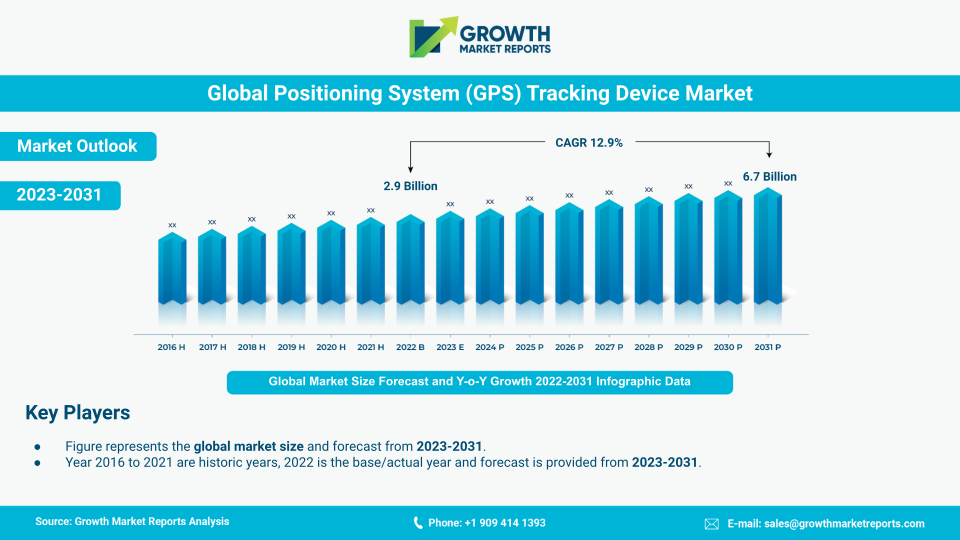
According to our latest research, the global GPS tracking device market size stood at USD 3.17 billion in 2025, reflecting robust expansion driven by accelerating demand across multiple industries. The market is projected to reach USD 9.8 billion by 2034, growing at a compelling CAGR of 13.3% during the 2026-2034 forecast period. This remarkable growth is primarily attributed to the increasing adoption of fleet management solutions, stringent government regulations on vehicle tracking, and the rapid proliferation of IoT-enabled devices. As per our latest research, technological advancements and the integration of GPS tracking devices with advanced analytics platforms are further fueling market expansion, making GPS tracking an indispensable tool for asset optimization and operational efficiency.
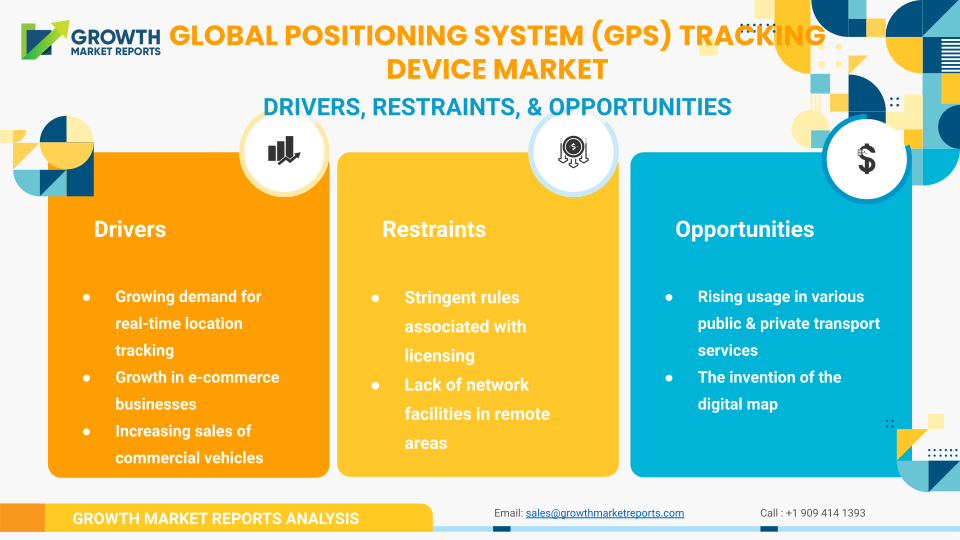
The surge in demand for real-time location tracking across various sectors is a key growth factor for the GPS tracking device market. Businesses are increasingly leveraging GPS tracking devices to monitor fleet movement, minimize fuel consumption, and enhance route optimization. The ability to provide granular visibility into mobile assets not only improves operational efficiency but also reduces costs associated with vehicle misuse and theft. Moreover, the rising awareness of the benefits of GPS technology, such as improved safety and regulatory compliance, is encouraging small and medium enterprises to invest in these solutions. The market is further bolstered by the growing reliance on data-driven decision-making, which is facilitated by the actionable insights provided by GPS tracking systems.
Another significant driver for the GPS tracking device market is rapid technological innovation in hardware and software components. The evolution of compact, energy-efficient, and highly accurate GPS modules has made it feasible to deploy tracking devices across a broader range of applications, from commercial vehicles to personal tracking. The integration of GPS devices with cloud-based platforms and mobile applications has enhanced the accessibility and usability of tracking data, enabling businesses to monitor assets remotely and respond swiftly to operational anomalies. Advancements in connectivity, including the expanding rollout of 5G networks through 2025 and beyond, are further improving the performance and reliability of GPS tracking systems, driving adoption in emerging markets and new industry verticals.
Government regulations and compliance requirements are also playing a pivotal role in shaping the GPS tracking device market. In regions such as North America and Europe, stringent mandates on vehicle tracking for commercial fleets and public transportation systems are driving the uptake of GPS tracking devices. These regulations aim to enhance road safety, reduce carbon emissions, and ensure efficient utilization of public and private assets. Furthermore, the increasing focus on security and surveillance in sensitive sectors like defense, healthcare, and logistics is propelling investments in advanced GPS tracking technologies. This regulatory landscape, coupled with rising security concerns, is expected to sustain growth momentum throughout the 2026-2034 forecast period.
The implementation of vehicle tracking solutions has become a pivotal aspect of modern fleet management, offering unparalleled insights into vehicle location, speed, and route history. These systems are instrumental in enhancing operational efficiency by enabling real-time monitoring and management of fleet activities. Businesses can leverage vehicle tracking to ensure timely deliveries, optimize fuel usage, and improve driver safety. The integration of these systems with advanced analytics tools further allows for predictive maintenance and performance analysis, reducing downtime and operational costs. As the demand for comprehensive fleet management solutions grows, vehicle tracking is set to play a crucial role in transforming the transportation and logistics sectors.
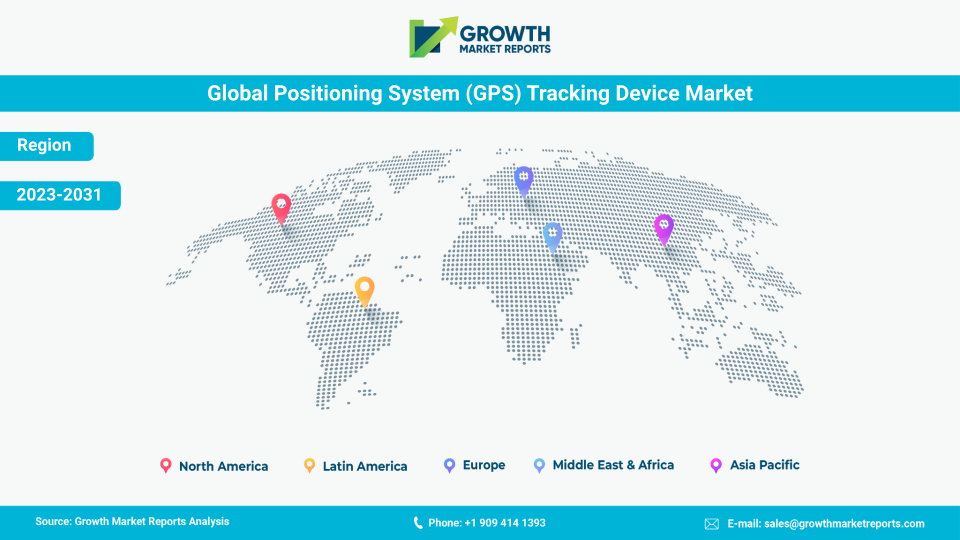
From a regional perspective, Asia Pacific is emerging as a lucrative market for GPS tracking devices, supported by rapid urbanization, expanding transportation networks, and increasing investments in smart city projects. Countries such as China, India, and Japan are witnessing substantial demand for GPS-enabled solutions in logistics, construction, and government applications. North America remains a dominant region, driven by early technology adoption and a mature regulatory framework, while Europe continues to invest in intelligent transportation systems and green mobility initiatives. The Middle East and Africa and Latin America are also experiencing steady growth as infrastructure development and digital transformation initiatives gain traction across both regions.
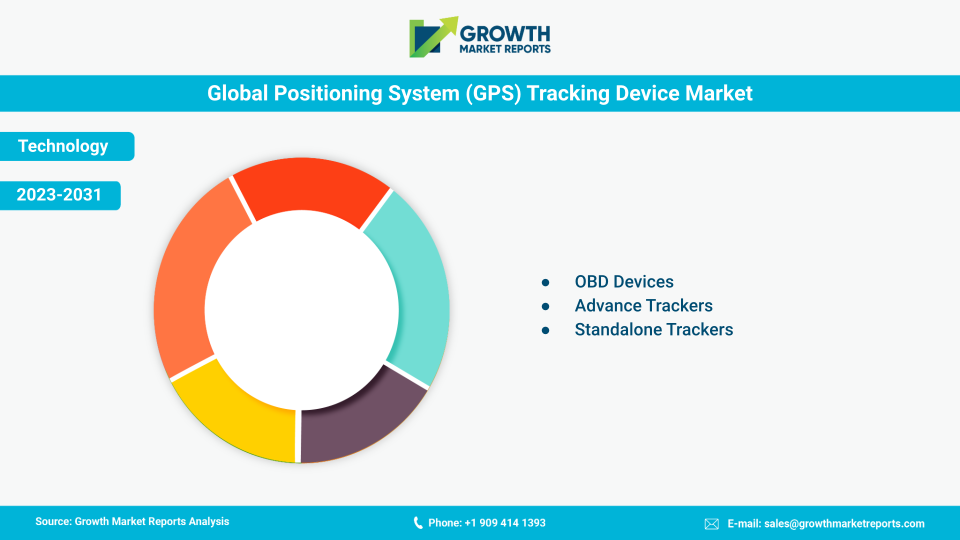
The product type segment of the GPS tracking device market is categorized into Standalone Tracker, OBD Device, and Advanced Tracker. Standalone trackers are traditional GPS devices designed for basic location tracking and are widely used in personal and asset tracking applications. These devices are valued for their simplicity, affordability, and ease of deployment, making them a popular choice among small businesses and individual consumers. Despite the emergence of more advanced solutions, standalone trackers continue to hold approximately 34.5% of the market in 2025, particularly in developing regions where cost sensitivity and basic tracking needs prevail. Demand for standalone trackers is expected to grow steadily as awareness of GPS technology spreads and more consumers seek affordable entry-level solutions for tracking vehicles, pets, and personal items.
OBD (On-Board Diagnostics) devices have gained considerable traction in the GPS tracking device market due to their plug-and-play functionality and ability to interface directly with a vehicle's diagnostic system. OBD devices offer enhanced features such as real-time vehicle health monitoring, driving behavior analysis, and maintenance alerts, in addition to basic GPS tracking. These capabilities make OBD devices particularly attractive to fleet operators and logistics companies aiming to optimize vehicle performance and reduce operational costs. The growing demand for telematics solutions in commercial transportation, coupled with regulatory mandates for vehicle diagnostics, is expected to drive the adoption of OBD devices in both developed and emerging markets through 2034. Explore broader trends in vehicle GPS tracker adoption to understand how OBD integration is reshaping fleet operations.
Advanced trackers represent the most sophisticated and fastest-growing segment within the GPS tracking device market, commanding approximately 36.7% of market share in 2025. These devices offer a comprehensive suite of features including geofencing, remote immobilization, two-way communication, and integration with IoT platforms. Advanced trackers are designed for high-value asset tracking, mission-critical fleet management, and specialized applications in sectors such as defense, healthcare, and construction. Leveraging cutting-edge technologies such as AI-based analytics, cloud connectivity, and multi-sensor integration, these devices deliver actionable insights and predictive maintenance capabilities. The rising demand for end-to-end asset visibility, enhanced security, and operational intelligence is fueling the growth of this segment, especially among large enterprises with complex tracking requirements.
The competitive landscape within the product type segment is characterized by ongoing innovation and differentiation strategies. Leading manufacturers are investing in miniaturization, battery optimization, and the development of ruggedized devices to cater to diverse industry needs. The integration of value-added services such as remote diagnostics, real-time alerts, and data analytics is further enhancing the appeal of GPS trackers across all product categories. As customer expectations evolve and technology advances, the product type segment is poised for continuous transformation, with a strong emphasis on performance, reliability, and user experience throughout the forecast period.
| Attributes | Details |
| Report Title | Global Positioning System (GPS) Tracking Device Market Research Report 2034 |
| By Product Type | Standalone Tracker, OBD Device, Advance Tracker |
| By Deployment | Commercial Vehicles, Cargo & Containers, Others |
| By Application | Fleet Management, Asset Tracking, Personal Tracking, Others |
| By End-User | Transportation & Logistics, Construction, Government & Defense, Healthcare, Others |
| Regions Covered | North America, Europe, APAC, Latin America, MEA |
| Base Year | 2025 |
| Historic Data | 2019-2024 |
| Forecast Period | 2026-2034 |
| Number of Pages | 273 |
| Number of Tables & Figures | 269 |
| Customization Available | Yes, the report can be customized as per your need. |
The deployment segment of the GPS tracking device market is broadly classified into Commercial Vehicles, Cargo & Containers, and Others. Commercial vehicles constitute the largest deployment category, driven by the escalating need for fleet management solutions in transportation, logistics, and delivery services. GPS tracking devices installed in commercial vehicles enable real-time monitoring of vehicle location, route optimization, and driver behavior analysis, resulting in improved operational efficiency and reduced fuel consumption. The adoption of GPS tracking in commercial fleets is further supported by regulatory mandates aimed at enhancing road safety, minimizing emissions, and ensuring compliance with industry standards. As e-commerce and last-mile delivery services continue to expand globally through 2034, the demand for GPS-enabled fleet management solutions is expected to witness sustained growth.
Cargo and Containers represent another significant deployment segment within the GPS tracking device market. The globalization of supply chains and the increasing complexity of logistics operations have heightened the need for end-to-end visibility and security in cargo transportation. GPS tracking devices deployed in shipping containers, railcars, and freight vehicles provide real-time location updates, route deviation alerts, and tamper detection, enabling logistics providers to mitigate risks associated with theft, loss, and delays. The integration of GPS tracking with advanced analytics and blockchain technology is further enhancing transparency and traceability in supply chain operations, driving adoption among leading logistics and shipping companies worldwide.
The "Others" category in the deployment segment encompasses a diverse range of applications, including personal vehicles, rental fleets, and specialized assets such as construction equipment and agricultural machinery. The versatility of GPS tracking technology allows for its deployment across various asset types, enabling businesses and individuals to monitor utilization, prevent unauthorized use, and ensure timely maintenance. The growing trend of asset sharing and rental services is also contributing to the adoption of GPS tracking devices in non-traditional deployment scenarios. As businesses seek to maximize asset utilization and minimize operational risks, the deployment of GPS tracking devices across a broader spectrum of assets is expected to increase through the forecast horizon.
The deployment segment is witnessing a shift towards integrated solutions that combine GPS tracking with telematics, IoT sensors, and cloud-based management platforms. This convergence of technologies is enabling organizations to achieve greater operational visibility, automate workflows, and derive actionable insights from real-time data. The availability of customizable deployment options, ranging from basic tracking to comprehensive fleet management suites, is catering to the unique needs of different industries and use cases. As the digital transformation of transportation and logistics accelerates through 2034, the deployment segment of the GPS tracking device market is set to play a pivotal role in shaping the future of asset management and mobility solutions.
The application segment of the GPS tracking device market encompasses Fleet Management, Asset Tracking, Personal Tracking, and Others. Fleet management remains the dominant application, accounting for a substantial share of market revenue in 2025. GPS tracking devices are integral to modern fleet management systems, enabling organizations to monitor vehicle location, optimize routes, and ensure compliance with regulatory requirements. The ability to track driver behavior, monitor fuel consumption, and schedule preventive maintenance has made GPS tracking an indispensable tool for fleet operators seeking to enhance productivity and reduce operational costs. The growing demand for efficient logistics and transportation solutions, coupled with the rise of e-commerce and on-demand delivery services, is expected to drive continued growth in the fleet management application segment through 2034.
Asset tracking is another critical application area within the GPS tracking device market, addressing the need for real-time visibility and security of high-value assets. GPS tracking devices are deployed to monitor the movement and status of assets such as construction equipment, shipping containers, and rental vehicles. The integration of GPS tracking with asset management platforms enables businesses to automate inventory tracking, prevent theft, and optimize asset utilization. The adoption of asset tracking solutions is particularly pronounced in industries with complex supply chains and high-value inventory, such as construction, manufacturing, and logistics. As organizations strive to achieve greater operational efficiency and risk mitigation, the demand for advanced asset tracking solutions is expected to rise steadily through the 2026-2034 forecast period.
Personal tracking represents a growing application segment, driven by increasing concerns about personal safety and the need for real-time location monitoring of individuals. GPS tracking devices are widely used in applications such as child and elderly monitoring, employee tracking, and outdoor activities. The proliferation of wearable devices and mobile applications has made personal tracking more accessible and user-friendly, enabling individuals and families to stay connected and ensure the safety of loved ones. The personal tracking segment is also witnessing innovation in device form factors, battery life, and connectivity options, catering to diverse user preferences and requirements as wearable technology matures.
The "Others" application category includes specialized use cases such as pet tracking, event management, and emergency response. The versatility of GPS tracking technology enables its deployment across a wide range of scenarios, from monitoring the location of pets and livestock to coordinating logistics for large-scale events. The increasing adoption of GPS tracking in niche applications is driven by the need for real-time visibility, improved coordination, and enhanced security. As technology continues to evolve through 2034, the application segment of the GPS tracking device market is expected to expand, unlocking new opportunities for innovation and value creation across previously underserved verticals.
The end-user segment of the GPS tracking device market is segmented into Transportation & Logistics, Construction, Government & Defense, Healthcare, and Others. Transportation and Logistics is the largest end-user category, accounting for a significant portion of market demand in 2025. The sector relies heavily on GPS tracking devices to monitor fleet movement, optimize delivery routes, and ensure timely shipments. The integration of GPS tracking with supply chain management systems enables logistics providers to enhance operational efficiency, reduce costs, and improve customer satisfaction. The increasing complexity of global supply chains and the growing demand for real-time visibility are expected to drive continued adoption of GPS tracking devices in the transportation and logistics sector throughout the forecast period.
The construction industry is another key end-user of GPS tracking devices, leveraging the technology to monitor the location and utilization of heavy equipment, vehicles, and materials. GPS tracking enables construction companies to prevent equipment theft, optimize asset allocation, and ensure compliance with project timelines. The adoption of GPS-enabled solutions in construction is further supported by the need for accurate reporting, regulatory compliance, and enhanced safety on job sites. As the construction sector continues to embrace digital transformation and automation through 2034, the demand for GPS tracking devices is expected to grow, particularly in large-scale infrastructure projects across Asia Pacific and the Middle East.
Government and Defense agencies are increasingly deploying GPS tracking devices for a variety of applications, including fleet management, asset tracking, and personnel monitoring. The technology is critical for ensuring the security and efficiency of government operations, from emergency response and law enforcement to military logistics and border control. The adoption of GPS tracking in government and defense is driven by the need for real-time situational awareness, improved coordination, and enhanced security. The sector is also investing in advanced GPS tracking solutions with features such as encrypted communication, geofencing, and remote immobilization to address specific operational requirements that grow more sophisticated each year.
The healthcare sector is emerging as a promising end-user of GPS tracking devices, utilizing the technology to monitor the location of medical equipment, ambulances, and personnel. GPS tracking enables healthcare providers to optimize resource allocation, improve response times, and enhance patient care. The adoption of GPS-enabled solutions in healthcare is further driven by the need for compliance with regulatory standards and the growing emphasis on patient safety and asset security. As the healthcare sector continues to digitize and modernize its operations through 2034, the demand for GPS tracking devices is expected to increase, particularly in large hospital networks and emergency response systems operating across vast geographic areas.
The "Others" end-user category encompasses a diverse range of industries, including education, retail, and agriculture. The versatility of GPS tracking technology allows for its deployment across various sectors, enabling organizations to monitor assets, improve operational efficiency, and enhance security. The growing adoption of GPS tracking in non-traditional industries is driven by the need for real-time visibility, cost savings, and regulatory compliance. As businesses across sectors recognize the value of GPS-enabled solutions, the end-user segment of the GPS tracking device market is expected to witness sustained growth and diversification through the 2026-2034 forecast horizon.
The GPS tracking device market is brimming with opportunities, particularly as digital transformation accelerates across industries. The integration of GPS tracking devices with IoT platforms and advanced analytics is opening new avenues for innovation, enabling businesses to derive actionable insights from real-time data. The rise of smart cities, connected vehicles, and autonomous transportation systems presents significant growth opportunities for GPS tracking device manufacturers. Additionally, the increasing adoption of GPS tracking in emerging markets, driven by rapid urbanization and infrastructure development, is expected to unlock new revenue streams and expand the market's global footprint through 2034. Strategic partnerships, product differentiation, and investment in R&D are key strategies for companies seeking to capitalize on these opportunities and gain a competitive edge.
Another major opportunity lies in the development of specialized GPS tracking solutions tailored to the unique needs of specific industries and applications. The growing demand for customized tracking devices with advanced features such as geofencing, remote diagnostics, and predictive maintenance is driving innovation and market differentiation. Companies that can offer scalable, reliable, and user-friendly solutions are well-positioned to capture market share in high-growth segments such as healthcare, construction, and government. Furthermore, the increasing emphasis on data privacy and security is creating opportunities for manufacturers to develop secure, encrypted GPS tracking devices that meet the stringent requirements of sensitive sectors such as defense and law enforcement. As technology continues to evolve, the market is expected to witness the emergence of new use cases and business models, further fueling growth and innovation across the 2026-2034 period.
Despite the promising outlook, the GPS tracking device market faces several restraining factors that could hinder growth. One of the primary challenges is the high initial cost of advanced GPS tracking solutions, which may deter adoption among small and medium enterprises with limited budgets. Additionally, concerns related to data privacy, cybersecurity, and regulatory compliance are becoming increasingly prominent as the volume of location data generated by GPS tracking devices continues to rise. Market players must address these challenges by investing in robust security measures, educating customers about the benefits of GPS tracking, and offering flexible pricing models to make the technology more accessible to a wider range of users. Failure to address these restraining factors could limit market penetration and slow the pace of adoption, particularly in price-sensitive and highly regulated industries.
The regional analysis of the GPS tracking device market reveals a dynamic landscape characterized by varying levels of adoption, technological maturity, and regulatory frameworks. North America leads the global market, accounting for approximately 37.2% of the total market share in 2025, with a market size of approximately USD 1.18 billion. The region's dominance is attributed to early technology adoption, a mature regulatory environment, and the presence of leading market players. The United States and Canada are at the forefront of innovation, driven by strong demand from the transportation, logistics, and government sectors. The region is also witnessing increasing investments in smart transportation systems, connected vehicles, and telematics solutions, further fueling the growth of the GPS tracking device market through 2034.
Asia Pacific is emerging as the fastest-growing region in the GPS tracking device market, with a projected CAGR of approximately 16.4% during the 2026-2034 forecast period. The region accounted for approximately USD 0.91 billion in 2025, driven by rapid urbanization, expanding transportation networks, and increasing investments in infrastructure development. Countries such as China, India, Japan, and South Korea are witnessing robust demand for GPS-enabled solutions in logistics, construction, and government applications. The proliferation of smartphones, the rise of e-commerce, and the implementation of smart city initiatives are further accelerating the adoption of GPS tracking devices in the region. As digital transformation gains momentum, Asia Pacific is expected to play a pivotal role in shaping the future of the global GPS tracking device market through the end of the forecast period.
Europe holds a significant share of the GPS tracking device market, with a market size of approximately USD 0.68 billion in 2025. The region's growth is driven by the increasing adoption of intelligent transportation systems, green mobility initiatives, and stringent regulatory mandates on vehicle tracking and emissions control. Countries such as Germany, the United Kingdom, and France are leading the way in deploying GPS tracking devices across transportation, logistics, and public safety applications. The Middle East and Africa and Latin America are also witnessing steady growth as infrastructure development and digital transformation initiatives gain traction. Collectively, these two regions accounted for approximately USD 0.40 billion in 2025, with growth expected to accelerate as market awareness and investment in GPS technology increase across both regions through 2034.
The GPS tracking device market is characterized by intense competition and a diverse landscape of global and regional players. The market is highly fragmented, with companies competing on the basis of product innovation, pricing, reliability, and customer service. Leading manufacturers are continuously investing in research and development to introduce advanced tracking devices with enhanced features, improved accuracy, and longer battery life. The integration of GPS tracking devices with IoT platforms, cloud-based analytics, and mobile applications is enabling companies to offer comprehensive solutions that cater to the evolving needs of customers across industries. Strategic partnerships, mergers and acquisitions, and geographic expansion are common strategies adopted by market players to strengthen their market position and expand their customer base through 2034.
The competitive landscape is further shaped by the entry of new players and startups, particularly in emerging markets where demand for affordable and user-friendly GPS tracking solutions is on the rise. These companies are leveraging technology advancements and innovative business models to disrupt traditional market dynamics and capture market share. Established players, on the other hand, are focusing on expanding their product portfolios, enhancing customer support, and building long-term relationships with key clients. The growing emphasis on data privacy and security is also prompting companies to invest in robust encryption and cybersecurity measures to differentiate their offerings and build customer trust in an increasingly connected landscape.
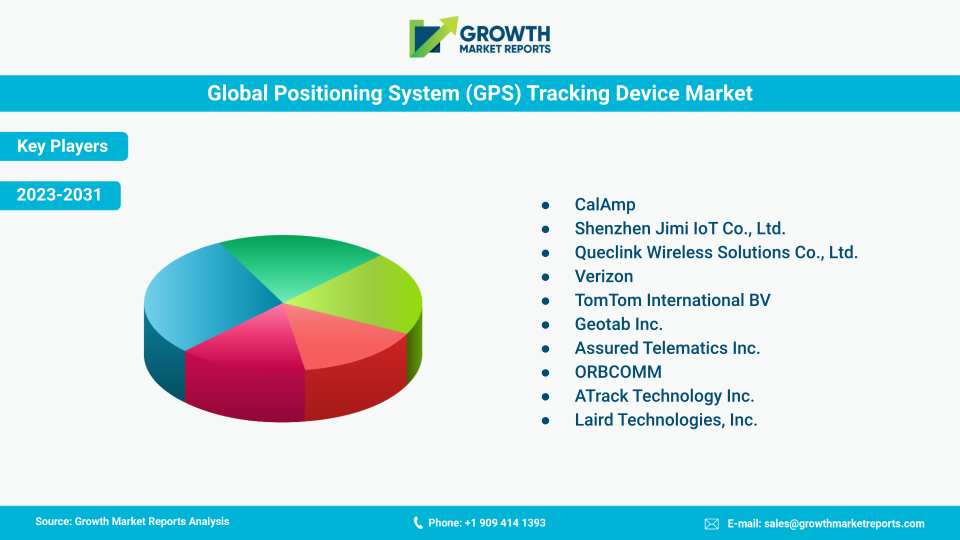
Major companies operating in the GPS tracking device market include Geotab Inc., Teltonika, CalAmp Corp., Orbcomm Inc., Queclink Wireless Solutions Co., Ltd., Verizon Connect, TomTom International BV (operating its fleet division under Webfleet Solutions), Garmin Ltd., Jimi Electronic Co., Ltd., Meitrack Group, Atrack Technology Inc., Digital Matter Pty Ltd., Trakm8 Holdings PLC, Spireon Inc., Concox Information Technology Co., Ltd., Ruptela, Starcom Systems, Fleet Complete, and Trackimo. These companies are recognized for their strong product portfolios, global presence, and commitment to innovation. Geotab Inc. has established itself as a leading provider of open-platform telematics and data analytics, serving hundreds of thousands of fleet vehicles worldwide. Teltonika has built a strong reputation for cost-effective, feature-rich hardware designed for demanding industrial environments.
Orbcomm Inc. specializes in industrial IoT and M2M communication solutions, providing GPS tracking devices for transportation, logistics, and heavy equipment monitoring. Queclink Wireless Solutions is a prominent player offering a wide range of products for vehicle tracking, asset management, and personal safety across more than 100 countries. TomTom's Webfleet Solutions division delivers integrated fleet management platforms that combine GPS hardware with advanced route optimization and driver coaching software. Other notable players such as Atrack Technology, Concox, Meitrack, and Ruptela are making significant contributions to market growth through product innovation, strategic partnerships, and expansion into new geographic markets including Southeast Asia, Africa, and Latin America.
In summary, the competitive landscape of the GPS tracking device market is dynamic and evolving, with established players and new entrants vying for market share through innovation, customer-centric solutions, and strategic collaborations. The market is expected to witness continued consolidation, technological advancements, and the emergence of new business models as companies strive to meet the growing demand for reliable, secure, and intelligent GPS tracking solutions across industries and regions through the 2026-2034 forecast period.
The Global Positioning System (GPS) Tracking Device market has been segmented on the basis of
Significant opportunities include the integration of GPS tracking with autonomous and electric vehicle platforms, where precise positioning is critical for safe navigation and battery optimization. The expansion of smart city infrastructure across Asia Pacific, Latin America, and the Middle East creates large-scale demand for connected tracking solutions. Miniaturized, solar-powered trackers open new possibilities in agriculture, livestock monitoring, and environmental sensing. AI-driven predictive analytics layered onto GPS data offers fleet operators actionable insights that go well beyond simple location awareness, creating new subscription-based revenue streams for device manufacturers.
Key challenges include data privacy concerns and evolving regulatory requirements around location data collection and storage. Cybersecurity threats pose risks to connected GPS platforms, requiring ongoing investment in encryption and intrusion detection. High upfront costs of advanced tracking systems can limit adoption among small and medium enterprises. Signal reliability in dense urban environments or remote areas remains a technical constraint, and supply chain disruptions affecting semiconductor availability can impact hardware production timelines.
Leading companies include Geotab Inc., Teltonika, CalAmp Corp., Orbcomm Inc., Queclink Wireless Solutions, Verizon Connect, TomTom International BV (Webfleet Solutions), Garmin Ltd., Jimi Electronic Co., Ltd., Meitrack Group, Atrack Technology Inc., Digital Matter Pty Ltd., Trakm8 Holdings PLC, Spireon Inc., Concox Information Technology, Ruptela, Starcom Systems, Fleet Complete, Trackimo, and others. These players compete on the basis of product innovation, software integration, global service coverage, and data security capabilities.
Fleet management is the leading application, enabling real-time vehicle monitoring, route planning, driver behavior analysis, and regulatory compliance for commercial operators. Asset tracking is the second-largest application, offering end-to-end visibility for high-value equipment, shipping containers, and rental assets. Personal tracking is a fast-growing segment covering child and elderly safety, employee monitoring, and outdoor recreation. Niche applications such as pet tracking, livestock management, and emergency response coordination round out the application landscape.
North America leads the global market with approximately 37.2% share in 2025, supported by a mature regulatory framework, high technology adoption, and strong demand from the logistics and defense sectors. Asia Pacific is the fastest-growing region, projected to expand at a CAGR above 16% through 2034, driven by rapid urbanization, e-commerce growth, and smart city investments in China, India, and Southeast Asia. Europe holds the third-largest share, underpinned by intelligent transportation mandates and green mobility programs.
GPS tracking is increasingly converging with cloud computing, AI analytics, 5G connectivity, and IoT sensor networks to create unified asset intelligence platforms. Fleet managers can now access predictive maintenance alerts, driver behavior scoring, and carbon-emission dashboards from a single interface. Integration with blockchain-based supply chain platforms is improving cargo traceability, while API connectivity with ERP and WMS systems is streamlining logistics workflows across industries.
The market offers three primary product types. Standalone trackers provide affordable, self-contained location monitoring for personal and basic asset use. OBD devices plug directly into a vehicle's diagnostics port, delivering vehicle health data alongside GPS positioning, making them popular with fleet operators. Advanced trackers are the most feature-rich category, incorporating geofencing, two-way communication, remote immobilization, AI analytics, and multi-sensor IoT integration for mission-critical and high-value applications.
Transportation and logistics remains the dominant end-user segment, leveraging GPS devices for route optimization, delivery tracking, and regulatory compliance. Construction, government and defense, and healthcare are also major adopters. Construction firms deploy GPS to safeguard heavy equipment and manage site logistics, defense agencies use it for asset and personnel monitoring, and healthcare organizations rely on it to track ambulances and medical equipment in real time.
Key growth drivers include the accelerating adoption of real-time fleet management platforms, stricter government mandates on commercial vehicle tracking, the proliferation of 5G and IoT-enabled devices, and the rapid expansion of e-commerce logistics. The integration of AI-powered analytics with GPS hardware is also enabling smarter decision-making, reducing fuel costs, and improving asset security, all of which sustain strong market momentum through 2034.
The global GPS tracking device market was valued at USD 3.17 billion in 2025 and is projected to reach USD 9.8 billion by 2034, expanding at a CAGR of 13.3% during the 2026-2034 forecast period. Growth is underpinned by rising demand for fleet management solutions, IoT integration, and expanding smart city initiatives worldwide.