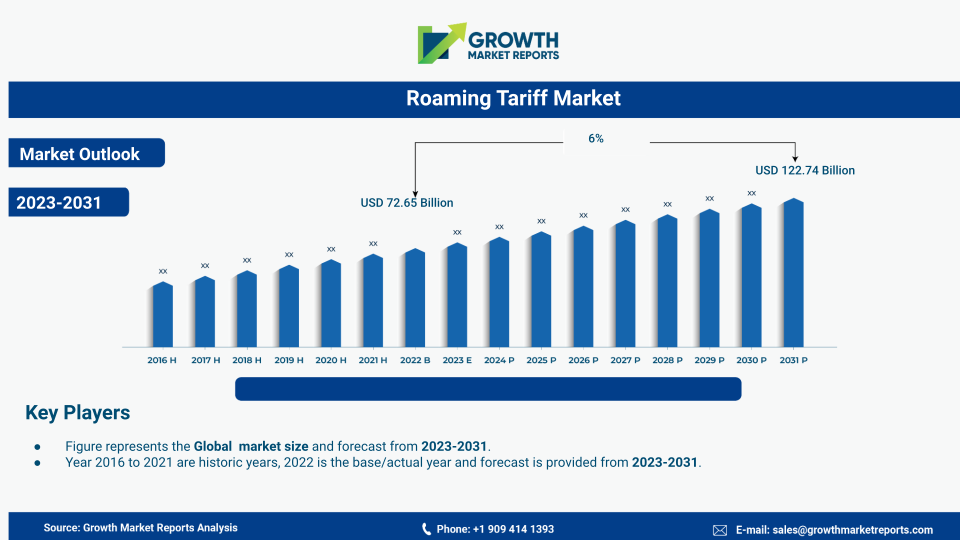
The global roaming traffic market size was USD 72.65 Billion in 2022 and is likely to reach USD 122.74 Billion by 2031 , expanding at a CAGR of 6% during 2023 – 2031. The growth of the market is attributed to rising number of mobile phone users across the globe.
Roaming refers to the ability of a cellular customer to make and receive voice calls, send and receive data, or access other cellular services. The roaming tariff is the fees charged on a per-minute basis for wireless voice service, or text message. The tariff rates differ by company, locations, and service provider. This roaming tariff usually incurs when the service user is roaming outside its home network.
Market Trends, Drivers, Restraints, and Opportunities:
-
Growing number of unique mobile subscribers is driving the growth of the market
-
Increasing tourism is expected to spur the market growth in the coming years.
-
The COVID-19 pandemic has forced people to stay home, which in turn, has restricted travel activities. This factor is anticipated to restrain the market growth.
-
High capital to provide advanced services to users can impede the growth of the market.
-
The emergence of 5G network is speculated to create lucrative opportunities during the forecast period.
Scope of the Report
The report on the roaming tariff market includes an assessment of the market, trends, segments, and regional markets. Overview and dynamics have also been included in the report.
|
Attributes
|
Details
|
|
Report Title
|
Roaming Tariff Market - Global Industry Analysis, Growth, Share, Size, Trends, and Forecast
|
|
Base Year
|
2022
|
|
Historic Data
|
2016–2021
|
|
Forecast Period
|
2023–2031
|
|
Segmentation
|
Roaming Types (National, International, and Others), Distribution Channels (Retail and Wholesale), and Services (Voice, SMS, and Data)
|
|
Regional Scope
|
Asia Pacific, North America, Latin America, Europe, and Middle East & Africa
|
|
Report Coverage
|
Company Share, Market Analysis and Size, Competitive Landscape, Growth Factors, and Trends, and Revenue Forecast
|
|
Key Players Covered in the Report
|
AT&T Inc., America Movil, Bharti Airtel Ltd., China Mobile Ltd., Vodafone Group plc, Verizon Communications Inc., Telefonica SA, Sprint Corporation, Deutsche Telekom AG, Digicel Group, MTN Group, Reliance Jio Infocomm Ltd., Verizon, Singtel, NTT Docomo, Claro Americans, PCCW, Lycamobile, and Nextel Communications
|
Roaming Tariff Market Segment Insights:
International segment to account a significant market share
On the basis of roaming types, the market is divided into national, international, and others. The international segment accounted for over 70% of the market revenue in 2020. Rising international tourism activities coupled with key network operators introducing various tariff plans and international travel sim cards is propelling the segment growth.
Meanwhile, the national segment is estimated to expand at a CAGR exceedingly over 1.8 % owing to the implementation of stringent government regulations is expected to expand at healthy growth rate over the forecast period. In September 2020, The Telecom Regulatory Authority of India imposed a special roaming tariff plan in India, which states that all incoming voice calls for postpaid and prepaid users will be free.
Wholesale segment to account a large market share
Based on the distribution channels, the market is divided into retail and wholesale. The wholesale segment accounted for over 70% of the market segment revenue in 2020. Increasing number of international tourists across the world is driving the wholesale segment market. However, the COVID-19 pandemic has restricted the cross-border travel, which is expected to negatively impact the growth of the market segment.
On the other hand, the retail segment is estimated to expand at a CAGR of around 2.8% during forecast period. Increasing number of smartphone users coupled with growing penetration of 4G and 5G networks is driving the growth of the retail segment market.
SMS segment anticipated to grow at a rapid pace
On the basis of services, the market is divided into voice, SMS, and data. The data segment held a market share of over 60% in 2020. The COVID-19 pandemic has encouraged people to practice social distancing and businesses to run companies remotely, which created a huge demand for data services. Conversely, the voice segment is estimated to expand at a considerable growth during forecast period. Increasing number of affordable voice plans is spurring the growth of the market segment.
The market in Asia Pacific to expand at a high CAGR
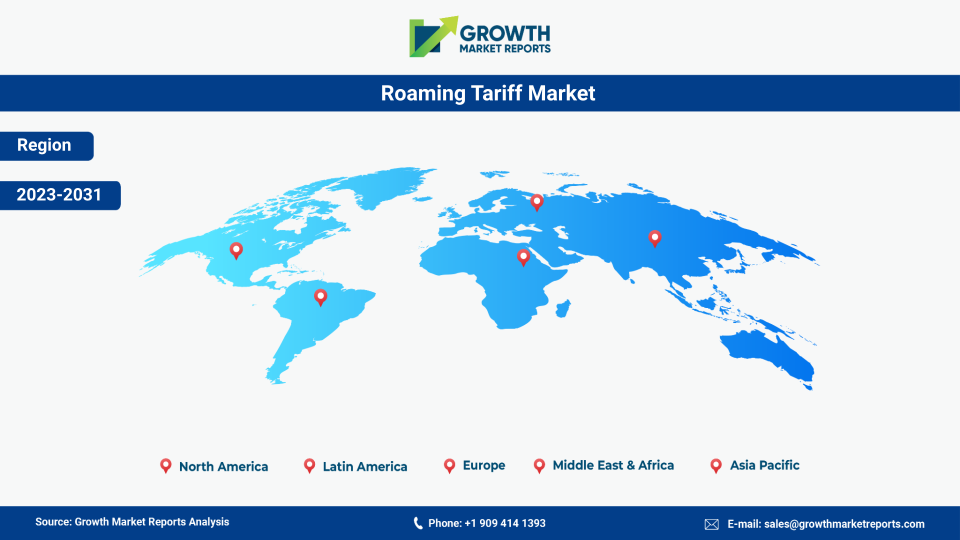
Based on regions, the market is divided into Asia Pacific, North America, Latin America, Europe, and Middle East & Africa. The market in Asia Pacific is anticipated to expand at a CAGR of 5% during the forecast period. Increasing disposable income and rising tourism activities are propelling the regional market growth. On the other hand, the market in North America held a large market share owing to rapid growth of population and increasing penetration of smartphones.
Segments
The roaming tariff market has been segmented on the basis of
Roaming Types
- National
- International
- Others
Distribution Channels
Services
Regions
- Asia Pacific
- North America
- Latin America
- Europe
- Middle East & Africa
Key Players
- AT&T Inc.
- America Movil
- Bharti Airtel Ltd.
- China Mobile Ltd.
- Vodafone Group plc
- Verizon Communications Inc.
- Telefonica SA
- Sprint Corporation
- Deutsche Telekom AG
- Digicel Group
- MTN Group
- Reliance Jio Infocomm Ltd.
- Verizon
- Singtel
- NTT Docomo
- Claro Americans
- PCCW
- Lycamobile
- Nextel Communications
Competitive Landscape
Major players of the roaming tariff market are AT&T Inc., America Movil, Bharti Airtel Ltd., China Mobile Ltd., Vodafone Group plc, Verizon Communications Inc., Telefonica SA, Sprint Corporation, Deutsche Telekom AG, Digicel Group, MTN Group, Reliance Jio Infocomm Ltd., Verizon, Singtel, NTT Docomo, Claro Americans, PCCW, Lycamobile, and Nextel Communications.
Companies are engaging in partnership, collaboration, and mergers. Moreover, the companies are focusing on expanding their product portfolio to expand their expand share.
In 2019, America Movil announced the acquisition of Telefonica Moviles Guatemala and Telefonica Moviles EI Salvador. These companies provide mobile and fixed telecommunication services that include voice, data, and pay-TV in Guatemala and EI Salvator.











 Request For Customization
 Enquiry Before Buying
 Speak With Analyst