Segments - by Product Type (Wireless Test Equipment, Wireline Test Equipment, Others), by Offering (Hardware, Software, Services), by Application (Network Testing, Enterprise Testing, Field Testing, Lab Testing, Others), by End-User (Telecommunication Service Providers, Network Equipment Manufacturers, Enterprises, Others)
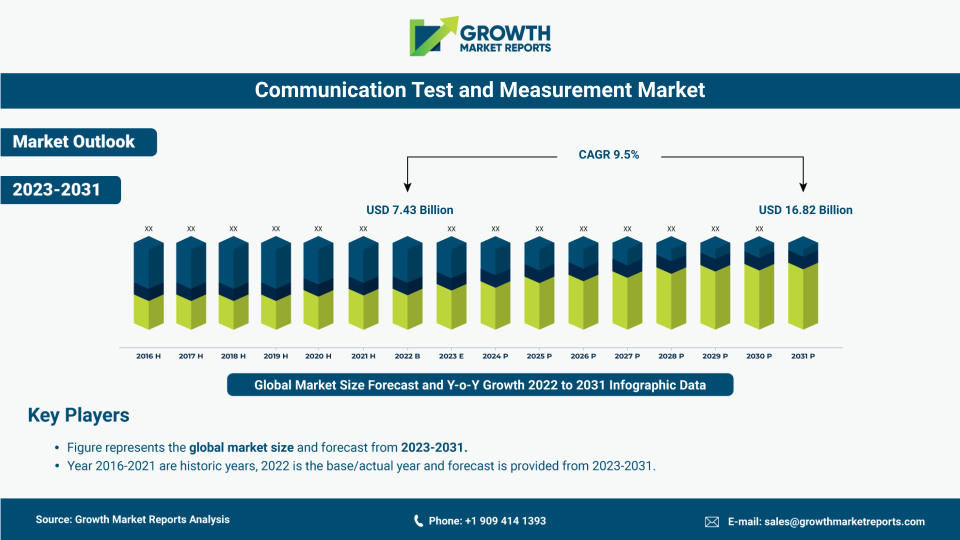
According to our latest research, the global Communication Test and Measurement market size reached USD 8.2 billion in 2024. The market is exhibiting robust momentum, growing at a CAGR of 8.1% during the forecast period. By 2033, the Communication Test and Measurement market is expected to attain a value of USD 15.5 billion, propelled by surging demand for advanced network infrastructure, the proliferation of wireless devices, and the ongoing evolution of 5G and IoT technologies. As per our latest findings, this upward trajectory is primarily driven by the rapid digital transformation across industries, increasing network complexities, and the critical need for reliable and high-performance communication networks worldwide.
The primary growth factor fueling the Communication Test and Measurement market is the accelerating deployment of next-generation communication technologies, such as 5G, IoT, and cloud computing. As communication networks become more sophisticated and data-intensive, the demand for advanced testing and measurement solutions has surged. Organizations are investing heavily in robust testing frameworks to ensure seamless connectivity, minimal latency, and optimal network performance. The proliferation of smart devices and the expansion of connected ecosystems have further amplified the need for comprehensive test and measurement tools capable of handling complex network architectures. This trend is especially pronounced in industries such as telecommunications, manufacturing, and automotive, where network reliability and security are paramount to operational success.
Another significant driver is the increasing adoption of automation and virtualization in network management and testing. Modern communication networks are highly dynamic, requiring agile and scalable solutions for testing, monitoring, and troubleshooting. The integration of AI and machine learning into test and measurement solutions has enabled real-time analytics, predictive maintenance, and automated fault detection. These technological advancements not only enhance testing efficiency but also reduce operational costs and downtime. Additionally, the shift towards software-defined networking (SDN) and network function virtualization (NFV) has created new opportunities for vendors to develop innovative testing solutions tailored to virtualized environments, further stimulating market growth.
The Communication Test and Measurement market is also benefiting from stringent regulatory standards and quality assurance requirements across various sectors. Governments and industry bodies worldwide are enforcing rigorous compliance norms to ensure the security, integrity, and interoperability of communication networks. This has compelled organizations to invest in advanced test and measurement equipment to meet regulatory benchmarks and deliver superior customer experiences. Moreover, the rising frequency of cyber threats and network breaches has heightened the importance of robust testing protocols to safeguard data and maintain network resilience. These factors collectively underscore the critical role of communication test and measurement solutions in the digital era.
Test & Measurement Equipment plays a pivotal role in the Communication Test and Measurement market, providing the essential tools and technologies required to ensure the integrity and performance of complex communication networks. As the demand for advanced network infrastructure grows, so does the need for precise and reliable test equipment. These tools are crucial for verifying network configurations, identifying potential issues, and ensuring compliance with industry standards. With the rapid evolution of technologies such as 5G and IoT, the capabilities of test and measurement equipment are continually advancing, enabling organizations to maintain high levels of network performance and security.
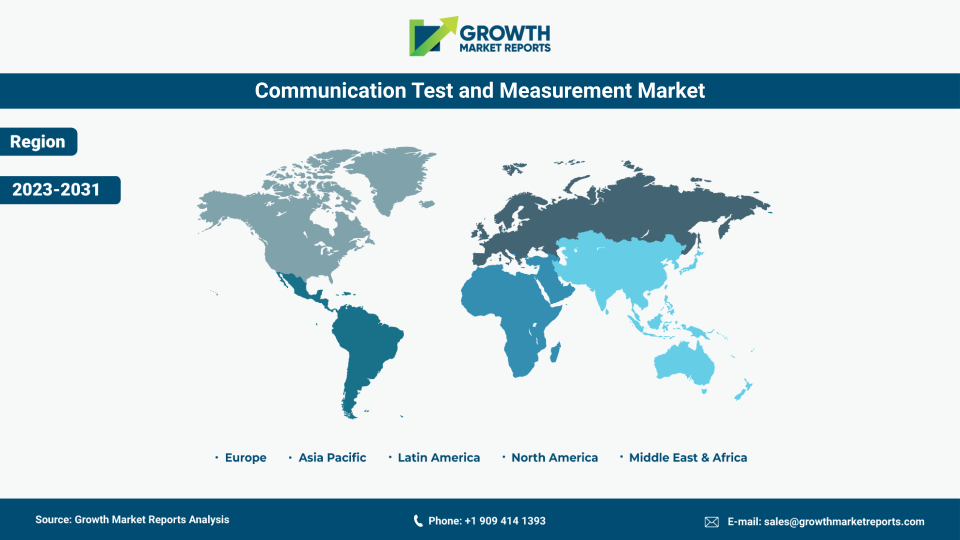
From a regional perspective, Asia Pacific is emerging as a powerhouse in the Communication Test and Measurement market, driven by rapid urbanization, increasing smartphone penetration, and extensive investments in telecom infrastructure. Countries such as China, India, Japan, and South Korea are at the forefront of 5G deployment and digital innovation, creating substantial demand for advanced testing solutions. North America and Europe continue to be lucrative markets, buoyed by established telecom networks, high R&D spending, and the presence of leading technology providers. Meanwhile, Latin America and the Middle East & Africa are witnessing steady growth, supported by ongoing network modernization initiatives and expanding mobile user bases. The global landscape is thus characterized by dynamic regional trends, with each market presenting unique growth opportunities and challenges.
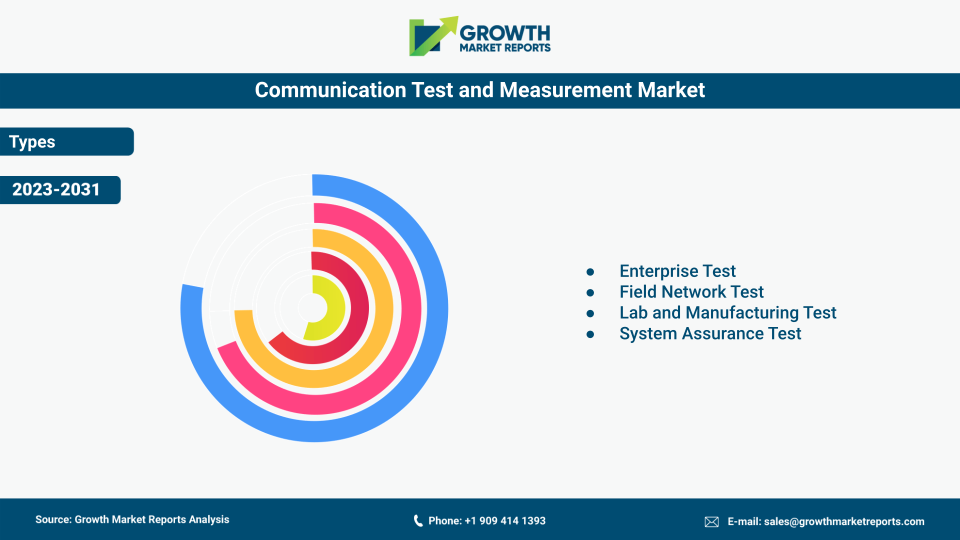
The Communication Test and Measurement market is segmented by product type into Wireless Test Equipment, Wireline Test Equipment, and Others, each playing a pivotal role in ensuring robust and reliable communication networks. Wireless Test Equipment is experiencing the fastest growth, propelled by the widespread adoption of wireless technologies such as 5G, Wi-Fi 6, and IoT. These solutions are indispensable for testing signal strength, coverage, interference, and device compatibility in increasingly complex wireless environments. As wireless communication becomes ubiquitous across both consumer and industrial applications, the demand for sophisticated wireless test equipment is expected to soar, particularly in emerging economies where mobile connectivity is expanding rapidly.
Wireline Test Equipment, while witnessing a more moderate growth trajectory, remains essential for testing traditional wired networks, including copper and fiber optic infrastructures. With the ongoing upgrade of legacy networks to support higher bandwidths and lower latency, wireline test equipment is critical for ensuring seamless transitions and maintaining service quality. The continued deployment of fiber-to-the-home (FTTH) and fiber-to-the-premises (FTTP) networks, especially in developed regions, is driving sustained demand for wireline testing solutions. These tools are vital for verifying signal integrity, detecting faults, and optimizing network performance in both enterprise and residential settings.
The "Others" category encompasses a diverse array of specialized test equipment designed for niche applications, such as optical time-domain reflectometers (OTDRs), protocol analyzers, and spectrum analyzers. These instruments are increasingly utilized in scenarios requiring high precision and specialized testing, such as data centers, satellite communications, and defense networks. As communication technologies diversify and new use cases emerge, the scope of specialized test equipment is expanding, offering vendors opportunities to address evolving customer needs. The integration of multi-functional and portable testing devices is a notable trend in this segment, enabling greater flexibility and efficiency for field technicians and network operators.
Across all product types, there is a growing emphasis on interoperability, scalability, and user-friendly interfaces. Vendors are investing in R&D to develop next-generation test equipment that can seamlessly integrate with existing network management systems and support a wide range of protocols and standards. The convergence of wireless and wireline networks is also prompting the development of hybrid testing solutions capable of addressing the complexities of modern communication infrastructures. As networks evolve to support ultra-low latency, massive device connectivity, and high data rates, the role of advanced test and measurement equipment in ensuring network reliability and performance will only become more critical.
| Attributes | Details |
| Report Title | Communication Test and Measurement Market Research Report 2033 |
| By Product Type | Wireless Test Equipment, Wireline Test Equipment, Others |
| By Offering | Hardware, Software, Services |
| By Application | Network Testing, Enterprise Testing, Field Testing, Lab Testing, Others |
| By End-User | Telecommunication Service Providers, Network Equipment Manufacturers, Enterprises, Others |
| Regions Covered | North America, Europe, APAC, Latin America, MEA |
| Base Year | 2024 |
| Historic Data | 2018-2023 |
| Forecast Period | 2025-2033 |
| Number of Pages | 297 |
| Number of Tables & Figures | 303 |
| Customization Available | Yes, the report can be customized as per your need. |
The Communication Test and Measurement market is categorized by offering into Hardware, Software, and Services, each contributing distinct value propositions to end-users. Hardware remains the backbone of the market, encompassing a wide range of physical devices such as network analyzers, signal generators, and oscilloscopes. These hardware solutions are indispensable for conducting in-depth testing, diagnostics, and troubleshooting of both wired and wireless networks. As network architectures become more complex and data-intensive, the demand for high-performance, multi-functional hardware is intensifying. Vendors are focusing on enhancing the portability, accuracy, and automation capabilities of their hardware offerings to cater to the evolving needs of telecom operators, enterprises, and service providers.
Software solutions are experiencing rapid adoption, driven by the shift towards virtualization, automation, and cloud-based network management. Modern communication networks require agile and scalable software platforms for real-time monitoring, analytics, and test automation. Software-based test and measurement tools enable organizations to streamline their testing processes, reduce manual intervention, and enhance operational efficiency. The integration of AI and machine learning algorithms into software platforms is enabling predictive analytics, automated fault detection, and proactive network optimization. As enterprises embrace digital transformation and software-defined networking, the demand for robust and intuitive software solutions is expected to grow significantly.
Services represent a critical component of the Communication Test and Measurement market, encompassing consulting, training, support, and managed services. As networks become more complex and mission-critical, organizations are increasingly seeking expert guidance and support to implement and maintain advanced testing frameworks. Service providers offer end-to-end solutions, from network design and deployment to ongoing monitoring and optimization. Managed services, in particular, are gaining traction among enterprises looking to outsource network testing and management to specialized vendors. This trend is driven by the need to reduce operational overhead, access cutting-edge expertise, and ensure continuous network performance in a rapidly changing technological landscape.
The interplay between hardware, software, and services is shaping the future of the Communication Test and Measurement market. Vendors are increasingly offering integrated solutions that combine physical devices with advanced software platforms and value-added services. This holistic approach enables organizations to address their testing needs comprehensively, from initial deployment to ongoing maintenance and optimization. As the market evolves, the ability to deliver seamless, scalable, and cost-effective solutions across all three offerings will be a key differentiator for leading vendors.
The Communication Test and Measurement market serves a diverse array of applications, including Network Testing, Enterprise Testing, Field Testing, Lab Testing, and Others. Network Testing remains the largest and most critical application segment, driven by the need to ensure the reliability, security, and performance of communication networks. Telecom operators, internet service providers, and network equipment manufacturers rely on comprehensive network testing solutions to validate network configurations, troubleshoot issues, and optimize service delivery. With the rollout of 5G and the proliferation of IoT devices, the complexity of network environments has increased, necessitating advanced testing tools capable of handling massive data volumes, diverse protocols, and dynamic topologies.
Enterprise Testing is gaining prominence as organizations across industries embrace digital transformation and cloud-based services. Enterprises require robust testing frameworks to ensure seamless connectivity, data security, and application performance across distributed networks. The adoption of remote work, cloud computing, and unified communications has heightened the importance of enterprise testing in maintaining business continuity and user satisfaction. Vendors are developing tailored solutions for enterprise customers, focusing on scalability, automation, and integration with existing IT infrastructure. As businesses become increasingly reliant on digital communication, the demand for enterprise testing solutions is expected to grow steadily.
Field Testing is essential for validating network performance in real-world environments, including urban, rural, and remote locations. Field engineers and technicians use portable test equipment to assess signal strength, coverage, latency, and interference in diverse settings. Field testing plays a crucial role in network rollout, maintenance, and troubleshooting, enabling operators to identify and resolve issues quickly. The deployment of 5G networks and the expansion of broadband infrastructure in underserved areas are driving demand for advanced field testing solutions that offer high accuracy, portability, and ease of use.
Lab Testing is primarily conducted in controlled environments to simulate various network scenarios, evaluate new technologies, and ensure compliance with industry standards. Lab testing is indispensable for R&D activities, product development, and certification processes. Network equipment manufacturers and technology providers invest heavily in lab testing to validate the performance, interoperability, and security of their products before commercial deployment. The increasing complexity of communication technologies, coupled with stringent regulatory requirements, underscores the importance of comprehensive lab testing frameworks.
The "Others" application segment encompasses specialized testing scenarios, such as security testing, protocol analysis, and interoperability testing. As communication networks become more diverse and interconnected, the need for specialized testing solutions is growing. Vendors are developing innovative tools to address emerging challenges, such as cybersecurity threats, cross-platform compatibility, and quality of service (QoS) assurance. The ability to offer flexible and customizable testing solutions across a wide range of applications will be a key success factor for market participants.
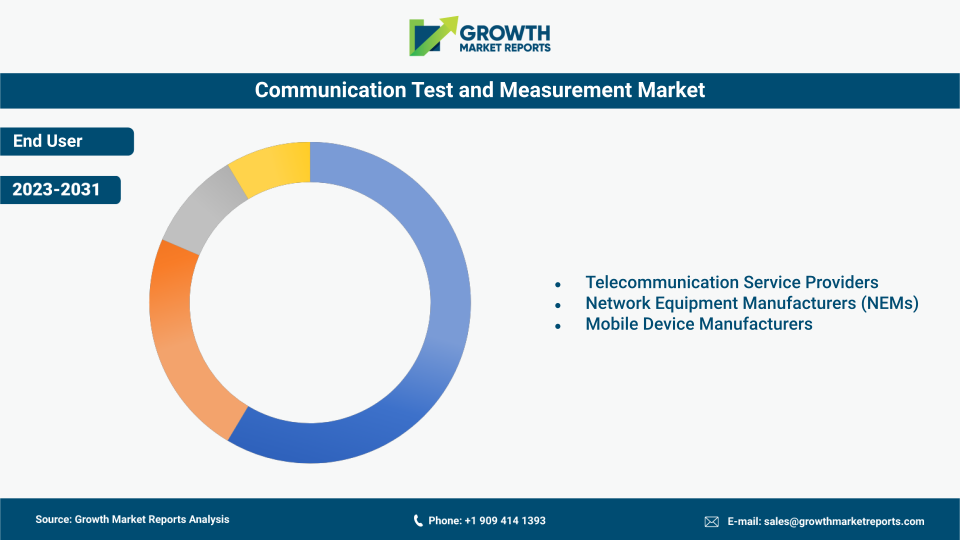
End-users in the Communication Test and Measurement market include Telecommunication Service Providers, Network Equipment Manufacturers, Enterprises, and Others. Telecommunication Service Providers represent the largest end-user segment, accounting for a significant share of market revenue. These organizations are at the forefront of network deployment, maintenance, and optimization, requiring advanced testing solutions to ensure high-quality service delivery. The transition to 5G, the expansion of fiber optic networks, and the integration of IoT devices are driving substantial investments in test and measurement equipment among telecom operators. The need to address network congestion, minimize downtime, and enhance customer experiences is fueling continuous demand for innovative testing solutions in this segment.
Network Equipment Manufacturers play a pivotal role in the Communication Test and Measurement market, leveraging advanced testing frameworks to validate the performance, reliability, and interoperability of their products. As competition intensifies and technology cycles accelerate, manufacturers are under pressure to bring new products to market quickly while maintaining stringent quality standards. Comprehensive testing is essential for ensuring compliance with industry regulations, minimizing defects, and enhancing product differentiation. The rise of open standards, multi-vendor environments, and software-defined networking is prompting manufacturers to invest in flexible and scalable testing solutions.
Enterprises across various sectors, including finance, healthcare, manufacturing, and retail, are increasingly adopting communication test and measurement solutions to support their digital transformation initiatives. The shift towards cloud computing, remote work, and unified communications has created new challenges related to network performance, security, and interoperability. Enterprises require robust testing frameworks to ensure seamless connectivity, protect sensitive data, and deliver superior user experiences. Vendors are responding to this demand by offering tailored solutions that address the unique needs of enterprise customers, including scalable software platforms, managed services, and integrated hardware-software offerings.
The "Others" end-user segment comprises government agencies, educational institutions, research organizations, and defense entities. These organizations rely on communication test and measurement solutions for a variety of applications, including public safety, mission-critical communications, and scientific research. The increasing focus on cybersecurity, data privacy, and network resilience is driving demand for specialized testing tools in this segment. Vendors are developing customized solutions to address the specific requirements of these end-users, including secure communication protocols, advanced analytics, and compliance with regulatory standards.
The Communication Test and Measurement market is poised for significant growth, presenting a wealth of opportunities for industry stakeholders. One of the most promising opportunities lies in the ongoing rollout of 5G networks and the expansion of IoT ecosystems. As operators and enterprises invest in next-generation communication infrastructure, the demand for advanced testing solutions capable of handling high bandwidth, ultra-low latency, and massive device connectivity is expected to surge. Vendors that can offer innovative, scalable, and cost-effective testing tools tailored to 5G and IoT environments stand to gain a competitive edge in this rapidly evolving market.
Another key opportunity is the increasing adoption of cloud-based and software-defined networking solutions. As organizations transition to virtualized network architectures, there is a growing need for software-centric test and measurement platforms that offer real-time analytics, automated testing, and seamless integration with cloud environments. The convergence of AI, machine learning, and big data analytics is enabling the development of intelligent testing solutions that can predict network issues, optimize resource allocation, and enhance operational efficiency. Vendors that can harness these technologies to deliver value-added services and differentiated offerings will be well-positioned to capitalize on emerging market trends.
Despite the favorable growth outlook, the Communication Test and Measurement market faces several restraining factors. One of the primary challenges is the high cost associated with advanced testing equipment and solutions. Many organizations, particularly in developing regions and small to medium-sized enterprises, may find it difficult to justify substantial investments in state-of-the-art test and measurement tools. Additionally, the rapid pace of technological change and the proliferation of new communication standards can create compatibility and interoperability challenges, requiring continuous updates and upgrades to existing testing frameworks. Vendors must address these concerns by offering flexible pricing models, modular solutions, and comprehensive support services to ensure widespread adoption and customer satisfaction.
The Asia Pacific region dominates the Communication Test and Measurement market, accounting for approximately USD 2.9 billion of the global market size in 2024. This robust performance is driven by rapid urbanization, the proliferation of mobile devices, and aggressive investments in telecom infrastructure across countries such as China, India, Japan, and South Korea. The ongoing deployment of 5G networks and the expansion of broadband connectivity in rural and underserved areas are creating substantial opportunities for vendors in this region. With a projected CAGR of 9.2% through 2033, Asia Pacific is expected to maintain its leadership position, fueled by strong government support, a thriving manufacturing sector, and a large base of tech-savvy consumers.
North America remains a critical market for Communication Test and Measurement solutions, with a market value of USD 2.3 billion in 2024. The region benefits from a mature telecom ecosystem, high R&D spending, and the presence of leading technology providers. The United States and Canada are at the forefront of 5G deployment, IoT innovation, and cloud adoption, driving sustained demand for advanced testing tools. The regionÂ’s focus on network security, regulatory compliance, and quality assurance further underscores the importance of comprehensive test and measurement solutions. North America is expected to witness steady growth, with a strong emphasis on software-driven and managed service offerings.
Europe holds a significant share of the Communication Test and Measurement market, valued at USD 1.8 billion in 2024. The region is characterized by extensive fiber optic deployments, strong regulatory frameworks, and a high degree of technological sophistication. Countries such as Germany, the United Kingdom, and France are leading the charge in network modernization and digital transformation initiatives. The European market is also witnessing increased adoption of IoT and smart city solutions, driving demand for versatile and scalable testing platforms. Meanwhile, Latin America and the Middle East & Africa collectively account for USD 1.2 billion, with growth prospects supported by ongoing investments in telecom infrastructure and the rising adoption of mobile and broadband services.
The Communication Test and Measurement market is highly competitive, characterized by the presence of established global players, regional vendors, and innovative startups. Leading companies are focusing on expanding their product portfolios, enhancing R&D capabilities, and forging strategic partnerships to strengthen their market positions. The competitive landscape is marked by rapid technological advancements, with vendors striving to deliver cutting-edge solutions that address the evolving needs of telecom operators, enterprises, and network equipment manufacturers. Key areas of competition include product performance, scalability, interoperability, ease of use, and after-sales support.
Major players are increasingly investing in the development of integrated testing platforms that combine hardware, software, and services to offer comprehensive solutions. These integrated offerings enable customers to streamline their testing processes, reduce operational complexity, and achieve greater efficiency. The shift towards cloud-based and software-defined testing solutions is prompting vendors to enhance their software engineering capabilities and leverage emerging technologies such as AI, machine learning, and big data analytics. Companies are also focusing on expanding their global footprint through mergers and acquisitions, joint ventures, and collaborations with telecom operators and technology providers.
Innovation is a key differentiator in the Communication Test and Measurement market, with vendors racing to develop next-generation solutions that address new use cases and industry challenges. The ability to offer flexible, modular, and cost-effective testing tools is critical to capturing market share, particularly among small and medium-sized enterprises and customers in developing regions. Vendors are also emphasizing sustainability, energy efficiency, and regulatory compliance in their product development efforts to align with evolving customer preferences and industry standards.
Among the major companies shaping the Communication Test and Measurement market are Keysight Technologies, Rohde & Schwarz, Anritsu Corporation, VIAVI Solutions, Spirent Communications, EXFO Inc., and Teledyne Technologies. Keysight Technologies is renowned for its comprehensive portfolio of electronic measurement solutions, with a strong focus on 5G, IoT, and automotive testing. Rohde & Schwarz is a global leader in wireless communication testing, offering innovative solutions for network operators, equipment manufacturers, and regulatory authorities. Anritsu Corporation specializes in wireless, optical, and RF testing, serving a diverse customer base across telecom, aerospace, and defense sectors.
VIAVI Solutions is recognized for its expertise in network testing, monitoring, and assurance, with a particular emphasis on 5G, cloud, and virtualization. Spirent Communications offers a wide range of test and measurement solutions for network performance, security, and automation, catering to both service providers and enterprises. EXFO Inc. is a key player in fiber optic and wireless testing, known for its advanced analytics and real-time monitoring capabilities. Teledyne Technologies provides high-precision test instruments and solutions for communication, aerospace, and industrial applications. These companies are continuously innovating to address emerging market trends, enhance customer value, and maintain their leadership positions in the dynamic Communication Test and Measurement market.
The Communication Test and Measurement market has been segmented on the basis of
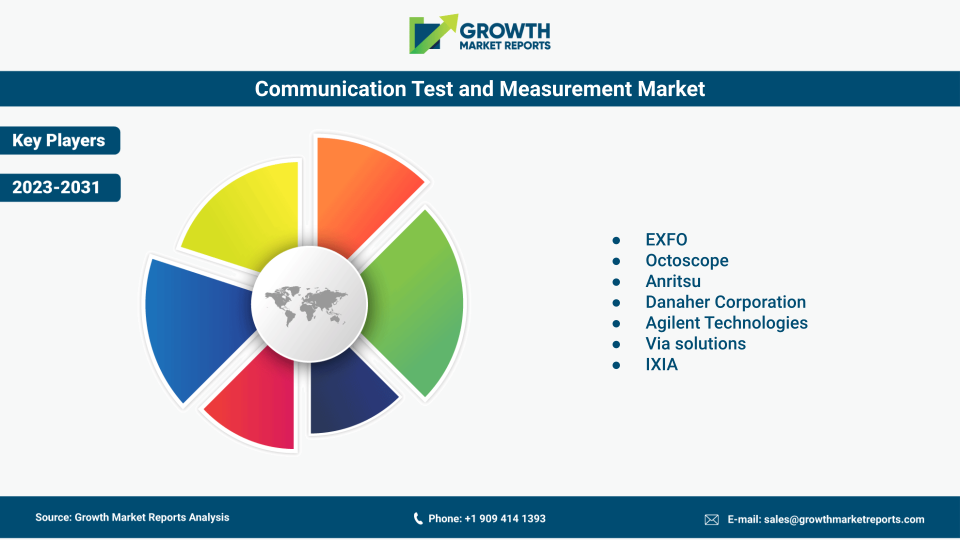
Some of the key players in the global communication test and measurement market are EXFO, Octoscope, Anritsu, Danaher Corporation, Agilent Technologies, Via solutions, and IXIA. Companies are focusing on various business strategies such as new product launches, product upgrades, partnerships, mergers, and acquisitions, to improve their offerings in the market.
Innovation in AI, machine learning, and big data analytics is enabling real-time analytics, predictive maintenance, and automated testing, leading to more efficient, scalable, and cost-effective solutions.
Key players include Keysight Technologies, Rohde & Schwarz, Anritsu Corporation, Viavi Solutions, EXFO Inc., Spirent Communications, Teledyne Technologies, and others.
Opportunities include the rollout of 5G, expansion of IoT, and adoption of cloud-based and AI-driven testing solutions. Challenges include high equipment costs and the need for continuous updates due to rapid technological changes.
Major end-users include Telecommunication Service Providers, Network Equipment Manufacturers, Enterprises across various sectors, and others such as government agencies and research organizations.
Key applications include Network Testing, Enterprise Testing, Field Testing, Lab Testing, and specialized scenarios like security and protocol analysis. Network Testing remains the largest segment.
The Communication Test and Measurement market is segmented by offering into Hardware (physical devices), Software (analytics and automation platforms), and Services (consulting, support, managed services).
The market is segmented into Wireless Test Equipment, Wireline Test Equipment, and Others (including specialized tools like OTDRs and spectrum analyzers). Wireless Test Equipment is experiencing the fastest growth.
Asia Pacific leads the market, driven by rapid urbanization and telecom investments, followed by North America and Europe, which benefit from mature telecom ecosystems and high R&D spending.
The market is driven by the deployment of 5G, IoT, and cloud technologies, increasing network complexity, digital transformation across industries, and the need for reliable, high-performance communication networks.
The global Communication Test and Measurement market reached USD 8.2 billion in 2024 and is projected to grow at a CAGR of 8.1%, reaching USD 15.5 billion by 2033.