Plumbing Fixtures Market Research Report 2033

Plumbing Fixtures Market Research Report 2033

Segments - by Product Type (Toilets, Sinks & Basins, Showers, Bathtubs, Faucets & Taps, Others), by Material (Ceramic, Metal, Plastic, Others), by Application (Residential, Commercial, Industrial, Others), by Distribution Channel (Offline Retail, Online Retail, Wholesale)

https://growthmarketreports.com/Raksha
Author : Raksha Sharma
https://growthmarketreports.com/Vaibhav
Fact-checked by : V. Chandola
https://growthmarketreports.com/Rucha
Editor : Rucha Phatak

Upcoming | Report ID :CM-4533 | 4.1 Rating | 31 Reviews | 267 Pages | Format : Docx PDF

Report Description


Plumbing Fixtures Market Outlook

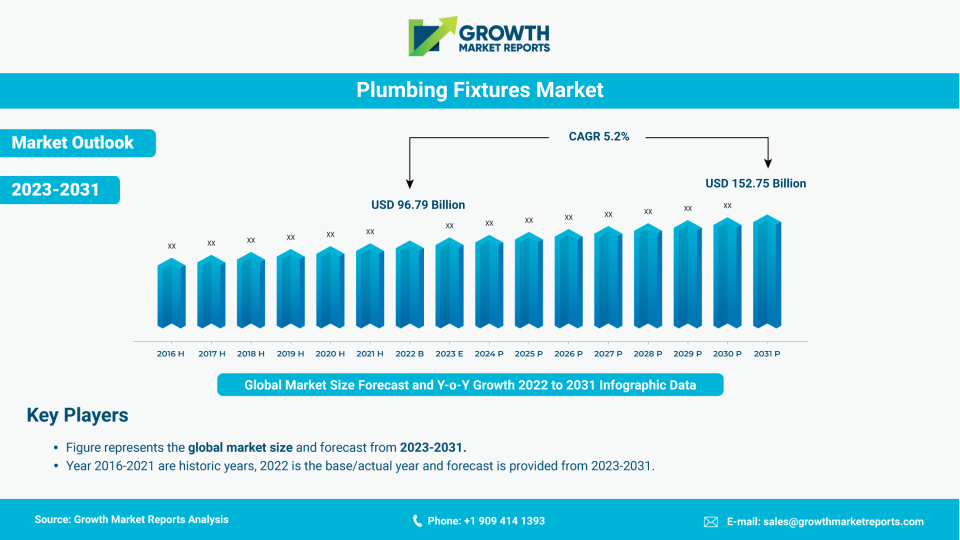
According to our latest research, the global Plumbing Fixtures market size reached USD 97.4 billion in 2024, reflecting a robust demand across both residential and commercial sectors. The market is expected to expand at a healthy CAGR of 5.2% during the forecast period, reaching a projected value of approximately USD 153.5 billion by 2033. This growth is primarily driven by rapid urbanization, rising construction activities, and increasing consumer emphasis on modernizing bathrooms and kitchens with water-efficient and aesthetically appealing fixtures. The surge in smart home adoption and the integration of advanced technologies into plumbing solutions are also contributing significantly to the positive market trajectory.

One of the major growth factors propelling the plumbing fixtures market is the ongoing global urbanization trend, particularly in emerging economies across Asia Pacific and Latin America. As more people migrate to urban centers, the demand for new housing units and commercial spaces intensifies, thereby boosting the need for modern plumbing solutions. Governments and private sector players are investing heavily in infrastructure development, including residential complexes, hotels, hospitals, and office buildings, all of which require a wide array of plumbing fixtures. Moreover, the growing middle-class population, especially in developing regions, is increasingly seeking upgraded living standards, which includes the installation of high-quality and innovative plumbing products.

Another key driver shaping the plumbing fixtures market is the rising consumer awareness regarding water conservation and sustainability. With increasing concerns over water scarcity and environmental degradation, both consumers and regulatory bodies are placing greater emphasis on water-efficient plumbing fixtures such as low-flow toilets, touchless faucets, and sensor-based showers. Manufacturers are responding by developing eco-friendly products that help reduce water consumption without compromising on performance or comfort. The integration of smart technologies, such as IoT-enabled fixtures that monitor water usage and detect leaks, is further enhancing the appeal of modern plumbing solutions among environmentally conscious consumers.

Additionally, the trend towards home renovation and remodeling activities is significantly influencing the growth of the plumbing fixtures market. The COVID-19 pandemic has led to a renewed focus on home improvement, with homeowners investing in upgrading their bathrooms and kitchens to enhance comfort and functionality. This has resulted in increased sales of premium and designer plumbing fixtures that offer both aesthetic value and advanced features. The commercial sector is also witnessing a similar shift, with hotels, restaurants, and office spaces opting for stylish and technologically advanced fixtures to attract customers and improve user experience. These factors collectively contribute to the sustained expansion of the global plumbing fixtures market.

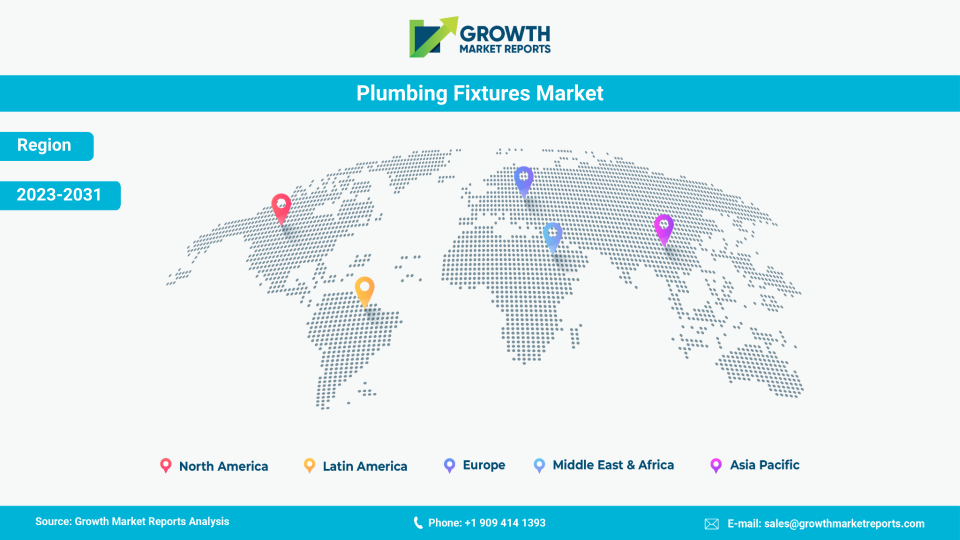
From a regional perspective, Asia Pacific dominates the global plumbing fixtures market, accounting for the largest share in 2024. This dominance is attributed to the rapid pace of urbanization, robust construction activities, and rising disposable incomes in countries such as China, India, and Southeast Asian nations. North America and Europe also represent significant markets, driven by high levels of residential and commercial renovation, stringent building codes, and a strong focus on sustainable building practices. Meanwhile, the Middle East & Africa and Latin America are emerging as promising regions, fueled by infrastructure development and increasing investments in smart city projects. The regional dynamics are expected to evolve further as market players continue to expand their presence and adapt to local consumer preferences.

Global Plumbing Fixtures Industry Outlook

Product Type Analysis

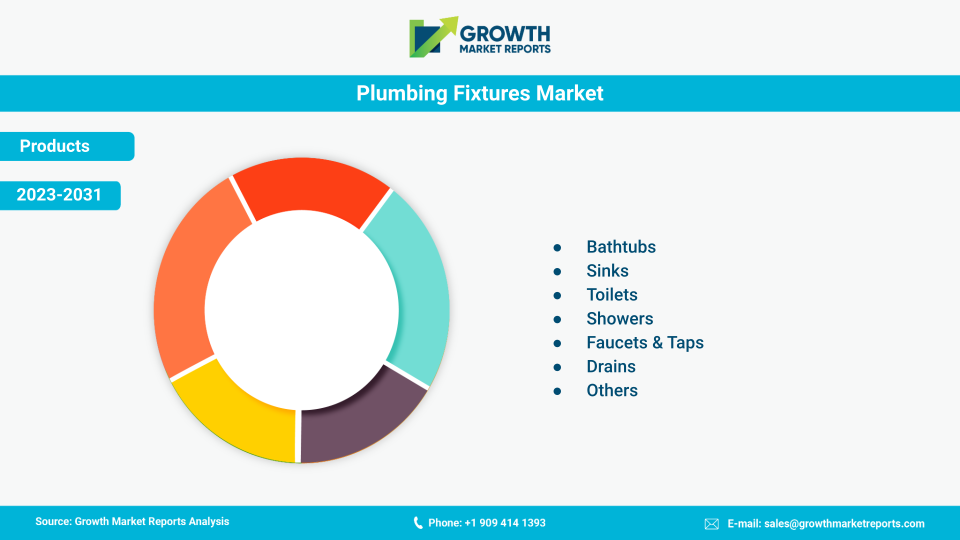
The product type segment within the plumbing fixtures market encompasses a diverse range of fixtures including toilets, sinks & basins, showers, bathtubs, faucets & taps, and others. Among these, toilets and sinks & basins account for a substantial portion of market revenue, owing to their ubiquity in both residential and commercial settings. The demand for advanced toilet systems—such as dual-flush and smart toilets—has been rising, particularly in developed regions where consumers prioritize hygiene, comfort, and water efficiency. Similarly, the popularity of designer and multifunctional sinks & basins is on the rise, especially in premium housing and luxury hospitality projects. The continual innovation in materials and design aesthetics is further driving consumer interest in these product categories.

Showers and bathtubs, while traditionally considered standard bathroom fixtures, have evolved significantly in recent years. The incorporation of features such as rainfall showerheads, hydrotherapy jets, and digital temperature controls has transformed showers and bathtubs from basic utilities to luxury wellness products. This shift is particularly evident in the hospitality and high-end residential sectors, where consumers are willing to invest in spa-like bathroom experiences. The growing trend of bathroom remodeling and the integration of wellness features are expected to sustain the demand for premium showers and bathtubs, thereby contributing to the overall growth of the plumbing fixtures market.

Faucets & taps represent another crucial segment, driven by continuous advancements in design, functionality, and technology. The emergence of touchless and sensor-based faucets has gained significant traction, especially in commercial spaces such as airports, malls, and offices, where hygiene and water conservation are paramount. These products are also making their way into residential applications as homeowners seek to minimize germ transmission and optimize water usage. Manufacturers are focusing on developing aesthetically pleasing and technologically advanced faucets & taps that cater to varying consumer preferences and regulatory requirements, thereby expanding their market reach.

The "others" category within the product type segment includes a range of specialized plumbing fixtures such as bidets, urinals, and utility sinks, which are essential in specific applications like public restrooms, healthcare facilities, and industrial environments. While these products constitute a smaller share of the overall market, their demand is steadily increasing due to the expansion of commercial infrastructure and the adoption of international sanitation standards. The diversification of product offerings and the customization of fixtures for niche applications are expected to provide new growth opportunities for market participants.

Report Scope

Attributes Details
Report Title Plumbing Fixtures Market Research Report 2033
By Product Type Toilets, Sinks & Basins, Showers, Bathtubs, Faucets & Taps, Others
By Material Ceramic, Metal, Plastic, Others
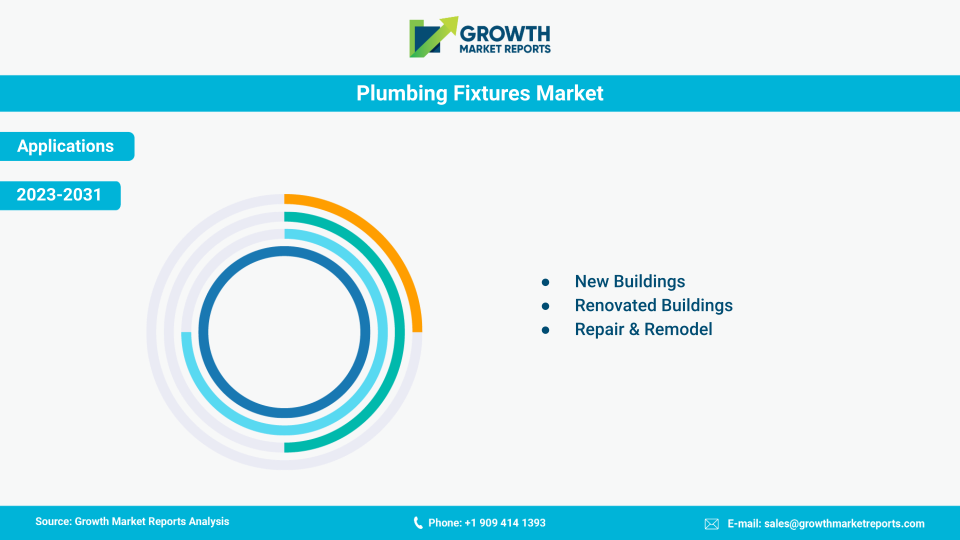
By Application Residential, Commercial, Industrial, Others
By Distribution Channel Offline Retail, Online Retail, Wholesale
Regions Covered North America, Europe, APAC, Latin America, MEA
Base Year 2024
Historic Data 2018-2023
Forecast Period 2025-2033
Number of Pages 267
Number of Tables & Figures 320
Customization Available Yes, the report can be customized as per your need.

Material Analysis

The material segment of the plumbing fixtures market is categorized into ceramic, metal, plastic, and others, each offering distinct advantages and catering to varied consumer preferences. Ceramic remains the most widely used material, particularly for toilets, sinks, and basins, due to its durability, ease of cleaning, and resistance to stains and odors. The popularity of ceramic fixtures is further bolstered by the availability of a wide range of designs, colors, and finishes, enabling consumers to personalize their bathrooms and kitchens. Manufacturers continue to innovate by introducing advanced ceramic coatings and antimicrobial surfaces, which enhance the hygiene and longevity of these products.

Metal fixtures, including those made from stainless steel, brass, and copper, are favored for their strength, corrosion resistance, and contemporary aesthetics. Faucets, taps, and showerheads are commonly manufactured from metals, as they offer superior performance and a premium look. The demand for metal fixtures is particularly strong in the commercial sector, where durability and ease of maintenance are critical considerations. In recent years, the trend towards matte and brushed metal finishes has gained momentum, reflecting changing consumer tastes and the influence of modern interior design trends. The use of recycled metals and sustainable manufacturing processes is also gaining traction, aligning with the broader industry focus on environmental responsibility.

Plastic plumbing fixtures have carved out a significant niche in the market, especially in cost-sensitive residential applications and temporary installations. The affordability, lightweight nature, and versatility of plastic make it an attractive choice for a variety of fixtures, including pipes, fittings, and utility sinks. Advances in polymer technology have led to the development of high-performance plastics that offer improved durability, chemical resistance, and design flexibility. While plastic fixtures are generally perceived as less premium compared to ceramic or metal alternatives, ongoing innovation is helping to overcome these perceptions and expand their market share.

The "others" category in the material segment includes composite materials, glass, and stone, which are increasingly being used in high-end and customized plumbing fixtures. These materials offer unique aesthetic and functional benefits, such as enhanced visual appeal, thermal insulation, and resistance to wear and tear. The adoption of composite and alternative materials is particularly evident in luxury residential and hospitality projects, where differentiation and exclusivity are key selling points. As consumer preferences continue to evolve, the demand for innovative and sustainable materials in plumbing fixtures is expected to rise, providing new avenues for market growth.

Application Analysis

The application segment of the plumbing fixtures market is broadly classified into residential, commercial, industrial, and others, each with distinct demand drivers and growth dynamics. The residential sector remains the largest and fastest-growing application segment, accounting for a significant share of global market revenue. The increasing construction of new homes, coupled with a surge in renovation and remodeling activities, is fueling the demand for modern plumbing fixtures. Homeowners are increasingly prioritizing comfort, convenience, and aesthetics, leading to the adoption of premium and technologically advanced fixtures. The rising trend of smart homes and the integration of IoT-enabled plumbing solutions are further enhancing the appeal of modern fixtures in residential applications.

The commercial application segment encompasses a wide range of settings, including hotels, restaurants, offices, shopping malls, hospitals, and educational institutions. In these environments, the demand for durable, hygienic, and water-efficient plumbing fixtures is paramount. The hospitality sector, in particular, is witnessing a shift towards luxury and wellness-oriented bathroom solutions, driving the adoption of designer showers, bathtubs, and faucets. Regulatory mandates regarding water conservation and sanitation are also influencing the selection of plumbing fixtures in commercial buildings. As businesses seek to enhance customer experience and comply with sustainability standards, the commercial application segment is expected to witness steady growth.

Industrial applications of plumbing fixtures, while representing a smaller share of the overall market, are critical in sectors such as manufacturing, food processing, pharmaceuticals, and chemical plants. In these environments, the emphasis is on functionality, reliability, and ease of maintenance. Fixtures used in industrial settings must withstand harsh conditions, including exposure to chemicals, high temperatures, and heavy usage. As industrial infrastructure expands globally, particularly in emerging economies, the demand for specialized plumbing fixtures tailored to industrial requirements is expected to rise.

The "others" category within the application segment includes public infrastructure projects, transportation hubs, and recreational facilities, where plumbing fixtures are essential for ensuring sanitation and user comfort. The expansion of airports, railway stations, sports complexes, and public parks is driving the installation of robust and vandal-resistant plumbing solutions. The growing focus on public health and hygiene, especially in the wake of the COVID-19 pandemic, is prompting authorities to invest in high-quality plumbing fixtures for public spaces. This trend is likely to continue, supporting the sustained growth of the plumbing fixtures market across diverse application areas.

Distribution Channel Analysis

The distribution channel segment of the plumbing fixtures market is divided into offline retail, online retail, and wholesale, each playing a crucial role in shaping consumer access and purchasing behavior. Offline retail continues to dominate the market, with specialty stores, home improvement centers, and hardware outlets serving as primary points of sale for plumbing fixtures. These channels offer consumers the advantage of physical product inspection, expert advice, and immediate availability, which are particularly important for high-value or customized fixtures. Manufacturers and distributors are investing in expanding their offline retail networks and enhancing in-store experiences to attract and retain customers.

Online retail is witnessing rapid growth, driven by the increasing penetration of e-commerce platforms, changing consumer preferences, and the convenience of digital shopping. Online channels offer a wide selection of products, competitive pricing, and doorstep delivery, making them particularly attractive to tech-savvy and time-constrained consumers. The COVID-19 pandemic has accelerated the shift towards online retail, with both consumers and businesses embracing digital platforms for purchasing plumbing fixtures. Manufacturers are responding by strengthening their online presence, partnering with leading e-commerce players, and offering virtual consultations and augmented reality tools to facilitate informed decision-making.

The wholesale distribution channel caters primarily to large-scale buyers such as contractors, builders, and institutional clients who require plumbing fixtures in bulk quantities. Wholesalers play a critical role in ensuring the timely and cost-effective supply of fixtures for construction projects and commercial installations. They often offer value-added services such as inventory management, technical support, and customized product solutions. The wholesale segment is particularly important in emerging markets, where large infrastructure projects and housing developments drive bulk procurement of plumbing fixtures. As the construction industry continues to expand globally, the wholesale channel is expected to maintain its significance in the plumbing fixtures market.

The convergence of offline, online, and wholesale channels is giving rise to omnichannel strategies, with manufacturers and retailers seeking to provide a seamless and integrated shopping experience across multiple touchpoints. This approach enables consumers to research products online, visit physical stores for hands-on evaluation, and make purchases through their preferred channels. The adoption of advanced technologies such as CRM systems, data analytics, and supply chain automation is enhancing the efficiency and responsiveness of distribution networks. As consumer expectations continue to evolve, the ability to offer flexible and personalized purchasing options will be a key differentiator for market players.

Opportunities & Threats

The plumbing fixtures market presents a multitude of opportunities for stakeholders across the value chain. One of the most promising areas is the increasing demand for smart and connected plumbing solutions, driven by the proliferation of smart homes and the growing emphasis on energy and water conservation. Manufacturers have the opportunity to innovate by integrating IoT, AI, and sensor technologies into fixtures, enabling real-time monitoring, leak detection, and automated water management. These advanced features not only enhance user convenience and safety but also support sustainability goals by reducing water wastage. Additionally, the rising trend of home renovation and remodeling, particularly in developed markets, is creating a robust demand for premium and designer plumbing fixtures, offering attractive margins for manufacturers and retailers.

Another significant opportunity lies in the expansion of the plumbing fixtures market in emerging economies, where rapid urbanization, infrastructure development, and rising disposable incomes are driving demand for modern sanitation solutions. Governments in countries such as India, China, and Brazil are launching initiatives to improve public health and sanitation, providing a favorable environment for market growth. The increasing adoption of green building standards and sustainable construction practices is also opening up new avenues for eco-friendly and water-efficient plumbing fixtures. Companies that can offer innovative, cost-effective, and environmentally responsible products are well-positioned to capitalize on these emerging opportunities and expand their global footprint.

Despite the positive outlook, the plumbing fixtures market faces several restraining factors that could hinder growth. One of the primary challenges is the volatility in raw material prices, particularly for metals and ceramics, which can impact production costs and profit margins. Fluctuations in commodity prices, coupled with supply chain disruptions, can create uncertainties for manufacturers and distributors. Additionally, the market is highly competitive, with numerous local and international players vying for market share, leading to pricing pressures and the need for continuous innovation. Regulatory compliance and the need to adhere to varying standards across regions add further complexity to market operations. Companies must navigate these challenges by optimizing their supply chains, investing in research and development, and adopting agile business strategies.

Regional Outlook

The Asia Pacific region leads the global plumbing fixtures market, accounting for the largest share of revenue in 2024 with a market size of USD 39.8 billion. The region’s dominance is driven by rapid urbanization, robust construction activities, and rising income levels in countries such as China, India, and Indonesia. The increasing focus on improving sanitation infrastructure and the growth of the middle-class population are further fueling demand for modern plumbing fixtures. The Asia Pacific market is projected to grow at a strong CAGR of 6.3% during the forecast period, outpacing other regions and offering lucrative opportunities for market participants. Government initiatives aimed at promoting affordable housing and smart city development are expected to sustain the region’s growth momentum.

North America is another significant market for plumbing fixtures, with a market size of USD 25.6 billion in 2024. The region is characterized by high levels of residential and commercial renovation, stringent building codes, and a strong focus on sustainability and water conservation. The adoption of smart and water-efficient plumbing fixtures is gaining traction, supported by regulatory mandates and increasing consumer awareness. The United States remains the largest market within the region, driven by ongoing investments in infrastructure modernization and the growing trend of home improvement. Canada and Mexico are also witnessing steady growth, supported by expanding construction activities and favorable government policies.

Europe holds a market size of USD 19.4 billion in 2024, driven by a mature construction sector, increasing renovation activities, and a strong emphasis on green building practices. The region is at the forefront of adopting sustainable and energy-efficient plumbing solutions, with countries such as Germany, the United Kingdom, and France leading the way. The European market is characterized by high standards of quality, design innovation, and regulatory compliance, making it an attractive destination for premium and technologically advanced plumbing fixtures. Meanwhile, the Middle East & Africa and Latin America, with market sizes of USD 7.6 billion and USD 5.0 billion respectively in 2024, are emerging as promising regions, supported by infrastructure development, urbanization, and rising investments in smart city projects. These regions offer significant growth potential for market players willing to adapt to local needs and preferences.

Plumbing Fixtures Market Statistics

Competitor Outlook

The global plumbing fixtures market is highly competitive, with a diverse mix of multinational corporations, regional players, and specialized manufacturers vying for market share. The competitive landscape is shaped by continuous innovation, product differentiation, and a strong focus on customer experience. Leading companies are investing heavily in research and development to introduce advanced, eco-friendly, and aesthetically appealing plumbing solutions that cater to evolving consumer preferences. The integration of smart technologies, such as IoT-enabled fixtures and touchless controls, is emerging as a key differentiator, enabling market leaders to enhance their value proposition and capture premium segments.

Strategic partnerships, mergers and acquisitions, and geographic expansion are common strategies adopted by major players to strengthen their market position and expand their global footprint. Companies are also focusing on building robust distribution networks, both online and offline, to ensure seamless product availability and customer service. The rise of e-commerce and digital marketing is enabling manufacturers to reach a wider audience and offer personalized solutions tailored to specific market segments. Sustainability and corporate social responsibility are gaining prominence, with leading players committed to reducing their environmental impact through responsible sourcing, energy-efficient manufacturing, and the development of water-saving products.

Despite the intense competition, the market offers ample opportunities for new entrants and niche players, particularly in areas such as smart plumbing solutions, sustainable materials, and customized fixtures. The ability to innovate rapidly, respond to changing consumer demands, and adapt to regional market dynamics will be critical for success. Companies that can effectively balance cost competitiveness with quality, design, and technological advancement are likely to emerge as leaders in the evolving plumbing fixtures market. The competitive landscape is expected to remain dynamic, with ongoing consolidation and the entry of new players driving further innovation and market growth.

Some of the major companies operating in the global plumbing fixtures market include Kohler Co., LIXIL Group Corporation, Masco Corporation, Toto Ltd., American Standard Brands, Roca Sanitario S.A., Geberit AG, Hansgrohe SE, Jacuzzi Brands LLC, and Grohe AG. Kohler Co. is renowned for its wide range of innovative and premium plumbing products, with a strong emphasis on design and sustainability. LIXIL Group Corporation, headquartered in Japan, is a global leader in water and housing products, offering a comprehensive portfolio of plumbing fixtures and solutions. Masco Corporation and Toto Ltd. are also prominent players, known for their commitment to quality, technological innovation, and customer satisfaction.

American Standard Brands and Roca Sanitario S.A. have established a strong presence in both developed and emerging markets, leveraging their extensive product portfolios and distribution networks. Geberit AG and Hansgrohe SE, based in Europe, are recognized for their cutting-edge designs and focus on water efficiency, catering to the high-end and sustainable building segments. Jacuzzi Brands LLC and Grohe AG are synonymous with luxury and wellness-oriented plumbing solutions, offering a range of premium showers, bathtubs, and faucets. These companies are continuously investing in research and development, marketing, and strategic collaborations to maintain their competitive edge and drive market growth.

Key Players

  • Kohler Co.
  • LIXIL Group Corporation
  • Masco Corporation
  • Geberit AG
  • TOTO Ltd.
  • American Standard Brands
  • Roca Sanitario S.A.
  • Hansgrohe SE
  • Jacuzzi Brands LLC
  • Duravit AG
  • Grohe AG
  • Moen Incorporated
  • Villeroy & Boch AG
  • Ideal Standard International
  • Delta Faucet Company
  • Jaquar Group
  • Elkay Manufacturing Company
  • CERA Sanitaryware Limited
  • Sloan Valve Company
  • Vitra (Eczacıbaşı Group)
Plumbing Fixtures Market Overview

Segments

The Plumbing Fixtures market has been segmented on the basis of

Product Type

  • Toilets
  • Sinks & Basins
  • Showers
  • Bathtubs
  • Faucets & Taps
  • Others

Material

  • Ceramic
  • Metal
  • Plastic
  • Others

Application

  • Residential
  • Commercial
  • Industrial
  • Others

Distribution Channel

  • Offline Retail
  • Online Retail
  • Wholesale

Competitive Landscape

Key players in the global plumbing fixtures market include ELKAY, Fortune Brands Home & Security, Geberit AG, Globe Union Industrial Corp, Hindware Homes, Jacuzzi Inc, Jaquar, Kohler Co, LIXIL Corporation, MAAX Bath Inc, Masco Corporation, Roca Sanitario, S.A, and TOTO USA. These players engage in mergers & acquisitions, collaborations, agreements, and partnerships to strengthen their geographical presence.
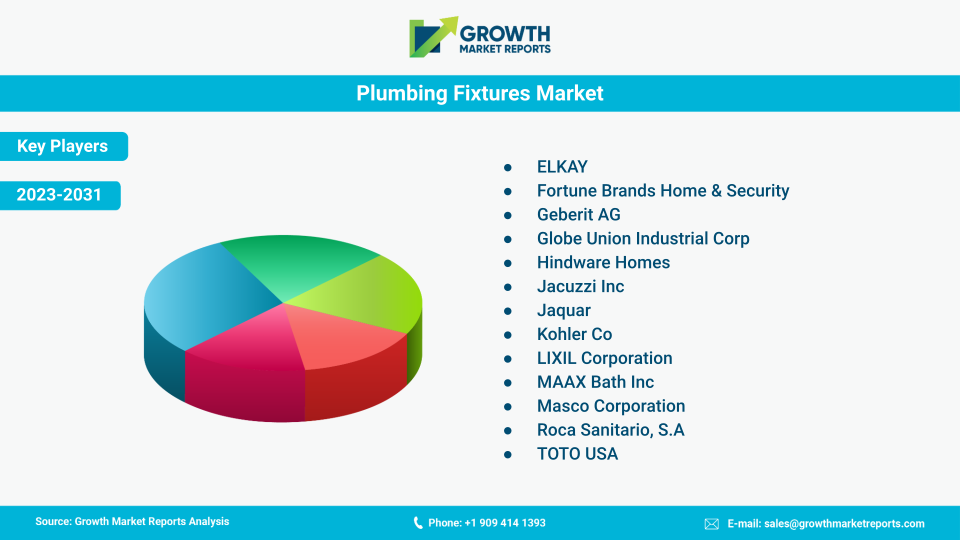

Plumbing Fixtures Market Key Players

Frequently Asked Questions

Trends include the adoption of water-efficient and sustainable products, increased home renovation activities, the rise of smart and connected fixtures, and a focus on premium and designer solutions.

Key players include Kohler Co., LIXIL Group Corporation, Masco Corporation, TOTO Ltd., American Standard Brands, Roca Sanitario S.A., Geberit AG, Hansgrohe SE, Jacuzzi Brands LLC, and Grohe AG.

Plumbing fixtures are sold through offline retail (specialty stores, hardware outlets), online retail (e-commerce platforms), and wholesale channels catering to contractors and large buyers.

Smart technologies, such as IoT-enabled fixtures, touchless faucets, and sensor-based showers, are increasingly popular for their water-saving, hygiene, and convenience benefits.

Common materials include ceramic, metal (such as stainless steel and brass), plastic, and composites. Ceramic is most popular for toilets and sinks, while metal is favored for faucets and showerheads.

Toilets and sinks & basins account for a large share of the market, with growing demand for advanced systems like smart toilets, designer sinks, touchless faucets, and luxury showers and bathtubs.

Asia Pacific dominates the market, followed by North America and Europe. Emerging markets like Latin America and the Middle East & Africa are also experiencing significant growth.

Major growth drivers include rapid urbanization, rising construction activities, increasing consumer focus on modern and water-efficient fixtures, and the integration of smart technologies.

The plumbing fixtures market is expected to grow at a CAGR of 5.2% from 2025 to 2033, reaching approximately USD 153.5 billion by 2033.

As of 2024, the global plumbing fixtures market is valued at USD 97.4 billion, with strong demand from both residential and commercial sectors.

Table Of Content

Chapter 1 Executive Summary
Chapter 2 Assumptions and Acronyms Used
Chapter 3 Research Methodology
Chapter 4 Plumbing Fixtures Market Overview
   4.1 Introduction
      4.1.1 Market Taxonomy
      4.1.2 Market Definition
      4.1.3 Macro-Economic Factors Impacting the Market Growth
   4.2 Plumbing Fixtures Market Dynamics
      4.2.1 Market Drivers
      4.2.2 Market Restraints
      4.2.3 Market Opportunity
   4.3 Plumbing Fixtures Market - Supply Chain Analysis
      4.3.1 List of Key Suppliers
      4.3.2 List of Key Distributors
      4.3.3 List of Key Consumers
   4.4 Key Forces Shaping the Plumbing Fixtures Market
      4.4.1 Bargaining Power of Suppliers
      4.4.2 Bargaining Power of Buyers
      4.4.3 Threat of Substitution
      4.4.4 Threat of New Entrants
      4.4.5 Competitive Rivalry
   4.5 Global Plumbing Fixtures Market Size & Forecast, 2023-2032
      4.5.1 Plumbing Fixtures Market Size and Y-o-Y Growth
      4.5.2 Plumbing Fixtures Market Absolute $ Opportunity

Chapter 5 Global Plumbing Fixtures Market Analysis and Forecast By Product Type
   5.1 Introduction
      5.1.1 Key Market Trends & Growth Opportunities By Product Type
      5.1.2 Basis Point Share (BPS) Analysis By Product Type
      5.1.3 Absolute $ Opportunity Assessment By Product Type
   5.2 Plumbing Fixtures Market Size Forecast By Product Type
      5.2.1 Toilets
      5.2.2 Sinks & Basins
      5.2.3 Showers
      5.2.4 Bathtubs
      5.2.5 Faucets & Taps
      5.2.6 Others
   5.3 Market Attractiveness Analysis By Product Type

Chapter 6 Global Plumbing Fixtures Market Analysis and Forecast By Material
   6.1 Introduction
      6.1.1 Key Market Trends & Growth Opportunities By Material
      6.1.2 Basis Point Share (BPS) Analysis By Material
      6.1.3 Absolute $ Opportunity Assessment By Material
   6.2 Plumbing Fixtures Market Size Forecast By Material
      6.2.1 Ceramic
      6.2.2 Metal
      6.2.3 Plastic
      6.2.4 Others
   6.3 Market Attractiveness Analysis By Material

Chapter 7 Global Plumbing Fixtures Market Analysis and Forecast By Application
   7.1 Introduction
      7.1.1 Key Market Trends & Growth Opportunities By Application
      7.1.2 Basis Point Share (BPS) Analysis By Application
      7.1.3 Absolute $ Opportunity Assessment By Application
   7.2 Plumbing Fixtures Market Size Forecast By Application
      7.2.1 Residential
      7.2.2 Commercial
      7.2.3 Industrial
      7.2.4 Others
   7.3 Market Attractiveness Analysis By Application

Chapter 8 Global Plumbing Fixtures Market Analysis and Forecast By Distribution Channel
   8.1 Introduction
      8.1.1 Key Market Trends & Growth Opportunities By Distribution Channel
      8.1.2 Basis Point Share (BPS) Analysis By Distribution Channel
      8.1.3 Absolute $ Opportunity Assessment By Distribution Channel
   8.2 Plumbing Fixtures Market Size Forecast By Distribution Channel
      8.2.1 Offline Retail
      8.2.2 Online Retail
      8.2.3 Wholesale
   8.3 Market Attractiveness Analysis By Distribution Channel

Chapter 9 Global Plumbing Fixtures Market Analysis and Forecast by Region
   9.1 Introduction
      9.1.1 Key Market Trends & Growth Opportunities By Region
      9.1.2 Basis Point Share (BPS) Analysis By Region
      9.1.3 Absolute $ Opportunity Assessment By Region
   9.2 Plumbing Fixtures Market Size Forecast By Region
      9.2.1 North America
      9.2.2 Europe
      9.2.3 Asia Pacific
      9.2.4 Latin America
      9.2.5 Middle East & Africa (MEA)
   9.3 Market Attractiveness Analysis By Region

Chapter 10 Coronavirus Disease (COVID-19) Impact 
   10.1 Introduction 
   10.2 Current & Future Impact Analysis 
   10.3 Economic Impact Analysis 
   10.4 Government Policies 
   10.5 Investment Scenario

Chapter 11 North America Plumbing Fixtures Analysis and Forecast
   11.1 Introduction
   11.2 North America Plumbing Fixtures Market Size Forecast by Country
      11.2.1 U.S.
      11.2.2 Canada
   11.3 Basis Point Share (BPS) Analysis by Country
   11.4 Absolute $ Opportunity Assessment by Country
   11.5 Market Attractiveness Analysis by Country
   11.6 North America Plumbing Fixtures Market Size Forecast By Product Type
      11.6.1 Toilets
      11.6.2 Sinks & Basins
      11.6.3 Showers
      11.6.4 Bathtubs
      11.6.5 Faucets & Taps
      11.6.6 Others
   11.7 Basis Point Share (BPS) Analysis By Product Type 
   11.8 Absolute $ Opportunity Assessment By Product Type 
   11.9 Market Attractiveness Analysis By Product Type
   11.10 North America Plumbing Fixtures Market Size Forecast By Material
      11.10.1 Ceramic
      11.10.2 Metal
      11.10.3 Plastic
      11.10.4 Others
   11.11 Basis Point Share (BPS) Analysis By Material 
   11.12 Absolute $ Opportunity Assessment By Material 
   11.13 Market Attractiveness Analysis By Material
   11.14 North America Plumbing Fixtures Market Size Forecast By Application
      11.14.1 Residential
      11.14.2 Commercial
      11.14.3 Industrial
      11.14.4 Others
   11.15 Basis Point Share (BPS) Analysis By Application 
   11.16 Absolute $ Opportunity Assessment By Application 
   11.17 Market Attractiveness Analysis By Application
   11.18 North America Plumbing Fixtures Market Size Forecast By Distribution Channel
      11.18.1 Offline Retail
      11.18.2 Online Retail
      11.18.3 Wholesale
   11.19 Basis Point Share (BPS) Analysis By Distribution Channel 
   11.20 Absolute $ Opportunity Assessment By Distribution Channel 
   11.21 Market Attractiveness Analysis By Distribution Channel

Chapter 12 Europe Plumbing Fixtures Analysis and Forecast
   12.1 Introduction
   12.2 Europe Plumbing Fixtures Market Size Forecast by Country
      12.2.1 Germany
      12.2.2 France
      12.2.3 Italy
      12.2.4 U.K.
      12.2.5 Spain
      12.2.6 Russia
      12.2.7 Rest of Europe
   12.3 Basis Point Share (BPS) Analysis by Country
   12.4 Absolute $ Opportunity Assessment by Country
   12.5 Market Attractiveness Analysis by Country
   12.6 Europe Plumbing Fixtures Market Size Forecast By Product Type
      12.6.1 Toilets
      12.6.2 Sinks & Basins
      12.6.3 Showers
      12.6.4 Bathtubs
      12.6.5 Faucets & Taps
      12.6.6 Others
   12.7 Basis Point Share (BPS) Analysis By Product Type 
   12.8 Absolute $ Opportunity Assessment By Product Type 
   12.9 Market Attractiveness Analysis By Product Type
   12.10 Europe Plumbing Fixtures Market Size Forecast By Material
      12.10.1 Ceramic
      12.10.2 Metal
      12.10.3 Plastic
      12.10.4 Others
   12.11 Basis Point Share (BPS) Analysis By Material 
   12.12 Absolute $ Opportunity Assessment By Material 
   12.13 Market Attractiveness Analysis By Material
   12.14 Europe Plumbing Fixtures Market Size Forecast By Application
      12.14.1 Residential
      12.14.2 Commercial
      12.14.3 Industrial
      12.14.4 Others
   12.15 Basis Point Share (BPS) Analysis By Application 
   12.16 Absolute $ Opportunity Assessment By Application 
   12.17 Market Attractiveness Analysis By Application
   12.18 Europe Plumbing Fixtures Market Size Forecast By Distribution Channel
      12.18.1 Offline Retail
      12.18.2 Online Retail
      12.18.3 Wholesale
   12.19 Basis Point Share (BPS) Analysis By Distribution Channel 
   12.20 Absolute $ Opportunity Assessment By Distribution Channel 
   12.21 Market Attractiveness Analysis By Distribution Channel

Chapter 13 Asia Pacific Plumbing Fixtures Analysis and Forecast
   13.1 Introduction
   13.2 Asia Pacific Plumbing Fixtures Market Size Forecast by Country
      13.2.1 China
      13.2.2 Japan
      13.2.3 South Korea
      13.2.4 India
      13.2.5 Australia
      13.2.6 South East Asia (SEA)
      13.2.7 Rest of Asia Pacific (APAC)
   13.3 Basis Point Share (BPS) Analysis by Country
   13.4 Absolute $ Opportunity Assessment by Country
   13.5 Market Attractiveness Analysis by Country
   13.6 Asia Pacific Plumbing Fixtures Market Size Forecast By Product Type
      13.6.1 Toilets
      13.6.2 Sinks & Basins
      13.6.3 Showers
      13.6.4 Bathtubs
      13.6.5 Faucets & Taps
      13.6.6 Others
   13.7 Basis Point Share (BPS) Analysis By Product Type 
   13.8 Absolute $ Opportunity Assessment By Product Type 
   13.9 Market Attractiveness Analysis By Product Type
   13.10 Asia Pacific Plumbing Fixtures Market Size Forecast By Material
      13.10.1 Ceramic
      13.10.2 Metal
      13.10.3 Plastic
      13.10.4 Others
   13.11 Basis Point Share (BPS) Analysis By Material 
   13.12 Absolute $ Opportunity Assessment By Material 
   13.13 Market Attractiveness Analysis By Material
   13.14 Asia Pacific Plumbing Fixtures Market Size Forecast By Application
      13.14.1 Residential
      13.14.2 Commercial
      13.14.3 Industrial
      13.14.4 Others
   13.15 Basis Point Share (BPS) Analysis By Application 
   13.16 Absolute $ Opportunity Assessment By Application 
   13.17 Market Attractiveness Analysis By Application
   13.18 Asia Pacific Plumbing Fixtures Market Size Forecast By Distribution Channel
      13.18.1 Offline Retail
      13.18.2 Online Retail
      13.18.3 Wholesale
   13.19 Basis Point Share (BPS) Analysis By Distribution Channel 
   13.20 Absolute $ Opportunity Assessment By Distribution Channel 
   13.21 Market Attractiveness Analysis By Distribution Channel

Chapter 14 Latin America Plumbing Fixtures Analysis and Forecast
   14.1 Introduction
   14.2 Latin America Plumbing Fixtures Market Size Forecast by Country
      14.2.1 Brazil
      14.2.2 Mexico
      14.2.3 Rest of Latin America (LATAM)
   14.3 Basis Point Share (BPS) Analysis by Country
   14.4 Absolute $ Opportunity Assessment by Country
   14.5 Market Attractiveness Analysis by Country
   14.6 Latin America Plumbing Fixtures Market Size Forecast By Product Type
      14.6.1 Toilets
      14.6.2 Sinks & Basins
      14.6.3 Showers
      14.6.4 Bathtubs
      14.6.5 Faucets & Taps
      14.6.6 Others
   14.7 Basis Point Share (BPS) Analysis By Product Type 
   14.8 Absolute $ Opportunity Assessment By Product Type 
   14.9 Market Attractiveness Analysis By Product Type
   14.10 Latin America Plumbing Fixtures Market Size Forecast By Material
      14.10.1 Ceramic
      14.10.2 Metal
      14.10.3 Plastic
      14.10.4 Others
   14.11 Basis Point Share (BPS) Analysis By Material 
   14.12 Absolute $ Opportunity Assessment By Material 
   14.13 Market Attractiveness Analysis By Material
   14.14 Latin America Plumbing Fixtures Market Size Forecast By Application
      14.14.1 Residential
      14.14.2 Commercial
      14.14.3 Industrial
      14.14.4 Others
   14.15 Basis Point Share (BPS) Analysis By Application 
   14.16 Absolute $ Opportunity Assessment By Application 
   14.17 Market Attractiveness Analysis By Application
   14.18 Latin America Plumbing Fixtures Market Size Forecast By Distribution Channel
      14.18.1 Offline Retail
      14.18.2 Online Retail
      14.18.3 Wholesale
   14.19 Basis Point Share (BPS) Analysis By Distribution Channel 
   14.20 Absolute $ Opportunity Assessment By Distribution Channel 
   14.21 Market Attractiveness Analysis By Distribution Channel

Chapter 15 Middle East & Africa (MEA) Plumbing Fixtures Analysis and Forecast
   15.1 Introduction
   15.2 Middle East & Africa (MEA) Plumbing Fixtures Market Size Forecast by Country
      15.2.1 Saudi Arabia
      15.2.2 South Africa
      15.2.3 UAE
      15.2.4 Rest of Middle East & Africa (MEA)
   15.3 Basis Point Share (BPS) Analysis by Country
   15.4 Absolute $ Opportunity Assessment by Country
   15.5 Market Attractiveness Analysis by Country
   15.6 Middle East & Africa (MEA) Plumbing Fixtures Market Size Forecast By Product Type
      15.6.1 Toilets
      15.6.2 Sinks & Basins
      15.6.3 Showers
      15.6.4 Bathtubs
      15.6.5 Faucets & Taps
      15.6.6 Others
   15.7 Basis Point Share (BPS) Analysis By Product Type 
   15.8 Absolute $ Opportunity Assessment By Product Type 
   15.9 Market Attractiveness Analysis By Product Type
   15.10 Middle East & Africa (MEA) Plumbing Fixtures Market Size Forecast By Material
      15.10.1 Ceramic
      15.10.2 Metal
      15.10.3 Plastic
      15.10.4 Others
   15.11 Basis Point Share (BPS) Analysis By Material 
   15.12 Absolute $ Opportunity Assessment By Material 
   15.13 Market Attractiveness Analysis By Material
   15.14 Middle East & Africa (MEA) Plumbing Fixtures Market Size Forecast By Application
      15.14.1 Residential
      15.14.2 Commercial
      15.14.3 Industrial
      15.14.4 Others
   15.15 Basis Point Share (BPS) Analysis By Application 
   15.16 Absolute $ Opportunity Assessment By Application 
   15.17 Market Attractiveness Analysis By Application
   15.18 Middle East & Africa (MEA) Plumbing Fixtures Market Size Forecast By Distribution Channel
      15.18.1 Offline Retail
      15.18.2 Online Retail
      15.18.3 Wholesale
   15.19 Basis Point Share (BPS) Analysis By Distribution Channel 
   15.20 Absolute $ Opportunity Assessment By Distribution Channel 
   15.21 Market Attractiveness Analysis By Distribution Channel

Chapter 16 Competition Landscape 
   16.1 Plumbing Fixtures Market: Competitive Dashboard
   16.2 Global Plumbing Fixtures Market: Market Share Analysis, 2023
   16.3 Company Profiles (Details – Overview, Financials, Developments, Strategy) 
      16.3.1 Kohler Co.
LIXIL Group Corporation
Masco Corporation
Geberit AG
TOTO Ltd.
American Standard Brands
Roca Sanitario S.A.
Hansgrohe SE
Jacuzzi Brands LLC
Duravit AG
Grohe AG
Moen Incorporated
Villeroy & Boch AG
Ideal Standard International
Delta Faucet Company
Jaquar Group
Elkay Manufacturing Company
CERA Sanitaryware Limited
Sloan Valve Company
Vitra (Eczacıbaşı Group)

Methodology

Our Clients

Honda Motor Co. Ltd.
Pfizer
Deloitte
Siemens Healthcare
sinopec
The John Holland Group
Dassault Aviation
Microsoft