Ventilation Fan Market Research Report 2033

Ventilation Fan Market Research Report 2033

Segments - by Product Type (Centrifugal Fans, Axial Fans, Domestic Exhaust Fans, Industrial Fans, Others), by Application (Residential, Commercial, Industrial, Others), by Installation (Wall-Mounted, Ceiling-Mounted, Window-Mounted, Free Standing), by Distribution Channel (Online, Offline)

https://growthmarketreports.com/Raksha
Author : Raksha Sharma
https://growthmarketreports.com/Vaibhav
Fact-checked by : V. Chandola
https://growthmarketreports.com/Shruti
Editor : Shruti Bhat

Upcoming | Report ID :CM-357 | 4.9 Rating | 47 Reviews | 281 Pages | Format : Docx PDF

Report Description


Ventilation Fan Market Outlook

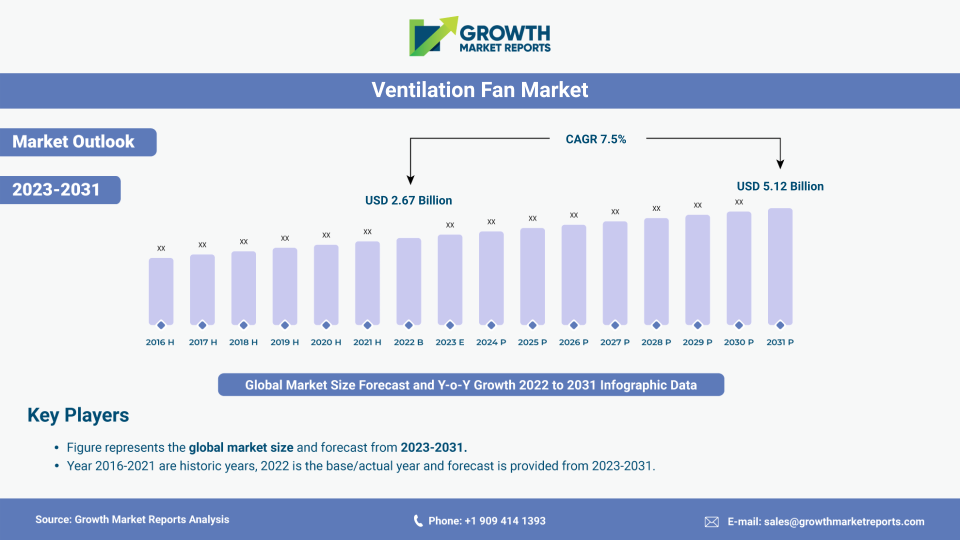
According to our latest research, the global ventilation fan market size was valued at USD 3.84 billion in 2024, with a robust compound annual growth rate (CAGR) of 5.1% expected from 2025 to 2033. By the end of 2033, the market is projected to reach approximately USD 5.98 billion. This steady growth is primarily driven by increasing urbanization, heightened awareness of indoor air quality, and stringent regulations regarding ventilation in residential, commercial, and industrial settings. As per our comprehensive analysis, the ventilation fan market is poised for sustained expansion, fueled by ongoing technological advancements and a growing focus on energy-efficient solutions worldwide.

One of the key growth factors propelling the ventilation fan market is the rising demand for improved indoor air quality across both developed and emerging economies. With heightened concerns about airborne pollutants, allergens, and the transmission of respiratory diseases, there is a significant uptick in the adoption of advanced ventilation systems. Governments and regulatory bodies are implementing stricter standards for air quality in public and private buildings, further stimulating market growth. The proliferation of smart homes and buildings, equipped with automated and sensor-based ventilation solutions, is expected to further accelerate market expansion. In addition, consumer awareness campaigns emphasizing the health benefits of proper ventilation are contributing to the increased uptake of ventilation fans in residential spaces.

Technological innovation is another pivotal driver for the ventilation fan market. The integration of Internet of Things (IoT), artificial intelligence, and smart sensors into ventilation systems is revolutionizing the industry. These advancements enable real-time monitoring and control of air quality, energy consumption, and system efficiency. Manufacturers are investing heavily in research and development to introduce energy-efficient, low-noise, and aesthetically appealing products that cater to diverse consumer preferences. Furthermore, the shift towards sustainable construction practices and green building certifications is boosting the demand for eco-friendly ventilation solutions. As energy costs continue to rise, end-users are increasingly seeking products that offer optimal performance with minimal energy consumption, thereby fostering market growth.

The expansion of the commercial and industrial sectors is also contributing significantly to the growth of the ventilation fan market. Rapid urbanization and industrialization, particularly in Asia Pacific and Latin America, are driving the need for effective ventilation systems in factories, warehouses, shopping malls, hospitals, and office buildings. The construction boom in these regions, coupled with investments in infrastructure development, is creating substantial opportunities for market players. Additionally, the emergence of hybrid work models and the resurgence of the hospitality industry post-pandemic are further amplifying the demand for advanced ventilation solutions. The need to comply with occupational health and safety regulations in industrial environments is another critical factor supporting market growth.

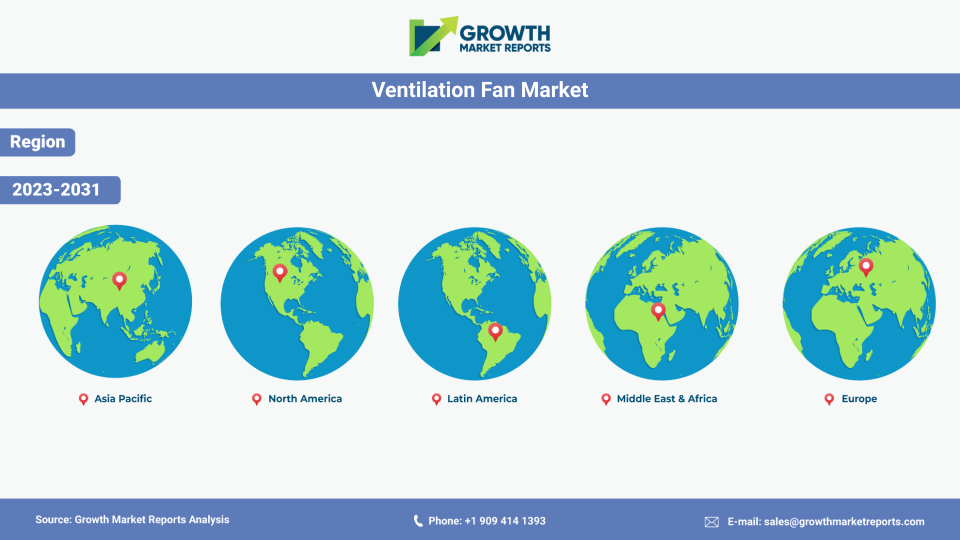
From a regional perspective, Asia Pacific dominates the global ventilation fan market, accounting for the largest share in 2024. This dominance is attributed to rapid urbanization, population growth, and rising construction activities in countries such as China, India, and Southeast Asia. North America and Europe follow closely, driven by stringent regulatory frameworks and a strong focus on energy efficiency. The Middle East & Africa and Latin America are also witnessing notable growth, supported by infrastructure development and increasing awareness about indoor air quality. Regional variations in product demand, consumer preferences, and regulatory environments are shaping the competitive landscape and influencing strategies adopted by market participants.

Global Ventilation Fan Industry Outlook

Product Type Analysis

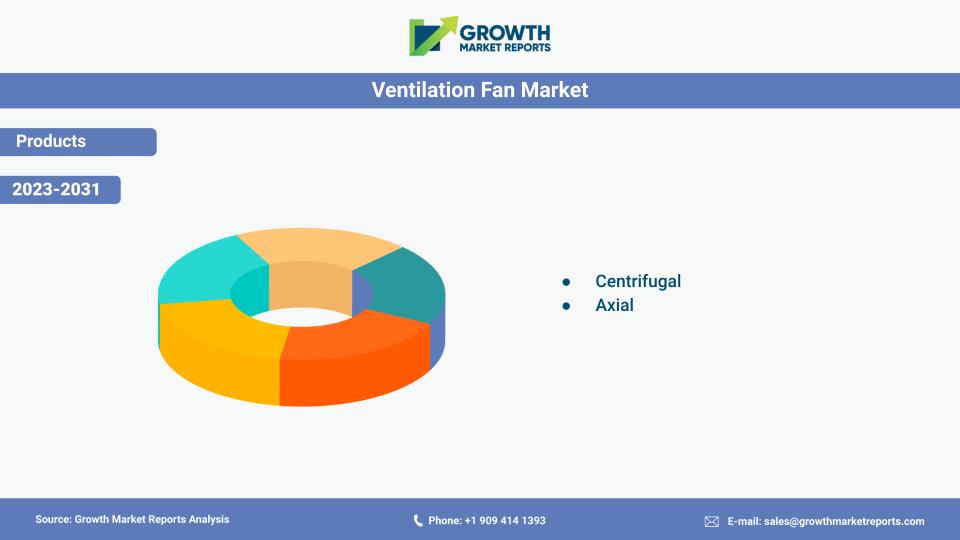
The ventilation fan market by product type is segmented into centrifugal fans, axial fans, domestic exhaust fans, industrial fans, and others. Among these, centrifugal fans hold a significant share due to their superior efficiency in moving large volumes of air at high pressures. They are widely utilized in industrial and commercial settings where robust ventilation is required. Centrifugal fans are particularly favored for their durability, low maintenance requirements, and ability to handle particulate-laden air, making them indispensable in manufacturing plants, warehouses, and large public facilities. The ongoing trend towards industrial automation and the expansion of the manufacturing sector are further fueling demand for centrifugal fans globally.

Axial fans, on the other hand, are gaining traction due to their compact design and high airflow capacity at low pressures. These fans are extensively used in residential and commercial applications, such as bathrooms, kitchens, and HVAC systems, where space constraints and noise reduction are critical considerations. The increasing adoption of energy-efficient home appliances and the growing popularity of modular construction techniques are driving the demand for axial fans. Manufacturers are focusing on developing innovative axial fan models that offer enhanced performance, reduced energy consumption, and improved aesthetics to cater to evolving consumer preferences.

Domestic exhaust fans represent a crucial segment within the ventilation fan market, especially in residential settings. These fans are essential for maintaining air quality and preventing the buildup of moisture, odors, and pollutants in homes. The rising awareness of health and hygiene, coupled with the proliferation of smart home technologies, is boosting the adoption of advanced domestic exhaust fans. Features such as humidity sensors, automatic shut-off, and remote control operation are becoming standard in new product offerings. The trend towards compact and easy-to-install solutions is further driving the growth of this segment.

Industrial fans are witnessing robust demand owing to the rapid expansion of industrial infrastructure worldwide. These fans are designed to operate in harsh environments and are critical for ensuring proper ventilation, cooling, and air circulation in factories, power plants, and mining operations. The increasing focus on worker safety, regulatory compliance, and operational efficiency is compelling industries to invest in high-performance ventilation solutions. Technological advancements, such as variable speed drives and noise reduction technologies, are enhancing the appeal of industrial fans among end-users.

Other product types, including mixed flow fans and cross-flow fans, cater to niche applications in both commercial and industrial sectors. These fans offer unique advantages in terms of airflow patterns, installation flexibility, and energy efficiency. The growing demand for customized ventilation solutions in specialized environments, such as cleanrooms, laboratories, and data centers, is creating new opportunities for manufacturers. Continuous innovation and product differentiation are key strategies adopted by market players to capture a larger share in this highly competitive segment.

Report Scope

Attributes Details
Report Title Ventilation Fan Market Research Report 2033
By Product Type Centrifugal Fans, Axial Fans, Domestic Exhaust Fans, Industrial Fans, Others
By Application Residential, Commercial, Industrial, Others
By Installation Wall-Mounted, Ceiling-Mounted, Window-Mounted, Free Standing
By Distribution Channel Online, Offline
Regions Covered North America, Europe, APAC, Latin America, MEA
Countries Covered North America (United States, Canada), Europe (Germany, France, Italy, United Kingdom, Spain, Russia, Rest of Europe), Asia Pacific (China, Japan, South Korea, India, Australia, South East Asia (SEA), Rest of Asia Pacific), Latin America (Mexico, Brazil, Rest of Latin America), Middle East & Africa (Saudi Arabia, South Africa, United Arab Emirates, Rest of Middle East & Africa)
Base Year 2024
Historic Data 2018-2023
Forecast Period 2025-2033
Number of Pages 281
Number of Tables & Figures 330
Customization Available Yes, the report can be customized as per your need.

Application Analysis

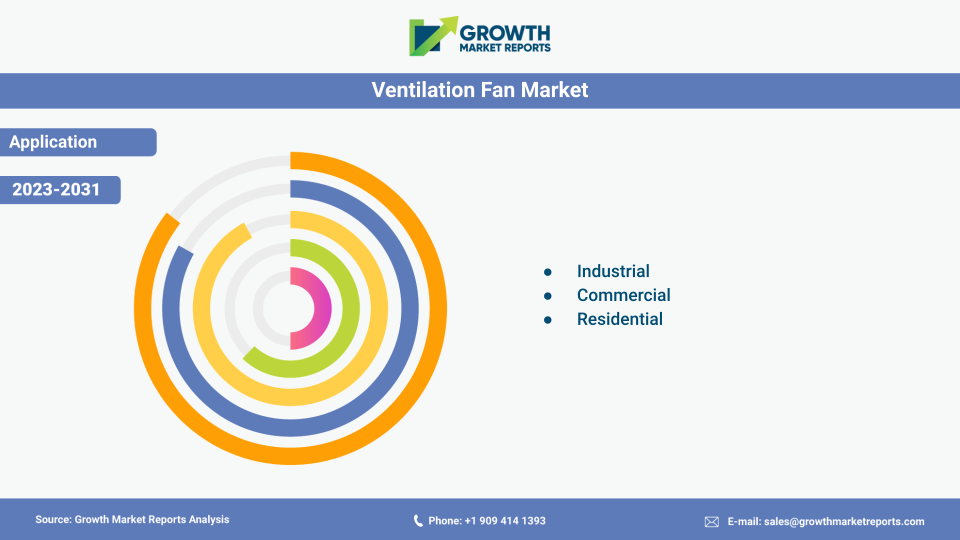
The application segmentation of the ventilation fan market encompasses residential, commercial, industrial, and others. The residential segment commands a substantial market share, driven by increasing urbanization, rising disposable incomes, and heightened awareness of indoor air quality. Modern homes are increasingly equipped with advanced ventilation systems to ensure a healthy living environment. The integration of smart technologies, such as IoT-enabled fans and automated controls, is further enhancing the appeal of ventilation solutions in residential settings. Government initiatives promoting energy-efficient housing and green building certifications are also contributing to the growth of this segment.

The commercial segment is characterized by the widespread adoption of ventilation fans in offices, shopping malls, hospitals, educational institutions, and hospitality establishments. The need to maintain optimal air quality, comfort, and safety for occupants is a key driver for the deployment of advanced ventilation systems in commercial buildings. The resurgence of the hospitality industry and the increasing number of commercial construction projects, particularly in emerging economies, are fueling demand for high-performance ventilation fans. Compliance with building codes and regulations regarding air quality and ventilation standards is further stimulating market growth in this segment.

Industrial applications account for a significant share of the ventilation fan market, owing to the critical need for effective ventilation in manufacturing plants, warehouses, and processing facilities. Industrial environments often involve the presence of hazardous fumes, dust, and high temperatures, necessitating robust ventilation solutions to ensure worker safety and regulatory compliance. The trend towards automation and the adoption of Industry 4.0 technologies are driving investments in advanced ventilation systems that offer remote monitoring, predictive maintenance, and energy optimization features. The expansion of the manufacturing sector in Asia Pacific and Latin America is expected to further boost demand for industrial ventilation fans.

Other applications, including transportation, agriculture, and specialized facilities such as laboratories and cleanrooms, represent emerging growth areas for the ventilation fan market. The increasing focus on sustainability and environmental protection is prompting the adoption of energy-efficient ventilation solutions in these sectors. For instance, the use of ventilation fans in public transportation systems and agricultural facilities is gaining traction to ensure air quality and comfort for passengers and workers. The development of customized solutions tailored to the unique requirements of these applications is creating new opportunities for market players.

Installation Analysis

The ventilation fan market by installation type is segmented into wall-mounted, ceiling-mounted, window-mounted, and free-standing units. Wall-mounted fans are widely preferred in both residential and commercial settings due to their ease of installation, space-saving design, and effective air circulation capabilities. These fans are commonly used in bathrooms, kitchens, and utility areas to expel moisture, odors, and pollutants. The growing trend towards home renovation and remodeling, coupled with the increasing demand for compact and aesthetically pleasing solutions, is driving the adoption of wall-mounted ventilation fans.

Ceiling-mounted fans hold a significant share in the market, particularly in commercial and industrial environments where large spaces require efficient air distribution. These fans are ideal for applications such as offices, conference rooms, and warehouses, where ceiling installation maximizes airflow and maintains a comfortable indoor environment. The integration of advanced features, such as variable speed controls and smart sensors, is enhancing the functionality and energy efficiency of ceiling-mounted ventilation fans. Manufacturers are focusing on developing lightweight, low-noise, and easy-to-maintain models to cater to the evolving needs of end-users.

Window-mounted fans are gaining popularity in regions with moderate climates, where natural ventilation can be supplemented with mechanical systems to maintain indoor air quality. These fans are particularly suitable for residential applications, offering a cost-effective and easy-to-install solution for ventilating individual rooms. The increasing preference for DIY home improvement projects and the availability of a wide range of window-mounted fan models are contributing to the growth of this segment. Advances in design and technology are enabling the development of more efficient and visually appealing window-mounted ventilation fans.

Free-standing ventilation fans, while representing a smaller share of the market, are valued for their portability and versatility. These fans are commonly used in temporary setups, construction sites, and areas where permanent installation is not feasible. The demand for free-standing fans is driven by their flexibility, ease of relocation, and suitability for spot ventilation in both residential and commercial settings. Manufacturers are introducing innovative designs with enhanced airflow, energy efficiency, and noise reduction features to attract a broader customer base.

Distribution Channel Analysis

The ventilation fan market is distributed through both online and offline channels, each playing a pivotal role in reaching diverse customer segments. The offline channel, comprising specialty stores, home improvement centers, and authorized dealers, remains the dominant distribution mode, particularly for industrial and commercial buyers who require personalized consultation and after-sales support. The tactile experience of evaluating products firsthand and the availability of installation services make offline channels highly preferred for large-scale projects and institutional buyers. Manufacturers are strengthening their partnerships with distributors and retailers to expand their market reach and enhance customer service.

Online distribution channels are experiencing rapid growth, driven by the increasing penetration of e-commerce platforms and changing consumer buying behaviors. The convenience of browsing a wide range of products, accessing detailed specifications, and comparing prices online is attracting a growing number of residential and small business customers. The proliferation of online marketplaces, such as Amazon, Alibaba, and specialized HVAC e-stores, is making it easier for consumers to purchase ventilation fans from the comfort of their homes. Manufacturers are investing in digital marketing, user-friendly websites, and online customer support to capitalize on the growing trend towards online shopping.

The integration of omnichannel strategies is becoming increasingly important in the ventilation fan market, as customers seek a seamless buying experience across both online and offline touchpoints. Leading brands are leveraging digital technologies to enhance product visibility, streamline order fulfillment, and offer value-added services such as virtual consultations and installation guidance. The use of augmented reality and 3D visualization tools is helping customers make informed decisions by visualizing how ventilation fans will look and perform in their spaces.

The rise of direct-to-consumer (DTC) sales models is also influencing the distribution landscape in the ventilation fan market. By bypassing traditional intermediaries, manufacturers can offer competitive pricing, greater product customization, and personalized customer experiences. This trend is particularly prominent among emerging brands and startups looking to differentiate themselves in a crowded market. The ongoing evolution of distribution channels is expected to play a crucial role in shaping the future growth trajectory of the ventilation fan market.

Opportunities & Threats

The ventilation fan market presents numerous opportunities for growth and innovation in the coming years. One of the most significant opportunities lies in the increasing adoption of smart and energy-efficient ventilation solutions. As consumers and businesses become more conscious of energy consumption and environmental sustainability, there is a growing demand for products that offer superior performance with minimal energy usage. The integration of IoT, AI, and advanced sensor technologies is enabling the development of intelligent ventilation systems that can automatically adjust airflow based on real-time air quality data. This not only enhances user comfort but also contributes to energy savings and reduced operational costs. Market players that invest in research and development to introduce cutting-edge, eco-friendly products are well-positioned to capture a larger share of the market.

Another promising opportunity is the expanding application scope of ventilation fans in emerging markets. Rapid urbanization, infrastructure development, and rising health awareness in regions such as Asia Pacific, Latin America, and the Middle East & Africa are creating substantial demand for modern ventilation solutions. The construction of new residential, commercial, and industrial buildings, coupled with government initiatives to promote green building practices, is driving market expansion. Additionally, the increasing prevalence of airborne diseases and the need for effective ventilation in public spaces are prompting investments in advanced ventilation systems. Companies that tailor their offerings to meet the unique requirements of these high-growth regions can unlock significant business potential.

Despite the positive outlook, the ventilation fan market faces certain restraining factors that could impede growth. One of the primary challenges is the volatility in raw material prices, particularly metals and electronic components used in manufacturing ventilation fans. Fluctuations in input costs can impact profit margins and force manufacturers to adjust pricing strategies, potentially affecting demand. Additionally, the presence of low-cost, unbranded products in the market poses a threat to established players, as price-sensitive customers may opt for cheaper alternatives. Regulatory compliance and the need to adhere to stringent energy efficiency standards also increase the complexity and cost of product development. Companies must navigate these challenges by optimizing supply chains, investing in quality assurance, and differentiating their products through innovation and value-added features.

Regional Outlook

Asia Pacific emerged as the largest regional market for ventilation fans in 2024, accounting for over 42% of the global market share, equivalent to approximately USD 1.61 billion. The region’s dominance is attributed to rapid urbanization, burgeoning construction activities, and increasing investments in infrastructure development across China, India, Japan, and Southeast Asian countries. The growing middle-class population, rising health awareness, and government initiatives to promote energy-efficient buildings are fueling demand for advanced ventilation solutions. The Asia Pacific ventilation fan market is projected to grow at a CAGR of 5.8% from 2025 to 2033, outpacing other regions due to its robust economic growth and ongoing urban expansion.

North America is the second-largest market, with a valuation of approximately USD 1.07 billion in 2024. The region’s growth is driven by stringent regulatory standards for indoor air quality, widespread adoption of smart home technologies, and a strong emphasis on energy efficiency. The United States and Canada are leading adopters of advanced ventilation systems in both residential and commercial buildings. The trend towards green construction and the increasing renovation of existing infrastructure are further supporting market growth. North America’s mature market landscape is characterized by high consumer awareness, a strong focus on product innovation, and the presence of leading global manufacturers.

Europe follows closely, with a market size of around USD 0.85 billion in 2024. The region’s growth is supported by strict building codes, environmental regulations, and a well-established construction sector. Countries such as Germany, the United Kingdom, and France are at the forefront of adopting energy-efficient ventilation solutions. The European market is also witnessing increased demand for retrofitting and upgrading ventilation systems in older buildings to comply with new standards. Meanwhile, Latin America and the Middle East & Africa are emerging as high-potential markets, driven by urbanization, infrastructure development, and rising health awareness. Although these regions currently account for a smaller share of the global market, they offer significant growth opportunities for market players willing to invest in localization and tailored solutions.

Ventilation Fan Market Statistics

Competitor Outlook

The ventilation fan market is characterized by intense competition, with a mix of global giants and regional players vying for market share. The competitive landscape is shaped by continuous innovation, product differentiation, and a strong focus on energy efficiency and smart technologies. Leading companies are investing heavily in research and development to introduce advanced ventilation solutions that cater to the evolving needs of residential, commercial, and industrial customers. Strategic partnerships, mergers and acquisitions, and expansion into emerging markets are common strategies adopted by key players to strengthen their market position and expand their global footprint.

Product quality, brand reputation, and after-sales service are critical factors influencing customer preferences in the ventilation fan market. Established brands benefit from widespread distribution networks, robust supply chains, and a loyal customer base. However, the influx of low-cost, unbranded products from local manufacturers, particularly in price-sensitive markets, poses a significant challenge to premium brands. To counter this, leading companies are focusing on value-added features, such as noise reduction, smart controls, and enhanced energy efficiency, to differentiate their offerings and justify premium pricing.

The shift towards online sales and direct-to-consumer models is also reshaping the competitive dynamics in the market. Companies are leveraging digital platforms to enhance product visibility, engage with customers, and offer personalized solutions. The use of data analytics and customer feedback is enabling manufacturers to identify emerging trends, optimize product portfolios, and improve customer satisfaction. Sustainability and environmental responsibility are becoming increasingly important, with market leaders incorporating eco-friendly materials and manufacturing processes into their operations.

Some of the major players in the global ventilation fan market include Panasonic Corporation, Delta Electronics, Inc., Systemair AB, Mitsubishi Electric Corporation, Crompton Greaves Consumer Electricals Ltd., Havells India Ltd., Greenheck Fan Corporation, and S&P Sistemas de Ventilación S.L.U. Panasonic Corporation is renowned for its innovative and energy-efficient ventilation solutions, catering to both residential and commercial segments. Delta Electronics, Inc. is a leading provider of smart ventilation fans with a focus on sustainability and advanced technology integration. Systemair AB is recognized for its comprehensive range of industrial and commercial ventilation systems, while Mitsubishi Electric Corporation is distinguished by its high-performance, low-noise fans and advanced automation features.

Crompton Greaves Consumer Electricals Ltd. and Havells India Ltd. are prominent players in the Asia Pacific region, offering a wide array of ventilation fans tailored to local market requirements. Greenheck Fan Corporation is a key player in the North American market, specializing in commercial and industrial ventilation solutions. S&P Sistemas de Ventilación S.L.U. is a leading European manufacturer known for its innovative product designs and commitment to energy efficiency. These companies are continuously expanding their product portfolios, investing in R&D, and exploring new markets to maintain their competitive edge in the global ventilation fan market.

Key Players

  • Panasonic Corporation
  • Mitsubishi Electric Corporation
  • Delta Electronics, Inc.
  • Systemair AB
  • Greenheck Fan Corporation
  • Zhejiang Yilida Ventilator Co., Ltd.
  • Nortek Air Solutions
  • Crompton Greaves Consumer Electricals Ltd.
  • S&P Sistemas de Ventilación S.L.U. (Soler & Palau)
  • Vent-Axia Group Limited
  • Twin City Fan & Blower
  • Munters Group AB
  • Loren Cook Company
  • Airflow Developments Limited
  • Polypipe Ventilation
  • Vortice Elettrosociali S.p.A.
  • Robinson Fans Inc.
  • Maico Elektroapparate-Fabrik GmbH
  • FläktGroup
  • ZIEHL-ABEGG SE
Ventilation Fan Market Overview

Segments

The Ventilation Fan market has been segmented on the basis of

Product Type

  • Centrifugal Fans
  • Axial Fans
  • Domestic Exhaust Fans
  • Industrial Fans
  • Others

Application

  • Residential
  • Commercial
  • Industrial
  • Others

Installation

  • Wall-Mounted
  • Ceiling-Mounted
  • Window-Mounted
  • Free Standing

Distribution Channel

  • Online
  • Offline

Competitive Landscape

Key players in the global ventilation fan market include Delta Electronics, Inc., Mitsubishi Electric, Crompton, Fuji Electric Co. Ltd., Havells India Ltd., Rexnord Electronics & Controls Ltd., Panasonic Corporation, Systemair AB, Surya Roshni Ltd., and Volution Group Plc.
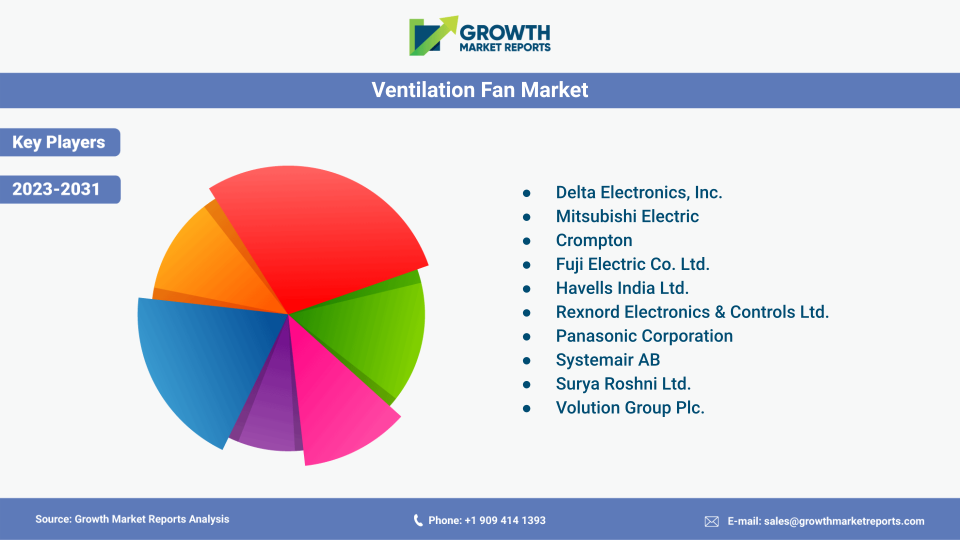

Ventilation Fan Market Key Players

Frequently Asked Questions

Key players include Panasonic Corporation, Delta Electronics, Systemair AB, Mitsubishi Electric Corporation, Crompton Greaves Consumer Electricals, Havells India, Greenheck Fan Corporation, and S&P Sistemas de Ventilación.

Opportunities include the adoption of smart, energy-efficient fans and expansion in emerging markets. Challenges involve raw material price volatility, competition from low-cost products, and regulatory compliance.

Ventilation fans are sold through both offline channels (specialty stores, home improvement centers, authorized dealers) and online platforms (e-commerce sites, direct-to-consumer models), with omnichannel strategies becoming increasingly important.

Wall-mounted and ceiling-mounted fans are widely used due to their ease of installation and effective air circulation. Window-mounted and free-standing fans are also popular for specific applications.

Ventilation fans are used in residential, commercial, industrial, and specialized settings such as transportation, agriculture, laboratories, and cleanrooms.

Technological innovations such as IoT integration, artificial intelligence, smart sensors, and energy-efficient designs are revolutionizing ventilation systems, enabling real-time monitoring and improved performance.

The primary types include centrifugal fans, axial fans, domestic exhaust fans, industrial fans, and other specialized fans like mixed flow and cross-flow fans.

Asia Pacific dominates the market with over 42% share, followed by North America and Europe. Rapid urbanization and construction activities in China, India, and Southeast Asia are key contributors.

Major growth drivers include increasing urbanization, rising awareness of indoor air quality, stringent ventilation regulations, technological advancements, and a focus on energy-efficient solutions.

As of 2024, the global ventilation fan market is valued at USD 3.84 billion, with projections to reach approximately USD 5.98 billion by 2033.

Table Of Content

Chapter 1 Executive Summary
Chapter 2 Assumptions and Acronyms Used
Chapter 3 Research Methodology
Chapter 4 Ventilation Fan Market Overview
   4.1 Introduction
      4.1.1 Market Taxonomy
      4.1.2 Market Definition
      4.1.3 Macro-Economic Factors Impacting the Market Growth
   4.2 Ventilation Fan Market Dynamics
      4.2.1 Market Drivers
      4.2.2 Market Restraints
      4.2.3 Market Opportunity
   4.3 Ventilation Fan Market - Supply Chain Analysis
      4.3.1 List of Key Suppliers
      4.3.2 List of Key Distributors
      4.3.3 List of Key Consumers
   4.4 Key Forces Shaping the Ventilation Fan Market
      4.4.1 Bargaining Power of Suppliers
      4.4.2 Bargaining Power of Buyers
      4.4.3 Threat of Substitution
      4.4.4 Threat of New Entrants
      4.4.5 Competitive Rivalry
   4.5 Global Ventilation Fan Market Size & Forecast, 2023-2032
      4.5.1 Ventilation Fan Market Size and Y-o-Y Growth
      4.5.2 Ventilation Fan Market Absolute $ Opportunity

Chapter 5 Global Ventilation Fan Market Analysis and Forecast By Product Type
   5.1 Introduction
      5.1.1 Key Market Trends & Growth Opportunities By Product Type
      5.1.2 Basis Point Share (BPS) Analysis By Product Type
      5.1.3 Absolute $ Opportunity Assessment By Product Type
   5.2 Ventilation Fan Market Size Forecast By Product Type
      5.2.1 Centrifugal Fans
      5.2.2 Axial Fans
      5.2.3 Domestic Exhaust Fans
      5.2.4 Industrial Fans
      5.2.5 Others
   5.3 Market Attractiveness Analysis By Product Type

Chapter 6 Global Ventilation Fan Market Analysis and Forecast By Application
   6.1 Introduction
      6.1.1 Key Market Trends & Growth Opportunities By Application
      6.1.2 Basis Point Share (BPS) Analysis By Application
      6.1.3 Absolute $ Opportunity Assessment By Application
   6.2 Ventilation Fan Market Size Forecast By Application
      6.2.1 Residential
      6.2.2 Commercial
      6.2.3 Industrial
      6.2.4 Others
   6.3 Market Attractiveness Analysis By Application

Chapter 7 Global Ventilation Fan Market Analysis and Forecast By Installation
   7.1 Introduction
      7.1.1 Key Market Trends & Growth Opportunities By Installation
      7.1.2 Basis Point Share (BPS) Analysis By Installation
      7.1.3 Absolute $ Opportunity Assessment By Installation
   7.2 Ventilation Fan Market Size Forecast By Installation
      7.2.1 Wall-Mounted
      7.2.2 Ceiling-Mounted
      7.2.3 Window-Mounted
      7.2.4 Free Standing
   7.3 Market Attractiveness Analysis By Installation

Chapter 8 Global Ventilation Fan Market Analysis and Forecast By Distribution Channel
   8.1 Introduction
      8.1.1 Key Market Trends & Growth Opportunities By Distribution Channel
      8.1.2 Basis Point Share (BPS) Analysis By Distribution Channel
      8.1.3 Absolute $ Opportunity Assessment By Distribution Channel
   8.2 Ventilation Fan Market Size Forecast By Distribution Channel
      8.2.1 Online
      8.2.2 Offline
   8.3 Market Attractiveness Analysis By Distribution Channel

Chapter 9 Global Ventilation Fan Market Analysis and Forecast by Region
   9.1 Introduction
      9.1.1 Key Market Trends & Growth Opportunities By Region
      9.1.2 Basis Point Share (BPS) Analysis By Region
      9.1.3 Absolute $ Opportunity Assessment By Region
   9.2 Ventilation Fan Market Size Forecast By Region
      9.2.1 North America
      9.2.2 Europe
      9.2.3 Asia Pacific
      9.2.4 Latin America
      9.2.5 Middle East & Africa (MEA)
   9.3 Market Attractiveness Analysis By Region

Chapter 10 Coronavirus Disease (COVID-19) Impact 
   10.1 Introduction 
   10.2 Current & Future Impact Analysis 
   10.3 Economic Impact Analysis 
   10.4 Government Policies 
   10.5 Investment Scenario

Chapter 11 North America Ventilation Fan Analysis and Forecast
   11.1 Introduction
   11.2 North America Ventilation Fan Market Size Forecast by Country
      11.2.1 U.S.
      11.2.2 Canada
   11.3 Basis Point Share (BPS) Analysis by Country
   11.4 Absolute $ Opportunity Assessment by Country
   11.5 Market Attractiveness Analysis by Country
   11.6 North America Ventilation Fan Market Size Forecast By Product Type
      11.6.1 Centrifugal Fans
      11.6.2 Axial Fans
      11.6.3 Domestic Exhaust Fans
      11.6.4 Industrial Fans
      11.6.5 Others
   11.7 Basis Point Share (BPS) Analysis By Product Type 
   11.8 Absolute $ Opportunity Assessment By Product Type 
   11.9 Market Attractiveness Analysis By Product Type
   11.10 North America Ventilation Fan Market Size Forecast By Application
      11.10.1 Residential
      11.10.2 Commercial
      11.10.3 Industrial
      11.10.4 Others
   11.11 Basis Point Share (BPS) Analysis By Application 
   11.12 Absolute $ Opportunity Assessment By Application 
   11.13 Market Attractiveness Analysis By Application
   11.14 North America Ventilation Fan Market Size Forecast By Installation
      11.14.1 Wall-Mounted
      11.14.2 Ceiling-Mounted
      11.14.3 Window-Mounted
      11.14.4 Free Standing
   11.15 Basis Point Share (BPS) Analysis By Installation 
   11.16 Absolute $ Opportunity Assessment By Installation 
   11.17 Market Attractiveness Analysis By Installation
   11.18 North America Ventilation Fan Market Size Forecast By Distribution Channel
      11.18.1 Online
      11.18.2 Offline
   11.19 Basis Point Share (BPS) Analysis By Distribution Channel 
   11.20 Absolute $ Opportunity Assessment By Distribution Channel 
   11.21 Market Attractiveness Analysis By Distribution Channel

Chapter 12 Europe Ventilation Fan Analysis and Forecast
   12.1 Introduction
   12.2 Europe Ventilation Fan Market Size Forecast by Country
      12.2.1 Germany
      12.2.2 France
      12.2.3 Italy
      12.2.4 U.K.
      12.2.5 Spain
      12.2.6 Russia
      12.2.7 Rest of Europe
   12.3 Basis Point Share (BPS) Analysis by Country
   12.4 Absolute $ Opportunity Assessment by Country
   12.5 Market Attractiveness Analysis by Country
   12.6 Europe Ventilation Fan Market Size Forecast By Product Type
      12.6.1 Centrifugal Fans
      12.6.2 Axial Fans
      12.6.3 Domestic Exhaust Fans
      12.6.4 Industrial Fans
      12.6.5 Others
   12.7 Basis Point Share (BPS) Analysis By Product Type 
   12.8 Absolute $ Opportunity Assessment By Product Type 
   12.9 Market Attractiveness Analysis By Product Type
   12.10 Europe Ventilation Fan Market Size Forecast By Application
      12.10.1 Residential
      12.10.2 Commercial
      12.10.3 Industrial
      12.10.4 Others
   12.11 Basis Point Share (BPS) Analysis By Application 
   12.12 Absolute $ Opportunity Assessment By Application 
   12.13 Market Attractiveness Analysis By Application
   12.14 Europe Ventilation Fan Market Size Forecast By Installation
      12.14.1 Wall-Mounted
      12.14.2 Ceiling-Mounted
      12.14.3 Window-Mounted
      12.14.4 Free Standing
   12.15 Basis Point Share (BPS) Analysis By Installation 
   12.16 Absolute $ Opportunity Assessment By Installation 
   12.17 Market Attractiveness Analysis By Installation
   12.18 Europe Ventilation Fan Market Size Forecast By Distribution Channel
      12.18.1 Online
      12.18.2 Offline
   12.19 Basis Point Share (BPS) Analysis By Distribution Channel 
   12.20 Absolute $ Opportunity Assessment By Distribution Channel 
   12.21 Market Attractiveness Analysis By Distribution Channel

Chapter 13 Asia Pacific Ventilation Fan Analysis and Forecast
   13.1 Introduction
   13.2 Asia Pacific Ventilation Fan Market Size Forecast by Country
      13.2.1 China
      13.2.2 Japan
      13.2.3 South Korea
      13.2.4 India
      13.2.5 Australia
      13.2.6 South East Asia (SEA)
      13.2.7 Rest of Asia Pacific (APAC)
   13.3 Basis Point Share (BPS) Analysis by Country
   13.4 Absolute $ Opportunity Assessment by Country
   13.5 Market Attractiveness Analysis by Country
   13.6 Asia Pacific Ventilation Fan Market Size Forecast By Product Type
      13.6.1 Centrifugal Fans
      13.6.2 Axial Fans
      13.6.3 Domestic Exhaust Fans
      13.6.4 Industrial Fans
      13.6.5 Others
   13.7 Basis Point Share (BPS) Analysis By Product Type 
   13.8 Absolute $ Opportunity Assessment By Product Type 
   13.9 Market Attractiveness Analysis By Product Type
   13.10 Asia Pacific Ventilation Fan Market Size Forecast By Application
      13.10.1 Residential
      13.10.2 Commercial
      13.10.3 Industrial
      13.10.4 Others
   13.11 Basis Point Share (BPS) Analysis By Application 
   13.12 Absolute $ Opportunity Assessment By Application 
   13.13 Market Attractiveness Analysis By Application
   13.14 Asia Pacific Ventilation Fan Market Size Forecast By Installation
      13.14.1 Wall-Mounted
      13.14.2 Ceiling-Mounted
      13.14.3 Window-Mounted
      13.14.4 Free Standing
   13.15 Basis Point Share (BPS) Analysis By Installation 
   13.16 Absolute $ Opportunity Assessment By Installation 
   13.17 Market Attractiveness Analysis By Installation
   13.18 Asia Pacific Ventilation Fan Market Size Forecast By Distribution Channel
      13.18.1 Online
      13.18.2 Offline
   13.19 Basis Point Share (BPS) Analysis By Distribution Channel 
   13.20 Absolute $ Opportunity Assessment By Distribution Channel 
   13.21 Market Attractiveness Analysis By Distribution Channel

Chapter 14 Latin America Ventilation Fan Analysis and Forecast
   14.1 Introduction
   14.2 Latin America Ventilation Fan Market Size Forecast by Country
      14.2.1 Brazil
      14.2.2 Mexico
      14.2.3 Rest of Latin America (LATAM)
   14.3 Basis Point Share (BPS) Analysis by Country
   14.4 Absolute $ Opportunity Assessment by Country
   14.5 Market Attractiveness Analysis by Country
   14.6 Latin America Ventilation Fan Market Size Forecast By Product Type
      14.6.1 Centrifugal Fans
      14.6.2 Axial Fans
      14.6.3 Domestic Exhaust Fans
      14.6.4 Industrial Fans
      14.6.5 Others
   14.7 Basis Point Share (BPS) Analysis By Product Type 
   14.8 Absolute $ Opportunity Assessment By Product Type 
   14.9 Market Attractiveness Analysis By Product Type
   14.10 Latin America Ventilation Fan Market Size Forecast By Application
      14.10.1 Residential
      14.10.2 Commercial
      14.10.3 Industrial
      14.10.4 Others
   14.11 Basis Point Share (BPS) Analysis By Application 
   14.12 Absolute $ Opportunity Assessment By Application 
   14.13 Market Attractiveness Analysis By Application
   14.14 Latin America Ventilation Fan Market Size Forecast By Installation
      14.14.1 Wall-Mounted
      14.14.2 Ceiling-Mounted
      14.14.3 Window-Mounted
      14.14.4 Free Standing
   14.15 Basis Point Share (BPS) Analysis By Installation 
   14.16 Absolute $ Opportunity Assessment By Installation 
   14.17 Market Attractiveness Analysis By Installation
   14.18 Latin America Ventilation Fan Market Size Forecast By Distribution Channel
      14.18.1 Online
      14.18.2 Offline
   14.19 Basis Point Share (BPS) Analysis By Distribution Channel 
   14.20 Absolute $ Opportunity Assessment By Distribution Channel 
   14.21 Market Attractiveness Analysis By Distribution Channel

Chapter 15 Middle East & Africa (MEA) Ventilation Fan Analysis and Forecast
   15.1 Introduction
   15.2 Middle East & Africa (MEA) Ventilation Fan Market Size Forecast by Country
      15.2.1 Saudi Arabia
      15.2.2 South Africa
      15.2.3 UAE
      15.2.4 Rest of Middle East & Africa (MEA)
   15.3 Basis Point Share (BPS) Analysis by Country
   15.4 Absolute $ Opportunity Assessment by Country
   15.5 Market Attractiveness Analysis by Country
   15.6 Middle East & Africa (MEA) Ventilation Fan Market Size Forecast By Product Type
      15.6.1 Centrifugal Fans
      15.6.2 Axial Fans
      15.6.3 Domestic Exhaust Fans
      15.6.4 Industrial Fans
      15.6.5 Others
   15.7 Basis Point Share (BPS) Analysis By Product Type 
   15.8 Absolute $ Opportunity Assessment By Product Type 
   15.9 Market Attractiveness Analysis By Product Type
   15.10 Middle East & Africa (MEA) Ventilation Fan Market Size Forecast By Application
      15.10.1 Residential
      15.10.2 Commercial
      15.10.3 Industrial
      15.10.4 Others
   15.11 Basis Point Share (BPS) Analysis By Application 
   15.12 Absolute $ Opportunity Assessment By Application 
   15.13 Market Attractiveness Analysis By Application
   15.14 Middle East & Africa (MEA) Ventilation Fan Market Size Forecast By Installation
      15.14.1 Wall-Mounted
      15.14.2 Ceiling-Mounted
      15.14.3 Window-Mounted
      15.14.4 Free Standing
   15.15 Basis Point Share (BPS) Analysis By Installation 
   15.16 Absolute $ Opportunity Assessment By Installation 
   15.17 Market Attractiveness Analysis By Installation
   15.18 Middle East & Africa (MEA) Ventilation Fan Market Size Forecast By Distribution Channel
      15.18.1 Online
      15.18.2 Offline
   15.19 Basis Point Share (BPS) Analysis By Distribution Channel 
   15.20 Absolute $ Opportunity Assessment By Distribution Channel 
   15.21 Market Attractiveness Analysis By Distribution Channel

Chapter 16 Competition Landscape 
   16.1 Ventilation Fan Market: Competitive Dashboard
   16.2 Global Ventilation Fan Market: Market Share Analysis, 2023
   16.3 Company Profiles (Details – Overview, Financials, Developments, Strategy) 
      16.3.1 Panasonic Corporation
Mitsubishi Electric Corporation
Delta Electronics, Inc.
Systemair AB
Greenheck Fan Corporation
Zhejiang Yilida Ventilator Co., Ltd.
Nortek Air Solutions
Crompton Greaves Consumer Electricals Ltd.
S&P Sistemas de Ventilación S.L.U. (Soler & Palau)
Vent-Axia Group Limited
Twin City Fan & Blower
Munters Group AB
Loren Cook Company
Airflow Developments Limited
Polypipe Ventilation
Vortice Elettrosociali S.p.A.
Robinson Fans Inc.
Maico Elektroapparate-Fabrik GmbH
FläktGroup
ZIEHL-ABEGG SE

Methodology

Our Clients

Siemens Healthcare
The John Holland Group
Nestle SA
Microsoft
Deloitte
sinopec
Dassault Aviation
Pfizer