Segments - by Product Type (Manual Cheese Grating Machines, Electric Cheese Grating Machines, Semi-Automatic Cheese Grating Machines), by Application (Commercial, Industrial, Household), by Distribution Channel (Online Stores, Supermarkets/Hypermarkets, Specialty Stores, Others), by End-User (Restaurants, Food Processing Industry, Catering Services, Others)
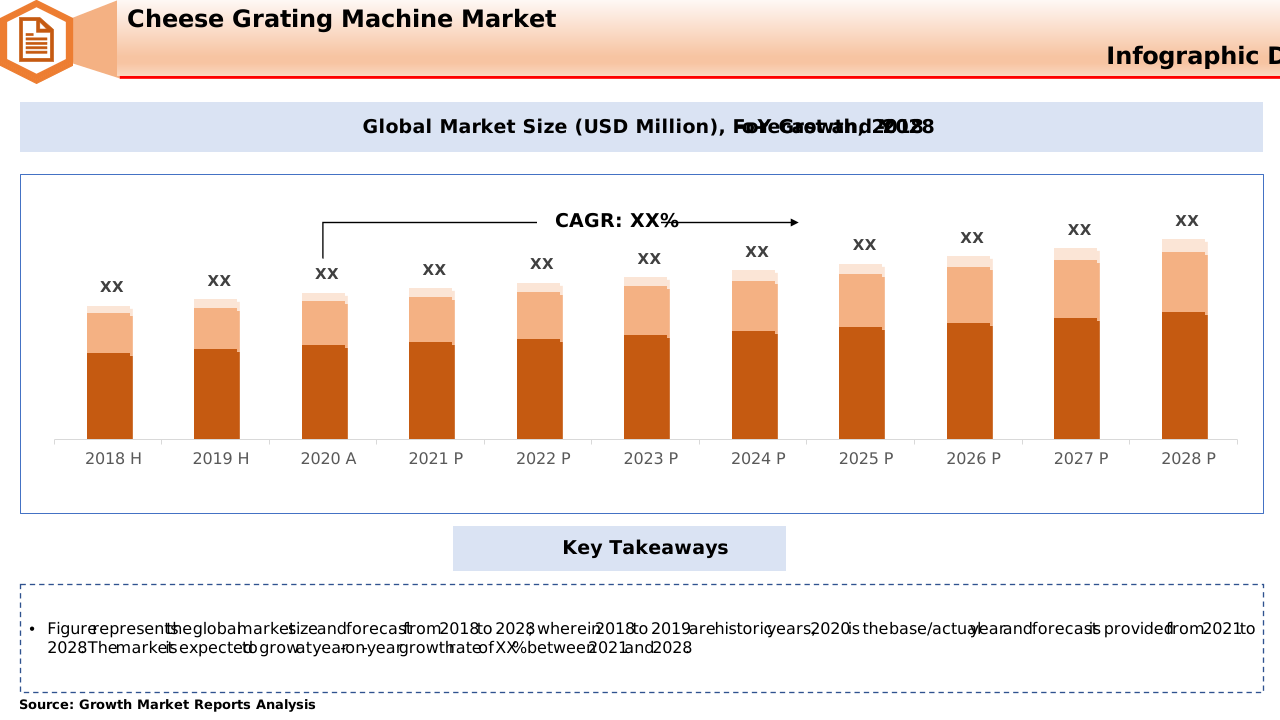
According to our latest research, the global cheese grating machine market size reached USD 1.52 billion in 2024, demonstrating robust expansion across both developed and emerging economies. The industry is currently experiencing a healthy compound annual growth rate (CAGR) of 6.8%. With this momentum, the market is forecasted to reach USD 2.80 billion by 2033. The primary growth factor driving this upward trajectory is the increasing demand for processed and convenience foods, particularly cheese-based products, within the foodservice and food processing industries. This shift is further bolstered by the rapid adoption of automated kitchen equipment and a growing preference for efficient, hygienic food preparation solutions.
One of the most significant growth factors for the cheese grating machine market is the rising popularity of cheese as a staple ingredient in diverse cuisines worldwide. The expanding global palate, influenced by Western food trends, has led to increased consumption of cheese in pizzas, pastas, salads, and ready-to-eat meals. This surge in cheese usage directly translates to heightened demand for efficient cheese processing equipment, particularly grating machines that cater to high-volume requirements in commercial kitchens, restaurants, and food processing facilities. Furthermore, the foodservice sector's emphasis on speed, consistency, and hygiene is prompting operators to invest in advanced cheese grating machines that streamline operations and reduce manual labor costs.
Another crucial driver is technological advancement within the cheese grating machine segment. Manufacturers are consistently innovating to develop machines with enhanced safety features, higher throughput, and user-friendly interfaces. The integration of stainless steel components, automatic cleaning systems, and variable speed controls has significantly improved machine durability and operational efficiency. Additionally, the introduction of energy-efficient electric and semi-automatic models caters to the needs of both small-scale and large-scale users, expanding the addressable market. These innovations are not only improving productivity but also minimizing wastage, making them highly attractive to cost-conscious businesses operating in competitive food markets.
The proliferation of e-commerce and digital retail platforms has also contributed to the market's expansion. Online channels have made it easier for small businesses and individual consumers to access a wide range of cheese grating machines, from manual to fully automated variants. This democratization of access, combined with growing consumer awareness about kitchen hygiene and food safety, is driving adoption in the household segment. As urbanization accelerates and disposable incomes rise, particularly in Asia Pacific and Latin America, more consumers are investing in modern kitchen appliances that simplify food preparation and align with contemporary lifestyles.
In addition to grating machines, the role of a Cheesemelter in commercial kitchens is becoming increasingly significant. Cheesemelters are specialized appliances designed to melt cheese to perfection, providing the ideal texture and flavor for a variety of dishes. These machines are particularly popular in restaurants and catering services where melted cheese is a key ingredient in menu items such as nachos, burgers, and baked pasta dishes. The precise temperature control and even heat distribution offered by Cheesemelters ensure consistent quality and reduce the risk of burning or uneven melting. As the demand for gourmet cheese dishes rises, the integration of Cheesemelters into kitchen operations is becoming a strategic move for foodservice operators looking to enhance their culinary offerings and streamline kitchen workflows.
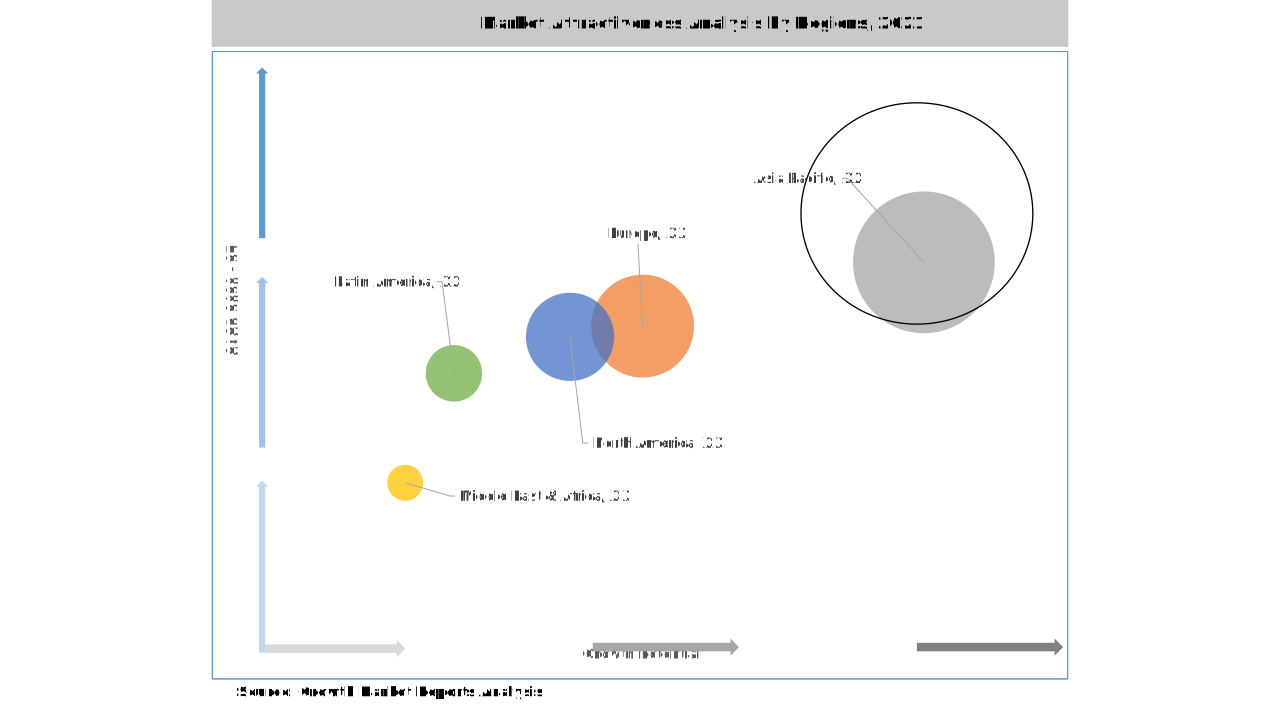
Regionally, Europe continues to dominate the cheese grating machine market, owing to its rich cheese culture and the presence of numerous artisanal and industrial cheese producers. North America follows closely, propelled by the robust foodservice sector and high consumption of cheese-laden fast foods. However, the Asia Pacific region is emerging as the fastest-growing market, buoyed by rapid urbanization, changing dietary preferences, and the expansion of international restaurant chains. The regionÂ’s burgeoning middle class and increasing exposure to Western cuisines are creating lucrative opportunities for both domestic and international manufacturers. Meanwhile, Latin America and the Middle East & Africa are witnessing steady growth, driven by evolving food habits and the gradual modernization of food processing infrastructure.
The cheese grating machine market is segmented by product type into manual cheese grating machines, electric cheese grating machines, and semi-automatic cheese grating machines. Manual cheese graters, traditionally favored in household settings, are characterized by their affordability, compact size, and ease of use. Despite the rise of automated alternatives, manual machines remain popular among small restaurants, catering businesses, and households due to their low maintenance requirements and portability. However, their limited capacity and reliance on manual labor restrict their application in high-volume commercial or industrial environments, where efficiency and speed are paramount.
Electric cheese grating machines represent the largest and fastest-growing segment within the product type category. These machines are engineered for high efficiency, offering rapid and uniform grating capabilities that are essential for commercial kitchens and food processing plants. Electric graters often come equipped with advanced safety features, variable speed controls, and automatic shut-off mechanisms, ensuring both operator safety and product consistency. The increasing adoption of electric cheese graters can be attributed to the food industry's focus on productivity, hygiene, and labor cost reduction. Their ability to handle large quantities of cheese with minimal effort makes them indispensable in restaurants, catering services, and industrial food production.
Semi-automatic cheese grating machines bridge the gap between manual and fully electric models, offering a balanced combination of automation and user control. These machines are particularly appealing to mid-sized foodservice businesses and specialty cheese shops that require higher throughput than manual graters can provide, but may not have the budget or space for fully automated systems. Semi-automatic machines often feature interchangeable grating blades, adjustable settings, and ergonomic designs that enhance user comfort and operational flexibility. Their versatility and moderate price point make them an attractive investment for businesses seeking to scale their operations without incurring excessive capital expenditure.
Manufacturers in the cheese grating machine market are increasingly focusing on product differentiation through design innovations and material enhancements. Stainless steel construction, anti-corrosive coatings, and modular components are becoming standard features across all product types, ensuring durability and compliance with food safety regulations. Additionally, the demand for compact, space-saving designs is driving innovation in both manual and electric segments, catering to the needs of urban consumers and small-scale commercial kitchens. As consumer preferences continue to evolve, product offerings are expected to become more diverse, with a focus on sustainability, ease of cleaning, and multi-functionality.
| Attributes | Details |
| Report Title | Cheese Grating Machine Market Research Report 2033 |
| By Product Type | Manual Cheese Grating Machines, Electric Cheese Grating Machines, Semi-Automatic Cheese Grating Machines |
| By Application | Commercial, Industrial, Household |
| By Distribution Channel | Online Stores, Supermarkets/Hypermarkets, Specialty Stores, Others |
| By End-User | Restaurants, Food Processing Industry, Catering Services, Others |
| Regions Covered | North America, Europe, APAC, Latin America, MEA |
| Base Year | 2024 |
| Historic Data | 2018-2023 |
| Forecast Period | 2025-2033 |
| Number of Pages | 261 |
| Number of Tables & Figures | 284 |
| Customization Available | Yes, the report can be customized as per your need. |
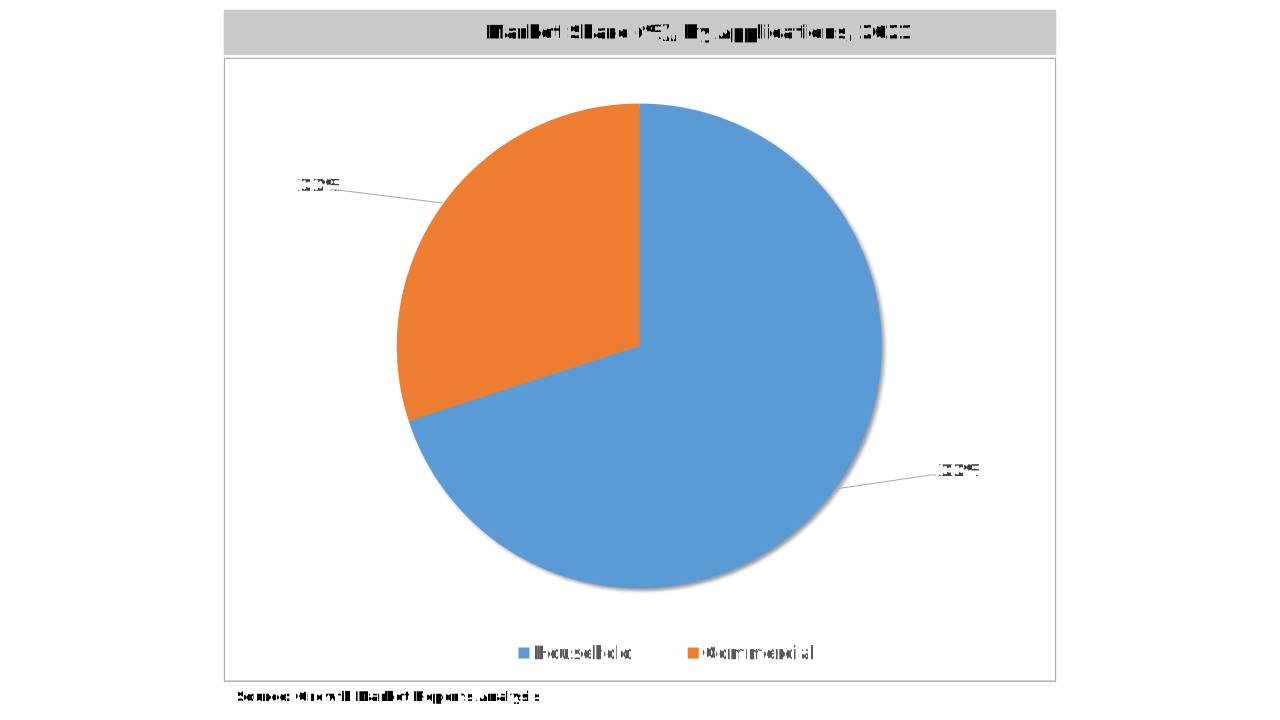
The application segment of the cheese grating machine market is divided into commercial, industrial, and household categories. The commercial application segment encompasses restaurants, cafes, hotels, and catering services that require efficient, high-capacity cheese grating solutions to meet the demands of large-scale food preparation. This segment is the primary driver of market revenue, as foodservice operators prioritize equipment that enhances productivity, maintains consistent product quality, and adheres to stringent hygiene standards. The proliferation of quick-service restaurants and pizza chains globally has further accelerated the adoption of commercial-grade cheese grating machines.
Industrial applications represent a significant and growing segment, particularly within large-scale food processing facilities and cheese manufacturing plants. In these environments, cheese grating machines are integrated into automated production lines to streamline the processing of vast quantities of cheese for packaged foods, ready-to-eat meals, and food ingredients. Industrial machines are engineered for continuous operation, high throughput, and minimal downtime, often featuring robust construction, automated cleaning systems, and advanced safety mechanisms. The increasing demand for processed cheese products in supermarkets and convenience stores is fueling investments in industrial-grade cheese grating equipment, as manufacturers seek to optimize efficiency and product consistency.
The household application segment, while smaller in terms of market share, is witnessing notable growth due to rising consumer interest in home cooking and gourmet food preparation. The COVID-19 pandemic significantly boosted home-based culinary activities, leading to increased sales of kitchen appliances, including cheese graters. Households are increasingly opting for electric and semi-automatic models that offer convenience, speed, and ease of cleaning, aligning with modern lifestyles. Manufacturers are responding by introducing compact, affordable, and aesthetically pleasing designs that cater to the preferences of urban consumers and small families.
Overall, the diverse application landscape of the cheese grating machine market underscores the importance of product versatility and customization. Manufacturers are tailoring their offerings to address the unique requirements of each segment, from high-capacity industrial machines to user-friendly household graters. As the food industry continues to evolve, the demand for specialized cheese grating solutions is expected to rise, driven by changing consumer habits, technological advancements, and evolving food safety regulations.
Distribution channels play a pivotal role in shaping the growth trajectory of the cheese grating machine market. Online stores have emerged as a significant sales avenue, particularly in the wake of the e-commerce boom and shifting consumer purchasing behaviors. The convenience of online shopping, coupled with access to a wide range of products and competitive pricing, has made digital platforms increasingly popular among both individual consumers and small businesses. Online channels also facilitate direct-to-consumer sales, enabling manufacturers to reach new markets and reduce reliance on traditional retail intermediaries.
Supermarkets and hypermarkets continue to be important distribution channels for cheese grating machines, especially for household and small-scale commercial users. These retail outlets offer consumers the advantage of product comparison, in-store demonstrations, and immediate product availability. The presence of reputable brands and promotional offers further incentivizes purchases through these channels. However, the growth of supermarkets and hypermarkets is somewhat constrained by the physical limitations of shelf space and the need for in-store staff training to effectively market specialized kitchen equipment.
Specialty stores, including kitchenware boutiques and appliance retailers, cater to discerning customers seeking high-quality, premium cheese grating machines. These stores typically offer personalized service, expert advice, and a curated selection of products, making them the preferred choice for chefs, restaurateurs, and culinary enthusiasts. Specialty stores also play a crucial role in educating consumers about the features, benefits, and maintenance requirements of different cheese grating machines, driving informed purchasing decisions.
Other distribution channels, such as direct sales, business-to-business (B2B) platforms, and wholesale distributors, are particularly relevant for industrial and commercial buyers. These channels facilitate bulk purchases, customized solutions, and after-sales support, catering to the specific needs of large-scale foodservice operators and food processing companies. As the market becomes increasingly competitive, manufacturers are adopting omnichannel strategies to maximize reach, enhance customer engagement, and strengthen brand loyalty across diverse consumer segments.
The end-user segment of the cheese grating machine market is categorized into restaurants, food processing industry, catering services, and others. Restaurants represent a substantial share of the market, as the demand for grated cheese in pizzas, pastas, salads, and other dishes remains consistently high. The growing trend of casual dining, fast food, and international cuisine has further fueled the adoption of advanced cheese grating equipment in restaurant kitchens. Operators are increasingly investing in electric and semi-automatic machines to improve operational efficiency, reduce labor costs, and maintain product consistency.
The food processing industry constitutes a critical end-user segment, accounting for a significant portion of market demand, particularly for industrial-grade cheese grating machines. Food processors require high-capacity, automated equipment capable of handling large volumes of cheese for the production of packaged foods, ready meals, and foodservice ingredients. The emphasis on food safety, quality control, and traceability is driving investments in state-of-the-art cheese grating solutions that integrate seamlessly with automated production lines and comply with stringent regulatory standards.
Catering services, including event caterers, institutional food providers, and corporate dining facilities, also represent a growing end-user segment. The need for efficient, high-throughput cheese grating solutions is critical in catering operations, where large quantities of food must be prepared quickly and consistently to meet the demands of diverse clientele. Compact, portable, and easy-to-clean cheese grating machines are particularly valued in this segment, enabling caterers to deliver high-quality dishes with minimal turnaround time.
Other end-users, such as educational institutions, hospitals, and specialty food retailers, contribute to the market's diversity by demanding customized cheese grating solutions tailored to their unique operational requirements. As the food industry continues to evolve, the end-user landscape is expected to become increasingly fragmented, with manufacturers developing specialized products to address the needs of niche markets and emerging customer segments.
The cheese grating machine market presents several lucrative opportunities for stakeholders across the value chain. One of the most promising avenues is the development of energy-efficient, eco-friendly machines that cater to the growing demand for sustainable kitchen solutions. Manufacturers can leverage advanced materials, innovative designs, and smart technologies to reduce energy consumption, minimize waste, and enhance recyclability. Additionally, the integration of Internet of Things (IoT) capabilities and smart sensors offers the potential to create connected cheese grating machines that enable remote monitoring, predictive maintenance, and data-driven optimization of food processing operations.
Another significant opportunity lies in the expansion of product portfolios to cater to emerging markets and underserved customer segments. As urbanization accelerates and disposable incomes rise in Asia Pacific, Latin America, and Africa, there is a growing appetite for modern kitchen appliances that simplify food preparation and enhance culinary experiences. Manufacturers can capitalize on this trend by introducing affordable, user-friendly cheese grating machines that address the unique needs of local consumers. Strategic partnerships with local distributors, retailers, and e-commerce platforms can further enhance market penetration and brand visibility in these high-growth regions.
Despite these opportunities, the cheese grating machine market faces several restraining factors that could impede growth. Intense competition from low-cost, unbranded products, particularly in price-sensitive markets, poses a significant threat to established manufacturers. Additionally, the high initial investment required for industrial-grade machines may deter small and medium-sized enterprises from adopting advanced equipment. Concerns related to machine maintenance, spare parts availability, and after-sales service can also influence purchasing decisions, particularly among commercial and industrial buyers. To overcome these challenges, manufacturers must focus on product differentiation, customer education, and robust after-sales support to build trust and loyalty among diverse customer segments.
Europe continues to lead the global cheese grating machine market, accounting for approximately 32% of the total market value in 2024, or around USD 486 million. The region's dominance is attributed to its rich cheese-making heritage, high per capita cheese consumption, and a well-established foodservice industry. Countries such as France, Italy, Germany, and the United Kingdom are major contributors, supported by a dense network of artisanal cheese producers, commercial kitchens, and food processing facilities. The European market is characterized by strong demand for both commercial and household cheese grating machines, with a growing emphasis on automation, hygiene, and energy efficiency.
North America is the second-largest regional market, with a market size of USD 410 million in 2024. The United States and Canada are the primary contributors, driven by the widespread popularity of cheese-based fast foods, robust restaurant chains, and a dynamic food processing sector. The region's cheese grating machine market is expected to grow at a CAGR of 6.2% through 2033, fueled by ongoing investments in kitchen automation, food safety compliance, and technological innovation. The increasing adoption of electric and semi-automatic cheese graters in commercial kitchens and the rising trend of home cooking are further supporting market growth in North America.
The Asia Pacific region is emerging as the fastest-growing market for cheese grating machines, with a projected CAGR of 8.1% between 2025 and 2033. The regional market size reached USD 325 million in 2024, and is expected to witness exponential growth driven by rapid urbanization, rising disposable incomes, and changing dietary preferences. China, Japan, India, and Australia are key growth engines, as consumers embrace Western cuisines and invest in modern kitchen appliances. The Asia Pacific market is characterized by increasing demand for affordable, user-friendly cheese grating machines in both commercial and household segments. Meanwhile, Latin America and the Middle East & Africa collectively accounted for around USD 299 million in 2024, with steady growth supported by evolving food habits, expanding foodservice sectors, and gradual modernization of food processing infrastructure.
The global cheese grating machine market is highly competitive, characterized by the presence of a diverse mix of multinational corporations, regional players, and niche manufacturers. The competitive landscape is shaped by continuous innovation, product differentiation, and strategic partnerships aimed at expanding market reach and enhancing customer value. Leading companies are investing in research and development to introduce advanced features such as automated cleaning systems, energy-efficient motors, and IoT-enabled functionalities that cater to the evolving needs of commercial and industrial end-users. Additionally, manufacturers are focusing on sustainability by incorporating recyclable materials and eco-friendly designs into their product portfolios.
Price competitiveness remains a key factor in this market, particularly in emerging economies where cost-sensitive consumers often opt for low-cost, unbranded products. To counter this challenge, established players are leveraging their brand reputation, extensive distribution networks, and comprehensive after-sales support to build customer loyalty and differentiate themselves from competitors. Marketing strategies focused on educating consumers about the benefits of advanced cheese grating machines, such as improved hygiene, operational efficiency, and safety, are also gaining traction, particularly among commercial and industrial buyers.
The market is witnessing a trend towards consolidation, with larger players acquiring smaller firms to expand their product offerings, enter new geographic markets, and strengthen their technological capabilities. Strategic collaborations with foodservice companies, restaurant chains, and online retailers are further enhancing market penetration and driving sales growth. As the competitive landscape evolves, companies are expected to prioritize innovation, customer-centricity, and operational excellence to maintain their market leadership and capitalize on emerging growth opportunities.
Some of the major companies operating in the global cheese grating machine market include Sirman S.p.A., Robot Coupe, Fimar S.p.A., Sammic S.L., Omcan Inc., Hallde, and KitchenAid. Sirman S.p.A. is renowned for its high-quality commercial kitchen equipment, offering a wide range of electric and semi-automatic cheese graters designed for professional use. Robot Coupe specializes in food processing machinery, with a strong focus on innovation and user-friendly designs. Fimar S.p.A. and Sammic S.L. are prominent European manufacturers known for their durable, efficient cheese grating machines tailored to the needs of both small and large foodservice operators. Omcan Inc. and Hallde are leading players in North America and Europe, respectively, offering a comprehensive portfolio of cheese processing equipment for commercial and industrial applications. KitchenAid, a household name, dominates the consumer segment with its versatile, aesthetically pleasing cheese graters designed for home use.
These companies are continuously enhancing their product offerings through technological advancements, strategic acquisitions, and global expansion initiatives. By focusing on quality, reliability, and customer service, they are well-positioned to capitalize on the growing demand for cheese grating machines across diverse end-user segments and geographic regions. As the market continues to evolve, ongoing investments in research and development, sustainability, and digital transformation will be critical to sustaining competitive advantage and driving long-term growth.
The Cheese Grating Machine market has been segmented on the basis of
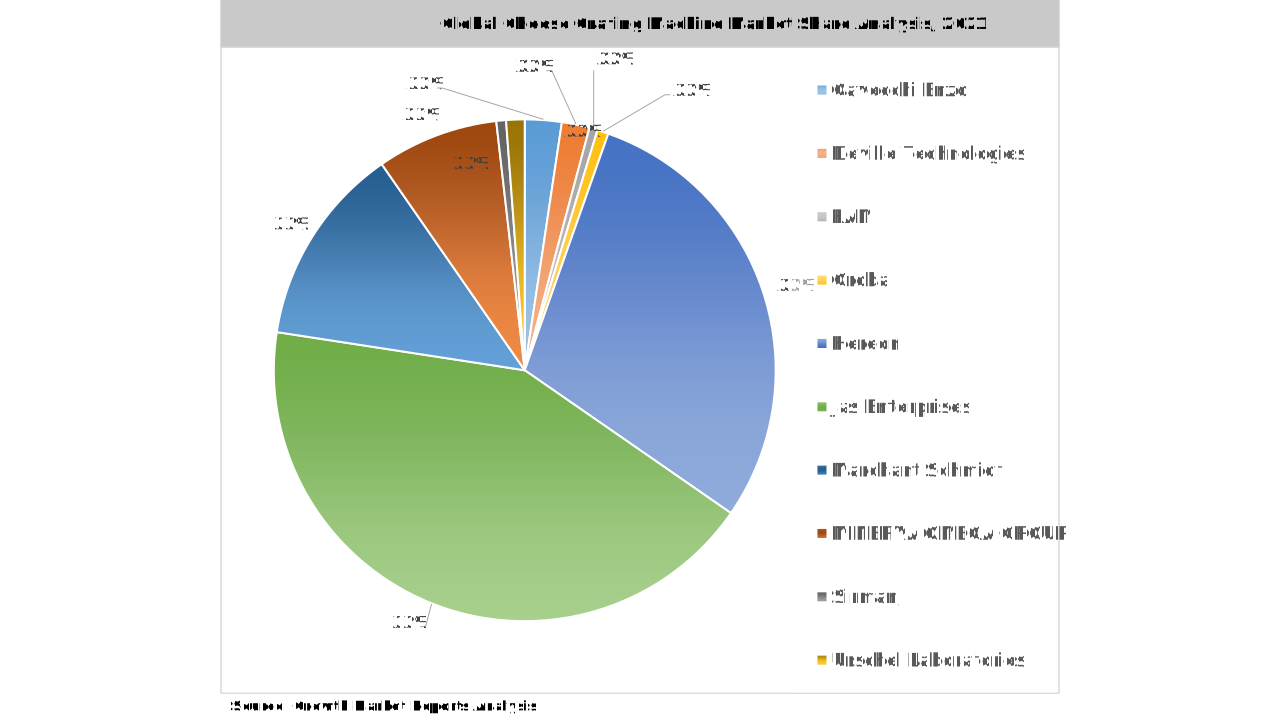
Major players competing in the global cheese grating machine market include Cavecchi Enzo, Deville Technologies, FAM, Groba, Hereon, Jas Enterprises, Marchant Schmidt, MINERVA OMEGA GROUP, Sirman, and Urschel Laboratories.
Some of these businesses have engaged in adopting numerous market strategies such as merger & acquisition, collaboration, partnership, product launch, R&D activities, and capacity expansion to increase market share and global presence.
Established in 1977, GROBA has been a major company that offers several services and engages in the production and development of machineries for the cheese-processing industry. It focuses exclusively on cheese processing and handling. Recently, GROBA has introduced the KAPPA 200, which is a semi-automatic machine for slicing cheese bars or other lengthened items.
The household segment is growing due to increased interest in home cooking and gourmet food preparation, with consumers favoring compact, affordable, and easy-to-clean electric and semi-automatic cheese graters.
Major players include Sirman S.p.A., Robot Coupe, Fimar S.p.A., Sammic S.L., Omcan Inc., Hallde, KitchenAid, FAM nv, GEA Group AG, Deville Technologies, and others.
Opportunities include the development of eco-friendly, energy-efficient machines and expansion into emerging markets. Challenges involve intense competition from low-cost products, high initial investment for industrial machines, and concerns over maintenance and after-sales service.
Innovations include enhanced safety features, stainless steel construction, automatic cleaning systems, variable speed controls, energy-efficient models, and IoT-enabled smart functionalities.
Cheese grating machines are sold through online stores, supermarkets/hypermarkets, specialty stores, and other channels such as direct sales and B2B platforms.
Primary end-users include restaurants, the food processing industry, catering services, and households. Each segment has unique requirements for capacity, automation, and hygiene.
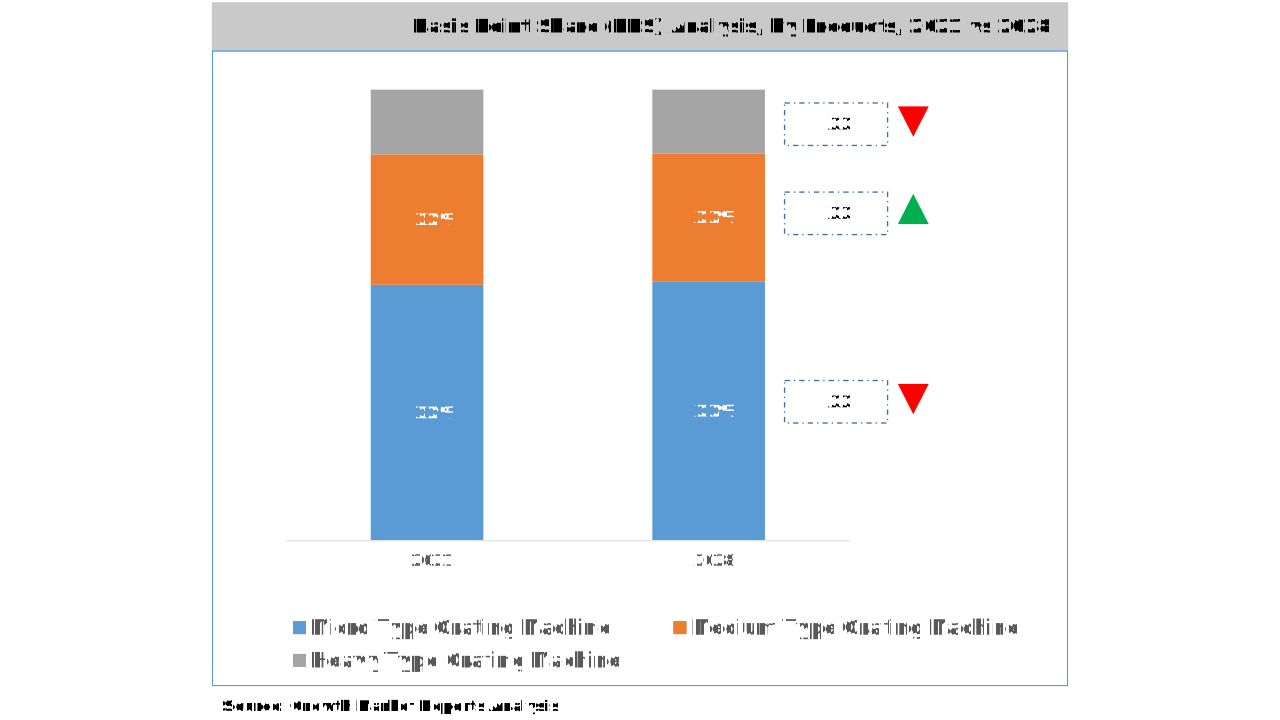
The market is segmented into manual cheese grating machines, electric cheese grating machines, and semi-automatic cheese grating machines, each catering to different user needs and operational scales.
Europe leads the market, accounting for about 32% of the global value, followed by North America. The Asia Pacific region is the fastest-growing market due to rapid urbanization, changing dietary preferences, and rising disposable incomes.
Key growth drivers include rising demand for processed and convenience foods, increased cheese consumption worldwide, rapid adoption of automated kitchen equipment, and a growing focus on efficient, hygienic food preparation solutions.
As of 2024, the global cheese grating machine market is valued at USD 1.52 billion and is experiencing a compound annual growth rate (CAGR) of 6.8%. The market is projected to reach USD 2.80 billion by 2033.