Knife Sharping Service Market Research Report 2033

Knife Sharping Service Market Research Report 2033

Segments - by Service Type (On-Site Sharpening, Mail-In Sharpening, In-Store Sharpening), by End-User (Residential, Commercial, Industrial), by Distribution Channel (Online Platforms, Offline Stores), by Blade Type (Kitchen Knives, Industrial Blades, Scissors, Others)

https://growthmarketreports.com/Raksha
Author : Raksha Sharma
https://growthmarketreports.com/Vaibhav
Fact-checked by : V. Chandola
https://growthmarketreports.com/Shruti
Editor : Shruti Bhat

Upcoming | Report ID :AL-323 | 4.9 Rating | 89 Reviews | 297 Pages | Format : Docx PDF

Report Description


Knife Sharpening Service Market Outlook

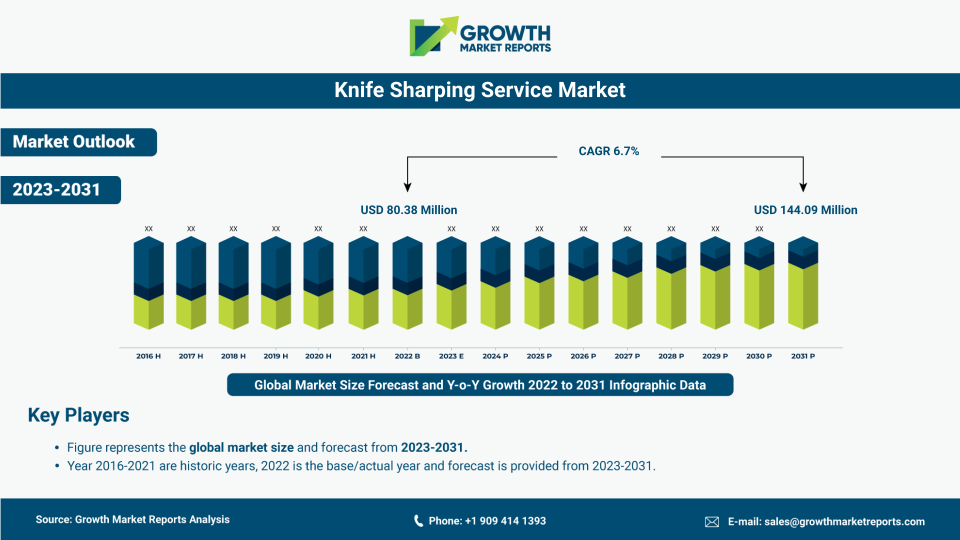
According to our latest research, the global knife sharpening service market size reached USD 1.42 billion in 2024, reflecting robust demand across both residential and commercial sectors. The market is registering a healthy CAGR of 5.8% from 2025 to 2033, with the forecasted market size expected to attain USD 2.37 billion by 2033. This growth is primarily driven by the increasing emphasis on kitchen efficiency, food safety, and sustainability, as well as a surge in culinary activities at home and in professional settings.

One of the most significant growth factors for the knife sharpening service market is the rising awareness regarding the importance of knife maintenance among both professional chefs and home cooks. Blunt knives not only reduce efficiency but also pose safety risks, leading to a higher incidence of kitchen accidents. As consumers become more educated about these risks, they are increasingly seeking professional sharpening services to maintain optimal blade condition. Additionally, the proliferation of cooking shows, celebrity chefs, and culinary influencers has heightened the focus on proper kitchen tools, further boosting demand for regular knife maintenance services. This trend is particularly pronounced in urban areas, where busy lifestyles and the desire for convenience drive customers toward professional solutions rather than DIY sharpening.

Another crucial driver is the sustainability movement, which encourages prolonging the lifespan of kitchen tools and reducing waste. Rather than discarding dull knives, both residential and commercial users are opting for sharpening services, aligning with environmental values and cost-saving objectives. Restaurants, catering companies, and food processing units are increasingly integrating regular knife maintenance into their operational protocols to ensure consistent performance and minimize replacement costs. This shift is further supported by regulatory standards in the food industry, which emphasize hygiene and safety, necessitating sharp and well-maintained blades in food preparation environments. As a result, commercial and industrial segments are witnessing a steady uptick in service adoption.

The growth of e-commerce and digital platforms has also revolutionized the knife sharpening service market. Online booking systems, mail-in sharpening services, and app-based scheduling have made these services more accessible and convenient than ever before. This digital transformation is particularly appealing to tech-savvy consumers and businesses seeking streamlined solutions. Moreover, the rise of subscription-based models and loyalty programs is fostering customer retention and recurring revenue streams for service providers. The integration of digital tracking and customer feedback mechanisms further enhances service quality and customer satisfaction, contributing to the overall expansion of the market.

Regionally, North America leads the knife sharpening service market, supported by a strong culinary culture, high disposable incomes, and widespread adoption of professional kitchen practices. Europe follows closely, with a well-established tradition of artisanal knife care and a growing emphasis on sustainability. The Asia Pacific region is emerging as a high-growth market, driven by rapid urbanization, expanding food service industries, and increasing consumer awareness. Latin America and the Middle East & Africa, while smaller in market share, are experiencing steady growth due to rising hospitality sectors and evolving consumer preferences. The global landscape is thus characterized by diverse regional dynamics, each contributing uniquely to the market's trajectory.

Global Knife Sharping Service Industry Outlook

Service Type Analysis

The knife sharpening service market is segmented by service type into on-site sharpening, mail-in sharpening, and in-store sharpening, each catering to distinct customer preferences and operational needs. On-site sharpening services have gained significant traction, especially among commercial users such as restaurants, catering businesses, and institutional kitchens that require minimal downtime and immediate results. Service providers equipped with mobile units visit clients’ premises, offering convenience and ensuring that kitchen operations are not disrupted. This model is particularly valued in urban centers where time efficiency is paramount, and businesses cannot afford to send their knives offsite for extended periods. Additionally, on-site services are often perceived as more personalized, allowing for direct communication between the service provider and the client regarding specific sharpening needs and blade care advice.

Mail-in sharpening services have revolutionized accessibility, especially for residential customers and those located in remote or underserved areas. Customers simply ship their dull knives to a central facility, where skilled technicians perform the sharpening and return the blades in optimal condition. This segment has seen significant growth due to the expansion of e-commerce and logistical networks, making it possible for service providers to reach a broader customer base. The convenience of mail-in services is further enhanced by subscription models, which offer scheduled maintenance and discounted rates. However, this segment faces challenges such as shipping costs, turnaround times, and potential risks of damage during transit, necessitating robust packaging solutions and customer support mechanisms.

In-store sharpening services remain a popular choice, particularly in regions with a strong tradition of local retail and artisanal craftsmanship. Many hardware stores, kitchenware retailers, and specialty shops offer in-store sharpening as a value-added service, attracting foot traffic and fostering customer loyalty. Customers appreciate the opportunity to interact with skilled sharpeners, receive immediate feedback on their blades, and often benefit from additional advice on knife care and maintenance. In-store services also provide an experiential element, allowing customers to witness the sharpening process and gain a deeper appreciation for the craft. This segment is especially prominent in Europe and parts of Asia, where traditional techniques and personal relationships play a significant role in service delivery.

The interplay between these service types is shaping the competitive landscape, with many providers adopting hybrid models to cater to diverse customer needs. For instance, some businesses offer both on-site and mail-in options, allowing clients to choose based on urgency, location, and budget. Technology integration is further enhancing service delivery, with online booking, real-time tracking, and digital payment systems streamlining the customer experience. As consumer expectations evolve, service providers are increasingly focused on flexibility, quality assurance, and value-added offerings to differentiate themselves in a crowded market.

Report Scope

Attributes Details
Report Title Knife Sharping Service Market Research Report 2033
By Service Type On-Site Sharpening, Mail-In Sharpening, In-Store Sharpening
By End-User Residential, Commercial, Industrial
By Distribution Channel Online Platforms, Offline Stores
By Blade Type Kitchen Knives, Industrial Blades, Scissors, Others
Regions Covered North America, Europe, APAC, Latin America, MEA
Base Year 2024
Historic Data 2018-2023
Forecast Period 2025-2033
Number of Pages 297
Number of Tables & Figures 332
Customization Available Yes, the report can be customized as per your need.

End-User Analysis

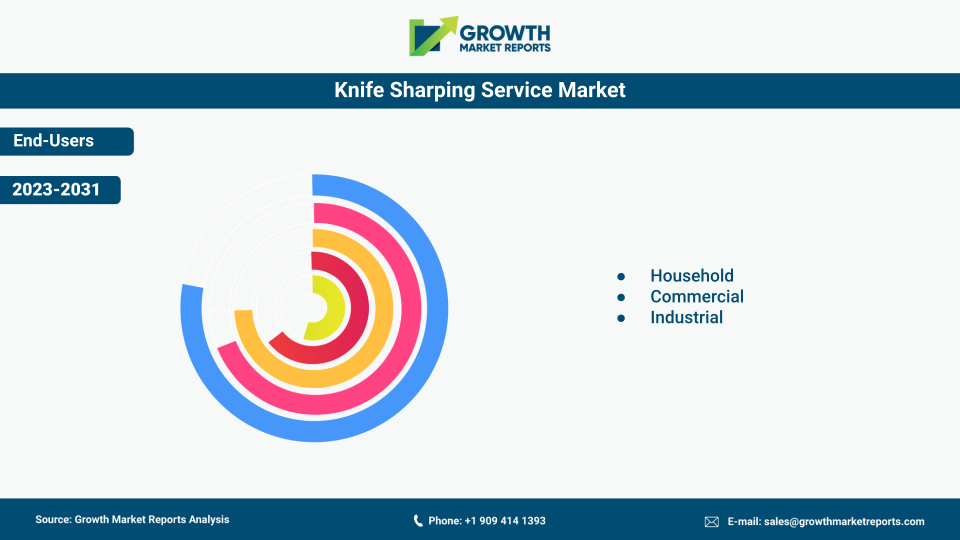
The end-user segmentation of the knife sharpening service market encompasses residential, commercial, and industrial customers, each with distinct requirements and usage patterns. Residential users represent a significant portion of the market, driven by the growing trend of home cooking and the influence of culinary media. Homeowners are increasingly investing in high-quality kitchen tools and recognizing the importance of regular maintenance to preserve their investment. The convenience of professional sharpening services appeals to busy individuals who lack the time or expertise to sharpen knives themselves. Additionally, the proliferation of online platforms and mail-in services has made it easier for residential users to access professional-grade sharpening, further fueling market growth in this segment.

Commercial end-users, including restaurants, hotels, catering companies, and institutional kitchens, constitute a major growth engine for the knife sharpening service market. These establishments rely heavily on sharp, well-maintained knives to ensure food safety, operational efficiency, and consistent quality. Regular sharpening is often mandated by internal protocols and industry regulations, making it an integral part of kitchen management. Commercial clients typically require bulk sharpening services, on-site solutions, and flexible scheduling to minimize disruption to their operations. Service providers catering to this segment often offer customized plans, loyalty programs, and emergency sharpening to address the unique needs of the hospitality and food service industries.

The industrial segment encompasses users in food processing, manufacturing, and other sectors that utilize specialized blades and cutting tools. Industrial clients demand precision sharpening for a wide range of blade types, including slicers, choppers, and industrial cutters. The performance and longevity of these tools have a direct impact on production efficiency and product quality. As such, industrial users prioritize service providers with advanced technical capabilities, stringent quality control, and the ability to handle large volumes and diverse blade profiles. Partnerships between sharpening service providers and industrial clients are often long-term, with ongoing maintenance contracts and periodic assessments to ensure optimal blade performance.

The evolving needs of these end-user segments are driving innovation and specialization within the knife sharpening service market. Service providers are investing in advanced equipment, training, and customer relationship management to deliver tailored solutions. The integration of digital platforms is further enhancing engagement, with features such as online scheduling, service history tracking, and automated reminders. As end-users become more discerning and demand higher standards, the market is witnessing a shift toward premium services, value-added offerings, and enhanced customer support to maintain competitive advantage.

Distribution Channel Analysis

The knife sharpening service market is segmented by distribution channel into online platforms and offline stores, each playing a pivotal role in market expansion and customer acquisition. Online platforms have emerged as a transformative force, enabling service providers to reach a wider audience and streamline service delivery. The convenience of online booking, digital payments, and real-time tracking appeals to both residential and commercial customers seeking hassle-free solutions. Many providers have developed user-friendly websites and mobile apps, offering features such as subscription plans, service reminders, and customer feedback mechanisms. The integration of logistics partners has further enhanced the efficiency of mail-in sharpening services, enabling timely pickups and deliveries. As digital adoption accelerates, online platforms are expected to capture an increasing share of the market, particularly among younger, tech-savvy consumers.

Offline stores, including hardware shops, kitchenware retailers, and specialty stores, continue to play a vital role in the knife sharpening service market. These establishments offer in-person sharpening services, attracting customers who value face-to-face interaction and immediate results. The tactile experience of visiting a store, consulting with skilled technicians, and witnessing the sharpening process adds a layer of trust and satisfaction for many consumers. Offline stores also serve as community hubs, fostering relationships and repeat business through personalized service and local reputation. In regions with a strong tradition of artisanal craftsmanship, offline channels remain the preferred choice for many customers.

The interplay between online and offline distribution channels is giving rise to hybrid models that offer the best of both worlds. Some service providers operate physical locations while also offering online booking and mail-in options, catering to diverse customer preferences and maximizing market reach. This omnichannel approach enables businesses to capture foot traffic, build brand loyalty, and leverage digital marketing to attract new customers. The seamless integration of online and offline services is becoming increasingly important as consumers seek flexibility, convenience, and consistency in their service experiences.

The competitive dynamics within each distribution channel are evolving rapidly, with service providers investing in technology, marketing, and customer engagement to differentiate themselves. Online platforms are leveraging data analytics, targeted advertising, and customer relationship management to enhance service delivery and drive growth. Offline stores are focusing on experiential elements, community engagement, and premium offerings to retain loyal customers. As the market continues to evolve, the ability to adapt to changing consumer behaviors and preferences will be a key determinant of success for service providers across both channels.

Blade Type Analysis

The knife sharpening service market is segmented by blade type into kitchen knives, industrial blades, scissors, and others, reflecting the diverse range of tools requiring maintenance. Kitchen knives represent the largest segment, driven by widespread use in households, restaurants, and food service establishments. The increasing popularity of gourmet cooking, culinary education, and high-quality kitchen tools has heightened awareness of the importance of regular knife maintenance. Professional sharpening services offer precision, consistency, and longevity, making them the preferred choice for both amateur cooks and professional chefs. The segment is further supported by the proliferation of specialty knife brands and the growing trend of collecting and preserving premium blades.

Industrial blades encompass a wide array of cutting tools used in manufacturing, food processing, and other industrial applications. These blades are subject to intense wear and require specialized sharpening techniques to maintain performance and safety. Industrial clients demand high precision, quick turnaround, and the ability to handle large volumes and diverse blade profiles. Service providers catering to this segment invest in advanced equipment, skilled technicians, and stringent quality control to meet the exacting standards of industrial users. The segment is witnessing steady growth as industries prioritize operational efficiency, product quality, and cost savings through regular blade maintenance.

Scissors represent another important segment, serving both residential and commercial users. Scissors are essential tools in households, salons, tailoring shops, and various professional settings. The demand for scissors sharpening services is driven by the need for precision, safety, and longevity. Service providers offer specialized techniques to restore the sharpness and alignment of scissor blades, catering to diverse applications from kitchen use to industrial cutting. The segment benefits from the growing trend of DIY projects, home-based businesses, and the increasing use of specialized scissors in crafts and hobbies.

The "others" category includes a variety of specialized blades such as gardening tools, hunting knives, and medical instruments, each with unique sharpening requirements. This segment, while smaller in market share, presents opportunities for service providers to diversify their offerings and cater to niche markets. The ability to handle a wide range of blade types and provide customized solutions is becoming a key differentiator for service providers in an increasingly competitive market. As consumer awareness and demand for specialized sharpening services grow, the blade type segmentation is expected to become even more nuanced, driving innovation and specialization within the industry.

Opportunities & Threats

The knife sharpening service market presents a wealth of opportunities for growth and innovation, particularly as consumer preferences and industry standards continue to evolve. One of the most promising opportunities lies in the expansion of digital platforms and online service delivery. By leveraging technology, service providers can reach a wider audience, streamline operations, and enhance customer engagement. The development of subscription-based models, loyalty programs, and value-added services such as blade maintenance education and personalized recommendations can drive customer retention and recurring revenue streams. Additionally, the growing emphasis on sustainability and waste reduction presents an opportunity for service providers to position themselves as eco-friendly alternatives to blade replacement, appealing to environmentally conscious consumers and businesses.

Another significant opportunity exists in the commercial and industrial segments, where the demand for regular, high-quality sharpening services is driven by operational efficiency, safety, and regulatory compliance. Service providers that invest in advanced equipment, skilled technicians, and customized solutions can establish long-term partnerships with restaurants, food processing units, and manufacturing facilities. The ability to offer on-site services, emergency sharpening, and comprehensive maintenance plans can further differentiate providers and capture a larger share of the commercial and industrial markets. Expanding into emerging markets and underserved regions also presents growth potential, particularly as culinary cultures evolve and the hospitality sector expands globally.

Despite these opportunities, the knife sharpening service market faces several restraining factors that could impede growth. One of the primary challenges is the prevalence of low-cost, do-it-yourself sharpening tools that appeal to price-sensitive consumers. These products, widely available online and in retail stores, offer a convenient alternative to professional services, particularly for basic maintenance. Additionally, the market is characterized by low entry barriers, leading to intense competition and price pressure. Service providers must continuously invest in quality, innovation, and customer engagement to maintain a competitive edge and justify premium pricing. Regulatory compliance, particularly in the commercial and industrial segments, also poses challenges, requiring ongoing investment in training, equipment, and quality assurance.

Regional Outlook

North America remains the dominant region in the global knife sharpening service market, accounting for approximately 38% of the total market size in 2024, or about USD 540 million. The region’s leadership is underpinned by a strong culinary culture, high disposable incomes, and widespread adoption of professional kitchen practices. The United States and Canada, in particular, boast a well-established network of service providers, ranging from local artisans to large chains offering both on-site and mail-in services. The integration of digital platforms and subscription models has further enhanced service accessibility and customer engagement, driving steady market growth. North America’s robust hospitality industry and the increasing popularity of home cooking continue to fuel demand for regular knife maintenance.

Europe follows closely, capturing around 31% of the market share, which translates to approximately USD 440 million in 2024. The region is characterized by a rich tradition of artisanal knife care, a strong emphasis on sustainability, and a growing trend toward premium kitchen tools. Countries such as Germany, France, and the United Kingdom are leading markets, supported by a vibrant culinary scene and a high level of consumer awareness regarding knife maintenance. Europe’s regulatory environment, which emphasizes food safety and hygiene, further drives demand for professional sharpening services in commercial and industrial settings. The region is expected to register a CAGR of 5.4% through 2033, with increasing adoption of digital platforms and value-added services.

The Asia Pacific region is emerging as a high-growth market, capturing about 22% of the global market, or roughly USD 310 million in 2024. Rapid urbanization, expanding food service industries, and rising consumer awareness are key drivers of growth in countries such as China, Japan, and Australia. The region’s diverse culinary traditions and the increasing adoption of Western kitchen practices are contributing to the rising demand for professional knife sharpening services. While the market is still developing compared to North America and Europe, the proliferation of online platforms and the entry of international service providers are accelerating market expansion. Latin America and the Middle East & Africa, though smaller in market share, are experiencing steady growth, driven by evolving consumer preferences and the expansion of the hospitality sector. Together, these regions account for approximately 9% of the global market, or about USD 130 million in 2024.

Knife Sharping Service Market Statistics

Competitor Outlook

The knife sharpening service market is highly fragmented, with a mix of local artisans, specialized chains, and emerging digital platforms competing for market share. The competitive landscape is characterized by intense rivalry, low entry barriers, and a strong emphasis on quality, convenience, and customer engagement. Service providers differentiate themselves through a combination of technical expertise, personalized service, and value-added offerings such as blade maintenance education, subscription plans, and loyalty programs. As consumer expectations evolve, businesses are increasingly investing in advanced sharpening equipment, skilled technicians, and technology integration to enhance service delivery and customer satisfaction.

The rise of online platforms and mail-in services has intensified competition, enabling providers to reach a broader customer base and streamline operations. Digital marketing, data analytics, and customer relationship management are playing an increasingly important role in customer acquisition and retention. Service providers that successfully integrate online and offline channels are well positioned to capture market share and build brand loyalty. The ability to offer flexible service options, quick turnaround times, and high-quality results is becoming a key differentiator in an increasingly crowded market.

Major players in the market include Knife Aid, Sur La Table, Sharpal, Edge Pro Inc., and The Sharpening Guy. Knife Aid, for example, has pioneered the mail-in sharpening model, leveraging digital platforms and logistics partnerships to offer nationwide service in the United States. Sur La Table, a leading kitchenware retailer, provides in-store sharpening services that attract foot traffic and foster customer loyalty. Sharpal and Edge Pro Inc. are known for their advanced sharpening equipment and training programs, catering to both residential and commercial clients. The Sharpening Guy, a well-established local provider, has built a reputation for personalized service and technical expertise in key urban markets.

In addition to these major players, the market is populated by numerous regional and local service providers, many of whom specialize in artisanal sharpening techniques and niche blade types. These businesses often rely on word-of-mouth referrals, community engagement, and a loyal customer base to sustain growth. The competitive dynamics are further shaped by the entry of new players leveraging technology, subscription models, and innovative marketing strategies. As the market continues to evolve, the ability to adapt to changing consumer preferences, invest in quality and innovation, and build strong customer relationships will be critical for long-term success.

Key Players

  • Knife Aid
  • The Sharp Brothers
  • Edge Pro Inc.
  • Fischer-Bargoin
  • Coastal Sharpening Service
  • Seattle Knife Sharpening
  • Sharpal Inc.
  • The Sharpening Guy
  • ProEdge Sharpening Service
  • Korin Japanese Trading Corp.
  • The Knife Guys
  • Sharp Knife Shop
  • The Edge Pro
  • Precision Knife Sharpening
  • Sharp Knives Only
  • The Sharpening Company
  • Sharpco Sharpening Service
  • The Knife Sharpening Company
  • Mobile Knife Sharpening
  • The Blade Doctor
Knife Sharping Service Market Overview

Segments

The Knife Sharping Service market has been segmented on the basis of

Service Type

  • On-Site Sharpening
  • Mail-In Sharpening
  • In-Store Sharpening

End-User

  • Residential
  • Commercial
  • Industrial

Distribution Channel

  • Online Platforms
  • Offline Stores

Blade Type

  • Kitchen Knives
  • Industrial Blades
  • Scissors
  • Others

Competitive Landscape

Major players competing in the global knife sharping service market include American Cutting Edge, Coccini Bros, Floria Knife Company, Town Cutler, Eversharp Knives, John’s Sharpening Service & Cutey, Market Grinding Inc., and National Sharpening Company Rod’s Sharpening Service.

Some of these companies are engaged in research activities to expand their consumer base and to incorporate advanced technologies in the development of their knife sharpening devices.
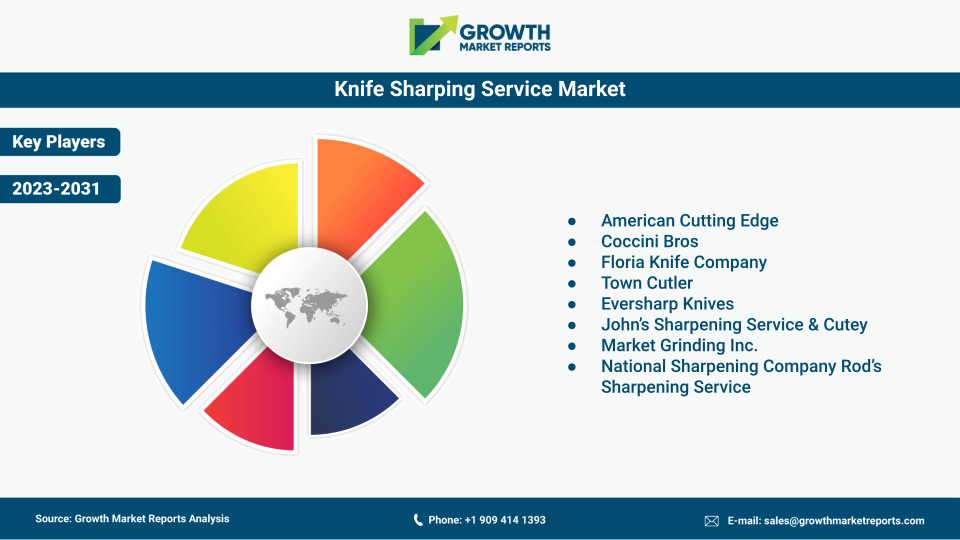

Knife Sharping Service Market Key Players

Frequently Asked Questions

Opportunities include digital expansion, sustainability positioning, and commercial/industrial partnerships. Challenges involve competition from DIY tools, low entry barriers, and the need for regulatory compliance.

Major players include Knife Aid, Sur La Table, Sharpal, Edge Pro Inc., The Sharpening Guy, and several regional and local providers specializing in artisanal sharpening.

Common blade types include kitchen knives, industrial blades, scissors, and specialized tools such as gardening tools, hunting knives, and medical instruments.

Services are distributed through online platforms (websites, apps) and offline stores (hardware shops, kitchenware retailers, specialty stores), with many providers offering hybrid models.

Technology has enabled online booking, mail-in services, app-based scheduling, digital tracking, and subscription models, making services more accessible and convenient.

End-users include residential customers (home cooks), commercial users (restaurants, hotels, catering companies), and industrial clients (food processing, manufacturing).

The market offers on-site sharpening, mail-in sharpening, and in-store sharpening services, each catering to different customer needs and preferences.

North America leads the market, followed by Europe and the Asia Pacific region. Latin America and the Middle East & Africa are also experiencing steady growth.

Key growth drivers include increased awareness of knife maintenance, emphasis on kitchen efficiency and food safety, sustainability trends, and the influence of cooking shows and culinary influencers.

As of 2024, the global knife sharpening service market size reached USD 1.42 billion, with strong demand from both residential and commercial sectors.

Table Of Content

Chapter 1 Executive Summary
Chapter 2 Assumptions and Acronyms Used
Chapter 3 Research Methodology
Chapter 4 Knife Sharping Service Market Overview
   4.1 Introduction
      4.1.1 Market Taxonomy
      4.1.2 Market Definition
      4.1.3 Macro-Economic Factors Impacting the Market Growth
   4.2 Knife Sharping Service Market Dynamics
      4.2.1 Market Drivers
      4.2.2 Market Restraints
      4.2.3 Market Opportunity
   4.3 Knife Sharping Service Market - Supply Chain Analysis
      4.3.1 List of Key Suppliers
      4.3.2 List of Key Distributors
      4.3.3 List of Key Consumers
   4.4 Key Forces Shaping the Knife Sharping Service Market
      4.4.1 Bargaining Power of Suppliers
      4.4.2 Bargaining Power of Buyers
      4.4.3 Threat of Substitution
      4.4.4 Threat of New Entrants
      4.4.5 Competitive Rivalry
   4.5 Global Knife Sharping Service Market Size & Forecast, 2023-2032
      4.5.1 Knife Sharping Service Market Size and Y-o-Y Growth
      4.5.2 Knife Sharping Service Market Absolute $ Opportunity

Chapter 5 Global Knife Sharping Service Market Analysis and Forecast By Service Type
   5.1 Introduction
      5.1.1 Key Market Trends & Growth Opportunities By Service Type
      5.1.2 Basis Point Share (BPS) Analysis By Service Type
      5.1.3 Absolute $ Opportunity Assessment By Service Type
   5.2 Knife Sharping Service Market Size Forecast By Service Type
      5.2.1 On-Site Sharpening
      5.2.2 Mail-In Sharpening
      5.2.3 In-Store Sharpening
   5.3 Market Attractiveness Analysis By Service Type

Chapter 6 Global Knife Sharping Service Market Analysis and Forecast By End-User
   6.1 Introduction
      6.1.1 Key Market Trends & Growth Opportunities By End-User
      6.1.2 Basis Point Share (BPS) Analysis By End-User
      6.1.3 Absolute $ Opportunity Assessment By End-User
   6.2 Knife Sharping Service Market Size Forecast By End-User
      6.2.1 Residential
      6.2.2 Commercial
      6.2.3 Industrial
   6.3 Market Attractiveness Analysis By End-User

Chapter 7 Global Knife Sharping Service Market Analysis and Forecast By Distribution Channel
   7.1 Introduction
      7.1.1 Key Market Trends & Growth Opportunities By Distribution Channel
      7.1.2 Basis Point Share (BPS) Analysis By Distribution Channel
      7.1.3 Absolute $ Opportunity Assessment By Distribution Channel
   7.2 Knife Sharping Service Market Size Forecast By Distribution Channel
      7.2.1 Online Platforms
      7.2.2 Offline Stores
   7.3 Market Attractiveness Analysis By Distribution Channel

Chapter 8 Global Knife Sharping Service Market Analysis and Forecast By Blade Type
   8.1 Introduction
      8.1.1 Key Market Trends & Growth Opportunities By Blade Type
      8.1.2 Basis Point Share (BPS) Analysis By Blade Type
      8.1.3 Absolute $ Opportunity Assessment By Blade Type
   8.2 Knife Sharping Service Market Size Forecast By Blade Type
      8.2.1 Kitchen Knives
      8.2.2 Industrial Blades
      8.2.3 Scissors
      8.2.4 Others
   8.3 Market Attractiveness Analysis By Blade Type

Chapter 9 Global Knife Sharping Service Market Analysis and Forecast by Region
   9.1 Introduction
      9.1.1 Key Market Trends & Growth Opportunities By Region
      9.1.2 Basis Point Share (BPS) Analysis By Region
      9.1.3 Absolute $ Opportunity Assessment By Region
   9.2 Knife Sharping Service Market Size Forecast By Region
      9.2.1 North America
      9.2.2 Europe
      9.2.3 Asia Pacific
      9.2.4 Latin America
      9.2.5 Middle East & Africa (MEA)
   9.3 Market Attractiveness Analysis By Region

Chapter 10 Coronavirus Disease (COVID-19) Impact 
   10.1 Introduction 
   10.2 Current & Future Impact Analysis 
   10.3 Economic Impact Analysis 
   10.4 Government Policies 
   10.5 Investment Scenario

Chapter 11 North America Knife Sharping Service Analysis and Forecast
   11.1 Introduction
   11.2 North America Knife Sharping Service Market Size Forecast by Country
      11.2.1 U.S.
      11.2.2 Canada
   11.3 Basis Point Share (BPS) Analysis by Country
   11.4 Absolute $ Opportunity Assessment by Country
   11.5 Market Attractiveness Analysis by Country
   11.6 North America Knife Sharping Service Market Size Forecast By Service Type
      11.6.1 On-Site Sharpening
      11.6.2 Mail-In Sharpening
      11.6.3 In-Store Sharpening
   11.7 Basis Point Share (BPS) Analysis By Service Type 
   11.8 Absolute $ Opportunity Assessment By Service Type 
   11.9 Market Attractiveness Analysis By Service Type
   11.10 North America Knife Sharping Service Market Size Forecast By End-User
      11.10.1 Residential
      11.10.2 Commercial
      11.10.3 Industrial
   11.11 Basis Point Share (BPS) Analysis By End-User 
   11.12 Absolute $ Opportunity Assessment By End-User 
   11.13 Market Attractiveness Analysis By End-User
   11.14 North America Knife Sharping Service Market Size Forecast By Distribution Channel
      11.14.1 Online Platforms
      11.14.2 Offline Stores
   11.15 Basis Point Share (BPS) Analysis By Distribution Channel 
   11.16 Absolute $ Opportunity Assessment By Distribution Channel 
   11.17 Market Attractiveness Analysis By Distribution Channel
   11.18 North America Knife Sharping Service Market Size Forecast By Blade Type
      11.18.1 Kitchen Knives
      11.18.2 Industrial Blades
      11.18.3 Scissors
      11.18.4 Others
   11.19 Basis Point Share (BPS) Analysis By Blade Type 
   11.20 Absolute $ Opportunity Assessment By Blade Type 
   11.21 Market Attractiveness Analysis By Blade Type

Chapter 12 Europe Knife Sharping Service Analysis and Forecast
   12.1 Introduction
   12.2 Europe Knife Sharping Service Market Size Forecast by Country
      12.2.1 Germany
      12.2.2 France
      12.2.3 Italy
      12.2.4 U.K.
      12.2.5 Spain
      12.2.6 Russia
      12.2.7 Rest of Europe
   12.3 Basis Point Share (BPS) Analysis by Country
   12.4 Absolute $ Opportunity Assessment by Country
   12.5 Market Attractiveness Analysis by Country
   12.6 Europe Knife Sharping Service Market Size Forecast By Service Type
      12.6.1 On-Site Sharpening
      12.6.2 Mail-In Sharpening
      12.6.3 In-Store Sharpening
   12.7 Basis Point Share (BPS) Analysis By Service Type 
   12.8 Absolute $ Opportunity Assessment By Service Type 
   12.9 Market Attractiveness Analysis By Service Type
   12.10 Europe Knife Sharping Service Market Size Forecast By End-User
      12.10.1 Residential
      12.10.2 Commercial
      12.10.3 Industrial
   12.11 Basis Point Share (BPS) Analysis By End-User 
   12.12 Absolute $ Opportunity Assessment By End-User 
   12.13 Market Attractiveness Analysis By End-User
   12.14 Europe Knife Sharping Service Market Size Forecast By Distribution Channel
      12.14.1 Online Platforms
      12.14.2 Offline Stores
   12.15 Basis Point Share (BPS) Analysis By Distribution Channel 
   12.16 Absolute $ Opportunity Assessment By Distribution Channel 
   12.17 Market Attractiveness Analysis By Distribution Channel
   12.18 Europe Knife Sharping Service Market Size Forecast By Blade Type
      12.18.1 Kitchen Knives
      12.18.2 Industrial Blades
      12.18.3 Scissors
      12.18.4 Others
   12.19 Basis Point Share (BPS) Analysis By Blade Type 
   12.20 Absolute $ Opportunity Assessment By Blade Type 
   12.21 Market Attractiveness Analysis By Blade Type

Chapter 13 Asia Pacific Knife Sharping Service Analysis and Forecast
   13.1 Introduction
   13.2 Asia Pacific Knife Sharping Service Market Size Forecast by Country
      13.2.1 China
      13.2.2 Japan
      13.2.3 South Korea
      13.2.4 India
      13.2.5 Australia
      13.2.6 South East Asia (SEA)
      13.2.7 Rest of Asia Pacific (APAC)
   13.3 Basis Point Share (BPS) Analysis by Country
   13.4 Absolute $ Opportunity Assessment by Country
   13.5 Market Attractiveness Analysis by Country
   13.6 Asia Pacific Knife Sharping Service Market Size Forecast By Service Type
      13.6.1 On-Site Sharpening
      13.6.2 Mail-In Sharpening
      13.6.3 In-Store Sharpening
   13.7 Basis Point Share (BPS) Analysis By Service Type 
   13.8 Absolute $ Opportunity Assessment By Service Type 
   13.9 Market Attractiveness Analysis By Service Type
   13.10 Asia Pacific Knife Sharping Service Market Size Forecast By End-User
      13.10.1 Residential
      13.10.2 Commercial
      13.10.3 Industrial
   13.11 Basis Point Share (BPS) Analysis By End-User 
   13.12 Absolute $ Opportunity Assessment By End-User 
   13.13 Market Attractiveness Analysis By End-User
   13.14 Asia Pacific Knife Sharping Service Market Size Forecast By Distribution Channel
      13.14.1 Online Platforms
      13.14.2 Offline Stores
   13.15 Basis Point Share (BPS) Analysis By Distribution Channel 
   13.16 Absolute $ Opportunity Assessment By Distribution Channel 
   13.17 Market Attractiveness Analysis By Distribution Channel
   13.18 Asia Pacific Knife Sharping Service Market Size Forecast By Blade Type
      13.18.1 Kitchen Knives
      13.18.2 Industrial Blades
      13.18.3 Scissors
      13.18.4 Others
   13.19 Basis Point Share (BPS) Analysis By Blade Type 
   13.20 Absolute $ Opportunity Assessment By Blade Type 
   13.21 Market Attractiveness Analysis By Blade Type

Chapter 14 Latin America Knife Sharping Service Analysis and Forecast
   14.1 Introduction
   14.2 Latin America Knife Sharping Service Market Size Forecast by Country
      14.2.1 Brazil
      14.2.2 Mexico
      14.2.3 Rest of Latin America (LATAM)
   14.3 Basis Point Share (BPS) Analysis by Country
   14.4 Absolute $ Opportunity Assessment by Country
   14.5 Market Attractiveness Analysis by Country
   14.6 Latin America Knife Sharping Service Market Size Forecast By Service Type
      14.6.1 On-Site Sharpening
      14.6.2 Mail-In Sharpening
      14.6.3 In-Store Sharpening
   14.7 Basis Point Share (BPS) Analysis By Service Type 
   14.8 Absolute $ Opportunity Assessment By Service Type 
   14.9 Market Attractiveness Analysis By Service Type
   14.10 Latin America Knife Sharping Service Market Size Forecast By End-User
      14.10.1 Residential
      14.10.2 Commercial
      14.10.3 Industrial
   14.11 Basis Point Share (BPS) Analysis By End-User 
   14.12 Absolute $ Opportunity Assessment By End-User 
   14.13 Market Attractiveness Analysis By End-User
   14.14 Latin America Knife Sharping Service Market Size Forecast By Distribution Channel
      14.14.1 Online Platforms
      14.14.2 Offline Stores
   14.15 Basis Point Share (BPS) Analysis By Distribution Channel 
   14.16 Absolute $ Opportunity Assessment By Distribution Channel 
   14.17 Market Attractiveness Analysis By Distribution Channel
   14.18 Latin America Knife Sharping Service Market Size Forecast By Blade Type
      14.18.1 Kitchen Knives
      14.18.2 Industrial Blades
      14.18.3 Scissors
      14.18.4 Others
   14.19 Basis Point Share (BPS) Analysis By Blade Type 
   14.20 Absolute $ Opportunity Assessment By Blade Type 
   14.21 Market Attractiveness Analysis By Blade Type

Chapter 15 Middle East & Africa (MEA) Knife Sharping Service Analysis and Forecast
   15.1 Introduction
   15.2 Middle East & Africa (MEA) Knife Sharping Service Market Size Forecast by Country
      15.2.1 Saudi Arabia
      15.2.2 South Africa
      15.2.3 UAE
      15.2.4 Rest of Middle East & Africa (MEA)
   15.3 Basis Point Share (BPS) Analysis by Country
   15.4 Absolute $ Opportunity Assessment by Country
   15.5 Market Attractiveness Analysis by Country
   15.6 Middle East & Africa (MEA) Knife Sharping Service Market Size Forecast By Service Type
      15.6.1 On-Site Sharpening
      15.6.2 Mail-In Sharpening
      15.6.3 In-Store Sharpening
   15.7 Basis Point Share (BPS) Analysis By Service Type 
   15.8 Absolute $ Opportunity Assessment By Service Type 
   15.9 Market Attractiveness Analysis By Service Type
   15.10 Middle East & Africa (MEA) Knife Sharping Service Market Size Forecast By End-User
      15.10.1 Residential
      15.10.2 Commercial
      15.10.3 Industrial
   15.11 Basis Point Share (BPS) Analysis By End-User 
   15.12 Absolute $ Opportunity Assessment By End-User 
   15.13 Market Attractiveness Analysis By End-User
   15.14 Middle East & Africa (MEA) Knife Sharping Service Market Size Forecast By Distribution Channel
      15.14.1 Online Platforms
      15.14.2 Offline Stores
   15.15 Basis Point Share (BPS) Analysis By Distribution Channel 
   15.16 Absolute $ Opportunity Assessment By Distribution Channel 
   15.17 Market Attractiveness Analysis By Distribution Channel
   15.18 Middle East & Africa (MEA) Knife Sharping Service Market Size Forecast By Blade Type
      15.18.1 Kitchen Knives
      15.18.2 Industrial Blades
      15.18.3 Scissors
      15.18.4 Others
   15.19 Basis Point Share (BPS) Analysis By Blade Type 
   15.20 Absolute $ Opportunity Assessment By Blade Type 
   15.21 Market Attractiveness Analysis By Blade Type

Chapter 16 Competition Landscape 
   16.1 Knife Sharping Service Market: Competitive Dashboard
   16.2 Global Knife Sharping Service Market: Market Share Analysis, 2023
   16.3 Company Profiles (Details – Overview, Financials, Developments, Strategy) 
      16.3.1 Knife Aid
The Sharp Brothers
Edge Pro Inc.
Fischer-Bargoin
Coastal Sharpening Service
Seattle Knife Sharpening
Sharpal Inc.
The Sharpening Guy
ProEdge Sharpening Service
Korin Japanese Trading Corp.
The Knife Guys
Sharp Knife Shop
The Edge Pro
Precision Knife Sharpening
Sharp Knives Only
The Sharpening Company
Sharpco Sharpening Service
The Knife Sharpening Company
Mobile Knife Sharpening
The Blade Doctor

Methodology

Our Clients

sinopec
Dassault Aviation
General Electric
General Mills
The John Holland Group
Pfizer
FedEx Logistics
Microsoft