Segments - by Product Type (Ultrasonic Humidifiers, Evaporative Humidifiers, Steam Vaporizers, Others), by Application (Residential, Commercial, Others), by Distribution Channel (Online Stores, Supermarkets/Hypermarkets, Specialty Stores, Others), by Technology (Cool Mist, Warm Mist, Dual Mist, Others)
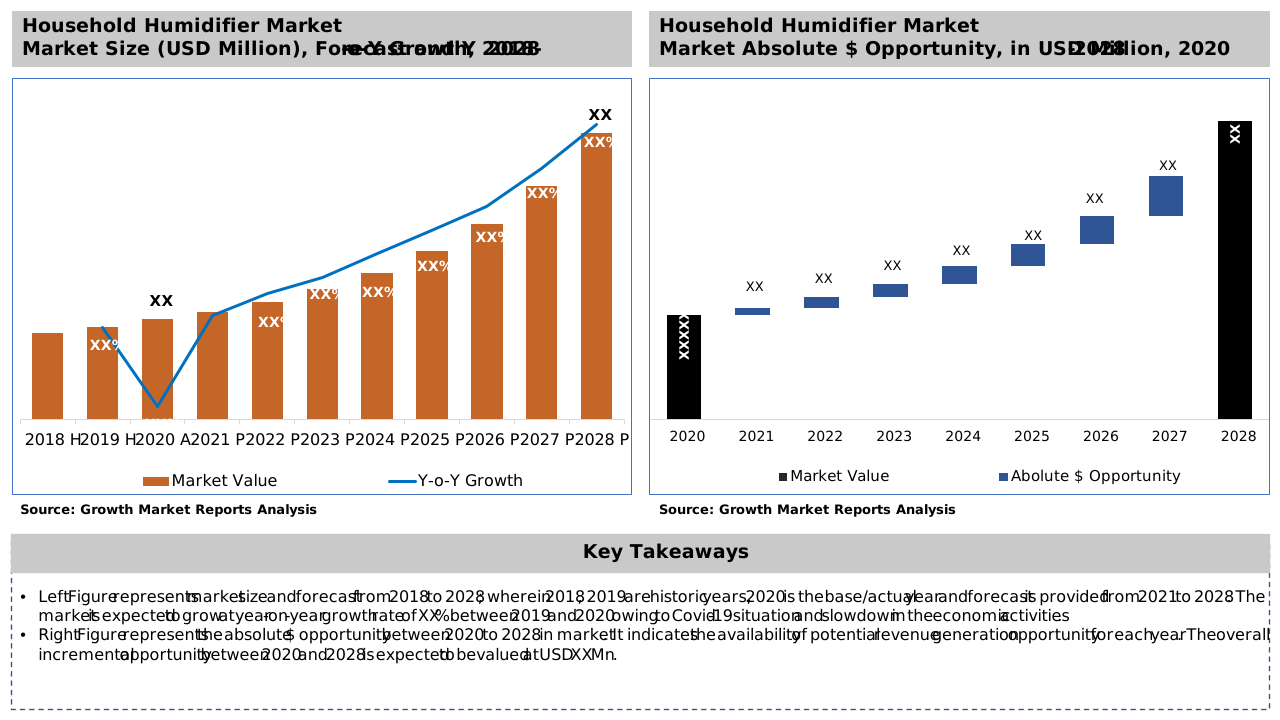
According to our latest research, the global household humidifier market size reached USD 3.8 billion in 2024, demonstrating robust growth dynamics. The market is set to expand at a CAGR of 6.2% from 2025 to 2033, with a forecasted market value of USD 6.5 billion by 2033. This growth is primarily driven by increasing consumer awareness of indoor air quality and the health benefits associated with maintaining optimal humidity levels within homes and commercial spaces.
One of the most significant growth factors for the household humidifier market is the rising prevalence of respiratory ailments and allergies, particularly in urban environments where air pollution levels are high. Consumers are becoming more health-conscious, seeking solutions that can alleviate symptoms associated with dry air, such as dry skin, sinus irritation, and respiratory discomfort. This heightened health awareness is driving demand for advanced humidification solutions, especially in regions experiencing extreme weather conditions that lead to reduced indoor humidity. The integration of smart technologies and IoT-enabled features in modern humidifiers further enhances their appeal, enabling users to monitor and control humidity levels remotely, thus improving convenience and user experience.
Another key driver is the trend towards energy-efficient and eco-friendly home appliances. Manufacturers are increasingly focusing on the development of ultrasonic and evaporative humidifiers that consume less power while delivering optimal performance. The demand for silent operation, easy maintenance, and compact designs is also influencing product innovation. Additionally, the proliferation of e-commerce platforms and online retail channels has made household humidifiers more accessible to a broader consumer base. This shift in purchasing behavior, coupled with competitive pricing and product bundling strategies, is significantly contributing to market growth.
The expanding application of household humidifiers beyond residential settings into commercial spaces such as offices, hotels, and healthcare facilities is further propelling market expansion. Commercial establishments are recognizing the importance of maintaining comfortable indoor environments to enhance employee productivity, safeguard sensitive equipment, and improve customer satisfaction. This diversification of application areas is encouraging manufacturers to offer a wide range of products tailored to different end-user requirements. Moreover, government initiatives promoting indoor air quality standards and the adoption of humidification systems in public spaces are expected to provide substantial impetus to market growth over the forecast period.
The introduction of the Active Humidifier Device has revolutionized the way consumers approach indoor air quality management. These devices are designed to actively monitor and adjust humidity levels, ensuring optimal comfort and health benefits. Unlike traditional humidifiers, active humidifiers incorporate advanced sensors and automation features that allow them to respond dynamically to changes in the environment. This technology is particularly beneficial in regions with fluctuating weather conditions, as it helps maintain consistent humidity levels without the need for manual intervention. As awareness of the health impacts of dry air continues to grow, the demand for active humidifiers is expected to rise, offering a promising avenue for market expansion.
Regionally, Asia Pacific is emerging as the fastest-growing market for household humidifiers, fueled by rapid urbanization, rising disposable incomes, and increasing health awareness among consumers. North America and Europe continue to hold significant market shares due to established consumer bases and advanced distribution networks. Meanwhile, the Middle East & Africa and Latin America are witnessing gradual uptake, supported by improving economic conditions and growing urban populations. The global household humidifier market is thus poised for sustained growth, with regional dynamics playing a pivotal role in shaping its future trajectory.
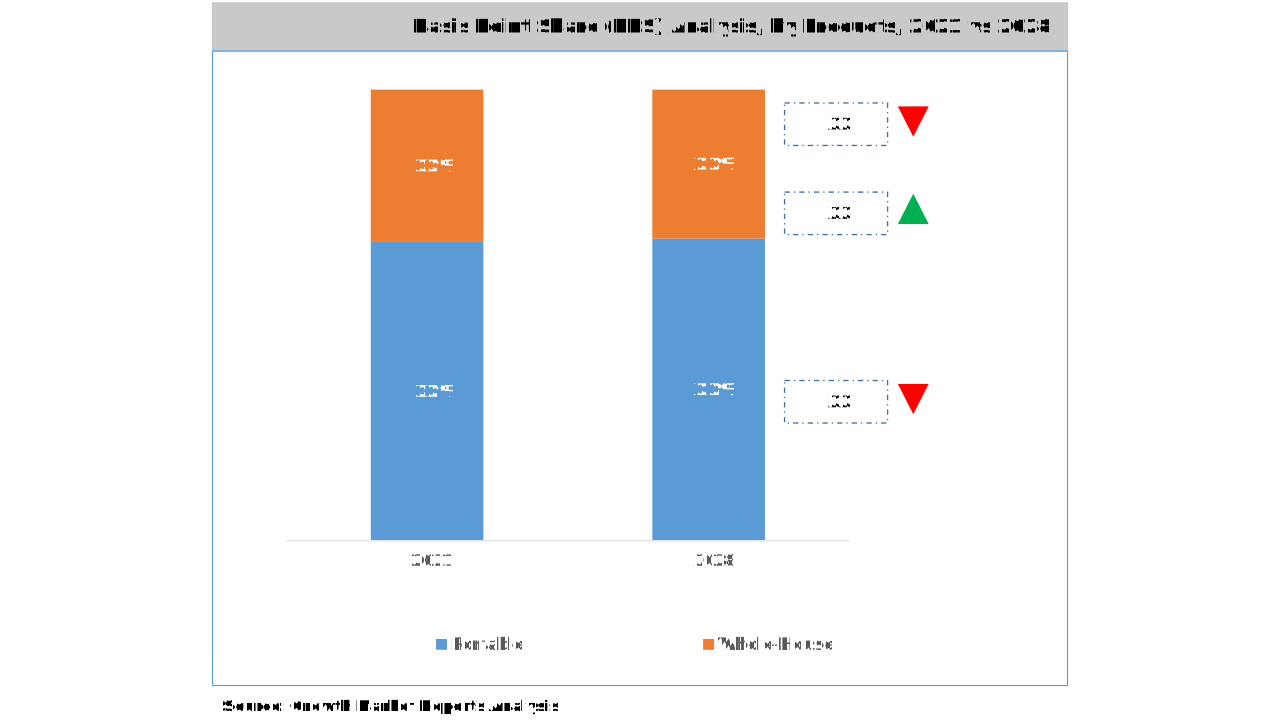
The household humidifier market by product type is segmented into ultrasonic humidifiers, evaporative humidifiers, steam vaporizers, and others. Among these, ultrasonic humidifiers have garnered the largest share due to their energy efficiency, silent operation, and advanced features. Ultrasonic humidifiers utilize high-frequency vibrations to produce a fine mist, making them highly effective for small and medium-sized rooms. Their low power consumption, coupled with the ability to integrate smart controls, has made them the preferred choice for tech-savvy consumers. The growing adoption of ultrasonic humidifiers in both residential and commercial settings is expected to sustain their dominance throughout the forecast period.
The Nano Mist Desk Humidifier is gaining popularity among consumers who seek compact and efficient solutions for personal spaces. This innovative product is designed to fit seamlessly on desks and workstations, providing a gentle mist that enhances air quality without occupying much space. The nano mist technology ensures that the moisture is evenly distributed, creating a comfortable microenvironment that can alleviate symptoms of dry air, such as dry skin and respiratory irritation. As more individuals work from home or in confined office spaces, the demand for desk humidifiers is likely to increase, making them a staple in modern homes and workplaces.
Evaporative humidifiers, on the other hand, are gaining traction owing to their natural humidification process and minimal risk of over-humidification. These devices use a fan to draw air through a wet wick or filter, releasing moisture into the air without producing visible mist. This technology is particularly favored in regions with moderate climates, where maintaining balanced humidity levels is essential for comfort and health. Manufacturers are responding to consumer demand by introducing compact and easy-to-clean evaporative models, further broadening their appeal.
Steam vaporizers, also known as warm mist humidifiers, cater to users seeking therapeutic benefits, such as relief from cold and flu symptoms. These devices boil water to create steam, which is then cooled slightly before being released into the air. While steam vaporizers are highly effective in providing immediate moisture and reducing airborne pathogens, they tend to consume more energy and require careful handling due to the risk of burns. Nevertheless, their popularity remains strong among households with young children and elderly members, who are more susceptible to respiratory issues.
The Humidifier Desk USB is a prime example of how technology is being integrated into everyday appliances to enhance user convenience. Designed to be powered through a USB connection, this type of humidifier is perfect for individuals who spend long hours at their desks, whether at home or in the office. The USB-powered feature allows for easy portability and use with laptops or power banks, making it an ideal choice for tech-savvy consumers. As the trend towards remote work and digital nomadism grows, the demand for portable and efficient humidification solutions like the Humidifier Desk USB is expected to see significant growth.
The "others" category includes hybrid and impeller humidifiers, which offer unique features and functionalities tailored to specific user needs. Hybrid models combine the benefits of ultrasonic and evaporative technologies, providing enhanced performance and flexibility. Impeller humidifiers, which use rotating disks to generate mist, are valued for their simplicity and affordability. As consumer preferences evolve, manufacturers are expected to invest in R&D to develop innovative product types that address emerging needs, such as air purification and aromatherapy integration, thereby expanding the market's product landscape.
| Attributes | Details |
| Report Title | Household Humidifier Market Research Report 2033 |
| By Product Type | Ultrasonic Humidifiers, Evaporative Humidifiers, Steam Vaporizers, Others |
| By Application | Residential, Commercial, Others |
| By Distribution Channel | Online Stores, Supermarkets/Hypermarkets, Specialty Stores, Others |
| By Technology | Cool Mist, Warm Mist, Dual Mist, Others |
| Regions Covered | North America, Europe, APAC, Latin America, MEA |
| Base Year | 2024 |
| Historic Data | 2018-2023 |
| Forecast Period | 2025-2033 |
| Number of Pages | 255 |
| Number of Tables & Figures | 385 |
| Customization Available | Yes, the report can be customized as per your need. |
The application segment of the household humidifier market is broadly categorized into residential, commercial, and others. The residential segment dominates the market, accounting for the majority of sales globally. The increasing adoption of humidifiers in homes is driven by growing awareness of the health benefits associated with optimal indoor humidity, particularly in regions experiencing harsh winters or arid climates. Consumers are investing in humidifiers to create comfortable living environments, reduce static electricity, and protect wooden furniture and musical instruments from damage caused by dry air.
In the commercial segment, humidifiers are being increasingly employed in offices, hotels, educational institutions, and healthcare facilities. The focus on employee well-being and productivity, as well as the need to maintain specific humidity levels for sensitive equipment and archival materials, is fueling demand in this category. Commercial-grade humidifiers are typically larger in capacity and equipped with advanced control systems to ensure consistent performance across expansive indoor spaces. The rising trend of green buildings and sustainable construction practices is further boosting the adoption of energy-efficient humidification solutions in commercial settings.
The "others" application category encompasses a range of niche uses, including industrial environments, laboratories, and public spaces. In these settings, maintaining precise humidity levels is critical to ensuring product quality, preserving sensitive materials, and complying with regulatory standards. For instance, humidifiers are used in museums and art galleries to protect valuable artifacts from deterioration caused by fluctuating humidity. As industries continue to recognize the importance of indoor air quality, the demand for specialized humidification solutions is expected to grow, creating new opportunities for market players.
Manufacturers are increasingly offering application-specific humidifiers, with features tailored to the unique requirements of each segment. For residential users, compact and aesthetically pleasing designs are prioritized, while commercial buyers seek robust, high-capacity units with advanced monitoring capabilities. The availability of customizable solutions is enabling end-users to select products that best meet their needs, thereby driving market growth across all application segments. As the benefits of humidification become more widely recognized, the application landscape is expected to diversify further, supporting sustained expansion of the household humidifier market.
The distribution channel segment is segmented into online stores, supermarkets/hypermarkets, specialty stores, and others. Online stores have emerged as the fastest-growing channel, driven by the convenience, competitive pricing, and wide product selection they offer. The proliferation of e-commerce platforms has made it easier for consumers to compare features, read reviews, and make informed purchasing decisions. Leading online retailers often provide detailed product information, installation guides, and after-sales support, enhancing the overall customer experience. The COVID-19 pandemic further accelerated the shift towards online shopping, with many consumers preferring contactless purchasing methods.
Supermarkets and hypermarkets continue to play a significant role, particularly in regions with well-established retail infrastructure. These outlets offer the advantage of immediate product availability and the opportunity for consumers to physically inspect products before purchase. Promotional campaigns, in-store demonstrations, and bundled offers are commonly used to attract buyers and drive sales. The presence of knowledgeable sales staff also helps to educate consumers about product features and maintenance requirements, fostering brand loyalty and repeat purchases.
Specialty stores, which focus on home appliances and electronics, cater to a niche market of discerning buyers seeking expert advice and premium products. These stores often carry a curated selection of high-end humidifiers, including models with advanced features such as integrated air purification and smart controls. The personalized service and product expertise offered by specialty retailers make them a preferred choice for consumers looking for tailored solutions. Manufacturers frequently collaborate with specialty stores to launch new products and gather direct feedback from end-users, facilitating continuous improvement and innovation.
The "others" category includes direct sales, catalog sales, and distributor networks, which are particularly relevant in emerging markets where modern retail channels are still developing. Direct sales allow manufacturers to establish closer relationships with customers and provide customized solutions for large-scale buyers, such as hotels and healthcare facilities. As distribution channels continue to evolve, the integration of omnichannel strategies is becoming increasingly important, enabling brands to reach a wider audience and enhance customer engagement across multiple touchpoints.
The technology segment of the household humidifier market is categorized into cool mist, warm mist, dual mist, and others. Cool mist humidifiers are the most popular technology, favored for their safety, energy efficiency, and suitability for use in households with children and pets. These devices use either ultrasonic or evaporative mechanisms to disperse a fine, cool mist into the air, effectively increasing humidity levels without raising room temperature. The growing emphasis on energy conservation and user safety is driving the widespread adoption of cool mist technology, particularly in residential settings.
Warm mist humidifiers, which produce steam by boiling water, are valued for their ability to provide immediate relief from respiratory ailments and reduce the presence of airborne bacteria and viruses. While these devices are highly effective in creating a comfortable indoor environment during cold weather, they tend to consume more electricity and require regular maintenance to prevent mineral buildup. The risk of accidental burns also limits their use in households with young children, prompting manufacturers to incorporate safety features such as automatic shut-off and cool-touch exteriors.
Dual mist humidifiers offer the flexibility of both cool and warm mist functions, allowing users to switch between modes based on seasonal requirements and personal preferences. This versatility makes them an attractive option for consumers seeking year-round comfort and convenience. Dual mist models often come equipped with advanced features such as digital controls, humidity sensors, and programmable timers, enhancing their appeal to tech-savvy buyers. The growing demand for multi-functional appliances is expected to drive the adoption of dual mist technology in both residential and commercial markets.
The "others" category encompasses emerging technologies such as hybrid humidifiers, which combine multiple humidification methods for optimal performance, and smart humidifiers equipped with IoT capabilities. These innovative products offer enhanced control, real-time monitoring, and seamless integration with home automation systems. As consumers increasingly seek personalized and connected solutions, the adoption of advanced humidification technologies is poised to accelerate, driving further growth and differentiation within the household humidifier market.
The household humidifier market presents significant opportunities for growth and innovation, particularly in the realm of smart home integration and health-focused solutions. The increasing adoption of IoT-enabled devices and smart home ecosystems is creating new avenues for manufacturers to differentiate their products and enhance user experience. By incorporating features such as remote monitoring, automated humidity control, and compatibility with voice assistants, companies can cater to the growing demand for convenience and connectivity. Additionally, the rising awareness of the health benefits associated with optimal indoor humidity, coupled with the trend towards wellness-oriented lifestyles, is expected to drive sustained demand for advanced humidification solutions across both residential and commercial segments.
Another major opportunity lies in the expansion of the market into emerging economies, where rapid urbanization, rising disposable incomes, and improving living standards are fueling demand for modern home appliances. Manufacturers can leverage localized marketing strategies, affordable pricing, and partnerships with regional distributors to penetrate these high-potential markets. The growing emphasis on energy efficiency and environmental sustainability also presents opportunities for innovation, with consumers increasingly seeking eco-friendly and low-maintenance products. By investing in R&D and embracing sustainable manufacturing practices, companies can strengthen their competitive position and capture a larger share of the global household humidifier market.
Despite these opportunities, the market faces certain restraining factors, chief among them being concerns related to product maintenance and hygiene. Improper maintenance of humidifiers can lead to the growth of mold, bacteria, and other pathogens, potentially compromising indoor air quality and posing health risks to users. The need for regular cleaning and replacement of filters or components can deter some consumers from adopting humidification solutions, particularly in regions with limited access to maintenance services and replacement parts. Addressing these challenges through user-friendly designs, automated cleaning features, and comprehensive after-sales support will be critical to ensuring sustained market growth and consumer satisfaction.
The Asia Pacific region stands out as the fastest-growing market for household humidifiers, with a market size of USD 1.2 billion in 2024 and a projected CAGR of 7.4% through 2033. Rapid urbanization, increasing health awareness, and rising disposable incomes are key factors driving demand in countries such as China, India, and Japan. Consumers in these markets are increasingly prioritizing indoor air quality, particularly in densely populated urban centers where pollution levels are high. The proliferation of e-commerce platforms and the availability of affordable, feature-rich products are further fueling market expansion in the region. Government initiatives aimed at improving public health and promoting sustainable living are also expected to support the adoption of household humidifiers in Asia Pacific.
North America remains a mature and highly lucrative market, accounting for approximately USD 1.05 billion in 2024. The region benefits from a well-established consumer base, advanced distribution networks, and a strong focus on health and wellness. The prevalence of respiratory illnesses, coupled with extreme weather conditions in certain areas, drives consistent demand for humidification solutions. The trend towards smart home integration and the adoption of IoT-enabled devices is particularly pronounced in North America, with consumers seeking advanced features and seamless connectivity. As manufacturers continue to innovate and expand their product offerings, the North American household humidifier market is expected to maintain steady growth over the forecast period.
Europe follows closely, with a market size of USD 900 million in 2024 and a strong emphasis on energy efficiency and environmental sustainability. The region's stringent regulations on indoor air quality and the growing adoption of green building practices are fostering demand for advanced humidification solutions in both residential and commercial settings. Countries such as Germany, the United Kingdom, and France are leading the way in terms of product adoption and technological innovation. Meanwhile, the Middle East & Africa and Latin America are experiencing gradual market growth, supported by improving economic conditions and increasing urbanization. Collectively, these regions contribute to the overall expansion of the global household humidifier market, with regional dynamics shaping the competitive landscape and influencing future growth trajectories.
The global household humidifier market is highly competitive, characterized by the presence of both established multinational corporations and emerging regional players. The competitive landscape is shaped by continuous innovation, product differentiation, and strategic partnerships aimed at expanding market reach and enhancing brand visibility. Leading companies are investing heavily in research and development to introduce advanced features such as smart controls, energy-efficient technologies, and integrated air purification systems. The ability to offer a diverse product portfolio that caters to varying consumer preferences and application requirements is a key determinant of success in this dynamic market.
Price competitiveness and distribution network strength are critical factors influencing market share, particularly in regions with high price sensitivity and rapidly evolving consumer preferences. Companies are leveraging omni-channel strategies, combining online and offline sales channels to maximize customer engagement and drive sales growth. The expansion of e-commerce platforms has lowered entry barriers for new players, intensifying competition and prompting established brands to enhance their digital presence and customer service capabilities. Marketing initiatives focused on health benefits, ease of use, and after-sales support are increasingly being used to differentiate products and build customer loyalty.
Mergers, acquisitions, and strategic alliances are common strategies employed by market leaders to strengthen their market position and access new technologies or distribution channels. Collaborations with technology providers and component suppliers enable companies to accelerate product development and reduce time-to-market for innovative solutions. In addition, partnerships with healthcare organizations and government agencies are facilitating the adoption of humidification solutions in public spaces and healthcare facilities, further expanding the market's application scope.
Some of the major companies operating in the household humidifier market include Honeywell International Inc., Koninklijke Philips N.V., Dyson Ltd., BONECO AG, Vicks (Kaz USA, Inc.), Levoit, Crane USA, and Xiaomi Corporation. Honeywell is renowned for its technologically advanced and energy-efficient humidification solutions, catering to both residential and commercial clients. Philips has established a strong presence with its range of smart and user-friendly humidifiers, emphasizing health and wellness benefits. Dyson, known for its innovative product designs and premium positioning, continues to push the boundaries of air treatment technology. BONECO AG, with its Swiss heritage, focuses on high-quality, durable products that combine performance with aesthetic appeal.
Vicks (Kaz USA, Inc.) is a trusted name in the healthcare segment, offering a wide range of steam vaporizers and warm mist humidifiers designed to provide relief from cold and flu symptoms. Levoit has rapidly gained market share through its affordable and feature-rich ultrasonic humidifiers, which are particularly popular among online shoppers. Crane USA and Xiaomi Corporation are leveraging their strong distribution networks and brand recognition to expand their presence in both developed and emerging markets. These companies, along with a host of regional players, are continuously innovating to meet evolving consumer needs and capitalize on emerging market opportunities, ensuring a vibrant and competitive household humidifier market landscape.
The Household Humidifier market has been segmented on the basis of
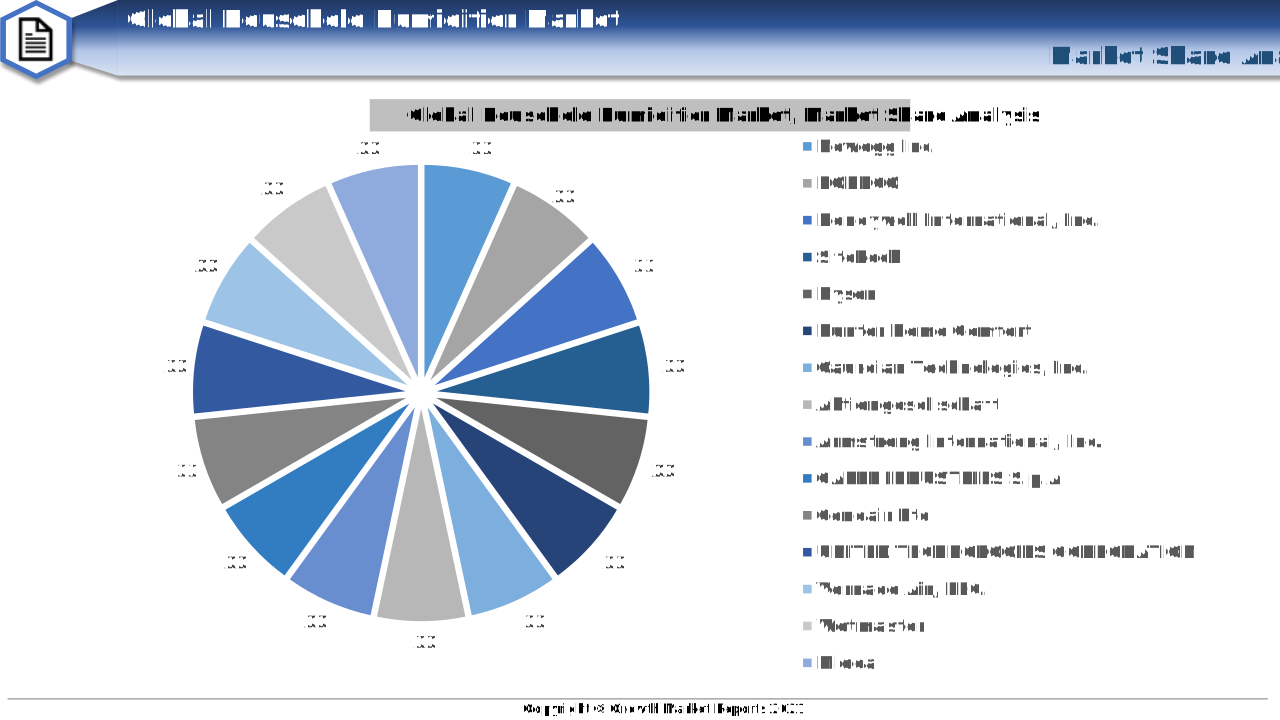
Major players of the market are Newegg Inc., BONECO, Honeywell International, Inc., SiteLock, Dyson, Hunter Home Comfort, Gaurdian Technologies, Inc., Aktiengesellschaft, Armstrong International, Inc., CAREL INDUSTRIES S.p.A, Condair Ltd, UNITED TECHNOLOGIES CORPORATION, Vornado Air, LLC, Condair Group, Coway Co., Ltd., Koninklijke Philips N.V, STULZ GmbH, DriSteem, IKEUCHI, Stadler Form, Essick Air, Wetmaster, and Midea
Companies are engaging in partnerships, collaborations, and expanding their product offerings to expand their market share.
Innovations such as IoT-enabled features, automated humidity control, energy-efficient designs, and integration with smart home systems are enhancing user experience and driving market differentiation.
Opportunities include smart home integration, expansion into emerging economies, and demand for eco-friendly products. Challenges involve concerns about product maintenance, hygiene, and the need for regular cleaning to prevent mold and bacteria.
Key companies include Honeywell International Inc., Philips, Dyson, BONECO AG, Vicks (Kaz USA, Inc.), Levoit, Crane USA, Xiaomi Corporation, and several others.
Asia Pacific is the fastest-growing region, driven by urbanization and rising incomes. North America and Europe also hold significant market shares due to established consumer bases and advanced distribution networks.
The main technologies include cool mist, warm mist, dual mist, and emerging options like hybrid and smart IoT-enabled humidifiers.
Online stores are the fastest-growing distribution channel due to convenience and wide selection, followed by supermarkets/hypermarkets, specialty stores, and direct sales.
Household humidifiers are primarily used in residential settings, but their application is expanding into commercial spaces such as offices, hotels, healthcare facilities, and niche areas like museums and laboratories.
Ultrasonic humidifiers hold the largest market share due to their energy efficiency, silent operation, advanced features, and suitability for both residential and commercial use.
Key growth drivers include rising consumer awareness about indoor air quality, increasing prevalence of respiratory ailments and allergies, integration of smart technologies, demand for energy-efficient appliances, and expanding applications in both residential and commercial spaces.
The global household humidifier market reached USD 3.8 billion in 2024 and is projected to grow at a CAGR of 6.2% from 2025 to 2033, reaching USD 6.5 billion by 2033.