Pastries Market Research Report 2033

Pastries Market Research Report 2033

Segments - by Product Type (Croissants, Danish Pastries, Puff Pastries, Tarts, Turnovers, Others), by Application (Household, Foodservice, Bakery Shops, Others), by Distribution Channel (Supermarkets/Hypermarkets, Convenience Stores, Online Retail, Specialty Stores, Others)

https://growthmarketreports.com/Anuradha
Author : Anuradha B. More
https://growthmarketreports.com/Vaibhav
Fact-checked by : Vaibhav Chandola
https://growthmarketreports.com/Shruti
Editor : Shruti Bhat

Upcoming | Report ID :FB-965 | 4.8 Rating | 100 Reviews | 264 Pages | Format : Docx PDF

Report Description


Pastries Market Outlook

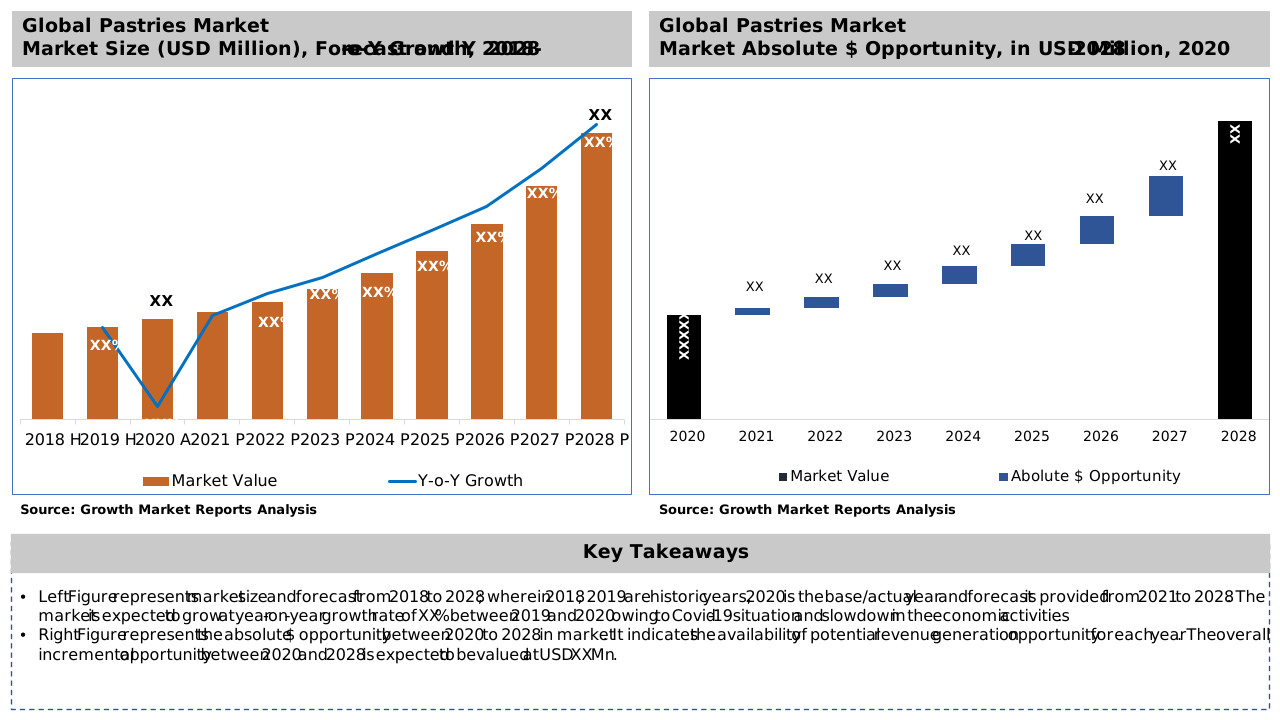
According to our latest research, the global pastries market size reached USD 67.8 billion in 2024, reflecting robust demand across both developed and emerging economies. The market is projected to grow at a CAGR of 4.9% from 2025 to 2033, with the overall market size expected to reach USD 105.2 billion by 2033. Key growth factors include the rising popularity of premium and artisanal pastries, increasing urbanization, and evolving consumer preferences for convenient and indulgent snacks.

The growth trajectory of the pastries market is strongly influenced by changing consumer lifestyles and dietary habits. Urbanization and a busier pace of life have increased the demand for ready-to-eat and on-the-go food products, and pastries fit perfectly into this trend. In addition, the growing middle-class population, particularly in Asia Pacific and Latin America, is contributing to increased disposable income and heightened spending on premium bakery products. Consumers are increasingly seeking out high-quality, innovative pastries that offer unique flavors, healthier ingredients, and attractive presentation, driving bakery manufacturers to invest in product innovation and premiumization strategies.

Another significant driver for the pastries market is the rapid expansion of foodservice channels and bakery shops. The proliferation of cafes, quick-service restaurants, and specialty bakery outlets, especially in urban centers, has made pastries more accessible to a broader consumer base. Furthermore, the influence of Western food culture in developing regions has led to the introduction of new pastry varieties and flavors, further fueling market growth. The rise of digital platforms and food delivery services has also made it easier for consumers to purchase pastries from the comfort of their homes, thereby expanding the market reach for bakery brands and manufacturers.

Health and wellness trends are also shaping the future of the pastries market. With increasing awareness of nutrition and dietary restrictions, there is a growing demand for pastries made with healthier ingredients such as whole grains, reduced sugar, and gluten-free or vegan options. This shift is prompting manufacturers to innovate and diversify their product portfolios to cater to health-conscious consumers. The integration of superfoods, organic ingredients, and clean-label formulations is becoming more common, helping brands differentiate themselves in an increasingly competitive market landscape.

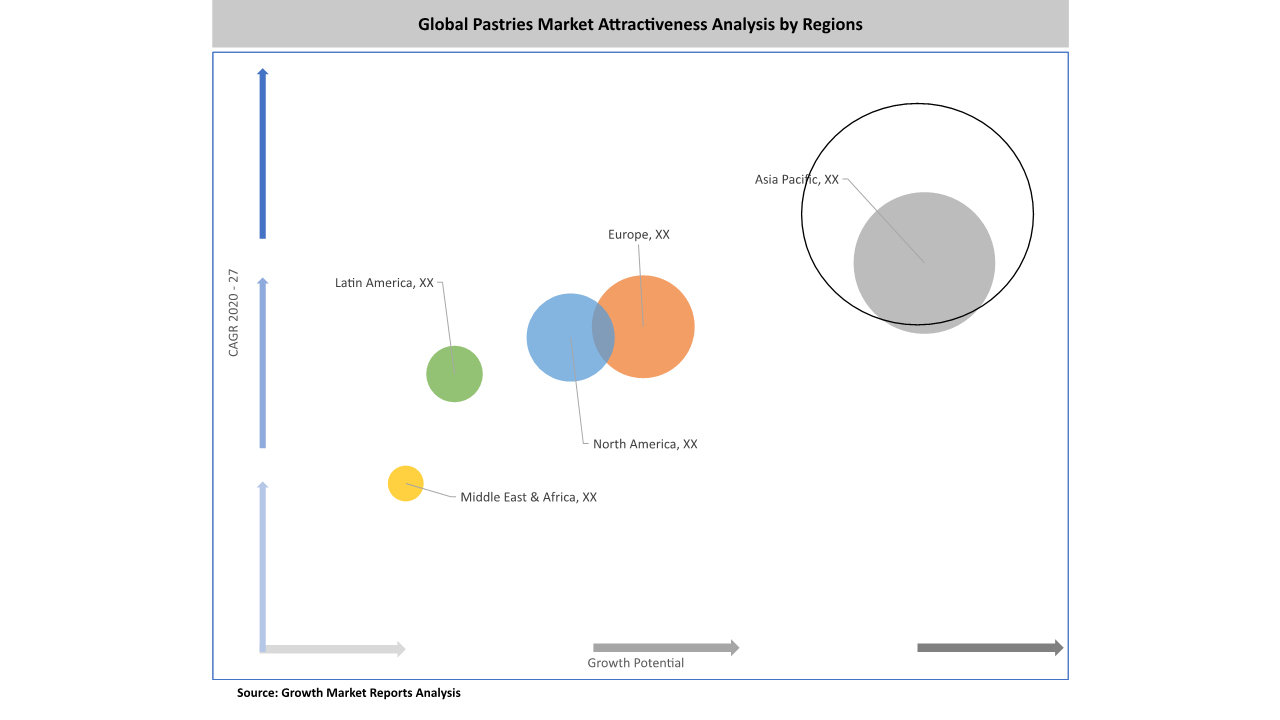
Regionally, Europe continues to dominate the pastries market in 2024, accounting for the largest share due to its rich bakery tradition and high per capita consumption. However, the Asia Pacific region is witnessing the fastest growth, driven by rising urbanization, expanding middle-class populations, and growing Western influence on eating habits. North America remains a mature market but continues to see steady growth, supported by strong demand for premium and innovative pastry products. Latin America and the Middle East & Africa are also emerging as promising markets, with increasing investments in bakery infrastructure and retail expansion.

Global Pastries Industry Outlook

Product Type Analysis

The pastries market is segmented by product type into croissants, Danish pastries, puff pastries, tarts, turnovers, and others. Croissants remain the most popular product type globally, particularly in Europe and North America. Their flaky texture and buttery flavor have made them a staple in both retail and foodservice channels. Growth in this segment is propelled by the introduction of innovative fillings and healthier variants, such as whole wheat and gluten-free croissants, which cater to evolving consumer preferences. Manufacturers are also capitalizing on the trend of mini and bite-sized croissants, appealing to consumers seeking portion control and convenience.

Danish pastries are another key segment, known for their rich, layered dough and diverse range of sweet and savory fillings. The demand for Danish pastries is particularly strong in foodservice channels, where they are often featured in breakfast menus and as dessert offerings. The segment is witnessing increased innovation, with manufacturers experimenting with new flavors, regional ingredients, and artisanal techniques to appeal to discerning consumers. The growing popularity of brunch culture and café dining is also contributing to the rising demand for Danish pastries, especially among younger demographics.

Puff pastries, celebrated for their light and airy texture, are widely used in both sweet and savory applications. This versatility has made them a favorite among bakery shops and foodservice providers. The segment is benefiting from the trend towards premiumization, with an increasing number of artisanal bakeries offering handmade puff pastries with gourmet fillings. Additionally, the convenience factor associated with frozen puff pastry products is driving growth in the household segment, as consumers seek easy-to-prepare options for entertaining and everyday snacking.

Tarts and turnovers are experiencing steady growth as consumers seek more variety in their pastry options. Tarts, with their visually appealing presentation and wide range of flavor possibilities, are increasingly featured in specialty bakery shops and high-end foodservice outlets. Turnovers, on the other hand, are gaining traction as a portable snack option, suitable for both sweet and savory fillings. The introduction of healthier ingredients and innovative packaging solutions is further enhancing the appeal of these product types, making them accessible to a broader audience.

The "others" category encompasses a diverse range of pastries, including éclairs, cannoli, and regional specialties. This segment is characterized by strong demand for novelty and limited-edition offerings, driven by social media trends and seasonal promotions. Manufacturers are leveraging this trend by launching exclusive pastry collections and collaborating with renowned chefs to create unique products. The segment is also benefiting from the growing popularity of international cuisines, as consumers seek out authentic pastry experiences from different cultures.

Report Scope

Attributes Details
Report Title Pastries Market Research Report 2033
By Product Type Croissants, Danish Pastries, Puff Pastries, Tarts, Turnovers, Others
By Application Household, Foodservice, Bakery Shops, Others
By Distribution Channel Supermarkets/Hypermarkets, Convenience Stores, Online Retail, Specialty Stores, Others
Regions Covered North America, Europe, APAC, Latin America, MEA
Base Year 2024
Historic Data 2018-2023
Forecast Period 2025-2033
Number of Pages 264
Number of Tables & Figures 271
Customization Available Yes, the report can be customized as per your need.

Application Analysis

The pastries market by application is segmented into household, foodservice, bakery shops, and others. The household segment has witnessed substantial growth in recent years, driven by the increasing availability of packaged and frozen pastries in retail channels. Busy lifestyles and the convenience of ready-to-eat products have made pastries a popular choice for breakfast, snacks, and desserts at home. The trend towards home baking and DIY pastry kits has also contributed to the growth of this segment, as consumers seek creative and engaging culinary experiences.

Foodservice is a major application segment, encompassing cafes, restaurants, hotels, and catering services. This segment remains a significant driver of market growth, as pastries are a staple in breakfast buffets, dessert menus, and grab-and-go offerings. The rise of specialty coffee shops and premium café chains has further boosted demand for high-quality and innovative pastries. Foodservice operators are increasingly collaborating with pastry chefs to develop signature products that set them apart from competitors and enhance the overall dining experience.

Bakery shops continue to play a vital role in the pastries market, serving as key distribution points for both traditional and contemporary pastry offerings. The resurgence of artisanal bakeries and the growing consumer interest in handcrafted, small-batch pastries have revitalized this segment. Bakery shops are also at the forefront of introducing new flavors, seasonal specials, and limited-edition products, which help drive foot traffic and foster customer loyalty. The emphasis on freshness, quality, and unique presentation is particularly important in this segment, as consumers are willing to pay a premium for superior products.

The "others" application segment includes institutional buyers such as schools, hospitals, and corporate cafeterias, as well as catering services for events and celebrations. This segment is characterized by bulk purchasing and a focus on value-for-money offerings. The demand for pastries in institutional settings is driven by the need for convenient, portion-controlled snacks and desserts that can be easily served to large groups. Manufacturers are responding by offering a wide range of packaging options and product formats tailored to the specific needs of institutional buyers.

Distribution Channel Analysis

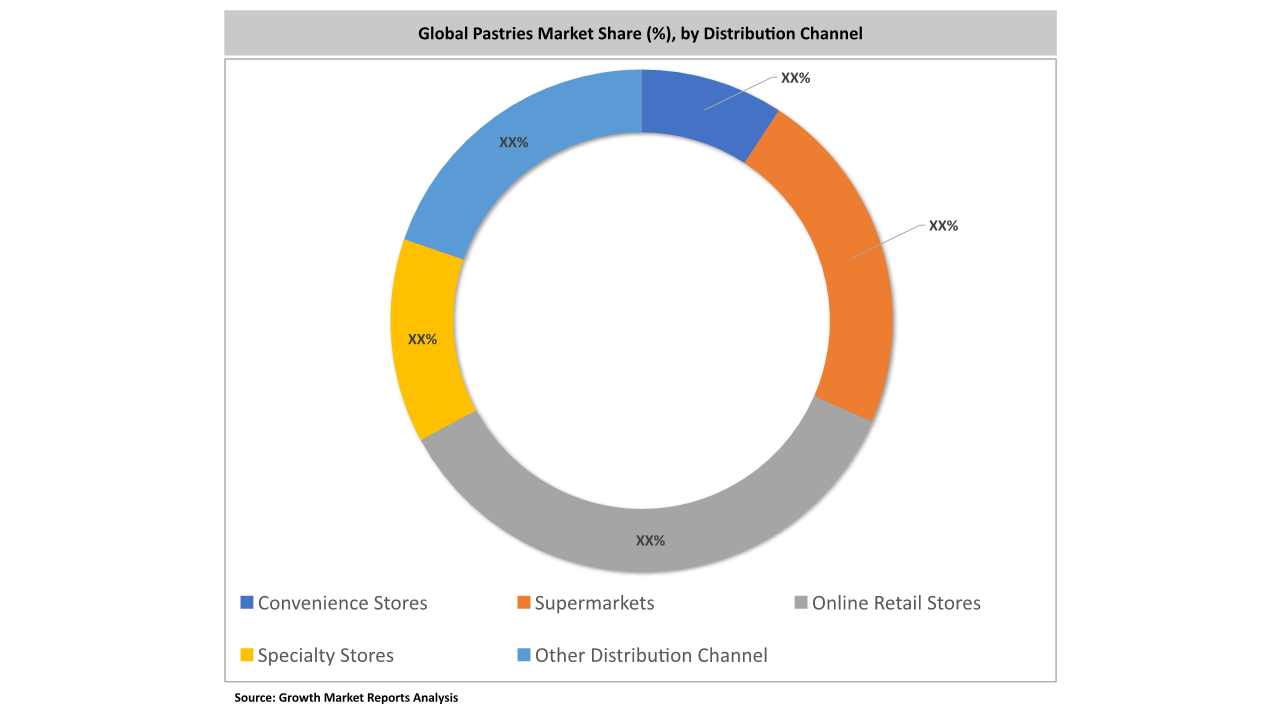
The distribution channel landscape for the pastries market is diverse, with supermarkets/hypermarkets, convenience stores, online retail, specialty stores, and others playing key roles. Supermarkets and hypermarkets account for the largest share of pastry sales globally, owing to their extensive product assortments, attractive promotions, and widespread accessibility. These retail formats are particularly popular among urban consumers who value the convenience of one-stop shopping and the ability to compare multiple brands and product varieties in a single location.

Convenience stores are gaining traction as a preferred distribution channel for pastries, especially among younger consumers and those seeking quick, on-the-go snacks. The strategic placement of pastries near checkout counters and the availability of single-serve packaging options have contributed to impulse purchases in this channel. Manufacturers are increasingly partnering with convenience store chains to launch exclusive products and promotional campaigns, further boosting sales in this segment.

Online retail is emerging as a rapidly growing distribution channel, propelled by the global shift towards e-commerce and digital shopping platforms. The convenience of home delivery, coupled with the ability to access a wide range of products and brands, has made online retail an attractive option for consumers. The rise of food delivery apps and direct-to-consumer bakery brands has further expanded the reach of pastries, enabling manufacturers to tap into new customer segments and geographic markets. Online platforms also provide valuable data and insights into consumer preferences, helping brands tailor their offerings and marketing strategies.

Specialty stores, including gourmet food shops and artisanal bakeries, cater to consumers seeking premium, handcrafted pastries and unique flavor experiences. These stores emphasize quality, freshness, and personalized service, attracting discerning customers who are willing to pay a premium for exceptional products. Specialty stores often serve as trendsetters in the market, introducing innovative flavors, seasonal collections, and limited-edition pastries that inspire broader industry adoption. The emphasis on local sourcing and sustainable practices is also gaining importance in this channel, aligning with the values of environmentally conscious consumers.

The "others" distribution channel segment includes vending machines, institutional suppliers, and direct sales. Vending machines, in particular, are becoming more sophisticated, offering a variety of fresh and packaged pastries in high-traffic locations such as airports, train stations, and office buildings. Direct sales through farmers' markets, pop-up events, and subscription services are also gaining popularity, providing opportunities for small-scale and artisanal producers to connect with consumers directly.

Opportunities & Threats

The pastries market presents numerous opportunities for growth, particularly in the areas of product innovation and premiumization. As consumers become more adventurous in their food choices, there is a growing demand for unique flavors, novel ingredients, and visually stunning pastries. Manufacturers who invest in research and development to create differentiated products stand to gain a competitive edge. The rise of health and wellness trends also offers opportunities to develop pastries with healthier ingredients, such as whole grains, plant-based alternatives, and reduced sugar formulations. Additionally, expanding into emerging markets with rising disposable incomes and evolving consumer tastes can unlock new revenue streams for established brands and new entrants alike.

Another significant opportunity lies in leveraging digital technologies and e-commerce platforms to reach a broader customer base. The increasing popularity of online retail and food delivery services has transformed the way consumers purchase and consume pastries. Brands that embrace digital marketing, personalized promotions, and direct-to-consumer sales models can build stronger relationships with customers and enhance brand loyalty. Furthermore, partnerships with foodservice operators, cafes, and convenience stores can help manufacturers expand their market presence and drive incremental sales through co-branded offerings and exclusive product launches.

Despite these opportunities, the pastries market faces several restraining factors that could impede growth. One of the primary challenges is the increasing prevalence of health concerns related to sugar and fat content in traditional pastries. Rising awareness of obesity, diabetes, and other lifestyle-related diseases is prompting consumers to reduce their consumption of indulgent bakery products. Regulatory pressures, such as sugar taxes and labeling requirements, are also compelling manufacturers to reformulate their products and invest in healthier alternatives. Additionally, intense competition and price sensitivity in the market can erode profit margins, making it essential for brands to differentiate themselves through quality, innovation, and effective branding.

Regional Outlook

Europe continues to lead the global pastries market, with a market value of USD 23.7 billion in 2024, accounting for approximately 35% of the total market share. The region's rich bakery heritage, high per capita consumption, and strong presence of artisanal bakeries contribute to its dominance. Countries such as France, Germany, and the United Kingdom are key markets, characterized by a wide variety of traditional and contemporary pastry offerings. The emphasis on quality ingredients, craftsmanship, and innovation has helped European bakeries maintain their leadership position in the global market.

The Asia Pacific region is experiencing the fastest growth in the pastries market, with a CAGR of 6.2% projected from 2025 to 2033. The market size in Asia Pacific reached USD 16.1 billion in 2024, driven by rapid urbanization, rising disposable incomes, and increasing exposure to Western food culture. China, Japan, India, and South Korea are among the largest and most dynamic markets in the region. The growing popularity of premium and innovative pastry products, coupled with expanding retail and foodservice infrastructure, is fueling market expansion. Local adaptation of global pastry trends and the introduction of region-specific flavors are also contributing to the region's robust growth.

North America remains a mature but steadily growing market, with a value of USD 14.2 billion in 2024. The region is characterized by strong demand for premium and artisanal pastries, particularly in urban centers and among younger consumers. The influence of multiculturalism has led to the introduction of diverse pastry offerings, catering to a wide range of tastes and preferences. Latin America and the Middle East & Africa are emerging as promising markets, with combined market values of USD 8.7 billion and USD 5.1 billion respectively in 2024. These regions are benefiting from increasing investments in bakery infrastructure, retail expansion, and rising consumer awareness of international pastry trends.

Pastries Market Statistics

Competitor Outlook

The global pastries market is highly competitive, with a mix of multinational corporations, regional players, and artisanal bakeries vying for market share. The competitive landscape is characterized by continuous product innovation, aggressive marketing strategies, and a strong emphasis on quality and brand differentiation. Leading companies are investing in research and development to create innovative products that cater to evolving consumer preferences, such as healthier pastries, unique flavors, and visually appealing designs. The rise of premium and artisanal pastries has intensified competition, prompting established brands to expand their product portfolios and collaborate with renowned pastry chefs.

Mergers and acquisitions are common in the pastries market, as companies seek to strengthen their market position, expand their geographic reach, and gain access to new technologies and distribution channels. Strategic partnerships with foodservice operators, retailers, and e-commerce platforms are also prevalent, enabling manufacturers to enhance their market presence and drive incremental sales. The growing importance of sustainability and ethical sourcing is influencing competitive dynamics, with leading brands adopting environmentally friendly practices and transparent supply chains to appeal to socially conscious consumers.

Digital transformation is reshaping the competitive landscape, with brands leveraging e-commerce platforms, social media, and digital marketing to engage with consumers and build brand loyalty. The ability to offer personalized products, promotions, and experiences is becoming a key differentiator in the market. Companies that invest in digital capabilities and data analytics are better positioned to understand consumer preferences, anticipate market trends, and respond quickly to changing demands.

Some of the major companies operating in the global pastries market include Grupo Bimbo S.A.B. de C.V., ARYZTA AG, General Mills, Inc., Finsbury Food Group Plc, Flowers Foods, Inc., Yamazaki Baking Co., Ltd., and Lantmännen Unibake. Grupo Bimbo, headquartered in Mexico, is one of the largest bakery companies in the world, with a strong presence in both packaged and fresh pastries across multiple regions. ARYZTA AG, based in Switzerland, specializes in frozen bakery products and has a significant footprint in Europe and North America. General Mills is a major player in the packaged pastries segment, offering a wide range of products under well-known brands.

Finsbury Food Group, Flowers Foods, and Yamazaki Baking are prominent regional players with strong brand recognition and extensive distribution networks. Lantmännen Unibake, a leading European bakery company, is known for its innovative product offerings and commitment to sustainability. These companies are continuously investing in product development, marketing, and expansion strategies to maintain their competitive edge. The presence of numerous artisanal and specialty bakeries further enriches the competitive landscape, offering consumers a diverse array of high-quality, handcrafted pastries.

Key Players

  • Grupo Bimbo S.A.B. de C.V.
  • Aryzta AG
  • Flowers Foods, Inc.
  • Finsbury Food Group Plc
  • Hostess Brands, Inc.
  • McKee Foods Corporation
  • Yamazaki Baking Co., Ltd.
  • Mondelez International, Inc.
  • General Mills, Inc.
  • Campbell Soup Company (Pepperidge Farm)
  • Lantmännen Unibake International
  • Premier Foods plc
  • Rich Products Corporation
  • George Weston Limited
  • Britannia Industries Limited
  • Barilla Group
  • Dr. August Oetker Nahrungsmittel KG
  • Grupo Siro
  • BreadTalk Group Limited
  • Hsu Fu Chi International Ltd.
Pastries Market Overview

Segments

The Pastries market has been segmented on the basis of

Product Type

  • Croissants
  • Danish Pastries
  • Puff Pastries
  • Tarts
  • Turnovers
  • Others

Application

  • Household
  • Foodservice
  • Bakery Shops
  • Others

Distribution Channel

  • Supermarkets/Hypermarkets
  • Convenience Stores
  • Online Retail
  • Specialty Stores
  • Others

Competitive Landscape

Key players competing in the global pastries market include George Weston Ltd., Hostess Brands, LLC, Grupo Bimbo, Finsbury Food Group Plc, McKee Foods Corporation, Flowers Foods, Yamazaki Baking Co. Ltd., and Pepperidge Farm Incorporated. Some of these players are engaged in several market strategies such as mergers, acquisitions, partnerships, collaborations, capacity expansion, and product launches to increase their market shares.
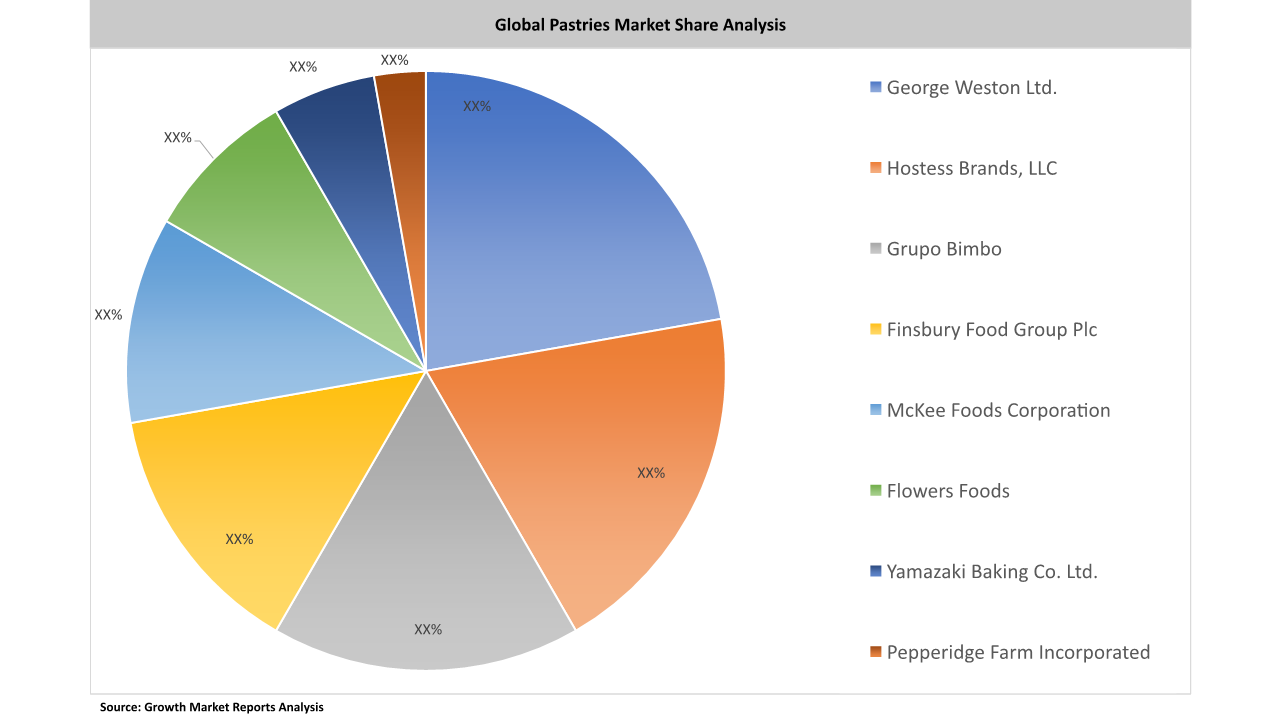

Global Pastries Market By Key Players

Frequently Asked Questions

Digital platforms and e-commerce are expanding market reach, enabling direct-to-consumer sales, personalized marketing, and providing valuable consumer insights for brands to tailor their offerings.

Opportunities include product innovation, premiumization, healthier ingredients, and digital expansion. Challenges include health concerns over sugar and fat, regulatory pressures, and intense market competition.

Key companies include Grupo Bimbo S.A.B. de C.V., ARYZTA AG, General Mills, Finsbury Food Group, Flowers Foods, Yamazaki Baking, Lantmännen Unibake, Hostess Brands, and Mondelez International, among others.

Pastries are sold through supermarkets/hypermarkets, convenience stores, online retail, specialty stores, vending machines, and direct sales channels.

There is increasing demand for healthier pastries made with whole grains, reduced sugar, gluten-free, vegan, and clean-label ingredients, prompting manufacturers to innovate and diversify their product offerings.

Key growth drivers include rising demand for premium and artisanal pastries, increasing urbanization, evolving consumer preferences for convenience, innovation in flavors and ingredients, and the expansion of foodservice and digital retail channels.

The pastries market is segmented into croissants, Danish pastries, puff pastries, tarts, turnovers, and others such as éclairs and cannoli.

Europe currently dominates the pastries market, accounting for about 35% of the global share, while the Asia Pacific region is experiencing the fastest growth, driven by urbanization and rising disposable incomes.

The pastries market is expected to grow at a CAGR of 4.9% from 2025 to 2033, reaching an estimated USD 105.2 billion by 2033.

As of 2024, the global pastries market size reached USD 67.8 billion, reflecting strong demand across both developed and emerging economies.

Table Of Content

Chapter 1 Executive Summary
Chapter 2 Assumptions and Acronyms Used
Chapter 3 Research Methodology
Chapter 4 Pastries Market Overview
   4.1 Introduction
      4.1.1 Market Taxonomy
      4.1.2 Market Definition
      4.1.3 Macro-Economic Factors Impacting the Market Growth
   4.2 Pastries Market Dynamics
      4.2.1 Market Drivers
      4.2.2 Market Restraints
      4.2.3 Market Opportunity
   4.3 Pastries Market - Supply Chain Analysis
      4.3.1 List of Key Suppliers
      4.3.2 List of Key Distributors
      4.3.3 List of Key Consumers
   4.4 Key Forces Shaping the Pastries Market
      4.4.1 Bargaining Power of Suppliers
      4.4.2 Bargaining Power of Buyers
      4.4.3 Threat of Substitution
      4.4.4 Threat of New Entrants
      4.4.5 Competitive Rivalry
   4.5 Global Pastries Market Size & Forecast, 2023-2032
      4.5.1 Pastries Market Size and Y-o-Y Growth
      4.5.2 Pastries Market Absolute $ Opportunity

Chapter 5 Global Pastries Market Analysis and Forecast By Product Type
   5.1 Introduction
      5.1.1 Key Market Trends & Growth Opportunities By Product Type
      5.1.2 Basis Point Share (BPS) Analysis By Product Type
      5.1.3 Absolute $ Opportunity Assessment By Product Type
   5.2 Pastries Market Size Forecast By Product Type
      5.2.1 Croissants
      5.2.2 Danish Pastries
      5.2.3 Puff Pastries
      5.2.4 Tarts
      5.2.5 Turnovers
      5.2.6 Others
   5.3 Market Attractiveness Analysis By Product Type

Chapter 6 Global Pastries Market Analysis and Forecast By Application
   6.1 Introduction
      6.1.1 Key Market Trends & Growth Opportunities By Application
      6.1.2 Basis Point Share (BPS) Analysis By Application
      6.1.3 Absolute $ Opportunity Assessment By Application
   6.2 Pastries Market Size Forecast By Application
      6.2.1 Household
      6.2.2 Foodservice
      6.2.3 Bakery Shops
      6.2.4 Others
   6.3 Market Attractiveness Analysis By Application

Chapter 7 Global Pastries Market Analysis and Forecast By Distribution Channel
   7.1 Introduction
      7.1.1 Key Market Trends & Growth Opportunities By Distribution Channel
      7.1.2 Basis Point Share (BPS) Analysis By Distribution Channel
      7.1.3 Absolute $ Opportunity Assessment By Distribution Channel
   7.2 Pastries Market Size Forecast By Distribution Channel
      7.2.1 Supermarkets/Hypermarkets
      7.2.2 Convenience Stores
      7.2.3 Online Retail
      7.2.4 Specialty Stores
      7.2.5 Others
   7.3 Market Attractiveness Analysis By Distribution Channel

Chapter 8 Global Pastries Market Analysis and Forecast by Region
   8.1 Introduction
      8.1.1 Key Market Trends & Growth Opportunities By Region
      8.1.2 Basis Point Share (BPS) Analysis By Region
      8.1.3 Absolute $ Opportunity Assessment By Region
   8.2 Pastries Market Size Forecast By Region
      8.2.1 North America
      8.2.2 Europe
      8.2.3 Asia Pacific
      8.2.4 Latin America
      8.2.5 Middle East & Africa (MEA)
   8.3 Market Attractiveness Analysis By Region

Chapter 9 Coronavirus Disease (COVID-19) Impact 
   9.1 Introduction 
   9.2 Current & Future Impact Analysis 
   9.3 Economic Impact Analysis 
   9.4 Government Policies 
   9.5 Investment Scenario

Chapter 10 North America Pastries Analysis and Forecast
   10.1 Introduction
   10.2 North America Pastries Market Size Forecast by Country
      10.2.1 U.S.
      10.2.2 Canada
   10.3 Basis Point Share (BPS) Analysis by Country
   10.4 Absolute $ Opportunity Assessment by Country
   10.5 Market Attractiveness Analysis by Country
   10.6 North America Pastries Market Size Forecast By Product Type
      10.6.1 Croissants
      10.6.2 Danish Pastries
      10.6.3 Puff Pastries
      10.6.4 Tarts
      10.6.5 Turnovers
      10.6.6 Others
   10.7 Basis Point Share (BPS) Analysis By Product Type 
   10.8 Absolute $ Opportunity Assessment By Product Type 
   10.9 Market Attractiveness Analysis By Product Type
   10.10 North America Pastries Market Size Forecast By Application
      10.10.1 Household
      10.10.2 Foodservice
      10.10.3 Bakery Shops
      10.10.4 Others
   10.11 Basis Point Share (BPS) Analysis By Application 
   10.12 Absolute $ Opportunity Assessment By Application 
   10.13 Market Attractiveness Analysis By Application
   10.14 North America Pastries Market Size Forecast By Distribution Channel
      10.14.1 Supermarkets/Hypermarkets
      10.14.2 Convenience Stores
      10.14.3 Online Retail
      10.14.4 Specialty Stores
      10.14.5 Others
   10.15 Basis Point Share (BPS) Analysis By Distribution Channel 
   10.16 Absolute $ Opportunity Assessment By Distribution Channel 
   10.17 Market Attractiveness Analysis By Distribution Channel

Chapter 11 Europe Pastries Analysis and Forecast
   11.1 Introduction
   11.2 Europe Pastries Market Size Forecast by Country
      11.2.1 Germany
      11.2.2 France
      11.2.3 Italy
      11.2.4 U.K.
      11.2.5 Spain
      11.2.6 Russia
      11.2.7 Rest of Europe
   11.3 Basis Point Share (BPS) Analysis by Country
   11.4 Absolute $ Opportunity Assessment by Country
   11.5 Market Attractiveness Analysis by Country
   11.6 Europe Pastries Market Size Forecast By Product Type
      11.6.1 Croissants
      11.6.2 Danish Pastries
      11.6.3 Puff Pastries
      11.6.4 Tarts
      11.6.5 Turnovers
      11.6.6 Others
   11.7 Basis Point Share (BPS) Analysis By Product Type 
   11.8 Absolute $ Opportunity Assessment By Product Type 
   11.9 Market Attractiveness Analysis By Product Type
   11.10 Europe Pastries Market Size Forecast By Application
      11.10.1 Household
      11.10.2 Foodservice
      11.10.3 Bakery Shops
      11.10.4 Others
   11.11 Basis Point Share (BPS) Analysis By Application 
   11.12 Absolute $ Opportunity Assessment By Application 
   11.13 Market Attractiveness Analysis By Application
   11.14 Europe Pastries Market Size Forecast By Distribution Channel
      11.14.1 Supermarkets/Hypermarkets
      11.14.2 Convenience Stores
      11.14.3 Online Retail
      11.14.4 Specialty Stores
      11.14.5 Others
   11.15 Basis Point Share (BPS) Analysis By Distribution Channel 
   11.16 Absolute $ Opportunity Assessment By Distribution Channel 
   11.17 Market Attractiveness Analysis By Distribution Channel

Chapter 12 Asia Pacific Pastries Analysis and Forecast
   12.1 Introduction
   12.2 Asia Pacific Pastries Market Size Forecast by Country
      12.2.1 China
      12.2.2 Japan
      12.2.3 South Korea
      12.2.4 India
      12.2.5 Australia
      12.2.6 South East Asia (SEA)
      12.2.7 Rest of Asia Pacific (APAC)
   12.3 Basis Point Share (BPS) Analysis by Country
   12.4 Absolute $ Opportunity Assessment by Country
   12.5 Market Attractiveness Analysis by Country
   12.6 Asia Pacific Pastries Market Size Forecast By Product Type
      12.6.1 Croissants
      12.6.2 Danish Pastries
      12.6.3 Puff Pastries
      12.6.4 Tarts
      12.6.5 Turnovers
      12.6.6 Others
   12.7 Basis Point Share (BPS) Analysis By Product Type 
   12.8 Absolute $ Opportunity Assessment By Product Type 
   12.9 Market Attractiveness Analysis By Product Type
   12.10 Asia Pacific Pastries Market Size Forecast By Application
      12.10.1 Household
      12.10.2 Foodservice
      12.10.3 Bakery Shops
      12.10.4 Others
   12.11 Basis Point Share (BPS) Analysis By Application 
   12.12 Absolute $ Opportunity Assessment By Application 
   12.13 Market Attractiveness Analysis By Application
   12.14 Asia Pacific Pastries Market Size Forecast By Distribution Channel
      12.14.1 Supermarkets/Hypermarkets
      12.14.2 Convenience Stores
      12.14.3 Online Retail
      12.14.4 Specialty Stores
      12.14.5 Others
   12.15 Basis Point Share (BPS) Analysis By Distribution Channel 
   12.16 Absolute $ Opportunity Assessment By Distribution Channel 
   12.17 Market Attractiveness Analysis By Distribution Channel

Chapter 13 Latin America Pastries Analysis and Forecast
   13.1 Introduction
   13.2 Latin America Pastries Market Size Forecast by Country
      13.2.1 Brazil
      13.2.2 Mexico
      13.2.3 Rest of Latin America (LATAM)
   13.3 Basis Point Share (BPS) Analysis by Country
   13.4 Absolute $ Opportunity Assessment by Country
   13.5 Market Attractiveness Analysis by Country
   13.6 Latin America Pastries Market Size Forecast By Product Type
      13.6.1 Croissants
      13.6.2 Danish Pastries
      13.6.3 Puff Pastries
      13.6.4 Tarts
      13.6.5 Turnovers
      13.6.6 Others
   13.7 Basis Point Share (BPS) Analysis By Product Type 
   13.8 Absolute $ Opportunity Assessment By Product Type 
   13.9 Market Attractiveness Analysis By Product Type
   13.10 Latin America Pastries Market Size Forecast By Application
      13.10.1 Household
      13.10.2 Foodservice
      13.10.3 Bakery Shops
      13.10.4 Others
   13.11 Basis Point Share (BPS) Analysis By Application 
   13.12 Absolute $ Opportunity Assessment By Application 
   13.13 Market Attractiveness Analysis By Application
   13.14 Latin America Pastries Market Size Forecast By Distribution Channel
      13.14.1 Supermarkets/Hypermarkets
      13.14.2 Convenience Stores
      13.14.3 Online Retail
      13.14.4 Specialty Stores
      13.14.5 Others
   13.15 Basis Point Share (BPS) Analysis By Distribution Channel 
   13.16 Absolute $ Opportunity Assessment By Distribution Channel 
   13.17 Market Attractiveness Analysis By Distribution Channel

Chapter 14 Middle East & Africa (MEA) Pastries Analysis and Forecast
   14.1 Introduction
   14.2 Middle East & Africa (MEA) Pastries Market Size Forecast by Country
      14.2.1 Saudi Arabia
      14.2.2 South Africa
      14.2.3 UAE
      14.2.4 Rest of Middle East & Africa (MEA)
   14.3 Basis Point Share (BPS) Analysis by Country
   14.4 Absolute $ Opportunity Assessment by Country
   14.5 Market Attractiveness Analysis by Country
   14.6 Middle East & Africa (MEA) Pastries Market Size Forecast By Product Type
      14.6.1 Croissants
      14.6.2 Danish Pastries
      14.6.3 Puff Pastries
      14.6.4 Tarts
      14.6.5 Turnovers
      14.6.6 Others
   14.7 Basis Point Share (BPS) Analysis By Product Type 
   14.8 Absolute $ Opportunity Assessment By Product Type 
   14.9 Market Attractiveness Analysis By Product Type
   14.10 Middle East & Africa (MEA) Pastries Market Size Forecast By Application
      14.10.1 Household
      14.10.2 Foodservice
      14.10.3 Bakery Shops
      14.10.4 Others
   14.11 Basis Point Share (BPS) Analysis By Application 
   14.12 Absolute $ Opportunity Assessment By Application 
   14.13 Market Attractiveness Analysis By Application
   14.14 Middle East & Africa (MEA) Pastries Market Size Forecast By Distribution Channel
      14.14.1 Supermarkets/Hypermarkets
      14.14.2 Convenience Stores
      14.14.3 Online Retail
      14.14.4 Specialty Stores
      14.14.5 Others
   14.15 Basis Point Share (BPS) Analysis By Distribution Channel 
   14.16 Absolute $ Opportunity Assessment By Distribution Channel 
   14.17 Market Attractiveness Analysis By Distribution Channel

Chapter 15 Competition Landscape 
   15.1 Pastries Market: Competitive Dashboard
   15.2 Global Pastries Market: Market Share Analysis, 2023
   15.3 Company Profiles (Details – Overview, Financials, Developments, Strategy) 
      15.3.1 Grupo Bimbo S.A.B. de C.V.
Aryzta AG
Flowers Foods, Inc.
Finsbury Food Group Plc
Hostess Brands, Inc.
McKee Foods Corporation
Yamazaki Baking Co., Ltd.
Mondelez International, Inc.
General Mills, Inc.
Campbell Soup Company (Pepperidge Farm)
Lantmännen Unibake International
Premier Foods plc
Rich Products Corporation
George Weston Limited
Britannia Industries Limited
Barilla Group
Dr. August Oetker Nahrungsmittel KG
Grupo Siro
BreadTalk Group Limited
Hsu Fu Chi International Ltd.

Methodology

Our Clients

Microsoft
Dassault Aviation
Siemens Healthcare
Deloitte
Nestle SA
FedEx Logistics
sinopec
Pfizer