Oil & Gas Midstream Market Research Report 2033

Oil & Gas Midstream Market Research Report 2033

Segments - by Service Type (Transportation, Storage, Processing, Liquefaction, Others), by Operation (Pipeline, Rail, Truck, Barge, Others), by Application (Natural Gas, Crude Oil, Refined Products, NGLs, Others), by End-User (Industrial, Commercial, Power Generation, Others)

https://growthmarketreports.com/Raksha
Author : Raksha Sharma
https://growthmarketreports.com/Vaibhav
Fact-checked by : V. Chandola
https://growthmarketreports.com/Shruti
Editor : Shruti Bhat

Upcoming | Report ID :EP-3579 | 4.8 Rating | 91 Reviews | 287 Pages | Format : Docx PDF

Report Description


Oil & Gas Midstream Market Outlook

According to our latest research, the global Oil & Gas Midstream market size reached USD 342.7 billion in 2024, reflecting robust industry activity and infrastructure investments. The market is set to expand at a CAGR of 5.2% during the forecast period, with the value projected to reach USD 541.8 billion by 2033. This steady growth is primarily driven by rising global energy demand, increasing cross-border trade of hydrocarbons, and ongoing investments in pipeline infrastructure and storage capacity enhancements. The midstream sector, which serves as the critical link between upstream production and downstream distribution, remains pivotal in ensuring energy security and supply chain efficiency worldwide.

One of the most significant growth factors for the Oil & Gas Midstream market is the ongoing surge in global energy consumption, particularly from emerging economies in Asia Pacific and Africa. These regions are experiencing rapid urbanization and industrialization, which translates into heightened demand for both crude oil and natural gas. As a result, there is a marked increase in investments in transportation infrastructure, such as pipelines, rail networks, and liquefaction facilities, to facilitate the efficient movement of hydrocarbons from production sites to processing centers and end-users. The expansion of liquefied natural gas (LNG) terminals, in particular, underscores the sector’s response to shifting energy preferences and the growing importance of gas in the global energy mix.

Technological advancements in pipeline monitoring, automation, and leak detection are further propelling the Oil & Gas Midstream market. The integration of digital solutions, such as IoT-enabled sensors and advanced data analytics, is enhancing operational efficiency, safety, and asset management across the midstream value chain. These innovations not only reduce operational risks and downtime but also optimize asset utilization and maintenance scheduling. Additionally, the implementation of stricter environmental and safety regulations is prompting midstream operators to invest in state-of-the-art technologies that minimize emissions and ensure compliance, thereby fostering sustainable growth in the sector.

Another key driver is the strategic focus on energy security and diversification of supply routes. Geopolitical tensions and disruptions in traditional supply corridors have underscored the need for resilient and flexible midstream infrastructure. Countries and companies are increasingly investing in cross-border pipelines, storage facilities, and alternative transportation modes to mitigate risks associated with supply interruptions. This trend is particularly evident in regions such as Europe, where efforts to reduce dependency on single suppliers have led to significant investments in new pipeline projects and LNG import terminals. Such initiatives are not only enhancing regional energy security but also creating new growth opportunities for midstream service providers.

From a regional perspective, North America continues to dominate the Oil & Gas Midstream market, driven by the shale revolution and the expansion of pipeline networks linking prolific production basins to domestic and export markets. The region’s well-established regulatory framework, technological prowess, and access to capital have enabled rapid infrastructure development and modernization. Meanwhile, Asia Pacific is emerging as a key growth engine, fueled by rising energy demand and ongoing investments in LNG infrastructure and cross-border pipelines. Europe, on the other hand, is focused on diversifying supply sources and enhancing storage capacity to ensure energy security, while the Middle East & Africa and Latin America are investing in infrastructure to support both domestic consumption and export ambitions.

Global Oil & Gas Midstream Industry Outlook

Service Type Analysis

The Oil & Gas Midstream market is segmented by service type into Transportation, Storage, Processing, Liquefaction, and Others. Transportation remains the largest and most critical segment, accounting for the bulk of midstream investments and revenues. The continuous expansion of pipeline networks, both onshore and offshore, is a testament to the growing need for efficient and cost-effective movement of hydrocarbons over long distances. The demand for transportation services is further bolstered by the increasing production of unconventional resources, such as shale oil and gas, which require dedicated infrastructure to connect remote production sites to major consumption centers and export terminals. Additionally, the development of multi-modal transportation solutions, including rail and barge, is enhancing the flexibility and resilience of the midstream value chain.

Storage is another vital service type, playing a key role in balancing supply and demand fluctuations across global markets. The strategic importance of storage facilities has been highlighted during periods of market volatility, such as the COVID-19 pandemic and geopolitical disruptions, when the ability to store surplus crude oil and refined products became critical for market stability. Investments in both above-ground and underground storage infrastructure are on the rise, with operators focusing on expanding capacity, improving safety standards, and integrating digital monitoring systems for real-time inventory management. The increasing adoption of floating storage solutions, particularly for LNG, is also contributing to the growth of this segment.

Processing and Liquefaction services are gaining prominence as the global energy mix shifts towards cleaner fuels and value-added products. Processing facilities, such as gas treatment plants and fractionators, are essential for removing impurities and separating valuable components like natural gas liquids (NGLs). Liquefaction, on the other hand, is critical for enabling the long-distance transportation of natural gas via LNG carriers. The rapid expansion of LNG export terminals, especially in North America, Australia, and Qatar, is driving significant investments in liquefaction infrastructure. These developments are not only supporting global trade but also facilitating the transition to lower-carbon energy sources by making natural gas more accessible to markets lacking pipeline connectivity.

The Others segment, which includes ancillary services such as maintenance, inspection, and emergency response, is also witnessing steady growth. The increasing complexity of midstream operations and the need for regulatory compliance are driving demand for specialized services that ensure the reliability, safety, and environmental performance of infrastructure assets. Service providers are leveraging digital technologies and advanced analytics to deliver predictive maintenance, remote monitoring, and rapid incident response, thereby enhancing operational efficiency and reducing downtime. As the midstream sector continues to evolve, the integration of these value-added services is expected to become increasingly important for maintaining asset integrity and competitive advantage.

Report Scope

Attributes Details
Report Title Oil & Gas Midstream Market Research Report 2033
By Service Type Transportation, Storage, Processing, Liquefaction, Others
By Operation Pipeline, Rail, Truck, Barge, Others
By Application Natural Gas, Crude Oil, Refined Products, NGLs, Others
By End-User Industrial, Commercial, Power Generation, Others
Regions Covered North America, Europe, APAC, Latin America, MEA
Base Year 2024
Historic Data 2018-2023
Forecast Period 2025-2033
Number of Pages 287
Number of Tables & Figures 311
Customization Available Yes, the report can be customized as per your need.

Operation Analysis

The Oil & Gas Midstream market is characterized by a diverse range of operational modes, including Pipeline, Rail, Truck, Barge, and Others. Pipelines remain the backbone of the midstream sector, offering the most efficient and cost-effective method for transporting large volumes of hydrocarbons over long distances. The ongoing expansion and modernization of pipeline infrastructure, particularly in North America, Russia, and the Middle East, are driving significant investments in this segment. Advanced pipeline monitoring technologies, such as smart pigging and fiber-optic sensing, are being deployed to enhance safety, reduce leakage, and comply with stringent regulatory requirements. Furthermore, the development of cross-border pipeline projects is facilitating international energy trade and strengthening regional energy security.

Rail transportation serves as a flexible and scalable alternative to pipelines, especially in regions where pipeline infrastructure is limited or under development. The use of rail for transporting crude oil and refined products has increased significantly in North America, where shale production has outpaced pipeline capacity. Rail offers the advantage of reaching markets that are not directly connected by pipelines, providing producers with greater market access and pricing flexibility. However, rail operations face challenges related to safety, environmental risks, and regulatory scrutiny, prompting operators to invest in enhanced safety measures, specialized tank cars, and real-time tracking systems.

Truck transportation is predominantly used for short-haul movements and last-mile delivery of oil, gas, and refined products. Trucks provide unmatched flexibility and accessibility, enabling the transport of hydrocarbons to remote locations, refineries, and end-users that are not served by pipelines or rail. The segment is characterized by a highly fragmented landscape, with numerous small and medium-sized operators. However, rising concerns over emissions, road safety, and operational efficiency are driving the adoption of cleaner fuels, advanced logistics management systems, and fleet modernization initiatives. The integration of telematics and route optimization technologies is helping operators reduce costs, improve delivery reliability, and minimize environmental impact.

Barge transportation is particularly important in regions with extensive inland waterways, such as the United States, Europe, and parts of Asia. Barges offer a cost-effective and environmentally friendly option for moving large volumes of crude oil, refined products, and NGLs over medium to long distances. The segment benefits from lower fuel consumption and reduced congestion compared to road and rail transport. However, barge operations are subject to seasonal variations, navigational constraints, and regulatory challenges related to waterway management and environmental protection. Operators are investing in modernizing fleets, enhancing safety standards, and adopting digital monitoring solutions to improve operational efficiency and compliance.

The Others category encompasses emerging and niche transportation modes, such as subsea pipelines, drones for monitoring and inspection, and hybrid logistics solutions that combine multiple transport methods. As the midstream sector evolves, there is growing interest in leveraging innovative technologies and integrated logistics platforms to optimize the flow of hydrocarbons across complex supply chains. These developments are expected to enhance the sector’s resilience, adaptability, and sustainability in the face of changing market dynamics and regulatory requirements.

Application Analysis

The Oil & Gas Midstream market serves a wide range of applications, including Natural Gas, Crude Oil, Refined Products, NGLs, and Others. Natural gas is emerging as a key growth driver, propelled by the global shift towards cleaner energy sources and the rising adoption of gas-fired power generation. The expansion of LNG infrastructure and cross-border pipeline networks is facilitating the efficient transport and storage of natural gas, enabling countries to diversify their energy mix and reduce carbon emissions. Investments in gas processing and liquefaction facilities are also supporting the development of integrated gas value chains, enhancing supply reliability and market flexibility.

Crude oil remains a cornerstone of the midstream sector, accounting for a significant share of transportation, storage, and processing activities. The resurgence of shale production in North America, coupled with ongoing exploration and production in the Middle East, Africa, and Latin America, is driving demand for midstream infrastructure that can efficiently move crude oil from production sites to refineries and export terminals. The volatility in global oil prices and shifting trade patterns are prompting operators to invest in flexible and scalable transportation solutions, such as multi-modal logistics and storage optimization, to maximize market access and profitability.

Refined products, including gasoline, diesel, jet fuel, and petrochemicals, represent another important application segment for the midstream market. The growing demand for refined products in emerging economies, driven by rising vehicle ownership, industrialization, and urbanization, is fueling investments in dedicated pipelines, storage terminals, and distribution networks. Midstream operators are leveraging advanced automation, inventory management, and quality control systems to ensure the safe, efficient, and reliable delivery of refined products to end-users across diverse markets.

Natural Gas Liquids (NGLs), such as ethane, propane, and butane, play a crucial role in the petrochemical and energy sectors. The increasing production of NGLs from shale gas and tight oil plays is driving the need for specialized midstream infrastructure, including fractionation plants, dedicated pipelines, and export terminals. The integration of NGL processing and transportation capabilities is enabling operators to capture additional value, support downstream industries, and meet growing global demand for petrochemicals and alternative fuels. Investments in NGL infrastructure are expected to remain robust, particularly in North America and the Middle East, where production growth is most pronounced.

The Others segment encompasses a range of emerging applications, such as hydrogen, biofuels, and carbon capture and storage (CCS). As the global energy landscape evolves, midstream operators are increasingly exploring opportunities to diversify their portfolios and support the transition to low-carbon energy systems. The development of dedicated infrastructure for hydrogen transport, storage, and distribution is gaining traction, particularly in Europe and Asia Pacific, where governments are investing in clean energy initiatives. Similarly, the integration of CCS solutions into existing midstream networks is enabling operators to reduce emissions and comply with environmental regulations, positioning the sector for long-term sustainability.

End-User Analysis

The Oil & Gas Midstream market caters to a diverse array of end-users, including Industrial, Commercial, Power Generation, and Others. The Industrial segment represents the largest end-user group, driven by the extensive use of oil, gas, and NGLs as feedstocks and energy sources in manufacturing, petrochemicals, and heavy industries. The reliability and efficiency of midstream infrastructure are critical for ensuring uninterrupted supply to industrial facilities, minimizing production downtime, and supporting economic growth. Industrial end-users are increasingly demanding integrated logistics solutions, real-time data visibility, and customized services to optimize their supply chains and enhance operational efficiency.

The Commercial segment encompasses a wide range of businesses, including retail fuel stations, transportation companies, and commercial buildings that rely on oil and gas products for heating, power, and mobility. The growth of urban centers and the expansion of transportation networks are driving demand for refined products and natural gas in the commercial sector. Midstream operators are responding by investing in distribution infrastructure, storage terminals, and value-added services that cater to the unique needs of commercial customers. The adoption of digital platforms and automated delivery systems is further enhancing service quality, reducing costs, and improving customer satisfaction.

Power generation is an increasingly important end-user segment, particularly in regions transitioning from coal to natural gas as a cleaner and more flexible energy source. The expansion of gas-fired power plants and the integration of renewable energy sources are driving investments in midstream infrastructure that can ensure reliable and efficient gas supply to power producers. The development of LNG import terminals, gas storage facilities, and pipeline interconnections is supporting the growth of gas-fired generation capacity in Asia Pacific, Europe, and North America. Midstream operators are also exploring opportunities to support the integration of hydrogen and other low-carbon fuels into the power sector, aligning with global decarbonization goals.

The Others category includes a variety of emerging and niche end-users, such as residential consumers, government agencies, and research institutions. As the energy landscape evolves, midstream companies are increasingly engaging with a broader range of stakeholders to support new applications, pilot projects, and sustainability initiatives. The development of infrastructure for alternative fuels, such as hydrogen and biofuels, is enabling midstream operators to diversify their customer base and capture new growth opportunities. Collaboration with government agencies and industry partners is also facilitating the deployment of innovative solutions, such as carbon capture and storage, that enhance the sector’s environmental performance and long-term viability.

Opportunities & Threats

The Oil & Gas Midstream market offers a wealth of opportunities driven by evolving energy demand, technological innovation, and global infrastructure expansion. The ongoing transition towards cleaner energy sources, such as natural gas and hydrogen, is opening new avenues for midstream operators to invest in LNG terminals, gas processing plants, and hydrogen transport infrastructure. The increasing adoption of digital technologies, including IoT, artificial intelligence, and blockchain, is enabling operators to enhance asset management, optimize logistics, and improve safety and compliance. Furthermore, the growing focus on sustainability and emissions reduction is creating opportunities for midstream companies to develop carbon capture and storage solutions, support renewable energy integration, and participate in emerging value chains, such as biofuels and synthetic fuels.

Another significant opportunity lies in the globalization of energy markets and the diversification of supply routes. The expansion of cross-border pipelines, LNG trade, and multi-modal logistics networks is enabling countries to access new sources of supply, enhance energy security, and tap into high-growth markets. Strategic partnerships, joint ventures, and mergers and acquisitions are facilitating the development of integrated midstream networks that span multiple regions and product categories. The increasing complexity of global supply chains is also driving demand for specialized services, such as real-time monitoring, predictive maintenance, and risk management, creating new revenue streams for midstream service providers.

Despite these opportunities, the Oil & Gas Midstream market faces several restraining factors that could impact growth prospects. Regulatory uncertainty, environmental concerns, and public opposition to new infrastructure projects are significant challenges for midstream operators. Stringent permitting processes, land acquisition issues, and community resistance can lead to project delays, cost overruns, and operational disruptions. Additionally, the volatility of oil and gas prices, coupled with the ongoing transition to renewable energy, poses risks to long-term demand for traditional midstream services. Operators must navigate these challenges by adopting flexible business models, investing in stakeholder engagement, and prioritizing sustainability and innovation to ensure continued growth and resilience.

Regional Outlook

North America continues to lead the global Oil & Gas Midstream market, with a market size of USD 128.4 billion in 2024, accounting for approximately 37% of the global market. The region’s dominance is underpinned by the prolific production of shale oil and gas, extensive pipeline networks, and a mature regulatory environment that supports infrastructure development. The United States, in particular, is a global hub for LNG exports, with ongoing investments in export terminals and cross-border pipelines to Canada and Mexico. The region is expected to maintain a healthy growth trajectory, with a projected CAGR of 4.8% through 2033, driven by continued production growth, technological innovation, and rising exports.

Asia Pacific is emerging as the fastest-growing region in the Oil & Gas Midstream market, with a market size of USD 81.3 billion in 2024 and a projected CAGR of 6.5% during the forecast period. The region’s growth is fueled by rapid urbanization, industrialization, and rising energy consumption in countries such as China, India, and Southeast Asia. Investments in LNG infrastructure, cross-border pipelines, and storage facilities are enabling the region to diversify its energy mix, enhance supply security, and support economic development. The increasing focus on cleaner fuels and emissions reduction is also driving the adoption of advanced midstream technologies and sustainability initiatives.

Europe holds a significant share of the global Oil & Gas Midstream market, with a market size of USD 63.9 billion in 2024. The region is characterized by a strong focus on energy security, supply diversification, and environmental sustainability. The expansion of LNG import terminals, cross-border pipelines, and gas storage facilities is supporting Europe’s efforts to reduce dependency on single suppliers and transition to a low-carbon energy system. The Middle East & Africa and Latin America collectively account for the remaining market share, with ongoing investments in pipeline infrastructure, export terminals, and storage capacity to support both domestic consumption and export ambitions. These regions are expected to witness steady growth as they leverage their abundant hydrocarbon resources and strategic geographic positions to tap into global energy markets.

Oil & Gas Midstream Market Statistics

Competitor Outlook

The Oil & Gas Midstream market is characterized by a highly competitive landscape, with a mix of global energy giants, regional players, and specialized service providers vying for market share. The sector’s capital-intensive nature and the complexity of midstream operations have led to significant consolidation, with major companies pursuing mergers, acquisitions, and strategic alliances to expand their asset base, enhance operational efficiency, and access new markets. The competitive dynamics are further shaped by technological innovation, regulatory compliance, and the growing emphasis on sustainability and digital transformation. Companies that can effectively leverage advanced technologies, optimize asset utilization, and deliver value-added services are well positioned to gain a competitive edge in the evolving market landscape.

Leading players in the Oil & Gas Midstream market are investing heavily in infrastructure development, digitalization, and sustainability initiatives to strengthen their market position and drive long-term growth. The adoption of IoT-enabled sensors, predictive analytics, and automated control systems is enabling operators to enhance safety, reduce downtime, and optimize maintenance schedules. In addition, companies are increasingly focused on environmental performance, investing in emissions reduction technologies, carbon capture and storage solutions, and renewable energy integration. These efforts are not only supporting regulatory compliance but also enhancing corporate reputation and stakeholder trust.

The competitive landscape is also characterized by the emergence of new entrants and niche players specializing in specific segments, such as LNG, hydrogen, and digital solutions. These companies are leveraging innovative business models, flexible operations, and targeted investments to capture growth opportunities in high-potential markets. Strategic partnerships and joint ventures are becoming increasingly common, enabling companies to pool resources, share risks, and accelerate the development of integrated midstream networks. The ability to adapt to changing market dynamics, regulatory requirements, and customer preferences will be critical for sustained success in the highly competitive midstream sector.

Major companies operating in the Oil & Gas Midstream market include Kinder Morgan, Enbridge Inc., Williams Companies, TC Energy, Enterprise Products Partners, ONEOK Inc., Cheniere Energy, Plains All American Pipeline, and Magellan Midstream Partners. These industry leaders boast extensive pipeline networks, storage facilities, and processing capabilities, enabling them to serve a diverse range of customers across multiple regions. Kinder Morgan and Enbridge are recognized for their expansive pipeline systems and strategic investments in LNG and renewable energy infrastructure. Williams Companies and TC Energy are prominent players in the natural gas midstream segment, with a strong focus on pipeline modernization and digital transformation. Enterprise Products Partners and ONEOK Inc. are leading providers of NGL transportation and processing services, while Cheniere Energy is a key player in the global LNG export market. Plains All American Pipeline and Magellan Midstream Partners are known for their expertise in crude oil and refined products logistics, offering integrated solutions that span the entire midstream value chain.

In summary, the Oil & Gas Midstream market is poised for sustained growth, driven by rising energy demand, technological innovation, and ongoing infrastructure investments. The competitive landscape is evolving rapidly, with leading companies and new entrants alike striving to capitalize on emerging opportunities, address operational challenges, and support the global transition to a more sustainable and resilient energy system.

Key Players

  • Enbridge Inc.
  • Kinder Morgan Inc.
  • TC Energy Corporation
  • Enterprise Products Partners L.P.
  • Williams Companies Inc.
  • ONEOK Inc.
  • Cheniere Energy Inc.
  • Plains All American Pipeline L.P.
  • MPLX LP
  • Magellan Midstream Partners L.P.
  • Energy Transfer LP
  • Pembina Pipeline Corporation
  • Targa Resources Corp.
  • DCP Midstream LP
  • Gibson Energy Inc.
  • Hess Midstream LP
  • Inter Pipeline Ltd.
  • Crestwood Equity Partners LP
  • Genesis Energy L.P.
  • NuStar Energy L.P.
Oil & Gas Midstream Market Overview

Segments

The Oil & Gas Midstream market has been segmented on the basis of

Service Type

  • Transportation
  • Storage
  • Processing
  • Liquefaction
  • Others

Operation

  • Pipeline
  • Rail
  • Truck
  • Barge
  • Others

Application

  • Natural Gas
  • Crude Oil
  • Refined Products
  • NGLs
  • Others

End-User

  • Industrial
  • Commercial
  • Power Generation
  • Others

Competitive Landscape

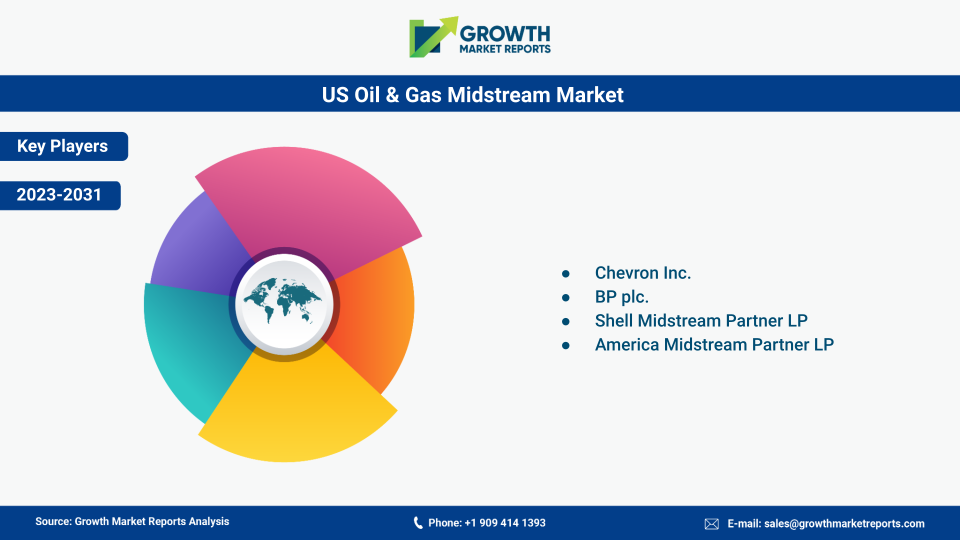
Key players competing in the US oil & gas midstream market include Chevron Inc.; BP plc., Shell Midstream Partner LP; America Midstream Partner LP.

Some of these players are targeting on business strategies such as mergers, acquisitions, partnerships, collaborations, capacity expansion, and product launches to increase their market shares. For instance

In October 2021, Lightsource BP plc. launched bighorn solar project in Colorado for powering and became worlds’ first ever mills to run completely on solar power.

In September 2021, BP plc. delivers its first carbon offset LNG cargo to Asia Pacific to CPC Corporation in Taiwan.

In August 2021, BP plc. study found out that it is feasible to produce large scale green hydrogen and green ammonia using renewable sources of energy in Australia.

In September 2021, Chevron U.S.A. Inc. a subsidiary of Chevron Corporation has signed a joint agreement venturing with Mercuria Energy Trading.

US Oil & Gas Midstream Market Keyplayers

Frequently Asked Questions

Major companies include Enbridge Inc., Kinder Morgan Inc., TC Energy Corporation, Enterprise Products Partners L.P., Williams Companies Inc., ONEOK Inc., Cheniere Energy Inc., Plains All American Pipeline L.P., and others.

Opportunities include investments in LNG, hydrogen, digital technologies, and sustainability initiatives. Challenges involve regulatory uncertainty, environmental concerns, public opposition, and market volatility.

End-users include Industrial, Commercial, Power Generation sectors, and Others such as residential consumers and government agencies.

The market serves applications such as Natural Gas, Crude Oil, Refined Products, Natural Gas Liquids (NGLs), and emerging areas like hydrogen, biofuels, and carbon capture and storage (CCS).

Key operational modes include Pipeline, Rail, Truck, Barge, and Others, with pipelines remaining the backbone for efficient and cost-effective hydrocarbon transport.

Technological advancements such as IoT-enabled sensors, advanced data analytics, automation, and leak detection are improving operational efficiency, safety, and regulatory compliance across the midstream value chain.

The market is segmented by service type into Transportation, Storage, Processing, Liquefaction, and Others, with Transportation being the largest and most critical segment.

North America leads the market, driven by shale production and extensive pipeline networks. Asia Pacific is the fastest-growing region, while Europe focuses on energy security and supply diversification.

Key growth drivers include rising global energy demand, increased cross-border hydrocarbon trade, ongoing investments in pipeline and storage infrastructure, and technological advancements in monitoring and automation.

The global Oil & Gas Midstream market reached USD 342.7 billion in 2024 and is expected to grow at a CAGR of 5.2%, reaching USD 541.8 billion by 2033.

Table Of Content

Chapter 1 Executive Summary
Chapter 2 Assumptions and Acronyms Used
Chapter 3 Research Methodology
Chapter 4 Oil & Gas Midstream Market Overview
   4.1 Introduction
      4.1.1 Market Taxonomy
      4.1.2 Market Definition
      4.1.3 Macro-Economic Factors Impacting the Market Growth
   4.2 Oil & Gas Midstream Market Dynamics
      4.2.1 Market Drivers
      4.2.2 Market Restraints
      4.2.3 Market Opportunity
   4.3 Oil & Gas Midstream Market - Supply Chain Analysis
      4.3.1 List of Key Suppliers
      4.3.2 List of Key Distributors
      4.3.3 List of Key Consumers
   4.4 Key Forces Shaping the Oil & Gas Midstream Market
      4.4.1 Bargaining Power of Suppliers
      4.4.2 Bargaining Power of Buyers
      4.4.3 Threat of Substitution
      4.4.4 Threat of New Entrants
      4.4.5 Competitive Rivalry
   4.5 Global Oil & Gas Midstream Market Size & Forecast, 2023-2032
      4.5.1 Oil & Gas Midstream Market Size and Y-o-Y Growth
      4.5.2 Oil & Gas Midstream Market Absolute $ Opportunity

Chapter 5 Global Oil & Gas Midstream Market Analysis and Forecast By Service Type
   5.1 Introduction
      5.1.1 Key Market Trends & Growth Opportunities By Service Type
      5.1.2 Basis Point Share (BPS) Analysis By Service Type
      5.1.3 Absolute $ Opportunity Assessment By Service Type
   5.2 Oil & Gas Midstream Market Size Forecast By Service Type
      5.2.1 Transportation
      5.2.2 Storage
      5.2.3 Processing
      5.2.4 Liquefaction
      5.2.5 Others
   5.3 Market Attractiveness Analysis By Service Type

Chapter 6 Global Oil & Gas Midstream Market Analysis and Forecast By Operation
   6.1 Introduction
      6.1.1 Key Market Trends & Growth Opportunities By Operation
      6.1.2 Basis Point Share (BPS) Analysis By Operation
      6.1.3 Absolute $ Opportunity Assessment By Operation
   6.2 Oil & Gas Midstream Market Size Forecast By Operation
      6.2.1 Pipeline
      6.2.2 Rail
      6.2.3 Truck
      6.2.4 Barge
      6.2.5 Others
   6.3 Market Attractiveness Analysis By Operation

Chapter 7 Global Oil & Gas Midstream Market Analysis and Forecast By Application
   7.1 Introduction
      7.1.1 Key Market Trends & Growth Opportunities By Application
      7.1.2 Basis Point Share (BPS) Analysis By Application
      7.1.3 Absolute $ Opportunity Assessment By Application
   7.2 Oil & Gas Midstream Market Size Forecast By Application
      7.2.1 Natural Gas
      7.2.2 Crude Oil
      7.2.3 Refined Products
      7.2.4 NGLs
      7.2.5 Others
   7.3 Market Attractiveness Analysis By Application

Chapter 8 Global Oil & Gas Midstream Market Analysis and Forecast By End-User
   8.1 Introduction
      8.1.1 Key Market Trends & Growth Opportunities By End-User
      8.1.2 Basis Point Share (BPS) Analysis By End-User
      8.1.3 Absolute $ Opportunity Assessment By End-User
   8.2 Oil & Gas Midstream Market Size Forecast By End-User
      8.2.1 Industrial
      8.2.2 Commercial
      8.2.3 Power Generation
      8.2.4 Others
   8.3 Market Attractiveness Analysis By End-User

Chapter 9 Global Oil & Gas Midstream Market Analysis and Forecast by Region
   9.1 Introduction
      9.1.1 Key Market Trends & Growth Opportunities By Region
      9.1.2 Basis Point Share (BPS) Analysis By Region
      9.1.3 Absolute $ Opportunity Assessment By Region
   9.2 Oil & Gas Midstream Market Size Forecast By Region
      9.2.1 North America
      9.2.2 Europe
      9.2.3 Asia Pacific
      9.2.4 Latin America
      9.2.5 Middle East & Africa (MEA)
   9.3 Market Attractiveness Analysis By Region

Chapter 10 Coronavirus Disease (COVID-19) Impact 
   10.1 Introduction 
   10.2 Current & Future Impact Analysis 
   10.3 Economic Impact Analysis 
   10.4 Government Policies 
   10.5 Investment Scenario

Chapter 11 North America Oil & Gas Midstream Analysis and Forecast
   11.1 Introduction
   11.2 North America Oil & Gas Midstream Market Size Forecast by Country
      11.2.1 U.S.
      11.2.2 Canada
   11.3 Basis Point Share (BPS) Analysis by Country
   11.4 Absolute $ Opportunity Assessment by Country
   11.5 Market Attractiveness Analysis by Country
   11.6 North America Oil & Gas Midstream Market Size Forecast By Service Type
      11.6.1 Transportation
      11.6.2 Storage
      11.6.3 Processing
      11.6.4 Liquefaction
      11.6.5 Others
   11.7 Basis Point Share (BPS) Analysis By Service Type 
   11.8 Absolute $ Opportunity Assessment By Service Type 
   11.9 Market Attractiveness Analysis By Service Type
   11.10 North America Oil & Gas Midstream Market Size Forecast By Operation
      11.10.1 Pipeline
      11.10.2 Rail
      11.10.3 Truck
      11.10.4 Barge
      11.10.5 Others
   11.11 Basis Point Share (BPS) Analysis By Operation 
   11.12 Absolute $ Opportunity Assessment By Operation 
   11.13 Market Attractiveness Analysis By Operation
   11.14 North America Oil & Gas Midstream Market Size Forecast By Application
      11.14.1 Natural Gas
      11.14.2 Crude Oil
      11.14.3 Refined Products
      11.14.4 NGLs
      11.14.5 Others
   11.15 Basis Point Share (BPS) Analysis By Application 
   11.16 Absolute $ Opportunity Assessment By Application 
   11.17 Market Attractiveness Analysis By Application
   11.18 North America Oil & Gas Midstream Market Size Forecast By End-User
      11.18.1 Industrial
      11.18.2 Commercial
      11.18.3 Power Generation
      11.18.4 Others
   11.19 Basis Point Share (BPS) Analysis By End-User 
   11.20 Absolute $ Opportunity Assessment By End-User 
   11.21 Market Attractiveness Analysis By End-User

Chapter 12 Europe Oil & Gas Midstream Analysis and Forecast
   12.1 Introduction
   12.2 Europe Oil & Gas Midstream Market Size Forecast by Country
      12.2.1 Germany
      12.2.2 France
      12.2.3 Italy
      12.2.4 U.K.
      12.2.5 Spain
      12.2.6 Russia
      12.2.7 Rest of Europe
   12.3 Basis Point Share (BPS) Analysis by Country
   12.4 Absolute $ Opportunity Assessment by Country
   12.5 Market Attractiveness Analysis by Country
   12.6 Europe Oil & Gas Midstream Market Size Forecast By Service Type
      12.6.1 Transportation
      12.6.2 Storage
      12.6.3 Processing
      12.6.4 Liquefaction
      12.6.5 Others
   12.7 Basis Point Share (BPS) Analysis By Service Type 
   12.8 Absolute $ Opportunity Assessment By Service Type 
   12.9 Market Attractiveness Analysis By Service Type
   12.10 Europe Oil & Gas Midstream Market Size Forecast By Operation
      12.10.1 Pipeline
      12.10.2 Rail
      12.10.3 Truck
      12.10.4 Barge
      12.10.5 Others
   12.11 Basis Point Share (BPS) Analysis By Operation 
   12.12 Absolute $ Opportunity Assessment By Operation 
   12.13 Market Attractiveness Analysis By Operation
   12.14 Europe Oil & Gas Midstream Market Size Forecast By Application
      12.14.1 Natural Gas
      12.14.2 Crude Oil
      12.14.3 Refined Products
      12.14.4 NGLs
      12.14.5 Others
   12.15 Basis Point Share (BPS) Analysis By Application 
   12.16 Absolute $ Opportunity Assessment By Application 
   12.17 Market Attractiveness Analysis By Application
   12.18 Europe Oil & Gas Midstream Market Size Forecast By End-User
      12.18.1 Industrial
      12.18.2 Commercial
      12.18.3 Power Generation
      12.18.4 Others
   12.19 Basis Point Share (BPS) Analysis By End-User 
   12.20 Absolute $ Opportunity Assessment By End-User 
   12.21 Market Attractiveness Analysis By End-User

Chapter 13 Asia Pacific Oil & Gas Midstream Analysis and Forecast
   13.1 Introduction
   13.2 Asia Pacific Oil & Gas Midstream Market Size Forecast by Country
      13.2.1 China
      13.2.2 Japan
      13.2.3 South Korea
      13.2.4 India
      13.2.5 Australia
      13.2.6 South East Asia (SEA)
      13.2.7 Rest of Asia Pacific (APAC)
   13.3 Basis Point Share (BPS) Analysis by Country
   13.4 Absolute $ Opportunity Assessment by Country
   13.5 Market Attractiveness Analysis by Country
   13.6 Asia Pacific Oil & Gas Midstream Market Size Forecast By Service Type
      13.6.1 Transportation
      13.6.2 Storage
      13.6.3 Processing
      13.6.4 Liquefaction
      13.6.5 Others
   13.7 Basis Point Share (BPS) Analysis By Service Type 
   13.8 Absolute $ Opportunity Assessment By Service Type 
   13.9 Market Attractiveness Analysis By Service Type
   13.10 Asia Pacific Oil & Gas Midstream Market Size Forecast By Operation
      13.10.1 Pipeline
      13.10.2 Rail
      13.10.3 Truck
      13.10.4 Barge
      13.10.5 Others
   13.11 Basis Point Share (BPS) Analysis By Operation 
   13.12 Absolute $ Opportunity Assessment By Operation 
   13.13 Market Attractiveness Analysis By Operation
   13.14 Asia Pacific Oil & Gas Midstream Market Size Forecast By Application
      13.14.1 Natural Gas
      13.14.2 Crude Oil
      13.14.3 Refined Products
      13.14.4 NGLs
      13.14.5 Others
   13.15 Basis Point Share (BPS) Analysis By Application 
   13.16 Absolute $ Opportunity Assessment By Application 
   13.17 Market Attractiveness Analysis By Application
   13.18 Asia Pacific Oil & Gas Midstream Market Size Forecast By End-User
      13.18.1 Industrial
      13.18.2 Commercial
      13.18.3 Power Generation
      13.18.4 Others
   13.19 Basis Point Share (BPS) Analysis By End-User 
   13.20 Absolute $ Opportunity Assessment By End-User 
   13.21 Market Attractiveness Analysis By End-User

Chapter 14 Latin America Oil & Gas Midstream Analysis and Forecast
   14.1 Introduction
   14.2 Latin America Oil & Gas Midstream Market Size Forecast by Country
      14.2.1 Brazil
      14.2.2 Mexico
      14.2.3 Rest of Latin America (LATAM)
   14.3 Basis Point Share (BPS) Analysis by Country
   14.4 Absolute $ Opportunity Assessment by Country
   14.5 Market Attractiveness Analysis by Country
   14.6 Latin America Oil & Gas Midstream Market Size Forecast By Service Type
      14.6.1 Transportation
      14.6.2 Storage
      14.6.3 Processing
      14.6.4 Liquefaction
      14.6.5 Others
   14.7 Basis Point Share (BPS) Analysis By Service Type 
   14.8 Absolute $ Opportunity Assessment By Service Type 
   14.9 Market Attractiveness Analysis By Service Type
   14.10 Latin America Oil & Gas Midstream Market Size Forecast By Operation
      14.10.1 Pipeline
      14.10.2 Rail
      14.10.3 Truck
      14.10.4 Barge
      14.10.5 Others
   14.11 Basis Point Share (BPS) Analysis By Operation 
   14.12 Absolute $ Opportunity Assessment By Operation 
   14.13 Market Attractiveness Analysis By Operation
   14.14 Latin America Oil & Gas Midstream Market Size Forecast By Application
      14.14.1 Natural Gas
      14.14.2 Crude Oil
      14.14.3 Refined Products
      14.14.4 NGLs
      14.14.5 Others
   14.15 Basis Point Share (BPS) Analysis By Application 
   14.16 Absolute $ Opportunity Assessment By Application 
   14.17 Market Attractiveness Analysis By Application
   14.18 Latin America Oil & Gas Midstream Market Size Forecast By End-User
      14.18.1 Industrial
      14.18.2 Commercial
      14.18.3 Power Generation
      14.18.4 Others
   14.19 Basis Point Share (BPS) Analysis By End-User 
   14.20 Absolute $ Opportunity Assessment By End-User 
   14.21 Market Attractiveness Analysis By End-User

Chapter 15 Middle East & Africa (MEA) Oil & Gas Midstream Analysis and Forecast
   15.1 Introduction
   15.2 Middle East & Africa (MEA) Oil & Gas Midstream Market Size Forecast by Country
      15.2.1 Saudi Arabia
      15.2.2 South Africa
      15.2.3 UAE
      15.2.4 Rest of Middle East & Africa (MEA)
   15.3 Basis Point Share (BPS) Analysis by Country
   15.4 Absolute $ Opportunity Assessment by Country
   15.5 Market Attractiveness Analysis by Country
   15.6 Middle East & Africa (MEA) Oil & Gas Midstream Market Size Forecast By Service Type
      15.6.1 Transportation
      15.6.2 Storage
      15.6.3 Processing
      15.6.4 Liquefaction
      15.6.5 Others
   15.7 Basis Point Share (BPS) Analysis By Service Type 
   15.8 Absolute $ Opportunity Assessment By Service Type 
   15.9 Market Attractiveness Analysis By Service Type
   15.10 Middle East & Africa (MEA) Oil & Gas Midstream Market Size Forecast By Operation
      15.10.1 Pipeline
      15.10.2 Rail
      15.10.3 Truck
      15.10.4 Barge
      15.10.5 Others
   15.11 Basis Point Share (BPS) Analysis By Operation 
   15.12 Absolute $ Opportunity Assessment By Operation 
   15.13 Market Attractiveness Analysis By Operation
   15.14 Middle East & Africa (MEA) Oil & Gas Midstream Market Size Forecast By Application
      15.14.1 Natural Gas
      15.14.2 Crude Oil
      15.14.3 Refined Products
      15.14.4 NGLs
      15.14.5 Others
   15.15 Basis Point Share (BPS) Analysis By Application 
   15.16 Absolute $ Opportunity Assessment By Application 
   15.17 Market Attractiveness Analysis By Application
   15.18 Middle East & Africa (MEA) Oil & Gas Midstream Market Size Forecast By End-User
      15.18.1 Industrial
      15.18.2 Commercial
      15.18.3 Power Generation
      15.18.4 Others
   15.19 Basis Point Share (BPS) Analysis By End-User 
   15.20 Absolute $ Opportunity Assessment By End-User 
   15.21 Market Attractiveness Analysis By End-User

Chapter 16 Competition Landscape 
   16.1 Oil & Gas Midstream Market: Competitive Dashboard
   16.2 Global Oil & Gas Midstream Market: Market Share Analysis, 2023
   16.3 Company Profiles (Details – Overview, Financials, Developments, Strategy) 
      16.3.1 Enbridge Inc.
Kinder Morgan Inc.
TC Energy Corporation
Enterprise Products Partners L.P.
Williams Companies Inc.
ONEOK Inc.
Cheniere Energy Inc.
Plains All American Pipeline L.P.
MPLX LP
Magellan Midstream Partners L.P.
Energy Transfer LP
Pembina Pipeline Corporation
Targa Resources Corp.
DCP Midstream LP
Gibson Energy Inc.
Hess Midstream LP
Inter Pipeline Ltd.
Crestwood Equity Partners LP
Genesis Energy L.P.
NuStar Energy L.P.

Methodology

Our Clients

Honda Motor Co. Ltd.
The John Holland Group
General Electric
Pfizer
Nestle SA
Deloitte
sinopec
Siemens Healthcare