Segments - by Type (Transmission Pipelines, Distribution Pipelines, Gathering Pipelines), by Material (Steel, Plastic, Others), by Application (Onshore, Offshore), by Operation (Transmission, Distribution), by Diameter (Below 16 Inches, 16–24 Inches, 24–40 Inches, Above 40 Inches)
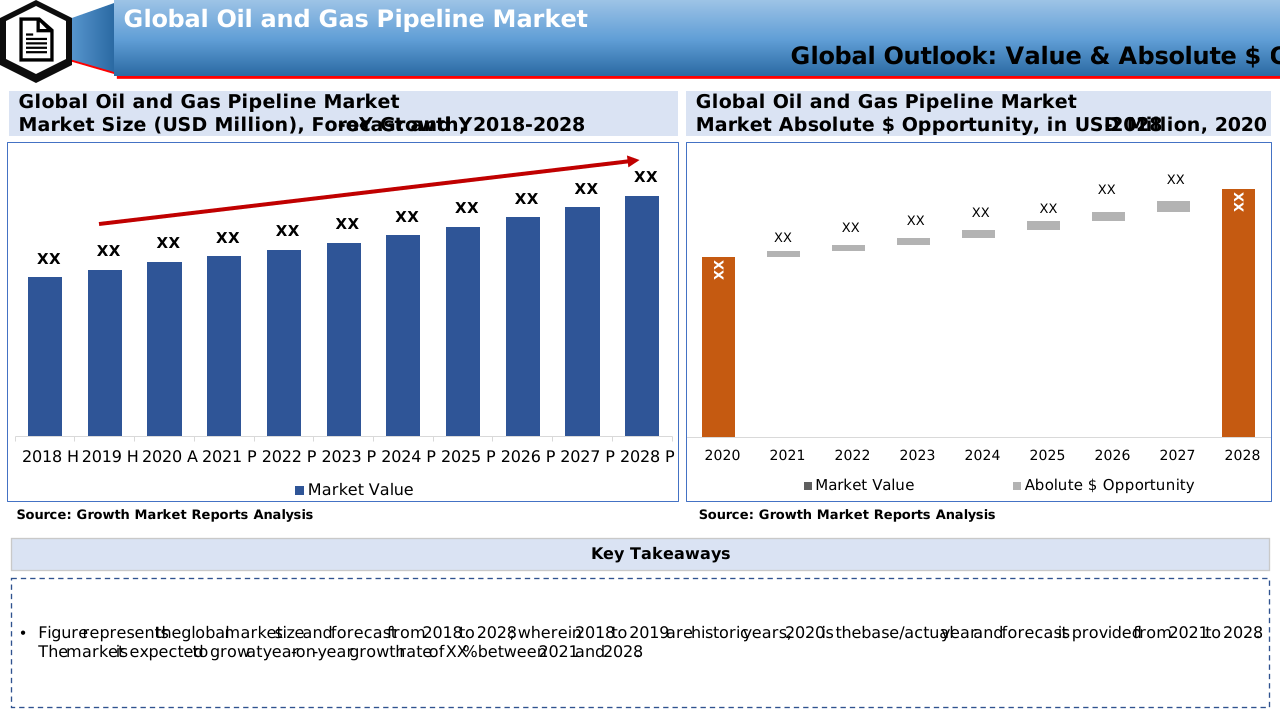
According to our latest research, the global oil and gas pipeline market size was valued at USD 108.2 billion in 2024, reflecting the sectorÂ’s substantial role in global energy infrastructure. The market is anticipated to grow at a CAGR of 5.1% from 2025 to 2033, reaching a forecasted value of USD 168.7 billion by 2033. This robust growth is primarily driven by increasing energy demand, ongoing investments in pipeline infrastructure, and the expansion of oil and gas exploration activities worldwide. The continual modernization of pipeline networks, coupled with technological advancements in pipeline monitoring and safety, are significantly contributing to the marketÂ’s expansion as per our latest research.
One of the primary growth factors fueling the oil and gas pipeline market is the persistent rise in global energy consumption. As emerging economies continue to industrialize and urbanize, the demand for reliable and efficient energy transportation has never been higher. Pipelines remain the most cost-effective and secure method for transporting large volumes of oil and gas over long distances, making them indispensable for meeting the worldÂ’s growing energy needs. Furthermore, the shift towards cleaner-burning natural gas as a transition fuel in the global energy mix is prompting significant investments in new pipeline projects, especially in regions where gas infrastructure is underdeveloped. Governments and private sector stakeholders are increasingly prioritizing pipeline expansion to ensure energy security and support economic development, thereby bolstering market growth.
Technological advancements are also playing a pivotal role in shaping the trajectory of the oil and gas pipeline market. Innovations in pipeline materials, construction techniques, and monitoring systems are enhancing the efficiency, safety, and reliability of pipeline operations. Smart pipeline technologies, such as real-time leak detection, corrosion monitoring, and automated maintenance systems, are reducing operational risks and minimizing environmental impact. The integration of digital solutions, including artificial intelligence and the Internet of Things (IoT), is enabling operators to optimize pipeline performance, anticipate maintenance needs, and respond swiftly to potential threats. These advancements are not only extending the lifespan of existing pipelines but also lowering operational costs, making pipeline investments more attractive for stakeholders across the value chain.
In addition to technological and demand-driven factors, regulatory frameworks and environmental considerations are shaping the oil and gas pipeline market landscape. Stricter regulations regarding pipeline safety, emissions, and environmental protection are compelling operators to invest in state-of-the-art infrastructure and adopt best practices for risk management. The increasing focus on sustainability and the need to minimize ecological footprints are driving the adoption of environmentally friendly materials and construction methods. While regulatory compliance can increase project costs and timelines, it also encourages innovation and promotes the development of safer, more resilient pipeline networks. As a result, the market is witnessing a gradual transition towards more sustainable and technologically advanced pipeline solutions.
The development of a robust product pipeline is essential for companies operating in the oil and gas sector, as it ensures a steady flow of projects and innovations that can drive growth and competitiveness. A well-managed product pipeline allows companies to strategically align their resources and investments with market demands and technological advancements. This alignment is crucial for maintaining a competitive edge in an industry characterized by rapid changes and evolving regulatory landscapes. By focusing on a diverse product pipeline, companies can better manage risks, capitalize on emerging opportunities, and adapt to shifts in energy consumption patterns, ultimately contributing to the resilience and sustainability of their operations.
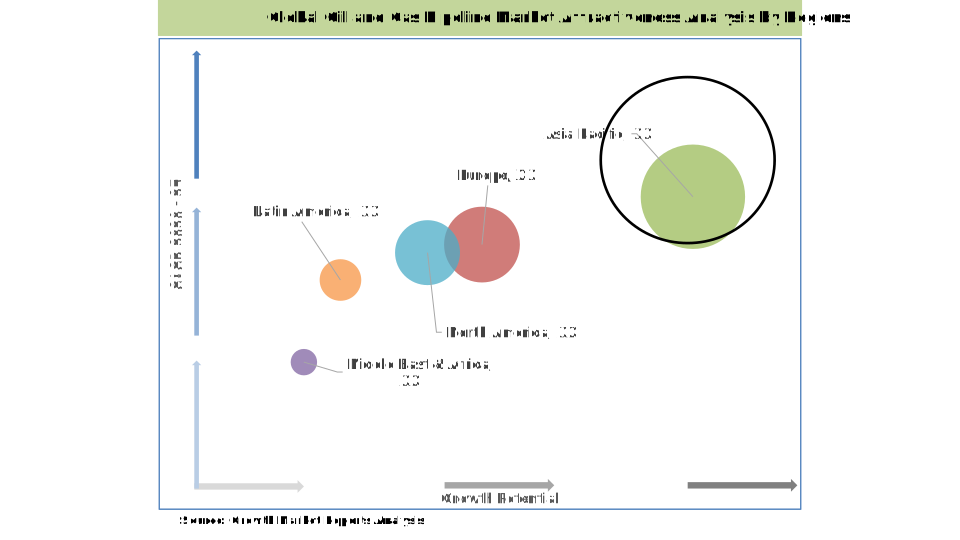
From a regional perspective, the oil and gas pipeline market exhibits diverse growth patterns, with North America, Asia Pacific, and the Middle East & Africa emerging as key contributors. North America continues to dominate the market, driven by extensive shale gas production and ongoing infrastructure upgrades. The Asia Pacific region is witnessing rapid growth due to increasing energy demand, urbanization, and large-scale pipeline projects in countries like China and India. Meanwhile, the Middle East & Africa region is benefiting from substantial investments in cross-border pipeline projects aimed at enhancing energy exports and regional connectivity. Each region presents unique opportunities and challenges, influenced by factors such as resource availability, regulatory environments, and geopolitical dynamics.
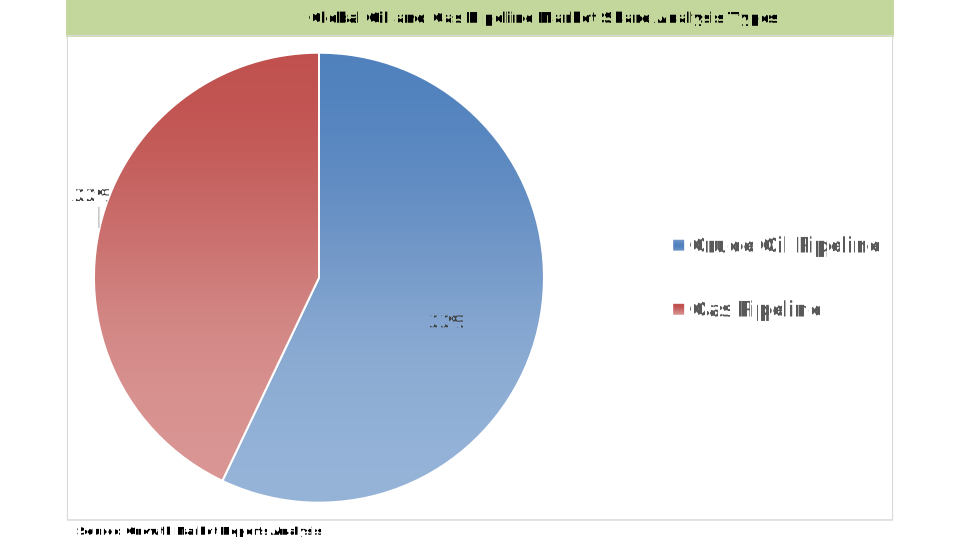
The oil and gas pipeline market is segmented by type into transmission pipelines, distribution pipelines, and gathering pipelines, each playing a distinct role in the energy transportation value chain. Transmission pipelines, which account for the largest market share, are designed to transport oil and gas over long distances from production sites to refineries, processing plants, or distribution centers. These pipelines are characterized by their large diameter and high-pressure operation, enabling the efficient movement of vast quantities of hydrocarbons across regions and even countries. The ongoing expansion of cross-border transmission pipelines, particularly in energy-exporting regions, is a significant driver of market growth, as countries seek to secure stable energy supplies and tap into new export markets.
Distribution pipelines, on the other hand, are primarily responsible for delivering oil and gas to end-users, including residential, commercial, and industrial consumers. These pipelines typically operate at lower pressures and have smaller diameters compared to transmission pipelines. The increasing urbanization and expansion of natural gas distribution networks in emerging economies are fueling the demand for distribution pipelines. Governments are investing in the development of city gas distribution systems to promote cleaner energy usage and reduce reliance on traditional fuels, further boosting the growth of this segment. Distribution pipelines are also benefiting from advancements in plastic materials, which offer greater flexibility, corrosion resistance, and ease of installation.
Gathering pipelines form the initial link in the oil and gas transportation chain, connecting production wells to processing facilities, storage tanks, or transmission pipelines. These pipelines are typically shorter in length and smaller in diameter, but their role is critical in ensuring the smooth flow of hydrocarbons from the point of extraction to downstream infrastructure. The resurgence of upstream exploration and production activities, particularly in unconventional resource plays such as shale and tight oil, is driving the demand for gathering pipelines. Operators are increasingly focusing on optimizing gathering systems to minimize losses, enhance flow assurance, and reduce environmental risks associated with leaks and spills.
The interplay between these pipeline types underscores the complexity and interconnectedness of the oil and gas transportation network. Investments in one segment often necessitate corresponding upgrades or expansions in others, creating a multiplier effect that drives overall market growth. As energy demand continues to rise and new production areas are developed, the need for integrated and efficient pipeline networks will remain a key priority for industry stakeholders worldwide.
| Attributes | Details |
| Report Title | Oil and Gas Pipeline Market Research Report 2033 |
| By Type | Transmission Pipelines, Distribution Pipelines, Gathering Pipelines |
| By Material | Steel, Plastic, Others |
| By Application | Onshore, Offshore |
| By Operation | Transmission, Distribution |
| By Diameter | Below 16 Inches, 16–24 Inches, 24–40 Inches, Above 40 Inches |
| Regions Covered | North America, Europe, APAC, Latin America, MEA |
| Base Year | 2024 |
| Historic Data | 2018-2023 |
| Forecast Period | 2025-2033 |
| Number of Pages | 291 |
| Number of Tables & Figures | 263 |
| Customization Available | Yes, the report can be customized as per your need. |
The oil and gas pipeline market is also segmented by material, with steel, plastic, and other materials serving as the primary categories. Steel pipelines have long been the industry standard due to their exceptional strength, durability, and ability to withstand high pressures and harsh environmental conditions. The majority of transmission and gathering pipelines are constructed from various grades of steel, which can be tailored to specific operational requirements. Recent advancements in steel manufacturing, such as the development of high-strength, corrosion-resistant alloys, are further enhancing the performance and longevity of steel pipelines. The ongoing replacement of aging infrastructure and the construction of new long-distance pipelines are expected to sustain the dominance of steel in the market.
Plastic pipelines, particularly those made from high-density polyethylene (HDPE) and polyvinyl chloride (PVC), are gaining traction in the distribution segment. These materials offer several advantages over traditional steel, including lower installation costs, greater flexibility, and resistance to corrosion and chemical attack. Plastic pipelines are especially well-suited for low-pressure applications and urban environments, where ease of installation and maintenance are critical. The growing adoption of plastic materials is being driven by the expansion of natural gas distribution networks and the increasing emphasis on sustainable and environmentally friendly infrastructure solutions. However, plastic pipelines are generally limited to smaller diameters and lower-pressure operations, which constrains their use in certain applications.
Other materials, such as composite pipes and ductile iron, are also being explored for specialized applications within the oil and gas pipeline market. Composite pipes, which combine the strength of steel with the corrosion resistance of plastics or fiberglass, are being used in challenging environments such as offshore and subsea installations. These materials offer a compelling balance of performance, durability, and weight savings, making them attractive for projects where traditional materials may be impractical or cost-prohibitive. The development and commercialization of new materials are expected to open up additional opportunities for innovation and differentiation in the pipeline market.
Material selection is a critical consideration in pipeline design and construction, as it directly impacts operational efficiency, maintenance requirements, and total lifecycle costs. Operators must carefully evaluate factors such as pressure ratings, environmental conditions, regulatory requirements, and long-term performance when choosing pipeline materials. The ongoing evolution of material science and engineering is expected to drive further improvements in pipeline reliability, safety, and sustainability, supporting the continued growth and modernization of global pipeline infrastructure.
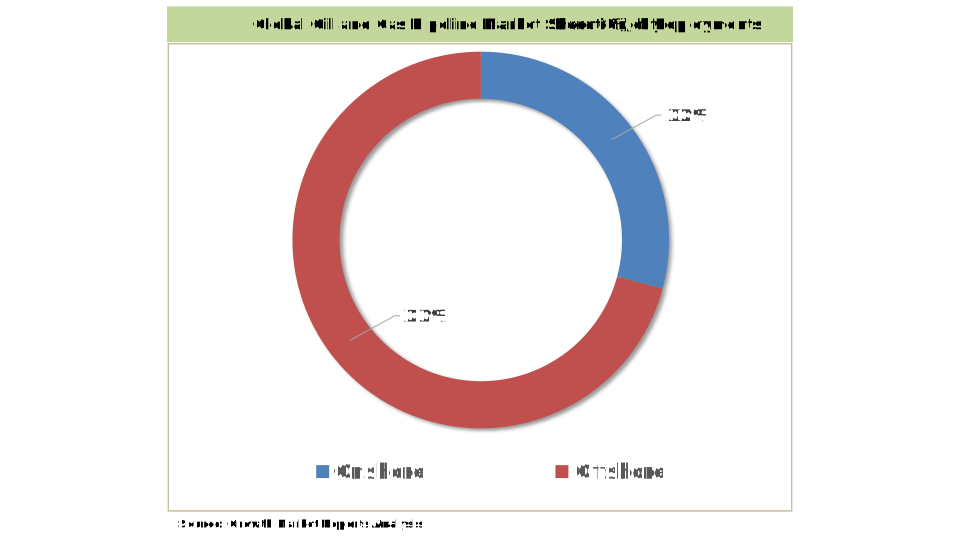
The oil and gas pipeline market is further segmented by application into onshore and offshore pipelines, each presenting unique opportunities and challenges. Onshore pipelines constitute the largest share of the market, owing to the vast networks required for transporting oil and gas from production sites to refineries, processing plants, and end-users. The expansion of onshore pipeline infrastructure is being driven by increasing energy demand, the development of new oil and gas fields, and the need to replace or upgrade aging pipelines. Onshore projects typically benefit from lower construction and maintenance costs compared to offshore installations, as well as easier access for inspection and repairs.
Offshore pipelines, while representing a smaller share of the market, are critical for connecting offshore production platforms to onshore facilities or export terminals. The complexity and technical challenges associated with offshore pipeline construction are significantly higher, due to factors such as deepwater environments, strong currents, and corrosive seawater. However, the growing exploitation of offshore oil and gas reserves, particularly in regions like the North Sea, Gulf of Mexico, and West Africa, is driving substantial investments in offshore pipeline projects. Advances in subsea engineering, remotely operated vehicles (ROVs), and pipeline materials are enabling operators to safely and efficiently develop deepwater resources, expanding the scope and scale of offshore pipeline networks.
The choice between onshore and offshore pipeline solutions is influenced by a range of factors, including resource location, project economics, regulatory requirements, and environmental considerations. Offshore pipelines often require more stringent safety and environmental controls, as well as specialized construction techniques and equipment. Despite these challenges, the strategic importance of offshore pipelines in supporting global energy supply chains cannot be overstated, particularly as conventional onshore reserves mature and new discoveries are increasingly located in offshore basins.
Both onshore and offshore pipeline applications are benefiting from technological innovations aimed at enhancing safety, reliability, and environmental performance. The integration of advanced monitoring and control systems, such as fiber optic sensors and real-time data analytics, is enabling operators to detect and respond to potential issues more quickly, reducing the risk of leaks and spills. These developments are not only improving operational efficiency but also supporting regulatory compliance and public acceptance of pipeline projects, which are critical for securing the necessary permits and approvals.
The oil and gas pipeline market is categorized by operation into transmission and distribution, reflecting the two main functions of pipeline networks. Transmission pipelines are designed to move large volumes of oil and gas over long distances, typically from production areas to major consumption centers, refineries, or export terminals. These pipelines are characterized by their large diameter, high-pressure operation, and robust construction, enabling the efficient and cost-effective transportation of hydrocarbons across vast distances. The ongoing expansion and modernization of transmission infrastructure, particularly in response to shifting supply and demand dynamics, are key drivers of market growth in this segment.
Distribution pipelines, in contrast, are focused on delivering oil and gas to end-users, such as residential, commercial, and industrial customers. These pipelines operate at lower pressures and have smaller diameters, making them well-suited for urban and suburban environments. The expansion of city gas distribution networks, particularly in emerging economies, is fueling the growth of the distribution segment. Governments and utilities are investing in the development of extensive distribution systems to promote the use of cleaner-burning natural gas and improve energy access for underserved populations. The adoption of advanced materials, such as plastic pipes, is further enhancing the efficiency and reliability of distribution networks.
The interplay between transmission and distribution operations is critical for ensuring the seamless flow of oil and gas from production to consumption. Investments in one segment often necessitate corresponding upgrades or expansions in the other, creating a synergistic effect that drives overall market growth. As energy demand continues to rise and new sources of supply are developed, the need for integrated and efficient pipeline networks will remain a top priority for industry stakeholders.
Operational efficiency and safety are paramount considerations in both transmission and distribution pipelines. The adoption of digital technologies, such as supervisory control and data acquisition (SCADA) systems, predictive analytics, and remote monitoring, is enabling operators to optimize pipeline performance, reduce downtime, and minimize the risk of incidents. These advancements are not only improving operational outcomes but also supporting regulatory compliance and enhancing public trust in pipeline infrastructure.
Pipeline diameter is a critical design parameter that influences the capacity, pressure rating, and overall cost of oil and gas pipelines. The market is segmented by diameter into below 16 inches, 16–24 inches, 24–40 inches, and above 40 inches, with each category serving different applications and operational requirements. Pipelines with diameters below 16 inches are typically used for gathering and distribution purposes, where lower volumes and shorter distances are involved. These pipelines are often constructed from plastic or composite materials, offering flexibility and ease of installation in urban or remote environments.
The 16–24 inch diameter segment is commonly used for medium-distance transmission and distribution applications, where moderate volumes and pressures are required. These pipelines strike a balance between capacity and cost, making them suitable for regional transportation networks and interconnections between production sites and processing facilities. The increasing development of regional energy infrastructure, particularly in emerging markets, is driving demand for pipelines in this diameter range.
Pipelines with diameters of 24–40 inches are designed for high-capacity transmission over long distances, such as cross-country or cross-border pipelines. These pipelines are constructed from high-strength steel and are engineered to withstand high pressures and challenging environmental conditions. The expansion of major transmission corridors, particularly in North America, Asia Pacific, and the Middle East, is fueling demand for large-diameter pipelines. These projects are often characterized by significant capital investment, complex regulatory approvals, and extensive stakeholder engagement.
Pipelines with diameters above 40 inches represent the largest and most technically demanding projects in the oil and gas pipeline market. These ultra-large pipelines are typically used for the transportation of massive volumes of oil or gas over vast distances, such as transcontinental or intercontinental pipelines. The construction and operation of such pipelines require advanced engineering, specialized materials, and rigorous safety protocols. While the number of projects in this segment is relatively limited, their scale and strategic importance make them significant contributors to overall market value.
A significant opportunity for the oil and gas pipeline market lies in the ongoing transition toward cleaner energy sources, particularly natural gas. As countries strive to reduce carbon emissions and phase out coal-fired power generation, the demand for natural gas infrastructure, including pipelines, is expected to surge. This transition is opening up new markets and investment opportunities, especially in regions with underdeveloped pipeline networks. In addition, technological advancements such as smart pipeline monitoring, predictive maintenance, and the use of advanced materials are creating opportunities for innovation and differentiation. Companies that can leverage these technologies to enhance operational efficiency, safety, and environmental performance will be well-positioned to capture market share and drive long-term growth.
Another major opportunity stems from the increasing integration of renewable energy sources and the development of hydrogen infrastructure. As the world moves towards a low-carbon future, pipelines are being repurposed or newly constructed to transport hydrogen and other renewable gases. This trend is particularly evident in Europe and parts of Asia, where governments are investing heavily in hydrogen production and distribution networks. The ability to adapt existing oil and gas pipeline infrastructure for new energy carriers presents a compelling growth avenue for market participants. Moreover, the expansion of cross-border and interregional pipeline projects, driven by the need for energy security and diversification, is expected to create additional opportunities for industry players.
Despite these opportunities, the oil and gas pipeline market faces several restraining factors, with regulatory and environmental challenges topping the list. The construction and operation of pipelines are subject to stringent regulatory scrutiny, particularly in environmentally sensitive areas. Delays in permitting, opposition from local communities and environmental groups, and the risk of spills or leaks can significantly impact project timelines and costs. Additionally, the growing emphasis on decarbonization and the shift towards renewable energy sources may reduce long-term demand for traditional oil and gas pipelines, posing a threat to market growth. Companies must navigate these challenges by adopting best practices in safety, environmental management, and stakeholder engagement to ensure the successful development and operation of pipeline projects.
The regional landscape of the oil and gas pipeline market is characterized by distinct trends and growth drivers across North America, Europe, Asia Pacific, Latin America, and the Middle East & Africa. North America continues to lead the global market, with a market size of approximately USD 38.7 billion in 2024, driven by extensive shale gas production, ongoing infrastructure upgrades, and the development of new transmission and distribution networks. The United States and Canada are at the forefront of pipeline innovation, leveraging advanced technologies and regulatory frameworks to ensure the safety and reliability of their pipeline systems. The region is expected to maintain a steady CAGR of 4.7% through 2033, supported by continued investment in energy infrastructure and the expansion of cross-border pipelines.
Asia Pacific is emerging as the fastest-growing region in the oil and gas pipeline market, with a market size of USD 29.4 billion in 2024 and a projected CAGR of 6.2% through 2033. Rapid industrialization, urbanization, and rising energy demand in countries such as China, India, and Southeast Asian nations are fueling significant investments in pipeline infrastructure. Governments in the region are prioritizing the development of natural gas distribution networks and cross-border pipelines to enhance energy security and support economic growth. The expansion of offshore exploration and production activities is also contributing to the growth of the pipeline market in Asia Pacific, as new reserves are developed to meet rising consumption.
The Middle East & Africa region, with a market size of USD 17.5 billion in 2024, is benefiting from substantial investments in pipeline projects aimed at boosting energy exports and regional connectivity. Key markets such as Saudi Arabia, the United Arab Emirates, and Nigeria are investing in both onshore and offshore pipeline infrastructure to support their growing oil and gas production. Cross-border pipeline initiatives, such as those linking the Middle East to Europe and Asia, are enhancing the regionÂ’s strategic importance in global energy supply chains. The region is expected to achieve a CAGR of 5.4% through 2033, driven by ongoing resource development and export-oriented projects.
The oil and gas pipeline market is highly competitive, characterized by the presence of numerous global and regional players vying for market share through innovation, strategic partnerships, and geographic expansion. The competitive landscape is shaped by a combination of established industry leaders and emerging players, each bringing unique capabilities and expertise to the table. Key competitive factors include technological innovation, project execution capabilities, safety and environmental performance, and the ability to navigate complex regulatory environments. Companies that can deliver reliable, cost-effective, and sustainable pipeline solutions are well-positioned to succeed in this dynamic market.
Leading players in the market are increasingly focusing on the adoption of advanced technologies to enhance operational efficiency and safety. The integration of digital solutions, such as real-time monitoring, predictive analytics, and automated maintenance systems, is enabling companies to optimize pipeline performance and reduce operational risks. Strategic partnerships and joint ventures are also common, as companies seek to leverage complementary strengths and expand their geographic footprint. In addition, mergers and acquisitions are being pursued to gain access to new markets, technologies, and customer segments, further intensifying competition in the industry.
The market is also witnessing increased collaboration between pipeline operators, technology providers, and engineering, procurement, and construction (EPC) contractors. These collaborations are aimed at delivering end-to-end solutions that address the full lifecycle of pipeline projects, from design and construction to operation and maintenance. The ability to offer integrated services and solutions is becoming a key differentiator in the market, as customers seek to minimize project risk and maximize value.
Some of the major companies operating in the oil and gas pipeline market include Enbridge Inc., Kinder Morgan, TC Energy Corporation, Saipem S.p.A., Tenaris S.A., National Oilwell Varco, Gazprom, and China National Petroleum Corporation (CNPC). Enbridge Inc. is a leading North American energy infrastructure company, known for its extensive network of crude oil and natural gas pipelines. Kinder Morgan is another major player, with a focus on the transportation and storage of energy products across the United States. TC Energy Corporation, formerly TransCanada, operates one of the largest natural gas pipeline networks in North America, serving key markets in Canada, the United States, and Mexico.
Saipem S.p.A. is a global engineering and construction company specializing in the design and implementation of complex pipeline projects, particularly in challenging environments such as offshore and deepwater. Tenaris S.A. is a leading manufacturer of steel pipes and related services, supplying pipeline operators with high-performance materials tailored to specific applications. National Oilwell Varco is a key provider of equipment and services for the oil and gas industry, including pipeline construction and maintenance solutions. Gazprom and China National Petroleum Corporation (CNPC) are major state-owned enterprises with extensive pipeline networks spanning multiple countries and regions, underscoring the strategic importance of pipeline infrastructure in global energy markets.
These companies are continuously investing in research and development, strategic partnerships, and geographic expansion to strengthen their market position and capitalize on emerging opportunities. The ability to deliver innovative, reliable, and sustainable pipeline solutions will be critical for maintaining a competitive edge in the rapidly evolving oil and gas pipeline market.
The Oil and Gas Pipeline market has been segmented on the basis of
Key players in the gas and oil pipeline market are Nippon Steel Corporation; ChelPipe Group; Tenaris Inc.; Shengli Oil & Gas Pipe Holdings Limited; TMK Group; United States Steel Corporation; OMK Steel Ltd; Mott Macdonald Group Ltd; Gazprom; and TechnipFMC PLC. These players have actively engaged in several market development activities including collaborations, agreements, mergers & acquisitions, production capacity expansion, new product launches, and partnerships to strengthen their geographical presence and expand their customer base globally.

Opportunities include the transition to natural gas and hydrogen infrastructure, adoption of smart pipeline technologies, expansion of cross-border pipelines, and the integration of renewable energy sources into pipeline networks.
Major companies include Enbridge Inc., Kinder Morgan, TC Energy Corporation, Saipem S.p.A., Tenaris S.A., National Oilwell Varco, Gazprom, and China National Petroleum Corporation (CNPC), among others.
Major challenges include stringent regulatory and environmental requirements, project delays due to permitting and opposition, risks of leaks and spills, and the long-term shift towards renewable energy sources.
North America leads the market, driven by shale gas production and infrastructure upgrades. Asia Pacific is the fastest-growing region due to rising energy demand and large-scale projects, while the Middle East & Africa is expanding cross-border pipelines for energy exports.
Oil and gas pipelines are used for both onshore and offshore applications. Onshore pipelines dominate the market, while offshore pipelines are critical for connecting offshore production to onshore facilities.
Steel is the most widely used material due to its strength and durability, especially for transmission and gathering pipelines. Plastic (HDPE, PVC) is increasingly used for distribution pipelines, while composite materials are used for specialized applications.
The market is segmented into transmission pipelines (long-distance, high-capacity transport), distribution pipelines (delivery to end-users), and gathering pipelines (connecting production wells to processing facilities).
Technological advancements such as smart pipeline monitoring, real-time leak detection, corrosion monitoring, automated maintenance, and the integration of AI and IoT are enhancing pipeline efficiency, safety, and reliability while reducing operational costs.
Key growth drivers include rising global energy demand, ongoing investments in pipeline infrastructure, expansion of oil and gas exploration, technological advancements in pipeline monitoring and safety, and the shift towards natural gas as a cleaner energy source.
The global oil and gas pipeline market was valued at USD 108.2 billion in 2024 and is projected to reach USD 168.7 billion by 2033, growing at a CAGR of 5.1% from 2025 to 2033.