Segments - by Service Type (Drilling Services, Completion Services, Production Services, Processing & Separation Services, Others), by Application (Onshore, Offshore), by Equipment Type (Pressure Pumping, Well Intervention, Coiled Tubing, Wireline Services, Others), by End-User (Oil & Gas Companies, Independent Operators, National Oil Companies, Others)
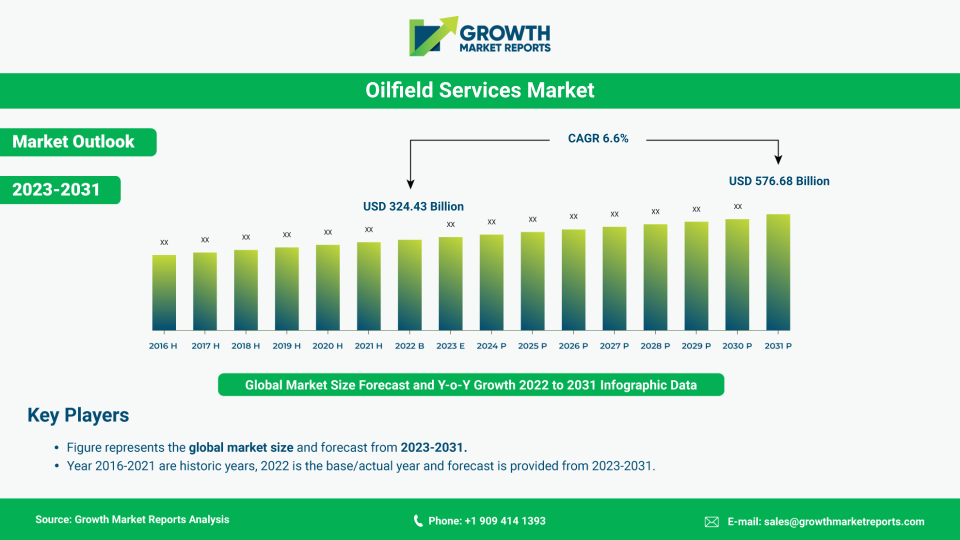
According to our latest research, the global oilfield services market size reached USD 310.8 billion in 2024, reflecting robust demand driven by ongoing exploration and production activities. The market is expected to grow at a CAGR of 5.2% from 2025 to 2033, reaching a forecasted value of USD 491.6 billion by 2033. This growth is primarily attributed to increased investments in oil and gas projects, technological advancements, and the rising need for energy security worldwide.
One of the most significant growth factors for the oilfield services market is the resurgence of upstream oil and gas activities globally. As energy demand continues to rise, particularly in emerging economies, exploration and production companies are ramping up their operations to ensure supply security. This, in turn, has spurred increased demand for oilfield services such as drilling, completion, and production support. Additionally, the ongoing depletion of mature oilfields necessitates the use of advanced technologies and enhanced oil recovery methods, further boosting the need for specialized oilfield services. The integration of digital solutions, automation, and real-time data analytics is also optimizing field operations, reducing costs, and improving efficiency, thereby propelling market growth.
Another critical driver for the oilfield services market is the expansion of offshore exploration and production activities. As onshore reserves become increasingly mature and harder to exploit, oil and gas companies are shifting their focus to offshore fields, which often require more complex and high-value services. The growth of deepwater and ultra-deepwater projects, particularly in regions such as the Gulf of Mexico, West Africa, and Southeast Asia, is creating new opportunities for oilfield service providers. These projects demand sophisticated equipment, technical expertise, and integrated service offerings, all of which are contributing to the marketÂ’s expansion. Furthermore, the adoption of environmentally friendly practices and stricter regulatory standards are driving investment in advanced technologies and services aimed at minimizing environmental impact and improving operational safety.
The increasing collaboration between oilfield service companies and national oil companies (NOCs) is also fueling market growth. Many NOCs are investing heavily in domestic oil and gas production to reduce reliance on imports and stabilize their energy supply. These investments often involve partnerships with international oilfield service providers, who bring in the necessary technology, expertise, and operational capabilities. Such collaborations are particularly prevalent in the Middle East, Asia Pacific, and Latin America, where governments are prioritizing energy security and economic development. The trend towards integrated service contracts and long-term partnerships is enhancing the value proposition for oilfield service companies, supporting sustained market growth.
In recent years, the advent of Oilfield Service Management Software has revolutionized the way oilfield services are managed and executed. This software provides comprehensive solutions for scheduling, dispatching, and resource management, ensuring that operations are streamlined and efficient. By integrating real-time data analytics, companies can optimize their workforce and equipment utilization, reducing downtime and enhancing productivity. The software also facilitates better communication and coordination among teams, leading to improved decision-making and operational efficiency. As the oilfield services market continues to grow, the adoption of such software solutions is becoming increasingly critical for companies looking to maintain a competitive edge and meet the evolving demands of the industry.
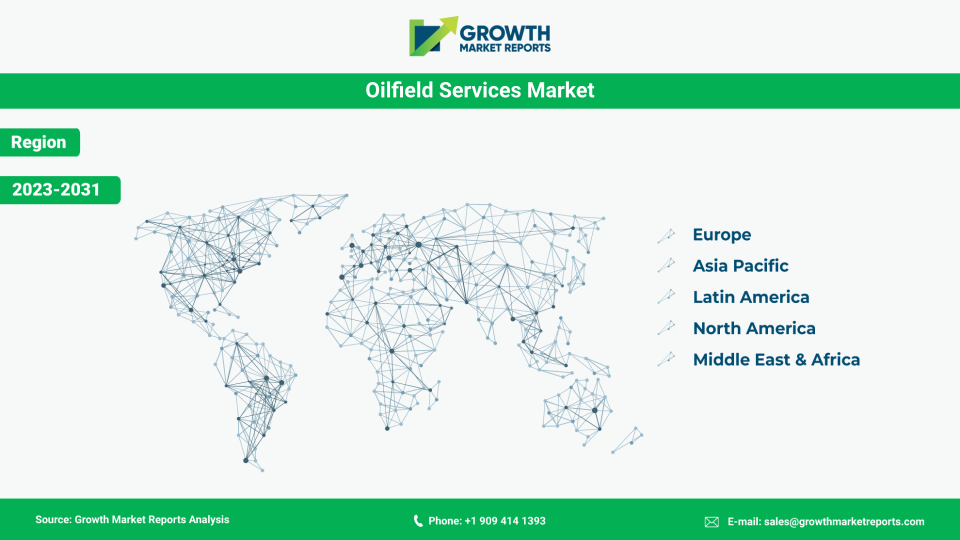
Regionally, the oilfield services market exhibits significant variation, with North America leading the way due to its robust shale gas and tight oil activities. The Middle East & Africa region is also a key growth area, driven by ongoing investments in large-scale projects and the presence of some of the worldÂ’s largest oil reserves. Asia Pacific is witnessing increased activity, particularly in offshore exploration, as countries seek to diversify their energy mix and reduce import dependence. Europe, while facing challenges related to energy transition and regulatory pressures, continues to invest in both conventional and renewable energy projects. Latin America, with its vast untapped reserves and recent policy reforms, is emerging as a lucrative market for oilfield services.
The oilfield services market is segmented by service type into drilling services, completion services, production services, processing & separation services, and others. Drilling services remain the largest segment, accounting for a substantial share of the market in 2024. This dominance is attributed to the ongoing need for new well development and the increasing complexity of drilling operations, particularly in unconventional and deepwater fields. Advanced drilling technologies such as directional drilling, measurement-while-drilling (MWD), and logging-while-drilling (LWD) are being widely adopted to enhance accuracy, reduce costs, and minimize environmental impact. The demand for drilling services is further supported by the rising number of exploration projects in North America, the Middle East, and Asia Pacific.
Completion services are also experiencing robust growth, driven by the need to optimize well productivity and ensure efficient hydrocarbon recovery. These services encompass a range of activities, including hydraulic fracturing, cementing, perforating, and well stimulation. The increasing adoption of multistage fracturing and enhanced oil recovery techniques is fueling demand for completion services, particularly in unconventional resource plays such as shale gas and tight oil. Service providers are investing in innovative technologies and materials to improve well integrity, reduce downtime, and enhance reservoir performance. The trend towards integrated completion solutions and digital monitoring is further expanding the scope of this segment.
Production services play a crucial role in maintaining and enhancing the output of existing wells. As mature oilfields continue to account for a significant portion of global production, the need for production optimization, artificial lift systems, and well intervention services is growing. Oilfield service companies are leveraging advanced analytics, automation, and remote monitoring to maximize production efficiency and minimize operational costs. The increasing focus on sustainability and emissions reduction is also driving investment in production services that minimize flaring, reduce methane emissions, and optimize resource utilization. This segment is particularly important in regions with aging oilfields, such as North America, Europe, and the Middle East.
Logistics Optimization for Oilfield Services is another crucial aspect that is gaining traction in the industry. Efficient logistics management ensures that equipment, materials, and personnel are delivered to the right place at the right time, minimizing delays and reducing operational costs. Advanced logistics solutions leverage technologies such as GPS tracking, route optimization, and predictive analytics to enhance supply chain efficiency. By optimizing logistics, companies can improve service delivery, reduce carbon footprints, and enhance overall project profitability. As oilfield operations become more complex and geographically dispersed, the importance of effective logistics management cannot be overstated.
Processing & separation services are essential for ensuring the quality and marketability of produced hydrocarbons. These services include oil-water separation, gas treatment, and produced water management, among others. The growing complexity of produced fluids, particularly in unconventional and offshore fields, is driving demand for advanced processing and separation technologies. Service providers are developing modular, scalable solutions that can be deployed in remote or challenging environments, enabling operators to meet stringent regulatory standards and minimize environmental impact. The adoption of digital monitoring and predictive maintenance is further enhancing the efficiency and reliability of processing & separation services.
The "others" category includes a range of specialized services such as reservoir evaluation, geophysical surveys, and environmental consulting. These services are becoming increasingly important as operators seek to optimize resource development, comply with environmental regulations, and improve project economics. The integration of digital technologies, such as artificial intelligence and machine learning, is enabling more accurate reservoir modeling, risk assessment, and decision-making. As the oil and gas industry continues to evolve, the demand for specialized and value-added services is expected to grow, creating new opportunities for innovation and differentiation in the oilfield services market.
| Attributes | Details |
| Report Title | Oilfield Services Market Research Report 2033 |
| By Service Type | Drilling Services, Completion Services, Production Services, Processing & Separation Services, Others |
| By Application | Onshore, Offshore |
| By Equipment Type | Pressure Pumping, Well Intervention, Coiled Tubing, Wireline Services, Others |
| By End-User | Oil & Gas Companies, Independent Operators, National Oil Companies, Others |
| Regions Covered | North America, Europe, APAC, Latin America, MEA |
| Base Year | 2024 |
| Historic Data | 2018-2023 |
| Forecast Period | 2025-2033 |
| Number of Pages | 262 |
| Number of Tables & Figures | 325 |
| Customization Available | Yes, the report can be customized as per your need. |
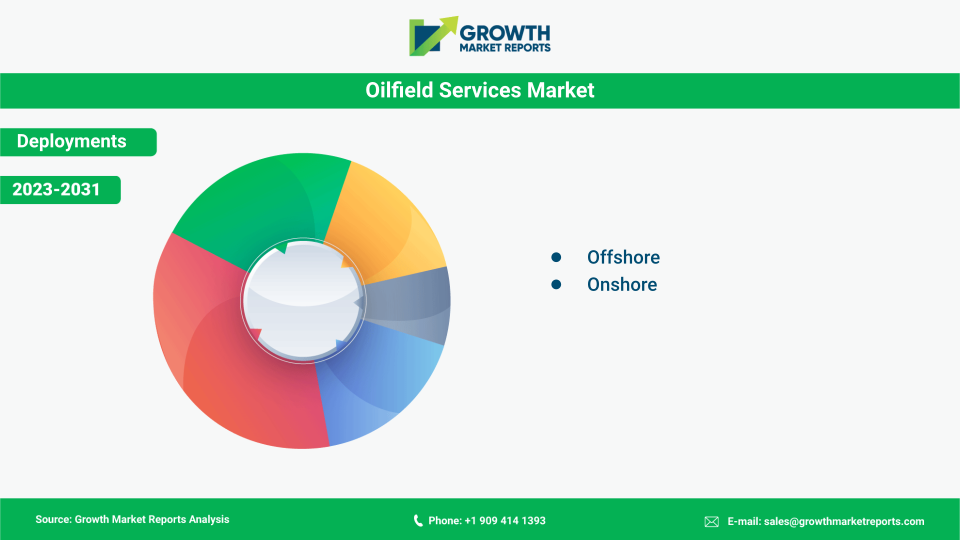
The oilfield services market is segmented by application into onshore and offshore operations. Onshore applications currently dominate the market, accounting for the majority of global oilfield services revenue in 2024. This is primarily due to the large number of onshore wells, the relative ease of access, and lower operational costs compared to offshore projects. Onshore oilfield services encompass a wide range of activities, including drilling, completion, production, and well intervention, across both conventional and unconventional resource plays. The growth of shale gas and tight oil production in North America, as well as increased exploration activities in Asia Pacific and the Middle East, are key drivers for the onshore segment.
Offshore applications, while representing a smaller share of the market, are experiencing significant growth due to the increasing focus on deepwater and ultra-deepwater exploration and production. Offshore projects are typically more complex and capital-intensive, requiring advanced technologies and integrated service offerings. The development of floating production systems, subsea processing, and enhanced safety measures is enabling operators to tap into previously inaccessible reserves. As global energy demand continues to rise and onshore reserves mature, offshore oilfield services are expected to play an increasingly important role in meeting supply needs. The expansion of offshore activities in regions such as the Gulf of Mexico, West Africa, and Southeast Asia is creating new opportunities for service providers.
The rise of Remote Operations in Oil and Gas is transforming the way companies manage their field activities. By utilizing remote monitoring and control systems, operators can oversee and manage operations from centralized locations, reducing the need for on-site personnel and enhancing safety. This approach not only lowers operational costs but also allows for real-time data analysis and quicker response times to any issues that may arise. The integration of remote operations with advanced digital technologies is enabling companies to optimize production, improve asset management, and ensure compliance with regulatory standards. As the industry continues to evolve, remote operations are set to play an increasingly pivotal role in the oil and gas sector.
The distinction between onshore and offshore applications also influences the types of services and equipment required. Onshore operations often prioritize cost-effective solutions and rapid deployment, while offshore projects demand high reliability, advanced engineering, and stringent safety standards. Service providers are adapting their offerings to meet the unique requirements of each application, leveraging digital technologies, automation, and remote monitoring to enhance efficiency and reduce operational risks. The trend towards integrated service contracts and long-term partnerships is further shaping the competitive landscape in both segments.
Environmental and regulatory considerations are also impacting the application landscape in the oilfield services market. Onshore operations are subject to land use restrictions, water management requirements, and emissions controls, particularly in regions with strict environmental standards. Offshore projects face additional challenges related to marine ecosystems, spill prevention, and decommissioning. Service providers are investing in environmentally friendly technologies and best practices to ensure compliance and minimize their environmental footprint. The adoption of digital solutions for real-time monitoring and reporting is supporting operators in meeting regulatory requirements and improving operational transparency.
Looking ahead, the balance between onshore and offshore applications is expected to shift as new discoveries are made and technology continues to advance. While onshore operations will remain a key driver of market growth, the increasing complexity and value of offshore projects will create new opportunities for innovation and differentiation. Service providers that can offer integrated, technologically advanced solutions tailored to the unique needs of each application will be well positioned to capitalize on these trends and drive growth in the oilfield services market.
The oilfield services market is segmented by equipment type into pressure pumping, well intervention, coiled tubing, wireline services, and others. Pressure pumping equipment, which includes hydraulic fracturing and cementing systems, is a critical component of both drilling and completion operations. This segment has witnessed significant growth in recent years, particularly in North America, where the shale revolution has driven demand for high-pressure, high-volume fracturing services. Advances in pressure pumping technology, such as electric fracturing fleets and automated control systems, are improving efficiency, reducing emissions, and minimizing operational costs. Service providers are also investing in environmentally friendly fluids and materials to address regulatory and community concerns.
Well intervention equipment is essential for maintaining and enhancing the productivity of existing wells. This segment includes a wide range of tools and technologies for well servicing, stimulation, and remediation. As mature oilfields continue to play a significant role in global production, the need for well intervention services is growing. Service providers are developing advanced intervention techniques, such as through-tubing rotary drilling, expandable liners, and real-time monitoring systems, to optimize well performance and extend asset life. The integration of digital solutions and automation is further enhancing the effectiveness and safety of well intervention operations.
Coiled tubing equipment is widely used for a variety of well intervention and completion activities, including cleanouts, acidizing, and fracturing. The flexibility and versatility of coiled tubing systems make them an attractive option for both onshore and offshore operations. Recent innovations in coiled tubing technology, such as larger diameter tubing, enhanced fatigue resistance, and automated handling systems, are expanding the range of applications and improving operational efficiency. Service providers are also leveraging data analytics and remote monitoring to optimize coiled tubing operations and reduce non-productive time.
Wireline services equipment is another critical segment of the oilfield services market, enabling operators to acquire real-time data, perform downhole measurements, and conduct various intervention activities. Advances in wireline technology, such as high-resolution imaging, digital sensors, and wireless telemetry, are providing operators with more accurate and actionable information. This is supporting better decision-making, risk management, and reservoir optimization. The increasing complexity of wells, particularly in unconventional and deepwater fields, is driving demand for advanced wireline services and equipment.
The "others" category includes a range of specialized equipment, such as mud logging systems, blowout preventers, and wellhead control systems. These technologies are essential for ensuring operational safety, environmental protection, and regulatory compliance. Service providers are continually innovating to address emerging challenges, such as high-pressure, high-temperature (HPHT) environments, remote operations, and digital integration. The trend towards modular, scalable solutions and the adoption of predictive maintenance are further enhancing the reliability and performance of oilfield equipment. As the industry continues to evolve, the demand for advanced, integrated equipment solutions is expected to grow, driving innovation and competition in the oilfield services market.
The oilfield services market is segmented by end-user into oil & gas companies, independent operators, national oil companies (NOCs), and others. Oil & gas companies, including major international oil companies (IOCs), represent the largest segment, driven by their significant investments in exploration, development, and production activities worldwide. These companies rely on oilfield service providers for a wide range of specialized services, from drilling and completion to production optimization and environmental management. The trend towards integrated service contracts and long-term partnerships is enhancing the value proposition for both operators and service providers, supporting sustained market growth.
Independent operators, which include small and mid-sized exploration and production companies, are also key end-users of oilfield services. These companies often focus on niche markets, unconventional resources, or specific geographic regions. They typically rely on oilfield service providers for technical expertise, operational support, and access to advanced technologies. The increasing availability of flexible service models, such as pay-as-you-go and performance-based contracts, is enabling independent operators to optimize their operations and manage costs effectively. The growth of unconventional resource plays, particularly in North America, is creating new opportunities for independent operators and their service partners.
National oil companies (NOCs) are playing an increasingly important role in the oilfield services market, particularly in regions such as the Middle East, Asia Pacific, and Latin America. Many NOCs are investing heavily in domestic oil and gas production to enhance energy security and support economic development. These investments often involve partnerships with international oilfield service providers, who bring in the necessary technology, expertise, and operational capabilities. The focus on local content, technology transfer, and capacity building is shaping the competitive landscape and creating new opportunities for collaboration and innovation.
The "others" category includes a range of end-users such as government agencies, research institutions, and service integrators. These organizations are involved in various aspects of oil and gas development, including resource assessment, environmental monitoring, and regulatory compliance. The increasing complexity of oil and gas projects, coupled with the need for sustainable and responsible development, is driving demand for specialized services and expertise. Service providers that can offer integrated, value-added solutions tailored to the unique needs of each end-user will be well positioned to capitalize on emerging opportunities in the oilfield services market.
Overall, the diverse and evolving needs of oilfield services end-users are driving innovation, collaboration, and competition in the market. As the industry continues to adapt to changing energy dynamics, regulatory requirements, and technological advancements, the role of oilfield service providers will become increasingly critical in supporting the sustainable development of global oil and gas resources.
The oilfield services market presents a multitude of opportunities for growth and innovation, particularly in the areas of digital transformation, automation, and sustainability. The adoption of advanced technologies such as artificial intelligence, machine learning, and the Internet of Things (IoT) is enabling service providers to optimize operations, reduce costs, and improve safety. Digital solutions for real-time monitoring, predictive maintenance, and data analytics are enhancing decision-making and operational efficiency. The increasing focus on sustainability and emissions reduction is driving demand for environmentally friendly services and technologies, such as electric fracturing fleets, low-emission equipment, and advanced water management solutions. Service providers that can offer integrated, technology-driven solutions tailored to the unique needs of their clients will be well positioned to capitalize on emerging opportunities in the oilfield services market.
Another significant opportunity lies in the expansion of offshore exploration and production activities, particularly in deepwater and ultra-deepwater fields. As onshore reserves mature and become more challenging to exploit, oil and gas companies are increasingly turning to offshore projects to meet growing energy demand. These projects require advanced engineering, technical expertise, and integrated service offerings, creating new opportunities for innovation and differentiation. The development of floating production systems, subsea processing, and enhanced safety measures is enabling operators to tap into previously inaccessible reserves. Service providers that can deliver high-value, integrated solutions for complex offshore projects will be well positioned to capture market share and drive growth.
Despite the numerous opportunities, the oilfield services market also faces several restraining factors that could impact growth. One of the most significant challenges is the volatility of oil and gas prices, which directly affects exploration and production activity levels. Fluctuations in commodity prices can lead to project delays, budget cuts, and reduced demand for oilfield services. In addition, increasing regulatory scrutiny, environmental concerns, and the global push towards decarbonization are creating new challenges for service providers. Companies must invest in environmentally friendly technologies, comply with stringent regulations, and demonstrate a commitment to sustainable development to remain competitive. The ongoing energy transition and the growth of renewable energy sources also pose long-term challenges for the oilfield services market, as the industry adapts to changing energy dynamics and evolving customer needs.
North America remains the largest regional market for oilfield services, with a market size of USD 115.2 billion in 2024. The regionÂ’s dominance is primarily driven by the robust shale gas and tight oil activities in the United States and Canada. The adoption of advanced drilling and completion technologies, coupled with a favorable regulatory environment, has enabled operators to unlock vast unconventional resources. North America is also a hub for innovation in oilfield services, with a strong focus on digital transformation, automation, and sustainability. The region is expected to maintain its leadership position, supported by ongoing investments in exploration and production, as well as the expansion of offshore activities in the Gulf of Mexico.
The Middle East & Africa region is the second-largest market, with a market size of USD 78.6 billion in 2024. The region is home to some of the worldÂ’s largest and most prolific oil reserves, and national oil companies are investing heavily in exploration, development, and production activities. The focus on energy security, economic development, and local content is driving demand for oilfield services and creating new opportunities for collaboration and innovation. The Middle East & Africa region is expected to grow at a CAGR of 6.1% from 2025 to 2033, outpacing other regions and contributing significantly to global market growth.
Asia Pacific is an emerging market for oilfield services, with a market size of USD 54.7 billion in 2024. The region is witnessing increased exploration and production activity, particularly in offshore fields in Southeast Asia, Australia, and India. Governments are prioritizing energy security and diversifying their energy mix, driving investment in both conventional and unconventional resources. The adoption of advanced technologies and best practices is supporting the growth of the oilfield services market in Asia Pacific. Europe and Latin America, with market sizes of USD 36.3 billion and USD 26.0 billion respectively, continue to invest in both conventional and renewable energy projects. Policy reforms, new discoveries, and the expansion of offshore activities are creating new opportunities for oilfield service providers in these regions.
The oilfield services market is characterized by intense competition, with a mix of global giants, regional players, and specialized service providers vying for market share. The competitive landscape is shaped by factors such as technological innovation, operational efficiency, service quality, and the ability to deliver integrated solutions. Leading companies are investing heavily in research and development, digital transformation, and sustainability to differentiate themselves and capture new opportunities. The trend towards consolidation and strategic partnerships is also reshaping the market, as companies seek to expand their capabilities, geographic reach, and customer base.
Major players in the oilfield services market include Schlumberger, Halliburton, Baker Hughes, Weatherford International, and NOV Inc. These companies have a global presence, extensive portfolios of products and services, and strong relationships with leading oil and gas operators. They are at the forefront of technological innovation, developing advanced drilling, completion, and production solutions that enable operators to optimize performance, reduce costs, and minimize environmental impact. In addition to the global giants, there is a growing number of regional and specialized service providers that focus on niche markets, specific technologies, or geographic regions. These companies often offer tailored solutions, local expertise, and flexible service models to meet the unique needs of their clients.
The competitive landscape is also being shaped by the increasing adoption of digital technologies and the growing importance of sustainability. Companies that can leverage digital solutions, data analytics, and automation to enhance operational efficiency, reduce emissions, and improve safety are gaining a competitive edge. The focus on environmental, social, and governance (ESG) performance is becoming a key differentiator, as operators and investors prioritize sustainable and responsible development. Service providers that can demonstrate a commitment to ESG principles, invest in environmentally friendly technologies, and deliver value-added solutions will be well positioned to succeed in the evolving oilfield services market.
Some of the major companies in the oilfield services market include:
The Oilfield Services market has been segmented on the basis of
Key players competing in the global oilfield services market include Tican Well Service, Ltd.; Halliburton Company; Nabors Industries, Ltd; China Oilfield Services Ltd.; Schlumberger Ltd; Nordic Well Services, LLC; Superior Energy Services, Inc.; National Oilwell Varco, Inc.; and Baker Hughes Inc.
Some of these players are engaged in several market strategies such as mergers, acquisitions, partnerships, collaborations, capacity expansion, and product launches to enhance their market shares.
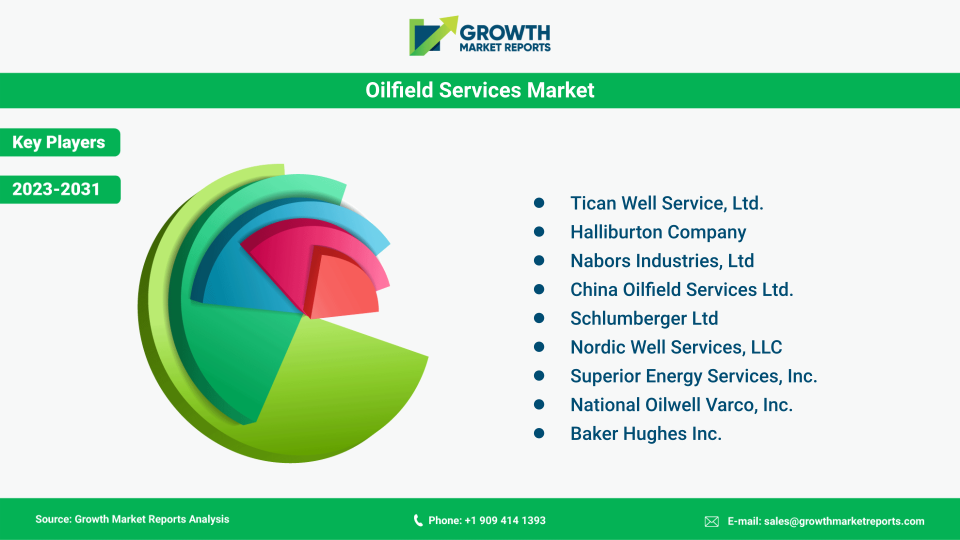
Key players include Schlumberger, Halliburton, Baker Hughes, Weatherford International, NOV Inc., and several regional and specialized service providers.
Opportunities include digital transformation, automation, sustainability, and offshore expansion. Challenges involve oil price volatility, regulatory pressures, environmental concerns, and the global energy transition.
Major end-users include oil & gas companies, independent operators, national oil companies (NOCs), and other entities such as government agencies and research institutions.
Key equipment types include pressure pumping, well intervention, coiled tubing, wireline services, and other specialized equipment like mud logging systems and blowout preventers.
The market is divided into onshore and offshore applications. Onshore operations currently dominate, but offshore activities are experiencing significant growth, especially in deepwater and ultra-deepwater projects.
The market is segmented into drilling services, completion services, production services, processing & separation services, and others, with drilling services being the largest segment.
North America leads the market due to strong shale gas and tight oil activity, followed by the Middle East & Africa, Asia Pacific, Europe, and Latin America.
Key growth drivers include increased investments in oil and gas projects, technological advancements, rising energy security needs, expansion of offshore activities, and adoption of digital and environmentally friendly solutions.
The oilfield services market is expected to grow at a CAGR of 5.2% from 2025 to 2033, reaching an estimated value of USD 491.6 billion by 2033.
As of 2024, the global oilfield services market size reached USD 310.8 billion, driven by robust demand from ongoing exploration and production activities.