Segments - by Type (Petroleum Oil Refining, Vegetable Oil Refining, Biofuel Oil Refining), by Process (Distillation, Hydrocracking, Catalytic Cracking, Alkylation, Others), by Application (Transportation Fuels, Petrochemical Feedstock, Lubricants, Others), by Technology (Conventional, Non-Conventional)
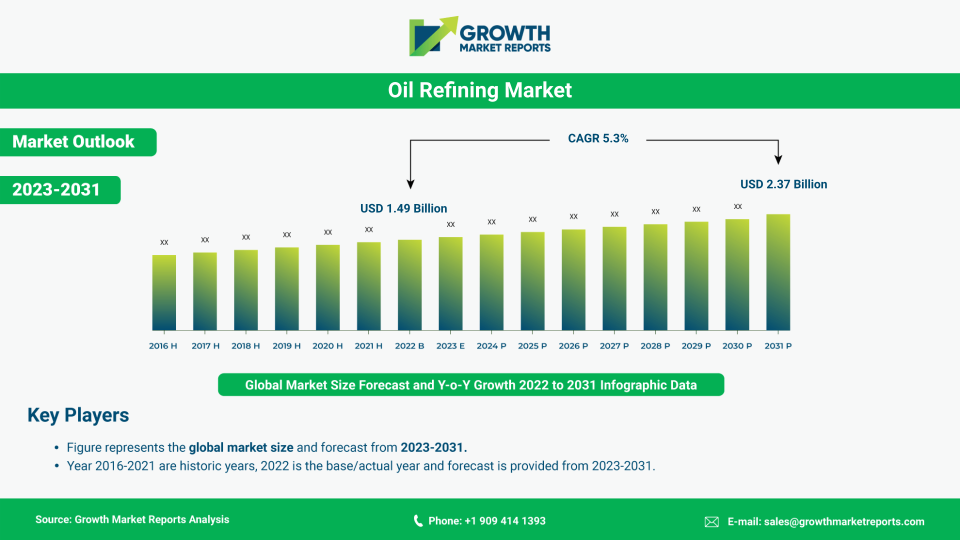
According to our latest research, the global oil refining market size stood at USD 1.65 trillion in 2024, reflecting a robust and mature industry that continues to underpin global energy and manufacturing sectors. The market is projected to expand at a CAGR of 4.2% from 2025 to 2033, reaching an estimated USD 2.37 trillion by 2033. This growth trajectory is primarily fueled by rising global energy demand, ongoing investments in refinery modernization, and the increasing adoption of advanced refining technologies to enhance efficiency and meet stringent environmental regulations.
The oil refining market is experiencing significant growth due to a confluence of factors that are reshaping the global energy landscape. One of the foremost drivers is the escalating demand for transportation fuels, particularly in emerging economies where urbanization and industrialization are accelerating at an unprecedented pace. As nations continue to develop, the consumption of gasoline, diesel, and jet fuel has surged, compelling refiners to expand capacity and upgrade existing infrastructure. Furthermore, the petrochemical sectorÂ’s rapid expansion is intensifying the need for refined products, as these serve as critical feedstocks for plastics, fertilizers, and other industrial chemicals. The interplay between these sectors creates a robust demand base that underpins the marketÂ’s sustained growth.
Another pivotal growth factor is the industryÂ’s transition toward cleaner and more efficient refining processes. Environmental regulations are becoming increasingly stringent, particularly in North America and Europe, prompting refiners to invest in technologies that reduce emissions and improve fuel quality. Innovations such as hydrocracking and catalytic cracking are being widely adopted to produce fuels with lower sulfur content and higher energy efficiency. Additionally, the integration of digital technologies like advanced process control, real-time monitoring, and predictive maintenance is optimizing refinery operations, reducing downtime, and enhancing overall profitability. These advancements not only ensure compliance with regulatory standards but also enable refiners to respond swiftly to market fluctuations and evolving consumer preferences.
The diversification of feedstocks represents another crucial growth lever for the oil refining market. While petroleum oil refining remains dominant, there is a marked increase in the refining of alternative feedstocks such as vegetable oils and biofuels. This diversification is driven by both policy incentives and shifting consumer attitudes toward sustainability and renewable energy sources. Governments worldwide are implementing mandates and subsidies to encourage the blending of biofuels with conventional fuels, thereby promoting the adoption of vegetable oil and biofuel refining technologies. This trend is expected to gain further momentum as the global community intensifies efforts to reduce carbon emissions and transition to a low-carbon economy, making the oil refining market increasingly dynamic and multifaceted.
The concept of Refinery Petrochemical Integration is becoming increasingly pivotal in the oil refining industry. This integration allows refineries to enhance their operational efficiency and product output by closely linking refining processes with petrochemical production. By doing so, companies can optimize the use of feedstocks, reduce waste, and improve overall profitability. This strategy is particularly beneficial in regions with high demand for petrochemical products, such as Asia Pacific and the Middle East, where integrated complexes are being developed to meet the growing needs of the market. The synergy between refining and petrochemical operations not only boosts economic returns but also aligns with global sustainability goals by minimizing environmental impacts through more efficient resource utilization.
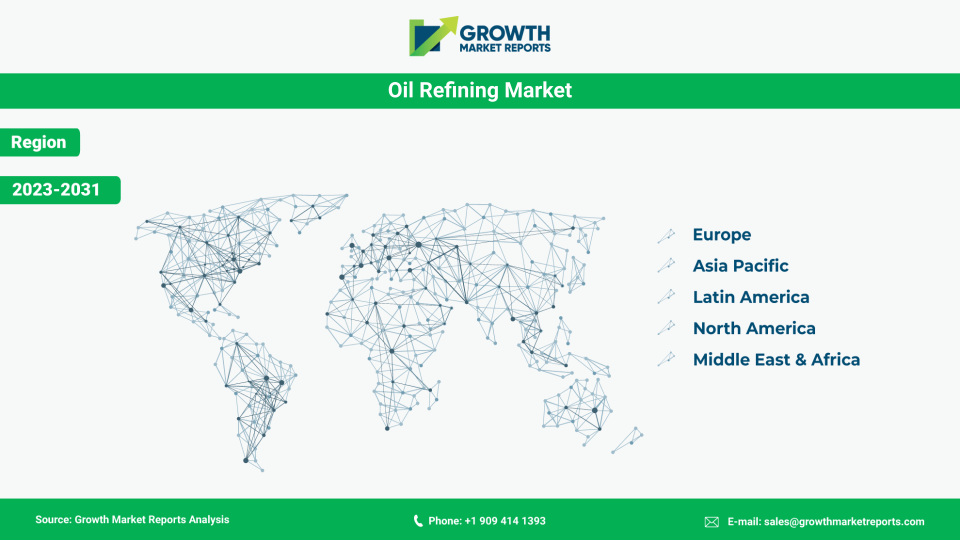
From a regional perspective, Asia Pacific continues to lead the global oil refining market, accounting for the largest share of both refining capacity and consumption. Rapid economic growth, expanding middle-class populations, and large-scale industrialization in countries such as China and India are driving massive investments in new refinery projects and capacity expansions. North America and Europe, while mature markets, are focusing on upgrading existing refineries to meet environmental standards and enhance operational efficiency. Meanwhile, the Middle East is leveraging its abundant crude oil reserves to invest in integrated refining and petrochemical complexes, aiming to capture greater value across the hydrocarbon value chain. This diverse regional landscape ensures that the oil refining market remains resilient and responsive to global energy trends.
The oil refining market is segmented by type into petroleum oil refining, vegetable oil refining, and biofuel oil refining, each playing a distinct role in the industryÂ’s value chain. Petroleum oil refining remains the cornerstone of the market, accounting for the vast majority of global refining capacity and output. This segment is characterized by large-scale refineries that process crude oil into a wide array of products, including transportation fuels, lubricants, and feedstocks for the petrochemical industry. The dominance of petroleum oil refining is underpinned by the continued reliance on fossil fuels for energy and transportation, particularly in developing economies where alternative energy adoption is still nascent. However, this segment is also facing mounting pressure to adopt cleaner technologies and reduce its environmental footprint, prompting significant investments in emission control and desulfurization processes.
Vegetable oil refining represents a rapidly growing segment within the oil refining market, driven by the increasing demand for edible oils, biodiesel, and other bio-based products. This segment encompasses the processing of various vegetable oils such as soybean, palm, canola, and sunflower oil to remove impurities and enhance quality. The growth of this segment is closely linked to the expanding food processing industry and the rising popularity of plant-based diets. Moreover, vegetable oil refining is gaining traction as a feedstock for biofuel production, aligning with global efforts to promote renewable energy and reduce greenhouse gas emissions. Technological advancements in enzymatic and physical refining processes are further enhancing the efficiency and sustainability of vegetable oil refining operations.
Biofuel oil refining is an emerging segment that is poised for significant expansion in the coming years, fueled by policy mandates, environmental concerns, and technological innovation. This segment involves the conversion of biomass, waste oils, and other renewable feedstocks into biofuels such as biodiesel, renewable diesel, and bioethanol. Biofuel oil refining is gaining momentum as governments worldwide implement blending mandates and carbon reduction targets, incentivizing refiners to diversify their portfolios and invest in renewable refining capacity. The integration of advanced technologies such as hydroprocessing and catalytic upgrading is enabling the production of high-quality biofuels that are compatible with existing fuel infrastructure, further accelerating the adoption of biofuel oil refining.
The interplay between these three segments is reshaping the competitive landscape of the oil refining market. While petroleum oil refining continues to dominate, the rapid growth of vegetable oil and biofuel refining is introducing new dynamics and opportunities for market participants. Companies are increasingly adopting a multi-feedstock approach, leveraging synergies between petroleum and renewable refining operations to optimize resource utilization and respond to evolving market demands. This diversification strategy is expected to become increasingly important as the industry navigates the dual challenges of energy security and environmental sustainability, positioning the oil refining market for sustained growth and innovation.
Refinery Insurance plays a crucial role in safeguarding the financial health of oil refining operations. Given the complex and high-risk nature of refinery processes, insurance provides a safety net against potential losses arising from operational disruptions, equipment failures, or environmental incidents. As refineries continue to adopt advanced technologies and expand their capacities, the demand for comprehensive insurance coverage is increasing. This includes coverage for property damage, business interruption, and liability risks. Insurers are also evolving their offerings to address emerging challenges such as cyber threats and climate-related risks, ensuring that refiners can maintain resilience in an unpredictable market environment. The strategic management of insurance is thus integral to the sustained growth and stability of the oil refining industry.
| Attributes | Details |
| Report Title | Oil Refining Market Research Report 2033 |
| By Type | Petroleum Oil Refining, Vegetable Oil Refining, Biofuel Oil Refining |
| By Process | Distillation, Hydrocracking, Catalytic Cracking, Alkylation, Others |
| By Application | Transportation Fuels, Petrochemical Feedstock, Lubricants, Others |
| By Technology | Conventional, Non-Conventional |
| Regions Covered | North America, Europe, APAC, Latin America, MEA |
| Base Year | 2024 |
| Historic Data | 2018-2023 |
| Forecast Period | 2025-2033 |
| Number of Pages | 274 |
| Number of Tables & Figures | 318 |
| Customization Available | Yes, the report can be customized as per your need. |
The oil refining market is further segmented by process, encompassing distillation, hydrocracking, catalytic cracking, alkylation, and other specialized processes. Distillation serves as the foundational step in oil refining, wherein crude oil is separated into various fractions based on boiling points. This primary process is indispensable for the production of key products such as naphtha, kerosene, diesel, and heavy fuel oils. The efficiency and effectiveness of distillation units directly impact the overall yield and profitability of refineries. Recent advancements in heat integration and energy recovery are enhancing the sustainability of distillation processes, reducing energy consumption and operational costs.
Hydrocracking is a critical secondary process that converts heavy fractions from distillation into lighter, more valuable products such as gasoline, jet fuel, and diesel. This process utilizes hydrogen and specialized catalysts to break down large hydrocarbon molecules, resulting in higher yields of clean fuels with low sulfur content. The adoption of hydrocracking has been accelerated by stringent environmental regulations, particularly those targeting sulfur emissions and fuel quality standards. Refineries are increasingly investing in hydrocracking units to produce ultra-low sulfur diesel and meet the growing demand for cleaner transportation fuels. The integration of advanced catalysts and process automation is further enhancing the efficiency and selectivity of hydrocracking operations.
Catalytic cracking is another pivotal process that plays a central role in maximizing the yield of high-octane gasoline and other light products from heavier feedstocks. Fluid catalytic cracking (FCC) units are widely deployed in refineries to convert vacuum gas oils and residual fractions into valuable products. The process relies on zeolite-based catalysts and operates under high temperatures, enabling the rapid conversion of complex hydrocarbons. Ongoing research and development efforts are focused on improving catalyst performance, reducing coke formation, and enhancing product selectivity. The widespread adoption of catalytic cracking is driven by the persistent demand for gasoline and the need to optimize refinery economics in a competitive market environment.
Alkylation is a specialized refining process that combines light olefins and isobutane to produce high-octane alkylate, a key component of premium gasoline. Alkylation units are essential for meeting octane requirements and complying with environmental regulations that restrict the use of aromatic compounds and other additives. The process can be carried out using sulfuric acid or hydrofluoric acid as catalysts, each with distinct operational and safety considerations. Recent innovations in solid acid catalysts and process intensification are enhancing the safety, efficiency, and environmental performance of alkylation units. Other processes such as isomerization, reforming, and desulfurization also play vital roles in optimizing product quality and meeting market specifications.
The oil refining market serves a diverse array of applications, with transportation fuels, petrochemical feedstock, lubricants, and other uses forming the backbone of global demand. Transportation fuels represent the largest application segment, accounting for the majority of refined product output. Gasoline, diesel, and jet fuel are indispensable for powering vehicles, aircraft, and ships, making them critical to the functioning of modern economies. The sustained growth in vehicle ownership, air travel, and freight transportation is driving the demand for high-quality fuels, compelling refiners to optimize production processes and invest in capacity expansions. Additionally, the emergence of alternative propulsion technologies such as electric and hydrogen vehicles is prompting refiners to diversify their product portfolios and explore new market opportunities.
Petrochemical feedstock is another major application area, with refined products such as naphtha, propylene, and aromatics serving as essential building blocks for the chemical industry. The rapid expansion of the petrochemical sector, particularly in Asia Pacific and the Middle East, is fueling demand for high-purity feedstocks that can be converted into plastics, synthetic fibers, and specialty chemicals. Refineries are increasingly integrating with petrochemical complexes to capture synergies, enhance value addition, and improve overall profitability. This trend is expected to gain further momentum as the global economy becomes more reliant on petrochemical products for packaging, construction, and consumer goods.
Lubricants constitute a vital application segment, encompassing base oils and finished lubricants used in automotive, industrial, and marine applications. The demand for high-performance lubricants is being driven by advancements in engine technology, stricter emission standards, and the need for improved equipment reliability and efficiency. Refineries are investing in hydroprocessing and dewaxing technologies to produce premium base oils with superior thermal stability, oxidation resistance, and low volatility. The growing adoption of synthetic and bio-based lubricants is also creating new opportunities for innovation and market differentiation.
Other applications of oil refining include the production of asphalt, waxes, solvents, and specialty chemicals, each serving niche markets with specific performance requirements. The versatility of refined products underscores the strategic importance of the oil refining industry in supporting a wide range of economic activities. As the energy transition accelerates, refineries are exploring new applications such as renewable fuels, hydrogen production, and carbon capture, positioning themselves at the forefront of the evolving energy landscape. This diversification of applications is expected to enhance the resilience and long-term growth prospects of the oil refining market.
The oil refining market is segmented by technology into conventional and non-conventional approaches, each characterized by distinct operational paradigms and value propositions. Conventional refining technologies encompass well-established processes such as atmospheric and vacuum distillation, catalytic cracking, hydrocracking, and reforming. These technologies have been the backbone of the industry for decades, enabling the efficient conversion of crude oil into a broad spectrum of products. The continued evolution of conventional technologies is focused on enhancing process efficiency, reducing energy consumption, and minimizing environmental impacts. Investments in process automation, catalyst development, and heat integration are driving incremental improvements in conventional refining operations, ensuring their continued relevance in a competitive market.
Non-conventional refining technologies are gaining prominence as the industry seeks to address emerging challenges related to feedstock diversification, environmental sustainability, and resource efficiency. This segment includes advanced processes such as bio-refining, gas-to-liquids (GTL), coal-to-liquids (CTL), and waste-to-fuels technologies. Non-conventional technologies enable the conversion of renewable and unconventional feedstocks into high-value fuels and chemicals, aligning with global efforts to reduce carbon emissions and promote circular economy principles. The adoption of non-conventional technologies is being accelerated by policy incentives, technological breakthroughs, and the growing demand for low-carbon products. Refineries are increasingly investing in pilot projects and commercial-scale facilities to demonstrate the viability and scalability of these innovative approaches.
The integration of digital technologies represents a transformative trend across both conventional and non-conventional refining segments. Advanced analytics, machine learning, and real-time monitoring are enabling refineries to optimize process performance, predict equipment failures, and reduce operational risks. Digital twins, predictive maintenance, and remote operations are becoming standard practice, enhancing agility and resilience in an increasingly volatile market environment. The convergence of digital and process technologies is unlocking new levels of efficiency, safety, and sustainability, positioning the oil refining industry for long-term success.
The interplay between conventional and non-conventional technologies is fostering a culture of innovation and continuous improvement within the oil refining market. Companies are leveraging hybrid approaches that combine the strengths of traditional processes with the flexibility and sustainability of new technologies. This strategic integration is enabling refiners to adapt to changing market dynamics, regulatory requirements, and consumer preferences. As the industry navigates the energy transition, the adoption of advanced technologies will be critical to maintaining competitiveness, enhancing value creation, and ensuring environmental stewardship.
The oil refining market is replete with opportunities that can be leveraged by industry participants to drive growth, innovation, and value creation. One of the most significant opportunities lies in the integration of refining and petrochemical operations, enabling companies to capture synergies, enhance product flexibility, and improve overall profitability. The rising demand for petrochemical feedstocks, particularly in Asia Pacific and the Middle East, is creating strong incentives for refiners to invest in integrated complexes that can produce both fuels and chemicals. This trend is expected to accelerate as the global economy becomes increasingly reliant on plastics, synthetic fibers, and specialty chemicals, creating new avenues for revenue generation and market differentiation.
Another major opportunity is the adoption of advanced and sustainable refining technologies. The global push toward decarbonization and environmental sustainability is prompting refiners to explore renewable feedstocks, energy-efficient processes, and low-carbon product offerings. Investments in bio-refining, waste-to-fuels, and carbon capture technologies are enabling companies to diversify their portfolios, reduce greenhouse gas emissions, and comply with evolving regulatory requirements. The growing consumer preference for sustainable products and the proliferation of government incentives are further enhancing the attractiveness of these opportunities. Companies that proactively embrace innovation and sustainability are well-positioned to capture market share and drive long-term growth in the oil refining industry.
Despite the abundance of opportunities, the oil refining market faces several restraining factors that could impede its growth and profitability. Chief among these is the volatility of crude oil prices, which can significantly impact refinery margins and investment decisions. The cyclical nature of the oil market, coupled with geopolitical tensions and supply chain disruptions, introduces a high degree of uncertainty and risk for refiners. Additionally, the rising adoption of electric vehicles and alternative energy sources poses a long-term threat to the demand for traditional transportation fuels. Regulatory pressures related to emissions, fuel quality, and environmental protection are also increasing compliance costs and operational complexity. To navigate these challenges, companies must adopt agile strategies, invest in risk management, and continuously innovate to maintain their competitive edge.
Asia Pacific remains the largest and fastest-growing region in the global oil refining market, accounting for approximately 42% of global refining capacity in 2024, equivalent to USD 693 billion. The regionÂ’s dominance is underpinned by rapid economic growth, urbanization, and industrialization in major markets such as China, India, and Southeast Asia. These countries are investing heavily in new refinery projects, capacity expansions, and technology upgrades to meet burgeoning demand for transportation fuels and petrochemical feedstocks. The Asia Pacific oil refining market is projected to grow at a CAGR of 5.1% from 2025 to 2033, outpacing other regions and solidifying its position as the global growth engine for the industry.
North America is a mature but dynamic market, with a total refining market size of approximately USD 412 billion in 2024. The region is characterized by a focus on refinery modernization, operational efficiency, and compliance with stringent environmental regulations. The United States, in particular, boasts some of the worldÂ’s most sophisticated and efficient refineries, leveraging advanced process technologies and digital solutions to optimize performance. While demand growth is relatively modest compared to Asia Pacific, North America remains a key exporter of refined products, particularly to Latin America and Europe. The regionÂ’s oil refining market is expected to grow steadily, supported by ongoing investments in process upgrades and the integration of renewable feedstocks.
The Middle East & Africa region, with a market size of around USD 289 billion in 2024, is leveraging its abundant crude oil reserves to invest in large-scale, integrated refining and petrochemical complexes. Countries such as Saudi Arabia, the United Arab Emirates, and Kuwait are executing ambitious projects aimed at capturing greater value across the hydrocarbon value chain and reducing reliance on crude exports. Europe, with a market size of USD 198 billion, is focusing on refinery upgrades and the adoption of cleaner technologies to meet stringent environmental standards. Latin America, though smaller in scale at USD 58 billion, is witnessing a resurgence in refinery investments, particularly in Brazil and Mexico, to address domestic fuel shortages and reduce import dependency. Collectively, these regional dynamics ensure a balanced and resilient global oil refining market, with each region contributing unique strengths and growth drivers.
The global oil refining market is characterized by intense competition, with a mix of state-owned enterprises, international oil majors, and independent refiners vying for market share. The competitive landscape is shaped by factors such as refining capacity, technological capabilities, operational efficiency, and access to feedstock resources. Leading players are continuously investing in capacity expansions, process upgrades, and digital transformation initiatives to enhance their competitive positioning. The ability to adapt to changing market dynamics, regulatory requirements, and consumer preferences is critical to sustaining long-term success in this highly competitive industry.
Technological innovation is a key differentiator in the oil refining market, with companies leveraging advanced process technologies, catalyst development, and digital solutions to optimize performance and reduce costs. The integration of refining and petrochemical operations is emerging as a strategic priority, enabling companies to capture synergies, enhance product flexibility, and improve profitability. Strategic partnerships, joint ventures, and mergers and acquisitions are also prevalent, as companies seek to strengthen their market presence, access new markets, and diversify their portfolios. The competitive landscape is further influenced by the entry of new players in the renewable and biofuel refining segments, intensifying competition and driving innovation across the industry.
Environmental sustainability and regulatory compliance are becoming increasingly important competitive factors, as governments worldwide implement stricter emissions standards and fuel quality regulations. Companies that proactively invest in cleaner technologies, renewable feedstocks, and energy-efficient processes are better positioned to comply with regulatory requirements and capture market opportunities. The ability to demonstrate environmental stewardship and social responsibility is also becoming a key differentiator, influencing investor sentiment and consumer preferences.
Major companies in the global oil refining market include ExxonMobil Corporation, Royal Dutch Shell plc, BP plc, Chevron Corporation, Sinopec, Saudi Aramco, TotalEnergies SE, Indian Oil Corporation, and Valero Energy Corporation. ExxonMobil is renowned for its extensive global refining network and leadership in process innovation. Shell has a strong presence in both conventional and renewable refining, with a focus on sustainability and digital transformation. BP is investing heavily in low-carbon technologies and integrated refining-petrochemical complexes. Chevron is recognized for its operational excellence and commitment to environmental stewardship. Sinopec and Indian Oil Corporation are dominant players in Asia, leveraging large-scale capacity and government support to drive growth. Saudi Aramco is executing ambitious projects to integrate refining and petrochemical operations, while Valero Energy is a leading independent refiner in North America with a focus on operational efficiency and renewable fuels. These companies are at the forefront of the industry, shaping the future of the global oil refining market through innovation, investment, and strategic leadership.
The Oil Refining market has been segmented on the basis of
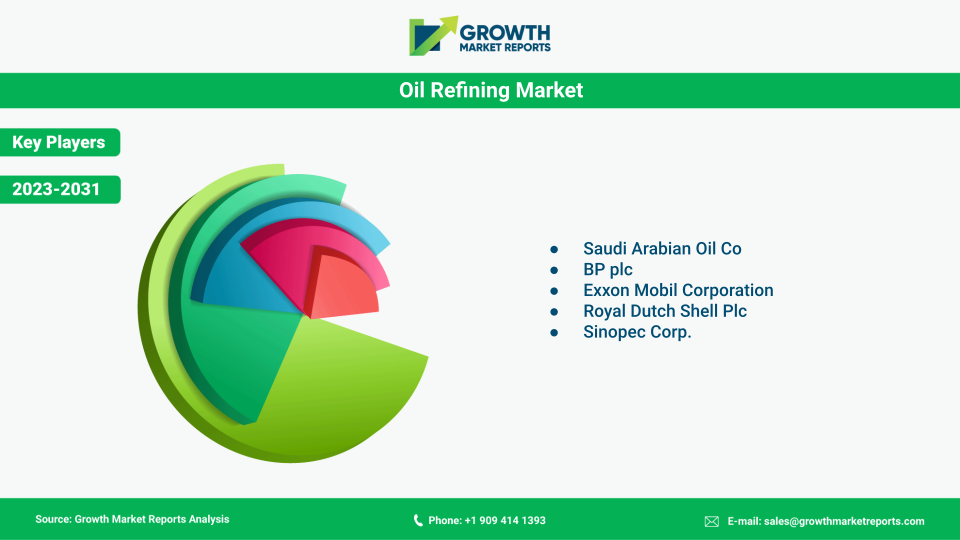
Key players competing in the oil refining market include Saudi Arabian Oil Co, BP plc, Exxon Mobil Corporation, Royal Dutch Shell Plc, and Sinopec Corp.
Some of these players are using several market strategies such as mergers, acquisitions, partnerships, collaborations, capacity expansion, and product launches to increase their market shares.
Key challenges include crude oil price volatility, regulatory pressures, the rise of alternative energy and electric vehicles, and the need for environmental compliance.
Major companies include ExxonMobil, Royal Dutch Shell, BP, Chevron, Sinopec, Saudi Aramco, TotalEnergies, Indian Oil Corporation, and Valero Energy Corporation.
The industry is adopting digital technologies like advanced process control, real-time monitoring, predictive maintenance, as well as non-conventional refining methods such as bio-refining and waste-to-fuels.
Refined oil products are primarily used for transportation fuels, petrochemical feedstock, lubricants, and other applications such as asphalt and specialty chemicals.
The market is segmented into petroleum oil refining, vegetable oil refining, and biofuel oil refining.
Growth is driven by rising global energy demand, investments in refinery modernization, adoption of advanced refining technologies, and stricter environmental regulations.
Asia Pacific leads the global oil refining market, followed by North America, the Middle East & Africa, Europe, and Latin America.
Key oil refining processes include distillation, hydrocracking, catalytic cracking, alkylation, and other specialized processes such as isomerization and desulfurization.
The oil refining market is expected to grow at a CAGR of 4.2% from 2025 to 2033, reaching approximately USD 2.37 trillion by 2033.
As of 2024, the global oil refining market size is estimated at USD 1.65 trillion.