Non-volatile Dual In-line Memory Module Market Research Report 2033

Non-volatile Dual In-line Memory Module Market Research Report 2033

Segments - by Product Type (NVDIMM-N, NVDIMM-F, NVDIMM-P), by Application (Enterprise Storage and Server, Data Centers, Consumer Electronics, Industrial, Others), by End-User (IT and Telecommunications, BFSI, Healthcare, Government, Others)

https://growthmarketreports.com/Raksha
Author : Raksha Sharma
https://growthmarketreports.com/Vaibhav
Fact-checked by : V. Chandola
https://growthmarketreports.com/Shruti
Editor : Shruti Bhat

Upcoming | Report ID :ICT-SE-3155 | 4.5 Rating | 75 Reviews | 282 Pages | Format : Docx PDF

Report Description


Non-volatile Dual In-line Memory Module Market Outlook

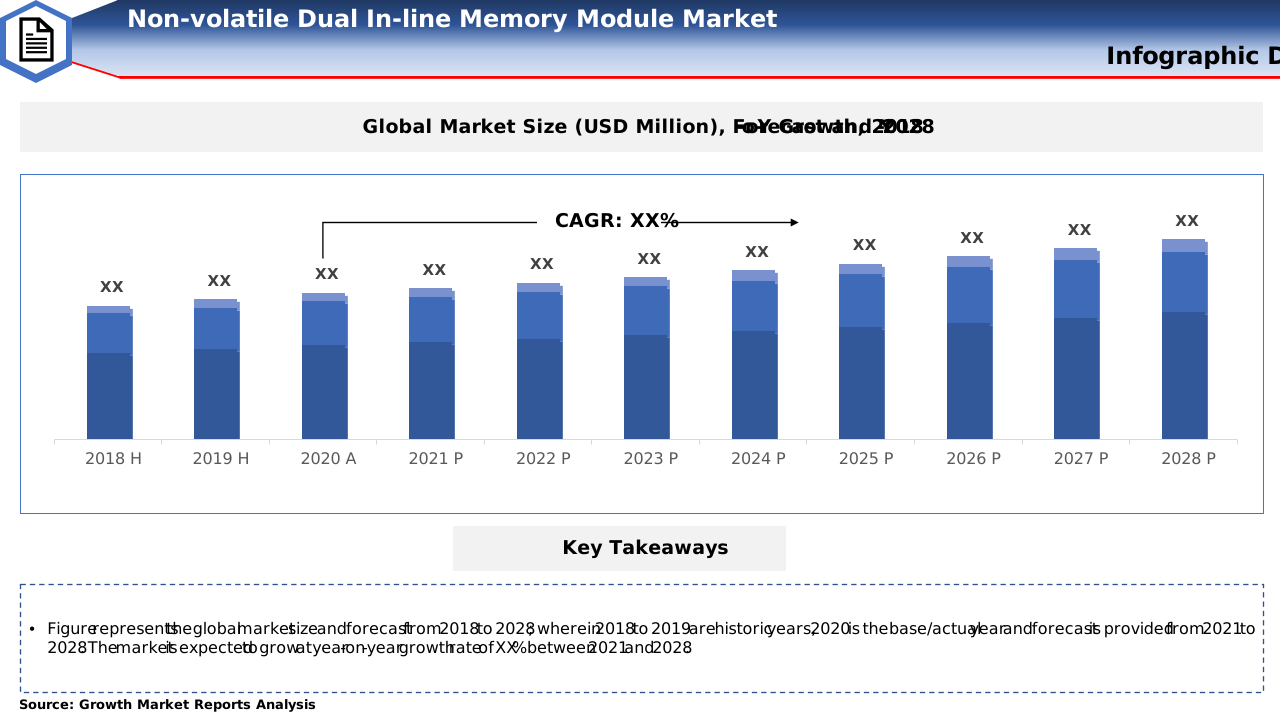
According to our latest research, the global Non-volatile Dual In-line Memory Module (NVDIMM) market size reached USD 1.2 billion in 2024, reflecting a robust increase driven by surging demand across data-intensive industries. The market is poised for significant expansion, with a projected CAGR of 25.4% from 2025 to 2033. By the end of 2033, the NVDIMM market is forecasted to attain a value of approximately USD 8.7 billion, underlining its critical role in next-generation memory and storage solutions. This accelerated growth is primarily attributed to the rising adoption of high-performance computing, rapid digitization, and the need for persistent memory in enterprise environments.

One of the key growth drivers for the NVDIMM market is the exponential increase in data generation and the corresponding need for faster, more reliable memory solutions. As organizations shift towards digital transformation, the volume of data being processed and stored has reached unprecedented levels, particularly in sectors such as financial services, healthcare, and telecommunications. NVDIMMs offer a unique combination of speed, endurance, and non-volatility, enabling enterprises to maintain data integrity even during power failures. This capability is crucial for mission-critical applications, where data loss can lead to significant financial and reputational damage. The integration of NVDIMMs in enterprise storage and server environments is thus becoming a standard practice, driving market growth.

Another significant factor fueling the expansion of the Non-volatile Dual In-line Memory Module market is the increasing adoption of cloud computing and virtualization technologies. As data centers become the backbone of digital economies, the demand for memory solutions that can handle high workloads, reduce latency, and ensure data persistence is surging. NVDIMMs bridge the gap between traditional volatile memory and storage, enabling faster data access and improved system performance. Their ability to support real-time analytics, artificial intelligence, and machine learning workloads makes them indispensable in modern data center architectures. Additionally, advancements in NVDIMM technologies, such as the development of the NVDIMM-P standard, are expanding their application scope and accelerating their adoption across various industries.

The proliferation of Internet of Things (IoT) devices and the growing complexity of consumer electronics are also contributing to the upward trajectory of the NVDIMM market. With billions of connected devices generating and transmitting data, there is a pressing need for memory modules that can ensure data persistence and quick recovery. NVDIMMs are increasingly being integrated into industrial automation systems, smart devices, and edge computing platforms to enhance reliability and minimize downtime. As industries prioritize operational efficiency and data security, the adoption of NVDIMM solutions is expected to rise sharply, further bolstering market growth.

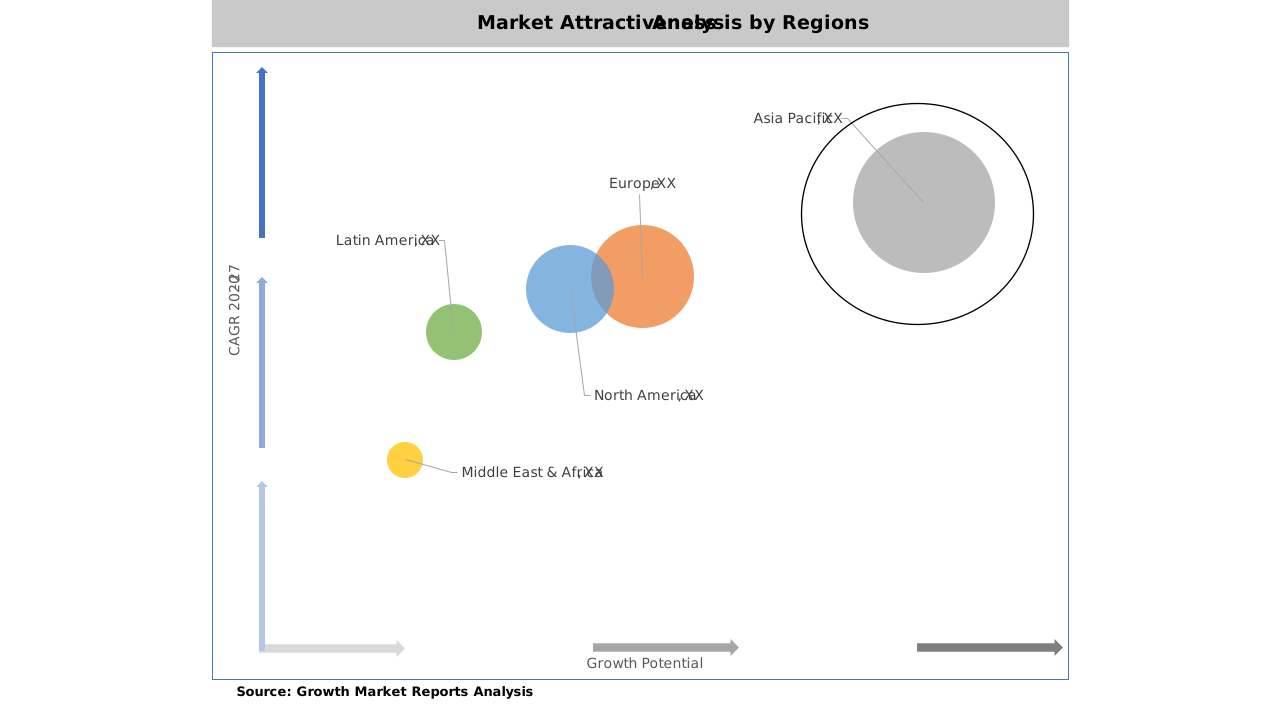
From a regional perspective, North America currently dominates the global NVDIMM market, accounting for the largest revenue share in 2024. This leadership is attributed to the presence of major technology companies, advanced data center infrastructures, and early adoption of cutting-edge memory technologies. However, the Asia Pacific region is emerging as a high-growth market, driven by rapid industrialization, expansion of cloud services, and increasing investments in IT infrastructure. Europe also represents a significant market, with strong demand from the automotive, healthcare, and government sectors. As these regions continue to invest in digital transformation initiatives, the global footprint of the NVDIMM market is expected to expand substantially over the forecast period.

The role of NV-RAM in the evolution of NVDIMM technology cannot be overstated. NV-RAM, or Non-Volatile Random Access Memory, plays a crucial part in ensuring data persistence and reliability, especially in environments where data integrity is paramount. Unlike traditional RAM, NV-RAM retains data even when power is lost, making it an ideal component for NVDIMMs. This capability is particularly beneficial in sectors that require constant uptime and quick data recovery, such as financial services and healthcare. As the demand for more efficient and reliable memory solutions grows, the integration of NV-RAM into NVDIMM modules is expected to enhance their performance and broaden their application across various industries.

Global Non-volatile Dual In-line Memory Module Industry Outlook

Product Type Analysis

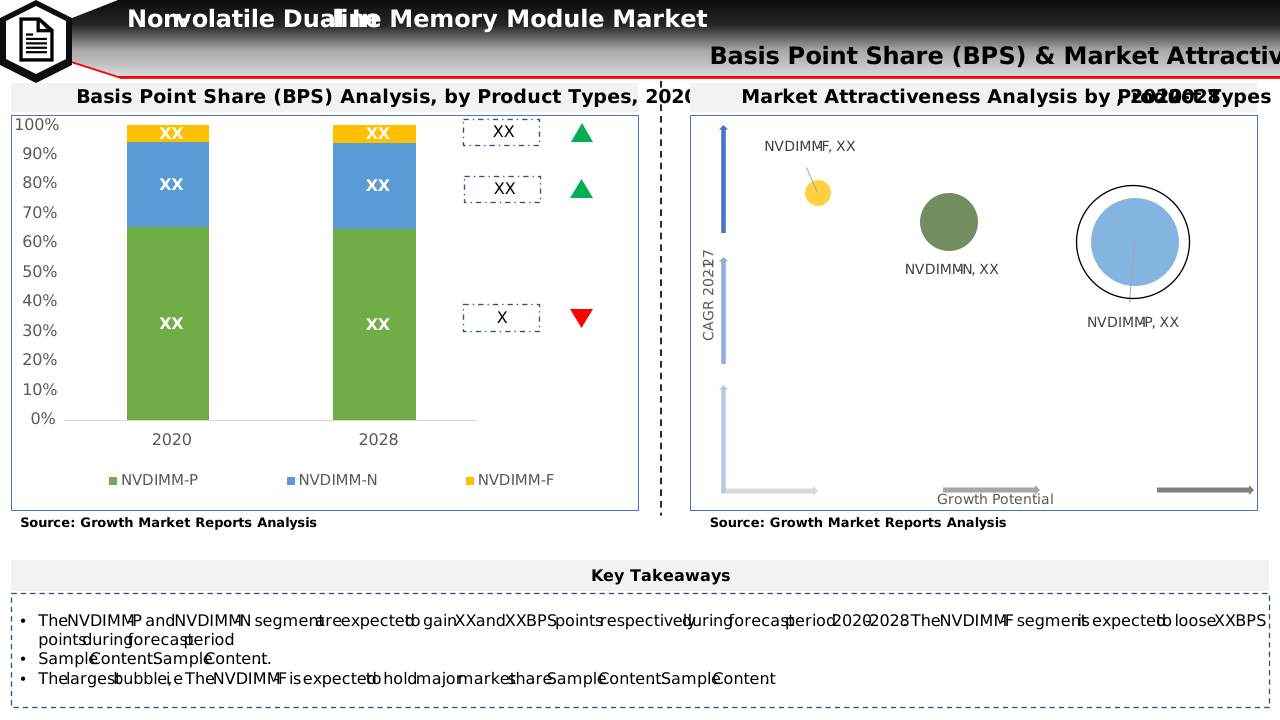
The Product Type segment in the Non-volatile Dual In-line Memory Module market is categorized into NVDIMM-N, NVDIMM-F, and NVDIMM-P. Among these, NVDIMM-N currently holds the largest market share, owing to its widespread adoption in enterprise storage and server environments. NVDIMM-N modules combine DRAM and NAND flash memory, offering the speed of traditional DRAM with the persistence of flash storage. This hybrid approach ensures data retention during power losses, making NVDIMM-N the preferred choice for mission-critical applications. Enterprises are increasingly deploying NVDIMM-N in data centers to enhance system resilience and minimize the risk of data loss, thereby driving segment growth.

NVDIMM-F, which utilizes only NAND flash memory, is gaining traction in applications that prioritize non-volatility over speed. While NVDIMM-F modules offer persistent storage, they lack the high-speed performance of DRAM-based solutions. However, ongoing advancements in flash memory technology are improving the speed and endurance of NVDIMM-F modules, making them suitable for specific use cases such as archival storage and backup systems. The segment is expected to witness moderate growth, particularly in industries where data persistence outweighs the need for ultra-fast memory access.

NVDIMM-P represents the next generation of persistent memory technology, combining the advantages of both DRAM and NAND flash in a single module. This product type is designed to deliver higher capacity, lower latency, and improved endurance compared to its predecessors. The introduction of NVDIMM-P is anticipated to revolutionize the memory market by enabling new applications in artificial intelligence, machine learning, and real-time analytics. As industry standards for NVDIMM-P mature and more vendors enter the market, this segment is expected to experience rapid growth, especially in high-performance computing and large-scale data center deployments.

The competitive landscape within the product type segment is characterized by continuous innovation and strategic collaborations among key players. Leading memory manufacturers are investing heavily in research and development to enhance the performance, reliability, and cost-effectiveness of NVDIMM solutions. The ongoing evolution of non-volatile memory technologies, including the integration of emerging materials and advanced manufacturing processes, is expected to further expand the application scope of NVDIMMs. As enterprises seek to future-proof their IT infrastructure, the demand for advanced NVDIMM products across all sub-segments is set to rise significantly over the forecast period.

Report Scope

Attributes Details
Report Title Non-volatile Dual In-line Memory Module Market Research Report 2033
By Product Type NVDIMM-N, NVDIMM-F, NVDIMM-P
By Application Enterprise Storage and Server, Data Centers, Consumer Electronics, Industrial, Others
By End-User IT and Telecommunications, BFSI, Healthcare, Government, Others
Regions Covered North America, Europe, APAC, Latin America, MEA
Base Year 2024
Historic Data 2018-2023
Forecast Period 2025-2033
Number of Pages 282
Number of Tables & Figures 256
Customization Available Yes, the report can be customized as per your need.

Application Analysis

The Application segment of the Non-volatile Dual In-line Memory Module market is highly diverse, encompassing Enterprise Storage and Server, Data Centers, Consumer Electronics, Industrial, and Others. The Enterprise Storage and Server segment dominates the market, driven by the critical need for high-speed, persistent memory in business operations. NVDIMMs are widely deployed in enterprise storage systems to ensure data integrity, reduce downtime, and enhance overall system performance. The ability of NVDIMMs to provide instant recovery from power outages makes them invaluable in sectors where data availability is paramount, such as finance, healthcare, and e-commerce.

Data centers represent the second-largest application segment, accounting for a significant share of the NVDIMM market. The rapid expansion of cloud computing, big data analytics, and virtualization technologies has created a surge in demand for memory solutions that can handle massive workloads and deliver low-latency performance. NVDIMMs are increasingly being integrated into data center architectures to support real-time processing, improve energy efficiency, and optimize resource utilization. As hyperscale data centers continue to proliferate globally, the adoption of NVDIMM solutions in this segment is expected to accelerate.

The Consumer Electronics segment is witnessing steady growth, fueled by the increasing complexity and functionality of smart devices. NVDIMMs are being incorporated into high-end consumer electronics, such as gaming consoles, smart TVs, and advanced home automation systems, to enable faster boot times, seamless user experiences, and enhanced reliability. The trend towards connected devices and the Internet of Things (IoT) is further propelling the demand for persistent memory solutions in this segment. As consumers seek more sophisticated and resilient devices, the role of NVDIMMs in the consumer electronics landscape is set to expand.

Industrial applications of NVDIMMs are also on the rise, particularly in sectors such as manufacturing, automotive, and energy. Industrial systems require robust memory solutions that can withstand harsh operating conditions and ensure data persistence in the event of power disruptions. NVDIMMs are being deployed in industrial automation, process control, and monitoring systems to enhance operational efficiency and minimize downtime. The growing emphasis on Industry 4.0 and smart manufacturing is expected to drive further adoption of NVDIMM solutions in the industrial segment, contributing to overall market growth.

End-User Analysis

The End-User segment of the Non-volatile Dual In-line Memory Module market is categorized into IT and Telecommunications, BFSI, Healthcare, Government, and Others. The IT and Telecommunications sector is the largest end-user, driven by the need for high-performance, reliable memory solutions to support a wide range of applications, from cloud computing to network infrastructure. NVDIMMs are being adopted to improve system uptime, reduce latency, and ensure data integrity in complex IT environments. As telecom operators invest in next-generation networks and edge computing, the demand for NVDIMM solutions in this sector is expected to surge.

The BFSI (Banking, Financial Services, and Insurance) sector is another major end-user of NVDIMMs, owing to the critical importance of data security, transaction speed, and regulatory compliance. Financial institutions rely on NVDIMMs to safeguard sensitive data, enable real-time analytics, and support high-frequency trading platforms. The growing adoption of digital banking and fintech solutions is further driving the need for persistent memory modules that can deliver both speed and reliability. As the BFSI sector continues to embrace digital transformation, the integration of NVDIMMs in core banking systems is set to increase.

Healthcare is emerging as a high-growth end-user segment in the NVDIMM market, driven by the proliferation of electronic health records, telemedicine, and advanced diagnostic systems. Hospitals and healthcare providers require memory solutions that can ensure data persistence, support rapid data retrieval, and maintain compliance with stringent data protection regulations. NVDIMMs are being deployed in medical imaging systems, patient monitoring devices, and healthcare IT infrastructure to enhance data availability and system resilience. The ongoing digitalization of healthcare services is expected to fuel further adoption of NVDIMM solutions in this sector.

Government agencies and public sector organizations are increasingly recognizing the benefits of NVDIMMs for secure data storage, disaster recovery, and mission-critical operations. The need for robust, tamper-resistant memory solutions is driving the adoption of NVDIMMs in defense, law enforcement, and emergency response systems. As governments invest in digital infrastructure and smart city initiatives, the deployment of NVDIMM solutions is likely to expand, contributing to overall market growth. Other end-users, including education, transportation, and energy, are also exploring the potential of NVDIMMs to enhance system performance and data security.

Opportunities & Threats

The Non-volatile Dual In-line Memory Module market presents substantial opportunities for growth, particularly as emerging technologies such as artificial intelligence, machine learning, and edge computing continue to evolve. The integration of NVDIMMs into AI-powered systems can significantly enhance data processing speeds, enable real-time analytics, and improve decision-making capabilities. As organizations across various industries seek to leverage big data for competitive advantage, the demand for high-performance, persistent memory solutions is expected to rise. Additionally, the development of new NVDIMM standards and the introduction of advanced products, such as NVDIMM-P, are opening up new avenues for market expansion and innovation.

Another key opportunity lies in the increasing adoption of NVDIMM solutions in industrial and automotive applications. As industries embrace automation, robotics, and smart manufacturing, the need for reliable memory modules that can withstand extreme conditions and ensure data persistence is becoming more pronounced. NVDIMMs are well-suited to meet these requirements, offering enhanced durability and performance in demanding environments. The growing focus on Industry 4.0, connected vehicles, and autonomous systems is expected to drive further adoption of NVDIMM solutions, creating new revenue streams for market players.

Despite these opportunities, the NVDIMM market faces certain restraints that could hinder its growth trajectory. One of the primary challenges is the high cost associated with NVDIMM modules, which can limit their adoption, particularly among small and medium-sized enterprises. The complexity of integrating NVDIMMs into existing IT infrastructure and the need for specialized hardware and software support can also pose barriers to widespread adoption. Furthermore, the market is characterized by rapid technological advancements, which can lead to product obsolescence and increased pressure on manufacturers to innovate continuously. Addressing these challenges will be crucial for market players to sustain growth and maintain a competitive edge.

Regional Outlook

The regional distribution of the Non-volatile Dual In-line Memory Module market reveals a dynamic landscape, with North America leading the way in terms of market size and technological adoption. In 2024, North America accounted for approximately USD 480 million of the global NVDIMM market, representing a significant share of total revenue. The region's dominance is attributed to the presence of major technology companies, advanced data center infrastructures, and a strong focus on innovation. The United States, in particular, is a key market for NVDIMM solutions, driven by high demand from the IT, telecommunications, and financial services sectors.

Asia Pacific is emerging as the fastest-growing region in the NVDIMM market, with a projected CAGR of 28.7% from 2025 to 2033. The region's rapid industrialization, expanding cloud services, and increasing investments in IT infrastructure are fueling demand for advanced memory solutions. Countries such as China, Japan, and South Korea are at the forefront of technology adoption, with significant investments in data centers, smart manufacturing, and digital transformation initiatives. In 2024, the Asia Pacific NVDIMM market was valued at approximately USD 300 million, and it is expected to surpass USD 2.7 billion by 2033, reflecting its growing importance in the global market.

Europe also represents a significant market for NVDIMM solutions, driven by strong demand from the automotive, healthcare, and government sectors. In 2024, the European NVDIMM market was estimated at USD 240 million, with Germany, the United Kingdom, and France leading the way in terms of adoption. The region's focus on data security, regulatory compliance, and digital infrastructure development is expected to drive further growth over the forecast period. Meanwhile, Latin America and the Middle East & Africa are gradually increasing their adoption of NVDIMM solutions, supported by investments in digital transformation and the expansion of cloud services. While these regions currently account for a smaller share of the global market, their growth potential should not be underestimated as technology adoption accelerates.

Non-volatile Dual In-line Memory Module Market Statistics

Competitor Outlook

The competitive landscape of the Non-volatile Dual In-line Memory Module market is characterized by intense rivalry among leading memory manufacturers, technology providers, and component suppliers. The market is highly consolidated, with a handful of major players dominating global revenue. These companies are focused on continuous innovation, strategic partnerships, and product differentiation to maintain their competitive edge. Mergers and acquisitions are common, as firms seek to expand their product portfolios, enhance technological capabilities, and strengthen their market presence. The entry of new players and the emergence of start-ups specializing in advanced memory technologies are also contributing to increased competition and innovation within the industry.

Key players in the NVDIMM market are investing heavily in research and development to enhance the performance, reliability, and cost-effectiveness of their products. The development of next-generation NVDIMM standards, such as NVDIMM-P, is a major focus area, with companies seeking to address the evolving needs of data-intensive applications and high-performance computing environments. Collaboration with technology partners, system integrators, and end-users is also a common strategy, enabling companies to deliver customized solutions and accelerate market adoption. Furthermore, leading manufacturers are expanding their global footprint through strategic investments in production facilities, distribution networks, and customer support services.

Among the most prominent companies in the Non-volatile Dual In-line Memory Module market are Micron Technology, Inc., Samsung Electronics Co., Ltd., SK Hynix Inc., Intel Corporation, and Viking Technology. These companies are recognized for their extensive product portfolios, strong R&D capabilities, and global reach. Micron Technology, for example, is a pioneer in persistent memory solutions, offering a wide range of NVDIMM products for enterprise, data center, and industrial applications. Samsung Electronics is another key player, known for its leadership in memory technology and commitment to innovation. SK Hynix and Intel Corporation are also at the forefront of the market, with a focus on advanced NVDIMM solutions for high-performance computing and cloud environments.

Viking Technology, a subsidiary of Sanmina Corporation, is renowned for its expertise in non-volatile memory modules and custom storage solutions. The company has established a strong presence in the enterprise and industrial segments, offering high-reliability NVDIMM products tailored to specific customer requirements. In addition to these major players, several emerging companies and niche vendors are contributing to the vibrancy of the NVDIMM market, introducing innovative products and expanding the application scope of persistent memory solutions. As competition intensifies, the focus on quality, performance, and customer-centric innovation will remain key differentiators in the evolving NVDIMM landscape.

Key Players

  • Micron Technology, Inc.
  • Samsung Electronics Co., Ltd.
  • SK Hynix Inc.
  • Intel Corporation
  • Viking Technology
  • SMART Modular Technologies
  • Netlist, Inc.
  • AgigA Tech, Inc.
  • ADATA Technology Co., Ltd.
  • Kingston Technology Corporation
  • Dell Technologies Inc.
  • Hewlett Packard Enterprise (HPE)
  • IBM Corporation
  • Fujitsu Limited
  • Super Micro Computer, Inc.
  • Innodisk Corporation
  • Transcend Information, Inc.
  • ATP Electronics, Inc.
  • Toshiba Memory Corporation (Kioxia)
  • Cisco Systems, Inc.
Non-volatile Dual In-line Memory Module Market Overview

Segments

The Non-volatile Dual In-line Memory Module market has been segmented on the basis of

Product Type

  • NVDIMM-N
  • NVDIMM-F
  • NVDIMM-P

Application

  • Enterprise Storage and Server
  • Data Centers
  • Consumer Electronics
  • Industrial
  • Others

End-User

  • IT and Telecommunications
  • BFSI
  • Healthcare
  • Government
  • Others

Competitive Landscape

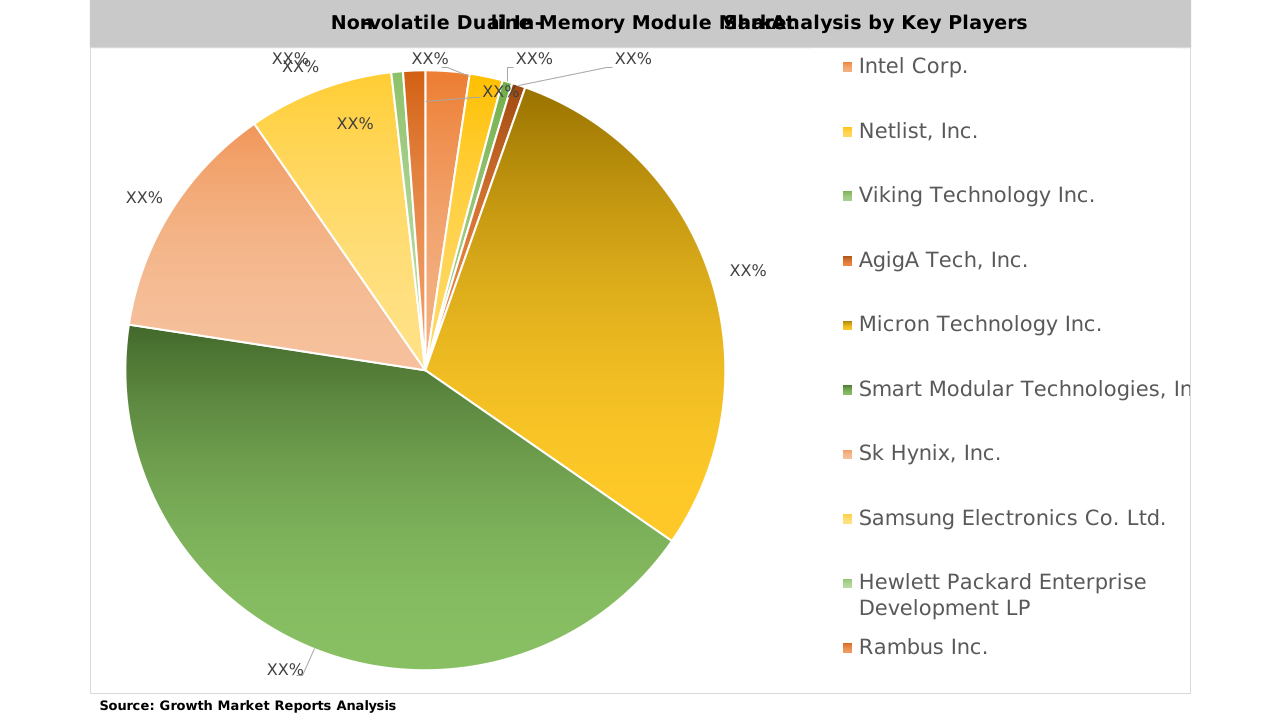
Key players competing in the global non-volatile dual in-line memory module market are Intel Corporation; Netlist, Inc.; Viking Technology Inc.; AgigA Tech, Inc.; Micron Technology Inc.; Smart Modular Technologies, Inc.; Sk Hynix, Inc.; Samsung Electronics Co. Ltd.; Hewlett Packard Enterprise Development LP; and Rambus Inc.

In November 2015, Netlist, Inc. entered into five years of a license agreement with Samsung Electronics Co., Ltd. to develop and manufacture NVDIMM-P memory. In 2017, Micron Technology Inc. has introduced a new NVDIMM-N type with a high storage density of 32GB up grading from the existing memories capacity of 16GB.
Global Non Volatile Dual In Line Memory Module Market Key Players

Frequently Asked Questions

Yes, the Non-volatile Dual In-line Memory Module Market Research Report 2033 can be customized as per specific requirements.

NVDIMMs enable faster data access, improved system performance, reduced latency, and data persistence, making them crucial for real-time analytics, AI, machine learning, and large-scale data center operations.

Challenges include the high cost of NVDIMM modules, complexity of integration into existing IT infrastructure, need for specialized hardware/software, and rapid technological advancements leading to potential product obsolescence.

Top companies include Micron Technology, Samsung Electronics, SK Hynix, Intel Corporation, Viking Technology, SMART Modular Technologies, Netlist, AgigA Tech, ADATA, Kingston, Dell Technologies, HPE, IBM, Fujitsu, Super Micro Computer, Innodisk, Transcend, ATP Electronics, Kioxia, and Cisco Systems.

NVDIMMs are used in enterprise storage and servers, data centers, consumer electronics, industrial automation, and other applications requiring high-speed, persistent memory.

Major end-users include IT and telecommunications, BFSI (banking, financial services, and insurance), healthcare, government, and industrial sectors.

The main types are NVDIMM-N (combining DRAM and NAND flash), NVDIMM-F (NAND flash only), and NVDIMM-P (next-generation persistent memory with higher capacity and lower latency).

North America currently dominates the NVDIMM market, followed by significant growth in Asia Pacific and Europe. Asia Pacific is expected to be the fastest-growing region through 2033.

Key growth drivers include the exponential increase in data generation, rising adoption of high-performance computing, rapid digitization, demand for persistent memory, and the proliferation of cloud computing and IoT devices.

The global NVDIMM market is forecasted to reach approximately USD 8.7 billion by 2033, growing at a CAGR of 25.4% from 2025 to 2033.

Table Of Content

Chapter 1 Executive Summary
Chapter 2 Assumptions and Acronyms Used
Chapter 3 Research Methodology
Chapter 4 Non-volatile Dual In-line Memory Module Market Overview
   4.1 Introduction
      4.1.1 Market Taxonomy
      4.1.2 Market Definition
      4.1.3 Macro-Economic Factors Impacting the Market Growth
   4.2 Non-volatile Dual In-line Memory Module Market Dynamics
      4.2.1 Market Drivers
      4.2.2 Market Restraints
      4.2.3 Market Opportunity
   4.3 Non-volatile Dual In-line Memory Module Market - Supply Chain Analysis
      4.3.1 List of Key Suppliers
      4.3.2 List of Key Distributors
      4.3.3 List of Key Consumers
   4.4 Key Forces Shaping the Non-volatile Dual In-line Memory Module Market
      4.4.1 Bargaining Power of Suppliers
      4.4.2 Bargaining Power of Buyers
      4.4.3 Threat of Substitution
      4.4.4 Threat of New Entrants
      4.4.5 Competitive Rivalry
   4.5 Global Non-volatile Dual In-line Memory Module Market Size & Forecast, 2023-2032
      4.5.1 Non-volatile Dual In-line Memory Module Market Size and Y-o-Y Growth
      4.5.2 Non-volatile Dual In-line Memory Module Market Absolute $ Opportunity

Chapter 5 Global Non-volatile Dual In-line Memory Module Market Analysis and Forecast By Product Type
   5.1 Introduction
      5.1.1 Key Market Trends & Growth Opportunities By Product Type
      5.1.2 Basis Point Share (BPS) Analysis By Product Type
      5.1.3 Absolute $ Opportunity Assessment By Product Type
   5.2 Non-volatile Dual In-line Memory Module Market Size Forecast By Product Type
      5.2.1 NVDIMM-N
      5.2.2 NVDIMM-F
      5.2.3 NVDIMM-P
   5.3 Market Attractiveness Analysis By Product Type

Chapter 6 Global Non-volatile Dual In-line Memory Module Market Analysis and Forecast By Application
   6.1 Introduction
      6.1.1 Key Market Trends & Growth Opportunities By Application
      6.1.2 Basis Point Share (BPS) Analysis By Application
      6.1.3 Absolute $ Opportunity Assessment By Application
   6.2 Non-volatile Dual In-line Memory Module Market Size Forecast By Application
      6.2.1 Enterprise Storage and Server
      6.2.2 Data Centers
      6.2.3 Consumer Electronics
      6.2.4 Industrial
      6.2.5 Others
   6.3 Market Attractiveness Analysis By Application

Chapter 7 Global Non-volatile Dual In-line Memory Module Market Analysis and Forecast By End-User
   7.1 Introduction
      7.1.1 Key Market Trends & Growth Opportunities By End-User
      7.1.2 Basis Point Share (BPS) Analysis By End-User
      7.1.3 Absolute $ Opportunity Assessment By End-User
   7.2 Non-volatile Dual In-line Memory Module Market Size Forecast By End-User
      7.2.1 IT and Telecommunications
      7.2.2 BFSI
      7.2.3 Healthcare
      7.2.4 Government
      7.2.5 Others
   7.3 Market Attractiveness Analysis By End-User

Chapter 8 Global Non-volatile Dual In-line Memory Module Market Analysis and Forecast by Region
   8.1 Introduction
      8.1.1 Key Market Trends & Growth Opportunities By Region
      8.1.2 Basis Point Share (BPS) Analysis By Region
      8.1.3 Absolute $ Opportunity Assessment By Region
   8.2 Non-volatile Dual In-line Memory Module Market Size Forecast By Region
      8.2.1 North America
      8.2.2 Europe
      8.2.3 Asia Pacific
      8.2.4 Latin America
      8.2.5 Middle East & Africa (MEA)
   8.3 Market Attractiveness Analysis By Region

Chapter 9 Coronavirus Disease (COVID-19) Impact 
   9.1 Introduction 
   9.2 Current & Future Impact Analysis 
   9.3 Economic Impact Analysis 
   9.4 Government Policies 
   9.5 Investment Scenario

Chapter 10 North America Non-volatile Dual In-line Memory Module Analysis and Forecast
   10.1 Introduction
   10.2 North America Non-volatile Dual In-line Memory Module Market Size Forecast by Country
      10.2.1 U.S.
      10.2.2 Canada
   10.3 Basis Point Share (BPS) Analysis by Country
   10.4 Absolute $ Opportunity Assessment by Country
   10.5 Market Attractiveness Analysis by Country
   10.6 North America Non-volatile Dual In-line Memory Module Market Size Forecast By Product Type
      10.6.1 NVDIMM-N
      10.6.2 NVDIMM-F
      10.6.3 NVDIMM-P
   10.7 Basis Point Share (BPS) Analysis By Product Type 
   10.8 Absolute $ Opportunity Assessment By Product Type 
   10.9 Market Attractiveness Analysis By Product Type
   10.10 North America Non-volatile Dual In-line Memory Module Market Size Forecast By Application
      10.10.1 Enterprise Storage and Server
      10.10.2 Data Centers
      10.10.3 Consumer Electronics
      10.10.4 Industrial
      10.10.5 Others
   10.11 Basis Point Share (BPS) Analysis By Application 
   10.12 Absolute $ Opportunity Assessment By Application 
   10.13 Market Attractiveness Analysis By Application
   10.14 North America Non-volatile Dual In-line Memory Module Market Size Forecast By End-User
      10.14.1 IT and Telecommunications
      10.14.2 BFSI
      10.14.3 Healthcare
      10.14.4 Government
      10.14.5 Others
   10.15 Basis Point Share (BPS) Analysis By End-User 
   10.16 Absolute $ Opportunity Assessment By End-User 
   10.17 Market Attractiveness Analysis By End-User

Chapter 11 Europe Non-volatile Dual In-line Memory Module Analysis and Forecast
   11.1 Introduction
   11.2 Europe Non-volatile Dual In-line Memory Module Market Size Forecast by Country
      11.2.1 Germany
      11.2.2 France
      11.2.3 Italy
      11.2.4 U.K.
      11.2.5 Spain
      11.2.6 Russia
      11.2.7 Rest of Europe
   11.3 Basis Point Share (BPS) Analysis by Country
   11.4 Absolute $ Opportunity Assessment by Country
   11.5 Market Attractiveness Analysis by Country
   11.6 Europe Non-volatile Dual In-line Memory Module Market Size Forecast By Product Type
      11.6.1 NVDIMM-N
      11.6.2 NVDIMM-F
      11.6.3 NVDIMM-P
   11.7 Basis Point Share (BPS) Analysis By Product Type 
   11.8 Absolute $ Opportunity Assessment By Product Type 
   11.9 Market Attractiveness Analysis By Product Type
   11.10 Europe Non-volatile Dual In-line Memory Module Market Size Forecast By Application
      11.10.1 Enterprise Storage and Server
      11.10.2 Data Centers
      11.10.3 Consumer Electronics
      11.10.4 Industrial
      11.10.5 Others
   11.11 Basis Point Share (BPS) Analysis By Application 
   11.12 Absolute $ Opportunity Assessment By Application 
   11.13 Market Attractiveness Analysis By Application
   11.14 Europe Non-volatile Dual In-line Memory Module Market Size Forecast By End-User
      11.14.1 IT and Telecommunications
      11.14.2 BFSI
      11.14.3 Healthcare
      11.14.4 Government
      11.14.5 Others
   11.15 Basis Point Share (BPS) Analysis By End-User 
   11.16 Absolute $ Opportunity Assessment By End-User 
   11.17 Market Attractiveness Analysis By End-User

Chapter 12 Asia Pacific Non-volatile Dual In-line Memory Module Analysis and Forecast
   12.1 Introduction
   12.2 Asia Pacific Non-volatile Dual In-line Memory Module Market Size Forecast by Country
      12.2.1 China
      12.2.2 Japan
      12.2.3 South Korea
      12.2.4 India
      12.2.5 Australia
      12.2.6 South East Asia (SEA)
      12.2.7 Rest of Asia Pacific (APAC)
   12.3 Basis Point Share (BPS) Analysis by Country
   12.4 Absolute $ Opportunity Assessment by Country
   12.5 Market Attractiveness Analysis by Country
   12.6 Asia Pacific Non-volatile Dual In-line Memory Module Market Size Forecast By Product Type
      12.6.1 NVDIMM-N
      12.6.2 NVDIMM-F
      12.6.3 NVDIMM-P
   12.7 Basis Point Share (BPS) Analysis By Product Type 
   12.8 Absolute $ Opportunity Assessment By Product Type 
   12.9 Market Attractiveness Analysis By Product Type
   12.10 Asia Pacific Non-volatile Dual In-line Memory Module Market Size Forecast By Application
      12.10.1 Enterprise Storage and Server
      12.10.2 Data Centers
      12.10.3 Consumer Electronics
      12.10.4 Industrial
      12.10.5 Others
   12.11 Basis Point Share (BPS) Analysis By Application 
   12.12 Absolute $ Opportunity Assessment By Application 
   12.13 Market Attractiveness Analysis By Application
   12.14 Asia Pacific Non-volatile Dual In-line Memory Module Market Size Forecast By End-User
      12.14.1 IT and Telecommunications
      12.14.2 BFSI
      12.14.3 Healthcare
      12.14.4 Government
      12.14.5 Others
   12.15 Basis Point Share (BPS) Analysis By End-User 
   12.16 Absolute $ Opportunity Assessment By End-User 
   12.17 Market Attractiveness Analysis By End-User

Chapter 13 Latin America Non-volatile Dual In-line Memory Module Analysis and Forecast
   13.1 Introduction
   13.2 Latin America Non-volatile Dual In-line Memory Module Market Size Forecast by Country
      13.2.1 Brazil
      13.2.2 Mexico
      13.2.3 Rest of Latin America (LATAM)
   13.3 Basis Point Share (BPS) Analysis by Country
   13.4 Absolute $ Opportunity Assessment by Country
   13.5 Market Attractiveness Analysis by Country
   13.6 Latin America Non-volatile Dual In-line Memory Module Market Size Forecast By Product Type
      13.6.1 NVDIMM-N
      13.6.2 NVDIMM-F
      13.6.3 NVDIMM-P
   13.7 Basis Point Share (BPS) Analysis By Product Type 
   13.8 Absolute $ Opportunity Assessment By Product Type 
   13.9 Market Attractiveness Analysis By Product Type
   13.10 Latin America Non-volatile Dual In-line Memory Module Market Size Forecast By Application
      13.10.1 Enterprise Storage and Server
      13.10.2 Data Centers
      13.10.3 Consumer Electronics
      13.10.4 Industrial
      13.10.5 Others
   13.11 Basis Point Share (BPS) Analysis By Application 
   13.12 Absolute $ Opportunity Assessment By Application 
   13.13 Market Attractiveness Analysis By Application
   13.14 Latin America Non-volatile Dual In-line Memory Module Market Size Forecast By End-User
      13.14.1 IT and Telecommunications
      13.14.2 BFSI
      13.14.3 Healthcare
      13.14.4 Government
      13.14.5 Others
   13.15 Basis Point Share (BPS) Analysis By End-User 
   13.16 Absolute $ Opportunity Assessment By End-User 
   13.17 Market Attractiveness Analysis By End-User

Chapter 14 Middle East & Africa (MEA) Non-volatile Dual In-line Memory Module Analysis and Forecast
   14.1 Introduction
   14.2 Middle East & Africa (MEA) Non-volatile Dual In-line Memory Module Market Size Forecast by Country
      14.2.1 Saudi Arabia
      14.2.2 South Africa
      14.2.3 UAE
      14.2.4 Rest of Middle East & Africa (MEA)
   14.3 Basis Point Share (BPS) Analysis by Country
   14.4 Absolute $ Opportunity Assessment by Country
   14.5 Market Attractiveness Analysis by Country
   14.6 Middle East & Africa (MEA) Non-volatile Dual In-line Memory Module Market Size Forecast By Product Type
      14.6.1 NVDIMM-N
      14.6.2 NVDIMM-F
      14.6.3 NVDIMM-P
   14.7 Basis Point Share (BPS) Analysis By Product Type 
   14.8 Absolute $ Opportunity Assessment By Product Type 
   14.9 Market Attractiveness Analysis By Product Type
   14.10 Middle East & Africa (MEA) Non-volatile Dual In-line Memory Module Market Size Forecast By Application
      14.10.1 Enterprise Storage and Server
      14.10.2 Data Centers
      14.10.3 Consumer Electronics
      14.10.4 Industrial
      14.10.5 Others
   14.11 Basis Point Share (BPS) Analysis By Application 
   14.12 Absolute $ Opportunity Assessment By Application 
   14.13 Market Attractiveness Analysis By Application
   14.14 Middle East & Africa (MEA) Non-volatile Dual In-line Memory Module Market Size Forecast By End-User
      14.14.1 IT and Telecommunications
      14.14.2 BFSI
      14.14.3 Healthcare
      14.14.4 Government
      14.14.5 Others
   14.15 Basis Point Share (BPS) Analysis By End-User 
   14.16 Absolute $ Opportunity Assessment By End-User 
   14.17 Market Attractiveness Analysis By End-User

Chapter 15 Competition Landscape 
   15.1 Non-volatile Dual In-line Memory Module Market: Competitive Dashboard
   15.2 Global Non-volatile Dual In-line Memory Module Market: Market Share Analysis, 2023
   15.3 Company Profiles (Details – Overview, Financials, Developments, Strategy) 
      15.3.1 Micron Technology, Inc.
Samsung Electronics Co., Ltd.
SK Hynix Inc.
Intel Corporation
Viking Technology
SMART Modular Technologies
Netlist, Inc.
AgigA Tech, Inc.
ADATA Technology Co., Ltd.
Kingston Technology Corporation
Dell Technologies Inc.
Hewlett Packard Enterprise (HPE)
IBM Corporation
Fujitsu Limited
Super Micro Computer, Inc.
Innodisk Corporation
Transcend Information, Inc.
ATP Electronics, Inc.
Toshiba Memory Corporation (Kioxia)
Cisco Systems, Inc.

Methodology

Our Clients

Nestle SA
Pfizer
FedEx Logistics
sinopec
General Electric
Microsoft
Honda Motor Co. Ltd.
Deloitte