Servers Market Research Report 2033

Servers Market Research Report 2033

Segments - by Product Type (Rack Servers, Blade Servers, Tower Servers, Micro Servers, Others), by Component (Hardware, Software, Services), by Operating System (Windows, Linux, UNIX, Others), by Enterprise Size (Small and Medium Enterprises, Large Enterprises), by End-User (IT & Telecom, BFSI, Healthcare, Government, Retail, Manufacturing, Others)

https://growthmarketreports.com/Raksha
Author : Raksha Sharma
https://growthmarketreports.com/Vaibhav
Fact-checked by : V. Chandola
https://growthmarketreports.com/Shruti
Editor : Shruti Bhat

Upcoming | Report ID :ICT-SE-2645 | 4.0 Rating | 82 Reviews | 267 Pages | Format : Docx PDF

Report Description


Servers Market Outlook

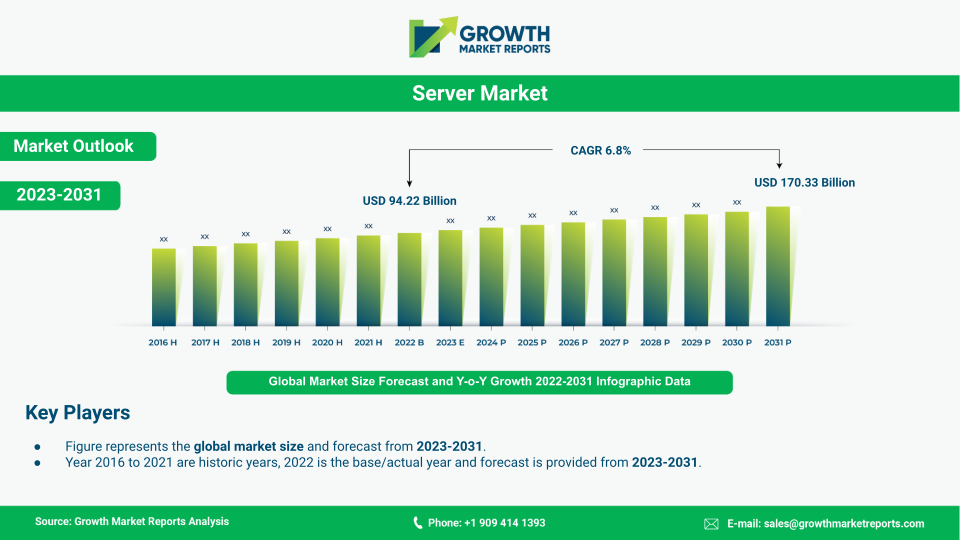
According to our latest research, the global servers market size reached USD 98.3 billion in 2024, reflecting robust demand across industries. The market is expected to grow at a CAGR of 7.1% during the forecast period, reaching an estimated USD 184.7 billion by 2033. This growth is primarily driven by the surging adoption of cloud computing, the expansion of data centers, and the increasing need for high-performance computing infrastructure to support emerging technologies such as artificial intelligence and big data analytics.

One of the most significant growth factors for the servers market is the exponential rise in data generation and consumption. Enterprises and consumers alike are producing vast quantities of data through digital transformation initiatives, IoT devices, and connected applications. The need for reliable, scalable, and efficient server infrastructure to process, store, and analyze this data is more critical than ever. Organizations are investing heavily in upgrading their server capabilities to ensure business continuity, optimize performance, and support mission-critical workloads. The proliferation of edge computing and the integration of advanced analytics are further fueling the demand for next-generation servers that can handle complex, real-time processing at scale.

Cloud computing remains a dominant force shaping the servers market landscape. The migration of workloads to public, private, and hybrid cloud environments necessitates advanced server solutions capable of supporting virtualization, containerization, and multi-cloud orchestration. Cloud service providers are expanding their server fleets to deliver seamless, scalable, and secure services to enterprises across the globe. Additionally, the adoption of hyper-converged infrastructure and software-defined data centers is driving innovation in server design, leading to increased efficiency, flexibility, and cost savings for end-users. The shift towards as-a-service models, such as Infrastructure as a Service (IaaS), is also boosting server deployments worldwide.

Another critical driver is the rapid advancement of artificial intelligence, machine learning, and high-performance computing (HPC) applications. These workloads require servers equipped with powerful processors, high memory bandwidth, and specialized accelerators like GPUs and FPGAs. Industries such as healthcare, finance, and scientific research are leveraging these capabilities to accelerate innovation, improve decision-making, and gain competitive advantages. The demand for customized, workload-optimized servers is rising, prompting vendors to develop modular and scalable solutions tailored to specific industry requirements. Furthermore, the emergence of 5G networks and the expansion of edge computing are creating new opportunities for server deployments in distributed and latency-sensitive environments.

Servers play a pivotal role in the modern digital ecosystem, acting as the backbone for data processing and storage across various sectors. As businesses continue to expand their digital footprints, the demand for robust server infrastructure becomes increasingly critical. Servers are not only essential for managing large volumes of data but also for ensuring seamless connectivity and communication within and between organizations. The evolution of server technologies, including advancements in processing power and energy efficiency, is enabling companies to handle more complex workloads with greater agility. This shift is particularly evident in industries such as finance and healthcare, where data security and processing speed are paramount. As the market for servers continues to grow, companies are investing in state-of-the-art server solutions to maintain competitive advantages and drive innovation.

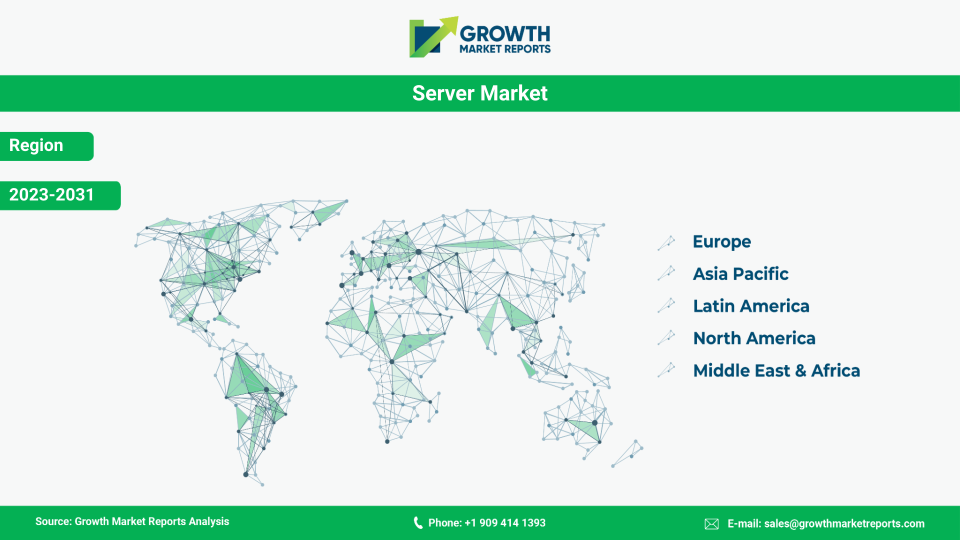
From a regional perspective, North America continues to dominate the servers market, accounting for the largest share in 2024 due to its mature IT infrastructure, presence of leading technology companies, and high adoption of cloud services. However, the Asia Pacific region is witnessing the fastest growth, driven by rapid digitalization, the expansion of local data centers, and increasing investments in smart city and IoT projects. Europe also remains a significant market, supported by stringent data protection regulations and the growing demand for secure and energy-efficient server solutions. Meanwhile, Latin America and the Middle East & Africa are emerging as promising markets, fueled by government initiatives to enhance digital infrastructure and bridge the digital divide.

Global Servers Industry Outlook

Product Type Analysis

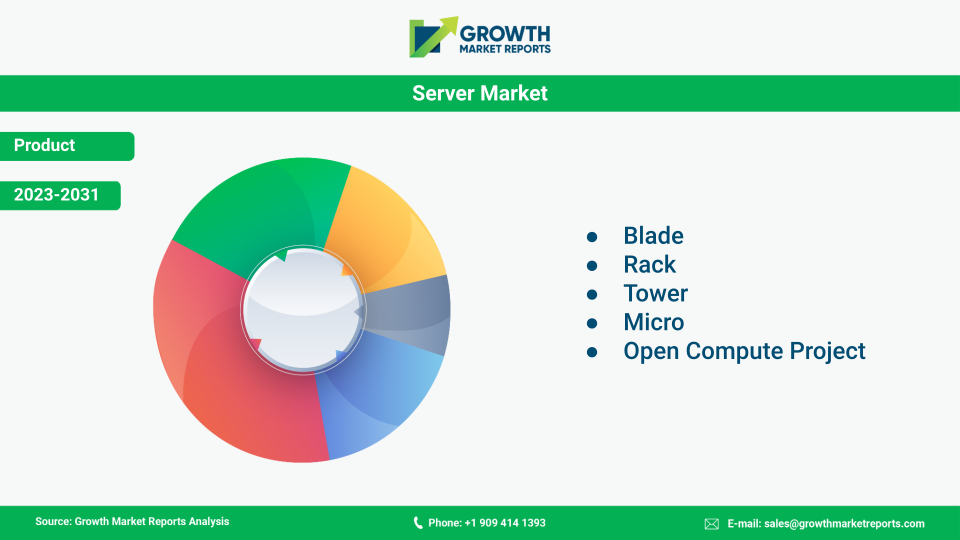
The servers market is segmented by product type into rack servers, blade servers, tower servers, micro servers, and others, each catering to specific application needs and deployment environments. Rack servers continue to be the most widely adopted product type, favored for their versatility, scalability, and ease of integration within data centers. Their modular design allows enterprises to maximize computing density while maintaining efficient cooling and management. The demand for rack servers is particularly high among cloud service providers, large enterprises, and organizations with rapidly growing IT requirements. The rise of hyperscale data centers has further accelerated the adoption of rack servers, as they offer the flexibility to support diverse workloads and enable seamless expansion.

Blade servers are gaining traction in environments where space optimization and power efficiency are paramount. These compact, high-density servers are ideal for organizations seeking to consolidate their IT infrastructure and reduce operational costs. Blade servers are commonly deployed in enterprise data centers, research institutions, and financial services firms that require robust computing power within a limited footprint. Their integrated management capabilities and simplified cabling make them attractive for businesses aiming to streamline operations and enhance system reliability. As virtualization and high-performance computing workloads increase, the demand for blade servers is expected to grow steadily, especially in sectors where agility and resource optimization are critical.

Tower servers remain a popular choice among small and medium-sized enterprises (SMEs) and branch offices due to their affordability, ease of deployment, and minimal infrastructure requirements. These servers are designed for standalone operation and can be easily integrated into existing office environments without the need for specialized racks or cooling systems. Tower servers are well-suited for file sharing, print services, and basic application hosting, making them a cost-effective solution for organizations with limited IT budgets. As SMEs continue to digitize their operations and embrace cloud-based services, the demand for entry-level tower servers is expected to remain stable, supported by ongoing product innovations and enhanced manageability features.

Micro servers and other specialized server types are emerging as key enablers of edge computing and distributed processing. Micro servers are designed for lightweight, energy-efficient workloads and are increasingly deployed in edge locations, remote offices, and IoT applications. Their compact form factor and low power consumption make them ideal for scenarios where space and energy constraints are significant considerations. As the adoption of IoT devices and edge analytics accelerates, the market for micro servers is poised for substantial growth. Other server types, such as high-density and mission-critical servers, address niche requirements in industries like telecommunications, defense, and scientific research, further diversifying the product landscape and driving innovation in server design.

Report Scope

Attributes Details
Report Title Servers Market Research Report 2033
By Product Type Rack Servers, Blade Servers, Tower Servers, Micro Servers, Others
By Component Hardware, Software, Services
By Operating System Windows, Linux, UNIX, Others
By Enterprise Size Small and Medium Enterprises, Large Enterprises
By End-User IT & Telecom, BFSI, Healthcare, Government, Retail, Manufacturing, Others
Regions Covered North America, Europe, APAC, Latin America, MEA
Base Year 2024
Historic Data 2018-2023
Forecast Period 2025-2033
Number of Pages 267
Number of Tables & Figures 376
Customization Available Yes, the report can be customized as per your need.

Component Analysis

The servers market by component is broadly categorized into hardware, software, and services, each playing a pivotal role in delivering comprehensive server solutions. Hardware remains the backbone of the servers market, encompassing processors, memory, storage devices, network interfaces, and power supplies. Continuous advancements in processor technologies, such as multi-core architectures and energy-efficient designs, are enabling servers to deliver unprecedented performance and scalability. Memory and storage innovations, including the adoption of NVMe SSDs and persistent memory, are further enhancing data throughput and reducing latency for mission-critical applications. Hardware vendors are focusing on developing modular, high-density, and energy-efficient server platforms to meet the evolving needs of cloud, enterprise, and edge deployments.

Software is an integral component of modern server infrastructure, enabling efficient resource management, security, and automation. Server operating systems, virtualization platforms, and management tools are essential for optimizing server performance, ensuring high availability, and facilitating seamless integration with cloud and hybrid environments. The rise of software-defined infrastructure has transformed the way organizations deploy and manage servers, allowing for greater agility, flexibility, and cost optimization. Vendors are investing in advanced software solutions that support containerization, orchestration, and AI-driven automation, empowering enterprises to maximize the value of their server investments and accelerate digital transformation initiatives.

Services play a crucial role in the servers market, encompassing consulting, deployment, integration, maintenance, and support offerings. As server technologies become increasingly complex, organizations are relying on specialized service providers to design, implement, and manage their server infrastructure effectively. Managed services, in particular, are gaining popularity among enterprises seeking to offload routine maintenance tasks and focus on core business activities. Service providers offer a range of value-added solutions, including proactive monitoring, performance optimization, security assessments, and disaster recovery planning. The growing demand for end-to-end server lifecycle management is driving the expansion of the services segment, creating new opportunities for vendors and system integrators.

The interplay between hardware, software, and services is shaping the future of the servers market. Vendors are increasingly offering integrated solutions that combine best-in-class hardware with advanced software and comprehensive support services. This holistic approach enables organizations to achieve seamless interoperability, enhanced security, and simplified management across their server environments. The trend towards consumption-based models, such as server-as-a-service and pay-per-use offerings, is further transforming the market landscape, providing enterprises with greater flexibility and cost control. As digital transformation accelerates, the demand for innovative, reliable, and scalable server solutions across all components will continue to drive market growth.

Operating System Analysis

The servers market is segmented by operating system into Windows, Linux, UNIX, and others, with each platform offering distinct advantages and catering to specific application requirements. Windows servers remain a dominant force in enterprise environments, favored for their user-friendly interface, extensive application support, and seamless integration with MicrosoftÂ’s ecosystem. Organizations across industries rely on Windows servers for file sharing, database management, web hosting, and collaboration tools. The widespread adoption of Windows Server editions, coupled with ongoing enhancements in security, virtualization, and cloud integration, continues to drive demand for Windows-based server deployments, particularly in sectors such as BFSI, healthcare, and government.

Linux servers have gained significant traction in recent years, driven by their open-source nature, flexibility, and robust security features. Linux is the preferred choice for cloud service providers, hyperscale data centers, and organizations running mission-critical applications that require high performance and scalability. The popularity of Linux-based distributions, such as Ubuntu, CentOS, and Red Hat Enterprise Linux, is bolstered by a vibrant developer community, extensive customization options, and strong support for containerization and orchestration technologies like Docker and Kubernetes. As enterprises embrace digital transformation and cloud-native architectures, the adoption of Linux servers is expected to grow rapidly, particularly in emerging markets and technology-driven industries.

UNIX servers continue to play a vital role in specific verticals that demand exceptional reliability, scalability, and security. Industries such as telecommunications, scientific research, and financial services often rely on UNIX systems for high-performance computing, transaction processing, and mission-critical workloads. UNIX servers are renowned for their stability, advanced file systems, and robust security features, making them a preferred choice for organizations with stringent uptime and compliance requirements. While the overall market share of UNIX servers has declined with the rise of Linux and Windows, they remain indispensable in legacy environments and applications where continuity and compatibility are paramount.

The others category encompasses a range of specialized and emerging operating systems, including proprietary platforms and lightweight distributions tailored for specific use cases. These operating systems are often deployed in niche environments, such as embedded systems, edge computing devices, and IoT applications, where resource constraints and real-time processing are critical considerations. The ongoing evolution of server operating systems is driven by the need for enhanced security, automation, and support for new hardware architectures. As organizations diversify their IT environments and adopt hybrid and multi-cloud strategies, the demand for interoperable and adaptable server operating systems will continue to shape the market landscape.

Enterprise Size Analysis

The servers market analysis by enterprise size reveals distinct trends and requirements between small and medium enterprises (SMEs) and large enterprises. Small and medium enterprises represent a significant segment, characterized by their growing need for affordable, scalable, and easy-to-manage server solutions. SMEs are increasingly adopting entry-level and mid-range servers to support digital transformation initiatives, enhance collaboration, and improve data management capabilities. The proliferation of cloud-based services and managed hosting is enabling SMEs to access enterprise-grade server infrastructure without the need for substantial upfront investments. Vendors are responding to this demand by offering tailored solutions with simplified deployment, intuitive management interfaces, and flexible financing options.

Large enterprises account for a substantial share of the servers market, driven by their complex IT environments, diverse workloads, and stringent performance requirements. These organizations typically operate extensive data centers and require high-density, high-performance servers to support mission-critical applications, big data analytics, and artificial intelligence workloads. Large enterprises are at the forefront of adopting advanced server technologies, such as hyper-converged infrastructure, software-defined storage, and workload-optimized platforms. The need for robust security, compliance, and disaster recovery capabilities further drives investment in enterprise-grade server solutions. As digitalization accelerates, large enterprises are increasingly leveraging hybrid and multi-cloud architectures, necessitating seamless integration and interoperability across on-premises and cloud-based server environments.

The evolving needs of both SMEs and large enterprises are shaping product development and go-to-market strategies within the servers market. Vendors are focusing on delivering modular, scalable, and customizable server solutions that can address the unique requirements of different enterprise segments. The trend towards consumption-based models and managed services is gaining momentum, enabling organizations of all sizes to optimize their IT investments and focus on core business objectives. As the competitive landscape intensifies, server providers are differentiating themselves through innovation, customer-centric services, and strategic partnerships with cloud and technology vendors.

The convergence of digital transformation, cloud adoption, and edge computing is creating new opportunities and challenges for server deployments across enterprises of all sizes. SMEs are leveraging server technologies to enhance agility, improve customer experiences, and drive business growth, while large enterprises are harnessing the power of advanced servers to accelerate innovation and maintain competitive advantages. The ability to deliver scalable, secure, and cost-effective server solutions will be a critical success factor for vendors seeking to capture market share across diverse enterprise segments.

End-User Analysis

The servers market is segmented by end-user into IT & telecom, BFSI, healthcare, government, retail, manufacturing, and others, each exhibiting unique drivers and adoption patterns. The IT & telecom sector remains the largest end-user, accounting for a significant share of global server deployments. This industry relies on robust, scalable server infrastructure to support cloud services, network operations, and digital communication platforms. The rapid rollout of 5G networks, growth in data traffic, and increased adoption of virtualization and edge computing are driving sustained investment in advanced server solutions. Leading telecom operators and IT service providers are expanding their server fleets to enhance service delivery, improve network resilience, and support next-generation applications.

The BFSI (Banking, Financial Services, and Insurance) sector is another major contributor to the servers market, driven by the need for secure, high-performance computing environments to manage large volumes of financial transactions, customer data, and regulatory compliance requirements. Financial institutions are deploying advanced servers to support digital banking, fraud detection, risk management, and real-time analytics. The adoption of cloud-based solutions and the integration of AI and machine learning are further fueling demand for scalable, workload-optimized server platforms. As the BFSI sector continues to embrace digital transformation, the need for reliable, secure, and compliant server infrastructure will remain paramount.

The healthcare industry is experiencing rapid growth in server deployments, fueled by the digitization of patient records, telemedicine, and the adoption of advanced analytics for clinical decision support. Healthcare providers require high-performance servers to manage electronic health records (EHRs), medical imaging, and research data while ensuring compliance with stringent data protection regulations. The integration of AI-driven diagnostics, remote monitoring, and personalized medicine is increasing the demand for powerful, secure server infrastructure capable of handling complex workloads and sensitive patient information. Vendors are developing specialized server solutions tailored to the unique needs of healthcare organizations, focusing on security, reliability, and interoperability.

Other key end-users include government, retail, and manufacturing, each with specific requirements for server infrastructure. Government agencies rely on servers to support public services, e-governance, and national security initiatives, emphasizing data sovereignty and cybersecurity. The retail sector is leveraging server technologies to enhance omnichannel experiences, optimize supply chains, and enable real-time analytics for personalized marketing. Manufacturing organizations are adopting servers to support smart factories, IoT integration, and predictive maintenance, driving efficiency and innovation across production processes. The diverse and evolving needs of these end-users are shaping the development and deployment of server solutions, creating new opportunities for vendors to address industry-specific challenges and requirements.

Opportunities & Threats

The servers market presents a wealth of opportunities for innovation, growth, and value creation across industries and geographies. One of the most promising opportunities lies in the integration of artificial intelligence, machine learning, and advanced analytics into server infrastructure. Organizations are increasingly deploying AI-optimized servers equipped with specialized accelerators, such as GPUs and FPGAs, to accelerate data processing, enable real-time insights, and drive competitive advantages. The expansion of edge computing and the proliferation of IoT devices are creating new demand for compact, energy-efficient servers capable of processing data closer to the source. Vendors that can deliver scalable, secure, and workload-optimized server solutions tailored to emerging applications will be well-positioned to capture market share and drive industry transformation.

Another significant opportunity is the shift towards hybrid and multi-cloud architectures, which is reshaping the way organizations deploy and manage server infrastructure. Enterprises are seeking flexible, interoperable server solutions that can seamlessly integrate on-premises, private cloud, and public cloud environments. The growing adoption of software-defined infrastructure, hyper-converged systems, and as-a-service models is enabling organizations to optimize resource utilization, reduce operational complexity, and enhance business agility. Vendors that can offer comprehensive, end-to-end server solutions with advanced management, automation, and security capabilities will be able to address the evolving needs of digital enterprises and unlock new revenue streams.

Despite the numerous opportunities, the servers market faces several restraining factors that could impact growth prospects. One of the primary challenges is the increasing complexity of server environments, driven by the proliferation of diverse workloads, hardware architectures, and management platforms. Organizations must navigate a rapidly evolving technology landscape while ensuring compatibility, security, and compliance across hybrid and multi-cloud deployments. The rising cost of advanced server hardware, coupled with concerns around energy consumption and environmental sustainability, may also pose barriers to adoption, particularly for SMEs and organizations with limited IT budgets. To overcome these challenges, vendors must focus on delivering cost-effective, energy-efficient, and easy-to-manage server solutions that address the unique needs of different customer segments.

Regional Outlook

The regional analysis of the servers market highlights significant variations in adoption patterns, investment priorities, and growth trajectories across key geographies. North America remains the largest market, with a market size of USD 35.2 billion in 2024, driven by the presence of leading technology companies, advanced data center infrastructure, and high adoption of cloud computing and AI technologies. The region is characterized by strong demand from IT & telecom, BFSI, and healthcare sectors, supported by ongoing investments in digital transformation and cybersecurity. The United States accounts for the majority of server deployments in North America, benefiting from a mature IT ecosystem and a robust innovation pipeline.

The Asia Pacific region is experiencing the fastest growth, with a market size of USD 28.7 billion in 2024 and a projected CAGR of 9.3% through 2033. Rapid digitalization, the expansion of local data centers, and increasing investments in smart city, IoT, and 5G initiatives are driving significant demand for server infrastructure. China, India, Japan, and South Korea are the primary growth engines, supported by government initiatives to enhance digital infrastructure and bridge the digital divide. The proliferation of e-commerce, fintech, and cloud-based services is fueling server deployments across diverse industries, creating new opportunities for global and regional vendors.

Europe remains a significant market for servers, with a market size of USD 22.1 billion in 2024, driven by stringent data protection regulations, growing demand for secure and energy-efficient server solutions, and the adoption of cloud and AI technologies. Key markets include Germany, the United Kingdom, and France, which are investing in digital infrastructure modernization and smart industry initiatives. Latin America and the Middle East & Africa are emerging as promising markets, with combined server market sizes of USD 6.8 billion in 2024 and growing investments in digital transformation, e-government, and financial inclusion projects. While these regions face challenges related to infrastructure and affordability, ongoing government initiatives and partnerships with technology vendors are expected to drive steady growth in server deployments.

Servers Market Statistics

Competitor Outlook

The servers market is characterized by intense competition, rapid technological advancements, and a dynamic landscape of global and regional players. Leading vendors are continuously innovating to deliver high-performance, energy-efficient, and scalable server solutions that address the evolving needs of enterprises, cloud service providers, and hyperscale data centers. The competitive landscape is shaped by strategic partnerships, mergers and acquisitions, and investments in research and development to enhance product portfolios and expand market presence. Vendors are differentiating themselves through advanced features, such as AI acceleration, enhanced security, and integrated management tools, as well as by offering comprehensive support and managed services to drive customer loyalty and long-term relationships.

The rise of cloud computing, edge deployments, and as-a-service models is intensifying competition among server providers, prompting them to develop innovative solutions that enable seamless integration across hybrid and multi-cloud environments. Vendors are focusing on delivering modular, workload-optimized platforms that can be tailored to specific industry requirements and deployment scenarios. The ability to provide end-to-end solutions, encompassing hardware, software, and services, is becoming a key success factor in the market. Additionally, sustainability and energy efficiency are emerging as critical differentiators, with vendors investing in green data center initiatives and eco-friendly server designs to address environmental concerns and regulatory requirements.

The market is also witnessing the entry of new players and niche vendors specializing in edge computing, AI-optimized servers, and industry-specific solutions. These companies are leveraging agile development processes, open-source technologies, and strategic alliances to disrupt traditional business models and capture emerging opportunities. The increasing adoption of open standards and interoperability is fostering collaboration among vendors, system integrators, and cloud providers, enabling the development of integrated ecosystems that deliver greater value to customers. As the market evolves, vendors must remain agile, customer-focused, and innovation-driven to maintain a competitive edge and capitalize on new growth avenues.

Major companies in the global servers market include Hewlett Packard Enterprise (HPE), Dell Technologies, Lenovo Group Limited, IBM Corporation, Cisco Systems, Inc., Fujitsu Limited, Inspur Group, Huawei Technologies Co., Ltd., and Oracle Corporation. HPE and Dell Technologies are recognized for their comprehensive server portfolios and strong presence in enterprise and cloud data center segments. Lenovo has established itself as a leading provider of high-performance and energy-efficient server solutions, particularly in the Asia Pacific region. IBM is renowned for its focus on mission-critical and AI-optimized servers, catering to large enterprises and research institutions. Cisco Systems is a key player in unified computing and hyper-converged infrastructure, while Fujitsu and Inspur are expanding their footprint in emerging markets with innovative server offerings.

Huawei Technologies continues to invest in advanced server technologies and data center solutions, leveraging its expertise in telecommunications and cloud infrastructure. Oracle Corporation is a major provider of integrated hardware and software solutions, with a strong focus on database and enterprise application workloads. These companies are driving market growth through continuous innovation, strategic partnerships, and a commitment to delivering customer-centric solutions. As the servers market evolves, the ability to anticipate industry trends, address emerging challenges, and deliver differentiated value will be critical for vendors seeking to maintain leadership and achieve sustainable growth.

Key Players

  • Hewlett Packard Enterprise (HPE)
  • Dell Technologies
  • Lenovo
  • IBM
  • Cisco Systems
  • Inspur
  • Huawei
  • Supermicro
  • Fujitsu
  • Oracle
  • NEC Corporation
  • Quanta Computer
  • Wistron (Wiwynn)
  • Sugon (Dawning Information Industry)
  • Hitachi
  • Tyan (MiTAC)
  • Gigabyte Technology
  • Foxconn (Hon Hai Precision Industry)
  • Atos
  • H3C Technologies
Servers Market Overview

Segments

The Servers market has been segmented on the basis of

Product Type

  • Rack Servers
  • Blade Servers
  • Tower Servers
  • Micro Servers
  • Others

Component

  • Hardware
  • Software
  • Services

Operating System

  • Windows
  • Linux
  • UNIX
  • Others

Enterprise Size

  • Small and Medium Enterprises
  • Large Enterprises

End-User

  • IT & Telecom
  • BFSI
  • Healthcare
  • Government
  • Retail
  • Manufacturing
  • Others

Competitive Landscape

Key players competing in the global servers market are International Business Machines Corporation (IBM); Hewlett Packard Enterprise Development LP; Dell; Lenovo; Huawei Technologies Co. Ltd; Fujitsu Ltd.; and Inspur.

The main market players are continuously engaged in various business expansion activities such as mergers and acquisitions, research and developments, investments for innovative products, and collaborations to enhance their market position. For instance, Hewlett Packard Enterprise Development LP declared the acquisition of BlueData, which acted as a major provider of big data analytics software and AI, in December 2018.
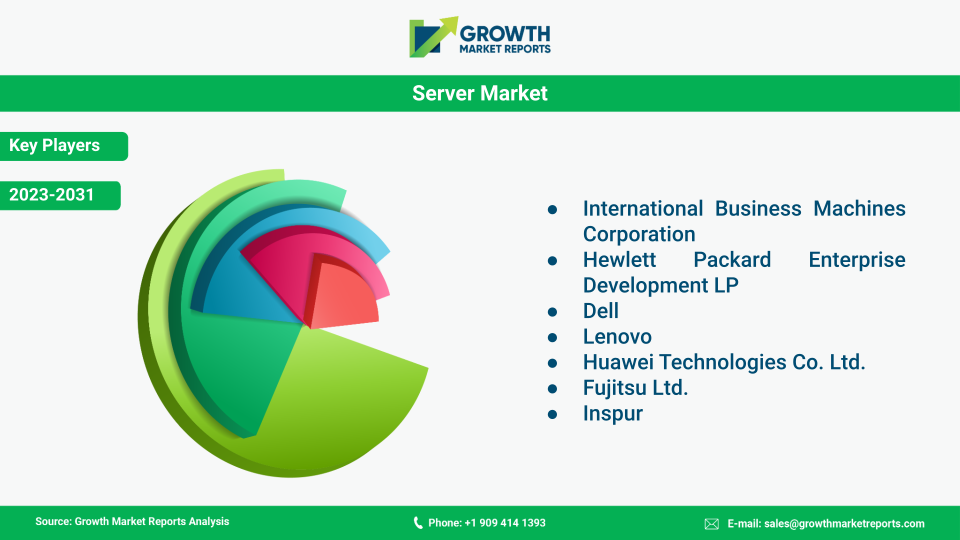

Server Market Key Players

Frequently Asked Questions

Hardware forms the backbone with innovations in processors and storage. Software enables efficient management, virtualization, and automation. Services such as consulting, deployment, and managed support are critical for effective server lifecycle management.

Vendors are focusing on modular, scalable, and workload-optimized servers, integrating advanced software for automation and security, and offering managed services and as-a-service models to provide flexibility and cost savings.

Major companies include Hewlett Packard Enterprise (HPE), Dell Technologies, Lenovo, IBM, Cisco Systems, Fujitsu, Inspur, Huawei, Oracle, NEC, Quanta Computer, Wistron, Sugon, Hitachi, Tyan, Gigabyte, Foxconn, Atos, and H3C Technologies.

Opportunities include the integration of AI and edge computing, and the shift to hybrid and multi-cloud architectures. Challenges involve increasing complexity, high hardware costs, energy consumption, and the need for security and compliance.

Major end-users include IT & telecom, BFSI (banking, financial services, and insurance), healthcare, government, retail, and manufacturing, each with unique requirements for server infrastructure.

North America is the largest market due to mature IT infrastructure and high cloud adoption. Asia Pacific is the fastest-growing region, driven by rapid digitalization and investments in data centers, while Europe remains significant due to data protection regulations and demand for secure solutions.

The market is segmented into Windows, Linux, UNIX, and others. Windows is popular in enterprise environments, Linux is preferred for cloud and high-performance workloads, and UNIX is used in industries requiring high reliability and security.

Rack servers are the most widely adopted due to their scalability and versatility in data centers. Blade servers are favored for space and power efficiency, while tower servers are popular among SMEs for their affordability and ease of deployment. Micro servers are gaining traction in edge computing and IoT applications.

Key growth drivers include the rising adoption of cloud computing, expansion of data centers, increased demand for high-performance computing, and the proliferation of AI, big data analytics, and IoT devices.

The global servers market reached USD 98.3 billion in 2024 and is projected to grow at a CAGR of 7.1%, reaching an estimated USD 184.7 billion by 2033.

Table Of Content

Chapter 1 Executive Summary
Chapter 2 Assumptions and Acronyms Used
Chapter 3 Research Methodology
Chapter 4 Servers Market Overview
   4.1 Introduction
      4.1.1 Market Taxonomy
      4.1.2 Market Definition
      4.1.3 Macro-Economic Factors Impacting the Market Growth
   4.2 Servers Market Dynamics
      4.2.1 Market Drivers
      4.2.2 Market Restraints
      4.2.3 Market Opportunity
   4.3 Servers Market - Supply Chain Analysis
      4.3.1 List of Key Suppliers
      4.3.2 List of Key Distributors
      4.3.3 List of Key Consumers
   4.4 Key Forces Shaping the Servers Market
      4.4.1 Bargaining Power of Suppliers
      4.4.2 Bargaining Power of Buyers
      4.4.3 Threat of Substitution
      4.4.4 Threat of New Entrants
      4.4.5 Competitive Rivalry
   4.5 Global Servers Market Size & Forecast, 2023-2032
      4.5.1 Servers Market Size and Y-o-Y Growth
      4.5.2 Servers Market Absolute $ Opportunity

Chapter 5 Global Servers Market Analysis and Forecast By Product Type
   5.1 Introduction
      5.1.1 Key Market Trends & Growth Opportunities By Product Type
      5.1.2 Basis Point Share (BPS) Analysis By Product Type
      5.1.3 Absolute $ Opportunity Assessment By Product Type
   5.2 Servers Market Size Forecast By Product Type
      5.2.1 Rack Servers
      5.2.2 Blade Servers
      5.2.3 Tower Servers
      5.2.4 Micro Servers
      5.2.5 Others
   5.3 Market Attractiveness Analysis By Product Type

Chapter 6 Global Servers Market Analysis and Forecast By Component
   6.1 Introduction
      6.1.1 Key Market Trends & Growth Opportunities By Component
      6.1.2 Basis Point Share (BPS) Analysis By Component
      6.1.3 Absolute $ Opportunity Assessment By Component
   6.2 Servers Market Size Forecast By Component
      6.2.1 Hardware
      6.2.2 Software
      6.2.3 Services
   6.3 Market Attractiveness Analysis By Component

Chapter 7 Global Servers Market Analysis and Forecast By Operating System
   7.1 Introduction
      7.1.1 Key Market Trends & Growth Opportunities By Operating System
      7.1.2 Basis Point Share (BPS) Analysis By Operating System
      7.1.3 Absolute $ Opportunity Assessment By Operating System
   7.2 Servers Market Size Forecast By Operating System
      7.2.1 Windows
      7.2.2 Linux
      7.2.3 UNIX
      7.2.4 Others
   7.3 Market Attractiveness Analysis By Operating System

Chapter 8 Global Servers Market Analysis and Forecast By Enterprise Size
   8.1 Introduction
      8.1.1 Key Market Trends & Growth Opportunities By Enterprise Size
      8.1.2 Basis Point Share (BPS) Analysis By Enterprise Size
      8.1.3 Absolute $ Opportunity Assessment By Enterprise Size
   8.2 Servers Market Size Forecast By Enterprise Size
      8.2.1 Small and Medium Enterprises
      8.2.2 Large Enterprises
   8.3 Market Attractiveness Analysis By Enterprise Size

Chapter 9 Global Servers Market Analysis and Forecast By End-User
   9.1 Introduction
      9.1.1 Key Market Trends & Growth Opportunities By End-User
      9.1.2 Basis Point Share (BPS) Analysis By End-User
      9.1.3 Absolute $ Opportunity Assessment By End-User
   9.2 Servers Market Size Forecast By End-User
      9.2.1 IT & Telecom
      9.2.2 BFSI
      9.2.3 Healthcare
      9.2.4 Government
      9.2.5 Retail
      9.2.6 Manufacturing
      9.2.7 Others
   9.3 Market Attractiveness Analysis By End-User

Chapter 10 Global Servers Market Analysis and Forecast by Region
   10.1 Introduction
      10.1.1 Key Market Trends & Growth Opportunities By Region
      10.1.2 Basis Point Share (BPS) Analysis By Region
      10.1.3 Absolute $ Opportunity Assessment By Region
   10.2 Servers Market Size Forecast By Region
      10.2.1 North America
      10.2.2 Europe
      10.2.3 Asia Pacific
      10.2.4 Latin America
      10.2.5 Middle East & Africa (MEA)
   10.3 Market Attractiveness Analysis By Region

Chapter 11 Coronavirus Disease (COVID-19) Impact 
   11.1 Introduction 
   11.2 Current & Future Impact Analysis 
   11.3 Economic Impact Analysis 
   11.4 Government Policies 
   11.5 Investment Scenario

Chapter 12 North America Servers Analysis and Forecast
   12.1 Introduction
   12.2 North America Servers Market Size Forecast by Country
      12.2.1 U.S.
      12.2.2 Canada
   12.3 Basis Point Share (BPS) Analysis by Country
   12.4 Absolute $ Opportunity Assessment by Country
   12.5 Market Attractiveness Analysis by Country
   12.6 North America Servers Market Size Forecast By Product Type
      12.6.1 Rack Servers
      12.6.2 Blade Servers
      12.6.3 Tower Servers
      12.6.4 Micro Servers
      12.6.5 Others
   12.7 Basis Point Share (BPS) Analysis By Product Type 
   12.8 Absolute $ Opportunity Assessment By Product Type 
   12.9 Market Attractiveness Analysis By Product Type
   12.10 North America Servers Market Size Forecast By Component
      12.10.1 Hardware
      12.10.2 Software
      12.10.3 Services
   12.11 Basis Point Share (BPS) Analysis By Component 
   12.12 Absolute $ Opportunity Assessment By Component 
   12.13 Market Attractiveness Analysis By Component
   12.14 North America Servers Market Size Forecast By Operating System
      12.14.1 Windows
      12.14.2 Linux
      12.14.3 UNIX
      12.14.4 Others
   12.15 Basis Point Share (BPS) Analysis By Operating System 
   12.16 Absolute $ Opportunity Assessment By Operating System 
   12.17 Market Attractiveness Analysis By Operating System
   12.18 North America Servers Market Size Forecast By Enterprise Size
      12.18.1 Small and Medium Enterprises
      12.18.2 Large Enterprises
   12.19 Basis Point Share (BPS) Analysis By Enterprise Size 
   12.20 Absolute $ Opportunity Assessment By Enterprise Size 
   12.21 Market Attractiveness Analysis By Enterprise Size
   12.22 North America Servers Market Size Forecast By End-User
      12.22.1 IT & Telecom
      12.22.2 BFSI
      12.22.3 Healthcare
      12.22.4 Government
      12.22.5 Retail
      12.22.6 Manufacturing
      12.22.7 Others
   12.23 Basis Point Share (BPS) Analysis By End-User 
   12.24 Absolute $ Opportunity Assessment By End-User 
   12.25 Market Attractiveness Analysis By End-User

Chapter 13 Europe Servers Analysis and Forecast
   13.1 Introduction
   13.2 Europe Servers Market Size Forecast by Country
      13.2.1 Germany
      13.2.2 France
      13.2.3 Italy
      13.2.4 U.K.
      13.2.5 Spain
      13.2.6 Russia
      13.2.7 Rest of Europe
   13.3 Basis Point Share (BPS) Analysis by Country
   13.4 Absolute $ Opportunity Assessment by Country
   13.5 Market Attractiveness Analysis by Country
   13.6 Europe Servers Market Size Forecast By Product Type
      13.6.1 Rack Servers
      13.6.2 Blade Servers
      13.6.3 Tower Servers
      13.6.4 Micro Servers
      13.6.5 Others
   13.7 Basis Point Share (BPS) Analysis By Product Type 
   13.8 Absolute $ Opportunity Assessment By Product Type 
   13.9 Market Attractiveness Analysis By Product Type
   13.10 Europe Servers Market Size Forecast By Component
      13.10.1 Hardware
      13.10.2 Software
      13.10.3 Services
   13.11 Basis Point Share (BPS) Analysis By Component 
   13.12 Absolute $ Opportunity Assessment By Component 
   13.13 Market Attractiveness Analysis By Component
   13.14 Europe Servers Market Size Forecast By Operating System
      13.14.1 Windows
      13.14.2 Linux
      13.14.3 UNIX
      13.14.4 Others
   13.15 Basis Point Share (BPS) Analysis By Operating System 
   13.16 Absolute $ Opportunity Assessment By Operating System 
   13.17 Market Attractiveness Analysis By Operating System
   13.18 Europe Servers Market Size Forecast By Enterprise Size
      13.18.1 Small and Medium Enterprises
      13.18.2 Large Enterprises
   13.19 Basis Point Share (BPS) Analysis By Enterprise Size 
   13.20 Absolute $ Opportunity Assessment By Enterprise Size 
   13.21 Market Attractiveness Analysis By Enterprise Size
   13.22 Europe Servers Market Size Forecast By End-User
      13.22.1 IT & Telecom
      13.22.2 BFSI
      13.22.3 Healthcare
      13.22.4 Government
      13.22.5 Retail
      13.22.6 Manufacturing
      13.22.7 Others
   13.23 Basis Point Share (BPS) Analysis By End-User 
   13.24 Absolute $ Opportunity Assessment By End-User 
   13.25 Market Attractiveness Analysis By End-User

Chapter 14 Asia Pacific Servers Analysis and Forecast
   14.1 Introduction
   14.2 Asia Pacific Servers Market Size Forecast by Country
      14.2.1 China
      14.2.2 Japan
      14.2.3 South Korea
      14.2.4 India
      14.2.5 Australia
      14.2.6 South East Asia (SEA)
      14.2.7 Rest of Asia Pacific (APAC)
   14.3 Basis Point Share (BPS) Analysis by Country
   14.4 Absolute $ Opportunity Assessment by Country
   14.5 Market Attractiveness Analysis by Country
   14.6 Asia Pacific Servers Market Size Forecast By Product Type
      14.6.1 Rack Servers
      14.6.2 Blade Servers
      14.6.3 Tower Servers
      14.6.4 Micro Servers
      14.6.5 Others
   14.7 Basis Point Share (BPS) Analysis By Product Type 
   14.8 Absolute $ Opportunity Assessment By Product Type 
   14.9 Market Attractiveness Analysis By Product Type
   14.10 Asia Pacific Servers Market Size Forecast By Component
      14.10.1 Hardware
      14.10.2 Software
      14.10.3 Services
   14.11 Basis Point Share (BPS) Analysis By Component 
   14.12 Absolute $ Opportunity Assessment By Component 
   14.13 Market Attractiveness Analysis By Component
   14.14 Asia Pacific Servers Market Size Forecast By Operating System
      14.14.1 Windows
      14.14.2 Linux
      14.14.3 UNIX
      14.14.4 Others
   14.15 Basis Point Share (BPS) Analysis By Operating System 
   14.16 Absolute $ Opportunity Assessment By Operating System 
   14.17 Market Attractiveness Analysis By Operating System
   14.18 Asia Pacific Servers Market Size Forecast By Enterprise Size
      14.18.1 Small and Medium Enterprises
      14.18.2 Large Enterprises
   14.19 Basis Point Share (BPS) Analysis By Enterprise Size 
   14.20 Absolute $ Opportunity Assessment By Enterprise Size 
   14.21 Market Attractiveness Analysis By Enterprise Size
   14.22 Asia Pacific Servers Market Size Forecast By End-User
      14.22.1 IT & Telecom
      14.22.2 BFSI
      14.22.3 Healthcare
      14.22.4 Government
      14.22.5 Retail
      14.22.6 Manufacturing
      14.22.7 Others
   14.23 Basis Point Share (BPS) Analysis By End-User 
   14.24 Absolute $ Opportunity Assessment By End-User 
   14.25 Market Attractiveness Analysis By End-User

Chapter 15 Latin America Servers Analysis and Forecast
   15.1 Introduction
   15.2 Latin America Servers Market Size Forecast by Country
      15.2.1 Brazil
      15.2.2 Mexico
      15.2.3 Rest of Latin America (LATAM)
   15.3 Basis Point Share (BPS) Analysis by Country
   15.4 Absolute $ Opportunity Assessment by Country
   15.5 Market Attractiveness Analysis by Country
   15.6 Latin America Servers Market Size Forecast By Product Type
      15.6.1 Rack Servers
      15.6.2 Blade Servers
      15.6.3 Tower Servers
      15.6.4 Micro Servers
      15.6.5 Others
   15.7 Basis Point Share (BPS) Analysis By Product Type 
   15.8 Absolute $ Opportunity Assessment By Product Type 
   15.9 Market Attractiveness Analysis By Product Type
   15.10 Latin America Servers Market Size Forecast By Component
      15.10.1 Hardware
      15.10.2 Software
      15.10.3 Services
   15.11 Basis Point Share (BPS) Analysis By Component 
   15.12 Absolute $ Opportunity Assessment By Component 
   15.13 Market Attractiveness Analysis By Component
   15.14 Latin America Servers Market Size Forecast By Operating System
      15.14.1 Windows
      15.14.2 Linux
      15.14.3 UNIX
      15.14.4 Others
   15.15 Basis Point Share (BPS) Analysis By Operating System 
   15.16 Absolute $ Opportunity Assessment By Operating System 
   15.17 Market Attractiveness Analysis By Operating System
   15.18 Latin America Servers Market Size Forecast By Enterprise Size
      15.18.1 Small and Medium Enterprises
      15.18.2 Large Enterprises
   15.19 Basis Point Share (BPS) Analysis By Enterprise Size 
   15.20 Absolute $ Opportunity Assessment By Enterprise Size 
   15.21 Market Attractiveness Analysis By Enterprise Size
   15.22 Latin America Servers Market Size Forecast By End-User
      15.22.1 IT & Telecom
      15.22.2 BFSI
      15.22.3 Healthcare
      15.22.4 Government
      15.22.5 Retail
      15.22.6 Manufacturing
      15.22.7 Others
   15.23 Basis Point Share (BPS) Analysis By End-User 
   15.24 Absolute $ Opportunity Assessment By End-User 
   15.25 Market Attractiveness Analysis By End-User

Chapter 16 Middle East & Africa (MEA) Servers Analysis and Forecast
   16.1 Introduction
   16.2 Middle East & Africa (MEA) Servers Market Size Forecast by Country
      16.2.1 Saudi Arabia
      16.2.2 South Africa
      16.2.3 UAE
      16.2.4 Rest of Middle East & Africa (MEA)
   16.3 Basis Point Share (BPS) Analysis by Country
   16.4 Absolute $ Opportunity Assessment by Country
   16.5 Market Attractiveness Analysis by Country
   16.6 Middle East & Africa (MEA) Servers Market Size Forecast By Product Type
      16.6.1 Rack Servers
      16.6.2 Blade Servers
      16.6.3 Tower Servers
      16.6.4 Micro Servers
      16.6.5 Others
   16.7 Basis Point Share (BPS) Analysis By Product Type 
   16.8 Absolute $ Opportunity Assessment By Product Type 
   16.9 Market Attractiveness Analysis By Product Type
   16.10 Middle East & Africa (MEA) Servers Market Size Forecast By Component
      16.10.1 Hardware
      16.10.2 Software
      16.10.3 Services
   16.11 Basis Point Share (BPS) Analysis By Component 
   16.12 Absolute $ Opportunity Assessment By Component 
   16.13 Market Attractiveness Analysis By Component
   16.14 Middle East & Africa (MEA) Servers Market Size Forecast By Operating System
      16.14.1 Windows
      16.14.2 Linux
      16.14.3 UNIX
      16.14.4 Others
   16.15 Basis Point Share (BPS) Analysis By Operating System 
   16.16 Absolute $ Opportunity Assessment By Operating System 
   16.17 Market Attractiveness Analysis By Operating System
   16.18 Middle East & Africa (MEA) Servers Market Size Forecast By Enterprise Size
      16.18.1 Small and Medium Enterprises
      16.18.2 Large Enterprises
   16.19 Basis Point Share (BPS) Analysis By Enterprise Size 
   16.20 Absolute $ Opportunity Assessment By Enterprise Size 
   16.21 Market Attractiveness Analysis By Enterprise Size
   16.22 Middle East & Africa (MEA) Servers Market Size Forecast By End-User
      16.22.1 IT & Telecom
      16.22.2 BFSI
      16.22.3 Healthcare
      16.22.4 Government
      16.22.5 Retail
      16.22.6 Manufacturing
      16.22.7 Others
   16.23 Basis Point Share (BPS) Analysis By End-User 
   16.24 Absolute $ Opportunity Assessment By End-User 
   16.25 Market Attractiveness Analysis By End-User

Chapter 17 Competition Landscape 
   17.1 Servers Market: Competitive Dashboard
   17.2 Global Servers Market: Market Share Analysis, 2023
   17.3 Company Profiles (Details – Overview, Financials, Developments, Strategy) 
      17.3.1 Hewlett Packard Enterprise (HPE)
Dell Technologies
Lenovo
IBM
Cisco Systems
Inspur
Huawei
Supermicro
Fujitsu
Oracle
NEC Corporation
Quanta Computer
Wistron (Wiwynn)
Sugon (Dawning Information Industry)
Hitachi
Tyan (MiTAC)
Gigabyte Technology
Foxconn (Hon Hai Precision Industry)
Atos
H3C Technologies

Methodology

Our Clients

Honda Motor Co. Ltd.
Deloitte
FedEx Logistics
sinopec
Microsoft
Nestle SA
The John Holland Group
Dassault Aviation