Segments - by Type (Motor Yacht, Sailing Yacht, Catamaran, Others), by Size (Up to 20 Meters, 20-50 Meters, Above 50 Meters), by Application (Private Use, Commercial Use, Charter, Others), by Material (Fiberglass, Aluminum, Steel, Others), by Propulsion (Motorized, Sailing, Hybrid)
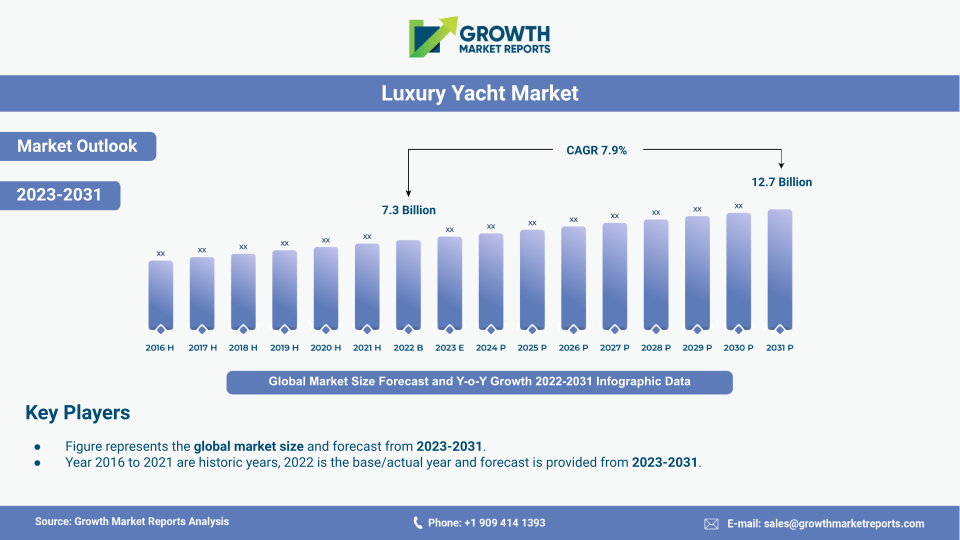
According to our latest research, the global luxury yacht market size reached USD 9.7 billion in 2024, demonstrating strong momentum driven by rising disposable incomes and evolving preferences for bespoke maritime experiences. The market is projected to expand at a robust CAGR of 7.2% during the forecast period, reaching an estimated USD 18.2 billion by 2033. This growth trajectory is propelled by increasing demand for personalized luxury, technological advancements in yacht design, and the expanding charter industry. As per our comprehensive analysis, these factors, coupled with a surge in ultra-high-net-worth individuals (UHNWIs) worldwide, are reshaping the landscape of the luxury yacht market.
One of the primary growth drivers for the luxury yacht market is the significant rise in the number of UHNWIs and high-net-worth individuals (HNWIs) globally. The proliferation of wealth, particularly in emerging markets and traditional strongholds such as North America and Europe, has led to an increased appetite for exclusive leisure activities and luxury assets. Yachts have become a symbol of status, privacy, and freedom, attracting affluent buyers seeking unique travel experiences and personalized amenities. The trend of experiential luxury, where consumers prioritize memorable journeys over material possessions, has further reinforced the demand for custom-built and technologically advanced yachts. This shift is evident in the growing preference for yachts equipped with cutting-edge entertainment systems, eco-friendly propulsion technologies, and state-of-the-art safety features.
Technological innovation is another critical factor fueling the expansion of the luxury yacht market. Shipbuilders and designers are investing heavily in research and development to deliver yachts that not only offer unmatched comfort and aesthetics but also incorporate sustainable materials and energy-efficient propulsion systems. The adoption of hybrid and electric engines, advanced navigation systems, and smart automation is transforming the luxury yacht experience, making it more environmentally responsible and user-friendly. Additionally, the integration of digital platforms for yacht management, booking, and chartering is streamlining operations and enhancing customer engagement. These advancements are attracting a younger demographic of buyers and charter clients, who value both luxury and sustainability in their maritime pursuits.
The charter segment is experiencing remarkable growth, offering lucrative opportunities for both yacht owners and service providers. As the cost of yacht ownership remains substantial, many affluent consumers are opting for charter services to enjoy the luxury yachting lifestyle without long-term commitments. This trend is particularly pronounced in popular cruising destinations such as the Mediterranean, Caribbean, and Southeast Asia. The flexibility, variety, and tailored experiences offered by yacht charters are appealing to a broader audience, including corporate clients, celebrities, and families seeking private vacations. The rise of online charter platforms and concierge services has further democratized access to luxury yachts, fueling market expansion and encouraging fleet diversification.
The allure of the luxury yacht experience is further enhanced by the inclusion of Superyacht Water Toys, which have become an essential component of the modern yachting lifestyle. These toys, ranging from jet skis and inflatable slides to underwater scooters and wakeboards, offer a thrilling dimension to the yachting adventure. They not only provide entertainment and excitement for guests of all ages but also enhance the overall appeal of yacht charters. As yacht owners and charter operators seek to differentiate their offerings, the availability and variety of water toys have become a key factor in attracting clients looking for unique and memorable experiences on the water. The integration of these toys into yacht design and charter packages is a testament to the evolving preferences of luxury consumers who value both adventure and relaxation.
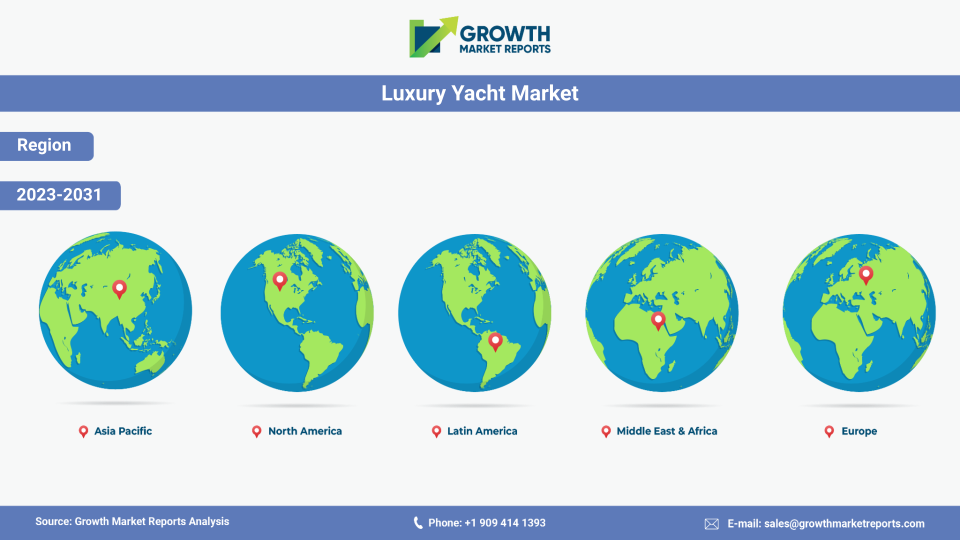
From a regional perspective, Europe continues to dominate the global luxury yacht market, accounting for the largest share in 2024, followed closely by North America and Asia Pacific. The Mediterranean remains the epicenter of yacht manufacturing and charter activities, supported by a robust ecosystem of shipyards, marinas, and service providers. Meanwhile, the Asia Pacific region is emerging as a high-potential market, driven by rapid economic growth, increasing affluence, and a burgeoning interest in luxury travel. Latin America and the Middle East & Africa are also witnessing steady growth, supported by infrastructural developments and rising tourism activities. Each region presents unique opportunities and challenges, shaping the competitive dynamics and growth prospects of the luxury yacht industry.
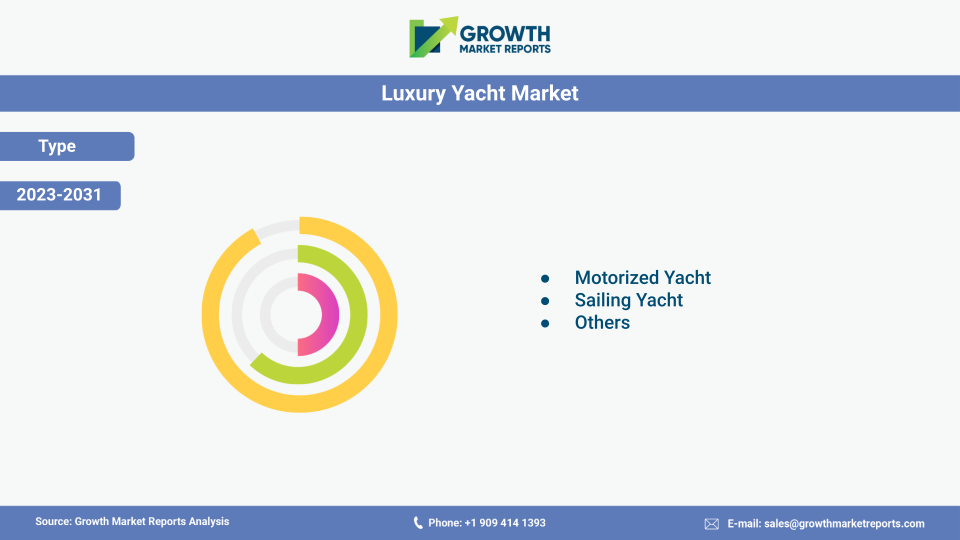
The luxury yacht market is segmented by type into motor yachts, sailing yachts, catamarans, and others, each catering to distinct consumer preferences and usage patterns. Motor yachts dominate the market, accounting for the largest share due to their superior speed, comfort, and advanced technological features. These vessels are favored by buyers seeking high performance, spacious interiors, and the ability to traverse long distances with ease. Motor yachts often incorporate state-of-the-art amenities such as swimming pools, helipads, and entertainment suites, making them the preferred choice for private owners and charter operators alike. The demand for motor yachts is particularly strong in regions with established yachting cultures, such as the Mediterranean, Caribbean, and North America.
Sailing yachts appeal to a niche segment of the market that values traditional craftsmanship, eco-friendly propulsion, and a closer connection to the sea. While they account for a smaller share compared to motor yachts, sailing yachts are gaining traction among environmentally conscious buyers and adventure enthusiasts. These vessels are often chosen for their elegance, lower operating costs, and the unique experience they offer, blending luxury with the thrill of sailing. The resurgence of interest in classic yacht designs and the integration of modern sailing technologies are driving innovation in this segment, attracting both seasoned sailors and new entrants to the market.
Catamarans are experiencing robust growth, fueled by their stability, spacious layouts, and versatility. These multi-hulled vessels are ideal for families and groups seeking comfort and safety during extended voyages. Catamarans offer expansive deck areas, shallow drafts for coastal cruising, and efficient fuel consumption, making them increasingly popular in the charter market. The surge in demand for luxury catamarans is particularly evident in the Caribbean and Southeast Asia, where shallow waters and island-hopping itineraries are common. Manufacturers are responding by introducing innovative designs and customizable features, further enhancing the appeal of catamarans in the luxury yacht segment.
In recent years, the demand for Superyacht Water Toy has surged, reflecting a broader trend towards experiential luxury and active leisure pursuits. These toys are not just accessories but integral to the yachting experience, offering guests the opportunity to engage with the marine environment in exciting and innovative ways. From high-speed thrills on jetboards to serene exploration with kayaks and paddleboards, the range of water toys available on superyachts is expanding rapidly. This trend is driving yacht builders and designers to incorporate dedicated storage and launch systems for these toys, ensuring seamless access and convenience for guests. As the market for luxury yachts continues to grow, the inclusion of diverse and cutting-edge water toys is becoming a standard expectation, enhancing the overall value proposition of yacht ownership and chartering.
The "others" category encompasses a diverse range of yacht types, including expedition yachts, classic yachts, and custom-built vessels tailored to specific client requirements. Expedition yachts, in particular, are gaining prominence among adventure seekers and explorers looking to venture into remote destinations with enhanced autonomy and safety. These yachts are equipped with reinforced hulls, advanced navigation systems, and extended range capabilities, enabling long-distance cruising in challenging environments. The growing interest in bespoke yacht experiences and the increasing number of specialized shipyards are contributing to the expansion of this segment, offering unique opportunities for differentiation and value creation in the luxury yacht market.
| Attributes | Details |
| Report Title | Luxury Yacht Market Research Report 2033 |
| By Type | Motor Yacht, Sailing Yacht, Catamaran, Others |
| By Size | Up to 20 Meters, 20-50 Meters, Above 50 Meters |
| By Application | Private Use, Commercial Use, Charter, Others |
| By Material | Fiberglass, Aluminum, Steel, Others |
| By Propulsion | Motorized, Sailing, Hybrid |
| Regions Covered | North America, Europe, APAC, Latin America, MEA |
| Base Year | 2024 |
| Historic Data | 2018-2023 |
| Forecast Period | 2025-2033 |
| Number of Pages | 285 |
| Number of Tables & Figures | 311 |
| Customization Available | Yes, the report can be customized as per your need. |
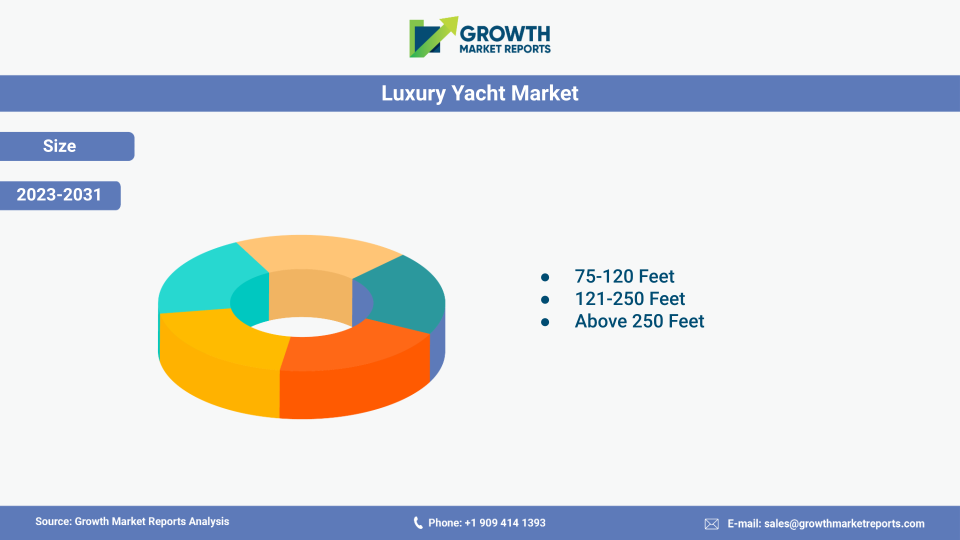
The luxury yacht market is segmented by size into up to 20 meters, 20-50 meters, and above 50 meters, each catering to varying preferences, budgets, and usage scenarios. Yachts up to 20 meters are often favored by first-time buyers and those seeking a more intimate and manageable yachting experience. These vessels offer the advantages of lower acquisition and maintenance costs, ease of handling, and access to smaller marinas and anchorages. While they represent the entry-level segment of the market, advancements in design and customization are enabling manufacturers to deliver high levels of luxury and comfort even within compact footprints. This segment is particularly popular in coastal regions and among buyers who prioritize flexibility and convenience.
The 20-50 meters segment constitutes the core of the luxury yacht market, attracting discerning buyers seeking a balance between size, performance, and onboard amenities. Yachts in this category typically feature multiple decks, spacious cabins, and a wide array of recreational facilities, including gyms, spas, and cinemas. They are well-suited for both private ownership and charter operations, offering the versatility to accommodate family vacations, corporate events, and social gatherings. The strong demand for yachts in this size range is driven by the growing trend towards customization, with owners seeking personalized layouts, interior designs, and technological enhancements. This segment is also witnessing increased adoption of hybrid propulsion systems and eco-friendly materials, reflecting the broader industry shift towards sustainability.
Yachts above 50 meters represent the pinnacle of luxury and exclusivity, catering to a select clientele of UHNWIs and celebrities. These superyachts and megayachts are characterized by their sheer scale, opulent interiors, and bespoke features such as private cinemas, helipads, swimming pools, and even submarines. The construction of yachts in this category involves extensive collaboration between owners, designers, and shipyards, resulting in unique masterpieces that often serve as floating palaces. The demand for superyachts is concentrated in regions with a high concentration of wealth, such as the Mediterranean, Middle East, and the Caribbean. Despite the challenges associated with construction timelines, regulatory compliance, and operational costs, the above 50 meters segment continues to set new benchmarks for innovation, luxury, and prestige in the global yacht market.
The emergence of the Luxury Dayboat segment is reshaping the landscape of the luxury yacht market, catering to a new generation of yacht enthusiasts who prioritize flexibility, style, and ease of use. These sleek, high-performance vessels are designed for day trips and short excursions, offering the perfect blend of luxury and practicality. With their open layouts, powerful engines, and state-of-the-art amenities, luxury dayboats provide an ideal platform for socializing, sunbathing, and exploring coastal destinations. They appeal to buyers who seek the prestige and enjoyment of yachting without the complexities of larger yacht ownership. As urban waterfronts and coastal resorts become increasingly popular, the demand for luxury dayboats is expected to rise, driven by their versatility and the growing trend of spontaneous, on-the-water experiences.
Across all size segments, there is a growing emphasis on maximizing onboard space, enhancing comfort, and integrating advanced technologies. Manufacturers are leveraging modular construction techniques, lightweight materials, and smart automation to deliver yachts that offer superior performance, safety, and environmental efficiency. The trend towards larger and more sophisticated yachts is expected to persist, driven by evolving customer expectations and the desire for unique, unforgettable experiences on the water. As the market matures, the ability to offer tailored solutions across different size categories will be a key differentiator for yacht builders and service providers.
The luxury yacht market is segmented by application into private use, commercial use, charter, and others, reflecting the diverse ways in which yachts are utilized by owners and clients. Private use remains the dominant application, with affluent individuals and families acquiring yachts as personal assets for leisure, travel, and entertainment. The appeal of privacy, exclusivity, and the ability to explore remote destinations at oneÂ’s own pace are key factors driving private ownership. Many owners invest heavily in customization, commissioning yachts that reflect their personal tastes, lifestyles, and aspirations. The trend towards multi-generational travel and extended voyages is further boosting demand for yachts designed to accommodate larger groups and provide a home-away-from-home experience.
Commercial use of luxury yachts is gaining traction, particularly in the context of corporate events, hospitality, and branded experiences. Companies are increasingly leveraging yachts as venues for product launches, client meetings, and team-building activities, capitalizing on the unique ambiance and prestige associated with luxury maritime settings. The hospitality sector is also exploring opportunities to offer exclusive yacht-based accommodations and services, catering to high-end travelers and event organizers. The commercial application segment is expected to expand as businesses seek innovative ways to differentiate their offerings and engage with premium clientele.
The charter segment is experiencing rapid growth, fueled by the rising popularity of yacht vacations and the desire for flexible, hassle-free access to luxury assets. Charter services allow clients to enjoy the benefits of yachting without the financial and operational commitments of ownership. The proliferation of online charter platforms, concierge services, and specialized brokers is making it easier for clients to discover, book, and customize their yachting experiences. Charter operators are diversifying their fleets to cater to a wide range of preferences, from intimate sailing yachts to lavish superyachts equipped with every conceivable amenity. The charter market is particularly vibrant in regions with established tourism infrastructure and scenic cruising grounds, such as the Mediterranean, Caribbean, and Southeast Asia.
The "others" category encompasses a variety of niche applications, including expedition cruises, scientific research, and philanthropic missions. Expedition yachts are increasingly being used for adventure tourism, enabling clients to explore remote and pristine environments with the support of specialized crew and equipment. Yachts are also being deployed for environmental monitoring, marine conservation, and humanitarian initiatives, reflecting the growing awareness of social and ecological responsibility among yacht owners and operators. These diverse applications are expanding the scope and relevance of the luxury yacht market, attracting new segments of clients and stakeholders.
The choice of material plays a critical role in the design, performance, and durability of luxury yachts. The market is segmented by material into fiberglass, aluminum, steel, and others, each offering distinct advantages and trade-offs. Fiberglass is the most widely used material, prized for its lightweight properties, corrosion resistance, and ease of molding into complex shapes. Yachts constructed from fiberglass are known for their sleek lines, efficient fuel consumption, and relatively low maintenance requirements. This material is particularly popular in the production of smaller and mid-sized yachts, where cost-effectiveness and design flexibility are key considerations. Advances in composite technology are further enhancing the strength, durability, and aesthetics of fiberglass yachts, making them a preferred choice for both private owners and charter fleets.
Aluminum is favored for its combination of strength, lightness, and resistance to rust, making it ideal for high-performance yachts that require speed and agility. Aluminum hulls are commonly used in the construction of custom and semi-custom yachts, offering designers greater freedom to create innovative and distinctive profiles. The materialÂ’s malleability allows for the integration of large windows, open-plan layouts, and unique architectural features. Aluminum yachts are particularly well-suited for long-distance cruising and exploration, as they offer superior fuel efficiency and reduced draft. The growing demand for expedition yachts and the emphasis on sustainability are driving increased adoption of aluminum in the luxury yacht market.
Steel is the material of choice for the largest and most luxurious superyachts, valued for its exceptional strength, durability, and ability to support expansive structures. Steel hulls provide the stability and robustness required for vessels over 50 meters, enabling the incorporation of multiple decks, heavy equipment, and advanced safety systems. While steel yachts are heavier and require more maintenance than their fiberglass or aluminum counterparts, they offer unparalleled longevity and the ability to withstand harsh marine environments. The use of steel is synonymous with bespoke craftsmanship, as each yacht is meticulously engineered and constructed to meet the exacting standards of discerning clients. The trend towards larger and more complex yachts is expected to sustain demand for steel in the foreseeable future.
The "others" category includes advanced composites, carbon fiber, and wood, each catering to specific design philosophies and performance requirements. Carbon fiber is increasingly being used in high-performance yachts, where weight reduction and structural integrity are paramount. Its superior strength-to-weight ratio enables the construction of faster, more agile vessels with cutting-edge aesthetics. Wood, while less common in modern yacht building, is prized for its timeless beauty and craftsmanship, often used in classic and vintage yacht restorations. The ongoing quest for innovation and sustainability is prompting manufacturers to explore new materials and hybrid construction techniques, expanding the possibilities for creativity and differentiation in the luxury yacht market.
The propulsion segment of the luxury yacht market is segmented into motorized, sailing, and hybrid systems, each offering unique benefits and catering to different user preferences. Motorized propulsion systems dominate the market, driven by their superior speed, maneuverability, and ability to support a wide range of onboard amenities. Motor yachts are equipped with powerful engines that enable high-speed cruising, long-range voyages, and seamless navigation in diverse sea conditions. The integration of advanced propulsion technologies, such as pod drives and joystick controls, is enhancing the ease of handling and operational efficiency of motor yachts. This segment is particularly attractive to buyers seeking convenience, performance, and the ability to explore distant destinations with minimal effort.
Sailing propulsion appeals to a distinct segment of the market that values tradition, sustainability, and the art of seamanship. Sailing yachts harness wind power to propel the vessel, offering a more environmentally friendly and serene yachting experience. While sailing yachts typically require more skill and involvement from the crew, they provide a unique sense of adventure and connection to nature. The resurgence of interest in classic sailing yachts, coupled with advancements in sail technology and rigging systems, is driving renewed demand in this segment. Sailing propulsion is particularly popular in regions with favorable wind conditions and a strong sailing culture, such as the Mediterranean and the Caribbean.
Hybrid propulsion systems are gaining traction as yacht owners and builders seek to balance performance with environmental responsibility. These systems combine traditional engines with electric motors and battery storage, enabling yachts to operate in zero-emission mode for extended periods. Hybrid yachts offer the flexibility to switch between power sources based on operational requirements, reducing fuel consumption, noise, and emissions. The adoption of hybrid propulsion is being driven by tightening environmental regulations, growing awareness of sustainability, and the desire for quieter, more comfortable cruising experiences. Leading shipyards are investing in research and development to enhance the efficiency, reliability, and scalability of hybrid systems, positioning them as a key growth area in the luxury yacht market.
The ongoing transition towards greener propulsion technologies is reshaping the competitive landscape of the luxury yacht industry. Manufacturers are exploring alternative fuels, such as hydrogen and biofuels, as well as innovative energy management systems to further reduce the environmental footprint of yachts. The integration of solar panels, regenerative braking, and energy recovery systems is enhancing the sustainability and autonomy of modern yachts. As environmental considerations become increasingly important to buyers and regulators alike, the ability to offer advanced propulsion solutions will be a critical differentiator for yacht builders and operators.
The luxury yacht market presents significant opportunities for growth and innovation, driven by evolving consumer preferences, technological advancements, and expanding geographic reach. One of the most promising opportunities lies in the development of sustainable and eco-friendly yachts, as environmental consciousness becomes a key consideration for buyers and regulators. Manufacturers that invest in hybrid propulsion systems, alternative materials, and energy-efficient designs are well-positioned to capture market share and appeal to a new generation of environmentally aware clients. The integration of digital technologies, such as smart automation, remote monitoring, and personalized concierge services, is also creating new avenues for differentiation and value creation. By leveraging data analytics and customer insights, yacht builders and service providers can deliver tailored experiences that exceed client expectations and foster long-term loyalty.
The rise of the charter market represents another significant opportunity, enabling a broader audience to access the luxury yachting lifestyle. Charter operators can capitalize on the growing demand for flexible, bespoke travel experiences by expanding their fleets, diversifying their offerings, and enhancing their digital platforms. The development of new cruising destinations, marinas, and supporting infrastructure in emerging markets such as Asia Pacific and the Middle East is opening up untapped opportunities for growth. Strategic partnerships with luxury brands, hospitality providers, and travel agencies can further enhance the appeal and reach of yacht charters. Additionally, the increasing use of yachts for commercial applications, such as corporate events, hospitality, and adventure tourism, is creating new revenue streams and business models for industry stakeholders.
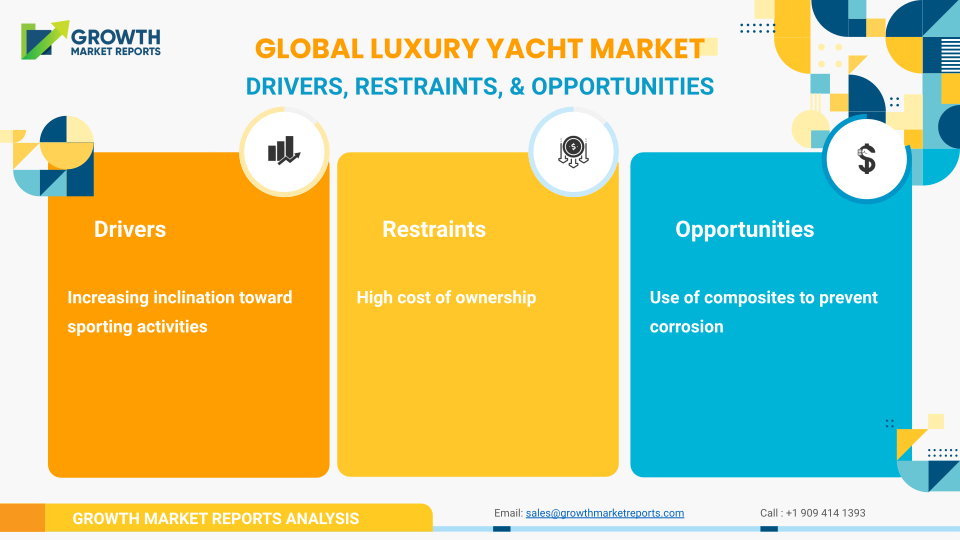
Despite these opportunities, the luxury yacht market faces several restraining factors and threats that could impact its growth trajectory. High acquisition and operating costs, coupled with complex regulatory requirements and tax implications, remain significant barriers to ownership and investment. Economic volatility, geopolitical uncertainties, and fluctuations in currency exchange rates can affect consumer confidence and spending patterns, particularly in the ultra-luxury segment. Environmental regulations are becoming increasingly stringent, requiring manufacturers and operators to invest in compliance and sustainability initiatives. Supply chain disruptions, skilled labor shortages, and rising raw material costs also present challenges for yacht builders and suppliers. To mitigate these threats, industry players must adopt agile business strategies, invest in innovation, and proactively engage with stakeholders to address emerging risks and capitalize on growth opportunities.
Europe remains the undisputed leader in the global luxury yacht market, accounting for the largest share with a market value of approximately USD 4.1 billion in 2024. The regionÂ’s dominance is underpinned by its rich maritime heritage, world-class shipyards, and the enduring popularity of the Mediterranean as a premier yachting destination. Countries such as Italy, the Netherlands, Germany, and France are home to some of the most renowned yacht builders and designers, attracting clients from around the world. The Mediterranean coastline offers an unparalleled combination of scenic beauty, cultural attractions, and sophisticated infrastructure, making it the epicenter of yacht manufacturing, sales, and charter activities. Europe is expected to maintain its leadership position over the forecast period, with a projected CAGR of 6.8%, driven by sustained demand for both new builds and refits.
North America is the second-largest market, with a 2024 market size of approximately USD 2.7 billion. The United States, in particular, boasts a robust ecosystem of yacht owners, charter operators, and service providers, supported by a network of marinas, shipyards, and coastal destinations. The regionÂ’s appeal is enhanced by the popularity of yachting in Florida, the Caribbean, and the Pacific Northwest. North American buyers are known for their preference for larger, technologically advanced yachts, often customized to reflect their individual lifestyles and preferences. The charter market is also thriving, with a growing number of clients seeking exclusive experiences in destinations such as the Bahamas, Mexico, and Alaska. North America is expected to witness steady growth, supported by rising affluence, favorable tax policies, and ongoing investments in marina infrastructure.
The Asia Pacific region is emerging as a high-potential market, with a 2024 market value of USD 1.9 billion and a projected CAGR of 8.5% through 2033, the highest among all regions. Rapid economic growth, urbanization, and the proliferation of UHNWIs in countries such as China, Singapore, Hong Kong, and Australia are driving demand for luxury yachts. The regionÂ’s diverse coastline, tropical islands, and expanding network of marinas are attracting both buyers and charter clients. Governments and private investors are actively developing yachting infrastructure and promoting marine tourism, positioning Asia Pacific as a key growth frontier for the industry. The rising popularity of yacht shows, regattas, and luxury lifestyle events is further fueling market expansion and increasing awareness of yachting as a desirable leisure activity.
The luxury yacht market is characterized by intense competition, with a diverse array of players ranging from established shipyards to emerging boutique builders and specialized service providers. The competitive landscape is shaped by factors such as brand reputation, technological innovation, customization capabilities, and global reach. Leading manufacturers are investing heavily in research and development to deliver yachts that combine cutting-edge design, superior performance, and environmental sustainability. The ability to offer bespoke solutions, tailored to the unique preferences and requirements of individual clients, is a key differentiator in the ultra-luxury segment. Strategic partnerships with designers, interior specialists, and technology providers are enabling companies to enhance their value proposition and maintain a competitive edge.
Customer service and after-sales support are critical components of the competitive strategy in the luxury yacht market. Buyers and charter clients expect a seamless, end-to-end experience, encompassing everything from initial consultation and design to delivery, maintenance, and management. Leading players are expanding their service portfolios to include yacht management, crew training, refit and repair, and concierge services. The integration of digital platforms for yacht monitoring, booking, and customer engagement is enhancing operational efficiency and customer satisfaction. Companies that can deliver a holistic, personalized experience are better positioned to build long-term relationships and foster brand loyalty in an increasingly discerning market.
Innovation remains a cornerstone of competitive success, with manufacturers racing to introduce new materials, propulsion systems, and onboard technologies. The push towards sustainability is driving the adoption of hybrid and electric propulsion, advanced composites, and eco-friendly practices throughout the value chain. The ability to anticipate and respond to evolving regulatory requirements, environmental standards, and customer preferences will be critical for long-term viability. The market is also witnessing consolidation, with mergers, acquisitions, and strategic alliances enabling companies to expand their capabilities, access new markets, and achieve economies of scale.
Some of the major companies in the luxury yacht market include Azimut Benetti Group, Ferretti Group, Lürssen Yachts, Sunseeker International, Feadship, Princess Yachts, Sanlorenzo, Heesen Yachts, and Oceanco. Azimut Benetti Group, headquartered in Italy, is renowned for its extensive portfolio of motor yachts and superyachts, combining Italian craftsmanship with advanced technology. Ferretti Group, another Italian powerhouse, offers a diverse range of luxury yachts under brands such as Riva, Pershing, and Custom Line, known for their innovation and elegance. Lürssen Yachts, based in Germany, specializes in the construction of custom superyachts, setting benchmarks for size, luxury, and engineering excellence. Sunseeker International, headquartered in the United Kingdom, is celebrated for its high-performance motor yachts and global distribution network.
Feadship, a Dutch consortium, is synonymous with bespoke superyachts, blending traditional craftsmanship with cutting-edge design and technology. Princess Yachts, based in the UK, has a strong reputation for quality, innovation, and customer service, offering a wide range of motor yachts for both private and charter use. Sanlorenzo, an Italian shipyard, is recognized for its focus on customization, delivering yachts that reflect the unique tastes and lifestyles of its clients. Heesen Yachts, also based in the Netherlands, is a leader in the construction of aluminum yachts, renowned for their speed, efficiency, and contemporary styling. Oceanco, another Dutch builder, specializes in the creation of large custom superyachts, pushing the boundaries of design, engineering, and luxury.
These companies, along with a host of boutique builders and specialized service providers, are continuously raising the bar for innovation, quality, and customer experience in the luxury yacht market. Their ability to anticipate market trends, invest in sustainable technologies, and deliver personalized solutions will be pivotal in shaping the future of the industry. As competition intensifies, the focus on brand differentiation, operational excellence, and customer-centricity will determine the winners in this dynamic and evolving market.
The Luxury Yacht market has been segmented on the basis of
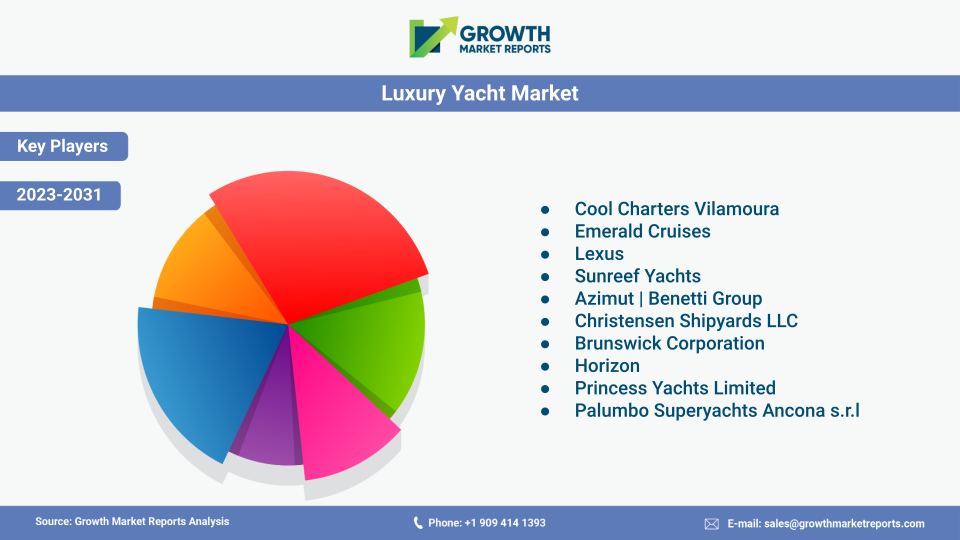
Key players operating in the global luxury yacht market include Cool Charters Vilamoura; Emerald Cruises; Lexus; Sunreef Yachts; Azimut | Benetti Group; Christensen Shipyards LLC; Brunswick Corporation; Horizon; Princess Yachts Limited; and palumbo group spa.
These companies adopt strategies such as acquisitions, partnerships, collaboration, mergers, R&D investments, and product launches to boost their market share. For instance,
Opportunities include sustainable yacht development, digital transformation, and charter market growth. Challenges involve high costs, regulatory complexities, economic volatility, and supply chain disruptions.
Major players include Azimut Benetti Group, Ferretti Group, Lürssen Yachts, Feadship, Sanlorenzo, Oceanco, Sunseeker International, Princess Yachts, Heesen Yachts, and others.
Motorized propulsion remains dominant, but there is growing adoption of hybrid and electric systems for sustainability. Sailing propulsion appeals to eco-conscious buyers, and alternative fuels and energy management systems are being explored.
Common materials include fiberglass (for its lightweight and corrosion resistance), aluminum (for strength and agility), steel (for large superyachts), and advanced composites like carbon fiber for high-performance vessels.
Luxury yachts are used for private leisure, commercial purposes (such as corporate events and hospitality), charter services, and niche applications like expedition cruises and scientific research.
Technological innovations such as hybrid and electric propulsion, advanced navigation systems, smart automation, and digital platforms for yacht management are transforming the luxury yacht experience and attracting younger, sustainability-focused buyers.
Motor yachts hold the largest market share due to their speed, comfort, and advanced features. Sailing yachts, catamarans, and expedition yachts also cater to specific preferences and are experiencing growth.
Europe leads the global luxury yacht market, followed by North America and Asia Pacific. The Mediterranean is a major hub for yacht manufacturing and charter activities.
Key growth drivers include rising disposable incomes, an increasing number of ultra-high-net-worth individuals (UHNWIs), demand for personalized luxury experiences, technological advancements in yacht design, and the expanding charter industry.
As of 2024, the global luxury yacht market is valued at USD 9.7 billion, with strong growth projected to reach USD 18.2 billion by 2033.