Heavy Equipment Market Research Report 2033

Heavy Equipment Market Research Report 2033

Segments - by Equipment Type (Earthmoving Equipment, Material Handling Equipment, Heavy Construction Vehicles, Others), by Application (Construction, Mining, Agriculture, Forestry, Oil & Gas, Others), by Power Output (Below 100 HP, 101–200 HP, Above 200 HP), by End-User (Infrastructure, Commercial, Industrial, Residential, Others)

https://growthmarketreports.com/Raksha
Author : Raksha Sharma
https://growthmarketreports.com/Vaibhav
Fact-checked by : V. Chandola
https://growthmarketreports.com/Rucha
Editor : Rucha Phatak

Upcoming | Report ID :CM-4597 | 5.0 Rating | 71 Reviews | 299 Pages | Format : Docx PDF

Report Description


Heavy Equipment Market Outlook

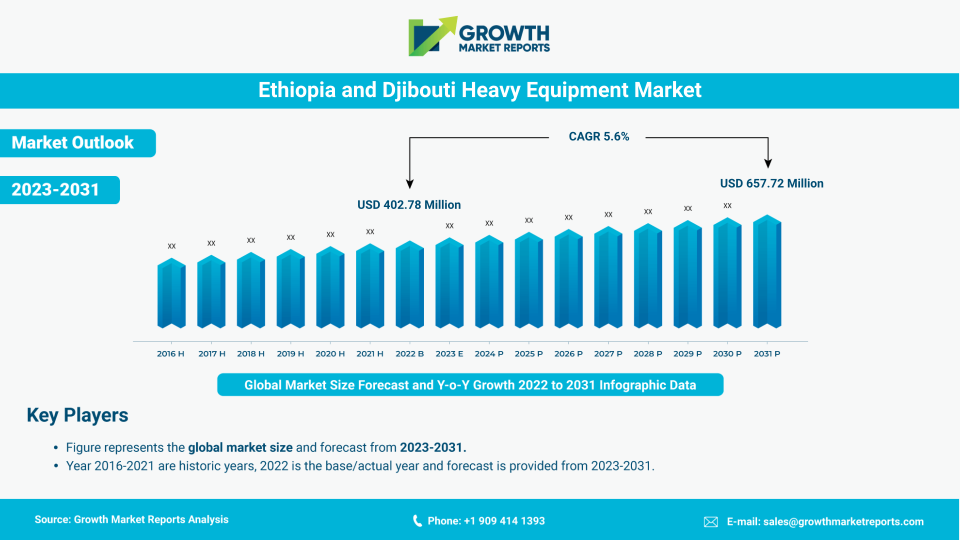
As per our latest research, the global heavy equipment market size reached USD 196.8 billion in 2024, reflecting robust activity across construction, mining, and infrastructure development. The market is projected to expand at a CAGR of 5.2% from 2025 to 2033, reaching an estimated USD 312.5 billion by 2033. This growth is primarily fueled by rapid urbanization, large-scale infrastructure projects, and technological advancements in machinery, which are collectively reshaping the dynamics of the heavy equipment industry worldwide.

One of the primary growth drivers for the heavy equipment market is the surge in infrastructure development across emerging and developed economies. Governments are making substantial investments in transport networks, smart cities, and energy projects, which necessitate the deployment of advanced heavy machinery. The growing emphasis on upgrading existing infrastructure and building new roads, bridges, and public facilities is directly increasing the demand for earthmoving equipment, material handling machines, and heavy construction vehicles. Additionally, the expansion of urban areas and the rise in population density are creating a sustained need for residential and commercial construction, further propelling market growth.

Technological innovation is another critical factor shaping the heavy equipment market. The integration of telematics, automation, and artificial intelligence in heavy machinery is significantly enhancing operational efficiency, safety, and productivity. Manufacturers are focusing on developing smart equipment with features such as real-time monitoring, predictive maintenance, and remote operation capabilities. These advancements not only reduce downtime and operational costs but also address stringent regulatory requirements related to emissions and worker safety. As a result, end-users across construction, mining, and agriculture are increasingly adopting next-generation heavy equipment to gain a competitive edge.

Furthermore, the heavy equipment market is benefiting from the rising focus on sustainability and environmental responsibility. There is a growing trend towards the adoption of electric and hybrid heavy machinery, driven by stricter emission norms and increasing environmental awareness. Manufacturers are investing heavily in research and development to produce eco-friendly equipment that meets global standards. This shift is particularly evident in regions with rigorous environmental regulations, such as Europe and North America. The transition to greener alternatives is expected to open new growth avenues and reshape the competitive landscape of the heavy equipment industry in the coming years.

In the ever-evolving landscape of heavy equipment, the introduction of a Construction Equipment Digital Spare Parts Catalog is revolutionizing how businesses manage their machinery. This digital catalog provides a comprehensive and easily accessible repository of spare parts, allowing for quick identification and procurement. By digitizing spare parts management, companies can minimize downtime and enhance operational efficiency, ensuring that equipment remains in optimal condition. This innovation is particularly beneficial for large-scale projects where timely maintenance is crucial to project timelines. As the industry moves towards greater digital integration, the adoption of digital spare parts catalogs is becoming a key differentiator for businesses seeking to streamline operations and reduce costs.

From a regional perspective, the Asia Pacific region dominates the heavy equipment market, accounting for the largest share in 2024, followed by North America and Europe. Rapid industrialization, urbanization, and significant infrastructure investments in countries like China, India, and Southeast Asian nations are driving demand in Asia Pacific. North America and Europe are witnessing steady growth due to ongoing modernization of infrastructure and the adoption of advanced technologies in heavy machinery. Meanwhile, Latin America and the Middle East & Africa are emerging as promising markets, supported by increasing investments in mining, oil & gas, and construction sectors. The regional distribution of demand highlights the global nature of the heavy equipment market and underscores the importance of tailored strategies for different geographies.

Global Heavy Equipment Industry Outlook

Equipment Type Analysis

The heavy equipment market is segmented by equipment type into earthmoving equipment, material handling equipment, heavy construction vehicles, and others. Earthmoving equipment, which includes excavators, loaders, and bulldozers, holds the largest share due to its indispensable role in construction and mining activities. The demand for these machines is particularly high in infrastructure projects such as road building, land development, and urban expansion. The versatility, power, and efficiency of earthmoving equipment make it a cornerstone of any major construction or mining operation. As urbanization accelerates globally, the need for robust earthmoving equipment is expected to remain strong, driving consistent revenue growth in this segment.

Material handling equipment, encompassing cranes, forklifts, and conveyors, is witnessing significant growth fueled by the expansion of logistics, warehousing, and industrial sectors. The rise of e-commerce and the need for efficient supply chain management have made material handling equipment an essential component in factories, ports, and distribution centers. Automation and digitalization are further transforming this segment, with smart cranes and automated forklifts enhancing productivity and reducing labor costs. As industries strive for greater operational efficiency, the adoption of advanced material handling solutions is set to rise, contributing to the overall expansion of the heavy equipment market.

Heavy construction vehicles, such as dump trucks, concrete mixers, and road rollers, play a pivotal role in large-scale construction and infrastructure projects. The increasing number of megaprojects in transportation, energy, and urban development is boosting the demand for these vehicles. Manufacturers are focusing on improving fuel efficiency, durability, and safety features to meet the evolving needs of end-users. Additionally, the integration of telematics and IoT technologies is enabling fleet managers to monitor vehicle performance in real-time, optimize routes, and ensure compliance with safety regulations. These advancements are expected to drive the growth of the heavy construction vehicles segment in the coming years.

The "others" category includes specialized equipment such as trenchers, compactors, and pavers, which are essential for niche applications in construction, mining, and agriculture. While this segment represents a smaller share of the market, it is characterized by high-value, technologically advanced machines tailored to specific tasks. The demand for specialized equipment is growing in response to complex project requirements and the need for precision in operations. Manufacturers are increasingly offering customized solutions to cater to diverse industry needs, thereby enhancing the value proposition of this segment within the broader heavy equipment market.

Report Scope

Attributes Details
Report Title Heavy Equipment Market Research Report 2033
By Equipment Type Earthmoving Equipment, Material Handling Equipment, Heavy Construction Vehicles, Others
By Application Construction, Mining, Agriculture, Forestry, Oil & Gas, Others
By Power Output Below 100 HP, 101–200 HP, Above 200 HP
By End-User Infrastructure, Commercial, Industrial, Residential, Others
Regions Covered North America, Europe, APAC, Latin America, MEA
Base Year 2024
Historic Data 2018-2023
Forecast Period 2025-2033
Number of Pages 299
Number of Tables & Figures 390
Customization Available Yes, the report can be customized as per your need.

Application Analysis

The application landscape of the heavy equipment market is broad, encompassing construction, mining, agriculture, forestry, oil & gas, and other sectors. Construction remains the dominant application, accounting for the largest share of market revenue in 2024. The sector's robust growth is driven by ongoing investments in residential, commercial, and public infrastructure projects worldwide. Urbanization, population growth, and government-led development initiatives are key factors fueling demand for heavy equipment in construction. The adoption of advanced machinery is enabling faster project completion, improved safety, and cost savings, making heavy equipment indispensable for modern construction activities.

Mining is another significant application segment, characterized by high-value, heavy-duty equipment requirements. The global demand for minerals, metals, and energy resources is driving investments in mining operations, particularly in regions rich in natural resources such as Latin America, Africa, and Australia. Heavy equipment such as excavators, haul trucks, and drilling machines are essential for efficient extraction, transportation, and processing of raw materials. The trend towards deeper and more complex mining operations is further increasing the need for technologically advanced, reliable, and high-capacity equipment, thereby boosting market growth in this segment.

Agriculture is emerging as a key application area for heavy equipment, supported by the global drive towards mechanization and productivity enhancement in farming. Tractors, harvesters, and plowing machines are increasingly being adopted to meet the growing food demand and address labor shortages in agriculture. Technological advancements such as GPS-guided equipment, precision farming, and autonomous machinery are revolutionizing agricultural practices, improving yields, and reducing operational costs. The adoption of heavy equipment in agriculture is expected to rise steadily, particularly in developing regions where modernization of farming practices is a priority.

The forestry and oil & gas sectors also contribute to the demand for heavy equipment, albeit to a lesser extent compared to construction and mining. In forestry, equipment such as feller bunchers, skidders, and harvesters are essential for efficient timber extraction and land management. The oil & gas sector relies on heavy machinery for exploration, drilling, and pipeline construction. Both sectors are increasingly adopting advanced equipment to enhance productivity, safety, and environmental compliance. The "others" category includes applications such as waste management and utilities, which are gaining traction as urbanization and environmental concerns drive demand for specialized heavy machinery.

Power Output Analysis

Power output is a critical parameter in the heavy equipment market, influencing machine performance, efficiency, and suitability for various applications. The market is segmented into below 100 HP, 101–200 HP, and above 200 HP categories. Equipment with power output below 100 HP is primarily used in light construction, landscaping, and small-scale agricultural operations. These machines are valued for their compact size, maneuverability, and lower operating costs, making them ideal for urban and residential projects. The demand for low-power equipment is rising, particularly in developing regions where small and medium-sized enterprises are prominent end-users.

The 101–200 HP segment represents a significant share of the market, catering to medium-duty applications in construction, agriculture, and industrial sectors. Equipment in this power range offers a balance between performance, versatility, and fuel efficiency. These machines are commonly used in road construction, medium-scale mining, and large agricultural operations. Manufacturers are focusing on enhancing engine performance, reducing emissions, and integrating smart technologies to meet evolving customer needs. The 101–200 HP segment is expected to witness steady growth, driven by the increasing complexity and scale of infrastructure projects worldwide.

Equipment with power output above 200 HP is essential for heavy-duty applications such as large-scale mining, major infrastructure projects, and extensive agricultural operations. These high-capacity machines are designed for demanding tasks that require superior power, durability, and reliability. The adoption of equipment in this segment is driven by the need for efficiency and productivity in large projects, where downtime and operational inefficiencies can result in significant financial losses. Technological advancements, such as hybrid engines and advanced hydraulic systems, are further enhancing the performance and sustainability of high-power equipment.

The trend towards electrification and hybridization is influencing power output preferences across all segments. Manufacturers are developing electric and hybrid models that offer comparable performance to traditional diesel-powered equipment while reducing emissions and operating costs. This shift is particularly pronounced in regions with stringent environmental regulations and incentives for clean technology adoption. As the demand for sustainable solutions grows, the power output segment is expected to evolve, with a greater emphasis on energy efficiency and environmental performance across the heavy equipment market.

End-User Analysis

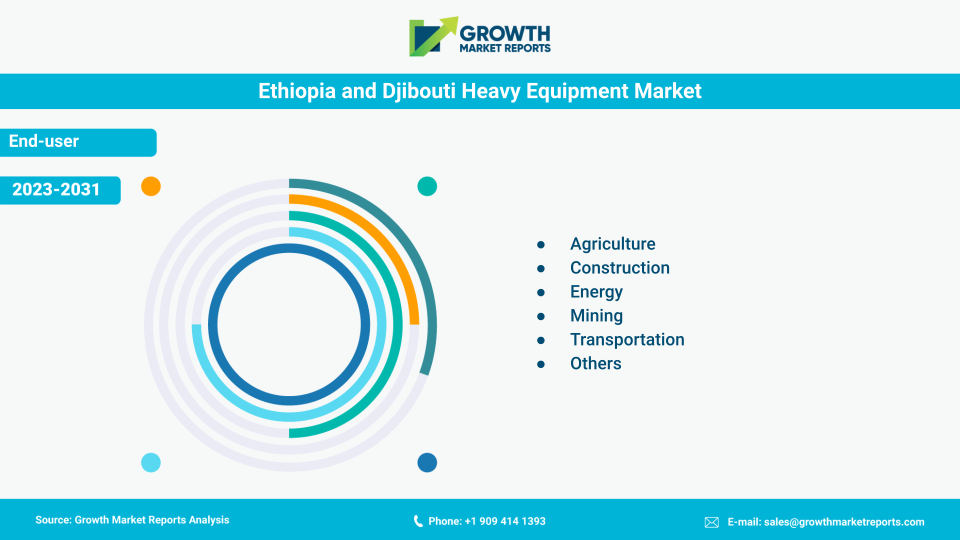
The heavy equipment market serves a diverse range of end-users, including infrastructure, commercial, industrial, residential, and others. Infrastructure is the largest end-user segment, accounting for a substantial share of market revenue in 2024. The construction of roads, bridges, airports, and public utilities requires a wide array of heavy machinery, driving consistent demand in this segment. Government-led initiatives and public-private partnerships are key factors supporting infrastructure development, particularly in emerging economies where modernization is a top priority. The need for efficient, reliable, and technologically advanced equipment is paramount in this segment, as project timelines and safety standards become increasingly stringent.

The commercial sector is another significant end-user, encompassing office buildings, shopping centers, hotels, and other non-residential facilities. The growth of the commercial real estate market, driven by urbanization, economic development, and changing consumer preferences, is boosting demand for heavy equipment. Developers and contractors are investing in advanced machinery to expedite construction, reduce costs, and ensure high-quality outcomes. The adoption of smart equipment with features such as real-time monitoring and remote diagnostics is enhancing operational efficiency and project management in the commercial sector.

Industrial end-users, including manufacturing plants, warehouses, and logistics centers, rely on heavy equipment for material handling, site preparation, and facility maintenance. The expansion of industrial infrastructure, particularly in Asia Pacific and North America, is driving demand for robust and versatile machinery. Manufacturers are offering customized solutions to meet the specific needs of industrial clients, such as automated material handling systems and energy-efficient equipment. The focus on operational efficiency, safety, and sustainability is shaping purchasing decisions in the industrial segment, contributing to the overall growth of the heavy equipment market.

The residential sector, while smaller in comparison to infrastructure and commercial segments, plays a vital role in market dynamics. The construction of housing developments, apartment complexes, and residential amenities requires a range of heavy equipment, from earthmoving machines to cranes and concrete mixers. The trend towards urban living and the growing middle-class population in emerging economies are driving residential construction activities. The adoption of compact and versatile equipment is particularly high in this segment, as contractors seek solutions that can operate efficiently in confined urban spaces.

The "others" category includes end-users such as utilities, transportation, and government agencies, which utilize heavy equipment for specialized applications. The increasing focus on sustainable urban development, disaster management, and public safety is creating new opportunities for heavy equipment manufacturers. The diversification of end-user demand underscores the importance of innovation, customization, and after-sales support in maintaining a competitive edge in the heavy equipment market.

Opportunities & Threats

The heavy equipment market presents a wealth of opportunities driven by global megatrends such as urbanization, industrialization, and sustainability. The ongoing shift towards smart cities and digital infrastructure is creating substantial demand for advanced machinery capable of supporting complex construction and maintenance projects. The integration of IoT, telematics, and automation is enabling manufacturers to offer value-added solutions that enhance productivity, safety, and operational visibility for end-users. Additionally, the growing emphasis on environmental responsibility is opening new avenues for electric and hybrid equipment, as governments and corporations strive to meet ambitious sustainability targets. These trends are expected to drive innovation and market expansion, particularly in regions with favorable regulatory environments and strong investment in infrastructure.

Emerging markets represent a significant growth opportunity for the heavy equipment industry. Rapid economic development, urban population growth, and increasing foreign direct investment in Asia Pacific, Latin America, and Africa are fueling demand for construction, mining, and agricultural machinery. Manufacturers that can tailor their products and services to the unique needs of these regions—such as offering cost-effective, durable, and easy-to-maintain equipment—are well-positioned to capture market share. Strategic partnerships, local manufacturing, and robust after-sales support are key success factors for companies seeking to capitalize on the vast potential of emerging markets. Furthermore, the adoption of digital platforms for equipment rental, sales, and maintenance is streamlining procurement processes and expanding access to heavy machinery for small and medium-sized enterprises.

Despite the positive outlook, the heavy equipment market faces several restraining factors. Economic volatility, fluctuating commodity prices, and geopolitical uncertainties can impact investment decisions and project timelines, leading to cyclical demand patterns. Additionally, the high initial cost of heavy machinery, coupled with maintenance and operational expenses, can be a barrier for small contractors and businesses. Stringent regulatory requirements related to emissions, safety, and import/export restrictions also pose challenges for manufacturers and end-users. To mitigate these risks, industry players must focus on innovation, cost optimization, and compliance while maintaining agility to adapt to changing market conditions.

Regional Outlook

The Asia Pacific region continues to lead the global heavy equipment market, accounting for approximately 42% of the total market value in 2024, or about USD 82.7 billion. This dominance is attributed to rapid urbanization, robust infrastructure development, and significant investments in construction and mining activities across China, India, Japan, and Southeast Asian countries. The region is expected to maintain a strong growth trajectory, with a projected CAGR of 5.7% from 2025 to 2033. Government initiatives such as ChinaÂ’s Belt and Road Initiative and IndiaÂ’s Smart Cities Mission are creating a favorable environment for heavy equipment manufacturers and suppliers, driving sustained demand for advanced machinery.

North America is the second-largest market, valued at USD 47.2 billion in 2024, driven by ongoing investments in infrastructure modernization, energy projects, and urban redevelopment. The United States and Canada are at the forefront of adopting smart and sustainable heavy equipment, reflecting the regionÂ’s focus on technological innovation and environmental compliance. The market is characterized by high penetration of telematics, automation, and electric machinery, with end-users prioritizing efficiency, safety, and regulatory compliance. North America is expected to witness steady growth, supported by public and private sector investments in transportation, energy, and commercial construction.

Europe holds a significant share in the global heavy equipment market, with a market value of USD 39.4 billion in 2024. The regionÂ’s growth is driven by the modernization of infrastructure, strict environmental regulations, and the transition towards electrification and hybridization of heavy machinery. Countries such as Germany, France, and the United Kingdom are leading the adoption of advanced equipment, supported by favorable policies and strong demand from construction, mining, and agricultural sectors. Meanwhile, Latin America and the Middle East & Africa are emerging as promising markets, with a combined market value of USD 27.5 billion in 2024. These regions are benefiting from increased investments in mining, oil & gas, and infrastructure, presenting new opportunities for global and regional players in the heavy equipment industry.

Heavy Equipment Market Statistics

Competitor Outlook

The heavy equipment market is highly competitive, characterized by the presence of established global players, regional manufacturers, and a growing number of technology-driven entrants. The competitive landscape is shaped by factors such as product innovation, brand reputation, distribution networks, and after-sales services. Leading companies are investing heavily in research and development to introduce next-generation equipment with enhanced performance, fuel efficiency, and digital capabilities. The integration of telematics, automation, and IoT technologies is enabling market leaders to offer differentiated solutions that address the evolving needs of end-users across construction, mining, agriculture, and other sectors. Strategic partnerships, mergers and acquisitions, and geographic expansion are common strategies employed by key players to strengthen their market position and tap into new growth opportunities.

Brand loyalty and customer relationships play a crucial role in the heavy equipment market, given the high value and long lifecycle of machinery. Manufacturers are focusing on building strong relationships with contractors, developers, and fleet operators through comprehensive after-sales support, training programs, and financing options. The ability to provide timely maintenance, spare parts, and technical assistance is a key differentiator in a market where equipment uptime and reliability are critical to project success. Additionally, companies are leveraging digital platforms to enhance customer engagement, streamline procurement processes, and offer value-added services such as remote diagnostics and predictive maintenance.

Regional players are gaining traction by offering cost-effective, durable, and easy-to-maintain equipment tailored to local market needs. These companies often have a deep understanding of regional requirements, regulatory environments, and customer preferences, enabling them to compete effectively against global giants. The rise of local manufacturing and assembly facilities is further enhancing the competitiveness of regional players, particularly in emerging markets where price sensitivity and after-sales support are key purchase drivers. At the same time, technology-driven startups are entering the market with innovative solutions such as electric machinery, autonomous vehicles, and digital platforms for equipment rental and fleet management.

Some of the major companies operating in the global heavy equipment market include Caterpillar Inc., Komatsu Ltd., Volvo Construction Equipment, Hitachi Construction Machinery Co., Ltd., Liebherr Group, CNH Industrial N.V., Deere & Company, SANY Group, Doosan Infracore, and JCB. Caterpillar Inc. is renowned for its wide range of construction and mining equipment, robust global presence, and strong focus on innovation and sustainability. Komatsu Ltd. is a leading player in earthmoving and mining machinery, known for its advanced technology integration and commitment to environmental responsibility. Volvo Construction Equipment is recognized for its emphasis on safety, fuel efficiency, and digital solutions, catering to diverse end-user needs across regions.

Hitachi Construction Machinery Co., Ltd. and Liebherr Group are prominent players with a strong presence in both developed and emerging markets, offering a comprehensive portfolio of equipment for construction, mining, and industrial applications. CNH Industrial N.V. and Deere & Company are major suppliers of agricultural and construction machinery, leveraging their extensive distribution networks and technological expertise to maintain a competitive edge. SANY Group and Doosan Infracore are rapidly expanding their global footprint, driven by product innovation, strategic partnerships, and a focus on emerging markets. JCB is recognized for its versatile and reliable equipment, with a strong emphasis on customer service and after-sales support. These companies are continuously investing in R&D, digital transformation, and sustainability initiatives to stay ahead in the dynamic and evolving heavy equipment market.

Key Players

  • Caterpillar Inc.
  • Komatsu Ltd.
  • Volvo Construction Equipment
  • Hitachi Construction Machinery Co., Ltd.
  • Liebherr Group
  • XCMG Group
  • Sany Group
  • Doosan Infracore
  • JCB (J.C. Bamford Excavators Limited)
  • CNH Industrial N.V.
  • Hyundai Construction Equipment
  • Terex Corporation
  • Zoomlion Heavy Industry Science & Technology Co., Ltd.
  • Kubota Corporation
  • Wirtgen Group
  • Manitou Group
  • Sandvik AB
  • Atlas Copco AB
  • John Deere (Deere & Company)
  • Tadano Ltd.
Heavy Equipment Market Overview

Segments

The Heavy Equipment market has been segmented on the basis of

Equipment Type

  • Earthmoving Equipment
  • Material Handling Equipment
  • Heavy Construction Vehicles
  • Others

Application

  • Construction
  • Mining
  • Agriculture
  • Forestry
  • Oil & Gas
  • Others

Power Output

  • Below 100 HP
  • 101–200 HP
  • Above 200 HP

End-User

  • Infrastructure
  • Commercial
  • Industrial
  • Residential
  • Others

Competitive Landscape

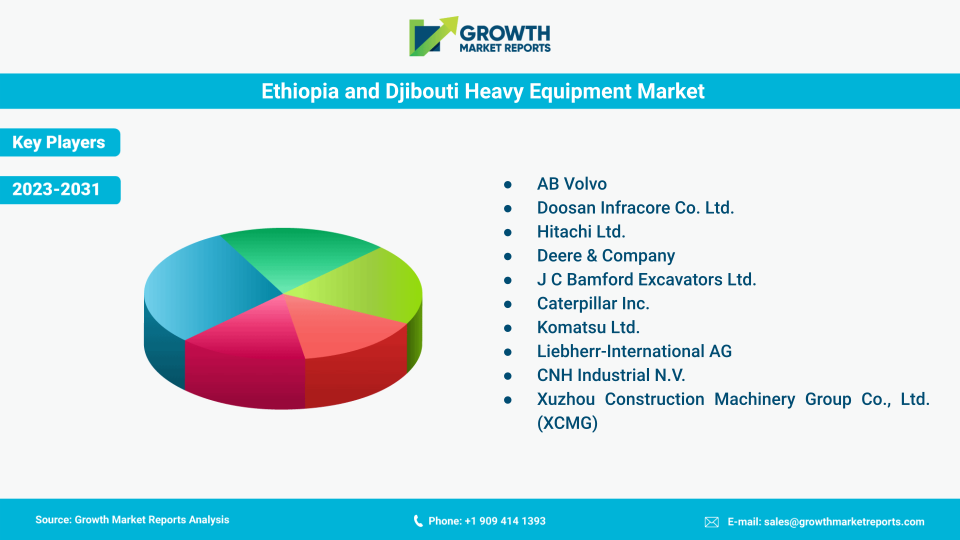
Key players in Ethiopia and Djibouti heavy equipment market include AB Volvo; Doosan Infracore Co. Ltd.; Hitachi Ltd.; Deere & Company; J C Bamford Excavators Ltd.; Caterpillar Inc.; Komatsu Ltd.; Liebherr-International AG; CNH Industrial N.V.; and Xuzhou Construction Machinery Group Co., Ltd. (XCMG). These players are actively engaged in various market development activities including collaborations, agreements, mergers & acquisitions, production capacity expansion, new product launches, and partnerships to strengthen their geographical presence and expand their customer base globally.

Ethiopia and Djibouti Heavy Equipment Market Key Players

Frequently Asked Questions

Challenges include economic volatility, high initial costs, regulatory compliance, fluctuating commodity prices, and the need for ongoing innovation to meet evolving market and environmental demands.

Major companies include Caterpillar Inc., Komatsu Ltd., Volvo Construction Equipment, Hitachi Construction Machinery, Liebherr Group, CNH Industrial, Deere & Company, SANY Group, Doosan Infracore, and JCB.

There is a growing shift towards electric and hybrid heavy machinery, driven by stricter emission norms and environmental awareness, especially in Europe and North America.

Technological innovations such as telematics, automation, AI, and IoT are enhancing operational efficiency, safety, and productivity, while enabling features like real-time monitoring and predictive maintenance.

Construction is the dominant application, followed by mining, agriculture, forestry, oil & gas, and other sectors such as waste management and utilities.

The market includes earthmoving equipment (excavators, loaders, bulldozers), material handling equipment (cranes, forklifts, conveyors), heavy construction vehicles (dump trucks, concrete mixers), and specialized machines like trenchers and compactors.

Key growth drivers include rapid urbanization, large-scale infrastructure projects, technological advancements in machinery, and increasing adoption of sustainable, eco-friendly equipment.

Asia Pacific leads the market, accounting for about 42% of the global value in 2024, followed by North America and Europe. Latin America and the Middle East & Africa are emerging as promising markets.

The heavy equipment market is expected to grow at a CAGR of 5.2% from 2025 to 2033, reaching an estimated USD 312.5 billion by 2033.

As of 2024, the global heavy equipment market size reached USD 196.8 billion, reflecting strong demand across construction, mining, and infrastructure sectors.

Table Of Content

Chapter 1 Executive Summary
Chapter 2 Assumptions and Acronyms Used
Chapter 3 Research Methodology
Chapter 4 Heavy Equipment Market Overview
   4.1 Introduction
      4.1.1 Market Taxonomy
      4.1.2 Market Definition
      4.1.3 Macro-Economic Factors Impacting the Market Growth
   4.2 Heavy Equipment Market Dynamics
      4.2.1 Market Drivers
      4.2.2 Market Restraints
      4.2.3 Market Opportunity
   4.3 Heavy Equipment Market - Supply Chain Analysis
      4.3.1 List of Key Suppliers
      4.3.2 List of Key Distributors
      4.3.3 List of Key Consumers
   4.4 Key Forces Shaping the Heavy Equipment Market
      4.4.1 Bargaining Power of Suppliers
      4.4.2 Bargaining Power of Buyers
      4.4.3 Threat of Substitution
      4.4.4 Threat of New Entrants
      4.4.5 Competitive Rivalry
   4.5 Global Heavy Equipment Market Size & Forecast, 2023-2032
      4.5.1 Heavy Equipment Market Size and Y-o-Y Growth
      4.5.2 Heavy Equipment Market Absolute $ Opportunity

Chapter 5 Global Heavy Equipment Market Analysis and Forecast By Equipment Type
   5.1 Introduction
      5.1.1 Key Market Trends & Growth Opportunities By Equipment Type
      5.1.2 Basis Point Share (BPS) Analysis By Equipment Type
      5.1.3 Absolute $ Opportunity Assessment By Equipment Type
   5.2 Heavy Equipment Market Size Forecast By Equipment Type
      5.2.1 Earthmoving Equipment
      5.2.2 Material Handling Equipment
      5.2.3 Heavy Construction Vehicles
      5.2.4 Others
   5.3 Market Attractiveness Analysis By Equipment Type

Chapter 6 Global Heavy Equipment Market Analysis and Forecast By Application
   6.1 Introduction
      6.1.1 Key Market Trends & Growth Opportunities By Application
      6.1.2 Basis Point Share (BPS) Analysis By Application
      6.1.3 Absolute $ Opportunity Assessment By Application
   6.2 Heavy Equipment Market Size Forecast By Application
      6.2.1 Construction
      6.2.2 Mining
      6.2.3 Agriculture
      6.2.4 Forestry
      6.2.5 Oil & Gas
      6.2.6 Others
   6.3 Market Attractiveness Analysis By Application

Chapter 7 Global Heavy Equipment Market Analysis and Forecast By Power Output
   7.1 Introduction
      7.1.1 Key Market Trends & Growth Opportunities By Power Output
      7.1.2 Basis Point Share (BPS) Analysis By Power Output
      7.1.3 Absolute $ Opportunity Assessment By Power Output
   7.2 Heavy Equipment Market Size Forecast By Power Output
      7.2.1 Below 100 HP
      7.2.2 101–200 HP
      7.2.3 Above 200 HP
   7.3 Market Attractiveness Analysis By Power Output

Chapter 8 Global Heavy Equipment Market Analysis and Forecast By End-User
   8.1 Introduction
      8.1.1 Key Market Trends & Growth Opportunities By End-User
      8.1.2 Basis Point Share (BPS) Analysis By End-User
      8.1.3 Absolute $ Opportunity Assessment By End-User
   8.2 Heavy Equipment Market Size Forecast By End-User
      8.2.1 Infrastructure
      8.2.2 Commercial
      8.2.3 Industrial
      8.2.4 Residential
      8.2.5 Others
   8.3 Market Attractiveness Analysis By End-User

Chapter 9 Global Heavy Equipment Market Analysis and Forecast by Region
   9.1 Introduction
      9.1.1 Key Market Trends & Growth Opportunities By Region
      9.1.2 Basis Point Share (BPS) Analysis By Region
      9.1.3 Absolute $ Opportunity Assessment By Region
   9.2 Heavy Equipment Market Size Forecast By Region
      9.2.1 North America
      9.2.2 Europe
      9.2.3 Asia Pacific
      9.2.4 Latin America
      9.2.5 Middle East & Africa (MEA)
   9.3 Market Attractiveness Analysis By Region

Chapter 10 Coronavirus Disease (COVID-19) Impact 
   10.1 Introduction 
   10.2 Current & Future Impact Analysis 
   10.3 Economic Impact Analysis 
   10.4 Government Policies 
   10.5 Investment Scenario

Chapter 11 North America Heavy Equipment Analysis and Forecast
   11.1 Introduction
   11.2 North America Heavy Equipment Market Size Forecast by Country
      11.2.1 U.S.
      11.2.2 Canada
   11.3 Basis Point Share (BPS) Analysis by Country
   11.4 Absolute $ Opportunity Assessment by Country
   11.5 Market Attractiveness Analysis by Country
   11.6 North America Heavy Equipment Market Size Forecast By Equipment Type
      11.6.1 Earthmoving Equipment
      11.6.2 Material Handling Equipment
      11.6.3 Heavy Construction Vehicles
      11.6.4 Others
   11.7 Basis Point Share (BPS) Analysis By Equipment Type 
   11.8 Absolute $ Opportunity Assessment By Equipment Type 
   11.9 Market Attractiveness Analysis By Equipment Type
   11.10 North America Heavy Equipment Market Size Forecast By Application
      11.10.1 Construction
      11.10.2 Mining
      11.10.3 Agriculture
      11.10.4 Forestry
      11.10.5 Oil & Gas
      11.10.6 Others
   11.11 Basis Point Share (BPS) Analysis By Application 
   11.12 Absolute $ Opportunity Assessment By Application 
   11.13 Market Attractiveness Analysis By Application
   11.14 North America Heavy Equipment Market Size Forecast By Power Output
      11.14.1 Below 100 HP
      11.14.2 101–200 HP
      11.14.3 Above 200 HP
   11.15 Basis Point Share (BPS) Analysis By Power Output 
   11.16 Absolute $ Opportunity Assessment By Power Output 
   11.17 Market Attractiveness Analysis By Power Output
   11.18 North America Heavy Equipment Market Size Forecast By End-User
      11.18.1 Infrastructure
      11.18.2 Commercial
      11.18.3 Industrial
      11.18.4 Residential
      11.18.5 Others
   11.19 Basis Point Share (BPS) Analysis By End-User 
   11.20 Absolute $ Opportunity Assessment By End-User 
   11.21 Market Attractiveness Analysis By End-User

Chapter 12 Europe Heavy Equipment Analysis and Forecast
   12.1 Introduction
   12.2 Europe Heavy Equipment Market Size Forecast by Country
      12.2.1 Germany
      12.2.2 France
      12.2.3 Italy
      12.2.4 U.K.
      12.2.5 Spain
      12.2.6 Russia
      12.2.7 Rest of Europe
   12.3 Basis Point Share (BPS) Analysis by Country
   12.4 Absolute $ Opportunity Assessment by Country
   12.5 Market Attractiveness Analysis by Country
   12.6 Europe Heavy Equipment Market Size Forecast By Equipment Type
      12.6.1 Earthmoving Equipment
      12.6.2 Material Handling Equipment
      12.6.3 Heavy Construction Vehicles
      12.6.4 Others
   12.7 Basis Point Share (BPS) Analysis By Equipment Type 
   12.8 Absolute $ Opportunity Assessment By Equipment Type 
   12.9 Market Attractiveness Analysis By Equipment Type
   12.10 Europe Heavy Equipment Market Size Forecast By Application
      12.10.1 Construction
      12.10.2 Mining
      12.10.3 Agriculture
      12.10.4 Forestry
      12.10.5 Oil & Gas
      12.10.6 Others
   12.11 Basis Point Share (BPS) Analysis By Application 
   12.12 Absolute $ Opportunity Assessment By Application 
   12.13 Market Attractiveness Analysis By Application
   12.14 Europe Heavy Equipment Market Size Forecast By Power Output
      12.14.1 Below 100 HP
      12.14.2 101–200 HP
      12.14.3 Above 200 HP
   12.15 Basis Point Share (BPS) Analysis By Power Output 
   12.16 Absolute $ Opportunity Assessment By Power Output 
   12.17 Market Attractiveness Analysis By Power Output
   12.18 Europe Heavy Equipment Market Size Forecast By End-User
      12.18.1 Infrastructure
      12.18.2 Commercial
      12.18.3 Industrial
      12.18.4 Residential
      12.18.5 Others
   12.19 Basis Point Share (BPS) Analysis By End-User 
   12.20 Absolute $ Opportunity Assessment By End-User 
   12.21 Market Attractiveness Analysis By End-User

Chapter 13 Asia Pacific Heavy Equipment Analysis and Forecast
   13.1 Introduction
   13.2 Asia Pacific Heavy Equipment Market Size Forecast by Country
      13.2.1 China
      13.2.2 Japan
      13.2.3 South Korea
      13.2.4 India
      13.2.5 Australia
      13.2.6 South East Asia (SEA)
      13.2.7 Rest of Asia Pacific (APAC)
   13.3 Basis Point Share (BPS) Analysis by Country
   13.4 Absolute $ Opportunity Assessment by Country
   13.5 Market Attractiveness Analysis by Country
   13.6 Asia Pacific Heavy Equipment Market Size Forecast By Equipment Type
      13.6.1 Earthmoving Equipment
      13.6.2 Material Handling Equipment
      13.6.3 Heavy Construction Vehicles
      13.6.4 Others
   13.7 Basis Point Share (BPS) Analysis By Equipment Type 
   13.8 Absolute $ Opportunity Assessment By Equipment Type 
   13.9 Market Attractiveness Analysis By Equipment Type
   13.10 Asia Pacific Heavy Equipment Market Size Forecast By Application
      13.10.1 Construction
      13.10.2 Mining
      13.10.3 Agriculture
      13.10.4 Forestry
      13.10.5 Oil & Gas
      13.10.6 Others
   13.11 Basis Point Share (BPS) Analysis By Application 
   13.12 Absolute $ Opportunity Assessment By Application 
   13.13 Market Attractiveness Analysis By Application
   13.14 Asia Pacific Heavy Equipment Market Size Forecast By Power Output
      13.14.1 Below 100 HP
      13.14.2 101–200 HP
      13.14.3 Above 200 HP
   13.15 Basis Point Share (BPS) Analysis By Power Output 
   13.16 Absolute $ Opportunity Assessment By Power Output 
   13.17 Market Attractiveness Analysis By Power Output
   13.18 Asia Pacific Heavy Equipment Market Size Forecast By End-User
      13.18.1 Infrastructure
      13.18.2 Commercial
      13.18.3 Industrial
      13.18.4 Residential
      13.18.5 Others
   13.19 Basis Point Share (BPS) Analysis By End-User 
   13.20 Absolute $ Opportunity Assessment By End-User 
   13.21 Market Attractiveness Analysis By End-User

Chapter 14 Latin America Heavy Equipment Analysis and Forecast
   14.1 Introduction
   14.2 Latin America Heavy Equipment Market Size Forecast by Country
      14.2.1 Brazil
      14.2.2 Mexico
      14.2.3 Rest of Latin America (LATAM)
   14.3 Basis Point Share (BPS) Analysis by Country
   14.4 Absolute $ Opportunity Assessment by Country
   14.5 Market Attractiveness Analysis by Country
   14.6 Latin America Heavy Equipment Market Size Forecast By Equipment Type
      14.6.1 Earthmoving Equipment
      14.6.2 Material Handling Equipment
      14.6.3 Heavy Construction Vehicles
      14.6.4 Others
   14.7 Basis Point Share (BPS) Analysis By Equipment Type 
   14.8 Absolute $ Opportunity Assessment By Equipment Type 
   14.9 Market Attractiveness Analysis By Equipment Type
   14.10 Latin America Heavy Equipment Market Size Forecast By Application
      14.10.1 Construction
      14.10.2 Mining
      14.10.3 Agriculture
      14.10.4 Forestry
      14.10.5 Oil & Gas
      14.10.6 Others
   14.11 Basis Point Share (BPS) Analysis By Application 
   14.12 Absolute $ Opportunity Assessment By Application 
   14.13 Market Attractiveness Analysis By Application
   14.14 Latin America Heavy Equipment Market Size Forecast By Power Output
      14.14.1 Below 100 HP
      14.14.2 101–200 HP
      14.14.3 Above 200 HP
   14.15 Basis Point Share (BPS) Analysis By Power Output 
   14.16 Absolute $ Opportunity Assessment By Power Output 
   14.17 Market Attractiveness Analysis By Power Output
   14.18 Latin America Heavy Equipment Market Size Forecast By End-User
      14.18.1 Infrastructure
      14.18.2 Commercial
      14.18.3 Industrial
      14.18.4 Residential
      14.18.5 Others
   14.19 Basis Point Share (BPS) Analysis By End-User 
   14.20 Absolute $ Opportunity Assessment By End-User 
   14.21 Market Attractiveness Analysis By End-User

Chapter 15 Middle East & Africa (MEA) Heavy Equipment Analysis and Forecast
   15.1 Introduction
   15.2 Middle East & Africa (MEA) Heavy Equipment Market Size Forecast by Country
      15.2.1 Saudi Arabia
      15.2.2 South Africa
      15.2.3 UAE
      15.2.4 Rest of Middle East & Africa (MEA)
   15.3 Basis Point Share (BPS) Analysis by Country
   15.4 Absolute $ Opportunity Assessment by Country
   15.5 Market Attractiveness Analysis by Country
   15.6 Middle East & Africa (MEA) Heavy Equipment Market Size Forecast By Equipment Type
      15.6.1 Earthmoving Equipment
      15.6.2 Material Handling Equipment
      15.6.3 Heavy Construction Vehicles
      15.6.4 Others
   15.7 Basis Point Share (BPS) Analysis By Equipment Type 
   15.8 Absolute $ Opportunity Assessment By Equipment Type 
   15.9 Market Attractiveness Analysis By Equipment Type
   15.10 Middle East & Africa (MEA) Heavy Equipment Market Size Forecast By Application
      15.10.1 Construction
      15.10.2 Mining
      15.10.3 Agriculture
      15.10.4 Forestry
      15.10.5 Oil & Gas
      15.10.6 Others
   15.11 Basis Point Share (BPS) Analysis By Application 
   15.12 Absolute $ Opportunity Assessment By Application 
   15.13 Market Attractiveness Analysis By Application
   15.14 Middle East & Africa (MEA) Heavy Equipment Market Size Forecast By Power Output
      15.14.1 Below 100 HP
      15.14.2 101–200 HP
      15.14.3 Above 200 HP
   15.15 Basis Point Share (BPS) Analysis By Power Output 
   15.16 Absolute $ Opportunity Assessment By Power Output 
   15.17 Market Attractiveness Analysis By Power Output
   15.18 Middle East & Africa (MEA) Heavy Equipment Market Size Forecast By End-User
      15.18.1 Infrastructure
      15.18.2 Commercial
      15.18.3 Industrial
      15.18.4 Residential
      15.18.5 Others
   15.19 Basis Point Share (BPS) Analysis By End-User 
   15.20 Absolute $ Opportunity Assessment By End-User 
   15.21 Market Attractiveness Analysis By End-User

Chapter 16 Competition Landscape 
   16.1 Heavy Equipment Market: Competitive Dashboard
   16.2 Global Heavy Equipment Market: Market Share Analysis, 2023
   16.3 Company Profiles (Details – Overview, Financials, Developments, Strategy) 
      16.3.1 Caterpillar Inc.
Komatsu Ltd.
Volvo Construction Equipment
Hitachi Construction Machinery Co., Ltd.
Liebherr Group
XCMG Group
Sany Group
Doosan Infracore
JCB (J.C. Bamford Excavators Limited)
CNH Industrial N.V.
Hyundai Construction Equipment
Terex Corporation
Zoomlion Heavy Industry Science & Technology Co., Ltd.
Kubota Corporation
Wirtgen Group
Manitou Group
Sandvik AB
Atlas Copco AB
John Deere (Deere & Company)
Tadano Ltd.

Methodology

Our Clients

Siemens Healthcare
Honda Motor Co. Ltd.
Microsoft
sinopec
The John Holland Group
Deloitte
General Electric
General Mills