Grain Protein Analyzer Market Research Report 2033

Grain Protein Analyzer Market Research Report 2033

Segments - by Product Type (Benchtop Grain Protein Analyzers, Portable Grain Protein Analyzers), by Technology (Near-Infrared (NIR), Dumas Combustion, Kjeldahl Method, Others), by Application (Wheat, Corn, Rice, Barley, Soybean, Others), by End-User (Agricultural Research Institutes, Grain Processing Companies, Food & Beverage Industry, Testing Laboratories, Others), by Distribution Channel (Direct Sales, Distributors, Online Sales, Others)

https://growthmarketreports.com/Anuradha
Author : Anuradha B. More
https://growthmarketreports.com/Vaibhav
Fact-checked by : Vaibhav Chandola
https://growthmarketreports.com/Shruti
Editor : Shruti Bhat

Upcoming | Report ID :FB-320 | 4.6 Rating | 93 Reviews | 290 Pages | Format : Docx PDF

Report Description


Grain Protein Analyzer Market Outlook

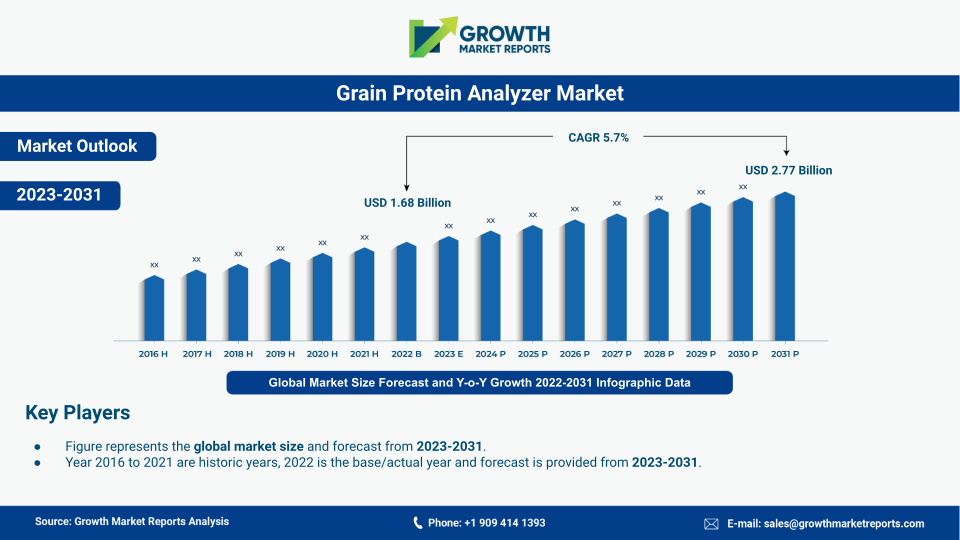
According to our latest research, the global Grain Protein Analyzer market size reached USD 1.23 billion in 2024, supported by a robust demand for rapid and precise protein measurement in the food and agriculture sectors. The market is expected to grow at a CAGR of 6.8% from 2025 to 2033, reaching a projected value of USD 2.37 billion by 2033. The primary growth factor for this market is the increasing emphasis on food quality, safety regulations, and the need for efficient grain protein analysis across the supply chain.

One of the most significant growth drivers in the Grain Protein Analyzer market is the rising global demand for high-quality grains with specific protein content. As food security and nutritional quality become paramount, both producers and regulators are seeking advanced analytical solutions to ensure compliance with stringent quality standards. The adoption of modern agricultural practices and the integration of precision farming technologies have further fueled the need for accurate and real-time protein measurement in grains, thereby propelling the demand for sophisticated grain protein analyzers. Additionally, the growing trend of contract farming and international grain trade has heightened the necessity for standardized and reliable protein analysis methods, which is expected to sustain market growth in the coming years.

Another key factor contributing to the expansion of the Grain Protein Analyzer market is the technological advancements in analytical instruments. Innovations such as near-infrared (NIR) spectroscopy, Dumas combustion, and the Kjeldahl method have significantly improved the speed, accuracy, and user-friendliness of protein analyzers. Manufacturers are increasingly focused on developing portable and benchtop devices that cater to the diverse needs of end-users, from large grain processing companies to small-scale agricultural research institutes. The integration of IoT and cloud-based data management solutions has also enhanced data traceability and real-time decision-making, making grain protein analysis more accessible and efficient across the value chain.

The market is further supported by the growing regulatory emphasis on food safety and quality assurance. Governments and international bodies have established rigorous standards for protein content in grains, particularly for export and import activities. This has led to a surge in demand for reliable grain protein analyzers among food and beverage companies, testing laboratories, and grain processing units. Moreover, the increasing consumer awareness regarding food quality and the rising prevalence of fortified and specialty grains have compelled manufacturers to invest in advanced analytical technologies. These factors collectively create a conducive environment for the sustained growth of the Grain Protein Analyzer market over the forecast period.

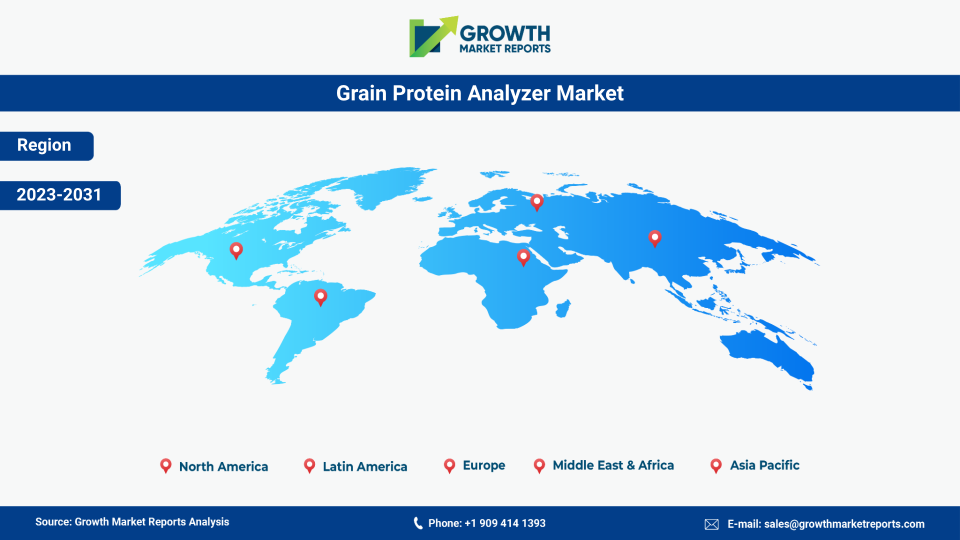
Regionally, North America and Europe currently dominate the market owing to their advanced agricultural infrastructure, high adoption of precision farming, and stringent food safety regulations. However, the Asia Pacific region is anticipated to witness the fastest growth, driven by increasing grain production, rising investments in agri-tech, and growing awareness about grain quality among producers and consumers. The presence of large grain-producing countries such as China, India, and Australia further strengthens the regional market outlook. Meanwhile, Latin America and the Middle East & Africa are gradually emerging as promising markets due to improving agricultural practices and the rising importance of food security.

Global Grain Protein Analyzer  Industry Outlook

Product Type Analysis

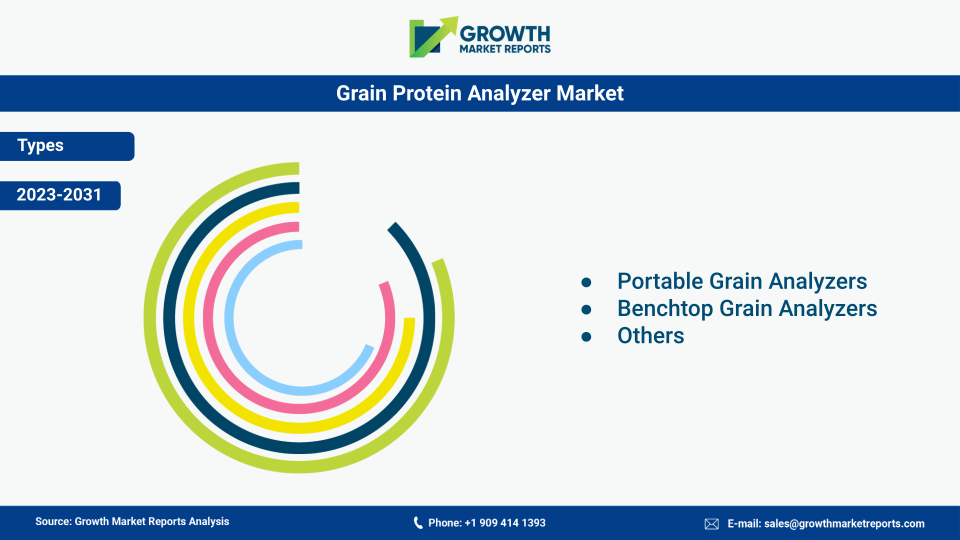
The Grain Protein Analyzer market is segmented by product type into benchtop grain protein analyzers and portable grain protein analyzers. Benchtop analyzers have traditionally held a significant share in the market due to their high accuracy, advanced features, and suitability for laboratory and industrial settings. These analyzers are widely used by grain processing companies, food and beverage manufacturers, and testing laboratories that require high-throughput and precise protein measurements. The robust design, ability to handle large sample volumes, and integration with laboratory information management systems (LIMS) make benchtop analyzers a preferred choice for large-scale operations.

On the other hand, portable grain protein analyzers are gaining rapid traction, especially among small and medium-scale farmers, agricultural research institutes, and on-field applications. The portability, ease of use, and ability to deliver instant results make these devices ideal for field testing and real-time decision-making. As the adoption of precision agriculture and on-site grain quality assessment increases, the demand for portable analyzers is expected to witness substantial growth. Manufacturers are focusing on enhancing the sensitivity, battery life, and connectivity features of portable analyzers to cater to the evolving needs of end-users.

The growing importance of rapid and non-destructive testing methods has further fueled the development of innovative benchtop and portable analyzers. Advances in sensor technology, miniaturization, and wireless data transmission have enabled the production of compact and user-friendly devices. These technological improvements have not only expanded the application scope of grain protein analyzers but also made them accessible to a broader user base, including smallholder farmers and cooperatives in developing regions.

As the market continues to evolve, the distinction between benchtop and portable analyzers is becoming less pronounced, with hybrid models that offer both high accuracy and portability entering the market. The ongoing trend towards digitalization and smart farming is expected to drive further innovation in product design and functionality. Overall, both benchtop and portable grain protein analyzers are poised to play a pivotal role in meeting the diverse requirements of the global grain industry.

Report Scope

Attributes Details
Report Title Grain Protein Analyzer Market Research Report 2033
By Product Type Benchtop Grain Protein Analyzers, Portable Grain Protein Analyzers
By Technology Near-Infrared (NIR), Dumas Combustion, Kjeldahl Method, Others
By Application Wheat, Corn, Rice, Barley, Soybean, Others
By End-User Agricultural Research Institutes, Grain Processing Companies, Food & Beverage Industry, Testing Laboratories, Others
By Distribution Channel Direct Sales, Distributors, Online Sales, Others
Regions Covered North America, Europe, APAC, Latin America, MEA
Base Year 2024
Historic Data 2018-2023
Forecast Period 2025-2033
Number of Pages 290
Number of Tables & Figures 344
Customization Available Yes, the report can be customized as per your need.

Technology Analysis

Technology is a critical segment in the Grain Protein Analyzer market, with near-infrared (NIR) spectroscopy, Dumas combustion, and the Kjeldahl method being the predominant technologies. Among these, NIR technology has emerged as the most widely adopted due to its rapid, non-destructive, and user-friendly nature. NIR analyzers can provide accurate protein measurements within seconds, making them ideal for high-throughput environments and real-time quality control. The ability to analyze multiple parameters simultaneously and the minimal sample preparation required further enhance the appeal of NIR technology in grain protein analysis.

The Dumas combustion method, known for its precision and automation capabilities, is extensively used in laboratories and research settings. This technology offers high accuracy and is suitable for a wide range of grain types. The Kjeldahl method, though traditional, continues to be relevant due to its standardized protocols and acceptance by regulatory authorities. It is particularly favored in regions where adherence to official testing methods is mandatory. However, the labor-intensive nature and longer analysis time associated with the Kjeldahl method have led to a gradual shift towards more advanced and automated technologies.

Other emerging technologies, such as mid-infrared (MIR) spectroscopy and advanced sensor-based systems, are gradually making their mark in the market. These technologies promise enhanced sensitivity, reduced operational costs, and improved integration with digital platforms. The ongoing research and development efforts are focused on further improving the accuracy, speed, and versatility of grain protein analyzers, enabling their application in a broader range of grains and operational settings.

The choice of technology is often dictated by the specific requirements of end-users, such as throughput, accuracy, cost, and regulatory compliance. As the industry moves towards greater automation and digitalization, the integration of artificial intelligence, machine learning, and cloud-based analytics is expected to revolutionize the grain protein analysis landscape. This technological evolution will not only enhance the efficiency of protein measurement but also enable predictive analytics and real-time quality management across the grain supply chain.

Application Analysis

The Grain Protein Analyzer market finds application across a wide range of grain types, including wheat, corn, rice, barley, soybean, and others. Wheat remains the dominant application segment, driven by the high demand for protein-rich wheat in bakery, pasta, and other food products. The ability to accurately measure protein content is crucial for wheat processors to ensure product consistency, meet customer specifications, and comply with export standards. The increasing focus on specialty and fortified wheat varieties has further amplified the need for advanced protein analysis solutions in this segment.

Corn is another significant application area, particularly in regions where it serves as a staple food and a key raw material for animal feed and biofuel production. The protein content of corn directly impacts its nutritional value and market price, making protein analysis an integral part of quality control in the corn supply chain. The adoption of grain protein analyzers in corn processing facilities, feed mills, and research institutes is expected to grow steadily, supported by the expanding global demand for high-protein corn varieties.

Rice, barley, and soybean are also witnessing increased adoption of grain protein analyzers, driven by the rising consumer preference for protein-rich diets and the growing popularity of plant-based foods. In the case of rice, protein analysis is essential for differentiating between premium and standard varieties, while in barley and soybean, it plays a critical role in brewing, animal feed, and food processing applications. The ability to rapidly and accurately assess protein content enables producers to optimize processing parameters, enhance product quality, and maximize profitability.

Other grains, such as oats, sorghum, and millet, are gradually being incorporated into the protein analysis landscape, particularly in regions with diverse agricultural practices and dietary preferences. The expanding application scope of grain protein analyzers reflects the broader trends of food diversification, health consciousness, and sustainable agriculture. As consumer expectations for food quality and transparency continue to rise, the demand for comprehensive and reliable protein analysis across all major grain types is expected to remain strong.

End-User Analysis

The Grain Protein Analyzer market serves a diverse range of end-users, including agricultural research institutes, grain processing companies, food and beverage industry players, testing laboratories, and others. Agricultural research institutes are among the primary users, leveraging advanced protein analyzers for crop breeding, quality assessment, and research on grain nutrition. The ability to rapidly screen large numbers of samples and generate accurate data is invaluable for research programs aimed at developing high-protein and resilient grain varieties.

Grain processing companies constitute a major end-user group, as they require reliable protein analysis to maintain product quality, comply with customer specifications, and meet regulatory standards. The integration of protein analyzers into processing lines enables real-time quality monitoring, process optimization, and traceability, thereby enhancing operational efficiency and competitiveness. The food and beverage industry also relies heavily on grain protein analyzers to ensure the consistency and nutritional value of their products, particularly in the production of bread, pasta, snacks, and plant-based foods.

Testing laboratories, both independent and in-house, play a crucial role in providing third-party verification and certification of grain protein content. These laboratories are often tasked with conducting official analyses for regulatory compliance, export certification, and dispute resolution. The demand for high-throughput, automated, and standardized protein analyzers is particularly strong in this segment, as laboratories seek to improve turnaround times and accuracy.

Other end-users, such as government agencies, grain traders, and cooperatives, are increasingly adopting grain protein analyzers to ensure fair trade, support policy implementation, and enhance market transparency. The broadening end-user base highlights the critical importance of protein analysis in the modern grain value chain and underscores the need for versatile and scalable analytical solutions.

Distribution Channel Analysis

The distribution of grain protein analyzers is segmented into direct sales, distributors, online sales, and others. Direct sales remain a dominant channel, particularly for large-scale buyers such as grain processing companies, research institutes, and laboratories. Manufacturers often establish direct relationships with key clients to provide customized solutions, technical support, and after-sales services. This approach ensures that end-users receive tailored products that meet their specific requirements and benefit from ongoing maintenance and training.

Distributors play a vital role in expanding market reach, especially in regions with fragmented agricultural sectors and diverse customer bases. By leveraging their local presence and industry expertise, distributors facilitate the adoption of grain protein analyzers among small and medium-sized enterprises, cooperatives, and individual farmers. The ability to offer bundled solutions, financing options, and localized support makes distributors an essential component of the market ecosystem.

Online sales are witnessing significant growth, driven by the increasing digitalization of procurement processes and the growing comfort of end-users with e-commerce platforms. Online channels offer the convenience of product comparison, transparent pricing, and quick delivery, making them attractive for smaller buyers and those in remote locations. Manufacturers are increasingly investing in digital marketing, online catalogs, and virtual demonstrations to enhance their online presence and engage with a broader audience.

Other distribution channels, such as industry exhibitions, trade shows, and partnerships with agricultural cooperatives, also contribute to market growth by providing opportunities for product demonstrations, networking, and knowledge sharing. The evolving distribution landscape reflects the dynamic nature of the Grain Protein Analyzer market and the need for flexible, customer-centric approaches to reach diverse end-users.

Opportunities & Threats

The Grain Protein Analyzer market presents substantial opportunities for growth, particularly in emerging economies where agricultural modernization and food security are top priorities. The increasing adoption of precision agriculture and digital farming solutions is creating new avenues for the integration of grain protein analyzers into smart farm management systems. The development of affordable and user-friendly analyzers tailored for smallholder farmers and cooperatives can unlock significant market potential in regions with limited access to advanced analytical technologies. Additionally, the rising demand for organic, non-GMO, and specialty grains with specific protein profiles offers opportunities for manufacturers to develop specialized analyzers and expand their product portfolios.

The ongoing trend towards food fortification, plant-based diets, and functional foods is also driving the need for advanced grain protein analysis solutions. As consumers become more health-conscious and demand greater transparency regarding food ingredients, food manufacturers and retailers are increasingly relying on protein analyzers to substantiate product claims and differentiate themselves in the market. The integration of artificial intelligence, machine learning, and cloud-based analytics into protein analyzers can further enhance their value proposition by enabling predictive maintenance, remote monitoring, and data-driven decision-making.

However, the Grain Protein Analyzer market also faces certain threats and restrainers that could hinder its growth. High initial investment costs, particularly for advanced benchtop analyzers, can be a barrier for small and medium-sized enterprises and farmers in developing regions. The lack of technical expertise and limited access to training and support services may also impede the adoption of sophisticated analytical technologies. Additionally, the presence of counterfeit or substandard products in the market poses a risk to end-user confidence and market integrity. Addressing these challenges requires concerted efforts from manufacturers, industry associations, and policymakers to promote awareness, provide training, and ensure quality assurance.

Regional Outlook

North America remains the largest regional market for grain protein analyzers, accounting for approximately 34% of the global market share in 2024. The region's leadership is underpinned by its advanced agricultural infrastructure, high adoption of precision farming technologies, and stringent food safety regulations. The United States, in particular, is a major contributor to market growth, with a strong presence of leading manufacturers, research institutions, and grain processing companies. The demand for grain protein analyzers in North America is expected to continue its upward trajectory, driven by ongoing investments in agri-tech innovation and the growing focus on sustainable agriculture.

Europe is another significant market, representing about 29% of the global market in 2024. The region's well-established food and beverage industry, coupled with rigorous regulatory standards for grain quality, has fueled the adoption of advanced protein analysis solutions. Countries such as Germany, France, and the United Kingdom are at the forefront of technological innovation and research in grain protein analysis. The European market is projected to grow at a steady CAGR of 6.2% over the forecast period, supported by increasing investments in research and development, as well as the rising demand for organic and specialty grains.

The Asia Pacific region is poised to witness the fastest growth, with a projected CAGR of 8.1% from 2025 to 2033. The region accounted for approximately 26% of the global market in 2024, driven by the expanding grain production in countries such as China, India, and Australia. The increasing adoption of modern agricultural practices, rising awareness about grain quality, and government initiatives to promote food safety are expected to further accelerate market growth in Asia Pacific. Latin America and the Middle East & Africa, though smaller in market size, are emerging as promising regions due to improving agricultural practices and the growing importance of food security.

Grain Protein Analyzer  Market Statistics

Competitor Outlook

The Grain Protein Analyzer market is characterized by intense competition, with a mix of established global players and emerging regional manufacturers vying for market share. The competitive landscape is marked by a strong emphasis on technological innovation, product differentiation, and customer-centric solutions. Leading companies are investing heavily in research and development to introduce advanced analyzers that offer higher accuracy, faster analysis times, and enhanced user experience. The integration of digital technologies, such as IoT, cloud computing, and artificial intelligence, is becoming a key differentiator among top players, enabling them to offer value-added services such as remote monitoring, predictive maintenance, and data analytics.

Strategic collaborations, partnerships, and mergers and acquisitions are common strategies employed by market leaders to expand their product portfolios, strengthen their distribution networks, and enhance their global presence. Companies are also focusing on expanding their footprint in emerging markets through localized manufacturing, tailored product offerings, and targeted marketing initiatives. The ability to provide comprehensive after-sales support, training, and technical assistance is increasingly viewed as a critical factor in building long-term customer relationships and maintaining a competitive edge.

The market is witnessing the entry of new players, particularly in the portable and online sales segments, who are leveraging digital platforms and innovative business models to disrupt traditional distribution channels. These entrants are often agile, customer-focused, and adept at addressing the unique needs of small and medium-sized end-users. However, the presence of counterfeit and low-quality products remains a challenge, necessitating stricter quality control measures and industry standards to safeguard market integrity.

Some of the major companies operating in the Grain Protein Analyzer market include FOSS Analytical, Perten Instruments (a PerkinElmer company), Bruker Corporation, NDC Technologies, and Zeltex Inc. FOSS Analytical is renowned for its advanced NIR-based analyzers and comprehensive solutions for grain quality assessment. Perten Instruments, now part of PerkinElmer, offers a wide range of grain analyzers that cater to both laboratory and field applications. Bruker Corporation is a leader in high-performance analytical instruments, with a strong focus on innovation and technological excellence. NDC Technologies specializes in process analytics and offers robust solutions for grain protein measurement. Zeltex Inc. is known for its portable analyzers that provide rapid and accurate results for on-site applications.

These companies are continuously investing in product development, expanding their global distribution networks, and enhancing their service offerings to meet the evolving needs of the market. Collaborative efforts with research institutions, industry associations, and government agencies are also common, aimed at advancing grain protein analysis technologies and promoting best practices across the industry. The competitive landscape is expected to remain dynamic, with ongoing innovation and strategic initiatives shaping the future of the Grain Protein Analyzer market.

Key Players

  • FOSS
  • Perten Instruments (PerkinElmer)
  • Bühler Group
  • Zeltex
  • Digi-Star (Topcon Agriculture)
  • CIMBRIA (AGCO Corporation)
  • Kett Electric Laboratory
  • Infratec (FOSS)
  • Shenzhen Wave Optoelectronics Technology
  • Bruker
  • Unity Scientific (KPM Analytics)
  • NDC Technologies
  • Shandong Shengtai Instrument Co., Ltd.
  • Satake Corporation
  • Chopin Technologies
  • Pfeuffer GmbH
  • GrainSense
  • Dickey-john (TSI Incorporated)
  • Near Infrared Systems (NIRS Inc.)
  • Zhejiang Fuda Intelligent Technology Co., Ltd.
Grain Protein Analyzer  Market Overview

Segments

The Grain Protein Analyzer market has been segmented on the basis of

Product Type

  • Benchtop Grain Protein Analyzers
  • Portable Grain Protein Analyzers

Technology

  • Near-Infrared (NIR)
  • Dumas Combustion
  • Kjeldahl Method
  • Others

Application

  • Wheat
  • Corn
  • Rice
  • Barley
  • Soybean
  • Others

End-User

  • Agricultural Research Institutes
  • Grain Processing Companies
  • Food & Beverage Industry
  • Testing Laboratories
  • Others

Distribution Channel

  • Direct Sales
  • Distributors
  • Online Sales
  • Others

Competitive Landscape

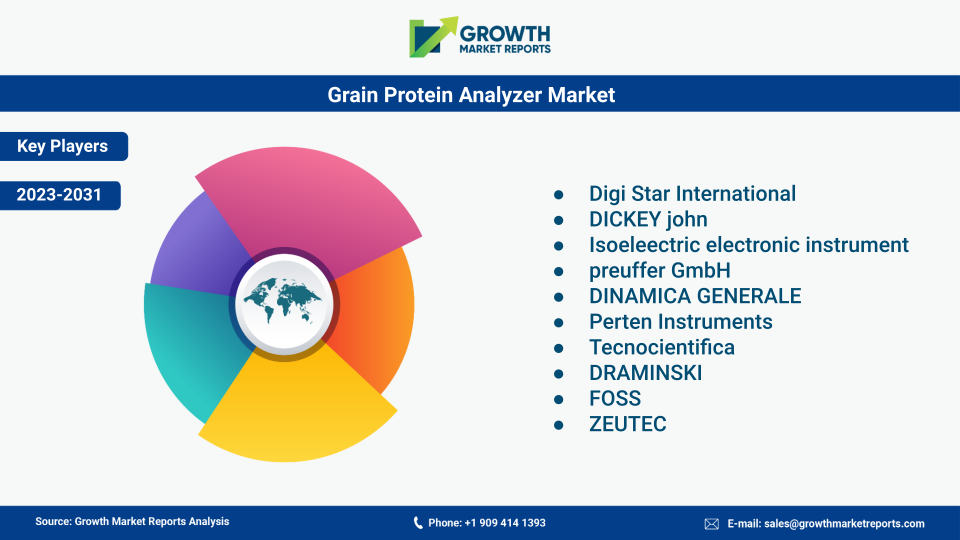
Major players competing in the global grain protein analyzer market are Digi Star International, DISKEY john, Isoeleectric electronic instrument, preuffer GmbH, DINAMICA GENERAL, Perten Instruments, Tecnocientifica, DRAMINSKI, FOSS, and ZEUTEC.

Some of the major companies are engaged in R&D activities to develop modified protein analyzers for the market. Moreover, companies are focusing on indulging in partnerships, collaborations, and agreements to expand their market share.

Grain Protein Analyzer Market Key Players


Frequently Asked Questions

Key players include FOSS Analytical, Perten Instruments (PerkinElmer), Bruker Corporation, NDC Technologies, Zeltex Inc., Bühler Group, Digi-Star (Topcon Agriculture), and others.

Challenges include high initial investment costs, lack of technical expertise in developing regions, and the presence of counterfeit or substandard products.

Distribution channels include direct sales, distributors, online sales, and other channels such as trade shows and industry exhibitions.

Grain protein analyzers are used for wheat, corn, rice, barley, soybean, and other grains to ensure quality control, meet export standards, and support research and product development.

Major end-users include agricultural research institutes, grain processing companies, the food and beverage industry, testing laboratories, government agencies, and cooperatives.

North America and Europe currently dominate the market due to advanced agricultural infrastructure and strict food safety standards. However, Asia Pacific is expected to experience the fastest growth through 2033.

The market is segmented into benchtop grain protein analyzers, which are ideal for laboratories and large-scale operations, and portable grain protein analyzers, which are gaining popularity for on-field and real-time applications.

The most common technologies are Near-Infrared (NIR) spectroscopy, Dumas combustion, and the Kjeldahl method. NIR is especially popular due to its speed and non-destructive analysis.

Key growth drivers include increasing demand for high-quality grains, stricter food safety regulations, adoption of precision farming, and technological advancements in protein analysis instruments.

The global Grain Protein Analyzer market reached USD 1.23 billion in 2024 and is expected to grow at a CAGR of 6.8% from 2025 to 2033, reaching USD 2.37 billion by 2033.

Table Of Content

Chapter 1 Executive Summary
Chapter 2 Assumptions and Acronyms Used
Chapter 3 Research Methodology
Chapter 4 Grain Protein Analyzer  Market Overview
   4.1 Introduction
      4.1.1 Market Taxonomy
      4.1.2 Market Definition
      4.1.3 Macro-Economic Factors Impacting the Market Growth
   4.2 Grain Protein Analyzer  Market Dynamics
      4.2.1 Market Drivers
      4.2.2 Market Restraints
      4.2.3 Market Opportunity
   4.3 Grain Protein Analyzer  Market - Supply Chain Analysis
      4.3.1 List of Key Suppliers
      4.3.2 List of Key Distributors
      4.3.3 List of Key Consumers
   4.4 Key Forces Shaping the Grain Protein Analyzer  Market
      4.4.1 Bargaining Power of Suppliers
      4.4.2 Bargaining Power of Buyers
      4.4.3 Threat of Substitution
      4.4.4 Threat of New Entrants
      4.4.5 Competitive Rivalry
   4.5 Global Grain Protein Analyzer  Market Size & Forecast, 2023-2032
      4.5.1 Grain Protein Analyzer  Market Size and Y-o-Y Growth
      4.5.2 Grain Protein Analyzer  Market Absolute $ Opportunity

Chapter 5 Global Grain Protein Analyzer  Market Analysis and Forecast By Product Type
   5.1 Introduction
      5.1.1 Key Market Trends & Growth Opportunities By Product Type
      5.1.2 Basis Point Share (BPS) Analysis By Product Type
      5.1.3 Absolute $ Opportunity Assessment By Product Type
   5.2 Grain Protein Analyzer  Market Size Forecast By Product Type
      5.2.1 Benchtop Grain Protein Analyzers
      5.2.2 Portable Grain Protein Analyzers
   5.3 Market Attractiveness Analysis By Product Type

Chapter 6 Global Grain Protein Analyzer  Market Analysis and Forecast By Technology
   6.1 Introduction
      6.1.1 Key Market Trends & Growth Opportunities By Technology
      6.1.2 Basis Point Share (BPS) Analysis By Technology
      6.1.3 Absolute $ Opportunity Assessment By Technology
   6.2 Grain Protein Analyzer  Market Size Forecast By Technology
      6.2.1 Near-Infrared (NIR)
      6.2.2 Dumas Combustion
      6.2.3 Kjeldahl Method
      6.2.4 Others
   6.3 Market Attractiveness Analysis By Technology

Chapter 7 Global Grain Protein Analyzer  Market Analysis and Forecast By Application
   7.1 Introduction
      7.1.1 Key Market Trends & Growth Opportunities By Application
      7.1.2 Basis Point Share (BPS) Analysis By Application
      7.1.3 Absolute $ Opportunity Assessment By Application
   7.2 Grain Protein Analyzer  Market Size Forecast By Application
      7.2.1 Wheat
      7.2.2 Corn
      7.2.3 Rice
      7.2.4 Barley
      7.2.5 Soybean
      7.2.6 Others
   7.3 Market Attractiveness Analysis By Application

Chapter 8 Global Grain Protein Analyzer  Market Analysis and Forecast By End-User
   8.1 Introduction
      8.1.1 Key Market Trends & Growth Opportunities By End-User
      8.1.2 Basis Point Share (BPS) Analysis By End-User
      8.1.3 Absolute $ Opportunity Assessment By End-User
   8.2 Grain Protein Analyzer  Market Size Forecast By End-User
      8.2.1 Agricultural Research Institutes
      8.2.2 Grain Processing Companies
      8.2.3 Food & Beverage Industry
      8.2.4 Testing Laboratories
      8.2.5 Others
   8.3 Market Attractiveness Analysis By End-User

Chapter 9 Global Grain Protein Analyzer  Market Analysis and Forecast By Distribution Channel
   9.1 Introduction
      9.1.1 Key Market Trends & Growth Opportunities By Distribution Channel
      9.1.2 Basis Point Share (BPS) Analysis By Distribution Channel
      9.1.3 Absolute $ Opportunity Assessment By Distribution Channel
   9.2 Grain Protein Analyzer  Market Size Forecast By Distribution Channel
      9.2.1 Direct Sales
      9.2.2 Distributors
      9.2.3 Online Sales
      9.2.4 Others
   9.3 Market Attractiveness Analysis By Distribution Channel

Chapter 10 Global Grain Protein Analyzer  Market Analysis and Forecast by Region
   10.1 Introduction
      10.1.1 Key Market Trends & Growth Opportunities By Region
      10.1.2 Basis Point Share (BPS) Analysis By Region
      10.1.3 Absolute $ Opportunity Assessment By Region
   10.2 Grain Protein Analyzer  Market Size Forecast By Region
      10.2.1 North America
      10.2.2 Europe
      10.2.3 Asia Pacific
      10.2.4 Latin America
      10.2.5 Middle East & Africa (MEA)
   10.3 Market Attractiveness Analysis By Region

Chapter 11 Coronavirus Disease (COVID-19) Impact 
   11.1 Introduction 
   11.2 Current & Future Impact Analysis 
   11.3 Economic Impact Analysis 
   11.4 Government Policies 
   11.5 Investment Scenario

Chapter 12 North America Grain Protein Analyzer  Analysis and Forecast
   12.1 Introduction
   12.2 North America Grain Protein Analyzer  Market Size Forecast by Country
      12.2.1 U.S.
      12.2.2 Canada
   12.3 Basis Point Share (BPS) Analysis by Country
   12.4 Absolute $ Opportunity Assessment by Country
   12.5 Market Attractiveness Analysis by Country
   12.6 North America Grain Protein Analyzer  Market Size Forecast By Product Type
      12.6.1 Benchtop Grain Protein Analyzers
      12.6.2 Portable Grain Protein Analyzers
   12.7 Basis Point Share (BPS) Analysis By Product Type 
   12.8 Absolute $ Opportunity Assessment By Product Type 
   12.9 Market Attractiveness Analysis By Product Type
   12.10 North America Grain Protein Analyzer  Market Size Forecast By Technology
      12.10.1 Near-Infrared (NIR)
      12.10.2 Dumas Combustion
      12.10.3 Kjeldahl Method
      12.10.4 Others
   12.11 Basis Point Share (BPS) Analysis By Technology 
   12.12 Absolute $ Opportunity Assessment By Technology 
   12.13 Market Attractiveness Analysis By Technology
   12.14 North America Grain Protein Analyzer  Market Size Forecast By Application
      12.14.1 Wheat
      12.14.2 Corn
      12.14.3 Rice
      12.14.4 Barley
      12.14.5 Soybean
      12.14.6 Others
   12.15 Basis Point Share (BPS) Analysis By Application 
   12.16 Absolute $ Opportunity Assessment By Application 
   12.17 Market Attractiveness Analysis By Application
   12.18 North America Grain Protein Analyzer  Market Size Forecast By End-User
      12.18.1 Agricultural Research Institutes
      12.18.2 Grain Processing Companies
      12.18.3 Food & Beverage Industry
      12.18.4 Testing Laboratories
      12.18.5 Others
   12.19 Basis Point Share (BPS) Analysis By End-User 
   12.20 Absolute $ Opportunity Assessment By End-User 
   12.21 Market Attractiveness Analysis By End-User
   12.22 North America Grain Protein Analyzer  Market Size Forecast By Distribution Channel
      12.22.1 Direct Sales
      12.22.2 Distributors
      12.22.3 Online Sales
      12.22.4 Others
   12.23 Basis Point Share (BPS) Analysis By Distribution Channel 
   12.24 Absolute $ Opportunity Assessment By Distribution Channel 
   12.25 Market Attractiveness Analysis By Distribution Channel

Chapter 13 Europe Grain Protein Analyzer  Analysis and Forecast
   13.1 Introduction
   13.2 Europe Grain Protein Analyzer  Market Size Forecast by Country
      13.2.1 Germany
      13.2.2 France
      13.2.3 Italy
      13.2.4 U.K.
      13.2.5 Spain
      13.2.6 Russia
      13.2.7 Rest of Europe
   13.3 Basis Point Share (BPS) Analysis by Country
   13.4 Absolute $ Opportunity Assessment by Country
   13.5 Market Attractiveness Analysis by Country
   13.6 Europe Grain Protein Analyzer  Market Size Forecast By Product Type
      13.6.1 Benchtop Grain Protein Analyzers
      13.6.2 Portable Grain Protein Analyzers
   13.7 Basis Point Share (BPS) Analysis By Product Type 
   13.8 Absolute $ Opportunity Assessment By Product Type 
   13.9 Market Attractiveness Analysis By Product Type
   13.10 Europe Grain Protein Analyzer  Market Size Forecast By Technology
      13.10.1 Near-Infrared (NIR)
      13.10.2 Dumas Combustion
      13.10.3 Kjeldahl Method
      13.10.4 Others
   13.11 Basis Point Share (BPS) Analysis By Technology 
   13.12 Absolute $ Opportunity Assessment By Technology 
   13.13 Market Attractiveness Analysis By Technology
   13.14 Europe Grain Protein Analyzer  Market Size Forecast By Application
      13.14.1 Wheat
      13.14.2 Corn
      13.14.3 Rice
      13.14.4 Barley
      13.14.5 Soybean
      13.14.6 Others
   13.15 Basis Point Share (BPS) Analysis By Application 
   13.16 Absolute $ Opportunity Assessment By Application 
   13.17 Market Attractiveness Analysis By Application
   13.18 Europe Grain Protein Analyzer  Market Size Forecast By End-User
      13.18.1 Agricultural Research Institutes
      13.18.2 Grain Processing Companies
      13.18.3 Food & Beverage Industry
      13.18.4 Testing Laboratories
      13.18.5 Others
   13.19 Basis Point Share (BPS) Analysis By End-User 
   13.20 Absolute $ Opportunity Assessment By End-User 
   13.21 Market Attractiveness Analysis By End-User
   13.22 Europe Grain Protein Analyzer  Market Size Forecast By Distribution Channel
      13.22.1 Direct Sales
      13.22.2 Distributors
      13.22.3 Online Sales
      13.22.4 Others
   13.23 Basis Point Share (BPS) Analysis By Distribution Channel 
   13.24 Absolute $ Opportunity Assessment By Distribution Channel 
   13.25 Market Attractiveness Analysis By Distribution Channel

Chapter 14 Asia Pacific Grain Protein Analyzer  Analysis and Forecast
   14.1 Introduction
   14.2 Asia Pacific Grain Protein Analyzer  Market Size Forecast by Country
      14.2.1 China
      14.2.2 Japan
      14.2.3 South Korea
      14.2.4 India
      14.2.5 Australia
      14.2.6 South East Asia (SEA)
      14.2.7 Rest of Asia Pacific (APAC)
   14.3 Basis Point Share (BPS) Analysis by Country
   14.4 Absolute $ Opportunity Assessment by Country
   14.5 Market Attractiveness Analysis by Country
   14.6 Asia Pacific Grain Protein Analyzer  Market Size Forecast By Product Type
      14.6.1 Benchtop Grain Protein Analyzers
      14.6.2 Portable Grain Protein Analyzers
   14.7 Basis Point Share (BPS) Analysis By Product Type 
   14.8 Absolute $ Opportunity Assessment By Product Type 
   14.9 Market Attractiveness Analysis By Product Type
   14.10 Asia Pacific Grain Protein Analyzer  Market Size Forecast By Technology
      14.10.1 Near-Infrared (NIR)
      14.10.2 Dumas Combustion
      14.10.3 Kjeldahl Method
      14.10.4 Others
   14.11 Basis Point Share (BPS) Analysis By Technology 
   14.12 Absolute $ Opportunity Assessment By Technology 
   14.13 Market Attractiveness Analysis By Technology
   14.14 Asia Pacific Grain Protein Analyzer  Market Size Forecast By Application
      14.14.1 Wheat
      14.14.2 Corn
      14.14.3 Rice
      14.14.4 Barley
      14.14.5 Soybean
      14.14.6 Others
   14.15 Basis Point Share (BPS) Analysis By Application 
   14.16 Absolute $ Opportunity Assessment By Application 
   14.17 Market Attractiveness Analysis By Application
   14.18 Asia Pacific Grain Protein Analyzer  Market Size Forecast By End-User
      14.18.1 Agricultural Research Institutes
      14.18.2 Grain Processing Companies
      14.18.3 Food & Beverage Industry
      14.18.4 Testing Laboratories
      14.18.5 Others
   14.19 Basis Point Share (BPS) Analysis By End-User 
   14.20 Absolute $ Opportunity Assessment By End-User 
   14.21 Market Attractiveness Analysis By End-User
   14.22 Asia Pacific Grain Protein Analyzer  Market Size Forecast By Distribution Channel
      14.22.1 Direct Sales
      14.22.2 Distributors
      14.22.3 Online Sales
      14.22.4 Others
   14.23 Basis Point Share (BPS) Analysis By Distribution Channel 
   14.24 Absolute $ Opportunity Assessment By Distribution Channel 
   14.25 Market Attractiveness Analysis By Distribution Channel

Chapter 15 Latin America Grain Protein Analyzer  Analysis and Forecast
   15.1 Introduction
   15.2 Latin America Grain Protein Analyzer  Market Size Forecast by Country
      15.2.1 Brazil
      15.2.2 Mexico
      15.2.3 Rest of Latin America (LATAM)
   15.3 Basis Point Share (BPS) Analysis by Country
   15.4 Absolute $ Opportunity Assessment by Country
   15.5 Market Attractiveness Analysis by Country
   15.6 Latin America Grain Protein Analyzer  Market Size Forecast By Product Type
      15.6.1 Benchtop Grain Protein Analyzers
      15.6.2 Portable Grain Protein Analyzers
   15.7 Basis Point Share (BPS) Analysis By Product Type 
   15.8 Absolute $ Opportunity Assessment By Product Type 
   15.9 Market Attractiveness Analysis By Product Type
   15.10 Latin America Grain Protein Analyzer  Market Size Forecast By Technology
      15.10.1 Near-Infrared (NIR)
      15.10.2 Dumas Combustion
      15.10.3 Kjeldahl Method
      15.10.4 Others
   15.11 Basis Point Share (BPS) Analysis By Technology 
   15.12 Absolute $ Opportunity Assessment By Technology 
   15.13 Market Attractiveness Analysis By Technology
   15.14 Latin America Grain Protein Analyzer  Market Size Forecast By Application
      15.14.1 Wheat
      15.14.2 Corn
      15.14.3 Rice
      15.14.4 Barley
      15.14.5 Soybean
      15.14.6 Others
   15.15 Basis Point Share (BPS) Analysis By Application 
   15.16 Absolute $ Opportunity Assessment By Application 
   15.17 Market Attractiveness Analysis By Application
   15.18 Latin America Grain Protein Analyzer  Market Size Forecast By End-User
      15.18.1 Agricultural Research Institutes
      15.18.2 Grain Processing Companies
      15.18.3 Food & Beverage Industry
      15.18.4 Testing Laboratories
      15.18.5 Others
   15.19 Basis Point Share (BPS) Analysis By End-User 
   15.20 Absolute $ Opportunity Assessment By End-User 
   15.21 Market Attractiveness Analysis By End-User
   15.22 Latin America Grain Protein Analyzer  Market Size Forecast By Distribution Channel
      15.22.1 Direct Sales
      15.22.2 Distributors
      15.22.3 Online Sales
      15.22.4 Others
   15.23 Basis Point Share (BPS) Analysis By Distribution Channel 
   15.24 Absolute $ Opportunity Assessment By Distribution Channel 
   15.25 Market Attractiveness Analysis By Distribution Channel

Chapter 16 Middle East & Africa (MEA) Grain Protein Analyzer  Analysis and Forecast
   16.1 Introduction
   16.2 Middle East & Africa (MEA) Grain Protein Analyzer  Market Size Forecast by Country
      16.2.1 Saudi Arabia
      16.2.2 South Africa
      16.2.3 UAE
      16.2.4 Rest of Middle East & Africa (MEA)
   16.3 Basis Point Share (BPS) Analysis by Country
   16.4 Absolute $ Opportunity Assessment by Country
   16.5 Market Attractiveness Analysis by Country
   16.6 Middle East & Africa (MEA) Grain Protein Analyzer  Market Size Forecast By Product Type
      16.6.1 Benchtop Grain Protein Analyzers
      16.6.2 Portable Grain Protein Analyzers
   16.7 Basis Point Share (BPS) Analysis By Product Type 
   16.8 Absolute $ Opportunity Assessment By Product Type 
   16.9 Market Attractiveness Analysis By Product Type
   16.10 Middle East & Africa (MEA) Grain Protein Analyzer  Market Size Forecast By Technology
      16.10.1 Near-Infrared (NIR)
      16.10.2 Dumas Combustion
      16.10.3 Kjeldahl Method
      16.10.4 Others
   16.11 Basis Point Share (BPS) Analysis By Technology 
   16.12 Absolute $ Opportunity Assessment By Technology 
   16.13 Market Attractiveness Analysis By Technology
   16.14 Middle East & Africa (MEA) Grain Protein Analyzer  Market Size Forecast By Application
      16.14.1 Wheat
      16.14.2 Corn
      16.14.3 Rice
      16.14.4 Barley
      16.14.5 Soybean
      16.14.6 Others
   16.15 Basis Point Share (BPS) Analysis By Application 
   16.16 Absolute $ Opportunity Assessment By Application 
   16.17 Market Attractiveness Analysis By Application
   16.18 Middle East & Africa (MEA) Grain Protein Analyzer  Market Size Forecast By End-User
      16.18.1 Agricultural Research Institutes
      16.18.2 Grain Processing Companies
      16.18.3 Food & Beverage Industry
      16.18.4 Testing Laboratories
      16.18.5 Others
   16.19 Basis Point Share (BPS) Analysis By End-User 
   16.20 Absolute $ Opportunity Assessment By End-User 
   16.21 Market Attractiveness Analysis By End-User
   16.22 Middle East & Africa (MEA) Grain Protein Analyzer  Market Size Forecast By Distribution Channel
      16.22.1 Direct Sales
      16.22.2 Distributors
      16.22.3 Online Sales
      16.22.4 Others
   16.23 Basis Point Share (BPS) Analysis By Distribution Channel 
   16.24 Absolute $ Opportunity Assessment By Distribution Channel 
   16.25 Market Attractiveness Analysis By Distribution Channel

Chapter 17 Competition Landscape 
   17.1 Grain Protein Analyzer  Market: Competitive Dashboard
   17.2 Global Grain Protein Analyzer  Market: Market Share Analysis, 2023
   17.3 Company Profiles (Details – Overview, Financials, Developments, Strategy) 
      17.3.1 FOSS
Perten Instruments (PerkinElmer)
Bühler Group
Zeltex
Digi-Star (Topcon Agriculture)
CIMBRIA (AGCO Corporation)
Kett Electric Laboratory
Infratec (FOSS)
Shenzhen Wave Optoelectronics Technology
Bruker
Unity Scientific (KPM Analytics)
NDC Technologies
Shandong Shengtai Instrument Co., Ltd.
Satake Corporation
Chopin Technologies
Pfeuffer GmbH
GrainSense
Dickey-john (TSI Incorporated)
Near Infrared Systems (NIRS Inc.)
Zhejiang Fuda Intelligent Technology Co., Ltd.

Methodology

Our Clients

Nestle SA
General Mills
Pfizer
Microsoft
Siemens Healthcare
FedEx Logistics
General Electric
Dassault Aviation