Barbecue Grills Market Research Report 2033

Barbecue Grills Market Research Report 2033

Segments - by Product Type (Charcoal Grills, Gas Grills, Electric Grills, Pellet Grills, Others), by Application (Residential, Commercial, Others), by Distribution Channel (Online Stores, Supermarkets/Hypermarkets, Specialty Stores, Others), by Material (Stainless Steel, Cast Iron, Ceramic, Others)

https://growthmarketreports.com/Debadatta
Author : Debadatta Patel
https://growthmarketreports.com/Vaibhav
Fact-checked by : V. Chandola
https://growthmarketreports.com/Shruti
Editor : Shruti Bhat

Upcoming | Report ID :CG-43 | 4.4 Rating | 55 Reviews | 300 Pages | Format : Docx PDF

Report Description


Barbecue Grills Market Outlook

The global barbecue grills market size reached USD 7.3 billion in 2024, reflecting steady consumer demand and robust expansion in both residential and commercial segments. According to our latest research, the market is expected to grow at a CAGR of 5.2% during the forecast period, with the market size anticipated to reach USD 11.3 billion by 2033. This growth trajectory is primarily driven by the rising trend of outdoor cooking, increased urbanization, and growing consumer interest in innovative grilling technologies and premium outdoor living experiences.

One of the primary factors fueling the growth of the barbecue grills market is the increasing popularity of outdoor recreational activities and social gatherings centered around food. The cultural shift towards outdoor entertainment, particularly in urban and suburban regions, has led to a surge in demand for advanced and aesthetically appealing barbecue grills. Consumers are seeking products that not only offer superior grilling performance but also complement their outdoor spaces, driving manufacturers to innovate with new designs, features, and smart connectivity options. Additionally, the rise in disposable incomes, especially in emerging economies, is enabling more households to invest in high-quality barbecue grills, further propelling market expansion.

Technological advancements and product innovation are also significant growth drivers in the barbecue grills market. Manufacturers are focusing on integrating smart technologies such as app-controlled temperature settings, automated cleaning systems, and energy-efficient heating elements to enhance the user experience. The introduction of eco-friendly grilling solutions, such as pellet grills and electric grills, addresses growing environmental concerns and regulatory pressures, broadening the market's appeal to environmentally conscious consumers. Moreover, the increasing prevalence of health and wellness trends is encouraging consumers to opt for grilling as a healthier cooking method, as it requires less oil and preserves the nutritional value of food.

The commercial segment is experiencing notable growth, driven by the expansion of the hospitality industry, including restaurants, hotels, and catering services. The demand for large-capacity, durable, and efficient grills is rising as foodservice operators seek to enhance their offerings and capitalize on the growing popularity of barbecue cuisine. Additionally, the proliferation of barbecue-themed restaurants and food festivals contributes to the market's momentum. The availability of grills in various sizes and fuel types allows commercial establishments to cater to diverse customer preferences, further stimulating market growth. The increasing adoption of barbecue grills in commercial spaces is expected to remain a key trend throughout the forecast period.

Regionally, North America continues to dominate the barbecue grills market, accounting for the largest share in 2024, followed by Europe and the Asia Pacific. The strong barbecue culture in the United States and Canada, coupled with high consumer purchasing power and a preference for outdoor living, underpins the region's leadership. However, the Asia Pacific region is anticipated to exhibit the fastest growth rate over the forecast period, driven by rapid urbanization, a burgeoning middle class, and increasing exposure to Western culinary trends. Latin America and the Middle East & Africa are also witnessing gradual growth, supported by rising disposable incomes and evolving lifestyle preferences.

Global Barbecue Grills Industry Outlook

Product Type Analysis

The barbecue grills market is segmented by product type into charcoal grills, gas grills, electric grills, pellet grills, and others. Among these, charcoal grills remain a popular choice due to their ability to impart a classic smoky flavor to food, which continues to attract traditional barbecue enthusiasts. Charcoal grills are favored for their affordability, portability, and simplicity, making them a staple in residential backyards and outdoor gatherings. However, the segment faces challenges related to longer preparation times, difficulty in temperature control, and increased emissions, prompting a gradual shift towards more convenient and eco-friendly alternatives.

Charcoal Grill enthusiasts often appreciate the traditional and authentic experience that these grills offer. The distinct smoky flavor imparted by charcoal grills is unmatched, making them a favorite among purists who enjoy the process of building and maintaining a fire. Despite the challenges of longer preparation times and managing temperature, the satisfaction derived from mastering the art of charcoal grilling is significant. Manufacturers are responding to the demand for more convenient charcoal grilling options by introducing features like adjustable grates and air vents to improve temperature control and reduce emissions. As a result, charcoal grills continue to hold a significant place in the market, appealing to both seasoned grillers and newcomers seeking that classic barbecue experience.

Gas grills have gained significant traction in recent years, primarily due to their ease of use, quick ignition, and precise temperature control. These grills are especially popular among urban consumers and commercial establishments that prioritize efficiency and convenience. The growing trend of outdoor kitchens and patio dining has further fueled demand for high-end gas grills equipped with advanced features such as infrared burners, rotisserie kits, and integrated thermometers. Manufacturers are continuously innovating to offer gas grills with enhanced safety features, improved fuel efficiency, and sleek designs to cater to evolving consumer preferences.

Electric grills are witnessing rising adoption, particularly in regions with stringent emission regulations and limited outdoor space, such as urban apartments and condominiums. These grills offer the advantage of smokeless operation, making them suitable for indoor use and environments where open flames are restricted. The segment is benefiting from technological advancements, including digital controls, non-stick surfaces, and compact designs that appeal to modern consumers seeking convenience without compromising on grilling quality. The increasing awareness of environmental sustainability is also driving the demand for electric grills as a cleaner alternative to traditional fuel-based options.

Pellet grills represent a fast-growing segment, driven by their versatility, ease of use, and ability to deliver consistent cooking results. These grills use compressed wood pellets as fuel, offering a unique combination of smoky flavor and precise temperature control through digital automation. Pellet grills are gaining popularity among both residential users and professional chefs for their ability to smoke, bake, roast, and grill a wide variety of foods. The segment is expected to witness robust growth as consumers become more aware of the benefits of pellet grilling, and manufacturers expand their product portfolios with innovative features and smart connectivity options.

The "others" category encompasses hybrid grills, portable grills, and specialty models designed for niche applications. Hybrid grills, which combine multiple fuel sources, are attracting consumers seeking versatility and flexibility in their outdoor cooking experiences. Portable grills are favored for camping, tailgating, and picnics, catering to the growing trend of mobile lifestyles. Specialty grills, such as kamado-style ceramic grills and built-in outdoor kitchen units, are also gaining traction among enthusiasts and luxury homeowners. As manufacturers continue to diversify their product offerings and address specific consumer needs, the product type segment is expected to remain dynamic and competitive.

For those who take their grilling seriously, a comprehensive BBQ Tool Set is an essential investment. These tool sets typically include a variety of implements such as spatulas, tongs, skewers, and brushes, all designed to enhance the grilling experience. A well-equipped BBQ tool set allows grillers to handle food with precision, ensuring even cooking and perfect presentation. As outdoor cooking becomes more sophisticated, consumers are seeking high-quality, durable tools that can withstand the rigors of frequent use. Manufacturers are responding by offering tool sets made from premium materials like stainless steel, with ergonomic designs for comfort and ease of use. The inclusion of specialized tools, such as meat thermometers and basting brushes, further enhances the versatility of these sets, making them a must-have for any barbecue enthusiast.

Report Scope

Attributes Details
Report Title Barbecue Grills Market Research Report 2033
By Product Type Charcoal Grills, Gas Grills, Electric Grills, Pellet Grills, Others
By Application Residential, Commercial, Others
By Distribution Channel Online Stores, Supermarkets/Hypermarkets, Specialty Stores, Others
By Material Stainless Steel, Cast Iron, Ceramic, Others
Regions Covered North America, Europe, APAC, Latin America, MEA
Base Year 2024
Historic Data 2018-2023
Forecast Period 2025-2033
Number of Pages 300
Number of Tables & Figures 257
Customization Available Yes, the report can be customized as per your need.

Application Analysis

The barbecue grills market is segmented by application into residential, commercial, and others. The residential segment dominates the market, accounting for the largest share in 2024. The increasing popularity of home-based outdoor entertainment, backyard parties, and family gatherings has significantly boosted the demand for residential barbecue grills. Consumers are investing in premium grills and accessories to enhance their outdoor living spaces, driven by the desire for convenience, aesthetics, and superior cooking performance. The proliferation of DIY outdoor kitchen projects and the influence of lifestyle media further contribute to the segment's growth, as homeowners seek to create personalized and functional grilling environments.

The commercial segment is experiencing robust expansion, fueled by the growth of the hospitality industry, including restaurants, hotels, resorts, and catering services. Commercial establishments require high-capacity, durable, and efficient grills to meet the demands of large-scale food preparation and service. The rising popularity of barbecue-themed restaurants, food trucks, and outdoor dining experiences is driving the adoption of advanced grilling equipment in the commercial sector. Manufacturers are responding by offering customizable solutions with features such as multi-zone cooking, automated cleaning, and enhanced safety mechanisms to cater to the unique needs of commercial users.

The "others" application segment includes institutional and recreational use, such as schools, community centers, parks, and event venues. These settings often require grills that are easy to transport, set up, and maintain, making portable and modular models particularly attractive. The growing trend of community barbecues, food festivals, and outdoor events is contributing to the segment's expansion. Additionally, the increasing emphasis on health and wellness in institutional settings is encouraging the adoption of grilling as a healthier cooking method for large groups. As public and private organizations invest in outdoor amenities and recreational facilities, the demand for versatile and reliable barbecue grills is expected to rise.

The application landscape is evolving as consumers and businesses seek grills that offer a combination of performance, convenience, and safety. Manufacturers are focusing on developing application-specific products with tailored features and functionalities to address the distinct requirements of residential, commercial, and institutional users. The integration of smart technologies, such as app-based controls and remote monitoring, is enhancing the appeal of barbecue grills across all application segments. As the market continues to mature, the application segment is expected to witness further diversification and specialization.

The interplay between residential and commercial demand is shaping the overall trajectory of the barbecue grills market. While residential users drive volume growth through widespread adoption, commercial buyers contribute to market value through investments in high-end, specialized equipment. The increasing convergence of these segments, as seen in the rise of home-based catering businesses and outdoor event services, is creating new opportunities for manufacturers and distributors. The application segment is poised for sustained growth as grilling becomes an integral part of modern lifestyles and culinary experiences.

Distribution Channel Analysis

The distribution channel segment of the barbecue grills market comprises online stores, supermarkets/hypermarkets, specialty stores, and others. Online stores have emerged as a significant distribution channel, driven by the convenience of e-commerce, a wide range of product options, and competitive pricing. The shift towards online shopping has been accelerated by increased internet penetration, advancements in digital payment systems, and the growing preference for contactless transactions. Online platforms offer detailed product information, customer reviews, and virtual demonstrations, enabling consumers to make informed purchasing decisions. Manufacturers and retailers are leveraging online channels to reach a broader audience, offer exclusive deals, and provide personalized recommendations, contributing to the segment's rapid growth.

Supermarkets and hypermarkets remain a popular choice for consumers seeking to purchase barbecue grills, particularly in urban and suburban areas. These retail outlets offer the advantage of physical product inspection, immediate availability, and bundled promotions, making them attractive for impulse buyers and first-time users. The presence of knowledgeable sales staff, in-store demonstrations, and after-sales support enhances the overall shopping experience. Supermarkets and hypermarkets play a crucial role in driving brand visibility and awareness, especially for mainstream and entry-level grills. The segment benefits from strategic partnerships between manufacturers and large retail chains, which facilitate product launches, seasonal promotions, and inventory management.

Specialty stores cater to discerning consumers and enthusiasts seeking premium, high-performance, and customized barbecue grills. These stores offer a curated selection of products, expert advice, and personalized services, such as installation, maintenance, and repair. Specialty retailers often host workshops, cooking classes, and live demonstrations to engage customers and showcase the latest innovations in grilling technology. The segment is characterized by strong brand loyalty, repeat purchases, and a focus on quality over quantity. Manufacturers collaborate closely with specialty stores to introduce new models, gather customer feedback, and build long-term relationships with target audiences.

The "others" distribution channel includes hardware stores, home improvement centers, and direct sales through manufacturer showrooms and pop-up events. These channels cater to specific customer segments, such as DIY enthusiasts, contractors, and institutional buyers. The growing trend of experiential retail, where consumers can test products in real-life settings, is driving the popularity of showroom-based sales. Pop-up events and outdoor exhibitions provide opportunities for hands-on product demonstrations, promotional campaigns, and customer engagement. As manufacturers diversify their distribution strategies to address evolving consumer preferences, the channel landscape is becoming increasingly dynamic and competitive.

The distribution channel segment is witnessing a convergence of online and offline retail, with omnichannel strategies gaining prominence. Retailers are investing in digital platforms, mobile apps, and integrated logistics to offer seamless shopping experiences across multiple touchpoints. The integration of augmented reality, virtual showrooms, and interactive content is enhancing product discovery and engagement. As consumers demand greater convenience, flexibility, and transparency, the distribution channel segment is expected to play a pivotal role in shaping the future of the barbecue grills market.

Material Analysis

The barbecue grills market is segmented by material into stainless steel, cast iron, ceramic, and others. Stainless steel is the preferred material for high-end and commercial-grade grills due to its durability, corrosion resistance, and ease of maintenance. Stainless steel grills are favored for their sleek appearance, longevity, and ability to withstand harsh outdoor conditions. The material's non-reactive properties ensure that food retains its natural flavors, making it popular among professional chefs and discerning home cooks. Manufacturers are investing in advanced stainless steel alloys and finishes to enhance product performance, reduce maintenance requirements, and offer premium aesthetics.

Cast iron is valued for its excellent heat retention and even cooking performance, making it a popular choice for grill grates and cooking surfaces. Cast iron grills impart distinctive sear marks and flavors to food, appealing to traditional barbecue enthusiasts. However, the material requires regular seasoning and maintenance to prevent rust and ensure longevity. Manufacturers are addressing these challenges by introducing porcelain-coated cast iron components that combine the benefits of cast iron with enhanced durability and ease of cleaning. The segment continues to attract consumers seeking authentic grilling experiences and superior cooking results.

Ceramic grills, particularly kamado-style models, are gaining popularity for their versatility, heat retention, and fuel efficiency. Ceramic grills can maintain consistent temperatures for extended periods, making them ideal for slow cooking, smoking, and baking. The material's insulating properties reduce fuel consumption and enable precise temperature control, appealing to both novice and experienced grillers. Ceramic grills are often associated with premium price points and are marketed as long-term investments for outdoor cooking enthusiasts. Manufacturers are expanding their ceramic grill offerings with innovative designs, accessories, and color options to cater to diverse consumer preferences.

The "others" material segment includes aluminum, enameled steel, and composite materials used in portable and budget-friendly grills. Aluminum grills are lightweight, rust-resistant, and suitable for mobile applications, such as camping and tailgating. Enameled steel offers a balance between affordability and durability, making it a popular choice for entry-level grills. Composite materials, such as fiberglass-reinforced plastics, are being explored for their potential to offer lightweight, durable, and weather-resistant solutions. As manufacturers seek to differentiate their products and address specific market needs, the material segment is expected to witness ongoing innovation and diversification.

Material selection plays a critical role in determining the performance, durability, and price point of barbecue grills. Consumers are increasingly prioritizing quality, longevity, and ease of maintenance when choosing grills, driving demand for premium materials and finishes. Manufacturers are responding by offering modular designs, interchangeable components, and customizable options to enhance product versatility and user satisfaction. The material segment is poised for continued growth as advancements in materials science and manufacturing processes unlock new possibilities for grill design and functionality.

Opportunities & Threats

The barbecue grills market presents significant opportunities for growth, driven by evolving consumer lifestyles, technological innovation, and expanding application areas. One of the most promising opportunities lies in the integration of smart technologies and IoT-enabled features, such as app-based controls, remote monitoring, and automated cooking programs. These advancements enhance user convenience, enable precise temperature management, and offer personalized cooking experiences. Manufacturers that invest in research and development to create innovative, connected grills are well-positioned to capitalize on the growing demand for smart home products. Additionally, the rise of eco-friendly and sustainable grilling solutions, such as electric and pellet grills, presents opportunities to tap into environmentally conscious consumer segments and comply with emerging regulatory standards.

Another major opportunity in the barbecue grills market is the expansion into emerging markets, particularly in the Asia Pacific and Latin America regions. Rapid urbanization, rising disposable incomes, and increasing exposure to Western culinary trends are creating new demand for barbecue grills among middle-class households. Strategic partnerships with local distributors, targeted marketing campaigns, and the development of region-specific products can help manufacturers penetrate these high-growth markets. The growing popularity of outdoor dining, food festivals, and community events in these regions further supports market expansion. By adapting to local preferences and regulatory environments, companies can unlock significant revenue potential and strengthen their global footprint.

Despite the positive outlook, the barbecue grills market faces certain restraining factors that could impact growth. One of the key challenges is the increasing stringency of environmental regulations related to emissions and energy consumption, particularly for charcoal and gas grills. Compliance with these regulations may require manufacturers to invest in cleaner technologies, alternative fuels, and emission control systems, potentially increasing production costs and product prices. Additionally, the market faces competition from alternative cooking methods and appliances, such as induction cooktops and air fryers, which offer convenience and energy efficiency. Economic uncertainties, fluctuating raw material prices, and supply chain disruptions also pose risks to market stability. Manufacturers must navigate these challenges through innovation, cost optimization, and strategic partnerships to sustain long-term growth.

Regional Outlook

North America remains the largest market for barbecue grills, with a market size of USD 3.1 billion in 2024, representing over 40% of the global market share. The region's strong barbecue culture, high disposable incomes, and widespread adoption of outdoor living trends underpin its leadership position. The United States, in particular, is a key market, driven by a deep-rooted tradition of backyard grilling, frequent social gatherings, and a preference for premium, feature-rich grills. The presence of leading manufacturers, extensive retail networks, and a robust aftermarket for accessories and replacement parts further support market growth in North America. The region is expected to maintain steady growth, with a projected CAGR of 4.8% through 2033.

Europe is the second-largest market, with a market size of USD 1.8 billion in 2024. The region is characterized by a diverse culinary landscape, growing interest in outdoor dining, and increasing adoption of eco-friendly grilling solutions. Countries such as Germany, the United Kingdom, and France are leading the way, supported by favorable weather conditions, rising health consciousness, and the popularity of garden parties and picnics. The European market is witnessing a shift towards electric and pellet grills, driven by stringent emission regulations and a focus on sustainability. Manufacturers are responding with innovative products tailored to local preferences and regulatory requirements, contributing to steady market expansion.

The Asia Pacific region is poised for the fastest growth, with a market size of USD 1.2 billion in 2024 and a projected CAGR of 6.7% through 2033. Rapid urbanization, a burgeoning middle class, and increasing exposure to global food trends are driving demand for barbecue grills in countries such as China, India, Japan, and Australia. The region's growing affinity for outdoor entertainment, coupled with rising investments in residential and commercial infrastructure, supports market growth. Manufacturers are focusing on affordable, compact, and energy-efficient grills to cater to diverse consumer needs. The Asia Pacific market presents significant opportunities for expansion, supported by favorable demographic trends and evolving lifestyle preferences.

Barbecue Grills Market Statistics

Competitor Outlook

The barbecue grills market is highly competitive, characterized by the presence of established global players, regional manufacturers, and a growing number of niche brands. The competitive landscape is shaped by factors such as product innovation, brand reputation, pricing strategies, and distribution networks. Leading companies are investing heavily in research and development to introduce new features, enhance product performance, and differentiate their offerings in a crowded marketplace. The integration of smart technologies, sustainable materials, and modular designs is driving competition and raising consumer expectations. Companies are also focusing on expanding their global footprint through strategic partnerships, mergers and acquisitions, and targeted marketing campaigns.

Brand loyalty and customer engagement play a crucial role in the barbecue grills market, with consumers often seeking products from trusted brands known for quality, durability, and after-sales support. Manufacturers are leveraging digital platforms, social media, and influencer marketing to build brand awareness and connect with younger, tech-savvy consumers. The rise of e-commerce and omnichannel retailing has intensified competition, as companies vie for market share through exclusive online deals, personalized recommendations, and seamless shopping experiences. The ability to offer a comprehensive product portfolio, including accessories, replacement parts, and maintenance services, is becoming increasingly important in retaining customers and driving repeat purchases.

Innovation remains a key differentiator in the market, with companies introducing features such as app-controlled cooking, automated cleaning systems, and hybrid fuel options to cater to evolving consumer preferences. The emphasis on sustainability and eco-friendly solutions is prompting manufacturers to explore alternative materials, cleaner fuels, and energy-efficient designs. The growing demand for premium and customized grills is driving the development of high-end models with advanced features, aesthetic appeal, and modular components. Companies that can successfully balance innovation, quality, and affordability are well-positioned to capture a larger share of the market.

Some of the major companies operating in the barbecue grills market include Weber-Stephen Products LLC, Traeger Pellet Grills LLC, Char-Broil LLC, Napoleon, The Middleby Corporation, Kenmore, Broil King, and Landmann. Weber-Stephen Products is renowned for its wide range of charcoal, gas, and electric grills, as well as its commitment to innovation and customer satisfaction. Traeger Pellet Grills is a pioneer in pellet grilling technology, offering smart, app-controlled grills that appeal to tech-savvy consumers. Char-Broil is known for its affordable, high-performance grills and extensive distribution network, while Napoleon specializes in premium gas and infrared grills with advanced features. The Middleby Corporation has a strong presence in the commercial segment, providing durable and efficient grilling solutions for restaurants and foodservice operators. Kenmore, Broil King, and Landmann are also prominent players, each offering a diverse range of products and catering to different market segments.

These companies are continuously investing in product development, marketing, and customer service to maintain their competitive edge. Strategic collaborations, acquisitions, and international expansion are common strategies employed to strengthen market presence and drive growth. The competitive landscape is expected to remain dynamic, with new entrants, technological advancements, and shifting consumer preferences shaping the future of the barbecue grills market. Companies that prioritize innovation, sustainability, and customer-centricity will be best positioned to succeed in this evolving industry.

Key Players

  • Weber-Stephen Products LLC
  • Traeger Pellet Grills LLC
  • Char-Broil LLC
  • The Middleby Corporation
  • Nexgrill Industries, Inc.
  • Broil King (Onward Manufacturing Company)
  • Landmann Group
  • Napoleon Grills (Wolf Steel Ltd.)
  • Kenmore (Sears Holdings Corporation)
  • Dyna-Glo (GHP Group, Inc.)
  • Coleman Company, Inc.
  • Fire Magic (RH Peterson Co.)
  • Broilmaster (Empire Comfort Systems)
  • MHP (Modern Home Products Corporation)
  • Bull Outdoor Products, Inc.
  • Char-Griller (Char-Griller, LLC)
  • KitchenAid (Whirlpool Corporation)
  • Royal Gourmet Corporation
  • Blackstone Products
  • Campingaz (Coleman Company, Inc.)
Barbecue Grills Market Overview

Segments

The Barbecue Grills market has been segmented on the basis of

Product Type

  • Charcoal Grills
  • Gas Grills
  • Electric Grills
  • Pellet Grills
  • Others

Application

  • Residential
  • Commercial
  • Others

Distribution Channel

  • Online Stores
  • Supermarkets/Hypermarkets
  • Specialty Stores
  • Others

Material

  • Stainless Steel
  • Cast Iron
  • Ceramic
  • Others

Competitive Landscape

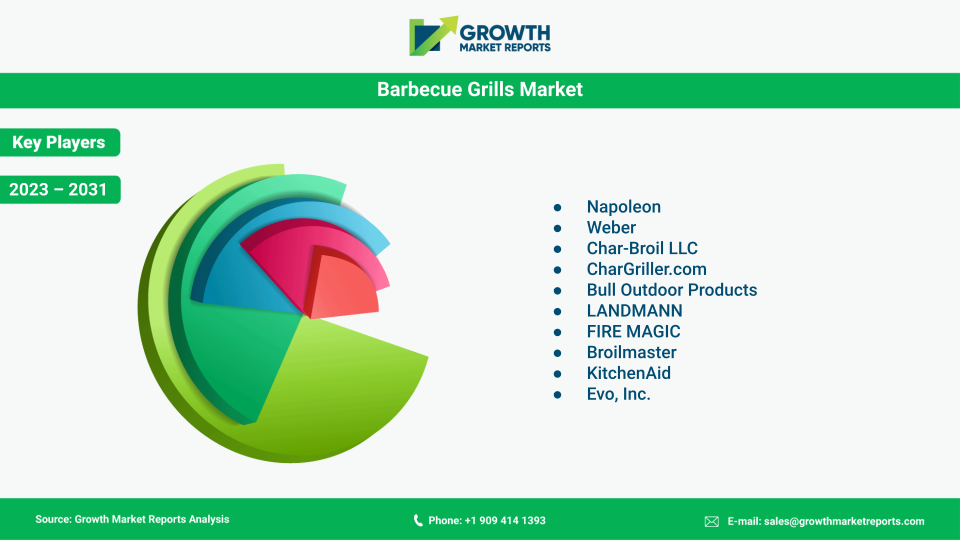
  • Key players in the market include Napoleon, Weber, LANDMANN, Char-Broil LLC, CharGriller.com, Bull Outdoor Products, Broilmaster and KitchenAid. These companies are considered as key manufacturers of barbecue grills based on their revenue, research & development (R&D) activities, regional presence, and supply chain management system.

  • The players are adopting key strategies such as acquisition, new product launches, and geographical expansion in order to strengthen their market position.

  • For instance, in September 2019, at the spoga+gafa 2019, a trade fair, LANDMANN GmbH announced plans to launch new products of its two successful brands LANDMANN and GRILLCHEF of barbecue grills in 2020. LANDMANN plans to showcase its products in Hall 8.1, Stand F031.

  • In January 2018, Char-Broil has introduced the Modular Outdoor Kitchen, which includes 5-Burner TRU-Infrared Gas Grill, Outdoor Stove Top, and Refrigerator. The 5-Burner TRU-InfraredGas Grill has TRU-Infrared cooking technology. This grill provides even heat and prevents flare-ups. It is made from premium stainless steel and SureFire electronic ignition.

  • In January 2017, Char-Broil, announced the launch of its Char-Broil SmartChef TRU-Infrared Gas Grill. The new product delivers 'real-time' alerts thus enabling the user to monitor and control the grill using an app. This added function provides ultimate grilling experience and allows consumers to spend more time with their friends and family.

Barbecue Grills Market Keyplayers

Key Benefits for Industry Participants & Stakeholders

  • In-depth Analysis of the Global Barbecue Grills Market
  • Historical, Current and Projected Market Size in terms of Value and Volume (Tons)
  • Potential & Niche Segments and Regions Exhibiting Promising Growth Covered
  • Industry Drivers, Restraints and Opportunities Covered in the Study
  • Recent Industry Trends and Developments
  • Competitive Landscape & Strategies of Key Players
  • Neutral Perspective on Global Barbecue Grills Market Performance

Video Summary for Barbecue Grills Market

Frequently Asked Questions

Major Manufactures include, Weber, KitchenAid, Bull Outdoor Products, CharGriller.com, Char-Broil LLC, LANDMANN, and Modern Home Products.

Households, restaurants, and barbecue joints are the key end-user that are driving the barbecue grills market growth.

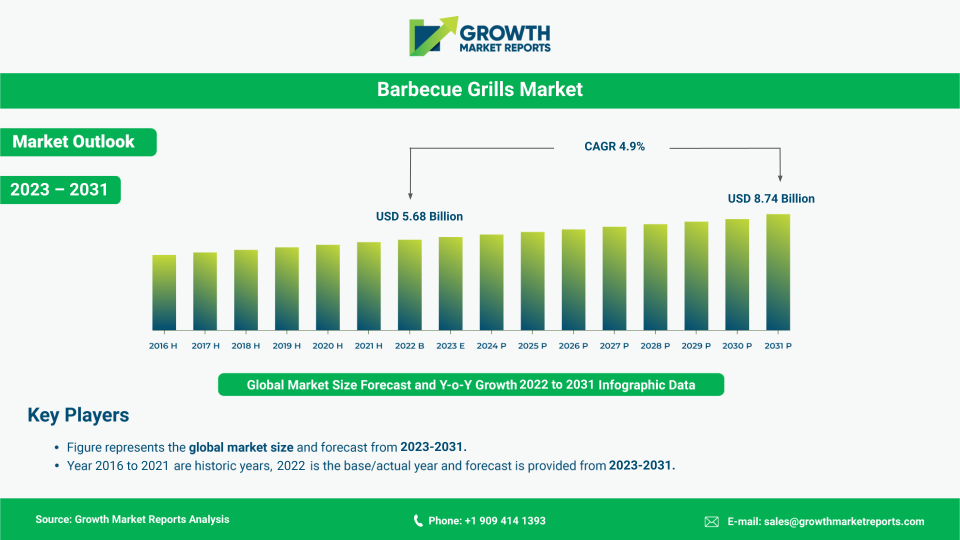
The base year considered for the global barbecue grills market report is 2022. The complete analysis period is 2022 to 2031, wherein, 2016 to 2021 are the historic years and the forecast is provided from 2023 to 2031.

The COVID-19 pandemic has negatively impacted the market growth during year 2019 -2020 to a certain extent.

Factors such as competitive strength and market positioning are key areas considered while selecting top companies to be profiled.

The rising number of barbecue grills restaurants, availability of a large variety of grills and adoption of various cooking technique, such as pit style cooking are some of the factors driving the market growth.

In addition to market size (in USD Million) and Volume in (K units) Company Market Share (in % for base year 2019), other data such macro-economic factors, COVID-19 impact on the overall market is available in the final report.

According to this Growth Market Reports report, the market from barbecue grills is likely to register a CAGR of 4.9% during forecast period 2023-2031, with an anticipated valuation of USD 8.74 Billion by the end of the 2031.

Yes, the report covers product specific information such as gas grills, charcoal grills, etc.

Additional company profiles can be provided on request.

Table Of Content

Chapter 1 Executive Summary
Chapter 2 Assumptions and Acronyms Used
Chapter 3 Research Methodology
Chapter 4 Barbecue Grills Market Overview
   4.1 Introduction
      4.1.1 Market Taxonomy
      4.1.2 Market Definition
      4.1.3 Macro-Economic Factors Impacting the Market Growth
   4.2 Barbecue Grills Market Dynamics
      4.2.1 Market Drivers
      4.2.2 Market Restraints
      4.2.3 Market Opportunity
   4.3 Barbecue Grills Market - Supply Chain Analysis
      4.3.1 List of Key Suppliers
      4.3.2 List of Key Distributors
      4.3.3 List of Key Consumers
   4.4 Key Forces Shaping the Barbecue Grills Market
      4.4.1 Bargaining Power of Suppliers
      4.4.2 Bargaining Power of Buyers
      4.4.3 Threat of Substitution
      4.4.4 Threat of New Entrants
      4.4.5 Competitive Rivalry
   4.5 Global Barbecue Grills Market Size & Forecast, 2023-2032
      4.5.1 Barbecue Grills Market Size and Y-o-Y Growth
      4.5.2 Barbecue Grills Market Absolute $ Opportunity

Chapter 5 Global Barbecue Grills Market Analysis and Forecast By Product Type
   5.1 Introduction
      5.1.1 Key Market Trends & Growth Opportunities By Product Type
      5.1.2 Basis Point Share (BPS) Analysis By Product Type
      5.1.3 Absolute $ Opportunity Assessment By Product Type
   5.2 Barbecue Grills Market Size Forecast By Product Type
      5.2.1 Charcoal Grills
      5.2.2 Gas Grills
      5.2.3 Electric Grills
      5.2.4 Pellet Grills
      5.2.5 Others
   5.3 Market Attractiveness Analysis By Product Type

Chapter 6 Global Barbecue Grills Market Analysis and Forecast By Application
   6.1 Introduction
      6.1.1 Key Market Trends & Growth Opportunities By Application
      6.1.2 Basis Point Share (BPS) Analysis By Application
      6.1.3 Absolute $ Opportunity Assessment By Application
   6.2 Barbecue Grills Market Size Forecast By Application
      6.2.1 Residential
      6.2.2 Commercial
      6.2.3 Others
   6.3 Market Attractiveness Analysis By Application

Chapter 7 Global Barbecue Grills Market Analysis and Forecast By Distribution Channel
   7.1 Introduction
      7.1.1 Key Market Trends & Growth Opportunities By Distribution Channel
      7.1.2 Basis Point Share (BPS) Analysis By Distribution Channel
      7.1.3 Absolute $ Opportunity Assessment By Distribution Channel
   7.2 Barbecue Grills Market Size Forecast By Distribution Channel
      7.2.1 Online Stores
      7.2.2 Supermarkets/Hypermarkets
      7.2.3 Specialty Stores
      7.2.4 Others
   7.3 Market Attractiveness Analysis By Distribution Channel

Chapter 8 Global Barbecue Grills Market Analysis and Forecast By Material
   8.1 Introduction
      8.1.1 Key Market Trends & Growth Opportunities By Material
      8.1.2 Basis Point Share (BPS) Analysis By Material
      8.1.3 Absolute $ Opportunity Assessment By Material
   8.2 Barbecue Grills Market Size Forecast By Material
      8.2.1 Stainless Steel
      8.2.2 Cast Iron
      8.2.3 Ceramic
      8.2.4 Others
   8.3 Market Attractiveness Analysis By Material

Chapter 9 Global Barbecue Grills Market Analysis and Forecast by Region
   9.1 Introduction
      9.1.1 Key Market Trends & Growth Opportunities By Region
      9.1.2 Basis Point Share (BPS) Analysis By Region
      9.1.3 Absolute $ Opportunity Assessment By Region
   9.2 Barbecue Grills Market Size Forecast By Region
      9.2.1 North America
      9.2.2 Europe
      9.2.3 Asia Pacific
      9.2.4 Latin America
      9.2.5 Middle East & Africa (MEA)
   9.3 Market Attractiveness Analysis By Region

Chapter 10 Coronavirus Disease (COVID-19) Impact 
   10.1 Introduction 
   10.2 Current & Future Impact Analysis 
   10.3 Economic Impact Analysis 
   10.4 Government Policies 
   10.5 Investment Scenario

Chapter 11 North America Barbecue Grills Analysis and Forecast
   11.1 Introduction
   11.2 North America Barbecue Grills Market Size Forecast by Country
      11.2.1 U.S.
      11.2.2 Canada
   11.3 Basis Point Share (BPS) Analysis by Country
   11.4 Absolute $ Opportunity Assessment by Country
   11.5 Market Attractiveness Analysis by Country
   11.6 North America Barbecue Grills Market Size Forecast By Product Type
      11.6.1 Charcoal Grills
      11.6.2 Gas Grills
      11.6.3 Electric Grills
      11.6.4 Pellet Grills
      11.6.5 Others
   11.7 Basis Point Share (BPS) Analysis By Product Type 
   11.8 Absolute $ Opportunity Assessment By Product Type 
   11.9 Market Attractiveness Analysis By Product Type
   11.10 North America Barbecue Grills Market Size Forecast By Application
      11.10.1 Residential
      11.10.2 Commercial
      11.10.3 Others
   11.11 Basis Point Share (BPS) Analysis By Application 
   11.12 Absolute $ Opportunity Assessment By Application 
   11.13 Market Attractiveness Analysis By Application
   11.14 North America Barbecue Grills Market Size Forecast By Distribution Channel
      11.14.1 Online Stores
      11.14.2 Supermarkets/Hypermarkets
      11.14.3 Specialty Stores
      11.14.4 Others
   11.15 Basis Point Share (BPS) Analysis By Distribution Channel 
   11.16 Absolute $ Opportunity Assessment By Distribution Channel 
   11.17 Market Attractiveness Analysis By Distribution Channel
   11.18 North America Barbecue Grills Market Size Forecast By Material
      11.18.1 Stainless Steel
      11.18.2 Cast Iron
      11.18.3 Ceramic
      11.18.4 Others
   11.19 Basis Point Share (BPS) Analysis By Material 
   11.20 Absolute $ Opportunity Assessment By Material 
   11.21 Market Attractiveness Analysis By Material

Chapter 12 Europe Barbecue Grills Analysis and Forecast
   12.1 Introduction
   12.2 Europe Barbecue Grills Market Size Forecast by Country
      12.2.1 Germany
      12.2.2 France
      12.2.3 Italy
      12.2.4 U.K.
      12.2.5 Spain
      12.2.6 Russia
      12.2.7 Rest of Europe
   12.3 Basis Point Share (BPS) Analysis by Country
   12.4 Absolute $ Opportunity Assessment by Country
   12.5 Market Attractiveness Analysis by Country
   12.6 Europe Barbecue Grills Market Size Forecast By Product Type
      12.6.1 Charcoal Grills
      12.6.2 Gas Grills
      12.6.3 Electric Grills
      12.6.4 Pellet Grills
      12.6.5 Others
   12.7 Basis Point Share (BPS) Analysis By Product Type 
   12.8 Absolute $ Opportunity Assessment By Product Type 
   12.9 Market Attractiveness Analysis By Product Type
   12.10 Europe Barbecue Grills Market Size Forecast By Application
      12.10.1 Residential
      12.10.2 Commercial
      12.10.3 Others
   12.11 Basis Point Share (BPS) Analysis By Application 
   12.12 Absolute $ Opportunity Assessment By Application 
   12.13 Market Attractiveness Analysis By Application
   12.14 Europe Barbecue Grills Market Size Forecast By Distribution Channel
      12.14.1 Online Stores
      12.14.2 Supermarkets/Hypermarkets
      12.14.3 Specialty Stores
      12.14.4 Others
   12.15 Basis Point Share (BPS) Analysis By Distribution Channel 
   12.16 Absolute $ Opportunity Assessment By Distribution Channel 
   12.17 Market Attractiveness Analysis By Distribution Channel
   12.18 Europe Barbecue Grills Market Size Forecast By Material
      12.18.1 Stainless Steel
      12.18.2 Cast Iron
      12.18.3 Ceramic
      12.18.4 Others
   12.19 Basis Point Share (BPS) Analysis By Material 
   12.20 Absolute $ Opportunity Assessment By Material 
   12.21 Market Attractiveness Analysis By Material

Chapter 13 Asia Pacific Barbecue Grills Analysis and Forecast
   13.1 Introduction
   13.2 Asia Pacific Barbecue Grills Market Size Forecast by Country
      13.2.1 China
      13.2.2 Japan
      13.2.3 South Korea
      13.2.4 India
      13.2.5 Australia
      13.2.6 South East Asia (SEA)
      13.2.7 Rest of Asia Pacific (APAC)
   13.3 Basis Point Share (BPS) Analysis by Country
   13.4 Absolute $ Opportunity Assessment by Country
   13.5 Market Attractiveness Analysis by Country
   13.6 Asia Pacific Barbecue Grills Market Size Forecast By Product Type
      13.6.1 Charcoal Grills
      13.6.2 Gas Grills
      13.6.3 Electric Grills
      13.6.4 Pellet Grills
      13.6.5 Others
   13.7 Basis Point Share (BPS) Analysis By Product Type 
   13.8 Absolute $ Opportunity Assessment By Product Type 
   13.9 Market Attractiveness Analysis By Product Type
   13.10 Asia Pacific Barbecue Grills Market Size Forecast By Application
      13.10.1 Residential
      13.10.2 Commercial
      13.10.3 Others
   13.11 Basis Point Share (BPS) Analysis By Application 
   13.12 Absolute $ Opportunity Assessment By Application 
   13.13 Market Attractiveness Analysis By Application
   13.14 Asia Pacific Barbecue Grills Market Size Forecast By Distribution Channel
      13.14.1 Online Stores
      13.14.2 Supermarkets/Hypermarkets
      13.14.3 Specialty Stores
      13.14.4 Others
   13.15 Basis Point Share (BPS) Analysis By Distribution Channel 
   13.16 Absolute $ Opportunity Assessment By Distribution Channel 
   13.17 Market Attractiveness Analysis By Distribution Channel
   13.18 Asia Pacific Barbecue Grills Market Size Forecast By Material
      13.18.1 Stainless Steel
      13.18.2 Cast Iron
      13.18.3 Ceramic
      13.18.4 Others
   13.19 Basis Point Share (BPS) Analysis By Material 
   13.20 Absolute $ Opportunity Assessment By Material 
   13.21 Market Attractiveness Analysis By Material

Chapter 14 Latin America Barbecue Grills Analysis and Forecast
   14.1 Introduction
   14.2 Latin America Barbecue Grills Market Size Forecast by Country
      14.2.1 Brazil
      14.2.2 Mexico
      14.2.3 Rest of Latin America (LATAM)
   14.3 Basis Point Share (BPS) Analysis by Country
   14.4 Absolute $ Opportunity Assessment by Country
   14.5 Market Attractiveness Analysis by Country
   14.6 Latin America Barbecue Grills Market Size Forecast By Product Type
      14.6.1 Charcoal Grills
      14.6.2 Gas Grills
      14.6.3 Electric Grills
      14.6.4 Pellet Grills
      14.6.5 Others
   14.7 Basis Point Share (BPS) Analysis By Product Type 
   14.8 Absolute $ Opportunity Assessment By Product Type 
   14.9 Market Attractiveness Analysis By Product Type
   14.10 Latin America Barbecue Grills Market Size Forecast By Application
      14.10.1 Residential
      14.10.2 Commercial
      14.10.3 Others
   14.11 Basis Point Share (BPS) Analysis By Application 
   14.12 Absolute $ Opportunity Assessment By Application 
   14.13 Market Attractiveness Analysis By Application
   14.14 Latin America Barbecue Grills Market Size Forecast By Distribution Channel
      14.14.1 Online Stores
      14.14.2 Supermarkets/Hypermarkets
      14.14.3 Specialty Stores
      14.14.4 Others
   14.15 Basis Point Share (BPS) Analysis By Distribution Channel 
   14.16 Absolute $ Opportunity Assessment By Distribution Channel 
   14.17 Market Attractiveness Analysis By Distribution Channel
   14.18 Latin America Barbecue Grills Market Size Forecast By Material
      14.18.1 Stainless Steel
      14.18.2 Cast Iron
      14.18.3 Ceramic
      14.18.4 Others
   14.19 Basis Point Share (BPS) Analysis By Material 
   14.20 Absolute $ Opportunity Assessment By Material 
   14.21 Market Attractiveness Analysis By Material

Chapter 15 Middle East & Africa (MEA) Barbecue Grills Analysis and Forecast
   15.1 Introduction
   15.2 Middle East & Africa (MEA) Barbecue Grills Market Size Forecast by Country
      15.2.1 Saudi Arabia
      15.2.2 South Africa
      15.2.3 UAE
      15.2.4 Rest of Middle East & Africa (MEA)
   15.3 Basis Point Share (BPS) Analysis by Country
   15.4 Absolute $ Opportunity Assessment by Country
   15.5 Market Attractiveness Analysis by Country
   15.6 Middle East & Africa (MEA) Barbecue Grills Market Size Forecast By Product Type
      15.6.1 Charcoal Grills
      15.6.2 Gas Grills
      15.6.3 Electric Grills
      15.6.4 Pellet Grills
      15.6.5 Others
   15.7 Basis Point Share (BPS) Analysis By Product Type 
   15.8 Absolute $ Opportunity Assessment By Product Type 
   15.9 Market Attractiveness Analysis By Product Type
   15.10 Middle East & Africa (MEA) Barbecue Grills Market Size Forecast By Application
      15.10.1 Residential
      15.10.2 Commercial
      15.10.3 Others
   15.11 Basis Point Share (BPS) Analysis By Application 
   15.12 Absolute $ Opportunity Assessment By Application 
   15.13 Market Attractiveness Analysis By Application
   15.14 Middle East & Africa (MEA) Barbecue Grills Market Size Forecast By Distribution Channel
      15.14.1 Online Stores
      15.14.2 Supermarkets/Hypermarkets
      15.14.3 Specialty Stores
      15.14.4 Others
   15.15 Basis Point Share (BPS) Analysis By Distribution Channel 
   15.16 Absolute $ Opportunity Assessment By Distribution Channel 
   15.17 Market Attractiveness Analysis By Distribution Channel
   15.18 Middle East & Africa (MEA) Barbecue Grills Market Size Forecast By Material
      15.18.1 Stainless Steel
      15.18.2 Cast Iron
      15.18.3 Ceramic
      15.18.4 Others
   15.19 Basis Point Share (BPS) Analysis By Material 
   15.20 Absolute $ Opportunity Assessment By Material 
   15.21 Market Attractiveness Analysis By Material

Chapter 16 Competition Landscape 
   16.1 Barbecue Grills Market: Competitive Dashboard
   16.2 Global Barbecue Grills Market: Market Share Analysis, 2023
   16.3 Company Profiles (Details – Overview, Financials, Developments, Strategy) 
      16.3.1 Weber-Stephen Products LLC
Traeger Pellet Grills LLC
Char-Broil LLC
The Middleby Corporation
Nexgrill Industries, Inc.
Broil King (Onward Manufacturing Company)
Landmann Group
Napoleon Grills (Wolf Steel Ltd.)
Kenmore (Sears Holdings Corporation)
Dyna-Glo (GHP Group, Inc.)
Coleman Company, Inc.
Fire Magic (RH Peterson Co.)
Broilmaster (Empire Comfort Systems)
MHP (Modern Home Products Corporation)
Bull Outdoor Products, Inc.
Char-Griller (Char-Griller, LLC)
KitchenAid (Whirlpool Corporation)
Royal Gourmet Corporation
Blackstone Products
Campingaz (Coleman Company, Inc.)

Methodology

Our Clients

Deloitte
Dassault Aviation
Honda Motor Co. Ltd.
Pfizer
Siemens Healthcare
Nestle SA
sinopec
Microsoft