Segments - by Type (Edible Coatings, Non-Edible Coatings), by Material (Polysaccharides, Proteins, Lipids, Composite Materials, Others), by Application (Fruits, Vegetables), by Function (Moisture Barrier, Gas Barrier, Antimicrobial, Others), by Distribution Channel (Supermarkets/Hypermarkets, Convenience Stores, Online Retail, Others)
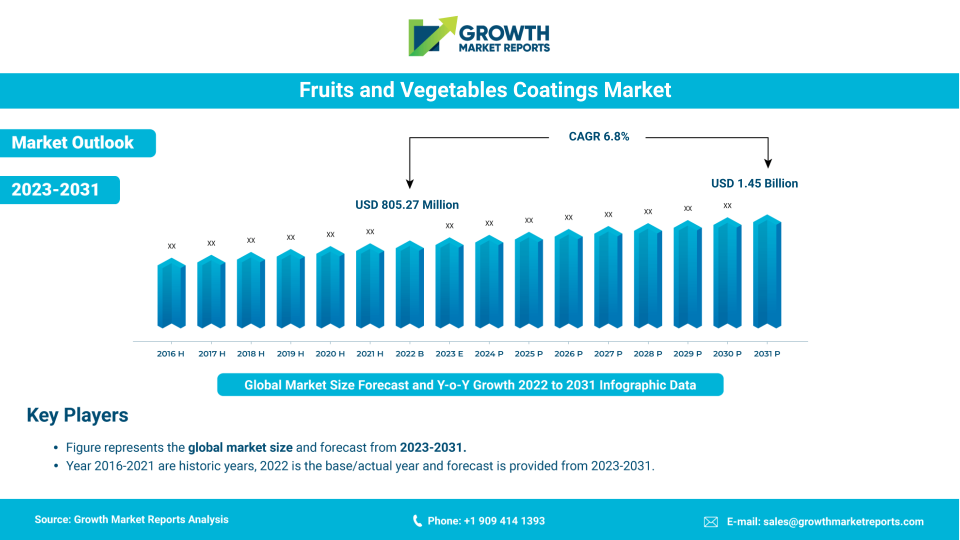
According to our latest research, the global Fruits and Vegetables Coatings market size reached USD 1.92 billion in 2024, with a robust compound annual growth rate (CAGR) of 6.8% observed over the past year. The market is expected to continue its upward trajectory, reaching approximately USD 3.75 billion by 2033 as per CAGR calculations. The primary growth driver for this market is the increasing consumer demand for fresh produce with extended shelf life, propelled by advancements in food preservation technologies and a growing focus on sustainability in the food supply chain.
One of the most significant growth factors influencing the Fruits and Vegetables Coatings market is the heightened awareness around food waste reduction. Globally, nearly one-third of all food produced is lost or wasted, with fruits and vegetables accounting for a substantial portion of this loss. Edible and non-edible coatings are increasingly being adopted by producers and retailers as a solution to minimize spoilage and extend the shelf life of perishable goods. These coatings act as barriers to moisture, oxygen, and microbial contamination, thereby maintaining the quality, appearance, and nutritional value of fruits and vegetables for longer periods. The integration of advanced materials, such as polysaccharides, proteins, and composite coatings, is further enhancing the effectiveness of these solutions, making them an indispensable part of modern food preservation strategies.
Another crucial growth factor is the evolving regulatory landscape and consumer preferences for natural and safe food additives. Regulatory bodies across North America, Europe, and Asia Pacific are increasingly approving and promoting the use of eco-friendly and biodegradable coatings, especially those derived from natural sources. As consumers become more health-conscious and environmentally aware, there is a growing preference for edible coatings that do not compromise food safety or taste. Major retailers and food brands are responding to this trend by incorporating fruit and vegetable coatings into their supply chains, ensuring compliance with food safety standards while meeting consumer demands for freshness and sustainability. The ongoing innovation in coating materials, including antimicrobial and antioxidant properties, is further driving the adoption of these solutions across the globe.
Technological advancements in material science and food processing have also played a pivotal role in the growth of the Fruits and Vegetables Coatings market. Research and development efforts are focused on improving the functional properties of coatings, such as enhancing moisture and gas barriers, as well as incorporating additional benefits like antimicrobial activity. These innovations are not only extending the shelf life of produce but also reducing reliance on chemical preservatives and synthetic packaging. The adoption of smart coatings that respond to environmental conditions or signal spoilage is an emerging trend that is expected to revolutionize the market in the coming years. As a result, both small and large-scale producers are investing in advanced coating technologies to stay competitive and meet the evolving needs of the market.
Edible Coating technologies have emerged as a pivotal innovation in the food preservation industry, particularly within the Fruits and Vegetables Coatings market. These coatings are crafted from natural ingredients such as polysaccharides, proteins, and lipids, designed to be consumed along with the produce, offering a safe and effective barrier against environmental factors. The growing consumer demand for natural and organic food products has significantly boosted the popularity of edible coatings, as they align with health-conscious and environmentally friendly trends. By reducing the need for synthetic preservatives and packaging, edible coatings not only extend the shelf life of fresh produce but also contribute to sustainability efforts. This aligns with the increasing regulatory support for eco-friendly food additives, making edible coatings a strategic choice for producers and retailers aiming to meet consumer expectations and regulatory standards.
From a regional perspective, Asia Pacific is currently leading the market, driven by the large-scale production and consumption of fruits and vegetables, increasing urbanization, and rising disposable incomes. North America and Europe are also significant contributors, with a strong focus on sustainability and stringent food safety regulations. Latin America and the Middle East & Africa are emerging markets, showing promising growth potential due to expanding retail infrastructure and increasing consumer awareness about food quality and waste reduction. The global market dynamics are shaped by a combination of technological innovation, regulatory support, and shifting consumer preferences, positioning the Fruits and Vegetables Coatings market for sustained growth over the forecast period.
The Fruits and Vegetables Coatings market is segmented by type into edible and non-edible coatings, each serving distinct roles in the preservation of fresh produce. Edible coatings, made from natural substances such as polysaccharides, proteins, and lipids, are designed to be consumed along with the fruit or vegetable, providing a safe and effective barrier against moisture and oxygen loss. These coatings are gaining popularity among health-conscious consumers and food manufacturers seeking to reduce the use of synthetic preservatives and packaging materials. The demand for edible coatings is particularly strong in regions with stringent food safety regulations and a high preference for organic and natural food products, such as North America and Europe.
Non-edible coatings, on the other hand, are primarily used for industrial applications where the coating is removed before consumption or serves as a temporary protective layer during transportation and storage. These coatings are typically composed of synthetic materials or waxes that offer superior moisture and gas barrier properties compared to edible coatings. The use of non-edible coatings is prevalent in large-scale commercial operations, particularly in developing regions where infrastructure for cold storage and rapid transportation is limited. As global trade in fresh produce continues to expand, the demand for non-edible coatings is expected to grow, especially for export-oriented markets.
The choice between edible and non-edible coatings is often dictated by the specific requirements of the supply chain, regulatory considerations, and consumer preferences. For instance, premium brands and organic produce suppliers are more likely to adopt edible coatings to align with their brand values and meet consumer expectations for natural products. Conversely, bulk suppliers and exporters may prefer non-edible coatings for their cost-effectiveness and superior protective qualities during long-distance shipping. The ongoing innovation in both segments is leading to the development of hybrid coatings that combine the benefits of both edible and non-edible materials, offering enhanced performance and versatility for various applications.
The application of Edible Coatings for Meat is gaining traction as the industry seeks to enhance the preservation and quality of meat products. These coatings serve as a protective layer that helps maintain moisture, reduce oxidation, and inhibit microbial growth, thereby extending the shelf life of meat. As consumers become more aware of food safety and quality, the demand for natural preservation methods is on the rise. Edible coatings for meat not only provide a barrier against spoilage but also offer the potential for incorporating functional ingredients, such as antioxidants and flavor enhancers, to improve the sensory attributes of the product. This innovation is particularly relevant in regions with stringent food safety regulations, where producers are looking for effective ways to meet compliance while delivering high-quality products. The integration of edible coatings into meat processing represents a significant advancement in food technology, offering both economic and environmental benefits.
Overall, the type segment is witnessing dynamic growth, driven by continuous research and development efforts aimed at improving the functional properties and sustainability of coatings. As the market matures, we expect to see increased adoption of advanced coatings that offer multiple benefits, such as antimicrobial activity, improved sensory attributes, and compatibility with different types of fruits and vegetables. The growing emphasis on reducing food waste and promoting sustainable packaging solutions is likely to further accelerate the adoption of both edible and non-edible coatings in the global market.
| Attributes | Details |
| Report Title | Fruits and Vegetables Coatings Market Research Report 2033 |
| By Type | Edible Coatings, Non-Edible Coatings |
| By Material | Polysaccharides, Proteins, Lipids, Composite Materials, Others |
| By Application | Fruits, Vegetables |
| By Function | Moisture Barrier, Gas Barrier, Antimicrobial, Others |
| By Distribution Channel | Supermarkets/Hypermarkets, Convenience Stores, Online Retail, Others |
| Regions Covered | North America, Europe, APAC, Latin America, MEA |
| Base Year | 2024 |
| Historic Data | 2018-2023 |
| Forecast Period | 2025-2033 |
| Number of Pages | 296 |
| Number of Tables & Figures | 372 |
| Customization Available | Yes, the report can be customized as per your need. |
The material segment of the Fruits and Vegetables Coatings market is highly diverse, encompassing polysaccharides, proteins, lipids, composite materials, and other innovative substances. Polysaccharide-based coatings, such as those derived from cellulose, starch, and chitosan, are widely used due to their excellent film-forming properties, biodegradability, and ability to retain moisture. These coatings are particularly effective in extending the shelf life of delicate fruits and vegetables by providing a protective barrier against dehydration and microbial contamination. The increasing demand for natural and sustainable food additives is driving the adoption of polysaccharide-based coatings across various regions.
Protein-based coatings, made from sources such as whey, soy, and casein, offer unique advantages in terms of mechanical strength and gas barrier properties. These coatings are especially beneficial for high-value produce that requires enhanced protection during storage and transportation. The use of protein-based coatings is gaining traction among premium brands and organic food producers, who are looking for alternatives to synthetic materials. Additionally, ongoing research is focused on improving the functional properties of protein-based coatings, such as incorporating antimicrobial agents and enhancing their resistance to environmental stressors.
Lipid-based coatings, including those made from waxes and oils, are commonly used for their superior moisture barrier properties. These coatings are particularly effective for fruits and vegetables with high water content, such as cucumbers and apples, as they help prevent dehydration and maintain freshness. However, lipid-based coatings may have limitations in terms of gas permeability and sensory attributes, which are being addressed through the development of composite materials. Composite coatings, which combine polysaccharides, proteins, and lipids, offer a balanced solution that leverages the strengths of each material while minimizing their individual weaknesses.
The material segment is characterized by rapid innovation and the introduction of new substances that enhance the performance and sustainability of coatings. Researchers are exploring the use of nanomaterials, bioactive compounds, and plant-derived extracts to improve the antimicrobial and antioxidant properties of coatings. These advancements are expected to open new opportunities for the Fruits and Vegetables Coatings market, enabling producers to offer differentiated products that meet the evolving needs of consumers and retailers. As the market continues to grow, the demand for high-performance, eco-friendly coating materials is expected to rise, driving further investment in research and development.
The application segment of the Fruits and Vegetables Coatings market is divided into fruits and vegetables, each presenting unique challenges and opportunities for coating technologies. Fruits, such as apples, bananas, and citrus fruits, are highly susceptible to moisture loss, oxidation, and microbial spoilage, making them ideal candidates for coating applications. The use of coatings in fruit preservation has been widely adopted by producers and retailers seeking to maintain the quality, appearance, and nutritional value of their products. Edible coatings, in particular, are favored for their ability to provide a natural and safe barrier without altering the taste or texture of the fruit.
Vegetables, on the other hand, present different preservation challenges due to their varying moisture content, respiration rates, and susceptibility to microbial contamination. Coatings for vegetables are designed to address these specific issues, offering tailored solutions that extend shelf life and reduce spoilage. For example, coatings for leafy greens focus on moisture retention and antimicrobial protection, while coatings for root vegetables emphasize gas barrier properties and resistance to mechanical damage. The increasing demand for fresh, minimally processed vegetables in urban markets is driving the adoption of advanced coating technologies in this segment.
The application of coatings is not limited to post-harvest preservation; it also plays a crucial role in enhancing the visual appeal and marketability of produce. Shiny, well-preserved fruits and vegetables are more attractive to consumers and command higher prices in retail settings. As a result, producers are increasingly investing in coating technologies that improve the sensory attributes of their products, such as color, gloss, and texture. The integration of functional additives, such as antioxidants and flavor enhancers, is further expanding the scope of coating applications in the market.
The application segment is expected to witness significant growth over the forecast period, driven by rising consumer demand for fresh and high-quality produce, expanding retail infrastructure, and increasing awareness about food waste reduction. As producers and retailers seek to differentiate their offerings and meet the evolving needs of consumers, the adoption of fruit and vegetable coatings is expected to become more widespread, particularly in emerging markets with growing middle-class populations and changing dietary habits.
The function segment of the Fruits and Vegetables Coatings market includes moisture barriers, gas barriers, antimicrobial properties, and other specialized functions. Moisture barrier coatings are essential for preventing dehydration and maintaining the freshness of produce during storage and transportation. These coatings are particularly important for fruits and vegetables with high water content, as they help reduce weight loss and preserve texture. The development of advanced moisture barrier materials, such as composite coatings and nanomaterials, is enhancing the effectiveness of these solutions and driving their adoption in the market.
Gas barrier coatings play a critical role in controlling the respiration rate of fruits and vegetables, thereby extending their shelf life and reducing spoilage. By regulating the exchange of oxygen and carbon dioxide, these coatings help maintain the optimal balance of gases required for the preservation of produce. Gas barrier coatings are especially important for climacteric fruits, such as bananas and avocados, which continue to ripen after harvest. The integration of smart technologies, such as coatings that respond to changes in temperature and humidity, is an emerging trend in this segment.
Antimicrobial coatings are designed to inhibit the growth of bacteria, fungi, and other pathogens that can cause spoilage and foodborne illnesses. These coatings are particularly valuable for produce that is prone to microbial contamination, such as berries and leafy greens. The use of natural antimicrobial agents, such as plant extracts and essential oils, is gaining popularity among producers and consumers seeking safe and eco-friendly alternatives to synthetic preservatives. Ongoing research is focused on developing coatings with enhanced antimicrobial efficacy and compatibility with different types of fruits and vegetables.
Other specialized functions, such as antioxidant properties, flavor enhancement, and color retention, are also being incorporated into fruit and vegetable coatings to meet the evolving needs of the market. These multifunctional coatings offer added value to producers and retailers by improving the overall quality and shelf life of their products. As the market continues to evolve, the demand for coatings with multiple functional benefits is expected to rise, driving further innovation and investment in this segment.
The distribution channel segment of the Fruits and Vegetables Coatings market is categorized into supermarkets/hypermarkets, convenience stores, online retail, and others. Supermarkets and hypermarkets are the dominant distribution channels, accounting for the largest share of the market due to their extensive reach, wide product selection, and ability to cater to diverse consumer preferences. These retail outlets are increasingly adopting fruit and vegetable coatings to enhance the quality and shelf life of their produce, reduce waste, and improve customer satisfaction. The growing trend of organized retail and the expansion of supermarket chains in emerging markets are further driving the adoption of coatings in this segment.
Convenience stores represent another important distribution channel, particularly in urban areas where consumers seek quick and easy access to fresh produce. These stores are increasingly incorporating coated fruits and vegetables into their product offerings to meet the demand for high-quality, ready-to-eat options. The use of coatings in convenience stores is driven by the need to maintain freshness and reduce spoilage in small-format retail environments with limited storage capacity and high turnover rates.
Online retail is an emerging distribution channel that is rapidly gaining traction, especially in the wake of the COVID-19 pandemic and the growing popularity of e-commerce platforms. Online retailers are leveraging fruit and vegetable coatings to ensure that produce remains fresh and appealing during the delivery process, which can involve extended transit times and varying environmental conditions. The convenience and accessibility of online shopping, combined with the assurance of quality provided by coatings, are driving the growth of this segment.
Other distribution channels, such as wholesale markets, foodservice providers, and specialty stores, also play a significant role in the Fruits and Vegetables Coatings market. These channels cater to specific customer segments and offer opportunities for producers to differentiate their products and reach new markets. As the distribution landscape continues to evolve, the adoption of coatings across multiple channels is expected to increase, driven by the need to maintain product quality and meet the diverse needs of consumers and retailers.
The Fruits and Vegetables Coatings market presents significant opportunities for growth and innovation, driven by the global focus on food waste reduction and sustainability. As governments and organizations worldwide implement initiatives to reduce food loss and promote sustainable supply chains, the demand for effective preservation solutions, such as fruit and vegetable coatings, is expected to rise. The integration of advanced materials, such as nanotechnology and bioactive compounds, offers new possibilities for enhancing the functional properties of coatings, including improved moisture and gas barriers, antimicrobial activity, and antioxidant benefits. These innovations are opening up new markets and applications, enabling producers to offer differentiated products that meet the evolving needs of consumers and retailers.
Another major opportunity lies in the expansion of the market into emerging regions, such as Asia Pacific, Latin America, and the Middle East & Africa. These regions are experiencing rapid urbanization, rising disposable incomes, and changing dietary habits, which are driving the demand for fresh and high-quality produce. The development of cost-effective and scalable coating solutions tailored to the specific needs of these markets presents a significant growth opportunity for industry players. Additionally, the increasing adoption of digital technologies and e-commerce platforms is creating new distribution channels and business models, enabling producers to reach a wider audience and enhance the accessibility of coated fruits and vegetables.
Despite the numerous opportunities, the market faces certain restrainers that could impact its growth. One of the primary challenges is the regulatory complexity associated with the approval and use of new coating materials, particularly those incorporating novel substances or bioactive compounds. Stringent food safety regulations and the need for extensive testing and validation can delay the commercialization of innovative coatings and increase development costs. Additionally, consumer skepticism regarding the safety and efficacy of coatings, especially those perceived as artificial or synthetic, may hinder adoption in certain markets. Addressing these challenges requires ongoing collaboration between industry stakeholders, regulatory bodies, and research institutions to ensure the development and deployment of safe, effective, and consumer-friendly coating solutions.
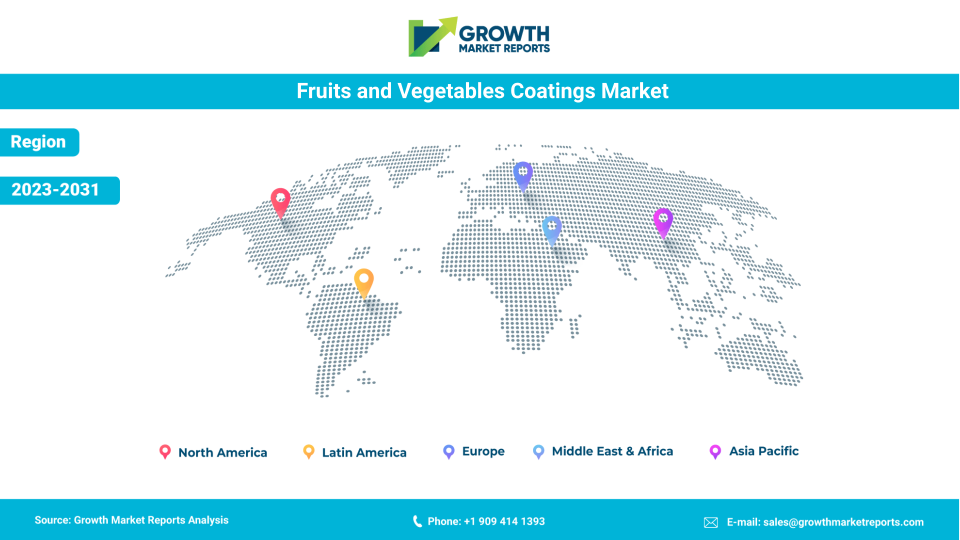
The Asia Pacific region leads the Fruits and Vegetables Coatings market, accounting for the largest share with a market size of USD 710 million in 2024. This dominance is attributed to the regionÂ’s vast agricultural output, rapid urbanization, and growing middle-class population with increasing disposable incomes. Countries such as China, India, and Japan are at the forefront of adopting advanced food preservation technologies to meet the rising demand for fresh produce. The availability of raw materials, strong government support for agricultural innovation, and the expansion of organized retail infrastructure are further boosting the adoption of fruit and vegetable coatings in the region. The Asia Pacific market is projected to register the highest CAGR of 7.5% over the forecast period, driven by ongoing investments in research and development and the growing focus on sustainability.
North America is another significant market, with a size of USD 520 million in 2024, characterized by a strong emphasis on food safety, sustainability, and innovation. The region is home to several leading companies and research institutions that are driving advancements in coating technologies. The adoption of fruit and vegetable coatings is supported by stringent regulatory standards and a high level of consumer awareness regarding food quality and waste reduction. The presence of large supermarket chains and a well-developed cold chain infrastructure further facilitates the widespread use of coatings in the region. North America is expected to maintain steady growth over the forecast period, with a CAGR of 6.2%, as producers and retailers continue to invest in advanced preservation solutions.
Europe holds a significant share of the market, with a size of USD 410 million in 2024, driven by a strong focus on sustainability, organic food production, and compliance with stringent food safety regulations. The region is witnessing increasing adoption of edible coatings, particularly among organic and premium produce suppliers seeking to differentiate their products and meet consumer demand for natural and eco-friendly solutions. The presence of a well-established retail network and growing consumer awareness about food waste are further supporting market growth. Meanwhile, Latin America and the Middle East & Africa are emerging markets, with sizes of USD 180 million and USD 100 million respectively in 2024. These regions are experiencing rapid growth due to expanding retail infrastructure, rising consumer awareness, and increasing investments in agricultural innovation. As market dynamics continue to evolve, the regional outlook for the Fruits and Vegetables Coatings market remains highly positive, with significant growth potential across all major regions.
The Fruits and Vegetables Coatings market is highly competitive, characterized by the presence of both global giants and regional players vying for market share. The competitive landscape is shaped by ongoing innovation, strategic partnerships, and mergers and acquisitions aimed at expanding product portfolios and geographic reach. Companies are investing heavily in research and development to create advanced coatings with enhanced functional properties, such as improved moisture and gas barriers, antimicrobial activity, and compatibility with a wide range of fruits and vegetables. The focus on sustainability and the use of natural, biodegradable materials is also driving differentiation in the market, with leading players seeking to align their offerings with evolving consumer preferences and regulatory requirements.
Major players in the market are leveraging their extensive distribution networks, strong brand recognition, and technological expertise to maintain a competitive edge. These companies are actively collaborating with research institutions, universities, and other stakeholders to accelerate innovation and bring new products to market. Strategic partnerships with retailers and foodservice providers are also common, enabling companies to expand their customer base and enhance the accessibility of coated fruits and vegetables. The adoption of digital technologies, such as blockchain and IoT, is further enhancing supply chain transparency and traceability, providing additional value to customers and stakeholders.
Despite the intense competition, the market offers significant opportunities for new entrants and smaller players, particularly those focused on niche segments or specialized applications. The growing demand for organic, natural, and eco-friendly coatings is creating space for innovative startups and regional companies to carve out a niche and compete with established players. However, the need for compliance with stringent regulatory standards and the high cost of research and development can pose challenges for smaller companies seeking to scale their operations and expand internationally.
Some of the major companies operating in the Fruits and Vegetables Coatings market include AgroFresh Solutions Inc., Pace International LLC, JBT Corporation, Decco Worldwide Post-Harvest Holdings BV, and UPL Limited. AgroFresh Solutions Inc. is a global leader in post-harvest solutions, offering a wide range of coatings and technologies designed to extend the shelf life and quality of fresh produce. Pace International LLC specializes in innovative coatings and packaging solutions for fruits and vegetables, with a strong focus on sustainability and food safety. JBT Corporation is a leading provider of food processing and preservation technologies, offering advanced coating solutions for a variety of applications. Decco Worldwide Post-Harvest Holdings BV is known for its expertise in post-harvest treatments and coatings, serving customers in over 40 countries worldwide. UPL Limited is a global agribusiness company with a diverse portfolio of crop protection and preservation solutions, including coatings for fruits and vegetables.
These companies are at the forefront of innovation in the market, continuously developing new products and solutions to meet the evolving needs of producers, retailers, and consumers. Their strong focus on research and development, coupled with strategic partnerships and a commitment to sustainability, positions them well to capitalize on the growing demand for fruit and vegetable coatings worldwide. As the market continues to evolve, we expect to see increased collaboration, consolidation, and investment in advanced technologies, driving further growth and innovation in the Fruits and Vegetables Coatings market.
The Fruits and Vegetables Coatings market has been segmented on the basis of
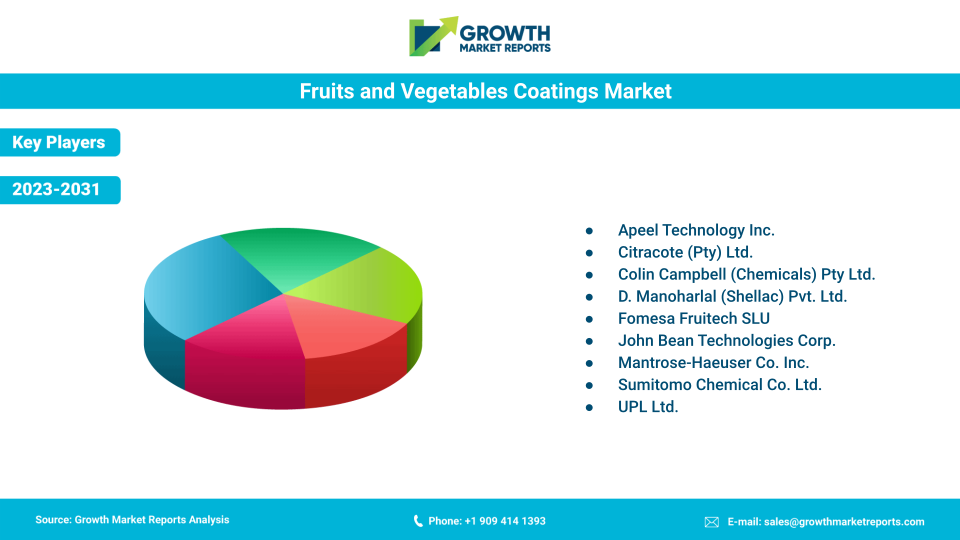
Major players of the market are Apeel Technology Inc., Citracote (Pty) Ltd., Colin Campbell (Chemicals) Pty Ltd., D. Manoharlal (Shellac) Pvt. Ltd., Fomesa Fruitech SLU, John Bean Technologies Corp., Mantrose-Haeuser Co. Inc., Sumitomo Chemical Co. Ltd., and UPL Ltd.
Emerging trends include the use of nanomaterials and bioactive compounds, development of smart coatings that respond to environmental conditions, and increased adoption of eco-friendly, biodegradable, and multifunctional coatings.
Distribution channels include supermarkets/hypermarkets, convenience stores, online retail, wholesale markets, foodservice providers, and specialty stores.
Challenges include regulatory complexity for new materials, consumer skepticism regarding synthetic coatings, and the high cost of research and development for innovative solutions.
Key players include AgroFresh Solutions Inc., Pace International LLC, JBT Corporation, Decco Worldwide Post-Harvest Holdings BV, UPL Limited, Syngenta AG, BASF SE, Hazel Technologies, and others.
Asia Pacific leads the market, followed by North America and Europe. Latin America and the Middle East & Africa are emerging markets with significant growth potential.
Coatings serve as moisture barriers, gas barriers, and provide antimicrobial and antioxidant properties to extend shelf life, maintain quality, and reduce spoilage.
Common materials include polysaccharides (cellulose, starch, chitosan), proteins (whey, soy, casein), lipids (waxes, oils), and composite materials that combine these for enhanced performance.
The market is segmented into edible coatings (made from natural substances like polysaccharides, proteins, and lipids) and non-edible coatings (typically synthetic or wax-based, used mainly for industrial applications).
Key growth drivers include increasing consumer demand for fresh produce with extended shelf life, advancements in food preservation technologies, heightened awareness of food waste reduction, and a growing focus on sustainability in the food supply chain.
The global Fruits and Vegetables Coatings market reached USD 1.92 billion in 2024 and is projected to grow at a CAGR of 6.8%, reaching approximately USD 3.75 billion by 2033.