Segments - by Product Type (Electric Deep Fryers, Gas Deep Fryers, Pressure Deep Fryers, Others), by Application (Commercial, Household), by Distribution Channel (Online Stores, Supermarkets/Hypermarkets, Specialty Stores, Others), by End-User (Restaurants, Hotels, Catering Services, Fast Food Chains, Others)
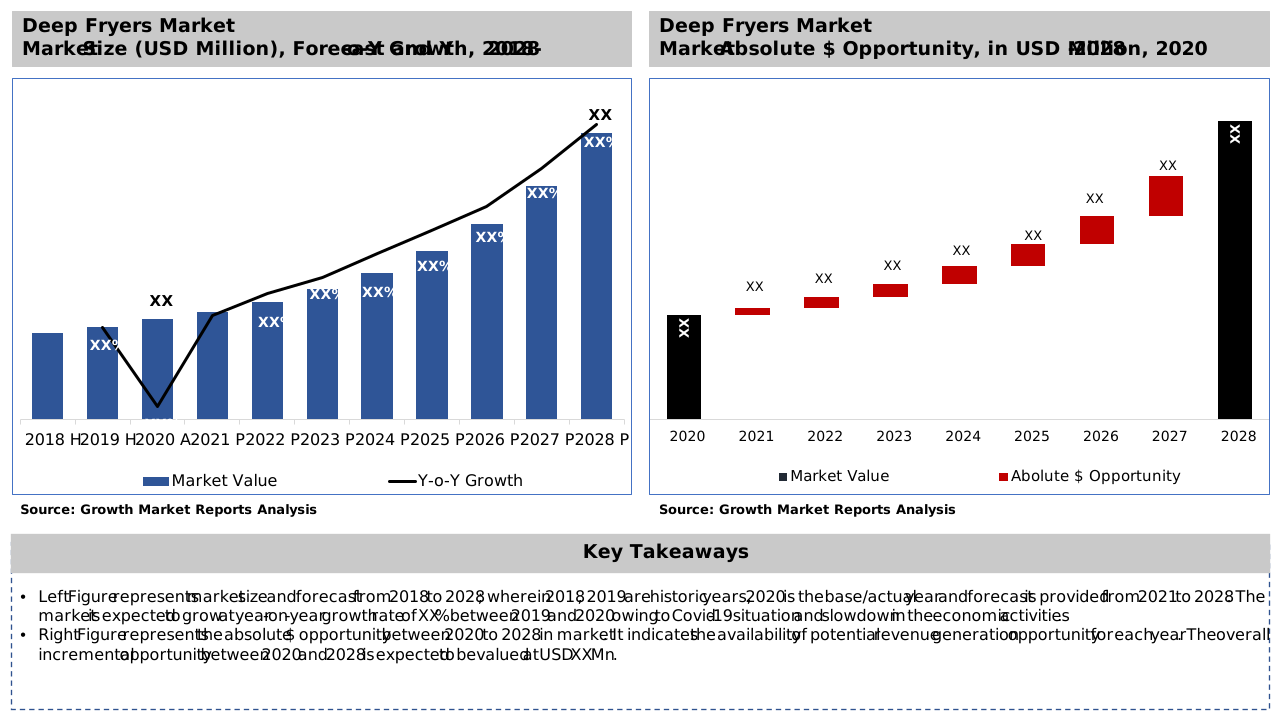
According to our latest research, the global Deep Fryers market size reached USD 612.8 million in 2024, reflecting a robust demand across both commercial and household segments. The market is experiencing a steady growth momentum, registering a CAGR of 5.1% from 2025 to 2033. By the end of 2033, the Deep Fryers market is forecasted to attain a value of USD 957.4 million. The primary growth driver is the rising popularity of fried foods worldwide, coupled with technological advancements in deep fryer products, which is fueling significant market expansion.
The growth of the Deep Fryers market is predominantly influenced by the evolving food consumption patterns and the increasing demand for convenience cooking appliances. Urbanization and busy lifestyles have led to a surge in the consumption of ready-to-eat and fast-food products, driving the adoption of deep fryers in both commercial and household settings. The proliferation of quick-service restaurants, fast-food chains, and catering services has further propelled the demand for advanced deep frying equipment that offers efficiency, safety, and consistent cooking results. Additionally, the integration of smart features, such as temperature control, automatic timers, and energy efficiency, is making deep fryers more appealing to a broad consumer base, thereby accelerating market growth.
Another significant growth factor for the Deep Fryers market is the increasing focus on food quality and safety, especially in commercial kitchens. Restaurants, hotels, and catering services are investing in high-performance deep fryers that can handle large volumes, maintain oil quality, and reduce operational costs. The rise of food delivery services and cloud kitchens has also created new opportunities for deep fryer manufacturers, as these businesses require reliable and efficient equipment to meet fluctuating demand. Furthermore, the trend toward healthier frying options, such as air fryers and low-oil deep fryers, is expanding the marketÂ’s reach to health-conscious consumers, thus diversifying product offerings and spurring innovation.
The Deep Fryers market also benefits from the increasing disposable incomes, especially in emerging economies, which enable more households to invest in modern kitchen appliances. The expansion of retail channels, including online stores and specialty outlets, has improved product accessibility and awareness among consumers. This, combined with aggressive marketing strategies and attractive promotional offers by leading brands, is boosting sales across various regions. However, the market faces challenges such as rising health concerns associated with fried foods and the volatility of raw material prices, which could impact profit margins for manufacturers.
Continuous Fryers have become an essential component in the commercial food industry, particularly for establishments that require high-volume frying capabilities. These fryers are designed to operate non-stop, allowing for the efficient processing of large quantities of food with minimal downtime. The continuous flow of oil and food through the fryer ensures consistent cooking results, making them ideal for fast-food chains and large-scale catering services. With advancements in automation and temperature control technologies, Continuous Fryers offer enhanced precision and energy efficiency, reducing operational costs and improving food quality. Their ability to maintain optimal frying conditions makes them a preferred choice for businesses looking to streamline their kitchen operations and meet the growing demand for fried foods.
Regionally, Asia Pacific dominates the Deep Fryers market due to its large population, rapid urbanization, and the popularity of fried cuisine in countries such as China, India, and Japan. North America and Europe also hold significant market shares, driven by the presence of established foodservice industries and a high rate of product adoption in households. The Middle East & Africa and Latin America are emerging as lucrative markets, supported by the growth of the hospitality sector and increasing investments in the food processing industry. Each region exhibits unique consumption patterns and regulatory environments, influencing product innovation and marketing strategies.
The Deep Fryers market by product type is segmented into Electric Deep Fryers, Gas Deep Fryers, Pressure Deep Fryers, and Others. Electric deep fryers hold the largest share of the market, owing to their convenience, energy efficiency, and widespread adoption in both household and commercial applications. These fryers are preferred for their ease of use, precise temperature control, and safety features, making them ideal for busy kitchens and novice users alike. The growing trend of smart kitchen appliances has further enhanced the appeal of electric deep fryers, as manufacturers introduce advanced models equipped with digital interfaces, programmable settings, and oil filtration systems, catering to the needs of modern consumers.
Gas deep fryers, on the other hand, are widely used in commercial settings where high-volume frying and rapid heat recovery are essential. Restaurants, fast-food chains, and catering services favor gas fryers for their cost-effectiveness and ability to maintain consistent frying temperatures, which is crucial for preparing large batches of food quickly. These fryers are especially popular in regions with lower electricity costs or unreliable power supply, as they offer operational flexibility and lower running costs. However, the market for gas deep fryers faces increasing competition from electric models, particularly in regions with stringent energy efficiency regulations and a growing emphasis on environmental sustainability.
Pressure deep fryers represent a niche but rapidly growing segment within the Deep Fryers market. These fryers are primarily used in commercial kitchens for cooking specialty items such as fried chicken, as they enable faster cooking times and superior moisture retention. The unique cooking process of pressure fryers results in juicier, more flavorful products, which has led to their adoption by major fast-food chains and restaurants seeking to differentiate their offerings. The demand for pressure deep fryers is expected to rise in tandem with the expansion of the quick-service restaurant industry and the increasing consumer preference for high-quality fried foods.
Batch Fryers, on the other hand, are highly favored in settings where flexibility and control over cooking processes are paramount. These fryers allow operators to cook a variety of food items in separate batches, providing the opportunity to adjust cooking times and temperatures according to specific recipe requirements. This versatility makes Batch Fryers particularly popular in restaurants and specialty food outlets where menu diversity is a key selling point. The ability to handle different food types without cross-contamination is a significant advantage, especially in establishments that cater to diverse dietary preferences. As consumer demand for artisanal and gourmet fried foods continues to rise, Batch Fryers offer the adaptability and precision needed to deliver high-quality culinary experiences.
Other types of deep fryers, including air fryers and multi-functional fryers, are gaining traction among health-conscious consumers and households seeking versatile cooking solutions. While air fryers are not traditional deep fryers, their ability to deliver crispy results with minimal oil consumption has made them a popular alternative. Manufacturers are focusing on product innovation, combining deep frying capabilities with grilling, roasting, and baking functions to appeal to a broader audience. This diversification of product offerings is expected to drive incremental growth in the Deep Fryers market, as consumers seek appliances that offer both convenience and versatility.
| Attributes | Details |
| Report Title | Deep Fryers Market Research Report 2033 |
| By Product Type | Electric Deep Fryers, Gas Deep Fryers, Pressure Deep Fryers, Others |
| By Application | Commercial, Household |
| By Distribution Channel | Online Stores, Supermarkets/Hypermarkets, Specialty Stores, Others |
| By End-User | Restaurants, Hotels, Catering Services, Fast Food Chains, Others |
| Regions Covered | North America, Europe, APAC, Latin America, MEA |
| Base Year | 2024 |
| Historic Data | 2018-2023 |
| Forecast Period | 2025-2033 |
| Number of Pages | 257 |
| Number of Tables & Figures | 317 |
| Customization Available | Yes, the report can be customized as per your need. |
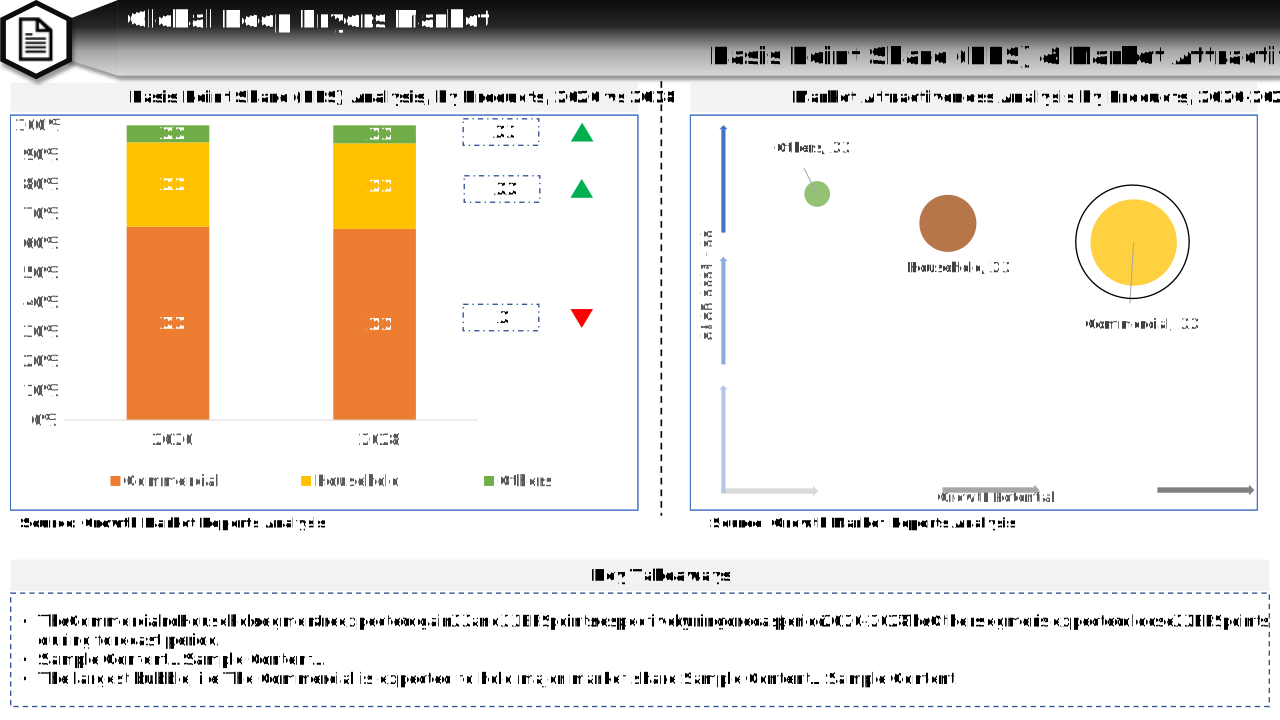
The Deep Fryers market is segmented by application into Commercial and Household categories, each exhibiting distinct growth dynamics and consumer preferences. The commercial segment dominates the market, accounting for a substantial share of total demand. This is primarily attributed to the proliferation of restaurants, hotels, catering services, and fast-food chains, all of which rely heavily on deep fryers for efficient food preparation. Commercial deep fryers are designed for high-capacity, continuous operation, and are equipped with features such as rapid heat recovery, oil filtration, and programmable controls to meet the rigorous demands of professional kitchens. The ongoing expansion of the global foodservice industry, driven by rising disposable incomes and changing dietary habits, continues to fuel growth in this segment.
Within the commercial segment, the increasing adoption of automation and smart kitchen technologies is transforming the way deep fryers are used in foodservice establishments. Operators are investing in advanced deep fryers that offer improved energy efficiency, reduced oil consumption, and enhanced food safety. The integration of IoT-enabled monitoring systems allows for real-time tracking of fryer performance, oil quality, and maintenance schedules, minimizing downtime and optimizing operational efficiency. These technological advancements are particularly appealing to large-scale operators, such as fast-food chains and catering companies, who prioritize consistency, speed, and cost-effectiveness in their operations.
The household segment of the Deep Fryers market is experiencing steady growth, driven by the rising popularity of home-cooked fried foods and the increasing penetration of modern kitchen appliances. Consumers are seeking convenient, easy-to-use deep fryers that offer safety features, compact designs, and multi-functionality. The growing awareness of healthier cooking methods has also led to the introduction of low-oil and air fryer models, which are gaining traction among health-conscious households. Manufacturers are responding to this trend by developing deep fryers with adjustable temperature controls, non-stick coatings, and dishwasher-safe components, making them more attractive to a wider range of consumers.
The expansion of e-commerce and the availability of a wide variety of deep fryer models online have further boosted the household segment. Online platforms provide consumers with access to product reviews, price comparisons, and detailed specifications, enabling informed purchasing decisions. Promotional campaigns, discounts, and bundled offers by leading brands have made deep fryers more accessible and affordable, contributing to increased adoption in both developed and emerging markets. As consumer preferences continue to evolve, the household segment is expected to witness sustained growth, supported by ongoing product innovation and marketing efforts.
The Deep Fryers market is distributed through multiple channels, including Online Stores, Supermarkets/Hypermarkets, Specialty Stores, and Others. Online stores have emerged as a significant distribution channel, particularly in the wake of the global shift toward e-commerce and digital retailing. Consumers are increasingly turning to online platforms for their convenience, competitive pricing, and wide selection of products. The ability to compare features, read customer reviews, and access exclusive online deals has made e-commerce a preferred choice for purchasing deep fryers, especially among younger, tech-savvy consumers. Manufacturers and retailers are capitalizing on this trend by enhancing their online presence, offering direct-to-consumer sales, and leveraging digital marketing strategies to reach a broader audience.
Supermarkets and hypermarkets remain important distribution channels for deep fryers, particularly in regions with a strong tradition of brick-and-mortar retailing. These stores offer consumers the advantage of physical product inspection, immediate availability, and the opportunity to seek advice from knowledgeable staff. The presence of deep fryers in prominent retail chains also enhances brand visibility and facilitates impulse purchases. Retailers are increasingly adopting omni-channel strategies, integrating their online and offline offerings to provide a seamless shopping experience and cater to the evolving preferences of modern consumers.
Specialty stores, which focus on kitchen appliances and home electronics, play a crucial role in the Deep Fryers market, especially for high-end and niche products. These stores offer expert guidance, product demonstrations, and personalized recommendations, making them a preferred destination for discerning customers seeking premium or specialized deep fryer models. The emphasis on customer service and after-sales support distinguishes specialty stores from other retail channels, helping to build brand loyalty and drive repeat business. As consumer demand for advanced features and customized solutions grows, specialty stores are expected to maintain their relevance in the market.
Other distribution channels, such as direct sales, wholesale, and institutional procurement, cater to specific market segments, including large-scale foodservice operators and institutional buyers. These channels often involve bulk purchases and long-term supply agreements, providing manufacturers with stable revenue streams and opportunities for strategic partnerships. The diversification of distribution channels is a key factor contributing to the resilience and growth of the Deep Fryers market, enabling manufacturers to reach diverse customer segments and adapt to changing market conditions.
The Deep Fryers market by end-user is segmented into Restaurants, Hotels, Catering Services, Fast Food Chains, and Others. Restaurants represent the largest end-user segment, accounting for a significant share of total market demand. The widespread use of deep fryers in restaurants is driven by the need for efficient, high-volume food preparation and the popularity of fried dishes on menus worldwide. Restaurants require durable, reliable deep fryers that can withstand continuous use and deliver consistent results, prompting operators to invest in premium equipment with advanced features such as oil filtration, programmable settings, and energy-saving technologies.
Hotels constitute another important end-user segment within the Deep Fryers market, particularly in regions with thriving tourism industries and a high concentration of hospitality establishments. Hotels utilize deep fryers in their kitchens to cater to diverse culinary preferences and offer a wide range of fried food options to guests. The demand for high-capacity, multi-functional deep fryers is especially pronounced in large hotels with banquet facilities, conference centers, and multiple dining outlets. As the global hospitality industry continues to recover and expand, the adoption of advanced deep frying equipment in hotels is expected to rise accordingly.
Catering services and fast food chains are key drivers of growth in the Deep Fryers market, as they require specialized equipment to meet the unique demands of large-scale food preparation and rapid service. Catering companies often operate in dynamic environments, such as events, exhibitions, and outdoor venues, necessitating portable and easy-to-clean deep fryers. Fast food chains, on the other hand, prioritize speed, consistency, and food safety, leading to the widespread adoption of automated and high-capacity deep fryers. The expansion of global fast-food brands and the increasing popularity of food delivery services are expected to further boost demand in these segments.
Other end-users, including educational institutions, healthcare facilities, and corporate cafeterias, also contribute to the growth of the Deep Fryers market. These organizations require reliable, easy-to-maintain equipment that can handle diverse menus and fluctuating demand. Manufacturers are developing tailored solutions to address the specific needs of these end-users, such as compact designs for space-constrained environments and energy-efficient models for cost-sensitive operators. The diversification of end-user segments underscores the versatility and broad appeal of deep fryers, positioning the market for sustained growth across various industries.
The Deep Fryers market presents a wealth of opportunities for manufacturers, retailers, and investors, driven by ongoing technological innovation and evolving consumer preferences. One of the most promising opportunities lies in the development of energy-efficient and eco-friendly deep fryers, as consumers and regulatory authorities increasingly prioritize sustainability. Manufacturers that invest in research and development to create products with reduced oil consumption, lower emissions, and recyclable materials are well-positioned to capture a growing segment of environmentally conscious buyers. Additionally, the integration of smart technologies, such as IoT-enabled monitoring, remote control, and predictive maintenance, offers significant potential to differentiate products and enhance customer value.
Another major opportunity in the Deep Fryers market is the expansion into emerging markets, particularly in Asia Pacific, Latin America, and the Middle East & Africa. Rising disposable incomes, urbanization, and the growth of the foodservice industry in these regions are creating new avenues for market penetration. Companies that tailor their product offerings to local tastes, regulatory requirements, and price sensitivities can gain a competitive edge and establish a strong foothold in these high-growth markets. Furthermore, the increasing adoption of e-commerce and digital marketing strategies enables brands to reach previously underserved customer segments and drive incremental sales through targeted promotions and online campaigns.
Despite the positive outlook, the Deep Fryers market faces several restraining factors that could impact future growth. Health concerns related to the consumption of fried foods, including obesity, cardiovascular diseases, and other lifestyle-related ailments, are prompting consumers to seek healthier cooking alternatives. This shift in dietary preferences poses a challenge for traditional deep fryer manufacturers, as demand for conventional frying equipment may decline in favor of air fryers and low-oil cooking appliances. Additionally, fluctuations in raw material prices, regulatory changes, and intense competition from both established and new entrants could exert pressure on profit margins and hinder market expansion.
The Asia Pacific region leads the Deep Fryers market, accounting for approximately USD 226.7 million in 2024. This dominance is driven by a large and growing population, rapid urbanization, and the widespread popularity of fried cuisine in countries such as China, India, Japan, and South Korea. The regionÂ’s thriving foodservice industry, coupled with rising disposable incomes and increasing adoption of modern kitchen appliances, is fueling robust demand for both commercial and household deep fryers. The market in Asia Pacific is expected to grow at a CAGR of 6.2% through 2033, outpacing other regions and offering significant opportunities for manufacturers and retailers.
In North America, the Deep Fryers market was valued at USD 168.5 million in 2024, supported by a mature foodservice sector, high consumer spending on dining out, and a strong culture of home cooking. The United States and Canada are the primary contributors to regional demand, with consumers showing a preference for advanced, feature-rich deep fryers that offer convenience, safety, and energy efficiency. The market is characterized by intense competition among leading brands, ongoing product innovation, and a growing emphasis on health and wellness, which is driving the adoption of air fryers and low-oil models alongside traditional deep fryers.
Europe represents another significant market for deep fryers, with a value of USD 109.8 million in 2024. The regionÂ’s diverse culinary traditions, high standards of food safety, and strong presence of multinational foodservice chains contribute to sustained demand for commercial deep fryers. Countries such as the United Kingdom, Germany, France, and Italy are key markets, with consumers seeking reliable, high-performance equipment for both professional and household use. The Deep Fryers market in Europe is characterized by a focus on sustainability, energy efficiency, and compliance with stringent regulatory standards, driving innovation and differentiation among market players.
The Deep Fryers market is highly competitive, with a diverse array of global and regional players vying for market share across various segments. The competitive landscape is shaped by ongoing product innovation, technological advancements, and the pursuit of operational efficiency. Leading manufacturers are investing in research and development to introduce new features, such as smart controls, oil filtration systems, and energy-saving technologies, aimed at enhancing product performance and user experience. The market is also witnessing increased consolidation, as larger players acquire or partner with smaller firms to expand their product portfolios, enter new markets, and strengthen their distribution networks.
Brand reputation, product quality, and after-sales service are key differentiators in the Deep Fryers market, influencing purchasing decisions among both commercial and household customers. Established brands leverage their extensive distribution channels, marketing resources, and technical expertise to maintain a competitive edge, while new entrants focus on niche markets, innovative designs, and competitive pricing to gain traction. The rise of e-commerce has further intensified competition, enabling smaller brands to reach a global audience and challenge the dominance of traditional market leaders. As consumer preferences continue to evolve, companies are increasingly focusing on customization, sustainability, and digital engagement to build brand loyalty and drive growth.
Collaboration and partnerships are becoming increasingly important in the Deep Fryers market, as manufacturers seek to leverage complementary strengths and access new customer segments. Strategic alliances with foodservice operators, technology providers, and retail partners enable companies to offer integrated solutions, enhance product visibility, and deliver superior value to customers. The adoption of lean manufacturing practices, supply chain optimization, and cost control measures is also critical for maintaining profitability and competitiveness in a rapidly changing market environment.
Major companies operating in the Deep Fryers market include Henny Penny Corporation, The Middleby Corporation, Welbilt Inc., Ali Group Srl, Standex International Corporation, Electrolux Professional AB, Breville Group Limited, Tefal (Groupe SEB), Hamilton Beach Brands Holding Company, and DeÂ’Longhi S.p.A. These companies offer a wide range of deep fryer products catering to both commercial and household customers, with a focus on innovation, quality, and customer service. Henny Penny Corporation and The Middleby Corporation are recognized for their advanced commercial deep fryers, while Breville and Tefal are prominent in the household segment. Electrolux Professional and Ali Group have a strong presence in the European market, leveraging their extensive distribution networks and product portfolios to serve diverse customer needs.
In addition to established players, the Deep Fryers market is witnessing the entry of new companies specializing in smart kitchen appliances and eco-friendly solutions. These entrants are driving innovation by introducing connected deep fryers, energy-efficient models, and appliances with customizable features. The competitive landscape is further enriched by regional players who cater to local preferences and offer cost-effective solutions tailored to specific markets. As competition intensifies, companies are expected to focus on product differentiation, customer engagement, and strategic expansion to sustain growth and capture emerging opportunities.
The Deep Fryers market has been segmented on the basis of
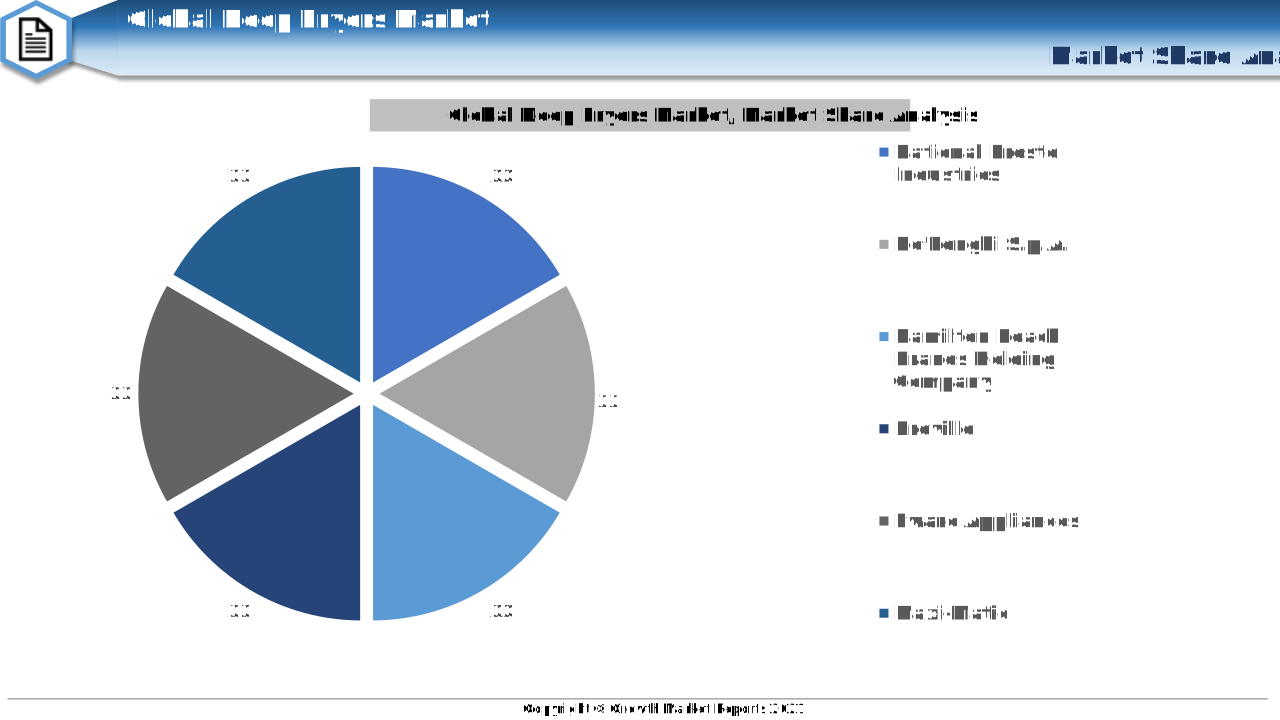
Some of the key players in the global deep fryers market include National Presto Industries, De’Longhi S.p.A., Hamilton Beach Brands Holding Company, Breville, Eware Appliances, and Maxi-Matic. Several of these players are focusing on the improvement of their product offerings to expand their consumer base and strengthen their presence in the market. Additionally, they are investing in expanding their distribution networks to fulfill the rising demand from the food chain industry.
Yes, the Deep Fryers Market Research Report 2033 can be customized as per specific needs, offering detailed insights by product type, application, distribution channel, end-user, and region.
Challenges include rising health concerns related to fried foods, volatility in raw material prices, regulatory changes, and intense competition from both established and new market entrants.
Trends include the integration of smart features (IoT, temperature control, automatic timers), energy-efficient and eco-friendly models, and the rise of air fryers and multi-functional appliances targeting health-conscious consumers.
Major companies include Henny Penny Corporation, The Middleby Corporation, Welbilt Inc., Ali Group Srl, Standex International Corporation, Electrolux Professional AB, Breville Group Limited, Tefal (Groupe SEB), Hamilton Beach Brands, and De’Longhi S.p.A.
Asia Pacific leads the market due to its large population and popularity of fried cuisine, followed by North America and Europe. Latin America and the Middle East & Africa are emerging as lucrative markets.
Key distribution channels include online stores, supermarkets/hypermarkets, specialty stores, and others. Online stores are rapidly growing due to convenience and competitive pricing, while brick-and-mortar stores remain important for physical product inspection.
The market is segmented into commercial and household applications. The commercial segment dominates, driven by restaurants, hotels, catering services, and fast-food chains, while the household segment is growing due to increased adoption of modern kitchen appliances.
Electric deep fryers hold the largest market share due to their convenience, energy efficiency, and widespread adoption in both commercial and household applications. Gas and pressure deep fryers are also significant, especially in commercial settings.
Key growth drivers include the rising popularity of fried foods, technological advancements in deep fryer products, urbanization, busy lifestyles, and the expansion of quick-service restaurants and food delivery services.
The global Deep Fryers market reached USD 612.8 million in 2024 and is projected to grow at a CAGR of 5.1% from 2025 to 2033, reaching USD 957.4 million by 2033.