Diapers Market Research Report 2033

Diapers Market Research Report 2033

Segments - by Product Type (Disposable Diapers, Cloth Diapers, Training Diapers, Swim Pants, Others), by Age Group (Infants, Toddlers, Children, Adults), by Distribution Channel (Supermarkets/Hypermarkets, Pharmacies/Drug Stores, Online Stores, Convenience Stores, Others), by Material (Super Absorbent Polymers, Cotton, Nonwoven Fabric, Others)

https://growthmarketreports.com/Debadatta
Author : Debadatta Patel
https://growthmarketreports.com/Vaibhav
Fact-checked by : V. Chandola
https://growthmarketreports.com/Shruti
Editor : Shruti Bhat

Upcoming | Report ID :CG-4316 | 4.0 Rating | 27 Reviews | 252 Pages | Format : Docx PDF

Report Description


Diapers Market Outlook

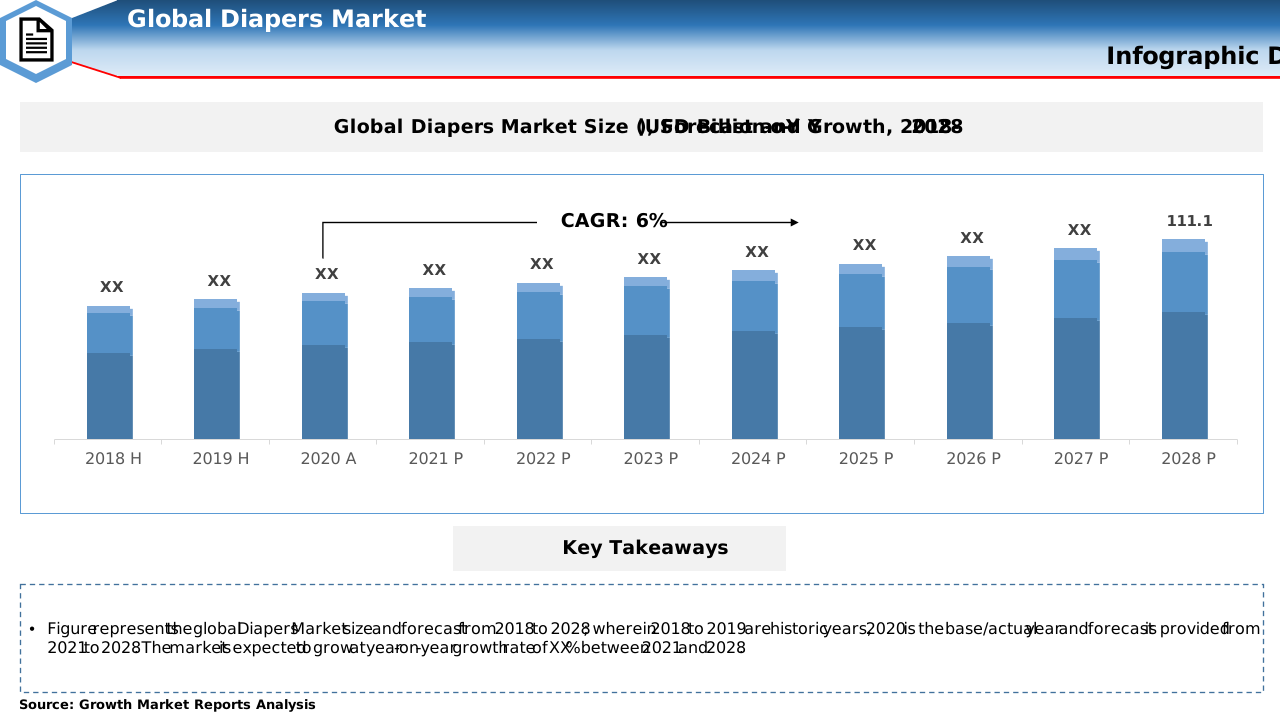
According to our latest research, the global diapers market size reached USD 83.2 billion in 2024, demonstrating robust demand driven by rising awareness of hygiene and increasing global birth rates. The market is expected to grow at a CAGR of 5.1% from 2025 to 2033, projecting a value of USD 129.3 billion by the end of the forecast period. This strong growth trajectory is primarily fueled by product innovations, expanding urban populations, and a greater focus on adult incontinence care worldwide.

One of the primary growth factors for the global diapers market is the continuous innovation in product design and material technology. Manufacturers are investing heavily in research and development to create diapers that offer superior absorption, breathability, and skin protection. The integration of eco-friendly and biodegradable materials is gaining traction, addressing consumer concerns about environmental sustainability. These advancements not only improve comfort and effectiveness but also appeal to environmentally conscious consumers, thereby expanding the market's reach across different demographics and geographies. Additionally, the introduction of smart diapers with sensors to monitor moisture levels is setting new standards in infant and adult care, further propelling market growth.

Another significant driver is the demographic shift characterized by rising birth rates in emerging economies and an aging population in developed regions. Countries across Asia Pacific and Africa are witnessing a surge in births, necessitating a higher consumption of infant diapers. Simultaneously, the growing prevalence of adult incontinence, driven by increased life expectancy and heightened awareness regarding personal hygiene, is expanding the adult diaper segment. This dual demand from both ends of the age spectrum is creating a diversified and resilient market base, encouraging manufacturers to cater to a wider range of age groups and needs.

The evolution of distribution channels has also played a crucial role in market expansion. The proliferation of e-commerce platforms and the digital transformation of retail have made diapers more accessible to consumers, particularly in remote and underserved regions. Online stores offer convenience, competitive pricing, and a wide variety of products, enabling consumers to make informed choices. Simultaneously, traditional channels such as supermarkets, hypermarkets, and pharmacies remain vital, especially in regions where internet penetration is still growing. This omnichannel approach is enabling manufacturers and retailers to reach a broader consumer base, enhance brand loyalty, and increase overall market penetration.

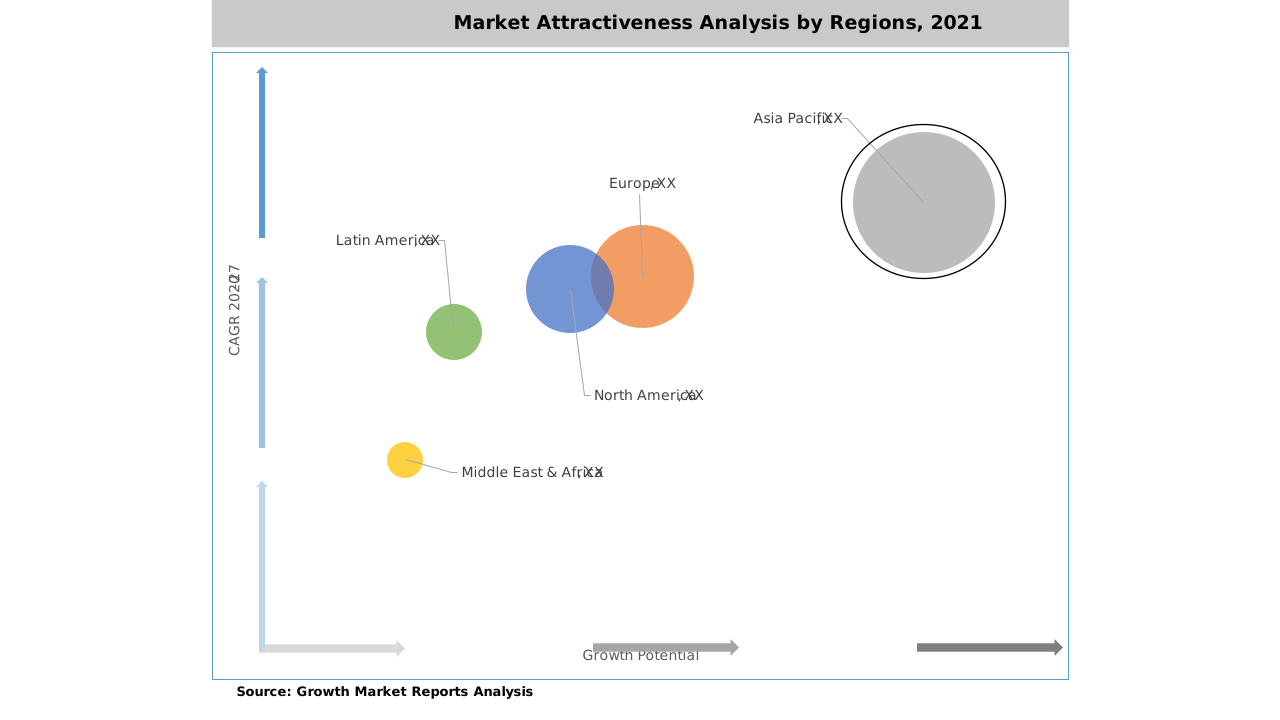
Regionally, Asia Pacific dominates the diapers market, accounting for the largest revenue share in 2024, followed by North America and Europe. The high birth rates in countries like India and China, coupled with increasing disposable incomes and urbanization, are fueling demand in the region. North America and Europe, on the other hand, are witnessing significant growth in the adult diaper segment due to aging populations and rising awareness about incontinence care. Latin America and the Middle East & Africa are emerging as promising markets, driven by improving healthcare infrastructure and changing consumer lifestyles. This diverse regional growth highlights the global appeal and adaptability of the diapers market.

Global Diapers Industry Outlook

Product Type Analysis

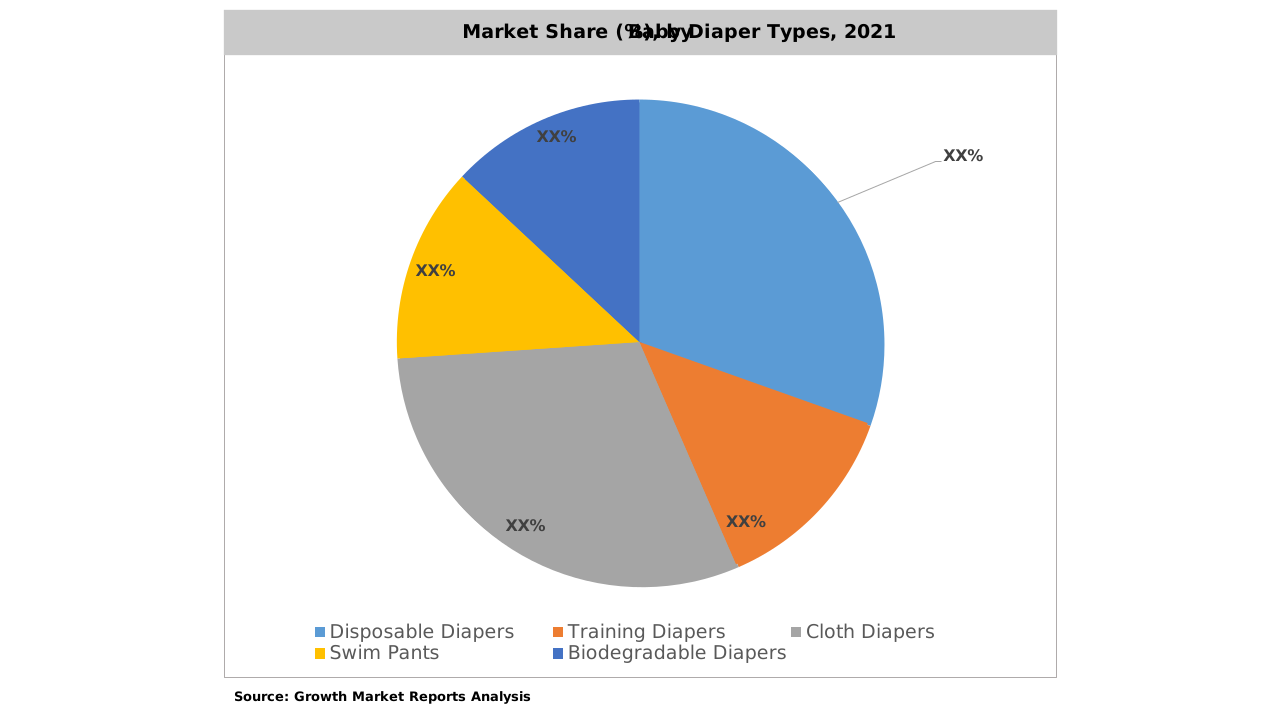
The diapers market is broadly segmented by product type into disposable diapers, cloth diapers, training diapers, swim pants, and others. Disposable diapers continue to dominate the market, accounting for the majority of revenue in 2024, owing to their convenience, superior absorbency, and widespread availability. These diapers are particularly popular among urban parents who prioritize ease of use and hygiene, as they can be discarded after a single use, minimizing the risk of diaper rash and infections. The increasing adoption of eco-friendly disposable diapers made from biodegradable materials is also contributing to the segment's growth, as consumers become more environmentally conscious.

Cloth diapers, while representing a smaller market share compared to disposables, are experiencing a resurgence in popularity, particularly among environmentally conscious parents. These diapers are reusable, cost-effective over the long term, and free from chemicals, making them a preferred choice for families seeking sustainable alternatives. Advances in fabric technology have enhanced the comfort, absorbency, and ease of use of modern cloth diapers, addressing previous concerns about leakage and maintenance. The growing trend toward sustainable parenting and the availability of stylish, easy-to-clean cloth diaper options are expected to drive steady growth in this segment over the forecast period.

Training diapers, designed for toddlers transitioning from diapers to regular underwear, are witnessing increased demand as parents seek effective solutions for potty training. These products offer the convenience of pull-on designs and enhanced absorbency, making them ideal for active toddlers. Manufacturers are introducing training diapers with fun prints, wetness indicators, and skin-friendly materials to appeal to both children and parents. The rising awareness about early potty training and the desire for hassle-free solutions are driving the adoption of training diapers, particularly in developed markets where parents are keen on fostering independence in their children.

Swim pants, another niche segment, are gaining popularity among parents who want to ensure hygiene and comfort for their children during water activities. These diapers are designed to prevent leaks in pools and beaches without swelling up like regular diapers. The increasing participation in swimming and water-based recreational activities, coupled with a growing focus on child safety and hygiene, is boosting the demand for swim pants. Manufacturers are innovating with quick-drying, chlorine-resistant materials and attractive designs to capture the interest of both parents and children, contributing to the segment's steady growth.

Other diaper types, including specialty diapers for sensitive skin or medical conditions, are also making inroads in the market. These products cater to specific needs, such as hypoallergenic diapers for babies with allergies or extra-absorbent diapers for adults with severe incontinence. The increasing awareness about specialized care and the willingness to invest in premium products are driving growth in this segment. As manufacturers continue to innovate and address unique consumer requirements, the product type landscape within the diapers market is expected to become increasingly diverse and competitive.

Report Scope

Attributes Details
Report Title Diapers Market Research Report 2033
By Product Type Disposable Diapers, Cloth Diapers, Training Diapers, Swim Pants, Others
By Age Group Infants, Toddlers, Children, Adults
By Distribution Channel Supermarkets/Hypermarkets, Pharmacies/Drug Stores, Online Stores, Convenience Stores, Others
By Material Super Absorbent Polymers, Cotton, Nonwoven Fabric, Others
Regions Covered North America, Europe, APAC, Latin America, MEA
Base Year 2024
Historic Data 2018-2023
Forecast Period 2025-2033
Number of Pages 252
Number of Tables & Figures 381
Customization Available Yes, the report can be customized as per your need.

Age Group Analysis

The age group segmentation of the diapers market includes infants, toddlers, children, and adults. Infants represent the largest consumer base, accounting for a significant share of the global market in 2024. The high birth rates in emerging economies, coupled with increasing awareness about infant hygiene and health, are driving the demand for infant diapers. Parents are increasingly opting for premium diapers that offer superior comfort, absorption, and skin protection, reflecting a willingness to invest in the health and well-being of their children. The availability of a wide range of infant diaper options, including hypoallergenic and eco-friendly variants, further supports the segment's growth.

Toddlers form the next significant segment, with demand driven by the need for diapers that accommodate increased mobility and activity levels. Diapers for toddlers are designed to offer enhanced fit, flexibility, and leakage protection, catering to the unique needs of this age group. The transition from diapers to training pants is a critical phase, and manufacturers are introducing innovative products to facilitate this process. The rising awareness about early potty training and the desire for convenient, mess-free solutions are contributing to the steady growth of the toddler diaper segment, particularly in urbanized regions with busy lifestyles.

The children segment, though smaller compared to infants and toddlers, is gaining traction due to the increasing prevalence of delayed toilet training and medical conditions that require extended diaper use. Diapers for older children are designed to offer discreet protection, comfort, and skin-friendliness, enabling children to participate in daily activities without embarrassment or discomfort. The growing acceptance of diapers for children with special needs and the availability of tailored products are supporting the expansion of this segment. As societal attitudes toward incontinence evolve, the demand for children’s diapers is expected to rise, particularly in developed markets.

The adult segment is emerging as one of the fastest-growing categories within the diapers market, driven by the rising incidence of incontinence among the elderly and individuals with medical conditions. Adult diapers are designed to provide maximum absorption, odor control, and comfort, catering to the unique requirements of this demographic. The increasing aging population in regions such as North America, Europe, and Japan is fueling demand, as is the growing awareness about the importance of maintaining dignity and quality of life for individuals with incontinence. The availability of discreet, high-performance adult diapers is encouraging adoption, making this segment a key growth driver for the overall market.

Manufacturers are responding to the diverse needs of different age groups by offering a broad range of products with varying features, sizes, and absorbency levels. The growing trend toward personalized care and the willingness to pay a premium for specialized products are encouraging innovation across all age segments. As demographic trends continue to evolve, the age group segmentation of the diapers market will remain a critical factor shaping product development and marketing strategies.

Distribution Channel Analysis

Distribution channels play a pivotal role in shaping the growth and accessibility of the diapers market. Supermarkets and hypermarkets remain the leading distribution channels in 2024, accounting for the largest share of sales globally. These retail outlets offer a wide range of diaper brands and product varieties, enabling consumers to compare features, prices, and sizes in one place. The convenience of one-stop shopping, coupled with frequent promotional offers and discounts, makes supermarkets and hypermarkets the preferred choice for many consumers, particularly in urban areas with high population densities.

Pharmacies and drug stores also hold a significant share of the diapers market, especially for adult and specialty diapers. These outlets are trusted sources for healthcare products and are often recommended by healthcare professionals for individuals with specific needs, such as incontinence or sensitive skin. The availability of expert advice and personalized recommendations enhances consumer confidence, driving sales through this channel. Pharmacies often stock premium and medical-grade diapers, catering to consumers seeking high-quality, reliable products for themselves or their loved ones.

The rapid growth of online stores is transforming the distribution landscape of the diapers market. E-commerce platforms offer unparalleled convenience, a wide selection of products, and the ability to compare prices and reviews, making them increasingly popular among tech-savvy consumers. The COVID-19 pandemic accelerated the shift toward online shopping, and this trend is expected to continue as consumers prioritize safety, convenience, and home delivery. Online retailers are leveraging data analytics and targeted marketing to offer personalized product recommendations, subscription services, and exclusive deals, further enhancing the appeal of this channel.

Convenience stores are another important distribution channel, particularly in urban and semi-urban areas where consumers seek quick and easy access to essential products. These stores cater to impulse purchases and emergency needs, offering a curated selection of popular diaper brands and sizes. The strategic location of convenience stores near residential areas, schools, and workplaces makes them a vital part of the distribution network, especially for parents and caregivers with busy schedules. As urbanization continues to rise, the role of convenience stores in the diapers market is expected to grow.

Other distribution channels, including specialty stores and direct-to-consumer sales, are gaining prominence as manufacturers seek to differentiate their offerings and build stronger relationships with consumers. Specialty stores focus on premium, organic, or eco-friendly diapers, catering to niche markets with specific preferences. Direct-to-consumer models, enabled by digital platforms and social media, allow brands to engage directly with customers, gather feedback, and offer customized products. The diversification of distribution channels is enhancing market reach, improving consumer access, and driving overall growth in the diapers market.

Material Analysis

Material selection is a critical factor influencing the performance, comfort, and environmental impact of diapers. Super absorbent polymers (SAPs) are the most widely used material in disposable diapers, accounting for a significant share of the market in 2024. SAPs offer exceptional absorption capacity, enabling diapers to retain large volumes of liquid while keeping the skin dry and comfortable. The development of advanced SAPs with enhanced safety and biodegradability is addressing consumer concerns about chemical exposure and environmental sustainability, making these materials a cornerstone of modern diaper design.

Cotton is another important material, particularly in cloth diapers and premium disposable diapers. Known for its softness, breathability, and hypoallergenic properties, cotton is favored by parents seeking natural, skin-friendly products for their children. The use of organic cotton, free from pesticides and synthetic chemicals, is gaining popularity among environmentally conscious consumers. Manufacturers are investing in sustainable cotton sourcing and processing methods to reduce the environmental footprint of their products, aligning with the growing demand for eco-friendly diapers.

Nonwoven fabrics play a vital role in the construction of both disposable and cloth diapers, providing a soft, comfortable surface that is gentle on the skin. These fabrics are engineered to enhance breathability, flexibility, and moisture wicking, contributing to the overall effectiveness of the diaper. Advances in nonwoven technology are enabling the creation of thinner, lighter, and more absorbent diapers, improving comfort and reducing bulk. The use of biodegradable and compostable nonwoven materials is also on the rise, reflecting the industry's commitment to sustainability and environmental stewardship.

Other materials, such as plant-based fibers, bamboo, and specialty polymers, are being explored to address specific consumer needs and preferences. Bamboo, for example, is valued for its natural antibacterial properties, softness, and rapid biodegradability, making it an attractive option for eco-friendly diapers. Plant-based polymers derived from renewable sources are being used to replace conventional plastics, reducing the carbon footprint and enhancing the sustainability of disposable diapers. As consumer awareness about environmental issues grows, the adoption of alternative materials is expected to accelerate, driving innovation and differentiation in the market.

The choice of materials not only affects the performance and sustainability of diapers but also influences pricing, brand positioning, and consumer loyalty. Manufacturers are increasingly transparent about their material sourcing and production processes, responding to consumer demand for safe, ethical, and environmentally responsible products. As material science continues to advance, the diapers market is poised for further innovation, with a focus on balancing performance, affordability, and sustainability.

Opportunities & Threats

The diapers market presents significant opportunities for growth, driven by increasing awareness about hygiene, rising disposable incomes, and ongoing product innovation. The expansion of the adult diaper segment, in particular, offers substantial potential, as aging populations and the prevalence of incontinence conditions continue to rise globally. Manufacturers can capitalize on this trend by developing high-performance, discreet, and comfortable products tailored to the needs of elderly consumers. Additionally, the growing demand for eco-friendly and biodegradable diapers presents an opportunity for brands to differentiate themselves and capture the loyalty of environmentally conscious consumers. The integration of smart technologies, such as moisture sensors and real-time monitoring, represents another avenue for innovation, enabling brands to offer value-added solutions that enhance user convenience and care.

Emerging markets in Asia Pacific, Latin America, and Africa offer untapped potential for market expansion, driven by rising birth rates, urbanization, and improving healthcare infrastructure. Companies that invest in localized production, distribution networks, and culturally relevant marketing strategies can gain a competitive edge in these regions. Partnerships with healthcare providers, government agencies, and non-governmental organizations can also facilitate market entry and drive adoption, particularly in underserved communities. The increasing penetration of e-commerce and digital platforms is enabling brands to reach new customer segments and offer personalized solutions, further expanding the market's reach and impact.

Despite the numerous opportunities, the diapers market faces several threats and restraining factors. Environmental concerns related to the disposal of single-use diapers remain a significant challenge, as landfills continue to be burdened with non-biodegradable waste. Regulatory pressures and evolving consumer preferences are pushing manufacturers to develop more sustainable products, but the transition to eco-friendly materials can increase production costs and impact profitability. Additionally, intense competition and price sensitivity in certain markets can limit margins and hinder growth. Addressing these challenges will require ongoing investment in research and development, strategic partnerships, and transparent communication with consumers to build trust and loyalty.

Regional Outlook

Asia Pacific remains the largest and fastest-growing region in the global diapers market, accounting for over 38% of total revenue in 2024. The region's dominance is attributed to high birth rates, rapid urbanization, and rising disposable incomes in countries such as China, India, Indonesia, and Vietnam. The increasing awareness about infant hygiene and the growing acceptance of adult incontinence care are further fueling demand. The Asia Pacific diapers market is expected to grow at a CAGR of 6.3% through 2033, outpacing other regions and offering significant opportunities for both local and international manufacturers. Investments in distribution networks, product localization, and affordable pricing strategies will be key to capturing market share in this dynamic region.

North America holds a substantial share of the global diapers market, driven by a mature retail infrastructure, high consumer awareness, and a significant aging population. The region generated approximately USD 19.8 billion in diaper sales in 2024, with the adult diaper segment witnessing particularly strong growth. The prevalence of lifestyle-related health conditions and the rising demand for premium, eco-friendly products are shaping market trends in North America. E-commerce is playing an increasingly important role, with consumers seeking convenience, variety, and subscription-based delivery options. The market is expected to maintain steady growth, supported by ongoing product innovation and a focus on sustainability.

Europe represents another key market, with total diaper sales reaching USD 17.6 billion in 2024. The region is characterized by a high level of product innovation, strong regulatory standards, and a growing emphasis on environmental sustainability. European consumers are increasingly opting for organic, biodegradable, and hypoallergenic diapers, driving manufacturers to invest in green technologies and sustainable materials. The adult diaper segment is also expanding, fueled by an aging population and greater social acceptance of incontinence care. Latin America and the Middle East & Africa, while smaller in terms of market size, are experiencing steady growth as disposable incomes rise and healthcare infrastructure improves. These regions offer significant long-term potential for market expansion, particularly for companies that can navigate local challenges and meet the unique needs of diverse consumer bases.

Diapers Market Statistics

Competitor Outlook

The global diapers market is highly competitive, characterized by the presence of several multinational corporations and a growing number of regional and local players. Market leaders are leveraging their extensive distribution networks, strong brand recognition, and significant investments in research and development to maintain their competitive edge. The focus on product innovation, sustainability, and digital transformation is intensifying, as companies seek to differentiate themselves and capture the loyalty of increasingly discerning consumers. Strategic partnerships, mergers, and acquisitions are common, enabling players to expand their product portfolios, enter new markets, and strengthen their technological capabilities.

The competitive landscape is also shaped by the growing importance of private label and store brands, particularly in developed markets where price sensitivity is high. Retailers are introducing their own diaper brands, offering comparable quality at lower prices and capturing a significant share of the market. This trend is putting pressure on established brands to continuously innovate and enhance the value proposition of their products. Additionally, the rise of direct-to-consumer brands, enabled by digital platforms and social media, is disrupting traditional distribution models and creating new opportunities for niche players to reach targeted consumer segments.

Sustainability is emerging as a key differentiator in the competitive landscape, with leading companies investing in eco-friendly materials, biodegradable packaging, and transparent supply chains. Brands that can demonstrate a genuine commitment to environmental and social responsibility are gaining favor among consumers, regulators, and investors alike. The integration of smart technologies, such as moisture sensors and real-time monitoring, is also becoming a competitive advantage, enabling companies to offer value-added solutions that enhance user experience and care.

Major companies operating in the global diapers market include Procter & Gamble (Pampers), Kimberly-Clark (Huggies), Unicharm Corporation (MamyPoko), Essity AB (Libero, TENA), and Kao Corporation (Merries). Procter & Gamble continues to lead the market with its strong brand portfolio, global reach, and continuous investment in product innovation and sustainability initiatives. Kimberly-Clark is known for its focus on comfort, absorbency, and skin protection, catering to both infant and adult segments. Unicharm and Kao Corporation have a strong presence in Asia, leveraging their deep understanding of local consumer preferences and distribution networks. Essity AB is a key player in the adult diaper segment, with a strong emphasis on healthcare and incontinence care solutions.

These major players are complemented by a host of regional and local companies, such as Ontex Group, Domtar Corporation, and Nobel Hygiene, who are expanding their market presence through targeted product offerings, strategic partnerships, and localized marketing strategies. The competitive dynamics of the diapers market are expected to intensify as new entrants, technological advancements, and shifting consumer preferences reshape the industry landscape. Companies that can effectively balance innovation, sustainability, and affordability will be best positioned to succeed in this dynamic and evolving market.

Key Players

  • Procter & Gamble (Pampers)
  • Kimberly-Clark (Huggies)
  • Unicharm Corporation
  • Essity (Libero, Drypers)
  • Kao Corporation
  • Ontex Group
  • First Quality Enterprises
  • Domtar Corporation
  • Daio Paper Corporation
  • Hengan International Group
  • Nobel Hygiene
  • Bumkins
  • The Honest Company
  • Seventh Generation
  • Wipro Consumer Care
  • Chiaus (Fujian Chiaus)
  • Pigeon Corporation
  • ABENA Group
  • Drylock Technologies
  • DSG International (Thailand)
Diapers Market Overview

Segments

The Diapers market has been segmented on the basis of

Product Type

  • Disposable Diapers
  • Cloth Diapers
  • Training Diapers
  • Swim Pants
  • Others

Age Group

  • Infants
  • Toddlers
  • Children
  • Adults

Distribution Channel

  • Supermarkets/Hypermarkets
  • Pharmacies/Drug Stores
  • Online Stores
  • Convenience Stores
  • Others

Material

  • Super Absorbent Polymers
  • Cotton
  • Nonwoven Fabric
  • Others

Competitive Landscape

Key players in the global diapers market include Baby Amore, babyganics, Bumkins, Cotton Babies, Inc, Hengan International Group Company Ltd, Kao Corporation, KCWW, Ontex Consumer Products San. ve Tic. Inc, PROCTER & GAMBLE, Seventh Generation Inc, The Honest Company, Inc, and Unicharm Corporation. These players engage in mergers & acquisitions, collaborations, agreements, and partnerships to strengthen their geographical presence.
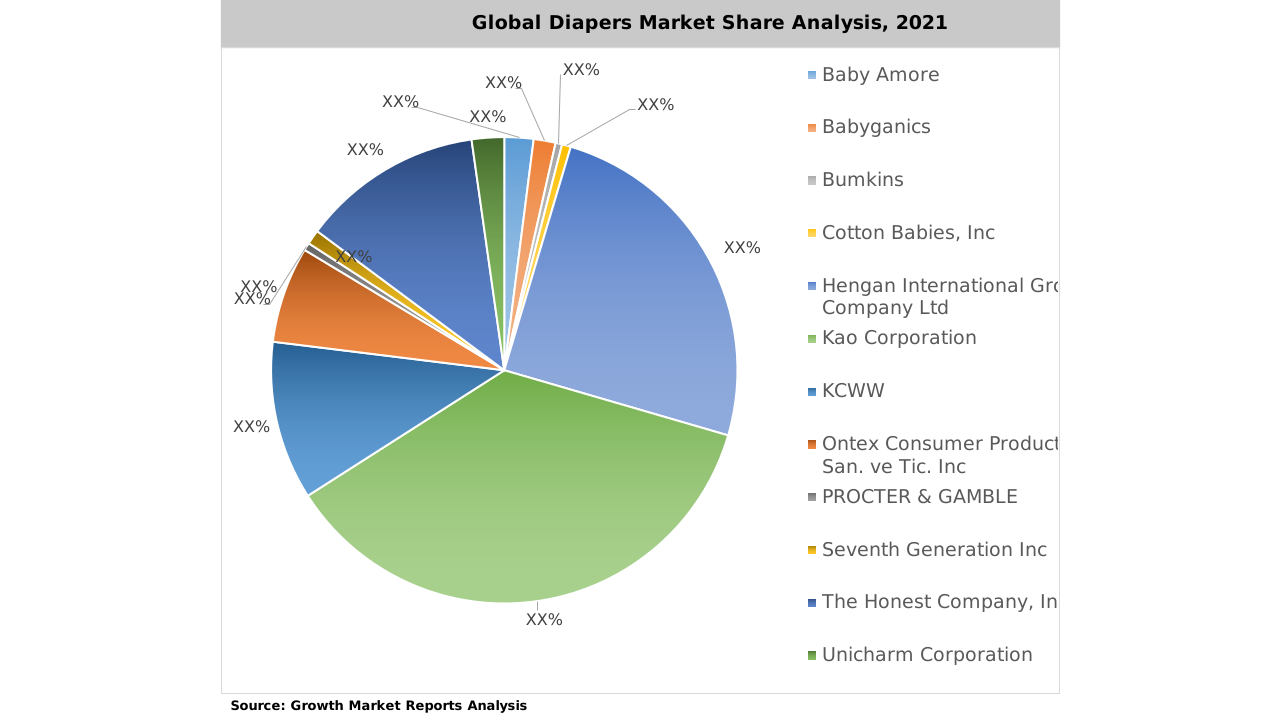

Diapers Market by key players

Frequently Asked Questions

Major challenges include environmental concerns over single-use diaper disposal, regulatory pressures for sustainability, intense competition, and price sensitivity in certain markets.

Key players include Procter & Gamble (Pampers), Kimberly-Clark (Huggies), Unicharm Corporation, Essity AB (Libero, TENA), Kao Corporation (Merries), Ontex Group, and several others.

Common materials include super absorbent polymers (SAPs), cotton (including organic cotton), nonwoven fabrics, bamboo, and plant-based fibers, with a growing focus on sustainability.

Supermarkets/hypermarkets, pharmacies/drug stores, online stores, and convenience stores are the primary distribution channels, with e-commerce experiencing rapid growth.

The adult diaper segment is one of the fastest-growing categories, driven by the rising incidence of incontinence among the elderly and increased awareness about personal hygiene.

Continuous innovation in product design and material technology, integration of eco-friendly and biodegradable materials, and the introduction of smart diapers with sensors are key drivers of market growth.

The main diaper types include disposable diapers, cloth diapers, training diapers, swim pants, and specialty diapers for sensitive skin or medical conditions.

Asia Pacific dominates the diapers market, accounting for the largest revenue share in 2024, followed by North America and Europe. Latin America and the Middle East & Africa are emerging as promising markets.

The diapers market is expected to grow at a CAGR of 5.1% from 2025 to 2033, reaching a projected value of USD 129.3 billion by the end of the forecast period.

As of 2024, the global diapers market size reached USD 83.2 billion, driven by rising hygiene awareness and increasing global birth rates.

Table Of Content

Chapter 1 Executive Summary
Chapter 2 Assumptions and Acronyms Used
Chapter 3 Research Methodology
Chapter 4 Diapers Market Overview
   4.1 Introduction
      4.1.1 Market Taxonomy
      4.1.2 Market Definition
      4.1.3 Macro-Economic Factors Impacting the Market Growth
   4.2 Diapers Market Dynamics
      4.2.1 Market Drivers
      4.2.2 Market Restraints
      4.2.3 Market Opportunity
   4.3 Diapers Market - Supply Chain Analysis
      4.3.1 List of Key Suppliers
      4.3.2 List of Key Distributors
      4.3.3 List of Key Consumers
   4.4 Key Forces Shaping the Diapers Market
      4.4.1 Bargaining Power of Suppliers
      4.4.2 Bargaining Power of Buyers
      4.4.3 Threat of Substitution
      4.4.4 Threat of New Entrants
      4.4.5 Competitive Rivalry
   4.5 Global Diapers Market Size & Forecast, 2023-2032
      4.5.1 Diapers Market Size and Y-o-Y Growth
      4.5.2 Diapers Market Absolute $ Opportunity

Chapter 5 Global Diapers Market Analysis and Forecast By Product Type
   5.1 Introduction
      5.1.1 Key Market Trends & Growth Opportunities By Product Type
      5.1.2 Basis Point Share (BPS) Analysis By Product Type
      5.1.3 Absolute $ Opportunity Assessment By Product Type
   5.2 Diapers Market Size Forecast By Product Type
      5.2.1 Disposable Diapers
      5.2.2 Cloth Diapers
      5.2.3 Training Diapers
      5.2.4 Swim Pants
      5.2.5 Others
   5.3 Market Attractiveness Analysis By Product Type

Chapter 6 Global Diapers Market Analysis and Forecast By Age Group
   6.1 Introduction
      6.1.1 Key Market Trends & Growth Opportunities By Age Group
      6.1.2 Basis Point Share (BPS) Analysis By Age Group
      6.1.3 Absolute $ Opportunity Assessment By Age Group
   6.2 Diapers Market Size Forecast By Age Group
      6.2.1 Infants
      6.2.2 Toddlers
      6.2.3 Children
      6.2.4 Adults
   6.3 Market Attractiveness Analysis By Age Group

Chapter 7 Global Diapers Market Analysis and Forecast By Distribution Channel
   7.1 Introduction
      7.1.1 Key Market Trends & Growth Opportunities By Distribution Channel
      7.1.2 Basis Point Share (BPS) Analysis By Distribution Channel
      7.1.3 Absolute $ Opportunity Assessment By Distribution Channel
   7.2 Diapers Market Size Forecast By Distribution Channel
      7.2.1 Supermarkets/Hypermarkets
      7.2.2 Pharmacies/Drug Stores
      7.2.3 Online Stores
      7.2.4 Convenience Stores
      7.2.5 Others
   7.3 Market Attractiveness Analysis By Distribution Channel

Chapter 8 Global Diapers Market Analysis and Forecast By Material
   8.1 Introduction
      8.1.1 Key Market Trends & Growth Opportunities By Material
      8.1.2 Basis Point Share (BPS) Analysis By Material
      8.1.3 Absolute $ Opportunity Assessment By Material
   8.2 Diapers Market Size Forecast By Material
      8.2.1 Super Absorbent Polymers
      8.2.2 Cotton
      8.2.3 Nonwoven Fabric
      8.2.4 Others
   8.3 Market Attractiveness Analysis By Material

Chapter 9 Global Diapers Market Analysis and Forecast by Region
   9.1 Introduction
      9.1.1 Key Market Trends & Growth Opportunities By Region
      9.1.2 Basis Point Share (BPS) Analysis By Region
      9.1.3 Absolute $ Opportunity Assessment By Region
   9.2 Diapers Market Size Forecast By Region
      9.2.1 North America
      9.2.2 Europe
      9.2.3 Asia Pacific
      9.2.4 Latin America
      9.2.5 Middle East & Africa (MEA)
   9.3 Market Attractiveness Analysis By Region

Chapter 10 Coronavirus Disease (COVID-19) Impact 
   10.1 Introduction 
   10.2 Current & Future Impact Analysis 
   10.3 Economic Impact Analysis 
   10.4 Government Policies 
   10.5 Investment Scenario

Chapter 11 North America Diapers Analysis and Forecast
   11.1 Introduction
   11.2 North America Diapers Market Size Forecast by Country
      11.2.1 U.S.
      11.2.2 Canada
   11.3 Basis Point Share (BPS) Analysis by Country
   11.4 Absolute $ Opportunity Assessment by Country
   11.5 Market Attractiveness Analysis by Country
   11.6 North America Diapers Market Size Forecast By Product Type
      11.6.1 Disposable Diapers
      11.6.2 Cloth Diapers
      11.6.3 Training Diapers
      11.6.4 Swim Pants
      11.6.5 Others
   11.7 Basis Point Share (BPS) Analysis By Product Type 
   11.8 Absolute $ Opportunity Assessment By Product Type 
   11.9 Market Attractiveness Analysis By Product Type
   11.10 North America Diapers Market Size Forecast By Age Group
      11.10.1 Infants
      11.10.2 Toddlers
      11.10.3 Children
      11.10.4 Adults
   11.11 Basis Point Share (BPS) Analysis By Age Group 
   11.12 Absolute $ Opportunity Assessment By Age Group 
   11.13 Market Attractiveness Analysis By Age Group
   11.14 North America Diapers Market Size Forecast By Distribution Channel
      11.14.1 Supermarkets/Hypermarkets
      11.14.2 Pharmacies/Drug Stores
      11.14.3 Online Stores
      11.14.4 Convenience Stores
      11.14.5 Others
   11.15 Basis Point Share (BPS) Analysis By Distribution Channel 
   11.16 Absolute $ Opportunity Assessment By Distribution Channel 
   11.17 Market Attractiveness Analysis By Distribution Channel
   11.18 North America Diapers Market Size Forecast By Material
      11.18.1 Super Absorbent Polymers
      11.18.2 Cotton
      11.18.3 Nonwoven Fabric
      11.18.4 Others
   11.19 Basis Point Share (BPS) Analysis By Material 
   11.20 Absolute $ Opportunity Assessment By Material 
   11.21 Market Attractiveness Analysis By Material

Chapter 12 Europe Diapers Analysis and Forecast
   12.1 Introduction
   12.2 Europe Diapers Market Size Forecast by Country
      12.2.1 Germany
      12.2.2 France
      12.2.3 Italy
      12.2.4 U.K.
      12.2.5 Spain
      12.2.6 Russia
      12.2.7 Rest of Europe
   12.3 Basis Point Share (BPS) Analysis by Country
   12.4 Absolute $ Opportunity Assessment by Country
   12.5 Market Attractiveness Analysis by Country
   12.6 Europe Diapers Market Size Forecast By Product Type
      12.6.1 Disposable Diapers
      12.6.2 Cloth Diapers
      12.6.3 Training Diapers
      12.6.4 Swim Pants
      12.6.5 Others
   12.7 Basis Point Share (BPS) Analysis By Product Type 
   12.8 Absolute $ Opportunity Assessment By Product Type 
   12.9 Market Attractiveness Analysis By Product Type
   12.10 Europe Diapers Market Size Forecast By Age Group
      12.10.1 Infants
      12.10.2 Toddlers
      12.10.3 Children
      12.10.4 Adults
   12.11 Basis Point Share (BPS) Analysis By Age Group 
   12.12 Absolute $ Opportunity Assessment By Age Group 
   12.13 Market Attractiveness Analysis By Age Group
   12.14 Europe Diapers Market Size Forecast By Distribution Channel
      12.14.1 Supermarkets/Hypermarkets
      12.14.2 Pharmacies/Drug Stores
      12.14.3 Online Stores
      12.14.4 Convenience Stores
      12.14.5 Others
   12.15 Basis Point Share (BPS) Analysis By Distribution Channel 
   12.16 Absolute $ Opportunity Assessment By Distribution Channel 
   12.17 Market Attractiveness Analysis By Distribution Channel
   12.18 Europe Diapers Market Size Forecast By Material
      12.18.1 Super Absorbent Polymers
      12.18.2 Cotton
      12.18.3 Nonwoven Fabric
      12.18.4 Others
   12.19 Basis Point Share (BPS) Analysis By Material 
   12.20 Absolute $ Opportunity Assessment By Material 
   12.21 Market Attractiveness Analysis By Material

Chapter 13 Asia Pacific Diapers Analysis and Forecast
   13.1 Introduction
   13.2 Asia Pacific Diapers Market Size Forecast by Country
      13.2.1 China
      13.2.2 Japan
      13.2.3 South Korea
      13.2.4 India
      13.2.5 Australia
      13.2.6 South East Asia (SEA)
      13.2.7 Rest of Asia Pacific (APAC)
   13.3 Basis Point Share (BPS) Analysis by Country
   13.4 Absolute $ Opportunity Assessment by Country
   13.5 Market Attractiveness Analysis by Country
   13.6 Asia Pacific Diapers Market Size Forecast By Product Type
      13.6.1 Disposable Diapers
      13.6.2 Cloth Diapers
      13.6.3 Training Diapers
      13.6.4 Swim Pants
      13.6.5 Others
   13.7 Basis Point Share (BPS) Analysis By Product Type 
   13.8 Absolute $ Opportunity Assessment By Product Type 
   13.9 Market Attractiveness Analysis By Product Type
   13.10 Asia Pacific Diapers Market Size Forecast By Age Group
      13.10.1 Infants
      13.10.2 Toddlers
      13.10.3 Children
      13.10.4 Adults
   13.11 Basis Point Share (BPS) Analysis By Age Group 
   13.12 Absolute $ Opportunity Assessment By Age Group 
   13.13 Market Attractiveness Analysis By Age Group
   13.14 Asia Pacific Diapers Market Size Forecast By Distribution Channel
      13.14.1 Supermarkets/Hypermarkets
      13.14.2 Pharmacies/Drug Stores
      13.14.3 Online Stores
      13.14.4 Convenience Stores
      13.14.5 Others
   13.15 Basis Point Share (BPS) Analysis By Distribution Channel 
   13.16 Absolute $ Opportunity Assessment By Distribution Channel 
   13.17 Market Attractiveness Analysis By Distribution Channel
   13.18 Asia Pacific Diapers Market Size Forecast By Material
      13.18.1 Super Absorbent Polymers
      13.18.2 Cotton
      13.18.3 Nonwoven Fabric
      13.18.4 Others
   13.19 Basis Point Share (BPS) Analysis By Material 
   13.20 Absolute $ Opportunity Assessment By Material 
   13.21 Market Attractiveness Analysis By Material

Chapter 14 Latin America Diapers Analysis and Forecast
   14.1 Introduction
   14.2 Latin America Diapers Market Size Forecast by Country
      14.2.1 Brazil
      14.2.2 Mexico
      14.2.3 Rest of Latin America (LATAM)
   14.3 Basis Point Share (BPS) Analysis by Country
   14.4 Absolute $ Opportunity Assessment by Country
   14.5 Market Attractiveness Analysis by Country
   14.6 Latin America Diapers Market Size Forecast By Product Type
      14.6.1 Disposable Diapers
      14.6.2 Cloth Diapers
      14.6.3 Training Diapers
      14.6.4 Swim Pants
      14.6.5 Others
   14.7 Basis Point Share (BPS) Analysis By Product Type 
   14.8 Absolute $ Opportunity Assessment By Product Type 
   14.9 Market Attractiveness Analysis By Product Type
   14.10 Latin America Diapers Market Size Forecast By Age Group
      14.10.1 Infants
      14.10.2 Toddlers
      14.10.3 Children
      14.10.4 Adults
   14.11 Basis Point Share (BPS) Analysis By Age Group 
   14.12 Absolute $ Opportunity Assessment By Age Group 
   14.13 Market Attractiveness Analysis By Age Group
   14.14 Latin America Diapers Market Size Forecast By Distribution Channel
      14.14.1 Supermarkets/Hypermarkets
      14.14.2 Pharmacies/Drug Stores
      14.14.3 Online Stores
      14.14.4 Convenience Stores
      14.14.5 Others
   14.15 Basis Point Share (BPS) Analysis By Distribution Channel 
   14.16 Absolute $ Opportunity Assessment By Distribution Channel 
   14.17 Market Attractiveness Analysis By Distribution Channel
   14.18 Latin America Diapers Market Size Forecast By Material
      14.18.1 Super Absorbent Polymers
      14.18.2 Cotton
      14.18.3 Nonwoven Fabric
      14.18.4 Others
   14.19 Basis Point Share (BPS) Analysis By Material 
   14.20 Absolute $ Opportunity Assessment By Material 
   14.21 Market Attractiveness Analysis By Material

Chapter 15 Middle East & Africa (MEA) Diapers Analysis and Forecast
   15.1 Introduction
   15.2 Middle East & Africa (MEA) Diapers Market Size Forecast by Country
      15.2.1 Saudi Arabia
      15.2.2 South Africa
      15.2.3 UAE
      15.2.4 Rest of Middle East & Africa (MEA)
   15.3 Basis Point Share (BPS) Analysis by Country
   15.4 Absolute $ Opportunity Assessment by Country
   15.5 Market Attractiveness Analysis by Country
   15.6 Middle East & Africa (MEA) Diapers Market Size Forecast By Product Type
      15.6.1 Disposable Diapers
      15.6.2 Cloth Diapers
      15.6.3 Training Diapers
      15.6.4 Swim Pants
      15.6.5 Others
   15.7 Basis Point Share (BPS) Analysis By Product Type 
   15.8 Absolute $ Opportunity Assessment By Product Type 
   15.9 Market Attractiveness Analysis By Product Type
   15.10 Middle East & Africa (MEA) Diapers Market Size Forecast By Age Group
      15.10.1 Infants
      15.10.2 Toddlers
      15.10.3 Children
      15.10.4 Adults
   15.11 Basis Point Share (BPS) Analysis By Age Group 
   15.12 Absolute $ Opportunity Assessment By Age Group 
   15.13 Market Attractiveness Analysis By Age Group
   15.14 Middle East & Africa (MEA) Diapers Market Size Forecast By Distribution Channel
      15.14.1 Supermarkets/Hypermarkets
      15.14.2 Pharmacies/Drug Stores
      15.14.3 Online Stores
      15.14.4 Convenience Stores
      15.14.5 Others
   15.15 Basis Point Share (BPS) Analysis By Distribution Channel 
   15.16 Absolute $ Opportunity Assessment By Distribution Channel 
   15.17 Market Attractiveness Analysis By Distribution Channel
   15.18 Middle East & Africa (MEA) Diapers Market Size Forecast By Material
      15.18.1 Super Absorbent Polymers
      15.18.2 Cotton
      15.18.3 Nonwoven Fabric
      15.18.4 Others
   15.19 Basis Point Share (BPS) Analysis By Material 
   15.20 Absolute $ Opportunity Assessment By Material 
   15.21 Market Attractiveness Analysis By Material

Chapter 16 Competition Landscape 
   16.1 Diapers Market: Competitive Dashboard
   16.2 Global Diapers Market: Market Share Analysis, 2023
   16.3 Company Profiles (Details – Overview, Financials, Developments, Strategy) 
      16.3.1 Procter & Gamble (Pampers)
Kimberly-Clark (Huggies)
Unicharm Corporation
Essity (Libero, Drypers)
Kao Corporation
Ontex Group
First Quality Enterprises
Domtar Corporation
Daio Paper Corporation
Hengan International Group
Nobel Hygiene
Bumkins
The Honest Company
Seventh Generation
Wipro Consumer Care
Chiaus (Fujian Chiaus)
Pigeon Corporation
ABENA Group
Drylock Technologies
DSG International (Thailand)

Methodology

Our Clients

Dassault Aviation
Siemens Healthcare
The John Holland Group
Nestle SA
Honda Motor Co. Ltd.
sinopec
FedEx Logistics
Microsoft