Segments - by Product Type (Blood Glucose Monitoring Devices, Insulin Delivery Devices, Continuous Glucose Monitoring Systems, Lancets, Others), by End User (Hospitals & Clinics, Home Care, Others), by Distribution Channel (Retail Pharmacies, Hospital Pharmacies, Online Pharmacies, Others)
According to our latest research, the global Diabetes Care Devices market size reached USD 32.7 billion in 2024, reflecting robust demand across both developed and emerging economies. The market is expected to expand at a steady CAGR of 7.1% from 2025 to 2033, with the overall market projected to reach USD 60.7 billion by 2033. The growth of this market is primarily driven by the rising global prevalence of diabetes, technological advancements in glucose monitoring and insulin delivery, and increasing awareness regarding diabetes management and patient self-care.
The most significant growth factor for the diabetes care devices market is the alarming rise in diabetes incidence worldwide. A sedentary lifestyle, increasing obesity rates, and aging populations are contributing to a surge in both Type 1 and Type 2 diabetes cases. As a result, the demand for advanced blood glucose monitoring devices, continuous glucose monitoring systems, and innovative insulin delivery solutions is escalating. Furthermore, governments and healthcare organizations are launching various awareness campaigns and screening programs, which are boosting early diagnosis and, consequently, the adoption of diabetes care devices. The integration of digital health technologies and smartphone applications with diabetes care devices is also enhancing patient engagement and adherence, further fueling market growth.
Technological advancements play a pivotal role in shaping the diabetes care devices market landscape. Continuous innovations in glucose monitoring, such as the advent of minimally invasive and non-invasive monitoring systems, have significantly improved patient comfort and compliance. The introduction of smart insulin pens, closed-loop insulin delivery systems, and wearable continuous glucose monitors has revolutionized diabetes management, enabling real-time monitoring and precise insulin dosing. These advancements not only enhance patient outcomes but also reduce the burden of complications associated with poorly managed diabetes. Moreover, the integration of artificial intelligence and data analytics in diabetes care devices is empowering patients and healthcare professionals with actionable insights, fostering personalized treatment approaches.
The expansion of home-based diabetes care and the growing emphasis on patient-centric healthcare are also major contributors to market growth. With the increasing preference for self-monitoring and at-home care, there is a rising demand for user-friendly and portable diabetes care devices. This trend is further supported by the proliferation of online pharmacies and e-commerce platforms, making these devices more accessible to a broader patient population. Additionally, favorable reimbursement policies and the growing availability of diabetes care devices in retail and hospital pharmacies are facilitating market penetration, especially in emerging economies. As the focus on preventive healthcare intensifies, the adoption of diabetes care devices is expected to witness sustained momentum throughout the forecast period.
Regionally, North America dominates the diabetes care devices market, accounting for the largest share in 2024, followed by Europe and the Asia Pacific. The high prevalence of diabetes, advanced healthcare infrastructure, and strong presence of leading market players contribute to North America's market leadership. Meanwhile, the Asia Pacific region is poised for the fastest growth, driven by a rapidly increasing diabetic population, improving healthcare access, and rising awareness about diabetes management. Latin America and the Middle East & Africa are also witnessing steady growth, albeit from a smaller base, as healthcare investments and diabetes screening programs gain momentum in these regions.
The diabetes care devices market is segmented by product type into blood glucose monitoring devices, insulin delivery devices, continuous glucose monitoring (CGM) systems, lancets, and others. Blood glucose monitoring devices remain the cornerstone of diabetes management, representing a significant share of the market. These devices have evolved from traditional finger-prick glucometers to advanced systems capable of providing accurate and rapid glucose readings. The increasing adoption of portable and user-friendly blood glucose meters, coupled with the integration of Bluetooth and wireless connectivity, is enhancing patient convenience and compliance. Furthermore, the widespread use of blood glucose monitoring devices in both clinical and home settings underscores their critical role in effective diabetes management.
Insulin delivery devices constitute another vital segment, encompassing insulin pens, pumps, syringes, and jet injectors. The growing preference for insulin pens and pumps is attributed to their ease of use, precise dosing, and reduced pain compared to traditional syringes. Technological innovations such as smart insulin pens and patch pumps are gaining traction, especially among younger and tech-savvy diabetic patients. Insulin pumps, in particular, are witnessing increased adoption due to their ability to provide continuous subcutaneous insulin infusion, mimicking natural insulin delivery and improving glycemic control. As diabetes management becomes more personalized, the demand for advanced insulin delivery devices is expected to rise steadily.
The continuous glucose monitoring (CGM) systems segment is experiencing the fastest growth within the product type category. CGM systems offer real-time monitoring of glucose levels, allowing for better glycemic control and reducing the risk of hypoglycemia and hyperglycemia. The increasing availability of minimally invasive and implantable CGM devices, along with their integration with insulin pumps in closed-loop systems, is transforming diabetes care. The ability of CGM systems to generate comprehensive glucose trend reports and alerts further empowers patients and healthcare providers to make informed treatment decisions. As reimbursement coverage for CGM systems expands and device accuracy improves, this segment is expected to witness significant market expansion.
Lancets and other ancillary devices, such as glucose test strips and ketone meters, also play a crucial role in the diabetes care devices market. While lancets are essential for capillary blood sampling, ongoing innovations are focused on minimizing pain and enhancing safety features, such as single-use and retractable lancets. The demand for high-quality, affordable lancets and test strips is particularly pronounced in emerging markets, where cost considerations remain paramount. Additionally, the development of multi-functional devices that combine glucose and ketone monitoring is catering to the needs of patients with complex diabetes management requirements. Overall, the product type segment is characterized by continuous innovation and diversification to meet the evolving needs of diabetic patients worldwide.
| Attributes | Details |
| Report Title | Diabetes Care Devices Market Research Report 2033 |
| By Product Type | Blood Glucose Monitoring Devices, Insulin Delivery Devices, Continuous Glucose Monitoring Systems, Lancets, Others |
| By End User | Hospitals & Clinics, Home Care, Others |
| By Distribution Channel | Retail Pharmacies, Hospital Pharmacies, Online Pharmacies, Others |
| Regions Covered | North America, Europe, APAC, Latin America, MEA |
| Base Year | 2024 |
| Historic Data | 2018-2023 |
| Forecast Period | 2025-2033 |
| Number of Pages | 270 |
| Number of Tables & Figures | 364 |
| Customization Available | Yes, the report can be customized as per your need. |
The diabetes care devices market is segmented by end user into hospitals & clinics, home care, and others. Hospitals & clinics represent a substantial end-user segment, driven by the high volume of diabetes diagnosis, monitoring, and treatment procedures conducted in these settings. Hospitals and clinics are equipped with advanced diagnostic and therapeutic devices, enabling comprehensive diabetes management for both inpatients and outpatients. The increasing prevalence of diabetes-related complications, such as diabetic ketoacidosis and neuropathy, necessitates frequent hospital visits and continuous monitoring, thereby driving demand for a wide array of diabetes care devices. Moreover, the presence of skilled healthcare professionals and robust reimbursement policies in hospital settings further bolsters the adoption of these devices.
Home care is emerging as a rapidly growing end-user segment, fueled by the rising trend of patient self-management and the shift towards decentralized healthcare delivery. The availability of portable, user-friendly, and connected diabetes care devices has empowered patients to monitor their glucose levels and administer insulin in the comfort of their homes. Home care adoption is particularly high among elderly patients and those with chronic conditions who require frequent monitoring. The integration of telemedicine and remote patient monitoring solutions with diabetes care devices is further enhancing the effectiveness of home-based diabetes management. As healthcare systems worldwide emphasize preventive care and reduce hospital readmissions, the home care segment is expected to witness sustained growth.
The others category includes settings such as long-term care facilities, rehabilitation centers, and ambulatory care centers. These facilities cater to patients with complex or multiple comorbidities who require continuous monitoring and specialized diabetes management. The demand for diabetes care devices in these settings is driven by the need for accurate, real-time data to inform clinical decision-making and prevent complications. Additionally, the growing adoption of integrated care models and multidisciplinary approaches to chronic disease management is increasing the use of diabetes care devices in non-traditional healthcare settings. As the burden of diabetes continues to rise globally, the importance of tailored solutions for diverse end-user environments will become increasingly evident.
Overall, the end user segment analysis highlights the diverse and evolving landscape of diabetes care delivery. While hospitals and clinics remain pivotal in managing acute and complex cases, the growing emphasis on patient empowerment and self-care is propelling the adoption of diabetes care devices in home and community settings. The convergence of digital health technologies, data analytics, and personalized care solutions is reshaping the end-user dynamics, creating new opportunities for market players to address unmet needs across the diabetes care continuum.
The diabetes care devices market is segmented by distribution channel into retail pharmacies, hospital pharmacies, online pharmacies, and others. Retail pharmacies account for a significant share of the market, serving as a primary point of access for patients seeking diabetes care devices and related supplies. The widespread presence of retail pharmacies, coupled with their ability to offer a broad range of products and personalized customer service, makes them a preferred choice for many diabetic patients. Retail pharmacies also play a crucial role in patient education and counseling, helping to improve adherence to diabetes management protocols. As demand for over-the-counter diabetes care devices continues to rise, retail pharmacies are expected to maintain their dominant position in the distribution landscape.
Hospital pharmacies are another important distribution channel, particularly for advanced and prescription-based diabetes care devices. Hospital pharmacies facilitate the timely and efficient dispensing of insulin delivery systems, continuous glucose monitoring devices, and other specialized products to inpatients and outpatients. The integration of hospital pharmacies with electronic health records and clinical decision support systems enhances the coordination of care and ensures optimal device utilization. Additionally, hospital pharmacies often collaborate with diabetes educators and endocrinologists to provide comprehensive support to patients, further driving device adoption in clinical settings. The growing emphasis on integrated care and multidisciplinary approaches is expected to strengthen the role of hospital pharmacies in the diabetes care devices market.
The online pharmacies segment is witnessing rapid growth, driven by the increasing penetration of e-commerce and digital health platforms. Online pharmacies offer unparalleled convenience, competitive pricing, and a wide selection of diabetes care devices, making them an attractive option for tech-savvy and remote patients. The COVID-19 pandemic has accelerated the adoption of online channels, as patients seek contactless purchasing options and home delivery of essential medical supplies. Online pharmacies also provide access to product reviews, educational resources, and teleconsultation services, enhancing the overall patient experience. As regulatory frameworks for online pharmacies evolve and digital literacy improves, this segment is poised for continued expansion.
The others category encompasses specialty stores, direct sales, and government procurement channels. Specialty stores cater to niche patient segments with specific device requirements, while direct sales models enable manufacturers to establish closer relationships with end-users and healthcare providers. Government procurement programs, particularly in emerging markets, play a critical role in expanding access to diabetes care devices for underserved populations. These alternative channels complement traditional distribution networks and contribute to the overall resilience and adaptability of the diabetes care devices market.
One of the most promising opportunities in the diabetes care devices market lies in the integration of digital health technologies and artificial intelligence with traditional diabetes management tools. The proliferation of smart devices, mobile health applications, and cloud-based data platforms is enabling real-time monitoring, remote patient management, and personalized treatment recommendations. This digital transformation is not only improving clinical outcomes but also empowering patients to take a more active role in their own care. Market players who invest in interoperable, user-friendly, and data-driven solutions are well-positioned to capitalize on this trend and capture new growth opportunities. Furthermore, strategic collaborations between device manufacturers, technology companies, and healthcare providers are expected to accelerate innovation and expand market reach.
Another significant opportunity stems from the expanding prevalence of diabetes in emerging markets, particularly in Asia Pacific, Latin America, and parts of the Middle East & Africa. Rising disposable incomes, urbanization, and increasing health awareness are driving demand for advanced diabetes care devices in these regions. Governments and non-governmental organizations are also investing in diabetes screening, prevention, and management programs, creating a conducive environment for market growth. Companies that tailor their product offerings to local needs, address affordability concerns, and establish robust distribution networks stand to gain a competitive edge in these high-growth markets. Additionally, the development of low-cost, portable, and easy-to-use devices will be critical in addressing the unmet needs of resource-constrained populations.
Despite the positive outlook, the diabetes care devices market faces several restraining factors. One of the primary challenges is the high cost of advanced diabetes care devices, which can limit accessibility for low-income patients and healthcare systems. Reimbursement policies for newer technologies, such as continuous glucose monitoring systems and insulin pumps, vary widely across regions and often lag behind technological advancements. Furthermore, concerns regarding device accuracy, data privacy, and cybersecurity pose barriers to widespread adoption, particularly for connected and wearable devices. Market players must navigate these challenges by prioritizing affordability, regulatory compliance, and patient safety to ensure sustained growth and market acceptance.
The North American region continues to dominate the diabetes care devices market, accounting for a market size of USD 13.5 billion in 2024. The region's leadership is underpinned by a high prevalence of diabetes, advanced healthcare infrastructure, and robust reimbursement frameworks. The United States, in particular, is a major contributor, driven by significant investments in research and development, widespread adoption of innovative technologies, and strong presence of leading market players. Canada also exhibits steady growth, supported by government initiatives and increasing awareness regarding diabetes management. North America's market is expected to grow at a CAGR of 6.5% over the forecast period, reaching approximately USD 23.7 billion by 2033.
Europe is the second-largest regional market, with a market size of USD 8.6 billion in 2024. The region benefits from a well-established healthcare system, high diagnosis rates, and favorable reimbursement policies for diabetes care devices. Countries such as Germany, the United Kingdom, and France are at the forefront of technological adoption, while Eastern European countries are gradually improving access to advanced diabetes management solutions. The European market is characterized by strong regulatory oversight and a focus on patient safety, which drives demand for high-quality and compliant devices. The region is projected to maintain steady growth, reaching a market size of USD 15.2 billion by 2033.
The Asia Pacific region is emerging as the fastest-growing market, with a current market size of USD 6.7 billion in 2024. The region's rapid growth is fueled by a burgeoning diabetic population, rising healthcare expenditure, and increasing adoption of modern diabetes care devices. China and India are the primary growth engines, supported by large patient pools, government initiatives, and expanding healthcare infrastructure. Southeast Asian countries are also witnessing rising demand, driven by urbanization and lifestyle changes. The Asia Pacific market is expected to grow at a CAGR of 9.2%, reaching USD 14.5 billion by 2033. Latin America and the Middle East & Africa collectively account for the remaining market share, with both regions exhibiting steady growth as healthcare access and diabetes awareness improve.
The diabetes care devices market is highly competitive, characterized by the presence of several global and regional players vying for market share through product innovation, strategic partnerships, and geographical expansion. Leading companies are investing heavily in research and development to introduce next-generation devices that offer improved accuracy, ease of use, and seamless connectivity. The competitive landscape is further shaped by mergers and acquisitions, as established players seek to enhance their product portfolios and expand their global footprint. The entry of technology companies and startups into the diabetes care ecosystem is intensifying competition and driving the pace of innovation.
Market leaders are increasingly focusing on digital transformation, leveraging artificial intelligence, machine learning, and data analytics to develop integrated diabetes management solutions. The convergence of medical devices with digital health platforms is creating new avenues for remote monitoring, personalized care, and patient engagement. Companies are also prioritizing user-centric design, ensuring that devices are intuitive, minimally invasive, and compatible with mobile applications. Strategic collaborations with healthcare providers, payers, and patient advocacy groups are enabling market players to address unmet needs and improve patient outcomes. The competitive environment is dynamic, with continuous product launches, regulatory approvals, and market entry strategies shaping the industry's evolution.
Key players in the diabetes care devices market include Abbott Laboratories, Medtronic plc, F. Hoffmann-La Roche Ltd, Dexcom, Inc., Becton, Dickinson and Company (BD), Novo Nordisk A/S, Sanofi, Insulet Corporation, Ypsomed AG, and Terumo Corporation. Abbott Laboratories is renowned for its FreeStyle Libre continuous glucose monitoring system, which has revolutionized glucose monitoring with its sensor-based technology. Medtronic plc is a pioneer in insulin pump therapy and integrated diabetes management solutions, while Dexcom, Inc. is a leader in real-time continuous glucose monitoring systems. F. Hoffmann-La Roche Ltd offers a comprehensive portfolio of blood glucose monitoring devices and digital health solutions, catering to diverse patient needs.
Becton, Dickinson and Company (BD) is a prominent player in insulin delivery devices, with a strong focus on safety and innovation. Novo Nordisk A/S and Sanofi are global leaders in insulin therapy, leveraging their expertise to develop advanced delivery systems and combination therapies. Insulet Corporation is recognized for its Omnipod insulin management system, which offers tubeless and wearable insulin delivery. Ypsomed AG and Terumo Corporation are expanding their presence through product innovation and strategic partnerships in key markets. Collectively, these companies are shaping the future of diabetes care through continuous innovation, patient-centric solutions, and a commitment to improving the quality of life for diabetic patients worldwide.
The Diabetes Care Devices market has been segmented on the basis of
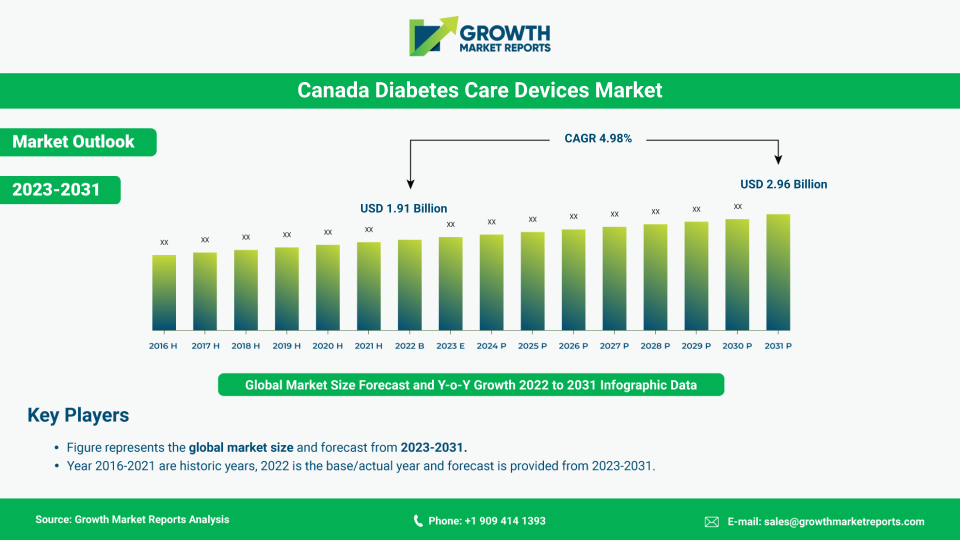
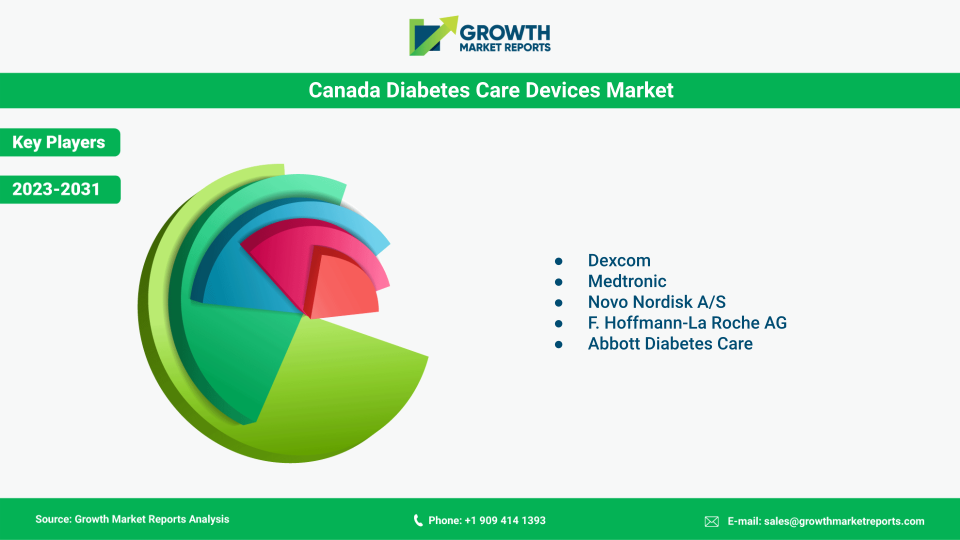
Key players competing in the Canada Diabetes Care Devices Market are Dexcom; Medtronic; Novo Nordisk A/S; F. Hoffmann-La Roche AG; Abbott Diabetes Care. Companies are focusing on partnering with local manufacturers and collaborating with other industry players to expand their market share. Constant innovations are made by the manufacturers so that they can still remain into the market.
In April 2021, Medtronic announced the launch of the Medtronic Extended Infusion set in selected Europe-based countries. The set can be worn for up to seven days. It claims that it maintains the insulin flow and stability. However, the set is still in investigational use in the US.
In December 2020, Abbott introduced FreeStyle Libre 2, a sensor-based glucose monitoring technology, which has been already approved by Health Canada for individuals above 4 years. The technology allows the patients to get real-time alerts, which eliminates the use of painful needles.
Opportunities include the integration of digital health and AI technologies, expansion in emerging markets, development of affordable and portable devices, and strategic collaborations between manufacturers and healthcare providers.
Major challenges include the high cost of advanced devices, varying reimbursement policies, concerns over device accuracy and data privacy, and limited accessibility for low-income populations.
Key players include Abbott Laboratories, Medtronic plc, F. Hoffmann-La Roche Ltd, Dexcom, Inc., Becton, Dickinson and Company (BD), Novo Nordisk A/S, Sanofi, Insulet Corporation, Ypsomed AG, and Terumo Corporation.
Technological advancements such as minimally invasive and non-invasive glucose monitoring, smart insulin pens, closed-loop insulin delivery systems, and AI-driven data analytics are improving patient outcomes and enabling personalized diabetes management.
Diabetes care devices are distributed through retail pharmacies, hospital pharmacies, online pharmacies, specialty stores, direct sales, and government procurement channels.
North America leads the diabetes care devices market, followed by Europe and the Asia Pacific. North America's dominance is due to high diabetes prevalence, advanced healthcare infrastructure, and the presence of leading market players.
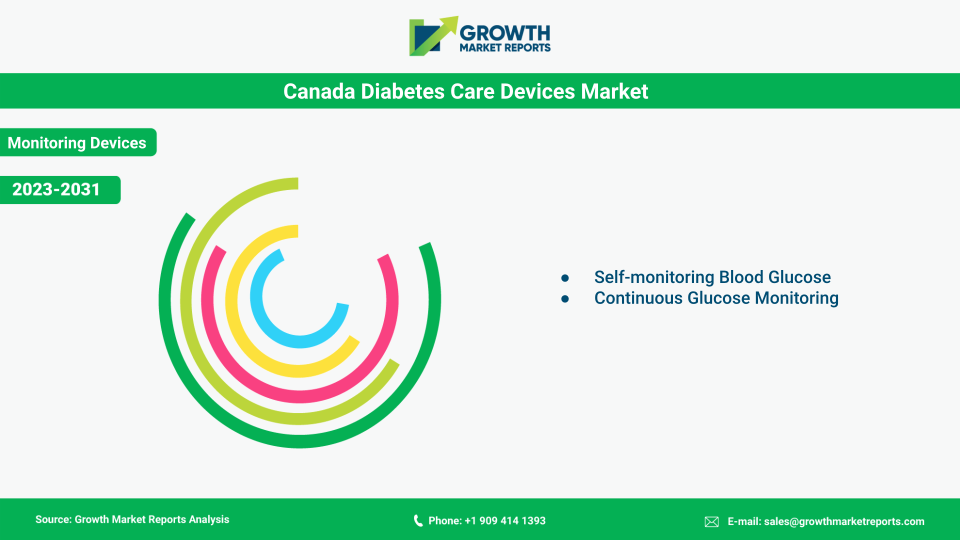
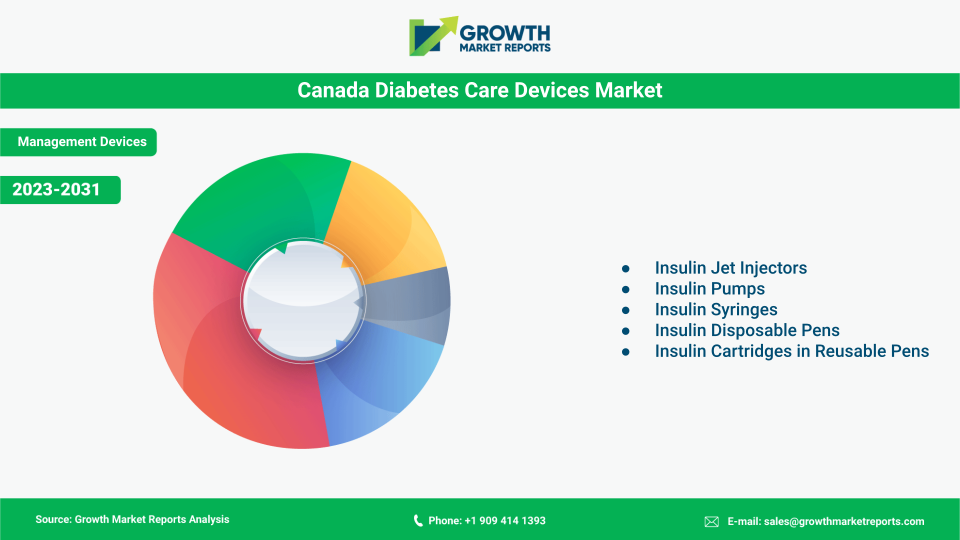
The market includes blood glucose monitoring devices, insulin delivery devices (such as pens, pumps, syringes, and jet injectors), continuous glucose monitoring (CGM) systems, lancets, and other ancillary devices like test strips and ketone meters.
Key growth drivers include the rising global prevalence of diabetes, technological advancements in glucose monitoring and insulin delivery, increasing awareness about diabetes management, and the integration of digital health technologies.
The diabetes care devices market is expected to grow at a CAGR of 7.1% from 2025 to 2033, reaching an estimated USD 60.7 billion by 2033.
As of 2024, the global diabetes care devices market size reached USD 32.7 billion, with strong demand across both developed and emerging economies.