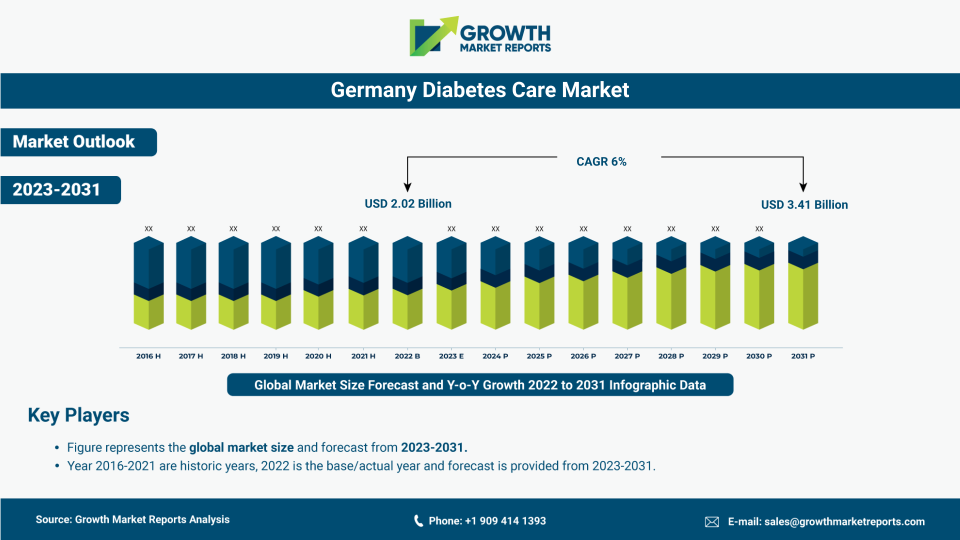
Diabetes Care Market Research Report 2033

Diabetes Care Market Research Report 2033

Segments - by Product Type (Blood Glucose Monitoring Devices, Insulin Delivery Devices, Diabetes Management Software, Others), by Application (Type 1 Diabetes, Type 2 Diabetes, Gestational Diabetes, Others), by End User (Hospitals & Clinics, Home Care, Diagnostic Centers, Others), by Distribution Channel (Retail Pharmacies, Online Pharmacies, Hospital Pharmacies, Others)

https://growthmarketreports.com/raksha
Author : Raksha Sharma
https://growthmarketreports.com/Vaibhav
Fact-checked by : V. Chandola
https://growthmarketreports.com/Shruti
Editor : Shruti Bhat

Upcoming | Report ID :HC-1595 | 4.4 Rating | 44 Reviews | 257 Pages | Format : Docx PDF

Report Description


Diabetes Care Market Outlook

According to our latest research, the global diabetes care market size reached USD 78.6 billion in 2024, reflecting robust growth driven by the rising global prevalence of diabetes and technological advancements in care solutions. The market is expected to expand at a CAGR of 7.2% from 2025 to 2033, projecting a value of USD 146.7 billion by 2033. This significant growth is primarily fueled by increasing awareness about diabetes management, expanding access to advanced medical devices, and a surge in the adoption of digital health solutions worldwide.

A key growth factor for the diabetes care market is the escalating incidence of diabetes globally, particularly type 2 diabetes, which is closely linked to sedentary lifestyles, unhealthy dietary habits, and rising obesity rates. According to the International Diabetes Federation, more than 537 million adults were living with diabetes in 2024, a number expected to rise steadily over the next decade. This surge in patient population is creating a substantial demand for diabetes care products, including blood glucose monitoring devices, insulin delivery systems, and diabetes management software. The growing emphasis on early diagnosis and continuous monitoring is also prompting healthcare providers and patients alike to invest in advanced and user-friendly diabetes care solutions.

Technological advancements are another critical driver of the diabetes care market. Innovations such as continuous glucose monitoring (CGM) systems, smart insulin pens, and integrated diabetes management platforms are transforming the way patients manage their condition. These technologies offer real-time data, improved accuracy, and enhanced patient convenience, leading to better glycemic control and overall health outcomes. The integration of artificial intelligence and data analytics in diabetes management software further enables personalized treatment plans and remote patient monitoring, contributing to improved patient adherence and reduced complications.

In addition, the increasing penetration of digital health and telemedicine is reshaping the diabetes care landscape. The COVID-19 pandemic accelerated the adoption of remote healthcare solutions, making it easier for patients to access diabetes care services from the comfort of their homes. This trend is particularly beneficial for patients in remote or underserved areas, where access to specialized diabetes care is limited. The proliferation of online pharmacies and direct-to-consumer sales channels is also facilitating the availability of diabetes care products, thereby boosting market growth. Furthermore, supportive government initiatives, favorable reimbursement policies, and growing investments in diabetes research and development are creating a conducive environment for market expansion.

Diabetes Treatment has evolved significantly over the years, with a focus on personalized and patient-centric approaches. The integration of advanced technologies, such as continuous glucose monitoring and smart insulin delivery systems, has transformed the landscape of diabetes management. These innovations not only provide real-time data and insights but also enable healthcare providers to tailor treatment plans to individual patient needs, improving outcomes and quality of life. Moreover, the development of new pharmacological therapies, including GLP-1 receptor agonists and SGLT2 inhibitors, offers additional options for managing blood glucose levels effectively. As research continues to advance, the future of diabetes treatment looks promising, with potential breakthroughs in areas such as gene therapy and regenerative medicine.

Regionally, North America continues to dominate the diabetes care market, owing to its large diabetic population, well-established healthcare infrastructure, and high adoption of advanced medical technologies. However, the Asia Pacific region is emerging as a lucrative market, driven by rapid urbanization, increasing healthcare expenditure, and rising awareness about diabetes management. Europe also holds a significant market share, supported by robust government initiatives and a high prevalence of diabetes. Meanwhile, Latin America and the Middle East & Africa are witnessing steady growth, fueled by improving healthcare access and rising investments in healthcare infrastructure. Overall, the global diabetes care market is poised for sustained growth, supported by demographic trends, technological innovation, and evolving patient needs.

Global Diabetes Care Industry Outlook

Product Type Analysis

The diabetes care market is segmented by product type into blood glucose monitoring devices, insulin delivery devices, diabetes management software, and others. Blood glucose monitoring devices constitute the largest segment, driven by the necessity for regular glucose level checks among diabetic patients. These devices have evolved from traditional glucometers to sophisticated continuous glucose monitoring systems, which offer real-time data and trend analysis, significantly enhancing diabetes management. The demand for minimally invasive and non-invasive monitoring solutions is also on the rise, with companies investing heavily in research and development to introduce innovative products that improve patient comfort and compliance.

Insulin delivery devices represent another major segment, encompassing insulin pens, pumps, syringes, and jet injectors. The increasing prevalence of insulin-dependent diabetes, particularly type 1 diabetes, is fueling the demand for advanced insulin delivery solutions. Insulin pumps, in particular, are gaining popularity due to their ability to provide precise and continuous insulin delivery, reducing the risk of hypoglycemia and improving glycemic control. The advent of smart insulin pens and patch pumps, which offer connectivity with mobile apps and integration with CGM systems, is further driving segment growth by enhancing convenience and patient adherence.

Diabetes management software is an emerging and rapidly growing segment, reflecting the broader trend toward digital health and personalized medicine. These platforms enable patients and healthcare providers to track glucose levels, insulin doses, dietary intake, and physical activity, facilitating data-driven decision-making. The integration of artificial intelligence and machine learning algorithms allows for predictive analytics and personalized treatment recommendations, optimizing diabetes management. The growing adoption of telemedicine and remote monitoring solutions, particularly in the wake of the COVID-19 pandemic, is further accelerating the uptake of diabetes management software.

The "others" category includes a range of ancillary products such as lancets, test strips, and diabetes care accessories. While these products may not command the same market share as monitoring devices or insulin delivery systems, they are essential components of comprehensive diabetes care. The increasing focus on patient comfort, ease of use, and cost-effectiveness is prompting manufacturers to innovate in this segment as well. Overall, the diverse product portfolio within the diabetes care market ensures that patients have access to a wide range of solutions tailored to their specific needs and preferences.

Report Scope

Attributes Details
Report Title Diabetes Care Market Research Report 2033
By Product Type Blood Glucose Monitoring Devices, Insulin Delivery Devices, Diabetes Management Software, Others
By Application Type 1 Diabetes, Type 2 Diabetes, Gestational Diabetes, Others
By End User Hospitals & Clinics, Home Care, Diagnostic Centers, Others
By Distribution Channel Retail Pharmacies, Online Pharmacies, Hospital Pharmacies, Others
Regions Covered North America, Europe, APAC, Latin America, MEA
Base Year 2024
Historic Data 2018-2023
Forecast Period 2025-2033
Number of Pages 257
Number of Tables & Figures 338
Customization Available Yes, the report can be customized as per your need.

Application Analysis

The diabetes care market is segmented by application into type 1 diabetes, type 2 diabetes, gestational diabetes, and others. Type 2 diabetes accounts for the largest share of the market, reflecting its higher prevalence globally, particularly among adults and older populations. The rising incidence of obesity, sedentary lifestyles, and unhealthy dietary habits are major contributing factors to the growing burden of type 2 diabetes. This segment drives significant demand for both blood glucose monitoring devices and insulin delivery systems, as effective management requires regular monitoring and, in many cases, pharmacological intervention.

Type 1 diabetes, while less prevalent than type 2, represents a substantial market segment due to the lifelong need for insulin therapy and continuous monitoring. Patients with type 1 diabetes are typically diagnosed at a younger age and require intensive management to maintain glycemic control and prevent complications. The increasing availability of advanced insulin pumps, CGM systems, and integrated diabetes management platforms is improving the quality of life for type 1 diabetes patients and driving market growth in this segment. Additionally, ongoing research into novel therapies, such as closed-loop insulin delivery systems and islet cell transplantation, holds promise for further advancements in type 1 diabetes care.

Gestational diabetes is a growing concern, particularly in regions with high rates of obesity and advanced maternal age. This segment requires specialized care to ensure the health of both the mother and the developing fetus. Blood glucose monitoring and dietary management are critical components of gestational diabetes care, with insulin therapy prescribed in cases where lifestyle interventions are insufficient. The increasing awareness of the risks associated with gestational diabetes, coupled with improved screening and diagnostic protocols, is driving demand for diabetes care products in this segment.

The "others" category includes rare forms of diabetes, such as monogenic diabetes and secondary diabetes resulting from other medical conditions or medications. While these forms represent a smaller share of the market, they require specialized management and contribute to the overall demand for diabetes care products and services. The growing emphasis on personalized medicine and precision diagnostics is enabling better identification and management of these less common forms of diabetes, further expanding the scope of the diabetes care market.

End User Analysis

The diabetes care market is segmented by end user into hospitals and clinics, home care, diagnostic centers, and others. Hospitals and clinics remain the primary end users, accounting for the largest share of the market due to their role in diagnosis, treatment initiation, and management of diabetes-related complications. These settings are equipped with advanced diagnostic and therapeutic tools, enabling comprehensive care for diabetic patients. The increasing prevalence of diabetes-related hospitalizations, coupled with the availability of multidisciplinary care teams, reinforces the importance of hospitals and clinics in the diabetes care ecosystem.

Home care is an increasingly important segment, reflecting the shift toward patient-centric and self-managed diabetes care. Advances in portable and user-friendly blood glucose monitoring devices, insulin delivery systems, and digital health platforms are empowering patients to manage their condition effectively at home. The COVID-19 pandemic accelerated the adoption of home-based care solutions, as patients sought to minimize exposure to healthcare settings. The growing availability of telemedicine services and remote patient monitoring tools is further facilitating the transition to home care, enhancing patient convenience and adherence while reducing healthcare costs.

Diagnostic centers play a critical role in the early detection and ongoing monitoring of diabetes. These facilities offer a range of diagnostic tests, including fasting glucose, HbA1c, and oral glucose tolerance tests, enabling timely diagnosis and risk stratification. The increasing emphasis on preventive healthcare and regular screening is driving demand for diagnostic services, particularly in regions with high diabetes prevalence. Diagnostic centers also serve as important referral points for patients requiring specialized diabetes care, contributing to the overall growth of the market.

The "others" category includes long-term care facilities, rehabilitation centers, and community health organizations. These settings provide essential support for patients with complex needs, including those with advanced diabetes-related complications or comorbidities. The integration of diabetes care services into broader healthcare delivery models is enhancing patient outcomes and ensuring continuity of care across different settings. Overall, the diverse range of end users highlights the multifaceted nature of diabetes care and the need for tailored solutions to meet the unique needs of different patient populations.

Distribution Channel Analysis

The diabetes care market is segmented by distribution channel into retail pharmacies, online pharmacies, hospital pharmacies, and others. Retail pharmacies account for the largest share of the market, serving as the primary point of access for diabetes care products such as blood glucose monitors, test strips, and insulin delivery devices. The widespread presence of retail pharmacies, coupled with their role in patient education and counseling, makes them a critical component of the diabetes care supply chain. The increasing availability of value-added services, such as medication therapy management and diabetes education programs, is further strengthening the position of retail pharmacies in the market.

Online pharmacies represent a rapidly growing segment, driven by the increasing adoption of e-commerce and digital health platforms. The convenience of home delivery, competitive pricing, and access to a wide range of products are key factors driving patient preference for online pharmacies. The COVID-19 pandemic accelerated the shift toward online purchasing, as patients sought to minimize in-person interactions and ensure uninterrupted access to essential diabetes care products. The integration of teleconsultation services and digital prescription management is further enhancing the value proposition of online pharmacies, making them an increasingly important distribution channel.

Hospital pharmacies play a vital role in the supply of diabetes care products to inpatients and outpatients within healthcare facilities. These pharmacies are responsible for ensuring the timely and accurate dispensing of medications, including insulin and other antidiabetic agents, as well as diabetes management devices. The close collaboration between hospital pharmacies, physicians, and nursing staff ensures optimal medication management and patient safety. The increasing complexity of diabetes treatment regimens, coupled with the rise in hospital-based diabetes care programs, is driving demand for hospital pharmacy services.

The "others" category includes specialty pharmacies, community health centers, and direct-to-consumer sales channels. Specialty pharmacies cater to patients with complex or rare forms of diabetes, offering personalized support and access to advanced therapies. Community health centers play a key role in expanding access to diabetes care in underserved areas, while direct-to-consumer channels enable manufacturers to reach patients directly through online platforms and telehealth services. The diversification of distribution channels is enhancing market reach and ensuring that patients have timely access to the products and services they need for effective diabetes management.

Opportunities & Threats

The diabetes care market presents significant opportunities for growth and innovation, particularly in the areas of digital health and personalized medicine. The increasing adoption of wearable devices, mobile health apps, and remote monitoring solutions is enabling real-time data collection and proactive diabetes management. Companies that invest in the development of integrated platforms and artificial intelligence-driven analytics are well positioned to capitalize on the growing demand for personalized and data-driven care. Additionally, the expanding focus on preventive healthcare and early intervention is creating opportunities for the development of novel diagnostic tools and risk assessment models, enabling healthcare providers to identify and manage high-risk individuals more effectively.

Another major opportunity lies in the expansion of diabetes care access in emerging markets, particularly in Asia Pacific, Latin America, and Africa. These regions are experiencing a rapid increase in diabetes prevalence, driven by urbanization, changing lifestyles, and demographic shifts. Governments and healthcare organizations are investing in infrastructure development, public awareness campaigns, and capacity building to address the growing burden of diabetes. Companies that tailor their product offerings to meet the unique needs and preferences of these markets, such as affordable and easy-to-use devices, have the potential to capture significant market share. Strategic partnerships with local stakeholders and investment in education and training programs can further enhance market penetration and drive sustainable growth.

Despite these opportunities, the diabetes care market faces several restraining factors that could impact growth. One of the primary challenges is the high cost of advanced diabetes care products and technologies, which can limit access for patients in low- and middle-income countries. Reimbursement limitations and disparities in healthcare coverage further exacerbate this issue, creating barriers to adoption and adherence. Additionally, concerns about data privacy and security in digital health solutions may hinder the widespread adoption of remote monitoring and telemedicine platforms. Addressing these challenges will require a concerted effort from industry stakeholders, policymakers, and healthcare providers to ensure equitable access to high-quality diabetes care for all patients.

Regional Outlook

North America holds the largest share of the global diabetes care market, accounting for approximately USD 31.2 billion in 2024. The region's dominance is attributed to its high prevalence of diabetes, advanced healthcare infrastructure, and strong adoption of innovative medical technologies. The United States is the primary contributor to regional market growth, supported by favorable reimbursement policies, extensive research and development activities, and a robust network of healthcare providers. Canada also plays a significant role, with growing investments in diabetes research and public health initiatives aimed at improving disease management and outcomes.

Europe is the second-largest regional market, with a value of USD 20.7 billion in 2024. The region benefits from comprehensive healthcare systems, strong government support for diabetes care, and a high level of patient awareness. Countries such as Germany, the United Kingdom, and France are leading contributors, driven by their focus on early diagnosis, preventive care, and the adoption of digital health solutions. The European market is expected to grow at a steady pace, with a CAGR of 6.8% from 2025 to 2033, reflecting ongoing investments in healthcare infrastructure and innovation.

The Asia Pacific region is emerging as a key growth engine for the diabetes care market, with a market size of USD 16.4 billion in 2024. Rapid urbanization, rising disposable incomes, and increasing healthcare expenditure are driving demand for diabetes care products and services. China and India are the largest markets in the region, accounting for a significant share of the diabetic population globally. Governments in these countries are implementing public health campaigns and expanding access to screening and treatment services, creating opportunities for market expansion. Latin America and the Middle East & Africa, with market sizes of USD 6.5 billion and USD 3.8 billion respectively, are also witnessing steady growth, supported by improving healthcare access and rising awareness about diabetes management.

Diabetes Care Market Statistics

Competitor Outlook

The global diabetes care market is characterized by intense competition, with a mix of established multinational corporations and innovative startups vying for market share. The competitive landscape is shaped by ongoing product innovation, strategic partnerships, mergers and acquisitions, and a focus on expanding geographic reach. Leading players are investing heavily in research and development to introduce advanced technologies, such as continuous glucose monitoring systems, smart insulin delivery devices, and integrated digital health platforms. The emphasis on user-friendly designs, improved accuracy, and enhanced connectivity is driving differentiation and fostering brand loyalty among patients and healthcare providers.

Strategic collaborations between device manufacturers, pharmaceutical companies, and digital health providers are becoming increasingly common, enabling the development of comprehensive diabetes care solutions that address the full spectrum of patient needs. Companies are also leveraging artificial intelligence, big data analytics, and cloud computing to enhance the capabilities of their products and services, offering personalized treatment recommendations and real-time monitoring. The growing demand for home-based and remote care solutions is prompting companies to expand their direct-to-consumer channels and invest in telemedicine platforms, further intensifying competition in the market.

Regulatory compliance and quality assurance are critical factors in the diabetes care market, as companies must adhere to stringent standards set by regulatory authorities such as the U.S. Food and Drug Administration (FDA) and the European Medicines Agency (EMA). Ensuring product safety, efficacy, and reliability is essential for maintaining market credibility and securing regulatory approvals. Companies are also focusing on post-market surveillance and real-world evidence generation to demonstrate the value and impact of their products in diverse patient populations.

Major players in the diabetes care market include Medtronic plc, Abbott Laboratories, F. Hoffmann-La Roche Ltd., Dexcom, Inc., Novo Nordisk A/S, Sanofi S.A., Eli Lilly and Company, Becton, Dickinson and Company (BD), and Johnson & Johnson. Medtronic is a global leader in insulin pump technology and continuous glucose monitoring systems, with a strong focus on innovation and digital health integration. Abbott Laboratories is renowned for its FreeStyle Libre CGM system, which has revolutionized glucose monitoring with its sensor-based technology and user-friendly design. Roche offers a comprehensive portfolio of blood glucose monitoring devices and diabetes management solutions, leveraging its expertise in diagnostics and digital health.

Dexcom has established itself as a pioneer in continuous glucose monitoring, with a range of products that offer real-time data and seamless integration with digital platforms. Pharmaceutical giants such as Novo Nordisk, Sanofi, and Eli Lilly are key players in the insulin market, offering a wide range of insulin formulations and delivery devices. BD is a leading provider of insulin syringes, pens, and safety-engineered devices, while Johnson & Johnson, through its LifeScan division, offers innovative blood glucose monitoring solutions. These companies are continuously expanding their product portfolios, investing in research and development, and exploring new business models to maintain their competitive edge in the rapidly evolving diabetes care market.

Key Players

  • Abbott Laboratories
  • Medtronic plc
  • F. Hoffmann-La Roche Ltd
  • Novo Nordisk A/S
  • Sanofi S.A.
  • Eli Lilly and Company
  • Becton, Dickinson and Company (BD)
  • Dexcom, Inc.
  • Johnson & Johnson (LifeScan, Inc.)
  • Ascensia Diabetes Care
  • Tandem Diabetes Care, Inc.
  • Insulet Corporation
  • Ypsomed AG
  • Senseonics Holdings, Inc.
  • AgaMatrix, Inc.
  • Terumo Corporation
  • Nipro Corporation
  • Menarini Diagnostics
  • GlucoMe Ltd.
  • Medisana AG
Diabetes Care Market Overview

Segments

The Diabetes Care market has been segmented on the basis of

Product Type

  • Blood Glucose Monitoring Devices
  • Insulin Delivery Devices
  • Diabetes Management Software
  • Others

Application

  • Type 1 Diabetes
  • Type 2 Diabetes
  • Gestational Diabetes
  • Others

End User

  • Hospitals & Clinics
  • Home Care
  • Diagnostic Centers
  • Others

Distribution Channel

  • Retail Pharmacies
  • Online Pharmacies
  • Hospital Pharmacies
  • Others

Competitive Landscape

Key players competing in the Germany diabetes care market include Abbott Diabetes Care; Medtronic; Dexcom; Roche; and Johnson & Johnson.

Some of these players are using several market strategies such as mergers, acquisitions, partnerships, collaborations, capacity expansion, and product launches to increase their market shares.
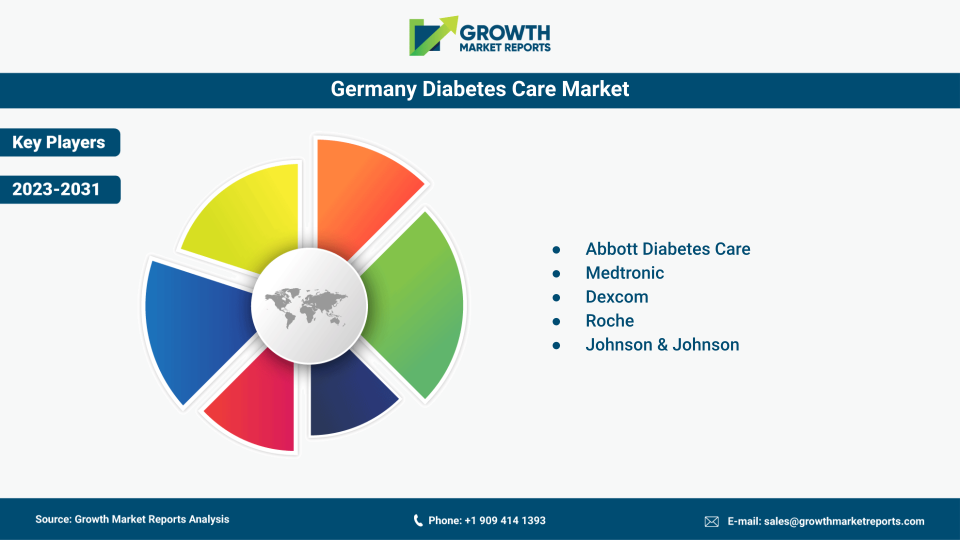

Germany Diabetes Care Market Key Players

Frequently Asked Questions

The market is segmented by application into type 1 diabetes, type 2 diabetes, gestational diabetes, and others, with type 2 diabetes accounting for the largest share due to its high global prevalence.

Diabetes care products are distributed through retail pharmacies, online pharmacies, hospital pharmacies, and specialty or direct-to-consumer channels.

Key companies include Medtronic plc, Abbott Laboratories, F. Hoffmann-La Roche Ltd., Dexcom, Inc., Novo Nordisk A/S, Sanofi S.A., Eli Lilly and Company, BD, and Johnson & Johnson, among others.

Challenges include the high cost of advanced diabetes care products, limited access in low- and middle-income countries, reimbursement issues, and concerns over data privacy in digital health solutions.

Technological advancements such as continuous glucose monitoring, smart insulin delivery devices, and AI-powered diabetes management software have improved real-time monitoring, personalized care, and patient adherence.

North America holds the largest market share, followed by Europe and the Asia Pacific region. Rapid growth is also seen in Latin America and the Middle East & Africa due to improving healthcare access.

Key growth drivers include the increasing prevalence of diabetes (especially type 2), technological innovations like CGM systems and smart insulin pens, and the adoption of digital health and telemedicine solutions.

Blood glucose monitoring devices are the largest segment, followed by insulin delivery devices, diabetes management software, and other ancillary products like lancets and test strips.

The diabetes care market is expected to grow at a CAGR of 7.2% from 2025 to 2033, reaching an estimated value of USD 146.7 billion by 2033.

As of 2024, the global diabetes care market reached a value of USD 78.6 billion, driven by rising diabetes prevalence and technological advancements.

Table Of Content

Chapter 1 Executive Summary
Chapter 2 Assumptions and Acronyms Used
Chapter 3 Research Methodology
Chapter 4 Diabetes Care Market Overview
   4.1 Introduction
      4.1.1 Market Taxonomy
      4.1.2 Market Definition
      4.1.3 Macro-Economic Factors Impacting the Market Growth
   4.2 Diabetes Care Market Dynamics
      4.2.1 Market Drivers
      4.2.2 Market Restraints
      4.2.3 Market Opportunity
   4.3 Diabetes Care Market - Supply Chain Analysis
      4.3.1 List of Key Suppliers
      4.3.2 List of Key Distributors
      4.3.3 List of Key Consumers
   4.4 Key Forces Shaping the Diabetes Care Market
      4.4.1 Bargaining Power of Suppliers
      4.4.2 Bargaining Power of Buyers
      4.4.3 Threat of Substitution
      4.4.4 Threat of New Entrants
      4.4.5 Competitive Rivalry
   4.5 Global Diabetes Care Market Size & Forecast, 2023-2032
      4.5.1 Diabetes Care Market Size and Y-o-Y Growth
      4.5.2 Diabetes Care Market Absolute $ Opportunity

Chapter 5 Global Diabetes Care Market Analysis and Forecast By Product Type
   5.1 Introduction
      5.1.1 Key Market Trends & Growth Opportunities By Product Type
      5.1.2 Basis Point Share (BPS) Analysis By Product Type
      5.1.3 Absolute $ Opportunity Assessment By Product Type
   5.2 Diabetes Care Market Size Forecast By Product Type
      5.2.1 Blood Glucose Monitoring Devices
      5.2.2 Insulin Delivery Devices
      5.2.3 Diabetes Management Software
      5.2.4 Others
   5.3 Market Attractiveness Analysis By Product Type

Chapter 6 Global Diabetes Care Market Analysis and Forecast By Application
   6.1 Introduction
      6.1.1 Key Market Trends & Growth Opportunities By Application
      6.1.2 Basis Point Share (BPS) Analysis By Application
      6.1.3 Absolute $ Opportunity Assessment By Application
   6.2 Diabetes Care Market Size Forecast By Application
      6.2.1 Type 1 Diabetes
      6.2.2 Type 2 Diabetes
      6.2.3 Gestational Diabetes
      6.2.4 Others
   6.3 Market Attractiveness Analysis By Application

Chapter 7 Global Diabetes Care Market Analysis and Forecast By End User
   7.1 Introduction
      7.1.1 Key Market Trends & Growth Opportunities By End User
      7.1.2 Basis Point Share (BPS) Analysis By End User
      7.1.3 Absolute $ Opportunity Assessment By End User
   7.2 Diabetes Care Market Size Forecast By End User
      7.2.1 Hospitals & Clinics
      7.2.2 Home Care
      7.2.3 Diagnostic Centers
      7.2.4 Others
   7.3 Market Attractiveness Analysis By End User

Chapter 8 Global Diabetes Care Market Analysis and Forecast By Distribution Channel
   8.1 Introduction
      8.1.1 Key Market Trends & Growth Opportunities By Distribution Channel
      8.1.2 Basis Point Share (BPS) Analysis By Distribution Channel
      8.1.3 Absolute $ Opportunity Assessment By Distribution Channel
   8.2 Diabetes Care Market Size Forecast By Distribution Channel
      8.2.1 Retail Pharmacies
      8.2.2 Online Pharmacies
      8.2.3 Hospital Pharmacies
      8.2.4 Others
   8.3 Market Attractiveness Analysis By Distribution Channel

Chapter 9 Global Diabetes Care Market Analysis and Forecast by Region
   9.1 Introduction
      9.1.1 Key Market Trends & Growth Opportunities By Region
      9.1.2 Basis Point Share (BPS) Analysis By Region
      9.1.3 Absolute $ Opportunity Assessment By Region
   9.2 Diabetes Care Market Size Forecast By Region
      9.2.1 North America
      9.2.2 Europe
      9.2.3 Asia Pacific
      9.2.4 Latin America
      9.2.5 Middle East & Africa (MEA)
   9.3 Market Attractiveness Analysis By Region

Chapter 10 Coronavirus Disease (COVID-19) Impact 
   10.1 Introduction 
   10.2 Current & Future Impact Analysis 
   10.3 Economic Impact Analysis 
   10.4 Government Policies 
   10.5 Investment Scenario

Chapter 11 North America Diabetes Care Analysis and Forecast
   11.1 Introduction
   11.2 North America Diabetes Care Market Size Forecast by Country
      11.2.1 U.S.
      11.2.2 Canada
   11.3 Basis Point Share (BPS) Analysis by Country
   11.4 Absolute $ Opportunity Assessment by Country
   11.5 Market Attractiveness Analysis by Country
   11.6 North America Diabetes Care Market Size Forecast By Product Type
      11.6.1 Blood Glucose Monitoring Devices
      11.6.2 Insulin Delivery Devices
      11.6.3 Diabetes Management Software
      11.6.4 Others
   11.7 Basis Point Share (BPS) Analysis By Product Type 
   11.8 Absolute $ Opportunity Assessment By Product Type 
   11.9 Market Attractiveness Analysis By Product Type
   11.10 North America Diabetes Care Market Size Forecast By Application
      11.10.1 Type 1 Diabetes
      11.10.2 Type 2 Diabetes
      11.10.3 Gestational Diabetes
      11.10.4 Others
   11.11 Basis Point Share (BPS) Analysis By Application 
   11.12 Absolute $ Opportunity Assessment By Application 
   11.13 Market Attractiveness Analysis By Application
   11.14 North America Diabetes Care Market Size Forecast By End User
      11.14.1 Hospitals & Clinics
      11.14.2 Home Care
      11.14.3 Diagnostic Centers
      11.14.4 Others
   11.15 Basis Point Share (BPS) Analysis By End User 
   11.16 Absolute $ Opportunity Assessment By End User 
   11.17 Market Attractiveness Analysis By End User
   11.18 North America Diabetes Care Market Size Forecast By Distribution Channel
      11.18.1 Retail Pharmacies
      11.18.2 Online Pharmacies
      11.18.3 Hospital Pharmacies
      11.18.4 Others
   11.19 Basis Point Share (BPS) Analysis By Distribution Channel 
   11.20 Absolute $ Opportunity Assessment By Distribution Channel 
   11.21 Market Attractiveness Analysis By Distribution Channel

Chapter 12 Europe Diabetes Care Analysis and Forecast
   12.1 Introduction
   12.2 Europe Diabetes Care Market Size Forecast by Country
      12.2.1 Germany
      12.2.2 France
      12.2.3 Italy
      12.2.4 U.K.
      12.2.5 Spain
      12.2.6 Russia
      12.2.7 Rest of Europe
   12.3 Basis Point Share (BPS) Analysis by Country
   12.4 Absolute $ Opportunity Assessment by Country
   12.5 Market Attractiveness Analysis by Country
   12.6 Europe Diabetes Care Market Size Forecast By Product Type
      12.6.1 Blood Glucose Monitoring Devices
      12.6.2 Insulin Delivery Devices
      12.6.3 Diabetes Management Software
      12.6.4 Others
   12.7 Basis Point Share (BPS) Analysis By Product Type 
   12.8 Absolute $ Opportunity Assessment By Product Type 
   12.9 Market Attractiveness Analysis By Product Type
   12.10 Europe Diabetes Care Market Size Forecast By Application
      12.10.1 Type 1 Diabetes
      12.10.2 Type 2 Diabetes
      12.10.3 Gestational Diabetes
      12.10.4 Others
   12.11 Basis Point Share (BPS) Analysis By Application 
   12.12 Absolute $ Opportunity Assessment By Application 
   12.13 Market Attractiveness Analysis By Application
   12.14 Europe Diabetes Care Market Size Forecast By End User
      12.14.1 Hospitals & Clinics
      12.14.2 Home Care
      12.14.3 Diagnostic Centers
      12.14.4 Others
   12.15 Basis Point Share (BPS) Analysis By End User 
   12.16 Absolute $ Opportunity Assessment By End User 
   12.17 Market Attractiveness Analysis By End User
   12.18 Europe Diabetes Care Market Size Forecast By Distribution Channel
      12.18.1 Retail Pharmacies
      12.18.2 Online Pharmacies
      12.18.3 Hospital Pharmacies
      12.18.4 Others
   12.19 Basis Point Share (BPS) Analysis By Distribution Channel 
   12.20 Absolute $ Opportunity Assessment By Distribution Channel 
   12.21 Market Attractiveness Analysis By Distribution Channel

Chapter 13 Asia Pacific Diabetes Care Analysis and Forecast
   13.1 Introduction
   13.2 Asia Pacific Diabetes Care Market Size Forecast by Country
      13.2.1 China
      13.2.2 Japan
      13.2.3 South Korea
      13.2.4 India
      13.2.5 Australia
      13.2.6 South East Asia (SEA)
      13.2.7 Rest of Asia Pacific (APAC)
   13.3 Basis Point Share (BPS) Analysis by Country
   13.4 Absolute $ Opportunity Assessment by Country
   13.5 Market Attractiveness Analysis by Country
   13.6 Asia Pacific Diabetes Care Market Size Forecast By Product Type
      13.6.1 Blood Glucose Monitoring Devices
      13.6.2 Insulin Delivery Devices
      13.6.3 Diabetes Management Software
      13.6.4 Others
   13.7 Basis Point Share (BPS) Analysis By Product Type 
   13.8 Absolute $ Opportunity Assessment By Product Type 
   13.9 Market Attractiveness Analysis By Product Type
   13.10 Asia Pacific Diabetes Care Market Size Forecast By Application
      13.10.1 Type 1 Diabetes
      13.10.2 Type 2 Diabetes
      13.10.3 Gestational Diabetes
      13.10.4 Others
   13.11 Basis Point Share (BPS) Analysis By Application 
   13.12 Absolute $ Opportunity Assessment By Application 
   13.13 Market Attractiveness Analysis By Application
   13.14 Asia Pacific Diabetes Care Market Size Forecast By End User
      13.14.1 Hospitals & Clinics
      13.14.2 Home Care
      13.14.3 Diagnostic Centers
      13.14.4 Others
   13.15 Basis Point Share (BPS) Analysis By End User 
   13.16 Absolute $ Opportunity Assessment By End User 
   13.17 Market Attractiveness Analysis By End User
   13.18 Asia Pacific Diabetes Care Market Size Forecast By Distribution Channel
      13.18.1 Retail Pharmacies
      13.18.2 Online Pharmacies
      13.18.3 Hospital Pharmacies
      13.18.4 Others
   13.19 Basis Point Share (BPS) Analysis By Distribution Channel 
   13.20 Absolute $ Opportunity Assessment By Distribution Channel 
   13.21 Market Attractiveness Analysis By Distribution Channel

Chapter 14 Latin America Diabetes Care Analysis and Forecast
   14.1 Introduction
   14.2 Latin America Diabetes Care Market Size Forecast by Country
      14.2.1 Brazil
      14.2.2 Mexico
      14.2.3 Rest of Latin America (LATAM)
   14.3 Basis Point Share (BPS) Analysis by Country
   14.4 Absolute $ Opportunity Assessment by Country
   14.5 Market Attractiveness Analysis by Country
   14.6 Latin America Diabetes Care Market Size Forecast By Product Type
      14.6.1 Blood Glucose Monitoring Devices
      14.6.2 Insulin Delivery Devices
      14.6.3 Diabetes Management Software
      14.6.4 Others
   14.7 Basis Point Share (BPS) Analysis By Product Type 
   14.8 Absolute $ Opportunity Assessment By Product Type 
   14.9 Market Attractiveness Analysis By Product Type
   14.10 Latin America Diabetes Care Market Size Forecast By Application
      14.10.1 Type 1 Diabetes
      14.10.2 Type 2 Diabetes
      14.10.3 Gestational Diabetes
      14.10.4 Others
   14.11 Basis Point Share (BPS) Analysis By Application 
   14.12 Absolute $ Opportunity Assessment By Application 
   14.13 Market Attractiveness Analysis By Application
   14.14 Latin America Diabetes Care Market Size Forecast By End User
      14.14.1 Hospitals & Clinics
      14.14.2 Home Care
      14.14.3 Diagnostic Centers
      14.14.4 Others
   14.15 Basis Point Share (BPS) Analysis By End User 
   14.16 Absolute $ Opportunity Assessment By End User 
   14.17 Market Attractiveness Analysis By End User
   14.18 Latin America Diabetes Care Market Size Forecast By Distribution Channel
      14.18.1 Retail Pharmacies
      14.18.2 Online Pharmacies
      14.18.3 Hospital Pharmacies
      14.18.4 Others
   14.19 Basis Point Share (BPS) Analysis By Distribution Channel 
   14.20 Absolute $ Opportunity Assessment By Distribution Channel 
   14.21 Market Attractiveness Analysis By Distribution Channel

Chapter 15 Middle East & Africa (MEA) Diabetes Care Analysis and Forecast
   15.1 Introduction
   15.2 Middle East & Africa (MEA) Diabetes Care Market Size Forecast by Country
      15.2.1 Saudi Arabia
      15.2.2 South Africa
      15.2.3 UAE
      15.2.4 Rest of Middle East & Africa (MEA)
   15.3 Basis Point Share (BPS) Analysis by Country
   15.4 Absolute $ Opportunity Assessment by Country
   15.5 Market Attractiveness Analysis by Country
   15.6 Middle East & Africa (MEA) Diabetes Care Market Size Forecast By Product Type
      15.6.1 Blood Glucose Monitoring Devices
      15.6.2 Insulin Delivery Devices
      15.6.3 Diabetes Management Software
      15.6.4 Others
   15.7 Basis Point Share (BPS) Analysis By Product Type 
   15.8 Absolute $ Opportunity Assessment By Product Type 
   15.9 Market Attractiveness Analysis By Product Type
   15.10 Middle East & Africa (MEA) Diabetes Care Market Size Forecast By Application
      15.10.1 Type 1 Diabetes
      15.10.2 Type 2 Diabetes
      15.10.3 Gestational Diabetes
      15.10.4 Others
   15.11 Basis Point Share (BPS) Analysis By Application 
   15.12 Absolute $ Opportunity Assessment By Application 
   15.13 Market Attractiveness Analysis By Application
   15.14 Middle East & Africa (MEA) Diabetes Care Market Size Forecast By End User
      15.14.1 Hospitals & Clinics
      15.14.2 Home Care
      15.14.3 Diagnostic Centers
      15.14.4 Others
   15.15 Basis Point Share (BPS) Analysis By End User 
   15.16 Absolute $ Opportunity Assessment By End User 
   15.17 Market Attractiveness Analysis By End User
   15.18 Middle East & Africa (MEA) Diabetes Care Market Size Forecast By Distribution Channel
      15.18.1 Retail Pharmacies
      15.18.2 Online Pharmacies
      15.18.3 Hospital Pharmacies
      15.18.4 Others
   15.19 Basis Point Share (BPS) Analysis By Distribution Channel 
   15.20 Absolute $ Opportunity Assessment By Distribution Channel 
   15.21 Market Attractiveness Analysis By Distribution Channel

Chapter 16 Competition Landscape 
   16.1 Diabetes Care Market: Competitive Dashboard
   16.2 Global Diabetes Care Market: Market Share Analysis, 2023
   16.3 Company Profiles (Details – Overview, Financials, Developments, Strategy) 
      16.3.1 Abbott Laboratories
Medtronic plc
F. Hoffmann-La Roche Ltd
Novo Nordisk A/S
Sanofi S.A.
Eli Lilly and Company
Becton, Dickinson and Company (BD)
Dexcom, Inc.
Johnson & Johnson (LifeScan, Inc.)
Ascensia Diabetes Care
Tandem Diabetes Care, Inc.
Insulet Corporation
Ypsomed AG
Senseonics Holdings, Inc.
AgaMatrix, Inc.
Terumo Corporation
Nipro Corporation
Menarini Diagnostics
GlucoMe Ltd.
Medisana AG

Methodology

Our Clients

Pfizer
General Electric
Siemens Healthcare
Nestle SA
Deloitte
General Mills
Honda Motor Co. Ltd.
Dassault Aviation