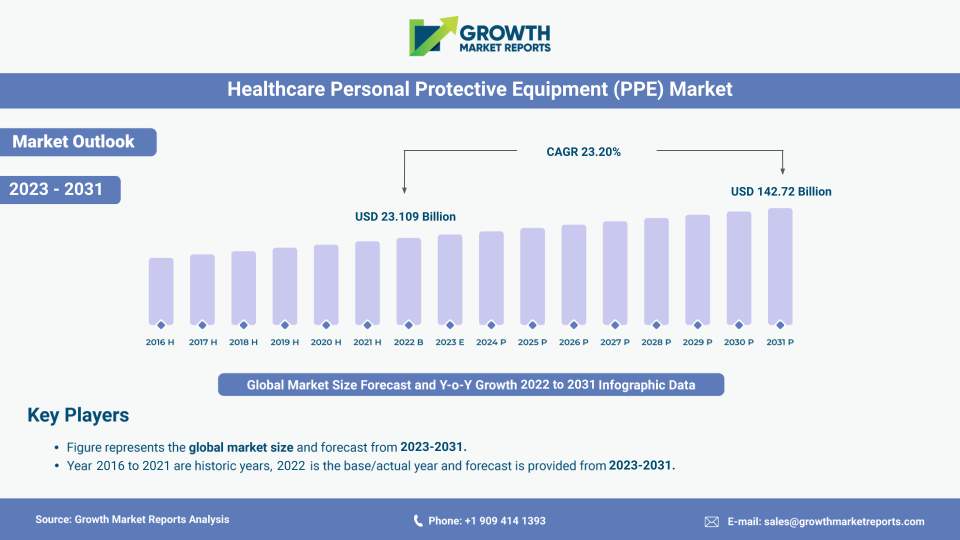
The global healthcare personal protective equipment (PPE) market size was valued at USD 23.109 Billion in 2022 and is likely to reach USD 142.72 Billion by 2031, at a CAGR of 23.20% during the forecast period. The market growth is attributed to the rising demand for protective clothing.
Personal protection equipment (PPE) has recently become a fairly common acronym in healthcare providers’ lexicons, even though it has been common in fire departments, emergency medical departments, and the military for quite some time.
PPEs are protective gear, specially designed to safeguard the worker’s health by minimizing exposure to a biological agent. It protects against electrical, heat, chemicals, biohazards, and airborne particle matter. It includes masks, face-shield, gloves, coveralls/gowns, goggles, head covers, and shoe covers, which act as a barrier between the individuals and germs found in the surrounding environment.
The barrier blocks the transmission of contaminants from blood, body fluids, or respiratory secretions. It protects the wearer from infection.PPE ensures individuals’ protection from physical hazards that they can experience in their work environment.
The PPE can be used to protect workers from general environmental hazards (such as high temperatures and noise), particular workplace hazards (including dropping objects and falls from heights), or risks to emergency circumstances (such as infectious agents and hazardous chemicals).
COVID-19 Impact on Healthcare Personal Protective Equipment (PPE) Market
The market report finds that the COVID-19 pandemic impacted positively on the healthcare personal protective equipment market. The outbreak of Coronavirus has increased the demand for PPE kits during the pandemic, which created opportunities for the prominent players competing in the market.
Significant growth in the adoption of healthcare PPE is attributed to the increasing demand for PPE products from healthcare operators, hospitals, nursing homes, and other clinics boosted the market growth during the pandemic.
Healthcare Personal Protective Equipment (PPE) Market Dynamics
The research report presents a complete market overview by providing detailed information about the current market trends, existing drivers, growth opportunities and potentials, and emerging challenges.
The global healthcare personal protective equipment market report has up-to-date insights about market scenarios that can shape the overall market performance and condition during the forecast period, 2023 to 2031.
What are the Drivers of the Healthcare Personal Protective Equipment (PPE) Market?
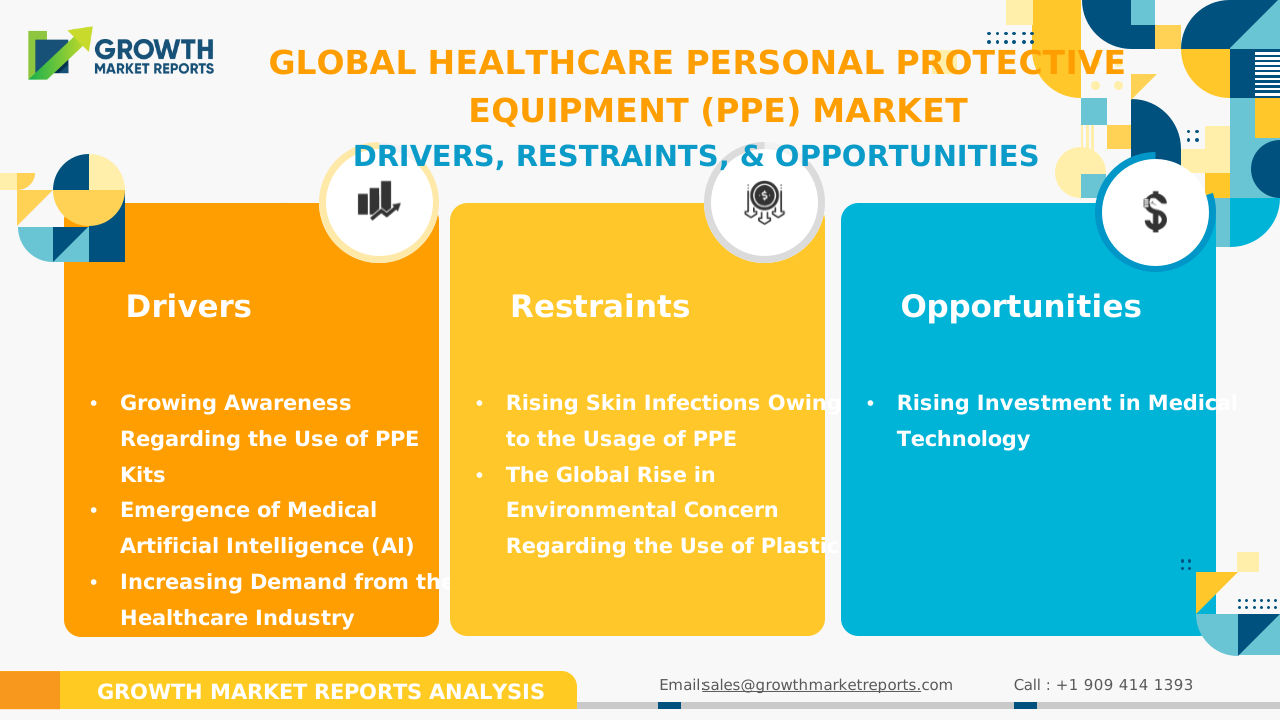
Growing Awareness Regarding the Use of PPE Kits
Growing awareness among consumers about the use of PPE kits to minimize exposure to hazards is a major factor driving the growth of the market during the forecast period. It ensures safety by providing a barrier against infectious viruses and the individual who uses it. People are becoming more health-conscious since the COVID-19 pandemic and they still use hand protection, respiratory protection, and protective clothing.
The use of hand protection and face masks has increased since the outbreak of COVID-19. However, headwear and eyewear often use in the military and several industries. Therefore, the rising demand for industrial protective clothing and lightweight military personal protective equipment due to the growing awareness regarding the importance of workplace safety is anticipated to fuel the market.
Emergence of Medical Artificial Intelligence (AI)
AI has emerged as an advantage to the healthcare industry. It helps to cope with several health-related issues by enhancing safety. Thus, the emergence of medical artificial intelligence is another major factor driving the healthcare personal protective equipment (PPE) market growth.
Increasing Demand from the Healthcare Industry
Increasing demand for advanced PPE kits from the healthcare industry accelerates the market growth. Healthcare workers are at a high risk as they are working in a highly infectious environment. Therefore, rising concerns regarding workers’ health and safety boost the demand for PPE kits. Furthermore, stringent regulations imposed by the health ministries regarding the safety of healthcare professionals encouraged healthcare operators to use PPE kits while working.
What Restraints the Healthcare Personal Protective Equipment (PPE) Market?
Rising Skin Infections Owing to the Usage of PPE
Skin tears, moist skin, and pressure injuries are the primary reasons for skin injuries caused by PPE kits. Wearing a PPE kit for a long-time cause sweating due to tightness and friction, which may injure the skin. Thus, rising skin infections owing to the usage of PPE hamper the market growth during the projected period.
The Global Rise in Environmental Concern Regarding the Use of Plastic
The global rise in environmental concerns regarding the use of plastic hinders the market growth. Gloves, shoe covers, aprons, and coveralls are mainly made up of plastic such as polypropylene, which is difficult to dispose of. Thus, the growing awareness regarding the non-disposable property and highly flammable nature of plastic restrain the market growth at a certain limit.
What are the Emerging Opportunities in the Healthcare Personal Protective Equipment (PPE) Market?
Rising Investment in Medical Technology
Rising investment in medical technology is a major factor that creates immense opportunities for market players. The rapid increase in the number of healthcare providers highly demands for advanced PPE solutions. Thus, PPE companies are focusing on developing advanced PPEs at low cost.
Furthermore, developing healthcare systems and the rapid technological developments in the field of surgery, such as high-reliability organization (HRO), scientific innovations, and standardization practices, are expected to fuel the market growth during the assessment period.
Scope of Healthcare Personal Protective Equipment (PPE) Market Report
The global healthcare personal protective equipment market research report includes an assessment of the market trends, market segments, and regional markets. Overview and dynamics have also been included in the report.
|
Attributes
|
Details
|
|
Report Title
|
Healthcare Personal Protective Equipment (PPE) Market - Global Industry Analysis, Growth, Share, Size, Trends, and Forecast
|
|
Base Year
|
2022
|
|
Historic Data
|
2016–2021
|
|
Forecast Period
|
2023–2031
|
|
Segmentation
|
Product (Protective Clothing [Scrubs, Coveralls/Gowns, Lab Coats, and Others], Respiratory Protection [Surgical Masks, Respirator Masks, and Others], Head Protection, Eye & Face Protection, Hand Protection [Disposable Gloves, Durable Gloves, and Others], Protective Footwear, Hearing Protection, and Others), End-user (Hospitals & Clinics, Ambulatory Surgical Centers, Academic & Research Institutes, Diagnostic Laboratories, and Others), Distribution Channel (Online [Company Websites and E-commerce Websites] and Offline [Supermarkets/Hypermarkets, Specialty Stores, Pharmacy Stores, and Others])
|
|
Regional Scope
|
Asia Pacific, North America, Latin America, Europe, and Middle East & Africa
|
|
Report Coverage
|
Company Share, Market Analysis and Size, Competitive Landscape, Growth Factors, Market Trends, and Revenue Forecast
|
|
Key Players Covered in the Report
|
Honeywell International Inc.; 3M; Medtronic; Baxter; Stryker; Top Glove Corporation Bhd; Dupont; ANSELL LTD; Medline Industries, Inc; Semperit AG Holding; Hartalega Holdings Berhad; B. Braun Melsungen AG; Boston Scientific Corporation; Kimberly-Clark Worldwide, Inc.; Cantel Medical; Cardinal Health; Dentsply Sirona; Derekduck Industry Corp.; Drägerwerk AG & Co. KGaA; Dynarex Corporation; Kossan Rubber Industries Bhd; Med-Con Pty Ltd; Medisca Inc.; Owens & Minor, Inc.; PRIMED Medical Products, Inc.; Rubberex Corporation (M) Berhad; SHIELD Scientific; Sterimed Group; Supermax Corporation Berhad; SYNERGY MEDICAL, INC.; Zimmer Biomet; and Alpha Pro Tech
|
Healthcare Personal Protective Equipment (PPE) Market Segment Insights
Product Segment Analysis
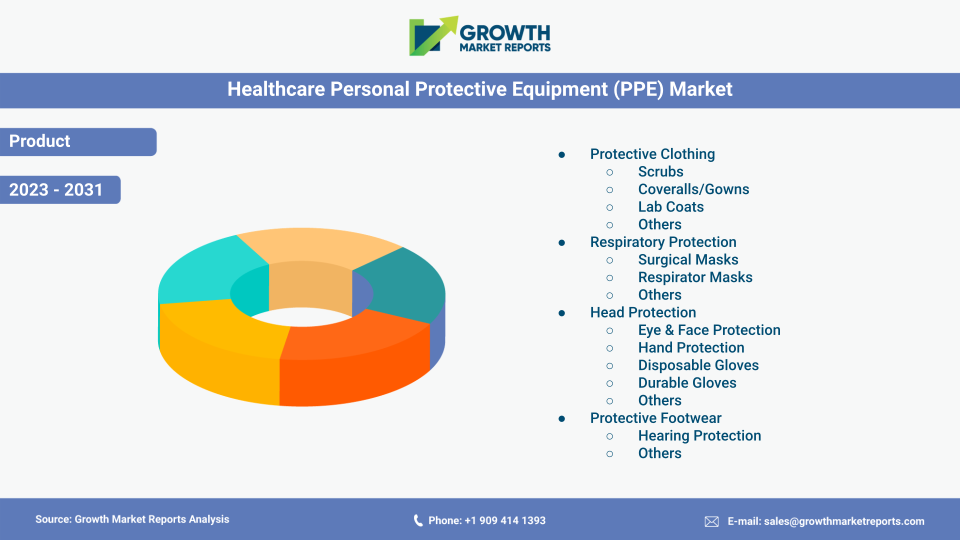
On the basis of product, the global market is segmented into protective clothing, respiratory protection, head protection, eye & face protection, hand protection, protective footwear, hearing protection, and others. The protective clothing segment is further segmented into scrubs, coveralls/gowns, lab coats, and others. The respiratory protection segment is further divided into surgical masks, respirator masks, and others.
The hand protection segment is further classified into disposable gloves, durable gloves, and others.The protective clothing segment held a key share of the market in 2021 and is anticipated to account for the major market share in the coming years, owing to the increasing demand from hospitals and clinics. The coveralls are specially designed to cover the whole body from head to feet. It ensures complete body protection, as it protects personal clothes from hazardous activities.
The hand protection segment is expected to expand at a significant growth rate during the forecast period. It creates a barrier between germs and your hands, which prevents contamination. Growing demand for disposable gloves and surgical gloves from the healthcare sector fuels the growth of the market. However, the respiratory protection segment contributes to segment growth. Rising demand for respiratory protection among consumers due to the rapidly growing air pollution.
End-User Segment Analysis
Based on end-users, the healthcare PPE Market is fragmented into hospitals & clinics, ambulatory surgical centers, academic & research institutes, diagnostic laboratories, and others. The hospitals & clinic segment is projected to register a considerable CAGR during the forecast period due to the increasing number of hospitals & clinics at a rapid pace.
The segment growth is further attributed to the rising demand for PPE kits to improve the treatment facilities for the population, which further boosts the medical personal protective equipment market growth.The ambulatory surgical centers segment is estimated to grow at a sustainable CAGR during the assessment period due to the rapid expansion of ambulatory healthcare service.
Ambulatory surgical centers (ASC) perform surgeries in several specialties. Moreover, ASCs can dedicate their services to one specialty, such as eye care or sports medicine. However, the academic and research institutes segment contributes to segment growth. Academic and research institutes consider early adopters of PPE as it uses PPE kits to avoid hazards during experiments.
Distribution Channel Segment Analysis
On the basis of distribution channels, the market is bifurcated into online and offline. The online segment is further bifurcated into company websites and e-commerce websites. The offline segment is further categorized into supermarkets/hypermarkets, specialty stores, pharmacy stores, and others. The offline segment is projected to register a robust CAGR in the coming years due to the rising demand for direct sales of innovative supplies.
The segment growth is further attributed to the increasing awareness regarding the benefits of PPE kits among consumers. Moreover, rapid development in the online distribution channel is projected to boost the segment during the projected period. Healthcare practitioners and PPE distributors are focusing on implementing various marketing strategies to increase the adoption of PPEs.
Regional Analysis
In terms of region, the market is classified into Asia Pacific, North America, Latin America, Europe, and Middle East & Africa. North America held a large share of the market in 2021 and is anticipated to dominate the market during the forecast period. The regional market growth is attributed to the increasing political focus on the healthcare industry and investment in the manufacturing of medical devices and healthcare facilities.
The market in Asia Pacific is anticipated to expand at a rapid pace in the coming years due to the increasing demand for home-care facilities. However, the rapid expansion of the healthcare PPE industry, owing to the rising medical facilities and improvements in safety standards in developing countries accelerates the market.
Segments
The global healthcare personal protective equipment (PPE) market has been segmented on the basis of
Product
- Protective Clothing
- Scrubs
- Coveralls/Gowns
- Lab Coats
- Others
- Respiratory Protection
- Surgical Masks
- Respirator Masks
- Others
- Head Protection
- Eye & Face Protection
- Hand Protection
- Disposable Gloves
- Durable Gloves
- Others
- Protective Footwear
- Hearing Protection
- Others
End-user
Distribution Channel
- Online
- Company Websites
- E-commerce Websites
- Offline
- Supermarkets/Hypermarkets
- Specialty Stores
- Pharmacy Stores
- Others
Region
-
Asia Pacific
-
North America
-
Latin America
-
Europe
-
Middle East & Africa
Key Players
-
Honeywell International Inc.
-
3M
-
-
Baxter
-
Stryker
-
Top Glove Corporation Bhd
-
Dupont
-
-
Medline Industries, Inc
-
Semperit AG Holding
-
Hartalega Holdings Berhad
-
B. Braun Melsungen AG
-
Boston Scientific Corporation
-
Kimberly-Clark Worldwide, Inc.
-
Cantel Medical
-
Cardinal Health
-
Dentsply Sirona
-
Derekduck Industry Corp.
-
Drägerwerk AG & Co. KGaA
-
Dynarex Corporation
-
Kossan Rubber Industries Bhd
-
Med-Con Pty Ltd
-
Medisca Inc.
-
Owens & Minor, Inc.
-
PRIMED Medical Products, Inc.
-
Rubberex Corporation (M) Berhad
-
SHIELD Scientific
-
Sterimed Group
-
Supermax Corporation Berhad
-
SYNERGY MEDICAL, INC.
-
Zimmer Biomet
-
Alpha Pro Tech
Competitive Landscape
The competitive landscape of the global healthcare personal protective equipment (PPE) market report provides key insights into the growth strategies and development initiatives implemented by the various players in the market.
Key players competing in the market are Honeywell International Inc.; 3M; Medtronic; Baxter; Stryker; Top Glove Corporation Bhd; Dupont; ANSELL LTD; Medline Industries, Inc; Semperit AG Holding; Hartalega Holdings Berhad; B. Braun Melsungen AG; Boston Scientific Corporation; Kimberly-Clark Worldwide, Inc.; Cantel Medical; Cardinal Health; Dentsply Sirona; Derekduck Industry Corp.; Drägerwerk AG & Co. KGaA; Dynarex Corporation; Kossan Rubber Industries Bhd; Med-Con Pty Ltd; Medisca Inc.; Owens & Minor, Inc.; PRIMED Medical Products, Inc.; Rubberex Corporation (M) Berhad; SHIELD Scientific; Sterimed Group; Supermax Corporation Berhad; SYNERGY MEDICAL, INC.; Zimmer Biomet; and Alpha Pro Tech.
These major companies adopt various business development strategies including mergers, acquisitions, partnerships, collaboration, product launches, and production capacity expansion to expand their consumer base and enhance their market share. For instance,
- In 2021, SHIELD Scientific launched duoSHIELD PFT Nitrile 290 (a new disposable laboratory extra-long cuff nitrile glove). This new disposable and powder-free nitrile glove extends the duoSHIELD product range.
- On June 25, 2020, Edmonton-based PRIMED Medical Products, a worldwide leader in manufacturing single-use medical PPE announced the development of a new manufacturing facility in Vientiane, Laos.











 Request For Customization
 Enquiry Before Buying
 Speak With Analyst