Segments - by Product Type (Thoracolumbosacral Orthosis (TLSO), Cervical Thoracic Lumbar Sacral Orthosis (CTLSO), Lumbosacral Orthosis (LSO), Others), by Age Group (Children, Adolescents, Adults), by Material (Plastic, Metal, Composite Materials, Others), by End-User (Hospitals, Orthopedic Clinics, Rehabilitation Centers, Others), by Distribution Channel (Online, Offline)
According to our latest research, the global scoliosis braces market size is valued at USD 1.47 billion in 2024, exhibiting a robust growth trajectory with a CAGR of 7.2% during the forecast period. By 2033, the market is anticipated to reach approximately USD 2.77 billion. The primary growth factor driving this expansion is the rising prevalence of scoliosis, particularly among adolescents, coupled with increasing awareness and advancements in non-invasive orthopedic treatment options.
One of the most significant growth factors for the scoliosis braces market is the increasing incidence of scoliosis among children and adolescents globally. The condition, which involves abnormal curvature of the spine, is diagnosed in millions of young individuals each year. Early detection programs in schools and pediatric clinics have contributed to higher diagnosis rates, necessitating effective treatment modalities such as bracing. Moreover, the growing emphasis on non-surgical interventions for mild to moderate scoliosis cases has positioned braces as a preferred option, reducing the need for invasive spinal surgeries. This trend is further bolstered by the supportive role of healthcare policies that encourage early intervention and management, thereby fueling market demand.
Technological innovation is another critical driver shaping the scoliosis braces market. The development of advanced materials such as lightweight plastics, composites, and customizable 3D-printed braces has revolutionized patient comfort and compliance. Modern scoliosis braces are designed for better fit, improved aesthetics, and increased efficacy, which significantly enhances patient outcomes. Additionally, digital modeling and scanning technologies allow for personalized brace fabrication, ensuring optimal spinal support and correction. These advancements have not only improved the efficacy of scoliosis management but have also expanded the market by making braces more appealing, especially to young patients and their families.
The expansion of healthcare infrastructure and rising healthcare expenditure in emerging economies have also contributed to the growth of the global scoliosis braces market. As awareness about spinal health increases and access to orthopedic care improves, more patients are seeking early diagnosis and treatment for scoliosis. Government initiatives, insurance coverage for orthopedic devices, and collaborations between public and private healthcare providers are further facilitating market growth. The integration of scoliosis screening into routine health check-ups and school health programs in various countries is also expected to drive demand for scoliosis braces in the coming years.
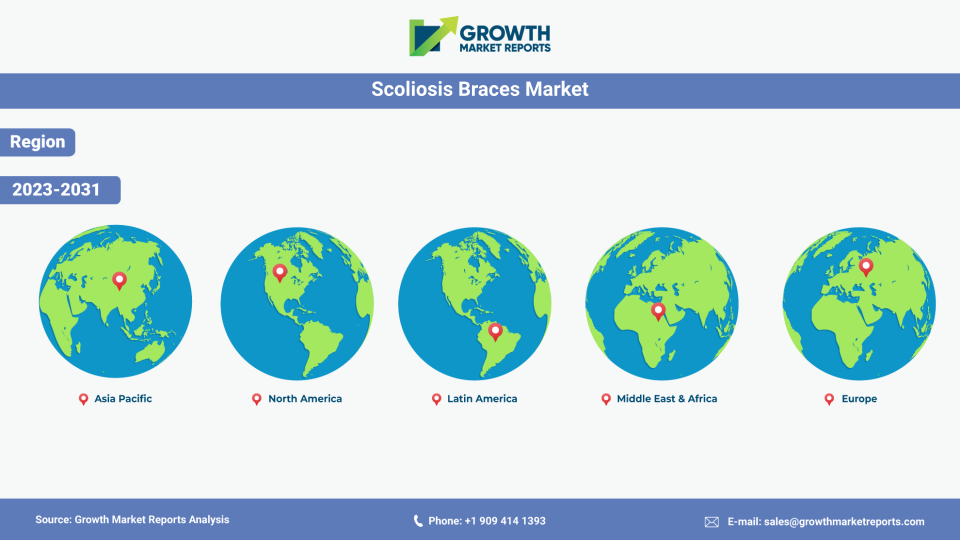
From a regional perspective, North America continues to dominate the scoliosis braces market, accounting for the largest revenue share in 2024. This is attributed to the region's advanced healthcare infrastructure, high awareness levels, and the presence of leading orthopedic device manufacturers. Europe follows closely, benefiting from robust healthcare systems and increasing adoption of innovative brace technologies. Meanwhile, the Asia Pacific region is expected to witness the fastest growth during the forecast period, driven by a large patient pool, improving healthcare access, and rising investments in orthopedic care. Latin America and the Middle East & Africa are also showing promising growth, albeit from a smaller base, as awareness and diagnosis rates improve.
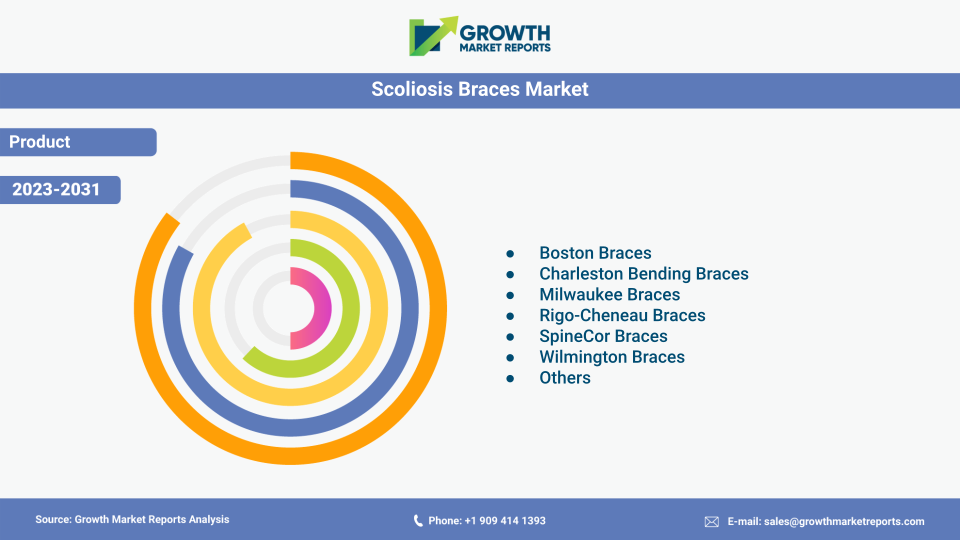
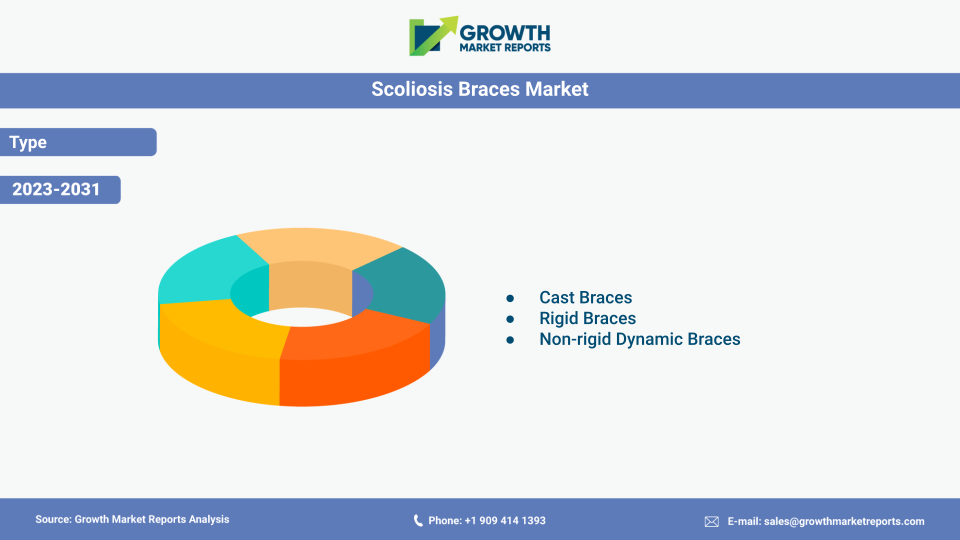
The scoliosis braces market is segmented by product type into Thoracolumbosacral Orthosis (TLSO), Cervical Thoracic Lumbar Sacral Orthosis (CTLSO), Lumbosacral Orthosis (LSO), and others. Among these, the TLSO segment holds the largest market share in 2024, primarily due to its widespread use in treating idiopathic scoliosis among adolescents. TLSO braces are designed to immobilize the thoracic and lumbar regions, effectively preventing further curvature progression. Their popularity stems from their versatility, ease of use, and the significant clinical evidence supporting their efficacy. The segment's growth is further propelled by ongoing innovation in brace design, such as the introduction of lightweight and more comfortable materials, which enhance patient compliance.
The CTLSO segment, while smaller in overall market share, plays a crucial role in managing severe and complex scoliosis cases that require support extending to the cervical region. These braces are typically prescribed for patients with high thoracic or cervical spinal curves and are often used in pediatric populations. CTLSO braces are more complex in design and require precise fitting, which has led to the adoption of digital modeling and custom fabrication techniques. As awareness of comprehensive spinal care increases and clinical guidelines evolve, the demand for CTLSO braces is expected to grow steadily, particularly in specialized orthopedic centers.
Lumbosacral Orthosis (LSO) braces are predominantly used for lower spine deformities and are gaining traction among adult scoliosis patients. The LSO segment is benefiting from the rising prevalence of degenerative scoliosis in aging populations, particularly in developed countries. These braces are designed to provide targeted support to the lumbar and sacral regions, alleviating pain and improving mobility. The segment's growth is also supported by advancements in ergonomic designs and the integration of breathable, hypoallergenic materials that cater to the comfort needs of adult users. As the global population ages and the incidence of adult-onset scoliosis rises, the LSO segment is poised for sustained growth.
The "others" category encompasses a range of specialized and hybrid braces designed for unique clinical scenarios or patient preferences. This includes night-time braces, dynamic braces, and custom orthoses tailored for specific spinal deformities. The segment is characterized by ongoing research and development aimed at improving treatment outcomes and patient quality of life. Innovations in 3D printing and smart brace technologies, such as sensors for real-time monitoring, are expanding the possibilities within this segment. While currently a niche market, the "others" category is expected to witness increased adoption as personalized medicine and patient-centric care models gain traction in orthopedic practice.
| Attributes | Details |
| Report Title | Scoliosis Braces Market Research Report 2033 |
| By Product Type | Thoracolumbosacral Orthosis (TLSO), Cervical Thoracic Lumbar Sacral Orthosis (CTLSO), Lumbosacral Orthosis (LSO), Others |
| By Age Group | Children, Adolescents, Adults |
| By Material | Plastic, Metal, Composite Materials, Others |
| By End-User | Hospitals, Orthopedic Clinics, Rehabilitation Centers, Others |
| By Distribution Channel | Online, Offline |
| Regions Covered | North America, Europe, APAC, Latin America, MEA |
| Base Year | 2024 |
| Historic Data | 2018-2023 |
| Forecast Period | 2025-2033 |
| Number of Pages | 274 |
| Number of Tables & Figures | 274 |
| Customization Available | Yes, the report can be customized as per your need. |
The age group segmentation of the scoliosis braces market includes children, adolescents, and adults. Adolescents represent the largest segment, accounting for a significant proportion of scoliosis diagnoses and brace prescriptions in 2024. Adolescent idiopathic scoliosis (AIS) is the most common form, typically manifesting during the growth spurt years. Early intervention with bracing is the standard of care for moderate curves, making this age group the primary target for brace manufacturers and healthcare providers. The segment's dominance is reinforced by school-based screening programs and increased parental awareness, which drive early detection and timely treatment.
The children's segment, while smaller than adolescents, is critical due to the unique challenges associated with early-onset scoliosis. Pediatric patients require specially designed braces that accommodate growth and provide gentle, yet effective, spinal correction. The development of adjustable and modular braces has significantly improved treatment outcomes in this age group. Moreover, collaborations between pediatric orthopedic specialists and device manufacturers have led to the creation of child-friendly brace designs that prioritize comfort and ease of use. As early diagnosis rates improve and pediatric orthopedic care expands, the children's segment is expected to experience steady growth.
The adult segment is gaining increasing attention as the prevalence of adult scoliosis rises, particularly in aging populations. Adult scoliosis can result from degenerative changes in the spine or progression of untreated adolescent scoliosis. Bracing in adults is often focused on pain management, mobility improvement, and prevention of further curvature. The segment is benefiting from advancements in brace materials and ergonomic designs that cater to the comfort and lifestyle needs of older patients. Additionally, the integration of bracing into multidisciplinary rehabilitation programs is enhancing treatment adherence and outcomes. As life expectancy increases and awareness of spinal health grows among adults, this segment is poised for expansion.
Overall, the age group segmentation underscores the importance of tailored brace solutions that address the unique anatomical and clinical needs of different patient populations. Manufacturers are increasingly investing in research and development to create age-specific products, leveraging insights from clinical practice and patient feedback. This trend is expected to drive innovation and differentiation in the market, supporting sustained growth across all age segments.
Material selection plays a pivotal role in the design and performance of scoliosis braces, with the market segmented into plastic, metal, composite materials, and others. Plastic remains the most widely used material in 2024, favored for its lightweight, moldable, and cost-effective properties. Advances in polymer science have led to the development of high-strength, hypoallergenic plastics that offer superior comfort and durability. Plastic braces are particularly popular among pediatric and adolescent patients, as they can be easily customized to fit individual body shapes and growth patterns. The segment's growth is further supported by the increasing adoption of 3D printing technologies, which enable rapid prototyping and personalized brace fabrication.
Metal braces, while less common than plastic, are essential for cases requiring rigid immobilization and maximum spinal support. These braces are typically used in severe or complex scoliosis cases, often in conjunction with other treatment modalities. Stainless steel and titanium are the preferred metals due to their strength, biocompatibility, and resistance to corrosion. The metal segment is characterized by ongoing innovation aimed at reducing weight and improving patient comfort without compromising structural integrity. As surgical and non-surgical treatment approaches converge, the demand for hybrid braces incorporating both metal and plastic components is expected to rise.
Composite materials represent a rapidly growing segment in the scoliosis braces market. These materials combine the best attributes of plastics and metals, offering enhanced strength, flexibility, and aesthetic appeal. Carbon fiber composites, in particular, are gaining popularity due to their lightweight nature and ability to provide strong, yet discreet, spinal support. Composite braces are often favored by active adolescents and adults who seek effective treatment without sacrificing mobility or appearance. The segment is also benefiting from advancements in material science and manufacturing technologies, which enable the production of highly customized and performance-oriented braces.
The "others" category includes innovative materials such as smart textiles, silicone, and bio-based polymers that are being explored for their potential to improve brace comfort and functionality. Research in this segment is focused on developing materials that can adapt to body movements, monitor treatment progress, and reduce skin irritation. As patient expectations evolve and demand for personalized care increases, the exploration of new materials is expected to drive further innovation in the scoliosis braces market. Manufacturers are actively collaborating with material scientists and orthopedic specialists to bring next-generation brace solutions to market.
The end-user segmentation of the scoliosis braces market comprises hospitals, orthopedic clinics, rehabilitation centers, and others. Hospitals remain the leading end-user in 2024, accounting for the largest share of brace prescriptions and fittings. This dominance is attributed to the comprehensive diagnostic and treatment capabilities of hospital-based orthopedic departments, which enable accurate assessment and tailored brace selection. Hospitals also benefit from multidisciplinary teams that include orthopedic surgeons, physiotherapists, and rehabilitation specialists, ensuring holistic patient care. The segment's growth is further driven by the increasing integration of scoliosis screening and management into routine hospital services.
Orthopedic clinics are the second-largest end-user segment, playing a crucial role in the ongoing management and follow-up of scoliosis patients. These clinics offer specialized expertise in spinal disorders and are often equipped with advanced diagnostic and brace fitting technologies. The personalized care provided by orthopedic clinics enhances patient satisfaction and treatment adherence, contributing to positive clinical outcomes. As awareness of the benefits of early intervention grows, more patients are seeking care at dedicated orthopedic centers, driving demand for high-quality bracing solutions.
Rehabilitation centers are emerging as important end-users in the scoliosis braces market, particularly for patients requiring long-term management and support. These centers focus on comprehensive rehabilitation programs that combine bracing with physiotherapy, occupational therapy, and patient education. The integration of bracing into multidisciplinary rehabilitation plans has been shown to improve functional outcomes and quality of life for scoliosis patients. As the importance of holistic, patient-centered care gains recognition, rehabilitation centers are expected to play a growing role in the market.
The "others" category includes home healthcare providers, community health centers, and telemedicine platforms that are increasingly involved in scoliosis management. The expansion of remote monitoring technologies and virtual care solutions is enabling more patients to access brace fitting and follow-up services outside traditional clinical settings. This trend is particularly relevant in rural and underserved areas, where access to specialized orthopedic care may be limited. As digital health solutions become more prevalent, the "others" segment is expected to contribute to market expansion by improving accessibility and convenience for scoliosis patients.
Distribution channels for scoliosis braces are divided into online and offline segments. The offline channel, encompassing hospitals, clinics, and orthopedic supply stores, remains the dominant distribution mode in 2024. Offline channels are preferred for their ability to provide personalized fitting, immediate access to professional advice, and post-purchase support. The complex nature of scoliosis brace fitting necessitates hands-on expertise, making offline channels indispensable for initial prescriptions and adjustments. Furthermore, offline distribution is often supported by established relationships between healthcare providers and device manufacturers, ensuring quality control and timely product availability.
The online distribution channel, while smaller in market share, is experiencing rapid growth driven by the increasing adoption of digital health technologies and e-commerce platforms. Online channels offer convenience, broader product selection, and competitive pricing, making them attractive to tech-savvy consumers and caregivers. The COVID-19 pandemic accelerated the shift towards online healthcare services, with many manufacturers and distributors enhancing their digital presence and offering virtual consultation and fitting services. As telemedicine and remote monitoring technologies advance, the online channel is expected to capture a larger share of the market, particularly for follow-up purchases and replacement parts.
The integration of omnichannel distribution strategies is becoming increasingly common among leading scoliosis brace manufacturers. By combining the strengths of online and offline channels, companies can provide a seamless customer experience that caters to diverse patient needs. For example, initial consultations and fittings may take place offline, while ongoing support and product replenishment can be managed online. This approach enhances patient engagement, improves treatment adherence, and supports long-term market growth.
Regulatory considerations and reimbursement policies also influence distribution channel dynamics. In many regions, offline channels are favored due to insurance requirements and the need for professional documentation. However, as digital health regulations evolve and telemedicine becomes more widely accepted, the online channel is expected to gain further traction. Manufacturers and distributors are investing in secure, user-friendly online platforms that comply with regulatory standards and provide comprehensive support for scoliosis patients and their families.
The scoliosis braces market presents numerous opportunities for growth and innovation. One of the most promising opportunities lies in the continued advancement of brace materials and design technologies. The integration of 3D printing, smart sensors, and digital modeling is enabling the creation of highly customized, comfortable, and effective braces. These innovations not only improve treatment outcomes but also enhance patient compliance, particularly among children and adolescents. Additionally, the expansion of telemedicine and remote monitoring solutions offers new avenues for patient engagement and follow-up care, reducing barriers to access and improving long-term adherence to treatment protocols. As healthcare systems increasingly prioritize personalized and preventive care, manufacturers that invest in research and development are well-positioned to capture emerging market opportunities.
Another significant opportunity is the growing demand for scoliosis management in emerging markets. As healthcare infrastructure improves and awareness of spinal health increases in regions such as Asia Pacific and Latin America, the potential patient pool for scoliosis braces is expanding rapidly. Government initiatives aimed at early detection and intervention, coupled with rising healthcare expenditure, are creating favorable conditions for market entry and growth. Partnerships between local healthcare providers, international device manufacturers, and non-governmental organizations can facilitate knowledge transfer, capacity building, and market penetration. Furthermore, the increasing prevalence of adult scoliosis in aging populations presents an untapped market segment with unique needs and preferences, offering additional growth potential for innovative brace solutions.
Despite these opportunities, the scoliosis braces market faces certain restraining factors that could hinder growth. One of the primary challenges is patient compliance, particularly among children and adolescents who may find braces uncomfortable or aesthetically unappealing. Non-compliance can significantly reduce treatment efficacy and lead to suboptimal outcomes. Additionally, the high cost of advanced braces and limited insurance coverage in some regions may restrict access for certain patient populations. Regulatory hurdles, such as lengthy approval processes and varying standards across countries, can also impede market expansion. Addressing these challenges requires a concerted effort from manufacturers, healthcare providers, and policymakers to improve brace design, enhance patient education, and streamline regulatory pathways.
North America continues to lead the global scoliosis braces market, with a market size of USD 610 million in 2024, representing over 40% of the global share. The region's dominance is driven by advanced healthcare infrastructure, high awareness levels, and the presence of leading orthopedic device manufacturers. The United States, in particular, is a major contributor, benefiting from robust insurance coverage, early diagnosis programs, and a strong focus on innovation. Canada also plays a significant role, with government-supported healthcare initiatives and increasing adoption of advanced brace technologies. The North American market is expected to grow at a steady CAGR of 6.8% through 2033, reaching approximately USD 1.13 billion.
Europe holds the second-largest share of the scoliosis braces market, with a market size of USD 430 million in 2024. The region benefits from well-established healthcare systems, comprehensive scoliosis screening programs, and increasing adoption of personalized brace solutions. Countries such as Germany, France, and the United Kingdom are at the forefront of innovation, leveraging digital modeling and 3D printing technologies to enhance patient care. The European market is characterized by strong collaboration between public and private sectors, facilitating access to high-quality orthopedic devices. With a projected CAGR of 7.0%, the European market is anticipated to reach USD 800 million by 2033.
The Asia Pacific region is poised for the fastest growth in the scoliosis braces market, with a current market size of USD 300 million in 2024 and a projected CAGR of 8.5% through 2033. The region's growth is fueled by a large patient pool, rising healthcare expenditure, and increasing awareness of spinal health. Countries such as China, India, and Japan are witnessing significant investments in healthcare infrastructure and orthopedic care. Government-led initiatives to improve early diagnosis and treatment access are further supporting market expansion. As the Asia Pacific market matures, it is expected to reach USD 650 million by 2033, narrowing the gap with more established regions. Latin America and the Middle East & Africa, while smaller in size, are also showing promising growth as healthcare access and awareness improve.
The global scoliosis braces market is characterized by intense competition, with a mix of established multinational corporations and emerging players vying for market share. Leading companies are focused on innovation, product differentiation, and strategic collaborations to maintain their competitive edge. The market is witnessing a surge in research and development activities aimed at improving brace materials, design, and patient comfort. Companies are also investing in digital technologies, such as 3D modeling and telemedicine platforms, to enhance patient engagement and streamline the treatment process. The competitive landscape is further shaped by mergers and acquisitions, as larger players seek to expand their product portfolios and geographic reach.
Product quality, customization capabilities, and clinical efficacy are key differentiators in the scoliosis braces market. Companies that offer a wide range of brace options tailored to different age groups, severity levels, and patient preferences are better positioned to capture market share. The ability to provide comprehensive support services, including fitting, adjustment, and follow-up care, is also a critical success factor. As patient expectations evolve, manufacturers are increasingly prioritizing user-friendly designs, aesthetic appeal, and integration with digital health solutions. The shift towards personalized medicine and patient-centric care is driving demand for braces that are not only effective but also comfortable and discreet.
Geographic expansion is another important strategy for market leaders. Companies are actively seeking opportunities in emerging markets, where rising healthcare expenditure and improving access to orthopedic care present significant growth potential. Strategic partnerships with local distributors, healthcare providers, and government agencies are facilitating market entry and expansion. Additionally, companies are leveraging digital marketing and e-commerce platforms to reach a broader customer base and enhance brand visibility. Regulatory compliance and adherence to international quality standards are essential for success in a highly regulated market environment.
Some of the major companies operating in the scoliosis braces market include Boston Orthotics & Prosthetics, Össur, Aspen Medical Products, DJO Global (Enovis), Spinal Technology Inc., Trulife, Chaneco, and Horton’s Orthotics & Prosthetics. Boston Orthotics & Prosthetics is renowned for its innovative brace designs and strong clinical partnerships, particularly in the pediatric segment. Össur and Aspen Medical Products are recognized for their advanced material technologies and comprehensive product portfolios. DJO Global (Enovis) leverages its extensive distribution network and focus on digital health solutions to maintain a competitive edge. Spinal Technology Inc. specializes in custom orthotic solutions, while Trulife and Chaneco are known for their commitment to quality and patient-centric care. Horton’s Orthotics & Prosthetics stands out for its focus on personalized brace fabrication and community-based care models.
These companies are continuously investing in research and development to stay ahead of the competition and address evolving patient needs. Collaborative efforts with orthopedic specialists, academic institutions, and technology providers are driving innovation and expanding the boundaries of scoliosis management. As the market continues to evolve, companies that prioritize patient outcomes, embrace digital transformation, and adapt to changing regulatory landscapes will be best positioned for long-term success.
The Scoliosis Braces market has been segmented on the basis of
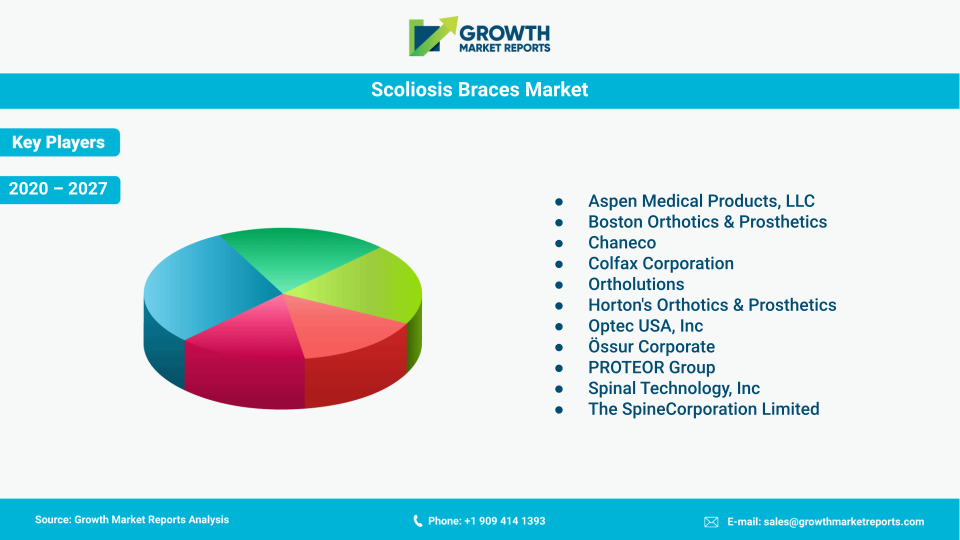
Key players in the market include Aspen Medical Products, LLC, Boston Orthotics & Prosthetics, Chaneco, Colfax Corporation, Ortholutions, Horton's Orthotics & Prosthetics, Optec USA, Inc, Össur Corporate, Professional Technologies International, PROTEOR Group, Spinal Technology, Inc, The SpineCorporation Limited, Thrive Orthopedics, TRULIFE, UNYQ, Wellinks, Inc, Fited, Lawall Orthotics & Prosthetics, C H Martin Company, LA Brace Center. These companies are considered manufacturers of scoliosis braces based on their revenue, research development (R&D) activities, regional presence, and supply chain management system.
The players are adopting key strategies such as acquisition, and geographical expansion where potential opportunity for the scoliosis braces is added in the company’s capacity.
In 2020, Convexity Scientific acquires Wellinks Inc. Convexity Scientific provided consumer-focused respiratory medical technology. In this acquisition Convexity acquires a portfolio of products and intellectual property, including software to support connected medical devices and remote patient monitoring
In 2017, UNYQ has been specifically expands to Charlotte. This allowed the company to increase its business in different location and increase its market presence.
In 2018, The SpineCorporation Limited developed The TechnoSpine TLSO-Scoliosis Brace to reduce postural imbalance and pain in adult scoliosis patients. This launch helped the company to increase its product portfolio.
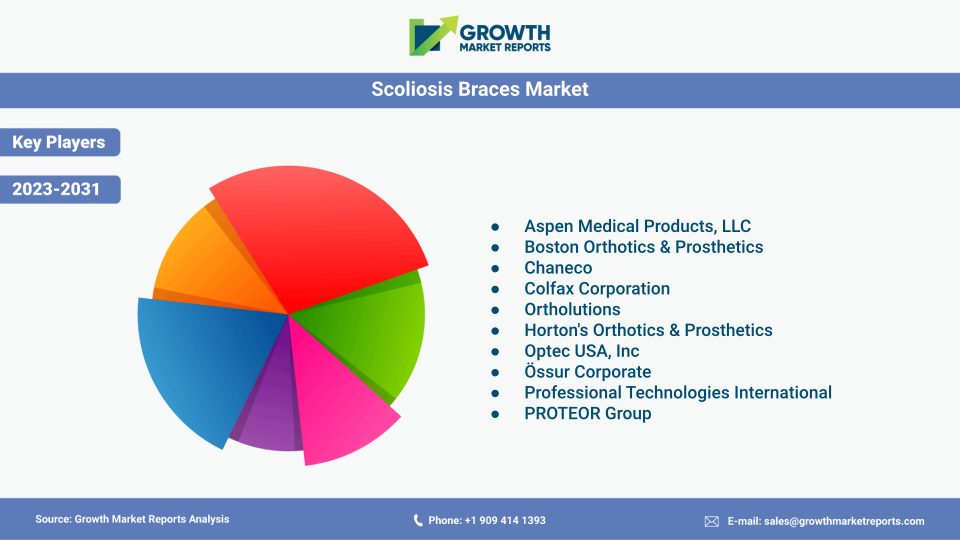
Major Manufactures include, Aspen Medical Products, LLC, Boston Orthotics & Prosthetics, Chaneco, Colfax Corporation, Ortholutions, Horton's Orthotics & Prosthetics, Optec USA, Inc, Össur Corporate, Professional Technologies International, PROTEOR Group, Spinal Technology, Inc, The SpineCorporation Limited, Thrive Orthopedics, TRULIFE, UNYQ, Wellinks, Inc, Fited, Lawall Orthotics & Prosthetics, C H Martin Company, LA Brace Center.
Adolescent (10 to 18 years of age) are the key user that are driving the Scoliosis Braces Market and holding over 3/4th of the market share throughout forecast period.
Yes, the report covers macro-economic factors impact analysis including healthcare expenditure, GDP, population, Consumerism in Healthcare, Prevalence and Incidence of Scoliosis, and others.
The base year considered for the global Scoliosis Braces Market report is 2019. The complete analysis period is 2017 to 2027, wherein, 2017 & 2018 are the historic years and the forecast is provided from 2021 to 2027.
The market is expected to undergo normal growth between 2019 and 2020 owing to the negligible impact of COVID-19 pandemic on the scoliosis braces market.
Factors such as competitive strength and market positioning are key areas considered while selecting top companies to be profiled.
Increasing Growing Prevalence of Musculoskeletal Disorders Worldwide and Increasing Incidence of Cerebral Palsy and Muscular Dystrophy are some of the key factors driving the Scoliosis Braces market growth.
In addition to market size (in USD Million) and Company Market Share (in % for base year 2019), other data such as Macro-economic factors, COVID impact is provided, is available in final report.
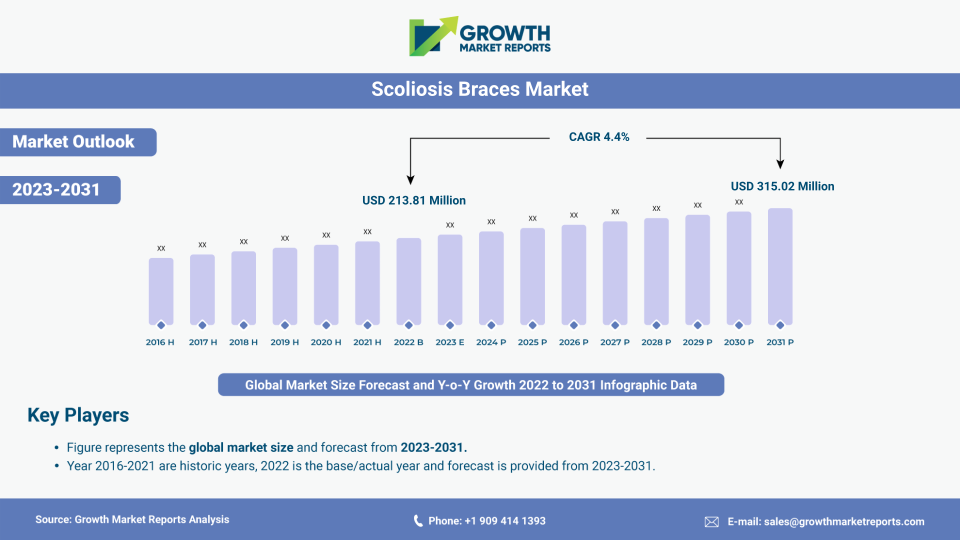
According to this Growth Market Reports report, the market from Scoliosis Braces is likely to register a CAGR of approximately 4.4% during forecast period 2020-2027, with an anticipated valuation of USD 260.3 million by the end of the 2027.
Additional company profiles can be provided on request.