Decorative Laminates Market Research Report 2033

Decorative Laminates Market Research Report 2033

Segments - by Product Type (High-Pressure Laminates, Low-Pressure Laminates, Edge Banding, Others), by Application (Furniture, Flooring, Wall Panels, Cabinets, Others), by End-User (Residential, Commercial, Industrial), by Surface Finish (Matte, Glossy, Textured, Others), by Distribution Channel (Offline, Online)

https://growthmarketreports.com/Raksha
Author : Raksha Sharma
https://growthmarketreports.com/Vaibhav
Fact-checked by : V. Chandola
https://growthmarketreports.com/Shruti
Editor : Shruti Bhat

Upcoming | Report ID :MC-4806 | 4.0 Rating | 36 Reviews | 299 Pages | Format : Docx PDF

Report Description


Decorative Laminates Market Outlook

According to our latest research, the global decorative laminates market size reached USD 9.8 billion in 2024, driven by robust demand across residential and commercial sectors. The market is exhibiting a steady growth trajectory, with a compound annual growth rate (CAGR) of 4.7% expected from 2025 to 2033. By the end of 2033, the market is forecasted to attain a value of approximately USD 14.8 billion. The primary growth factors include rapid urbanization, increasing investments in infrastructure, and evolving consumer preferences for aesthetically appealing and durable surfacing solutions.

One of the most significant growth drivers for the decorative laminates market is the ongoing expansion in the construction and real estate sectors worldwide. As urban populations surge and cities expand, there is a notable rise in residential and commercial construction activities. Decorative laminates are increasingly favored for their versatility, cost-effectiveness, and ability to mimic natural materials such as wood and stone. These attributes make them a preferred choice for modern interiors and furniture, where both functionality and visual appeal are paramount. Moreover, the growing trend of home renovation and remodeling, particularly in developed economies, is further fueling the adoption of decorative laminates as consumers seek to upgrade their living spaces with stylish yet affordable materials.

Technological advancements in manufacturing processes have also played a pivotal role in propelling the decorative laminates market forward. Innovative production techniques have enabled manufacturers to offer a broader range of textures, colors, and finishes, catering to the increasingly sophisticated tastes of end-users. The introduction of eco-friendly laminates, made from sustainable materials and low-emission adhesives, has garnered significant attention from environmentally conscious consumers and businesses alike. This shift toward sustainable products aligns with global regulatory trends and green building standards, thereby opening new avenues for market growth. Additionally, advancements in digital printing technologies have enabled highly customized and intricate designs, further broadening the market's appeal.

Another critical factor influencing market growth is the rising disposable income and changing lifestyle preferences, particularly in emerging economies across Asia Pacific and Latin America. As middle-class populations expand, there is a marked increase in demand for premium home décor and furnishing solutions. Decorative laminates, with their ability to offer high-end aesthetics at accessible price points, are well-positioned to capitalize on this trend. Furthermore, the proliferation of organized retail and e-commerce platforms has made decorative laminates more accessible to a broader consumer base, enabling manufacturers and distributors to reach untapped markets. This democratization of access is expected to sustain the market's upward momentum in the years ahead.

Regionally, Asia Pacific continues to dominate the global decorative laminates market, accounting for the largest share in 2024. The region's leadership is underpinned by rapid urbanization, a booming construction industry, and rising consumer awareness of interior design trends. North America and Europe also represent significant markets, driven by a strong focus on renovation activities and green building initiatives. Meanwhile, Latin America and the Middle East & Africa are witnessing steady growth, supported by infrastructure development and increasing investments in hospitality and commercial real estate. Each region presents unique opportunities and challenges, shaping the competitive landscape and future growth prospects of the decorative laminates market.

Global Decorative Laminates Industry Outlook

Product Type Analysis

The decorative laminates market is segmented by product type into high-pressure laminates (HPL), low-pressure laminates (LPL), edge banding, and others. Among these, high-pressure laminates have traditionally held a dominant position due to their superior durability, impact resistance, and ability to withstand harsh environmental conditions. HPLs are widely used in commercial applications such as office furniture, retail counters, and public spaces, where longevity and robustness are critical. Their multi-layered construction, typically involving kraft paper impregnated with phenolic resin and a decorative layer, ensures exceptional performance and aesthetic versatility. The increasing adoption of HPLs in high-traffic areas is expected to sustain their market leadership throughout the forecast period.

On the other hand, low-pressure laminates have gained significant traction in residential applications, primarily due to their cost-effectiveness and ease of installation. LPLs are commonly used for cabinetry, wall panels, and furniture surfaces where the environmental demands are less stringent compared to commercial settings. With advancements in manufacturing techniques, LPLs have seen improvements in their visual appeal and tactile qualities, narrowing the gap with their high-pressure counterparts. This has broadened their application scope, especially in budget-sensitive markets and among do-it-yourself (DIY) consumers seeking affordable yet stylish surfacing solutions.

The edge banding segment, though smaller in market share compared to HPL and LPL, plays a vital role in the overall decorative laminates ecosystem. Edge banding materials are essential for providing finished edges to laminate panels, enhancing both durability and aesthetics. With the rise in modular furniture and customized cabinetry, demand for edge banding solutions has witnessed steady growth. Manufacturers are increasingly offering edge banding in a variety of finishes, textures, and colors to match the expanding range of laminate designs, ensuring seamless integration and a premium look for end products.

Other product types, including specialty laminates designed for specific applications such as fire resistance, anti-bacterial properties, and digital printing, are also gaining prominence. These niche products cater to specialized requirements in sectors like healthcare, hospitality, and education, where performance attributes beyond basic aesthetics are crucial. As consumer awareness of these advanced features grows, the demand for specialty laminates is expected to rise, contributing to the overall diversification and expansion of the decorative laminates market.

Report Scope

Attributes Details
Report Title Decorative Laminates Market Research Report 2033
By Product Type High-Pressure Laminates, Low-Pressure Laminates, Edge Banding, Others
By Application Furniture, Flooring, Wall Panels, Cabinets, Others
By End-User Residential, Commercial, Industrial
By Surface Finish Matte, Glossy, Textured, Others
By Distribution Channel Offline, Online
Regions Covered North America, Europe, APAC, Latin America, MEA
Base Year 2024
Historic Data 2018-2023
Forecast Period 2025-2033
Number of Pages 299
Number of Tables & Figures 257
Customization Available Yes, the report can be customized as per your need.

Application Analysis

The application landscape of the decorative laminates market is broad, encompassing furniture, flooring, wall panels, cabinets, and other uses. Furniture remains the largest application segment, driven by the ongoing demand for stylish, functional, and affordable home and office furnishings. Decorative laminates are extensively used in the production of tables, chairs, shelves, and modular storage units, offering manufacturers the flexibility to create a wide array of designs and finishes. The ability of laminates to replicate the look of premium materials such as hardwood and marble at a fraction of the cost is a key factor behind their widespread adoption in the furniture industry.

The flooring segment has also seen significant growth, particularly with the advent of laminate flooring solutions that combine durability, ease of maintenance, and aesthetic appeal. Laminate flooring is increasingly preferred in both residential and commercial spaces due to its resistance to scratches, stains, and moisture. The availability of a diverse range of patterns and textures, including wood, stone, and tile imitations, has further enhanced the attractiveness of laminate flooring among consumers seeking versatile and cost-effective alternatives to traditional materials.

Wall panels represent another key application area, especially in commercial and hospitality environments where interior design plays a crucial role in brand identity and customer experience. Decorative laminates are used to create feature walls, partitions, and cladding solutions that combine visual impact with practicality. The ease of installation, low maintenance requirements, and fire-retardant properties of certain laminate products make them an ideal choice for public spaces such as hotels, restaurants, and retail outlets.

The use of decorative laminates in cabinets has grown steadily, particularly in kitchens, bathrooms, and office storage solutions. Laminates offer resistance to moisture, heat, and daily wear, making them well-suited for environments where durability is paramount. The trend toward modular and space-saving designs has further boosted the demand for laminate-clad cabinets, as consumers seek customizable and aesthetically pleasing storage options. Other applications, including doors, countertops, and signage, continue to expand as designers and architects explore new ways to leverage the functional and decorative benefits of laminates.

End-User Analysis

The decorative laminates market serves a diverse array of end-users, segmented into residential, commercial, and industrial categories. The residential sector remains the largest end-user, accounting for a substantial share of overall demand. Rising urbanization, increasing homeownership rates, and the growing trend of interior remodeling are key factors driving laminate adoption in homes. Homeowners are increasingly seeking materials that offer a blend of style, affordability, and ease of maintenance, making decorative laminates an attractive choice for furniture, flooring, and wall panels. The proliferation of do-it-yourself (DIY) projects and the availability of laminates through retail and online channels have further democratized access to these products.

In the commercial segment, decorative laminates are widely used in offices, retail environments, hospitality venues, educational institutions, and healthcare facilities. The commercial sector's emphasis on durability, hygiene, and design flexibility aligns well with the functional attributes of modern laminates. For instance, hospitals and clinics require surfaces that are easy to clean and resistant to bacteria, while retail spaces and offices prioritize aesthetics and brand consistency. As businesses continue to invest in creating inviting and productive environments for employees and customers, the demand for innovative laminate solutions is expected to grow steadily.

The industrial end-user segment, though smaller in comparison, is gaining traction as manufacturers recognize the benefits of decorative laminates for specialized applications. In industrial settings such as laboratories, workshops, and production facilities, laminates are used for work surfaces, partitions, and protective cladding. The emphasis here is on performance attributes such as chemical resistance, fire retardancy, and impact resistance. As industries increasingly adopt lean and modular design principles, the demand for high-performance laminates tailored to specific operational requirements is likely to increase.

Across all end-user segments, there is a growing emphasis on sustainability and environmental responsibility. Manufacturers are responding by developing laminates that incorporate recycled materials, low-emission adhesives, and eco-friendly manufacturing processes. This aligns with the broader shift toward green building practices and corporate social responsibility, further enhancing the market's appeal across residential, commercial, and industrial domains.

Surface Finish Analysis

Surface finish is a critical differentiator in the decorative laminates market, influencing both aesthetic appeal and functional performance. The matte finish segment holds a significant share, favored for its understated elegance and ability to minimize the appearance of fingerprints, smudges, and scratches. Matte laminates are widely used in residential and commercial interiors where a subtle, contemporary look is desired. Their versatility makes them suitable for a variety of applications, from kitchen cabinets and countertops to office furniture and wall panels. The growing preference for minimalist design aesthetics, particularly among younger consumers, is expected to sustain demand for matte finishes.

Glossy finishes, on the other hand, are prized for their high-shine appearance and ability to create a sense of luxury and spaciousness. Glossy laminates are often used in modern kitchens, retail displays, and hospitality venues where visual impact is a key consideration. While they require more careful maintenance to avoid visible smudges and scratches, advances in surface treatment technologies have improved their durability and ease of cleaning. As consumer preferences shift toward bold, statement-making interiors, glossy laminates are likely to see continued growth, especially in premium market segments.

Textured laminates represent a rapidly expanding category, offering tactile experiences that mimic natural materials such as wood grain, stone, and leather. These finishes provide depth and authenticity, appealing to consumers and designers seeking to create visually and physically engaging spaces. Textured laminates are increasingly used in feature walls, cabinetry, and furniture, where they add character and sophistication. The ability to customize textures through advanced manufacturing processes has further expanded the range of design possibilities, making textured laminates a popular choice in both residential and commercial projects.

Other surface finishes, including metallic, pearlescent, and specialty coatings, are gaining traction as manufacturers experiment with innovative design trends. These niche finishes cater to high-end applications and bespoke projects, allowing architects and interior designers to push the boundaries of creativity. As the market continues to evolve, the diversity of surface finishes available is expected to increase, providing end-users with even greater flexibility to achieve their desired look and feel.

Distribution Channel Analysis

The distribution landscape for decorative laminates is segmented into offline and online channels, each playing a distinct role in market development. The offline channel, comprising specialty stores, home improvement centers, and direct sales through manufacturers and distributors, remains the dominant mode of distribution. Offline channels offer the advantage of tactile product inspection, personalized consultation, and immediate availability, factors that are particularly important for large-scale commercial projects and discerning residential customers. The established network of dealers and showrooms ensures widespread accessibility and reliable after-sales support.

However, the online distribution channel is rapidly gaining momentum, propelled by the digital transformation of the retail sector and changing consumer shopping behaviors. E-commerce platforms and manufacturer websites have made it easier for consumers and businesses to browse, compare, and purchase decorative laminates from the comfort of their homes or offices. Online channels offer the convenience of extensive product catalogs, detailed specifications, and customer reviews, enabling informed purchasing decisions. The rise of online marketplaces has also facilitated greater market penetration in remote and underserved regions, expanding the customer base for decorative laminates.

Manufacturers and distributors are increasingly adopting an omnichannel approach, integrating offline and online strategies to enhance customer engagement and streamline the buying process. Virtual showrooms, augmented reality tools, and interactive design apps are being leveraged to provide immersive product experiences and personalized recommendations. This convergence of physical and digital channels is expected to drive higher sales conversions and foster brand loyalty, particularly among tech-savvy consumers and younger demographics.

Despite the growth of online sales, challenges such as logistics, product customization, and after-sales service remain key considerations. Ensuring timely delivery, safe packaging, and hassle-free returns are critical to building trust and satisfaction among online buyers. As e-commerce continues to mature, investments in digital infrastructure, supply chain optimization, and customer support will be essential for companies seeking to capitalize on the expanding online market for decorative laminates.

Opportunities & Threats

The decorative laminates market is brimming with opportunities, particularly in the realm of product innovation and sustainable development. The growing demand for eco-friendly laminates, driven by stringent environmental regulations and increasing consumer awareness, presents a significant growth avenue for manufacturers. Companies that invest in green technologies, such as bio-based resins, recycled content, and low-emission adhesives, are well-positioned to capture market share and differentiate themselves in an increasingly competitive landscape. Additionally, the rise of smart homes and connected interiors offers new opportunities for integrating functional features such as antimicrobial surfaces, thermal resistance, and digital interfaces into laminate products.

Expanding into emerging markets represents another lucrative opportunity for industry players. Rapid urbanization, rising disposable incomes, and evolving lifestyle preferences in regions such as Asia Pacific, Latin America, and the Middle East & Africa are driving demand for modern, affordable, and aesthetically appealing interior solutions. Strategic partnerships with local distributors, investment in localized manufacturing, and targeted marketing campaigns can help companies tap into these high-growth markets. Furthermore, the increasing adoption of modular and prefabricated construction methods is expected to boost demand for ready-to-install laminate panels and components, creating new revenue streams for manufacturers and suppliers.

Despite the positive outlook, the decorative laminates market faces certain restraining factors that could impede growth. One of the primary challenges is the volatility in raw material prices, particularly for paper, resins, and chemicals used in laminate production. Fluctuations in input costs can impact profit margins and pricing strategies, especially for manufacturers operating on thin margins. Additionally, the market is characterized by intense competition and price sensitivity, with numerous regional and local players vying for market share. To mitigate these challenges, companies must focus on operational efficiency, supply chain resilience, and value-added product offerings that justify premium pricing.

Regional Outlook

Asia Pacific stands as the largest and fastest-growing region in the global decorative laminates market, accounting for approximately USD 4.1 billion in market size in 2024. The region’s dominance is driven by rapidly expanding urban centers, robust construction activity, and a burgeoning middle class with increasing disposable income. China, India, and Southeast Asian countries are at the forefront of this growth, fueled by government investments in infrastructure, housing, and commercial real estate. The market in Asia Pacific is projected to grow at a CAGR of 5.3% through 2033, outpacing other regions and presenting significant opportunities for both domestic and international manufacturers.

North America and Europe together represent a combined market size of approximately USD 3.6 billion in 2024. In North America, the decorative laminates market is buoyed by strong demand for home renovation, remodeling, and sustainable building practices. The United States and Canada are key contributors, with a well-established construction sector and a high level of consumer awareness regarding interior design trends. Europe, on the other hand, is characterized by stringent environmental regulations and a strong preference for eco-friendly and high-performance laminate products. Countries such as Germany, the United Kingdom, and France are leading adopters, supported by advanced manufacturing capabilities and a focus on design innovation.

Latin America and the Middle East & Africa collectively contributed around USD 2.1 billion to the global decorative laminates market in 2024. Growth in these regions is underpinned by increasing investments in commercial real estate, hospitality, and infrastructure development. Brazil, Mexico, the United Arab Emirates, and South Africa are emerging as key markets, driven by rising urbanization and a growing emphasis on modern interior solutions. While these regions face challenges such as economic volatility and regulatory hurdles, they also offer untapped potential for market expansion, particularly for companies that can adapt to local preferences and regulatory requirements.

Decorative Laminates Market Statistics

Competitor Outlook

The competitive landscape of the decorative laminates market is characterized by a mix of global giants, regional leaders, and a multitude of local players. Intense competition has led to continuous innovation in product design, manufacturing processes, and distribution strategies. Leading companies are investing heavily in research and development to introduce new textures, finishes, and functional features that cater to evolving consumer preferences. The focus on sustainability and eco-friendly laminates has become a key differentiator, with major players vying to develop products that meet stringent environmental standards and appeal to green-conscious buyers.

Strategic collaborations, mergers, and acquisitions are common in this market as companies seek to expand their geographic reach, diversify their product portfolios, and strengthen their competitive positions. For instance, partnerships with furniture manufacturers, interior designers, and construction firms enable laminate producers to integrate their products into large-scale projects and secure long-term contracts. The growing importance of digital marketing and e-commerce has also prompted companies to enhance their online presence, leverage data analytics, and offer virtual design tools to engage and retain customers.

Despite the dominance of established players, the decorative laminates market remains highly fragmented, with significant opportunities for niche and regional brands. Local manufacturers often compete on price and customization, catering to specific market needs and preferences. However, the ability to scale operations, ensure consistent quality, and comply with international standards remains a challenge for smaller players. As the market continues to evolve, consolidation is expected, with larger companies acquiring innovative startups and regional competitors to gain a competitive edge.

Major companies operating in the decorative laminates market include Greenlam Industries Ltd., Wilsonart LLC, Formica Group, FunderMax GmbH, Merino Laminates Ltd., Panolam Industries International, Abet Laminati S.p.A., and Stylam Industries Limited. Greenlam Industries is renowned for its extensive product portfolio and global distribution network, while Wilsonart LLC is recognized for its focus on innovation and sustainability. Formica Group, a pioneer in laminate technology, continues to lead in design and performance, while FunderMax GmbH is noted for its high-pressure laminates and commitment to eco-friendly manufacturing. Merino Laminates and Stylam Industries have carved out strong positions in Asia, leveraging cost advantages and local market insights. These companies, along with others, are expected to shape the future trajectory of the decorative laminates market through continuous investment in technology, sustainability, and customer-centric solutions.

Key Players

  • Greenlam Industries Ltd.
  • FunderMax GmbH
  • Wilsonart LLC
  • Formica Group
  • Merino Laminates Ltd.
  • Abet Laminati S.p.A.
  • EGGER Group
  • AICA Kogyo Co., Ltd.
  • Panolam Industries International, Inc.
  • Stylam Industries Limited
  • Arpa Industriale S.p.A.
  • OMNOVA Solutions Inc.
  • Pfleiderer Group
  • Sonae Indústria, SGPS, S.A.
  • Kronospan Holdings Limited
  • SWISS KRONO Group
  • Laminex Group
  • Nevamar (Panolam Industries)
  • Trespa International B.V.
  • Royal Crown Laminates Pvt. Ltd.
Decorative Laminates Market Overview

Segments

The Decorative Laminates market has been segmented on the basis of

Product Type

  • High-Pressure Laminates
  • Low-Pressure Laminates
  • Edge Banding
  • Others

Application

  • Furniture
  • Flooring
  • Wall Panels
  • Cabinets
  • Others

End-User

  • Residential
  • Commercial
  • Industrial

Surface Finish

  • Matte
  • Glossy
  • Textured
  • Others

Distribution Channel

  • Offline
  • Online

Competitive Landscape

Key players competing in the global decorative laminates market are Wilsonart LLC; STYLAM INDUSTRIED LIMITED; Fletcher Building; Greenlam Industries Ltd.; OMNOVA Solutions Inc.; Merinoindia.com.; Panolam Industries International, Inc.; Synthomer PLC; Abet Laminati S.p.A.; Archidply; and stylam industries. Some of these major companies adopted various business development strategies including mergers, acquisitions, partnerships, collaboration, product launches, and production capacity expansion to expand their consumer base and enhance their market share.

  • On June 4, 2019, the Netherlands-based company, Broadview Holding acquired the leading brand of decorative laminates, Formica group businesses. The latter company has its major operations in various regions such as North America, Asia, and Europe.
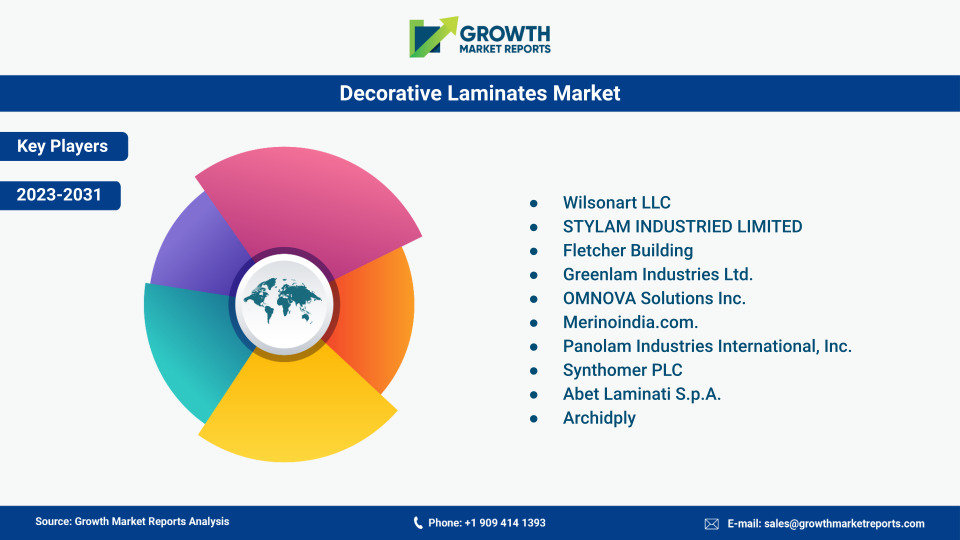

Decorative Laminates Market Key Players

Frequently Asked Questions

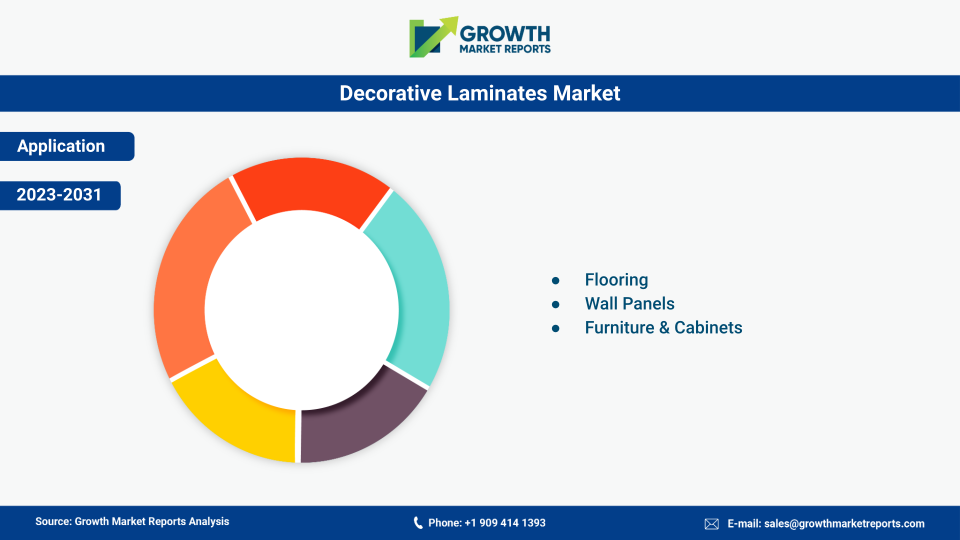
Based on application, the furniture & cabinets segment accounted for major revenue of the global market in 2021.

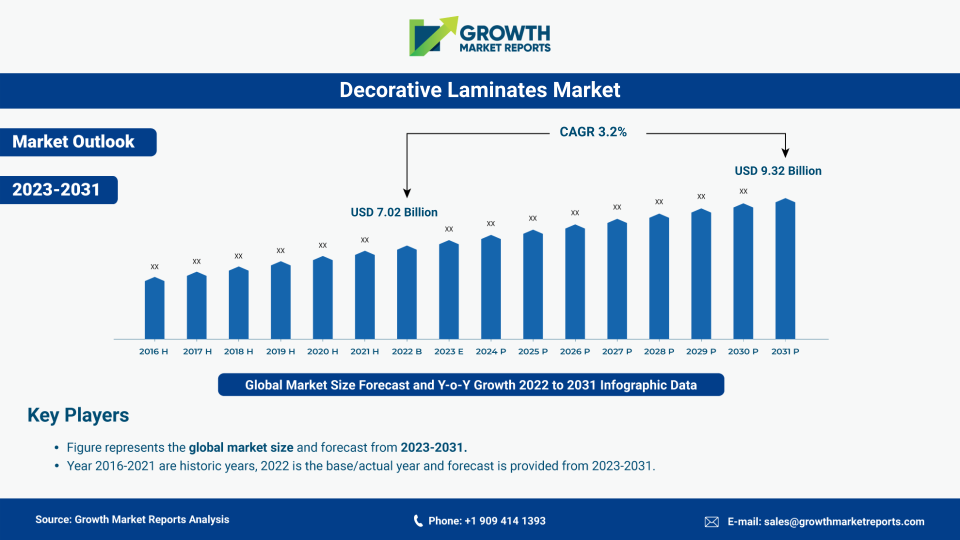
The global decorative laminates market size was around USD 7.02 billion in 2022.

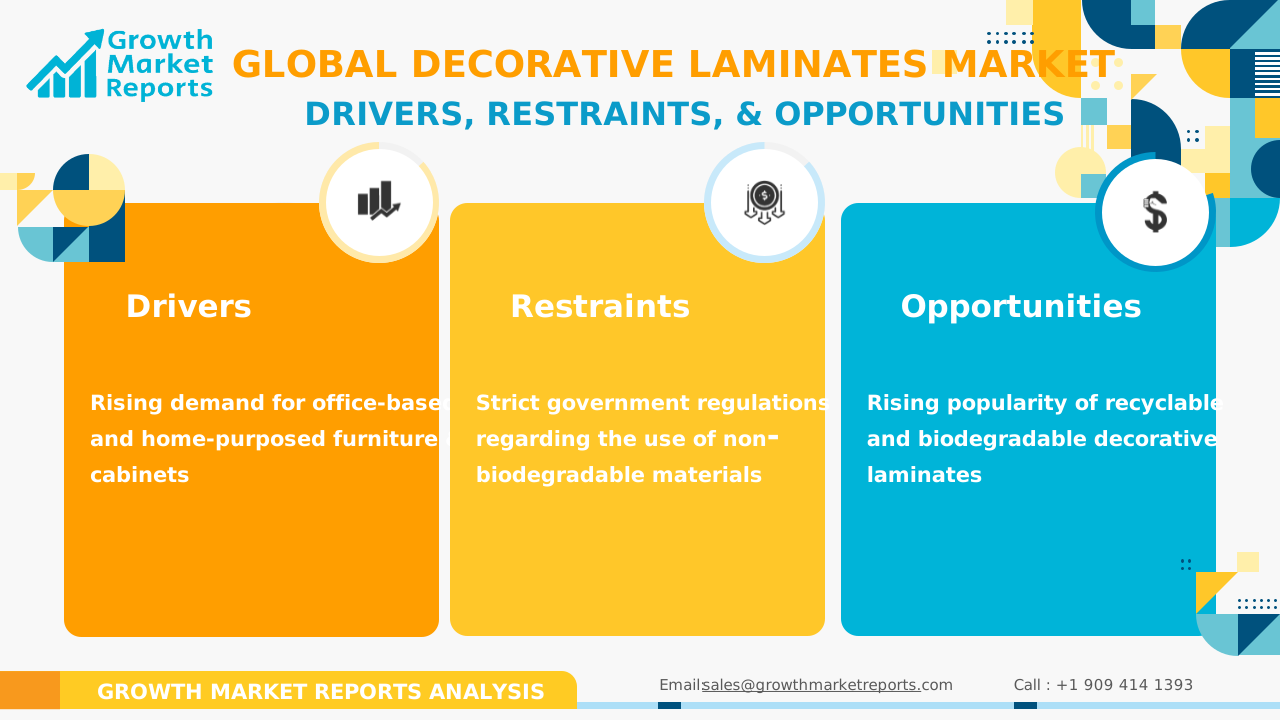
The key drivers of the market include the increasing use of decorative laminates on furniture, cabinets, and wall paneling to enhance aesthetics for residential and commercial.

For regional analysis, Asia pacific is likely to dominate the global decorative laminates market during the forecast period owing to the increasing construction sector and infrastructures in developing countries.

The key market players are Wilsonart LLC; STYLAM INDUSTRIED LIMITED; Fletcher Building; Greenlam Industries Ltd.; OMNOVA Solutions Inc.; Merinoindia.com.; Panolam Industries International, Inc.; Synthomer PLC; Abet Laminati S.p.A.; Archidply and stylam industries

Table Of Content

Chapter 1 Executive Summary
Chapter 2 Assumptions and Acronyms Used
Chapter 3 Research Methodology
Chapter 4 Decorative Laminates Market Overview
   4.1 Introduction
      4.1.1 Market Taxonomy
      4.1.2 Market Definition
      4.1.3 Macro-Economic Factors Impacting the Market Growth
   4.2 Decorative Laminates Market Dynamics
      4.2.1 Market Drivers
      4.2.2 Market Restraints
      4.2.3 Market Opportunity
   4.3 Decorative Laminates Market - Supply Chain Analysis
      4.3.1 List of Key Suppliers
      4.3.2 List of Key Distributors
      4.3.3 List of Key Consumers
   4.4 Key Forces Shaping the Decorative Laminates Market
      4.4.1 Bargaining Power of Suppliers
      4.4.2 Bargaining Power of Buyers
      4.4.3 Threat of Substitution
      4.4.4 Threat of New Entrants
      4.4.5 Competitive Rivalry
   4.5 Global Decorative Laminates Market Size & Forecast, 2023-2032
      4.5.1 Decorative Laminates Market Size and Y-o-Y Growth
      4.5.2 Decorative Laminates Market Absolute $ Opportunity

Chapter 5 Global Decorative Laminates Market Analysis and Forecast By Product Type
   5.1 Introduction
      5.1.1 Key Market Trends & Growth Opportunities By Product Type
      5.1.2 Basis Point Share (BPS) Analysis By Product Type
      5.1.3 Absolute $ Opportunity Assessment By Product Type
   5.2 Decorative Laminates Market Size Forecast By Product Type
      5.2.1 High-Pressure Laminates
      5.2.2 Low-Pressure Laminates
      5.2.3 Edge Banding
      5.2.4 Others
   5.3 Market Attractiveness Analysis By Product Type

Chapter 6 Global Decorative Laminates Market Analysis and Forecast By Application
   6.1 Introduction
      6.1.1 Key Market Trends & Growth Opportunities By Application
      6.1.2 Basis Point Share (BPS) Analysis By Application
      6.1.3 Absolute $ Opportunity Assessment By Application
   6.2 Decorative Laminates Market Size Forecast By Application
      6.2.1 Furniture
      6.2.2 Flooring
      6.2.3 Wall Panels
      6.2.4 Cabinets
      6.2.5 Others
   6.3 Market Attractiveness Analysis By Application

Chapter 7 Global Decorative Laminates Market Analysis and Forecast By End-User
   7.1 Introduction
      7.1.1 Key Market Trends & Growth Opportunities By End-User
      7.1.2 Basis Point Share (BPS) Analysis By End-User
      7.1.3 Absolute $ Opportunity Assessment By End-User
   7.2 Decorative Laminates Market Size Forecast By End-User
      7.2.1 Residential
      7.2.2 Commercial
      7.2.3 Industrial
   7.3 Market Attractiveness Analysis By End-User

Chapter 8 Global Decorative Laminates Market Analysis and Forecast By Surface Finish
   8.1 Introduction
      8.1.1 Key Market Trends & Growth Opportunities By Surface Finish
      8.1.2 Basis Point Share (BPS) Analysis By Surface Finish
      8.1.3 Absolute $ Opportunity Assessment By Surface Finish
   8.2 Decorative Laminates Market Size Forecast By Surface Finish
      8.2.1 Matte
      8.2.2 Glossy
      8.2.3 Textured
      8.2.4 Others
   8.3 Market Attractiveness Analysis By Surface Finish

Chapter 9 Global Decorative Laminates Market Analysis and Forecast By Distribution Channel
   9.1 Introduction
      9.1.1 Key Market Trends & Growth Opportunities By Distribution Channel
      9.1.2 Basis Point Share (BPS) Analysis By Distribution Channel
      9.1.3 Absolute $ Opportunity Assessment By Distribution Channel
   9.2 Decorative Laminates Market Size Forecast By Distribution Channel
      9.2.1 Offline
      9.2.2 Online
   9.3 Market Attractiveness Analysis By Distribution Channel

Chapter 10 Global Decorative Laminates Market Analysis and Forecast by Region
   10.1 Introduction
      10.1.1 Key Market Trends & Growth Opportunities By Region
      10.1.2 Basis Point Share (BPS) Analysis By Region
      10.1.3 Absolute $ Opportunity Assessment By Region
   10.2 Decorative Laminates Market Size Forecast By Region
      10.2.1 North America
      10.2.2 Europe
      10.2.3 Asia Pacific
      10.2.4 Latin America
      10.2.5 Middle East & Africa (MEA)
   10.3 Market Attractiveness Analysis By Region

Chapter 11 Coronavirus Disease (COVID-19) Impact 
   11.1 Introduction 
   11.2 Current & Future Impact Analysis 
   11.3 Economic Impact Analysis 
   11.4 Government Policies 
   11.5 Investment Scenario

Chapter 12 North America Decorative Laminates Analysis and Forecast
   12.1 Introduction
   12.2 North America Decorative Laminates Market Size Forecast by Country
      12.2.1 U.S.
      12.2.2 Canada
   12.3 Basis Point Share (BPS) Analysis by Country
   12.4 Absolute $ Opportunity Assessment by Country
   12.5 Market Attractiveness Analysis by Country
   12.6 North America Decorative Laminates Market Size Forecast By Product Type
      12.6.1 High-Pressure Laminates
      12.6.2 Low-Pressure Laminates
      12.6.3 Edge Banding
      12.6.4 Others
   12.7 Basis Point Share (BPS) Analysis By Product Type 
   12.8 Absolute $ Opportunity Assessment By Product Type 
   12.9 Market Attractiveness Analysis By Product Type
   12.10 North America Decorative Laminates Market Size Forecast By Application
      12.10.1 Furniture
      12.10.2 Flooring
      12.10.3 Wall Panels
      12.10.4 Cabinets
      12.10.5 Others
   12.11 Basis Point Share (BPS) Analysis By Application 
   12.12 Absolute $ Opportunity Assessment By Application 
   12.13 Market Attractiveness Analysis By Application
   12.14 North America Decorative Laminates Market Size Forecast By End-User
      12.14.1 Residential
      12.14.2 Commercial
      12.14.3 Industrial
   12.15 Basis Point Share (BPS) Analysis By End-User 
   12.16 Absolute $ Opportunity Assessment By End-User 
   12.17 Market Attractiveness Analysis By End-User
   12.18 North America Decorative Laminates Market Size Forecast By Surface Finish
      12.18.1 Matte
      12.18.2 Glossy
      12.18.3 Textured
      12.18.4 Others
   12.19 Basis Point Share (BPS) Analysis By Surface Finish 
   12.20 Absolute $ Opportunity Assessment By Surface Finish 
   12.21 Market Attractiveness Analysis By Surface Finish
   12.22 North America Decorative Laminates Market Size Forecast By Distribution Channel
      12.22.1 Offline
      12.22.2 Online
   12.23 Basis Point Share (BPS) Analysis By Distribution Channel 
   12.24 Absolute $ Opportunity Assessment By Distribution Channel 
   12.25 Market Attractiveness Analysis By Distribution Channel

Chapter 13 Europe Decorative Laminates Analysis and Forecast
   13.1 Introduction
   13.2 Europe Decorative Laminates Market Size Forecast by Country
      13.2.1 Germany
      13.2.2 France
      13.2.3 Italy
      13.2.4 U.K.
      13.2.5 Spain
      13.2.6 Russia
      13.2.7 Rest of Europe
   13.3 Basis Point Share (BPS) Analysis by Country
   13.4 Absolute $ Opportunity Assessment by Country
   13.5 Market Attractiveness Analysis by Country
   13.6 Europe Decorative Laminates Market Size Forecast By Product Type
      13.6.1 High-Pressure Laminates
      13.6.2 Low-Pressure Laminates
      13.6.3 Edge Banding
      13.6.4 Others
   13.7 Basis Point Share (BPS) Analysis By Product Type 
   13.8 Absolute $ Opportunity Assessment By Product Type 
   13.9 Market Attractiveness Analysis By Product Type
   13.10 Europe Decorative Laminates Market Size Forecast By Application
      13.10.1 Furniture
      13.10.2 Flooring
      13.10.3 Wall Panels
      13.10.4 Cabinets
      13.10.5 Others
   13.11 Basis Point Share (BPS) Analysis By Application 
   13.12 Absolute $ Opportunity Assessment By Application 
   13.13 Market Attractiveness Analysis By Application
   13.14 Europe Decorative Laminates Market Size Forecast By End-User
      13.14.1 Residential
      13.14.2 Commercial
      13.14.3 Industrial
   13.15 Basis Point Share (BPS) Analysis By End-User 
   13.16 Absolute $ Opportunity Assessment By End-User 
   13.17 Market Attractiveness Analysis By End-User
   13.18 Europe Decorative Laminates Market Size Forecast By Surface Finish
      13.18.1 Matte
      13.18.2 Glossy
      13.18.3 Textured
      13.18.4 Others
   13.19 Basis Point Share (BPS) Analysis By Surface Finish 
   13.20 Absolute $ Opportunity Assessment By Surface Finish 
   13.21 Market Attractiveness Analysis By Surface Finish
   13.22 Europe Decorative Laminates Market Size Forecast By Distribution Channel
      13.22.1 Offline
      13.22.2 Online
   13.23 Basis Point Share (BPS) Analysis By Distribution Channel 
   13.24 Absolute $ Opportunity Assessment By Distribution Channel 
   13.25 Market Attractiveness Analysis By Distribution Channel

Chapter 14 Asia Pacific Decorative Laminates Analysis and Forecast
   14.1 Introduction
   14.2 Asia Pacific Decorative Laminates Market Size Forecast by Country
      14.2.1 China
      14.2.2 Japan
      14.2.3 South Korea
      14.2.4 India
      14.2.5 Australia
      14.2.6 South East Asia (SEA)
      14.2.7 Rest of Asia Pacific (APAC)
   14.3 Basis Point Share (BPS) Analysis by Country
   14.4 Absolute $ Opportunity Assessment by Country
   14.5 Market Attractiveness Analysis by Country
   14.6 Asia Pacific Decorative Laminates Market Size Forecast By Product Type
      14.6.1 High-Pressure Laminates
      14.6.2 Low-Pressure Laminates
      14.6.3 Edge Banding
      14.6.4 Others
   14.7 Basis Point Share (BPS) Analysis By Product Type 
   14.8 Absolute $ Opportunity Assessment By Product Type 
   14.9 Market Attractiveness Analysis By Product Type
   14.10 Asia Pacific Decorative Laminates Market Size Forecast By Application
      14.10.1 Furniture
      14.10.2 Flooring
      14.10.3 Wall Panels
      14.10.4 Cabinets
      14.10.5 Others
   14.11 Basis Point Share (BPS) Analysis By Application 
   14.12 Absolute $ Opportunity Assessment By Application 
   14.13 Market Attractiveness Analysis By Application
   14.14 Asia Pacific Decorative Laminates Market Size Forecast By End-User
      14.14.1 Residential
      14.14.2 Commercial
      14.14.3 Industrial
   14.15 Basis Point Share (BPS) Analysis By End-User 
   14.16 Absolute $ Opportunity Assessment By End-User 
   14.17 Market Attractiveness Analysis By End-User
   14.18 Asia Pacific Decorative Laminates Market Size Forecast By Surface Finish
      14.18.1 Matte
      14.18.2 Glossy
      14.18.3 Textured
      14.18.4 Others
   14.19 Basis Point Share (BPS) Analysis By Surface Finish 
   14.20 Absolute $ Opportunity Assessment By Surface Finish 
   14.21 Market Attractiveness Analysis By Surface Finish
   14.22 Asia Pacific Decorative Laminates Market Size Forecast By Distribution Channel
      14.22.1 Offline
      14.22.2 Online
   14.23 Basis Point Share (BPS) Analysis By Distribution Channel 
   14.24 Absolute $ Opportunity Assessment By Distribution Channel 
   14.25 Market Attractiveness Analysis By Distribution Channel

Chapter 15 Latin America Decorative Laminates Analysis and Forecast
   15.1 Introduction
   15.2 Latin America Decorative Laminates Market Size Forecast by Country
      15.2.1 Brazil
      15.2.2 Mexico
      15.2.3 Rest of Latin America (LATAM)
   15.3 Basis Point Share (BPS) Analysis by Country
   15.4 Absolute $ Opportunity Assessment by Country
   15.5 Market Attractiveness Analysis by Country
   15.6 Latin America Decorative Laminates Market Size Forecast By Product Type
      15.6.1 High-Pressure Laminates
      15.6.2 Low-Pressure Laminates
      15.6.3 Edge Banding
      15.6.4 Others
   15.7 Basis Point Share (BPS) Analysis By Product Type 
   15.8 Absolute $ Opportunity Assessment By Product Type 
   15.9 Market Attractiveness Analysis By Product Type
   15.10 Latin America Decorative Laminates Market Size Forecast By Application
      15.10.1 Furniture
      15.10.2 Flooring
      15.10.3 Wall Panels
      15.10.4 Cabinets
      15.10.5 Others
   15.11 Basis Point Share (BPS) Analysis By Application 
   15.12 Absolute $ Opportunity Assessment By Application 
   15.13 Market Attractiveness Analysis By Application
   15.14 Latin America Decorative Laminates Market Size Forecast By End-User
      15.14.1 Residential
      15.14.2 Commercial
      15.14.3 Industrial
   15.15 Basis Point Share (BPS) Analysis By End-User 
   15.16 Absolute $ Opportunity Assessment By End-User 
   15.17 Market Attractiveness Analysis By End-User
   15.18 Latin America Decorative Laminates Market Size Forecast By Surface Finish
      15.18.1 Matte
      15.18.2 Glossy
      15.18.3 Textured
      15.18.4 Others
   15.19 Basis Point Share (BPS) Analysis By Surface Finish 
   15.20 Absolute $ Opportunity Assessment By Surface Finish 
   15.21 Market Attractiveness Analysis By Surface Finish
   15.22 Latin America Decorative Laminates Market Size Forecast By Distribution Channel
      15.22.1 Offline
      15.22.2 Online
   15.23 Basis Point Share (BPS) Analysis By Distribution Channel 
   15.24 Absolute $ Opportunity Assessment By Distribution Channel 
   15.25 Market Attractiveness Analysis By Distribution Channel

Chapter 16 Middle East & Africa (MEA) Decorative Laminates Analysis and Forecast
   16.1 Introduction
   16.2 Middle East & Africa (MEA) Decorative Laminates Market Size Forecast by Country
      16.2.1 Saudi Arabia
      16.2.2 South Africa
      16.2.3 UAE
      16.2.4 Rest of Middle East & Africa (MEA)
   16.3 Basis Point Share (BPS) Analysis by Country
   16.4 Absolute $ Opportunity Assessment by Country
   16.5 Market Attractiveness Analysis by Country
   16.6 Middle East & Africa (MEA) Decorative Laminates Market Size Forecast By Product Type
      16.6.1 High-Pressure Laminates
      16.6.2 Low-Pressure Laminates
      16.6.3 Edge Banding
      16.6.4 Others
   16.7 Basis Point Share (BPS) Analysis By Product Type 
   16.8 Absolute $ Opportunity Assessment By Product Type 
   16.9 Market Attractiveness Analysis By Product Type
   16.10 Middle East & Africa (MEA) Decorative Laminates Market Size Forecast By Application
      16.10.1 Furniture
      16.10.2 Flooring
      16.10.3 Wall Panels
      16.10.4 Cabinets
      16.10.5 Others
   16.11 Basis Point Share (BPS) Analysis By Application 
   16.12 Absolute $ Opportunity Assessment By Application 
   16.13 Market Attractiveness Analysis By Application
   16.14 Middle East & Africa (MEA) Decorative Laminates Market Size Forecast By End-User
      16.14.1 Residential
      16.14.2 Commercial
      16.14.3 Industrial
   16.15 Basis Point Share (BPS) Analysis By End-User 
   16.16 Absolute $ Opportunity Assessment By End-User 
   16.17 Market Attractiveness Analysis By End-User
   16.18 Middle East & Africa (MEA) Decorative Laminates Market Size Forecast By Surface Finish
      16.18.1 Matte
      16.18.2 Glossy
      16.18.3 Textured
      16.18.4 Others
   16.19 Basis Point Share (BPS) Analysis By Surface Finish 
   16.20 Absolute $ Opportunity Assessment By Surface Finish 
   16.21 Market Attractiveness Analysis By Surface Finish
   16.22 Middle East & Africa (MEA) Decorative Laminates Market Size Forecast By Distribution Channel
      16.22.1 Offline
      16.22.2 Online
   16.23 Basis Point Share (BPS) Analysis By Distribution Channel 
   16.24 Absolute $ Opportunity Assessment By Distribution Channel 
   16.25 Market Attractiveness Analysis By Distribution Channel

Chapter 17 Competition Landscape 
   17.1 Decorative Laminates Market: Competitive Dashboard
   17.2 Global Decorative Laminates Market: Market Share Analysis, 2023
   17.3 Company Profiles (Details – Overview, Financials, Developments, Strategy) 
      17.3.1 Greenlam Industries Ltd.
FunderMax GmbH
Wilsonart LLC
Formica Group
Merino Laminates Ltd.
Abet Laminati S.p.A.
EGGER Group
AICA Kogyo Co., Ltd.
Panolam Industries International, Inc.
Stylam Industries Limited
Arpa Industriale S.p.A.
OMNOVA Solutions Inc.
Pfleiderer Group
Sonae Indústria, SGPS, S.A.
Kronospan Holdings Limited
SWISS KRONO Group
Laminex Group
Nevamar (Panolam Industries)
Trespa International B.V.
Royal Crown Laminates Pvt. Ltd.

Methodology

Our Clients

The John Holland Group
Nestle SA
Dassault Aviation
FedEx Logistics
Pfizer
Microsoft
General Mills
Deloitte