Middle East Spiral Welded Pipe Market Research Report 2033

Middle East Spiral Welded Pipe Market Research Report 2033

Segments - by Diameter (Small Diameter, Large Diameter), by Material (Carbon Steel, Stainless Steel, Alloy Steel, Others), by Application (Oil & Gas, Water Supply, Construction, Chemical Industry, Others), by And Country (Saudi Arabia, UAE, Qatar, Kuwait, Rest of Middle East)

https://growthmarketreports.com/Raksha
Author : Raksha Sharma
https://growthmarketreports.com/Vaibhav
Fact-checked by : V. Chandola
https://growthmarketreports.com/Shruti
Editor : Shruti Bhat

Upcoming | Report ID :EP-22 | 4.3 Rating | 19 Reviews | 265 Pages | Format : Docx PDF

Report Description


Middle East Spiral Welded Pipe Market Outlook

According to our latest research, the global spiral welded pipe market size reached USD 14.7 billion in 2024, with the Middle East accounting for a significant share of this value. The market is expected to grow at a CAGR of 5.6% from 2025 to 2033, leading to a projected global market size of USD 24.1 billion by 2033. The Middle East spiral welded pipe market is experiencing robust growth, primarily driven by large-scale infrastructure projects, rising oil and gas exploration activities, and ongoing investments in water supply and construction sectors across the region. This positive trajectory underscores the region’s strategic importance as a leading consumer and producer of spiral welded pipes, as per our latest research findings.

The growth of the Middle East spiral welded pipe market is fundamentally supported by the region’s ambitious infrastructure development plans. Countries such as Saudi Arabia, UAE, and Qatar are investing heavily in mega construction and urbanization projects, including smart cities, metro rail networks, and large-scale commercial complexes. These projects require vast quantities of spiral welded pipes for water supply, sewage, and structural applications, thereby driving consistent demand. Additionally, the ongoing development of industrial zones and expansion of public utilities further amplify the need for reliable, high-capacity pipeline solutions. This trend is expected to continue as governments prioritize sustainable urban growth and modernization, providing a stable foundation for market expansion.

Another key growth factor is the Middle East’s dominant position in the global oil and gas industry. The region holds some of the world’s largest proven oil and gas reserves, and national oil companies are continuously investing in pipeline infrastructure to support production, transportation, and export activities. Spiral welded pipes are favored in the oil and gas sector due to their high strength, cost-effectiveness, and ability to handle large diameters and high pressures. The push for enhanced pipeline safety, efficiency, and capacity, especially for cross-country and offshore projects, is fueling the adoption of advanced spiral welded pipe technologies. Moreover, the integration of digital monitoring and smart pipeline systems is enhancing operational reliability, further boosting market growth.

The increasing focus on water security and sustainable water management is also a significant driver for the spiral welded pipe market in the Middle East. With arid climates and limited freshwater resources, countries in the region are investing in large-scale desalination plants, water transmission pipelines, and irrigation networks. Spiral welded pipes are essential components in these projects due to their durability, resistance to corrosion, and ability to transport large volumes of water over long distances. Government initiatives aimed at improving access to clean water and upgrading aging water infrastructure are expected to sustain high demand for spiral welded pipes, ensuring long-term market stability and growth.

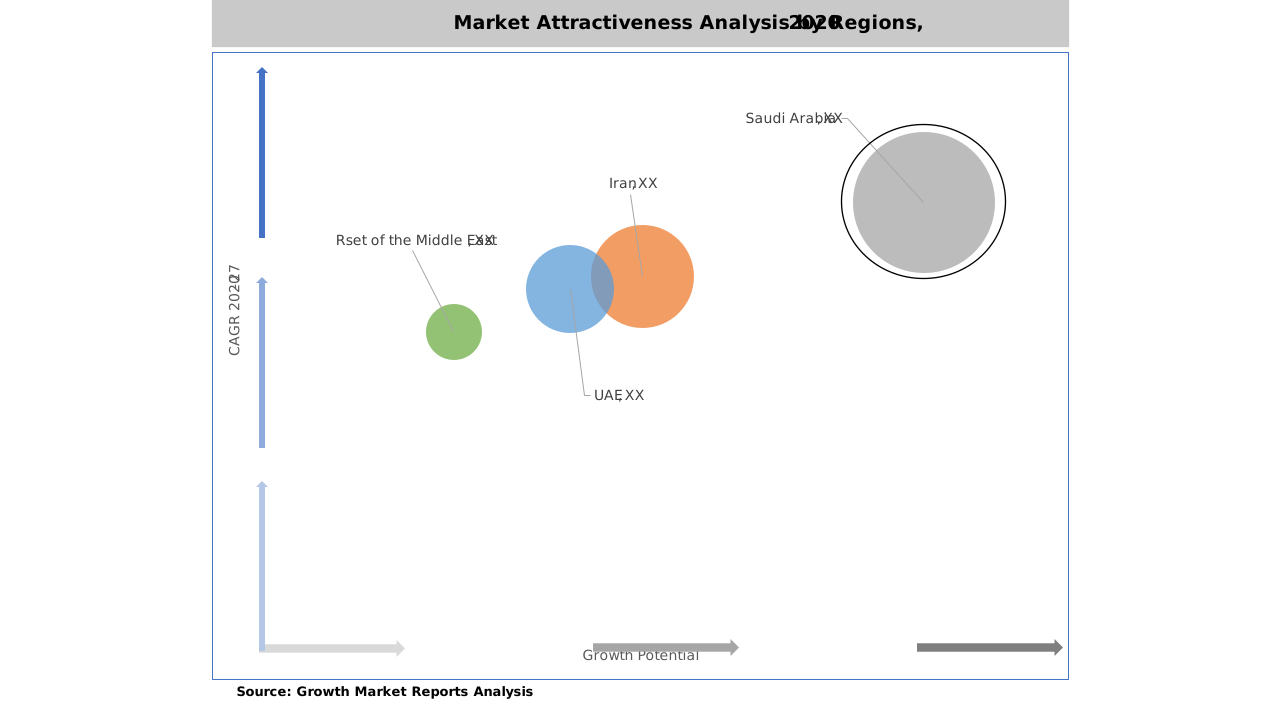
From a regional perspective, Saudi Arabia remains the largest market for spiral welded pipes in the Middle East, driven by its Vision 2030 initiative and massive investments in oil, gas, and infrastructure sectors. The UAE and Qatar also represent substantial markets, benefitting from ongoing urbanization and preparations for global events such as Expo 2020 and the FIFA World Cup. Kuwait and the Rest of the Middle East are witnessing steady growth, supported by government-led infrastructure modernization programs. The diverse application landscape and the region’s strategic focus on energy and water security are expected to maintain the Middle East’s position as a key growth engine for the global spiral welded pipe market.

Global Middle East Spiral Welded Pipe Industry Outlook

Diameter Analysis

The diameter of spiral welded pipes is a crucial factor influencing their application and market demand in the Middle East. The market is segmented into small diameter and large diameter pipes, each catering to distinct end-user requirements. Small diameter spiral welded pipes, typically less than 24 inches, are predominantly used in water distribution, industrial piping, and smaller-scale construction projects. Their flexibility, ease of installation, and cost-effectiveness make them ideal for municipal water supply networks and irrigation systems. The growing emphasis on improving water infrastructure, especially in rural and semi-urban areas, is driving demand for small diameter pipes across the region.

Large diameter spiral welded pipes, usually exceeding 24 inches in diameter, are primarily deployed in oil and gas transmission, major water supply projects, and large-scale infrastructure developments. These pipes are favored for their ability to transport substantial volumes of fluids and gases over long distances, making them indispensable for cross-country pipelines, desalination plants, and industrial water supply systems. The Middle East’s status as a global energy hub, coupled with ongoing expansion of oil and gas transportation networks, is fueling robust demand for large diameter pipes. Additionally, mega infrastructure projects such as new cities, industrial corridors, and power plants require extensive large diameter pipeline networks, further boosting this segment.

Technological advancements in pipe manufacturing and welding processes have significantly enhanced the performance and reliability of both small and large diameter spiral welded pipes. Innovations such as automated welding techniques, advanced non-destructive testing methods, and improved anti-corrosion coatings are ensuring higher quality standards and longer service life. These developments are enabling manufacturers to meet the stringent requirements of critical applications, particularly in the oil and gas and water sectors. As a result, both diameter segments are witnessing increased adoption, with end-users prioritizing performance, safety, and lifecycle costs in their procurement decisions.

Market dynamics within the diameter segment are also shaped by regulatory standards and project-specific specifications. Government agencies and industry bodies in the Middle East are implementing rigorous quality and safety norms for pipeline installations, especially for large diameter pipelines carrying hazardous materials. Compliance with these standards necessitates the use of high-quality spiral welded pipes, thereby driving demand for technologically advanced products. Furthermore, the growing trend towards modular construction and prefabrication is influencing the design and deployment of spiral welded pipes, with manufacturers offering customized solutions to meet diverse diameter requirements.

Report Scope

Attributes Details
Report Title Middle East Spiral Welded Pipe Market Research Report 2033
By Diameter Small Diameter, Large Diameter
By Material Carbon Steel, Stainless Steel, Alloy Steel, Others
By Application Oil & Gas, Water Supply, Construction, Chemical Industry, Others
By And Country Saudi Arabia, UAE, Qatar, Kuwait, Rest of Middle East
Regions Covered North America, Europe, APAC, Latin America, MEA
Base Year 2024
Historic Data 2018-2023
Forecast Period 2025-2033
Number of Pages 265
Number of Tables & Figures 263
Customization Available Yes, the report can be customized as per your need.

Material Analysis

The material composition of spiral welded pipes is a critical determinant of their performance, durability, and suitability for various applications. The Middle East spiral welded pipe market is segmented by material into carbon steel, stainless steel, alloy steel, and others. Carbon steel pipes dominate the market due to their excellent mechanical properties, affordability, and wide applicability. These pipes are extensively used in oil and gas transportation, water supply, and construction projects, where high strength and resistance to internal pressure are essential. The abundance of raw materials and well-established manufacturing infrastructure in the region further support the widespread use of carbon steel spiral welded pipes.

Stainless steel spiral welded pipes are gaining traction in applications requiring superior corrosion resistance, such as chemical processing, desalination plants, and offshore oil and gas platforms. The harsh environmental conditions prevalent in the Middle East, including high salinity and temperature extremes, necessitate the use of materials that can withstand aggressive corrosion and scaling. Stainless steel pipes offer excellent longevity and low maintenance, making them a preferred choice for critical infrastructure and high-value projects. The increasing focus on sustainability and lifecycle costs is expected to drive further adoption of stainless steel pipes in the coming years.

Alloy steel spiral welded pipes are primarily used in specialized applications that demand enhanced mechanical performance, such as high-pressure oil and gas pipelines, power generation, and petrochemical industries. These pipes are engineered to deliver superior strength, toughness, and resistance to wear and fatigue, making them suitable for challenging operational environments. The ongoing expansion of the Middle East’s energy and industrial sectors is creating new opportunities for alloy steel pipe manufacturers, particularly as end-users seek reliable solutions for demanding applications. Technological advancements in alloy formulation and heat treatment processes are further enhancing the competitiveness of this material segment.

Other materials, such as duplex steels and specialty alloys, are also finding niche applications in the Middle East spiral welded pipe market. These materials offer a unique combination of high strength, corrosion resistance, and weldability, making them suitable for extreme service conditions. The adoption of alternative materials is being driven by evolving project requirements, regulatory mandates, and the need for customized solutions. Manufacturers are increasingly offering a diverse portfolio of material options to address the specific needs of different industries, thereby enhancing their market reach and customer satisfaction.

Application Analysis

The application landscape of the Middle East spiral welded pipe market is diverse, reflecting the region’s multifaceted economic activities and infrastructure needs. The oil and gas sector remains the largest application segment, accounting for a substantial share of total demand. Spiral welded pipes are integral to the construction of pipelines for crude oil, natural gas, and refined products, both onshore and offshore. The region’s ongoing investments in exploration, production, and export infrastructure are driving continuous demand for high-performance pipes capable of withstanding harsh operating conditions and high pressures. The adoption of advanced monitoring and maintenance technologies is further enhancing the reliability and safety of pipeline networks in the oil and gas sector.

Water supply is another major application area, fueled by the Middle East’s pressing need for sustainable water management solutions. Spiral welded pipes are widely used in potable water transmission, desalination plants, irrigation systems, and municipal water distribution networks. Their ability to transport large volumes of water over long distances, combined with excellent resistance to corrosion and mechanical stress, makes them indispensable for water infrastructure projects. Government-led initiatives aimed at expanding access to clean water and upgrading aging pipelines are expected to sustain high demand for spiral welded pipes in the water supply segment.

The construction sector is also a significant consumer of spiral welded pipes, particularly in large-scale infrastructure projects such as bridges, tunnels, airports, and high-rise buildings. Pipes are used for structural support, foundation piling, and as conduits for utilities and services. The region’s rapid urbanization and the launch of mega projects under national development plans are creating robust opportunities for spiral welded pipe suppliers. The integration of innovative construction techniques and prefabricated components is further driving the adoption of high-quality, customized pipe solutions in the construction industry.

The chemical industry and other sectors, including power generation, mining, and manufacturing, represent additional application areas for spiral welded pipes. The chemical industry, in particular, requires pipes that can handle aggressive fluids and high temperatures, necessitating the use of specialized materials and advanced manufacturing processes. The growing diversification of the Middle East’s industrial base, coupled with the expansion of downstream and value-added industries, is expected to drive incremental demand for spiral welded pipes across these sectors. Manufacturers are responding by offering tailored solutions that address the specific technical and regulatory requirements of different applications.

Country Analysis

Saudi Arabia is the undisputed leader in the Middle East spiral welded pipe market, accounting for the largest share of regional demand. The country’s ambitious Vision 2030 initiative, coupled with massive investments in oil and gas infrastructure, water supply, and construction, is driving continuous growth in pipe consumption. National projects such as NEOM, the Red Sea Development, and the Riyadh Metro require extensive pipeline networks, creating substantial opportunities for pipe manufacturers and suppliers. The government’s focus on economic diversification and sustainable development is expected to sustain high demand for spiral welded pipes in the coming years.

The United Arab Emirates (UAE) is another major market, benefitting from its status as a regional trade and logistics hub. The country’s ongoing investments in urban infrastructure, industrial zones, and water management projects are fueling demand for spiral welded pipes across multiple sectors. The UAE’s preparations for global events, such as Expo 2020 and the expansion of its oil and gas export capacity, are further boosting market growth. The emphasis on innovation, quality, and sustainability is driving the adoption of advanced pipe technologies and materials in the UAE market.

Qatar, Kuwait, and the Rest of the Middle East are also experiencing steady growth in spiral welded pipe demand, supported by government-led infrastructure modernization programs and investments in energy and water security. Qatar’s infrastructure development in preparation for the FIFA World Cup, along with ongoing expansion of its LNG export capacity, is generating significant opportunities for pipe suppliers. Kuwait’s focus on upgrading its oil and gas infrastructure and improving water supply networks is similarly driving market expansion. The Rest of the Middle East, including smaller Gulf and Levant countries, is benefitting from regional integration initiatives and cross-border infrastructure projects, contributing to overall market growth.

Opportunities & Threats

The Middle East spiral welded pipe market presents numerous opportunities for growth and innovation. One of the most significant opportunities lies in the region’s ongoing infrastructure development boom. Governments are investing heavily in new cities, transportation networks, water management systems, and industrial zones, all of which require extensive pipeline installations. The adoption of smart city concepts and sustainable urban planning is driving demand for advanced, high-performance spiral welded pipes that can support modern infrastructure needs. Manufacturers that can offer innovative, customized, and cost-effective solutions are well-positioned to capitalize on these opportunities and expand their market share in the region.

Another key opportunity is the increasing focus on energy transition and diversification in the Middle East. As countries seek to reduce their dependence on oil and gas exports and invest in renewable energy, there is growing demand for pipeline infrastructure to support new energy sources such as hydrogen, biofuels, and natural gas. Spiral welded pipes are expected to play a crucial role in the transportation and distribution of alternative fuels, creating new growth avenues for manufacturers. Additionally, the integration of digital technologies, such as smart sensors and predictive maintenance systems, is enhancing the efficiency and reliability of pipeline operations, offering further opportunities for value-added services and solutions.

Despite the favorable market outlook, the Middle East spiral welded pipe market faces several restraining factors. One of the primary challenges is the volatility of raw material prices, particularly steel, which can impact production costs and profit margins for manufacturers. Fluctuations in global steel prices, driven by supply-demand imbalances, trade policies, and geopolitical tensions, create uncertainty for market participants. Additionally, the market is subject to intense competition from alternative pipe materials, such as ductile iron, plastic, and composite pipes, which offer advantages in specific applications. Regulatory hurdles, project delays, and complex procurement processes can also pose barriers to market entry and growth for new and existing players.

Regional Outlook

The Middle East spiral welded pipe market is characterized by significant regional disparities in demand, driven by differences in economic development, infrastructure investment, and industrial activity. Saudi Arabia leads the market with an estimated value of USD 1.9 billion in 2024, accounting for approximately 35% of the regional market. The country’s large-scale infrastructure projects, coupled with ongoing investments in oil and gas and water supply, are sustaining high demand for spiral welded pipes. The government’s Vision 2030 initiative is expected to drive further growth, with a projected CAGR of 6.2% through 2033.

The UAE is the second-largest market in the region, with a market value of USD 1.2 billion in 2024. The country’s focus on urban development, industrialization, and water management is driving continuous demand for spiral welded pipes across multiple sectors. The UAE’s strategic location as a regional trade hub and its leadership in adopting innovative construction and pipeline technologies provide a strong foundation for market expansion. The market is expected to grow at a steady pace, supported by government initiatives to enhance infrastructure resilience and sustainability.

Qatar, Kuwait, and the Rest of the Middle East together account for the remaining share of the regional market, with a combined value of USD 2.3 billion in 2024. Qatar’s infrastructure investments, particularly in preparation for global sporting events and LNG export expansion, are driving demand for high-quality spiral welded pipes. Kuwait’s modernization of its oil and gas and water supply infrastructure is similarly contributing to market growth. The Rest of the Middle East, including countries such as Oman, Bahrain, and Jordan, is benefitting from regional integration projects and cross-border pipeline initiatives. Overall, the Middle East spiral welded pipe market is expected to maintain robust growth momentum, supported by a diverse application landscape and strong government support for infrastructure development.

Middle East Spiral Welded Pipe Market Statistics

Competitor Outlook

The competitive landscape of the Middle East spiral welded pipe market is characterized by the presence of both regional and international players, each striving to capture a larger share of this lucrative market. Leading companies are focusing on technological innovation, product quality, and customer service to differentiate themselves in a highly competitive environment. The market is also witnessing increased consolidation, with mergers, acquisitions, and strategic partnerships becoming common as players seek to expand their geographic presence and product portfolios. The entry of new players, particularly from Asia and Europe, is intensifying competition and driving innovation across the value chain.

Manufacturers in the Middle East are investing heavily in modernizing their production facilities, adopting advanced welding and testing technologies, and enhancing their supply chain capabilities. The emphasis on meeting stringent quality and safety standards, particularly for oil and gas and water supply applications, is driving continuous improvement in manufacturing processes. Companies are also focusing on sustainability, incorporating eco-friendly materials and processes to reduce their environmental footprint and meet evolving regulatory requirements. The ability to offer customized, project-specific solutions is emerging as a key differentiator in the market, with manufacturers leveraging digital tools and data analytics to enhance product design and performance.

The competitive dynamics are further shaped by the growing importance of aftersales services, technical support, and value-added solutions. Leading suppliers are offering comprehensive service packages, including installation, maintenance, and monitoring, to strengthen customer relationships and ensure long-term loyalty. The integration of digital technologies, such as remote monitoring and predictive maintenance, is enabling manufacturers to provide proactive support and minimize downtime for end-users. This shift towards service-oriented business models is enhancing the overall value proposition of spiral welded pipe suppliers and driving competitive advantage in the market.

Major companies operating in the Middle East spiral welded pipe market include Arabian Pipes Company, National Pipe Company Ltd., Al Jazeera Steel Products Co., Saudi Steel Pipe Company, and Tenaris. Arabian Pipes Company is a leading manufacturer with a strong presence in Saudi Arabia, offering a wide range of spiral welded pipes for oil, gas, and water applications. National Pipe Company Ltd. specializes in large diameter pipes and has a robust track record of supplying major infrastructure projects across the region. Al Jazeera Steel Products Co. is known for its focus on quality and innovation, serving diverse sectors including construction and water supply. Saudi Steel Pipe Company is a key player in the oil and gas segment, leveraging advanced manufacturing technologies and a comprehensive product portfolio. Tenaris, a global leader in pipe manufacturing, has established a significant footprint in the Middle East through strategic partnerships and investments in local production facilities.

These companies are continuously investing in research and development to enhance product performance, reduce costs, and meet the evolving needs of customers. Strategic collaborations with engineering firms, EPC contractors, and government agencies are enabling them to participate in large-scale projects and expand their market reach. The focus on sustainability, digitalization, and customer-centric solutions is expected to drive further innovation and competitiveness in the Middle East spiral welded pipe market, ensuring long-term growth and leadership for the region’s top players.

Key Players

  • Arabian Pipes Company (APC)
  • National Pipe Company Ltd. (NPC)
  • Al Jazeera Steel Products Co. SAOG
  • Saudi Steel Pipe Company (SSPC)
  • Universal Tube and Plastic Industries Ltd.
  • Jindal SAW Ltd.
  • Welspun Corp Ltd.
  • Tenaris S.A.
  • ArcelorMittal S.A.
  • Nippon Steel Corporation
  • EVRAZ plc
  • American SpiralWeld Pipe Company
  • TMK Group
  • United Spiral Pipe LLC
  • EUROPIPE GmbH
  • Man Industries (India) Ltd.
  • Zamil Steel Holding Company
  • Borusan Mannesmann
  • EEW Group
  • Sumitomo Corporation
Middle East Spiral Welded Pipe Market Overview

Segments

The Middle East Spiral Welded Pipe market has been segmented on the basis of

Diameter

  • Small Diameter
  • Large Diameter

Material

  • Carbon Steel
  • Stainless Steel
  • Alloy Steel
  • Others

Application

  • Oil & Gas
  • Water Supply
  • Construction
  • Chemical Industry
  • Others

And Country

  • Saudi Arabia
  • UAE
  • Qatar
  • Kuwait
  • Rest of Middle East

Competitive Landscape

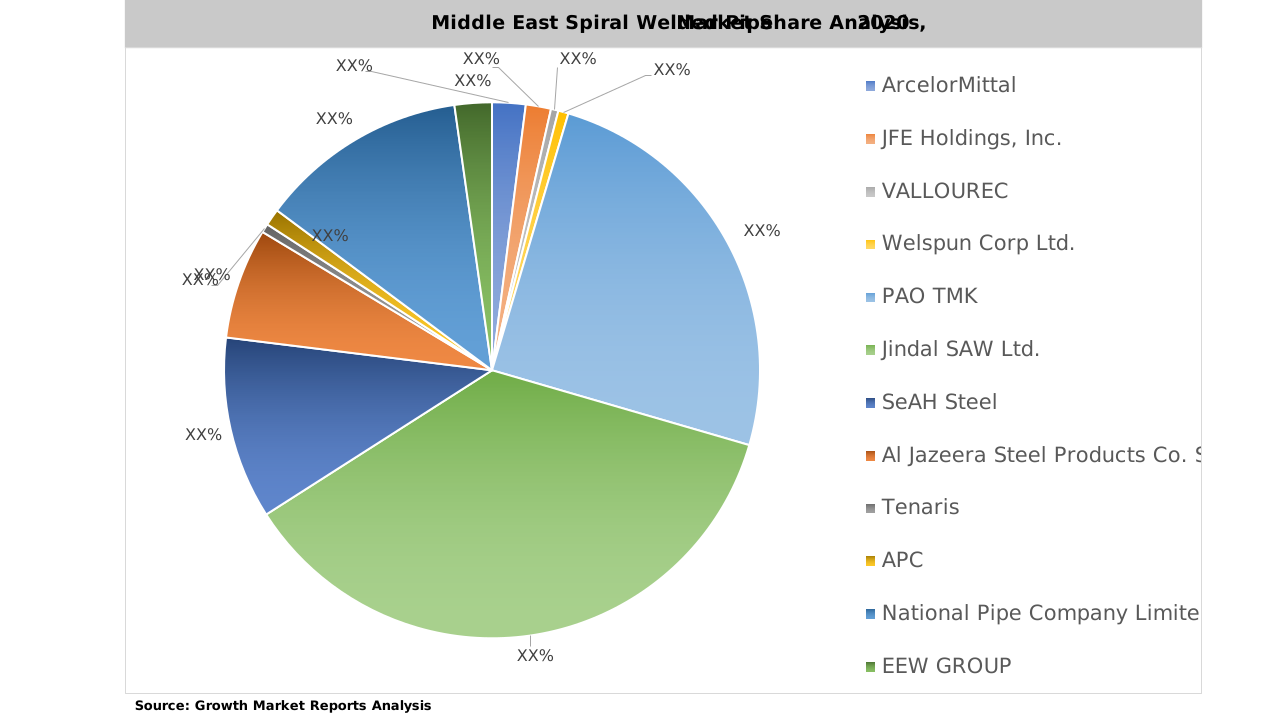
  • Key players in the market include ArcelorMittal, JFE Holdings, Inc., VALLOUREC , Welspun Corp Ltd., PAO TMK, Jindal SAW Ltd., SeAH Steel, Al Jazeera Steel Products Co. SAOG, Tenaris, APC, National Pipe Company Limited, EEW GROUP.
  • These companies are considered as key manufacturers of spiral welded pipe based on their revenue, research development (R&D) activities, regional presence, and supply chain management system.
  • The players are adopting various marketing strategies such as acquisition, and geographical expansion where potential opportunity for the spiral welded pipe market.
  • Active involvement of major players in R&D, increasing usage of spiral welded pipe as transmission pipelines are the key trends in the market.

Middle East Spiral Welded Pipe Market Key Players

Frequently Asked Questions

Additional company profiles can be provided on request.

Yes, the ME spiral welded pipe market volume for historical and forecast period 2016 to 2027 is provided in report.

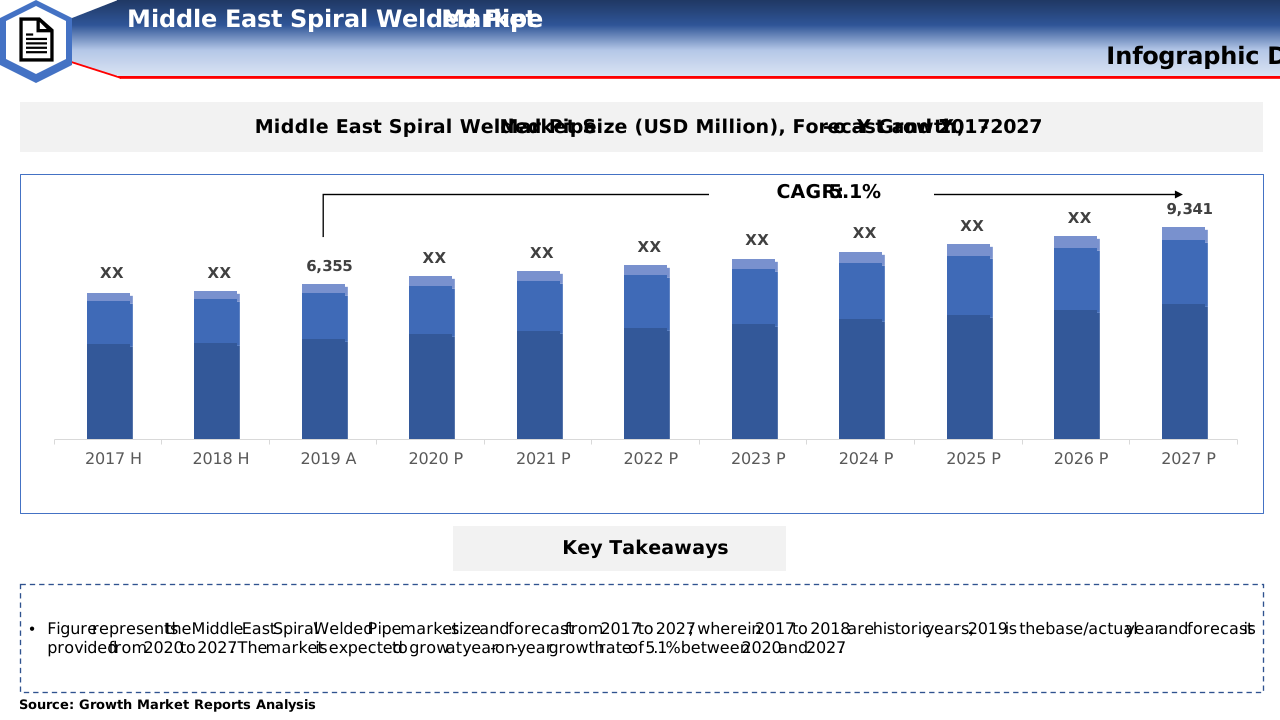
According to this Growth Market Reports report, the market from spiral welded pipe is likely to register a CAGR of 5.1% during forecast period 2020-2027, with an anticipated valuation of US$ 9,341.2 million by the end of the 2027.

In addition to market size (in US$ Million), Market Volume (in Million Tons), and Company Market Share (in % for base year 2019), market evolution by region, list of past and future O&G and water projects that are Using HSAW/LSAW Pipes, By Country, short term and long term outlook for spiral welded pipe market is available in final report.

Increasing applications of spiral welded pipe, rising adoption of pipeline as a major mode of transportation, growing number of desalination plants in the Middle East countries are the factors driving the market growth during forecast period.

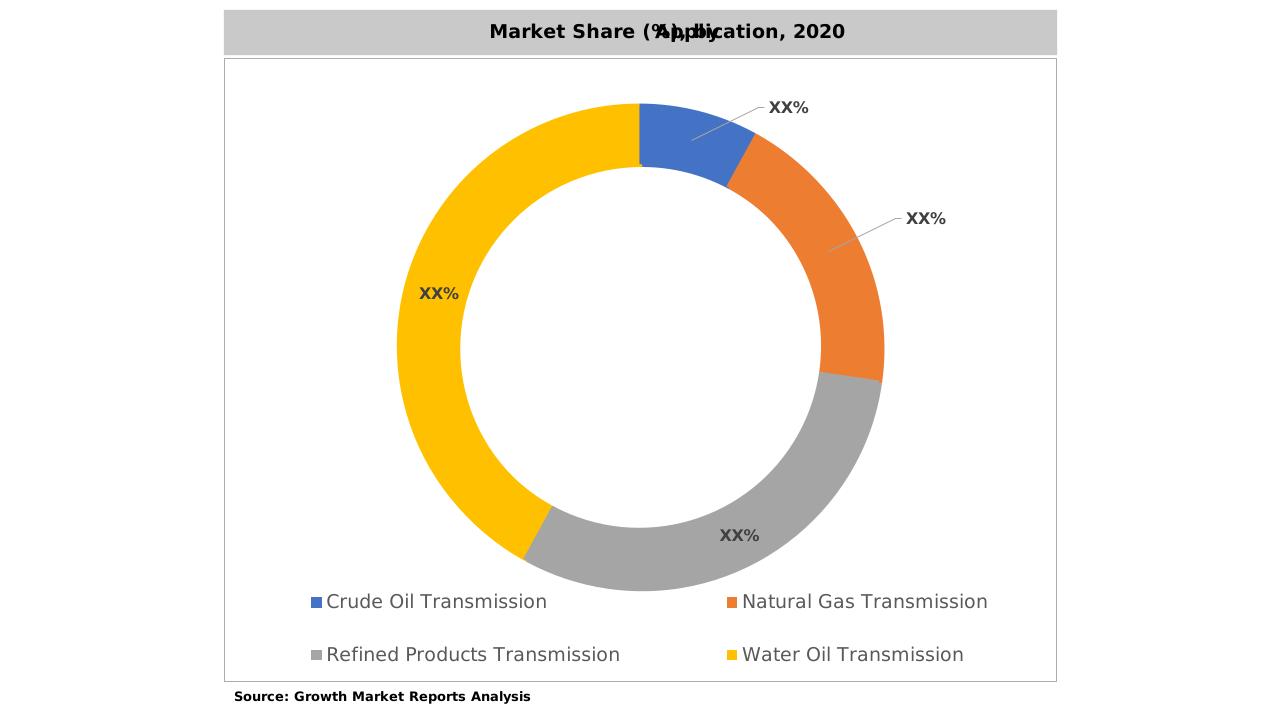
Application in crude oil transmission, natural gas transmission, refined products transmission, water oil transmission is driving the spiral welded pipe market.

Factors such as competitive strength and market positioning are key areas considered while selecting top companies to be profiled.

The overall impact of COVID-19 on economy is expected to be very large. The GDP in the Middle East countries is expected to reduce by more than 11%. The shutdown of production activities, restrictions on transportation activities, and temporary decline in demand for spiral welded pipes are some of the prime reasons responsible for this market trend.

The base year considered for the ME spiral welded pipe market report is 2019. The complete analysis period is 2017 to 2027, wherein, 2017 & 2018 are the historic years and the forecast is provided from 2020 to 2027.

Major manufactures include, ArcelorMittal, JFE Holdings, Inc., VALLOUREC, Welspun Corp Ltd., PAO TMK and others.

Table Of Content

Chapter 1 Executive Summary
Chapter 2 Assumptions and Acronyms Used
Chapter 3 Research Methodology
Chapter 4 Middle East Spiral Welded Pipe Market Overview
   4.1 Introduction
      4.1.1 Market Taxonomy
      4.1.2 Market Definition
      4.1.3 Macro-Economic Factors Impacting the Market Growth
   4.2 Middle East Spiral Welded Pipe Market Dynamics
      4.2.1 Market Drivers
      4.2.2 Market Restraints
      4.2.3 Market Opportunity
   4.3 Middle East Spiral Welded Pipe Market - Supply Chain Analysis
      4.3.1 List of Key Suppliers
      4.3.2 List of Key Distributors
      4.3.3 List of Key Consumers
   4.4 Key Forces Shaping the Middle East Spiral Welded Pipe Market
      4.4.1 Bargaining Power of Suppliers
      4.4.2 Bargaining Power of Buyers
      4.4.3 Threat of Substitution
      4.4.4 Threat of New Entrants
      4.4.5 Competitive Rivalry
   4.5 Global Middle East Spiral Welded Pipe Market Size & Forecast, 2023-2032
      4.5.1 Middle East Spiral Welded Pipe Market Size and Y-o-Y Growth
      4.5.2 Middle East Spiral Welded Pipe Market Absolute $ Opportunity

Chapter 5 Global Middle East Spiral Welded Pipe Market Analysis and Forecast By Diameter
   5.1 Introduction
      5.1.1 Key Market Trends & Growth Opportunities By Diameter
      5.1.2 Basis Point Share (BPS) Analysis By Diameter
      5.1.3 Absolute $ Opportunity Assessment By Diameter
   5.2 Middle East Spiral Welded Pipe Market Size Forecast By Diameter
      5.2.1 Small Diameter
      5.2.2 Large Diameter
   5.3 Market Attractiveness Analysis By Diameter

Chapter 6 Global Middle East Spiral Welded Pipe Market Analysis and Forecast By Material
   6.1 Introduction
      6.1.1 Key Market Trends & Growth Opportunities By Material
      6.1.2 Basis Point Share (BPS) Analysis By Material
      6.1.3 Absolute $ Opportunity Assessment By Material
   6.2 Middle East Spiral Welded Pipe Market Size Forecast By Material
      6.2.1 Carbon Steel
      6.2.2 Stainless Steel
      6.2.3 Alloy Steel
      6.2.4 Others
   6.3 Market Attractiveness Analysis By Material

Chapter 7 Global Middle East Spiral Welded Pipe Market Analysis and Forecast By Application
   7.1 Introduction
      7.1.1 Key Market Trends & Growth Opportunities By Application
      7.1.2 Basis Point Share (BPS) Analysis By Application
      7.1.3 Absolute $ Opportunity Assessment By Application
   7.2 Middle East Spiral Welded Pipe Market Size Forecast By Application
      7.2.1 Oil & Gas
      7.2.2 Water Supply
      7.2.3 Construction
      7.2.4 Chemical Industry
      7.2.5 Others
   7.3 Market Attractiveness Analysis By Application

Chapter 8 Global Middle East Spiral Welded Pipe Market Analysis and Forecast By And Country
   8.1 Introduction
      8.1.1 Key Market Trends & Growth Opportunities By And Country
      8.1.2 Basis Point Share (BPS) Analysis By And Country
      8.1.3 Absolute $ Opportunity Assessment By And Country
   8.2 Middle East Spiral Welded Pipe Market Size Forecast By And Country
      8.2.1 Saudi Arabia
      8.2.2 UAE
      8.2.3 Qatar
      8.2.4 Kuwait
      8.2.5 Rest of Middle East
   8.3 Market Attractiveness Analysis By And Country

Chapter 9 Global Middle East Spiral Welded Pipe Market Analysis and Forecast by Region
   9.1 Introduction
      9.1.1 Key Market Trends & Growth Opportunities By Region
      9.1.2 Basis Point Share (BPS) Analysis By Region
      9.1.3 Absolute $ Opportunity Assessment By Region
   9.2 Middle East Spiral Welded Pipe Market Size Forecast By Region
      9.2.1 North America
      9.2.2 Europe
      9.2.3 Asia Pacific
      9.2.4 Latin America
      9.2.5 Middle East & Africa (MEA)
   9.3 Market Attractiveness Analysis By Region

Chapter 10 Coronavirus Disease (COVID-19) Impact 
   10.1 Introduction 
   10.2 Current & Future Impact Analysis 
   10.3 Economic Impact Analysis 
   10.4 Government Policies 
   10.5 Investment Scenario

Chapter 11 North America Middle East Spiral Welded Pipe Analysis and Forecast
   11.1 Introduction
   11.2 North America Middle East Spiral Welded Pipe Market Size Forecast by Country
      11.2.1 U.S.
      11.2.2 Canada
   11.3 Basis Point Share (BPS) Analysis by Country
   11.4 Absolute $ Opportunity Assessment by Country
   11.5 Market Attractiveness Analysis by Country
   11.6 North America Middle East Spiral Welded Pipe Market Size Forecast By Diameter
      11.6.1 Small Diameter
      11.6.2 Large Diameter
   11.7 Basis Point Share (BPS) Analysis By Diameter 
   11.8 Absolute $ Opportunity Assessment By Diameter 
   11.9 Market Attractiveness Analysis By Diameter
   11.10 North America Middle East Spiral Welded Pipe Market Size Forecast By Material
      11.10.1 Carbon Steel
      11.10.2 Stainless Steel
      11.10.3 Alloy Steel
      11.10.4 Others
   11.11 Basis Point Share (BPS) Analysis By Material 
   11.12 Absolute $ Opportunity Assessment By Material 
   11.13 Market Attractiveness Analysis By Material
   11.14 North America Middle East Spiral Welded Pipe Market Size Forecast By Application
      11.14.1 Oil & Gas
      11.14.2 Water Supply
      11.14.3 Construction
      11.14.4 Chemical Industry
      11.14.5 Others
   11.15 Basis Point Share (BPS) Analysis By Application 
   11.16 Absolute $ Opportunity Assessment By Application 
   11.17 Market Attractiveness Analysis By Application
   11.18 North America Middle East Spiral Welded Pipe Market Size Forecast By And Country
      11.18.1 Saudi Arabia
      11.18.2 UAE
      11.18.3 Qatar
      11.18.4 Kuwait
      11.18.5 Rest of Middle East
   11.19 Basis Point Share (BPS) Analysis By And Country 
   11.20 Absolute $ Opportunity Assessment By And Country 
   11.21 Market Attractiveness Analysis By And Country

Chapter 12 Europe Middle East Spiral Welded Pipe Analysis and Forecast
   12.1 Introduction
   12.2 Europe Middle East Spiral Welded Pipe Market Size Forecast by Country
      12.2.1 Germany
      12.2.2 France
      12.2.3 Italy
      12.2.4 U.K.
      12.2.5 Spain
      12.2.6 Russia
      12.2.7 Rest of Europe
   12.3 Basis Point Share (BPS) Analysis by Country
   12.4 Absolute $ Opportunity Assessment by Country
   12.5 Market Attractiveness Analysis by Country
   12.6 Europe Middle East Spiral Welded Pipe Market Size Forecast By Diameter
      12.6.1 Small Diameter
      12.6.2 Large Diameter
   12.7 Basis Point Share (BPS) Analysis By Diameter 
   12.8 Absolute $ Opportunity Assessment By Diameter 
   12.9 Market Attractiveness Analysis By Diameter
   12.10 Europe Middle East Spiral Welded Pipe Market Size Forecast By Material
      12.10.1 Carbon Steel
      12.10.2 Stainless Steel
      12.10.3 Alloy Steel
      12.10.4 Others
   12.11 Basis Point Share (BPS) Analysis By Material 
   12.12 Absolute $ Opportunity Assessment By Material 
   12.13 Market Attractiveness Analysis By Material
   12.14 Europe Middle East Spiral Welded Pipe Market Size Forecast By Application
      12.14.1 Oil & Gas
      12.14.2 Water Supply
      12.14.3 Construction
      12.14.4 Chemical Industry
      12.14.5 Others
   12.15 Basis Point Share (BPS) Analysis By Application 
   12.16 Absolute $ Opportunity Assessment By Application 
   12.17 Market Attractiveness Analysis By Application
   12.18 Europe Middle East Spiral Welded Pipe Market Size Forecast By And Country
      12.18.1 Saudi Arabia
      12.18.2 UAE
      12.18.3 Qatar
      12.18.4 Kuwait
      12.18.5 Rest of Middle East
   12.19 Basis Point Share (BPS) Analysis By And Country 
   12.20 Absolute $ Opportunity Assessment By And Country 
   12.21 Market Attractiveness Analysis By And Country

Chapter 13 Asia Pacific Middle East Spiral Welded Pipe Analysis and Forecast
   13.1 Introduction
   13.2 Asia Pacific Middle East Spiral Welded Pipe Market Size Forecast by Country
      13.2.1 China
      13.2.2 Japan
      13.2.3 South Korea
      13.2.4 India
      13.2.5 Australia
      13.2.6 South East Asia (SEA)
      13.2.7 Rest of Asia Pacific (APAC)
   13.3 Basis Point Share (BPS) Analysis by Country
   13.4 Absolute $ Opportunity Assessment by Country
   13.5 Market Attractiveness Analysis by Country
   13.6 Asia Pacific Middle East Spiral Welded Pipe Market Size Forecast By Diameter
      13.6.1 Small Diameter
      13.6.2 Large Diameter
   13.7 Basis Point Share (BPS) Analysis By Diameter 
   13.8 Absolute $ Opportunity Assessment By Diameter 
   13.9 Market Attractiveness Analysis By Diameter
   13.10 Asia Pacific Middle East Spiral Welded Pipe Market Size Forecast By Material
      13.10.1 Carbon Steel
      13.10.2 Stainless Steel
      13.10.3 Alloy Steel
      13.10.4 Others
   13.11 Basis Point Share (BPS) Analysis By Material 
   13.12 Absolute $ Opportunity Assessment By Material 
   13.13 Market Attractiveness Analysis By Material
   13.14 Asia Pacific Middle East Spiral Welded Pipe Market Size Forecast By Application
      13.14.1 Oil & Gas
      13.14.2 Water Supply
      13.14.3 Construction
      13.14.4 Chemical Industry
      13.14.5 Others
   13.15 Basis Point Share (BPS) Analysis By Application 
   13.16 Absolute $ Opportunity Assessment By Application 
   13.17 Market Attractiveness Analysis By Application
   13.18 Asia Pacific Middle East Spiral Welded Pipe Market Size Forecast By And Country
      13.18.1 Saudi Arabia
      13.18.2 UAE
      13.18.3 Qatar
      13.18.4 Kuwait
      13.18.5 Rest of Middle East
   13.19 Basis Point Share (BPS) Analysis By And Country 
   13.20 Absolute $ Opportunity Assessment By And Country 
   13.21 Market Attractiveness Analysis By And Country

Chapter 14 Latin America Middle East Spiral Welded Pipe Analysis and Forecast
   14.1 Introduction
   14.2 Latin America Middle East Spiral Welded Pipe Market Size Forecast by Country
      14.2.1 Brazil
      14.2.2 Mexico
      14.2.3 Rest of Latin America (LATAM)
   14.3 Basis Point Share (BPS) Analysis by Country
   14.4 Absolute $ Opportunity Assessment by Country
   14.5 Market Attractiveness Analysis by Country
   14.6 Latin America Middle East Spiral Welded Pipe Market Size Forecast By Diameter
      14.6.1 Small Diameter
      14.6.2 Large Diameter
   14.7 Basis Point Share (BPS) Analysis By Diameter 
   14.8 Absolute $ Opportunity Assessment By Diameter 
   14.9 Market Attractiveness Analysis By Diameter
   14.10 Latin America Middle East Spiral Welded Pipe Market Size Forecast By Material
      14.10.1 Carbon Steel
      14.10.2 Stainless Steel
      14.10.3 Alloy Steel
      14.10.4 Others
   14.11 Basis Point Share (BPS) Analysis By Material 
   14.12 Absolute $ Opportunity Assessment By Material 
   14.13 Market Attractiveness Analysis By Material
   14.14 Latin America Middle East Spiral Welded Pipe Market Size Forecast By Application
      14.14.1 Oil & Gas
      14.14.2 Water Supply
      14.14.3 Construction
      14.14.4 Chemical Industry
      14.14.5 Others
   14.15 Basis Point Share (BPS) Analysis By Application 
   14.16 Absolute $ Opportunity Assessment By Application 
   14.17 Market Attractiveness Analysis By Application
   14.18 Latin America Middle East Spiral Welded Pipe Market Size Forecast By And Country
      14.18.1 Saudi Arabia
      14.18.2 UAE
      14.18.3 Qatar
      14.18.4 Kuwait
      14.18.5 Rest of Middle East
   14.19 Basis Point Share (BPS) Analysis By And Country 
   14.20 Absolute $ Opportunity Assessment By And Country 
   14.21 Market Attractiveness Analysis By And Country

Chapter 15 Middle East & Africa (MEA) Middle East Spiral Welded Pipe Analysis and Forecast
   15.1 Introduction
   15.2 Middle East & Africa (MEA) Middle East Spiral Welded Pipe Market Size Forecast by Country
      15.2.1 Saudi Arabia
      15.2.2 South Africa
      15.2.3 UAE
      15.2.4 Rest of Middle East & Africa (MEA)
   15.3 Basis Point Share (BPS) Analysis by Country
   15.4 Absolute $ Opportunity Assessment by Country
   15.5 Market Attractiveness Analysis by Country
   15.6 Middle East & Africa (MEA) Middle East Spiral Welded Pipe Market Size Forecast By Diameter
      15.6.1 Small Diameter
      15.6.2 Large Diameter
   15.7 Basis Point Share (BPS) Analysis By Diameter 
   15.8 Absolute $ Opportunity Assessment By Diameter 
   15.9 Market Attractiveness Analysis By Diameter
   15.10 Middle East & Africa (MEA) Middle East Spiral Welded Pipe Market Size Forecast By Material
      15.10.1 Carbon Steel
      15.10.2 Stainless Steel
      15.10.3 Alloy Steel
      15.10.4 Others
   15.11 Basis Point Share (BPS) Analysis By Material 
   15.12 Absolute $ Opportunity Assessment By Material 
   15.13 Market Attractiveness Analysis By Material
   15.14 Middle East & Africa (MEA) Middle East Spiral Welded Pipe Market Size Forecast By Application
      15.14.1 Oil & Gas
      15.14.2 Water Supply
      15.14.3 Construction
      15.14.4 Chemical Industry
      15.14.5 Others
   15.15 Basis Point Share (BPS) Analysis By Application 
   15.16 Absolute $ Opportunity Assessment By Application 
   15.17 Market Attractiveness Analysis By Application
   15.18 Middle East & Africa (MEA) Middle East Spiral Welded Pipe Market Size Forecast By And Country
      15.18.1 Saudi Arabia
      15.18.2 UAE
      15.18.3 Qatar
      15.18.4 Kuwait
      15.18.5 Rest of Middle East
   15.19 Basis Point Share (BPS) Analysis By And Country 
   15.20 Absolute $ Opportunity Assessment By And Country 
   15.21 Market Attractiveness Analysis By And Country

Chapter 16 Competition Landscape 
   16.1 Middle East Spiral Welded Pipe Market: Competitive Dashboard
   16.2 Global Middle East Spiral Welded Pipe Market: Market Share Analysis, 2023
   16.3 Company Profiles (Details – Overview, Financials, Developments, Strategy) 
      16.3.1 Arabian Pipes Company (APC)
National Pipe Company Ltd. (NPC)
Al Jazeera Steel Products Co. SAOG
Saudi Steel Pipe Company (SSPC)
Universal Tube and Plastic Industries Ltd.
Jindal SAW Ltd.
Welspun Corp Ltd.
Tenaris S.A.
ArcelorMittal S.A.
Nippon Steel Corporation
EVRAZ plc
American SpiralWeld Pipe Company
TMK Group
United Spiral Pipe LLC
EUROPIPE GmbH
Man Industries (India) Ltd.
Zamil Steel Holding Company
Borusan Mannesmann
EEW Group
Sumitomo Corporation

Methodology

Our Clients

Dassault Aviation
Pfizer
Nestle SA
Deloitte
Microsoft
General Mills
sinopec
FedEx Logistics