Steel Piles Market Research Report 2033

Steel Piles Market Research Report 2033

Segments - by Product Type (Sheet Piles, Pipe Piles, H-Piles, Others), by Application (Marine Structures, Foundation Construction, Bridge Construction, Oil & Gas, Others), by End-User (Construction, Infrastructure, Oil & Gas, Marine, Others)

https://growthmarketreports.com/Raksha
Author : Raksha Sharma
https://growthmarketreports.com/Vaibhav
Fact-checked by : V. Chandola
https://growthmarketreports.com/Rucha
Editor : Rucha Phatak

Upcoming | Report ID :CM-149 | 4.7 Rating | 50 Reviews | 287 Pages | Format : Docx PDF

Report Description


Steel Piles Market Outlook

According to our latest research, the global steel piles market size reached USD 8.1 billion in 2024, reflecting robust demand across construction, infrastructure, and marine sectors. The market is exhibiting a steady growth trajectory, with a compound annual growth rate (CAGR) of 5.6% projected from 2025 to 2033. By the end of 2033, the steel piles market is forecasted to attain a value of USD 13.2 billion. This growth is primarily driven by the surge in infrastructure development, urbanization, and the increasing adoption of steel piles in deep foundation and marine applications worldwide.

The steel piles market is experiencing significant momentum due to the global push for modernizing infrastructure and the rising trend of urban expansion. Governments and private entities are investing heavily in the construction of bridges, ports, and high-rise buildings, where steel piles are indispensable for providing foundational stability, especially in challenging soil conditions. The versatility and high load-bearing capacity of steel piles make them the preferred choice for projects requiring long-term durability and reliability. Furthermore, advancements in steel manufacturing technologies have enhanced the corrosion resistance and structural integrity of steel piles, further fueling their adoption in both new construction and renovation projects.

Another key growth factor for the steel piles market is the increasing focus on sustainable construction practices. Steel piles are not only recyclable but also offer a lower carbon footprint when compared to traditional concrete piles, aligning with global sustainability goals. This has encouraged stakeholders in the construction and marine sectors to opt for steel piles, especially in regions with stringent environmental regulations. Additionally, the rapid expansion of the oil and gas industry, particularly offshore exploration activities, has spurred demand for steel piles due to their ability to withstand harsh marine environments and heavy operational loads.

Technological advancements in pile driving equipment and installation techniques have also contributed to the marketÂ’s expansion. Modern hydraulic and vibratory pile drivers enable faster, more efficient, and less disruptive installation of steel piles, reducing project timelines and costs. The integration of digital monitoring and quality control systems ensures greater precision and safety during installation, which is particularly crucial for large-scale infrastructure and marine projects. These technological innovations are not only enhancing the appeal of steel piles but are also expanding their application scope across diverse industries.

From a regional perspective, Asia Pacific continues to dominate the steel piles market, driven by rapid urbanization, government infrastructure initiatives, and major port development projects in countries such as China, India, and Japan. North America and Europe also represent substantial markets, propelled by ongoing investments in transportation infrastructure and energy projects. Meanwhile, the Middle East & Africa and Latin America are emerging as high-growth regions, supported by increasing oil and gas exploration and the development of new commercial and industrial zones.

Ribbed Steel Sheet Pile has emerged as a crucial component in the construction industry, particularly for projects requiring enhanced structural stability and resistance to environmental stressors. These piles are designed with a unique ribbed profile that increases their interlocking capabilities, providing superior strength and durability in retaining wall applications. The ribbed design not only enhances the load-bearing capacity but also improves the pile's ability to withstand lateral pressures from soil and water. This makes Ribbed Steel Sheet Piles an ideal choice for waterfront structures and urban construction projects where space constraints demand efficient and reliable solutions. As the demand for sustainable and resilient infrastructure continues to grow, the adoption of Ribbed Steel Sheet Piles is expected to rise, driven by their proven performance and adaptability to diverse geotechnical conditions.

Global Steel Piles Industry Outlook

Product Type Analysis

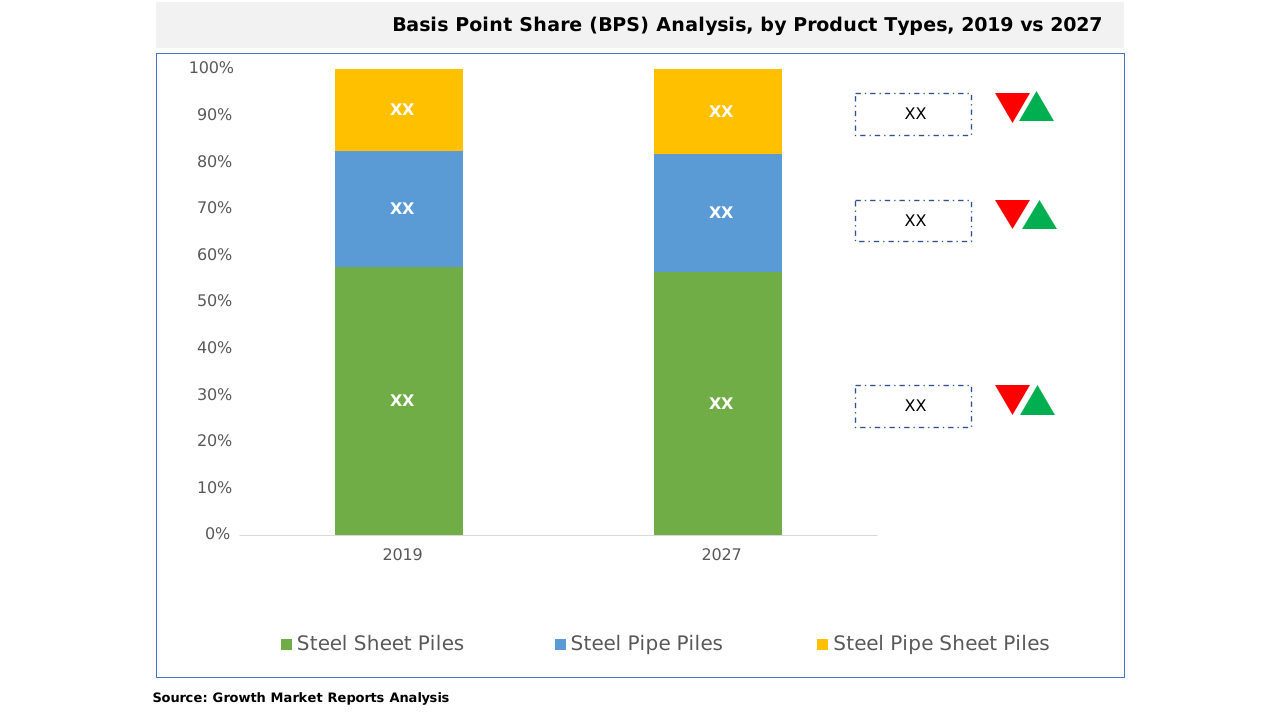
The steel piles market is segmented by product type into sheet piles, pipe piles, H-piles, and others, each serving distinct structural and application requirements. Sheet piles are widely utilized in retaining walls, cofferdams, and waterfront structures due to their ability to interlock and form continuous barriers against soil and water ingress. Their lightweight nature and ease of installation make them particularly attractive for temporary and permanent earth-retaining solutions in urban construction and marine environments. The ongoing development of advanced steel alloys has further improved the performance of sheet piles, enhancing their resistance to corrosion and mechanical stress.

Pipe piles are gaining traction in foundation construction projects, especially for supporting heavy loads in deep foundations. Their circular cross-section enables efficient transfer of axial and lateral loads, making them suitable for high-rise buildings, bridges, and offshore platforms. Pipe piles offer versatility in terms of length, diameter, and wall thickness, allowing engineers to tailor solutions to specific geotechnical conditions. The adoption of spiral-welded and seamless pipe piles has increased, driven by their superior strength and adaptability to varying soil profiles, which is critical for infrastructure projects in seismic and flood-prone regions.

H-piles are characterized by their H-shaped cross-section, which provides excellent load-bearing capacity and penetration capabilities. They are predominantly used in deep foundation applications where driving resistance and structural rigidity are paramount. H-piles are favored in bridge construction, industrial facilities, and heavy civil engineering works due to their ability to withstand significant vertical and lateral forces. The growing trend toward modular construction and accelerated project timelines has propelled the use of H-piles, as they can be installed rapidly and with minimal site preparation, reducing overall construction costs.

The others segment encompasses specialized steel piles such as box piles, tapered piles, and composite piles, which are designed for niche applications and challenging site conditions. These products are often employed in projects requiring customized foundation solutions, such as offshore wind farms, harbor facilities, and seismic retrofitting. The increasing complexity of modern infrastructure projects has spurred demand for innovative pile designs that offer enhanced performance, durability, and adaptability. As construction activities continue to diversify, the market for specialized steel piles is expected to witness steady growth, supported by ongoing research and development in steel fabrication technologies.

Deep Groove Steel Sheet Pile is gaining attention in the market due to its enhanced interlocking mechanism, which provides exceptional stability and resistance to shifting soil conditions. The deep groove design allows for a tighter fit between piles, minimizing the risk of soil and water ingress, which is particularly beneficial in marine and coastal applications. This feature makes Deep Groove Steel Sheet Piles a preferred choice for projects that require robust barriers against environmental elements, such as seawalls and flood defenses. Additionally, their ability to be driven into hard soils without compromising structural integrity makes them suitable for challenging construction environments. As infrastructure projects increasingly prioritize durability and resilience, the demand for Deep Groove Steel Sheet Piles is anticipated to grow, offering a reliable solution for engineers and builders looking to enhance the longevity of their constructions.

Report Scope

Attributes Details
Report Title Steel Piles Market Research Report 2033
By Product Type Sheet Piles, Pipe Piles, H-Piles, Others
By Application Marine Structures, Foundation Construction, Bridge Construction, Oil & Gas, Others
By End-User Construction, Infrastructure, Oil & Gas, Marine, Others
Regions Covered North America, Europe, APAC, Latin America, MEA
Base Year 2024
Historic Data 2018-2023
Forecast Period 2025-2033
Number of Pages 287
Number of Tables & Figures 330
Customization Available Yes, the report can be customized as per your need.

Application Analysis

The application landscape of the steel piles market is broad, encompassing marine structures, foundation construction, bridge construction, oil & gas, and others. Marine structures represent a significant application segment, driven by the expansion of global trade and the construction of new ports, harbors, and coastal defenses. Steel piles are essential for providing stable foundations in underwater and intertidal zones, where soil conditions are often unpredictable and corrosive. Their high strength-to-weight ratio and resistance to marine environments make them the material of choice for jetties, piers, and breakwaters, ensuring long-term structural integrity and safety.

In foundation construction, steel piles are extensively used to support buildings, bridges, and industrial facilities, particularly in areas with poor soil bearing capacity or high groundwater levels. The ability of steel piles to transfer loads to deeper, more stable strata makes them indispensable for high-rise developments and infrastructure projects in urban centers. The growing trend toward vertical urbanization and the redevelopment of brownfield sites have further boosted demand for steel piles in foundation applications, as they offer rapid installation and minimal environmental disruption compared to traditional methods.

Bridge construction is another key application area, where steel piles are employed to provide robust support for bridge piers, abutments, and approach structures. The increasing need for transportation connectivity and the replacement of aging bridge infrastructure have fueled investments in new bridge projects worldwide. Steel piles offer superior performance in terms of load-bearing capacity, seismic resistance, and adaptability to varying geotechnical conditions, making them integral to the construction of both highway and railway bridges. Innovations in pile driving and monitoring technologies have further enhanced the efficiency and safety of steel pile installation in bridge projects.

The oil & gas sector relies heavily on steel piles for the construction of offshore platforms, pipelines, and storage facilities. The harsh operating environments and demanding load requirements of oil and gas projects necessitate the use of high-strength, corrosion-resistant steel piles. The ongoing expansion of offshore exploration activities, particularly in regions such as the Middle East, Africa, and Southeast Asia, has driven demand for specialized steel piles capable of withstanding extreme conditions. Additionally, the transition toward renewable energy sources, such as offshore wind farms, is creating new opportunities for steel piles in the energy sector.

The others application segment includes diverse uses such as retaining walls, flood protection systems, and temporary shoring for excavation works. As urban areas become more densely populated and susceptible to climate-related risks, the need for resilient and adaptable foundation solutions has intensified. Steel piles offer the flexibility and performance required for a wide range of civil engineering applications, ensuring the stability and longevity of critical infrastructure in both developed and emerging markets.

End-User Analysis

The steel piles market is segmented by end-user into construction, infrastructure, oil & gas, marine, and others, each with unique requirements and growth dynamics. The construction segment accounts for a substantial share of the market, driven by the proliferation of residential, commercial, and industrial building projects worldwide. Steel piles are increasingly preferred in construction due to their ability to provide reliable support in challenging soil conditions, accelerate project timelines, and minimize environmental impact. The integration of steel piles into modular and prefabricated construction methods is further enhancing their appeal, particularly in markets with labor shortages and tight project schedules.

The infrastructure end-user segment encompasses transportation networks, utilities, and public works, all of which rely on steel piles for foundational stability and durability. Governments and private investors are prioritizing the modernization and expansion of infrastructure to accommodate growing populations, facilitate trade, and support economic development. Steel piles are essential for the construction of bridges, tunnels, highways, and mass transit systems, offering high load-bearing capacity and resistance to dynamic forces such as traffic and seismic activity. The adoption of advanced design and monitoring technologies is enabling more efficient and cost-effective use of steel piles in large-scale infrastructure projects.

In the oil & gas sector, steel piles play a critical role in supporting offshore platforms, pipelines, and storage tanks, where safety and reliability are paramount. The increasing complexity of oil and gas exploration, coupled with the need to operate in deeper and more challenging environments, has driven demand for high-performance steel piles with enhanced corrosion resistance and structural integrity. The shift toward unconventional energy sources, such as offshore wind and tidal power, is also creating new opportunities for steel piles in the energy sector, as these projects require robust foundations capable of withstanding harsh marine conditions.

The marine end-user segment is witnessing significant growth, fueled by global trade expansion, port modernization, and coastal protection initiatives. Steel piles are indispensable for constructing piers, wharves, breakwaters, and other marine infrastructure, where stability, durability, and resistance to corrosion are critical. The increasing frequency of extreme weather events and rising sea levels have underscored the importance of resilient marine structures, further driving the adoption of steel piles in coastal engineering projects. Innovations in pile design and installation methods are enabling faster and more cost-effective construction of marine infrastructure, supporting the growth of the steel piles market in this segment.

The others end-user category includes sectors such as mining, power generation, and environmental engineering, where steel piles are used for a variety of specialized applications. As industries continue to evolve and diversify, the demand for customized foundation solutions is expected to rise, providing new growth opportunities for steel pile manufacturers and suppliers. The ongoing emphasis on sustainability, safety, and efficiency is likely to shape the future trajectory of the steel piles market across all end-user segments.

Opportunities & Threats

The steel piles market is poised for significant opportunities over the next decade, driven by the global infrastructure boom and the increasing adoption of advanced construction technologies. The growing emphasis on sustainable and resilient infrastructure is expected to create new avenues for steel piles, particularly in regions vulnerable to climate change and natural disasters. The integration of digital technologies, such as Building Information Modeling (BIM) and advanced geotechnical analysis, is enabling more precise and efficient design and installation of steel piles, reducing project risks and costs. Furthermore, the expansion of renewable energy projects, such as offshore wind farms, presents a lucrative growth opportunity for steel piles, as these projects require robust and durable foundations capable of withstanding harsh marine environments.

Emerging markets in Asia Pacific, Latin America, and Africa offer untapped potential for steel pile manufacturers, as governments in these regions invest heavily in transportation, energy, and urban development. Strategic partnerships and collaborations with local construction firms, engineering consultants, and government agencies can help global players expand their footprint and capture new market share. The development of innovative steel alloys and coatings with enhanced corrosion resistance and load-bearing capacity is expected to drive product differentiation and value addition in the market. Additionally, the growing trend toward modular and prefabricated construction methods is likely to boost demand for steel piles, as these approaches require reliable and adaptable foundation solutions.

Despite the positive outlook, the steel piles market faces certain restraining factors that could impact its growth trajectory. Fluctuations in raw material prices, particularly steel, can significantly affect production costs and profit margins for manufacturers and contractors. The market is also subject to regulatory challenges, such as environmental restrictions on construction activities in sensitive areas and the need for compliance with stringent safety standards. Intense competition from alternative foundation solutions, such as concrete and composite piles, may limit market penetration in certain applications. Addressing these challenges will require ongoing investment in research and development, supply chain optimization, and proactive engagement with regulatory authorities and industry stakeholders.

Regional Outlook

The Asia Pacific region remains the largest and fastest-growing market for steel piles, accounting for approximately 42% of the global market share in 2024, with a market size of USD 3.4 billion. The regionÂ’s dominance is attributed to rapid urbanization, large-scale infrastructure projects, and robust economic growth in countries such as China, India, Japan, and South Korea. Government initiatives focused on expanding transportation networks, modernizing ports, and developing smart cities are driving demand for steel piles across construction, infrastructure, and marine sectors. The Asia Pacific steel piles market is expected to maintain a strong CAGR of 6.2% through 2033, supported by ongoing investments in public and private sector projects.

North America represents a mature yet dynamic market for steel piles, with a market size of USD 2.1 billion in 2024. The regionÂ’s growth is fueled by the ongoing replacement of aging infrastructure, investments in energy and transportation projects, and the adoption of advanced construction technologies. The United States and Canada are leading contributors, with significant demand for steel piles in bridge construction, foundation engineering, and offshore oil and gas exploration. The emphasis on sustainability and resilience in infrastructure development is further bolstering the adoption of steel piles in North America, with a projected CAGR of 4.8% over the forecast period.

Europe holds a significant share of the global steel piles market, with a market size of USD 1.7 billion in 2024. The regionÂ’s growth is driven by investments in transportation infrastructure, renewable energy projects, and coastal protection initiatives. Countries such as Germany, the United Kingdom, France, and the Netherlands are at the forefront of adopting innovative steel pile solutions for complex engineering challenges. The Middle East & Africa and Latin America are emerging as promising markets, with combined market size estimated at USD 0.9 billion in 2024. These regions are witnessing increased investment in oil and gas exploration, port development, and urban infrastructure, creating new growth opportunities for steel piles manufacturers and suppliers.

Steel Piles Market Statistics

Competitor Outlook

The global steel piles market is characterized by intense competition, with a mix of multinational corporations and regional players vying for market share. The competitive landscape is shaped by factors such as product quality, technological innovation, pricing strategies, and customer service. Leading companies are investing in research and development to introduce high-performance steel piles with enhanced durability, corrosion resistance, and load-bearing capacity. Strategic collaborations, mergers and acquisitions, and expansion into emerging markets are common strategies employed by key players to strengthen their market position and broaden their product portfolios.

Technological advancement is a major differentiator in the steel piles market, with companies focusing on the development of advanced pile driving equipment, digital monitoring systems, and eco-friendly coatings. The integration of digital solutions, such as Building Information Modeling (BIM) and geotechnical analysis software, is enabling companies to offer value-added services and improve project outcomes for their clients. Sustainability is also a key focus area, with leading manufacturers promoting the use of recycled steel and environmentally friendly production processes to align with global sustainability goals and regulatory requirements.

The market is witnessing a trend toward vertical integration, with major players expanding their capabilities across the value chain, from steel manufacturing to pile fabrication, installation, and after-sales services. This approach allows companies to optimize costs, ensure quality control, and deliver end-to-end solutions to customers. The presence of local and regional players, particularly in emerging markets, adds to the competitive intensity, as these companies often have strong relationships with local contractors and government agencies, enabling them to secure contracts for large-scale infrastructure projects.

Some of the major companies operating in the global steel piles market include Tata Steel, Nippon Steel Corporation, ArcelorMittal, JFE Steel Corporation, SSAB AB, EVRAZ plc, and Baosteel Group. Tata Steel is renowned for its extensive range of steel pile products and its strong presence in the Asia Pacific region. Nippon Steel Corporation and JFE Steel Corporation are leading Japanese manufacturers known for their technological innovation and high-quality steel piles. ArcelorMittal, a global steel giant, has a diversified product portfolio and a strong footprint in Europe and the Americas. SSAB AB, based in Sweden, specializes in high-strength steel piles for demanding applications in construction and infrastructure. EVRAZ plc and Baosteel Group are prominent players in the Russian and Chinese markets, respectively, with a focus on large-scale infrastructure and energy projects.

These companies are continuously investing in research and development to enhance the performance and sustainability of their steel pile products. They are also expanding their global reach through strategic partnerships, acquisitions, and participation in major infrastructure projects. The competitive landscape is expected to remain dynamic, with ongoing innovation, capacity expansion, and a strong emphasis on customer-centric solutions shaping the future of the global steel piles market.

Key Players

  • ArcelorMittal
  • Nippon Steel Corporation
  • Tata Steel
  • JFE Steel Corporation
  • Baosteel Group Corporation
  • SSAB AB
  • Nucor Corporation
  • EVRAZ plc
  • Vallourec S.A.
  • POSCO
  • Hyundai Steel Company
  • Sumitomo Metal Industries
  • United States Steel Corporation
  • Thyssenkrupp AG
  • Salzgitter AG
  • Steel Authority of India Limited (SAIL)
  • Jindal Steel & Power Ltd.
  • China Steel Corporation
  • Daido Steel Co., Ltd.
  • L.B. Foster Company
Steel Piles Market Overview

Segments

The Steel Piles market has been segmented on the basis of

Product Type

  • Sheet Piles
  • Pipe Piles
  • H-Piles
  • Others

Application

  • Marine Structures
  • Foundation Construction
  • Bridge Construction
  • Oil & Gas
  • Others

End-User

  • Construction
  • Infrastructure
  • Oil & Gas
  • Marine
  • Others

Competitive Landscape

  • Key players in the market include ArcelorMittal, ESC Group, EVRAZ PLC, JFE Steel, Nippon Steel, SteelWall ISH GmbH., United States Steel Corporation, and Zekelman Industries. These companies are considered manufacturers of steel piles based on their revenue, research development (R&D) activities, regional presence, and supply chain management system.
  • Players are adopting key strategies such as acquisition and geographical expansion where potential opportunity for the steel piles extraction is added in the company’s capacity.
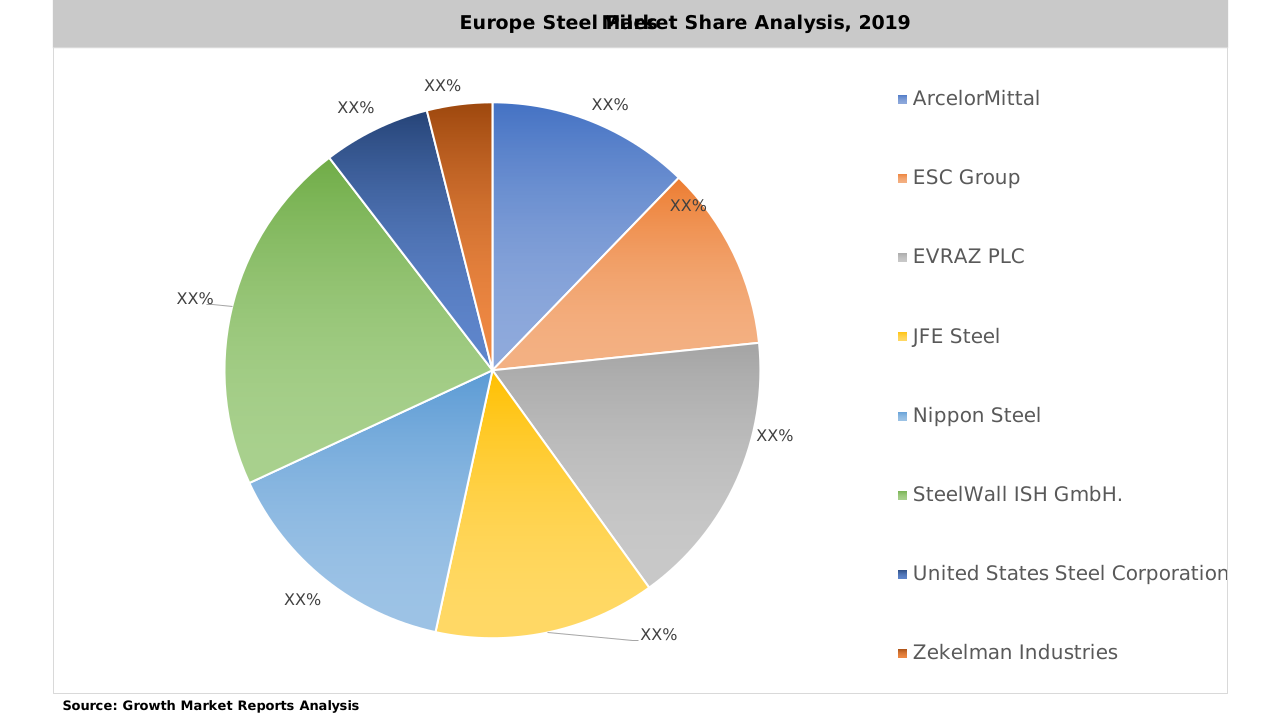

Europe Steel Piles Market Key Players

Frequently Asked Questions

Major manufactures include ArcelorMittal, ESC Group, EVRAZ PLC, JFE Steel, Nippon Steel, SteelWall ISH GmbH., United States Steel Corporation, and Zekelman Industries

The base year considered for the Europe steel piles market report is 2019. The complete analysis period is 2017 to 2027, wherein, 2017 & 2018 are the historic years and the forecast is provided from 2020 to 2027.

The market is expected to witness increment of over -4.2% between 2019 and 2020 owing to the negative impact of COVID-19 pandemic on the steel piles market. The lockdown among several countries owing to the outbreak has resulted in a decrease in the manufacturing processes.

Factors such as competitive strength and market positioning are key areas considered while selecting top companies to be profiled.

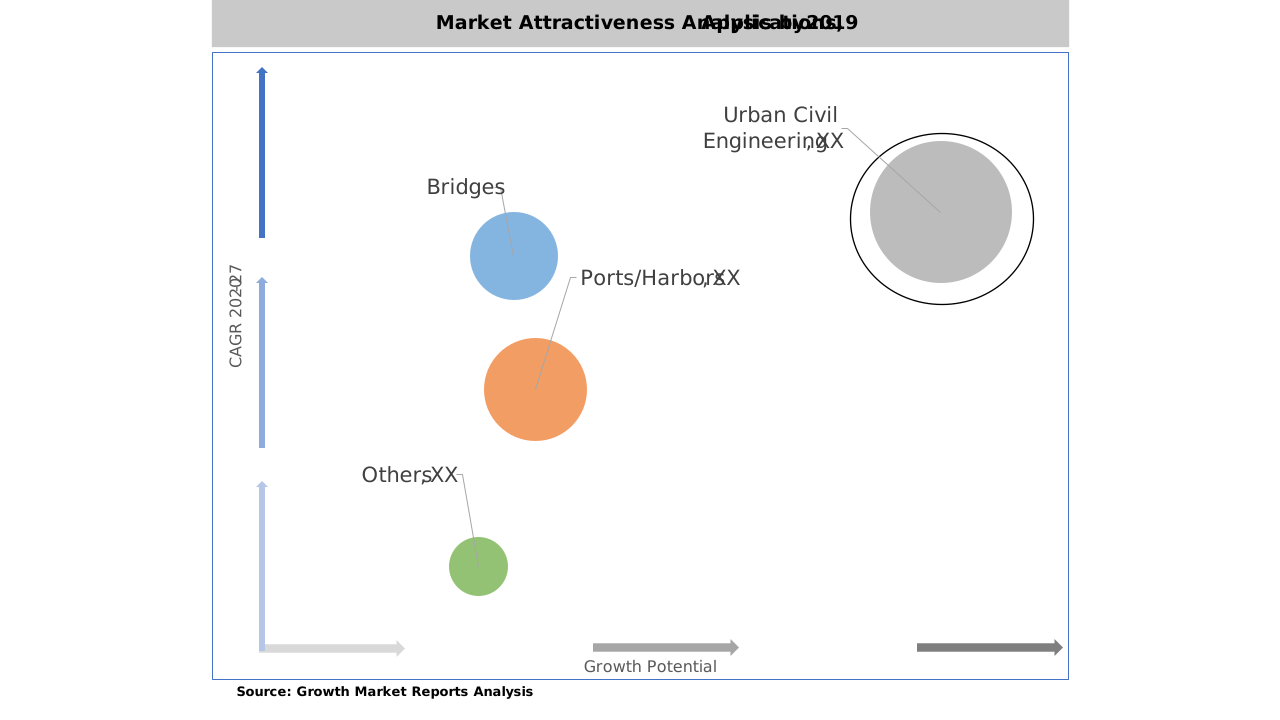
The application of steel piles in ports/harbors, urban civil engineering, bridges, and other construction projects are driving the steel piles market in Europe.

The rising urban civil engineering and growth in infrastructure projects in the country is expected to drive the market growth during forecast period.

In addition to market size (in USD Million) and Company Market Share (in % for base year 2019), other data such as volume analysis for year 2017 to 2027 (estimated pricing analysis) and short-term & long-term outlook for steel piles market is available in final report.

According to this Growth Market Reports report, the market for steel piles in Europe is likely to register a CAGR of 2.4% during forecast period 2020-2027, with an anticipated valuation of USD 7,826.1 million by the end of the 2027.

Yes, the report covers product specific information such as development & advancements, etc.

Additional company profiles can be provided on request.

Table Of Content

Chapter 1 Executive Summary
Chapter 2 Assumptions and Acronyms Used
Chapter 3 Research Methodology
Chapter 4 Steel Piles Market Overview
   4.1 Introduction
      4.1.1 Market Taxonomy
      4.1.2 Market Definition
      4.1.3 Macro-Economic Factors Impacting the Market Growth
   4.2 Steel Piles Market Dynamics
      4.2.1 Market Drivers
      4.2.2 Market Restraints
      4.2.3 Market Opportunity
   4.3 Steel Piles Market - Supply Chain Analysis
      4.3.1 List of Key Suppliers
      4.3.2 List of Key Distributors
      4.3.3 List of Key Consumers
   4.4 Key Forces Shaping the Steel Piles Market
      4.4.1 Bargaining Power of Suppliers
      4.4.2 Bargaining Power of Buyers
      4.4.3 Threat of Substitution
      4.4.4 Threat of New Entrants
      4.4.5 Competitive Rivalry
   4.5 Global Steel Piles Market Size & Forecast, 2023-2032
      4.5.1 Steel Piles Market Size and Y-o-Y Growth
      4.5.2 Steel Piles Market Absolute $ Opportunity

Chapter 5 Global Steel Piles Market Analysis and Forecast By Product Type
   5.1 Introduction
      5.1.1 Key Market Trends & Growth Opportunities By Product Type
      5.1.2 Basis Point Share (BPS) Analysis By Product Type
      5.1.3 Absolute $ Opportunity Assessment By Product Type
   5.2 Steel Piles Market Size Forecast By Product Type
      5.2.1 Sheet Piles
      5.2.2 Pipe Piles
      5.2.3 H-Piles
      5.2.4 Others
   5.3 Market Attractiveness Analysis By Product Type

Chapter 6 Global Steel Piles Market Analysis and Forecast By Application
   6.1 Introduction
      6.1.1 Key Market Trends & Growth Opportunities By Application
      6.1.2 Basis Point Share (BPS) Analysis By Application
      6.1.3 Absolute $ Opportunity Assessment By Application
   6.2 Steel Piles Market Size Forecast By Application
      6.2.1 Marine Structures
      6.2.2 Foundation Construction
      6.2.3 Bridge Construction
      6.2.4 Oil & Gas
      6.2.5 Others
   6.3 Market Attractiveness Analysis By Application

Chapter 7 Global Steel Piles Market Analysis and Forecast By End-User
   7.1 Introduction
      7.1.1 Key Market Trends & Growth Opportunities By End-User
      7.1.2 Basis Point Share (BPS) Analysis By End-User
      7.1.3 Absolute $ Opportunity Assessment By End-User
   7.2 Steel Piles Market Size Forecast By End-User
      7.2.1 Construction
      7.2.2 Infrastructure
      7.2.3 Oil & Gas
      7.2.4 Marine
      7.2.5 Others
   7.3 Market Attractiveness Analysis By End-User

Chapter 8 Global Steel Piles Market Analysis and Forecast by Region
   8.1 Introduction
      8.1.1 Key Market Trends & Growth Opportunities By Region
      8.1.2 Basis Point Share (BPS) Analysis By Region
      8.1.3 Absolute $ Opportunity Assessment By Region
   8.2 Steel Piles Market Size Forecast By Region
      8.2.1 North America
      8.2.2 Europe
      8.2.3 Asia Pacific
      8.2.4 Latin America
      8.2.5 Middle East & Africa (MEA)
   8.3 Market Attractiveness Analysis By Region

Chapter 9 Coronavirus Disease (COVID-19) Impact 
   9.1 Introduction 
   9.2 Current & Future Impact Analysis 
   9.3 Economic Impact Analysis 
   9.4 Government Policies 
   9.5 Investment Scenario

Chapter 10 North America Steel Piles Analysis and Forecast
   10.1 Introduction
   10.2 North America Steel Piles Market Size Forecast by Country
      10.2.1 U.S.
      10.2.2 Canada
   10.3 Basis Point Share (BPS) Analysis by Country
   10.4 Absolute $ Opportunity Assessment by Country
   10.5 Market Attractiveness Analysis by Country
   10.6 North America Steel Piles Market Size Forecast By Product Type
      10.6.1 Sheet Piles
      10.6.2 Pipe Piles
      10.6.3 H-Piles
      10.6.4 Others
   10.7 Basis Point Share (BPS) Analysis By Product Type 
   10.8 Absolute $ Opportunity Assessment By Product Type 
   10.9 Market Attractiveness Analysis By Product Type
   10.10 North America Steel Piles Market Size Forecast By Application
      10.10.1 Marine Structures
      10.10.2 Foundation Construction
      10.10.3 Bridge Construction
      10.10.4 Oil & Gas
      10.10.5 Others
   10.11 Basis Point Share (BPS) Analysis By Application 
   10.12 Absolute $ Opportunity Assessment By Application 
   10.13 Market Attractiveness Analysis By Application
   10.14 North America Steel Piles Market Size Forecast By End-User
      10.14.1 Construction
      10.14.2 Infrastructure
      10.14.3 Oil & Gas
      10.14.4 Marine
      10.14.5 Others
   10.15 Basis Point Share (BPS) Analysis By End-User 
   10.16 Absolute $ Opportunity Assessment By End-User 
   10.17 Market Attractiveness Analysis By End-User

Chapter 11 Europe Steel Piles Analysis and Forecast
   11.1 Introduction
   11.2 Europe Steel Piles Market Size Forecast by Country
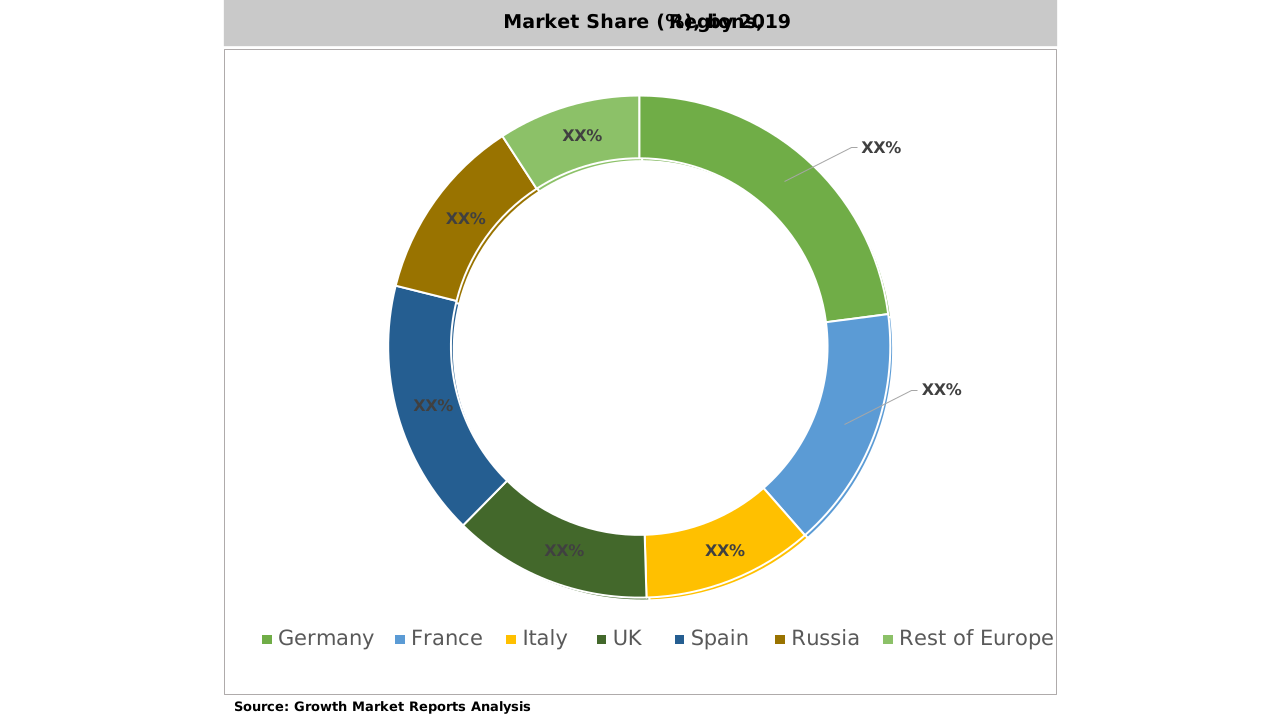
      11.2.1 Germany
      11.2.2 France
      11.2.3 Italy
      11.2.4 U.K.
      11.2.5 Spain
      11.2.6 Russia
      11.2.7 Rest of Europe
   11.3 Basis Point Share (BPS) Analysis by Country
   11.4 Absolute $ Opportunity Assessment by Country
   11.5 Market Attractiveness Analysis by Country
   11.6 Europe Steel Piles Market Size Forecast By Product Type
      11.6.1 Sheet Piles
      11.6.2 Pipe Piles
      11.6.3 H-Piles
      11.6.4 Others
   11.7 Basis Point Share (BPS) Analysis By Product Type 
   11.8 Absolute $ Opportunity Assessment By Product Type 
   11.9 Market Attractiveness Analysis By Product Type
   11.10 Europe Steel Piles Market Size Forecast By Application
      11.10.1 Marine Structures
      11.10.2 Foundation Construction
      11.10.3 Bridge Construction
      11.10.4 Oil & Gas
      11.10.5 Others
   11.11 Basis Point Share (BPS) Analysis By Application 
   11.12 Absolute $ Opportunity Assessment By Application 
   11.13 Market Attractiveness Analysis By Application
   11.14 Europe Steel Piles Market Size Forecast By End-User
      11.14.1 Construction
      11.14.2 Infrastructure
      11.14.3 Oil & Gas
      11.14.4 Marine
      11.14.5 Others
   11.15 Basis Point Share (BPS) Analysis By End-User 
   11.16 Absolute $ Opportunity Assessment By End-User 
   11.17 Market Attractiveness Analysis By End-User

Chapter 12 Asia Pacific Steel Piles Analysis and Forecast
   12.1 Introduction
   12.2 Asia Pacific Steel Piles Market Size Forecast by Country
      12.2.1 China
      12.2.2 Japan
      12.2.3 South Korea
      12.2.4 India
      12.2.5 Australia
      12.2.6 South East Asia (SEA)
      12.2.7 Rest of Asia Pacific (APAC)
   12.3 Basis Point Share (BPS) Analysis by Country
   12.4 Absolute $ Opportunity Assessment by Country
   12.5 Market Attractiveness Analysis by Country
   12.6 Asia Pacific Steel Piles Market Size Forecast By Product Type
      12.6.1 Sheet Piles
      12.6.2 Pipe Piles
      12.6.3 H-Piles
      12.6.4 Others
   12.7 Basis Point Share (BPS) Analysis By Product Type 
   12.8 Absolute $ Opportunity Assessment By Product Type 
   12.9 Market Attractiveness Analysis By Product Type
   12.10 Asia Pacific Steel Piles Market Size Forecast By Application
      12.10.1 Marine Structures
      12.10.2 Foundation Construction
      12.10.3 Bridge Construction
      12.10.4 Oil & Gas
      12.10.5 Others
   12.11 Basis Point Share (BPS) Analysis By Application 
   12.12 Absolute $ Opportunity Assessment By Application 
   12.13 Market Attractiveness Analysis By Application
   12.14 Asia Pacific Steel Piles Market Size Forecast By End-User
      12.14.1 Construction
      12.14.2 Infrastructure
      12.14.3 Oil & Gas
      12.14.4 Marine
      12.14.5 Others
   12.15 Basis Point Share (BPS) Analysis By End-User 
   12.16 Absolute $ Opportunity Assessment By End-User 
   12.17 Market Attractiveness Analysis By End-User

Chapter 13 Latin America Steel Piles Analysis and Forecast
   13.1 Introduction
   13.2 Latin America Steel Piles Market Size Forecast by Country
      13.2.1 Brazil
      13.2.2 Mexico
      13.2.3 Rest of Latin America (LATAM)
   13.3 Basis Point Share (BPS) Analysis by Country
   13.4 Absolute $ Opportunity Assessment by Country
   13.5 Market Attractiveness Analysis by Country
   13.6 Latin America Steel Piles Market Size Forecast By Product Type
      13.6.1 Sheet Piles
      13.6.2 Pipe Piles
      13.6.3 H-Piles
      13.6.4 Others
   13.7 Basis Point Share (BPS) Analysis By Product Type 
   13.8 Absolute $ Opportunity Assessment By Product Type 
   13.9 Market Attractiveness Analysis By Product Type
   13.10 Latin America Steel Piles Market Size Forecast By Application
      13.10.1 Marine Structures
      13.10.2 Foundation Construction
      13.10.3 Bridge Construction
      13.10.4 Oil & Gas
      13.10.5 Others
   13.11 Basis Point Share (BPS) Analysis By Application 
   13.12 Absolute $ Opportunity Assessment By Application 
   13.13 Market Attractiveness Analysis By Application
   13.14 Latin America Steel Piles Market Size Forecast By End-User
      13.14.1 Construction
      13.14.2 Infrastructure
      13.14.3 Oil & Gas
      13.14.4 Marine
      13.14.5 Others
   13.15 Basis Point Share (BPS) Analysis By End-User 
   13.16 Absolute $ Opportunity Assessment By End-User 
   13.17 Market Attractiveness Analysis By End-User

Chapter 14 Middle East & Africa (MEA) Steel Piles Analysis and Forecast
   14.1 Introduction
   14.2 Middle East & Africa (MEA) Steel Piles Market Size Forecast by Country
      14.2.1 Saudi Arabia
      14.2.2 South Africa
      14.2.3 UAE
      14.2.4 Rest of Middle East & Africa (MEA)
   14.3 Basis Point Share (BPS) Analysis by Country
   14.4 Absolute $ Opportunity Assessment by Country
   14.5 Market Attractiveness Analysis by Country
   14.6 Middle East & Africa (MEA) Steel Piles Market Size Forecast By Product Type
      14.6.1 Sheet Piles
      14.6.2 Pipe Piles
      14.6.3 H-Piles
      14.6.4 Others
   14.7 Basis Point Share (BPS) Analysis By Product Type 
   14.8 Absolute $ Opportunity Assessment By Product Type 
   14.9 Market Attractiveness Analysis By Product Type
   14.10 Middle East & Africa (MEA) Steel Piles Market Size Forecast By Application
      14.10.1 Marine Structures
      14.10.2 Foundation Construction
      14.10.3 Bridge Construction
      14.10.4 Oil & Gas
      14.10.5 Others
   14.11 Basis Point Share (BPS) Analysis By Application 
   14.12 Absolute $ Opportunity Assessment By Application 
   14.13 Market Attractiveness Analysis By Application
   14.14 Middle East & Africa (MEA) Steel Piles Market Size Forecast By End-User
      14.14.1 Construction
      14.14.2 Infrastructure
      14.14.3 Oil & Gas
      14.14.4 Marine
      14.14.5 Others
   14.15 Basis Point Share (BPS) Analysis By End-User 
   14.16 Absolute $ Opportunity Assessment By End-User 
   14.17 Market Attractiveness Analysis By End-User

Chapter 15 Competition Landscape 
   15.1 Steel Piles Market: Competitive Dashboard
   15.2 Global Steel Piles Market: Market Share Analysis, 2023
   15.3 Company Profiles (Details – Overview, Financials, Developments, Strategy) 
      15.3.1 ArcelorMittal
Nippon Steel Corporation
Tata Steel
JFE Steel Corporation
Baosteel Group Corporation
SSAB AB
Nucor Corporation
EVRAZ plc
Vallourec S.A.
POSCO
Hyundai Steel Company
Sumitomo Metal Industries
United States Steel Corporation
Thyssenkrupp AG
Salzgitter AG
Steel Authority of India Limited (SAIL)
Jindal Steel & Power Ltd.
China Steel Corporation
Daido Steel Co., Ltd.
L.B. Foster Company

Methodology

Our Clients

Dassault Aviation
General Electric
Microsoft
Siemens Healthcare
Honda Motor Co. Ltd.
sinopec
Nestle SA
FedEx Logistics