Expansive Cement Market Research Report 2033

Expansive Cement Market Research Report 2033

Segments - by Product Type (Type K, Type M, Type S, Others), by Application (Bridges, Tunnels, Buildings, Dams, Others), by End-User (Residential, Commercial, Industrial, Infrastructure), by Distribution Channel (Direct Sales, Distributors/Wholesalers, Online)

https://growthmarketreports.com/Raksha
Author : Raksha Sharma
https://growthmarketreports.com/Vaibhav
Fact-checked by : V. Chandola
https://growthmarketreports.com/Rucha
Editor : Rucha Phatak

Upcoming | Report ID :CM-76 | 4.2 Rating | 61 Reviews | 298 Pages | Format : Docx PDF

Report Description


Expansive Cement Market Outlook

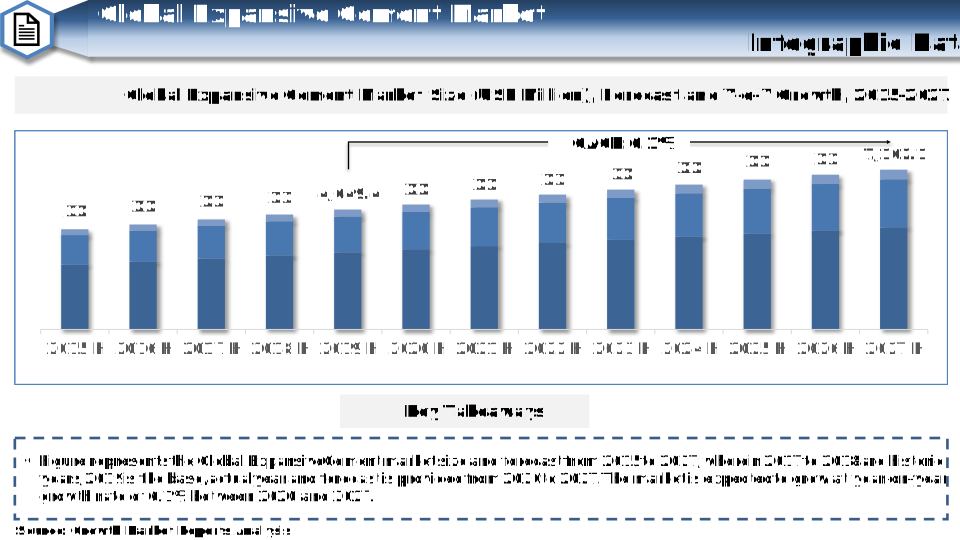
According to our latest research, the global expansive cement market size in 2024 stands at USD 4.28 billion, reflecting robust demand across key infrastructure and construction sectors. The market is projected to grow at a CAGR of 6.1% from 2025 to 2033, reaching an estimated USD 7.27 billion by the end of the forecast period. This growth is primarily fueled by increasing investments in infrastructure development, urbanization, and the rising need for durable construction materials that address the challenges of shrinkage and cracking in concrete applications.

One of the principal growth factors driving the expansive cement market is the surge in global infrastructure projects, particularly in emerging economies. Governments and private sector players are investing heavily in bridges, tunnels, dams, and other critical infrastructure to support economic development and urban expansion. Expansive cement, known for its unique ability to counteract shrinkage and enhance durability, is increasingly specified in these projects to ensure longevity and reduce maintenance costs. Additionally, the focus on sustainable construction practices has further boosted the adoption of expansive cement, as it contributes to the durability and resilience of structures in diverse environmental conditions.

Another significant growth driver is the rapid urbanization witnessed across Asia Pacific, Latin America, and parts of Africa. As urban populations swell, the demand for residential, commercial, and industrial spaces is escalating. Expansive cement is favored in the construction of high-rise buildings, commercial complexes, and industrial facilities due to its superior performance in minimizing cracks and maintaining structural integrity. The material’s ability to provide volumetric stability is particularly advantageous in regions with fluctuating temperature and humidity, making it a preferred choice for developers and contractors aiming for high-quality, long-lasting construction.

Technological advancements and product innovation also play a pivotal role in the expansion of the expansive cement market. Manufacturers are investing in research and development to create new formulations that offer enhanced performance, faster setting times, and improved workability. The development of specialized expansive cements tailored for specific applications, such as underwater structures or high-stress industrial environments, is opening new avenues for market growth. Furthermore, the increasing use of digital construction management tools is facilitating the precise application and monitoring of expansive cement, thereby optimizing its benefits and broadening its adoption across various construction segments.

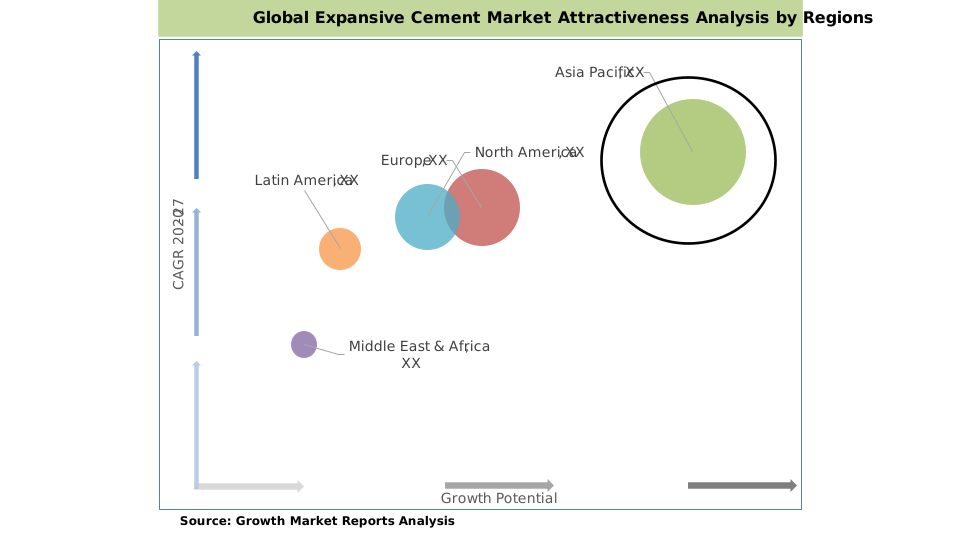
From a regional perspective, Asia Pacific dominates the global expansive cement market, accounting for the largest share in 2024. This leadership is attributed to the region’s aggressive infrastructure development agenda, rapid urbanization, and substantial investments in transportation and energy projects. North America and Europe also represent significant markets, driven by the need for renovation and rehabilitation of aging infrastructure and a strong emphasis on sustainable building practices. Meanwhile, the Middle East & Africa and Latin America are emerging as promising markets, supported by government initiatives aimed at boosting infrastructure and industrialization. This dynamic regional landscape underscores the expansive cement market’s global relevance and growth potential.

Global Expansive Cement Industry Outlook

Product Type Analysis

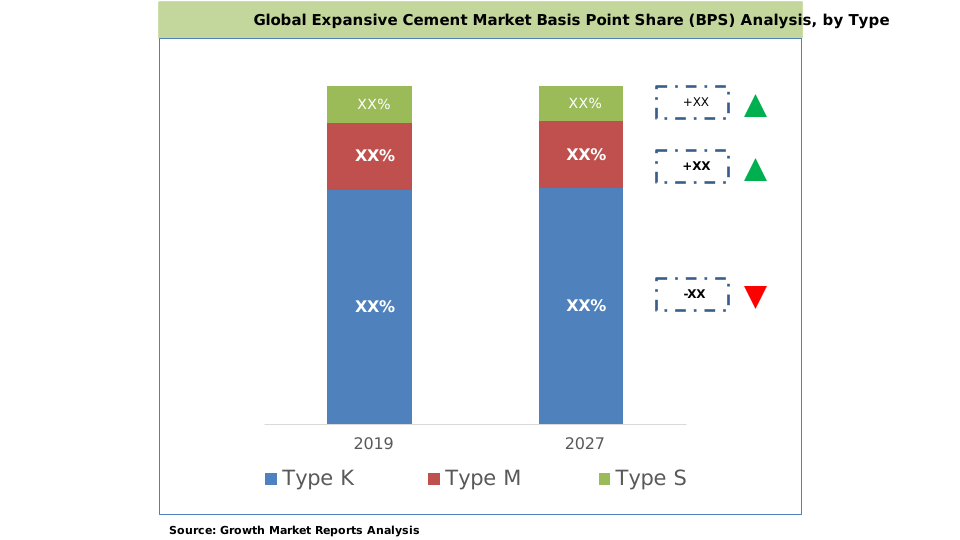
The expansive cement market is segmented by product type into Type K, Type M, Type S, and Others, each catering to distinct construction requirements and performance criteria. Type K expansive cement is widely recognized for its high reliability in controlling shrinkage and is extensively used in large-scale infrastructure projects. It is formulated with a precise blend of portland cement, anhydrous tetracalcium trialuminate sulfate, and calcium sulfate, which together impart expansive properties that counteract the natural shrinkage of concrete. This makes Type K especially suitable for applications where crack resistance and dimensional stability are paramount, such as in bridges, tunnels, and dams.

Type M expansive cement is designed for applications requiring moderate expansion and is often used in building construction and repair works. Its balanced properties make it ideal for situations where some degree of expansion is beneficial, but excessive expansion could potentially compromise structural integrity. Type M is commonly employed in the restoration of historical buildings, floor slabs, and precast elements, where it provides a cost-effective solution to the challenges of shrinkage and cracking. The versatility of Type M has led to its growing adoption in both residential and commercial construction segments.

Type S expansive cement is formulated for specialized applications that demand slow and controlled expansion. This type is particularly valuable in projects where gradual expansion is necessary to avoid stress concentrations and potential damage to surrounding structures. Type S is often utilized in the construction of large dams, water tanks, and other hydraulic structures, where it ensures long-term durability and leak resistance. The unique properties of Type S expansive cement have positioned it as a preferred choice for engineers and contractors dealing with complex, high-value infrastructure projects.

The “Others” category encompasses a range of proprietary and customized expansive cement formulations developed to address specific project requirements. These may include rapid-setting cements, high-strength variants, and eco-friendly options that incorporate recycled materials or alternative binders. The growing emphasis on sustainability and performance optimization is driving innovation in this segment, with manufacturers introducing new products that cater to niche applications in industrial floors, precast components, and repair mortars. As the construction industry continues to evolve, the demand for specialized expansive cements is expected to rise, further diversifying the product landscape.

Report Scope

Attributes Details
Report Title Expansive Cement Market Research Report 2033
By Product Type Type K, Type M, Type S, Others
By Application Bridges, Tunnels, Buildings, Dams, Others
By End-User Residential, Commercial, Industrial, Infrastructure
By Distribution Channel Direct Sales, Distributors/Wholesalers, Online
Regions Covered North America, Europe, APAC, Latin America, MEA
Countries Covered North America (United States, Canada), Europe (Germany, France, Italy, United Kingdom, Spain, Russia, Rest of Europe), Asia Pacific (China, Japan, South Korea, India, Australia, South East Asia (SEA), Rest of Asia Pacific), Latin America (Mexico, Brazil, Rest of Latin America), Middle East & Africa (Saudi Arabia, South Africa, United Arab Emirates, Rest of Middle East & Africa)
Base Year 2024
Historic Data 2018-2023
Forecast Period 2025-2033
Number of Pages 298
Number of Tables & Figures 342
Customization Available Yes, the report can be customized as per your need.

Application Analysis

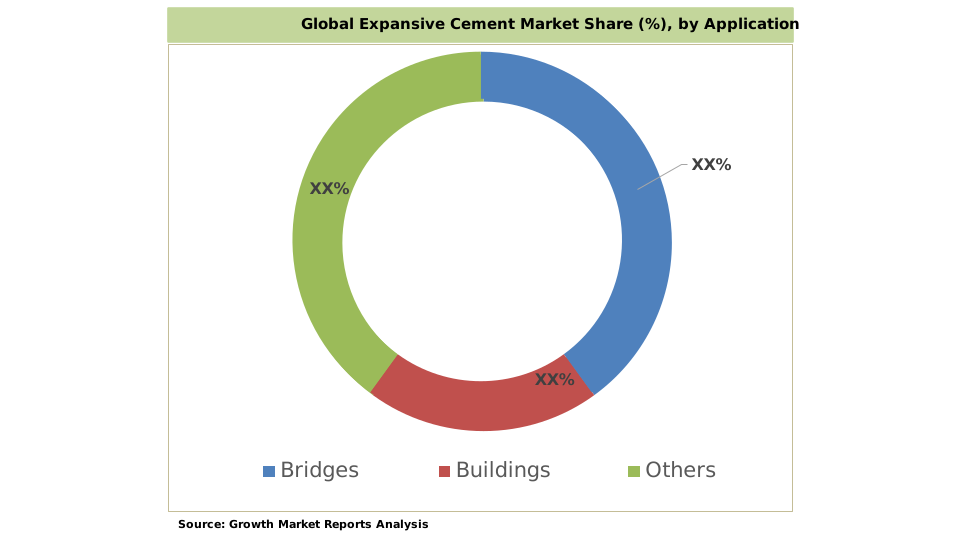
The application segment of the expansive cement market is broadly categorized into Bridges, Tunnels, Buildings, Dams, and Others, reflecting the diverse range of projects that benefit from the unique properties of expansive cement. Bridges represent a significant application area, as the material’s ability to control shrinkage and enhance crack resistance is critical for ensuring the longevity and safety of these vital transportation links. Expansive cement is used in bridge decks, abutments, and piers, where it helps to mitigate the effects of temperature fluctuations, heavy traffic loads, and environmental exposure.

Tunnels are another key application, with expansive cement playing a crucial role in the construction of tunnel linings, segments, and support structures. The material’s expansive properties help to fill voids, prevent water ingress, and maintain structural integrity over the long term. In urban areas where space is limited and tunneling is essential for transportation and utilities, the use of expansive cement ensures that projects are completed efficiently and with minimal risk of cracking or settlement. This has led to increased adoption of expansive cement in metro rail, highway, and utility tunnel projects worldwide.

In the buildings segment, expansive cement is widely used in both new construction and renovation projects. Its ability to minimize shrinkage-induced cracks makes it ideal for floor slabs, foundations, and structural elements in residential, commercial, and industrial buildings. The material is also favored in the repair and retrofitting of existing structures, where it provides a reliable solution for addressing cracks and restoring structural integrity. As the demand for high-performance and low-maintenance buildings grows, the use of expansive cement in this segment is expected to increase steadily.

Dams and other hydraulic structures represent a specialized application area where the performance of construction materials is critical to safety and functionality. Expansive cement is used in dam walls, spillways, and water-retaining structures to ensure watertightness and prevent cracking due to shrinkage or thermal effects. The material’s expansive properties are particularly valuable in large-scale projects where even minor leaks or cracks can have severe consequences. The ongoing need for water infrastructure development and maintenance is expected to sustain demand for expansive cement in this segment.

The “Others” category includes a variety of applications such as industrial floors, precast concrete elements, repair mortars, and grouting. Expansive cement’s versatility and performance advantages make it suitable for a wide range of construction and maintenance activities, from heavy industrial facilities to decorative architectural features. As construction technologies advance and project requirements become more complex, the scope of expansive cement applications is likely to expand further, driving market growth across all segments.

End-User Analysis

The expansive cement market’s end-user segment comprises Residential, Commercial, Industrial, and Infrastructure sectors, each with unique requirements and growth dynamics. The residential sector is witnessing increased adoption of expansive cement due to the rising demand for durable and low-maintenance homes. Homeowners and developers are increasingly aware of the benefits of using expansive cement in foundations, floor slabs, and repair works to prevent cracks and enhance the lifespan of residential structures. The trend towards sustainable and resilient housing is further bolstering the use of expansive cement in this segment.

In the commercial sector, expansive cement is widely used in the construction of office buildings, shopping malls, hotels, and institutional facilities. The need for structures that can withstand heavy foot traffic, dynamic loads, and frequent renovations makes expansive cement an attractive choice for commercial developers. Its ability to minimize maintenance costs and downtime by reducing the incidence of cracks and structural issues is a key factor driving its adoption in this segment. As urbanization continues and commercial real estate markets expand, demand for expansive cement in commercial construction is expected to grow steadily.

The industrial sector represents a critical end-user group for expansive cement, particularly in the construction of factories, warehouses, and production facilities. Industrial environments often subject structures to heavy loads, vibrations, and exposure to chemicals, making durability and crack resistance essential. Expansive cement is used in industrial floors, machine foundations, and containment structures to ensure long-term performance and safety. The ongoing expansion of manufacturing and logistics infrastructure, especially in emerging economies, is expected to drive sustained demand for expansive cement in the industrial segment.

The infrastructure sector is the largest and most dynamic end-user of expansive cement, encompassing a wide range of projects such as roads, bridges, tunnels, dams, airports, and water treatment plants. The scale and complexity of infrastructure projects demand construction materials that offer exceptional performance and reliability. Expansive cement’s ability to deliver volumetric stability, crack resistance, and durability makes it indispensable in this sector. Governments and private investors are prioritizing infrastructure development to support economic growth, connectivity, and resilience, thereby fueling the demand for expansive cement on a global scale.

Distribution Channel Analysis

The expansive cement market is distributed through Direct Sales, Distributors/Wholesalers, and Online channels, each offering distinct advantages and challenges. Direct sales are favored by large construction companies and infrastructure developers who require bulk quantities and customized formulations. This channel allows manufacturers to build strong relationships with key clients, offer technical support, and ensure timely delivery of materials. Direct sales are particularly prevalent in major infrastructure projects where quality assurance and supply chain reliability are critical.

Distributors and wholesalers play a vital role in expanding the reach of expansive cement products, especially in regions where manufacturers do not have a direct presence. These intermediaries maintain inventory, provide logistical support, and offer value-added services such as product training and technical assistance. The distributor/wholesaler channel is essential for serving small to medium-sized contractors, builders, and repair professionals who require flexible order sizes and quick access to materials. As construction activity spreads to secondary cities and rural areas, the importance of distributors and wholesalers is expected to grow.

The online distribution channel is emerging as a significant growth avenue for the expansive cement market, driven by the digital transformation of the construction industry. Online platforms offer convenience, transparency, and access to a wide range of products, enabling customers to compare specifications, prices, and reviews before making purchasing decisions. E-commerce is particularly attractive to small contractors, DIY enthusiasts, and repair professionals who value the ability to order materials on-demand. As internet penetration and digital literacy increase globally, the online channel is poised for rapid growth, supported by advancements in logistics and supply chain management.

Each distribution channel is evolving to meet the changing needs of the construction industry, with manufacturers investing in omni-channel strategies to maximize market reach and customer satisfaction. Partnerships with distributors, investment in digital sales platforms, and the development of customized supply solutions are key trends shaping the future of expansive cement distribution. As competition intensifies and customer expectations rise, the ability to deliver high-quality products efficiently and reliably will be a critical success factor for market participants.

Opportunities & Threats

The expansive cement market is brimming with opportunities, particularly in the context of global infrastructure development and urbanization. Emerging economies in Asia Pacific, Latin America, and Africa are investing heavily in transportation, energy, and water infrastructure to support economic growth and improve quality of life. Expansive cement is ideally positioned to capitalize on these opportunities due to its superior performance in challenging environments and its ability to enhance the durability and resilience of critical structures. Additionally, the growing emphasis on sustainable construction practices and green building certifications is creating new avenues for market expansion, as expansive cement contributes to the longevity and reduced maintenance of buildings and infrastructure.

Another significant opportunity lies in product innovation and the development of specialized expansive cement formulations. Advances in materials science and construction technology are enabling manufacturers to create products with tailored properties for specific applications, such as rapid-setting cements for emergency repairs or high-strength variants for industrial floors. The integration of digital construction management tools is also enhancing the precision and efficiency of expansive cement application, opening up new possibilities for market growth. Furthermore, the expansion of online distribution channels and the increasing adoption of e-commerce platforms are making it easier for customers to access a wide range of expansive cement products, thereby broadening the market’s reach.

Despite these opportunities, the expansive cement market faces several restraining factors, the most prominent of which is the high cost of raw materials and production. The manufacturing process for expansive cement requires specific additives and rigorous quality control, which can drive up costs compared to conventional cement. In price-sensitive markets, this cost differential can limit adoption, especially among small contractors and residential builders. Additionally, the lack of awareness and technical expertise regarding the proper use of expansive cement can hinder its uptake in certain regions. Addressing these challenges through education, training, and cost optimization will be essential for sustaining long-term market growth.

Regional Outlook

The Asia Pacific region dominates the global expansive cement market, accounting for approximately 46% of total revenue in 2024, or about USD 1.97 billion. This leadership is driven by massive investments in infrastructure development across China, India, Japan, and Southeast Asia, where rapid urbanization and industrialization are fueling demand for high-performance construction materials. China, in particular, is a major consumer, with expansive cement being specified in large-scale projects such as high-speed rail, highways, dams, and urban redevelopment. The region’s robust construction activity, coupled with government initiatives to promote sustainable building practices, is expected to sustain a strong CAGR of 6.8% through 2033.

North America is the second-largest market, with a market size of USD 1.08 billion in 2024. The region’s growth is underpinned by the ongoing need to repair and upgrade aging infrastructure, including bridges, tunnels, and water treatment facilities. Expansive cement is increasingly being adopted in these projects to enhance durability and minimize maintenance requirements. The United States leads the regional market, supported by federal and state investments in infrastructure renewal and a strong focus on resilient construction. Canada and Mexico also contribute to market growth, particularly in the commercial and industrial segments.

Europe holds a significant share of the global expansive cement market, with a market size of USD 0.87 billion in 2024. The region is characterized by stringent building codes, a mature construction industry, and a strong emphasis on sustainability and energy efficiency. Expansive cement is used extensively in the renovation of historical buildings, the construction of transport infrastructure, and the maintenance of water management systems. Key markets include Germany, the United Kingdom, France, and Italy, where demand is driven by both new construction and refurbishment projects. The Middle East & Africa and Latin America are emerging as promising markets, with a combined market size of USD 0.36 billion in 2024, supported by government-led infrastructure initiatives and increasing industrialization. These regions are expected to register above-average growth rates as they continue to invest in transportation, energy, and urban development.

Expansive Cement Market Statistics

Competitor Outlook

The competitive landscape of the expansive cement market is characterized by the presence of several global and regional players vying for market share through product innovation, strategic partnerships, and expansion into emerging markets. Leading companies are investing heavily in research and development to create advanced formulations that offer enhanced performance, sustainability, and cost-effectiveness. The market is moderately consolidated, with a few large players holding significant shares, while numerous smaller companies compete in niche segments and regional markets. The intensity of competition is further heightened by the entry of new players, particularly in fast-growing regions such as Asia Pacific and the Middle East.

Major players in the expansive cement market are focusing on expanding their production capacities and strengthening their distribution networks to cater to the growing demand from infrastructure and construction projects. Strategic collaborations with construction companies, government agencies, and research institutions are common, enabling manufacturers to develop customized solutions for specific applications. Additionally, companies are leveraging digital technologies to enhance customer engagement, streamline supply chains, and improve product quality. Sustainability is a key focus area, with leading players developing eco-friendly expansive cements that incorporate recycled materials and reduce carbon emissions.

Innovation remains a cornerstone of competitive strategy in the expansive cement market. Companies are continuously developing new products to address evolving customer needs, such as rapid-setting cements for time-sensitive projects and high-strength variants for industrial applications. The ability to offer technical support and training is also a critical differentiator, as customers increasingly seek guidance on the optimal use of expansive cement in complex construction projects. As regulatory requirements and industry standards evolve, market leaders are proactive in ensuring compliance and maintaining high levels of product performance and safety.

Some of the key companies operating in the expansive cement market include Fosroc International Ltd., CEMEX S.A.B. de C.V., Holcim Ltd., Tarmac (CRH plc), Sika AG, CTS Cement Manufacturing Corp., Denka Company Limited, and Buzzi Unicem S.p.A. These companies have established strong brand reputations and extensive distribution networks, enabling them to serve customers across multiple regions and end-user segments. For instance, Fosroc International is known for its comprehensive range of construction chemicals and expansive cements tailored for infrastructure projects, while CEMEX leverages its global footprint to supply expansive cement to major construction markets. Sika AG and Holcim are recognized for their commitment to sustainability and innovation, offering products that meet stringent environmental standards. CTS Cement Manufacturing specializes in rapid-setting and high-performance expansive cements, catering to both repair and new construction applications. These industry leaders are well-positioned to capitalize on the growing demand for expansive cement, driven by infrastructure investment, urbanization, and the need for durable, sustainable construction materials.

Key Players

  • Fosroc International Limited
  • Tarmac (CRH plc)
  • CEMEX S.A.B. de C.V.
  • Holcim Ltd
  • Sika AG
  • BASF SE
  • Mapei S.p.A.
  • CTS Cement Manufacturing Corporation
  • Kiran Global Chem Limited
  • Denka Company Limited
  • Fujairah Cement Industries
  • Quikrete Holdings, Inc.
  • U.S. Concrete, Inc.
  • Breedon Group plc
  • China National Building Material Company Limited (CNBM)
  • Taiheiyo Cement Corporation
  • JK Lakshmi Cement Ltd.
  • UltraTech Cement Limited
  • Tianjin Sunke Chemical Engineering Co., Ltd.
  • Calucem GmbH
Expansive Cement Market Overview

Segments

The Expansive Cement market has been segmented on the basis of

Product Type

  • Type K
  • Type M
  • Type S
  • Others

Application

  • Bridges
  • Tunnels
  • Buildings
  • Dams
  • Others

End-User

  • Residential
  • Commercial
  • Industrial
  • Infrastructure

Distribution Channel

  • Direct Sales
  • Distributors/Wholesalers
  • Online

Competitive Landscape

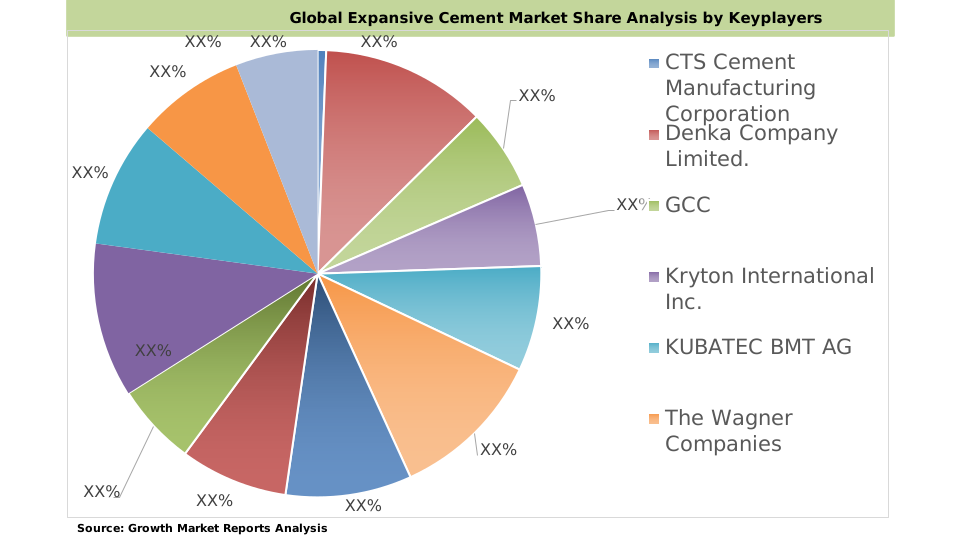
  • Key players in the market include CTS Cement Manufacturing Corporation, Denka Company Limited., GCC, Kryton International Inc., KUBATEC BMT AG, The Wagner Companies, Sika AG, XIAMEN BESTLINK FACTORY CO., LTD., Xiamen Good Mining and Drilling Equipment Co.Ltd, Xiamen Samsung Mining Equipment Co., Ltd, Saint, Gobain Weber, Taiheiyo Materials Corporation, Five Star Products, Inc. These players are considered as key manufacturers of the market based on their different varieties of product availability, regional presence, better supply chain management system, and the increasing demand for the products.
  • The players are adopting key strategies such as product development, geographical expansion, mergers and acquisition and many other strategies to increase their demand for expansive cement.

Global Expansive Cement Market Key Players

Table Of Content

Chapter 1 Executive Summary
Chapter 2 Assumptions and Acronyms Used
Chapter 3 Research Methodology
Chapter 4 Expansive Cement Market Overview
   4.1 Introduction
      4.1.1 Market Taxonomy
      4.1.2 Market Definition
      4.1.3 Macro-Economic Factors Impacting the Market Growth
   4.2 Expansive Cement Market Dynamics
      4.2.1 Market Drivers
      4.2.2 Market Restraints
      4.2.3 Market Opportunity
   4.3 Expansive Cement Market - Supply Chain Analysis
      4.3.1 List of Key Suppliers
      4.3.2 List of Key Distributors
      4.3.3 List of Key Consumers
   4.4 Key Forces Shaping the Expansive Cement Market
      4.4.1 Bargaining Power of Suppliers
      4.4.2 Bargaining Power of Buyers
      4.4.3 Threat of Substitution
      4.4.4 Threat of New Entrants
      4.4.5 Competitive Rivalry
   4.5 Global Expansive Cement Market Size & Forecast, 2023-2032
      4.5.1 Expansive Cement Market Size and Y-o-Y Growth
      4.5.2 Expansive Cement Market Absolute $ Opportunity

Chapter 5 Global Expansive Cement Market Analysis and Forecast By Product Type
   5.1 Introduction
      5.1.1 Key Market Trends & Growth Opportunities By Product Type
      5.1.2 Basis Point Share (BPS) Analysis By Product Type
      5.1.3 Absolute $ Opportunity Assessment By Product Type
   5.2 Expansive Cement Market Size Forecast By Product Type
      5.2.1 Type K
      5.2.2 Type M
      5.2.3 Type S
      5.2.4 Others
   5.3 Market Attractiveness Analysis By Product Type

Chapter 6 Global Expansive Cement Market Analysis and Forecast By Application
   6.1 Introduction
      6.1.1 Key Market Trends & Growth Opportunities By Application
      6.1.2 Basis Point Share (BPS) Analysis By Application
      6.1.3 Absolute $ Opportunity Assessment By Application
   6.2 Expansive Cement Market Size Forecast By Application
      6.2.1 Bridges
      6.2.2 Tunnels
      6.2.3 Buildings
      6.2.4 Dams
      6.2.5 Others
   6.3 Market Attractiveness Analysis By Application

Chapter 7 Global Expansive Cement Market Analysis and Forecast By End-User
   7.1 Introduction
      7.1.1 Key Market Trends & Growth Opportunities By End-User
      7.1.2 Basis Point Share (BPS) Analysis By End-User
      7.1.3 Absolute $ Opportunity Assessment By End-User
   7.2 Expansive Cement Market Size Forecast By End-User
      7.2.1 Residential
      7.2.2 Commercial
      7.2.3 Industrial
      7.2.4 Infrastructure
   7.3 Market Attractiveness Analysis By End-User

Chapter 8 Global Expansive Cement Market Analysis and Forecast By Distribution Channel
   8.1 Introduction
      8.1.1 Key Market Trends & Growth Opportunities By Distribution Channel
      8.1.2 Basis Point Share (BPS) Analysis By Distribution Channel
      8.1.3 Absolute $ Opportunity Assessment By Distribution Channel
   8.2 Expansive Cement Market Size Forecast By Distribution Channel
      8.2.1 Direct Sales
      8.2.2 Distributors/Wholesalers
      8.2.3 Online
   8.3 Market Attractiveness Analysis By Distribution Channel

Chapter 9 Global Expansive Cement Market Analysis and Forecast by Region
   9.1 Introduction
      9.1.1 Key Market Trends & Growth Opportunities By Region
      9.1.2 Basis Point Share (BPS) Analysis By Region
      9.1.3 Absolute $ Opportunity Assessment By Region
   9.2 Expansive Cement Market Size Forecast By Region
      9.2.1 North America
      9.2.2 Europe
      9.2.3 Asia Pacific
      9.2.4 Latin America
      9.2.5 Middle East & Africa (MEA)
   9.3 Market Attractiveness Analysis By Region

Chapter 10 Coronavirus Disease (COVID-19) Impact 
   10.1 Introduction 
   10.2 Current & Future Impact Analysis 
   10.3 Economic Impact Analysis 
   10.4 Government Policies 
   10.5 Investment Scenario

Chapter 11 North America Expansive Cement Analysis and Forecast
   11.1 Introduction
   11.2 North America Expansive Cement Market Size Forecast by Country
      11.2.1 U.S.
      11.2.2 Canada
   11.3 Basis Point Share (BPS) Analysis by Country
   11.4 Absolute $ Opportunity Assessment by Country
   11.5 Market Attractiveness Analysis by Country
   11.6 North America Expansive Cement Market Size Forecast By Product Type
      11.6.1 Type K
      11.6.2 Type M
      11.6.3 Type S
      11.6.4 Others
   11.7 Basis Point Share (BPS) Analysis By Product Type 
   11.8 Absolute $ Opportunity Assessment By Product Type 
   11.9 Market Attractiveness Analysis By Product Type
   11.10 North America Expansive Cement Market Size Forecast By Application
      11.10.1 Bridges
      11.10.2 Tunnels
      11.10.3 Buildings
      11.10.4 Dams
      11.10.5 Others
   11.11 Basis Point Share (BPS) Analysis By Application 
   11.12 Absolute $ Opportunity Assessment By Application 
   11.13 Market Attractiveness Analysis By Application
   11.14 North America Expansive Cement Market Size Forecast By End-User
      11.14.1 Residential
      11.14.2 Commercial
      11.14.3 Industrial
      11.14.4 Infrastructure
   11.15 Basis Point Share (BPS) Analysis By End-User 
   11.16 Absolute $ Opportunity Assessment By End-User 
   11.17 Market Attractiveness Analysis By End-User
   11.18 North America Expansive Cement Market Size Forecast By Distribution Channel
      11.18.1 Direct Sales
      11.18.2 Distributors/Wholesalers
      11.18.3 Online
   11.19 Basis Point Share (BPS) Analysis By Distribution Channel 
   11.20 Absolute $ Opportunity Assessment By Distribution Channel 
   11.21 Market Attractiveness Analysis By Distribution Channel

Chapter 12 Europe Expansive Cement Analysis and Forecast
   12.1 Introduction
   12.2 Europe Expansive Cement Market Size Forecast by Country
      12.2.1 Germany
      12.2.2 France
      12.2.3 Italy
      12.2.4 U.K.
      12.2.5 Spain
      12.2.6 Russia
      12.2.7 Rest of Europe
   12.3 Basis Point Share (BPS) Analysis by Country
   12.4 Absolute $ Opportunity Assessment by Country
   12.5 Market Attractiveness Analysis by Country
   12.6 Europe Expansive Cement Market Size Forecast By Product Type
      12.6.1 Type K
      12.6.2 Type M
      12.6.3 Type S
      12.6.4 Others
   12.7 Basis Point Share (BPS) Analysis By Product Type 
   12.8 Absolute $ Opportunity Assessment By Product Type 
   12.9 Market Attractiveness Analysis By Product Type
   12.10 Europe Expansive Cement Market Size Forecast By Application
      12.10.1 Bridges
      12.10.2 Tunnels
      12.10.3 Buildings
      12.10.4 Dams
      12.10.5 Others
   12.11 Basis Point Share (BPS) Analysis By Application 
   12.12 Absolute $ Opportunity Assessment By Application 
   12.13 Market Attractiveness Analysis By Application
   12.14 Europe Expansive Cement Market Size Forecast By End-User
      12.14.1 Residential
      12.14.2 Commercial
      12.14.3 Industrial
      12.14.4 Infrastructure
   12.15 Basis Point Share (BPS) Analysis By End-User 
   12.16 Absolute $ Opportunity Assessment By End-User 
   12.17 Market Attractiveness Analysis By End-User
   12.18 Europe Expansive Cement Market Size Forecast By Distribution Channel
      12.18.1 Direct Sales
      12.18.2 Distributors/Wholesalers
      12.18.3 Online
   12.19 Basis Point Share (BPS) Analysis By Distribution Channel 
   12.20 Absolute $ Opportunity Assessment By Distribution Channel 
   12.21 Market Attractiveness Analysis By Distribution Channel

Chapter 13 Asia Pacific Expansive Cement Analysis and Forecast
   13.1 Introduction
   13.2 Asia Pacific Expansive Cement Market Size Forecast by Country
      13.2.1 China
      13.2.2 Japan
      13.2.3 South Korea
      13.2.4 India
      13.2.5 Australia
      13.2.6 South East Asia (SEA)
      13.2.7 Rest of Asia Pacific (APAC)
   13.3 Basis Point Share (BPS) Analysis by Country
   13.4 Absolute $ Opportunity Assessment by Country
   13.5 Market Attractiveness Analysis by Country
   13.6 Asia Pacific Expansive Cement Market Size Forecast By Product Type
      13.6.1 Type K
      13.6.2 Type M
      13.6.3 Type S
      13.6.4 Others
   13.7 Basis Point Share (BPS) Analysis By Product Type 
   13.8 Absolute $ Opportunity Assessment By Product Type 
   13.9 Market Attractiveness Analysis By Product Type
   13.10 Asia Pacific Expansive Cement Market Size Forecast By Application
      13.10.1 Bridges
      13.10.2 Tunnels
      13.10.3 Buildings
      13.10.4 Dams
      13.10.5 Others
   13.11 Basis Point Share (BPS) Analysis By Application 
   13.12 Absolute $ Opportunity Assessment By Application 
   13.13 Market Attractiveness Analysis By Application
   13.14 Asia Pacific Expansive Cement Market Size Forecast By End-User
      13.14.1 Residential
      13.14.2 Commercial
      13.14.3 Industrial
      13.14.4 Infrastructure
   13.15 Basis Point Share (BPS) Analysis By End-User 
   13.16 Absolute $ Opportunity Assessment By End-User 
   13.17 Market Attractiveness Analysis By End-User
   13.18 Asia Pacific Expansive Cement Market Size Forecast By Distribution Channel
      13.18.1 Direct Sales
      13.18.2 Distributors/Wholesalers
      13.18.3 Online
   13.19 Basis Point Share (BPS) Analysis By Distribution Channel 
   13.20 Absolute $ Opportunity Assessment By Distribution Channel 
   13.21 Market Attractiveness Analysis By Distribution Channel

Chapter 14 Latin America Expansive Cement Analysis and Forecast
   14.1 Introduction
   14.2 Latin America Expansive Cement Market Size Forecast by Country
      14.2.1 Brazil
      14.2.2 Mexico
      14.2.3 Rest of Latin America (LATAM)
   14.3 Basis Point Share (BPS) Analysis by Country
   14.4 Absolute $ Opportunity Assessment by Country
   14.5 Market Attractiveness Analysis by Country
   14.6 Latin America Expansive Cement Market Size Forecast By Product Type
      14.6.1 Type K
      14.6.2 Type M
      14.6.3 Type S
      14.6.4 Others
   14.7 Basis Point Share (BPS) Analysis By Product Type 
   14.8 Absolute $ Opportunity Assessment By Product Type 
   14.9 Market Attractiveness Analysis By Product Type
   14.10 Latin America Expansive Cement Market Size Forecast By Application
      14.10.1 Bridges
      14.10.2 Tunnels
      14.10.3 Buildings
      14.10.4 Dams
      14.10.5 Others
   14.11 Basis Point Share (BPS) Analysis By Application 
   14.12 Absolute $ Opportunity Assessment By Application 
   14.13 Market Attractiveness Analysis By Application
   14.14 Latin America Expansive Cement Market Size Forecast By End-User
      14.14.1 Residential
      14.14.2 Commercial
      14.14.3 Industrial
      14.14.4 Infrastructure
   14.15 Basis Point Share (BPS) Analysis By End-User 
   14.16 Absolute $ Opportunity Assessment By End-User 
   14.17 Market Attractiveness Analysis By End-User
   14.18 Latin America Expansive Cement Market Size Forecast By Distribution Channel
      14.18.1 Direct Sales
      14.18.2 Distributors/Wholesalers
      14.18.3 Online
   14.19 Basis Point Share (BPS) Analysis By Distribution Channel 
   14.20 Absolute $ Opportunity Assessment By Distribution Channel 
   14.21 Market Attractiveness Analysis By Distribution Channel

Chapter 15 Middle East & Africa (MEA) Expansive Cement Analysis and Forecast
   15.1 Introduction
   15.2 Middle East & Africa (MEA) Expansive Cement Market Size Forecast by Country
      15.2.1 Saudi Arabia
      15.2.2 South Africa
      15.2.3 UAE
      15.2.4 Rest of Middle East & Africa (MEA)
   15.3 Basis Point Share (BPS) Analysis by Country
   15.4 Absolute $ Opportunity Assessment by Country
   15.5 Market Attractiveness Analysis by Country
   15.6 Middle East & Africa (MEA) Expansive Cement Market Size Forecast By Product Type
      15.6.1 Type K
      15.6.2 Type M
      15.6.3 Type S
      15.6.4 Others
   15.7 Basis Point Share (BPS) Analysis By Product Type 
   15.8 Absolute $ Opportunity Assessment By Product Type 
   15.9 Market Attractiveness Analysis By Product Type
   15.10 Middle East & Africa (MEA) Expansive Cement Market Size Forecast By Application
      15.10.1 Bridges
      15.10.2 Tunnels
      15.10.3 Buildings
      15.10.4 Dams
      15.10.5 Others
   15.11 Basis Point Share (BPS) Analysis By Application 
   15.12 Absolute $ Opportunity Assessment By Application 
   15.13 Market Attractiveness Analysis By Application
   15.14 Middle East & Africa (MEA) Expansive Cement Market Size Forecast By End-User
      15.14.1 Residential
      15.14.2 Commercial
      15.14.3 Industrial
      15.14.4 Infrastructure
   15.15 Basis Point Share (BPS) Analysis By End-User 
   15.16 Absolute $ Opportunity Assessment By End-User 
   15.17 Market Attractiveness Analysis By End-User
   15.18 Middle East & Africa (MEA) Expansive Cement Market Size Forecast By Distribution Channel
      15.18.1 Direct Sales
      15.18.2 Distributors/Wholesalers
      15.18.3 Online
   15.19 Basis Point Share (BPS) Analysis By Distribution Channel 
   15.20 Absolute $ Opportunity Assessment By Distribution Channel 
   15.21 Market Attractiveness Analysis By Distribution Channel

Chapter 16 Competition Landscape 
   16.1 Expansive Cement Market: Competitive Dashboard
   16.2 Global Expansive Cement Market: Market Share Analysis, 2023
   16.3 Company Profiles (Details – Overview, Financials, Developments, Strategy) 
      16.3.1 Fosroc International Limited
Tarmac (CRH plc)
CEMEX S.A.B. de C.V.
Holcim Ltd
Sika AG
BASF SE
Mapei S.p.A.
CTS Cement Manufacturing Corporation
Kiran Global Chem Limited
Denka Company Limited
Fujairah Cement Industries
Quikrete Holdings, Inc.
U.S. Concrete, Inc.
Breedon Group plc
China National Building Material Company Limited (CNBM)
Taiheiyo Cement Corporation
JK Lakshmi Cement Ltd.
UltraTech Cement Limited
Tianjin Sunke Chemical Engineering Co., Ltd.
Calucem GmbH

Methodology

Our Clients

Deloitte
Microsoft
Nestle SA
Pfizer
General Mills
Honda Motor Co. Ltd.
Dassault Aviation
General Electric