Segments - by Product Type (Mineral Wool, Metal, Gypsum, PVC, Wood, Others), by Application (Residential, Commercial, Industrial, Institutional), by Installation Type (Drop/Suspended, Surface Mounted), by Distribution Channel (Offline, Online), by End-User (New Construction, Renovation)
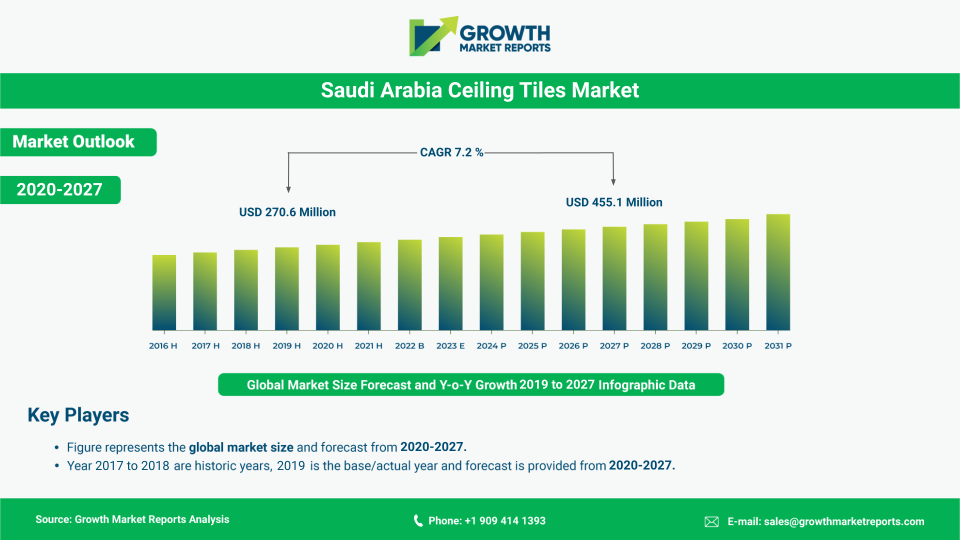
According to our latest research, the ceiling tiles market size reached USD 9.7 billion globally in 2024, driven by increased construction activity and the growing demand for aesthetic and functional interior solutions. The market is exhibiting a robust compound annual growth rate (CAGR) of 8.2% from 2025 to 2033. By the end of the forecast period in 2033, the ceiling tiles market is projected to attain a value of USD 19.1 billion. This growth trajectory is fueled by innovations in product materials, rising urbanization, and the increasing emphasis on energy efficiency and acoustic performance in modern infrastructure.
One of the primary growth factors propelling the ceiling tiles market is the surging demand for enhanced building aesthetics and acoustics across diverse sectors. As commercial spaces such as offices, shopping malls, and hospitality venues seek to create visually appealing and acoustically optimized environments, ceiling tiles have become an integral component of interior design. The proliferation of open-plan office layouts and the necessity for noise reduction have further magnified the importance of high-performance ceiling solutions. Furthermore, the availability of customizable and modular ceiling tile options has empowered architects and designers to meet specific client requirements, contributing significantly to the market’s expansion.
Another significant driver is the rapid pace of urbanization and infrastructure development, particularly in emerging economies. Countries in Asia Pacific and the Middle East are witnessing substantial investments in residential, commercial, and institutional construction projects. Government initiatives aimed at modernizing public infrastructure, coupled with the rising middle-class population’s preference for contemporary living spaces, are accelerating the adoption of advanced ceiling tile systems. Additionally, the growing trend of green buildings and sustainable construction practices is encouraging the use of eco-friendly ceiling tiles made from recycled and renewable materials, further supporting market growth.
Technological advancements in ceiling tile manufacturing have also played a pivotal role in shaping the market landscape. The integration of innovative materials such as mineral wool, PVC, and metal has improved the durability, fire resistance, and thermal insulation properties of ceiling tiles. Manufacturers are leveraging automation and digitalization to streamline production processes, enhance product quality, and reduce costs. Moreover, the development of smart ceiling tiles with integrated lighting and sensor systems is opening new avenues for value-added applications, especially in smart buildings and energy-efficient infrastructure. These technological innovations are expected to continue driving the ceiling tiles market in the coming years.
Regionally, Asia Pacific stands out as the fastest-growing market for ceiling tiles, owing to robust construction activity and favorable government policies. North America and Europe also maintain significant market shares, driven by renovation projects and stringent building codes emphasizing fire safety and acoustics. The Middle East & Africa and Latin America are emerging as promising markets, supported by urban development and infrastructure modernization. The global ceiling tiles market is thus characterized by diverse regional dynamics, with each region contributing uniquely to the overall growth trajectory.
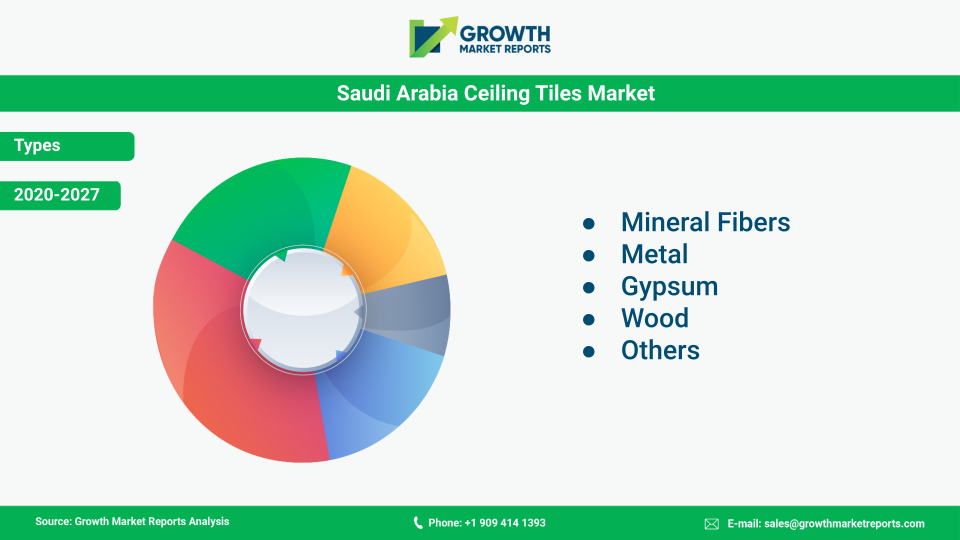
The ceiling tiles market is segmented by product type into mineral wool, metal, gypsum, PVC, wood, and others, each offering distinct advantages and catering to varied end-user requirements. Mineral wool ceiling tiles dominate the market due to their superior acoustic insulation, fire resistance, and cost-effectiveness. These tiles are widely used in commercial and institutional spaces where sound absorption is critical, such as offices, schools, and healthcare facilities. The ease of installation and recyclability of mineral wool products further add to their widespread adoption, making them a preferred choice for large-scale projects and sustainable construction initiatives.
Metal ceiling tiles are gaining traction, particularly in high-end commercial and industrial applications, owing to their durability, sleek appearance, and resistance to moisture and mold. Aluminum and steel are the most common materials used in metal ceiling tiles, providing a modern aesthetic and long service life. These tiles are favored in environments that require frequent cleaning or exposure to humidity, such as airports, hospitals, and food processing facilities. The rising demand for contemporary architectural designs and the integration of advanced finishes and perforations for enhanced acoustic performance are further bolstering the growth of metal ceiling tiles.
Gypsum ceiling tiles are extensively utilized in both residential and commercial settings for their smooth finish, versatility, and fire-resistant properties. Gypsum tiles are lightweight, easy to install, and can be painted or laminated to match various interior themes. Their ability to provide seamless ceilings and accommodate integrated lighting systems makes them popular in modern homes, hotels, and retail spaces. The ongoing innovation in gypsum tile designs, including 3D patterns and moisture-resistant variants, is expanding their application scope and driving market demand.
PVC and wood ceiling tiles cater to niche segments within the market. PVC tiles are valued for their water resistance, affordability, and ease of maintenance, making them suitable for kitchens, bathrooms, and commercial washrooms. Wood ceiling tiles, on the other hand, appeal to premium residential and hospitality projects seeking a natural, warm aesthetic. Although these segments account for a smaller share of the overall market, the growing preference for customized and decorative ceiling solutions is likely to spur their adoption in the coming years. The "others" category, including fiberglass and composite tiles, is also witnessing gradual growth as manufacturers introduce innovative products to address specific performance requirements.
| Attributes | Details |
| Report Title | Ceiling Tiles Market Research Report 2033 |
| By Product Type | Mineral Wool, Metal, Gypsum, PVC, Wood, Others |
| By Application | Residential, Commercial, Industrial, Institutional |
| By Installation Type | Drop/Suspended, Surface Mounted |
| By Distribution Channel | Offline, Online |
| By End-User | New Construction, Renovation |
| Regions Covered | North America, Europe, APAC, Latin America, MEA |
| Countries Covered | North America (United States, Canada), Europe (Germany, France, Italy, United Kingdom, Spain, Russia, Rest of Europe), Asia Pacific (China, Japan, South Korea, India, Australia, South East Asia (SEA), Rest of Asia Pacific), Latin America (Mexico, Brazil, Rest of Latin America), Middle East & Africa (Saudi Arabia, South Africa, United Arab Emirates, Rest of Middle East & Africa) |
| Base Year | 2024 |
| Historic Data | 2018-2023 |
| Forecast Period | 2025-2033 |
| Number of Pages | 262 |
| Number of Tables & Figures | 260 |
| Customization Available | Yes, the report can be customized as per your need. |
The ceiling tiles market, when segmented by application, encompasses residential, commercial, industrial, and institutional sectors, each with distinct usage patterns and growth drivers. The commercial segment holds the largest share of the market, fueled by the extensive use of ceiling tiles in offices, retail outlets, hotels, and restaurants. The demand for aesthetically pleasing, acoustically efficient, and easily maintainable ceiling solutions is particularly high in this segment. As businesses prioritize employee comfort and customer experience, the adoption of advanced ceiling tile systems has become commonplace in commercial construction and renovation projects.
The residential application segment is experiencing steady growth, driven by rising disposable incomes, urbanization, and the increasing trend of home renovation and interior customization. Homeowners are seeking ceiling tiles that offer both functional benefits, such as thermal and acoustic insulation, and aesthetic appeal. The proliferation of modular homes and the popularity of open-plan living spaces are further contributing to the demand for versatile ceiling tile solutions. Additionally, the availability of a wide range of designs, colors, and materials is enabling homeowners to personalize their living spaces, boosting market growth in the residential segment.
Industrial applications of ceiling tiles are primarily centered around manufacturing facilities, warehouses, and cleanrooms, where durability, hygiene, and compliance with safety standards are paramount. Ceiling tiles used in industrial settings are often required to meet stringent fire resistance, moisture resistance, and easy-cleaning criteria. The increasing adoption of automation and smart manufacturing practices is also driving the need for ceiling systems that can integrate lighting, HVAC, and sensor technologies. As industrial infrastructure continues to expand globally, the demand for high-performance ceiling tiles in this segment is expected to rise.
The institutional segment, which includes schools, hospitals, government buildings, and public infrastructure, represents a significant market for ceiling tiles. These environments demand products that offer superior acoustic control, fire safety, and ease of maintenance. The focus on creating healthy, comfortable, and energy-efficient spaces in educational and healthcare facilities is driving the adoption of advanced ceiling tile systems. Government regulations and building codes related to safety and accessibility are also influencing product selection in this segment. The ongoing renovation and modernization of institutional buildings, particularly in developed regions, are expected to sustain growth in this application area.
Installation type plays a vital role in the ceiling tiles market, with the two primary categories being drop/suspended and surface mounted systems. Drop or suspended ceiling systems are the most prevalent, especially in commercial and institutional settings. These systems involve suspending a grid below the existing structural ceiling and fitting tiles into the grid, allowing for easy access to utilities and services such as HVAC, lighting, and wiring. The flexibility, ease of maintenance, and ability to conceal unsightly infrastructure make suspended ceilings highly desirable for office buildings, schools, and healthcare facilities.
The surface mounted installation type, on the other hand, is commonly used in residential and smaller commercial spaces where ceiling height is a concern or where a more seamless appearance is desired. Surface mounted tiles are directly affixed to the ceiling substrate, providing a clean and modern look. This installation method is favored for its simplicity and speed, making it ideal for renovation projects and spaces with minimal service requirements above the ceiling. The growing trend of DIY home improvement and the availability of lightweight, easy-to-install ceiling tiles are further driving the adoption of surface mounted systems.
Technological advancements in installation techniques are contributing to the market’s growth by reducing labor costs and installation time. Manufacturers are developing innovative grid systems and tile designs that facilitate faster and more secure installation, minimizing disruption in occupied buildings. The use of prefabricated and modular ceiling systems is also gaining popularity, particularly in large-scale commercial and institutional projects where time and efficiency are critical factors. These advancements are enhancing the overall value proposition of ceiling tiles for both end-users and contractors.
The choice between drop/suspended and surface mounted systems is often influenced by the specific requirements of the project, including ceiling height, access to utilities, acoustic performance, and aesthetic preferences. As the construction industry continues to evolve, the demand for flexible and adaptable ceiling installation solutions is expected to grow. This trend is likely to drive further innovation in installation systems, offering end-users a broader range of options to meet their unique needs.
The ceiling tiles market is distributed through two main channels: offline and online. The offline channel remains the dominant mode of distribution, encompassing specialty stores, home improvement centers, building material suppliers, and direct sales from manufacturers. This channel is favored for its ability to provide personalized customer service, product demonstrations, and immediate product availability. Professional contractors and bulk buyers often prefer offline channels for large-scale projects, as they can negotiate pricing, access technical support, and ensure timely delivery of materials.
However, the online distribution channel is rapidly gaining traction, driven by the digitalization of the construction materials supply chain and the growing popularity of e-commerce platforms. Online channels offer the convenience of browsing a wide range of products, comparing prices, and placing orders from the comfort of home or office. The increasing penetration of internet connectivity and the rise of digital marketplaces have made it easier for both individual homeowners and contractors to source ceiling tiles online. Manufacturers and distributors are investing in user-friendly websites, virtual showrooms, and digital marketing to capture this growing segment.
The shift towards online sales is particularly pronounced in developed markets, where consumers are accustomed to digital transactions and expect seamless online shopping experiences. The COVID-19 pandemic further accelerated this trend, as lockdowns and social distancing measures prompted a surge in online purchases of building materials. Online platforms also enable manufacturers to reach a wider audience, including customers in remote or underserved regions, thereby expanding their market reach and driving sales growth.
Despite the growth of online channels, challenges such as shipping costs, product damage during transit, and the inability to physically inspect products before purchase remain concerns for some buyers. To address these issues, leading players are offering virtual consultations, augmented reality visualization tools, and hassle-free return policies. The integration of online and offline channels through omnichannel strategies is emerging as a key trend, allowing customers to enjoy the benefits of both distribution modes. This approach is expected to enhance customer satisfaction and loyalty, contributing to the overall growth of the ceiling tiles market.
The ceiling tiles market is categorized by end-user into new construction and renovation segments, each exhibiting unique market dynamics. New construction projects account for a significant share of the market, particularly in rapidly urbanizing regions such as Asia Pacific and the Middle East. The surge in residential, commercial, and institutional building activity is driving the demand for modern ceiling solutions that offer superior performance and aesthetics. Government initiatives to promote affordable housing, smart cities, and infrastructure development are further fueling the adoption of ceiling tiles in new construction projects.
The renovation segment is equally important, as aging building stock in developed markets necessitates regular upgrades to meet evolving safety, energy efficiency, and design standards. Renovation projects often involve replacing outdated or damaged ceilings with advanced tile systems that provide better acoustic control, fire resistance, and visual appeal. The growing trend of retrofitting existing buildings to comply with green building certifications and accessibility requirements is also boosting demand in this segment. Homeowners and facility managers are increasingly opting for ceiling tile solutions that can be installed quickly and with minimal disruption to occupants.
The end-user preference for ceiling tiles is influenced by factors such as project budget, desired performance characteristics, and compliance with local building codes. New construction projects typically prioritize cutting-edge materials and installation systems, while renovation projects may focus on compatibility with existing structures and ease of installation. The availability of a wide range of product options, including lightweight, moisture-resistant, and decorative tiles, enables end-users to select solutions that best meet their specific needs.
As the global construction industry continues to evolve, the balance between new construction and renovation activity is expected to shift in response to demographic trends, economic conditions, and regulatory changes. The ceiling tiles market is well-positioned to capitalize on opportunities arising from both segments, offering innovative products and solutions that address the diverse requirements of end-users worldwide.
The ceiling tiles market is brimming with opportunities, particularly in the realm of sustainable and energy-efficient building solutions. The rising awareness of environmental issues and the implementation of green building standards are driving demand for eco-friendly ceiling tiles made from recycled and renewable materials. Manufacturers have the opportunity to differentiate themselves by developing products that not only meet regulatory requirements but also appeal to environmentally conscious consumers. Innovations in materials science, such as the use of bio-based binders and low-emission coatings, are opening new avenues for product development and market expansion. Additionally, the integration of smart technologies, such as embedded lighting and sensor systems, presents exciting possibilities for value-added applications in smart buildings and energy management.
Another significant opportunity lies in the digital transformation of the construction industry. The adoption of Building Information Modeling (BIM), prefabrication, and modular construction methods is creating a demand for ceiling tile systems that are compatible with these advanced construction techniques. Manufacturers that invest in digital design tools, automation, and supply chain optimization can gain a competitive edge by offering faster, more efficient, and cost-effective solutions. The growing trend of urbanization and the increasing focus on infrastructure modernization in emerging markets also present lucrative growth prospects for ceiling tile manufacturers and suppliers. Strategic partnerships, mergers, and acquisitions can further enhance market presence and drive innovation.
Despite the numerous opportunities, the ceiling tiles market faces several restraining factors that could impede growth. Fluctuations in raw material prices, particularly for mineral wool, metal, and gypsum, can impact production costs and profit margins. Additionally, the market is highly competitive, with numerous local and international players vying for market share. Regulatory challenges related to fire safety, emissions, and waste disposal can also pose compliance risks for manufacturers. Furthermore, economic downturns and disruptions to construction activity, such as those caused by the COVID-19 pandemic, can lead to project delays and reduced demand for ceiling tiles. To mitigate these risks, market participants must focus on cost management, regulatory compliance, and diversification of product offerings and markets.
The regional distribution of the ceiling tiles market reveals notable differences in market size, growth rates, and adoption patterns. Asia Pacific is the largest and fastest-growing region, with a market size of USD 3.6 billion in 2024 and a projected CAGR of 9.5% through 2033. The region’s growth is driven by rapid urbanization, burgeoning construction activity, and strong government support for infrastructure development. China, India, and Southeast Asian countries are the primary contributors, with increasing investments in residential, commercial, and institutional projects. The rising middle-class population and the shift towards modern, energy-efficient buildings are further fueling demand for advanced ceiling tile solutions in Asia Pacific.
North America holds a significant share of the ceiling tiles market, valued at USD 2.8 billion in 2024. The region’s growth is supported by ongoing renovation and retrofitting of aging building stock, stringent building codes, and a strong focus on acoustics and fire safety in commercial and institutional spaces. The United States and Canada are key markets, with high adoption rates of mineral wool and metal ceiling tiles in office buildings, schools, and healthcare facilities. The growing trend of open-plan workspaces and the emphasis on employee well-being are driving demand for innovative ceiling solutions that offer both functionality and aesthetic appeal.
Europe is another important region, with a market size of USD 2.2 billion in 2024. The region’s mature construction industry, coupled with a strong emphasis on sustainability and energy efficiency, is fostering the adoption of eco-friendly ceiling tiles. Countries such as Germany, the United Kingdom, and France are leading the way in green building practices and the use of recycled materials. The renovation of historic buildings and the modernization of public infrastructure are also contributing to market growth in Europe. Meanwhile, Latin America and Middle East & Africa are emerging markets, with a combined market size of USD 1.1 billion in 2024. These regions are benefiting from increased construction activity, urban development, and investments in commercial and institutional projects. The adoption of advanced ceiling tile systems is expected to accelerate as these regions continue to urbanize and modernize their infrastructure.
The ceiling tiles market is characterized by intense competition, with a mix of global giants and regional players vying for market share. The competitive landscape is shaped by factors such as product innovation, quality, pricing, distribution networks, and customer service. Leading companies are investing heavily in research and development to introduce new materials, designs, and installation systems that cater to evolving customer preferences and regulatory requirements. Strategic mergers, acquisitions, and partnerships are common strategies employed by market leaders to expand their product portfolios, enhance their geographic presence, and achieve economies of scale.
Key players in the ceiling tiles market are also focusing on sustainability and digitalization to differentiate themselves from competitors. The development of eco-friendly products, such as ceiling tiles made from recycled content or low-emission materials, is gaining traction among environmentally conscious customers. Digital transformation initiatives, including the adoption of BIM and the integration of smart technologies into ceiling systems, are enabling companies to offer value-added solutions and improve project efficiency. The ability to provide comprehensive support, from design consultation to installation and after-sales service, is increasingly important in securing long-term customer relationships.
The market is witnessing a trend towards customization and modularity, with customers seeking tailored solutions that meet specific aesthetic, acoustic, and functional requirements. Manufacturers are responding by offering a wide range of design options, finishes, and performance features. The rise of e-commerce and omnichannel distribution is also reshaping the competitive landscape, as companies strive to enhance their online presence and streamline their supply chains. Price competition remains intense, particularly in emerging markets, where cost sensitivity is high and local players often have a competitive advantage in terms of logistics and customer relationships.
Some of the major companies operating in the global ceiling tiles market include Armstrong World Industries, Inc., Saint-Gobain S.A., Knauf Gips KG, USG Corporation, and Rockfon (ROCKWOOL International A/S). Armstrong World Industries is renowned for its innovative ceiling solutions and extensive product portfolio, catering to both commercial and residential markets. Saint-Gobain, through its subsidiary CertainTeed, offers a wide range of ceiling tiles known for their sustainability and performance. Knauf Gips KG is a leading player in gypsum-based ceiling systems, while USG Corporation is a major supplier of mineral fiber and gypsum tiles in North America. Rockfon specializes in stone wool ceiling tiles, offering superior acoustic and fire-resistant properties.
Other notable players include Odenwald Faserplattenwerk GmbH (OWA), Hunter Douglas N.V., Techno Ceiling Products, and Grenzebach BSH GmbH. These companies are actively engaged in expanding their product offerings, enhancing their manufacturing capabilities, and strengthening their distribution networks to capture a larger share of the global ceiling tiles market. The competitive landscape is expected to remain dynamic, with ongoing innovation, strategic alliances, and market consolidation shaping the future of the industry.
The Ceiling Tiles market has been segmented on the basis of
Key players in the market include Al Danube Building Materials LLC, Ceilume, Compagnie de Saint-Gobain SA, Gebr. Knauf KG, Hunter Douglas N.V., Mada Gypsum, Odenwald Faserplattenwerk GmbH, SAS International.
These players are considered as key manufacturers of the market based on their different varieties of product availability, regional presence, better supply chain management system, and the increasing demand for the products.
The players are adopting key strategies such as product development, geographical expansion, mergers and acquisition and many other strategies to increase their demand for ceiling tiles.
Challenges include fluctuating raw material prices, intense competition, regulatory compliance (fire safety, emissions), and economic downturns affecting construction activity.
Major players include Armstrong World Industries, Saint-Gobain S.A. (CertainTeed), Knauf Gips KG, USG Corporation, Rockfon (ROCKWOOL International), OWA, Hunter Douglas, Techno Ceiling Products, and Grenzebach BSH GmbH.
Key trends include the demand for sustainable, eco-friendly tiles, integration of smart technologies, digital transformation (BIM, modular construction), and the rise of online sales channels.
Ceiling tiles are distributed through offline channels (specialty stores, suppliers, direct sales) and increasingly through online channels (e-commerce platforms, digital marketplaces).
Ceiling tiles are primarily installed using drop/suspended ceiling systems or surface mounted systems, with the former being more prevalent in commercial and institutional settings.
The commercial segment (offices, retail, hotels) holds the largest share, followed by residential, industrial, and institutional sectors such as schools and hospitals.
The market offers mineral wool, metal, gypsum, PVC, wood, and other types such as fiberglass and composite tiles, each catering to different needs and applications.
Asia Pacific is the fastest-growing region, followed by significant markets in North America and Europe. The Middle East & Africa and Latin America are emerging as promising markets due to urban development.
Growth is driven by increased construction activity, demand for aesthetic and functional interiors, innovations in materials, urbanization, energy efficiency, and improved acoustic performance.
The global ceiling tiles market reached USD 9.7 billion in 2024 and is projected to grow at a CAGR of 8.2% from 2025 to 2033, reaching USD 19.1 billion by 2033.