Polycarboxylate Ether (PCE) Superplasticizer Market Research Report 2033

Polycarboxylate Ether (PCE) Superplasticizer Market Research Report 2033

Segments - by Product Type (Liquid, Powder), by Application (Ready-Mix Concrete, Precast Concrete, High-Performance Concrete, Self-Compacting Concrete, Others), by End-Use Industry (Residential, Commercial, Infrastructure, Industrial, Others)

https://growthmarketreports.com/Raksha
Author : Raksha Sharma
https://growthmarketreports.com/Vaibhav
Fact-checked by : V. Chandola
https://growthmarketreports.com/Shruti
Editor : Shruti Bhat

Upcoming | Report ID :MC-121 | 5.0 Rating | 49 Reviews | 267 Pages | Format : Docx PDF

Report Description


Polycarboxylate Ether (PCE) Superplasticizer Market Outlook

According to our latest research, the global Polycarboxylate Ether (PCE) Superplasticizer market size reached USD 13.7 billion in 2024. The market is expected to grow at a robust CAGR of 7.6% from 2025 to 2033, driven by increasing demand for high-performance concrete and sustainable construction materials. By 2033, the Polycarboxylate Ether (PCE) Superplasticizer market is forecasted to reach USD 26.6 billion, reflecting the rapid adoption of advanced admixture technologies across various construction segments. This growth is primarily fueled by rising urbanization, infrastructure development, and the need for superior concrete performance in modern construction projects.

One of the primary growth factors for the Polycarboxylate Ether (PCE) Superplasticizer market is the escalating demand for high-strength and durable concrete in both developed and developing economies. As the construction industry shifts towards sustainable and cost-efficient building solutions, PCE superplasticizers have become essential due to their ability to significantly enhance workability, reduce water content, and improve the overall quality of concrete. The adoption of PCE-based admixtures is particularly pronounced in large-scale infrastructure projects, including bridges, tunnels, and high-rise buildings, where superior mechanical properties and longevity are critical. Additionally, the trend toward green building certifications and environmental regulations is prompting construction companies to select admixtures that reduce carbon footprints, further boosting the market for PCE superplasticizers.

Another significant growth driver is the rapid urbanization and industrialization observed in emerging economies, particularly in the Asia Pacific and Middle East regions. These areas are witnessing substantial investments in residential, commercial, and infrastructure development, which is directly increasing the consumption of advanced concrete admixtures such as PCE superplasticizers. Governments in these regions are prioritizing the development of smart cities, transportation networks, and energy-efficient buildings, all of which require high-performance concrete solutions. Moreover, the ongoing shift from traditional admixtures to advanced PCE-based formulations, due to their superior dispersing capabilities and compatibility with various cement types, is further propelling market expansion.

Technological advancements and continuous research and development efforts by leading manufacturers are also playing a pivotal role in market growth. Innovations in molecular design and synthesis processes have resulted in a new generation of PCE superplasticizers with enhanced flow properties, slump retention, and compatibility with supplementary cementitious materials. These improvements are enabling the production of concrete mixes tailored to specific project requirements, such as self-compacting concrete and ultra-high-performance concrete. Furthermore, the integration of digital construction technologies, such as Building Information Modeling (BIM), is supporting the adoption of customized admixture solutions, thereby expanding the application scope of PCE superplasticizers across diverse end-use industries.

In the realm of concrete technology, the use of Concrete Plasticizer has become increasingly significant. Concrete Plasticizers are chemical additives that improve the workability of concrete without altering its water-cement ratio. These additives are crucial in producing high-performance concrete, especially in large-scale infrastructure projects where the quality and durability of concrete are paramount. By reducing the water content needed for concrete mixtures, Concrete Plasticizers help in achieving higher strength and a more uniform consistency, which is essential for modern construction practices. As the construction industry continues to evolve, the demand for Concrete Plasticizers is expected to rise, driven by the need for efficient, sustainable, and cost-effective building solutions.

From a regional perspective, the Asia Pacific region dominates the Polycarboxylate Ether (PCE) Superplasticizer market, accounting for the largest share in 2024. This is attributed to the region's booming construction sector, large-scale infrastructure investments, and strong government support for sustainable urban development. North America and Europe are also significant markets, driven by stringent environmental regulations and the adoption of advanced construction technologies. Meanwhile, the Middle East & Africa and Latin America are emerging as high-growth regions, supported by robust infrastructure pipelines and increasing awareness of the benefits of PCE-based admixtures. The market landscape is characterized by intense competition, with global and regional players focusing on product innovation, strategic partnerships, and expansion into untapped markets to strengthen their position.

Global Polycarboxylate Ether (PCE) Superplasticizer Industry Outlook

Product Type Analysis

The product type segment of the Polycarboxylate Ether (PCE) Superplasticizer market includes two primary categories: liquid and powder forms. The liquid form currently dominates the market, accounting for the majority of the global revenue in 2024. Liquid PCE superplasticizers are widely preferred due to their ease of integration into concrete mixes, superior dispersion properties, and consistent performance across a range of cement types. The liquid form is particularly popular in large-scale ready-mix and precast concrete operations, where precise dosing and rapid mixing are essential to meet tight construction schedules. Moreover, advancements in packaging and transportation solutions have further facilitated the widespread adoption of liquid PCE superplasticizers by minimizing wastage and ensuring product stability during storage and transit.

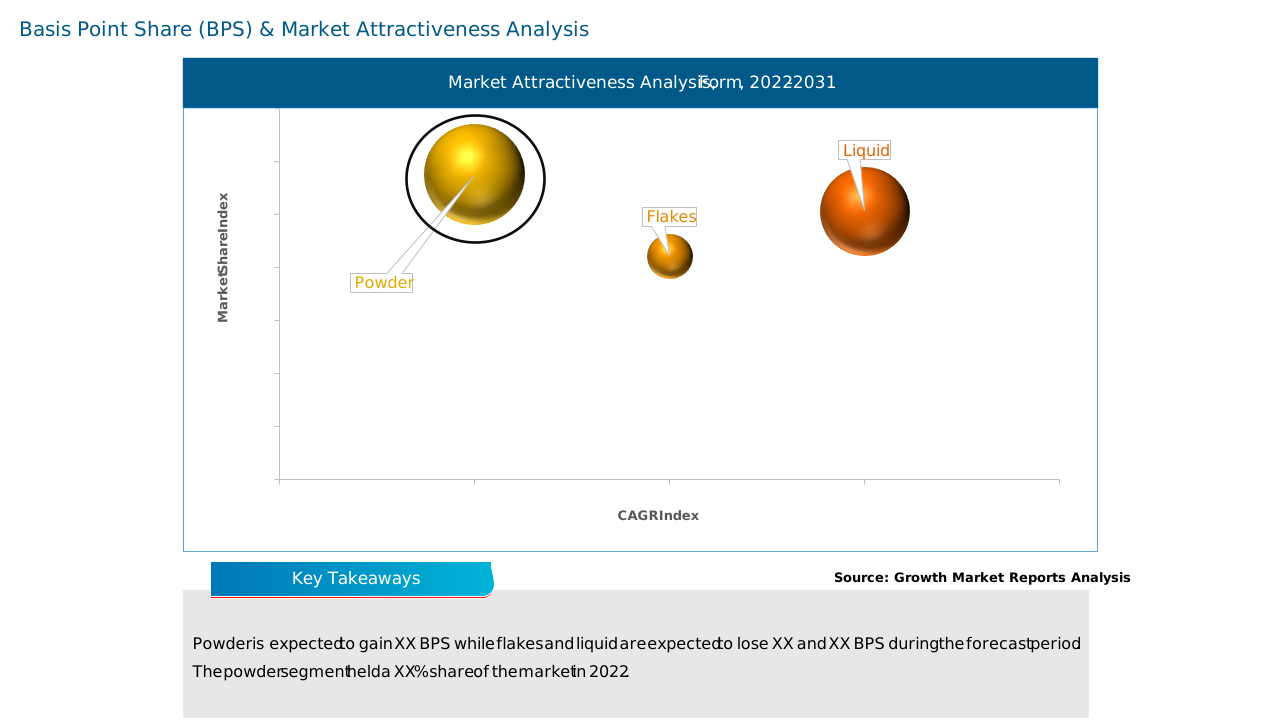
On the other hand, the powder form of PCE superplasticizers is gaining traction, especially in regions with challenging logistics or remote construction sites where liquid admixtures may be difficult to transport and store. Powdered PCE superplasticizers offer advantages such as longer shelf life, reduced transportation costs, and flexibility in on-site mixing. These characteristics make them highly suitable for precast concrete manufacturing, infrastructure projects in remote locations, and applications where water availability is limited. The powder segment is expected to witness a higher CAGR during the forecast period, driven by increasing demand for modular and prefabricated construction methods, which often require admixtures in dry form for ease of handling and storage.

Both liquid and powder forms of PCE superplasticizers are benefiting from ongoing research and development efforts aimed at enhancing their performance and compatibility with various cementitious materials. Manufacturers are focusing on developing formulations that offer improved slump retention, early strength gain, and resistance to environmental factors such as temperature fluctuations and chemical exposure. These innovations are enabling the use of PCE superplasticizers in specialized applications, including high-performance and self-compacting concrete, where precise control over workability and setting times is crucial for achieving desired structural outcomes.

The choice between liquid and powder PCE superplasticizers is often influenced by project-specific requirements, logistical considerations, and regional market preferences. For instance, in urban construction projects with access to advanced batching plants and automated dosing systems, liquid admixtures are typically favored for their convenience and efficiency. Conversely, in rural or infrastructure projects with limited access to such facilities, powder forms provide a practical and cost-effective alternative. As the construction industry continues to evolve towards greater specialization and customization, the demand for both liquid and powder PCE superplasticizers is expected to remain strong, with each form serving distinct market niches and application scenarios.

Report Scope

Attributes Details
Report Title Polycarboxylate Ether (PCE) Superplasticizer Market Research Report 2033
By Product Type Liquid, Powder
By Application Ready-Mix Concrete, Precast Concrete, High-Performance Concrete, Self-Compacting Concrete, Others
By End-Use Industry Residential, Commercial, Infrastructure, Industrial, Others
Regions Covered North America, Europe, APAC, Latin America, MEA
Base Year 2024
Historic Data 2018-2023
Forecast Period 2025-2033
Number of Pages 267
Number of Tables & Figures 353
Customization Available Yes, the report can be customized as per your need.

Application Analysis

The application segment of the Polycarboxylate Ether (PCE) Superplasticizer market encompasses ready-mix concrete, precast concrete, high-performance concrete, self-compacting concrete, and other specialized uses. Ready-mix concrete represents the largest application area, accounting for a significant share of the global market in 2024. The widespread adoption of PCE superplasticizers in ready-mix concrete operations is driven by their ability to enhance workability, reduce water-cement ratios, and improve the mechanical properties of concrete. These benefits are particularly valuable in urban construction projects, where consistency, quality control, and speed of delivery are paramount. The increasing use of ready-mix concrete in residential, commercial, and infrastructure projects is expected to sustain the dominance of this application segment throughout the forecast period.

Precast concrete is another major application segment, benefiting from the growing trend towards modular construction and the need for high-precision, factory-controlled building components. PCE superplasticizers play a critical role in precast concrete manufacturing by enabling the production of dense, high-strength elements with superior surface finishes and dimensional accuracy. The demand for precast concrete is rising in both developed and emerging markets, driven by the need for faster construction, reduced labor costs, and enhanced durability. As a result, the use of PCE superplasticizers in precast applications is expected to witness steady growth, supported by ongoing innovations in admixture formulations tailored to the specific requirements of precast production processes.

High-performance concrete and self-compacting concrete represent specialized application areas where PCE superplasticizers are indispensable. High-performance concrete is used in demanding structural applications that require exceptional strength, durability, and resistance to environmental stressors. PCE-based admixtures enable the production of concrete mixes with low water-cement ratios and enhanced workability, making them ideal for high-rise buildings, bridges, and infrastructure exposed to harsh conditions. Similarly, self-compacting concrete relies on PCE superplasticizers to achieve high flowability and self-leveling properties without compromising strength or durability. This application is gaining popularity in complex architectural designs and projects where traditional vibration methods are impractical or undesirable.

Other applications of PCE superplasticizers include shotcrete, decorative concrete, and specialized repair mortars, where enhanced workability and rapid strength development are critical. The versatility of PCE-based admixtures allows them to be customized for a wide range of concrete formulations, supporting the evolving needs of the construction industry. As sustainability and performance requirements continue to drive innovation in concrete technology, the application scope of PCE superplasticizers is expected to expand further, creating new opportunities for market growth across diverse construction segments.

End-Use Industry Analysis

The end-use industry segment of the Polycarboxylate Ether (PCE) Superplasticizer market is categorized into residential, commercial, infrastructure, industrial, and other sectors. The infrastructure segment leads the market, accounting for the largest share in 2024, driven by massive investments in transportation, energy, and urban development projects worldwide. Infrastructure construction demands high-performance, durable concrete solutions capable of withstanding heavy loads, environmental stress, and long service life. PCE superplasticizers are widely used in the construction of roads, bridges, tunnels, dams, and airports, where superior workability and strength are essential for meeting stringent engineering specifications and safety standards.

The residential sector is another significant end-use industry, fueled by rapid urbanization, population growth, and rising demand for affordable housing in emerging economies. PCE superplasticizers are increasingly used in residential construction to improve the quality, durability, and sustainability of concrete structures. The adoption of advanced admixtures in residential projects is also driven by the growing preference for green building materials and the need to comply with energy efficiency and environmental regulations. As governments and developers focus on creating sustainable urban communities, the use of PCE superplasticizers in residential construction is expected to grow steadily over the forecast period.

Commercial construction, including office buildings, shopping centers, hotels, and educational institutions, represents another key end-use industry for PCE superplasticizers. The demand for high-quality, aesthetically pleasing, and durable concrete structures in commercial projects is driving the adoption of advanced admixture technologies. PCE superplasticizers enable the production of concrete mixes with superior finish, enhanced strength, and improved workability, meeting the diverse requirements of modern commercial buildings. The increasing trend toward mixed-use developments and smart buildings is further boosting the use of PCE-based admixtures in the commercial sector.

The industrial segment, comprising manufacturing facilities, warehouses, and logistics centers, is also witnessing growing demand for PCE superplasticizers. Industrial construction projects often require large volumes of high-strength concrete with specific performance characteristics, such as resistance to chemical exposure, abrasion, and heavy loads. PCE-based admixtures are well-suited to meet these demanding requirements, enabling the construction of durable and reliable industrial infrastructures. Additionally, the focus on automation, efficiency, and sustainability in industrial construction is driving the adoption of advanced admixture solutions, further supporting market growth in this segment.

Opportunities & Threats

The Polycarboxylate Ether (PCE) Superplasticizer market presents numerous opportunities for growth and innovation, particularly in the context of sustainable construction and green building initiatives. As global awareness of environmental issues and resource conservation increases, there is a growing demand for construction materials that reduce carbon emissions, improve energy efficiency, and support circular economy principles. PCE superplasticizers, with their ability to lower water-cement ratios and enhance the durability of concrete, are well-positioned to capitalize on this trend. Manufacturers have the opportunity to develop and market eco-friendly admixture formulations that meet stringent environmental standards, opening new avenues for market penetration in regions with aggressive sustainability targets.

Another significant opportunity lies in the integration of digital technologies and smart construction practices. The adoption of Building Information Modeling (BIM), advanced quality control systems, and data-driven project management is transforming the construction industry, enabling the precise customization of concrete mixes and admixture dosages. PCE superplasticizer manufacturers can leverage these trends by offering tailored solutions, technical support, and digital tools that facilitate the optimal use of their products. Partnerships with construction technology providers and participation in smart city initiatives can further enhance market visibility and create new revenue streams. Additionally, the expansion into emerging markets with rapidly growing construction sectors presents substantial opportunities for market players to establish a strong foothold and capture untapped demand.

Despite the promising growth prospects, the Polycarboxylate Ether (PCE) Superplasticizer market faces several restraining factors that could impact market expansion. One of the primary challenges is the volatility in raw material prices, particularly petrochemical derivatives used in the synthesis of PCE superplasticizers. Fluctuations in crude oil prices and supply chain disruptions can lead to increased production costs and margin pressures for manufacturers. Moreover, the presence of alternative admixture technologies, such as sulfonated naphthalene formaldehyde and lignosulfonates, poses competitive threats, especially in price-sensitive markets. Regulatory complexities and the need for continuous product innovation to meet evolving construction standards also present challenges that market participants must navigate to sustain growth and profitability.

Regional Outlook

The Asia Pacific region remains the largest and fastest-growing market for Polycarboxylate Ether (PCE) Superplasticizers, accounting for approximately 48% of the global market value in 2024, which translates to about USD 6.6 billion. The rapid urbanization, massive infrastructure investments, and government initiatives to promote sustainable construction practices in countries such as China, India, Japan, and South Korea are key drivers of regional demand. The Asia Pacific market is projected to grow at a CAGR of 8.2% through 2033, outpacing other regions due to the sheer scale of ongoing and planned construction projects. The region's construction boom, coupled with increasing adoption of advanced admixture technologies, ensures a robust outlook for PCE superplasticizer manufacturers operating in this market.

In North America, the Polycarboxylate Ether (PCE) Superplasticizer market reached a value of USD 2.8 billion in 2024, driven by strong demand from the commercial, infrastructure, and residential construction sectors. The region benefits from stringent environmental regulations, a focus on energy-efficient building materials, and widespread adoption of high-performance concrete. The United States remains the largest market within North America, supported by federal infrastructure spending and the trend toward sustainable urban development. The market in North America is expected to grow at a steady CAGR of 6.2% through 2033, reflecting stable construction activity and ongoing innovation in admixture formulations.

Europe accounted for approximately USD 2.1 billion of the global PCE superplasticizer market in 2024, with growth driven by advanced construction technologies, regulatory support for green building practices, and renovation of aging infrastructure. Germany, France, and the United Kingdom are leading contributors to regional market growth, supported by investments in smart cities, transportation networks, and energy-efficient buildings. The European market is characterized by a high degree of product innovation and collaboration between manufacturers, research institutions, and construction firms. Meanwhile, the Middle East & Africa and Latin America regions are emerging as promising markets, with combined revenues of around USD 2.2 billion in 2024. These regions are benefiting from large-scale infrastructure projects, urbanization, and increasing awareness of the benefits of advanced admixture technologies, setting the stage for accelerated growth in the coming years.

Polycarboxylate Ether (PCE) Superplasticizer Market Statistics

Competitor Outlook

The Polycarboxylate Ether (PCE) Superplasticizer market is characterized by intense competition and a dynamic landscape, with both global and regional players striving to capture market share through innovation, product differentiation, and strategic partnerships. Leading manufacturers are investing heavily in research and development to create next-generation PCE superplasticizers with enhanced performance characteristics, such as improved slump retention, early strength gain, and compatibility with supplementary cementitious materials. The market is also witnessing a trend toward the development of eco-friendly and low-carbon admixture solutions, in response to growing demand for sustainable construction practices and regulatory pressures.

Strategic collaborations and mergers and acquisitions are common in the PCE superplasticizer market, as companies seek to expand their product portfolios, enter new geographical markets, and leverage synergies in production and distribution. Global players are increasingly focusing on emerging markets in Asia Pacific, Middle East & Africa, and Latin America, where rapid urbanization and infrastructure development are creating significant growth opportunities. At the same time, regional manufacturers are enhancing their capabilities to compete with multinational corporations by offering customized solutions, technical support, and competitive pricing tailored to local market needs.

The competitive landscape is also shaped by the entry of new players and technological disruptors, who are leveraging advances in polymer chemistry, digital construction technologies, and sustainability to differentiate their offerings. Companies are adopting digital platforms and data analytics to provide value-added services, such as mix optimization, real-time quality monitoring, and predictive maintenance, further strengthening customer relationships and loyalty. The ability to innovate, adapt to changing market dynamics, and respond to evolving customer requirements is critical for success in this highly competitive market.

Some of the major companies operating in the Polycarboxylate Ether (PCE) Superplasticizer market include Sika AG, BASF SE, Arkema Group, GCP Applied Technologies, Mapei S.p.A., Fosroc International, and Kao Corporation. Sika AG is renowned for its comprehensive range of construction chemicals and a strong global distribution network, enabling it to serve a diverse customer base across multiple regions. BASF SE, a global leader in chemical manufacturing, offers a broad portfolio of PCE superplasticizers and invests significantly in R&D to develop sustainable and high-performance admixture solutions. Arkema Group and GCP Applied Technologies are known for their focus on innovation and customer-centric product development, catering to the evolving needs of the construction industry.

Mapei S.p.A. and Fosroc International have established themselves as key players in the market, with a strong presence in both developed and emerging economies. These companies are recognized for their technical expertise, extensive product lines, and commitment to sustainability. Kao Corporation, a major Japanese chemical manufacturer, has gained prominence in the Asia Pacific market through its advanced polymer technologies and strategic partnerships with local construction firms. Collectively, these companies are driving the growth and transformation of the PCE superplasticizer market, shaping industry standards, and setting benchmarks for quality, performance, and sustainability.

Key Players

  • Sika AG
  • BASF SE
  • Arkema Group
  • GCP Applied Technologies Inc.
  • Mapei S.p.A.
  • Kao Corporation
  • Sobute New Materials Co., Ltd.
  • Fosroc International Limited
  • Liaoning Kelong Fine Chemical Co., Ltd.
  • Shandong Wanshan Chemical Co., Ltd.
  • Huangshan Meiquan Fine Chemical Co., Ltd.
  • Takemoto Oil & Fat Co., Ltd.
  • Enaspol a.s.
  • Euclid Chemical Company
  • Rhein-Chemotechnik GmbH
  • Shijiazhuang Yucai Chemical Co., Ltd.
  • Ha-Be Betonchemie GmbH & Co. KG
  • MUHU (China) Construction Materials Co., Ltd.
  • Chembond Chemicals Limited
  • BASF Construction Chemicals UAE LLC
Polycarboxylate Ether (PCE) Superplasticizer Market Overview

Segments

The Polycarboxylate Ether (PCE) Superplasticizer market has been segmented on the basis of

Product Type

  • Liquid
  • Powder

Application

  • Ready-Mix Concrete
  • Precast Concrete
  • High-Performance Concrete
  • Self-Compacting Concrete
  • Others

End-Use Industry

  • Residential
  • Commercial
  • Infrastructure
  • Industrial
  • Others

Competitive Landscape

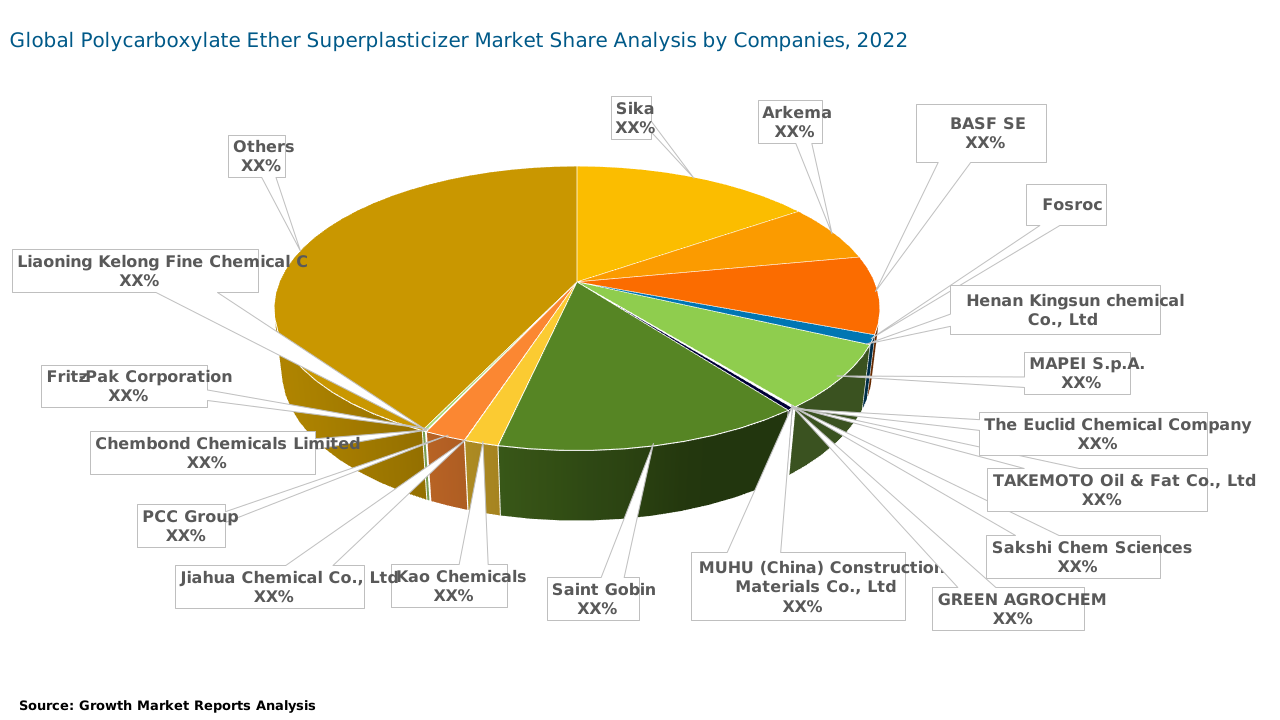
Key players operating in the market are Sika, Saint Gobin, BASF SE, MAPEI S.p.A., Arkema, PCC Group, Kao Chemicals, Fosroc, Inc, The Euclid Chemical Company, Liaoning Kelong Fine Chemical C, GREEN AGROCHEM, TAKEMOTO Oil & Fat Co., Ltd Greif, MUHU (China) Construction Materials Co., Ltd, Fritz-Pak Corporation, Sakshi Chem Sciences, Chembond Chemicals Limited, Henan Kingsun chemical Co., Ltd, Jiahua Chemical Co., Ltd NIPPON STEEL DRUM CO.,LTD.. These companies are considered as key manufacturers of Polycarboxylate Ether Superplasticizer based on their revenue, research development (R&D) activities, product offerings, regional presence, and supply chain management system.

Players are adopting key strategies such as acquisitions, collaborations, and geographical expansion for potential opportunities in the Polycarboxylate Ether Superplasticizer Market.

Key Developments

Kao Corporation participated in the 16th International Cement Chemistry Congress (ICCC 2023) at Centara Grand and Bangkok Convention Center, CentralwOrld. An academic conference on the cement industry and scientific exchanges on cement and concrete from around the world took place at this event. Infrastructure Chemicals Business participated in presentations about the company's activities and chemicals related to cement, concrete and construction activities, such as VISCO TOP UT, innovative chemical products.

Polycarboxylate Ether Superplasticizer Market Key Players

Frequently Asked Questions

Additional company profiles are provided on request. For a discussion related to the above findings, click Speak to Analyst

Factors such as competitive strength and market positioning are key areas considered while selecting top companies to be profiled.

The Global Polycarboxylate Ether Superplasticizer Market is projected to expand at a rapid pace globally, owing to the Increasing demand from chemical industry and High demand from semiconductor and pharmaceutical industries.

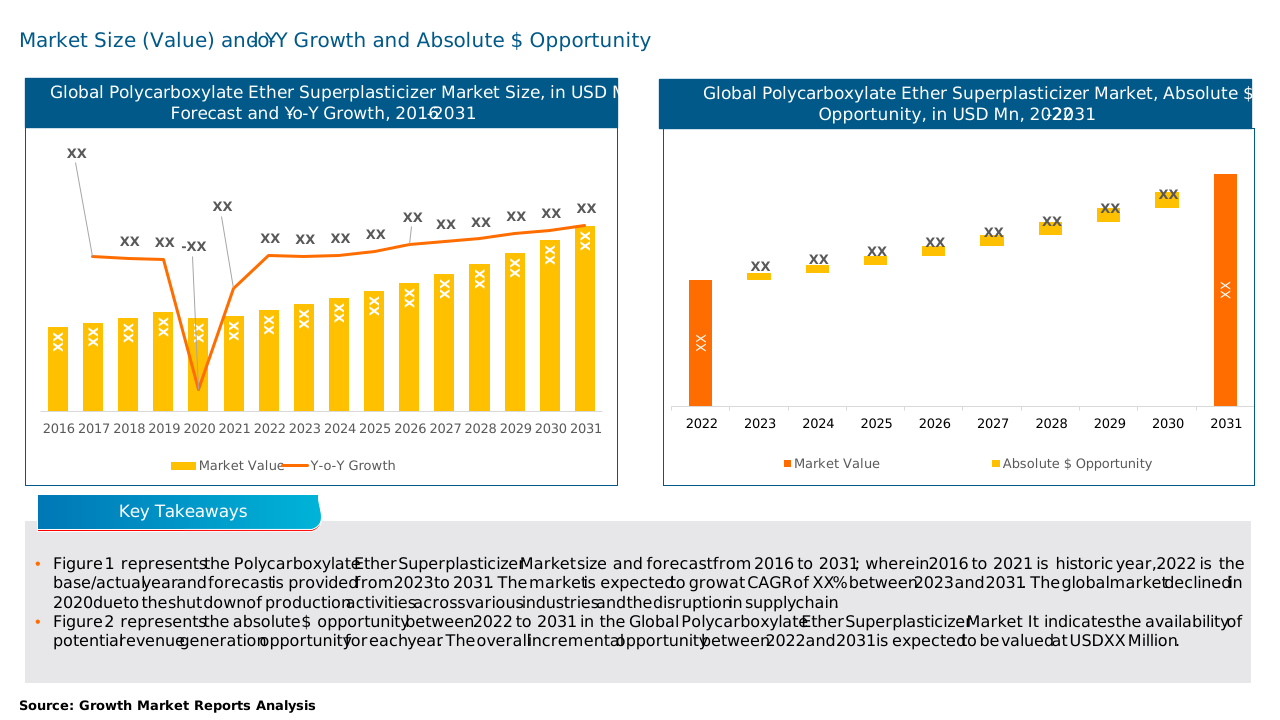
According to this UMR report, the Global Polycarboxylate Ether Superplasticizer Market is expected to register a CAGR of 7.1% during the forecast period, 2023-2031, with an anticipated valuation of USD 16,430.72 million by the end of 2031.

Factors such as Raw Material Prices, Government Regulations, Industrialization, and others are analyzed in the final report.

Major players include are Sika, Saint Gobin, BASF SE, MAPEI S.p.A., Arkema, PCC Group, Kao Chemicals, Fosroc, Inc, The Euclid Chemical Company, Liaoning Kelong Fine Chemical C, GREEN AGROCHEM, TAKEMOTO Oil & Fat Co., Ltd Greif, MUHU (China) Construction Materials Co., Ltd, Fritz-Pak Corporation, Sakshi Chem Sciences, Chembond Chemicals Limited, Henan Kingsun chemical Co., Ltd, Jiahua Chemical Co., Ltd NIPPON STEEL DRUM CO.,LTD..

The base year considered for the Global Polycarboxylate Ether Superplasticizer Market report is 2022. The complete analysis period is 2016 to 2031, wherein, 2016 to 2021 are the historic years, and the forecast is provided from 2023 to 2031.

Table Of Content

Chapter 1 Executive Summary
Chapter 2 Assumptions and Acronyms Used
Chapter 3 Research Methodology
Chapter 4 Polycarboxylate Ether (PCE) Superplasticizer Market Overview
   4.1 Introduction
      4.1.1 Market Taxonomy
      4.1.2 Market Definition
      4.1.3 Macro-Economic Factors Impacting the Market Growth
   4.2 Polycarboxylate Ether (PCE) Superplasticizer Market Dynamics
      4.2.1 Market Drivers
      4.2.2 Market Restraints
      4.2.3 Market Opportunity
   4.3 Polycarboxylate Ether (PCE) Superplasticizer Market - Supply Chain Analysis
      4.3.1 List of Key Suppliers
      4.3.2 List of Key Distributors
      4.3.3 List of Key Consumers
   4.4 Key Forces Shaping the Polycarboxylate Ether (PCE) Superplasticizer Market
      4.4.1 Bargaining Power of Suppliers
      4.4.2 Bargaining Power of Buyers
      4.4.3 Threat of Substitution
      4.4.4 Threat of New Entrants
      4.4.5 Competitive Rivalry
   4.5 Global Polycarboxylate Ether (PCE) Superplasticizer Market Size & Forecast, 2023-2032
      4.5.1 Polycarboxylate Ether (PCE) Superplasticizer Market Size and Y-o-Y Growth
      4.5.2 Polycarboxylate Ether (PCE) Superplasticizer Market Absolute $ Opportunity

Chapter 5 Global Polycarboxylate Ether (PCE) Superplasticizer Market Analysis and Forecast By Product Type
   5.1 Introduction
      5.1.1 Key Market Trends & Growth Opportunities By Product Type
      5.1.2 Basis Point Share (BPS) Analysis By Product Type
      5.1.3 Absolute $ Opportunity Assessment By Product Type
   5.2 Polycarboxylate Ether (PCE) Superplasticizer Market Size Forecast By Product Type
      5.2.1 Liquid
      5.2.2 Powder
   5.3 Market Attractiveness Analysis By Product Type

Chapter 6 Global Polycarboxylate Ether (PCE) Superplasticizer Market Analysis and Forecast By Application
   6.1 Introduction
      6.1.1 Key Market Trends & Growth Opportunities By Application
      6.1.2 Basis Point Share (BPS) Analysis By Application
      6.1.3 Absolute $ Opportunity Assessment By Application
   6.2 Polycarboxylate Ether (PCE) Superplasticizer Market Size Forecast By Application
      6.2.1 Ready-Mix Concrete
      6.2.2 Precast Concrete
      6.2.3 High-Performance Concrete
      6.2.4 Self-Compacting Concrete
      6.2.5 Others
   6.3 Market Attractiveness Analysis By Application

Chapter 7 Global Polycarboxylate Ether (PCE) Superplasticizer Market Analysis and Forecast By End-Use Industry
   7.1 Introduction
      7.1.1 Key Market Trends & Growth Opportunities By End-Use Industry
      7.1.2 Basis Point Share (BPS) Analysis By End-Use Industry
      7.1.3 Absolute $ Opportunity Assessment By End-Use Industry
   7.2 Polycarboxylate Ether (PCE) Superplasticizer Market Size Forecast By End-Use Industry
      7.2.1 Residential
      7.2.2 Commercial
      7.2.3 Infrastructure
      7.2.4 Industrial
      7.2.5 Others
   7.3 Market Attractiveness Analysis By End-Use Industry

Chapter 8 Global Polycarboxylate Ether (PCE) Superplasticizer Market Analysis and Forecast by Region
   8.1 Introduction
      8.1.1 Key Market Trends & Growth Opportunities By Region
      8.1.2 Basis Point Share (BPS) Analysis By Region
      8.1.3 Absolute $ Opportunity Assessment By Region
   8.2 Polycarboxylate Ether (PCE) Superplasticizer Market Size Forecast By Region
      8.2.1 North America
      8.2.2 Europe
      8.2.3 Asia Pacific
      8.2.4 Latin America
      8.2.5 Middle East & Africa (MEA)
   8.3 Market Attractiveness Analysis By Region

Chapter 9 Coronavirus Disease (COVID-19) Impact 
   9.1 Introduction 
   9.2 Current & Future Impact Analysis 
   9.3 Economic Impact Analysis 
   9.4 Government Policies 
   9.5 Investment Scenario

Chapter 10 North America Polycarboxylate Ether (PCE) Superplasticizer Analysis and Forecast
   10.1 Introduction
   10.2 North America Polycarboxylate Ether (PCE) Superplasticizer Market Size Forecast by Country
      10.2.1 U.S.
      10.2.2 Canada
   10.3 Basis Point Share (BPS) Analysis by Country
   10.4 Absolute $ Opportunity Assessment by Country
   10.5 Market Attractiveness Analysis by Country
   10.6 North America Polycarboxylate Ether (PCE) Superplasticizer Market Size Forecast By Product Type
      10.6.1 Liquid
      10.6.2 Powder
   10.7 Basis Point Share (BPS) Analysis By Product Type 
   10.8 Absolute $ Opportunity Assessment By Product Type 
   10.9 Market Attractiveness Analysis By Product Type
   10.10 North America Polycarboxylate Ether (PCE) Superplasticizer Market Size Forecast By Application
      10.10.1 Ready-Mix Concrete
      10.10.2 Precast Concrete
      10.10.3 High-Performance Concrete
      10.10.4 Self-Compacting Concrete
      10.10.5 Others
   10.11 Basis Point Share (BPS) Analysis By Application 
   10.12 Absolute $ Opportunity Assessment By Application 
   10.13 Market Attractiveness Analysis By Application
   10.14 North America Polycarboxylate Ether (PCE) Superplasticizer Market Size Forecast By End-Use Industry
      10.14.1 Residential
      10.14.2 Commercial
      10.14.3 Infrastructure
      10.14.4 Industrial
      10.14.5 Others
   10.15 Basis Point Share (BPS) Analysis By End-Use Industry 
   10.16 Absolute $ Opportunity Assessment By End-Use Industry 
   10.17 Market Attractiveness Analysis By End-Use Industry

Chapter 11 Europe Polycarboxylate Ether (PCE) Superplasticizer Analysis and Forecast
   11.1 Introduction
   11.2 Europe Polycarboxylate Ether (PCE) Superplasticizer Market Size Forecast by Country
      11.2.1 Germany
      11.2.2 France
      11.2.3 Italy
      11.2.4 U.K.
      11.2.5 Spain
      11.2.6 Russia
      11.2.7 Rest of Europe
   11.3 Basis Point Share (BPS) Analysis by Country
   11.4 Absolute $ Opportunity Assessment by Country
   11.5 Market Attractiveness Analysis by Country
   11.6 Europe Polycarboxylate Ether (PCE) Superplasticizer Market Size Forecast By Product Type
      11.6.1 Liquid
      11.6.2 Powder
   11.7 Basis Point Share (BPS) Analysis By Product Type 
   11.8 Absolute $ Opportunity Assessment By Product Type 
   11.9 Market Attractiveness Analysis By Product Type
   11.10 Europe Polycarboxylate Ether (PCE) Superplasticizer Market Size Forecast By Application
      11.10.1 Ready-Mix Concrete
      11.10.2 Precast Concrete
      11.10.3 High-Performance Concrete
      11.10.4 Self-Compacting Concrete
      11.10.5 Others
   11.11 Basis Point Share (BPS) Analysis By Application 
   11.12 Absolute $ Opportunity Assessment By Application 
   11.13 Market Attractiveness Analysis By Application
   11.14 Europe Polycarboxylate Ether (PCE) Superplasticizer Market Size Forecast By End-Use Industry
      11.14.1 Residential
      11.14.2 Commercial
      11.14.3 Infrastructure
      11.14.4 Industrial
      11.14.5 Others
   11.15 Basis Point Share (BPS) Analysis By End-Use Industry 
   11.16 Absolute $ Opportunity Assessment By End-Use Industry 
   11.17 Market Attractiveness Analysis By End-Use Industry

Chapter 12 Asia Pacific Polycarboxylate Ether (PCE) Superplasticizer Analysis and Forecast
   12.1 Introduction
   12.2 Asia Pacific Polycarboxylate Ether (PCE) Superplasticizer Market Size Forecast by Country
      12.2.1 China
      12.2.2 Japan
      12.2.3 South Korea
      12.2.4 India
      12.2.5 Australia
      12.2.6 South East Asia (SEA)
      12.2.7 Rest of Asia Pacific (APAC)
   12.3 Basis Point Share (BPS) Analysis by Country
   12.4 Absolute $ Opportunity Assessment by Country
   12.5 Market Attractiveness Analysis by Country
   12.6 Asia Pacific Polycarboxylate Ether (PCE) Superplasticizer Market Size Forecast By Product Type
      12.6.1 Liquid
      12.6.2 Powder
   12.7 Basis Point Share (BPS) Analysis By Product Type 
   12.8 Absolute $ Opportunity Assessment By Product Type 
   12.9 Market Attractiveness Analysis By Product Type
   12.10 Asia Pacific Polycarboxylate Ether (PCE) Superplasticizer Market Size Forecast By Application
      12.10.1 Ready-Mix Concrete
      12.10.2 Precast Concrete
      12.10.3 High-Performance Concrete
      12.10.4 Self-Compacting Concrete
      12.10.5 Others
   12.11 Basis Point Share (BPS) Analysis By Application 
   12.12 Absolute $ Opportunity Assessment By Application 
   12.13 Market Attractiveness Analysis By Application
   12.14 Asia Pacific Polycarboxylate Ether (PCE) Superplasticizer Market Size Forecast By End-Use Industry
      12.14.1 Residential
      12.14.2 Commercial
      12.14.3 Infrastructure
      12.14.4 Industrial
      12.14.5 Others
   12.15 Basis Point Share (BPS) Analysis By End-Use Industry 
   12.16 Absolute $ Opportunity Assessment By End-Use Industry 
   12.17 Market Attractiveness Analysis By End-Use Industry

Chapter 13 Latin America Polycarboxylate Ether (PCE) Superplasticizer Analysis and Forecast
   13.1 Introduction
   13.2 Latin America Polycarboxylate Ether (PCE) Superplasticizer Market Size Forecast by Country
      13.2.1 Brazil
      13.2.2 Mexico
      13.2.3 Rest of Latin America (LATAM)
   13.3 Basis Point Share (BPS) Analysis by Country
   13.4 Absolute $ Opportunity Assessment by Country
   13.5 Market Attractiveness Analysis by Country
   13.6 Latin America Polycarboxylate Ether (PCE) Superplasticizer Market Size Forecast By Product Type
      13.6.1 Liquid
      13.6.2 Powder
   13.7 Basis Point Share (BPS) Analysis By Product Type 
   13.8 Absolute $ Opportunity Assessment By Product Type 
   13.9 Market Attractiveness Analysis By Product Type
   13.10 Latin America Polycarboxylate Ether (PCE) Superplasticizer Market Size Forecast By Application
      13.10.1 Ready-Mix Concrete
      13.10.2 Precast Concrete
      13.10.3 High-Performance Concrete
      13.10.4 Self-Compacting Concrete
      13.10.5 Others
   13.11 Basis Point Share (BPS) Analysis By Application 
   13.12 Absolute $ Opportunity Assessment By Application 
   13.13 Market Attractiveness Analysis By Application
   13.14 Latin America Polycarboxylate Ether (PCE) Superplasticizer Market Size Forecast By End-Use Industry
      13.14.1 Residential
      13.14.2 Commercial
      13.14.3 Infrastructure
      13.14.4 Industrial
      13.14.5 Others
   13.15 Basis Point Share (BPS) Analysis By End-Use Industry 
   13.16 Absolute $ Opportunity Assessment By End-Use Industry 
   13.17 Market Attractiveness Analysis By End-Use Industry

Chapter 14 Middle East & Africa (MEA) Polycarboxylate Ether (PCE) Superplasticizer Analysis and Forecast
   14.1 Introduction
   14.2 Middle East & Africa (MEA) Polycarboxylate Ether (PCE) Superplasticizer Market Size Forecast by Country
      14.2.1 Saudi Arabia
      14.2.2 South Africa
      14.2.3 UAE
      14.2.4 Rest of Middle East & Africa (MEA)
   14.3 Basis Point Share (BPS) Analysis by Country
   14.4 Absolute $ Opportunity Assessment by Country
   14.5 Market Attractiveness Analysis by Country
   14.6 Middle East & Africa (MEA) Polycarboxylate Ether (PCE) Superplasticizer Market Size Forecast By Product Type
      14.6.1 Liquid
      14.6.2 Powder
   14.7 Basis Point Share (BPS) Analysis By Product Type 
   14.8 Absolute $ Opportunity Assessment By Product Type 
   14.9 Market Attractiveness Analysis By Product Type
   14.10 Middle East & Africa (MEA) Polycarboxylate Ether (PCE) Superplasticizer Market Size Forecast By Application
      14.10.1 Ready-Mix Concrete
      14.10.2 Precast Concrete
      14.10.3 High-Performance Concrete
      14.10.4 Self-Compacting Concrete
      14.10.5 Others
   14.11 Basis Point Share (BPS) Analysis By Application 
   14.12 Absolute $ Opportunity Assessment By Application 
   14.13 Market Attractiveness Analysis By Application
   14.14 Middle East & Africa (MEA) Polycarboxylate Ether (PCE) Superplasticizer Market Size Forecast By End-Use Industry
      14.14.1 Residential
      14.14.2 Commercial
      14.14.3 Infrastructure
      14.14.4 Industrial
      14.14.5 Others
   14.15 Basis Point Share (BPS) Analysis By End-Use Industry 
   14.16 Absolute $ Opportunity Assessment By End-Use Industry 
   14.17 Market Attractiveness Analysis By End-Use Industry

Chapter 15 Competition Landscape 
   15.1 Polycarboxylate Ether (PCE) Superplasticizer Market: Competitive Dashboard
   15.2 Global Polycarboxylate Ether (PCE) Superplasticizer Market: Market Share Analysis, 2023
   15.3 Company Profiles (Details – Overview, Financials, Developments, Strategy) 
      15.3.1 Sika AG
BASF SE
Arkema Group
GCP Applied Technologies Inc.
Mapei S.p.A.
Kao Corporation
Sobute New Materials Co., Ltd.
Fosroc International Limited
Liaoning Kelong Fine Chemical Co., Ltd.
Shandong Wanshan Chemical Co., Ltd.
Huangshan Meiquan Fine Chemical Co., Ltd.
Takemoto Oil & Fat Co., Ltd.
Enaspol a.s.
Euclid Chemical Company
Rhein-Chemotechnik GmbH
Shijiazhuang Yucai Chemical Co., Ltd.
Ha-Be Betonchemie GmbH & Co. KG
MUHU (China) Construction Materials Co., Ltd.
Chembond Chemicals Limited
BASF Construction Chemicals UAE LLC

Methodology

Our Clients

The John Holland Group
Pfizer
Dassault Aviation
Nestle SA
Siemens Healthcare
FedEx Logistics
sinopec
General Mills