Office Furniture Market Research Report 2033

Office Furniture Market Research Report 2033

Segments - by Product Type (Seating, Tables, Desks, Storage Units, Workstations, Others), by Material (Wood, Metal, Plastic, Others), by Distribution Channel (Offline, Online), by End-User (Corporate Offices, Home Offices, Educational Institutions, Healthcare, Others)

https://growthmarketreports.com/Debadatta
Author : Debadatta Patel
https://growthmarketreports.com/Vaibhav
Fact-checked by : V. Chandola
https://growthmarketreports.com/Shruti
Editor : Shruti Bhat

Upcoming | Report ID :CG-2913 | 4.1 Rating | 74 Reviews | 269 Pages | Format : Docx PDF

Report Description


Office Furniture Market Outlook

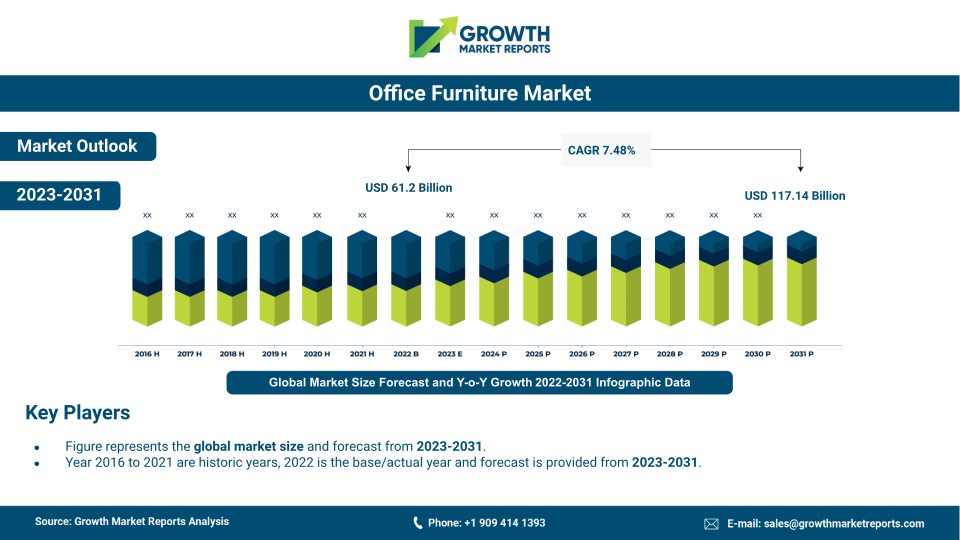
According to our latest research, the global office furniture market size was valued at USD 81.2 billion in 2024, demonstrating a robust expansion driven by evolving work environments and rising commercial real estate investments. The market is projected to grow at a CAGR of 5.4% during the forecast period, reaching an estimated USD 129.7 billion by 2033. This growth is underpinned by increasing adoption of ergonomic solutions, the proliferation of remote and hybrid work models, and a heightened emphasis on workplace aesthetics and employee well-being.

A significant growth factor for the office furniture market is the ongoing transformation in workplace dynamics. The shift towards flexible workspaces, open-plan offices, and collaborative environments has spurred demand for modular and ergonomic furniture solutions. Organizations are increasingly prioritizing employee well-being and productivity, leading to investments in adjustable desks, ergonomic chairs, and collaborative workstations. This transformation is not only prevalent in large corporate offices but is also influencing small and medium enterprises, which are seeking cost-effective yet innovative furniture solutions to optimize their office layouts and foster a productive work culture.

Another key driver is the rapid expansion of the commercial real estate sector, particularly in emerging economies. As urbanization accelerates and new business hubs emerge, the demand for modern office spaces equipped with high-quality furniture is on the rise. The construction of new office buildings, coworking spaces, and business centers across Asia Pacific, the Middle East, and parts of Africa is creating substantial opportunities for office furniture manufacturers. Additionally, the trend of refurbishing and renovating existing office spaces to align with contemporary design trends and sustainability standards is further boosting market growth.

The integration of technology and sustainability in office furniture design is also shaping market dynamics. Manufacturers are increasingly incorporating smart features such as height-adjustable desks, integrated charging ports, and modular components that support flexible workspace configurations. At the same time, there is a growing emphasis on eco-friendly materials and sustainable production processes, driven by both regulatory mandates and corporate social responsibility initiatives. This dual focus on innovation and sustainability is attracting a new generation of environmentally conscious buyers and contributing to the premiumization of the office furniture market.

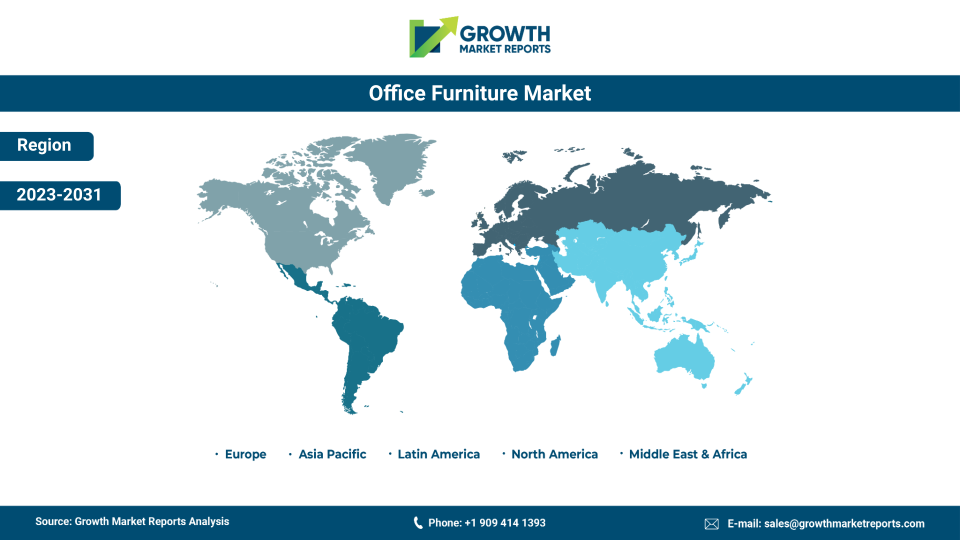
Regionally, Asia Pacific continues to dominate the global office furniture market, accounting for the largest share in 2024, followed by North America and Europe. The Asia Pacific region benefits from robust economic growth, rapid urbanization, and a burgeoning corporate sector, particularly in countries such as China, India, and Japan. North America, while mature, remains a key market due to high office refurbishment rates and early adoption of advanced ergonomic solutions. Europe is characterized by a strong emphasis on design and sustainability, while Latin America and the Middle East & Africa present emerging opportunities driven by infrastructure development and increasing foreign investments.

Global Office Furniture Industry Outlook

Product Type Analysis

The office furniture market is segmented by product type into seating, tables, desks, storage units, workstations, and others. Among these, the seating segment commands the largest market share, fueled by the critical role ergonomic chairs play in employee comfort and productivity. Organizations are increasingly investing in high-quality, adjustable seating solutions to reduce workplace injuries and boost employee satisfaction. The proliferation of remote and hybrid work models has further expanded the demand for ergonomic seating, not only in traditional office settings but also in home offices, contributing to sustained growth in this segment.

Desks and workstations represent another substantial segment, driven by the need for functional and adaptable workspaces. The growing popularity of open-plan offices and collaborative work environments has led to increased demand for modular desks and workstations that can be easily reconfigured to accommodate changing team sizes and project requirements. Height-adjustable desks and sit-stand workstations are gaining traction as organizations focus on employee wellness and flexibility. This trend is particularly pronounced in tech-savvy industries and among enterprises that prioritize innovation and agility in their office layouts.

Tables and storage units also play a vital role in the office furniture landscape. Conference tables, meeting tables, and collaborative tables are essential for facilitating teamwork and communication in both corporate and educational settings. Meanwhile, storage units, including filing cabinets, lockers, and shelving systems, are indispensable for maintaining organized and efficient workspaces. The demand for smart storage solutions that maximize space utilization and support digital workflows is on the rise, especially in urban offices where space constraints are a significant concern.

The "others" category encompasses a range of supplementary office furniture products such as partitions, lounge furniture, and accessories. As organizations strive to create more inviting and versatile work environments, the demand for breakout area furniture, acoustic panels, and privacy pods is increasing. These products support the creation of multifunctional spaces that cater to various work styles, from focused individual tasks to informal meetings and relaxation. Manufacturers are responding to this trend by offering customizable and aesthetically appealing solutions that enhance the overall office experience.

Report Scope

Attributes Details
Report Title Office Furniture Market Research Report 2033
By Product Type Seating, Tables, Desks, Storage Units, Workstations, Others
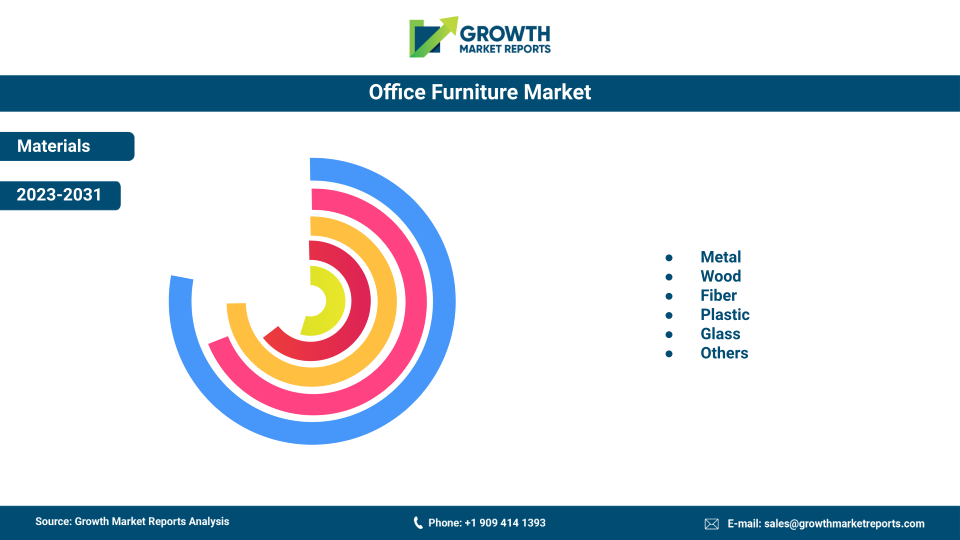
By Material Wood, Metal, Plastic, Others
By Distribution Channel Offline, Online
By End-User Corporate Offices, Home Offices, Educational Institutions, Healthcare, Others
Regions Covered North America, Europe, APAC, Latin America, MEA
Base Year 2024
Historic Data 2018-2023
Forecast Period 2025-2033
Number of Pages 269
Number of Tables & Figures 379
Customization Available Yes, the report can be customized as per your need.

Material Analysis

Material selection is a critical consideration in the office furniture market, with key segments including wood, metal, plastic, and others. Wood remains a preferred material for its aesthetic appeal, durability, and versatility. Wooden office furniture is often associated with premium quality and timeless design, making it a popular choice for executive offices, meeting rooms, and high-end corporate environments. The use of engineered wood and sustainable forestry practices is gaining momentum, reflecting the growing emphasis on environmental responsibility and resource efficiency within the industry.

Metal office furniture is valued for its strength, longevity, and modern appearance. Metal components are commonly used in the construction of frames for desks, chairs, and storage units, providing structural integrity and resistance to wear and tear. The adoption of powder-coated finishes and corrosion-resistant alloys has further enhanced the appeal of metal furniture in contemporary office settings. Metal is particularly favored in industrial-style offices and environments that require robust, easy-to-maintain solutions, such as healthcare facilities and educational institutions.

Plastic office furniture has gained significant traction due to its affordability, lightweight nature, and diverse design options. Advances in plastic manufacturing technologies have enabled the production of ergonomic and stylish furniture that meets the functional and aesthetic needs of modern workplaces. Plastic is especially popular in home offices, coworking spaces, and educational settings where flexibility and ease of movement are important. The increasing use of recycled plastics and bio-based polymers aligns with the market’s shift toward sustainable and circular economy practices.

The "others" material segment encompasses glass, composite materials, and innovative hybrids that combine the best attributes of traditional materials. Glass-topped desks and tables are sought after for their sleek, contemporary look and ability to create a sense of openness in office interiors. Composite materials, which blend wood, metal, and plastic, offer enhanced performance characteristics such as improved durability, reduced weight, and greater design flexibility. These materials are enabling manufacturers to develop next-generation office furniture that meets the evolving needs of dynamic work environments.

Distribution Channel Analysis

The office furniture market is bifurcated by distribution channel into offline and online segments. Offline channels, including specialty stores, furniture showrooms, and authorized dealers, have traditionally dominated the market, accounting for the majority of sales in 2024. These channels offer customers the advantage of experiencing products firsthand, receiving personalized consultations, and accessing after-sales services. The offline segment continues to thrive, particularly in regions where consumers prefer tactile shopping experiences and value the expertise of in-store staff.

However, the online distribution channel is rapidly gaining ground, driven by the digitalization of retail and changing consumer preferences. E-commerce platforms, brand websites, and online marketplaces provide customers with a convenient and extensive selection of office furniture products, often at competitive prices. The ability to compare features, read reviews, and access virtual design tools has made online shopping increasingly attractive, especially among younger, tech-savvy buyers and small businesses seeking cost-effective solutions. The COVID-19 pandemic accelerated this shift, with many organizations and individuals opting for online purchases to furnish remote and home offices.

Manufacturers and retailers are investing in omnichannel strategies to bridge the gap between offline and online experiences. Virtual showrooms, augmented reality (AR) visualization tools, and click-and-collect services are enhancing the customer journey and enabling seamless transitions between digital and physical touchpoints. This integration is particularly important for large-scale corporate projects, where clients may begin their search online but require in-person consultations and on-site assessments before making final purchasing decisions.

The growing importance of online channels is also fostering greater price transparency and market competition. E-commerce platforms enable manufacturers to reach a global audience, expand their customer base, and respond quickly to changing market trends. At the same time, the proliferation of online-only brands and direct-to-consumer models is intensifying competition and driving innovation in product design, customization, and delivery logistics. As the online segment continues to expand, it is expected to play a pivotal role in shaping the future growth trajectory of the office furniture market.

End-User Analysis

The office furniture market serves a diverse range of end-users, including corporate offices, home offices, educational institutions, healthcare facilities, and others. Corporate offices remain the largest end-user segment, accounting for a significant share of market demand in 2024. The ongoing evolution of corporate workspaces, driven by trends such as activity-based working, agile office layouts, and employee well-being initiatives, is fueling investments in high-quality, ergonomic, and technologically advanced furniture solutions. Large enterprises and multinational corporations are leading the way in adopting premium office furniture that enhances productivity, collaboration, and brand image.

The home office segment has witnessed exponential growth in recent years, propelled by the widespread adoption of remote and hybrid work models. The COVID-19 pandemic acted as a catalyst, prompting millions of professionals to set up dedicated workspaces at home. Demand for compact, multifunctional, and aesthetically pleasing furniture has surged, with consumers seeking solutions that blend seamlessly with residential interiors. Manufacturers are responding by offering space-saving desks, ergonomic chairs, and modular storage units tailored to the needs of home-based workers.

Educational institutions represent another important end-user segment, encompassing schools, colleges, universities, and training centers. The modernization of educational facilities and the shift toward collaborative and technology-enabled learning environments are driving demand for flexible and durable office furniture. Products such as adjustable desks, stackable chairs, and mobile storage units are in high demand, enabling institutions to create adaptable spaces that support a variety of teaching and learning modalities. The emphasis on student comfort and well-being is also influencing furniture design and procurement decisions in this segment.

Healthcare facilities, including hospitals, clinics, and administrative offices, require specialized office furniture that meets stringent standards for hygiene, durability, and ergonomics. The growing focus on patient-centered care and efficient healthcare administration is prompting investments in furniture solutions that enhance workflow efficiency, support infection control, and provide comfort for both staff and patients. Other end-user segments, such as government offices, coworking spaces, and non-profit organizations, contribute to the market’s diversity and present unique opportunities for customization and innovation.

Opportunities & Threats

The office furniture market presents a wealth of opportunities for manufacturers, retailers, and service providers. One of the most significant opportunities lies in the ongoing digital transformation of workplaces. The integration of smart technologies, such as IoT-enabled desks, wireless charging stations, and sensor-based occupancy management systems, is opening new avenues for product innovation and value-added services. Companies that can offer connected, data-driven solutions to enhance workplace efficiency and employee experience are well positioned to capture a larger share of the market. Additionally, the rise of coworking spaces and flexible office arrangements is creating demand for modular, reconfigurable furniture that can adapt to changing occupancy patterns and support a variety of work styles.

Sustainability is another major opportunity area, as organizations and consumers alike place increasing emphasis on environmental responsibility. The adoption of eco-friendly materials, circular design principles, and sustainable manufacturing processes is becoming a key differentiator in the market. Manufacturers that invest in green certifications, carbon-neutral production, and take-back programs for end-of-life furniture are likely to attract environmentally conscious buyers and comply with evolving regulatory requirements. Furthermore, the growing trend of office refurbishment and retrofitting, driven by the need to align with sustainability goals and modern design standards, offers significant growth potential for both established players and new entrants.

However, the office furniture market also faces notable threats and restraining factors. One of the primary challenges is the volatility of raw material prices, particularly for wood, metal, and plastics. Fluctuations in supply chains, geopolitical tensions, and trade disruptions can lead to increased production costs and margin pressures for manufacturers. Additionally, intense competition from low-cost producers and the proliferation of counterfeit products pose risks to brand reputation and profitability. The cyclical nature of office real estate investments and economic downturns can also impact demand, especially in regions heavily reliant on corporate spending. To mitigate these threats, market participants must focus on innovation, quality assurance, and strategic partnerships across the value chain.

Regional Outlook

Asia Pacific stands as the dominant region in the global office furniture market, accounting for over 38% of the total market value in 2024, equivalent to approximately USD 30.9 billion. The region’s leadership is driven by rapid urbanization, robust economic growth, and a thriving corporate sector, particularly in China, India, and Southeast Asia. The ongoing development of commercial infrastructure and the proliferation of multinational corporations are fueling demand for modern office spaces and high-quality furniture. The Asia Pacific market is projected to register a CAGR of 6.2% through 2033, outpacing other regions and solidifying its position as a key growth engine for the industry.

North America follows as the second-largest regional market, with a market size of USD 21.8 billion in 2024. The region benefits from a mature office furniture industry, high office refurbishment rates, and early adoption of advanced ergonomic and smart furniture solutions. The United States remains the primary contributor, supported by a dynamic business environment, strong focus on workplace wellness, and a well-established distribution network. Canada and Mexico also present promising growth prospects, driven by increased investments in commercial real estate and the rise of flexible workspaces. North America is expected to maintain steady growth, with a projected CAGR of 4.3% through 2033.

Europe represents a significant market, valued at USD 18.5 billion in 2024, characterized by a strong emphasis on design, sustainability, and regulatory compliance. Countries such as Germany, the United Kingdom, and France are leading adopters of eco-friendly and technologically advanced office furniture. The region’s mature corporate sector and high standards for workplace safety and ergonomics continue to drive demand. Meanwhile, Latin America and the Middle East & Africa are emerging as high-potential markets, with combined market sizes of USD 10 billion in 2024. These regions are experiencing increased foreign investment, infrastructure development, and a growing emphasis on modern office environments, presenting new opportunities for market expansion.

Office Furniture Market Statistics

Competitor Outlook

The global office furniture market is highly competitive, with a mix of established multinational brands, regional players, and a growing number of online-only entrants. The competitive landscape is shaped by factors such as product innovation, brand reputation, pricing strategies, and distribution channel effectiveness. Leading companies are investing heavily in research and development to introduce ergonomic, modular, and sustainable furniture solutions that cater to the evolving needs of modern workplaces. Customization, rapid delivery, and superior after-sales service are key differentiators in winning and retaining large corporate clients, while design aesthetics and affordability play a crucial role in attracting small businesses and home office buyers.

Mergers, acquisitions, and strategic partnerships are common strategies employed by major players to expand their product portfolios, enter new markets, and strengthen their global presence. The rise of e-commerce has also led to increased collaboration between manufacturers and online retailers, enabling companies to tap into new customer segments and streamline their supply chains. At the same time, the influx of low-cost imports and counterfeit products poses challenges for established brands, necessitating ongoing investment in quality assurance, intellectual property protection, and brand-building initiatives.

Sustainability and digital transformation are emerging as key battlegrounds in the competitive landscape. Companies that can demonstrate leadership in eco-friendly materials, circular design, and smart furniture integration are gaining a competitive edge, particularly among environmentally conscious and tech-savvy buyers. The ability to offer end-to-end solutions, including workspace planning, installation, and post-purchase support, is also becoming increasingly important as organizations seek holistic partners for their office transformation projects.

Some of the major companies operating in the global office furniture market include Steelcase Inc., Herman Miller Inc. (now MillerKnoll), Haworth Inc., HNI Corporation, and Teknion Corporation. Steelcase is renowned for its innovative workspace solutions and strong commitment to sustainability, while MillerKnoll (formed from the merger of Herman Miller and Knoll) is celebrated for its iconic designs and global reach. Haworth is recognized for its modular and adaptable furniture systems, and HNI Corporation boasts a diverse product portfolio catering to both commercial and home office segments. Teknion has established itself as a leader in customizable, high-performance office furniture, particularly in North America and Europe. Other notable players include Kimball International, Okamura Corporation, and Godrej Interio, each bringing unique strengths and regional expertise to the market.

These companies are continually enhancing their offerings through investments in technology, design, and sustainability. For example, Steelcase and MillerKnoll have launched lines of smart, connected furniture that integrate seamlessly with digital workplace management systems. Haworth and Teknion have introduced eco-friendly product lines and participate in global sustainability initiatives. Regional leaders such as Godrej Interio are leveraging their deep understanding of local markets to offer tailored solutions that address specific customer needs and preferences. As the market continues to evolve, the ability to innovate, adapt, and deliver value-added services will be critical for maintaining a competitive edge and achieving long-term growth.

Key Players

  • Steelcase Inc.
  • Herman Miller, Inc.
  • Haworth Inc.
  • HNI Corporation
  • Knoll, Inc.
  • Kimball International, Inc.
  • Kokuyo Co., Ltd.
  • Okamura Corporation
  • Teknion Corporation
  • Global Furniture Group
  • KI (Krueger International, Inc.)
  • Vitra International AG
  • Sedus Stoll AG
  • UE Furniture Co., Ltd.
  • Fursys Inc.
  • Itoki Corporation
  • Aurora Corporation
  • Godrej Interio
  • Bisley Office Furniture
  • Nowy Styl Group
Office Furniture Market Overview

Segments

The Office Furniture market has been segmented on the basis of

Product Type

  • Seating
  • Tables
  • Desks
  • Storage Units
  • Workstations
  • Others

Material

  • Wood
  • Metal
  • Plastic
  • Others

Distribution Channel

  • Offline
  • Online

End-User

  • Corporate Offices
  • Home Offices
  • Educational Institutions
  • Healthcare
  • Others

Competitive Landscape

Key players in the office furniture market include 9to5 Seating LLC, BERCO DESIGN, Global Furniture Group, Gunlocke Company, Haworth Inc, Herman Miller Furniture (India) Pvt Ltd, Kimball International, Knoll, Inc, KOKUYO Co., Ltd, OKAMURA CORPORATION, Steelcase Inc, and Teknion. These players engage in mergers & acquisitions, collaborations, agreements, and partnerships to strengthen their geographical presence.
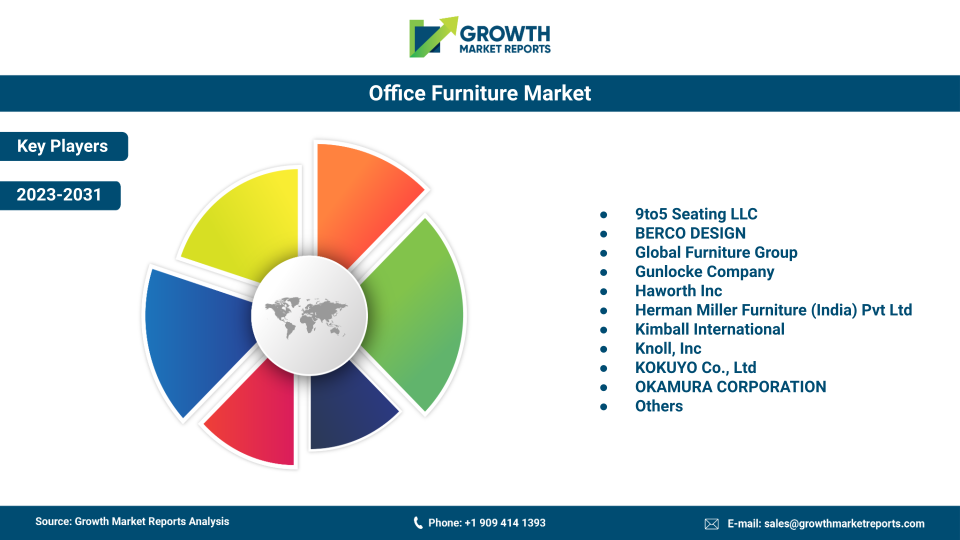

Office Furniture Market Key Players

Frequently Asked Questions

Key players include Steelcase Inc., MillerKnoll (Herman Miller and Knoll), Haworth Inc., HNI Corporation, Teknion Corporation, Kimball International, Okamura Corporation, Godrej Interio, and others.

Challenges include raw material price volatility, intense competition from low-cost producers, the threat of counterfeit products, and the cyclical nature of office real estate investments.

Major end-users include corporate offices, home offices, educational institutions, healthcare facilities, and others such as government offices and coworking spaces.

Online channels are rapidly growing due to digitalization, offering customers convenience, price transparency, and a wide selection. E-commerce is especially popular among younger buyers and small businesses.

Common materials include wood, metal, plastic, and others such as glass and composites. Wood is valued for its aesthetics, metal for durability, and plastic for affordability and flexibility.

Manufacturers are increasingly using eco-friendly materials, sustainable production processes, and circular design principles to meet regulatory requirements and appeal to environmentally conscious buyers.

The market is segmented into seating, tables, desks, storage units, workstations, and others. Seating, especially ergonomic chairs, holds the largest market share due to its importance in employee comfort and productivity.

Asia Pacific is the leading region in the global office furniture market, accounting for over 38% of the total market value in 2024, driven by rapid urbanization, economic growth, and a thriving corporate sector.

Key growth drivers include the adoption of ergonomic solutions, the rise of remote and hybrid work models, increased commercial real estate investments, and a focus on workplace aesthetics and employee well-being.

The global office furniture market was valued at USD 81.2 billion in 2024 and is projected to reach USD 129.7 billion by 2033, growing at a CAGR of 5.4%.

Table Of Content

Chapter 1 Executive Summary
Chapter 2 Assumptions and Acronyms Used
Chapter 3 Research Methodology
Chapter 4 Office Furniture Market Overview
   4.1 Introduction
      4.1.1 Market Taxonomy
      4.1.2 Market Definition
      4.1.3 Macro-Economic Factors Impacting the Market Growth
   4.2 Office Furniture Market Dynamics
      4.2.1 Market Drivers
      4.2.2 Market Restraints
      4.2.3 Market Opportunity
   4.3 Office Furniture Market - Supply Chain Analysis
      4.3.1 List of Key Suppliers
      4.3.2 List of Key Distributors
      4.3.3 List of Key Consumers
   4.4 Key Forces Shaping the Office Furniture Market
      4.4.1 Bargaining Power of Suppliers
      4.4.2 Bargaining Power of Buyers
      4.4.3 Threat of Substitution
      4.4.4 Threat of New Entrants
      4.4.5 Competitive Rivalry
   4.5 Global Office Furniture Market Size & Forecast, 2023-2032
      4.5.1 Office Furniture Market Size and Y-o-Y Growth
      4.5.2 Office Furniture Market Absolute $ Opportunity

Chapter 5 Global Office Furniture Market Analysis and Forecast By Product Type
   5.1 Introduction
      5.1.1 Key Market Trends & Growth Opportunities By Product Type
      5.1.2 Basis Point Share (BPS) Analysis By Product Type
      5.1.3 Absolute $ Opportunity Assessment By Product Type
   5.2 Office Furniture Market Size Forecast By Product Type
      5.2.1 Seating
      5.2.2 Tables
      5.2.3 Desks
      5.2.4 Storage Units
      5.2.5 Workstations
      5.2.6 Others
   5.3 Market Attractiveness Analysis By Product Type

Chapter 6 Global Office Furniture Market Analysis and Forecast By Material
   6.1 Introduction
      6.1.1 Key Market Trends & Growth Opportunities By Material
      6.1.2 Basis Point Share (BPS) Analysis By Material
      6.1.3 Absolute $ Opportunity Assessment By Material
   6.2 Office Furniture Market Size Forecast By Material
      6.2.1 Wood
      6.2.2 Metal
      6.2.3 Plastic
      6.2.4 Others
   6.3 Market Attractiveness Analysis By Material

Chapter 7 Global Office Furniture Market Analysis and Forecast By Distribution Channel
   7.1 Introduction
      7.1.1 Key Market Trends & Growth Opportunities By Distribution Channel
      7.1.2 Basis Point Share (BPS) Analysis By Distribution Channel
      7.1.3 Absolute $ Opportunity Assessment By Distribution Channel
   7.2 Office Furniture Market Size Forecast By Distribution Channel
      7.2.1 Offline
      7.2.2 Online
   7.3 Market Attractiveness Analysis By Distribution Channel

Chapter 8 Global Office Furniture Market Analysis and Forecast By End-User
   8.1 Introduction
      8.1.1 Key Market Trends & Growth Opportunities By End-User
      8.1.2 Basis Point Share (BPS) Analysis By End-User
      8.1.3 Absolute $ Opportunity Assessment By End-User
   8.2 Office Furniture Market Size Forecast By End-User
      8.2.1 Corporate Offices
      8.2.2 Home Offices
      8.2.3 Educational Institutions
      8.2.4 Healthcare
      8.2.5 Others
   8.3 Market Attractiveness Analysis By End-User

Chapter 9 Global Office Furniture Market Analysis and Forecast by Region
   9.1 Introduction
      9.1.1 Key Market Trends & Growth Opportunities By Region
      9.1.2 Basis Point Share (BPS) Analysis By Region
      9.1.3 Absolute $ Opportunity Assessment By Region
   9.2 Office Furniture Market Size Forecast By Region
      9.2.1 North America
      9.2.2 Europe
      9.2.3 Asia Pacific
      9.2.4 Latin America
      9.2.5 Middle East & Africa (MEA)
   9.3 Market Attractiveness Analysis By Region

Chapter 10 Coronavirus Disease (COVID-19) Impact 
   10.1 Introduction 
   10.2 Current & Future Impact Analysis 
   10.3 Economic Impact Analysis 
   10.4 Government Policies 
   10.5 Investment Scenario

Chapter 11 North America Office Furniture Analysis and Forecast
   11.1 Introduction
   11.2 North America Office Furniture Market Size Forecast by Country
      11.2.1 U.S.
      11.2.2 Canada
   11.3 Basis Point Share (BPS) Analysis by Country
   11.4 Absolute $ Opportunity Assessment by Country
   11.5 Market Attractiveness Analysis by Country
   11.6 North America Office Furniture Market Size Forecast By Product Type
      11.6.1 Seating
      11.6.2 Tables
      11.6.3 Desks
      11.6.4 Storage Units
      11.6.5 Workstations
      11.6.6 Others
   11.7 Basis Point Share (BPS) Analysis By Product Type 
   11.8 Absolute $ Opportunity Assessment By Product Type 
   11.9 Market Attractiveness Analysis By Product Type
   11.10 North America Office Furniture Market Size Forecast By Material
      11.10.1 Wood
      11.10.2 Metal
      11.10.3 Plastic
      11.10.4 Others
   11.11 Basis Point Share (BPS) Analysis By Material 
   11.12 Absolute $ Opportunity Assessment By Material 
   11.13 Market Attractiveness Analysis By Material
   11.14 North America Office Furniture Market Size Forecast By Distribution Channel
      11.14.1 Offline
      11.14.2 Online
   11.15 Basis Point Share (BPS) Analysis By Distribution Channel 
   11.16 Absolute $ Opportunity Assessment By Distribution Channel 
   11.17 Market Attractiveness Analysis By Distribution Channel
   11.18 North America Office Furniture Market Size Forecast By End-User
      11.18.1 Corporate Offices
      11.18.2 Home Offices
      11.18.3 Educational Institutions
      11.18.4 Healthcare
      11.18.5 Others
   11.19 Basis Point Share (BPS) Analysis By End-User 
   11.20 Absolute $ Opportunity Assessment By End-User 
   11.21 Market Attractiveness Analysis By End-User

Chapter 12 Europe Office Furniture Analysis and Forecast
   12.1 Introduction
   12.2 Europe Office Furniture Market Size Forecast by Country
      12.2.1 Germany
      12.2.2 France
      12.2.3 Italy
      12.2.4 U.K.
      12.2.5 Spain
      12.2.6 Russia
      12.2.7 Rest of Europe
   12.3 Basis Point Share (BPS) Analysis by Country
   12.4 Absolute $ Opportunity Assessment by Country
   12.5 Market Attractiveness Analysis by Country
   12.6 Europe Office Furniture Market Size Forecast By Product Type
      12.6.1 Seating
      12.6.2 Tables
      12.6.3 Desks
      12.6.4 Storage Units
      12.6.5 Workstations
      12.6.6 Others
   12.7 Basis Point Share (BPS) Analysis By Product Type 
   12.8 Absolute $ Opportunity Assessment By Product Type 
   12.9 Market Attractiveness Analysis By Product Type
   12.10 Europe Office Furniture Market Size Forecast By Material
      12.10.1 Wood
      12.10.2 Metal
      12.10.3 Plastic
      12.10.4 Others
   12.11 Basis Point Share (BPS) Analysis By Material 
   12.12 Absolute $ Opportunity Assessment By Material 
   12.13 Market Attractiveness Analysis By Material
   12.14 Europe Office Furniture Market Size Forecast By Distribution Channel
      12.14.1 Offline
      12.14.2 Online
   12.15 Basis Point Share (BPS) Analysis By Distribution Channel 
   12.16 Absolute $ Opportunity Assessment By Distribution Channel 
   12.17 Market Attractiveness Analysis By Distribution Channel
   12.18 Europe Office Furniture Market Size Forecast By End-User
      12.18.1 Corporate Offices
      12.18.2 Home Offices
      12.18.3 Educational Institutions
      12.18.4 Healthcare
      12.18.5 Others
   12.19 Basis Point Share (BPS) Analysis By End-User 
   12.20 Absolute $ Opportunity Assessment By End-User 
   12.21 Market Attractiveness Analysis By End-User

Chapter 13 Asia Pacific Office Furniture Analysis and Forecast
   13.1 Introduction
   13.2 Asia Pacific Office Furniture Market Size Forecast by Country
      13.2.1 China
      13.2.2 Japan
      13.2.3 South Korea
      13.2.4 India
      13.2.5 Australia
      13.2.6 South East Asia (SEA)
      13.2.7 Rest of Asia Pacific (APAC)
   13.3 Basis Point Share (BPS) Analysis by Country
   13.4 Absolute $ Opportunity Assessment by Country
   13.5 Market Attractiveness Analysis by Country
   13.6 Asia Pacific Office Furniture Market Size Forecast By Product Type
      13.6.1 Seating
      13.6.2 Tables
      13.6.3 Desks
      13.6.4 Storage Units
      13.6.5 Workstations
      13.6.6 Others
   13.7 Basis Point Share (BPS) Analysis By Product Type 
   13.8 Absolute $ Opportunity Assessment By Product Type 
   13.9 Market Attractiveness Analysis By Product Type
   13.10 Asia Pacific Office Furniture Market Size Forecast By Material
      13.10.1 Wood
      13.10.2 Metal
      13.10.3 Plastic
      13.10.4 Others
   13.11 Basis Point Share (BPS) Analysis By Material 
   13.12 Absolute $ Opportunity Assessment By Material 
   13.13 Market Attractiveness Analysis By Material
   13.14 Asia Pacific Office Furniture Market Size Forecast By Distribution Channel
      13.14.1 Offline
      13.14.2 Online
   13.15 Basis Point Share (BPS) Analysis By Distribution Channel 
   13.16 Absolute $ Opportunity Assessment By Distribution Channel 
   13.17 Market Attractiveness Analysis By Distribution Channel
   13.18 Asia Pacific Office Furniture Market Size Forecast By End-User
      13.18.1 Corporate Offices
      13.18.2 Home Offices
      13.18.3 Educational Institutions
      13.18.4 Healthcare
      13.18.5 Others
   13.19 Basis Point Share (BPS) Analysis By End-User 
   13.20 Absolute $ Opportunity Assessment By End-User 
   13.21 Market Attractiveness Analysis By End-User

Chapter 14 Latin America Office Furniture Analysis and Forecast
   14.1 Introduction
   14.2 Latin America Office Furniture Market Size Forecast by Country
      14.2.1 Brazil
      14.2.2 Mexico
      14.2.3 Rest of Latin America (LATAM)
   14.3 Basis Point Share (BPS) Analysis by Country
   14.4 Absolute $ Opportunity Assessment by Country
   14.5 Market Attractiveness Analysis by Country
   14.6 Latin America Office Furniture Market Size Forecast By Product Type
      14.6.1 Seating
      14.6.2 Tables
      14.6.3 Desks
      14.6.4 Storage Units
      14.6.5 Workstations
      14.6.6 Others
   14.7 Basis Point Share (BPS) Analysis By Product Type 
   14.8 Absolute $ Opportunity Assessment By Product Type 
   14.9 Market Attractiveness Analysis By Product Type
   14.10 Latin America Office Furniture Market Size Forecast By Material
      14.10.1 Wood
      14.10.2 Metal
      14.10.3 Plastic
      14.10.4 Others
   14.11 Basis Point Share (BPS) Analysis By Material 
   14.12 Absolute $ Opportunity Assessment By Material 
   14.13 Market Attractiveness Analysis By Material
   14.14 Latin America Office Furniture Market Size Forecast By Distribution Channel
      14.14.1 Offline
      14.14.2 Online
   14.15 Basis Point Share (BPS) Analysis By Distribution Channel 
   14.16 Absolute $ Opportunity Assessment By Distribution Channel 
   14.17 Market Attractiveness Analysis By Distribution Channel
   14.18 Latin America Office Furniture Market Size Forecast By End-User
      14.18.1 Corporate Offices
      14.18.2 Home Offices
      14.18.3 Educational Institutions
      14.18.4 Healthcare
      14.18.5 Others
   14.19 Basis Point Share (BPS) Analysis By End-User 
   14.20 Absolute $ Opportunity Assessment By End-User 
   14.21 Market Attractiveness Analysis By End-User

Chapter 15 Middle East & Africa (MEA) Office Furniture Analysis and Forecast
   15.1 Introduction
   15.2 Middle East & Africa (MEA) Office Furniture Market Size Forecast by Country
      15.2.1 Saudi Arabia
      15.2.2 South Africa
      15.2.3 UAE
      15.2.4 Rest of Middle East & Africa (MEA)
   15.3 Basis Point Share (BPS) Analysis by Country
   15.4 Absolute $ Opportunity Assessment by Country
   15.5 Market Attractiveness Analysis by Country
   15.6 Middle East & Africa (MEA) Office Furniture Market Size Forecast By Product Type
      15.6.1 Seating
      15.6.2 Tables
      15.6.3 Desks
      15.6.4 Storage Units
      15.6.5 Workstations
      15.6.6 Others
   15.7 Basis Point Share (BPS) Analysis By Product Type 
   15.8 Absolute $ Opportunity Assessment By Product Type 
   15.9 Market Attractiveness Analysis By Product Type
   15.10 Middle East & Africa (MEA) Office Furniture Market Size Forecast By Material
      15.10.1 Wood
      15.10.2 Metal
      15.10.3 Plastic
      15.10.4 Others
   15.11 Basis Point Share (BPS) Analysis By Material 
   15.12 Absolute $ Opportunity Assessment By Material 
   15.13 Market Attractiveness Analysis By Material
   15.14 Middle East & Africa (MEA) Office Furniture Market Size Forecast By Distribution Channel
      15.14.1 Offline
      15.14.2 Online
   15.15 Basis Point Share (BPS) Analysis By Distribution Channel 
   15.16 Absolute $ Opportunity Assessment By Distribution Channel 
   15.17 Market Attractiveness Analysis By Distribution Channel
   15.18 Middle East & Africa (MEA) Office Furniture Market Size Forecast By End-User
      15.18.1 Corporate Offices
      15.18.2 Home Offices
      15.18.3 Educational Institutions
      15.18.4 Healthcare
      15.18.5 Others
   15.19 Basis Point Share (BPS) Analysis By End-User 
   15.20 Absolute $ Opportunity Assessment By End-User 
   15.21 Market Attractiveness Analysis By End-User

Chapter 16 Competition Landscape 
   16.1 Office Furniture Market: Competitive Dashboard
   16.2 Global Office Furniture Market: Market Share Analysis, 2023
   16.3 Company Profiles (Details – Overview, Financials, Developments, Strategy) 
      16.3.1 Steelcase Inc.
Herman Miller, Inc.
Haworth Inc.
HNI Corporation
Knoll, Inc.
Kimball International, Inc.
Kokuyo Co., Ltd.
Okamura Corporation
Teknion Corporation
Global Furniture Group
KI (Krueger International, Inc.)
Vitra International AG
Sedus Stoll AG
UE Furniture Co., Ltd.
Fursys Inc.
Itoki Corporation
Aurora Corporation
Godrej Interio
Bisley Office Furniture
Nowy Styl Group

Methodology

Our Clients

Deloitte
sinopec
Siemens Healthcare
Honda Motor Co. Ltd.
FedEx Logistics
The John Holland Group
Pfizer
Dassault Aviation