Commercial Printing Market Research Report 2033

Commercial Printing Market Research Report 2033

Segments - by Printing Technology (Offset Lithography, Digital, Flexographic, Gravure, Screen, Others), by Application (Packaging, Advertising, Publishing, Others), by Print Product (Brochures, Books, Magazines, Labels, Catalogs, Directories, Others), by End-User (Retail, Food & Beverage, Healthcare, Education, Publishing, Others)

https://growthmarketreports.com/Raksha
Author : Raksha Sharma
https://growthmarketreports.com/Vaibhav
Fact-checked by : V. Chandola
https://growthmarketreports.com/Shruti
Editor : Shruti Bhat

Upcoming | Report ID :MC-4675 | 4.3 Rating | 19 Reviews | 277 Pages | Format : Docx PDF

Report Description


Commercial Printing Market Outlook

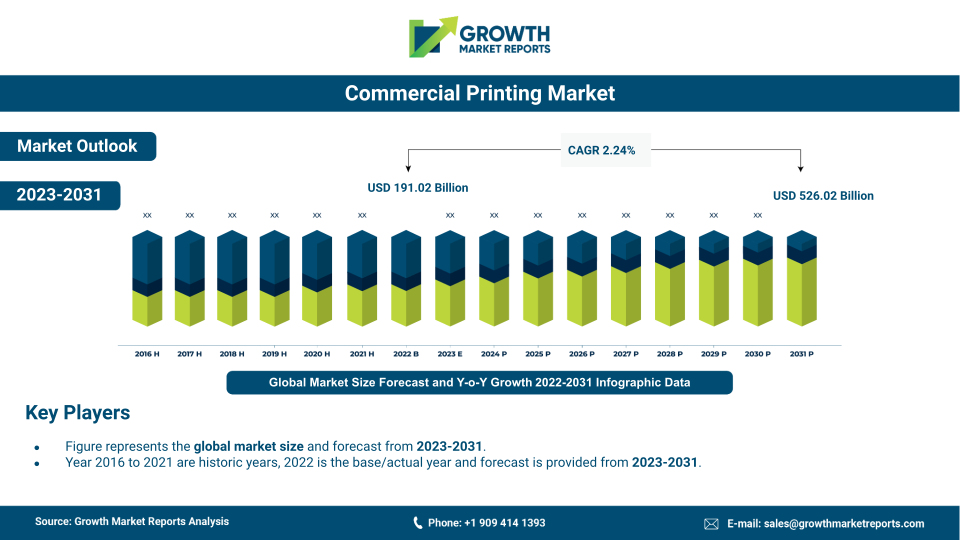
According to our latest research, the global commercial printing market size reached USD 488.3 billion in 2024. The industry is projected to grow at a robust CAGR of 3.1% during the forecast period, with the market expected to attain a value of USD 640.8 billion by 2033. This steady expansion is primarily driven by the increasing demand for innovative packaging, the proliferation of digital printing technology, and the sustained need for marketing collaterals across diverse industries. The growth trajectory of the commercial printing market is further reinforced by evolving consumer preferences and the rapid digital transformation in printing services worldwide.

A significant growth factor in the commercial printing market is the surging demand for customized packaging solutions, especially in the food and beverage, retail, and e-commerce sectors. As brands strive to create distinctive identities and enhance customer engagement, packaging has evolved from a mere protective layer to a powerful marketing tool. The rise of online shopping and direct-to-consumer models has accelerated the need for attractive, high-quality, and personalized packaging. Commercial printers are increasingly leveraging advanced printing technologies, such as digital and flexographic printing, to offer shorter print runs, faster turnaround times, and greater design flexibility, which aligns perfectly with the needs of modern businesses seeking to differentiate themselves in a crowded marketplace.

Another critical driver is the technological advancements in printing methods, which have dramatically enhanced print quality, efficiency, and cost-effectiveness. The adoption of digital printing, in particular, has revolutionized the commercial printing market by enabling on-demand printing, variable data printing, and seamless integration with digital workflows. This shift has allowed print service providers to cater to small and medium-sized enterprises (SMEs) that require lower volumes and quick delivery, while also supporting large-scale campaigns for multinational corporations. Furthermore, the integration of automation, cloud-based print management, and eco-friendly printing solutions is attracting environmentally conscious consumers and businesses, fostering sustainable growth in the sector.

The commercial printing market is also benefiting from the ongoing expansion of advertising and publishing activities worldwide. Despite the digitalization of media, print advertising and publishing continue to hold substantial value, particularly in emerging economies where print remains a trusted medium for information dissemination and brand promotion. The resurgence of print magazines, catalogs, and books, driven by niche audiences and luxury brands, is contributing to market stability. Moreover, the increasing investments in out-of-home (OOH) advertising, such as billboards, banners, and signage, are fueling demand for large-format printing solutions, further supporting market growth.

The role of Packaging Printing in the commercial printing market cannot be overstated. As consumer preferences shift towards more personalized and aesthetically pleasing packaging, the demand for innovative packaging printing solutions has surged. This trend is particularly prominent in sectors such as food and beverage, retail, and cosmetics, where packaging serves as a critical touchpoint for brand interaction. Packaging printing not only enhances the visual appeal of products but also plays a crucial role in conveying brand messages and ensuring product safety. The integration of advanced printing technologies, such as digital and flexographic printing, has enabled the production of high-quality, customized packaging that meets the diverse needs of modern consumers.

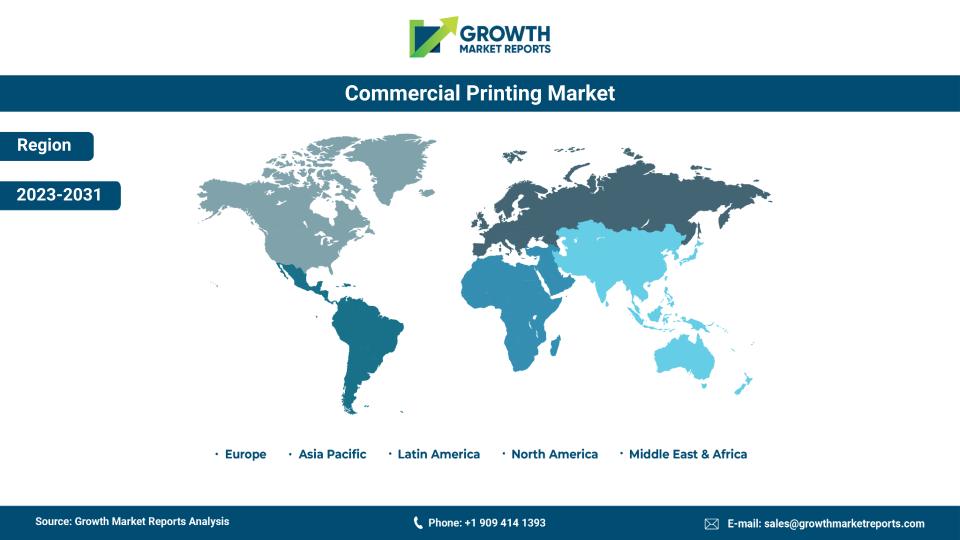
From a regional perspective, Asia Pacific dominates the global commercial printing market, accounting for the largest share in 2024. This leadership position is attributed to the region's thriving manufacturing sector, burgeoning retail and e-commerce industries, and rapid urbanization. Countries such as China, India, and Japan are witnessing substantial investments in advanced printing infrastructure, supported by favorable government policies and a growing middle-class population. North America and Europe follow closely, driven by technological innovation, strong demand for premium packaging, and a focus on sustainable printing practices. Meanwhile, Latin America and the Middle East & Africa are emerging as lucrative markets, propelled by rising industrialization and increasing advertising expenditures.

Global Commercial Printing Industry Outlook

Printing Technology Analysis

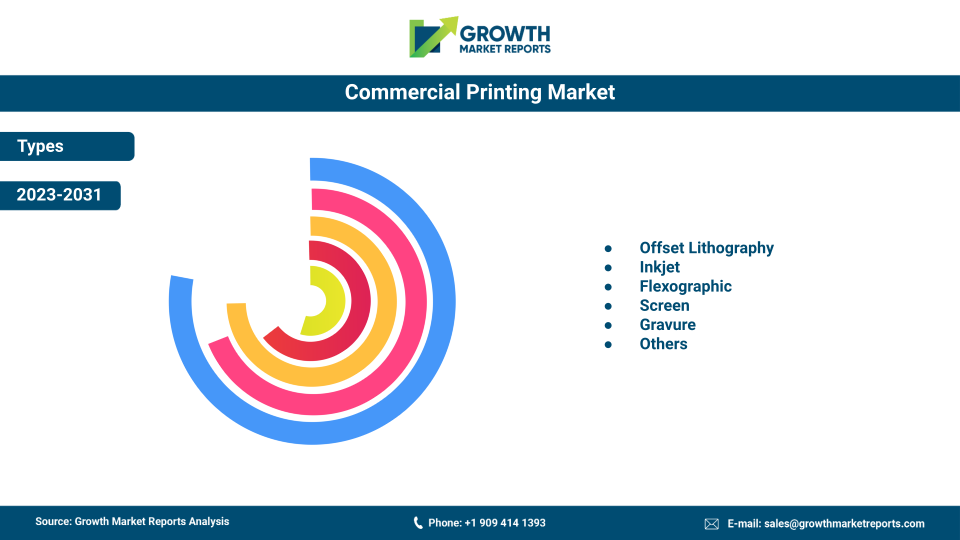
The commercial printing market is segmented by printing technology, including offset lithography, digital, flexographic, gravure, screen, and other methods. Offset lithography remains the most widely used printing technology, particularly for high-volume jobs such as books, magazines, and newspapers. Its ability to deliver consistent, high-quality prints at competitive costs makes it the preferred choice for large-scale publishing and advertising applications. However, the offset segment faces challenges from digital printing, which offers greater flexibility and efficiency for shorter print runs. As print buyers increasingly demand personalized and on-demand solutions, the market is witnessing a gradual shift toward digital technologies.

Digital printing has emerged as the fastest-growing segment within the commercial printing market, driven by its advantages in speed, customization, and cost-effectiveness for small to medium print volumes. The technology's ability to handle variable data printing, such as personalized marketing materials and direct mail campaigns, is revolutionizing the industry. Digital presses are also more environmentally friendly, as they reduce waste and energy consumption compared to traditional methods. The growing adoption of inkjet and laser printing solutions, coupled with advancements in print quality and substrate compatibility, is expected to further propel the digital printing segment throughout the forecast period.

Flexographic printing is gaining traction, particularly in the packaging sector, due to its versatility and suitability for printing on a wide range of substrates, including plastics, foils, and paper. Flexo printing is renowned for its high-speed production capabilities and cost-effectiveness for medium to large print runs. It is extensively used for producing labels, packaging materials, and flexible packaging, which are in high demand in the food and beverage and retail industries. The continuous development of eco-friendly inks and improved plate-making technologies is enhancing the quality and sustainability of flexographic printing, making it a popular choice for brand owners seeking greener solutions.

Digital Printing Packaging is revolutionizing the way brands approach their packaging strategies. With the ability to produce short print runs and offer unparalleled customization, digital printing packaging is becoming a preferred choice for businesses looking to create unique and engaging packaging designs. This technology allows for the incorporation of variable data, enabling brands to personalize packaging with customer-specific information, promotional messages, or even QR codes for interactive experiences. The flexibility and speed of digital printing packaging make it ideal for companies seeking to respond quickly to market trends and consumer demands, while also reducing waste and minimizing environmental impact.

Gravure and screen printing continue to play important roles in specific niche applications within the commercial printing market. Gravure printing is favored for high-volume, high-quality printing tasks such as magazines, packaging, and decorative laminates, thanks to its ability to produce sharp images and vibrant colors. Screen printing, on the other hand, is widely used for specialty applications like textiles, signage, and promotional products, where durability and color vibrancy are critical. Both technologies are evolving with the integration of digital enhancements and automation, ensuring their continued relevance in an increasingly competitive market landscape.

Report Scope

Attributes Details
Report Title Commercial Printing Market Research Report 2033
By Printing Technology Offset Lithography, Digital, Flexographic, Gravure, Screen, Others
By Application Packaging, Advertising, Publishing, Others
By Print Product Brochures, Books, Magazines, Labels, Catalogs, Directories, Others
By End-User Retail, Food & Beverage, Healthcare, Education, Publishing, Others
Regions Covered North America, Europe, APAC, Latin America, MEA
Base Year 2024
Historic Data 2018-2023
Forecast Period 2025-2033
Number of Pages 277
Number of Tables & Figures 379
Customization Available Yes, the report can be customized as per your need.

Application Analysis

The commercial printing market serves a diverse array of applications, with packaging emerging as the largest and fastest-growing segment. The packaging application encompasses folding cartons, flexible packaging, labels, and corrugated boxes, all of which are experiencing heightened demand due to the proliferation of e-commerce and changing consumer lifestyles. Brands are increasingly investing in high-impact packaging designs to attract consumers and reinforce brand identity, driving the need for advanced printing solutions that offer both visual appeal and functional performance. The trend toward sustainable packaging, including recyclable and biodegradable materials, is further shaping the application landscape, compelling printers to adopt eco-friendly practices and materials.

Advertising is another significant application segment, encompassing printed materials such as brochures, flyers, posters, banners, and direct mail. Despite the growing influence of digital advertising, print media remains a powerful tool for targeted marketing, especially in local and regional campaigns. Print advertising offers tangible, lasting impressions and is often perceived as more trustworthy by consumers, particularly in sectors like real estate, automotive, and retail. The resurgence of experiential marketing and in-store promotions is also boosting demand for high-quality, eye-catching printed materials, reinforcing the importance of commercial printing in the advertising ecosystem.

Publishing continues to be a vital application area for commercial printing, covering books, magazines, newspapers, and educational materials. While the publishing industry has faced challenges from digitalization, print publications retain a loyal readership, particularly in niche markets and emerging economies. The tactile experience of reading printed books and magazines, coupled with advancements in print-on-demand technology, is sustaining demand for physical publications. Educational institutions and corporate training programs also rely on printed materials for effective learning and knowledge dissemination, further supporting the publishing segment.

In the financial services sector, Print and Mail Outsourcing for Financial Services has emerged as a strategic solution to enhance operational efficiency and customer communication. By outsourcing print and mail functions, financial institutions can focus on their core competencies while ensuring timely and accurate delivery of critical documents such as statements, notices, and marketing materials. This approach not only reduces costs but also leverages the expertise of specialized service providers who are equipped with the latest printing technologies and compliance knowledge. As regulatory requirements become more stringent, the ability to securely manage and distribute sensitive information through print and mail outsourcing is becoming increasingly valuable for financial services companies.

The others application segment includes a wide range of printed products, such as business forms, stationery, and security printing. These applications, though smaller in scale compared to packaging and advertising, are essential for various business operations and regulatory compliance. Security printing, in particular, is gaining prominence due to the rising need for anti-counterfeiting measures in documents, certificates, and financial instruments. The ongoing digital transformation in business processes is creating opportunities for hybrid printing solutions that integrate physical and digital elements, expanding the scope of commercial printing applications.

The commercial printing market offers a vast portfolio of print products, with brochures and books leading the segment due to their extensive use in marketing and publishing. Brochures are indispensable marketing tools for businesses across industries, providing concise and visually appealing information about products and services. The demand for creatively designed, high-quality brochures is rising as companies seek to differentiate themselves and engage customers effectively. Books, on the other hand, remain a cornerstone of the publishing industry, with print-on-demand and self-publishing models enabling authors and publishers to cater to niche audiences and reduce inventory costs.

Magazines and labels represent significant segments within the commercial printing market, each serving distinct needs. Magazines, despite facing competition from digital media, continue to attract advertisers and readers with their curated content and premium print quality. The rise of specialty and luxury magazines targeting specific demographics is sustaining demand for high-end printing services. Labels, meanwhile, are critical for product identification, branding, and regulatory compliance across industries such as food and beverage, pharmaceuticals, and consumer goods. The trend toward smart labels and interactive packaging is driving innovation in label printing, with technologies like RFID and QR codes enhancing product traceability and consumer engagement.

Catalogs and directories also hold a substantial share in the commercial printing market, particularly in retail and business-to-business (B2B) sectors. Catalogs serve as comprehensive product showcases, enabling businesses to present their offerings in a visually appealing and organized manner. The resurgence of print catalogs in e-commerce and luxury retail is a testament to their enduring value in driving customer engagement and sales. Directories, though declining in some regions due to digital alternatives, remain relevant for local businesses and niche markets that rely on printed listings for visibility and outreach.

The others print product segment includes items such as calendars, posters, greeting cards, and business forms. These products, while representing a smaller portion of the market, are essential for personal, promotional, and corporate use. The demand for customized and short-run print products is increasing, driven by advancements in digital printing and the growing popularity of personalized gifts and promotional items. The ability to offer quick turnaround times and high-quality finishes is giving commercial printers a competitive edge in this dynamic segment.

End-User Analysis

The commercial printing market caters to a diverse range of end-users, with the retail sector accounting for a significant share. Retailers rely heavily on printed materials for in-store promotions, point-of-sale displays, packaging, and advertising campaigns. The need to create immersive shopping experiences and drive foot traffic is fueling demand for high-quality, visually engaging print products. The rise of omnichannel retailing, where physical and digital channels converge, is prompting retailers to invest in integrated marketing campaigns that leverage both print and digital media, further boosting the commercial printing market.

The food and beverage industry is another major end-user, driven by the critical role of packaging and labeling in product differentiation, compliance, and consumer safety. As regulations around food safety and labeling become more stringent, manufacturers are investing in advanced printing solutions to ensure accurate, compliant, and attractive packaging. The trend toward premium and sustainable packaging is also influencing purchasing decisions, prompting food and beverage companies to collaborate with commercial printers that offer innovative materials and eco-friendly printing techniques.

Healthcare is an increasingly important end-user segment, given the need for reliable and secure printing of labels, packaging, instructions, and patient information materials. The healthcare industry demands high standards of quality, traceability, and security in printed products to ensure patient safety and regulatory compliance. The adoption of smart packaging and anti-counterfeiting technologies, such as tamper-evident labels and serialization, is driving innovation in healthcare printing. Additionally, the ongoing digital transformation in healthcare is creating opportunities for hybrid solutions that combine printed and digital information delivery.

The education and publishing sectors continue to be significant contributors to the commercial printing market. Educational institutions require a wide range of printed materials, including textbooks, workbooks, examination papers, and certificates. Despite the growth of digital learning platforms, printed materials remain essential for effective teaching and learning, especially in regions with limited digital infrastructure. The publishing sector, encompassing books, magazines, and newspapers, relies on commercial printers to deliver high-quality, cost-effective products that meet the evolving preferences of readers and advertisers.

The others end-user segment includes industries such as finance, automotive, government, and non-profits, each with unique printing needs. Financial institutions require secure printing for statements, checks, and regulatory documents, while government agencies depend on commercial printers for forms, reports, and public communication materials. The ability to offer customized, secure, and compliant printing solutions is enabling commercial printers to expand their reach across diverse end-user segments, driving sustained market growth.

Opportunities & Threats

The commercial printing market is brimming with opportunities, particularly in the realm of technological innovation and sustainable printing. The ongoing digital transformation is enabling print service providers to offer value-added services such as variable data printing, augmented reality (AR) integration, and web-to-print platforms, enhancing customer engagement and operational efficiency. The shift toward eco-friendly printing solutions, including water-based inks, recyclable substrates, and energy-efficient processes, is opening new avenues for growth, especially as businesses and consumers become more environmentally conscious. The rise of smart packaging and interactive print products is also creating opportunities for commercial printers to differentiate themselves and capture new market segments.

Another major opportunity lies in the expansion of emerging markets, where rapid urbanization, industrialization, and rising disposable incomes are driving demand for printed materials across sectors. The proliferation of e-commerce and the growth of the middle class in regions such as Asia Pacific, Latin America, and the Middle East & Africa are fueling demand for packaging, advertising, and publishing products. Print service providers that invest in advanced printing technologies, localize their offerings, and build strategic partnerships with regional players are well-positioned to capitalize on these growth opportunities. Additionally, the trend toward on-demand and personalized printing is enabling commercial printers to tap into niche markets and diversify their revenue streams.

Despite these opportunities, the commercial printing market faces several restraining factors, chief among them being the ongoing shift toward digital media. The increasing adoption of digital advertising, e-books, and online publishing is impacting demand for traditional print products, particularly in mature markets. Print service providers must adapt by embracing digital technologies, diversifying their offerings, and focusing on value-added services to remain competitive. Environmental concerns related to paper waste, ink usage, and energy consumption are also prompting regulatory scrutiny and driving the need for sustainable practices. Companies that fail to innovate and address these challenges risk losing market share to more agile and environmentally responsible competitors.

Regional Outlook

The Asia Pacific region dominates the global commercial printing market, accounting for over 42% of the total market value in 2024, which translates to approximately USD 205 billion. The regionÂ’s leadership is driven by robust economic growth, a thriving manufacturing sector, and a rapidly expanding retail and e-commerce landscape. China, India, and Japan are the primary contributors, benefiting from substantial investments in advanced printing infrastructure and a growing middle-class population with increasing purchasing power. The adoption of digital and flexographic printing technologies is particularly pronounced in these countries, enabling print service providers to meet the diverse and evolving needs of businesses and consumers.

North America and Europe collectively represent a significant portion of the commercial printing market, with North America accounting for approximately USD 128 billion and Europe for about USD 102 billion in 2024. In North America, the market is characterized by strong demand for premium packaging, innovative advertising solutions, and sustainable printing practices. The region is at the forefront of technological innovation, with widespread adoption of digital and automated printing solutions. Europe, meanwhile, is witnessing steady growth, driven by the resurgence of print advertising, the popularity of luxury packaging, and a focus on environmental sustainability. Both regions are expected to maintain moderate growth, with North America projected to grow at a CAGR of 2.8% and Europe at 2.7% through 2033.

Latin America and the Middle East & Africa, though smaller in market size, are emerging as promising growth regions. Latin AmericaÂ’s commercial printing market is valued at approximately USD 28 billion in 2024, supported by rising industrialization, increasing advertising expenditures, and the expansion of retail and e-commerce sectors. The Middle East & Africa market, valued at around USD 25 billion, is benefiting from infrastructure development, growing urban populations, and increased government investments in education and healthcare. Both regions offer significant opportunities for print service providers willing to invest in advanced technologies and tailor their offerings to local market needs.

Commercial Printing Market Statistics

Competitor Outlook

The global commercial printing market is highly competitive, characterized by the presence of a mix of large multinational corporations and numerous regional and local players. The competitive landscape is shaped by factors such as technological innovation, service quality, pricing strategies, and the ability to offer customized solutions. Leading companies are investing heavily in research and development to enhance print quality, improve operational efficiency, and expand their portfolios with value-added services such as web-to-print, variable data printing, and sustainable printing solutions. Mergers, acquisitions, and strategic partnerships are common strategies employed by market leaders to strengthen their market position and expand their geographic reach.

Innovation is a key differentiator in the commercial printing market, with companies competing to offer the latest printing technologies, eco-friendly materials, and integrated digital solutions. The shift toward digital and automated printing processes is enabling print service providers to reduce turnaround times, minimize waste, and cater to the growing demand for personalized and on-demand print products. Companies that successfully integrate digital workflows, cloud-based print management, and data analytics into their operations are gaining a competitive edge by delivering superior customer experiences and optimizing resource utilization.

Sustainability is another critical focus area for leading commercial printing companies. With increasing regulatory scrutiny and growing consumer awareness of environmental issues, market players are adopting green printing practices, such as using recycled paper, water-based inks, and energy-efficient processes. Companies that demonstrate a commitment to sustainability are not only meeting regulatory requirements but also attracting environmentally conscious clients and enhancing their brand reputation. The ability to offer sustainable printing solutions is becoming a key criterion for winning contracts, particularly with multinational corporations and government agencies.

Some of the major companies operating in the global commercial printing market include RR Donnelley & Sons Company, Deluxe Corporation, Quad/Graphics Inc., Transcontinental Inc., LSC Communications, Cenveo Corporation, Vistaprint (Cimpress PLC), ACME Printing, and O'Neil Printing. RR Donnelley & Sons Company is recognized for its comprehensive print and digital communication services, serving clients across industries such as retail, healthcare, and financial services. Deluxe Corporation specializes in printing solutions for small businesses, including checks, forms, and marketing materials, while Quad/Graphics is known for its expertise in magazine, catalog, and direct mail printing.

Transcontinental Inc. is a leading player in the packaging and printing sector, with a strong focus on sustainability and innovation. LSC Communications, though recently restructured, remains a key provider of publishing and print solutions for books, magazines, and directories. Cenveo Corporation is renowned for its diverse product portfolio, including labels, envelopes, and commercial print products. Vistaprint (Cimpress PLC) has carved a niche in the online printing space, offering customized print products and marketing services to small and medium-sized businesses worldwide.

The competitive landscape is further enriched by regional players that cater to local markets and niche segments, offering specialized services and personalized customer support. These companies often leverage their deep understanding of local market dynamics and customer preferences to compete effectively against larger multinational firms. As the commercial printing market continues to evolve, companies that prioritize innovation, sustainability, and customer-centricity are well-positioned to succeed in an increasingly competitive and dynamic environment.

Key Players

  • RR Donnelley & Sons Company
  • Deluxe Corporation
  • Quad/Graphics, Inc.
  • Cimpress plc
  • Transcontinental Inc.
  • LSC Communications
  • Cenveo, Inc.
  • Dai Nippon Printing Co., Ltd.
  • Toppan Printing Co., Ltd.
  • Vistaprint (a Cimpress company)
  • Taylor Corporation
  • Shutterfly, Inc.
  • WestRock Company
  • R.R. Donnelley (RRD)
  • Canon Solutions America, Inc.
  • Mondi Group
  • O'Neil Printing
  • CJK Group, Inc.
  • Printpack, Inc.
  • Multi-Color Corporation
Commercial Printing Market Overview

Segments

The Commercial Printing market has been segmented on the basis of

Printing Technology

  • Offset Lithography
  • Digital
  • Flexographic
  • Gravure
  • Screen
  • Others

Application

  • Packaging
  • Advertising
  • Publishing
  • Others

Print Product

  • Brochures
  • Books
  • Magazines
  • Labels
  • Catalogs
  • Directories
  • Others

End-User

  • Retail
  • Food & Beverage
  • Healthcare
  • Education
  • Publishing
  • Others

Competitive Landscape

Key players in the global commercial printing market are Quad/Graphics Inc., ACME Printing, Cenveo Worldwide Limited, Transcontinental Inc., Dai Nippon Printing Co. Ltd., RR. Donnelley & Sons Company, TOPPAN PRINTING CO., LTD., Ennis Inc., Taylor, and Vistaprint. These players are focusing on mergers, acquisitions, and partnerships to maintain their geographical presence.
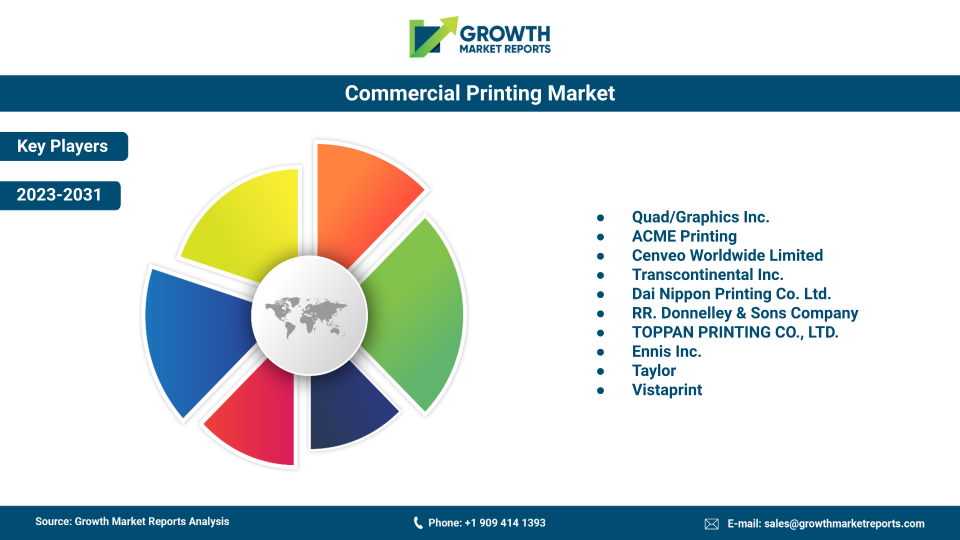
 

Commercial Printing Market Key Players

Frequently Asked Questions

Challenges include the shift toward digital media, environmental concerns over paper and ink usage, regulatory pressures, and the need for continuous innovation to stay competitive.

Trends include the adoption of sustainable printing practices, integration of digital technologies, growth in smart and interactive packaging, and expansion into emerging markets. Opportunities exist in eco-friendly solutions, value-added services, and personalized print products.

Major end-users are retail, food & beverage, healthcare, education, publishing, and others such as finance, automotive, government, and non-profits.

Key companies include RR Donnelley & Sons Company, Deluxe Corporation, Quad/Graphics Inc., Transcontinental Inc., LSC Communications, Cenveo Corporation, Vistaprint (Cimpress PLC), and O'Neil Printing.

Asia Pacific leads the market, accounting for over 42% of the global value, followed by North America and Europe. Latin America and the Middle East & Africa are emerging as promising growth regions.

Digital printing enables on-demand and variable data printing, offers faster turnaround times, supports short print runs, and is more environmentally friendly, making it increasingly popular for SMEs and personalized marketing.

Packaging is the largest and fastest-growing application, followed by advertising, publishing, and other uses such as business forms and security printing.

The primary printing technologies are offset lithography, digital printing, flexographic, gravure, and screen printing. Offset lithography is widely used for high-volume jobs, while digital printing is the fastest-growing segment due to its flexibility and efficiency.

Key growth drivers include rising demand for innovative and customized packaging, advancements in digital printing technology, increased marketing collateral needs, and the ongoing digital transformation of printing services.

The global commercial printing market reached USD 488.3 billion in 2024 and is projected to grow at a CAGR of 3.1%, reaching USD 640.8 billion by 2033.

Table Of Content

Chapter 1 Executive Summary
Chapter 2 Assumptions and Acronyms Used
Chapter 3 Research Methodology
Chapter 4 Commercial Printing Market Overview
   4.1 Introduction
      4.1.1 Market Taxonomy
      4.1.2 Market Definition
      4.1.3 Macro-Economic Factors Impacting the Market Growth
   4.2 Commercial Printing Market Dynamics
      4.2.1 Market Drivers
      4.2.2 Market Restraints
      4.2.3 Market Opportunity
   4.3 Commercial Printing Market - Supply Chain Analysis
      4.3.1 List of Key Suppliers
      4.3.2 List of Key Distributors
      4.3.3 List of Key Consumers
   4.4 Key Forces Shaping the Commercial Printing Market
      4.4.1 Bargaining Power of Suppliers
      4.4.2 Bargaining Power of Buyers
      4.4.3 Threat of Substitution
      4.4.4 Threat of New Entrants
      4.4.5 Competitive Rivalry
   4.5 Global Commercial Printing Market Size & Forecast, 2023-2032
      4.5.1 Commercial Printing Market Size and Y-o-Y Growth
      4.5.2 Commercial Printing Market Absolute $ Opportunity

Chapter 5 Global Commercial Printing Market Analysis and Forecast By Printing Technology
   5.1 Introduction
      5.1.1 Key Market Trends & Growth Opportunities By Printing Technology
      5.1.2 Basis Point Share (BPS) Analysis By Printing Technology
      5.1.3 Absolute $ Opportunity Assessment By Printing Technology
   5.2 Commercial Printing Market Size Forecast By Printing Technology
      5.2.1 Offset Lithography
      5.2.2 Digital
      5.2.3 Flexographic
      5.2.4 Gravure
      5.2.5 Screen
      5.2.6 Others
   5.3 Market Attractiveness Analysis By Printing Technology

Chapter 6 Global Commercial Printing Market Analysis and Forecast By Application
   6.1 Introduction
      6.1.1 Key Market Trends & Growth Opportunities By Application
      6.1.2 Basis Point Share (BPS) Analysis By Application
      6.1.3 Absolute $ Opportunity Assessment By Application
   6.2 Commercial Printing Market Size Forecast By Application
      6.2.1 Packaging
      6.2.2 Advertising
      6.2.3 Publishing
      6.2.4 Others
   6.3 Market Attractiveness Analysis By Application

Chapter 7 Global Commercial Printing Market Analysis and Forecast By Print Product
   7.1 Introduction
      7.1.1 Key Market Trends & Growth Opportunities By Print Product
      7.1.2 Basis Point Share (BPS) Analysis By Print Product
      7.1.3 Absolute $ Opportunity Assessment By Print Product
   7.2 Commercial Printing Market Size Forecast By Print Product
      7.2.1 Brochures
      7.2.2 Books
      7.2.3 Magazines
      7.2.4 Labels
      7.2.5 Catalogs
      7.2.6 Directories
      7.2.7 Others
   7.3 Market Attractiveness Analysis By Print Product

Chapter 8 Global Commercial Printing Market Analysis and Forecast By End-User
   8.1 Introduction
      8.1.1 Key Market Trends & Growth Opportunities By End-User
      8.1.2 Basis Point Share (BPS) Analysis By End-User
      8.1.3 Absolute $ Opportunity Assessment By End-User
   8.2 Commercial Printing Market Size Forecast By End-User
      8.2.1 Retail
      8.2.2 Food & Beverage
      8.2.3 Healthcare
      8.2.4 Education
      8.2.5 Publishing
      8.2.6 Others
   8.3 Market Attractiveness Analysis By End-User

Chapter 9 Global Commercial Printing Market Analysis and Forecast by Region
   9.1 Introduction
      9.1.1 Key Market Trends & Growth Opportunities By Region
      9.1.2 Basis Point Share (BPS) Analysis By Region
      9.1.3 Absolute $ Opportunity Assessment By Region
   9.2 Commercial Printing Market Size Forecast By Region
      9.2.1 North America
      9.2.2 Europe
      9.2.3 Asia Pacific
      9.2.4 Latin America
      9.2.5 Middle East & Africa (MEA)
   9.3 Market Attractiveness Analysis By Region

Chapter 10 Coronavirus Disease (COVID-19) Impact 
   10.1 Introduction 
   10.2 Current & Future Impact Analysis 
   10.3 Economic Impact Analysis 
   10.4 Government Policies 
   10.5 Investment Scenario

Chapter 11 North America Commercial Printing Analysis and Forecast
   11.1 Introduction
   11.2 North America Commercial Printing Market Size Forecast by Country
      11.2.1 U.S.
      11.2.2 Canada
   11.3 Basis Point Share (BPS) Analysis by Country
   11.4 Absolute $ Opportunity Assessment by Country
   11.5 Market Attractiveness Analysis by Country
   11.6 North America Commercial Printing Market Size Forecast By Printing Technology
      11.6.1 Offset Lithography
      11.6.2 Digital
      11.6.3 Flexographic
      11.6.4 Gravure
      11.6.5 Screen
      11.6.6 Others
   11.7 Basis Point Share (BPS) Analysis By Printing Technology 
   11.8 Absolute $ Opportunity Assessment By Printing Technology 
   11.9 Market Attractiveness Analysis By Printing Technology
   11.10 North America Commercial Printing Market Size Forecast By Application
      11.10.1 Packaging
      11.10.2 Advertising
      11.10.3 Publishing
      11.10.4 Others
   11.11 Basis Point Share (BPS) Analysis By Application 
   11.12 Absolute $ Opportunity Assessment By Application 
   11.13 Market Attractiveness Analysis By Application
   11.14 North America Commercial Printing Market Size Forecast By Print Product
      11.14.1 Brochures
      11.14.2 Books
      11.14.3 Magazines
      11.14.4 Labels
      11.14.5 Catalogs
      11.14.6 Directories
      11.14.7 Others
   11.15 Basis Point Share (BPS) Analysis By Print Product 
   11.16 Absolute $ Opportunity Assessment By Print Product 
   11.17 Market Attractiveness Analysis By Print Product
   11.18 North America Commercial Printing Market Size Forecast By End-User
      11.18.1 Retail
      11.18.2 Food & Beverage
      11.18.3 Healthcare
      11.18.4 Education
      11.18.5 Publishing
      11.18.6 Others
   11.19 Basis Point Share (BPS) Analysis By End-User 
   11.20 Absolute $ Opportunity Assessment By End-User 
   11.21 Market Attractiveness Analysis By End-User

Chapter 12 Europe Commercial Printing Analysis and Forecast
   12.1 Introduction
   12.2 Europe Commercial Printing Market Size Forecast by Country
      12.2.1 Germany
      12.2.2 France
      12.2.3 Italy
      12.2.4 U.K.
      12.2.5 Spain
      12.2.6 Russia
      12.2.7 Rest of Europe
   12.3 Basis Point Share (BPS) Analysis by Country
   12.4 Absolute $ Opportunity Assessment by Country
   12.5 Market Attractiveness Analysis by Country
   12.6 Europe Commercial Printing Market Size Forecast By Printing Technology
      12.6.1 Offset Lithography
      12.6.2 Digital
      12.6.3 Flexographic
      12.6.4 Gravure
      12.6.5 Screen
      12.6.6 Others
   12.7 Basis Point Share (BPS) Analysis By Printing Technology 
   12.8 Absolute $ Opportunity Assessment By Printing Technology 
   12.9 Market Attractiveness Analysis By Printing Technology
   12.10 Europe Commercial Printing Market Size Forecast By Application
      12.10.1 Packaging
      12.10.2 Advertising
      12.10.3 Publishing
      12.10.4 Others
   12.11 Basis Point Share (BPS) Analysis By Application 
   12.12 Absolute $ Opportunity Assessment By Application 
   12.13 Market Attractiveness Analysis By Application
   12.14 Europe Commercial Printing Market Size Forecast By Print Product
      12.14.1 Brochures
      12.14.2 Books
      12.14.3 Magazines
      12.14.4 Labels
      12.14.5 Catalogs
      12.14.6 Directories
      12.14.7 Others
   12.15 Basis Point Share (BPS) Analysis By Print Product 
   12.16 Absolute $ Opportunity Assessment By Print Product 
   12.17 Market Attractiveness Analysis By Print Product
   12.18 Europe Commercial Printing Market Size Forecast By End-User
      12.18.1 Retail
      12.18.2 Food & Beverage
      12.18.3 Healthcare
      12.18.4 Education
      12.18.5 Publishing
      12.18.6 Others
   12.19 Basis Point Share (BPS) Analysis By End-User 
   12.20 Absolute $ Opportunity Assessment By End-User 
   12.21 Market Attractiveness Analysis By End-User

Chapter 13 Asia Pacific Commercial Printing Analysis and Forecast
   13.1 Introduction
   13.2 Asia Pacific Commercial Printing Market Size Forecast by Country
      13.2.1 China
      13.2.2 Japan
      13.2.3 South Korea
      13.2.4 India
      13.2.5 Australia
      13.2.6 South East Asia (SEA)
      13.2.7 Rest of Asia Pacific (APAC)
   13.3 Basis Point Share (BPS) Analysis by Country
   13.4 Absolute $ Opportunity Assessment by Country
   13.5 Market Attractiveness Analysis by Country
   13.6 Asia Pacific Commercial Printing Market Size Forecast By Printing Technology
      13.6.1 Offset Lithography
      13.6.2 Digital
      13.6.3 Flexographic
      13.6.4 Gravure
      13.6.5 Screen
      13.6.6 Others
   13.7 Basis Point Share (BPS) Analysis By Printing Technology 
   13.8 Absolute $ Opportunity Assessment By Printing Technology 
   13.9 Market Attractiveness Analysis By Printing Technology
   13.10 Asia Pacific Commercial Printing Market Size Forecast By Application
      13.10.1 Packaging
      13.10.2 Advertising
      13.10.3 Publishing
      13.10.4 Others
   13.11 Basis Point Share (BPS) Analysis By Application 
   13.12 Absolute $ Opportunity Assessment By Application 
   13.13 Market Attractiveness Analysis By Application
   13.14 Asia Pacific Commercial Printing Market Size Forecast By Print Product
      13.14.1 Brochures
      13.14.2 Books
      13.14.3 Magazines
      13.14.4 Labels
      13.14.5 Catalogs
      13.14.6 Directories
      13.14.7 Others
   13.15 Basis Point Share (BPS) Analysis By Print Product 
   13.16 Absolute $ Opportunity Assessment By Print Product 
   13.17 Market Attractiveness Analysis By Print Product
   13.18 Asia Pacific Commercial Printing Market Size Forecast By End-User
      13.18.1 Retail
      13.18.2 Food & Beverage
      13.18.3 Healthcare
      13.18.4 Education
      13.18.5 Publishing
      13.18.6 Others
   13.19 Basis Point Share (BPS) Analysis By End-User 
   13.20 Absolute $ Opportunity Assessment By End-User 
   13.21 Market Attractiveness Analysis By End-User

Chapter 14 Latin America Commercial Printing Analysis and Forecast
   14.1 Introduction
   14.2 Latin America Commercial Printing Market Size Forecast by Country
      14.2.1 Brazil
      14.2.2 Mexico
      14.2.3 Rest of Latin America (LATAM)
   14.3 Basis Point Share (BPS) Analysis by Country
   14.4 Absolute $ Opportunity Assessment by Country
   14.5 Market Attractiveness Analysis by Country
   14.6 Latin America Commercial Printing Market Size Forecast By Printing Technology
      14.6.1 Offset Lithography
      14.6.2 Digital
      14.6.3 Flexographic
      14.6.4 Gravure
      14.6.5 Screen
      14.6.6 Others
   14.7 Basis Point Share (BPS) Analysis By Printing Technology 
   14.8 Absolute $ Opportunity Assessment By Printing Technology 
   14.9 Market Attractiveness Analysis By Printing Technology
   14.10 Latin America Commercial Printing Market Size Forecast By Application
      14.10.1 Packaging
      14.10.2 Advertising
      14.10.3 Publishing
      14.10.4 Others
   14.11 Basis Point Share (BPS) Analysis By Application 
   14.12 Absolute $ Opportunity Assessment By Application 
   14.13 Market Attractiveness Analysis By Application
   14.14 Latin America Commercial Printing Market Size Forecast By Print Product
      14.14.1 Brochures
      14.14.2 Books
      14.14.3 Magazines
      14.14.4 Labels
      14.14.5 Catalogs
      14.14.6 Directories
      14.14.7 Others
   14.15 Basis Point Share (BPS) Analysis By Print Product 
   14.16 Absolute $ Opportunity Assessment By Print Product 
   14.17 Market Attractiveness Analysis By Print Product
   14.18 Latin America Commercial Printing Market Size Forecast By End-User
      14.18.1 Retail
      14.18.2 Food & Beverage
      14.18.3 Healthcare
      14.18.4 Education
      14.18.5 Publishing
      14.18.6 Others
   14.19 Basis Point Share (BPS) Analysis By End-User 
   14.20 Absolute $ Opportunity Assessment By End-User 
   14.21 Market Attractiveness Analysis By End-User

Chapter 15 Middle East & Africa (MEA) Commercial Printing Analysis and Forecast
   15.1 Introduction
   15.2 Middle East & Africa (MEA) Commercial Printing Market Size Forecast by Country
      15.2.1 Saudi Arabia
      15.2.2 South Africa
      15.2.3 UAE
      15.2.4 Rest of Middle East & Africa (MEA)
   15.3 Basis Point Share (BPS) Analysis by Country
   15.4 Absolute $ Opportunity Assessment by Country
   15.5 Market Attractiveness Analysis by Country
   15.6 Middle East & Africa (MEA) Commercial Printing Market Size Forecast By Printing Technology
      15.6.1 Offset Lithography
      15.6.2 Digital
      15.6.3 Flexographic
      15.6.4 Gravure
      15.6.5 Screen
      15.6.6 Others
   15.7 Basis Point Share (BPS) Analysis By Printing Technology 
   15.8 Absolute $ Opportunity Assessment By Printing Technology 
   15.9 Market Attractiveness Analysis By Printing Technology
   15.10 Middle East & Africa (MEA) Commercial Printing Market Size Forecast By Application
      15.10.1 Packaging
      15.10.2 Advertising
      15.10.3 Publishing
      15.10.4 Others
   15.11 Basis Point Share (BPS) Analysis By Application 
   15.12 Absolute $ Opportunity Assessment By Application 
   15.13 Market Attractiveness Analysis By Application
   15.14 Middle East & Africa (MEA) Commercial Printing Market Size Forecast By Print Product
      15.14.1 Brochures
      15.14.2 Books
      15.14.3 Magazines
      15.14.4 Labels
      15.14.5 Catalogs
      15.14.6 Directories
      15.14.7 Others
   15.15 Basis Point Share (BPS) Analysis By Print Product 
   15.16 Absolute $ Opportunity Assessment By Print Product 
   15.17 Market Attractiveness Analysis By Print Product
   15.18 Middle East & Africa (MEA) Commercial Printing Market Size Forecast By End-User
      15.18.1 Retail
      15.18.2 Food & Beverage
      15.18.3 Healthcare
      15.18.4 Education
      15.18.5 Publishing
      15.18.6 Others
   15.19 Basis Point Share (BPS) Analysis By End-User 
   15.20 Absolute $ Opportunity Assessment By End-User 
   15.21 Market Attractiveness Analysis By End-User

Chapter 16 Competition Landscape 
   16.1 Commercial Printing Market: Competitive Dashboard
   16.2 Global Commercial Printing Market: Market Share Analysis, 2023
   16.3 Company Profiles (Details – Overview, Financials, Developments, Strategy) 
      16.3.1 RR Donnelley & Sons Company
Deluxe Corporation
Quad/Graphics, Inc.
Cimpress plc
Transcontinental Inc.
LSC Communications
Cenveo, Inc.
Dai Nippon Printing Co., Ltd.
Toppan Printing Co., Ltd.
Vistaprint (a Cimpress company)
Taylor Corporation
Shutterfly, Inc.
WestRock Company
R.R. Donnelley (RRD)
Canon Solutions America, Inc.
Mondi Group
O'Neil Printing
CJK Group, Inc.
Printpack, Inc.
Multi-Color Corporation

Methodology

Our Clients

Nestle SA
The John Holland Group
General Mills
Honda Motor Co. Ltd.
Microsoft
Dassault Aviation
General Electric
Deloitte