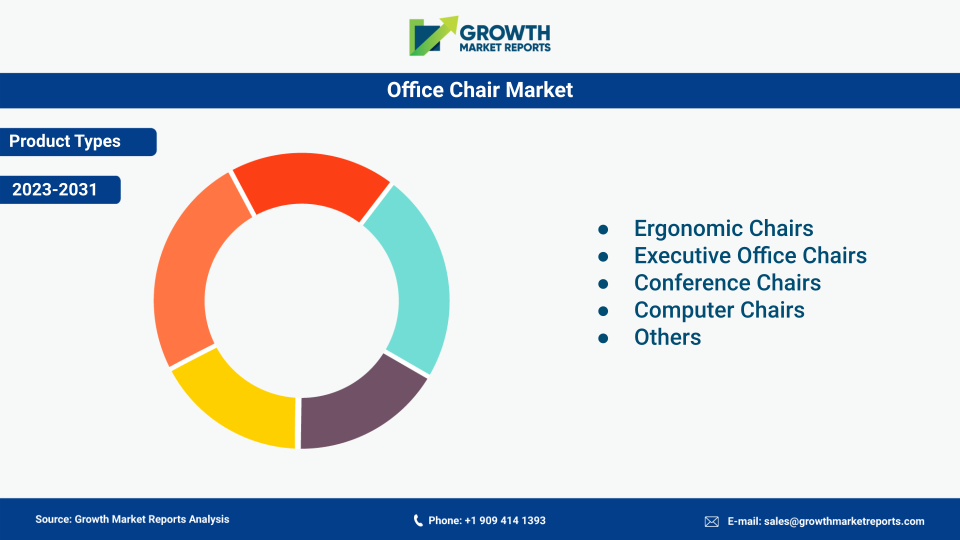
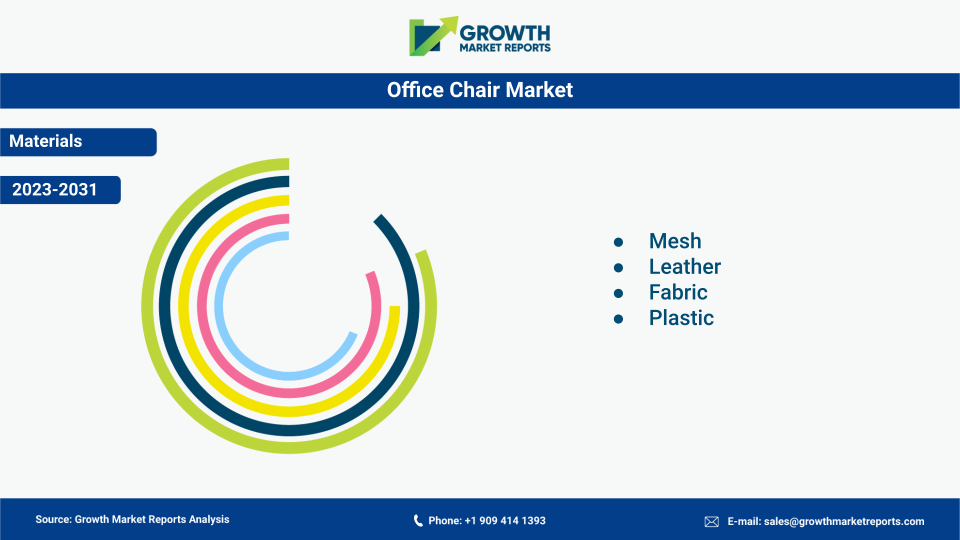
Segments - by Product Type (Ergonomic Chairs, Executive Chairs, Mesh Chairs, Task Chairs, Conference Chairs, Others), by Material (Leather, Fabric, Mesh, Plastic, Others), by Mechanism (Manual, Automatic), by Distribution Channel (Online Stores, Offline Stores), by End-User (Commercial, Residential, Industrial, Others)
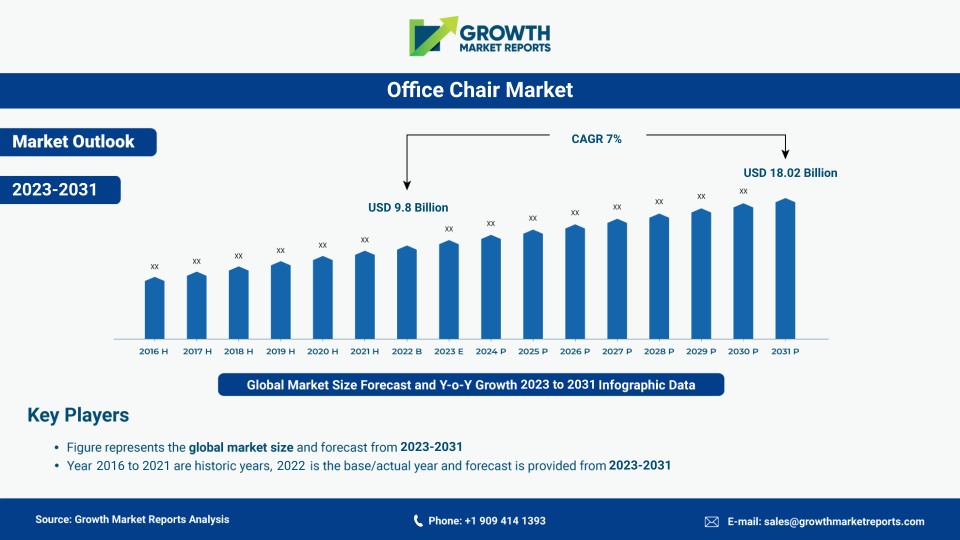
According to our latest research, the global office chair market size reached USD 13.2 billion in 2024, exhibiting robust performance driven by surging demand for ergonomic and innovative seating solutions in the workplace. The market is projected to expand at a CAGR of 5.8% during the forecast period, reaching a value of USD 21.9 billion by 2033. This growth is primarily attributed to the rising focus on employee well-being, the proliferation of remote and hybrid work models, and increasing investments in office infrastructure upgrades across both developed and emerging economies.
One of the most significant growth factors propelling the office chair market is the heightened awareness of workplace ergonomics and employee health. As organizations continue to recognize the direct correlation between employee comfort and productivity, there has been a marked shift toward investing in ergonomic office chairs. These chairs are designed to provide optimal lumbar support, adjustable features, and promote correct posture, thereby reducing the risk of musculoskeletal disorders and long-term health issues among employees. The trend is further reinforced by stringent occupational health and safety regulations in several countries, compelling companies to upgrade their office furniture to meet compliance standards and foster a healthier work environment.
The rapid adoption of hybrid and remote work models has also contributed substantially to the growth of the office chair market. With a significant portion of the global workforce now operating from home or in flexible office setups, the demand for high-quality office chairs has surged beyond traditional commercial spaces. Home offices have become a key end-user segment, as individuals seek to replicate the ergonomic benefits of corporate office environments within their residences. This shift has led to a spike in direct-to-consumer sales, especially through online channels, as manufacturers and retailers adapt their distribution strategies to cater to evolving consumer preferences.
Technological advancements and product innovation have emerged as pivotal growth drivers for the office chair market. Manufacturers are increasingly incorporating smart features such as adjustable lumbar support, temperature regulation, and IoT-enabled sensors into their product lines. These innovations not only enhance user comfort but also align with the growing demand for customizable and technologically advanced office solutions. Additionally, there is a rising trend toward the use of sustainable and eco-friendly materials in office chair production, reflecting the broader industry movement toward environmental responsibility. This focus on innovation and sustainability is expected to further stimulate market growth over the forecast period.
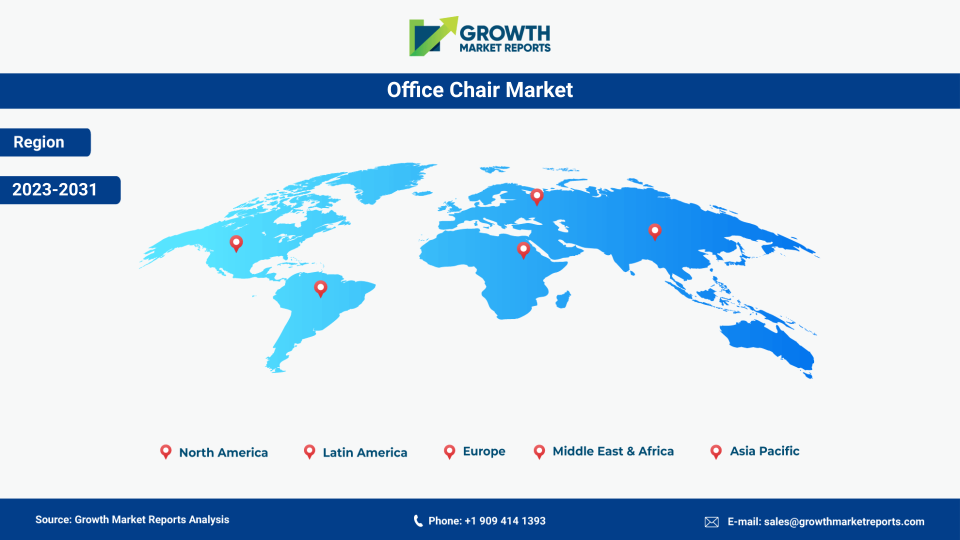
From a regional perspective, Asia Pacific dominates the global office chair market, accounting for the largest share in 2024, closely followed by North America and Europe. The region's leadership is underpinned by rapid urbanization, expanding commercial real estate sectors, and the presence of a large and growing workforce in countries such as China, India, and Japan. North America, on the other hand, benefits from high levels of corporate investment in employee wellness and a mature office furniture industry. Europe continues to witness steady growth, driven by stringent workplace safety regulations and a strong emphasis on design and sustainability. Meanwhile, emerging markets in Latin America and the Middle East & Africa are experiencing increasing demand as office infrastructure development accelerates, albeit from a lower base.
The office chair market is segmented by product type into ergonomic chairs, executive chairs, mesh chairs, task chairs, conference chairs, and others. Ergonomic chairs have witnessed a remarkable surge in demand due to their health-centric design and ability to minimize physical strain during prolonged sitting. These chairs typically feature adjustable armrests, seat height, lumbar support, and tilt mechanisms, making them highly sought after in both commercial and home office settings. The growing body of research linking ergonomic seating to increased productivity and reduced absenteeism has compelled organizations to prioritize these chairs in their office furniture procurement strategies. As a result, ergonomic chairs currently hold the largest market share within the product segment.
Executive chairs are another prominent product type, often characterized by their plush cushioning, premium materials, and sophisticated designs. These chairs are typically reserved for senior management and executive suites, serving as both functional seating solutions and status symbols. The demand for executive chairs is particularly robust in corporate offices and boardrooms, where aesthetics and comfort are equally valued. Despite being a niche segment, executive chairs command higher price points, contributing significantly to the overall revenue of the office chair market.
Mesh chairs have gained substantial popularity in recent years, primarily due to their breathable material and contemporary design. These chairs are especially favored in warm climates and open-plan offices where ventilation and comfort are paramount. Mesh chairs are recognized for their lightweight structure, ease of maintenance, and adaptability to various office environments. Their growing adoption is indicative of a broader shift toward minimalist and functional office furniture, catering to the evolving tastes of modern workplaces.
Task chairs and conference chairs represent essential product categories within the office chair market. Task chairs are designed for everyday use by employees engaged in a variety of office tasks, offering a balance of comfort, mobility, and affordability. Conference chairs, on the other hand, are tailored for meeting rooms and collaborative spaces, emphasizing ease of movement and stackability. Both segments are experiencing steady growth as organizations invest in versatile seating solutions to accommodate dynamic office layouts and collaborative work styles.
| Attributes | Details |
| Report Title | Office Chair Market Research Report 2033 |
| By Product Type | Ergonomic Chairs, Executive Chairs, Mesh Chairs, Task Chairs, Conference Chairs, Others |
| By Material | Leather, Fabric, Mesh, Plastic, Others |
| By Mechanism | Manual, Automatic |
| By Distribution Channel | Online Stores, Offline Stores |
| By End-User | Commercial, Residential, Industrial, Others |
| Regions Covered | North America, Europe, APAC, Latin America, MEA |
| Base Year | 2024 |
| Historic Data | 2018-2023 |
| Forecast Period | 2025-2033 |
| Number of Pages | 284 |
| Number of Tables & Figures | 355 |
| Customization Available | Yes, the report can be customized as per your need. |
The office chair market can be segmented by material into leather, fabric, mesh, plastic, and others. Leather office chairs are synonymous with luxury and durability, often preferred for executive offices and high-end corporate settings. These chairs offer a premium aesthetic and are valued for their longevity and ease of cleaning. However, leather chairs tend to be more expensive and less breathable compared to other materials, which can limit their widespread adoption in cost-sensitive or warm environments.
Fabric chairs are widely appreciated for their comfort, versatility, and extensive range of color and pattern options. Fabric is a popular choice for both commercial and residential settings, providing a softer seating experience and the ability to complement diverse interior designs. The downside to fabric chairs lies in their susceptibility to stains and wear, necessitating regular maintenance to preserve their appearance and functionality.
Mesh office chairs have emerged as a leading material choice, particularly in modern office environments. The breathable mesh fabric promotes air circulation, preventing heat buildup and enhancing user comfort during extended periods of sitting. Mesh chairs are also lightweight and easy to move, making them ideal for dynamic and flexible office spaces. The increasing emphasis on ergonomic design and employee well-being has further bolstered the popularity of mesh chairs, positioning them as a key growth driver within the material segment.
Plastic chairs and other materials, including metal and composite blends, cater to specific market niches where affordability, durability, and ease of maintenance are prioritized. Plastic chairs are commonly used in conference rooms, training centers, and industrial settings due to their cost-effectiveness and stackability. The use of recycled and sustainable materials is also gaining traction, reflecting the broader industry trend toward environmental responsibility. As consumer preferences continue to evolve, manufacturers are increasingly experimenting with innovative material combinations to deliver enhanced performance and sustainability in office chair design.
The mechanism segment of the office chair market is divided into manual and automatic. Manual office chairs have traditionally dominated the market, offering users basic adjustability features such as seat height, backrest tilt, and armrest positioning. These chairs are valued for their simplicity, affordability, and reliability, making them a popular choice for large-scale office installations and budget-conscious consumers. Despite the growing interest in advanced mechanisms, manual chairs continue to hold a substantial share due to their widespread availability and ease of use.
In contrast, automatic office chairs represent the cutting edge of office furniture innovation. These chairs are equipped with motorized or sensor-based adjustment systems, allowing users to customize their seating experience with minimal effort. Automatic chairs often feature programmable settings, memory functions, and even integration with smart office ecosystems, enabling real-time monitoring of posture and activity levels. While the adoption of automatic chairs is currently limited by higher costs, their appeal is expected to grow as technology becomes more affordable and organizations prioritize employee health and productivity.
The rising demand for smart office solutions is anticipated to drive the adoption of automatic mechanisms in the coming years. As workplaces become increasingly digitized, the integration of IoT and artificial intelligence into office furniture is gaining momentum. Automatic chairs equipped with health monitoring sensors and connectivity features can provide valuable data insights, helping organizations optimize workspace ergonomics and enhance employee well-being. This trend is particularly pronounced in technologically advanced regions such as North America, Europe, and parts of Asia Pacific.
Despite the advantages of automatic mechanisms, the manual segment is expected to maintain steady growth, especially in emerging markets where cost considerations and infrastructure limitations persist. Manufacturers are focusing on enhancing the functionality and durability of manual chairs to remain competitive, while also exploring hybrid designs that combine the best features of both manual and automatic systems. As consumer awareness and purchasing power increase globally, the mechanism segment is poised for significant evolution over the forecast period.
The office chair market is segmented by distribution channel into online stores and offline stores. Offline stores, including specialty furniture retailers, department stores, and office supply chains, have traditionally dominated the market. These channels offer consumers the advantage of physically experiencing the product before purchase, personalized customer service, and immediate product availability. Offline stores remain particularly popular in regions where digital penetration is limited or consumer trust in online transactions is still developing.
However, the online distribution channel has witnessed exponential growth in recent years, driven by the proliferation of e-commerce platforms and changing consumer shopping behaviors. Online stores offer unparalleled convenience, a wider product selection, and competitive pricing, making them an increasingly attractive option for both individual and corporate buyers. The COVID-19 pandemic further accelerated the shift toward online purchasing, as lockdowns and social distancing measures compelled consumers to explore digital alternatives for office furniture procurement.
Manufacturers and retailers are investing heavily in enhancing their online presence, leveraging advanced technologies such as augmented reality, virtual showrooms, and AI-driven product recommendations to improve the customer experience. Direct-to-consumer sales models are gaining traction, enabling brands to build stronger relationships with end-users and capture valuable data insights. The rise of online marketplaces and third-party logistics providers has also streamlined the supply chain, reducing delivery times and expanding market reach.
Despite the rapid growth of online channels, offline stores continue to play a vital role, particularly for bulk and customized orders that require in-person consultation and after-sales support. The future of office chair distribution is likely to be characterized by an omnichannel approach, where seamless integration between online and offline channels delivers maximum value to customers. As digital literacy and internet penetration continue to rise globally, the online segment is expected to capture an increasing share of the market, particularly among younger and tech-savvy consumers.
The office chair market is segmented by end-user into commercial, residential, industrial, and others. Commercial end-users represent the largest segment, encompassing corporate offices, government institutions, educational facilities, and co-working spaces. The demand in this segment is driven by ongoing investments in office infrastructure, employee wellness initiatives, and the need to accommodate flexible and collaborative work environments. Commercial buyers typically prioritize durability, ergonomic design, and compliance with safety standards, resulting in higher average transaction values compared to other segments.
The residential end-user segment has experienced significant growth in recent years, fueled by the widespread adoption of remote and hybrid work models. As more individuals set up home offices, there is a growing demand for ergonomic and stylish office chairs that blend seamlessly with residential interiors. Manufacturers are responding by offering compact, multifunctional, and aesthetically pleasing designs tailored to the unique needs of home-based professionals. The residential segment is expected to remain a key growth driver, particularly in developed markets where remote work is becoming a permanent fixture.
Industrial end-users include manufacturing facilities, warehouses, and other non-traditional office environments where specialized seating solutions are required. Chairs designed for industrial settings prioritize durability, ease of cleaning, and resistance to harsh conditions. While this segment accounts for a smaller share of the overall market, it presents unique opportunities for manufacturers to develop niche products that address specific operational challenges and regulatory requirements.
The others segment encompasses a diverse range of end-users, including healthcare facilities, hospitality venues, and public institutions. Demand in this segment is driven by the need for specialized seating solutions that cater to unique functional and aesthetic requirements. As the office chair market continues to evolve, manufacturers are increasingly focusing on customization and modularity to address the diverse needs of various end-user segments. This approach not only enhances customer satisfaction but also strengthens brand loyalty and market competitiveness.
The office chair market presents a wealth of opportunities for manufacturers, retailers, and investors. The ongoing digital transformation of workplaces is creating demand for smart office solutions, including chairs equipped with IoT sensors, health monitoring features, and connectivity capabilities. These innovations have the potential to revolutionize the way organizations approach employee well-being, offering real-time data insights and personalized seating experiences. Additionally, the growing emphasis on sustainability and environmental responsibility is driving the adoption of eco-friendly materials and production processes, opening new avenues for product differentiation and brand positioning. Companies that successfully integrate technology and sustainability into their product offerings are well-positioned to capture a larger share of the rapidly evolving market.
Another significant opportunity lies in the expansion of the office chair market into emerging economies. Rapid urbanization, rising disposable incomes, and increasing investments in commercial infrastructure are fueling demand for high-quality office furniture in regions such as Asia Pacific, Latin America, and the Middle East & Africa. As multinational corporations expand their operations in these markets, the need for modern and ergonomic office chairs is expected to surge. Manufacturers that establish a strong local presence, adapt their product offerings to regional preferences, and leverage cost-effective distribution channels can capitalize on the immense growth potential in these underserved markets.
Despite the positive outlook, the office chair market faces several restraining factors that could impede growth. Intense competition and price sensitivity, particularly in the low- to mid-range segments, exert downward pressure on profit margins and limit opportunities for premiumization. Additionally, fluctuations in raw material prices, supply chain disruptions, and changing regulatory requirements pose ongoing challenges for manufacturers. The market is also susceptible to shifts in workplace trends, such as the rise of flexible and shared workspaces, which may reduce overall demand for traditional office furniture. To mitigate these risks, industry players must focus on innovation, operational efficiency, and strategic partnerships to maintain a competitive edge.
The Asia Pacific region emerged as the largest market for office chairs in 2024, accounting for USD 4.9 billion of the global market size. This dominance is driven by rapid economic growth, urbanization, and the expansion of the commercial real estate sector in countries such as China, India, Japan, and South Korea. The region's burgeoning workforce and increasing corporate investments in modern office infrastructure have created a robust demand for ergonomic and innovative seating solutions. Furthermore, the proliferation of start-ups and co-working spaces has accelerated the adoption of flexible and affordable office furniture. The Asia Pacific office chair market is projected to grow at a CAGR of 6.4% through 2033, outpacing the global average and reinforcing its status as a key growth engine for the industry.
North America remains a significant market for office chairs, with a market size of USD 3.7 billion in 2024. The region's growth is underpinned by high levels of corporate investment in employee wellness, a mature office furniture industry, and a strong emphasis on innovation and design. The widespread adoption of remote and hybrid work models has fueled demand for home office chairs, while ongoing investments in workplace modernization continue to drive commercial sales. The United States accounts for the lion's share of the North American market, supported by a large corporate sector and a culture of workplace ergonomics. Canada and Mexico also contribute to regional growth, albeit to a lesser extent.
Europe holds a substantial share of the global office chair market, valued at USD 2.9 billion in 2024. The region is characterized by stringent workplace safety regulations, a strong emphasis on design and sustainability, and a mature office furniture manufacturing base. Countries such as Germany, the United Kingdom, France, and Italy are leading markets, benefiting from robust corporate investment and a culture of workplace wellness. The European market is expected to grow steadily over the forecast period, driven by ongoing investments in office infrastructure upgrades and the increasing adoption of flexible work arrangements. Meanwhile, Latin America and the Middle East & Africa are experiencing accelerating demand as office infrastructure development gains momentum, although their market sizes remain comparatively smaller at USD 1.1 billion and USD 0.6 billion respectively in 2024.
The global office chair market is characterized by intense competition, with a mix of established multinational corporations and regional players vying for market share. The competitive landscape is shaped by factors such as product innovation, pricing strategies, brand reputation, and distribution reach. Leading companies are focusing on expanding their product portfolios, incorporating advanced ergonomic features, and leveraging digital technologies to enhance the customer experience. Strategic partnerships, mergers and acquisitions, and investments in research and development are common strategies employed to strengthen market position and drive growth.
Product differentiation is a key competitive lever in the office chair market, as manufacturers seek to address the diverse needs of commercial, residential, and industrial end-users. Companies are increasingly investing in design innovation, sustainability, and smart technology integration to create unique value propositions. The ability to offer customized and modular solutions is also emerging as a critical success factor, enabling brands to cater to the evolving preferences of modern workplaces. Furthermore, the rise of direct-to-consumer sales models and omnichannel distribution strategies is reshaping the competitive dynamics, allowing brands to build stronger relationships with end-users and capture valuable market insights.
The competitive landscape is further influenced by the entry of new players, particularly in emerging markets, where low entry barriers and growing demand present attractive opportunities. However, established brands continue to hold a competitive edge through their extensive distribution networks, strong brand equity, and proven track records of quality and reliability. The market is also witnessing increased collaboration between manufacturers, technology providers, and designers to develop next-generation office chairs that combine comfort, functionality, and aesthetic appeal.
Major players in the global office chair market include Herman Miller, Steelcase, Haworth, HNI Corporation, Knoll, Okamura Corporation, UE Furniture, Global Furniture Group, and Kimball International. Herman Miller is renowned for its iconic Aeron chair and commitment to ergonomic design, while Steelcase leads in innovation and sustainability. Haworth and HNI Corporation are recognized for their extensive product portfolios and global reach. Knoll is celebrated for its design excellence, and Okamura Corporation is a leading player in the Asia Pacific region. UE Furniture and Global Furniture Group are prominent in the mid-market segment, offering a wide range of affordable and customizable solutions. Kimball International stands out for its focus on workplace wellness and collaborative furniture solutions. These companies continue to shape the evolution of the office chair market through ongoing investments in product development, sustainability initiatives, and customer-centric strategies.
The Office Chair market has been segmented on the basis of
Key players in the global office chair market are Steelcase; Herman Miller; HNI; Flokk; Haworth Zody; Balt Butterfly; GM Seating; Eurotech; FlexSteel Furniture; Serta Mid Black; and Alera Elusion.
These players are widely engaged in various business development strategies including mergers & acquisitions, collaborations, agreements, and partnerships to strengthen their geographical presence and expand their consumer base globally.
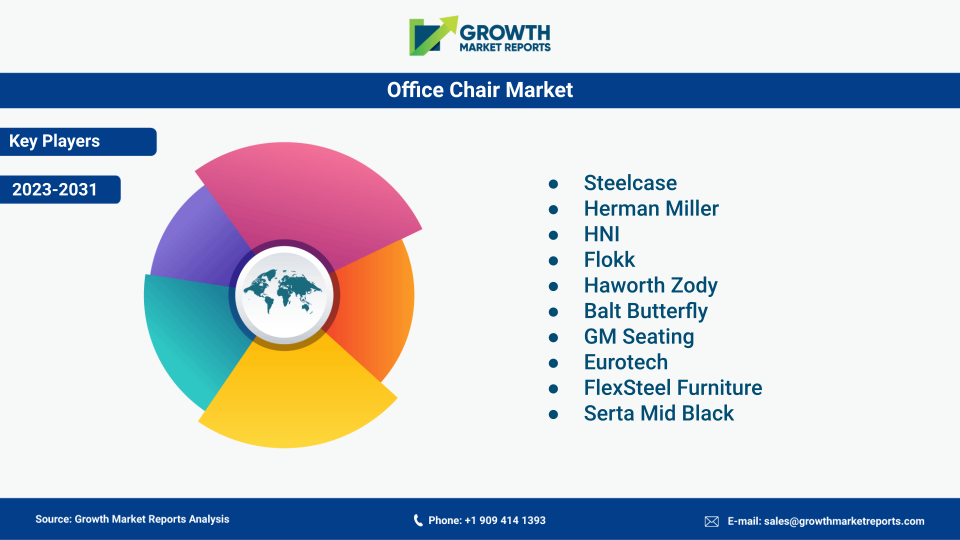
Key players include Steelcase, Herman Miller, HNI Corporation, Haworth, Knoll, Okamura Corporation, UE Furniture, Global Furniture Group, and Kimball International.
Recent trends include the integration of smart features like IoT sensors, adjustable lumbar support, temperature regulation, and the use of sustainable materials.
Major end-users include commercial offices, residential home offices, industrial facilities, and other sectors such as healthcare and hospitality.
Office chairs are sold through both online and offline channels. Online sales are growing rapidly due to e-commerce adoption, while offline stores remain important for bulk and customized orders.
The market is segmented into leather, fabric, mesh, plastic, and other materials. Mesh chairs are gaining popularity for their breathability and ergonomic benefits.
Ergonomic chairs hold the largest market share due to their health benefits, followed by executive chairs, mesh chairs, task chairs, and conference chairs.
Asia Pacific leads the global office chair market, accounting for the largest share in 2024, followed by North America and Europe.
Key growth drivers include heightened awareness of workplace ergonomics, the rise of remote and hybrid work models, investments in office infrastructure, and innovations in smart and sustainable chair designs.
The office chair market is expected to grow at a CAGR of 5.8% from 2025 to 2033, reaching a value of USD 21.9 billion by 2033.
As of 2024, the global office chair market size reached USD 13.2 billion, driven by increasing demand for ergonomic and innovative seating solutions.