Paper Shredder Market Research Report 2033

Paper Shredder Market Research Report 2033

Segments - by Product Type (Strip-Cut, Cross-Cut, Micro-Cut), by Bin Capacity (Up to 20 Liters, 21-50 Liters, Above 50 Liters), by Application (Commercial, Residential, Industrial, Government), by Distribution Channel (Online, Offline)

https://growthmarketreports.com/Debadatta
Author : Debadatta Patel
https://growthmarketreports.com/Vaibhav
Fact-checked by : V. Chandola
https://growthmarketreports.com/Shruti
Editor : Shruti Bhat

Upcoming | Report ID :CG-294 | 4.0 Rating | 45 Reviews | 266 Pages | Format : Docx PDF

Report Description


Paper Shredder Market Outlook

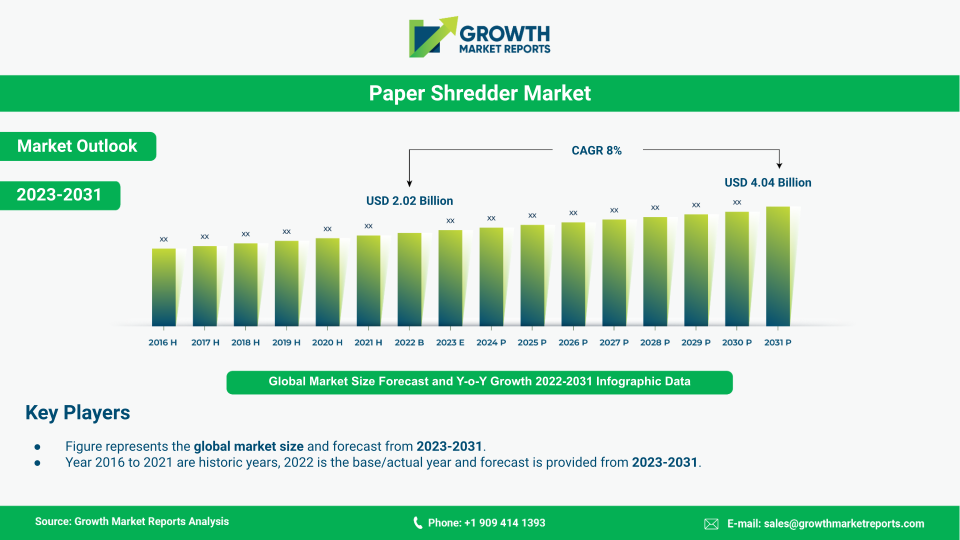
According to our latest research, the global paper shredder market size reached USD 2.18 billion in 2024, demonstrating steady expansion across both developed and emerging economies. The market is set to grow at a robust CAGR of 7.2% from 2025 to 2033, with the forecasted market size expected to reach USD 4.11 billion by 2033. This growth trajectory is primarily driven by increasing data privacy regulations, rising concerns over information security, and the proliferation of document disposal requirements across commercial and government sectors.

The growth of the paper shredder market is significantly influenced by heightened awareness regarding data breaches and identity theft. In recent years, both private and public organizations have faced mounting pressure to safeguard sensitive information, particularly in the wake of stringent regulations such as GDPR in Europe and HIPAA in the United States. These regulatory frameworks mandate the secure destruction of confidential documents, thereby fueling demand for advanced shredding solutions. Additionally, the rise in corporate espionage and cybercrime has compelled enterprises of all sizes to invest in reliable paper shredders to prevent unauthorized access to physical documents, further accelerating market growth.

Another pivotal growth driver is the increasing adoption of paper shredders in the residential segment, spurred by remote working trends and home-based businesses. As more individuals handle sensitive information at home, the need for secure document disposal has become paramount. The proliferation of affordable, compact shredders tailored for personal use has made it easier for consumers to protect their privacy. Furthermore, the growing environmental consciousness among consumers and organizations alike has led to the development of eco-friendly shredders that facilitate recycling and reduce waste, thus aligning with global sustainability goals and further enhancing market attractiveness.

Technological advancements have also played a crucial role in shaping the paper shredder market. Manufacturers are increasingly focusing on integrating smart features such as jam-proof mechanisms, energy-efficient motors, and noise reduction technologies to cater to evolving customer preferences. The introduction of high-security micro-cut and cross-cut shredders has expanded the market’s reach into sectors that require superior data protection, such as defense, legal, and healthcare. Moreover, the availability of shredders with larger bin capacities and automated feeding systems has improved operational efficiency in high-volume environments, thereby attracting industrial and commercial users.

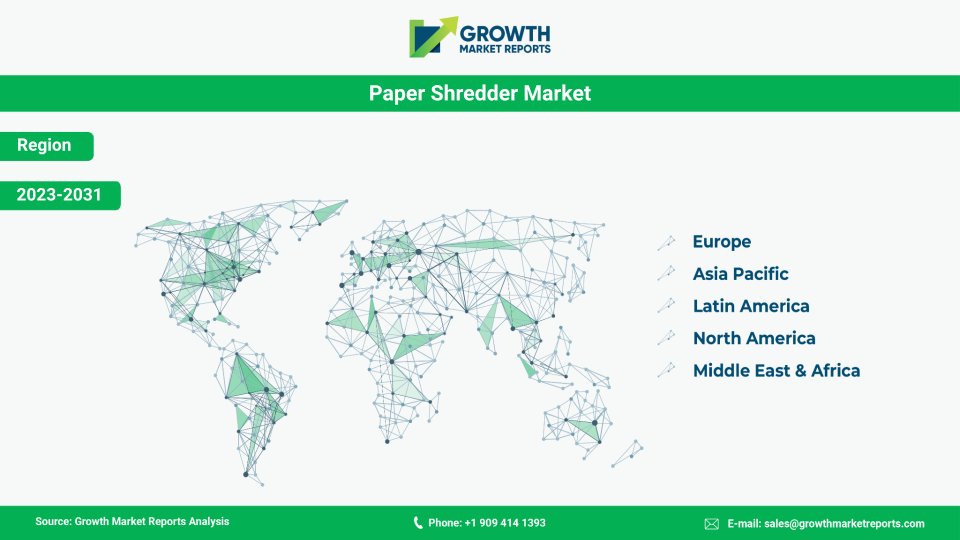
Regionally, North America continues to dominate the paper shredder market due to the presence of stringent data protection laws and a high degree of organizational awareness regarding information security. Europe follows closely, driven by regulatory compliance and widespread adoption across government and corporate sectors. The Asia Pacific region is witnessing the fastest growth, propelled by rapid industrialization, increasing digitization, and rising investments in office automation solutions. Latin America and the Middle East & Africa are also experiencing steady growth, albeit at a slower pace, as businesses and government agencies in these regions gradually recognize the importance of secure document disposal.

Global Paper Shredder Industry Outlook

Product Type Analysis

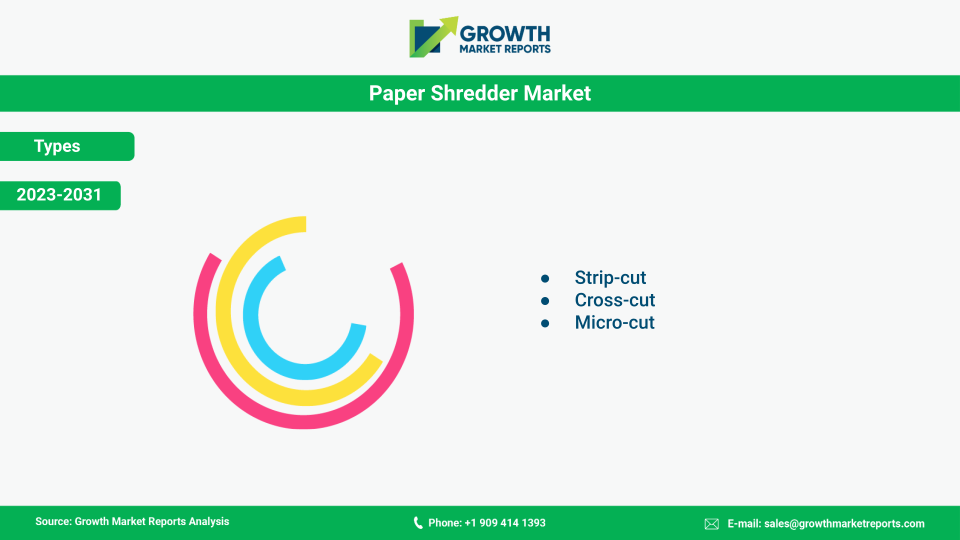
The paper shredder market is segmented by product type into strip-cut, cross-cut, and micro-cut shredders, each catering to distinct security requirements and user preferences. Strip-cut shredders, known for their simplicity and high throughput, are widely used in environments where basic document destruction is sufficient. However, their relatively low-security level has limited their adoption in sectors handling highly sensitive information. Cross-cut shredders, which slice documents both vertically and horizontally, offer a higher level of security and have become the preferred choice for most commercial and residential users. The increasing prevalence of data privacy concerns has driven a shift from strip-cut to cross-cut and micro-cut shredders, especially in sectors such as finance, healthcare, and government.

Micro-cut shredders represent the fastest-growing segment within the paper shredder market, owing to their ability to reduce documents into confetti-like particles, making data reconstruction virtually impossible. These shredders are increasingly adopted by organizations that handle confidential or classified information and are subject to rigorous regulatory standards. The demand for micro-cut shredders is particularly strong in legal, defense, and research institutions, where the risk of data leakage can have severe consequences. As manufacturers continue to innovate and reduce the cost of micro-cut technology, adoption rates are expected to rise even among small and medium enterprises and residential users seeking the highest level of information security.

Technological advancements have also influenced the evolution of paper shredder product types. Modern shredders are equipped with features such as auto-feed, anti-jam technology, and energy-saving modes, enhancing user experience and operational efficiency. The integration of touchless operation and noise reduction mechanisms has made shredders more appealing for open office environments and home use. Manufacturers are also focusing on aesthetic design and compact form factors to cater to space-constrained environments, further broadening the appeal of advanced shredder types across various user segments.

The choice of shredder type is often dictated by the specific application and security needs of the user. While strip-cut shredders remain popular in educational institutions and small offices with low-security requirements, cross-cut and micro-cut shredders are increasingly being adopted in sectors subject to stringent data protection regulations. The growing awareness of the risks associated with improper document disposal, coupled with the availability of affordable high-security shredders, is expected to drive continued growth in the cross-cut and micro-cut segments over the forecast period.

Report Scope

Attributes Details
Report Title Paper Shredder Market Research Report 2033
By Product Type Strip-Cut, Cross-Cut, Micro-Cut
By Bin Capacity Up to 20 Liters, 21-50 Liters, Above 50 Liters
By Application Commercial, Residential, Industrial, Government
By Distribution Channel Online, Offline
Regions Covered North America, Europe, APAC, Latin America, MEA
Base Year 2024
Historic Data 2018-2023
Forecast Period 2025-2033
Number of Pages 266
Number of Tables & Figures 357
Customization Available Yes, the report can be customized as per your need.

Bin Capacity Analysis

The bin capacity segment of the paper shredder market is categorized into Up to 20 Liters, 21-50 Liters, and Above 50 Liters, each serving different operational needs. Shredders with a bin capacity of up to 20 liters are primarily designed for personal and small office use, where document disposal volumes are relatively low. These compact shredders are favored for their portability and affordability, making them ideal for home offices and small businesses. However, the limited capacity necessitates frequent emptying, which can be a drawback in environments with higher document disposal requirements.

Shredders with a bin capacity of 21-50 liters strike a balance between size and functionality, catering to medium-sized offices and organizations with moderate shredding needs. These models offer greater convenience by reducing the frequency of bin emptying, thereby improving operational efficiency. The 21-50 liter segment is witnessing increased adoption in commercial settings, particularly in sectors such as banking, education, and healthcare, where document disposal is a routine part of daily operations. The availability of cross-cut and micro-cut options in this capacity range further enhances their appeal among security-conscious users.

The above 50 liters segment is dominated by high-capacity shredders designed for industrial and large-scale commercial applications. These shredders are capable of handling substantial volumes of paper and other materials, making them indispensable in environments where bulk document destruction is required. Industrial-grade shredders often feature robust construction, advanced safety mechanisms, and automated feeding systems to support continuous operation. The demand for high-capacity shredders is particularly strong in government agencies, legal firms, and large corporations that generate significant quantities of sensitive documents on a regular basis.

Manufacturers are increasingly focusing on enhancing the user experience by incorporating features such as bin-full indicators, easy-to-remove bins, and dust-reduction systems. These innovations not only improve operational convenience but also contribute to workplace safety and cleanliness. Additionally, the trend toward centralized shredding solutions in large organizations is driving demand for shredders with larger bin capacities, as they enable efficient and cost-effective document disposal for multiple departments or teams.

Application Analysis

The application segment of the paper shredder market encompasses Commercial, Residential, Industrial, and Government uses, each characterized by distinct requirements and growth dynamics. The commercial segment represents the largest share of the market, driven by the widespread adoption of paper shredders in offices, financial institutions, educational establishments, and healthcare facilities. The increasing emphasis on compliance with data protection regulations and the need to safeguard proprietary information are key factors propelling demand in this segment. Commercial users typically require shredders with moderate to high security levels and medium to large bin capacities to manage daily document disposal efficiently.

The residential segment has witnessed significant growth in recent years, fueled by the rise of remote work and the proliferation of home-based businesses. As individuals handle more sensitive information at home, the need for secure document disposal has become increasingly important. Manufacturers have responded by developing compact, user-friendly shredders tailored for personal use, featuring safety locks, quiet operation, and affordable price points. The growing awareness of identity theft and privacy risks among consumers is expected to further boost demand in the residential segment.

Industrial applications of paper shredders are characterized by the need for high-capacity, heavy-duty machines capable of handling large volumes of documents and other materials such as CDs, credit cards, and cardboard. Industrial shredders are commonly used in manufacturing facilities, logistics centers, and recycling plants, where bulk destruction of sensitive or obsolete materials is required. The integration of automated feeding systems and advanced safety features has enhanced the efficiency and reliability of industrial shredders, making them a critical component of secure waste management practices in these environments.

The government segment is another key driver of growth in the paper shredder market, as public agencies and institutions are often subject to stringent regulations regarding the disposal of classified and confidential information. Government agencies at the federal, state, and local levels require shredders that meet specific security standards, such as those defined by the NSA or DIN. The procurement of high-security shredders for use in defense, intelligence, and law enforcement agencies is expected to remain a significant contributor to market growth, particularly in regions with robust data protection frameworks.

Distribution Channel Analysis

The distribution channel segment of the paper shredder market is divided into Online and Offline channels, each playing a vital role in reaching diverse customer segments. The offline channel, which includes specialty stores, office supply retailers, and authorized distributors, has traditionally dominated the market, particularly for commercial and government buyers who prefer hands-on demonstrations and personalized service. Offline channels offer the advantage of immediate product availability and after-sales support, making them the preferred choice for bulk or high-value purchases.

However, the online channel has experienced rapid growth in recent years, driven by the increasing penetration of e-commerce platforms and changing consumer purchasing behavior. Online channels offer unparalleled convenience, competitive pricing, and a wider selection of products, enabling customers to compare features and read reviews before making a purchase decision. The rise of direct-to-consumer sales and the expansion of online marketplaces such as Amazon, Alibaba, and Staples have made it easier for manufacturers to reach a global audience and cater to the needs of residential and small business users.

The COVID-19 pandemic further accelerated the shift toward online channels, as lockdowns and social distancing measures prompted businesses and consumers to embrace digital purchasing options. Manufacturers have responded by enhancing their online presence, offering virtual product demonstrations, and providing detailed technical specifications and customer support through digital channels. The integration of AI-driven recommendation engines and personalized marketing strategies has further improved the online shopping experience, driving higher conversion rates and customer satisfaction.

While offline channels continue to play a crucial role in serving large enterprises and government agencies, the growing preference for online shopping among younger, tech-savvy consumers is expected to drive continued growth in the online segment. Manufacturers are increasingly adopting omnichannel strategies to provide a seamless and consistent customer experience across both online and offline touchpoints, ensuring broad market coverage and enhanced brand loyalty.

Opportunities & Threats

The paper shredder market presents significant opportunities for growth, particularly in emerging markets where awareness of data security and privacy is on the rise. The increasing adoption of digital technologies and the expansion of the formal sector in countries such as India, China, and Brazil are expected to drive demand for secure document disposal solutions. Manufacturers can capitalize on these opportunities by developing affordable, user-friendly shredders tailored to the needs of small and medium enterprises and residential users in these regions. Additionally, the growing emphasis on environmental sustainability presents an opportunity for the development of eco-friendly shredders that facilitate recycling and reduce energy consumption, aligning with global sustainability initiatives and attracting environmentally conscious customers.

Another key opportunity lies in the integration of advanced technologies such as IoT, AI, and automation into paper shredder products. Smart shredders equipped with features such as remote monitoring, predictive maintenance, and usage analytics can enhance operational efficiency and reduce downtime, making them particularly attractive to large enterprises and government agencies. The development of shredders capable of handling a wider range of materials, including digital storage media and packaging materials, can further expand the market’s reach and address the evolving needs of modern organizations. Strategic partnerships with office automation providers and IT security firms can also open new avenues for growth and innovation in the paper shredder market.

Despite these opportunities, the paper shredder market faces certain restraining factors, chief among them being the growing trend toward digitalization and paperless offices. As organizations increasingly shift to digital document management systems, the volume of physical documents requiring shredding is expected to decline, particularly in developed economies. This trend may limit the long-term growth potential of the market, especially in segments that have already achieved high levels of digital adoption. Additionally, the availability of alternative document destruction methods, such as outsourcing to professional shredding services, may pose a threat to the sales of in-house shredding equipment, particularly among cost-conscious users.

Regional Outlook

North America remains the largest regional market for paper shredders, accounting for approximately 34% of the global market size in 2024, equivalent to around USD 741 million. The region’s dominance is attributed to the widespread adoption of data protection regulations, high levels of organizational awareness regarding information security, and the presence of leading market players. The United States, in particular, represents a major revenue contributor, with robust demand from commercial, government, and residential users. The North American market is expected to maintain steady growth over the forecast period, driven by ongoing investments in office automation and the continued emphasis on regulatory compliance.

Europe follows closely, with a market share of approximately 28%, or USD 610 million in 2024. The region is characterized by a strong regulatory environment, including the General Data Protection Regulation (GDPR), which mandates the secure disposal of personal and confidential information. Countries such as Germany, the United Kingdom, and France are key markets for paper shredders, with high adoption rates across government agencies, financial institutions, and healthcare providers. The European market is projected to grow at a CAGR of 6.8% through 2033, supported by the ongoing digital transformation of public and private sector organizations and the increasing prevalence of remote work.

The Asia Pacific region is experiencing the fastest growth in the paper shredder market, with a projected CAGR of 8.9% from 2025 to 2033. The region accounted for approximately 24% of the global market, or USD 523 million in 2024. Rapid industrialization, urbanization, and the expansion of the formal sector in countries such as China, India, and Japan are driving demand for secure document disposal solutions. The increasing adoption of office automation technologies, rising awareness of data security risks, and the implementation of data protection regulations are expected to further accelerate market growth in the region. Latin America and the Middle East & Africa, though smaller in market size, are also witnessing steady growth as businesses and government agencies in these regions recognize the importance of information security and regulatory compliance.

Paper Shredder Market Statistics

Competitor Outlook

The paper shredder market is characterized by intense competition, with a mix of global giants and regional players vying for market share. The competitive landscape is shaped by continuous innovation, product differentiation, and strategic partnerships aimed at expanding product portfolios and enhancing customer value. Leading manufacturers are investing heavily in research and development to introduce advanced shredding technologies, improve energy efficiency, and incorporate smart features that cater to the evolving needs of commercial, residential, and industrial users. The focus on sustainability and eco-friendly product design has also emerged as a key differentiator, with companies seeking to align their offerings with global environmental standards and customer preferences.

Mergers and acquisitions, along with collaborations with office automation and IT security providers, are common strategies employed by major players to strengthen their market position and expand their geographic reach. The increasing importance of after-sales service and customer support has prompted manufacturers to enhance their service networks and offer comprehensive maintenance packages, particularly for high-value commercial and industrial clients. The rise of e-commerce and direct-to-consumer sales channels has also intensified competition, enabling smaller and regional players to reach a broader customer base and compete effectively with established brands.

Brand reputation, product reliability, and price competitiveness remain critical factors influencing purchasing decisions in the paper shredder market. Manufacturers are increasingly leveraging digital marketing, social media, and influencer partnerships to enhance brand visibility and engage with target audiences. The trend toward customization and modular product design is gaining traction, allowing customers to tailor shredders to their specific requirements and preferences. As the market continues to evolve, the ability to anticipate and respond to changing customer needs will be a key determinant of long-term success for both global and regional players.

Some of the major companies operating in the paper shredder market include Fellowes Brands, ACCO Brands (Swingline), HSM GmbH + Co. KG, Intimus International Group, Bonsaii, Aurora Corp. of America, Dahle North America Inc., KOBRA (ELCOMAN), and GBC Shredder. Fellowes Brands is renowned for its extensive range of shredders catering to both personal and commercial applications, with a strong focus on innovation and ergonomic design. ACCO Brands, through its Swingline and GBC lines, offers a diverse portfolio of shredders with advanced security features and robust performance. HSM GmbH + Co. KG and Intimus International Group are prominent players in the European market, known for their high-security shredders and commitment to sustainability.

Aurora Corp. of America and Bonsaii have established a strong presence in the North American and Asia Pacific markets, respectively, offering competitively priced shredders with user-friendly features and reliable performance. Dahle North America Inc. and KOBRA (ELCOMAN) are recognized for their industrial-grade shredders designed for high-volume applications and compliance with international security standards. These companies continue to invest in product development, customer support, and digital marketing to maintain their competitive edge and capitalize on emerging opportunities in the global paper shredder market.

In summary, the paper shredder market is poised for continued growth, driven by rising data security concerns, regulatory compliance requirements, and technological innovation. The competitive landscape is dynamic, with both established and emerging players striving to differentiate themselves through product quality, innovation, and customer-centric strategies. As organizations and individuals worldwide recognize the importance of secure document disposal, the demand for advanced and reliable shredding solutions is expected to remain strong over the coming decade.

Key Players

  • Fellowes, Inc.
  • ACCO Brands Corporation
  • HSM GmbH + Co. KG
  • Intimus International Group
  • Aurora Corp. of America
  • Dahle North America, Inc.
  • Bonsaii (Bonsen Electronics Ltd.)
  • Royal Consumer Information Products, Inc.
  • Swingline (a division of ACCO Brands)
  • Kobra (Elcoman Srl)
  • Ideal (Krug & Priester GmbH & Co. KG)
  • Meiko Shokai Co., Ltd.
  • Shred-it (Stericycle, Inc.)
  • GBC (General Binding Corporation)
  • Staples, Inc.
  • AmazonBasics
  • Rexel (ACCO Brands Europe)
  • Zhejiang Supu Technology Co., Ltd.
  • Texet (The Hira Company Ltd.)
  • Infres Methodex Pvt. Ltd.
Paper Shredder Market Overview

Segments

The Paper Shredder market has been segmented on the basis of

Product Type

  • Strip-Cut
  • Cross-Cut
  • Micro-Cut

Bin Capacity

  • Up to 20 Liters
  • 21-50 Liters
  • Above 50 Liters

Application

  • Commercial
  • Residential
  • Industrial
  • Government

Distribution Channel

  • Online
  • Offline

Competitive Landscape

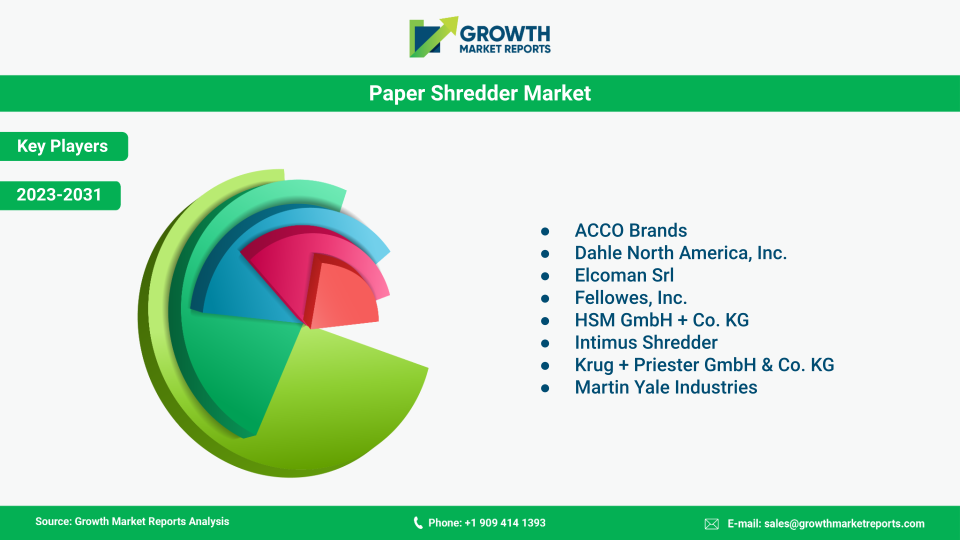
Some prominent manufacturers competing in the global paper shredder market include ACCO Brands, Dahle North America, Inc., Elcoman Srl, Fellowes, Inc., HSM GmbH + Co. KG, Intimus Shredder, Krug + Priester GmbH & Co. KG, and Martin Yale Industries.

These companies are engaging in several strategic activities such as partnerships, product innovations, and product launches to expand their market share.

In December 2018, HSM GmbH + Co. KG was awarded the Office Product Award for its HSM series of shredders in the industry.

Paper Shredder Market Key Players

Frequently Asked Questions

Yes, there is a growing trend toward eco-friendly shredders that facilitate recycling and reduce energy consumption, as well as smart shredders with IoT, AI, and automation features for enhanced efficiency.

Challenges include the shift toward digitalization and paperless offices, which reduces the volume of physical documents, and competition from outsourced shredding services.

Major companies include Fellowes Brands, ACCO Brands (Swingline, GBC), HSM GmbH + Co. KG, Intimus International Group, Bonsaii, Aurora Corp. of America, Dahle North America Inc., KOBRA (ELCOMAN), and others.

Paper shredders are sold through both online and offline channels. Offline channels include specialty stores and office supply retailers, while online channels are growing rapidly due to e-commerce and changing consumer habits.

Modern shredders feature smart technologies such as jam-proof mechanisms, energy-efficient motors, noise reduction, auto-feed, anti-jam technology, and touchless operation to enhance user experience and efficiency.

Applications include commercial, residential, industrial, and government use. Commercial is the largest segment, while residential use is growing due to remote work trends.

The market is segmented into strip-cut, cross-cut, and micro-cut shredders. Strip-cut offers basic security, cross-cut provides higher security, and micro-cut is the most secure, reducing documents to confetti-like particles.

North America dominates the paper shredder market, followed by Europe. The Asia Pacific region is experiencing the fastest growth due to rapid industrialization, digitization, and increased investments in office automation.

Key growth drivers include increasing data privacy regulations, heightened concerns over information security, rising incidents of data breaches and identity theft, and the proliferation of document disposal requirements in commercial and government sectors.

As of 2024, the global paper shredder market size reached USD 2.18 billion, with steady growth expected in the coming years.

Table Of Content

Chapter 1 Executive Summary
Chapter 2 Assumptions and Acronyms Used
Chapter 3 Research Methodology
Chapter 4 Paper Shredder Market Overview
   4.1 Introduction
      4.1.1 Market Taxonomy
      4.1.2 Market Definition
      4.1.3 Macro-Economic Factors Impacting the Market Growth
   4.2 Paper Shredder Market Dynamics
      4.2.1 Market Drivers
      4.2.2 Market Restraints
      4.2.3 Market Opportunity
   4.3 Paper Shredder Market - Supply Chain Analysis
      4.3.1 List of Key Suppliers
      4.3.2 List of Key Distributors
      4.3.3 List of Key Consumers
   4.4 Key Forces Shaping the Paper Shredder Market
      4.4.1 Bargaining Power of Suppliers
      4.4.2 Bargaining Power of Buyers
      4.4.3 Threat of Substitution
      4.4.4 Threat of New Entrants
      4.4.5 Competitive Rivalry
   4.5 Global Paper Shredder Market Size & Forecast, 2023-2032
      4.5.1 Paper Shredder Market Size and Y-o-Y Growth
      4.5.2 Paper Shredder Market Absolute $ Opportunity

Chapter 5 Global Paper Shredder Market Analysis and Forecast By Product Type
   5.1 Introduction
      5.1.1 Key Market Trends & Growth Opportunities By Product Type
      5.1.2 Basis Point Share (BPS) Analysis By Product Type
      5.1.3 Absolute $ Opportunity Assessment By Product Type
   5.2 Paper Shredder Market Size Forecast By Product Type
      5.2.1 Strip-Cut
      5.2.2 Cross-Cut
      5.2.3 Micro-Cut
   5.3 Market Attractiveness Analysis By Product Type

Chapter 6 Global Paper Shredder Market Analysis and Forecast By Bin Capacity
   6.1 Introduction
      6.1.1 Key Market Trends & Growth Opportunities By Bin Capacity
      6.1.2 Basis Point Share (BPS) Analysis By Bin Capacity
      6.1.3 Absolute $ Opportunity Assessment By Bin Capacity
   6.2 Paper Shredder Market Size Forecast By Bin Capacity
      6.2.1 Up to 20 Liters
      6.2.2 21-50 Liters
      6.2.3 Above 50 Liters
   6.3 Market Attractiveness Analysis By Bin Capacity

Chapter 7 Global Paper Shredder Market Analysis and Forecast By Application
   7.1 Introduction
      7.1.1 Key Market Trends & Growth Opportunities By Application
      7.1.2 Basis Point Share (BPS) Analysis By Application
      7.1.3 Absolute $ Opportunity Assessment By Application
   7.2 Paper Shredder Market Size Forecast By Application
      7.2.1 Commercial
      7.2.2 Residential
      7.2.3 Industrial
      7.2.4 Government
   7.3 Market Attractiveness Analysis By Application

Chapter 8 Global Paper Shredder Market Analysis and Forecast By Distribution Channel
   8.1 Introduction
      8.1.1 Key Market Trends & Growth Opportunities By Distribution Channel
      8.1.2 Basis Point Share (BPS) Analysis By Distribution Channel
      8.1.3 Absolute $ Opportunity Assessment By Distribution Channel
   8.2 Paper Shredder Market Size Forecast By Distribution Channel
      8.2.1 Online
      8.2.2 Offline
   8.3 Market Attractiveness Analysis By Distribution Channel

Chapter 9 Global Paper Shredder Market Analysis and Forecast by Region
   9.1 Introduction
      9.1.1 Key Market Trends & Growth Opportunities By Region
      9.1.2 Basis Point Share (BPS) Analysis By Region
      9.1.3 Absolute $ Opportunity Assessment By Region
   9.2 Paper Shredder Market Size Forecast By Region
      9.2.1 North America
      9.2.2 Europe
      9.2.3 Asia Pacific
      9.2.4 Latin America
      9.2.5 Middle East & Africa (MEA)
   9.3 Market Attractiveness Analysis By Region

Chapter 10 Coronavirus Disease (COVID-19) Impact 
   10.1 Introduction 
   10.2 Current & Future Impact Analysis 
   10.3 Economic Impact Analysis 
   10.4 Government Policies 
   10.5 Investment Scenario

Chapter 11 North America Paper Shredder Analysis and Forecast
   11.1 Introduction
   11.2 North America Paper Shredder Market Size Forecast by Country
      11.2.1 U.S.
      11.2.2 Canada
   11.3 Basis Point Share (BPS) Analysis by Country
   11.4 Absolute $ Opportunity Assessment by Country
   11.5 Market Attractiveness Analysis by Country
   11.6 North America Paper Shredder Market Size Forecast By Product Type
      11.6.1 Strip-Cut
      11.6.2 Cross-Cut
      11.6.3 Micro-Cut
   11.7 Basis Point Share (BPS) Analysis By Product Type 
   11.8 Absolute $ Opportunity Assessment By Product Type 
   11.9 Market Attractiveness Analysis By Product Type
   11.10 North America Paper Shredder Market Size Forecast By Bin Capacity
      11.10.1 Up to 20 Liters
      11.10.2 21-50 Liters
      11.10.3 Above 50 Liters
   11.11 Basis Point Share (BPS) Analysis By Bin Capacity 
   11.12 Absolute $ Opportunity Assessment By Bin Capacity 
   11.13 Market Attractiveness Analysis By Bin Capacity
   11.14 North America Paper Shredder Market Size Forecast By Application
      11.14.1 Commercial
      11.14.2 Residential
      11.14.3 Industrial
      11.14.4 Government
   11.15 Basis Point Share (BPS) Analysis By Application 
   11.16 Absolute $ Opportunity Assessment By Application 
   11.17 Market Attractiveness Analysis By Application
   11.18 North America Paper Shredder Market Size Forecast By Distribution Channel
      11.18.1 Online
      11.18.2 Offline
   11.19 Basis Point Share (BPS) Analysis By Distribution Channel 
   11.20 Absolute $ Opportunity Assessment By Distribution Channel 
   11.21 Market Attractiveness Analysis By Distribution Channel

Chapter 12 Europe Paper Shredder Analysis and Forecast
   12.1 Introduction
   12.2 Europe Paper Shredder Market Size Forecast by Country
      12.2.1 Germany
      12.2.2 France
      12.2.3 Italy
      12.2.4 U.K.
      12.2.5 Spain
      12.2.6 Russia
      12.2.7 Rest of Europe
   12.3 Basis Point Share (BPS) Analysis by Country
   12.4 Absolute $ Opportunity Assessment by Country
   12.5 Market Attractiveness Analysis by Country
   12.6 Europe Paper Shredder Market Size Forecast By Product Type
      12.6.1 Strip-Cut
      12.6.2 Cross-Cut
      12.6.3 Micro-Cut
   12.7 Basis Point Share (BPS) Analysis By Product Type 
   12.8 Absolute $ Opportunity Assessment By Product Type 
   12.9 Market Attractiveness Analysis By Product Type
   12.10 Europe Paper Shredder Market Size Forecast By Bin Capacity
      12.10.1 Up to 20 Liters
      12.10.2 21-50 Liters
      12.10.3 Above 50 Liters
   12.11 Basis Point Share (BPS) Analysis By Bin Capacity 
   12.12 Absolute $ Opportunity Assessment By Bin Capacity 
   12.13 Market Attractiveness Analysis By Bin Capacity
   12.14 Europe Paper Shredder Market Size Forecast By Application
      12.14.1 Commercial
      12.14.2 Residential
      12.14.3 Industrial
      12.14.4 Government
   12.15 Basis Point Share (BPS) Analysis By Application 
   12.16 Absolute $ Opportunity Assessment By Application 
   12.17 Market Attractiveness Analysis By Application
   12.18 Europe Paper Shredder Market Size Forecast By Distribution Channel
      12.18.1 Online
      12.18.2 Offline
   12.19 Basis Point Share (BPS) Analysis By Distribution Channel 
   12.20 Absolute $ Opportunity Assessment By Distribution Channel 
   12.21 Market Attractiveness Analysis By Distribution Channel

Chapter 13 Asia Pacific Paper Shredder Analysis and Forecast
   13.1 Introduction
   13.2 Asia Pacific Paper Shredder Market Size Forecast by Country
      13.2.1 China
      13.2.2 Japan
      13.2.3 South Korea
      13.2.4 India
      13.2.5 Australia
      13.2.6 South East Asia (SEA)
      13.2.7 Rest of Asia Pacific (APAC)
   13.3 Basis Point Share (BPS) Analysis by Country
   13.4 Absolute $ Opportunity Assessment by Country
   13.5 Market Attractiveness Analysis by Country
   13.6 Asia Pacific Paper Shredder Market Size Forecast By Product Type
      13.6.1 Strip-Cut
      13.6.2 Cross-Cut
      13.6.3 Micro-Cut
   13.7 Basis Point Share (BPS) Analysis By Product Type 
   13.8 Absolute $ Opportunity Assessment By Product Type 
   13.9 Market Attractiveness Analysis By Product Type
   13.10 Asia Pacific Paper Shredder Market Size Forecast By Bin Capacity
      13.10.1 Up to 20 Liters
      13.10.2 21-50 Liters
      13.10.3 Above 50 Liters
   13.11 Basis Point Share (BPS) Analysis By Bin Capacity 
   13.12 Absolute $ Opportunity Assessment By Bin Capacity 
   13.13 Market Attractiveness Analysis By Bin Capacity
   13.14 Asia Pacific Paper Shredder Market Size Forecast By Application
      13.14.1 Commercial
      13.14.2 Residential
      13.14.3 Industrial
      13.14.4 Government
   13.15 Basis Point Share (BPS) Analysis By Application 
   13.16 Absolute $ Opportunity Assessment By Application 
   13.17 Market Attractiveness Analysis By Application
   13.18 Asia Pacific Paper Shredder Market Size Forecast By Distribution Channel
      13.18.1 Online
      13.18.2 Offline
   13.19 Basis Point Share (BPS) Analysis By Distribution Channel 
   13.20 Absolute $ Opportunity Assessment By Distribution Channel 
   13.21 Market Attractiveness Analysis By Distribution Channel

Chapter 14 Latin America Paper Shredder Analysis and Forecast
   14.1 Introduction
   14.2 Latin America Paper Shredder Market Size Forecast by Country
      14.2.1 Brazil
      14.2.2 Mexico
      14.2.3 Rest of Latin America (LATAM)
   14.3 Basis Point Share (BPS) Analysis by Country
   14.4 Absolute $ Opportunity Assessment by Country
   14.5 Market Attractiveness Analysis by Country
   14.6 Latin America Paper Shredder Market Size Forecast By Product Type
      14.6.1 Strip-Cut
      14.6.2 Cross-Cut
      14.6.3 Micro-Cut
   14.7 Basis Point Share (BPS) Analysis By Product Type 
   14.8 Absolute $ Opportunity Assessment By Product Type 
   14.9 Market Attractiveness Analysis By Product Type
   14.10 Latin America Paper Shredder Market Size Forecast By Bin Capacity
      14.10.1 Up to 20 Liters
      14.10.2 21-50 Liters
      14.10.3 Above 50 Liters
   14.11 Basis Point Share (BPS) Analysis By Bin Capacity 
   14.12 Absolute $ Opportunity Assessment By Bin Capacity 
   14.13 Market Attractiveness Analysis By Bin Capacity
   14.14 Latin America Paper Shredder Market Size Forecast By Application
      14.14.1 Commercial
      14.14.2 Residential
      14.14.3 Industrial
      14.14.4 Government
   14.15 Basis Point Share (BPS) Analysis By Application 
   14.16 Absolute $ Opportunity Assessment By Application 
   14.17 Market Attractiveness Analysis By Application
   14.18 Latin America Paper Shredder Market Size Forecast By Distribution Channel
      14.18.1 Online
      14.18.2 Offline
   14.19 Basis Point Share (BPS) Analysis By Distribution Channel 
   14.20 Absolute $ Opportunity Assessment By Distribution Channel 
   14.21 Market Attractiveness Analysis By Distribution Channel

Chapter 15 Middle East & Africa (MEA) Paper Shredder Analysis and Forecast
   15.1 Introduction
   15.2 Middle East & Africa (MEA) Paper Shredder Market Size Forecast by Country
      15.2.1 Saudi Arabia
      15.2.2 South Africa
      15.2.3 UAE
      15.2.4 Rest of Middle East & Africa (MEA)
   15.3 Basis Point Share (BPS) Analysis by Country
   15.4 Absolute $ Opportunity Assessment by Country
   15.5 Market Attractiveness Analysis by Country
   15.6 Middle East & Africa (MEA) Paper Shredder Market Size Forecast By Product Type
      15.6.1 Strip-Cut
      15.6.2 Cross-Cut
      15.6.3 Micro-Cut
   15.7 Basis Point Share (BPS) Analysis By Product Type 
   15.8 Absolute $ Opportunity Assessment By Product Type 
   15.9 Market Attractiveness Analysis By Product Type
   15.10 Middle East & Africa (MEA) Paper Shredder Market Size Forecast By Bin Capacity
      15.10.1 Up to 20 Liters
      15.10.2 21-50 Liters
      15.10.3 Above 50 Liters
   15.11 Basis Point Share (BPS) Analysis By Bin Capacity 
   15.12 Absolute $ Opportunity Assessment By Bin Capacity 
   15.13 Market Attractiveness Analysis By Bin Capacity
   15.14 Middle East & Africa (MEA) Paper Shredder Market Size Forecast By Application
      15.14.1 Commercial
      15.14.2 Residential
      15.14.3 Industrial
      15.14.4 Government
   15.15 Basis Point Share (BPS) Analysis By Application 
   15.16 Absolute $ Opportunity Assessment By Application 
   15.17 Market Attractiveness Analysis By Application
   15.18 Middle East & Africa (MEA) Paper Shredder Market Size Forecast By Distribution Channel
      15.18.1 Online
      15.18.2 Offline
   15.19 Basis Point Share (BPS) Analysis By Distribution Channel 
   15.20 Absolute $ Opportunity Assessment By Distribution Channel 
   15.21 Market Attractiveness Analysis By Distribution Channel

Chapter 16 Competition Landscape 
   16.1 Paper Shredder Market: Competitive Dashboard
   16.2 Global Paper Shredder Market: Market Share Analysis, 2023
   16.3 Company Profiles (Details – Overview, Financials, Developments, Strategy) 
      16.3.1 Fellowes, Inc.
ACCO Brands Corporation
HSM GmbH + Co. KG
Intimus International Group
Aurora Corp. of America
Dahle North America, Inc.
Bonsaii (Bonsen Electronics Ltd.)
Royal Consumer Information Products, Inc.
Swingline (a division of ACCO Brands)
Kobra (Elcoman Srl)
Ideal (Krug & Priester GmbH & Co. KG)
Meiko Shokai Co., Ltd.
Shred-it (Stericycle, Inc.)
GBC (General Binding Corporation)
Staples, Inc.
AmazonBasics
Rexel (ACCO Brands Europe)
Zhejiang Supu Technology Co., Ltd.
Texet (The Hira Company Ltd.)
Infres Methodex Pvt. Ltd.

Methodology

Our Clients

Siemens Healthcare
Deloitte
General Mills
Dassault Aviation
Honda Motor Co. Ltd.
General Electric
sinopec
FedEx Logistics